
If you are building real technology and working with standards, there is a moment where patents stop being optional and start being mission-critical. That moment is when your invention touches a standard. This is where Standard Essential Patents, or SEPs, enter the picture. And this is also where many founders make quiet mistakes that cost them leverage, money, and control later.
What Makes a Patent “Essential” to a Standard
Understanding what makes a patent truly essential is one of the most important skills a technology company can develop when working near standards.
Many teams think they know the answer, but most get it wrong in subtle ways.
Those small misunderstandings often show up years later during licensing talks, partnerships, or disputes, when the stakes are much higher and fixing mistakes is no longer easy.
At a basic level, a patent is essential when you cannot build a compliant product without using the patented invention. But in real life, that simple idea hides a lot of complexity.
To make good decisions, you need to understand how standards are written, how engineers actually implement them, and how SDOs think about fairness and access.
The Difference Between Useful and Essential
Many companies confuse a patent that is valuable with a patent that is essential. These are not the same thing.
A patent can be extremely useful and still not be essential. It might make a product faster, cheaper, or easier to build. It might give better performance or lower power use.
But if the standard can still be followed without using that invention, the patent is not essential in the strict sense.
An essential patent sits deeper. It covers a feature or method that the standard requires.
If an engineer tries to follow the standard line by line and cannot do so without using the patented idea, that is where essentiality begins.
The actionable move here is to stop asking whether your invention is impressive or widely used, and start asking whether the standard leaves any technical room to avoid it.
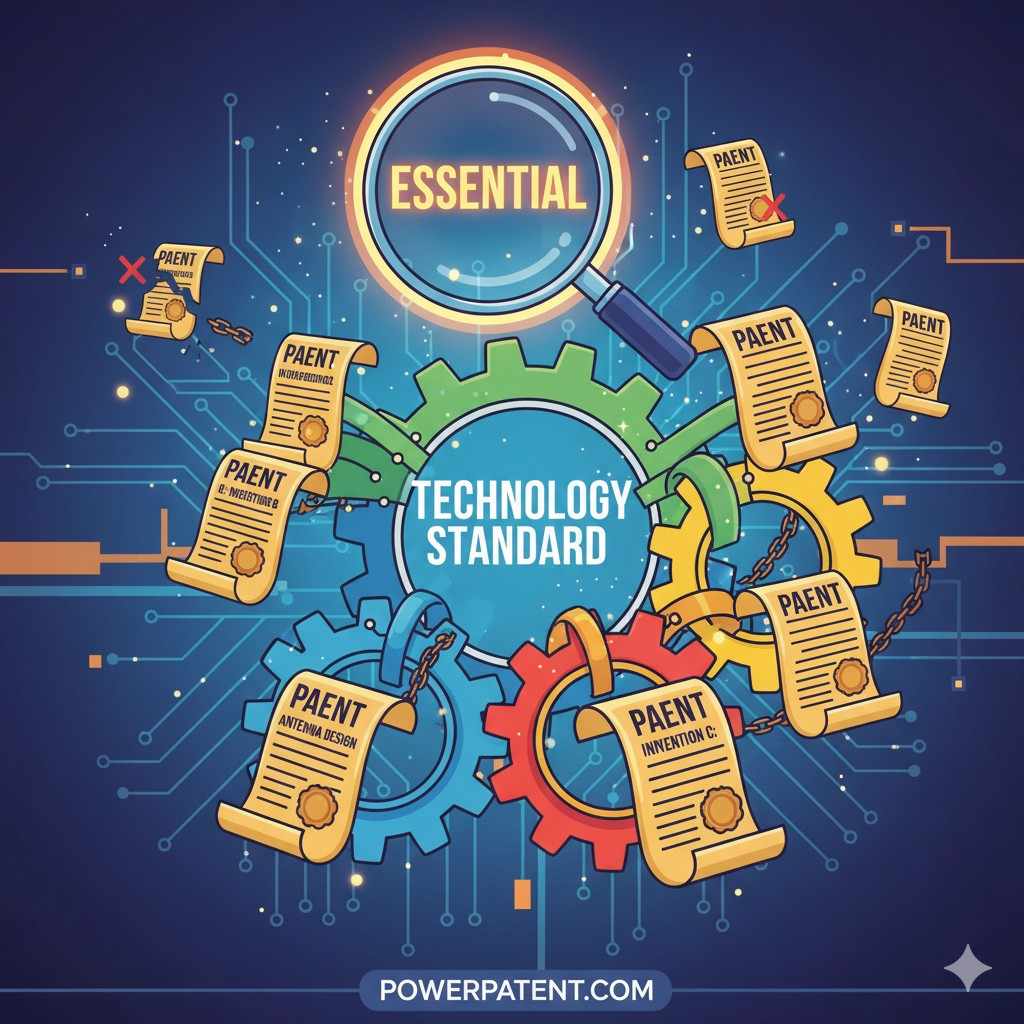
If there is even one realistic path around your claims that still meets the standard, essentiality may be questioned later.
How Standards Lock In Technical Choices
Standards are written to make systems work together. To do that, they often lock in very specific technical decisions. These decisions are not always obvious on first read.
Sometimes the standard names an exact process. Sometimes it defines a result that can only be reached one way at the time the standard was written. Sometimes it references another document that quietly narrows the options.
To judge essentiality, you must read the standard the way an engineer building a compliant product would read it.
This means paying close attention to words like shall, must, and required. It also means understanding what parts of the standard are optional and what parts are not.
A practical habit that helps is to map your patent claims directly to the mandatory parts of the standard.
If you cannot draw a straight line from a required section of the standard to at least one claim in your patent, essentiality will be harder to defend.
Claims Matter More Than the Idea
One of the most common mistakes founders make is focusing on the invention as a concept rather than the claims as written.
Standards do not care about your idea. They care about whether your legal claims cover what the standard requires.
Two patents can describe similar ideas, but only one may be essential depending on how the claims are written.
This is where early patent drafting choices have long-term effects. Claims that are too narrow may miss the exact language of the standard. Claims that are too broad may be challenged or limited later.
For teams still building or refining their patent strategy, this is a key lesson. Draft claims with future standards in mind, even if the standard is not finalized yet.
If you are already close to a standards body, make sure your patent filings track the direction of the technical work.
This is one of the areas where platforms like PowerPatent help founders stay aligned, because patent scope and standards evolution need to move together, not in isolation.
Timing Shapes Perceived Essentiality
Essentiality is not judged only by technical facts. Timing plays a role in how others see your patent.
If your patent application existed before the standard feature was proposed, it strengthens the story that your invention shaped the standard. If it came later, people may assume it was designed to read onto the standard rather than enable it.
Neither situation automatically wins or loses. But perception matters in negotiations and declarations.
A smart move is to document your involvement in standards work and connect it clearly to your patent timeline. Keep records of contributions, drafts, and technical discussions.
These details can quietly support your essentiality position years later without you needing to argue loudly.
The Line Between Optional Features and Core Requirements
Standards often include optional features. These features can still become widespread, but they are not required for compliance.
Patents covering optional features are usually not essential, even if almost everyone uses them. This surprises many teams who see broad adoption and assume essential status follows.
The key question is not what most companies do, but what the standard allows. If a compliant product can legally skip the feature, the patent is likely not essential.

The strategic takeaway is to avoid over-declaring. Declaring a patent as essential when it only covers optional behavior can weaken your credibility with the SDO and with future licensees.
Precision builds trust. Overreach invites scrutiny.
Essentiality Is About No Workarounds, Not Convenience
Another common trap is assuming that because workarounds are ugly or expensive, they do not count.
In essentiality analysis, a workaround only needs to be technically possible and compliant. It does not need to be elegant. It does not need to be cheap. It does not need to match performance.
If a competitor can follow the standard using a less attractive method that avoids your claims, essentiality becomes harder to prove.
For businesses, this means pressure-testing your assumptions. Ask engineers who are not emotionally tied to the invention to try to design around your claims while staying compliant. If they can, even in theory, you may need to rethink how you position the patent.
Courts and SDOs Do Not Always Agree
SDOs often accept declarations without deeply testing essentiality. Courts, on the other hand, can be much stricter.
A patent declared essential may later be found non-essential in litigation or arbitration. This does not mean the declaration was dishonest, but it does mean the original analysis was incomplete or optimistic.
The lesson here is not to fear declaring, but to do the homework. Treat essentiality analysis as a business decision, not a box to check. The better your internal analysis, the less exposed you are later.
Why Essentiality Is a Business Lever
When a patent is truly essential, it becomes a business tool, not just a legal asset.
Essential patents often carry licensing expectations tied to fair access. That can sound limiting, but it also creates predictability. Companies plan around standards. They expect to license SEPs. This makes negotiations more structured and less emotional.
But this leverage only exists if essentiality is solid. Weak declarations lead to weaker positions. Strong, well-supported essentiality creates confidence on both sides of the table.
For founders, the real action step is to treat SEP strategy as part of product strategy. It is not something to hand off and forget. It shapes partnerships, pricing power, and long-term optionality.

If you want to build this kind of clarity without drowning in legal process, it helps to use tools designed for founders, not law firms.
That is exactly what PowerPatent was built for, combining smart software with real attorney oversight so these decisions are made early and correctly.
Why SDOs Require SEP Declarations in the First Place
Standards do not exist just to move technology forward. They exist to make sure many companies can build products that work together without constant conflict.
SEP declarations sit at the center of that goal. To understand why SDOs insist on them, you need to look at standards not as technical documents, but as coordination systems designed to reduce risk for everyone involved.
When companies understand this purpose, they stop seeing SEP declarations as a burden and start seeing them as a strategic signal. Done right, a declaration can quietly shape how others approach your technology for years.
The Core Problem Standards Try to Solve
Every standard brings competitors into the same room. These companies may fight in the market, but inside an SDO they must agree on shared technical rules.
The risk is obvious. If one company hides patents that cover required parts of the standard, others may unknowingly build products that later face licensing shocks or lawsuits. This breaks trust and slows adoption.
SDOs require SEP declarations to reduce this risk before it grows. They want visibility, not perfection. The goal is to surface potential IP issues early so the market can move forward with fewer surprises.
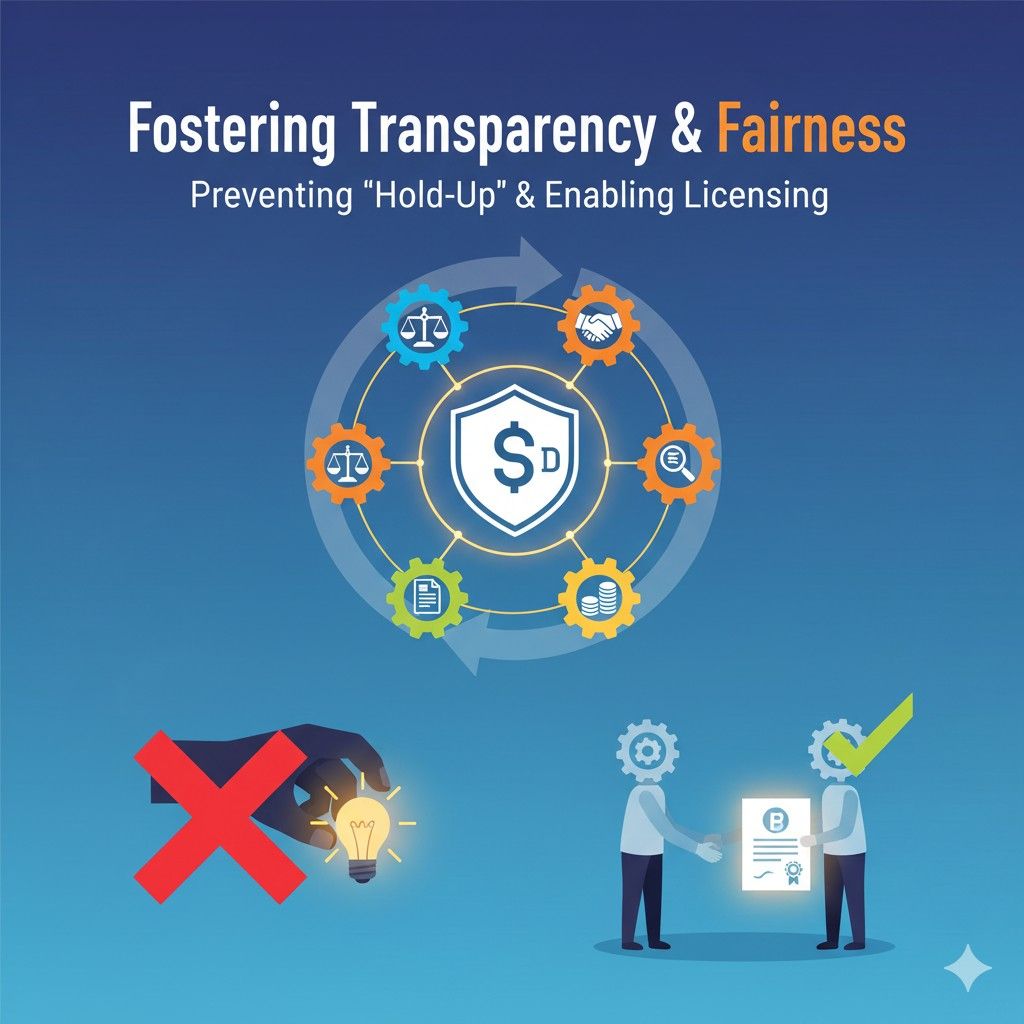
For businesses, this means declarations are less about giving something up and more about setting expectations early, when leverage is still balanced.
Transparency Keeps Standards Alive
A standard only succeeds if companies are willing to implement it. If implementers fear hidden patents, they may avoid the standard altogether.
SEP declarations act as an early warning system. They tell the ecosystem that certain rights exist and that licenses may be needed. This allows companies to plan costs, pricing, and product scope with open eyes.
From a strategic angle, transparency increases adoption. Higher adoption increases the value of truly essential patents.
This is why many large companies declare early even when the rules do not force them to do so immediately.
Founders should think of declarations as planting a flag, not waving a white one.
The Role of Fair Access Expectations
Most SDOs are built on the idea that standards should be broadly usable. This is why SEP declarations are often tied to licensing commitments around fairness.
The intent is simple. If a patent is essential, the owner should not block the standard or demand extreme terms after everyone is locked in.
This does not mean giving away your technology. It means agreeing to play by shared rules so the standard can thrive.
The business reality is that clear rules often speed up deals. When expectations are known, negotiations focus on numbers and scope, not on whether a license should exist at all.
Why SDOs Do Not Judge Essentiality Upfront
Many founders assume SDOs carefully review every declared patent. In most cases, they do not.
SDOs are not courts. They do not have the time or mandate to run deep claim analysis. Their role is to collect declarations, not validate them.
This shifts responsibility to patent owners. You are expected to act in good faith and declare when you reasonably believe essentiality may exist.
The actionable takeaway is to build your own internal process. Do not rely on the SDO to protect you from over-declaring or under-declaring. That responsibility stays with you.
Declarations Shape Power Dynamics Early
Once a standard gains traction, power shifts toward implementers. Early on, during development, contributors often have more influence.
SEP declarations made during development signal seriousness. They tell others that your company is investing not just ideas, but long-term IP into the standard.
This can lead to more weight in technical discussions and more respect in negotiations later. Silence, on the other hand, can be read as a lack of commitment or foresight.
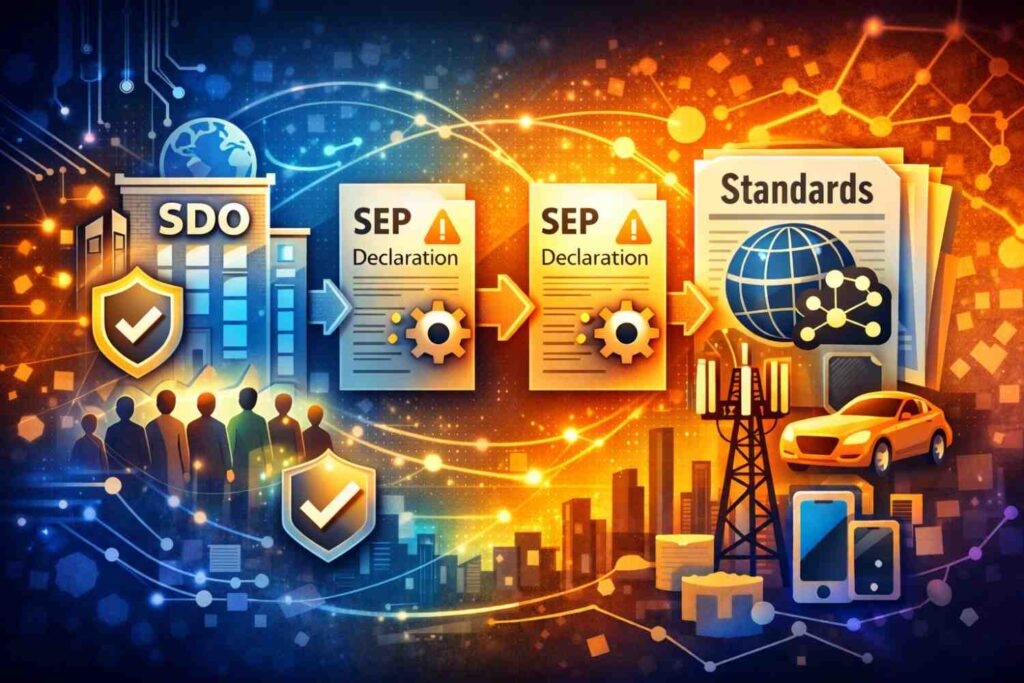
For startups, this is a chance to punch above their weight if handled thoughtfully.
The Cost of Silence Is Often Underestimated
Some teams delay declarations out of fear. They worry about triggering obligations or drawing attention.
But silence carries its own risks. If others discover essential patents later, trust erodes quickly. Accusations of ambush, even if unfair, can follow.
Many SDO policies include penalties or limitations for late disclosure. Even when formal penalties are rare, reputational damage is real.
The practical move is to align patent review cycles with standards participation. When your engineers attend meetings or submit contributions, your IP team should already be engaged.
Declarations Help Avoid Regulatory Trouble
In some regions, regulators watch standards closely. They care about competition, access, and abuse of market power.
Clear SEP declaration processes help show that a standard was developed openly and responsibly. This protects not just the SDO, but also the companies involved.
For patent owners, this transparency can later support arguments that licensing practices were reasonable and expected.
This is another reason to treat declarations as part of your long-term risk management, not just a compliance task.
How Smart Companies Use Declarations as Signals
Advanced teams use SEP declarations to send quiet messages.
A declaration can signal that licensing discussions will be needed. It can signal that certain features are strategically important. It can also signal that a company is ready to engage commercially once the standard is finalized.
These signals are subtle, but experienced players notice them.
If you are a growing company, this is where guidance matters. Declaring too much or too little can blur the signal.
Tools and workflows that connect patents, standards, and business goals help keep this balance, which is why many founders look at platforms like PowerPatent to stay organized and intentional as they scale.
You can see how that works at https://powerpatent.com/how-it-works.
Why SDO Rules Are Written Broadly on Purpose
SDO declaration rules are often flexible and vague. This frustrates engineers who want clear answers.
The reason is that standards evolve. Technology changes. Rigid rules would break quickly.
Instead, SDOs rely on good faith, industry norms, and after-the-fact enforcement if behavior becomes abusive.
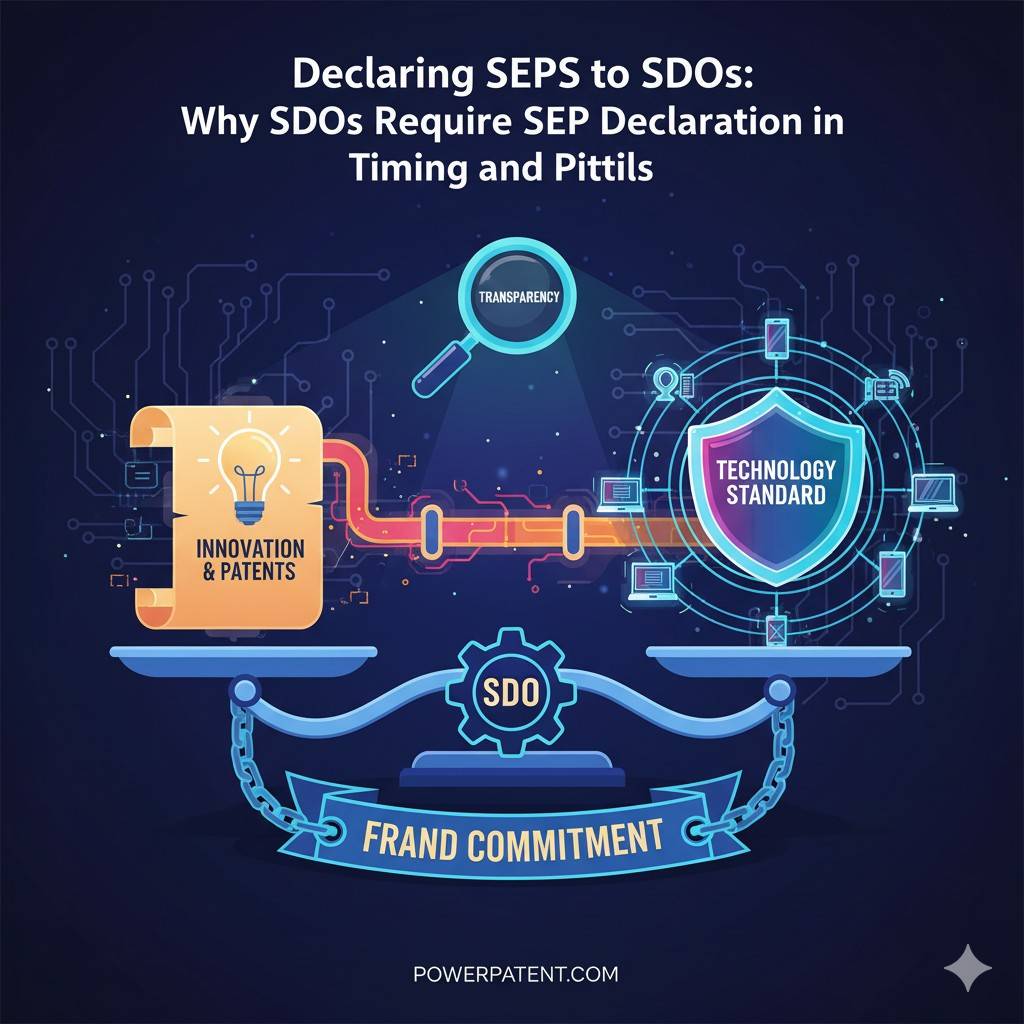
For businesses, this flexibility is both a risk and an opportunity. It gives room to act strategically, but only if you understand the spirit behind the rules.
Acting in line with that spirit builds long-term credibility, which often matters more than any single negotiation.
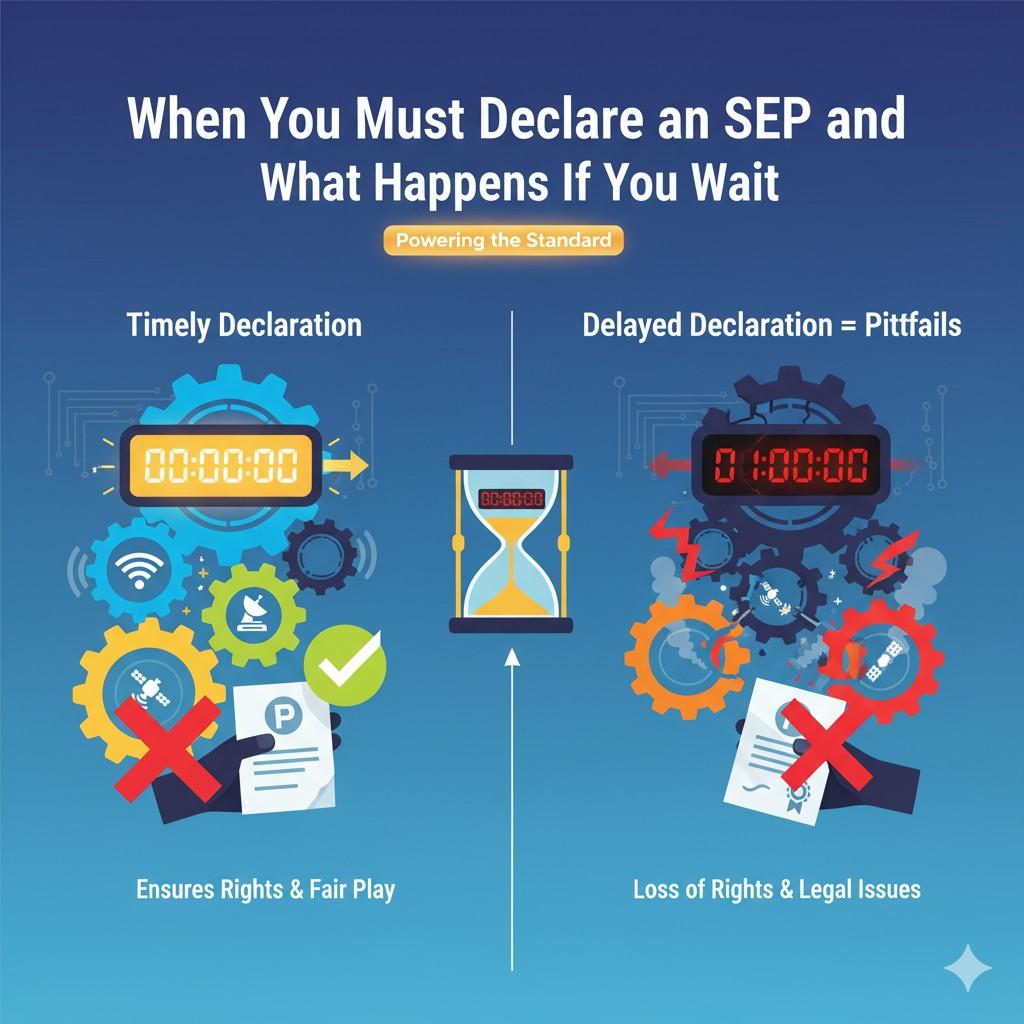
When You Must Declare an SEP and What Happens If You Wait
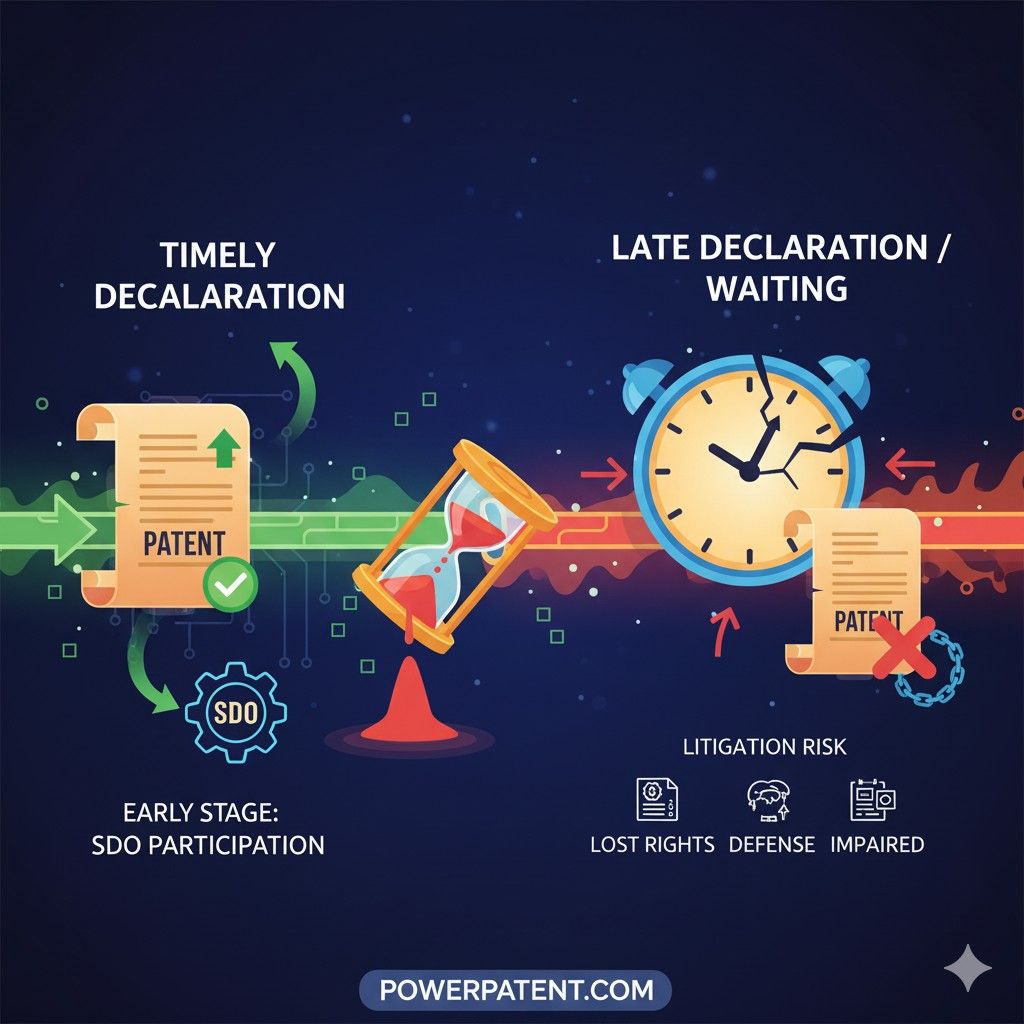
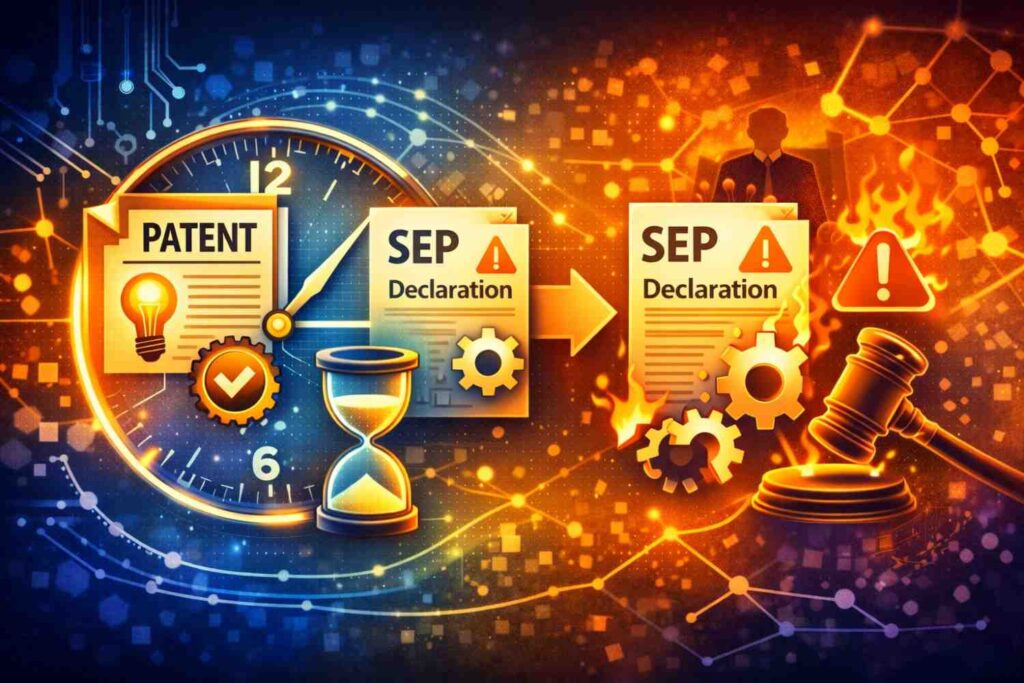
Timing is the quiet force that shapes almost every outcome in SEP strategy. Two companies can hold very similar patents, but the one that declares at the right moment often ends up with more trust, more leverage, and fewer problems.
The one that waits usually has a long list of explanations later. Understanding when declarations are expected, and how delay is perceived, helps businesses avoid avoidable damage.
This section focuses on how timing works in practice, not just how it is written in policy documents.
There Is Rarely a Single Mandatory Moment
Most SDO policies do not name one exact day when a declaration must be filed. This creates a false sense of comfort.
The absence of a hard deadline does not mean timing does not matter. Instead, it means timing is judged by behavior. Declarations are expected when a company becomes aware that it may hold relevant IP.
That awareness often happens long before a patent is granted and long before a standard is final. It can happen when engineers see a draft feature that lines up with an invention.
It can happen when a contribution is accepted. It can even happen when internal roadmaps start to match standards direction.
The smart move is to treat awareness as the trigger, not formality.
Early Declarations Build Credibility
Declaring early sends a strong message that your company is acting openly.
It tells the SDO and other participants that you are not waiting to see how valuable the standard becomes before revealing your position. This matters more than many founders realize.
Early declarations often lead to smoother conversations later. When licensing comes up, no one feels surprised. The ground has already been prepared.
From a business perspective, this reduces friction. Deals move faster when both sides feel the process has been fair from the start.
Late Declarations Raise Quiet Red Flags
Late declarations are not automatically wrong, but they are often questioned.
Others may wonder whether the patent holder intentionally waited to gain leverage after adoption. Even if this is not true, the suspicion alone can shift negotiations.
In some SDOs, late declarations can limit remedies or influence how licensing commitments are interpreted. In others, the main impact is reputational.
The lesson is simple. If you find yourself justifying timing instead of discussing value, you are already on weaker ground.
Provisional Applications and Timing Strategy
Many founders assume they must wait for a granted patent to declare. This is not how most SDOs think.
Declarations often cover pending applications, including provisional filings. The goal is disclosure, not certainty.
This creates an opportunity. Filing early provisionals aligned with standards work allows you to declare sooner without overcommitting. It gives you a seat at the table while preserving flexibility as claims evolve.
The actionable advice here is to align your filing calendar with standards milestones. When a technical feature is gaining traction, that is usually the right moment to file and prepare for declaration.
Internal Coordination Is Where Timing Breaks Down
Timing failures rarely come from bad intent. They come from poor internal communication.
Engineers attend standards meetings. Patent teams work on filings. Business teams focus on product launches. If these groups do not talk regularly, awareness is delayed.
High-performing companies create simple checkpoints. When engineers contribute, patents are reviewed. When patents are filed, standards relevance is discussed.
This does not require heavy process. It requires habit.
Platforms like PowerPatent exist to reduce this friction by keeping technical work and patent strategy connected, which is especially valuable for lean teams moving fast.
The Cost of Waiting for Perfect Information
Another reason companies delay is the search for certainty.
They want to be sure the patent is essential. They want the standard to stabilize. They want clarity on market adoption.
By the time all of that is known, the best declaration window has often passed.
SDOs understand uncertainty. They expect good-faith declarations based on reasonable belief, not perfect knowledge.
The strategic mindset shift is to accept that early declarations can be updated. Many SDOs allow amendments, withdrawals, or clarifications over time.
Waiting for perfection usually costs more than acting on informed judgment.
How Timing Affects Licensing Power
There is a common fear that early declaration weakens licensing power. In practice, the opposite is often true.
Early declarations set expectations. They normalize the idea that licenses will be needed. This makes later discussions feel procedural, not adversarial.
Late declarations can trigger defensive reactions. Implementers may dig in, challenge essentiality more aggressively, or involve regulators.
From a negotiation standpoint, calm environments favor the patent holder with strong assets. Timing helps create that calm.
What Happens When You Miss the Window
If you realize you should have declared earlier, all is not lost.
The worst response is silence. The best response is transparency.
Declare as soon as possible, explain briefly and factually, and move forward. Avoid long defenses. Most SDOs and participants care more about corrective action than blame.
The practical advice here is to prepare for this scenario before it happens. Know who inside your company can act quickly. Know the policy. Know the language to use.
Speed matters even in recovery.
Timing as a Long-Term Signal
Over time, companies develop reputations inside standards communities.
Those who declare thoughtfully and on time are seen as reliable. Their contributions carry more weight. Their licensing positions are taken more seriously.
Those who consistently delay face skepticism, even when their technology is strong.
For founders, this is about playing a long game. Standards work often spans years. Small timing decisions compound.
If you want help managing this without building a heavy internal process, PowerPatent was designed to support exactly this kind of coordination, keeping patents, filings, and standards exposure aligned as your company grows.
You can explore how that works at https://powerpatent.com/how-it-works.
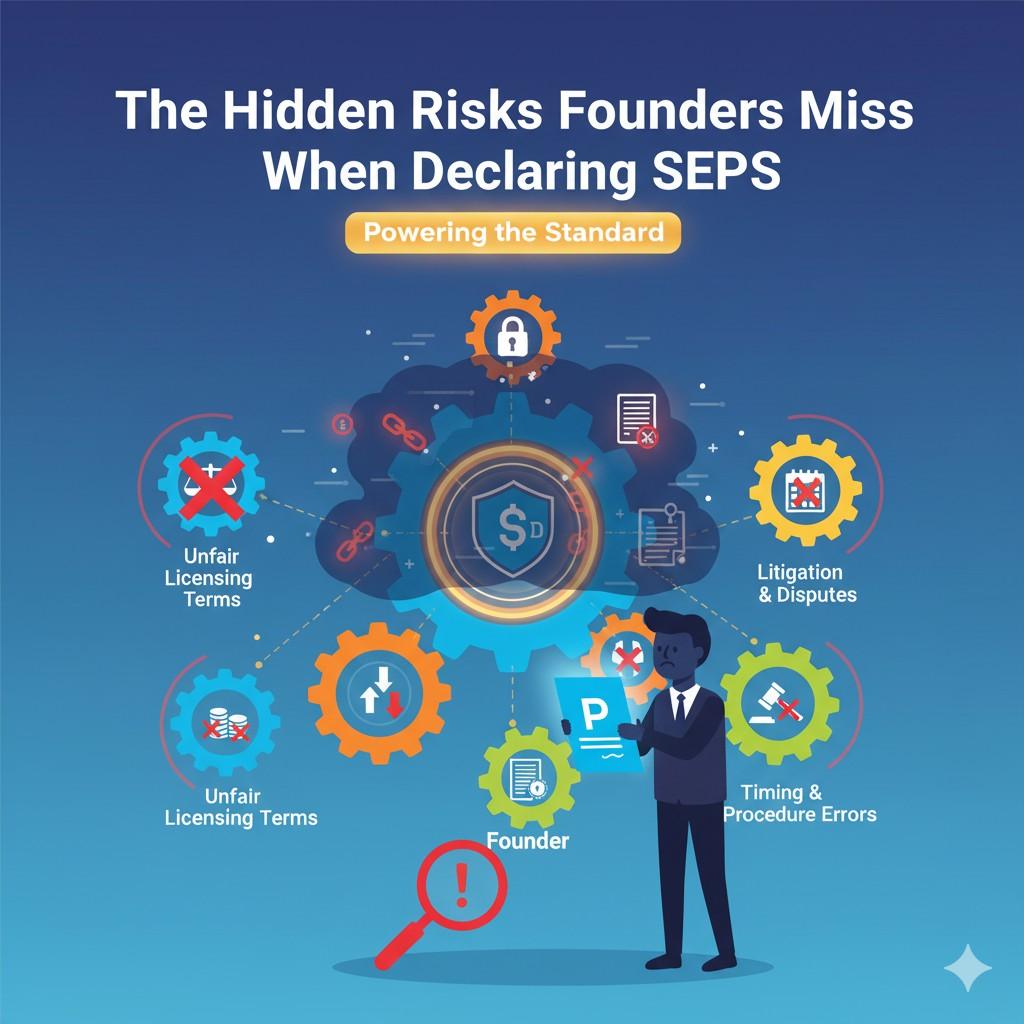
The Hidden Risks Founders Miss When Declaring SEPs
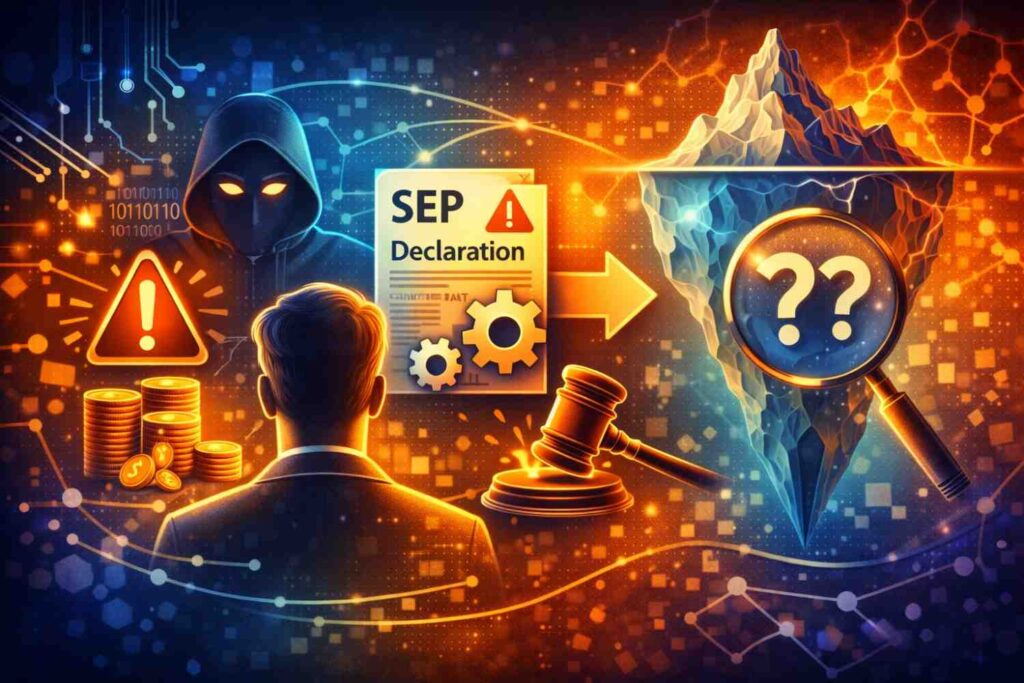
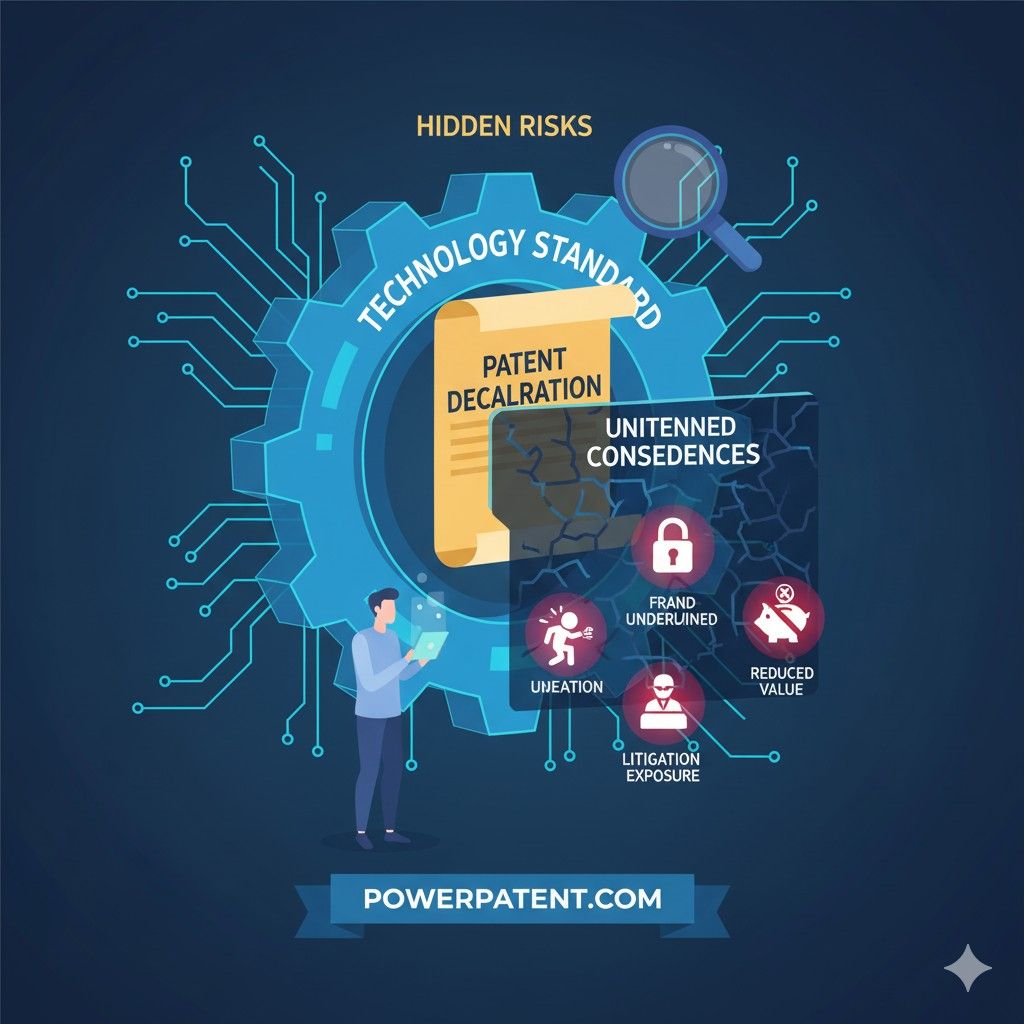
Declaring SEPs looks simple on the surface. You submit a form. You name patents or applications. You move on. But beneath that simplicity sit risks that rarely show up in policy summaries or legal guides.
These risks do not usually explode right away. They stay quiet, then surface later during funding rounds, acquisitions, or licensing talks. Founders who understand them early avoid problems that are hard to undo.
This section focuses on those quiet risks and how to manage them with intention.
Over-Declaring and the Loss of Credibility
One of the most common mistakes is declaring too much.
Founders often believe that declaring broadly shows strength. In reality, it can signal uncertainty or overreach. When others see long lists of patents with unclear relevance, they start questioning the seriousness of each declaration.
Over time, this erodes credibility. When a truly essential patent appears, it may be met with skepticism because past declarations felt inflated.
The business takeaway is restraint. Declare what reasonably appears essential, not what might someday be useful. Precision builds trust, and trust becomes leverage.
Under-Declaring and Accidental Exposure
The opposite mistake is just as dangerous.
Failing to declare a relevant patent can expose a company to claims of bad faith later. Even when the miss is unintentional, it can be framed as strategic silence.
This risk grows as companies scale. More engineers, more filings, and more standards involvement increase the chance that something slips through.
The practical solution is not perfection, but process. Regular reviews tied to standards activity reduce blind spots. Even lightweight check-ins make a difference.
Licensing Commitments You Did Not Fully Model
Many SEP declarations include commitments around licensing behavior. Founders often treat these as abstract or far-off concerns.
They are not.
These commitments can affect future pricing strategy, bundling options, and partnership structures. They can also influence how acquirers value your IP portfolio.
The key is to model downstream impact early. Ask how a licensing commitment might shape revenue options in three to five years. Even rough thinking is better than none.
This is where early legal and business alignment pays off.
Misalignment Between Claims and Declarations
Another quiet risk is declaring based on an early view of your claims, then amending those claims later.
Patent prosecution often narrows or shifts claim scope. If declarations are not revisited, they may no longer match reality.
This mismatch can weaken enforcement and complicate licensing discussions. Opposing parties may point to outdated declarations as evidence of uncertainty.
A strong habit is to revisit declarations when claims change materially. This does not require constant updates, just awareness of major shifts.
Forgetting That Declarations Live Forever
Declarations are not private. They become part of the public record within the standards ecosystem.
Years later, people will read them without knowing the context in which they were made. Short, clear, accurate language matters.
Founders sometimes delegate declarations without review. This is risky. A few vague words today can create ambiguity tomorrow.
The actionable advice is simple. Treat declarations like public statements. Review them carefully. Say only what you can support.
Investor and Acquirer Due Diligence
SEP declarations often surface during diligence.
Investors and acquirers want to know what obligations come with your patents. They want to understand how licensing commitments affect upside.
If declarations are sloppy or inconsistent, it raises questions about IP governance. This can slow deals or reduce valuation.
Founders who manage declarations thoughtfully often find these conversations easier. Clear records create confidence.
Regulatory Attention Is Rare but Real
Most startups never face regulators over SEP issues. But when markets grow large, attention increases.
Past declarations may be reviewed in hindsight. Behavior that seemed minor at the time can be reinterpreted under pressure.
The defense here is consistency. Companies that act transparently and align behavior with stated commitments are rarely targets.
This is not about fear. It is about discipline.
Treating Declarations as Strategy, Not Admin
The biggest hidden risk is treating SEP declarations as paperwork.
They are strategic acts. They shape relationships, expectations, and options.
Founders who integrate declaration thinking into product and IP planning gain an edge. They avoid surprises and control narratives.
This is hard to do with ad hoc tools and fragmented advice. It is much easier with systems built for modern teams.
PowerPatent was created to give founders that kind of control, combining smart software with real attorney oversight so decisions like SEP declarations are handled early and cleanly. If you want to see how that works in practice, you can explore it here: https://powerpatent.com/how-it-works.
Wrapping It Up
Declaring SEPs to SDOs is not a legal side task. It is a business decision that quietly shapes how your company is viewed, trusted, and valued over time. The rules matter, but understanding the purpose behind them matters more. Timing is flexible on paper, but unforgiving in practice. And the real risks are rarely loud or immediate. They show up later, when changing course is expensive.
Leave a Reply