
If you are building tech that touches a standard, patents stop being optional. They become power. Claim charts are how that power gets proven. And when standard-essential patents, or SEPs, are involved, claim charts are not paperwork. They are the whole game.
What a Claim Chart Really Proves in a Standard World
A claim chart is often described as a legal tool, but in a standards-driven market, that description is far too small. In reality, a claim chart is proof. It is proof that your invention is not just clever, not just new, but required.
When a product cannot follow a standard without using what you invented, that is where true leverage begins.
This section breaks down what a claim chart actually proves when standards are involved, and why businesses that understand this early gain a lasting edge.
A Claim Chart Shows That Your Patent Is Not Optional
In a standards world, optional ideas have limited value. Required ideas shape entire markets. A well-built claim chart proves that your patented idea is unavoidable if someone wants to follow the standard.
This matters because standards are not suggestions. Companies build products that must comply with them to sell, connect, or scale.
When your claim chart clearly maps each claim element to a mandatory part of the standard, you are showing that there is no clean workaround. That single point changes the conversation from “nice patent” to “necessary patent.”
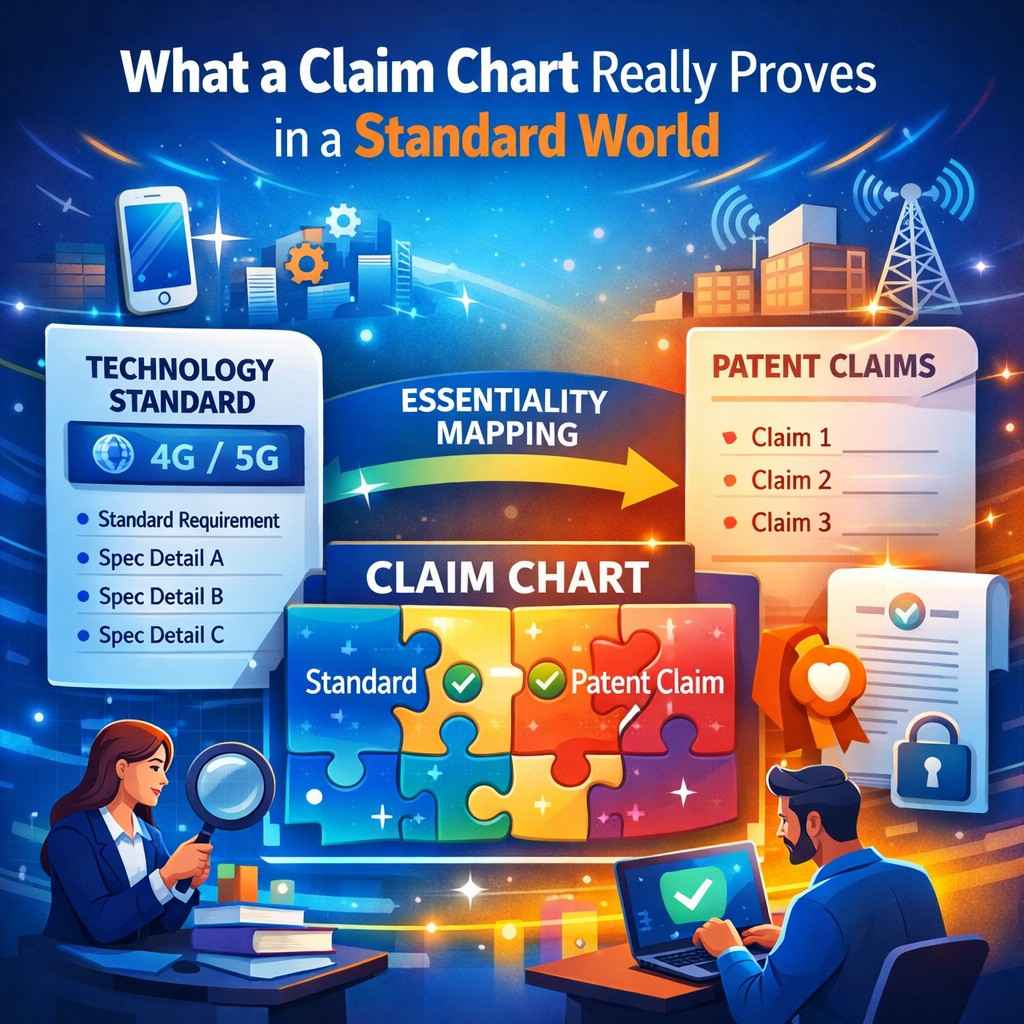
For businesses, this proof turns a patent into a gate. Anyone who wants through must talk to you.
The Difference Between Infringement and Essentiality
Many teams confuse infringement charts with essentiality claim charts. They look similar on the surface, but they prove very different things. Infringement asks whether a product uses your invention.
Essentiality asks whether the standard itself requires your invention.
This difference is critical. Products can change. Standards move much slower. A claim chart that proves essentiality shows that every compliant product, now and in the future, will rely on your idea as long as the standard holds.
Businesses that focus only on infringement often end up chasing products one by one. Businesses that prove essentiality position themselves above the product layer entirely.
Why Standards Bodies Care About Proof, Not Promises
Standards organizations do not take claims of essentiality at face value. Saying your patent is essential means very little without a claim chart that ties each claim step directly to the standard text.
A strong claim chart speaks the language of the standard. It references the exact clauses, figures, and required behaviors.
It does not rely on marketing language or broad interpretations. This precision is what gives your declaration credibility.
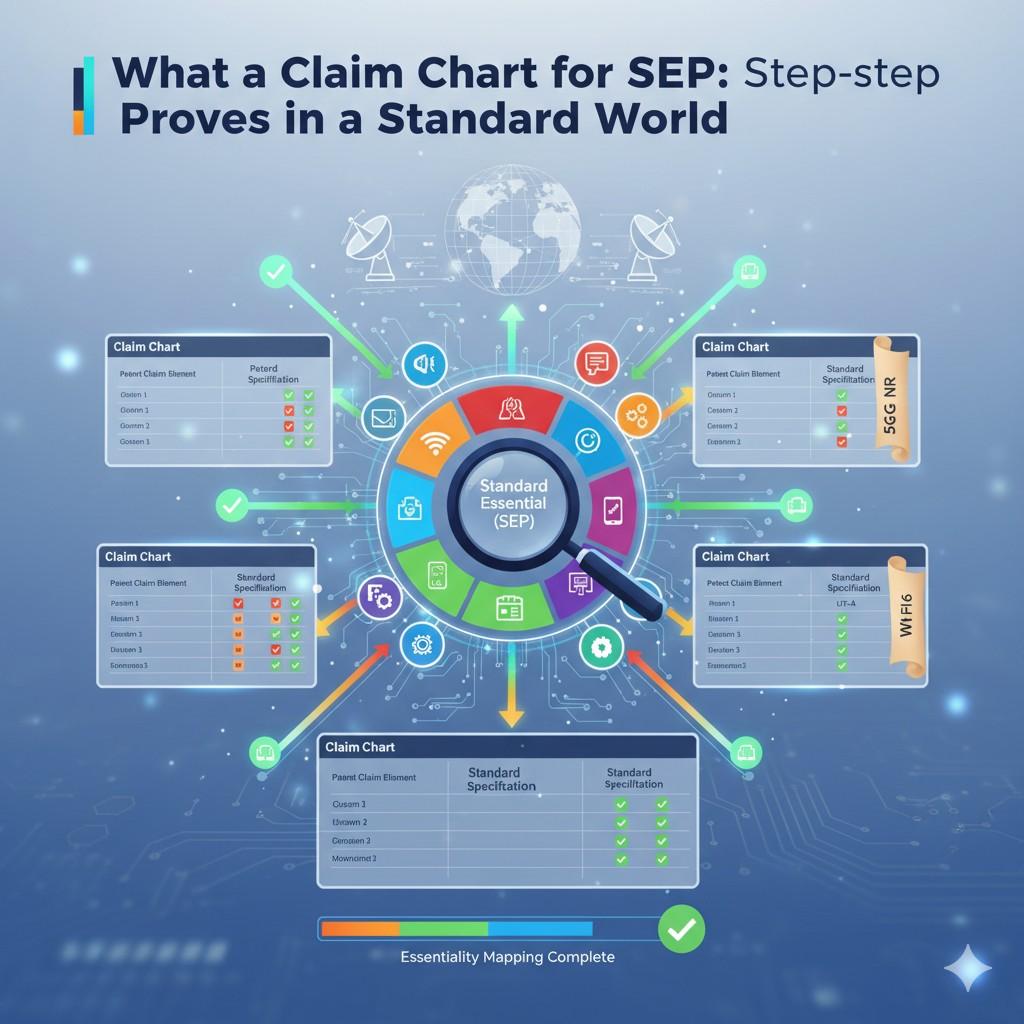
For companies, this credibility matters because it affects how others view your position in the ecosystem. Weak proof invites challenges. Clear proof discourages them before they start.
Claim Charts Turn Technical Insight into Business Leverage
Engineers understand why something must be done a certain way to meet a standard. Claim charts turn that understanding into something decision-makers can use.
When done right, a claim chart becomes a bridge between deep technical logic and business strategy.
It explains, in simple terms, why compliance forces adoption of your invention. This is what licensing teams, investors, and partners need to see.
Companies that treat claim charts as living business documents, not static legal files, are far more prepared when negotiations begin.
How Claim Charts Shape Licensing Conversations Before They Start
Licensing discussions often feel tense because both sides enter with different assumptions. A strong claim chart resets that dynamic early.
When you can calmly walk through how each claim element maps to a required standard step, the conversation shifts. It stops being about opinions and starts being about structure.
That clarity reduces friction and shortens negotiation cycles.
For businesses, this means fewer surprises and more control. You are not reacting. You are explaining.
The Hidden Role of Claim Charts in Valuation
Investors rarely read patents word for word. They do, however, care deeply about defensibility. A claim chart that proves essentiality is one of the clearest signals that a patent has durable value.
It shows that the patent is not tied to one product version or one market trend. It is tied to infrastructure. That kind of positioning affects how portfolios are priced, acquired, or licensed.
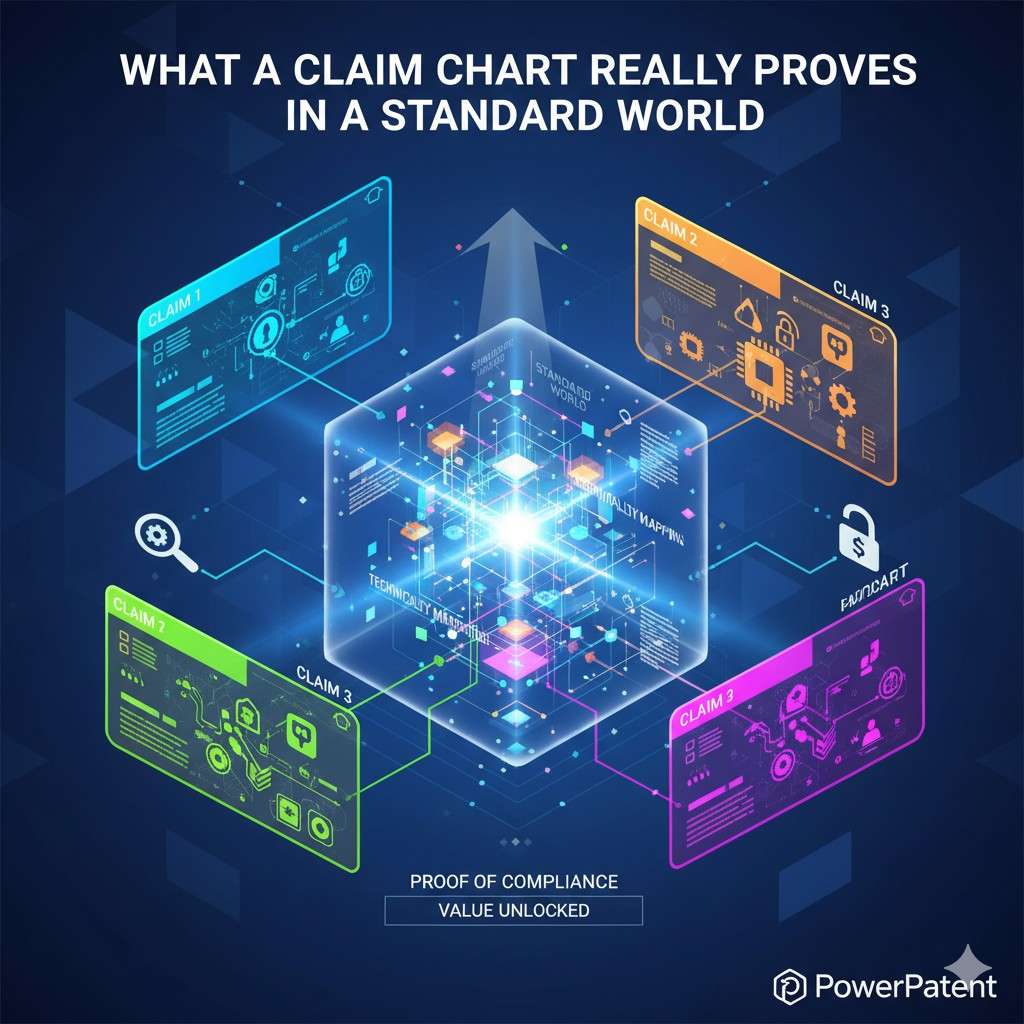
Companies that prepare these charts early often find that their IP story becomes much easier to tell, and much harder to dismiss.
Why Timing Matters More Than Perfection
Many teams wait too long to build claim charts because they believe everything must be final. In practice, early charts are often the most valuable.
Even a preliminary essentiality mapping helps teams understand where their invention truly sits in the standard.
It reveals gaps, risks, and opportunities while there is still time to adjust claim language or filing strategy.
From a business view, early insight beats late certainty. Waiting for perfection often means missing leverage windows that never reopen.
Claim Charts as Internal Alignment Tools
Claim charts are not only for outsiders. Internally, they create alignment between engineering, legal, and leadership.
When everyone sees how the invention maps to the standard, priorities sharpen. Engineers know what must be protected. Leaders know what matters most. Legal teams know where to focus effort.
This shared understanding reduces wasted work and helps companies move faster with confidence.
How PowerPatent Approaches Claim Charts Differently
At PowerPatent, we see claim charts as strategic assets, not compliance tasks. Our process is built to capture technical truth early and translate it into clear, defensible mapping with real attorney oversight.
Because our platform starts from how engineers actually build and think, the resulting claim charts reflect reality, not theory. That makes them stronger, clearer, and far more useful when standards are involved.
If you want to see how this works in practice, you can explore it here: https://powerpatent.com/how-it-works
The Real Question Claim Charts Answer
At the end of the day, a claim chart for a standard-essential patent answers one simple question: can the market move forward without you?
When the answer is no, everything changes. Your patent is no longer a document. It becomes a position.
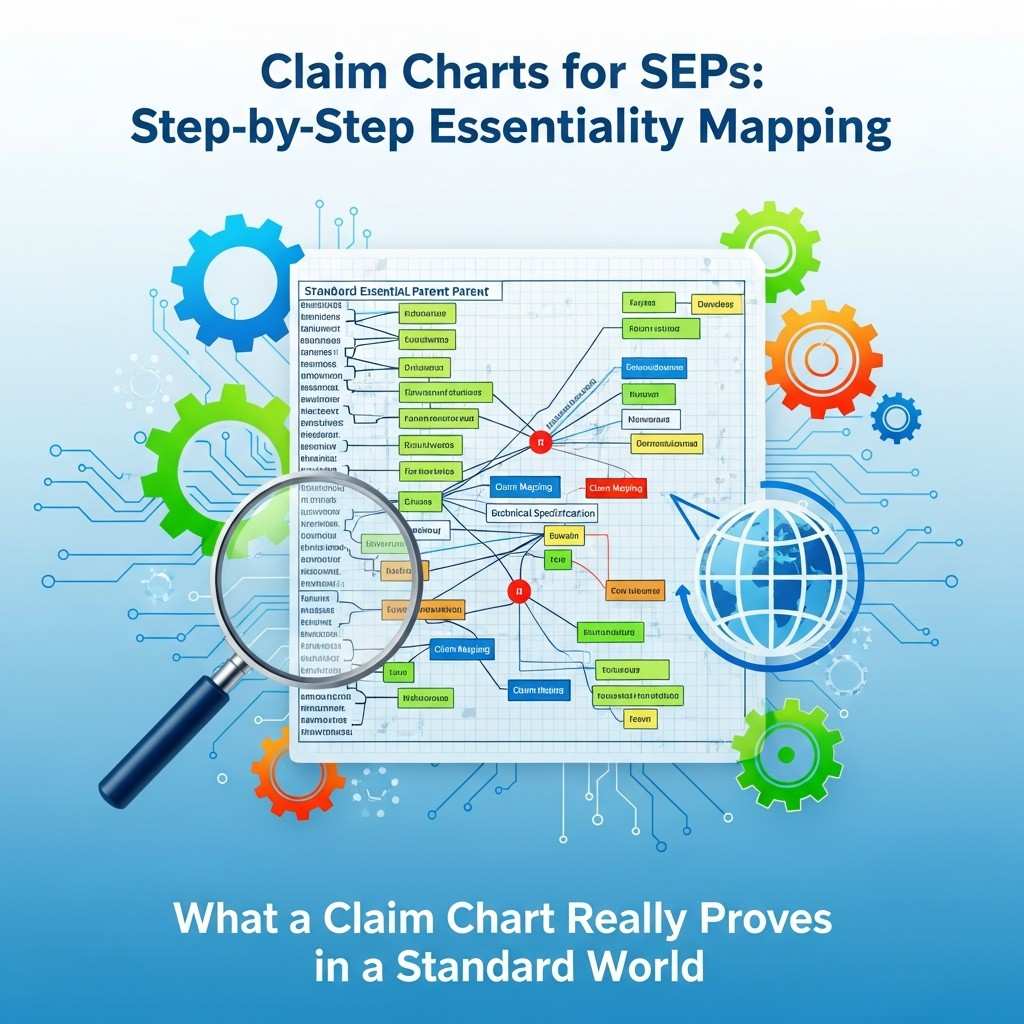
That is what a claim chart really proves in a standard world.
How Essentiality Mapping Connects Your Invention to the Standard
Essentiality mapping is where patents stop being abstract ideas and start becoming anchored to reality.
This is the step where your invention gets locked into the standard itself, not just a product that happens to use it. For businesses operating in standards-based markets, this connection is what creates long-term power and predictability.
Essentiality Mapping Is About Technical Necessity, Not Clever Drafting
Many people assume essentiality is about how smart the patent language is. That is a mistake. Essentiality is about technical necessity. The standard must require the behavior your patent claims, not just allow it.
When mapping essentiality, the question is never whether your invention could be used. The question is whether the standard can be followed without it. If the answer is no, your invention is essential.
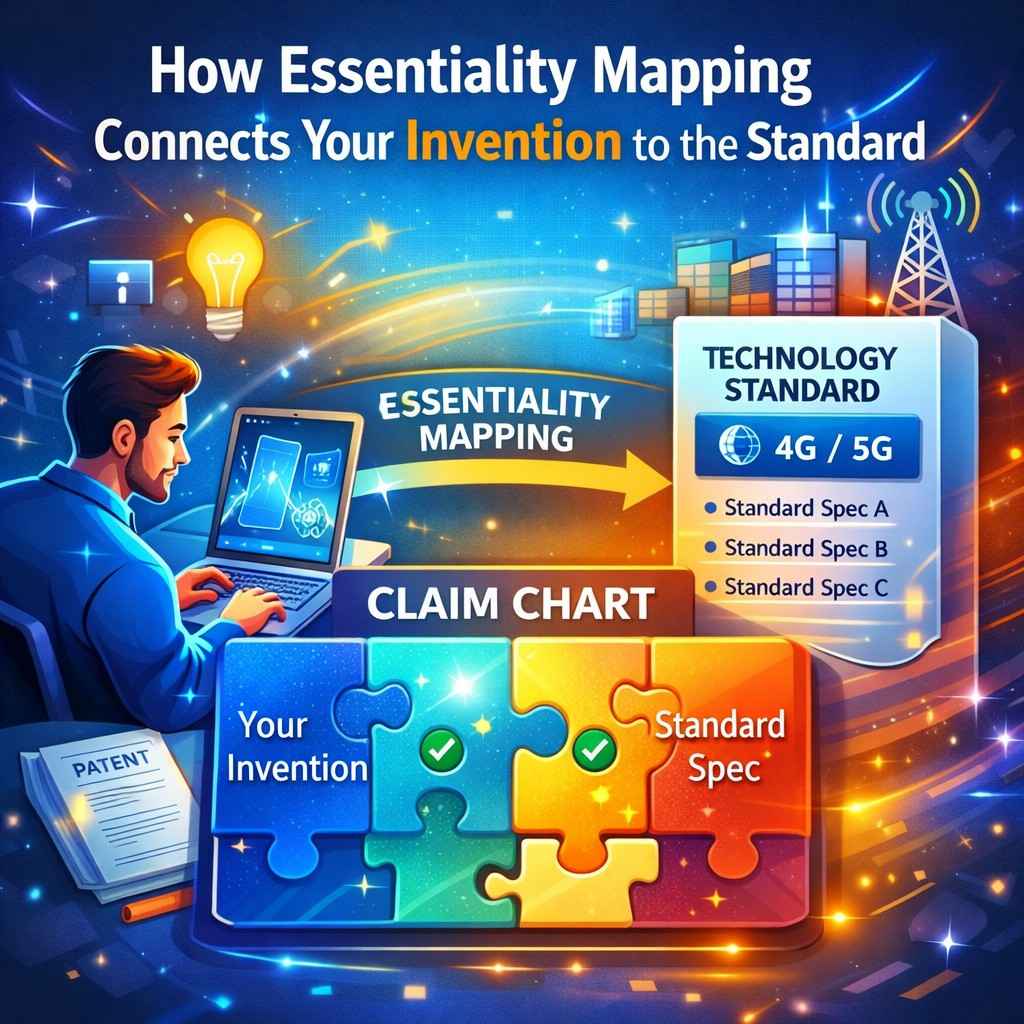
Businesses that focus on necessity instead of wording end up with far stronger positions because they are aligned with how standards actually work.
Reading the Standard Like an Engineer, Not a Lawyer
Standards are written by engineers for engineers. Essentiality mapping only works when you approach the text the same way.
This means focusing on required steps, mandatory signals, fixed structures, and must-follow rules. Words like “shall” and “must” carry far more weight than optional language.
The goal is to identify where the standard removes choice and forces a specific technical path.
Companies that rely only on legal interpretation often miss these signals. Teams that involve technical minds early see essential links others overlook.
The Moment Where Your Invention Becomes Infrastructure
There is a specific moment in essentiality mapping where everything clicks. It is when you realize your invention is not an add-on. It is part of the plumbing.
When the standard assumes your solution exists in order to function correctly, your patent moves into infrastructure territory. Infrastructure patents age well. They survive product cycles, UI changes, and market swings.
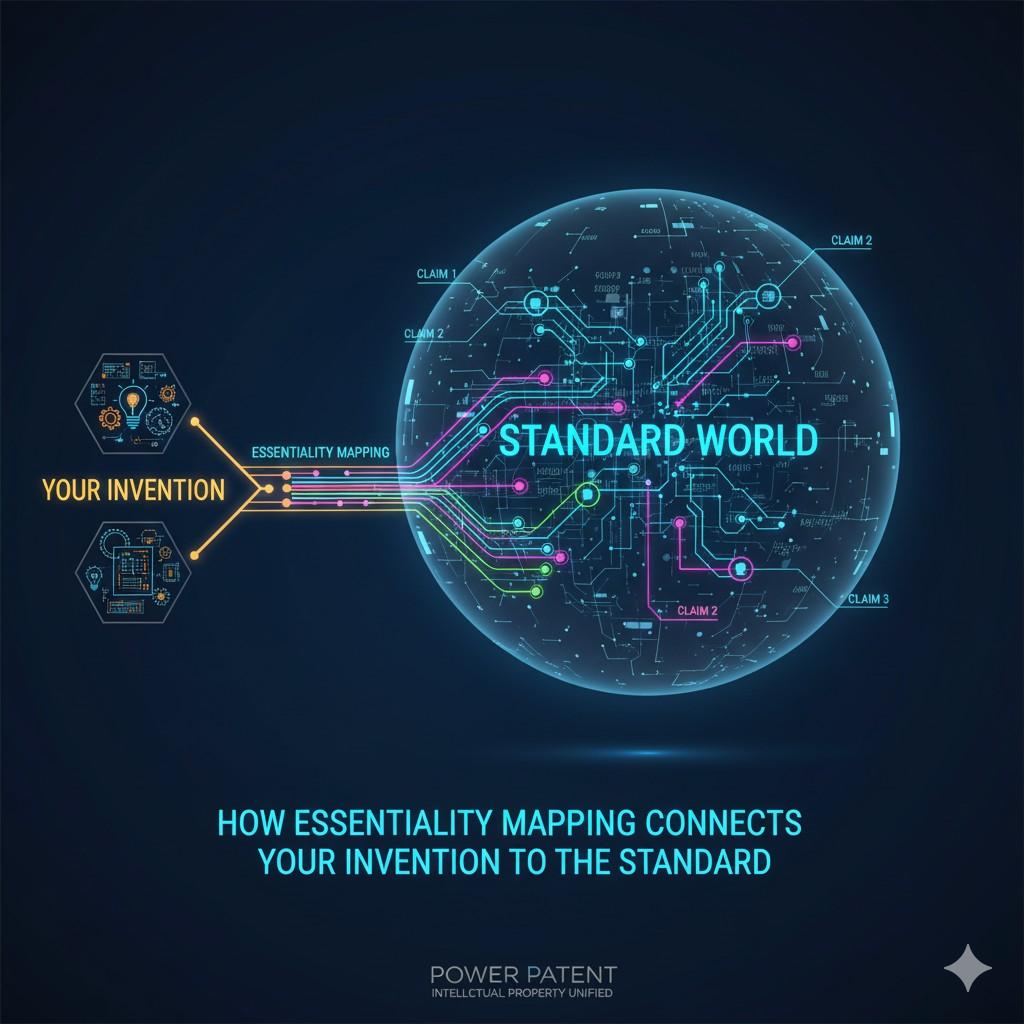
For a business, this is the difference between short-term licensing potential and long-term relevance.
How Essentiality Mapping Reduces Enforcement Risk
Strong essentiality mapping does more than strengthen your position. It also reduces risk.
When your claim chart clearly ties claims to required standard behavior, challenges become harder. Arguments shift from interpretation battles to structural facts. This makes enforcement cleaner and more predictable.
Companies that invest in mapping early often avoid years of uncertainty later. They know where they stand, and so does everyone else.
Essentiality Mapping Forces Clear Claim Boundaries
One hidden benefit of essentiality mapping is clarity. It forces you to confront what your invention truly covers and what it does not.
This clarity is healthy. It helps avoid overreaching claims that are easy to attack. It also highlights where follow-on filings may be needed to fully protect the standard interaction.
From a business view, clear boundaries make strategy easier. You know where to defend, where to expand, and where not to waste effort.
Why Partial Essentiality Still Matters
Not every claim needs to be fully essential to be valuable. In many cases, certain claims map to core mandatory functions while others map to dependent or conditional behaviors.
Understanding this gradient is critical. Partial essentiality can still create leverage, especially when combined with portfolio strategy. It allows companies to layer protection around the most critical standard behaviors.
Businesses that see essentiality as binary often miss these nuanced opportunities.
The Role of Claim Scope in Essentiality Mapping
Claim scope determines how tightly your invention fits the standard. Too narrow, and workarounds appear. Too broad, and essentiality becomes hard to prove.
Essentiality mapping helps tune this balance. It shows where scope aligns perfectly with standard requirements and where adjustments may be needed in future filings.
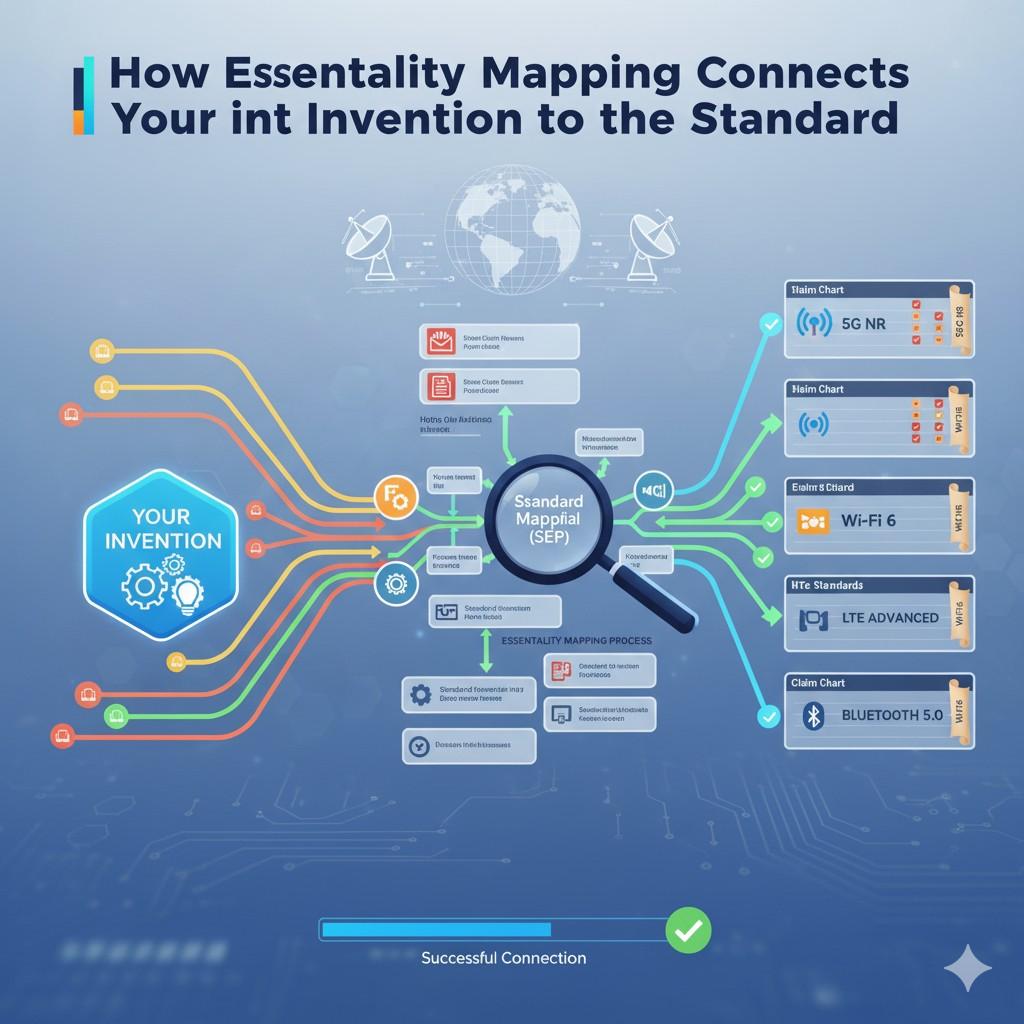
For companies still building, this feedback loop is incredibly valuable. It informs smarter patent decisions while there is still time to act.
Essentiality Mapping as a Strategic Mirror
Mapping your invention to a standard also reveals something else. It shows how deeply you understand the ecosystem you are building in.
Weak mapping often signals shallow engagement with the standard. Strong mapping shows fluency. That fluency builds trust with partners, standards bodies, and potential licensees.
Businesses that master this tend to be taken more seriously, faster.
How PowerPatent Helps Teams See Essentiality Earlier
At PowerPatent, we help teams surface essentiality signals early, before filings are locked and leverage is lost. Our tools are designed to work the way engineers think, while our attorneys ensure the mapping holds up when scrutinized.
This combination helps founders move quickly without guessing. It turns standards from a risk into an asset.
If you want to see how this approach works in real life, you can explore it here: https://powerpatent.com/how-it-works
The Real Outcome of Essentiality Mapping
The true outcome of essentiality mapping is confidence. Confidence that your patent matters. Confidence that it will age well. Confidence that when standards drive the market, your invention is part of the engine.
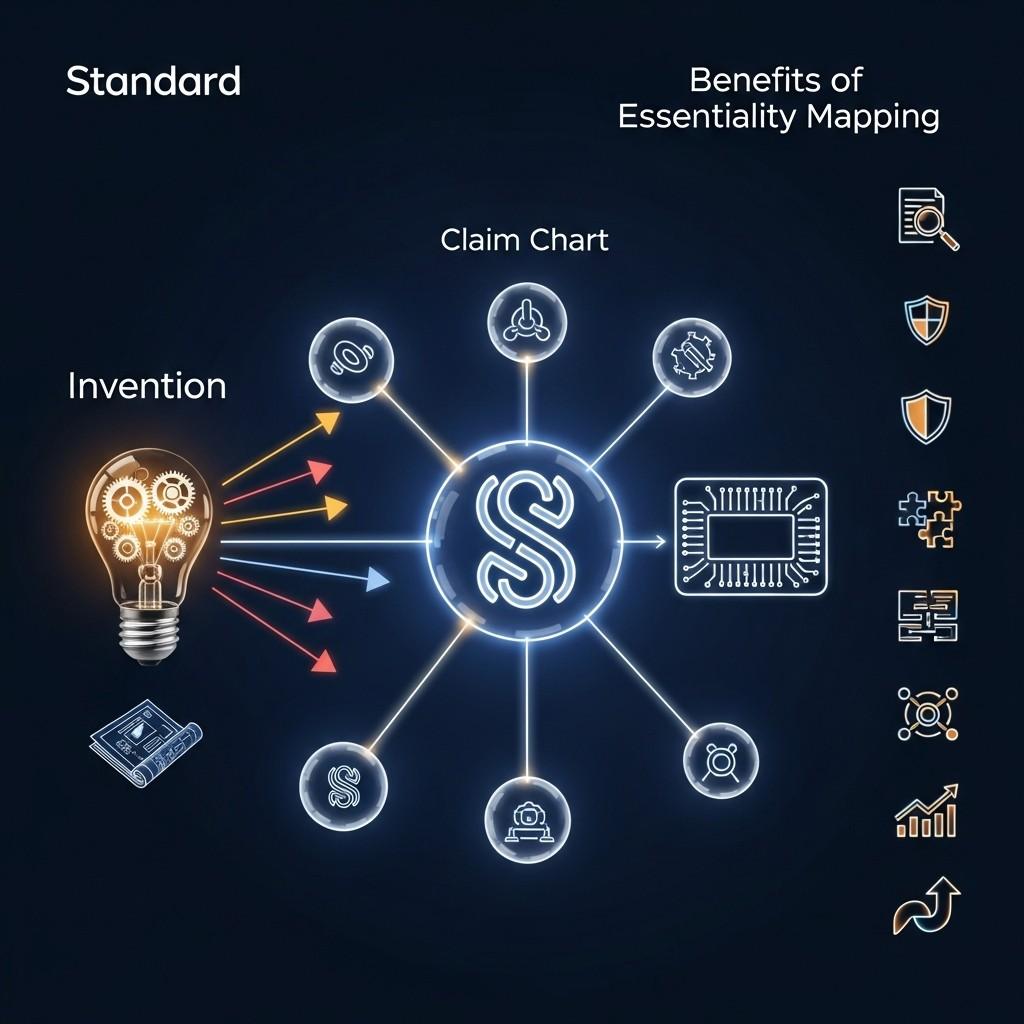
That confidence changes how businesses negotiate, invest, and grow.
Why Founders Must Treat SEP Claim Charts as a Business Asset, Not a Legal Task
Founders often think of claim charts as something that happens after the product ships, handled quietly by lawyers in the background. In standards-driven markets, that mindset is costly.
SEP claim charts are not paperwork. They are strategy. When treated as a business asset, they shape leverage, timing, and long-term control in ways that most teams never fully realize.
The Shift from Reactive Defense to Proactive Positioning
Most companies encounter claim charts for the first time when there is pressure. A dispute, a negotiation, or a standards declaration forces action. By then, options are limited.
Founders who treat claim charts as assets work in the opposite direction. They build them early, refine them over time, and use them to guide decisions.

This proactive approach turns patents from shields into anchors that hold market position steady as competition grows.
From a business standpoint, this shift alone can save years of friction.
Claim Charts Influence Product Decisions More Than You Think
Product teams make tradeoffs every day. Features are added, removed, or simplified based on speed and cost. When claim charts are visible and understood, those decisions become sharper.
A clear SEP claim chart highlights which parts of the product connect directly to standard-mandated behavior. Those parts deserve extra care. They are not just features. They are leverage points.
Founders who surface this information internally often find their teams building with more intention and fewer regrets.
Why Waiting for Revenue Is a Strategic Mistake
Some founders delay serious IP work until revenue appears. In standards markets, this delay often erodes the very leverage that could have accelerated revenue.
SEP claim charts take time to mature. They benefit from early exposure to standards drafts, technical discussions, and implementation details. Waiting means missing these inputs.
Businesses that invest before revenue often find themselves in stronger positions when the market finally pays attention.
Claim Charts Create Negotiation Gravity
Negotiations tend to drift toward the party with clearer proof. SEP claim charts create that gravity.
When you can calmly explain why compliance requires your invention, discussions become grounded. There is less posturing and more problem-solving. Even when parties disagree, the framework is shared.
For founders, this reduces emotional strain and keeps negotiations focused on outcomes rather than arguments.
How Claim Charts Support Portfolio Thinking
One patent rarely stands alone. Claim charts help founders see how individual filings fit together across a standard.
This view enables smarter portfolio planning. Gaps become visible. Overlaps become obvious. Follow-on filings become intentional rather than reactive.
Businesses that adopt this mindset build portfolios that feel cohesive and defensible, not scattered.
SEP Claim Charts and Long-Term Optionality
Strong claim charts preserve options. They allow companies to license, cross-license, partner, or enforce without scrambling to prove relevance each time.
This optionality is especially valuable in fast-moving markets where strategies change. What starts as a defensive position can later become a revenue engine.
Founders who see claim charts as assets build flexibility into their future.
Internal Confidence Changes External Perception
When a founding team truly understands its SEP position, it shows. Conversations become clearer. Messaging becomes tighter. Doubt fades.
This internal confidence affects how others respond. Investors listen more closely. Partners engage more seriously. Competitors tread more carefully.
All of this begins with claim charts that founders actually understand and believe in.
The Cost of Treating Claim Charts as Someone Else’s Problem
Delegating claim charts entirely removes founders from one of their most powerful tools. When charts live only with outside counsel, insight is lost.
Founders who stay engaged gain perspective that shapes product, standards participation, and timing decisions. Those who do not often find themselves surprised later.

From a business view, ownership matters.
How PowerPatent Helps Founders Stay in Control
PowerPatent is built for founders who want control without chaos. Our platform keeps claim charts understandable, connected to real engineering work, and reviewed by real attorneys.
This approach ensures that claim charts remain usable assets, not dusty files. Founders stay informed without being overwhelmed.
If you want to see how this works in practice, you can explore it here: https://powerpatent.com/how-it-works
The Founder’s Real Responsibility
In the end, founders are responsible for protecting what makes their company matter. In standards-driven markets, SEP claim charts sit at the heart of that responsibility.
Treat them as business assets, and they will support growth, confidence, and leverage for years. Treat them as legal tasks, and they will always feel late.
That choice shapes more than patents. It shapes outcomes.
Claim Charts Shape How Early the Market Takes You Seriously
Markets built on standards reward clarity. When a founder can clearly explain how their invention maps to required standard behavior, credibility rises quickly.
This clarity signals maturity, even in early-stage companies. It shows that the team understands not just what they built, but how it fits into the broader system. That signal often opens doors faster than product demos alone.
SEP Claim Charts Guide Where Founders Spend Political Capital
Standards ecosystems involve politics, influence, and time. Not every meeting, contribution, or debate matters equally.
Claim charts help founders see where their invention actually touches mandatory parts of the standard. That insight guides where to show up, where to speak, and where to stay quiet. It prevents wasted effort and sharpens influence.
For businesses, this focus can be the difference between shaping the standard and reacting to it.
Claim Charts Reduce Surprise When Competitors Emerge
Competitors rarely appear out of nowhere. They arrive following the same standards.
Founders with strong SEP claim charts are rarely surprised by competitor moves.
They already know which parts of the standard are locked by their IP and which are open. This foresight allows faster response and calmer decision-making.
Businesses without this clarity often scramble when competition heats up.
Why Claim Charts Belong in Board-Level Conversations
Boards care about risk, defensibility, and long-term value. SEP claim charts speak directly to all three.
When founders can explain essentiality in simple terms, board discussions become more strategic.
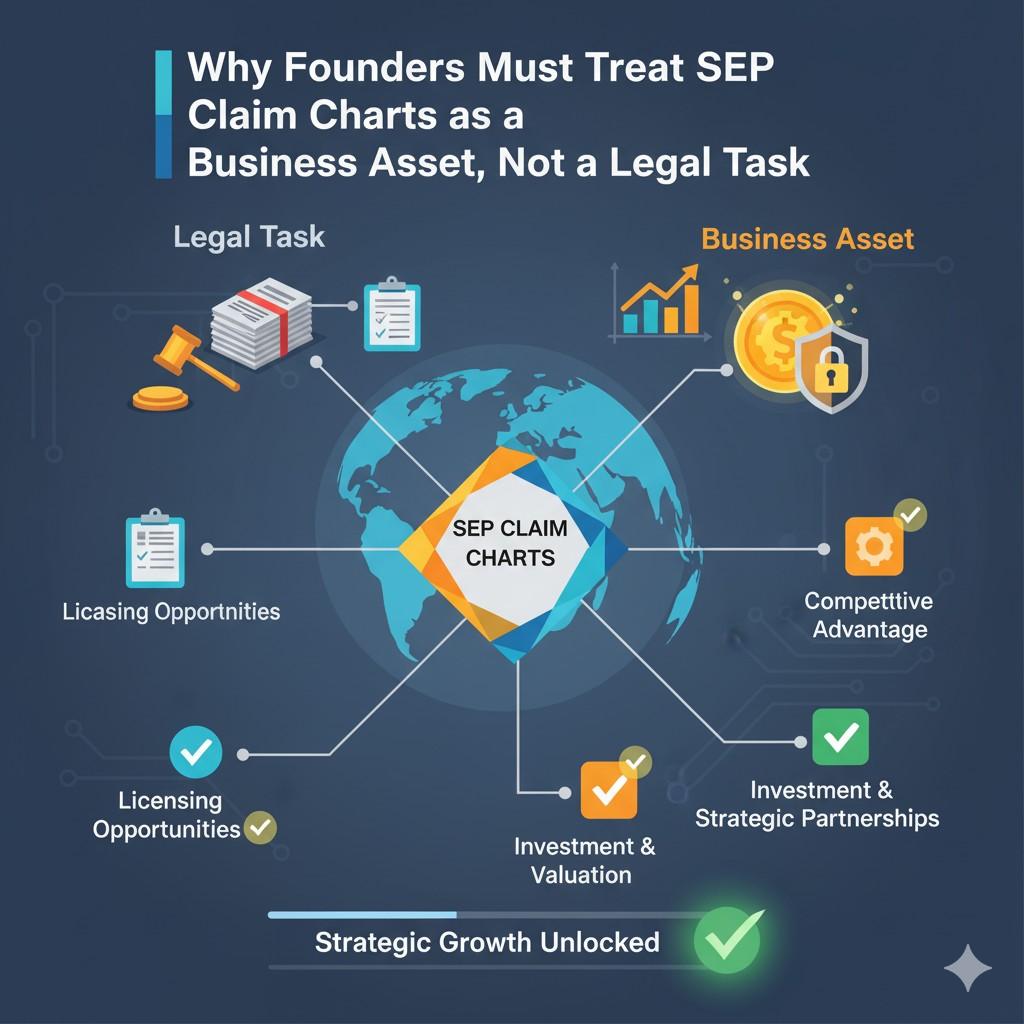
Decisions around funding, partnerships, and exits become grounded in real leverage instead of assumptions.
This elevates IP from a footnote to a core asset in leadership conversations.
Claim Charts as Signals in Acquisition Scenarios
Acquirers look for certainty. In standards-driven markets, certainty comes from essentiality proof.
A clear SEP claim chart reduces diligence friction. It helps acquirers understand value quickly and confidently. This often improves deal speed and strength.
Founders who prepare these assets early avoid rushed explanations later.
The Shift from Defensive IP to Offensive Strategy
Most teams think about patents defensively. SEP claim charts unlock offensive thinking.
They reveal where licensing, collaboration, or cross-licensing could create value. They show where your company sits in the flow of the market.
Founders who adopt this view stop asking how to protect and start asking how to lead.
How PowerPatent Keeps Claim Charts Founder-Readable
A business asset is only useful if it can be understood. PowerPatent designs claim charts to be readable by founders, not just attorneys.
By grounding charts in real engineering logic and layering attorney review on top, we make sure founders stay in the loop without drowning in detail.
You can see how this approach works here: https://powerpatent.com/how-it-works
The Long View Founders Rarely Regret
Founders rarely regret building strong SEP claim charts early. They do regret ignoring them.
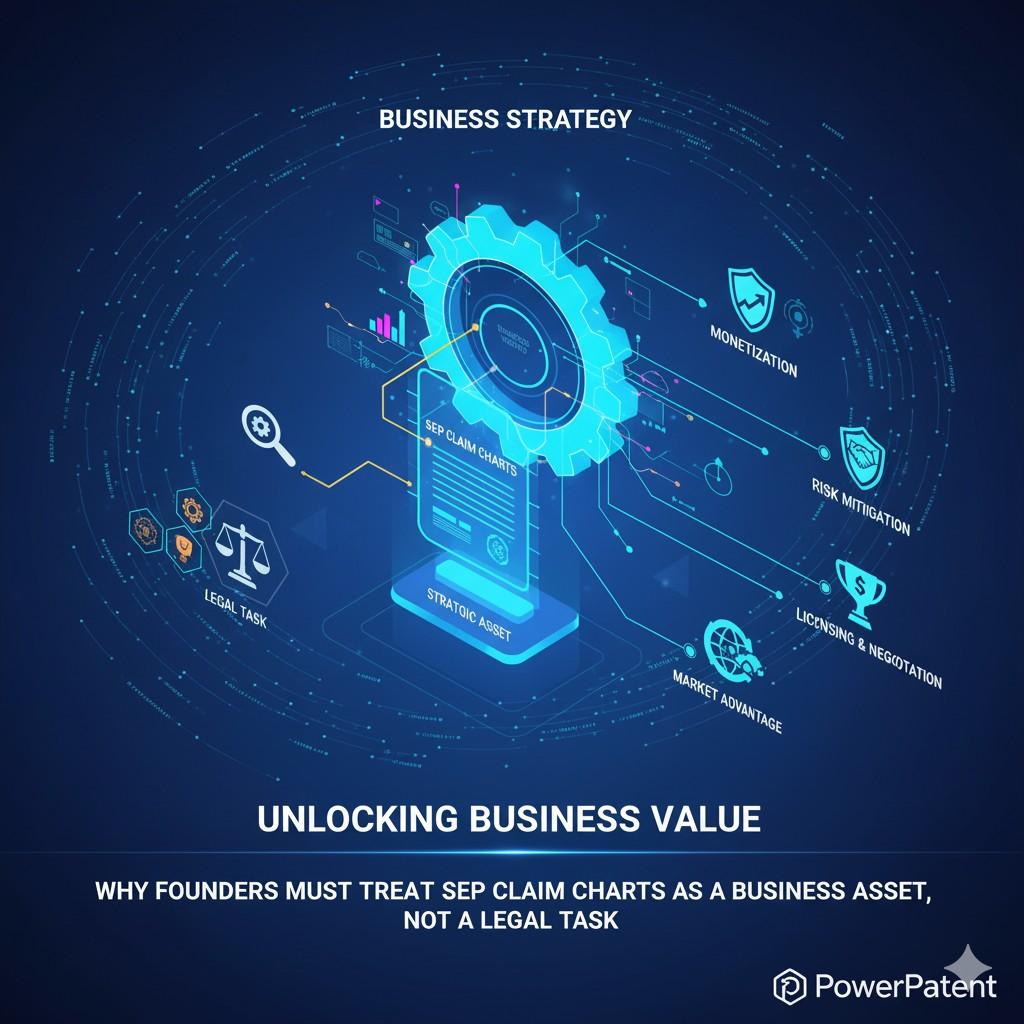
Over time, these charts quietly support negotiations, funding, and market position. They compound in value as standards solidify.
Wrapping It Up
Standards decide how entire markets move. When your invention sits inside those standards, the question is never just whether you have a patent. The real question is whether you can prove that the market cannot move without you. That proof lives in SEP claim charts. Throughout this article, one theme stays constant. Claim charts are not legal busywork. They are the bridge between what your engineers built and the leverage your business can hold. When they clearly show essentiality, they turn patents into positions that last.
Leave a Reply