Standard Essential Patents decide who gets paid and who gets pushed around.
If you are building anything that touches networks, chips, video, audio, or connectivity, SEPs are not optional. They shape leverage, revenue, and even survival. One bad move can lock you into weak deals for years. One smart move can turn your tech into a toll booth the world must pass through.
This article is about how SEP strategy really works across the United States, Europe, China, and the United Kingdom. Not theory. Not legal talk. Real, practical insight founders can use while still moving fast.
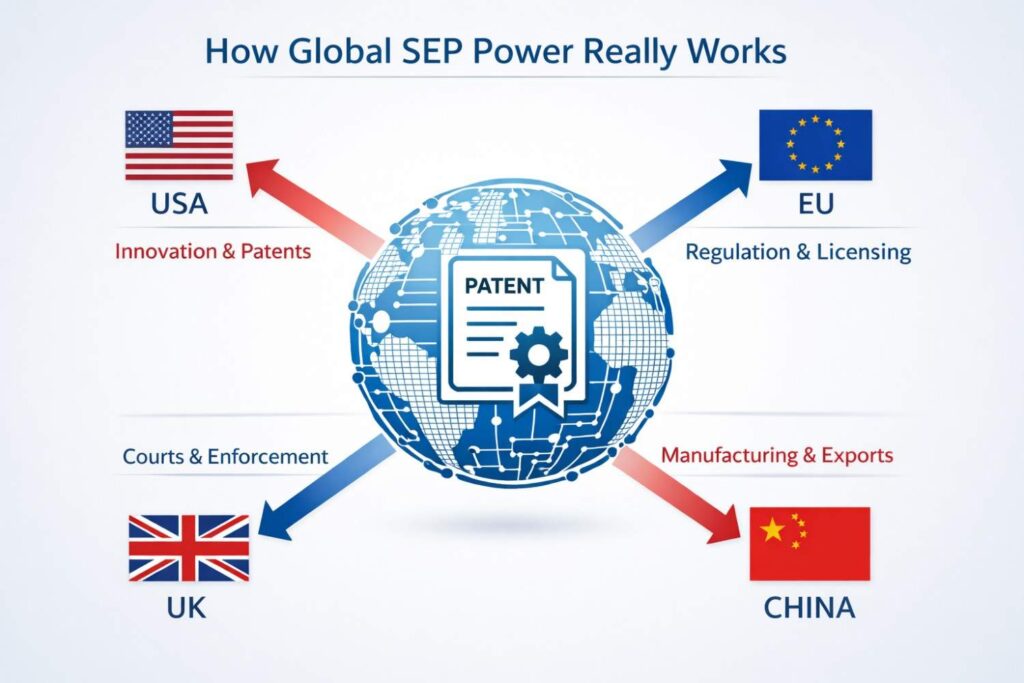
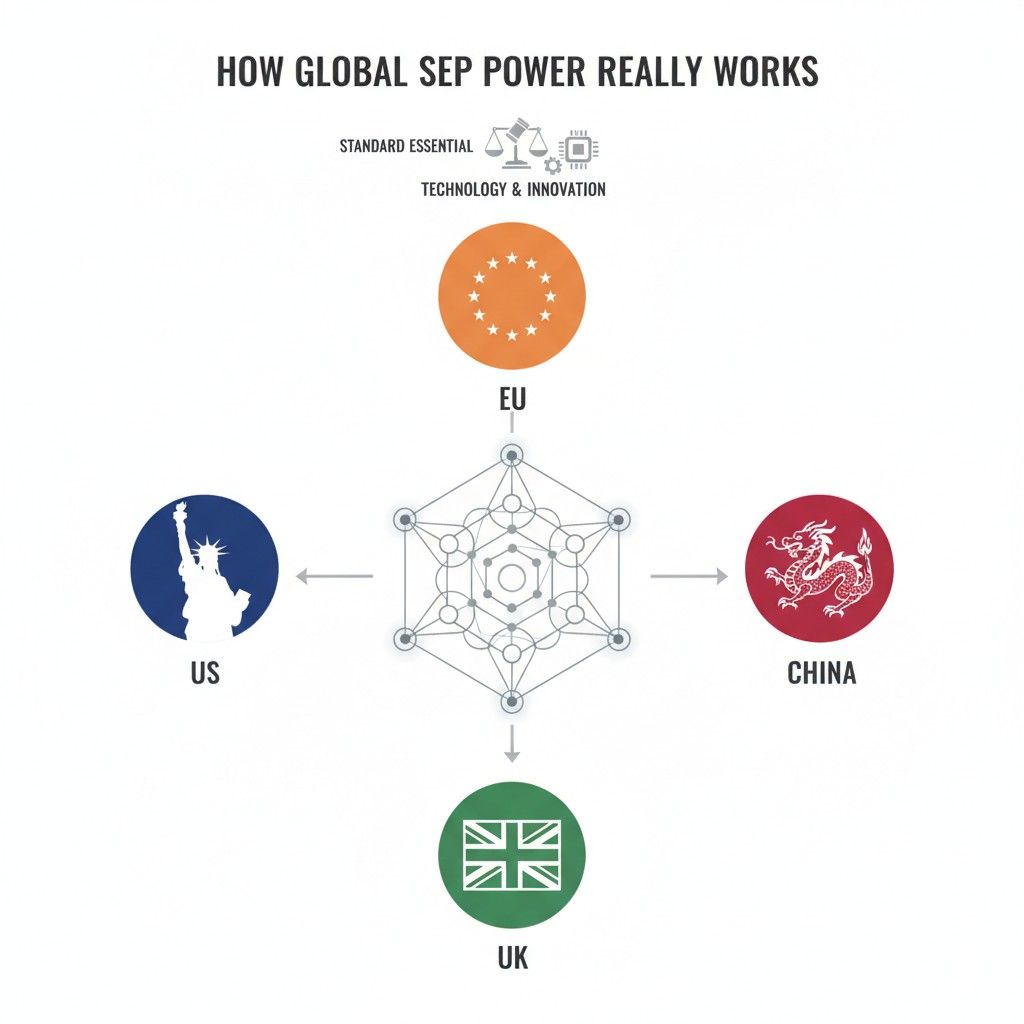
How Global SEP Power Really Works
Global SEP power is not about who has the most patents. It is about who understands timing, pressure, and geography better than everyone else. Many companies think SEPs are a legal problem that shows up late.
In reality, SEP power is a business tool that starts shaping outcomes years before a standard is finished.
At a high level, SEPs sit at the intersection of technology, standards bodies, and courts. Whoever understands how these three forces interact across countries gains leverage that others cannot easily copy.
This section breaks down how that leverage is created and how smart companies use it while still moving fast.
SEPs Are Built Before the Standard Is Locked
Most people think SEP value appears once a standard is published. That is already too late.
Real SEP power is created during the design phase of a standard, when technical choices are still fluid. This is when your invention can quietly become unavoidable.
If your solution solves a real problem and is easy to adopt, it has a chance to be baked into the final rules everyone must follow.
For businesses, this means engineering and IP teams must talk early. If your engineers are contributing to standards but your patent strategy lags behind, you are donating value.
The smartest teams file patents while technical proposals are still being discussed, not after the votes are done.
PowerPatent is built around this idea. Founders can turn evolving technical ideas into strong filings quickly, without slowing product work. That speed matters when standards move fast.
You can see how that process works at https://powerpatent.com/how-it-works.
SEP Power Comes From Being Hard to Design Around
An SEP only has power if others cannot avoid it without breaking the standard. Courts across the world care deeply about this, even if they describe it differently.
From a business view, this means narrow ideas that only cover one optional feature rarely carry weight.
Broader system-level ideas often matter more. The goal is not to block innovation but to cover the core flow that everyone must use.
Companies that win SEP disputes usually do one thing right early. They describe the invention in a way that maps cleanly onto the standard language. When judges and experts read both side by side, the overlap is obvious.
Founders should think about this when drafting patents. Ask a simple question. If someone follows the standard exactly, do they almost automatically use your idea?
If the answer is unclear, the patent may not create real SEP pressure.
FRAND Is About Leverage, Not Fairness
FRAND sounds friendly, but in practice it is about leverage.
Courts say licenses must be fair and reasonable, yet what those words mean depends heavily on location. Some courts focus on global rates. Others focus on local behavior. Some care about negotiation conduct more than math.
For businesses, this means you should not assume FRAND protects you from risk. It does not. Instead, FRAND shifts the battle from whether a license is needed to how much pressure each side can apply during talks.
The strongest SEP owners prepare for FRAND fights long before they start. They document offers carefully.
They stay consistent across regions. They avoid moves that could look aggressive in one country while helpful in another.
Even smaller companies can do this well if they plan early. You do not need a huge legal team. You need clean records and a clear story.
Courts Do Not Behave the Same Across Borders
One of the biggest mistakes companies make is treating SEP enforcement as global and uniform. It is not.
Some courts move slowly and focus on damages. Others move fast and threaten product bans. Some welcome global rate setting. Others avoid it entirely.
This creates an uneven chessboard. A case filed in one country can shape negotiations everywhere else, even if that country is a small market. Speed and willingness to issue injunctions often matter more than market size.
Smart companies choose forums carefully. They think about where pressure will be felt first. They also plan for where they might be sued and prepare their story before that happens.
This is why filing strategy matters so much. A patent that only exists in one region limits your options. A patent family that spans key regions gives you flexibility.
SEP Strategy Is Really Negotiation Strategy
At the end of the day, most SEP disputes end in deals, not verdicts.
The courtroom is only one part of the system. The real game is negotiation under uncertainty. Each side is trying to guess how courts might react and how long the fight could last.
Businesses that treat SEP work as pure litigation often lose momentum. Those that treat it as deal-making with legal backup tend to do better.
This means founders should think about licensing paths early. Who might need this technology? What products depend on it? What would a reasonable deal look like before emotions and threats enter the room?
When you have answers ready, you negotiate from strength instead of fear.
Timing Creates or Destroys SEP Value
SEP power is extremely sensitive to timing.
File too late and the standard is already set. Enforce too early and you look aggressive. Wait too long and others set the narrative.
The best SEP holders align filing, participation, and enforcement into one smooth arc. They file while contributing. They watch adoption. They engage commercially before going to court.
For startups, this does not mean rushing to sue. It means being ready. It means having patents that survive scrutiny when the moment comes.
PowerPatent helps teams build that readiness without slowing growth. You stay focused on building while your IP foundation quietly strengthens.
If you want to see how that works in practice, visit https://powerpatent.com/how-it-works.
Global SEP Power Favors the Prepared, Not the Biggest
There is a myth that only giants win SEP battles. That is not true anymore.
What matters today is clarity, consistency, and coverage. Courts have become more technical. Judges expect clean explanations. Companies that show discipline often outperform those that rely on size alone.
Smaller teams can compete if they avoid common mistakes. Filing vague patents. Ignoring standards bodies. Treating IP as paperwork instead of strategy.

Global SEP power rewards those who think early and act deliberately. The window to do this opens much sooner than most founders expect.
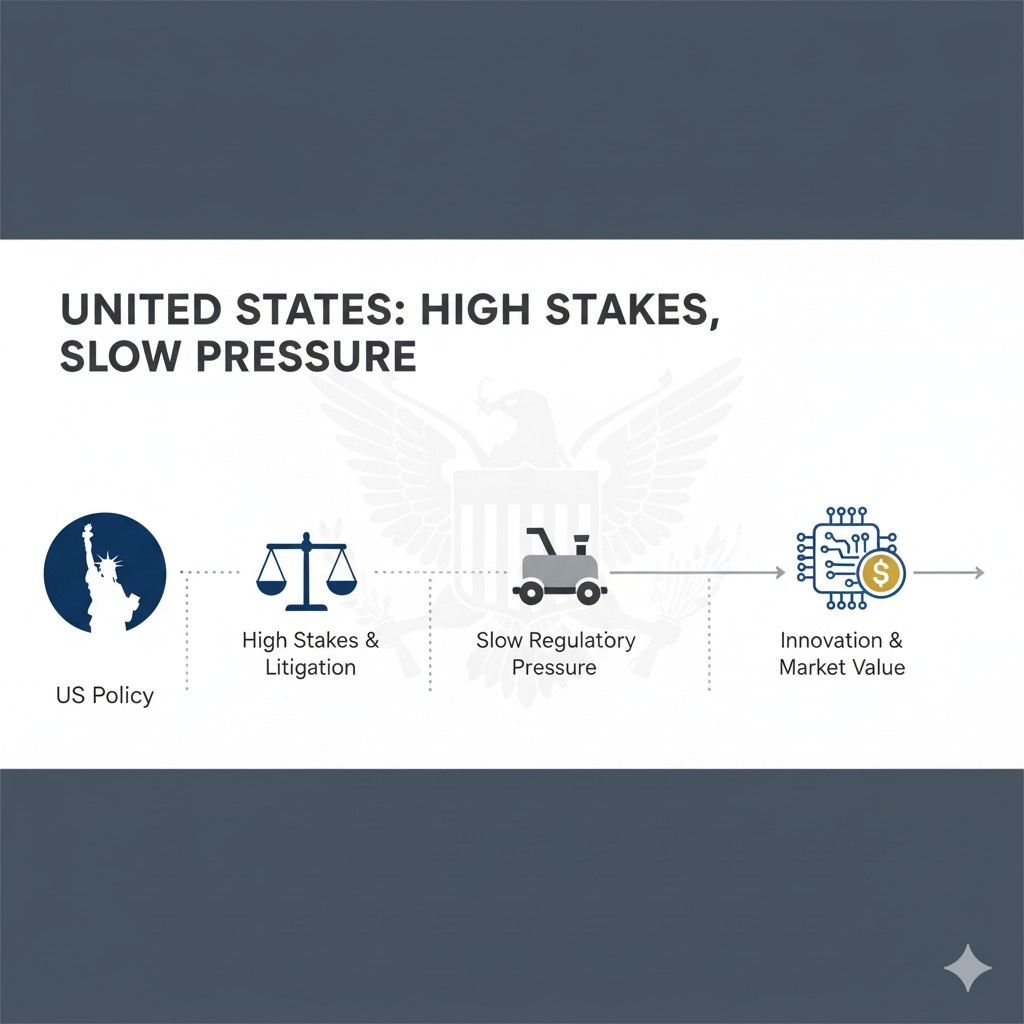
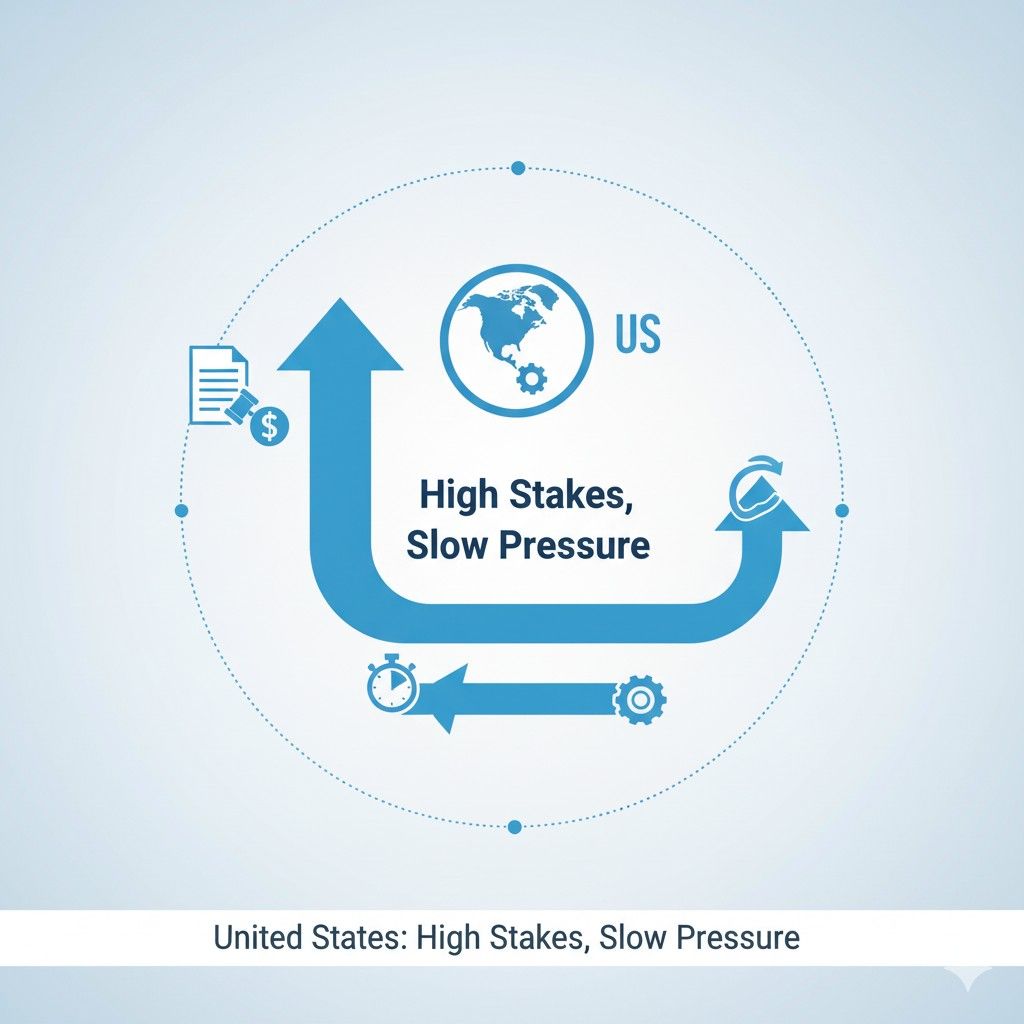
United States: High Stakes, Slow Pressure
The United States is often misunderstood in SEP strategy. Many founders assume it is either the most powerful place to enforce or completely useless compared to Europe or China.
The truth sits in the middle. The US is not about fast pressure. It is about credibility, money, and long-term leverage.
Understanding how SEP power works in the US helps businesses avoid wasted effort and use the system for what it actually does well.
The US Is Not an Injunction-First System
In the US, courts are cautious about blocking products. Injunctions are possible, but they are not common in SEP cases. Judges worry about overreach, public harm, and fairness. This shapes everything.
For businesses, this means SEP enforcement in the US rarely creates instant panic for implementers. You are not likely to shut down sales overnight. Pressure builds slowly.
This does not make US SEPs weak. It changes the kind of leverage they create. Instead of fear-based pressure, US SEPs create financial and credibility pressure over time.
Damages Drive the Real Risk
US courts are comfortable with money awards. Large ones.
If an SEP holder proves infringement and survives FRAND arguments, damages can be meaningful. This is especially true when sales volumes are high. Over time, the numbers add up.
For companies using standards-based tech, this creates a background risk that cannot be ignored.
Even if there is no immediate injunction threat, ongoing exposure affects financial planning, investor discussions, and acquisition talks.
Founders holding SEPs should understand this dynamic. The US is where your SEP portfolio becomes a financial asset on paper. It helps anchor global license talks even if enforcement happens elsewhere.
Jury Trials Change the Game
One unique part of the US system is juries.
Juries are not technical experts, but they respond to stories. They care about fairness, effort, and who looks reasonable. This influences how SEP cases are framed and settled.
Businesses that explain their role clearly often gain advantage. Were you contributing to the standard? Did you try to license reasonably? Did the other side ignore you?
These questions matter in US courtrooms. Documentation and tone matter as much as claim charts.
This is why early behavior is critical. Emails, offers, and meeting notes can all surface later. Founders should assume everything they do today could be read by strangers years from now.
US Courts Care Deeply About Conduct
More than many other regions, US courts look closely at how parties behave.
Did the SEP holder disclose properly to the standards body? Did they follow licensing commitments? Did they negotiate in good faith?
Poor conduct can weaken an otherwise strong patent. Courts may reduce damages or limit remedies if behavior looks unfair.
For SEP owners, this is both a risk and an opportunity. If you act cleanly and consistently, you build credibility. That credibility carries weight not just in the US, but globally.
This is another reason to avoid improvising SEP strategy late. Clean conduct is easiest when it is planned from the start.
Venue Choice Still Matters
The US is not one court system in practice. Different districts behave differently.
Some move faster. Some are more technical. Some have more experience with patent cases. Where a case is filed can shape its entire path.
Businesses should be aware of this even if they never plan to sue. Being sued in one district versus another can change timelines, costs, and settlement pressure.
Filing strategy influences this. Where your patents are registered and how products are sold can affect venue options later.
The US Anchors Global Licensing Talks
Even though US cases move slowly, they often anchor global negotiations.
Why? Because US outcomes are respected. A strong US ruling sends a signal to other courts and to markets. It also helps set valuation benchmarks.
SEP owners often use the US to establish legitimacy, then apply pressure elsewhere. Implementers know this and factor it into decisions.
For founders, this means US patents should not be ignored even if Europe or China seem more aggressive. The US plays a different role. It stabilizes and supports the broader strategy.
Practical Advice for Businesses in the US Context
If you are developing technology that could become standard-essential, treat the US as your credibility base.
File clearly written patents that judges and juries can understand. Avoid overly abstract language. Tie ideas to real systems and flows.
Participate in standards bodies carefully. Disclose when required. Keep records of contributions and discussions.
When licensing, be calm and consistent. Do not rush to threats. Build a paper trail that shows reasonableness.
Tools like PowerPatent are designed to help founders do this without drowning in process.
You get speed, structure, and attorney guidance without slowing your product team. If you want to see how that works, visit https://powerpatent.com/how-it-works.
The US Rewards Patience and Preparation
SEP power in the US does not explode. It compounds.
Companies that prepare early, act cleanly, and stay consistent often find themselves in strong positions years later. Those who rush or ignore conduct issues often lose leverage even with good technology.
Understanding this helps businesses play the long game while still moving fast.
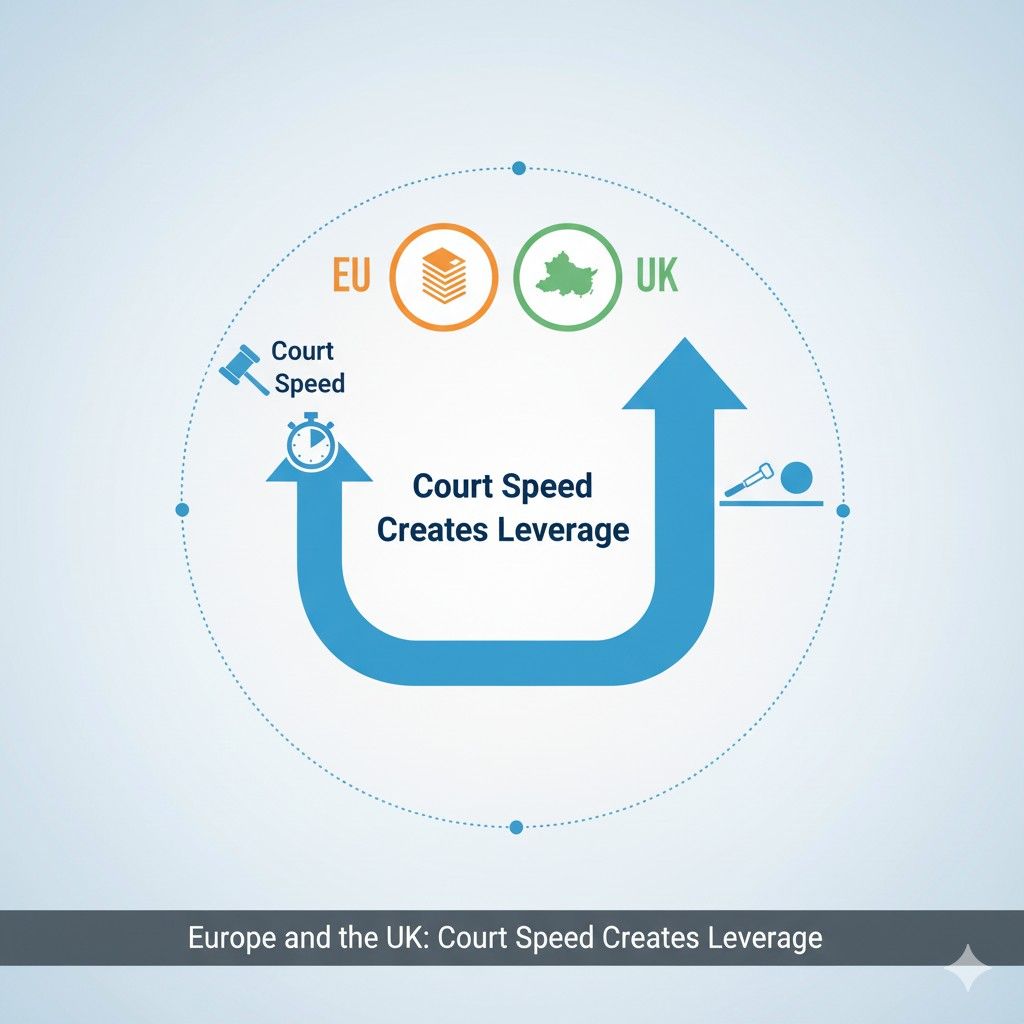
Europe and the UK: Court Speed Creates Leverage
Europe and the UK are where SEP strategy becomes real, fast. This region has reshaped global licensing behavior over the last decade.
What makes it powerful is not market size alone. It is speed, willingness to act, and comfort with product bans.
For businesses, this region often decides who blinks first.
Europe Turns SEPs Into Immediate Business Risk
European courts, especially in Germany, move quickly. Cases progress on tight timelines. Decisions arrive before companies feel ready. This speed changes negotiation dynamics completely.
For implementers, the risk is not just money. It is disruption. A single injunction threat can affect supply chains, customer commitments, and product launches.

For SEP holders, this creates leverage that few other regions offer. You do not need to win everywhere. You need to create pressure in the right place.
Founders should understand that Europe is often where negotiations become serious.
Injunctions Are a Real Possibility
Unlike the US, European courts are comfortable issuing injunctions if legal conditions are met.
This does not mean injunctions are automatic. Courts still look at conduct and FRAND behavior. But if an SEP is valid, essential, and negotiations break down, courts may block sales.
This risk alone changes behavior. Even large companies take European SEP threats seriously.
For businesses holding SEPs, this means Europe is often the sharp edge of enforcement. For those implementing standards, it is where defensive preparation matters most.
Germany Sets the Tempo
Germany is the center of gravity for SEP enforcement in Europe.
Its courts are fast, experienced, and respected. Decisions there influence behavior across the continent and beyond.
German courts often split cases into infringement and validity tracks, allowing infringement decisions to arrive quickly. This structure favors SEP holders who want early leverage.
Businesses should not underestimate this. Even a small sales footprint in Germany can justify a case that affects global negotiations.
The UK Shapes Global Rates
The UK plays a different but equally important role.
UK courts have shown willingness to set global FRAND rates. This means a UK decision can effectively price a worldwide license.
This is powerful. A single court can influence deals across continents.
For SEP holders, the UK offers clarity. For implementers, it creates urgency.
Founders should note that UK courts expect deep preparation. They analyze licensing history, comparable deals, and economic logic carefully. Sloppy arguments fail quickly.
Conduct Matters More Than Size
European and UK courts care deeply about how parties behave.
They examine who made the first offer. Whether it was reasonable. How the other side responded. Delays, silence, or vague replies can hurt.
This means smaller companies can compete if they act professionally. You do not need a massive portfolio. You need clean conduct and a clear position.

For SEP owners, this is encouraging. For implementers, it is a warning.
European Strategy Rewards Early Planning
In Europe, last-minute SEP strategy rarely works.
If you wait until products ship to think about licensing, you are already behind. Courts expect preparation. They expect documentation. They expect clarity.
Founders should plan European filings early. Claim language should map cleanly to standards. Descriptions should support essentiality arguments without stretching.
PowerPatent helps teams do this while still moving fast. You build patents with future enforcement in mind, guided by real attorneys, without slowing your roadmap.
You can explore that approach at https://powerpatent.com/how-it-works.
Europe Is Where Deals Close
In practice, many global SEP deals close because of European pressure.
A credible German case plus a UK rate-setting threat often brings parties to the table. The math becomes clear. The risk becomes immediate.
Businesses that understand this can structure negotiations smartly. They can choose when to escalate and when to settle.
Those who ignore Europe often learn the hard way.
The UK and Europe Are Not the Same
It is important not to treat Europe and the UK as identical.
Germany focuses on speed and injunctions. The UK focuses on depth and global pricing. Together, they form a powerful combination.
For SEP holders, this allows a two-pronged approach. Pressure in Germany. Clarity in the UK.
For implementers, this means risk arrives from multiple angles.
What This Means for Founders
If your technology could become part of a standard, Europe and the UK should shape your early thinking.
File patents that survive fast scrutiny. Avoid vague language. Be precise.
Track your standards participation carefully. Document contributions and disclosures.
When licensing conversations begin, be proactive and reasonable. European courts reward professionalism.
You do not need to move aggressively. You need to move deliberately.
PowerPatent is designed to support this kind of disciplined speed. Founders stay focused on building while their IP strategy stays aligned with global enforcement realities. Learn more at https://powerpatent.com/how-it-works.
Europe Creates Urgency, Not Noise
SEP power in Europe is quiet but firm.
It does not rely on threats. It relies on timelines and consequences.
Businesses that respect this do well. Those that dismiss it often find themselves negotiating under pressure.
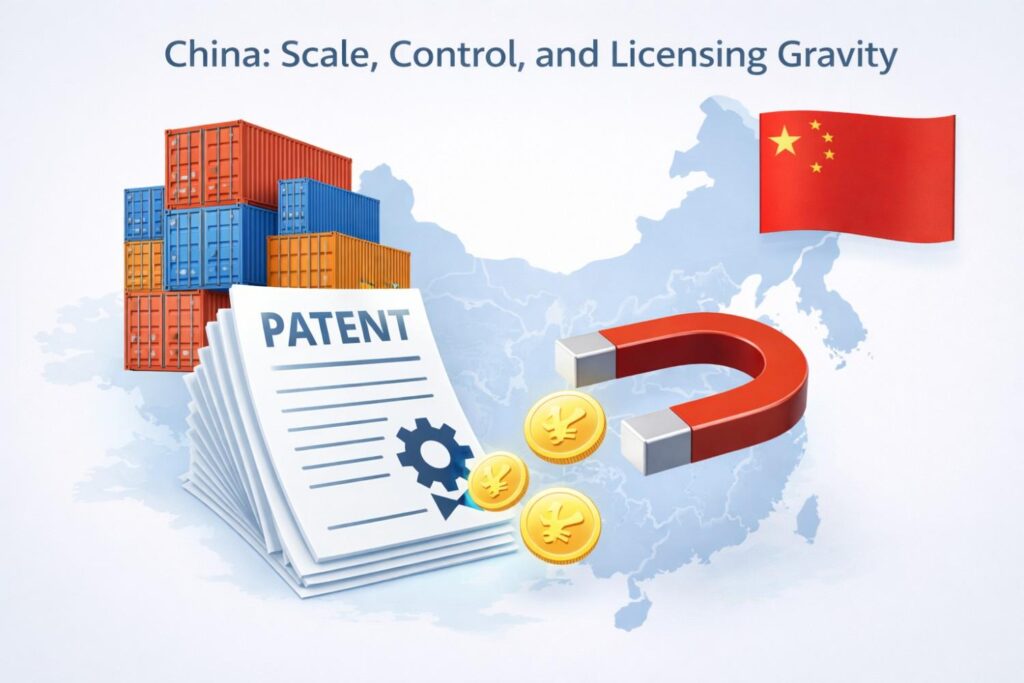
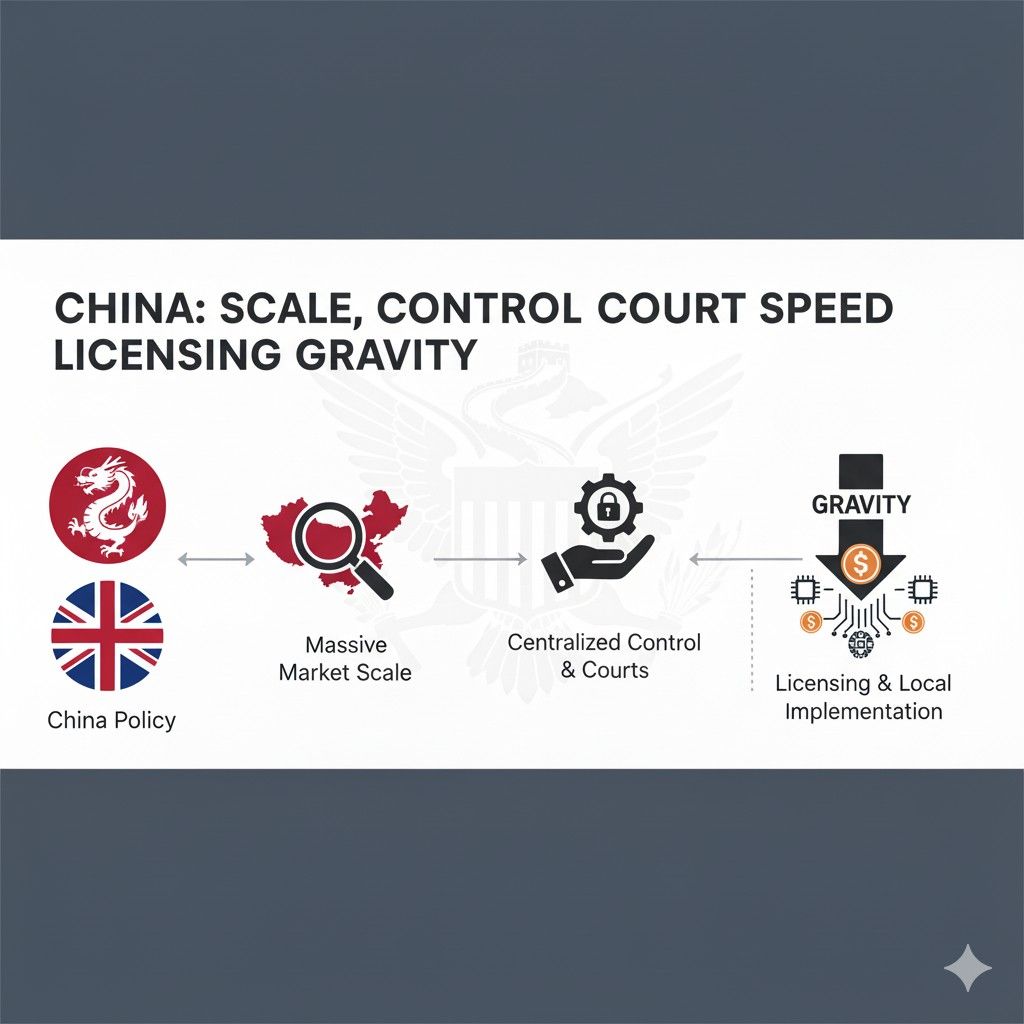
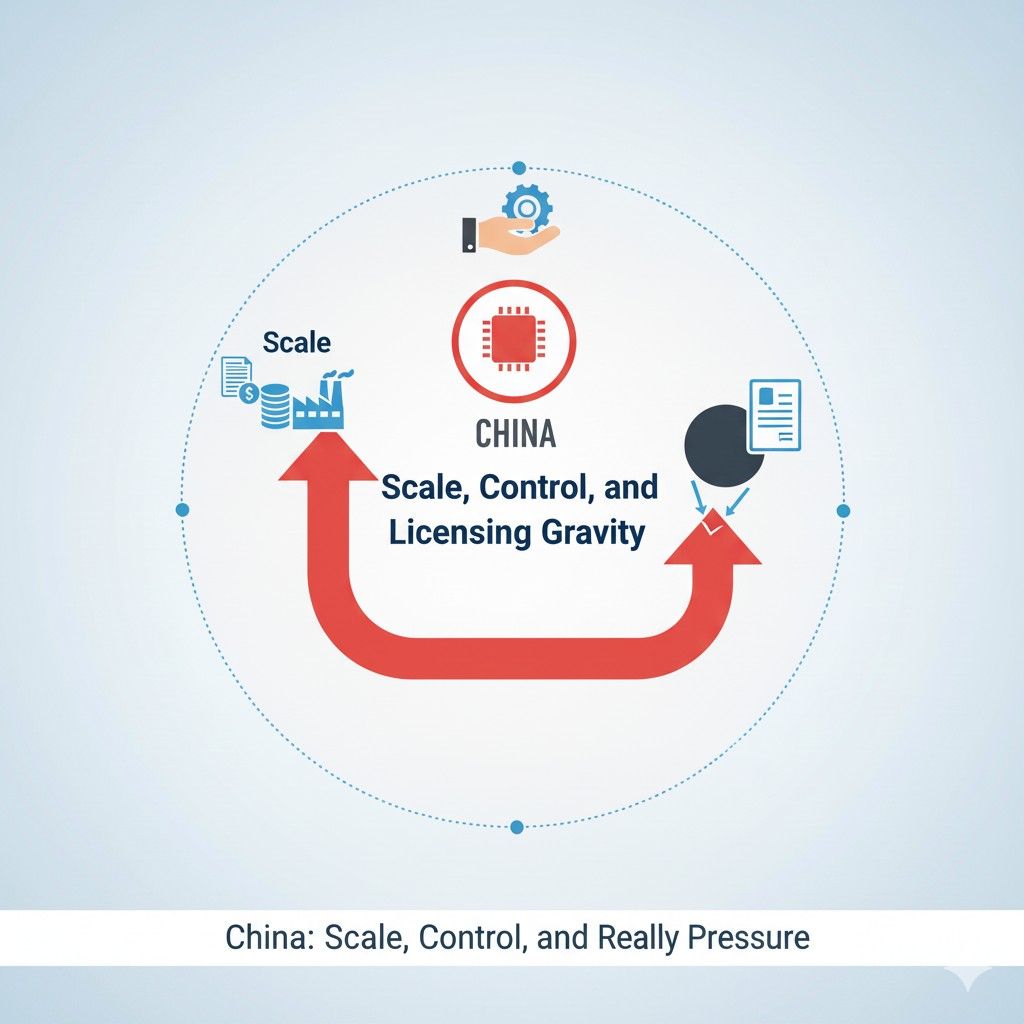
China: Scale, Control, and Licensing Gravity
China has quietly become one of the most important SEP battlegrounds in the world. It is no longer just a manufacturing base or a consumer market. It is a place where SEP outcomes can shape global licensing behavior.
For businesses, China represents scale plus authority. When those two combine, leverage changes fast.
China Treats SEPs as an Economic Tool
China does not view SEPs only through a legal lens. Courts and regulators see them as part of a broader economic system.
The goal is balance. Encourage innovation, avoid abuse, and protect domestic industry. This perspective shapes how SEP cases are handled and why outcomes sometimes surprise foreign companies.
For founders, this means China is not hostile to SEPs, but it is very sensitive to how they are used. Strategy matters more than aggression.
Chinese Courts Move Faster Than Many Expect
One outdated belief is that Chinese courts are slow or unpredictable. That is no longer true in SEP cases.
Specialized IP courts in cities like Shenzhen, Beijing, and Shanghai move with purpose. Judges are technically trained. Procedures are efficient. Decisions arrive faster than in many Western systems.
This speed creates pressure. Businesses cannot ignore Chinese proceedings while waiting on slower courts elsewhere.
China Is Willing to Set Global Rates
One of the biggest shifts in recent years is China’s comfort with setting global FRAND rates.
Chinese courts have shown they are willing to determine what a worldwide SEP license should cost, especially when products are made or sold at scale in China.
This matters because once a global rate exists, it shapes negotiations everywhere else. Even if other courts do not adopt it directly, the number enters the conversation.
For SEP holders, this can be powerful or dangerous depending on preparation.
Injunction Risk Exists, but It Is Controlled
China can issue injunctions in SEP cases, but it does so carefully.
Courts weigh public interest, market impact, and conduct closely. Injunctions are more likely when implementers refuse to engage or act in bad faith.
For businesses, this creates a clear signal. Engage early. Respond clearly. Do not ignore licensing requests.
For SEP owners, this means leverage exists, but only if behavior stays reasonable.
Conduct and Cooperation Matter Deeply
Chinese courts pay close attention to negotiation behavior.
They look at timelines, responses, and willingness to discuss terms. Silence or delay can hurt an implementer. Extreme demands can hurt an SEP holder.
This creates an environment where calm, structured negotiation works best.
Founders should understand that emails, meeting notes, and offers may be examined closely. Clean conduct is not optional.
China Rewards Technical Clarity
Chinese judges expect clear technical explanations.
They want to see how a patent maps to the standard and how products implement it. Vague arguments fail quickly.
This favors companies that invest early in well-drafted patents. Clear diagrams, concrete descriptions, and system-level thinking matter.
PowerPatent focuses heavily on this clarity. Patents are written so they make sense to engineers and judges alike, across borders.
That foundation pays off in places like China. You can see how this approach works at https://powerpatent.com/how-it-works.
Scale Changes the Negotiation Math
China’s market size changes everything.
When manufacturing, assembly, or major sales happen in China, licensing risk concentrates there. A ruling in China can affect global supply chains overnight.
This gives Chinese courts quiet power. Even companies with strong positions elsewhere must pay attention.
For SEP holders, China can be a gravity well that pulls negotiations forward. For implementers, it is often where risk becomes impossible to ignore.
Domestic and Foreign Companies Are Treated Differently
China aims to protect domestic innovation while remaining credible internationally.
This does not mean foreign companies always lose. It means expectations are high. Arguments must be clean. Behavior must be fair.
Domestic SEP holders often benefit from familiarity with local courts and standards bodies. Foreign companies can compete, but only with preparation.
Founders should not assume neutrality without effort. Local counsel, clear filings, and cultural awareness matter.
China Forces Early Decisions
One defining feature of SEP strategy in China is timing pressure.
Cases move fast. Rate-setting can happen early. Businesses are forced to make decisions sooner than they expect.
This can be uncomfortable, but it also creates clarity. Prolonged uncertainty is less common.
For founders, this means you should not treat China as a future problem. If your tech touches standards and China is part of your market or supply chain, planning must start early.
What Founders Should Take Away
China is not just another jurisdiction. It is a force multiplier.
It rewards technical strength, reasonable behavior, and early engagement. It punishes delay, confusion, and overreach.
If you build with China in mind from the start, you gain flexibility later. If you ignore it, options narrow quickly.
PowerPatent helps founders build patent strategies that travel well across systems like China’s. You move fast, but you do not cut corners that later cost leverage. Learn more at https://powerpatent.com/how-it-works.
China completes one side of the global SEP picture. The final piece is the UK viewed on its own, and how it fits into global strategy when used deliberately.
Wrapping It Up
Global SEP strategy is not about memorizing rules country by country. It is about understanding how pressure moves, where decisions happen fastest, and how courts shape deals long before they issue judgments. The United States gives weight and credibility. Europe and Germany create urgency through speed and injunction risk. The UK brings clarity by setting global rates. China adds gravity through scale, control, and fast-moving courts. Each region plays a different role, but together they form one system. Companies that see this early gain options. Companies that do not are forced to react.
Leave a Reply