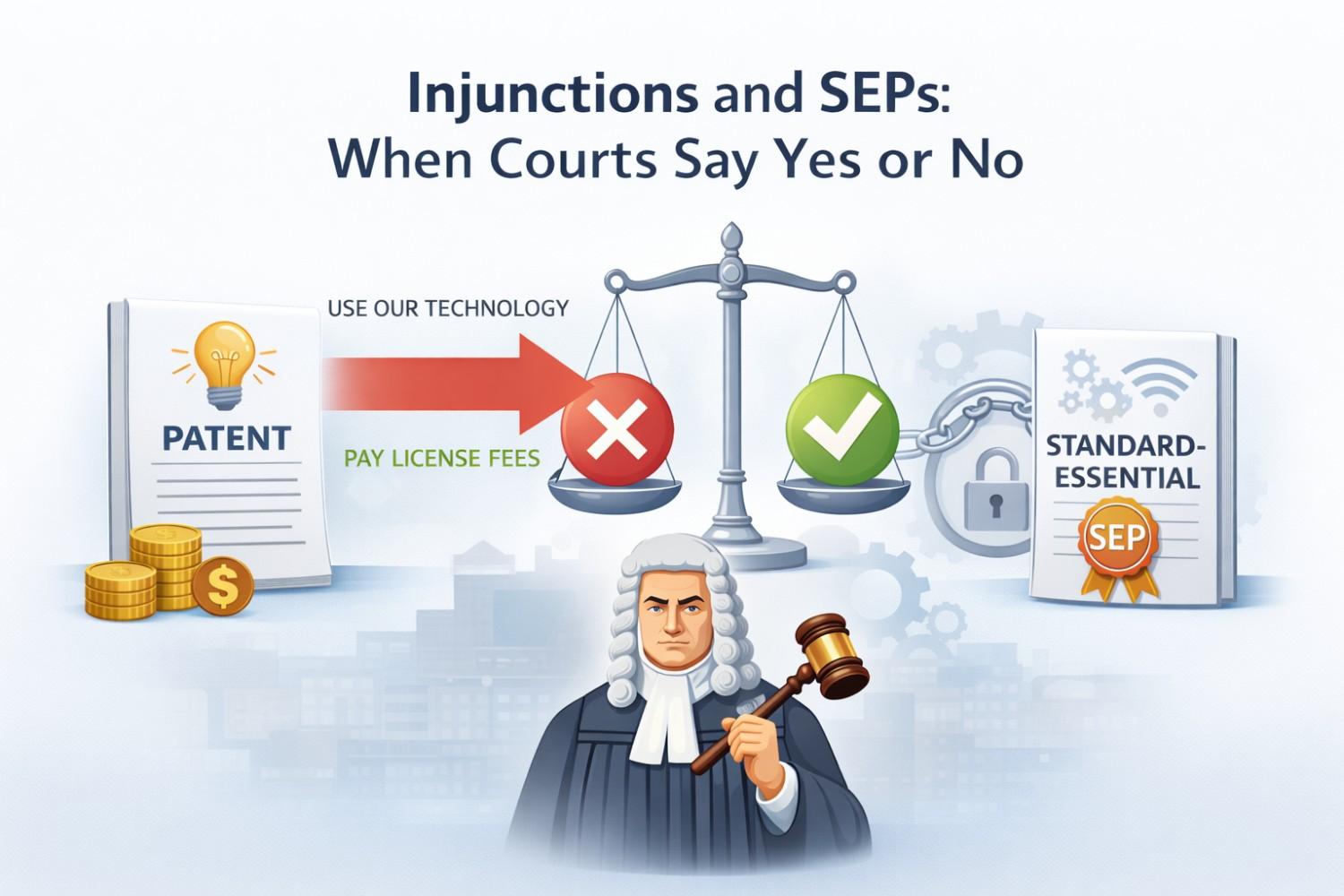
Let’s start with the hard truth. If your tech becomes part of a standard, your patent can turn into either a gold mine or a paperweight. The difference often comes down to one simple word: injunction. An injunction is when a court tells someone to stop using your invention. Full stop. No more sales. No more shipping. No more updates. For any startup or tech company, that kind of order can change everything overnight.
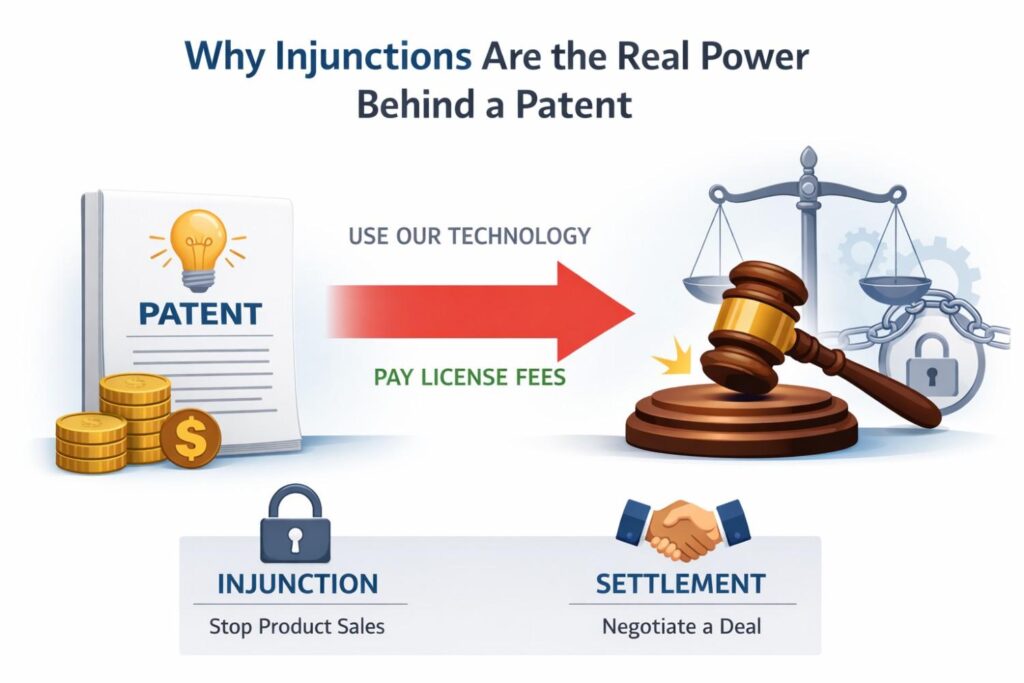
Why Injunctions Are the Real Power Behind a Patent
An injunction is not just a legal tool. It is leverage. It is the moment where a patent stops being a framed document and starts becoming a business weapon.
Money damages are backward-looking. Injunctions are forward-looking. They shape what happens next, not what already happened. That is why courts, companies, and founders all treat them very seriously.
This section explains why injunctions matter so much, how courts think about them, and what smart businesses do long before any dispute begins to keep this power on their side.
Injunctions Change Behavior Instantly
The biggest reason injunctions matter is speed. When a court grants an injunction, the other side does not get time to plan or adjust. Products stop shipping.
Features get pulled. Deals get paused. Entire roadmaps change overnight.
For a business, that threat alone often matters more than money. A company can plan for damages. It can set aside cash. It can negotiate. But it cannot easily plan for being told to stop selling its core product.
This is why strong patents backed by a real chance of injunctions get attention early.
They change how the other side behaves before a case ever reaches trial. Many disputes settle quietly because no company wants to risk a shutdown.
If you are building technology that sits deep inside products, this leverage is what gives you a seat at the table.
Courts See Injunctions as Extreme Measures
Judges do not hand out injunctions lightly. They see them as strong medicine. The court must believe that money alone is not enough to fix the harm. This is where many patents lose their bite.
If a patent looks vague, rushed, or disconnected from real products, courts hesitate. If the patent owner looks careless or opportunistic, courts hesitate even more. Injunctions are tied closely to credibility.
For businesses, this means that how your patent looks on paper matters as much as what it covers.
Strong structure, clear claims, and clean technical grounding all signal seriousness. That signal matters when a judge decides whether to pull the emergency brake.
This is why founders who use platforms like PowerPatent focus on clarity early. Real attorney review helps ensure the patent reads like a real invention, not a placeholder. You can see how that process works here: https://powerpatent.com/how-it-works
Injunctions Force Real Negotiations
Licensing talks feel very different when an injunction is on the table. Without that risk, negotiations drag. The other side delays, lowballs, or ignores messages. With that risk, tone changes fast.
An injunction threat turns abstract rights into real consequences. Suddenly emails get answered. Meetings get scheduled. Decision-makers show up. Even large companies act quickly when product lines are at stake.
For startups, this is especially important. You rarely want to sue. You want respect. Injunction leverage helps you get that respect without burning cash on long fights.
The key is that this leverage only exists if courts believe you could actually get an injunction. That belief is built years before any dispute begins.
The Link Between Product Use and Injunction Strength
Courts care deeply about whether the patent owner actually uses the invention. If your company builds products around the patent, judges are more likely to see ongoing harm if infringement continues.
If the patent is disconnected from real use, courts may see money as enough. That does not mean non-practicing companies cannot get injunctions, but it does raise the bar.
For founders, this creates a strategic choice. If your invention is core to your product, make that clear in your patent. Tie the claims to real systems, flows, and outcomes. Show that this is not theoretical.
When patents are written with product reality in mind, injunction arguments become much stronger later.
Timing Matters More Than Most Founders Think
Many businesses wait too long to think about enforcement strength. They file something quick just to check a box. Later, when the market matures and competitors appear, they discover the patent lacks teeth.
Courts look backward. They examine what you knew, when you knew it, and how you acted. If your patent filing looks rushed or incomplete, it can weaken injunction chances years later.
This is why filing early does not mean filing sloppy. Speed matters, but structure matters more. The best outcomes come from fast filings that are still well thought out.
PowerPatent was built around this exact need. It helps founders move quickly without sacrificing quality, using software to organize ideas and real attorneys to shape them properly.
If injunction leverage matters to your business, this foundation is critical. Learn more here: https://powerpatent.com/how-it-works
How Injunctions Protect Market Position
Injunctions are not just about stopping copying. They protect momentum. If a competitor copies your core tech and races ahead, money later may not fix the damage.
Courts understand this. When infringement threatens to erase a market lead or undermine trust with customers, injunctions become more likely.
For businesses in fast-moving fields like software, networks, or hardware platforms, this protection can mean survival. A short window of unfair competition can close doors forever.
Patents that clearly explain this risk help courts see why stopping use matters now, not later.
Behavior of the Patent Owner Is Always Watched
Courts do not only judge the patent. They judge the owner. If you delay enforcement for years without reason, courts may question urgency. If you act inconsistent or aggressive without cause, courts may doubt fairness.
Smart businesses document their decisions. They keep records of licensing talks. They show reasonable behavior. This builds trust.
An injunction request is as much about story as law. The story must show that you acted responsibly and that stopping infringement is truly necessary.
That story begins the day you file your patent.
Injunction Power Starts at Drafting
The most important point is simple. Injunction strength is designed, not discovered. It starts with how the invention is framed, how clearly it solves a problem, and how closely it ties to real-world use.
Founders who treat patents as strategic assets build them differently. They think about future disputes without planning to fight. They focus on clarity, scope, and credibility.
This is why modern tools matter. Old-school firms move slow and often overcomplicate.
Pure DIY tools miss legal depth. PowerPatent sits in the middle, giving founders speed and control while keeping injunction leverage intact through real attorney oversight.
If your business depends on others respecting your technology, injunction power is not optional. It is the quiet force that makes everything else work.
What Makes Standard-Essential Patents Different in Court
Standard-essential patents live in a different world. The moment a technology becomes part of a standard, the rules change. Courts stop looking at the patent in isolation and start looking at the entire ecosystem around it.
This is where many businesses get surprised, because the power dynamics feel familiar but behave very differently.
This section explains why SEPs are treated with extra care, why injunctions become harder but not impossible, and how smart companies position themselves early to avoid losing leverage later.
Standards Turn Private Rights Into Public Infrastructure
A standard is not just a technical agreement. It is shared ground. Once a technology is locked into a standard, everyone who wants to play in that market must use it.
There is no workaround. That is why courts see SEPs as sitting closer to infrastructure than optional features.
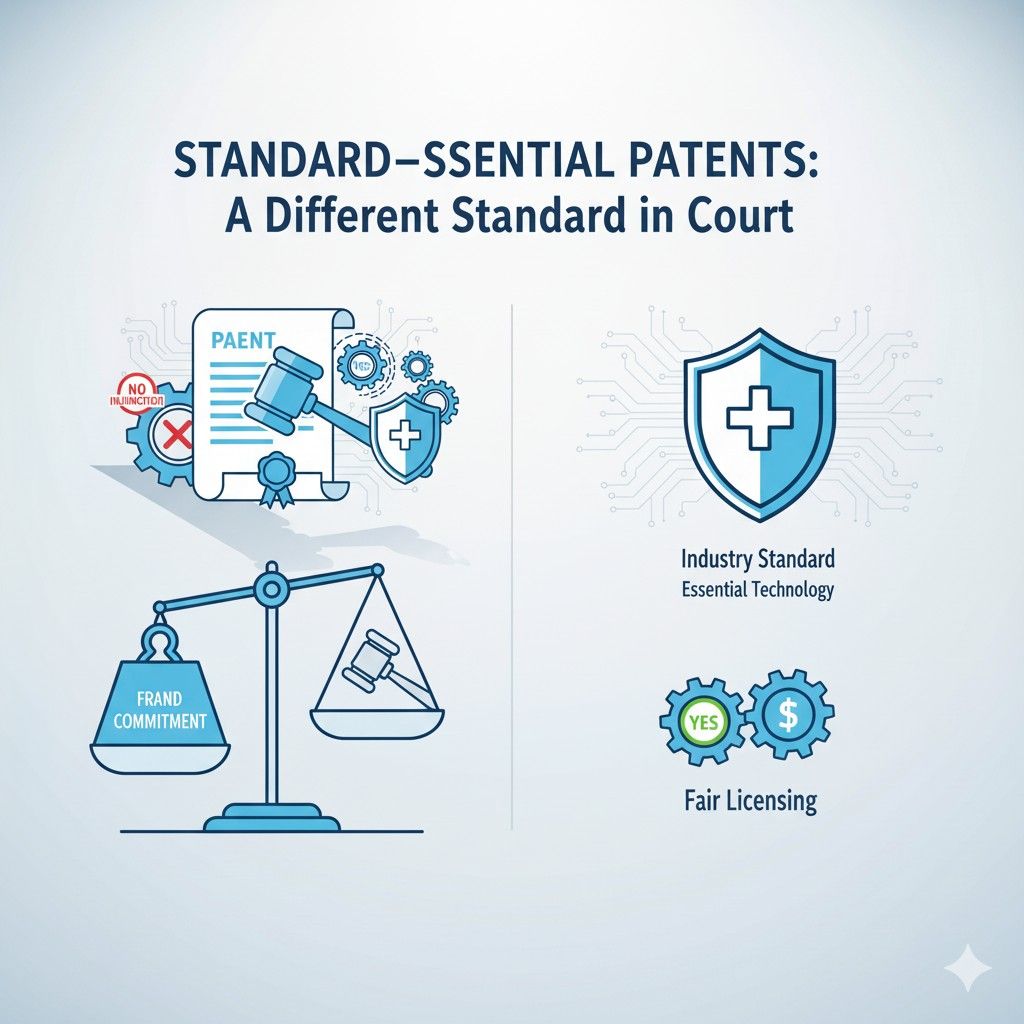
Because of this, judges worry about balance. They want to protect patent rights without letting one company block an entire industry. This tension shapes every SEP injunction decision.
For businesses, this means your patent is no longer judged only by what it does, but by what it enables for everyone else.
The Role of FRAND Changes the Injunction Story
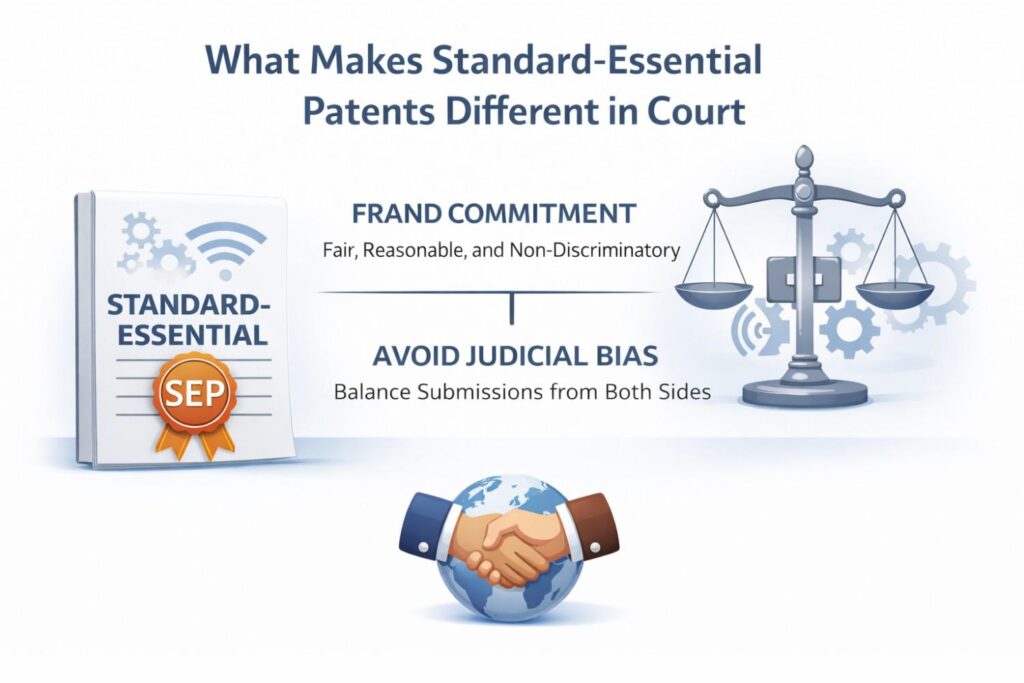
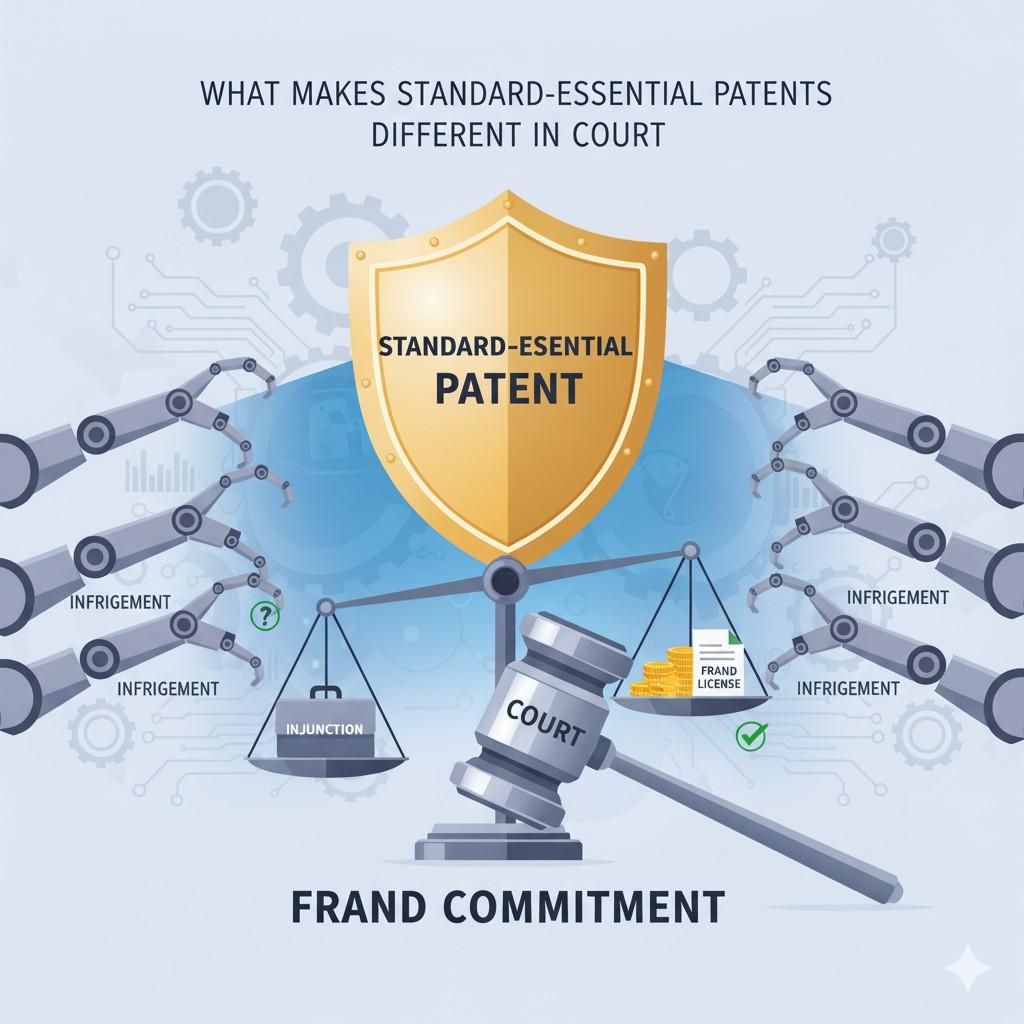
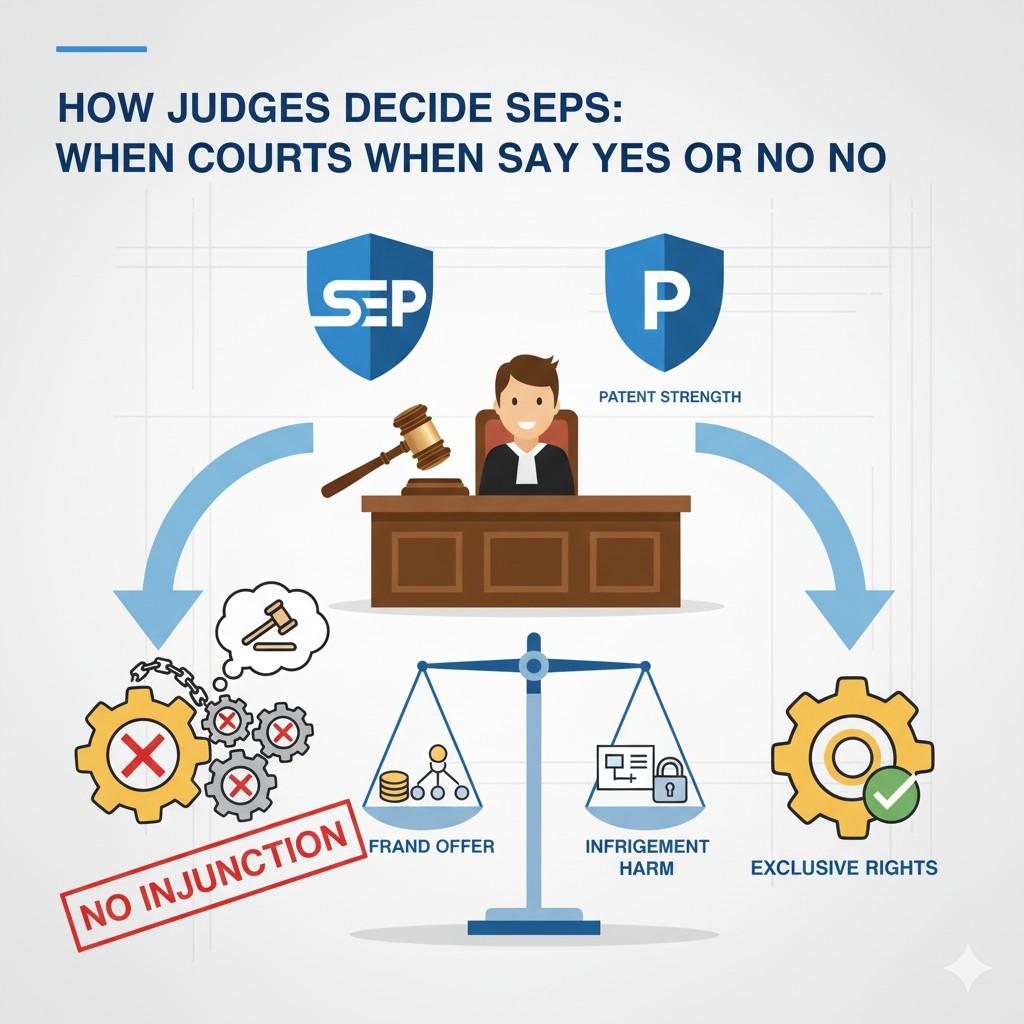
Most SEPs come with a promise to license on fair, reasonable, and non-discriminatory terms. This promise, often called FRAND, is central to how courts think about injunctions.
If you have committed to FRAND, courts assume that licensing is the primary path, not shutdowns. Money becomes the default remedy. Injunctions become the exception.
But this does not mean injunctions are off the table. It means courts look closely at behavior. If the patent owner is willing to license and the implementer refuses to engage fairly, the balance can flip.
Founders often misunderstand this. FRAND is not a weakness. It is a framework. Used well, it can still support strong enforcement.
Courts Care About Who Is Being Unreasonable
SEP injunction cases often turn on one question. Who caused the breakdown?
If the patent owner makes clear offers, explains terms, and stays consistent, courts see good faith. If the implementer delays, ignores, or games the process, courts notice that too.
In some cases, injunctions are granted not because the patent is strong, but because the other side acted badly.

This is highly actionable. Businesses should document every step. Every offer. Every response. Silence from the other side is not neutral. It can become evidence.
Why Clarity Matters Even More for SEPs
SEPs face extra scrutiny. Courts want to know exactly what part of the standard is covered. Vague patents struggle here. If claims are broad but unclear, judges hesitate.
This is where early drafting choices matter. If your patent clearly maps to standard steps, signals, or flows, enforcement becomes cleaner. If it does not, arguments get muddy.
Founders working near standards should think ahead. Write patents that explain how the invention fits into a shared system. This makes later court analysis simpler and stronger.
PowerPatent helps founders do this without drowning in complexity. The platform encourages clear technical storytelling, with real attorneys ensuring the claims line up with how standards work.
You can see the process here: https://powerpatent.com/how-it-works
Injunctions Are Harder, But the Threat Still Works
Even when courts rarely grant SEP injunctions, the possibility still shapes behavior. Large companies know that extreme cases exist. They know judges can act if pushed.
This creates quiet leverage. Many SEP disputes settle because no one wants to be the test case that went too far.
For smaller companies, this leverage is often misunderstood. You may not want an injunction. You want serious talks. SEP injunction risk, even if low, can trigger those talks.
The key is credibility. Empty threats fail. Well-supported positions do not.
Global Courts Do Not Think Alike
One overlooked factor is geography. Courts in different countries treat SEP injunctions very differently. Some are more open. Some are more cautious.
Global businesses use this strategically. They file, enforce, and negotiate with forum differences in mind. Even the possibility of an injunction in one country can influence global negotiations.
Founders do not need to master this, but they should be aware that patents are not just local tools. The way you file and structure claims can affect options worldwide.
How Early Patent Choices Shape SEP Outcomes
Most SEP fights trace back to early decisions. Was the invention framed as optional or core? Was standard use anticipated? Was licensing discussed internally?
Courts read patents like history books. They infer intent. If the patent reads like a real contribution to a shared system, courts are more sympathetic.
If it reads like an afterthought or a trap, sympathy drops.
This is why SEPs should never be accidental. If your tech might touch standards, treat that seriously from day one.
SEP Strategy Is About Long-Term Control
The real goal with SEPs is not shutting competitors down. It is staying relevant. It is ensuring your technology remains respected and compensated as the market grows.
Injunctions are part of that picture, even if rarely used. They sit in the background, shaping how everyone behaves.
Businesses that understand this design patents differently. They think beyond filing dates and claims counts. They think about years of negotiation and enforcement.
PowerPatent was built for this long view. It helps founders build patents that grow with their companies, not ones that fall apart under pressure.
If SEPs are on your horizon, this matters more than you think. Learn more here: https://powerpatent.com/how-it-works
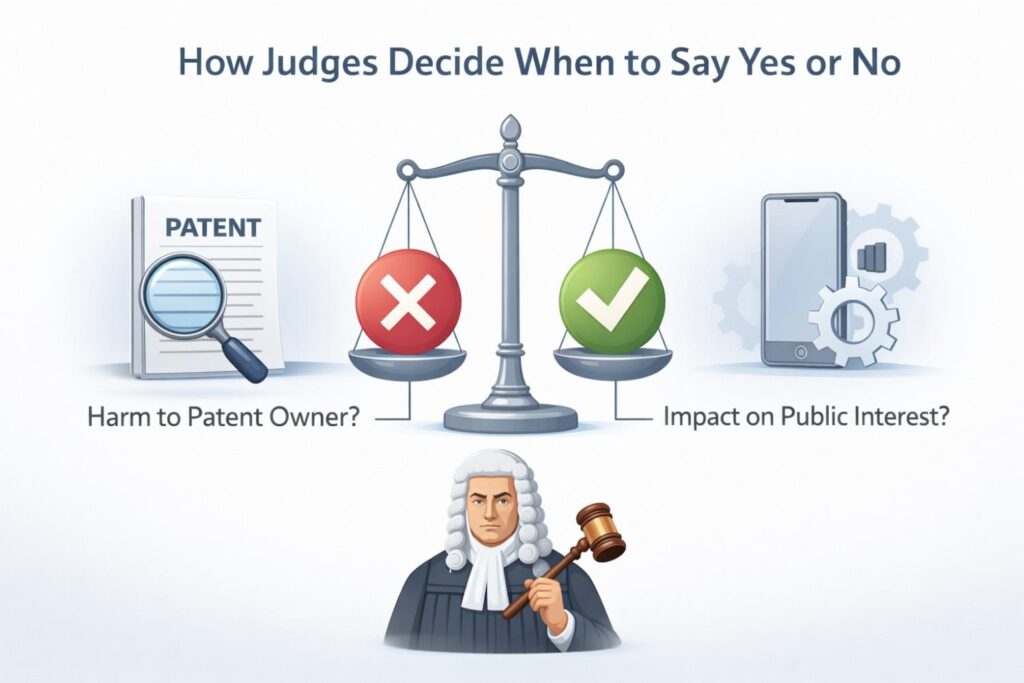
How Judges Decide When to Say Yes or No
When a judge looks at an injunction request, especially in cases involving standard-essential patents, they are not just reading law. They are weighing consequences.
Every decision affects companies, customers, and sometimes entire markets. This is why injunction rulings often feel unpredictable from the outside but follow clear patterns once you know what judges care about.
This section explains how courts reach those decisions, what tips the scale, and how businesses can quietly influence outcomes long before they ever step into a courtroom.
Judges Start With Harm, Not Ownership
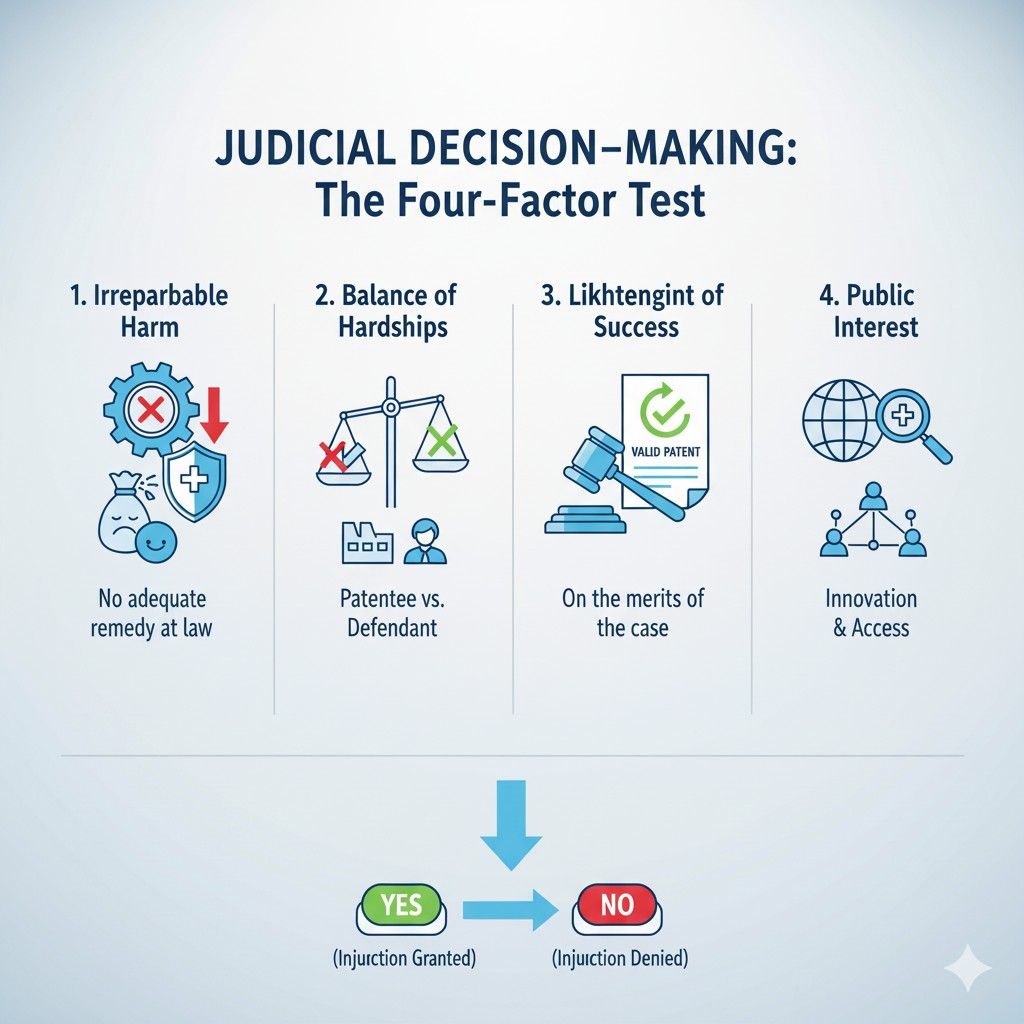
The first thing courts ask is not who owns the patent. It is who is being harmed right now. Judges want to know whether ongoing use of the invention is causing damage that cannot be fixed later with money.
If the harm is slow, abstract, or speculative, injunctions are unlikely. If the harm is immediate and structural, the conversation changes.
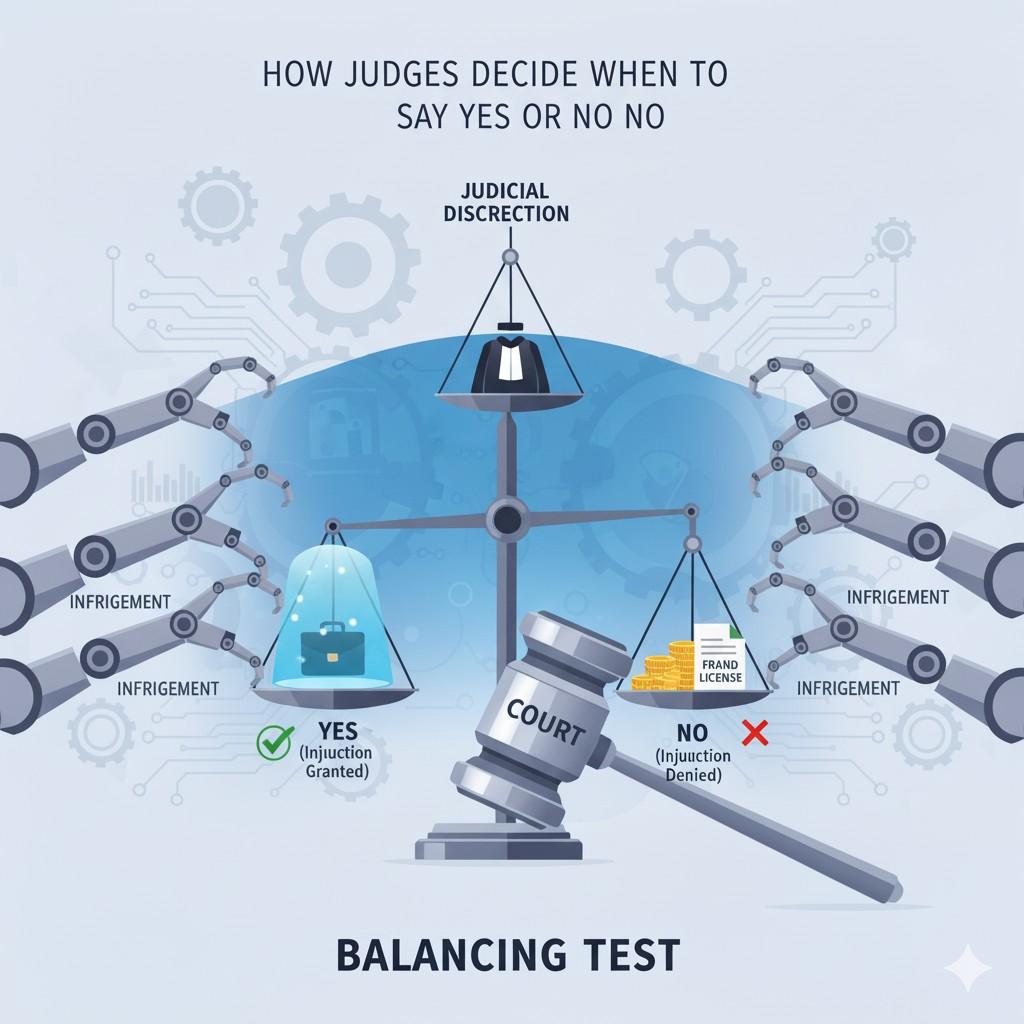
For businesses, this means you must be able to explain why infringement affects your future, not just your past. Lost trust, broken partnerships, or blocked growth paths matter far more than missed fees.
Patents that are written with this in mind make the judge’s job easier.
Clear Inventions Get Clearer Outcomes
Judges are not engineers. They rely on clarity. When a patent cleanly explains what the invention is, how it works, and why it matters, courts move with more confidence.
Confusing patents lead to cautious decisions. Cautious decisions rarely include injunctions.
This is one of the most overlooked realities. Many founders focus only on scope. They want the broadest coverage possible. But breadth without clarity weakens enforcement power.
Strong patents explain the invention like a system, not a trick. They show purpose, flow, and impact. This framing matters enormously when a judge is deciding whether to stop real products.
Behavior During Negotiations Carries Heavy Weight
Courts pay close attention to how both sides acted before litigation. Judges want to see effort, reason, and fairness.
If a patent owner reached out early, explained concerns, and made reasonable offers, that builds trust. If the accused party delayed, ignored messages, or stalled without cause, that erodes sympathy.
This is especially important in SEP cases. Judges often view injunctions as a last resort against bad behavior, not a first move.
For businesses, this means every email matters. Every delay matters. Acting calmly and consistently is not just good manners. It is strategic.
Timing Signals Urgency or Opportunism
Judges look at when enforcement starts. If a company waits years after knowing about infringement, courts question urgency. They wonder why money was fine for so long but not now.
This does not mean you must rush to sue. It means you must be able to explain your timing. Product launches, market shifts, or failed negotiations can justify action.
Smart companies document these moments. They build a timeline that shows patience, not neglect.
That story becomes crucial when asking a judge to intervene.
SEPs Add a Layer of Public Interest
In SEP cases, judges also weigh public impact. They consider how an injunction might affect users, supply chains, or access to technology.
This does not mean the patent owner loses. It means the court looks for balance.
If stopping infringement would freeze essential services, judges hesitate. If alternatives exist or the implementer caused the risk, judges become more open.
Businesses should anticipate this. Patents that acknowledge system context and explain why enforcement does not harm the public carry more weight.
Global Pressure Shapes Local Decisions
Judges are aware of what other courts are doing. High-profile SEP cases influence thinking worldwide.
If one jurisdiction has ruled strongly, others take note. If companies are seen abusing process, courts react defensively.
This creates a subtle pressure. Businesses with clean records benefit. Those seen as aggressive without cause face skepticism.
Your patent history follows you. Consistency across regions matters more than many founders expect.
Evidence Quality Can Override Legal Theory
Courts rely heavily on evidence. Technical documents, product diagrams, and expert explanations often matter more than legal arguments.
Patents that align cleanly with real products make evidence easy. Those that stretch or overreach invite doubt.
For founders, this reinforces a key point. Write patents that reflect reality. Do not overpromise. Do not obscure.
Tools like PowerPatent are built around this idea. The platform helps founders translate real systems into strong patents, with attorney oversight to ensure the story holds up under pressure.
If you want patents that judges understand and respect, this foundation is critical. Learn more here: https://powerpatent.com/how-it-works
Judges Look for Proportionality
Injunctions must feel fair. Judges ask whether stopping use is proportional to the harm. If a minor feature triggers massive shutdowns, courts hesitate.
This does not mean small inventions lack power. It means the role of the invention must be framed properly.
Patents that show how a feature enables core functions, rather than sitting on the edge, support proportional remedies.
This framing happens at drafting, not in court.
The Decision Is Rarely About One Factor
No single detail decides an injunction. Judges weigh many signals together. Clarity, conduct, timing, impact, and credibility all interact.
This is why shortcuts fail. A patent filed just to check a box rarely survives this scrutiny.
Businesses that win injunctions usually did many small things right over time. They treated patents as strategic assets, not paperwork.
What Founders Should Take Away
The biggest lesson is simple. Courts reward preparation. Injunction power is earned slowly, through clear thinking and disciplined action.
You do not need to plan lawsuits. You need to plan strength.
Strong patents, clean behavior, and thoughtful timing give you options. Even if you never seek an injunction, the possibility shapes outcomes in your favor.
This is the quiet advantage PowerPatent is built to support. It helps founders build patents that stand up when it matters, without slowing innovation or adding stress.
If you want that kind of control, explore how it works here: https://powerpatent.com/how-it-works
Wrapping It Up
By now, one thing should be clear. Injunctions are not a courtroom trick. They are the real force behind patent power. And when standard-essential patents enter the picture, that force becomes more complex, more restrained, and far more dependent on early decisions. Courts do not decide injunctions in isolation. They look at the full story. They look at how the patent was written, how the technology fits into real products, how the owner behaved over time, and how the requested relief would affect the wider world. In SEP cases, they also look at whether the patent owner respected the shared nature of standards while still protecting legitimate rights.
Leave a Reply