
Most patent disputes do not begin in a courtroom but in a simple exchange that sets the tone for everything that follows. One party says they are open to a license, the other pushes back, and in that moment the labels of “willing licensor” and “willing licensee” quietly start to form. Courts care deeply about how both sides behave during these early talks, not about who talks the loudest or threatens first. Acting in good faith means being clear, reasonable, and prepared, while still protecting your invention and your business.
What “Willing” Really Means and Why Courts Pay Attention
This part of the story is where most businesses get tripped up without realizing it. The word willing sounds soft, almost emotional, but in patent licensing it is judged in a very cold, factual way.
Courts do not care what you felt. They care what you did, when you did it, and whether your actions show you were honestly trying to reach a deal.
This section explains how that judgment is formed and how smart companies shape their behavior long before a judge ever looks at it.
Willing Is Proven Through Actions, Not Words
Many companies believe that saying “we are open to a license” is enough to be seen as willing. It is not.
Courts look past polite language and focus on behavior. If your emails sound friendly but your actions delay, deflect, or confuse, you may still be labeled unwilling.
A willing party shows momentum. They respond in a reasonable time. They provide enough information to move talks forward. They do not hide behind vague statements or endless internal reviews.
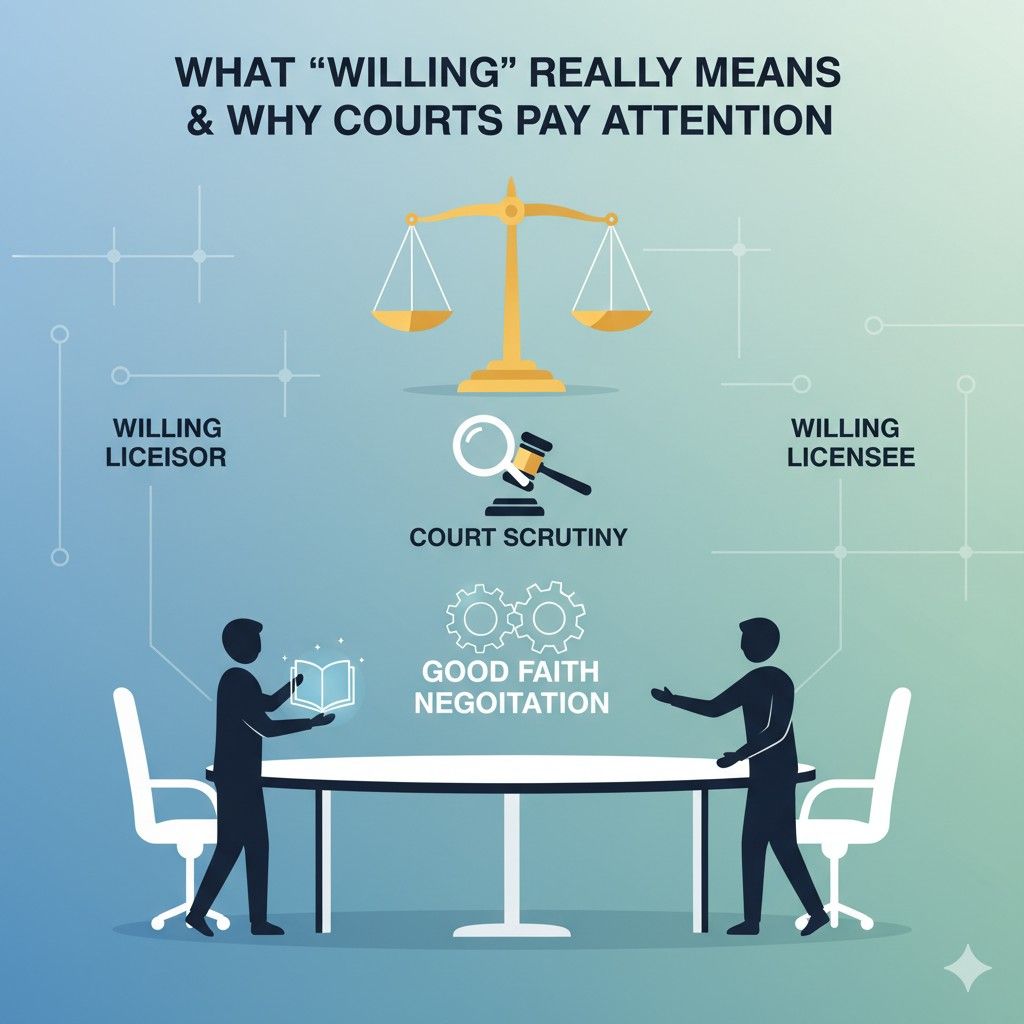
Even silence can be used against you. If weeks go by with no response, that gap becomes evidence.
For businesses, the lesson is simple. Treat every licensing conversation as if it is being recorded for later review, because in practice, it often is.
Clear timelines, thoughtful replies, and steady progress matter more than charm or clever wording.
Why Courts Care So Much About Willingness
Courts focus on willingness because it reveals intent. Patent law is not just about ownership. It is about fairness in how rights are enforced.
A party that refuses to engage or plays games looks like they are trying to avoid paying, not trying to reach a fair deal.
This matters deeply in damages and injunction decisions. A company labeled as an unwilling licensee may face higher penalties or fewer defenses.
A patent owner seen as an unwilling licensor may lose leverage or appear abusive, even if their patent is strong.
For businesses, this means willingness is not a side issue. It directly affects risk, cost, and outcome. Acting reasonably is not a weakness. It is a strategic shield.
The Difference Between Protecting Value and Blocking Progress
Many founders fear that engaging too openly will weaken their position. They worry that sharing details or responding quickly gives the other side an advantage.
This fear often leads to stalled talks, guarded replies, and half answers.
Courts see that behavior clearly. They understand the difference between protecting value and blocking progress. Asking for fair compensation is normal.
Refusing to explain your position is not. Wanting time to review terms is reasonable. Ignoring follow-ups is not.
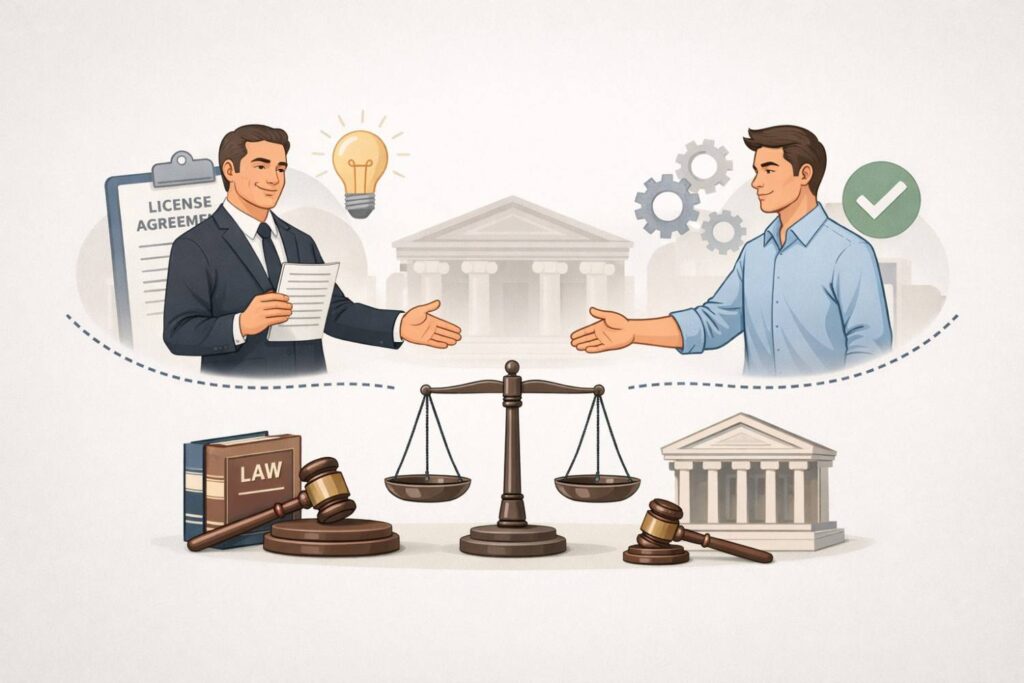
The most effective companies draw a clean line. They protect the core of their value while still moving the conversation forward.
They explain enough to show seriousness without giving away strategy. This balance signals strength, not fear.
How Timing Shapes the Willingness Narrative
Timing is one of the quietest yet strongest signals courts rely on. A fast response does not mean agreement, but it does show engagement. A slow response, especially without explanation, suggests avoidance.
Courts often reconstruct the full timeline of talks. They look at when the first contact happened, how long each response took, and whether delays were justified. A pattern of late replies can outweigh even strong legal arguments.
For businesses, this means setting internal rules early. Decide who owns the conversation.
Decide response windows. Decide what can be shared without approval. Speed is not about rushing decisions. It is about respecting the process.
Willing Licensors Must Show Real Openness
Patent owners are often surprised to learn that they can be labeled unwilling too. Demanding extreme terms without explanation, refusing to adjust positions, or treating talks as a formality can all hurt credibility.
A willing licensor shows flexibility without giving up value. They explain how they reached their numbers. They listen to counterpoints. They adjust when new facts emerge. They do not treat negotiation as a trap.
This does not mean lowering prices to keep peace. It means showing that your goal is a deal, not a headline or a threat. Courts reward licensors who behave like business partners, not toll collectors.
Willing Licensees Must Engage Even When They Disagree
On the other side, licensees often believe that pushing back hard proves strength. In reality, refusing to engage because you think a patent is weak can be a costly mistake.
Courts do not expect licensees to agree. They expect them to participate. If you believe a patent is invalid or not infringed, you still need to explain why in a constructive way. Simply saying no, or going silent, sends the wrong signal.
A smart licensee separates disagreement from disengagement. They challenge claims with facts. They propose alternatives. They keep the conversation alive while defending their position.
The Role of Documentation in Proving Willingness
In licensing disputes, memory is unreliable. Documents are not. Emails, letters, and meeting notes often become the strongest evidence of willingness or lack of it.
Courts read tone closely. Aggressive language, dismissive remarks, or threats can overshadow otherwise reasonable positions. Even casual messages can take on new meaning years later.

Businesses should treat documentation as part of strategy. Write clearly. Stay factual. Avoid emotional language. Summarize calls in writing. Confirm next steps. These habits quietly build a record that protects you.
How Early Patent Quality Influences Willingness Perception
A weak or unclear patent makes every conversation harder. When claims are vague or poorly drafted, licensees push back harder, and licensors struggle to explain value.
This friction often looks like unwillingness, even if both sides are trying.
Strong patents change the tone immediately. Clear claims lead to focused discussions.
Fewer misunderstandings mean fewer delays. Willingness becomes easier to demonstrate because the subject itself is easier to discuss.
This is why many founders choose to build patents early with PowerPatent. When your patent is created with real attorney oversight and clear technical grounding, licensing talks feel more like business discussions and less like arguments.
You can see how that foundation is built here: https://powerpatent.com/how-it-works
Willingness Is About Direction, Not Concession
One of the biggest myths is that being willing means giving ground. It does not. Willingness is about direction. Are you moving toward a deal or away from it?
Courts look for forward motion. Even small steps count. Agreeing on scope, exchanging technical views, or setting another meeting all show direction. Flat refusals and endless resets do not.
For businesses, the goal is simple. Always leave the conversation slightly more advanced than where it started. That pattern becomes your strongest defense if talks ever break down.
Why Founders Should Think About This Earlier Than They Do
Most founders only think about willingness when a dispute arises. By then, habits are set and mistakes are already in the record. The smartest teams think about this long before any licensing email is sent.

They design patents with clarity. They plan negotiation ownership. They train teams to communicate calmly under pressure. They build systems that support good-faith behavior by default.
How Good-Faith Talks Build Leverage Without Threats
This section matters because many businesses misunderstand where real leverage comes from. They assume leverage is created by pressure, deadlines, or legal language.
In reality, the strongest leverage often comes from calm, steady, good-faith behavior that leaves the other side with fewer excuses and fewer exits.
When done right, good-faith talks do not weaken your position. They quietly strengthen it.
Leverage Is Earned Before It Is Used
Most people think leverage appears at the moment you demand something. Courts see it differently.
They look at what happened before that moment. If you were fair, responsive, and clear early on, your later demands carry more weight.
Good-faith conduct builds credibility. Credibility changes how every statement is received. When a credible party takes a firm position, it is seen as reasonable.
When a party with poor conduct does the same, it is seen as aggressive or abusive.

For businesses, this means leverage is not a switch you flip. It is something you build step by step through how you show up in conversations long before numbers are discussed.
Calm Engagement Signals Confidence, Not Weakness
There is a fear among founders that calm behavior will be read as uncertainty. In patent licensing, the opposite is usually true. Calm engagement signals that you know your position well enough that you do not need to posture.
Courts and counterparties notice tone. A measured response suggests preparation.
A rushed or emotional response suggests insecurity. When you consistently engage without overreacting, you frame yourself as the adult in the room.
This matters because when tension rises later, the party who stayed calm earlier is more likely to be trusted. Trust, even limited trust, creates leverage.
Good-Faith Behavior Shrinks the Other Side’s Options
One of the most overlooked benefits of good-faith talks is how they limit the other side’s defenses. An unwilling party can argue they were pushed or treated unfairly. A party facing a clear record of fair engagement cannot.
When you respond on time, explain your views, and remain open to discussion, you quietly remove excuses.
The other side has fewer justifications for delay, refusal, or stonewalling. If they still resist, that resistance becomes more visible.

For businesses, this is strategic. You are not just negotiating terms. You are shaping the story that will be told later if things escalate.
How Questions Can Create Pressure Without Threats
Threats often backfire. Questions do not. A well-placed question can move a stalled conversation more effectively than a demand.
When you ask how the other side views a claim, how they see a timeline, or what data they rely on, you force engagement. Silence in response to a question looks worse than silence after a demand.
Courts also read questions as openness. They show you are listening, not dictating. This creates a record of engagement while still allowing you to guide the discussion.
Founders who master this approach often gain more information and more leverage, without ever raising their voice.
Transparency Creates Asymmetry in Your Favor
Many businesses assume transparency means giving up control. In practice, selective transparency often creates asymmetry.
When you clearly explain your position and reasoning, you put the burden on the other side to respond with equal clarity.
If they cannot, the imbalance becomes obvious. Courts notice who explained and who avoided. Counterparties notice who came prepared and who did not.
This does not mean revealing strategy. It means explaining logic. Why you believe infringement exists. Why a license makes sense. Why a certain structure was proposed. Logic is not a concession. It is a signal of strength.
Why Good-Faith Does Not Mean Endless Patience
Good-faith is not infinite patience. Courts understand boundaries. They recognize that at some point, talks stop being productive.
What matters is how you draw the line. If you clearly signal expectations, timelines, and next steps, and the other side still stalls, your firmness later looks justified.
Businesses should be explicit about process. Saying that discussions need to progress by a certain time is reasonable. What hurts is setting secret deadlines or springing ultimatums without warning.
When patience is paired with clarity, it becomes leverage instead of delay.
The Strategic Use of Neutral Language
Language shapes perception. Words like demand, refuse, or violate carry emotional weight. Neutral language keeps the focus on substance.
Courts read emails closely. Neutral phrasing shows professionalism. It suggests you are focused on resolution, not dominance.
For businesses, this is an easy win. Replace charged words with descriptive ones. State positions instead of accusations. Describe impacts instead of threats. The substance stays strong, but the tone protects you.
How Internal Alignment Affects External Leverage
One hidden risk in licensing talks is internal misalignment. When different team members send mixed signals, good-faith can quickly look like confusion.
Courts and counterparties both notice inconsistency. A shifting position weakens leverage. It raises doubts about seriousness and authority.
Smart companies assign a clear owner to licensing talks. That person coordinates internally, controls messaging, and ensures continuity.

This discipline makes good-faith behavior consistent, which in turn makes leverage durable.
Why Strong Patents Make Good-Faith Easier
Good-faith talks are much easier when the patent itself is clear. Ambiguity creates friction. Friction creates tension. Tension leads to breakdowns that look like unwillingness.
When claims are well written and grounded in real technical detail, discussions stay focused. There is less room for misinterpretation. Fewer side arguments appear.
This is one reason many founders choose to prepare early with PowerPatent. When patents are built with clarity and real attorney review, good-faith negotiation becomes a natural extension of the work, not a struggle.
You can explore that process here: https://powerpatent.com/how-it-works
Good-Faith Builds a Record That Works For You Later
Even when talks fail, good-faith still pays off. The record you create becomes an asset. Courts rely heavily on that history to assess reasonableness.
A party that tried honestly to reach a deal often receives more favorable treatment. Remedies can shift. Narratives change. What looked like a simple disagreement becomes a story of one side trying and the other avoiding.
For businesses, this means good-faith is never wasted effort. Even if a deal is not reached, the time spent engaging properly continues to protect you.
The Quiet Power of Being Seen as Reasonable
In high-stakes patent matters, reasonableness is power. It disarms critics. It narrows disputes. It puts pressure on the other side without open conflict.
Being seen as reasonable does not mean being flexible on everything. It means being consistent, clear, and fair in how you engage.

When that reputation is established, your leverage increases naturally. You do not need threats. The structure of the situation does the work for you.
The Silent Mistakes That Turn Simple Licensing Into Conflict
This section addresses the problems that rarely show up on a checklist. These are not dramatic errors or hostile moves.
They are small, quiet decisions that seem harmless in the moment but slowly turn a manageable licensing discussion into a dispute.
Most businesses make these mistakes without realizing it, and by the time the damage is visible, the record is already set.
Treating Licensing Like a Side Task
One of the fastest ways talks go wrong is when licensing is treated as something to handle between other priorities. Delayed replies, rushed answers, and half-read messages signal that the issue is not important.
Courts and counterparties both read this as disengagement. Even if the delay was caused by product launches or fundraising, the effect is the same. The other side feels ignored, and tension grows quietly.
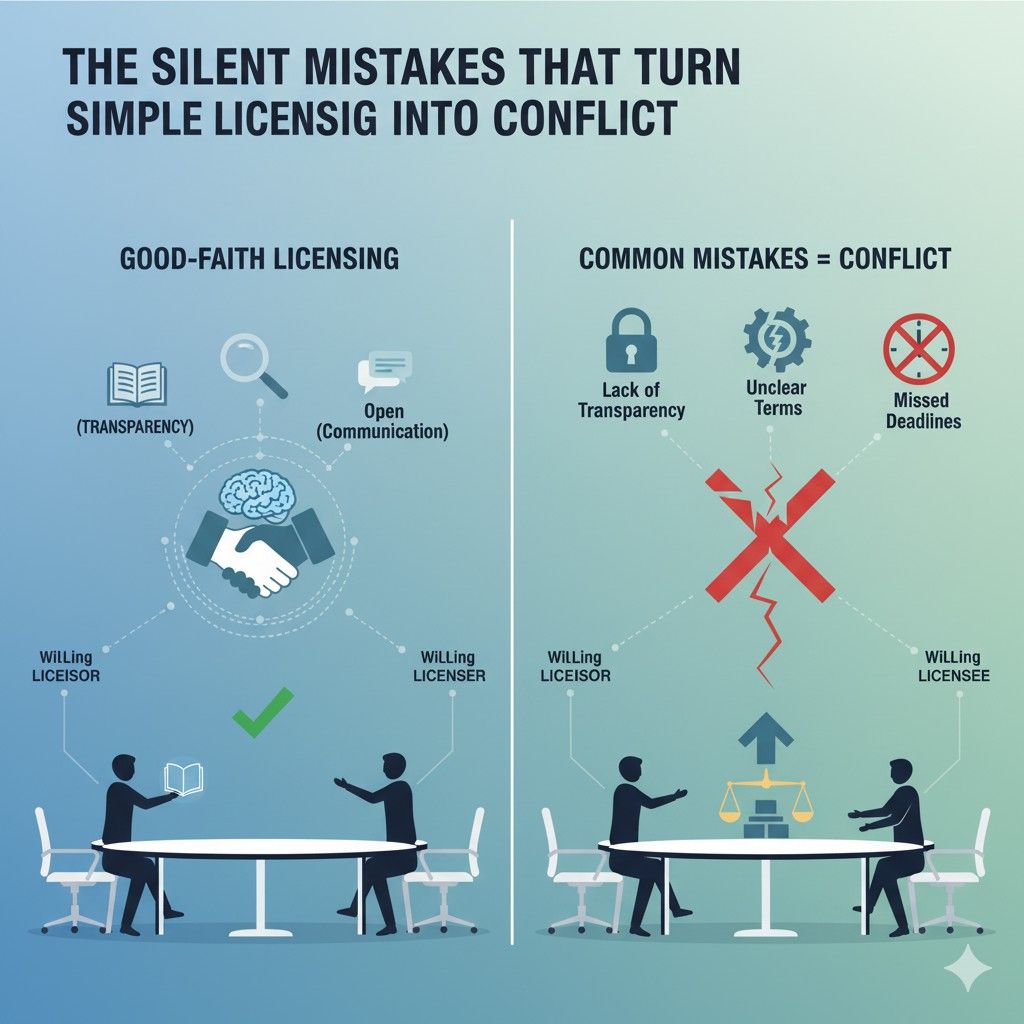
For businesses, licensing needs ownership. When someone is clearly responsible and accountable, responses become timely and thoughtful. That alone prevents many conflicts before they form.
Letting Emotion Leak Into Technical Discussions
Patent conversations often feel personal, especially for founders who built the technology themselves. A critical comment about a patent can feel like an attack on the business or the team.
When emotion enters the discussion, language shifts. Replies become sharp. Assumptions replace facts. What started as a technical debate turns into a standoff.
Courts notice this shift. Emotional language weakens credibility. It makes reasonable positions look reactive.
The most effective approach is to separate identity from analysis. Treat every claim discussion as a problem to solve, not a verdict on your work.
Assuming the Other Side Understands Your Position
Many conflicts grow from simple assumptions. A patent owner assumes the licensee understands the claim scope. A licensee assumes the patent owner sees the weakness they see.
When assumptions replace explanations, frustration builds. Each side thinks the other is acting in bad faith, when in reality they are just misaligned.

Businesses should over-communicate clarity, not volume. Explaining how you see the patent, how it applies, and why it matters reduces friction. Silence or shorthand does the opposite.
Using Absolute Language Too Early
Words like always, never, and non-negotiable feel strong, but they close doors fast. Courts often see early absolute language as evidence of unwillingness.
Even if your position is firm, how you express it matters. Stating that something is difficult or unlikely leaves room for dialogue. Declaring it impossible invites conflict.
The goal is not to appear flexible on substance, but open on process. That distinction keeps talks alive.
Over-Relying on Informal Conversations
Phone calls and casual meetings feel efficient, but without follow-up, they become risky. Memories differ. Expectations drift. What felt agreed upon suddenly is not.
Courts rely on written records. Informal talks without documentation often vanish when disputes arise, leaving gaps that can be filled unfavorably.
Businesses should summarize key points in writing after discussions. This is not aggressive. It is protective. It ensures alignment and preserves intent.
Waiting Too Long to Set Structure
Many licensing talks drift because no one sets structure. There is no clear next step, no timeline, no sense of direction.
Drift creates frustration. Frustration creates suspicion. Suspicion turns into accusations of bad faith.
Setting structure early changes everything. It signals seriousness and respect. Even a simple agreement on what will be discussed next keeps momentum.
Treating Disagreement as Disrespect
Strong disagreements are normal in patent licensing. Problems arise when disagreement is taken as disrespect.
When one side challenges validity or scope, the other side may shut down or escalate. Courts expect disagreement. They do not expect disengagement.
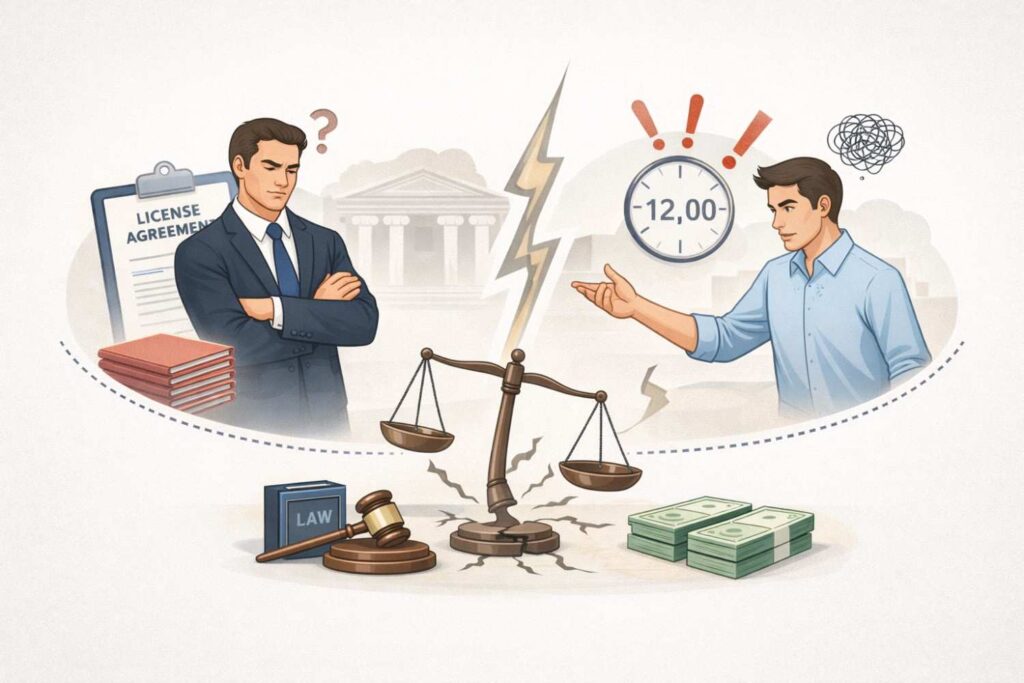
Businesses that handle disagreement well focus on substance. They ask why. They respond with facts. They keep the conversation professional.
This approach not only protects credibility but often uncovers paths to resolution that emotion would have blocked.
Ignoring How Small Delays Add Up
A single late response rarely causes conflict. A pattern does. Small delays, when repeated, create a narrative of avoidance.
Courts look at patterns. Counterparties feel patterns emotionally. Both matter.
Setting internal response standards helps prevent this. Even a brief acknowledgment buys time and preserves goodwill.
Letting Weak Patent Foundations Create Friction
Some conflicts are not caused by behavior but by the patent itself. Vague claims, unclear diagrams, or missing technical detail make licensing painful.
Licensees push back harder. Discussions loop. Each side becomes frustrated, and willingness is questioned.
This is why strong preparation matters. When patents are built clearly from the start, talks stay focused on value, not confusion.

PowerPatent helps founders avoid this exact trap by turning real technical work into clear, review-backed patents that hold up in real negotiations. You can see how that foundation is built here: https://powerpatent.com/how-it-works
Forgetting That Every Interaction Builds the Record
The most dangerous mistake is forgetting that every interaction matters. Emails, delays, tone, and structure all contribute to how your behavior is judged later.
Many businesses act as if the record starts when lawyers get involved. In reality, it starts with the first message.
When you treat every interaction as part of a long story, your decisions become more intentional. That awareness alone prevents most silent mistakes.
Conflict Is Often Preventable With Early Discipline
Most licensing conflicts are not inevitable. They grow from small lapses in discipline and communication.
When businesses commit early to clarity, structure, and professionalism, licensing stays what it should be: a business discussion, not a battle.
The teams that master this do not just avoid conflict. They gain control.
Wrapping It Up
Patent licensing does not break down because people disagree. It breaks down because signals are missed, habits are sloppy, and small choices quietly push conversations in the wrong direction. The difference between a willing licensor and a willing licensee is not attitude. It is conduct. Courts look for effort, direction, and fairness, all shown through everyday actions that often feel routine at the time.
Leave a Reply