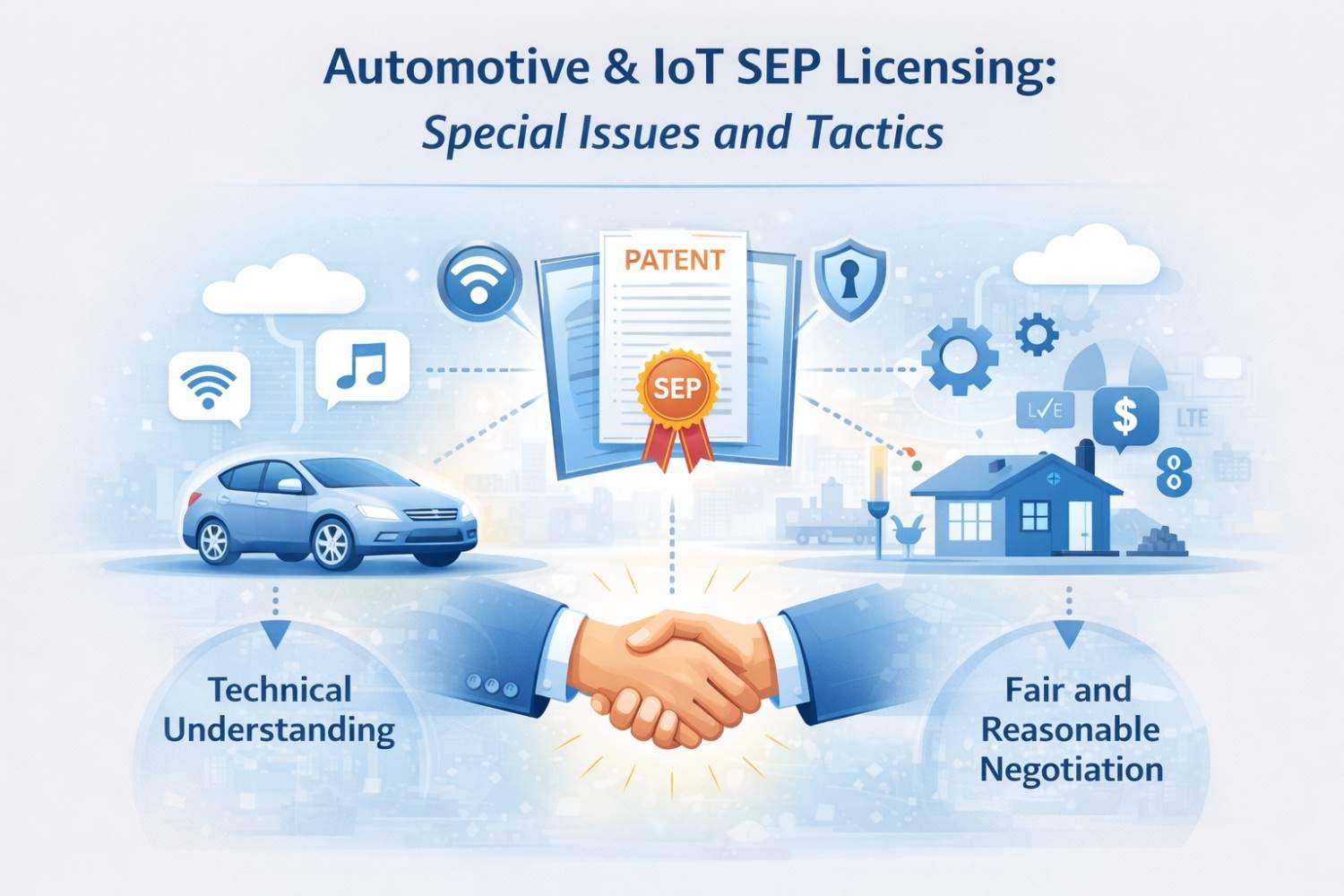
Cars are no longer just machines. They are moving computers. Sensors, chips, wireless links, and software now run almost every part of a modern vehicle. The same is true for IoT devices. From smart meters to factory robots, everything talks, listens, and updates over the air.This change created massive value. It also created massive patent risk. At the center of that risk are standard essential patents, often called SEPs. These patents cover the core tech that makes standards like 4G, 5G, Wi-Fi, Bluetooth, and V2X work. If you build a connected car or an IoT product, you are almost guaranteed to touch SEPs, even if you never meant to.
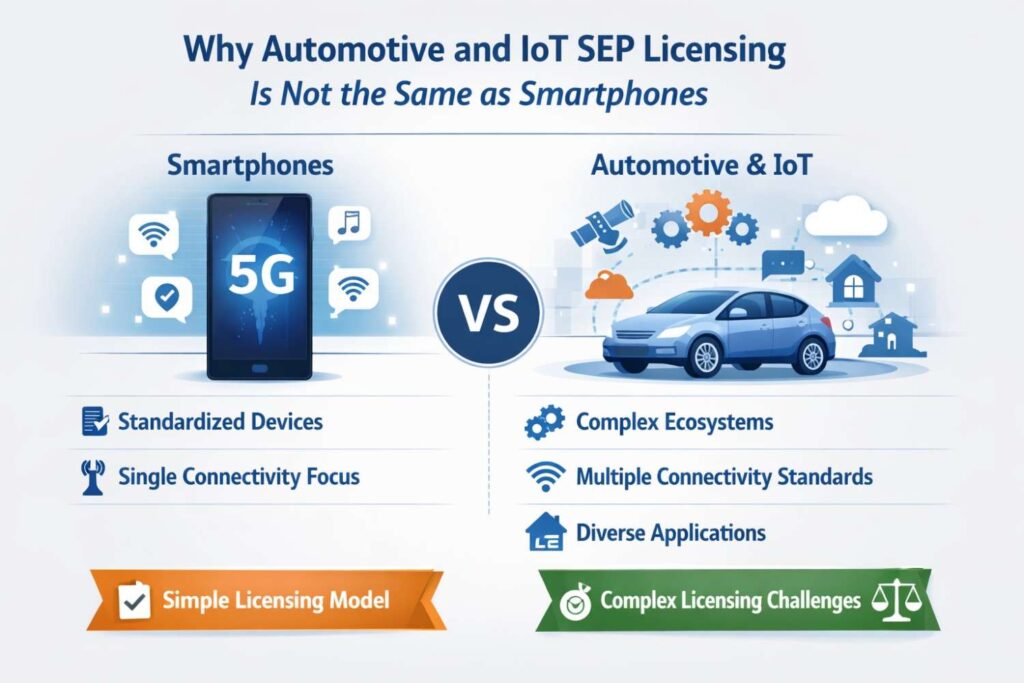
Why Automotive and IoT SEP Licensing Is Not the Same as Smartphones
Automotive and IoT companies often assume that SEP licensing follows the same playbook that shaped the smartphone world.
That assumption is costly. Phones are fast cycles, clear products, and well-worn legal ground. Cars and IoT devices live in a very different reality.
Longer lifetimes, layered supply chains, safety rules, and mixed business models change everything. Understanding these differences early gives businesses room to plan, negotiate, and protect themselves before pressure shows up.
This section explains why copying the smartphone mindset fails, and how smart teams adjust before it is too late.
Smartphones Grew Up With Standards, Cars Did Not
The smartphone industry was born alongside modern wireless standards. From day one, phones were built to talk to cellular networks. SEP licensing became part of the cost of doing business very early.
Cars followed a different path. For decades, vehicles were closed systems. Connectivity came later, added piece by piece. Many car makers and suppliers still treat wireless features as add-ons rather than core systems.
This gap creates risk. When connectivity is seen as “just another module,” licensing decisions are pushed down the chain or delayed. SEP owners do not see it that way.
They see a connected product that uses protected tech, regardless of how the company internally labels it.
Actionable advice here is simple but powerful. Treat connectivity as a core product decision, not a feature. That means tracking which standards your vehicles or devices rely on, even if the tech sits inside a chip or a supplier module.
If you cannot clearly explain how your product connects, someone else will explain it for you, and not in your favor.
The Product Life Cycle Changes the Math Completely
A smartphone lives for a few years at most. Cars stay on the road for ten, fifteen, sometimes twenty years. IoT devices often sit in factories, cities, or homes for just as long.
This long life span changes licensing exposure in a major way. SEP terms that seem reasonable on a short-lived phone can turn painful when multiplied over a decade. Updates, retrofits, and regional rollouts add even more complexity.
Many businesses fail by negotiating licenses too late, after products are already deployed. At that point, walking away is not an option. The leverage is gone.
The smart move is to think about SEP exposure during design and platform planning, not after launch. Ask how long this product will live, where it will be sold, and how often it will update.
Then model licensing costs across that full life. This thinking often leads teams to adjust architecture early, sometimes saving millions later.
Supply Chains Blur Who Is “Using” the Standard
In smartphones, the phone maker is clearly the product company. In automotive and IoT, the picture is messy.
Chips come from one company, modules from another, software from a third, and the final product from a fourth.
SEP owners know this and often use it to their advantage. They may approach whoever has the deepest pockets or the most public brand, regardless of who actually implemented the standard.
Many companies assume that a supplier has “taken care of licensing.” That assumption is dangerous unless it is backed by clear contract language. Even then, disputes are common.
A practical step is to audit supplier agreements with one question in mind: who carries SEP risk if a claim appears? If the answer is vague, that is a problem.
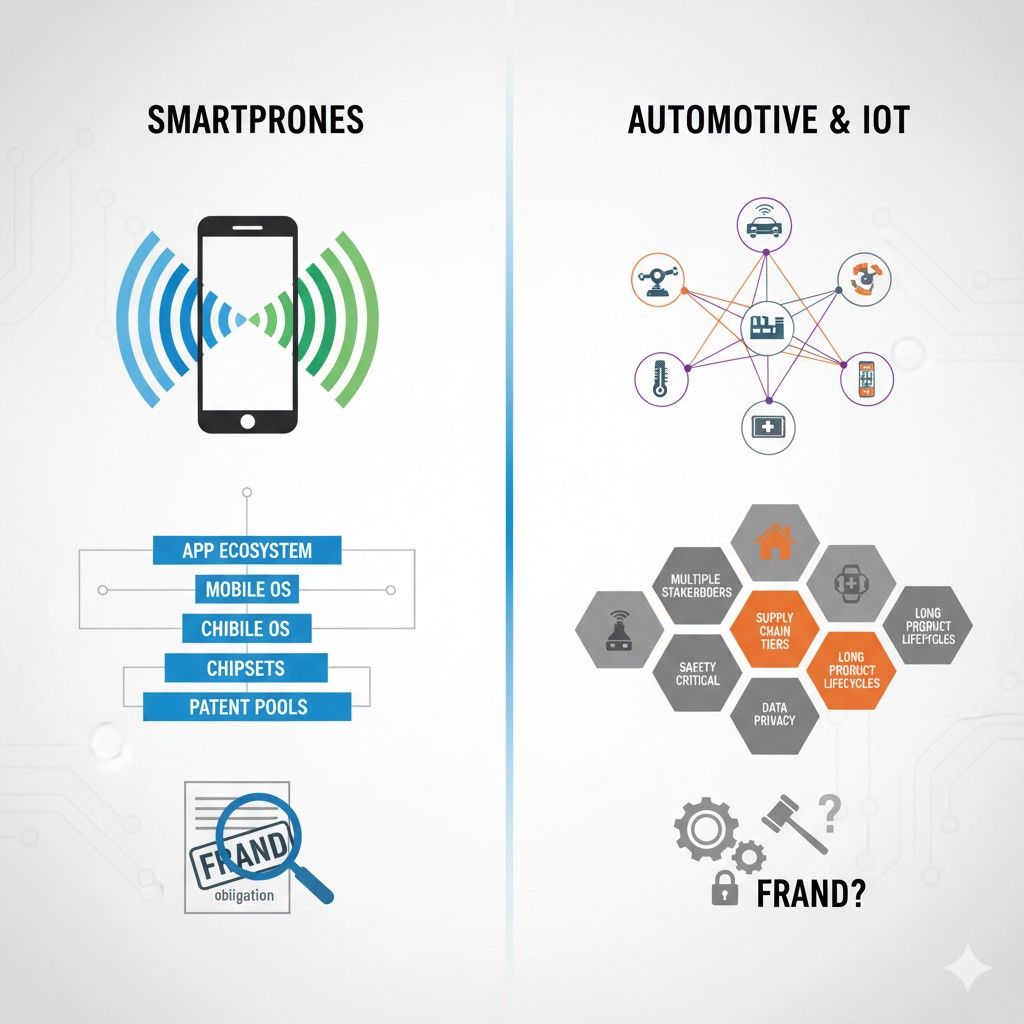
Businesses that do well here push for transparency. They ask suppliers which standards are implemented, which licenses are held, and which are not.
This is not about blame. It is about knowing where exposure lives before it turns into a surprise.
Safety and Regulation Shift Negotiation Power
Cars and many IoT systems are safety-critical. Connectivity is tied to braking, steering, energy control, medical monitoring, or public infrastructure. Shutting off features is often not realistic.
SEP owners understand this. In negotiations, the threat is not just a product ban. It can be recalls, blocked updates, or regulatory attention. These risks change the tone of discussions very quickly.
Businesses that wait until after certification or regulatory approval are in a weak position. At that stage, changes are slow, expensive, and visible.
The better approach is early engagement. Map which standards touch safety systems and which do not.
In some cases, separating connectivity paths or isolating certain functions can preserve flexibility. Even small architectural choices can create room to negotiate later.
Volume Looks Smaller but Risk Is Not
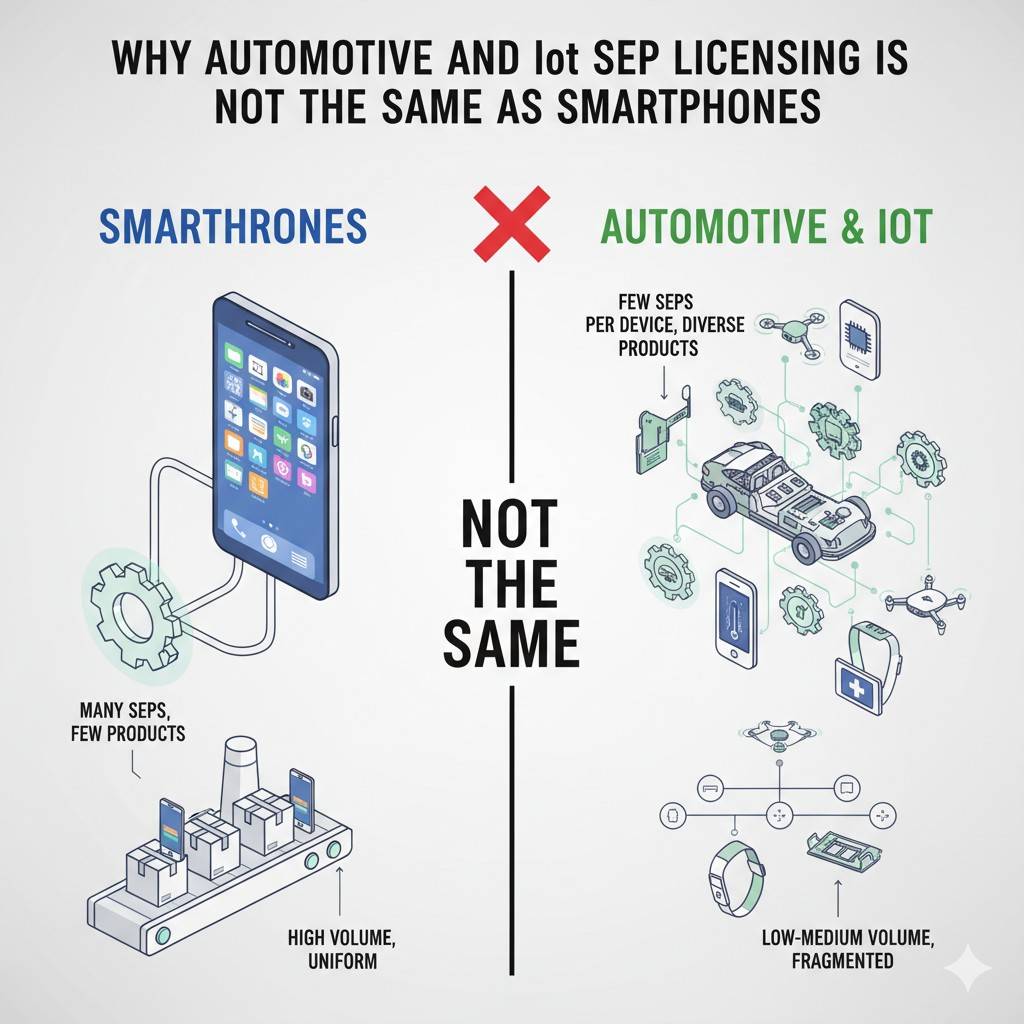
Smartphone makers ship hundreds of millions of units. Many car and IoT companies ship far fewer. This leads to a false sense of safety. Teams assume that lower volume means lower interest from SEP holders.
That is often wrong.
SEP owners care about value, not just volume. A connected vehicle platform or industrial IoT system can generate revenue for decades. It can also set a precedent that affects an entire industry segment.
This means even smaller players can become targets, especially if they are early movers or market leaders in a niche.
The smart tactic is to prepare as if you will be noticed. Document your technical choices.
Keep clear records of standard usage. Build a basic licensing strategy even if you think claims are unlikely. Prepared companies respond calmly and credibly when approached. Unprepared ones scramble and overpay.
Pricing Models Do Not Translate Cleanly
In phones, SEP royalties are often tied to the device price. Cars and IoT products break that logic. A vehicle price includes many elements that have nothing to do with connectivity. The same is true for industrial systems.
Disputes often arise over what the “right” royalty base should be. SEP owners may push for end-product value. Implementers push for module-level pricing. These fights are slow and expensive.
Businesses that succeed here do their homework early. They understand how their product creates value and can clearly explain why certain pricing models make sense and others do not.
This is not about winning every argument. It is about having a story that feels fair, grounded, and consistent.
That story is much easier to tell when it is supported by your own patents. When you bring protected tech to the table, discussions shift from demand to exchange. This is where platforms like PowerPatent matter.
Turning your real engineering work into strong patents gives you a voice in rooms where others only listen. You can explore how that works here: https://powerpatent.com/how-it-works
Courts and Jurisdictions Add Another Layer
Smartphone SEP battles have played out for years in familiar courts. Automotive and IoT disputes are spreading into new regions, new judges, and new legal theories.
This uncertainty increases risk for both sides. SEP owners may push harder in some regions. Implementers may face unexpected injunction threats.
Businesses cannot control courts, but they can control readiness. Knowing where your products are sold, where standards bodies sit, and where SEP holders litigate most often helps shape strategy.
Even simple choices, like where to launch first, can reduce exposure.
The Biggest Difference Is Mindset
At the core, the biggest difference between smartphone and automotive or IoT SEP licensing is mindset. Phone companies expect licensing. Many car and IoT companies still see it as an exception.
That gap is closing fast.
Companies that adapt early treat SEP strategy as part of product strategy. They plan, document, and protect their innovations. They invest in patents not as trophies, but as tools.
They move with confidence instead of reacting in fear.
If you are building connected products, this mindset shift may be the most valuable move you make.
And if you want help capturing your innovations in a way that supports that shift, PowerPatent was built for exactly this moment. Learn more here: https://powerpatent.com/how-it-works
Where Car Makers and IoT Builders Get Exposed Without Realizing It
Most SEP problems in automotive and IoT do not come from bad intent. They come from blind spots.
Teams move fast, ship real products, and assume risk is being handled somewhere else. Then a letter arrives, or a partner panics, or a deal stalls. By that point, the exposure has already been baked in.
This section focuses on the quiet places where risk hides and how smart businesses surface it early, while they still have room to move.
The “We Don’t Build the Modem” Trap
Many automotive and IoT companies believe they are insulated because they do not design the connectivity stack themselves. The modem comes from a chip vendor. The module comes from a tier-one supplier. The software comes preloaded.
From a product view, this feels reasonable. From an SEP view, it is often irrelevant.
SEP holders look at the end product that uses the standard. They care about who sells it, who controls it, and who profits from it. They rarely limit themselves to chasing chip makers alone.
The exposure appears when companies rely on assumptions instead of clarity. They assume licenses flow through the supply chain. They assume someone else has handled it. They assume silence means safety.
The practical fix is not complex, but it does require discipline. Businesses that stay safe make connectivity ownership visible.
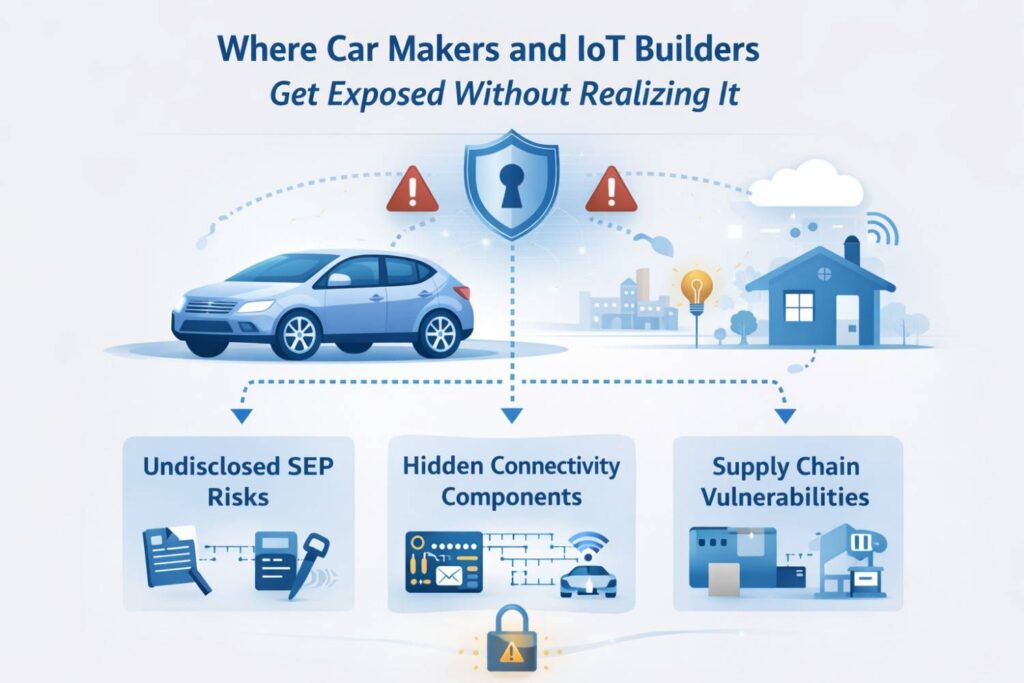
They know which standards are active in their products and which party is licensed for what. If that knowledge does not exist internally, that is already a warning sign.
Contracts That Look Fine Until They Are Tested
Supplier contracts often include language about compliance and indemnification. On paper, this feels like protection. In practice, SEP disputes test those clauses in ways many teams never expected.
When a claim appears, suppliers may argue that the license scope is limited. They may say it covers chips, not systems. They may say it applies only in certain regions or under certain conditions.
The exposure is not just legal. It is operational. While parties argue, products ship, updates roll out, and customers rely on connectivity that may now be under question.
Companies that reduce this risk treat SEP exposure as a business issue, not just a legal one.
They revisit contracts with a focus on real-world outcomes. They ask what happens if a claim arises next year, not just what the document says today. When gaps appear, they address them early, while leverage still exists.
Silent Exposure During Platform Reuse
Automotive and IoT teams love platforms. Reusing a connectivity platform across models or product lines saves time and money. It also quietly multiplies SEP exposure.
A license decision made for one product can affect many others years later. A design choice made early can lock in a standard across an entire roadmap.
The risk grows when teams treat platform reuse as purely technical. Without a licensing view, exposure scales faster than anyone expects.
Smart teams pause before platform decisions and ask a simple question: if this standard becomes expensive or contested, how many products are affected?
This thinking does not slow development. It guides it. Sometimes it leads to small changes that preserve optionality later.
Updates That Change the Legal Picture
In cars and IoT, software updates are constant. New features, new regions, new partners. Each update can change how standards are used.
A product that shipped with basic connectivity may later support advanced features tied to different SEP portfolios. A device certified for one market may be enabled for another through software alone.
Exposure appears when updates move faster than licensing awareness. Teams assume the legal picture stays the same because the hardware did not change. SEP holders often disagree.
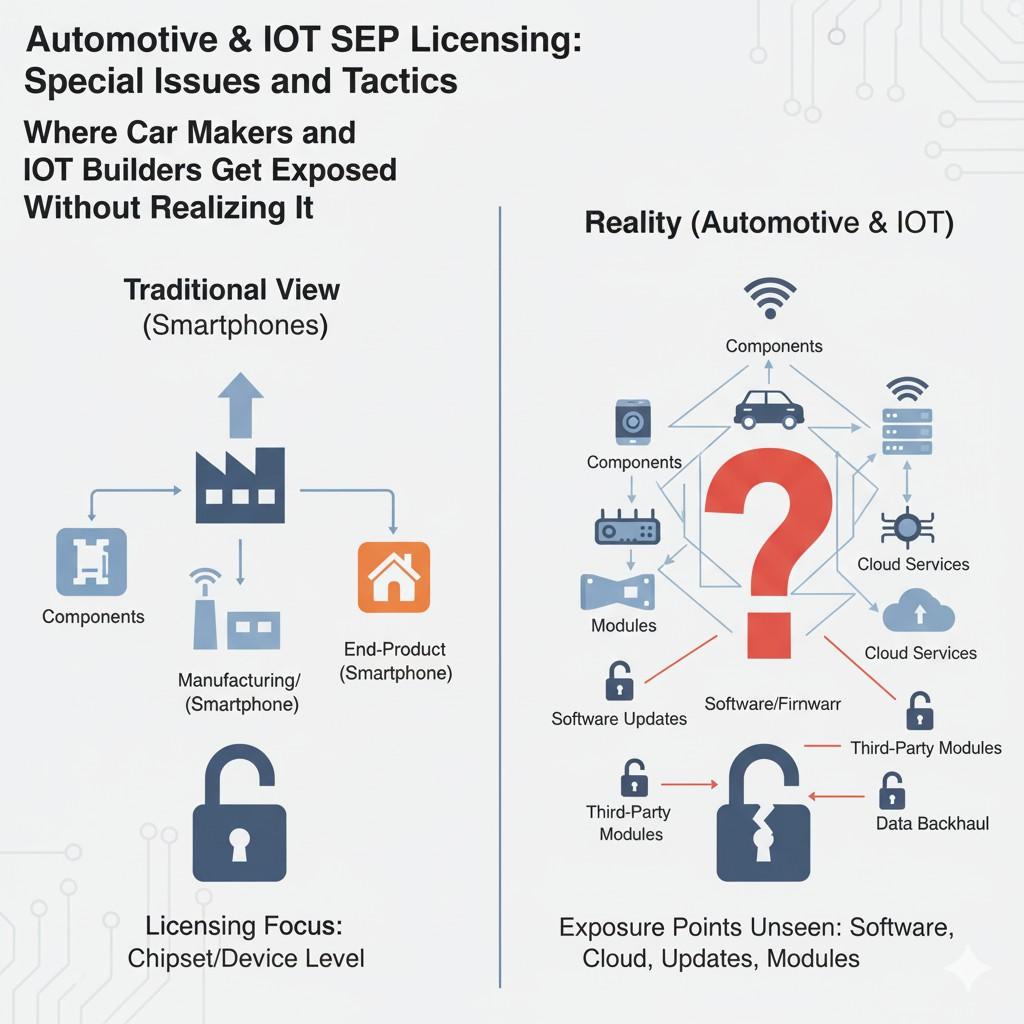
Businesses that handle this well connect update planning with risk review. They treat major connectivity changes as checkpoints. This does not mean long delays or heavy process.
It means asking whether a new update changes how standards are used and whether that change needs attention.
Joint Ventures and Partnerships That Share Risk Poorly
Automotive and IoT ecosystems thrive on partnerships. Joint ventures, co-branded platforms, and shared data systems are common. These deals often move quickly to capture market opportunity.
SEP exposure often falls through the cracks in these moments.
Each party assumes the other is handling licensing. Or they assume risk will be sorted out later, after success is clear. When success arrives, so do claims, and suddenly no one agrees on responsibility.
The exposure here is not just cost. It is relationship damage. Deals slow down. Trust erodes. Focus shifts away from growth.
The practical move is to surface SEP responsibility during deal formation, not after. Clear ownership, even if imperfect, beats shared confusion. Companies that do this are seen as serious partners. Those that avoid it often pay later.
Regulatory Filings That Reveal More Than Intended
Automotive and IoT companies file detailed documents with regulators, standards bodies, and customers. These filings often describe system capabilities in plain language.
SEP holders read these documents carefully.
Exposure appears when public descriptions are more detailed than internal tracking.
A company may publicly state support for a standard without having fully considered the licensing impact. That statement can later be used as evidence of use.
Businesses that manage this risk align public messaging with internal understanding.
They do not hide capabilities, but they know what they are disclosing and why. This alignment reduces surprises and strengthens credibility if questions arise.
Startups Feel Small Until They Are Not
Many IoT and mobility startups assume they are too small to matter. Early on, that may be true. But growth changes perception quickly.
As soon as a startup becomes a platform, wins a major customer, or defines a category, attention follows. SEP holders track momentum. They look for leverage points.
Exposure is highest when growth outpaces preparation. Teams are focused on hiring, scaling, and shipping. Licensing strategy feels distant until it is suddenly urgent.
The smartest startups invest early in understanding their technical footprint and protecting what they build. They file patents not as a defensive chore, but as a way to balance future conversations.
This is where PowerPatent fits naturally into a growth story. It helps teams capture real innovation without slowing down, so they are not empty-handed when stakes rise.
You can see how that works here: https://powerpatent.com/how-it-works
Exposure Is a Process Problem, Not a One-Time Mistake
The common thread across all these blind spots is not ignorance. It is fragmentation. Different teams own design, sourcing, software, legal, and partnerships. SEP exposure lives between those lines.
Companies that reduce risk do not rely on one expert or one document.
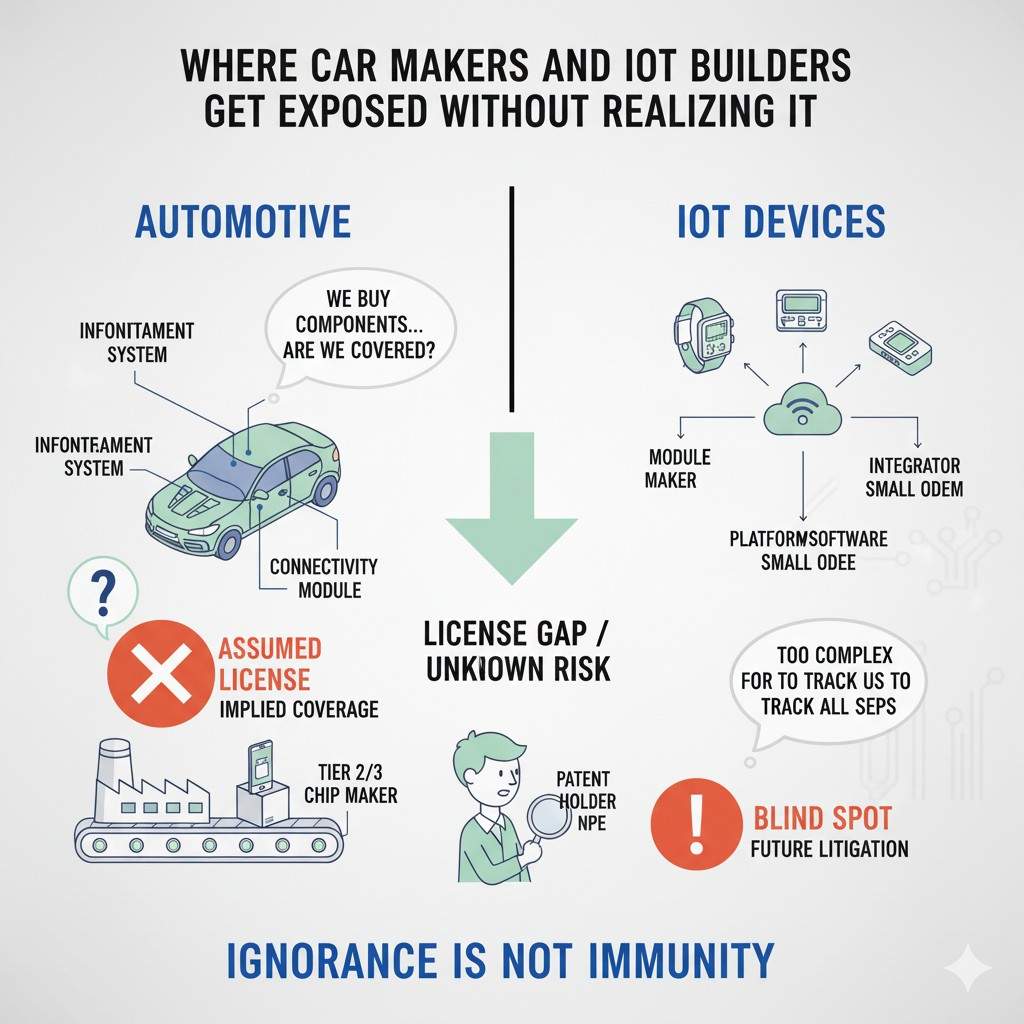
They build light but consistent processes that connect decisions across teams. Over time, this turns SEP licensing from a surprise into a managed part of the business.
How SEP Owners Think and Why That Matters to Your Strategy
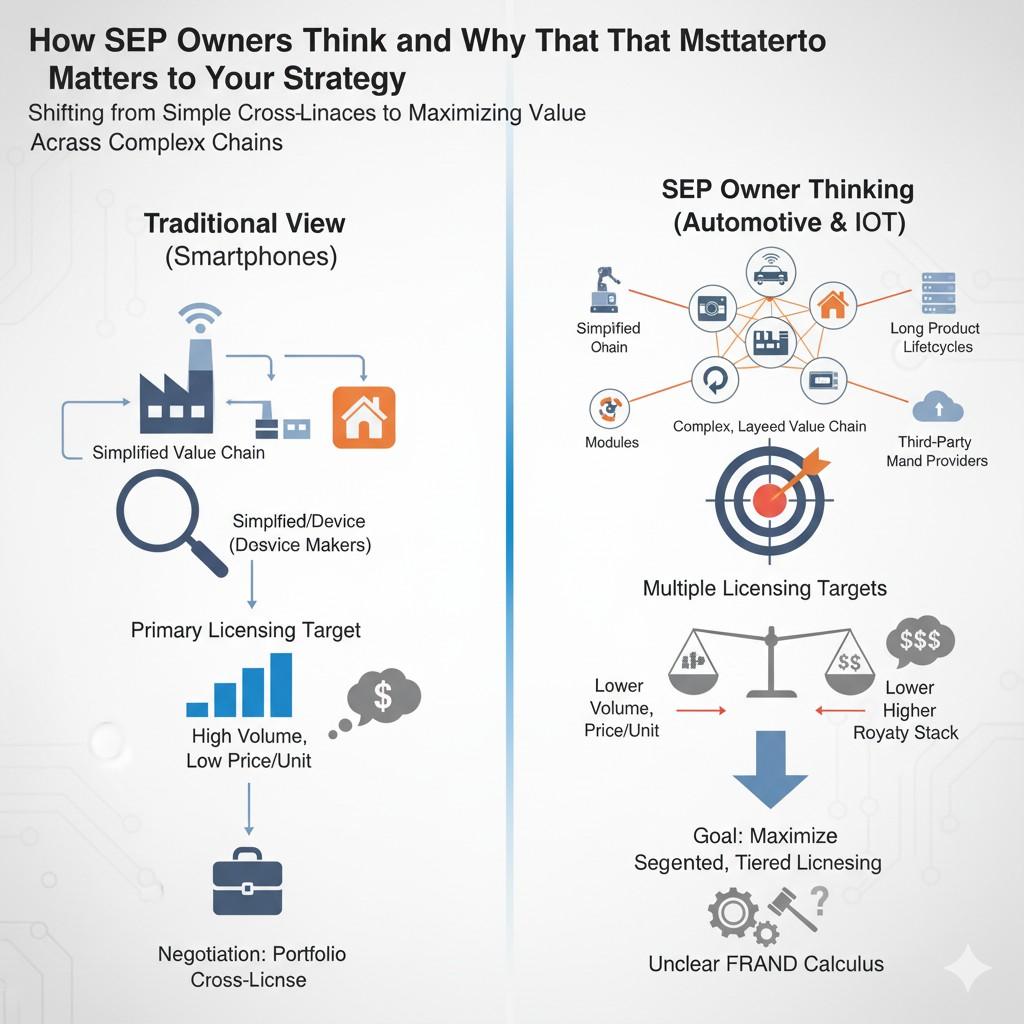
Most companies approach SEP licensing as a technical or legal problem. SEP owners rarely do.
They approach it as a business system designed to scale, repeat, and produce predictable results. When you understand that mindset, negotiations stop feeling random and start feeling readable.
This section explains how SEP owners see the world, what they look for, and how that understanding can be turned into real leverage for automotive and IoT businesses.
SEP Portfolios Are Built for Long-Term Harvesting
SEP owners do not think in product cycles. They think in decades. A strong SEP portfolio is not designed to win one case or license one company. It is designed to sit underneath an entire industry as it grows.
Automotive and IoT are especially attractive because they are still early in their connectivity curve. SEP owners see rising volumes, long product lives, and slow-moving incumbents. That combination signals stable returns.
This means claims are rarely personal. They are strategic. If your company is contacted, it is not because you did something unusual. It is because you fit a pattern.
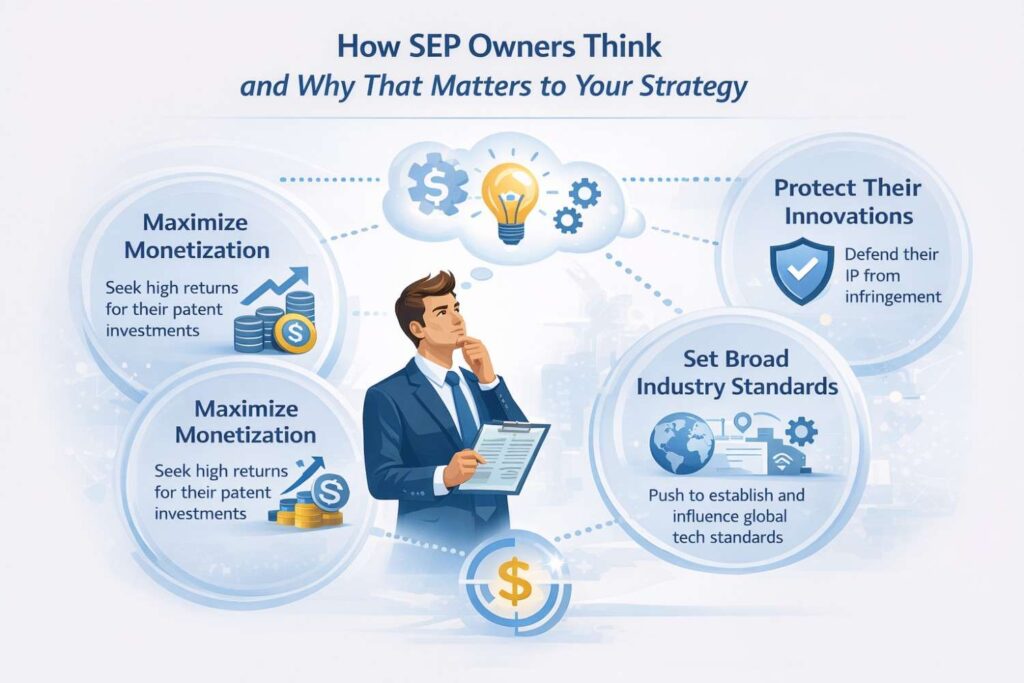
The actionable takeaway is to remove emotion from the process. Treat licensing as a structured negotiation, not a moral judgment.
Companies that react defensively or dismissively often strengthen the other side’s position. Calm, informed responses change the tone immediately.
SEP Owners Follow the Money, Not the Code
Many engineers assume that SEP discussions will focus on technical details. In practice, SEP owners care far more about revenue flow and control points.
They ask who sets prices, who owns customer relationships, and who can make decisions quickly. That is who they approach first.
In automotive and IoT, this often means the brand owner or system integrator, even if the connectivity stack sits deep in the supply chain. SEP owners know that these companies feel the most pressure if products are threatened.
Businesses that understand this shift their internal planning. They assume they will be approached and prepare accordingly.
They align internal stakeholders early so responses are coordinated instead of fragmented.
Silence Is Interpreted as Weakness
SEP owners run structured outreach programs. They track who responds, how fast, and with what level of detail. Silence or delay is rarely seen as neutrality. It is often read as uncertainty or lack of preparation.
This does not mean you need to rush into agreements. It means you should respond with intent.
A well-crafted response that acknowledges the issue, asks informed questions, and signals internal review can buy time and respect. A vague or delayed reply often invites escalation.
Companies that do well here prepare response templates and internal workflows before claims appear. This allows them to move calmly instead of scrambling under pressure.
FRAND Is a Tool, Not a Shield
Many implementers lean heavily on FRAND principles, assuming they provide automatic protection. SEP owners also rely on FRAND, but in a very different way.
For them, FRAND defines a negotiation space, not an outcome. It allows flexibility in pricing, structure, and timing, as long as arguments can be framed as reasonable.
Automotive and IoT companies get exposed when they treat FRAND as a magic word instead of a framework. Courts expect evidence, context, and behavior to support FRAND positions.
The practical move is to build a record of reasonableness. Document your technical use, market position, and willingness to engage. This record matters far more than slogans if disputes grow.
Delay Can Be a Strategy on Both Sides
SEP owners often wait before asserting. They let markets mature, standards settle, and dependencies deepen. By the time claims surface, switching costs are high.
Implementers sometimes try to delay as well, hoping issues fade or settle elsewhere. This can work briefly, but it carries risk.
The companies that navigate this best use time deliberately. They use early stages to gather information, benchmark deals, and strengthen their own IP. Delay without preparation is dangerous. Delay with purpose can be powerful.
Cross-Licensing Is the Real Endgame
Pure cash licensing is only one outcome. Many SEP owners are open to cross-licensing, especially when implementers bring valuable patents to the table.
Automotive and IoT companies often underestimate the value of their own inventions. Control systems, sensor fusion, power management, edge processing, and safety integration all generate patentable ideas that matter.
The problem is not lack of innovation. It is lack of capture.
This is where strategy meets execution. Companies that systematically turn engineering work into patents change the negotiation dynamic. Instead of asking for permission, they trade value.
PowerPatent was built around this exact need. It helps teams capture real, defensible inventions as they build, without slowing development.
Over time, this creates options that did not exist before. You can learn more here: https://powerpatent.com/how-it-works
Public Pressure Is Rarely the First Move
Despite media attention, most SEP owners prefer quiet resolution. Public disputes are costly and unpredictable. Initial outreach is often designed to open a channel, not start a war.
Companies that escalate too quickly can misread this phase. Aggressive public responses may feel strong but can harden positions unnecessarily.
A better approach is controlled engagement. Ask questions. Clarify scope. Signal seriousness without hostility. This keeps options open and preserves room for creative outcomes.
SEP Owners Watch Behavior Over Words
What matters most to SEP owners is not what you say once, but how you behave over time. Do you respond consistently? Do your positions shift without explanation? Do internal messages contradict public ones?
Consistency builds credibility. Credibility creates flexibility.
Automotive and IoT companies that align internal teams, messaging, and actions are easier to work with and harder to pressure. Those that appear fragmented invite leverage.
Understanding the Other Side Is a Competitive Advantage
At the end of the day, SEP licensing is a negotiation between businesses with different incentives. When you understand how the other side measures success, you can shape your own moves more effectively.
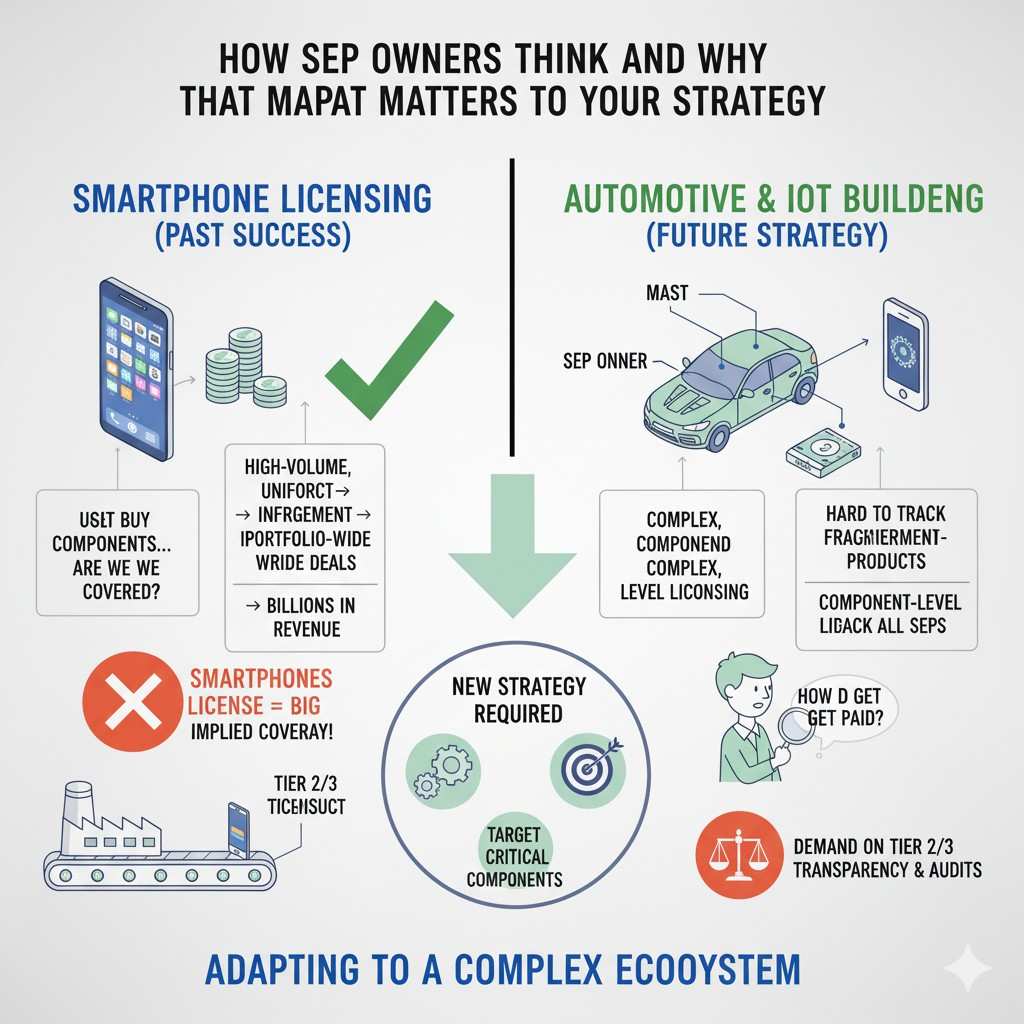
This understanding does not require agreeing with SEP owners. It requires seeing clearly.
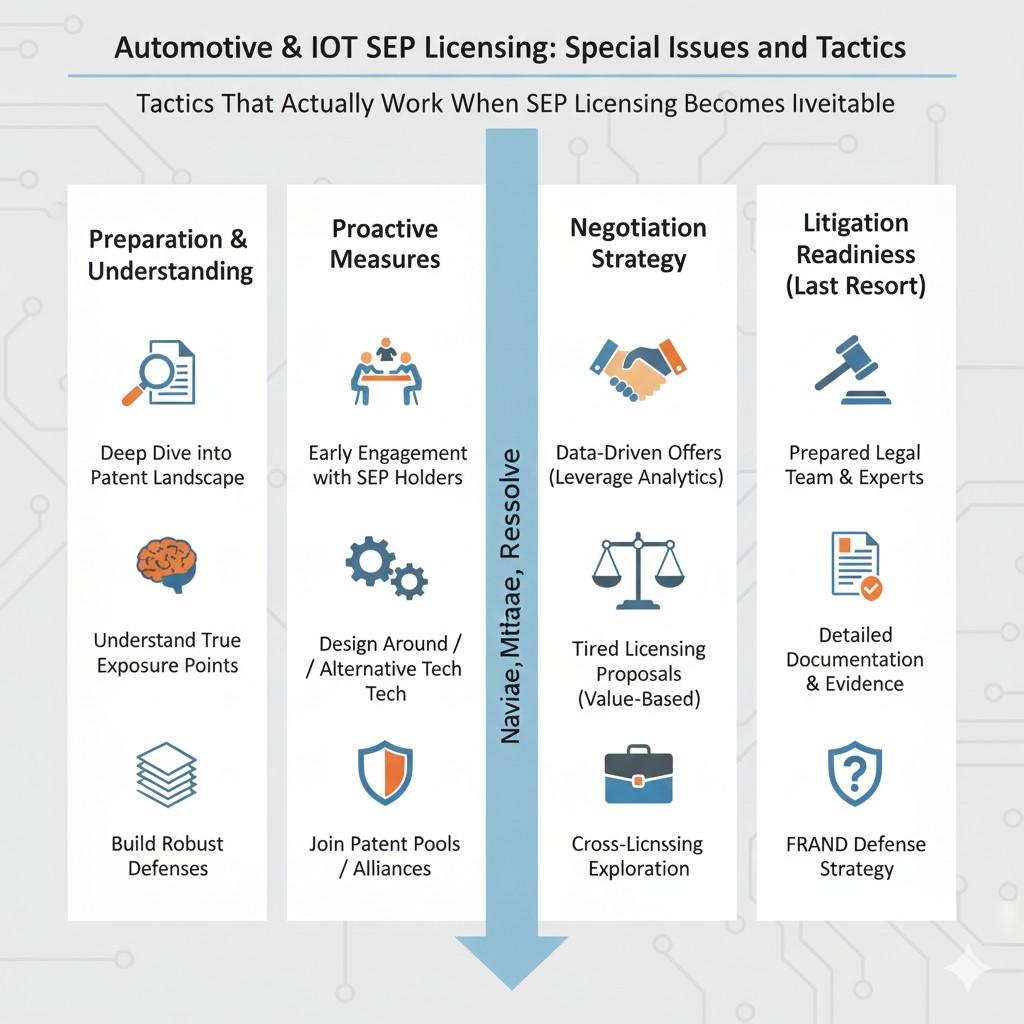
Tactics That Actually Work When SEP Licensing Becomes Inevitable
By the time SEP licensing becomes unavoidable, many options are already off the table. Products are launched. Customers depend on them. Partners are locked in. This is not the moment for theory. It is the moment for execution.
This section focuses on tactics that have proven effective in real automotive and IoT situations. Not shortcuts. Not tricks. Just moves that protect leverage, limit damage, and keep the business moving forward.
Start by Slowing the Conversation, Not Stopping It
When an SEP claim arrives, the instinct is often to either push back hard or go silent. Both moves usually backfire.
Stopping the conversation signals risk and invites escalation. Pushing back without preparation locks you into positions you may later regret.
The more effective move is controlled pacing. Acknowledge the claim. Confirm receipt. Ask for clarity on scope and standards involved. This buys time without appearing evasive.
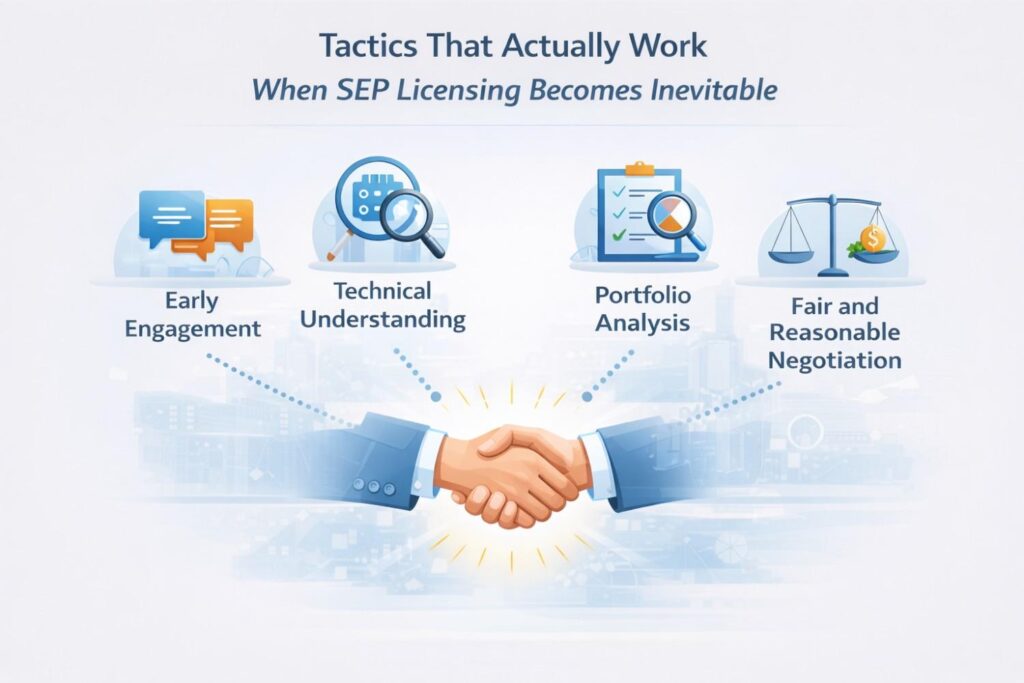
Internally, use that time to align teams. Technical, business, and legal views need to match before detailed responses are sent. A slow but steady cadence keeps pressure manageable and prevents mistakes made in panic.
Define the Product Boundary Early
One of the first battles in SEP licensing is defining what the license actually covers. Is it the full vehicle? The connectivity module? A service layer? A specific feature set?
If you do not define this boundary early, the other side will.
Automotive and IoT companies that succeed here invest effort in explaining their product architecture in simple terms. Not to educate SEP owners, but to anchor the discussion.
Clear boundaries limit royalty expansion and prevent value creep.
This is especially important when products evolve through updates. A license tied to a defined feature set is far safer than one tied to an open-ended platform.
Use Data, Not Emotion, to Frame Value
SEP discussions often drift into abstract debates about fairness. Those debates rarely end well.
A better approach is grounding every position in data. How many units ship? Which regions are active? How is connectivity actually used? What revenue is directly tied to standard-based features?
This data-driven framing narrows the conversation. It turns broad demands into specific questions. It also signals seriousness.
Companies that prepare this information before negotiations begin respond with confidence. Those that gather it under pressure often find uncomfortable gaps.
Avoid Early Concessions That Set Precedent
Small concessions made early can echo for years. A casual agreement on pricing logic or scope can later be cited as accepted practice.
This does not mean being rigid. It means being deliberate.
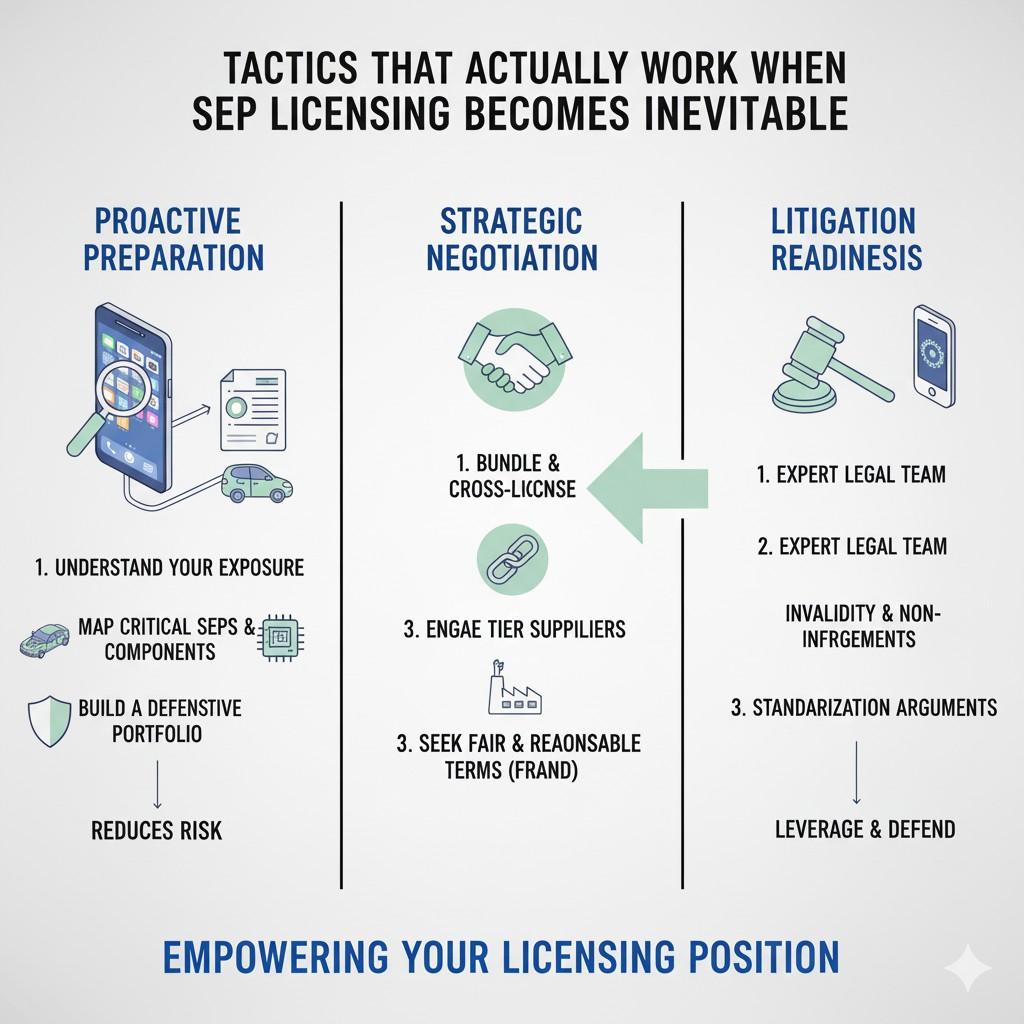
When unsure, companies that do well use conditional language. They explore options without committing. They separate discussion from agreement. This keeps doors open while protecting long-term position.
Bring Your Own IP Into the Room
Nothing shifts an SEP negotiation faster than credible countervalue. Even modest patent portfolios can change tone when they are relevant and well-presented.
Automotive and IoT innovation is rich. Power management, safety systems, data handling, and integration layers all produce patentable ideas that matter to large players.
The mistake many companies make is waiting until a dispute starts to think about patents. By then, it is too late to file meaningfully.
The companies that perform best treat patent creation as ongoing infrastructure. They capture inventions as they are built. They maintain ownership clarity. When SEP talks begin, they are not empty-handed.
This is where PowerPatent fits naturally. It helps teams turn real work into real patents, with speed and clarity, backed by real attorneys.
Over time, this creates optionality that pure negotiation never will. Learn more here: https://powerpatent.com/how-it-works
Keep Commercial Teams Close
SEP licensing is often pushed into legal silos. That separation weakens outcomes.
Commercial teams understand margins, pricing flexibility, and customer impact. Their input is critical when evaluating license structures and trade-offs.
Companies that integrate commercial thinking avoid deals that look fine on paper but hurt in practice. They also spot creative structures that legal-only teams may miss.
Plan for the Long Game
SEP agreements rarely end risk entirely. Standards evolve. Products change. New claims emerge.
Effective companies treat licensing as an ongoing relationship, not a one-time event. They track obligations, monitor standard use, and revisit assumptions regularly.
This long view prevents surprises and supports better renegotiation when conditions change.
Protect Momentum While Negotiating
One of the biggest fears during SEP disputes is disruption. Product delays, partner concerns, and internal distraction can do more damage than royalties themselves.
The most successful teams protect execution first. They isolate negotiation work so engineering and sales continue moving. They communicate calmly with partners and avoid alarmist messaging.
Momentum is leverage. Companies that keep shipping from a position of control negotiate better outcomes.
The Real Tactic Is Preparation
Across all these tactics, one theme stands out. Preparation beats reaction every time.
Companies that understand their tech footprint, capture their inventions, align their teams, and plan ahead rarely feel trapped. They may still pay for licenses, but they do so on terms they can live with.
Automotive and IoT are only becoming more connected. SEP licensing will not fade. But with the right mindset and tools, it does not have to be a threat.
If you are building in this space and want to strengthen your position before pressure arrives, now is the time.
PowerPatent exists to help founders and teams do exactly that, without slowing down what matters most. You can see how it works here: https://powerpatent.com/how-it-works
Wrapping It Up
Automotive and IoT companies are entering a phase where connectivity is no longer optional and SEP licensing is no longer avoidable. The mistake many teams make is treating this reality as a legal side issue instead of a core business concern. By the time SEP pressure shows up, the real decisions have already been made in product design, supply chain structure, and platform strategy.
Leave a Reply