
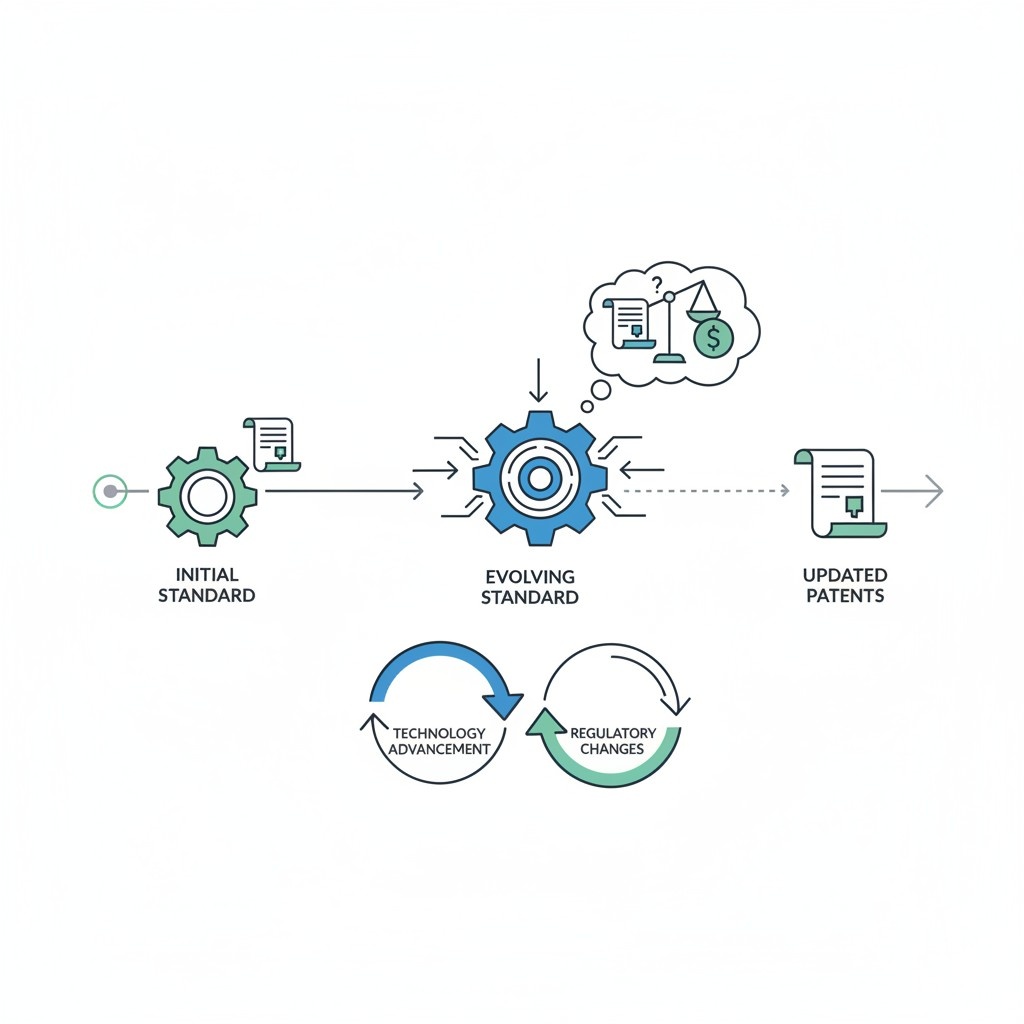
Standards change. Quietly at first. Then all at once. One year, your technology fits the standard perfectly. The next year, a small update rolls out, and suddenly your patent no longer lines up the way you thought it did. Nothing broke. No warning sirens. But the value of your Standard Essential Patent just slipped. This is one of the biggest hidden risks in modern patents. If you are building core tech that depends on industry standards—wireless, video, AI pipelines, networking, payments, or anything that needs to “work with everyone else”—then your patents must move with those standards. If they do not, they slowly stop protecting what matters.
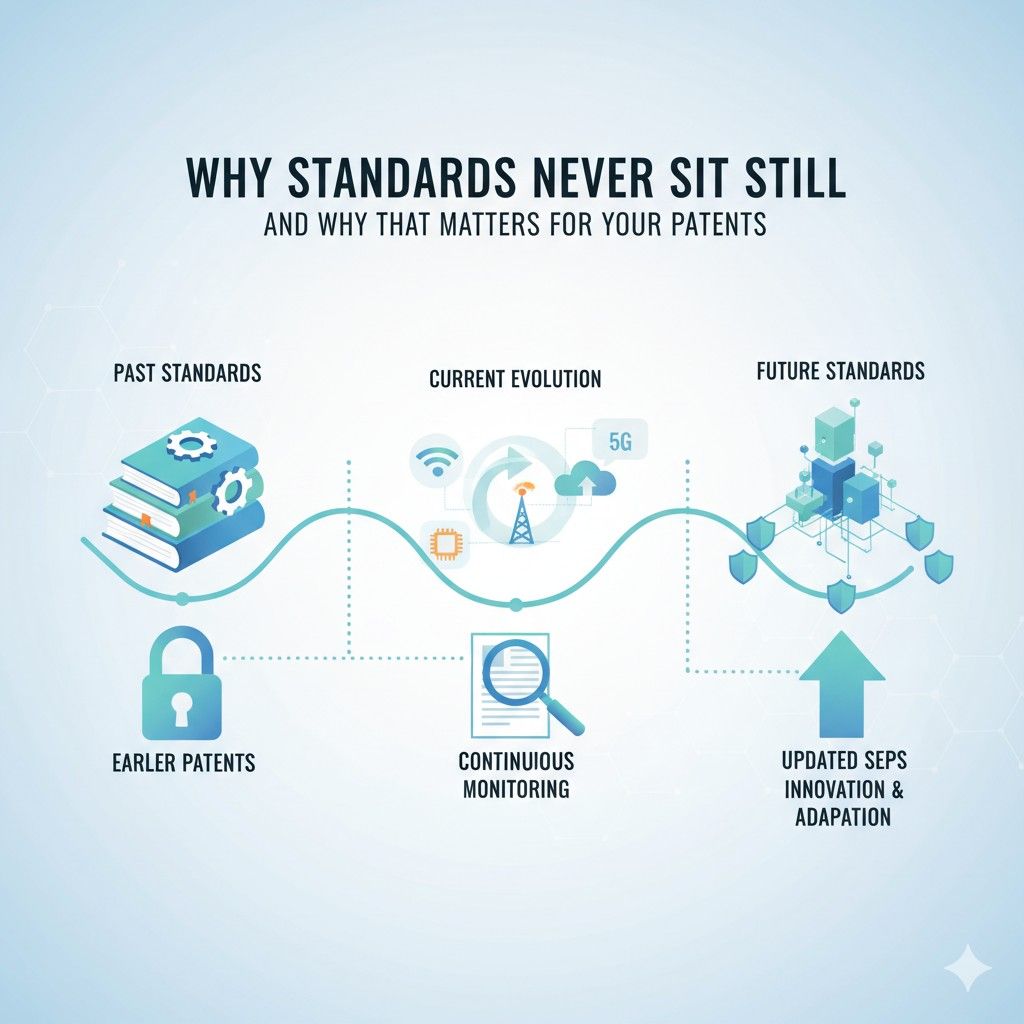
Why Standards Never Sit Still—and Why That Matters for Your Patents
Industry standards are not rules carved in stone. They are moving agreements between many companies who all want their technology to work together.
When markets shift, products improve, or new problems appear, standards change to keep up. This constant motion is normal. But for patents tied to those standards, it creates real risk and real opportunity.
If your business relies on a standard, your patents cannot stay frozen in time. They must evolve alongside the rules that define how the technology is used.
Understanding why standards keep changing is the first step to protecting the long-term value of your SEPs.
Standards Are Built by Compromise, Not Perfection
Most standards start as rough agreements, not final answers. Groups come together with different goals, different products, and different timelines.
Early versions often leave gaps, vague language, or optional paths. These gaps get filled over time as real-world use reveals what works and what breaks.

For patent owners, this means early alignment does not guarantee future coverage. A claim that mapped cleanly to version one of a standard may miss key updates in later releases.
Businesses that assume early alignment is enough often discover too late that the standard moved in a direction their patent did not cover.
Real Products Force Standards to Change
Standards look clean on paper, but reality is messy. Once products hit the market, edge cases appear. Performance limits get exposed. Security holes surface.
Power use becomes a concern. Latency matters more than expected. Each of these pressures pushes standards bodies to revise technical details.
From a strategy point of view, this is a signal. When products struggle, standards evolve. That is the moment when new essential features are defined.
Companies that monitor these pain points early can adjust their patent strategy to cover the fixes, not just the original design.
Backward Compatibility Drives Slow but Constant Change
Standards rarely throw everything away and start fresh. Instead, they evolve in layers. Old versions must still work. New features get added carefully. This creates long transition periods where multiple versions coexist.
For SEP owners, this layered approach creates a trap. A patent might be essential to an older layer but irrelevant to the new one. Over time, licensing value shifts toward the latest layers.

Businesses that track which parts of the standard carry real weight in new deployments can focus their filings where future value lives.
Market Power Shapes Technical Decisions
Standards are technical, but they are also political. Large companies push for features that support their products. Smaller players push back where they can. As market leaders change, standards shift direction.
This matters because patent relevance often follows market power. If a new feature becomes dominant because major players adopt it, patents tied to older paths lose leverage.
Smart businesses watch not just the standard text, but who is influencing it and why. This helps predict which technical paths are likely to matter two or three years out.
Speed of Innovation Keeps Increasing
Standards used to move slowly. Today, updates happen faster than ever. Software-defined systems, cloud-managed hardware, and AI-driven optimization all push standards bodies to iterate quickly.
What used to be a five-year cycle can now be yearly or even continuous.
For patents, this compresses timelines. Waiting too long to file follow-on applications or updates can mean missing the window where a feature becomes essential.
Businesses need a process that keeps patent work close to product and standards tracking, not something handled once a year.
Early Drafts Are Strategic Gold
Most companies only read final standards. That is a mistake. Early drafts show where the conversation is heading. They reveal which features are debated and which are gaining support.
From a patent strategy view, drafts are where foresight pays off. If you see a feature likely to become mandatory, you can prepare claims that cover it before the final vote.
This does not require heavy legal work. It requires attention and a system that flags meaningful changes early.
Standards Drift Away from Original Use Cases
Over time, standards get used in ways no one expected. A protocol designed for one industry may get pulled into another. A feature meant for performance may become critical for security.
This drift changes what “essential” really means.
Businesses that periodically ask how the standard is actually used today, not how it was intended to be used, gain an edge.
This insight helps shape continuation filings that reflect real-world dependence, not outdated assumptions.
SEPs Are Only as Strong as Their Mapping
A SEP is valuable because it maps to a required part of a standard. When that mapping weakens, so does the patent. Changes in wording, structure, or implementation details can quietly break that link.
Strategic companies re-map their patents to the standard over time. They do not assume the original mapping holds forever. This review process often reveals gaps that can still be addressed with smart follow-on filings.
Waiting for Litigation Is Too Late
Some businesses only review their SEP position when licensing talks or disputes begin. By then, standards may have shifted for years. Fixing coverage at that stage is expensive or impossible.
The better move is quiet, steady monitoring. Small adjustments over time are cheaper and far more effective. This approach turns standards evolution from a threat into a planning advantage.
Turning Standards Change into a Competitive Advantage
Most teams see standards updates as background noise. A few see them as signals. Those few build stronger SEP portfolios because they move with the standard, not behind it.
This is where modern tools matter. PowerPatent helps teams track how their inventions line up with evolving standards and work with real patent attorneys to act quickly when changes matter.
If you want to see how this works in practice, you can explore it here: https://powerpatent.com/how-it-works
Standards will keep changing. That part is guaranteed. The only question is whether your patents change with them.
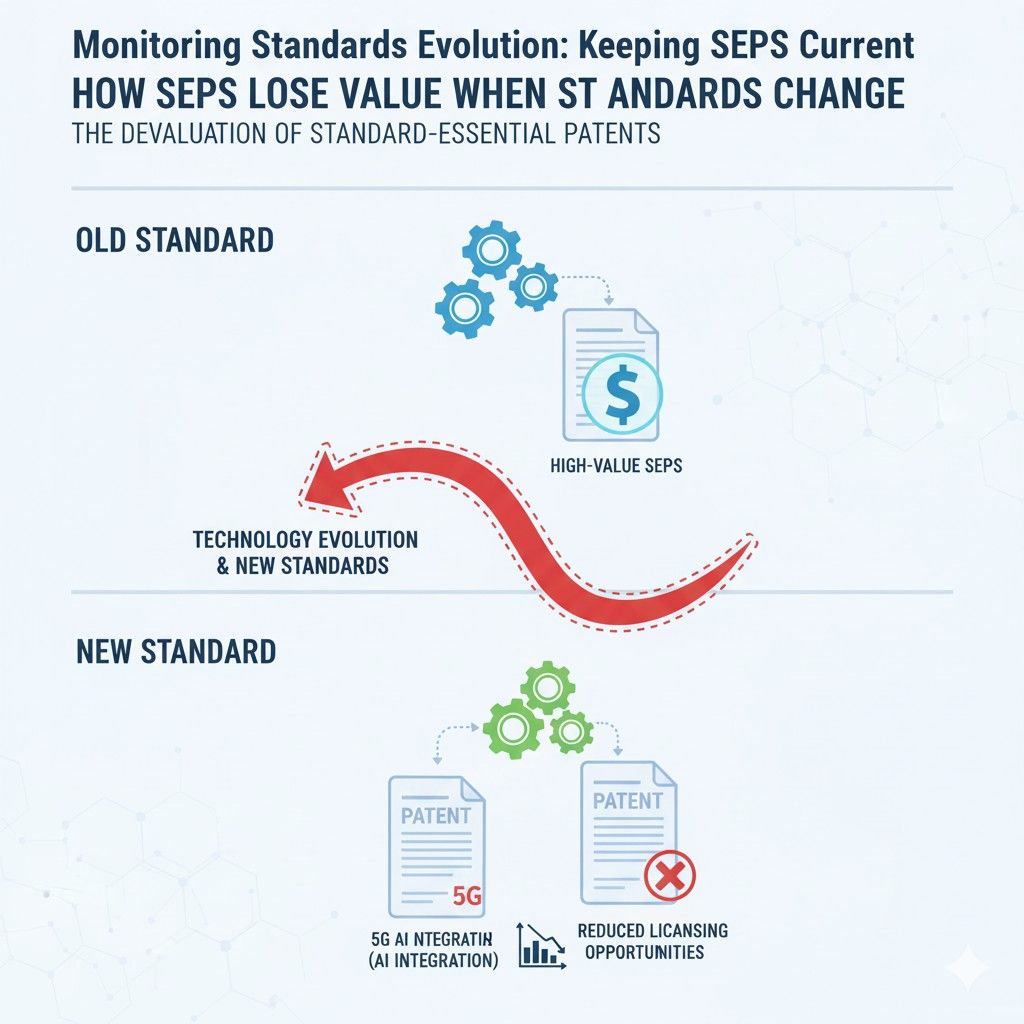
How SEPs Lose Value When Standards Change
SEPs rarely lose value overnight. The drop is slow and quiet. Most teams do not notice until licensing talks stall or buyers stop asking questions. By then, the damage is already done.
This section explains how value leaks out of SEPs as standards evolve, why this happens even to smart teams, and what businesses can do early to stop the slide. The goal here is awareness that leads to action, not fear.
The Illusion of Permanent Essentiality
When a patent is first labeled “essential,” it feels permanent. The logic seems simple. If the standard needs this feature, and your patent covers it, the value should last.
In reality, essentiality is fragile. Standards define what must be done, not how long it must be done that way.
A small technical shift can make an old method optional, replace it with a new approach, or move it to a legacy path that fewer products use.
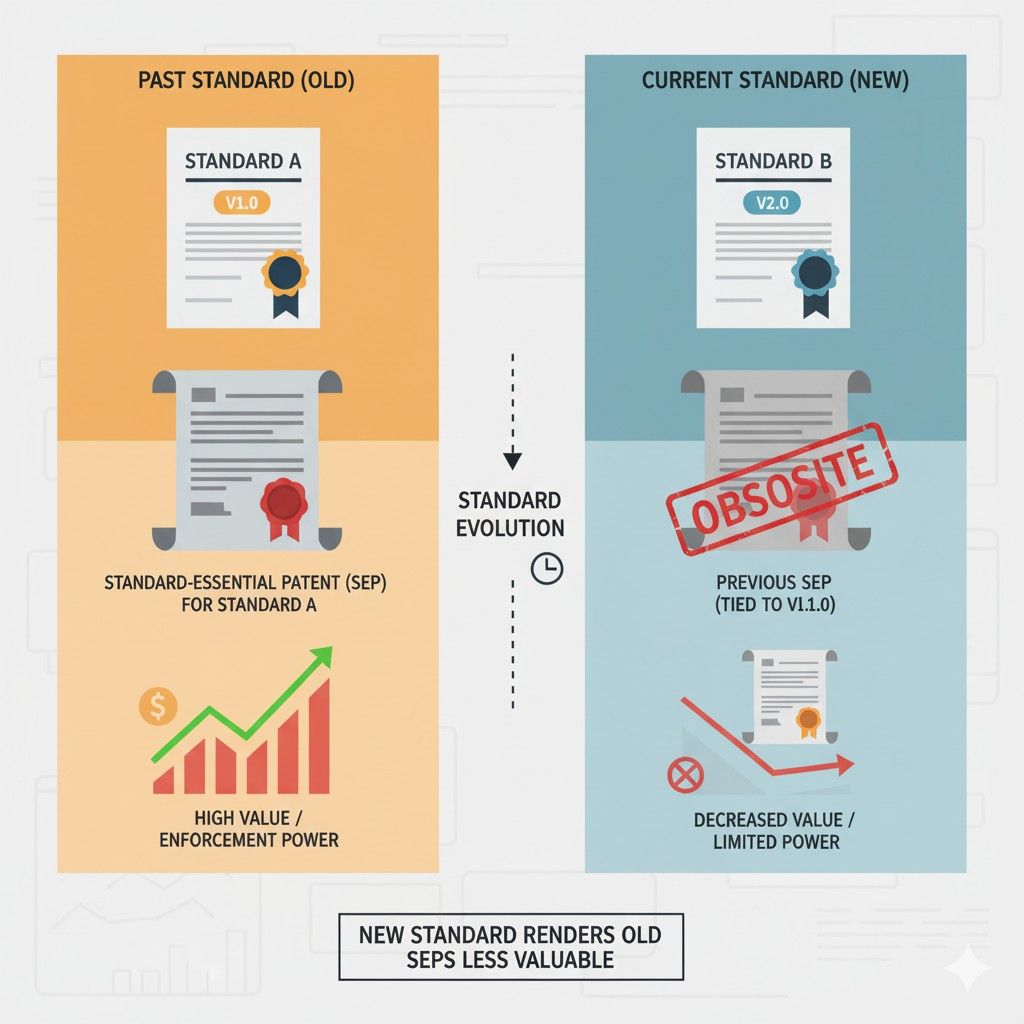
Businesses that treat essentiality as fixed often miss the moment when their coverage quietly becomes less central.
Small Technical Tweaks Can Break the Link
Standards bodies often make changes that look minor on the surface. A parameter range changes. A default setting shifts. A step becomes conditional instead of required.
For a product team, these changes feel harmless. For a patent, they can be fatal. If a claim depends on a specific detail that is no longer required, the patent may no longer read on the standard.
This is why SEPs must be reviewed against each meaningful revision. It is not about rewriting everything. It is about spotting the one line that matters.
Optional Features Steal the Spotlight
Many standards grow by adding optional features. Over time, these options become common because they offer better performance or lower cost.
Eventually, the market treats them as expected, even if the standard still labels them optional.
Patents that cover only the old mandatory path slowly lose relevance. Licensing discussions shift toward what everyone actually uses, not what the document technically allows.
Companies that track adoption trends, not just the written standard, can see this shift early and adjust their patent strategy to match reality.
Implementation Freedom Reduces Leverage
Modern standards often give implementers more freedom. Instead of strict rules, they define goals and allow multiple ways to reach them. This flexibility helps innovation but weakens narrow patents.
If a SEP covers only one implementation path, competitors may choose another path that still complies. The patent remains valid, but its practical leverage drops.
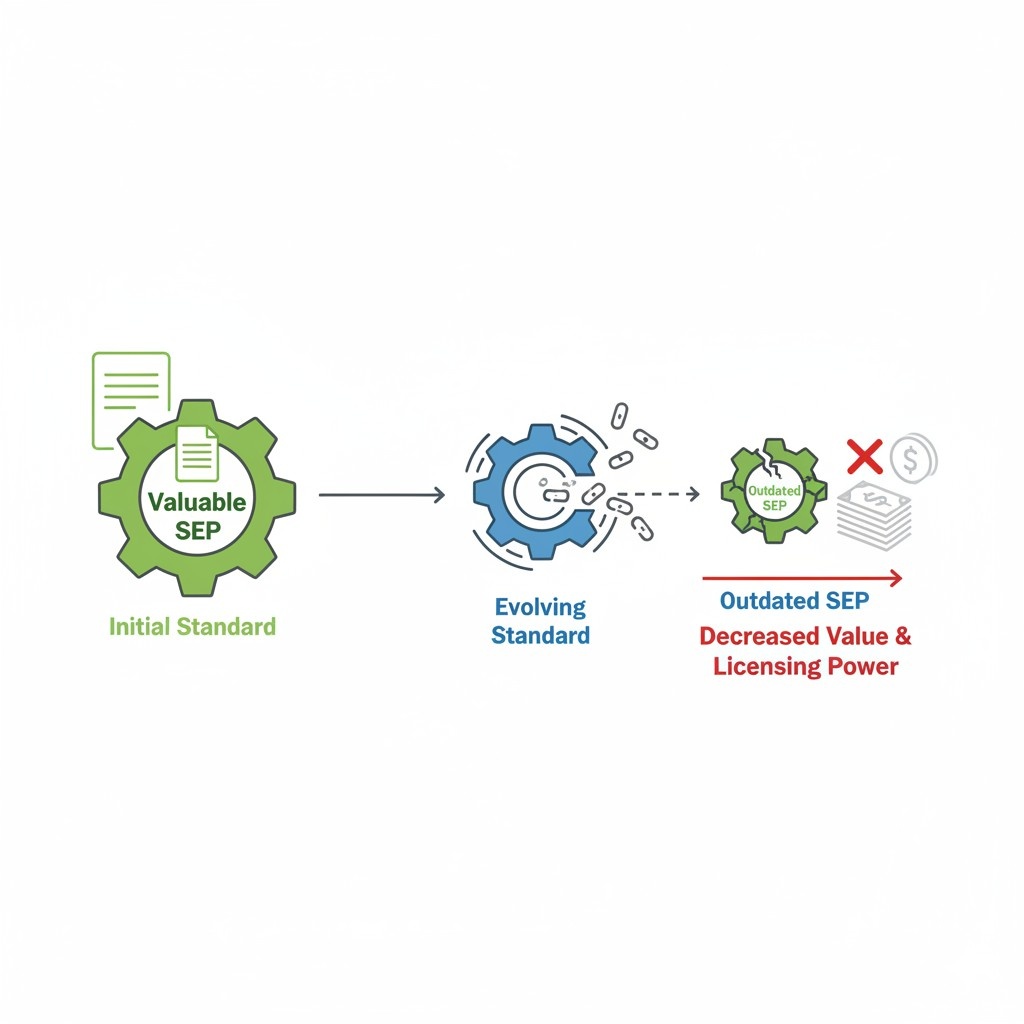
Strategic teams respond by filing claims that focus on outcomes and constraints defined by the standard, not just one way of meeting them.
Legacy Sections Fade Faster Than Expected
Standards rarely remove old sections right away. Instead, they mark them as legacy or discourage their use. New products quietly stop relying on them.
A SEP tied to a legacy section may still be technically essential, but only for older devices. Over time, licensing value shifts toward newer deployments.
Businesses that track which sections are actively used in new products can decide whether to invest in keeping coverage current or let older patents run their course.
Timing Gaps Create Coverage Holes
One common mistake is waiting too long between filings. A company files a strong initial patent, then waits years before filing again. During that gap, the standard evolves.
By the time the next application is filed, key features may already be locked in, published, or widely used. The window to claim them is gone.
The fix is not filing constantly. It is filing intentionally, aligned with major standard milestones. This requires awareness, not volume.
Overconfidence in Early Participation
Some companies believe that early involvement in standards bodies protects them. They assume that if they helped shape the standard, their patents will always align.
Early input helps, but it does not freeze the outcome. Other voices join later. Market needs change. Technical limits appear. The standard keeps moving.
Smart teams treat early participation as a starting advantage, not a lifetime guarantee.
Licensing Signals Reveal Hidden Weaknesses
Licensing talks often reveal problems before lawsuits do. Slower negotiations, lower offers, or repeated challenges to essentiality are warning signs.
Instead of pushing harder, strategic businesses step back and ask why. Often, the answer lies in a standard update that weakened the patent’s link.
Using licensing feedback as an early alert system helps teams decide when to refresh or extend their coverage.
Courts Follow the Standard, Not the Patent Story
In disputes, courts focus on the current standard and how products implement it. They do not care how essential a patent felt years ago.
If the mapping between claims and the present standard is weak, arguments fall apart fast. This reality makes ongoing alignment a legal necessity, not a nice-to-have.
Businesses that prepare for this early avoid painful surprises later.
Value Drains Quietly Without Ownership
The biggest reason SEPs lose value is simple. No one owns the job of keeping them current. Product teams ship. Legal teams react. Standards updates sit in inboxes.
When no one is responsible, drift is guaranteed.
Companies that assign clear ownership for monitoring standards and flagging patent impact move faster and spend less fixing problems later.
Turning Awareness Into Action
Knowing how SEPs lose value is only useful if it changes behavior. The winning move is building a light, repeatable process that watches standards, checks alignment, and triggers action when needed.
PowerPatent was built for this exact gap. It helps teams connect evolving standards to their actual inventions and work with real patent attorneys to keep coverage tight without slowing down.

You can see how this works here: https://powerpatent.com/how-it-works
SEPs do not fail loudly. They fade. The businesses that stop the fade are the ones that stay relevant.
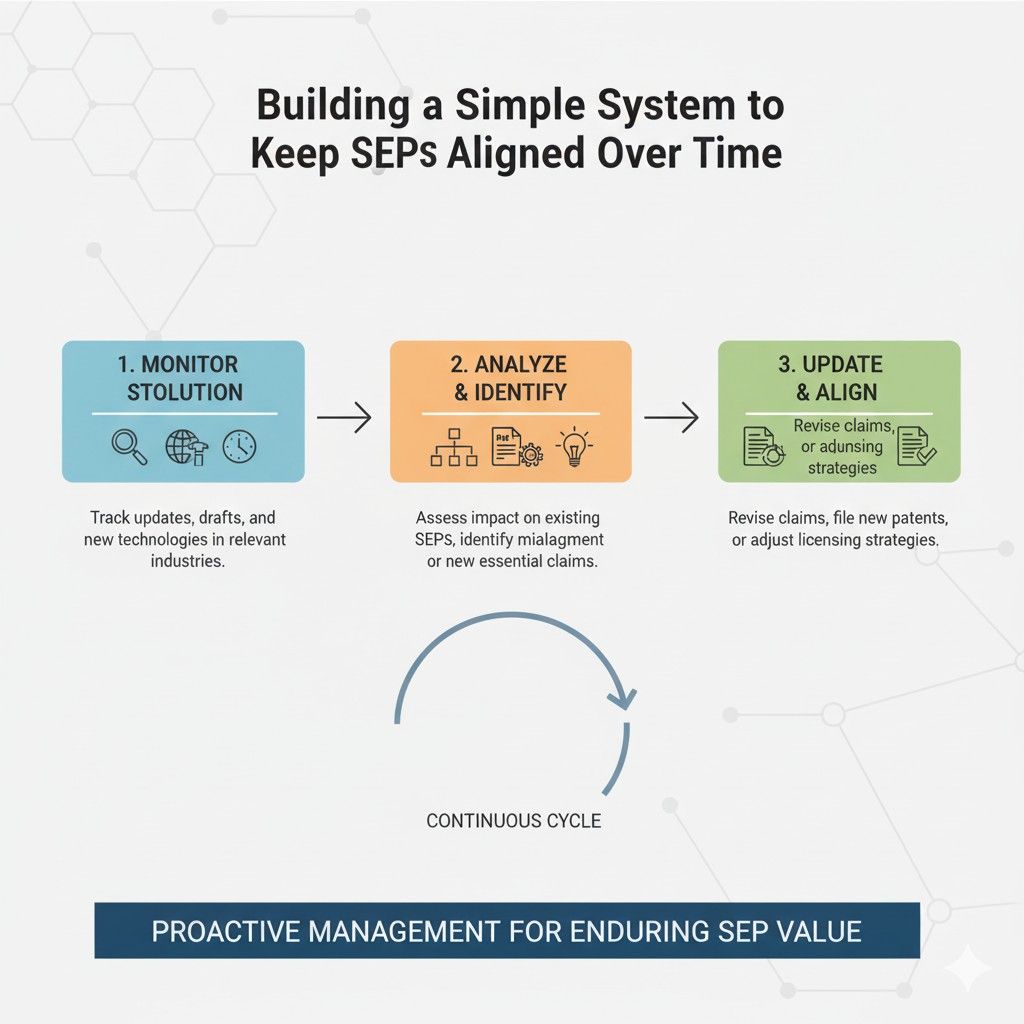
Building a Simple System to Keep SEPs Aligned Over Time
Keeping SEPs current does not require a large legal team or endless meetings. It requires a clear system that fits into how modern businesses already work.
The strongest SEP portfolios are not built by reacting fast under pressure. They are built by steady attention and timely moves.
This section shows how businesses can create a simple, practical system that keeps patents aligned with standards as they evolve, without slowing down product work or draining focus.
Start With One Owner, Not a Committee
Every system needs a clear owner. When SEP monitoring is shared across too many roles, nothing happens.
Product teams assume legal is watching. Legal assumes engineering will flag changes. Standards updates slip through the cracks.
The most effective approach is assigning one person or small role the job of watching standards changes and asking one question: does this affect our patents?
This owner does not need to be a lawyer. They need context, curiosity, and a direct path to decision-makers.
Tie Standards Tracking to Real Business Milestones
Standards updates matter most at certain moments. New product launches. Major version upgrades. Market expansions. These milestones are natural checkpoints for patent alignment.
Instead of tracking standards in isolation, smart teams review them when the business is already making decisions. This keeps patent strategy grounded in reality and prevents extra process.
Focus on Changes That Affect Requirements
Not every standards update matters. Editorial changes, clarifications, or minor cleanups rarely impact essentiality. What matters are shifts in what is required versus optional, changes in constraints, and new mandatory behaviors.
Training the team to spot these specific changes keeps attention focused. This saves time and avoids overreacting to noise.
Use Drafts to Buy Time
Final standards often arrive too late to act. Drafts provide a preview of where things are heading. They show which features are gaining support and which are losing it.
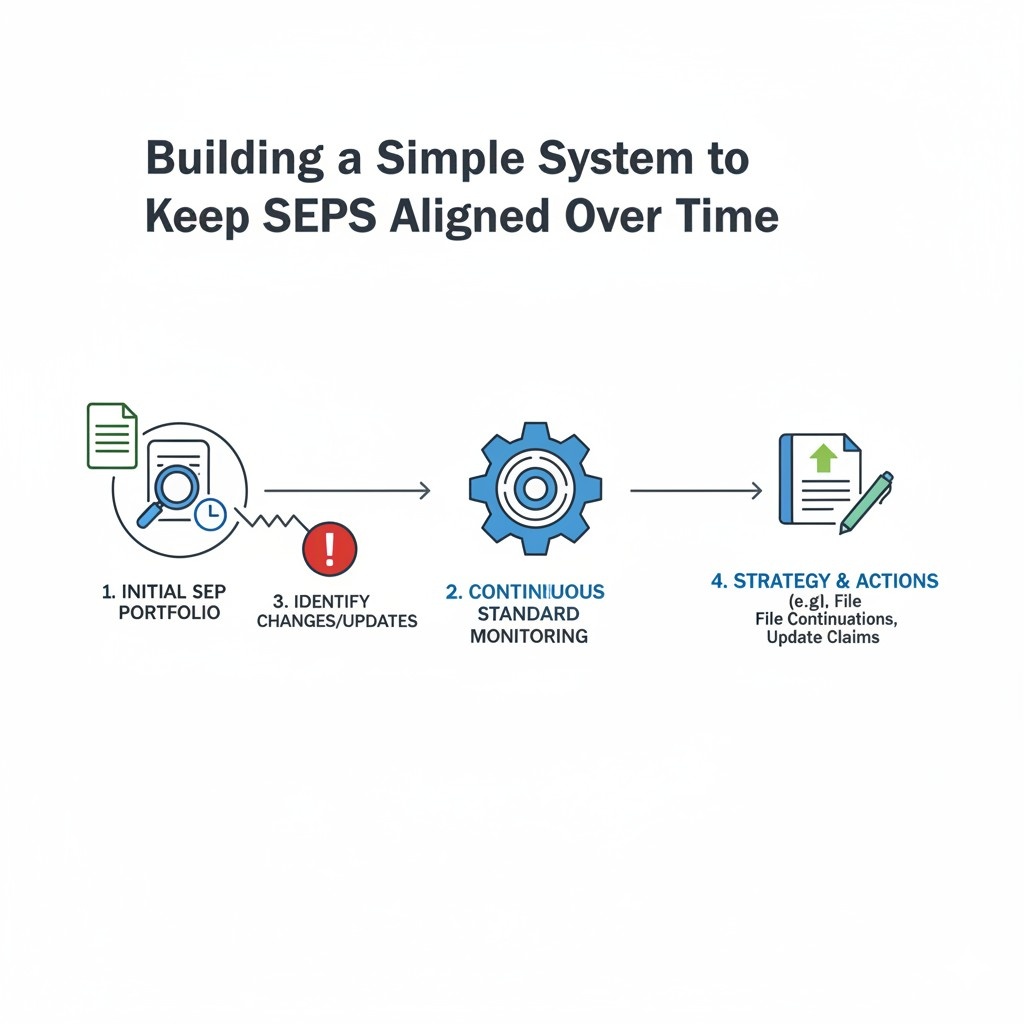
A simple habit of scanning drafts at key intervals gives businesses time to plan. Even a few months of lead time can make the difference between strong coverage and a missed opportunity.
Keep Patent Work Close to Engineering
Patents stay relevant when they reflect how systems actually work. Engineers understand this better than anyone. When patent review is disconnected from engineering, claims drift away from real implementations.
The best results come when engineers are involved in reviewing how their work maps to the evolving standard. This does not mean long meetings. It means short, focused check-ins when changes matter.
Use Continuations as a Strategic Tool
Many businesses underuse continuation applications. They treat them as legal leftovers instead of strategic assets.
Continuations allow teams to adjust claim scope as standards evolve, without starting from scratch. They are one of the most effective ways to keep SEPs aligned over time when used intentionally.
The key is timing. Filing too early locks in assumptions. Filing too late closes the window. Monitoring standards helps find the right moment.
Re-Map Claims Periodically, Not Constantly
Constant review creates fatigue. No review creates risk. The balance is periodic mapping at meaningful intervals.
This mapping does not need to be exhaustive. It asks simple questions. Which claims still read on required features? Which features matter most in current deployments? Where are the gaps?
Answers to these questions guide whether action is needed.
Let Product Adoption Guide Patent Focus
Standards define what is allowed. Markets decide what is used. A feature may be required on paper but rarely implemented in practice.
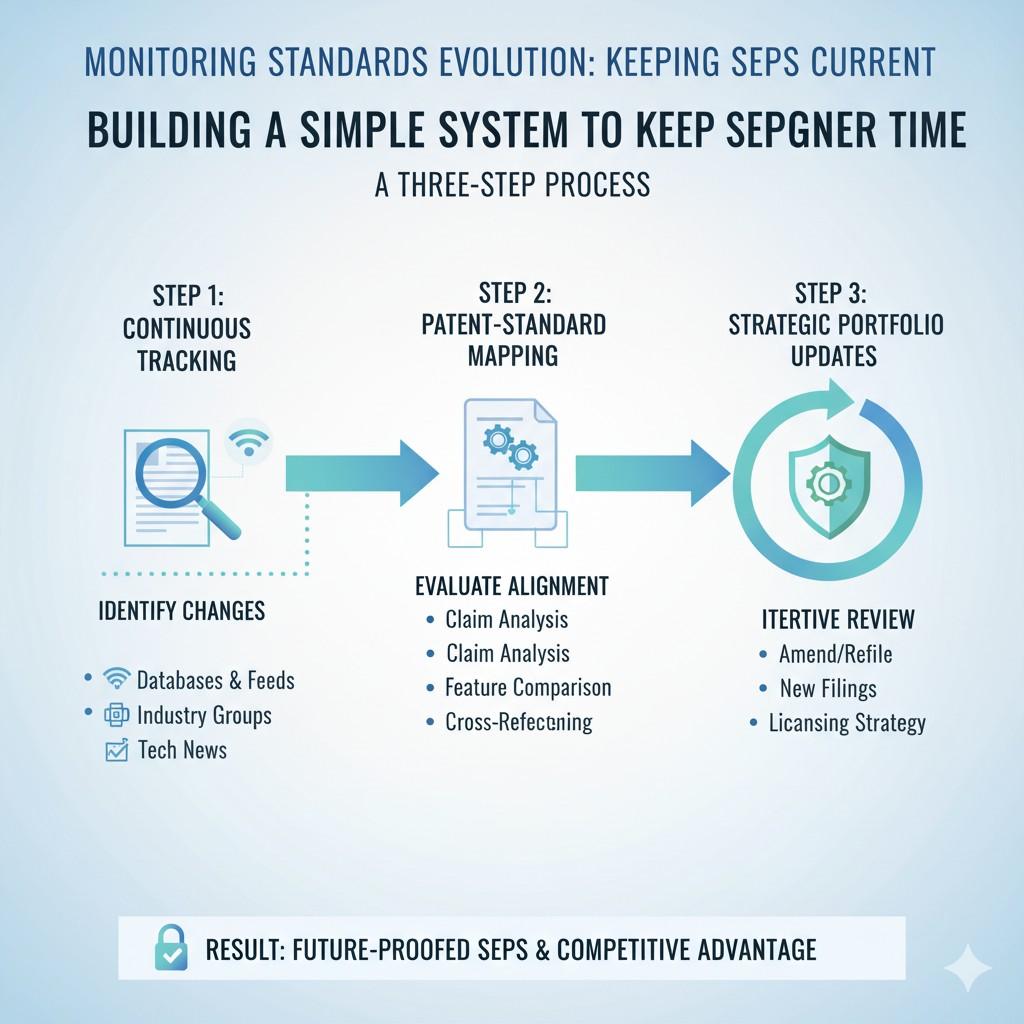
Tracking how customers and partners actually use the standard helps prioritize patent coverage. This market-driven view keeps SEPs aligned with real value, not theoretical relevance.
Build Feedback Loops From Licensing and Sales
Licensing discussions, customer questions, and partner feedback all contain signals. Repeated questions about relevance or scope often point to alignment issues.
Capturing these signals and feeding them back into patent review helps catch problems early. This turns external pressure into internal insight.
Keep the System Light Enough to Survive
The biggest risk to any process is that it gets ignored. A system that is too heavy will fail, no matter how well designed.
The best SEP monitoring systems are simple, visible, and tied to real decisions. They do not create work. They guide it.
Where Modern Tools Make the Difference
Manual tracking breaks down as standards grow more complex and teams move faster. Modern platforms can surface relevant changes, connect them to inventions, and streamline action with real attorney support.
PowerPatent was built to fit this exact need. It helps teams stay aligned with evolving standards without slowing down or overcomplicating the process. You can see how it works here: https://powerpatent.com/how-it-works

Standards will keep moving. The businesses that win are the ones that move with them, calmly and consistently.
Wrapping It Up
Standards will never stop changing. That is not a problem to solve. It is a reality to plan for. The real risk is not change itself. The risk is assuming your patents will stay relevant without attention. SEPs do not fail because they were weak at the start. They fail because they were left behind while the standard moved forward. Businesses that protect long-term value treat SEPs as living assets. They watch how standards evolve. They notice which features become central and which fade away. They adjust quietly, early, and with purpose.
Leave a Reply