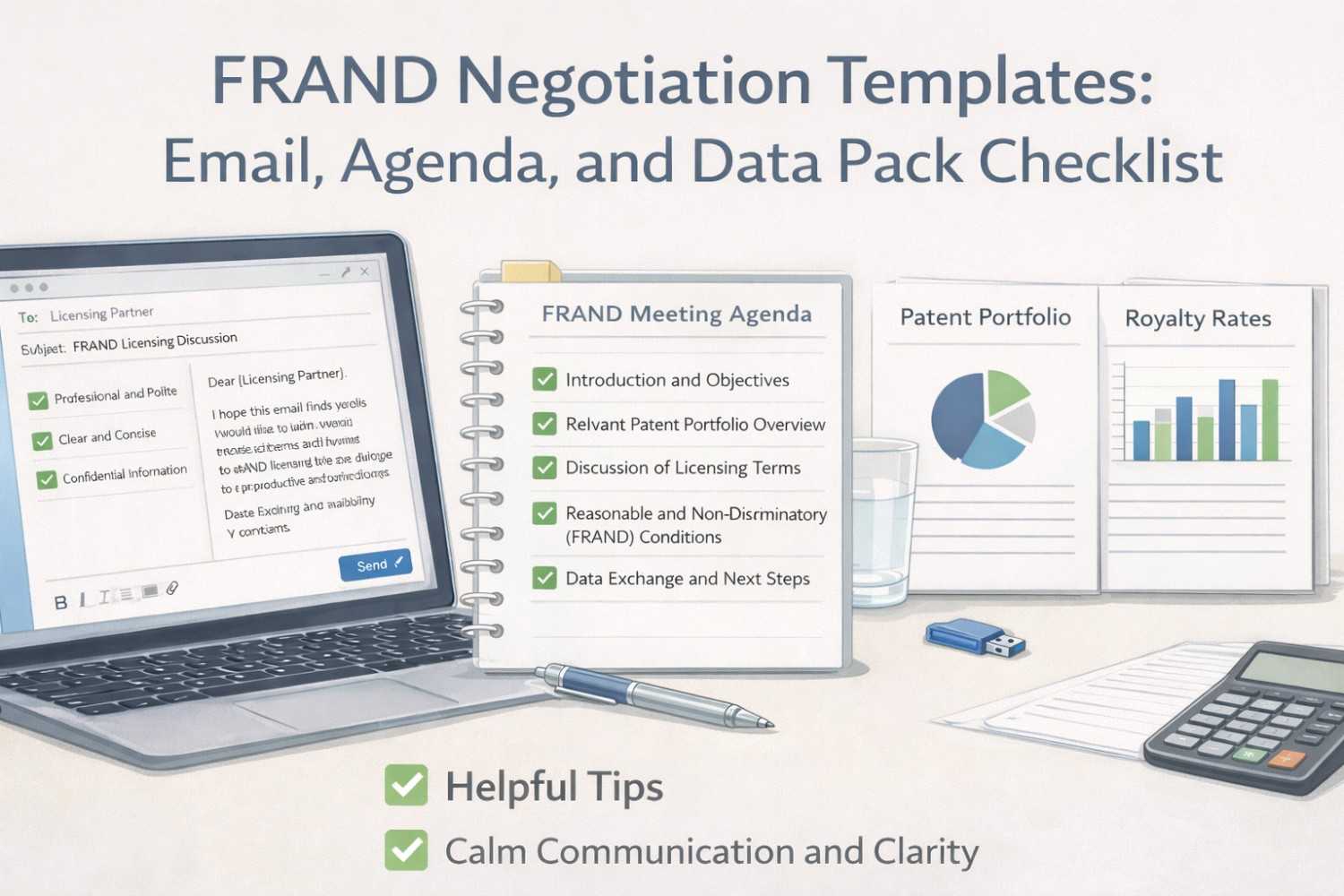
When a big company knocks on your door and says they want to talk about FRAND, things get serious very fast. One wrong email. One weak agenda. One missing document. And suddenly you are not negotiating anymore. You are reacting. That is how founders lose leverage before the first call even starts. This guide exists to stop that from happening. FRAND talks are not just about numbers. They are about control, timing, and proof. They are about showing that you are prepared, calm, and informed. When you do that well, the other side treats you with respect. When you do not, they push harder.
The First FRAND Email: How to Sound Calm, Serious, and in Control
The first FRAND email is not a formality. It is a signal. It tells the other side how prepared you are, how confident you feel about your position, and how much pressure they can apply later.
Most leverage in FRAND talks is set before the first call ever happens, and this email is where that leverage starts to form.
Founders often rush this step. They reply too fast. They sound unsure. Or they let outside counsel over-lawyer the message until it feels stiff and distant. None of those outcomes help you.
The goal is simple. You want to sound steady, informed, and open to discussion, without giving away anything too early.
Why the First Email Shapes the Entire Negotiation
Before any numbers are shared, both sides are testing each other. The first email is how that test begins.
A clean, calm message tells the other party that you understand the process and that you are not afraid of it. That alone changes how they behave in later talks.
This is especially important for smaller companies. Larger firms often assume startups will either fold or make mistakes.
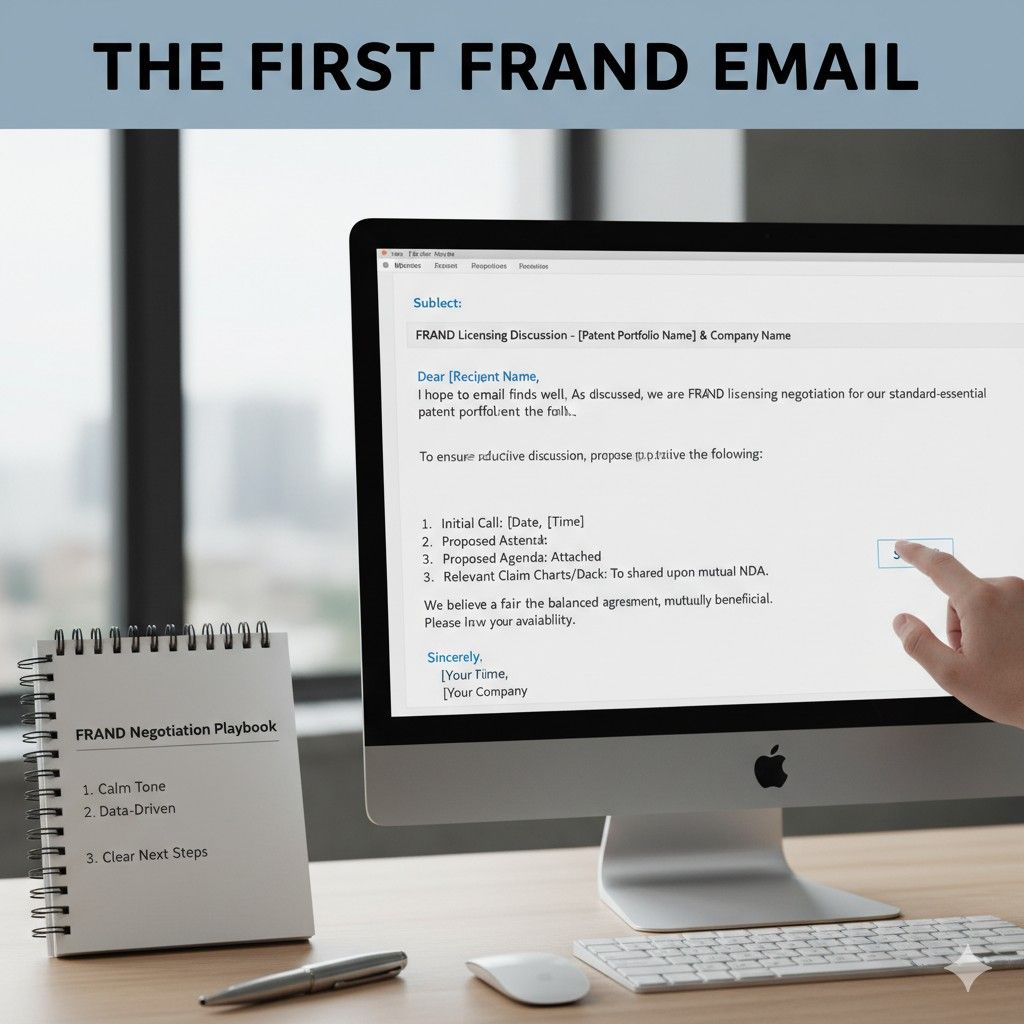
When your first message is measured and thoughtful, it breaks that assumption. It forces them to slow down and engage properly.
If your patents were built with strong structure and clear claims, which is something PowerPatent helps teams do early, this confidence is much easier to show. You are not bluffing. You are grounded in real work.
The Tone That Builds Respect Without Escalation
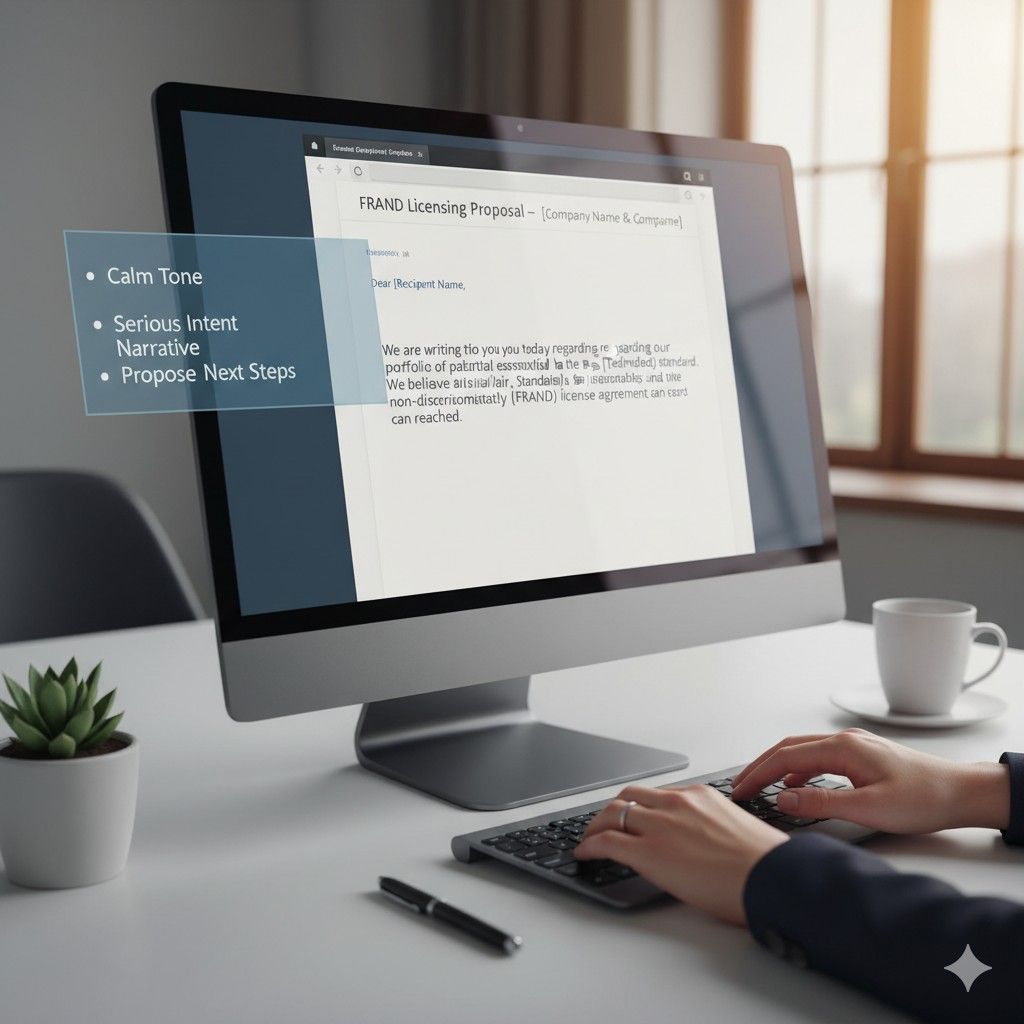
Tone matters more than wording. You want to avoid sounding defensive or aggressive. You also want to avoid sounding casual. FRAND discussions are formal by nature, even when they are friendly.
Your email should feel like it came from someone who has done this before, even if you have not.
Short sentences help. Clear intent helps. Avoid jokes. Avoid long explanations. The more neutral and direct you are, the more professional you appear.
A good rule is this. If your email could be read out loud in a boardroom without embarrassment, you are on the right track.
Setting the Frame Without Giving Away Your Position
The biggest mistake founders make in the first FRAND email is oversharing. They explain too much. They hint at numbers. They justify why they are reaching out. None of that is needed.
Your job in this email is not to argue. It is to frame the process. You are acknowledging the request or opening the discussion. You are confirming willingness to engage under FRAND principles.
You are proposing next steps.
That is it.
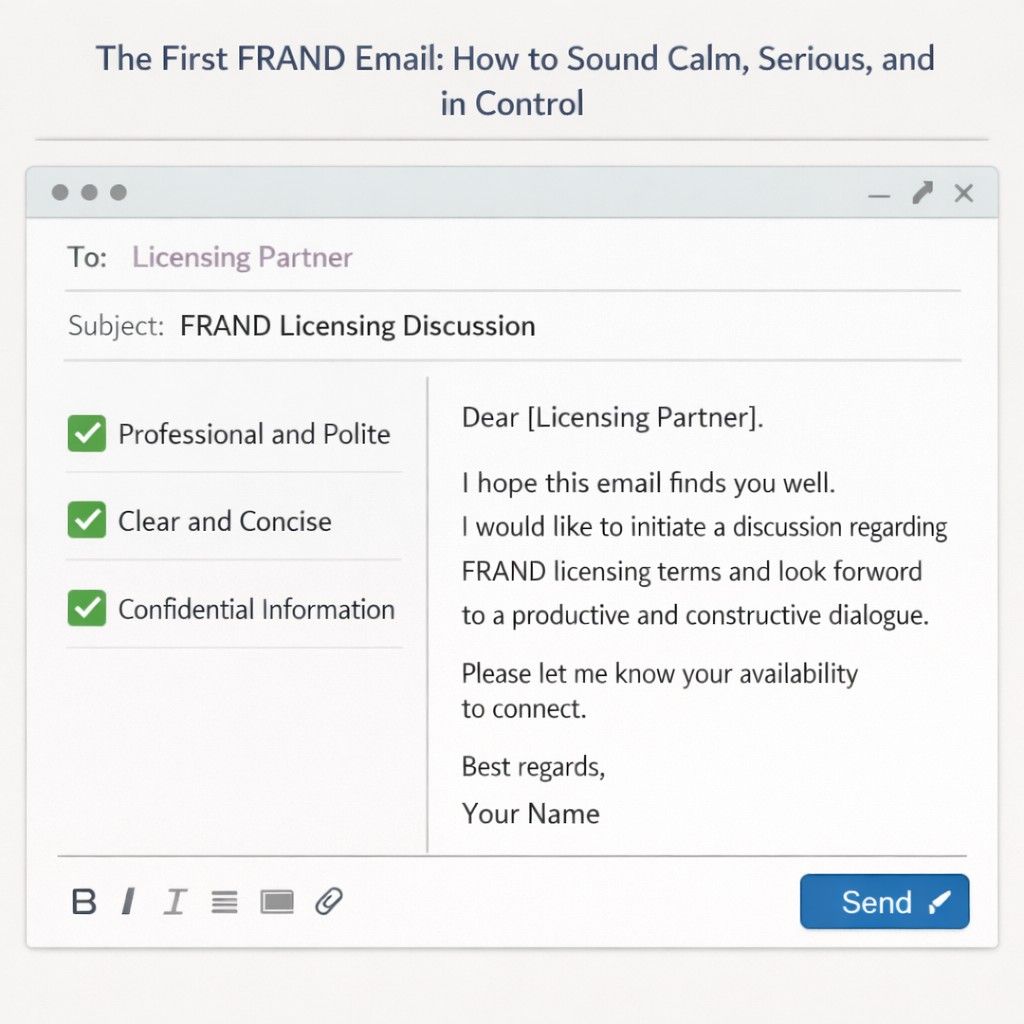
By keeping the message focused on process instead of substance, you protect your flexibility. You also prevent the other side from anchoring the conversation too early.
Making It Clear You Are Prepared
You do not need to say that you are prepared. You show it through how you write. Referencing timelines. Suggesting a structured discussion. Using clear language around scope. These small signals add up.
When the other party senses preparation, they behave differently. They involve better people. They take notes. They stop pushing for rushed answers.
This is where strong patent work pays off. When your intellectual property is well-documented and clearly scoped, preparation is real, not performative.
If you are still early in building that foundation, it is worth seeing how PowerPatent helps founders lock this in before negotiations ever begin at https://powerpatent.com/how-it-works.
Controlling Timing Without Sounding Slow
Speed is another subtle signal. Responding too fast can look reactive. Responding too slow can look evasive. The right move is thoughtful timing.
A short acknowledgment followed by a proposed window for deeper discussion works well. It shows respect for the process without rushing into it. It also gives you time to align internally before real talks begin.
This pause is not weakness. It is discipline.
Avoiding Language That Creates Risk Later
Words live forever in negotiations. Anything you write can come back later. That is why precision matters.
Avoid phrases that imply obligation. Avoid phrases that suggest admission. Avoid language that sounds like a promise. Stick to neutral descriptions of intent and process.
This is another reason simple words are powerful. They reduce the chance of misreading. They reduce risk.
Showing Openness Without Losing Ground
FRAND is built on fairness. Your email should reflect that. Being open to discussion does not mean being open-ended. You can express willingness to engage while still protecting your interests.
A good approach is to emphasize mutual understanding. You are not conceding anything. You are setting the stage for a fair exchange of views.
This balance is hard to strike if your IP story is unclear. Founders who invest early in clean patent strategy find this much easier. That clarity is what PowerPatent is designed to provide.
Aligning Internally Before You Hit Send
One of the quiet dangers of the first FRAND email is internal misalignment. If your team is not on the same page, the email can create problems later.
Before sending anything, make sure you know who will speak, who will approve positions, and what your rough boundaries are. You do not need final answers. You need shared understanding.
This internal clarity often matters more than the exact wording of the email.
Using the Email to Set Expectations for Structure
A strong first email hints at structure. It suggests that discussions will be organized, documented, and fair. This discourages pressure tactics later.
You might reference a future agenda or data exchange without detailing it. This shows that you think in steps, not reactions.
The other side will notice.
Why This Step Is Easier With the Right Tools
Founders who struggle most with this email usually struggle because everything feels fragile. The patents feel incomplete. The story feels fuzzy. That stress leaks into the writing.
When your patent work is solid and guided by real experts, confidence follows naturally.
PowerPatent combines smart software with real attorney oversight so founders are not guessing when moments like this arrive. You can learn how that works at https://powerpatent.com/how-it-works.
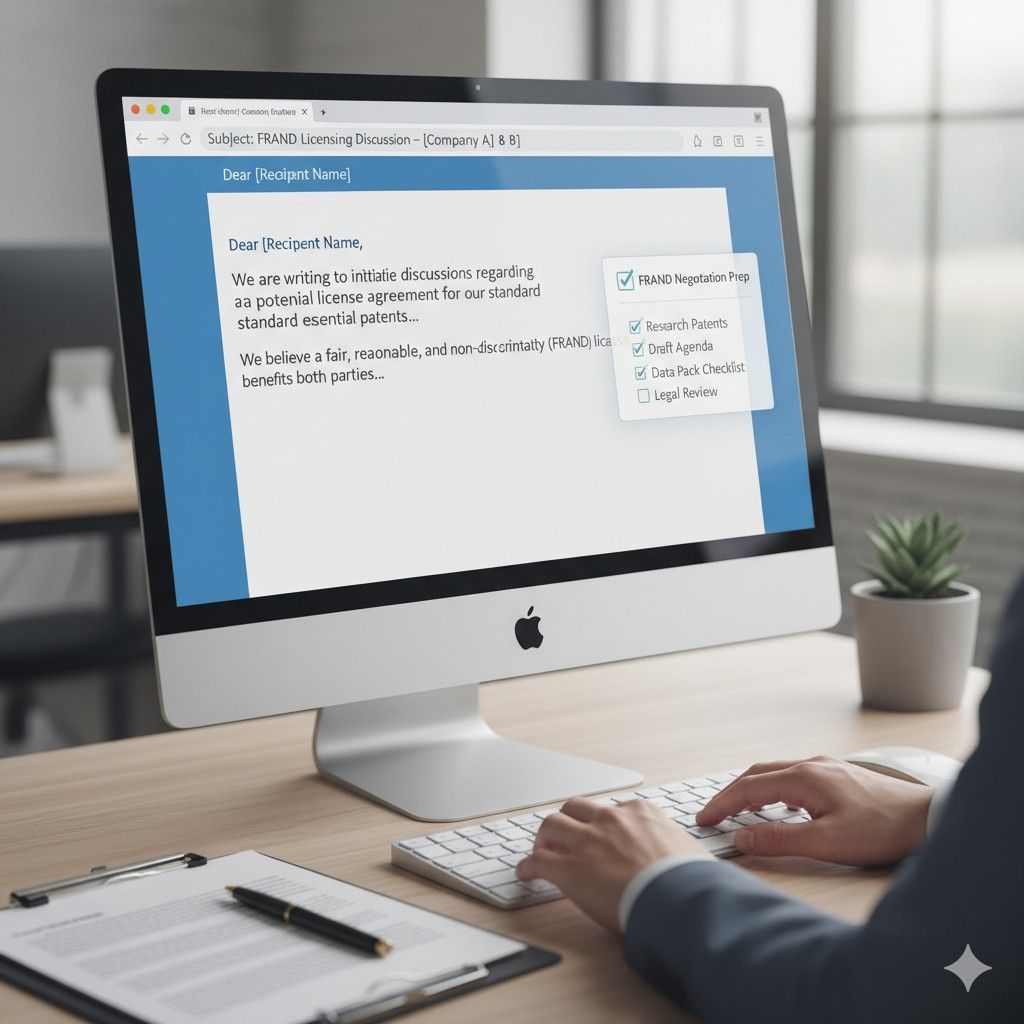
The first FRAND email is not about winning. It is about positioning. Do that well, and everything that follows becomes easier.
The FRAND Meeting Agenda: Keeping the Conversation Fair and Focused
Once the first email has done its job, the next real test begins. The FRAND meeting itself. This is where many negotiations drift off course, not because of bad intent, but because there is no structure.
An agenda fixes that. It quietly puts you in control without ever saying so out loud.
A strong agenda does not argue. It guides. It keeps the meeting from turning into a numbers fight too early. It gives both sides a shared path so nobody feels ambushed.
When done right, it lowers tension and raises the quality of the discussion.
Founders often treat the agenda as a simple calendar item. That is a mistake. In FRAND talks, the agenda is a strategic tool.
Why the Agenda Is More Important Than the Call Itself
Most FRAND meetings fail long before anyone joins the call. They fail when expectations are unclear. One side shows up ready to talk rates. The other side wants to talk scope. Friction starts immediately.
An agenda prevents that mismatch. It aligns both sides on what will be discussed and what will not. This alone can save weeks of back and forth.

More importantly, an agenda signals maturity. It shows that you respect the process and expect the same in return.
Using the Agenda to Slow the Conversation Down
Speed favors the larger party. They have teams, data, and experience. Smaller companies win by pacing.
An agenda helps you slow things down without appearing difficult. By breaking the discussion into stages, you avoid being pushed into decisions before you are ready.
This is not delay for delay’s sake. It is about making sure each topic gets proper attention.
Framing the Meeting Around Understanding First
The most effective FRAND agendas start with shared understanding, not positions. This shifts the tone from confrontation to exploration.
When the first part of the meeting is about aligning on standards, use cases, and technical context, the pressure drops. Everyone gets oriented. Misunderstandings surface early, when they are easier to fix.
This approach also shows confidence. You are not rushing to defend a number. You are establishing facts.
Why You Should Separate Technical Discussion From Commercial Discussion
Mixing technical and commercial topics too early creates confusion. It also creates leverage for the other side.
A clean agenda keeps these discussions distinct. Technical alignment comes first. Commercial discussion comes later, once there is agreement on what is being licensed and why it matters.

This separation protects you. It ensures that any value discussion is grounded in real understanding, not assumptions.
Using the Agenda to Protect Against Surprise Requests
Surprises are a common tactic. Unexpected demands. New questions. Requests for documents you did not plan to share.
An agenda gives you a polite way to push back. If something falls outside scope, you can defer it without confrontation. This keeps the meeting productive and protects your position.
It also gives you cover internally. You are following a plan, not reacting in the moment.
Setting the Right Level of Detail
A good FRAND agenda is specific enough to guide the conversation but broad enough to allow discussion. You do not want to script every sentence. You want to outline the journey.
Clear section titles help. Vague language hurts. Each agenda item should answer one simple question: what is the purpose of this part of the meeting?
If you cannot answer that, the item does not belong.
Showing Leadership Without Dominating the Room
Leadership in negotiation is subtle. It is not about talking more. It is about setting direction.
When you circulate a thoughtful agenda in advance, you take on a leadership role automatically. You are helping everyone prepare. You are reducing uncertainty.
This is especially powerful when dealing with larger companies. They are used to controlling the flow. A strong agenda levels the field.
Aligning the Agenda With Your Long-Term Goals
Every FRAND meeting is part of a longer story. The agenda should reflect that.
If your goal is to establish credibility first, the agenda should emphasize understanding and transparency. If your goal is to move toward terms, the agenda should build toward that, step by step.
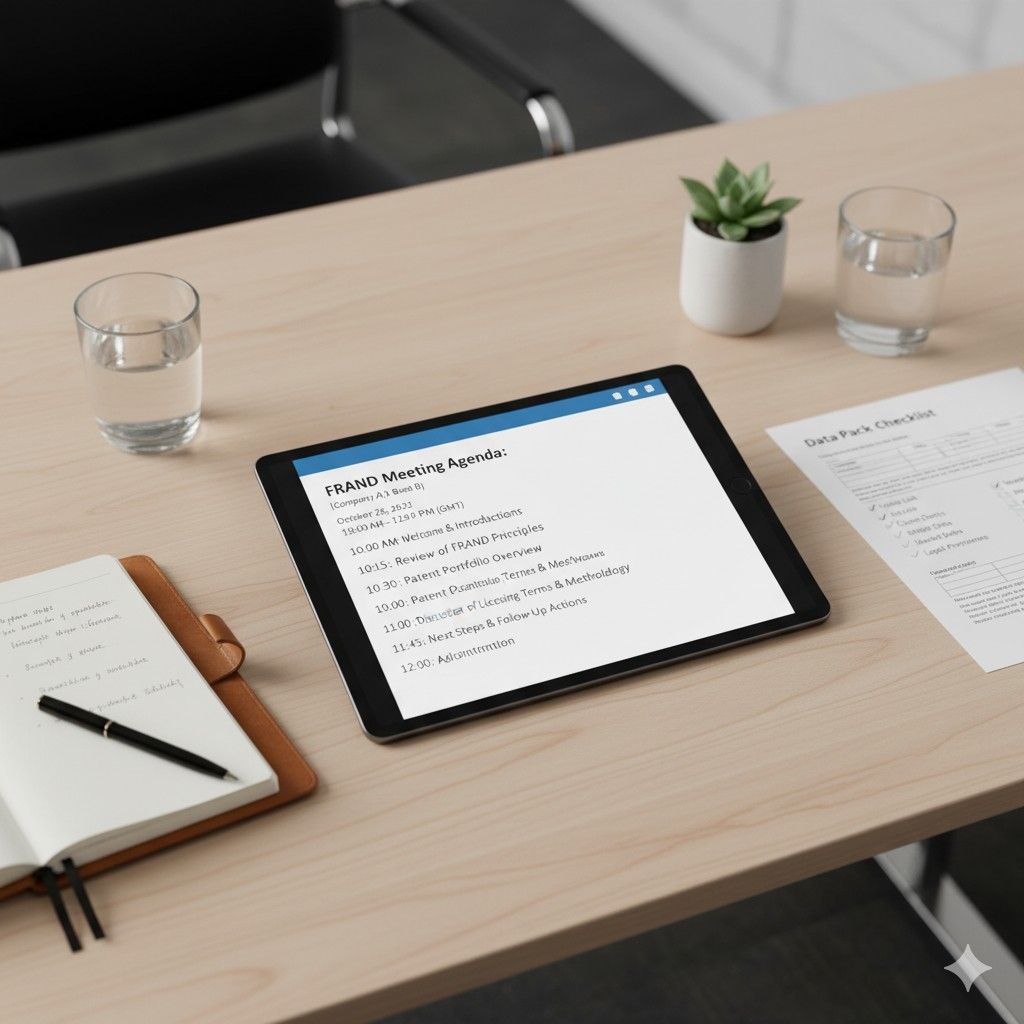
What you include, and what you leave out, sends a message.
Why Internal Prep Matters More Than the Document Itself
An agenda only works if your team is aligned behind it. Before the meeting, make sure everyone knows why each item is there and what success looks like.
This prevents mixed signals. It also helps you stay calm if the discussion drifts. You know where you are going.
Founders who have clear patent strategy find this much easier. When your IP story is clean, your agenda reflects that clarity.
PowerPatent helps teams build that foundation early so meetings like this feel manageable, not overwhelming. You can explore how that works at https://powerpatent.com/how-it-works.
Using the Agenda to Set Up the Next Step
A well-designed agenda does not end with the meeting. It points forward.
Leaving space for next steps signals momentum. It shows that this is a process, not a one-off conversation. This reduces pressure to resolve everything at once.
It also keeps control in your hands. You are shaping the timeline.
The Quiet Power of Professional Structure
Many founders underestimate how much structure influences outcomes. In FRAND talks, structure creates fairness. It keeps discussions grounded. It prevents emotional swings.
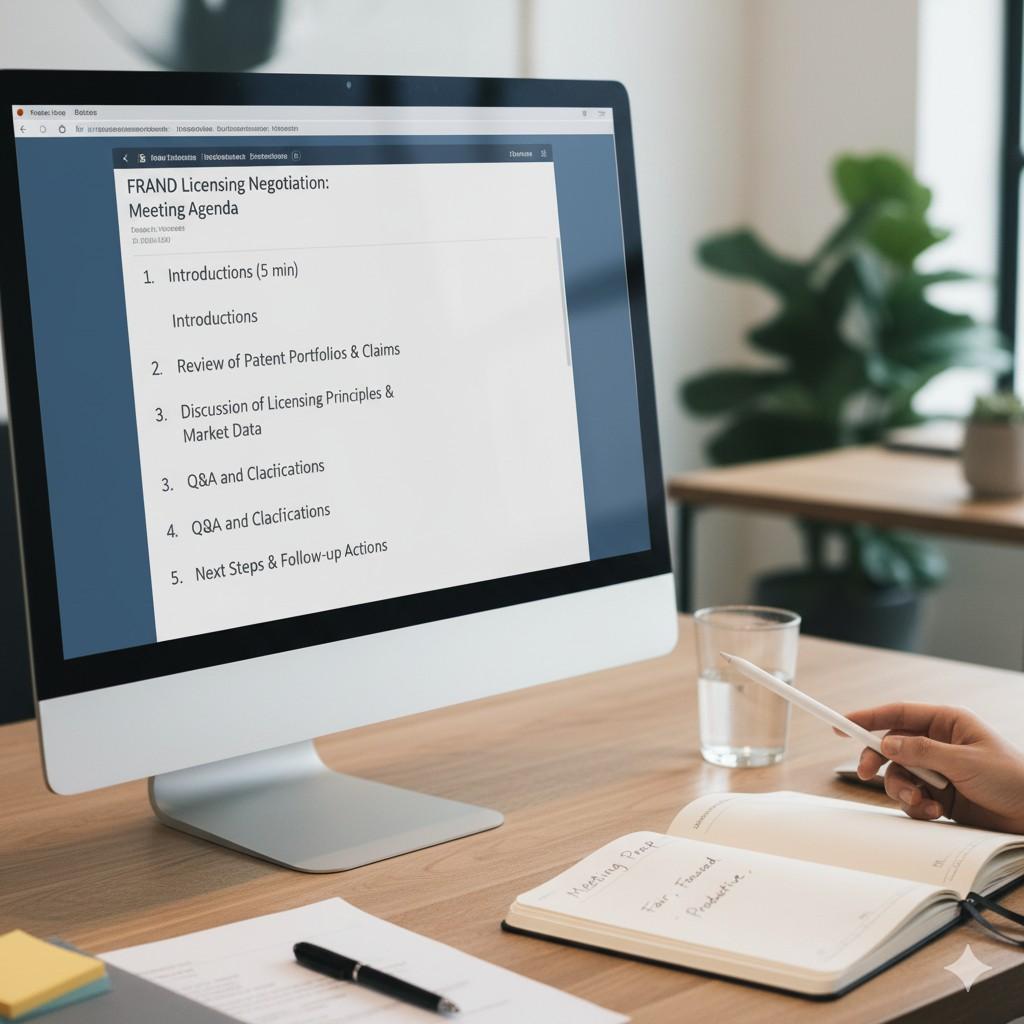
An agenda is a simple document, but it carries weight. Used well, it turns a difficult conversation into a manageable one.
The FRAND Data Pack: What You Must Have Ready Before Numbers Come Up
By the time FRAND talks reach numbers, the real work should already be done. That work lives in the data pack. This is the quiet backbone of the negotiation. It is not a sales deck.
It is not a legal brief. It is proof that you understand your technology, your rights, and the value you bring.
Many negotiations break down because one side feels the other is guessing. A strong data pack removes that doubt. It replaces emotion with facts. It keeps the discussion grounded when pressure rises.
For founders, this is often the hardest part. Not because it is complex, but because it requires discipline and preparation before anything feels urgent.
Why the Data Pack Changes the Power Dynamic
The moment you share a well-prepared data pack, the tone shifts. The other side realizes this is not a casual conversation. They stop testing boundaries and start engaging seriously.
This is especially important when negotiating with large companies. They are used to asymmetry. When you show up with clean data and clear framing, that imbalance shrinks.
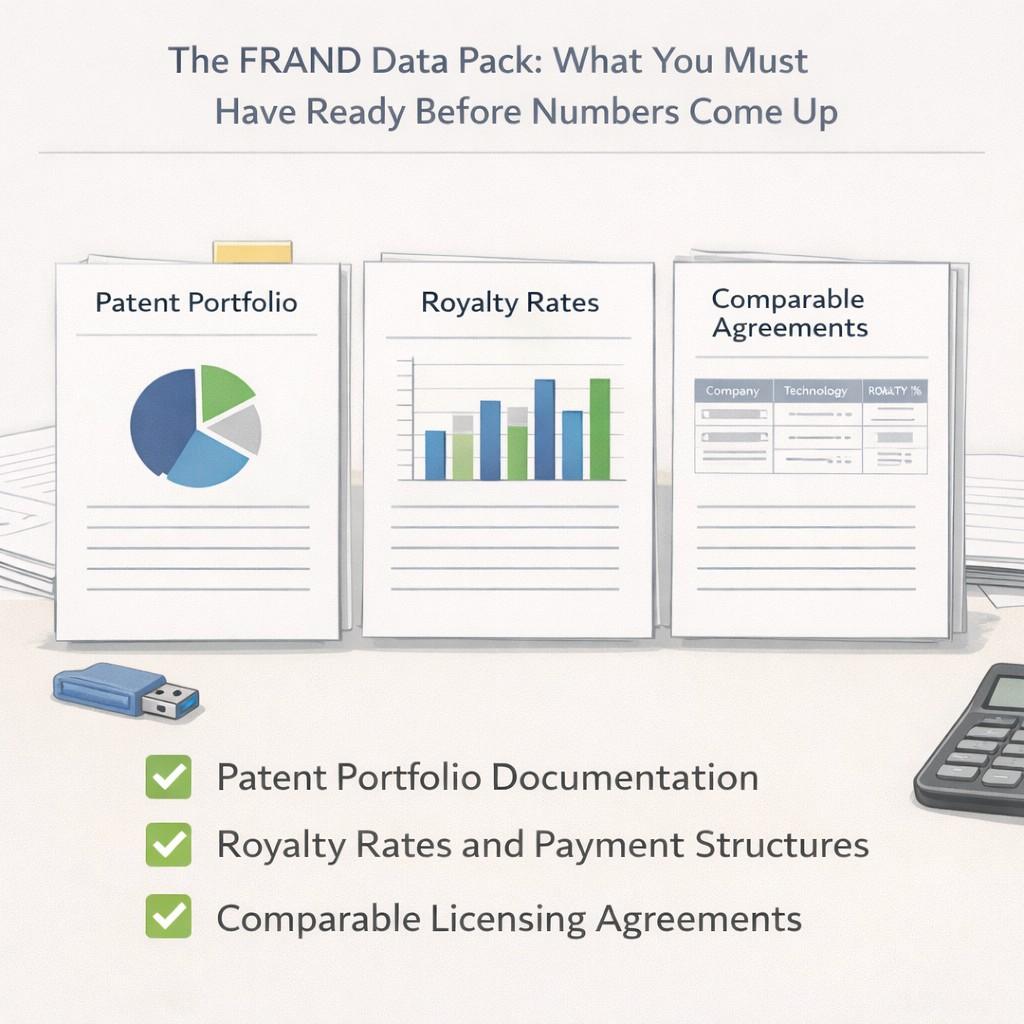
The data pack does not need to be long. It needs to be accurate, consistent, and intentional.
What the Data Pack Is Really For
Founders often think the data pack exists to convince the other side. That is only part of the truth.
Its real job is to anchor the conversation. It sets a shared reference point so discussions do not drift into hypotheticals or assumptions. When disagreements arise, you can return to the same source.
This reduces friction and saves time.
Starting With a Clear Technology Story
Every strong data pack begins with context. Not marketing context, but technical context.
You want to explain what your technology does, where it fits, and why it matters to the standard or product at issue. This is not the place for buzzwords. Simple explanations work best.
When the other side understands your technology clearly, value discussions become more rational.
Showing How Your Patents Map to Real Use
Abstract claims mean little in negotiation. What matters is how those claims connect to real-world use.
Your data pack should make that connection obvious. It should show how your inventions relate to actual implementations, without overreaching.
This is where many founders struggle if their patent work was rushed or unclear. When patents are drafted with strong structure and foresight, this mapping becomes much easier.
PowerPatent focuses heavily on this exact problem, helping teams build patents that stand up in real conversations. You can see how that works at https://powerpatent.com/how-it-works.
Avoiding Over-Disclosure While Staying Credible
There is a fine line between transparency and over-sharing. A good data pack respects that line.
You want to share enough to support your position without revealing sensitive details that are not required. This balance protects your business while still building trust.
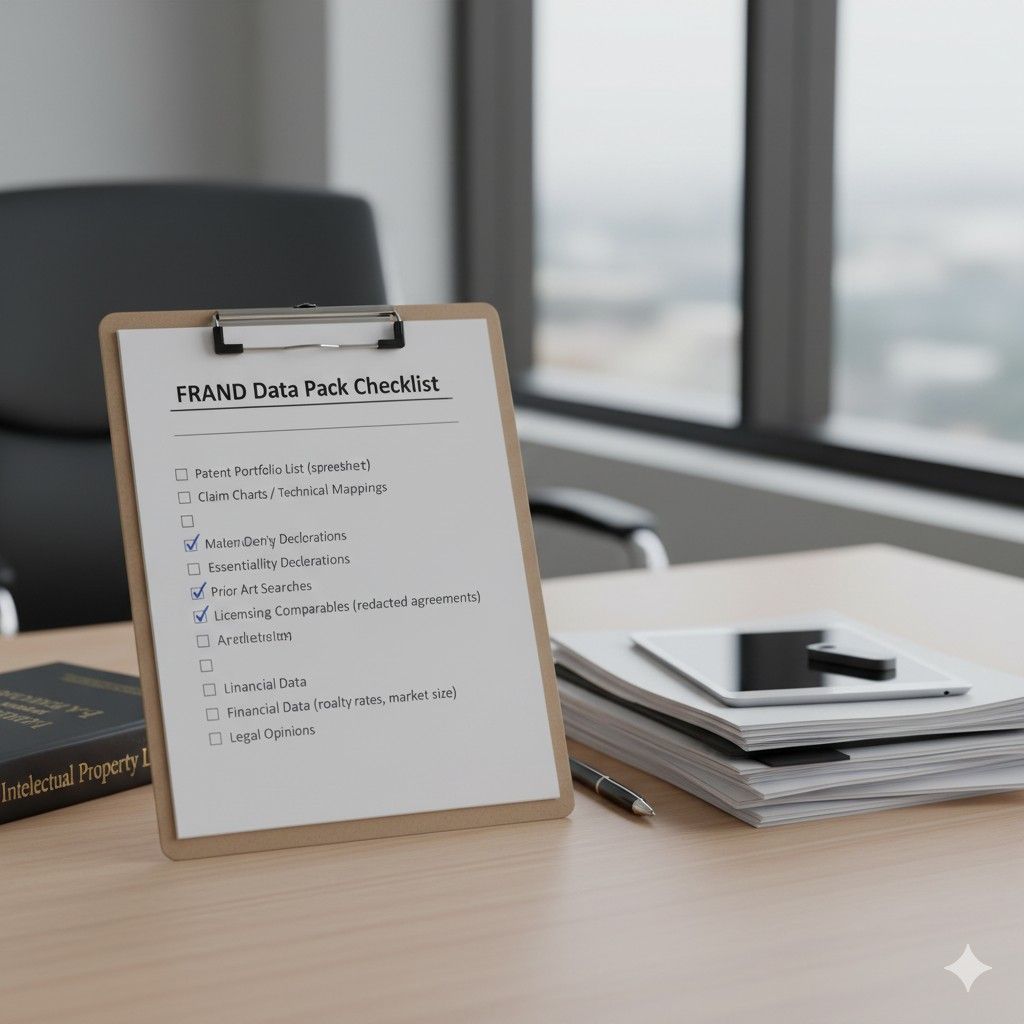
Being selective is not evasive. It is professional.
Using Consistent Language to Reduce Risk
One overlooked aspect of the data pack is language consistency. Terms should mean the same thing everywhere they appear. Descriptions should not shift subtly from section to section.
Inconsistency creates doubt. Doubt invites challenge.
Simple, repeated phrasing is your ally here. It keeps everyone aligned.
Preparing for Questions Before They Are Asked
A strong data pack anticipates skepticism. It quietly answers the questions the other side is likely to raise.
This does not mean addressing every possible objection. It means thinking through where confusion might arise and clarifying those points early.
When questions are fewer, momentum improves.
Why Comparables Should Be Handled Carefully
Many FRAND discussions involve comparisons to other licenses or standards. This is sensitive ground.
If your data pack includes any reference points, they should be framed carefully and conservatively. Overstating similarity can backfire. Understating relevance can weaken your case.
Precision matters more than volume.
Keeping the Data Pack Stable Over Time
Once shared, your data pack becomes part of the record. Frequent changes can undermine credibility.
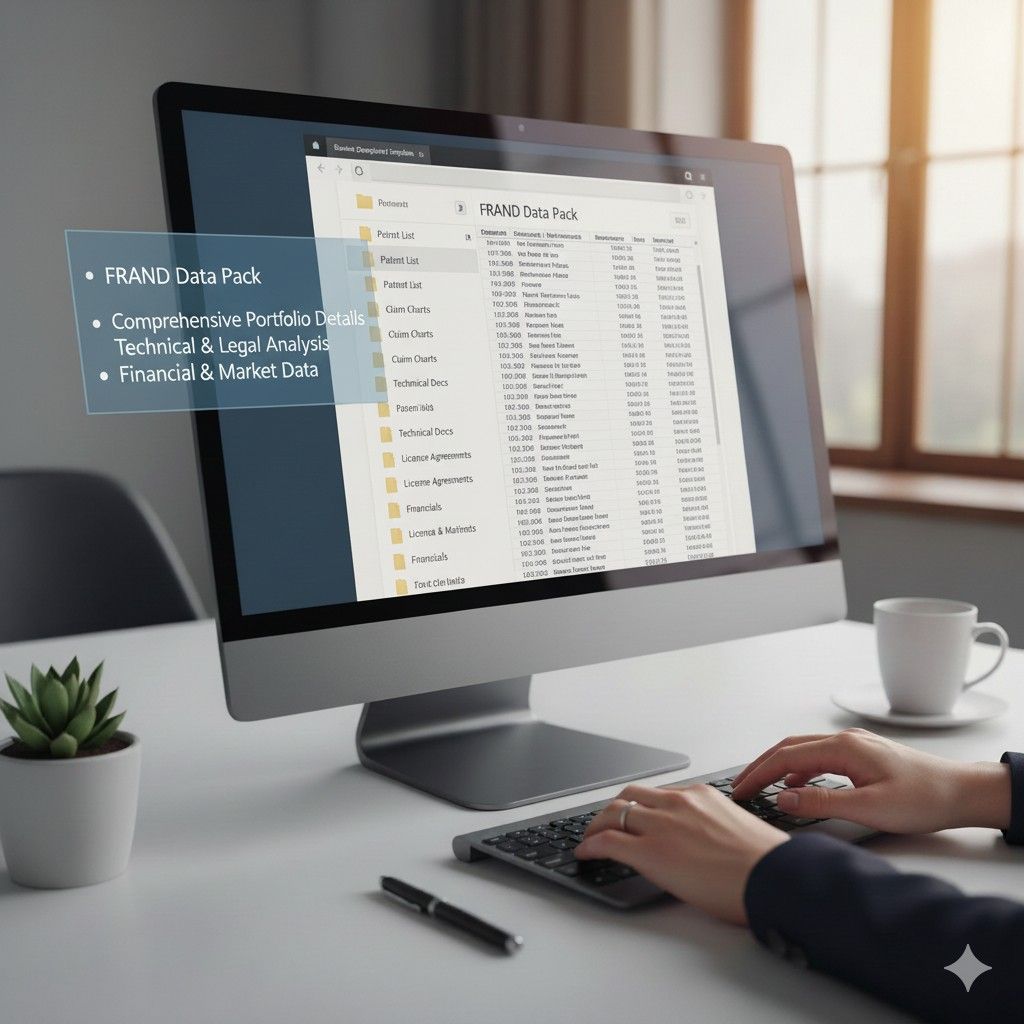
This is why preparation before sharing is critical. Take the time to review internally. Make sure everyone agrees with the framing.
Stability signals confidence.
Aligning the Data Pack With Your Negotiation Strategy
The data pack should support your broader goals, not exist in isolation. If your strategy is to build long-term partnerships, the tone should reflect that. If your focus is clarity and fairness, the content should reinforce it.
Everything should point in the same direction.
The Role of Attorneys Without Letting Them Take Over
Legal input matters, but the data pack should not feel like a legal document. It should feel like a business and technology document.
Founders should own the narrative. Attorneys should help refine and protect it.
Platforms like PowerPatent are built around this balance, combining software speed with real attorney oversight so founders stay in control instead of handing everything off. You can explore that approach at https://powerpatent.com/how-it-works.
Why Preparation Beats Aggression Every Time
FRAND negotiations reward preparation, not force. A strong data pack gives you quiet authority. You do not need to push. The facts speak for you.
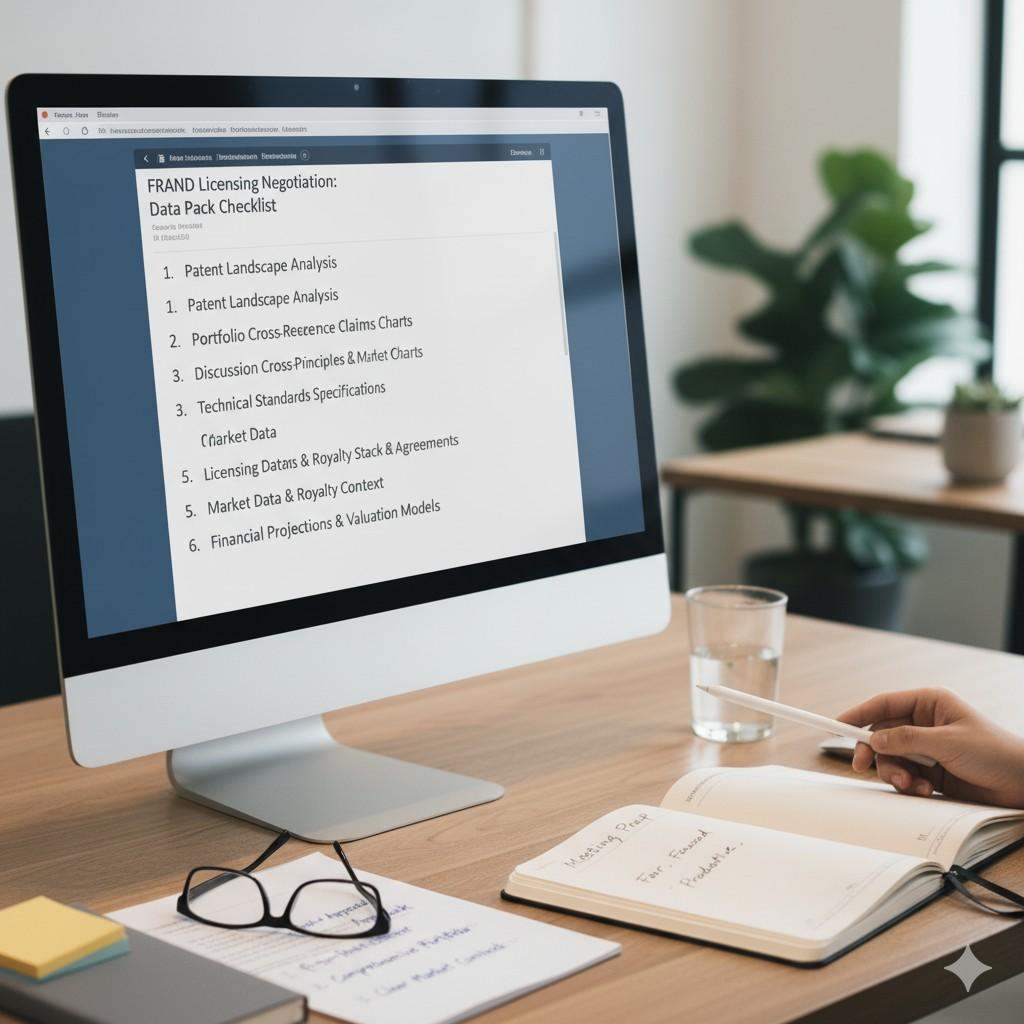
When numbers finally come up, they land in a context you helped create.
That is the goal.
Wrapping It Up
FRAND negotiations feel intimidating because most founders experience them as sudden and high-stakes. A message arrives. A meeting is requested. Pressure builds fast. What this article shows is that none of this has to be chaotic. When you treat FRAND as a process instead of an event, control returns to your side. The first email sets the tone. It signals calm, readiness, and intent without revealing more than needed.
Leave a Reply