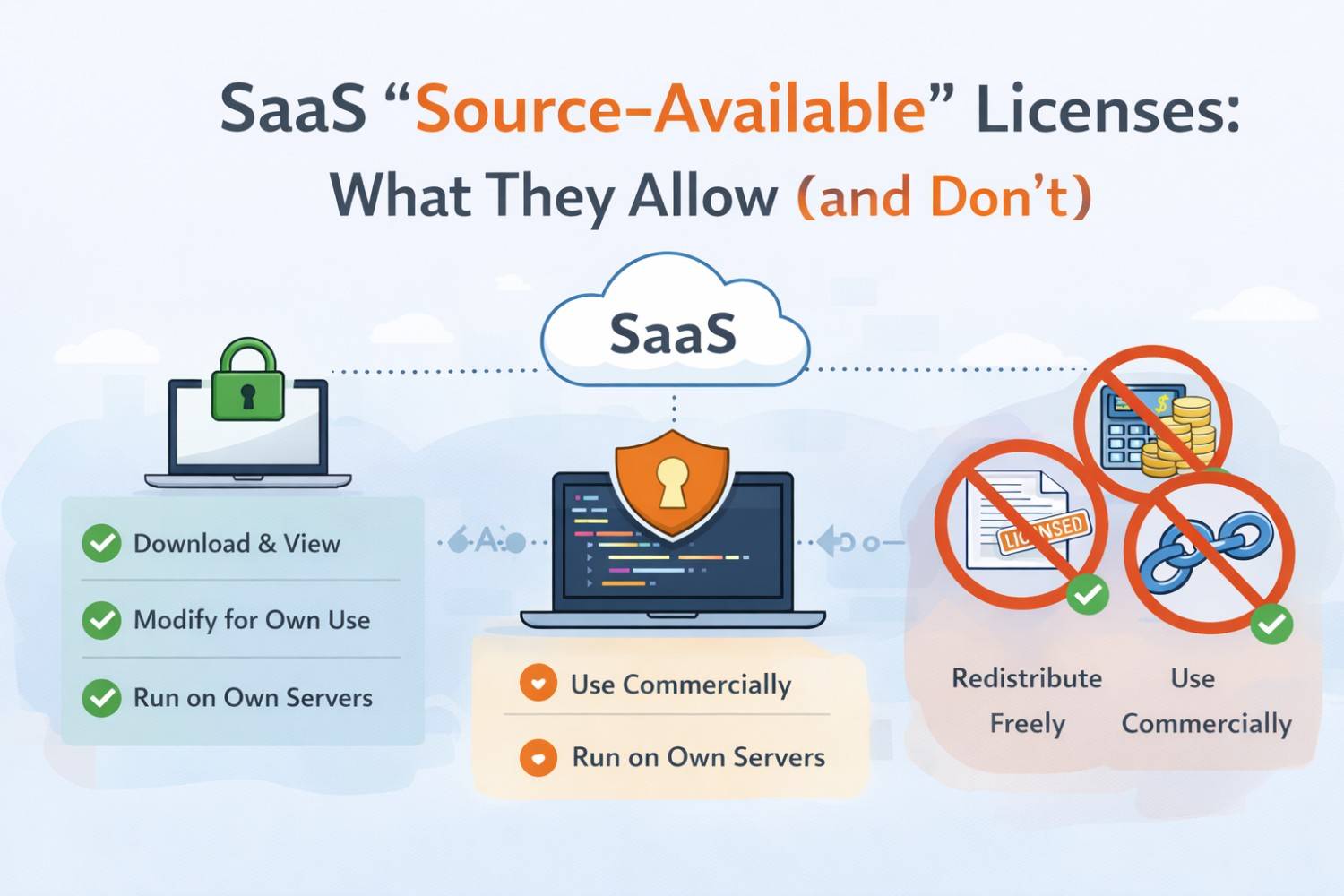
Most founders think software licenses fall into two buckets. Open source, where anyone can use the code. Or closed source, where no one can touch it. That view is no longer true.
Over the last few years, a third option has quietly taken over modern SaaS: source-available licenses. These licenses look friendly on the surface. The code is visible. You can read it. Sometimes you can even change it. But the rules underneath are very strict, especially for startups building products, raising money, or selling to customers.
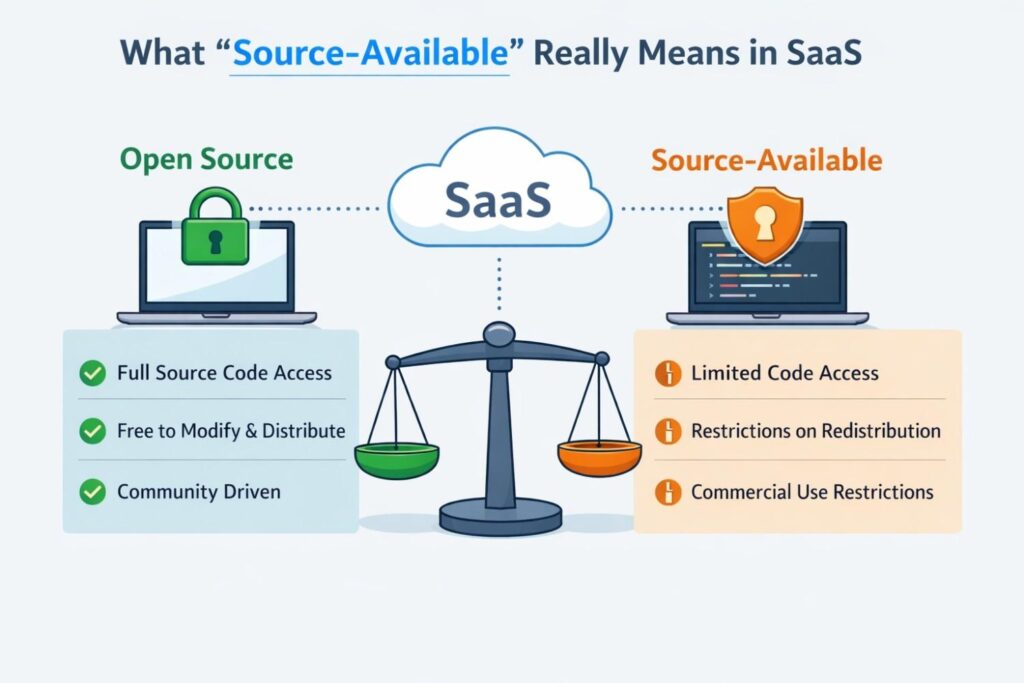
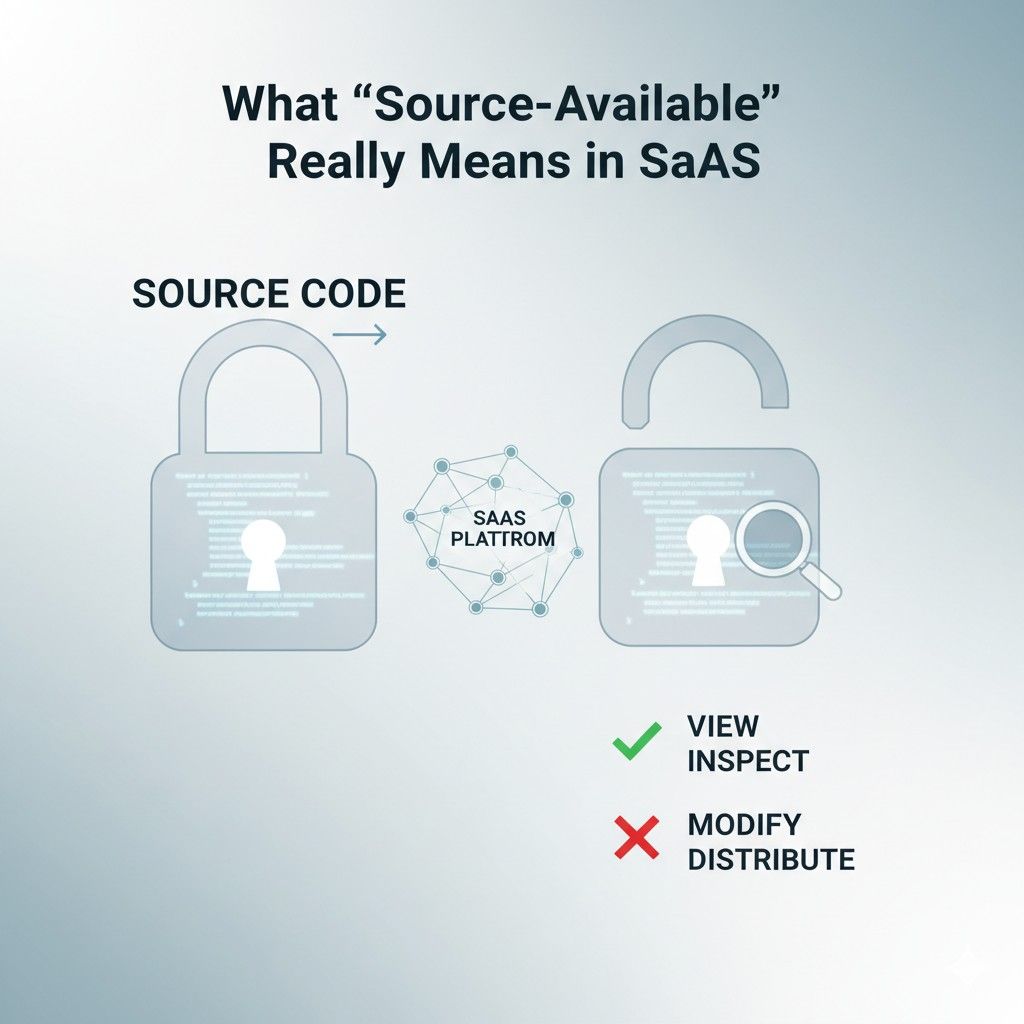
What “Source-Available” Really Means in SaaS
Source-available is one of those terms that sounds friendly, open, and safe. That is why so many SaaS teams adopt it without slowing down to think. The truth is simple but uncomfortable.
Source-available is not about openness. It is about control. And if you do not understand who holds that control, it will not be you.
This section explains what source-available really means in practice, how it quietly shapes your business model, and what founders should do before it shapes it for them.
Source-Available Is a Business Decision, Not a Values Statement
Most founders think licenses reflect beliefs. Open source means sharing. Closed source means protecting. Source-available feels like a middle ground. That framing is wrong.
Source-available is a business move first. It lets a company show its code while still blocking others from using it in ways that compete. The goal is not community. The goal is leverage.
If you are consuming source-available code, you should treat it like a contract tied to someone else’s revenue plan. The license exists to protect their SaaS margins, not your startup’s future.
Your first action should always be to map how your own product makes money and then check whether the license blocks that path later.
If your product could ever be sold, hosted, or bundled as a service, assume restrictions apply unless proven otherwise.
Visibility Does Not Mean Freedom
Founders often confuse seeing code with owning rights. Source-available licenses are built on that confusion.
You can read the code. You can learn from it. Sometimes you can change it. But the moment your changes touch production, customers, or revenue, the rules shift fast.
This matters most for early teams moving quickly. You may prototype with source-available tools, build core logic around them, and only later discover that scaling turns your usage into a violation.
The smart move is to treat visibility as education, not permission. Learn from the code, but isolate it. Keep it out of your core systems unless you are fully prepared to replace it later.
Why SaaS Companies Use Source-Available Instead of Open Source
SaaS companies did not abandon open source by accident. They were forced.
Cloud providers and fast-moving startups learned how to take open source projects, host them, and sell them without contributing much back. Source-available licenses are the response to that pressure.
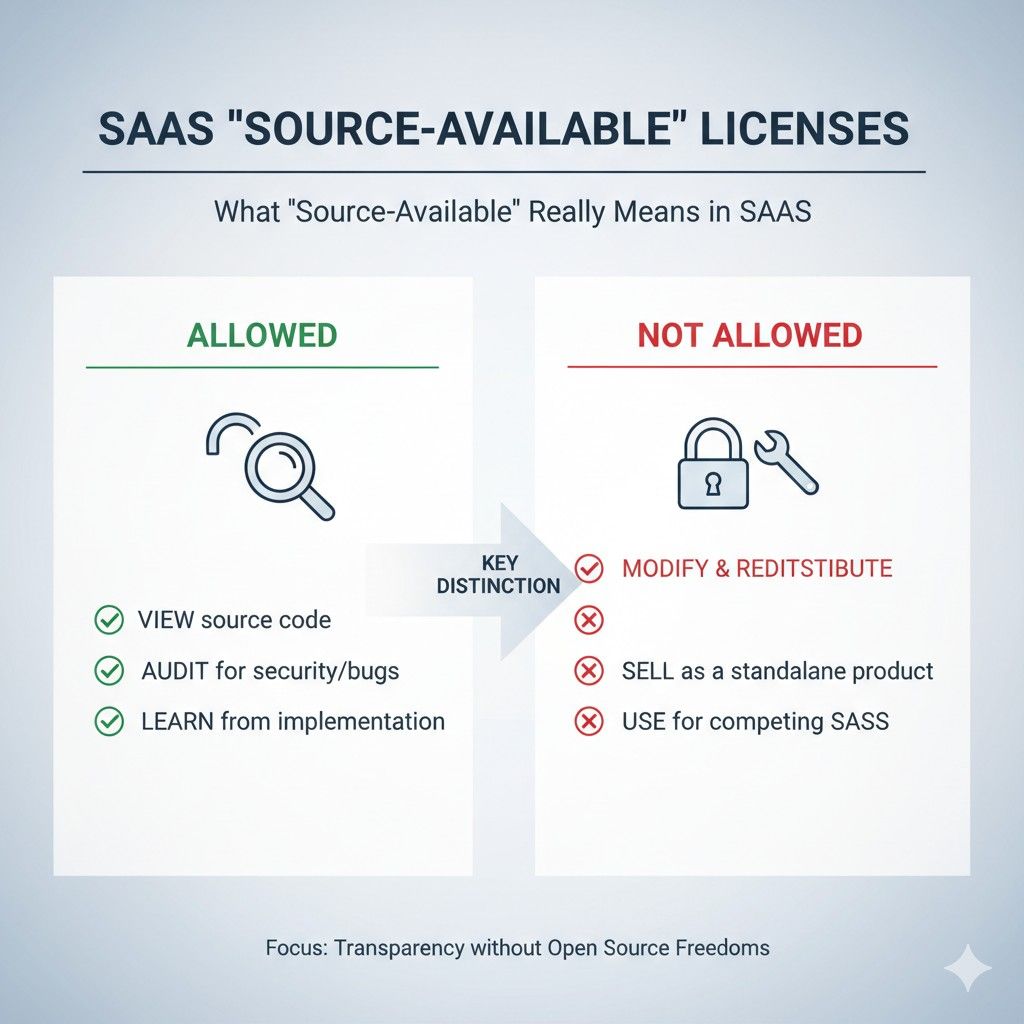
They are designed to stop hosting competitors. They are designed to block commercial forks. They are designed to make sure only one company can turn that code into a SaaS product.
When you use source-available software, you are stepping into that defensive wall. You need to understand that the license was written with someone like you in mind.
How Source-Available Changes Risk for Startups
The biggest risk is not lawsuits. It is lock-in.
Once your product depends on source-available code, your roadmap becomes tied to someone else’s license choices. If they change terms, you adapt or rewrite.
If they raise fees, you pay or rebuild. If they shut down, you scramble.
This risk grows as you scale. Investors notice it. Acquirers care deeply about it. Enterprise buyers will ask questions you cannot dodge.
A smart move early is to document every place you rely on source-available components. Treat that document like technical debt.
Review it every quarter. Decide whether each dependency is worth keeping or replacing before it becomes too expensive to change.
Source-Available Is Often Time-Limited Freedom
Many licenses allow free use until a certain threshold. That threshold is rarely technical. It is usually commercial.
You can use it until you sell. Until you host. Until you exceed a revenue number. Until you offer a competing service.
That creates a false sense of safety for early teams. Everything works fine while you are small. Then growth becomes the trigger that breaks your setup.
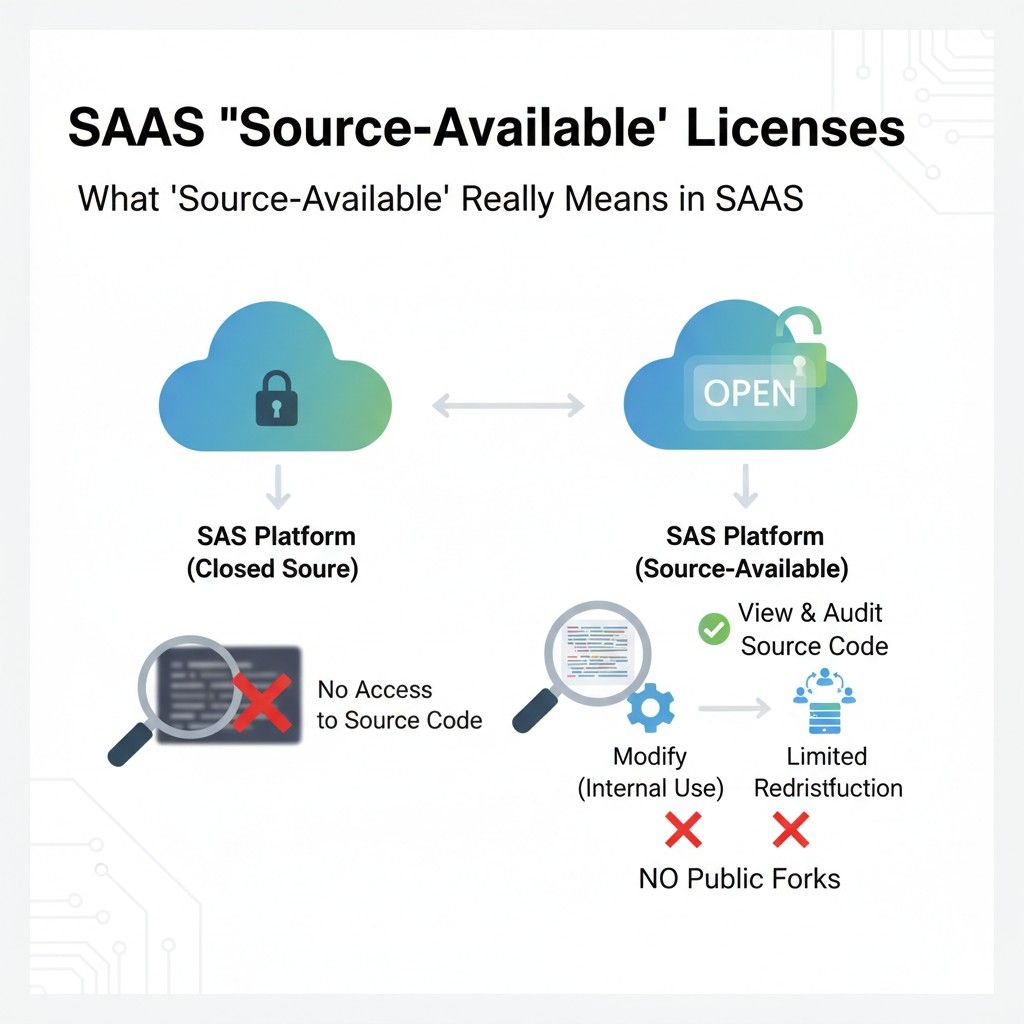
The best founders plan for success, not survival. If a license only works while you are tiny, it is not a long-term solution. You should decide early whether you are comfortable rebuilding later or whether you want cleaner foundations now.
Internal Use Is Not as Safe as It Sounds
Many source-available licenses allow internal use. Founders assume this means anything inside the company is safe.
That assumption fails quickly in SaaS.
The moment your internal tool supports customer-facing features, analytics, or automation, the line blurs. Is it still internal if it powers a paid product? Often, the license says no.
Actionable advice here is simple. If code touches customer data, customer workflows, or customer value, treat it as external use. That mindset avoids surprises and forces safer design decisions.
Forking Is Rarely a Real Option
Source-available licenses often allow forks in theory. In practice, they discourage them.
Legal terms, trademark limits, and ecosystem control make forks expensive and slow. You can fork, but you cannot brand. You cannot market easily. You cannot monetize cleanly.
If your long-term plan depends on forking a source-available project, you should pause. That path almost always costs more than starting fresh or choosing a truly open alternative.
The Hidden Impact on Your IP Strategy
This is where many founders make silent mistakes.
When your product is built on source-available code, your own IP becomes harder to defend. Patent strategy gets weaker if core systems are tightly coupled to someone else’s licensed logic.
Investors and attorneys will ask which parts are truly yours. If the answer is unclear, your leverage drops.
The smartest move is to keep your novel ideas, workflows, and system designs cleanly separated. Those are the pieces you patent. Those are the pieces you protect.
PowerPatent was built for exactly this moment. Founders who move fast but want to lock in ownership early. If you want to see how that works in practice, explore it here: https://powerpatent.com/how-it-works
How to Evaluate a Source-Available License the Right Way
Most teams read licenses like homework. That is the wrong mindset.
Instead, read it like a future problem. Ask what breaks if your product succeeds. Ask what happens if you double revenue. Ask what happens if a customer asks for self-hosting.
If any answer is unclear, that uncertainty is the risk.
A practical step is to write a one-paragraph summary of how the license affects your business model. If you cannot explain it in plain words, you do not understand it well enough to depend on it.
When Source-Available Makes Sense
Source-available is not bad. It is specific.
It works well for tooling, dev environments, and learning systems that never become customer-facing. It works when speed matters more than permanence. It works when replacement is easy.
The mistake is treating it as neutral. It is not. It is a strategic trade.
The founders who win are the ones who choose that trade on purpose.
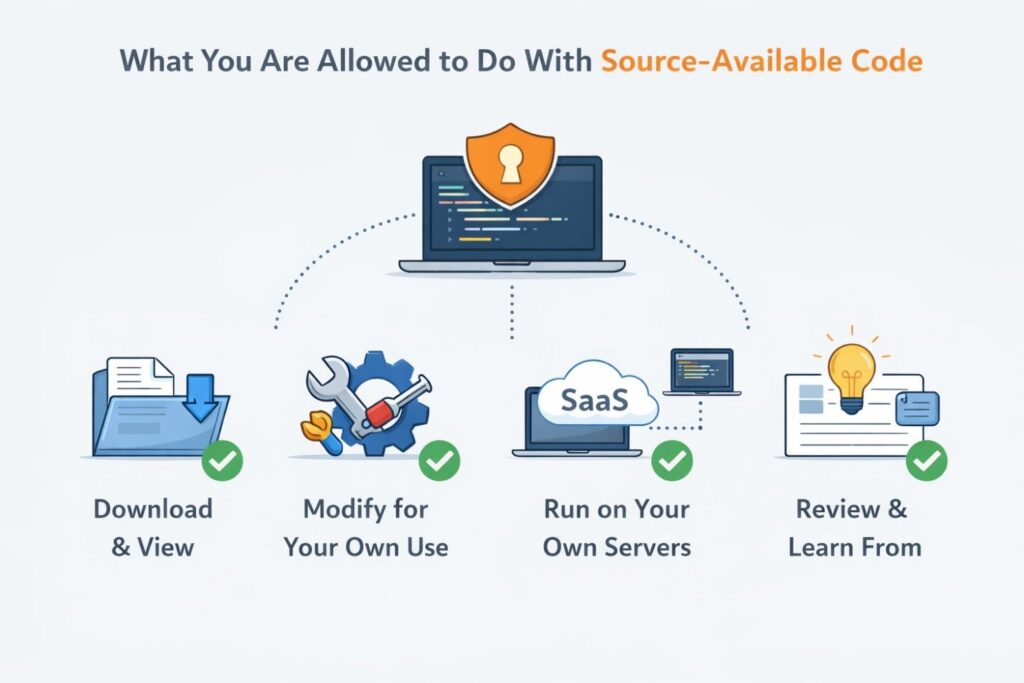
What You Are Allowed to Do With Source-Available Code
At first glance, source-available licenses feel generous. You can see the code. You can run it. Sometimes you can even change it. For a fast-moving SaaS team, that feels like freedom.
But that freedom is narrow, intentional, and shaped very carefully.
This section explains what you are actually allowed to do with source-available code, where that freedom helps, and how to use it in ways that move your business forward without creating hidden traps later.
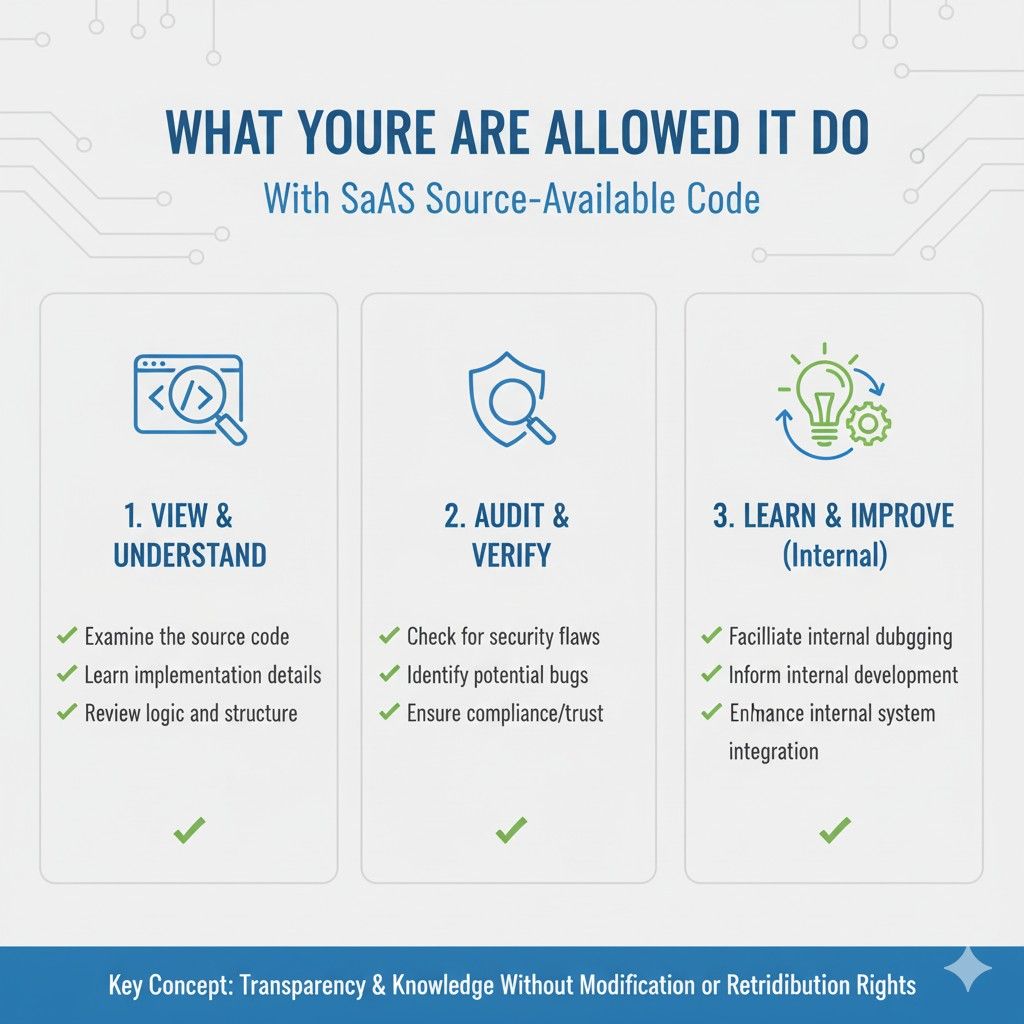
You Can Read the Code to Learn How Systems Work
This is the cleanest and safest permission source-available gives you.
You are allowed to study how the system is built, how data flows, how performance is handled, and how edge cases are solved. For engineers, this is incredibly valuable.
You can learn patterns that would take months to discover on your own.
The smart way to use this is as a learning tool, not a dependency.
Read the code to understand ideas, then reimplement what matters in your own way. This keeps your product independent while still benefiting from the work others have done.
Founders who do this well treat source-available projects like textbooks, not building blocks.
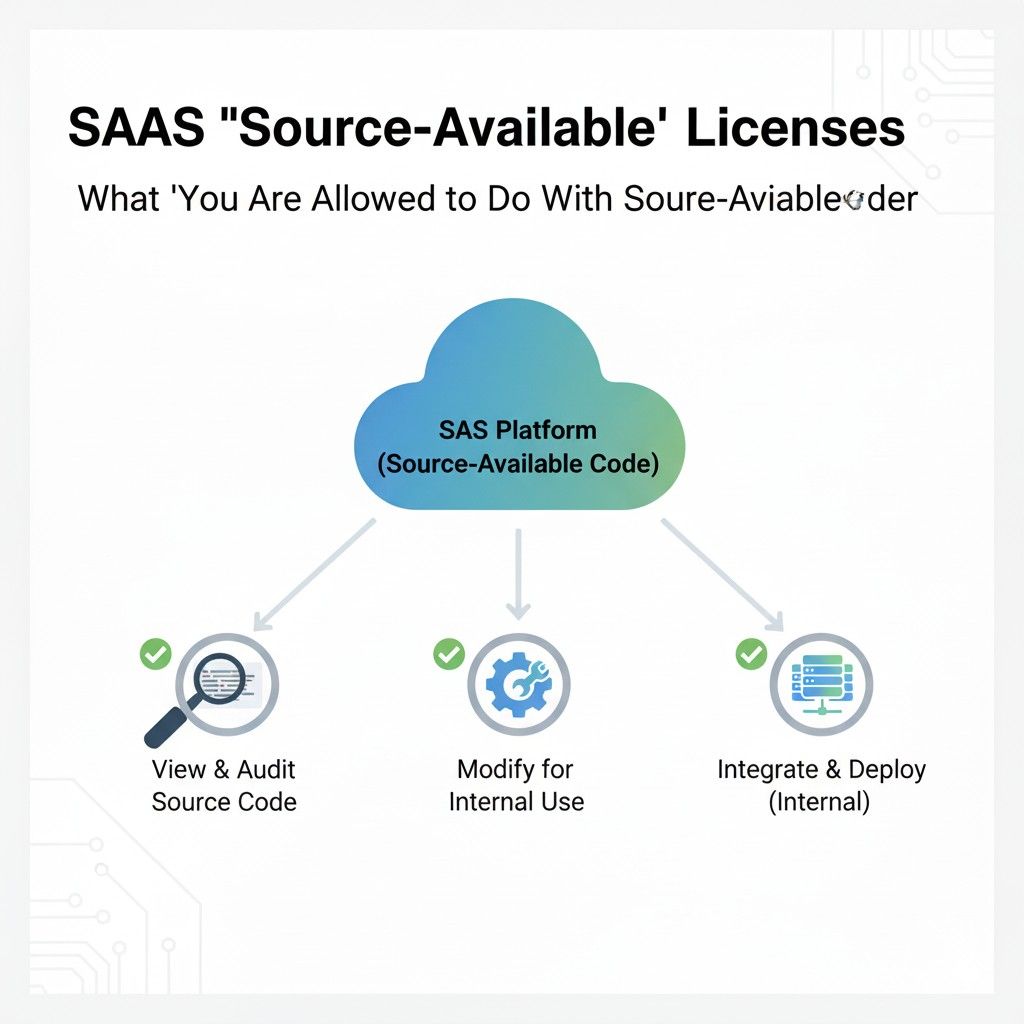
You Can Run the Software for Internal Use
Most source-available licenses allow internal use. That means your team can deploy the software inside your company for development, testing, or internal operations.
This is useful for speeding up workflows, validating ideas, or supporting engineering teams. It is especially helpful in early stages when time matters more than polish.
The key action here is to draw a clear boundary. Internal use should stay internal. The moment internal tools start shaping customer features, billing logic, or core product behavior, risk starts to grow.
A good rule is simple. If removing the software would break your product for customers, it is no longer just internal.
You Can Modify the Code for Your Own Needs
Many source-available licenses allow modifications. This gives teams a sense of ownership that feels close to open source.
You can fix bugs, add features, or adjust behavior to fit your workflows. This can be powerful in early stages when you need things to work your way.
But there is a hidden cost. The more you customize, the harder it becomes to replace the software later. Custom changes increase switching costs and deepen lock-in.
A practical move is to track every modification you make. Keep a simple log explaining why each change exists and whether it is critical.
This gives you a clear picture of how dependent you have become and what it would take to move away if needed.
You Can Use It in Non-Competing Products
Source-available licenses are usually fine with you using the code as long as you are not competing with the original product.
This sounds straightforward, but it often is not.
Competition is defined broadly. It can include offering similar features, serving similar users, or solving the same problem in a different way. Even internal tools can cross this line if they are exposed to customers.
The actionable advice here is to assume the narrowest definition of allowed use. If there is any chance your product overlaps in purpose, treat the code as restricted. This conservative approach avoids painful surprises later.
You Can Build Around It, Not On Top of It
One of the safer patterns is using source-available software as a peripheral tool rather than a core engine.
For example, using it for logging, testing, internal dashboards, or experimentation is usually low risk. Using it as the backbone of your product is not.
Architecturally, this means isolating it behind clean interfaces. If it fails, changes terms, or becomes unavailable, you can swap it out without rewriting everything.
This is not just good licensing hygiene. It is good engineering.
You Can Delay Decisions, But Not Avoid Them
Source-available licenses are often used to buy time.
Teams use them to move fast, validate demand, or ship early versions. That is allowed, and sometimes smart. But it only works if you plan for what comes next.
The danger is forgetting that you are borrowing time. At some point, you must decide whether to replace the software, negotiate terms, or accept long-term constraints.
A strong founder move is to set a trigger point in advance. Revenue, users, funding, or customers. When that trigger hits, you review all source-available dependencies and make intentional decisions.
You Can Negotiate, Sometimes
This is something many founders overlook.
Some companies behind source-available projects are open to commercial licenses, partnerships, or exceptions. If the software becomes critical to your business, talking early can open doors.
The mistake is waiting until you are fully dependent. At that point, you have no leverage.
If you see a source-available tool becoming central, reach out while replacement is still possible. That conversation is much easier when you have options.
You Can Protect Your Own Work Alongside It
Using source-available software does not mean giving up ownership of what you build.
Your workflows, system designs, integrations, and novel approaches still belong to you. But only if you treat them as distinct assets.
This is where many teams fail quietly. They blur their innovation into licensed code and lose clarity around what is theirs.
The actionable move is to document your unique ideas early and protect them early. That is exactly what PowerPatent helps founders do. You keep building fast while locking in ownership before things get messy.
If you want to see how that works without slowing down your team, you can explore it here: https://powerpatent.com/how-it-works
Why Allowed Use Still Requires Strategy
Just because something is allowed does not mean it is wise.
Source-available licenses give narrow permissions designed to serve someone else’s business. Your job is to decide whether those permissions align with your long-term goals.
The best teams treat allowed use as temporary leverage, not a foundation.

They move fast, learn quickly, and protect what matters most.
What These Licenses Explicitly Do Not Let You Do
This is the part most founders skip. Not because it is unimportant, but because it feels uncomfortable. Limits force decisions. And decisions slow things down, at least in the short term.
Source-available licenses are defined more by what they block than what they allow. These limits are not edge cases. They are the entire point of the license.
If you are building SaaS, especially something you plan to sell, scale, or raise money on, these limits will shape your future whether you notice them now or not.
This section explains the hard lines you cannot cross, why they exist, and how to avoid building a business that quietly runs into a wall.
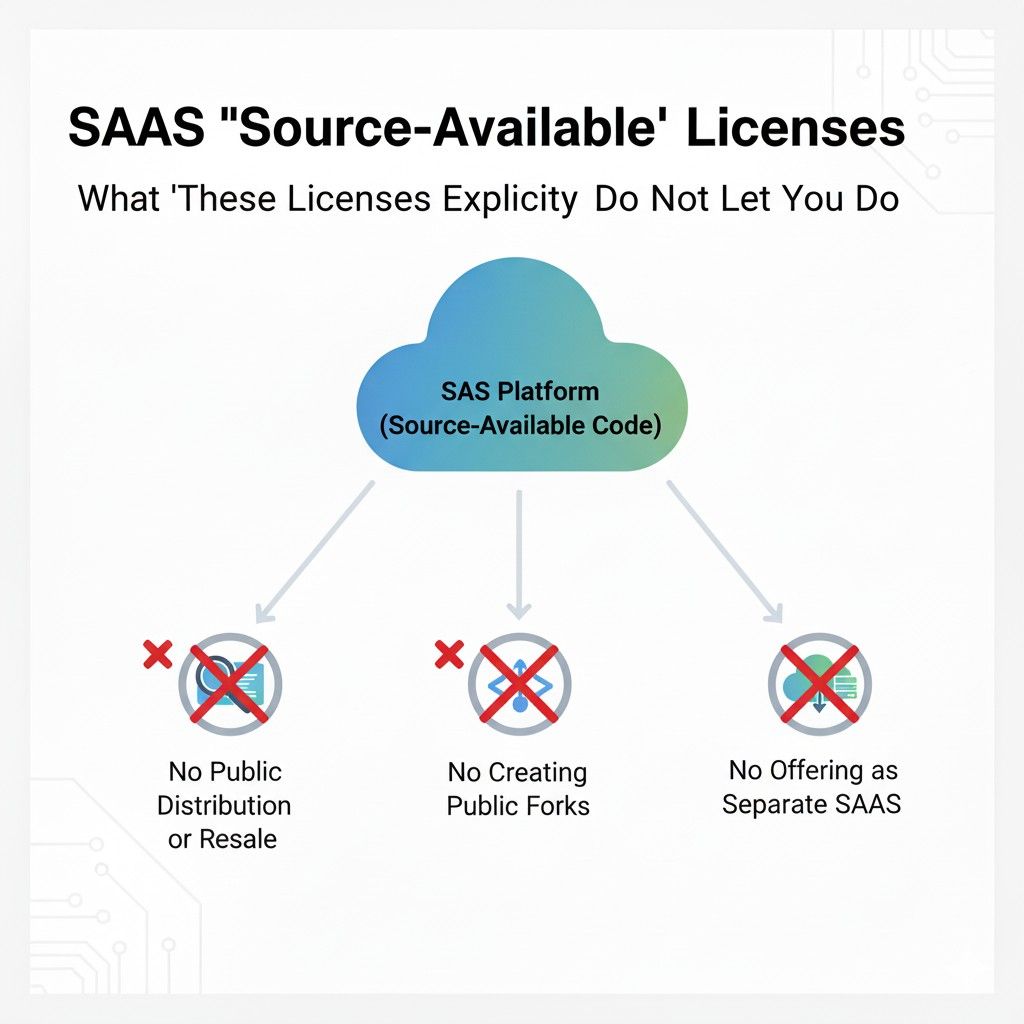
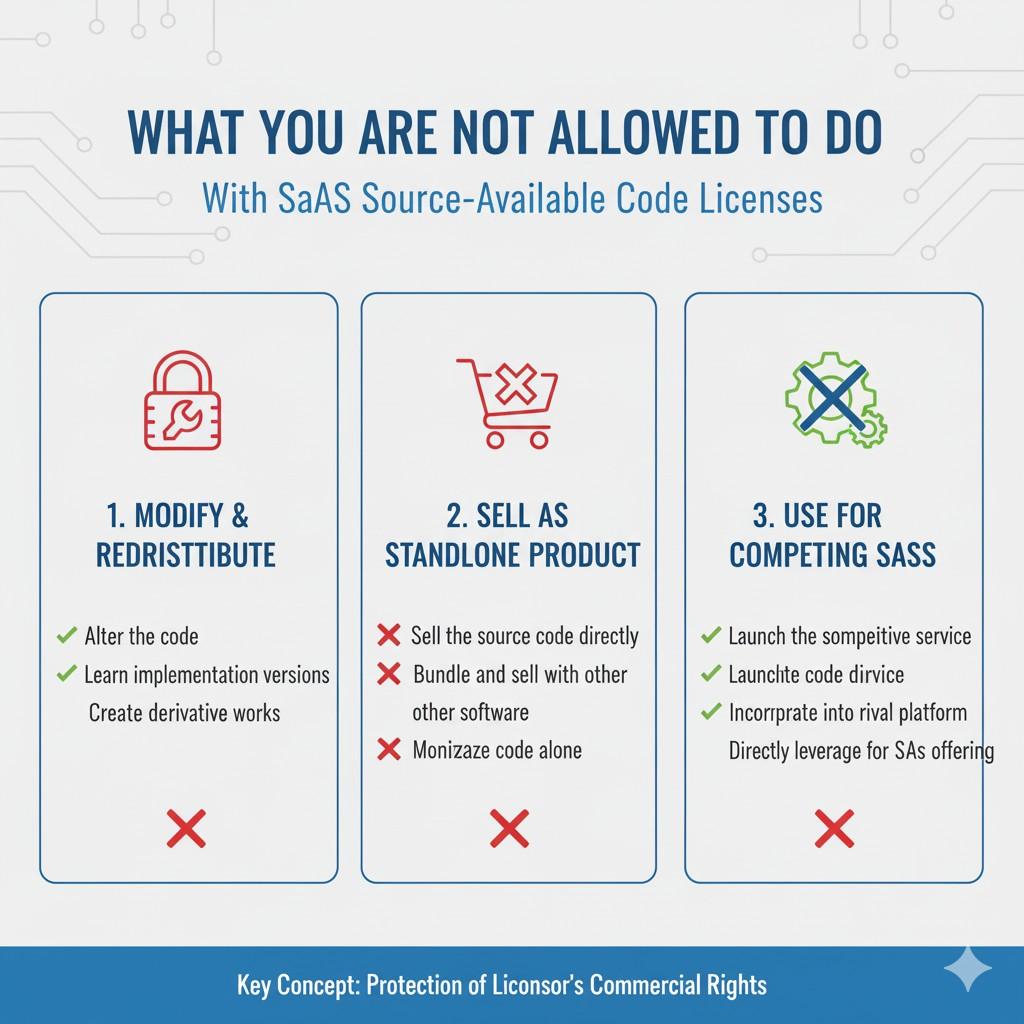
You Cannot Offer the Software as a Service
This is the most common restriction and the most misunderstood.
Many source-available licenses clearly say you cannot offer the software as a hosted service.
That means you cannot run it for customers, even if you charge nothing. The moment users rely on it through your platform, you are offering a service.
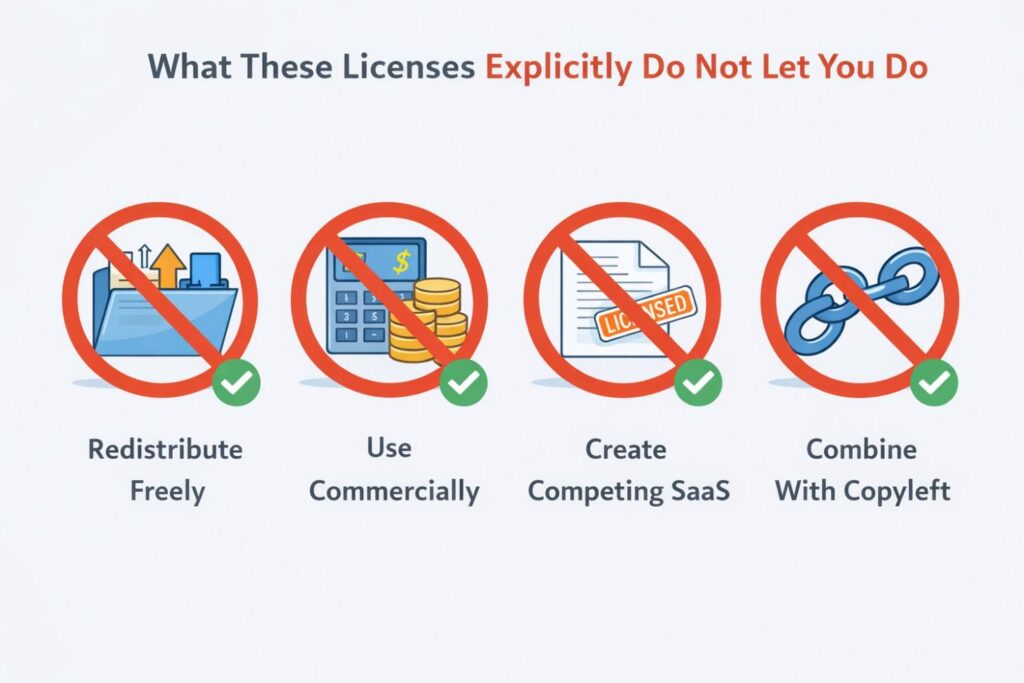
Founders often assume that adding value around the software changes this. It does not. Wrapping, integrating, or extending still counts if the core functionality is exposed.
The safest assumption is simple. If customers interact with it through your product, it is likely not allowed.
You Cannot Build a Competing Product
Competition is where licenses become sharp.
Source-available licenses are written to protect the original company’s business model. If your product overlaps in purpose, even loosely, you are likely blocked.
This includes solving the same problem for a different audience or bundling similar features into a larger system.
The tricky part is that competition is not always defined clearly. That ambiguity favors the licensor, not you.
The actionable move here is to imagine your future roadmap, not just today’s product. If there is any chance you drift into the same problem space, treat the license as a temporary experiment, not a permanent choice.
You Cannot Assume Future Terms Stay the Same
This is a silent risk many teams ignore.
Source-available licenses can change. The company behind them can update terms, introduce new restrictions, or require commercial agreements. Your existing usage may be grandfathered, or it may not.
If your business depends on stable terms forever, source-available is a weak foundation.
A practical safeguard is to avoid deep coupling. Keep the software replaceable. Build abstraction layers. Make sure no single licensed component becomes impossible to remove.
You Cannot Treat It Like Open Source in Due Diligence
Investors, acquirers, and large customers know the difference between open source and source-available. If you blur that line, trust breaks fast.
During diligence, you will be asked what third-party software you rely on and under what terms. Source-available raises follow-up questions. Those questions slow deals and create doubt.
The best founders get ahead of this by being clear and honest. Document usage. Explain boundaries. Show that you understand the risk and have plans.
Clarity builds confidence. Vague answers do not.
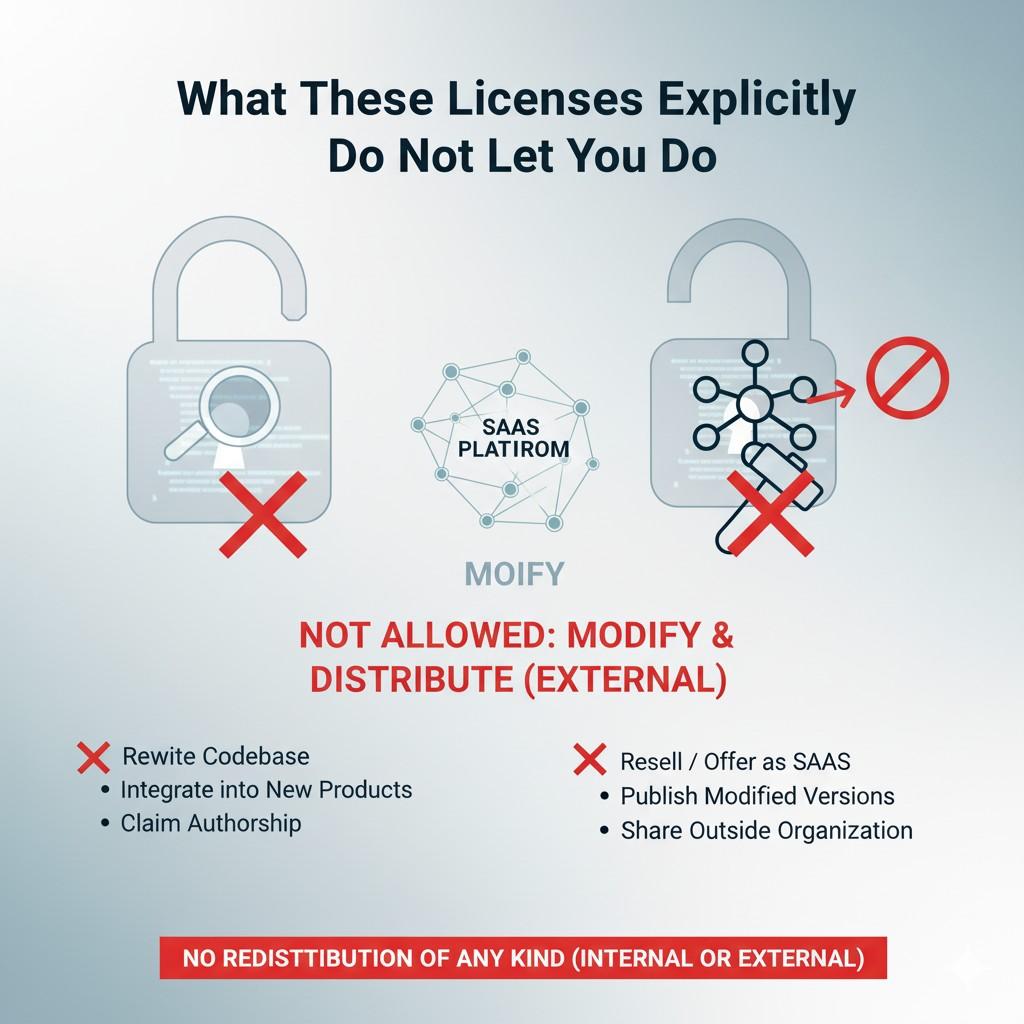
You Cannot Freely Redistribute the Code
Redistribution is often restricted or tightly controlled.
You may not be allowed to share the code with customers, partners, or even contractors outside your company. This becomes a problem as teams grow and workflows expand.
If your product involves on-prem installs, customer deployments, or shared environments, this restriction can block entire sales paths.
Actionable advice here is to align licensing with go-to-market early. If redistribution could ever matter, source-available may be the wrong fit.
You Cannot Ignore Trademarks and Branding
Even when code access is allowed, branding almost never is.
You cannot use the project name, logos, or reputation to market your product. This makes forks and derivatives hard to sell, even if technically permitted.
This matters because software adoption is not just about features. It is about trust. Losing brand association increases customer acquisition cost and slows growth.
If you ever plan to fork or build close derivatives, factor marketing reality into the decision, not just legal permission.
You Cannot Build Your Core IP on Borrowed Ground
This is the most important limit, even though it is not always written explicitly.
If your core value lives inside source-available code, your ownership is fragile. Your leverage weakens. Your exit options narrow.
Strong companies own their critical logic, systems, and ideas. They may use licensed tools, but those tools do not define them.
The actionable step is to identify what truly makes your product valuable. That is what you protect. That is what you patent. Everything else should be replaceable.
PowerPatent was built for founders who want to move fast without losing ownership. You do not need to slow down or lawyer up. You just need to lock in what matters while it is still clean.
If you want to see how that works, you can explore it here: https://powerpatent.com/how-it-works
Why These Limits Exist and Why They Will Not Loosen
It is tempting to hope these restrictions will soften over time. They will not.
Source-available exists because SaaS economics demand control. The companies using these licenses are protecting their survival. They are not optimizing for your flexibility.
Once you accept that, decision-making becomes easier. You stop hoping for exceptions and start designing around reality.
That mindset shift alone can save years of pain.
Turning Limits Into Strategic Choices
Limits are not bad if they are chosen intentionally.
Some teams use source-available software to move fast, learn, and validate. Then they replace it. Others negotiate commercial terms once value is proven. Others avoid it entirely and build clean from day one.
The mistake is drifting into dependency without deciding.
The founders who win are not the ones who avoid constraints. They are the ones who see them early and plan around them.
Wrapping It Up
By now, one thing should be clear. Source-available licenses are not confusing by accident. They are designed that way because they sit between openness and control. They look flexible, but they enforce boundaries that matter a lot once your SaaS starts to work.
For founders, the real risk is not breaking a rule. It is building momentum on top of assumptions that later turn out to be wrong.
Leave a Reply