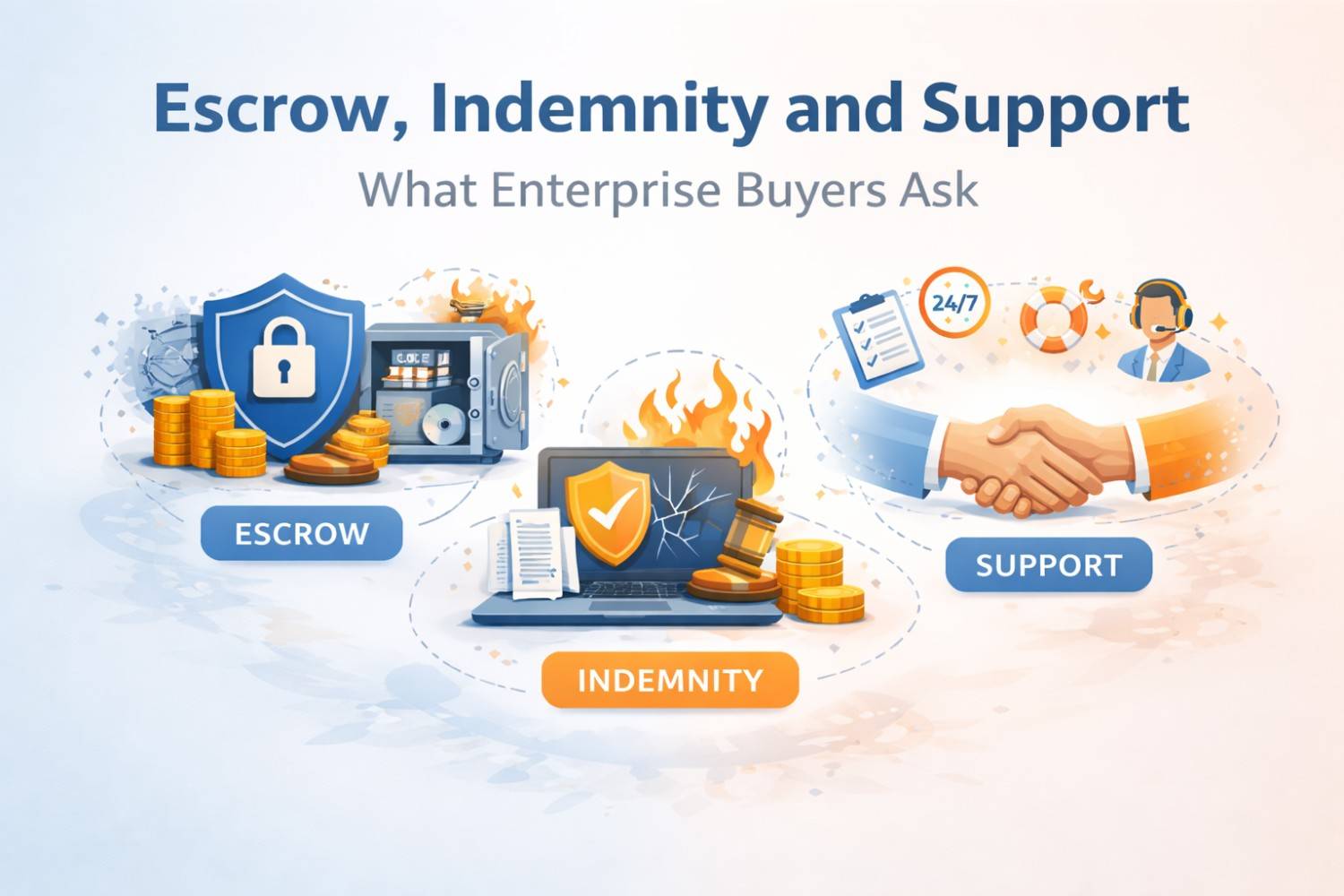
Enterprise buyers do not buy ideas. They buy certainty.
When a large company looks at your product, your code, or your startup, they are not thinking about how clever it is. They are thinking about what could go wrong after they sign. They worry about risk, cleanup, lawsuits, broken promises, and surprise costs. That is why the first real questions they ask are almost always about escrow, indemnity, and support.
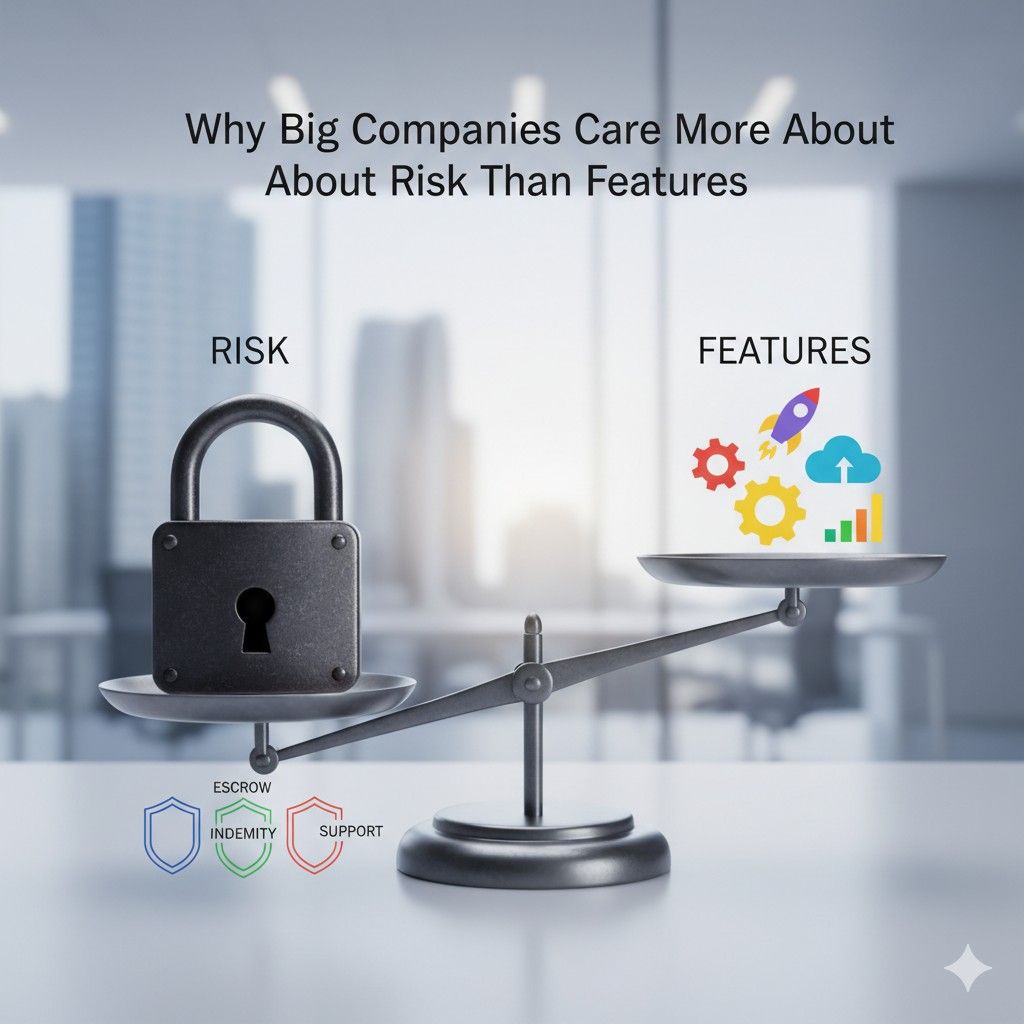
Why Big Companies Care More About Risk Than Features
Big companies are trained to think in one direction first: what could break, what could cost money, and what could come back to hurt them later. Features matter, but only after risk feels controlled.
This mindset shapes every question they ask and every clause they push into a contract. If you understand this early, you stop feeling surprised or offended by their requests and start using them to your advantage.
Enterprise Buyers Are Paid to Avoid Mistakes
Inside large companies, the people approving deals rarely get rewarded for taking bold chances.
They get rewarded for not making visible mistakes. A feature that works well is nice, but a mistake that leads to downtime, lawsuits, or public embarrassment can end a career.
This fear drives behavior more than excitement ever will.
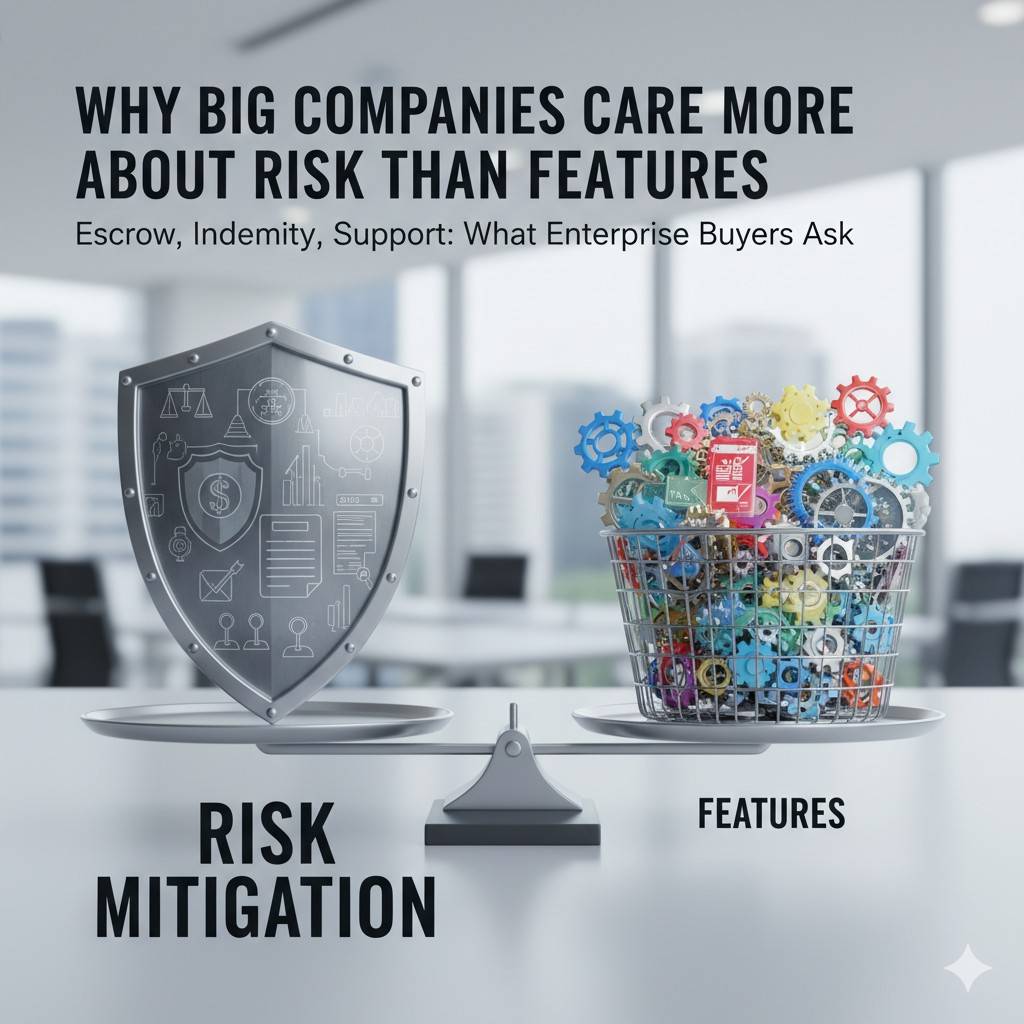
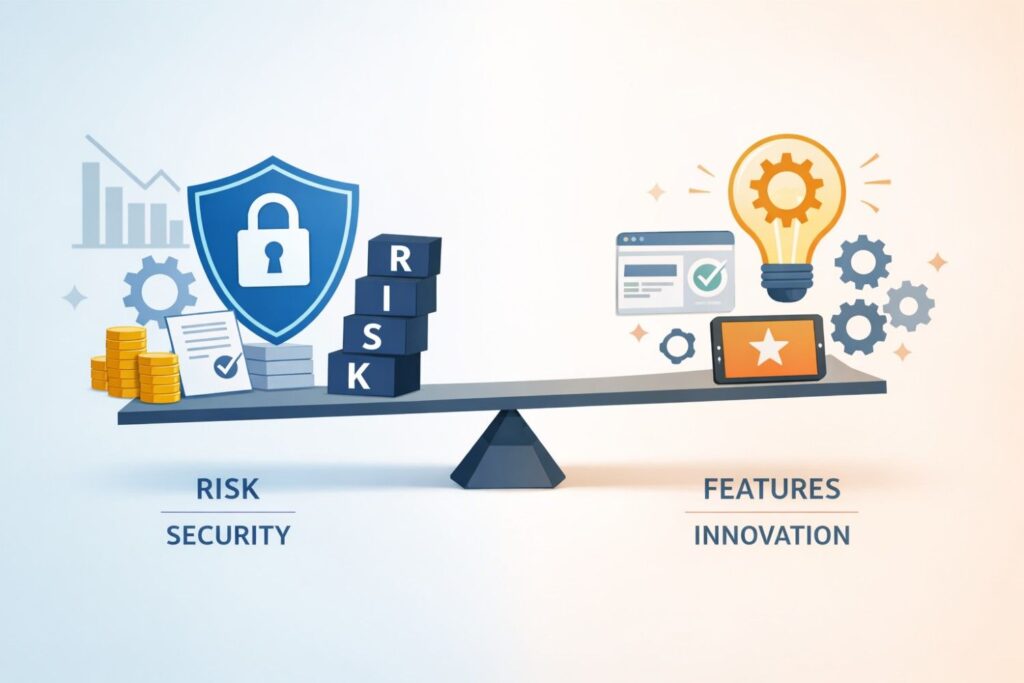
Founders often assume buyers want innovation first. In reality, buyers want safety first. Once safety feels locked down, features become easy to discuss. If safety feels unclear, no feature is good enough to compensate.
The most effective thing you can do is frame your product as low-risk before framing it as powerful. Talk openly about how you reduce surprises, how you plan for failure, and how you handle problems when they happen.
Size Changes How People Think About Consequences
When a startup ships a bug, it might upset a few customers. When an enterprise ships a bug, it can disrupt thousands of users, millions of dollars, or critical systems.
The same problem carries very different weight depending on scale.
Because of this, enterprise buyers assume that even small issues can grow large very fast. They are not overreacting. They are doing math based on scale.
If you want to sound credible, you must show that you understand this difference.
Speak in terms of impact, not just function. Show that you have thought about worst-case scenarios and that you have plans in place to limit damage.
Legal Teams Shape Buying Behavior Early
By the time you are talking to an enterprise buyer, legal teams are already in the background. These teams are trained to scan for risk signals. They look for vague promises, unclear ownership, and missing protections.
If your answers feel casual or improvised, legal teams slow everything down. If your answers feel structured and prepared, legal teams relax.
A smart move is to align your language early with what legal teams expect. That does not mean using heavy legal terms.
It means being clear about ownership, responsibility, and limits. Clarity reduces fear more than complexity ever could.
Features Are Easy to Copy, Risk Is Not
Another reason risk matters more than features is that features can be replaced. If your product fails, buyers can often find another tool. If a lawsuit hits or data ownership becomes unclear, replacement is not easy.
This is why enterprise buyers care deeply about who owns what, who pays when something goes wrong, and what happens if you stop operating. These questions are not about distrust. They are about continuity.
You can turn this into an advantage by showing that your company is built to last. Even if you are early, showing long-term thinking builds confidence.
Procurement Is Not Your Enemy
Many founders see procurement teams as blockers. In reality, procurement teams are translators between risk and business goals. They are tasked with making sure deals fit company rules.
If you fight procurement, deals stall. If you help procurement do their job, deals move faster.
One practical step is to ask early what their standard concerns are. This allows you to prepare answers before formal review begins. When procurement feels heard, they advocate for you internally.
Enterprise Buyers Think in Systems, Not Products
Startups often talk about individual features. Enterprises think in systems. They ask how your product fits into existing tools, processes, and contracts.
Risk appears when something does not fit cleanly. Integration issues, unclear responsibilities, and overlapping promises all raise red flags.
To reduce this, explain how your product fits into their existing setup. Show that you understand their environment and that your product does not create hidden complexity.
Trust Is Built Before the Contract Is Signed
Many founders believe trust comes after a deal closes. In enterprise sales, trust must exist before signatures happen. Buyers use early conversations to judge how you will behave later.
If you dodge tough questions or give vague answers, buyers assume future problems will be handled the same way. If you answer clearly and calmly, buyers feel safer moving forward.
Practice answering risk-related questions with confidence. Not perfection, but confidence. Honest limits are better than exaggerated promises.
Risk Conversations Are a Signal of Serious Interest
When enterprise buyers start asking about escrow, indemnity, and support, it often means they are seriously considering a deal. These questions are not rejection signals. They are commitment signals.
Founders who understand this stay calm and engaged. Founders who panic often give away too much or freeze.
The right response is preparation, not fear. Know your boundaries. Know what you can offer. Know what you should never promise.
Preparation Creates Leverage
The companies that handle risk discussions best are prepared before the first call. They know their ownership story. They know their support limits. They know what happens if something breaks.
Preparation gives you leverage because it keeps you from reacting emotionally. It allows you to negotiate instead of comply.
A powerful step is to document your risk posture internally. This becomes your reference point during negotiations and keeps your team aligned.
How Strong IP Reduces Buyer Fear
One of the biggest hidden risks for enterprise buyers is unclear intellectual property ownership. If they are not confident that you own what you sell, everything else feels shaky.
Clear, well-documented patents reduce this fear. They show that you have thought about ownership and protection early.
This is where smart patent strategy matters. When buyers see that your core technology is protected and reviewed by real attorneys, they feel safer building on top of it.
If you want to understand how modern teams protect their inventions without slowing down, explore how PowerPatent works at https://powerpatent.com/how-it-works.
Turning Risk Awareness Into Faster Deals
Understanding buyer risk does not slow deals. It speeds them up. When you address concerns early, fewer surprises appear later.
Speak directly about risk in your sales process. Invite questions. Show that you are not afraid of responsibility.
This approach builds confidence and positions your company as enterprise-ready, even if you are still growing.
If you want help building strong foundations that enterprise buyers trust, take a look at how PowerPatent helps founders protect what they are building at https://powerpatent.com/how-it-works.
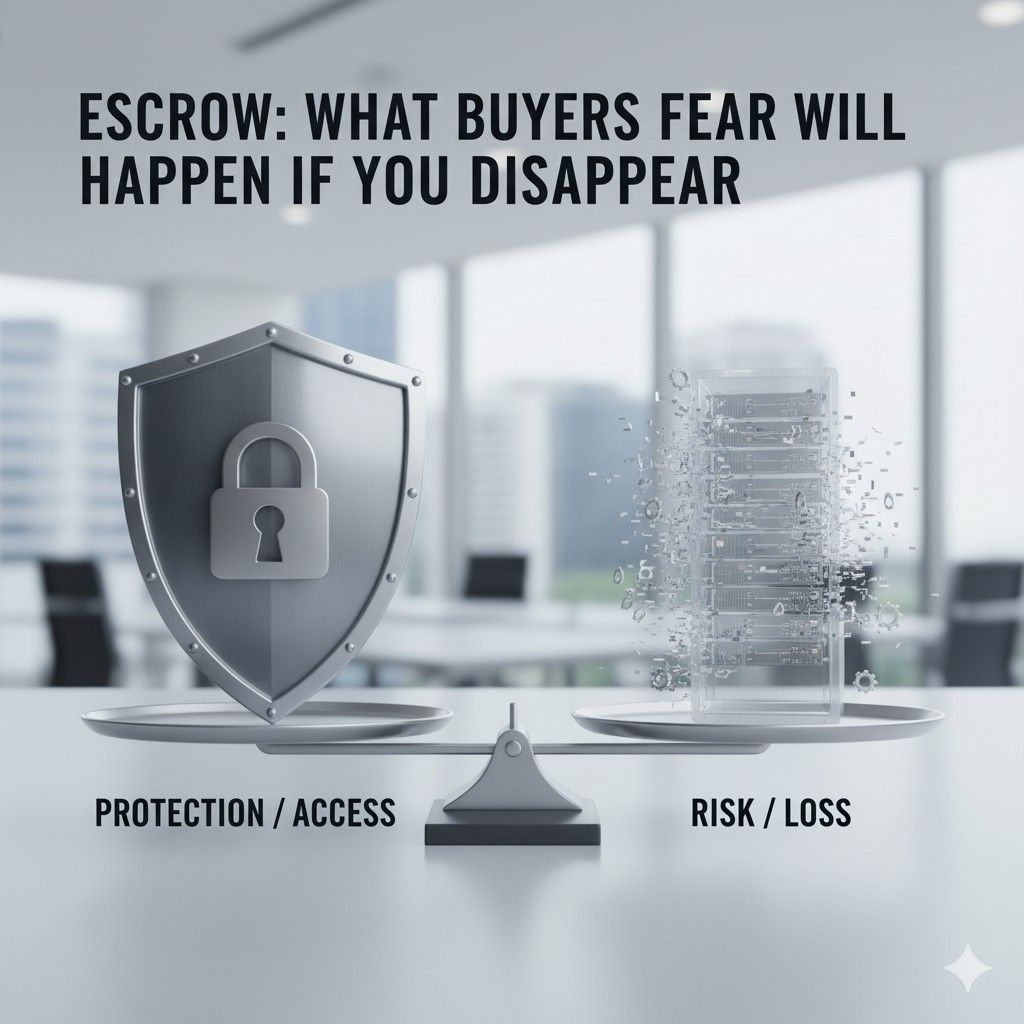
Escrow: What Buyers Fear Will Happen If You Disappear
Escrow is not about mistrust. It is about fear of silence.
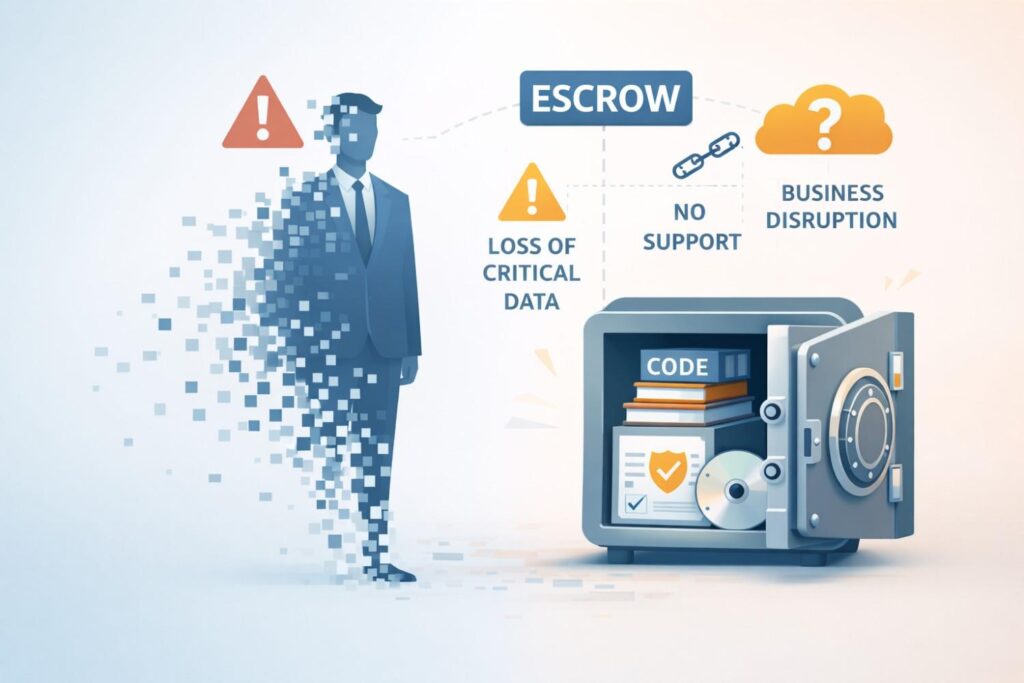
When an enterprise buyer brings up escrow, what they are really asking is a simple question they cannot afford to ask directly: what happens to us if you are no longer around?
This fear shows up most strongly when your product is deeply tied to their operations. The more important you become, the more they worry about losing access.
Founders often hear the word escrow and immediately feel defensive. That reaction can hurt a deal. Escrow is not an accusation. It is a safety net request, and understanding why it exists helps you respond with confidence instead of panic.
Why Escrow Comes Up Earlier Than You Expect
Enterprise buyers start thinking about escrow long before anything goes wrong. They think about it during planning, budgeting, and internal review. Even if they believe in your team, they must plan for scenarios outside your control.
People leave. Companies pivot. Funding dries up. Acquisitions change priorities. These things happen even to good teams.

Escrow is their way of protecting continuity. It is not personal. It is procedural.
The sooner you treat escrow as a normal business topic, the less power it has to slow things down.
Source Code Is Only Part of the Story
Many founders assume escrow means handing over source code. That is only a small piece of what buyers care about.
What buyers really want is the ability to keep operating if something unexpected happens. Code without context is often useless. Configuration, documentation, build instructions, and system dependencies matter just as much.
If you want to appear mature, talk about escrow in terms of operability, not files. Explain how your system can be understood, deployed, and maintained if needed.
This shifts the conversation from fear to structure.
Escrow Is a Signal of Product Importance
Escrow requests often appear when your product becomes critical. Buyers do not ask for escrow for tools they can easily replace. They ask when switching would be painful or risky.
This is a quiet compliment. It means your product matters.
Instead of resisting, use this moment to reinforce your value. Explain how your architecture supports stability and how your processes reduce reliance on any single person.
The Mistake of Overpromising
One of the most common mistakes founders make is agreeing to escrow terms they do not fully understand. In the moment, it feels like the fastest way to keep momentum.
Later, those promises become heavy obligations.
If escrow terms are vague, they can expand over time. If triggers are unclear, buyers may expect access in situations you never intended.
The safest approach is clarity. Define when escrow is released, what is included, and what rights the buyer has after release.
Clear boundaries protect both sides.
How Escrow Ties Back to Intellectual Property
Escrow raises an uncomfortable question: do you actually own what you plan to escrow?
If your code includes unclear ownership, open source misuse, or contractor ambiguity, escrow becomes risky for you. Buyers sense this risk even if they cannot name it.
This is why strong intellectual property foundations matter. When your ownership is clean and documented, escrow discussions become easier and calmer.
Patents play a quiet role here. They signal that ownership has been reviewed and thought through. This reduces buyer anxiety and shortens legal review.
If you want to understand how founders protect ownership without slowing down product work, see how PowerPatent approaches patents at https://powerpatent.com/how-it-works.
Escrow as a Negotiation Tool
Escrow does not have to be a one-sided demand. It can be a negotiation lever.
If a buyer wants broader escrow terms, you can ask for longer contracts, stronger commitments, or clearer limits on liability. Escrow has value, and value should be balanced.
When you treat escrow as part of a bigger picture, you regain control of the conversation.
The key is preparation. Know what you can offer before you are asked.
How Preparation Changes the Tone
Founders who are prepared talk about escrow calmly. Founders who are not prepared sound defensive or confused.
Preparation does not mean having perfect answers. It means knowing your principles.
Know what triggers make sense. Know what access feels reasonable. Know what you cannot promise.
This preparation shows buyers that you think like a long-term partner, not a short-term vendor.
Escrow and the Fear of Being Locked In
Buyers also worry about being trapped. Escrow reduces that fear. When buyers feel less trapped, they are more willing to commit.
This is one of the hidden benefits of handling escrow well. It can actually speed up deals by reducing hesitation.
When buyers feel protected, they move faster.
Turning Escrow Into Trust
The best founders use escrow discussions to build trust. They explain their roadmap, their funding outlook, and their support philosophy.
They do not overshare. They share enough to show seriousness.
This transparency builds confidence and positions your company as reliable, even if you are still growing.
Escrow Is Easier When Foundations Are Strong
Escrow conversations are smooth when your foundations are solid. Clean ownership, clear documentation, and thoughtful protection make everything easier.
This is why early decisions matter. Cutting corners early shows up later in enterprise deals.
If you want to build strong foundations without slowing down your startup, explore how PowerPatent helps teams protect what they build at https://powerpatent.com/how-it-works.
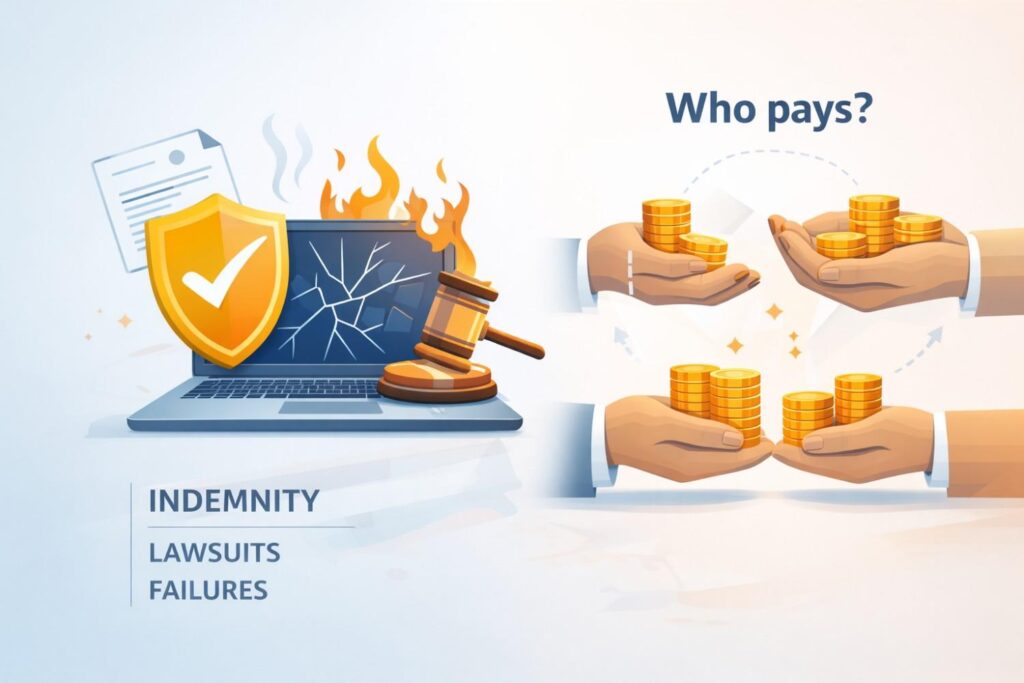
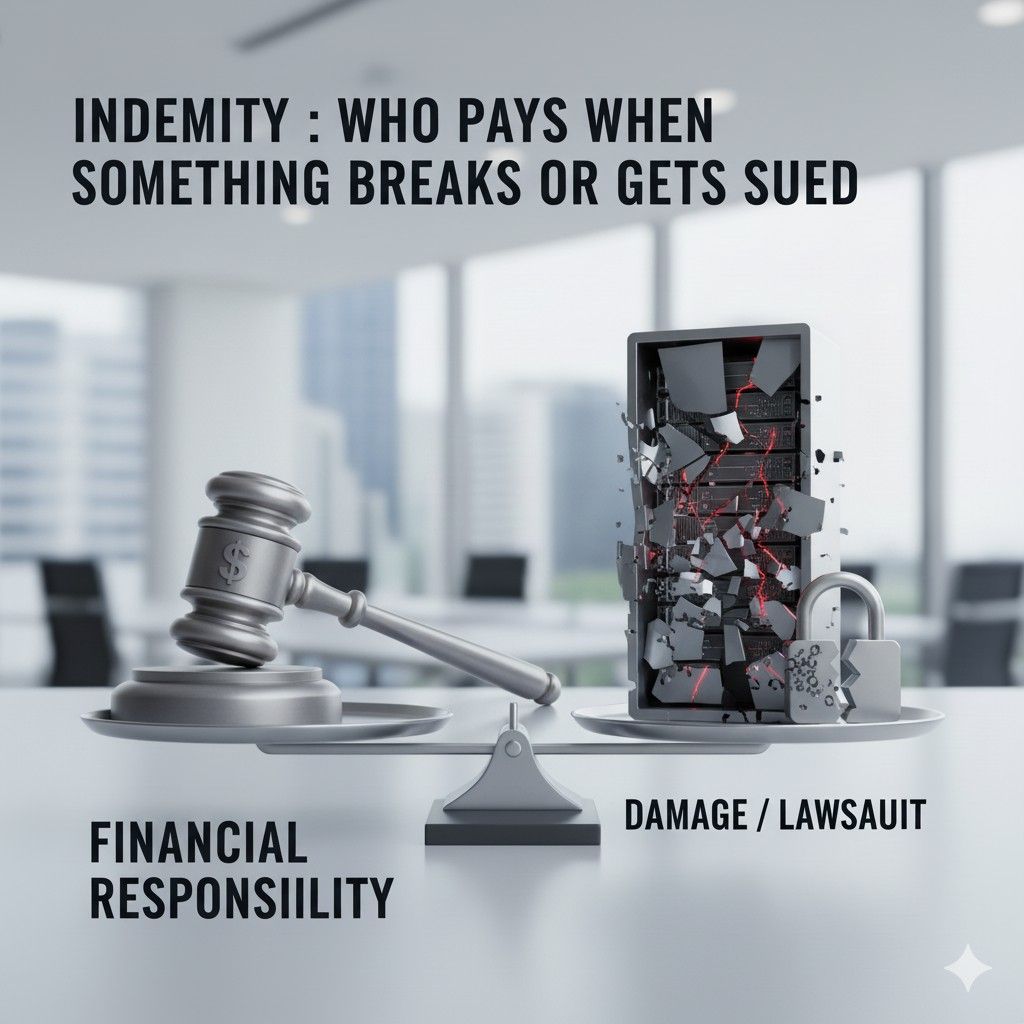
Indemnity: Who Pays When Something Breaks or Gets Sued
Indemnity is the moment when enterprise buyers stop talking about products and start talking about pain.
When this topic comes up, buyers are thinking about lawsuits, fines, broken contracts, and long email threads that no one wants to be part of.
They are not imagining that something will go wrong tomorrow. They are planning for the day it might.
For founders, indemnity often feels abstract and heavy. For buyers, it feels very real. Understanding this gap is critical if you want to keep deals moving without accepting risk that could sink your company.
Indemnity Is About Blame, Not Trust
Indemnity is not a question of whether buyers trust you. It is a question of who carries responsibility when trust is tested.
Large companies are built around clear lines of responsibility. When something fails, someone must own the problem. Indemnity clauses exist to draw that line before trouble starts.

If you approach indemnity emotionally, the conversation becomes tense. If you approach it structurally, the conversation becomes manageable.
Buyers Assume Problems Will Happen Eventually
Enterprise buyers do not assume perfection. They assume that over time, something will go wrong. This could be a data issue, an intellectual property claim, or a system failure.
Their goal is not to avoid problems entirely. Their goal is to avoid being alone when problems happen.
When you understand this, you stop trying to prove that nothing will ever break. Instead, you show how responsibility is handled when something does.
Intellectual Property Is the Core Fear
The most sensitive indemnity issue is intellectual property. Buyers worry that someone else could claim ownership of your technology and pull them into a dispute.
This fear is not theoretical. Many companies have been burned by unclear ownership in the past.
If your IP story is weak, indemnity discussions become aggressive. If your IP story is strong, indemnity discussions become narrower and calmer.
Clear patents, clean contributor agreements, and thoughtful protection reduce fear before lawyers ever get involved.
If you want to see how founders protect their core ideas without slowing down, you can learn more at https://powerpatent.com/how-it-works.
Unlimited Indemnity Can Be Dangerous
One of the biggest traps founders fall into is agreeing to broad or unlimited indemnity. In the moment, it feels like a checkbox to get the deal done.
In reality, unlimited indemnity can expose your company to risks far beyond your size or resources.
Enterprise buyers may ask for broad coverage by default. That does not mean it is non-negotiable. It means they are starting from their safest position.
Your job is to bring the conversation back to reason.
Narrowing the Scope Without Losing the Deal
Smart founders do not reject indemnity outright. They shape it.
They focus indemnity on areas they can actually control, such as ownership of their code or compliance with stated standards.
They avoid taking responsibility for how buyers use the product or combine it with other systems.
This approach shows maturity. Buyers respect founders who understand boundaries and explain them clearly.
Why Insurance Does Not Solve Everything
Some founders assume insurance will handle indemnity risk. Insurance can help, but it does not remove responsibility.
Buyers still want contractual clarity. Insurance policies change. Coverage has limits. Claims take time.
Indemnity clauses exist regardless of insurance. Treat them as a core part of your business foundation, not a side issue.
Indemnity Is a Reflection of Your Internal Discipline
How you handle indemnity questions tells buyers a lot about how you run your company.
If your answers are vague, buyers assume your internal processes are vague. If your answers are thoughtful, buyers assume your systems are thoughtful.
This perception affects not just legal review, but long-term partnership trust.
Preparation Turns Indemnity Into a Conversation
The worst time to think about indemnity is during contract review. The best time is before you ever send a proposal.
Founders who prepare early know what risks they can carry and which ones they cannot. This clarity keeps negotiations calm and focused.
Preparation also keeps you from agreeing to terms you regret later.
How Strong Foundations Reduce Indemnity Pressure
Buyers push harder on indemnity when they sense uncertainty. Clear documentation, clean IP ownership, and strong protection reduce that pressure.
Patents quietly help here. They show that ownership has been examined by real attorneys, not guessed at under pressure.
When buyers see this, they often narrow indemnity demands on their own.
If you want to build this kind of confidence into your company early, explore how PowerPatent helps teams protect what they build at https://powerpatent.com/how-it-works.
Indemnity Should Match the Relationship
Not all deals carry the same risk. A pilot is different from a full deployment. A limited use case is different from core infrastructure.
Founders who align indemnity with scope show strategic thinking. Buyers respond well to this alignment.
It signals that you understand the relationship, not just the contract.
Indemnity Is Easier When You Lead the Discussion
The strongest founders do not wait for buyers to bring up indemnity. They acknowledge it early and frame it clearly.
This leadership builds trust and reduces surprises. It positions you as a partner who understands enterprise realities.
When buyers feel guided, they move faster.
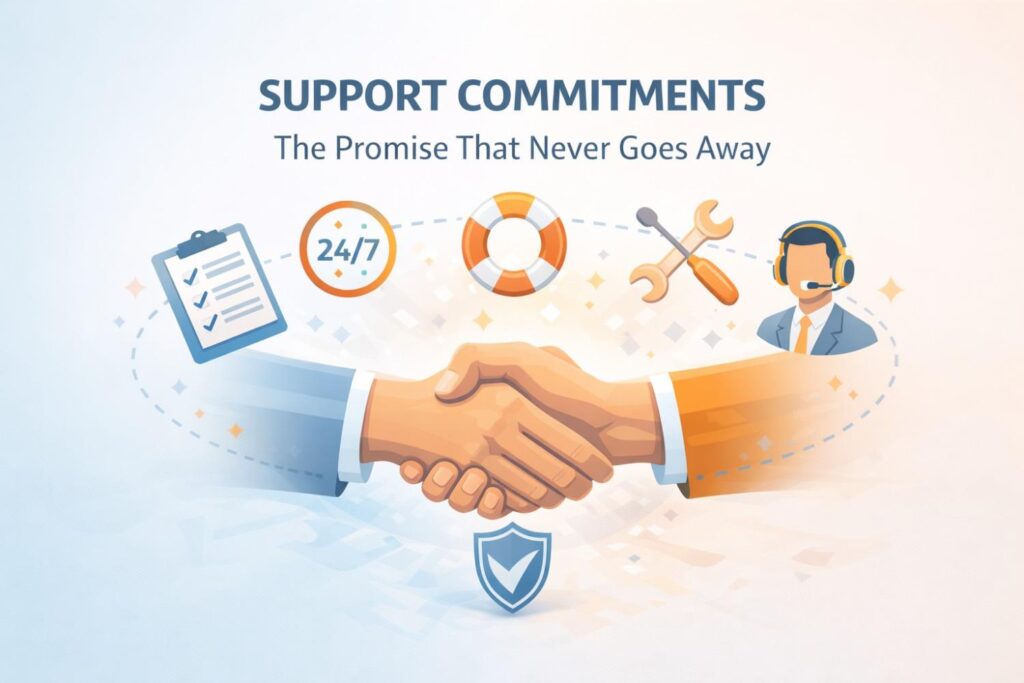
Support Commitments: The Promise That Never Goes Away
Support is the part of the deal that lives long after the excitement fades.
Enterprise buyers care about support because support is what they are left with when something breaks at the worst possible time. Sales decks disappear.
Roadmaps change. What remains is who answers the call and how fast problems get fixed.
Founders often treat support as an afterthought. Enterprise buyers treat it as proof of seriousness. The way you talk about support tells them whether you are building a product or building a company.
Support Is About Reliability, Not Friendliness
Buyers are not looking for nice replies. They are looking for predictable behavior.
They want to know that if an issue appears at night, during a launch, or under pressure, there is a clear process. They want to know someone owns the problem. They want to know how long they will wait.

Friendly tone helps, but structure matters more. Reliability beats charm every time.
Enterprise Buyers Assume Things Will Break
Just like with indemnity, buyers assume problems will happen eventually. Systems are complex. Environments change. Updates introduce risk.
Support commitments exist to remove panic from these moments. When buyers know what will happen next, stress stays lower.
Your job is not to promise perfection. Your job is to promise response and clarity.
Vague Support Promises Create Fear
When founders say things like we will do our best or we usually respond quickly, buyers hear uncertainty.
Uncertainty is uncomfortable inside large organizations. It creates internal risk discussions that slow deals down.
Clear support definitions calm these fears. Even if your resources are limited, clarity is better than ambition.
Support Is Tied to Internal Credibility
Inside an enterprise, buyers must justify their choice to others. Support terms become part of that justification.
If support feels weak or unclear, buyers fear blame later. They imagine meetings where they have to explain why help was slow or missing.
Strong support language protects your buyer internally. This makes them more confident choosing you.
Overcommitting on Support Is a Silent Killer
Many startups promise more support than they can deliver. At first, it feels like a necessary trade.
Later, it drains the team. Engineers get pulled into emergencies. Roadmaps stall. Morale drops.
Support commitments should match your real capacity. Buyers respect honest limits more than broken promises.
Support Is Not Just Response Time
Response time matters, but it is not the full picture.
Buyers also care about escalation, communication, and resolution ownership. They want to know that issues do not disappear into inboxes.
Explaining how problems move through your system builds confidence. It shows that support is part of your operation, not a side task.
Support Expectations Grow With Dependency
The more a buyer relies on your product, the more they expect from support. This shift often happens faster than founders expect.
A tool that starts as optional can become critical in months. Support terms signed early suddenly feel small.
Smart founders plan for this growth. They design support commitments that scale with usage or contract size.
Why Support and IP Are Quietly Linked
Buyers worry about support because they worry about dependency. Dependency raises questions about ownership and continuity.
If support disappears, what options remain? Can they maintain anything on their own? Do they have rights or visibility?
Strong intellectual property foundations reduce this fear. When buyers know ownership is clear and protected, support risk feels lower.
This is another reason patents matter in enterprise conversations. They signal long-term thinking and stability.
If you want to see how modern teams protect their technology while staying fast, take a look at how PowerPatent works at https://powerpatent.com/how-it-works.
Support Is a Long-Term Signal
Support commitments outlast most other promises. Features change. Pricing adjusts. Support obligations stay.
Buyers know this. That is why they read support sections carefully.
When you treat support seriously, buyers assume you will treat the relationship seriously.
How to Frame Support Without Scaring Yourself
You do not need a massive support team to sell to enterprises. You need clarity.
Frame support around communication, response, and responsibility. Be clear about hours, channels, and escalation.
This framing reduces fear on both sides.
Support Is Where Trust Gets Tested
When things go wrong, buyers remember how you responded. Support moments define reputation more than launches ever will.
This is why buyers ask about support early. They want a preview of future behavior.
If you approach support thoughtfully, you earn trust before it is tested.
Preparation Makes Support a Strength
The best founders think about support before contracts appear. They align internally on what they can promise and how they will deliver.
This alignment prevents last-minute stress and keeps negotiations calm.
Preparation turns support from a risk into a selling point.
Support Feels Safer When Foundations Are Strong
Clear ownership, protected technology, and documented systems make support easier. They reduce chaos during issues.
Strong IP foundations play a role here too. They create confidence that the product is stable and controlled.
If you want to build that confidence early, explore how PowerPatent helps founders protect what they build at https://powerpatent.com/how-it-works.
Wrapping It Up
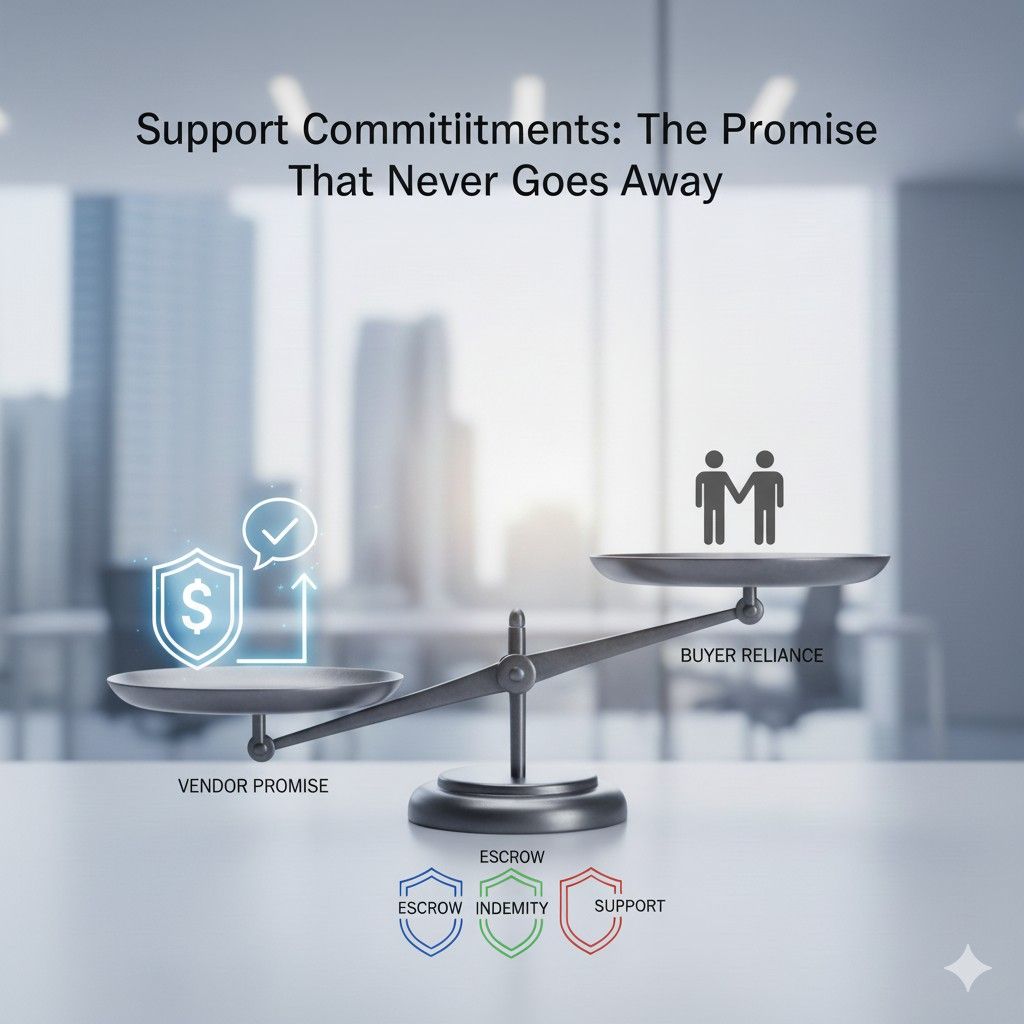
Enterprise buyers are not trying to slow you down. They are trying to protect themselves from future regret. Escrow, indemnity, and support are not random hurdles. They are three ways buyers ask the same question from different angles: can we trust this company over time?
Founders who understand this stop reacting and start leading. They do not wait for legal teams to define the relationship. They shape it early, with calm answers and clear limits.
Leave a Reply