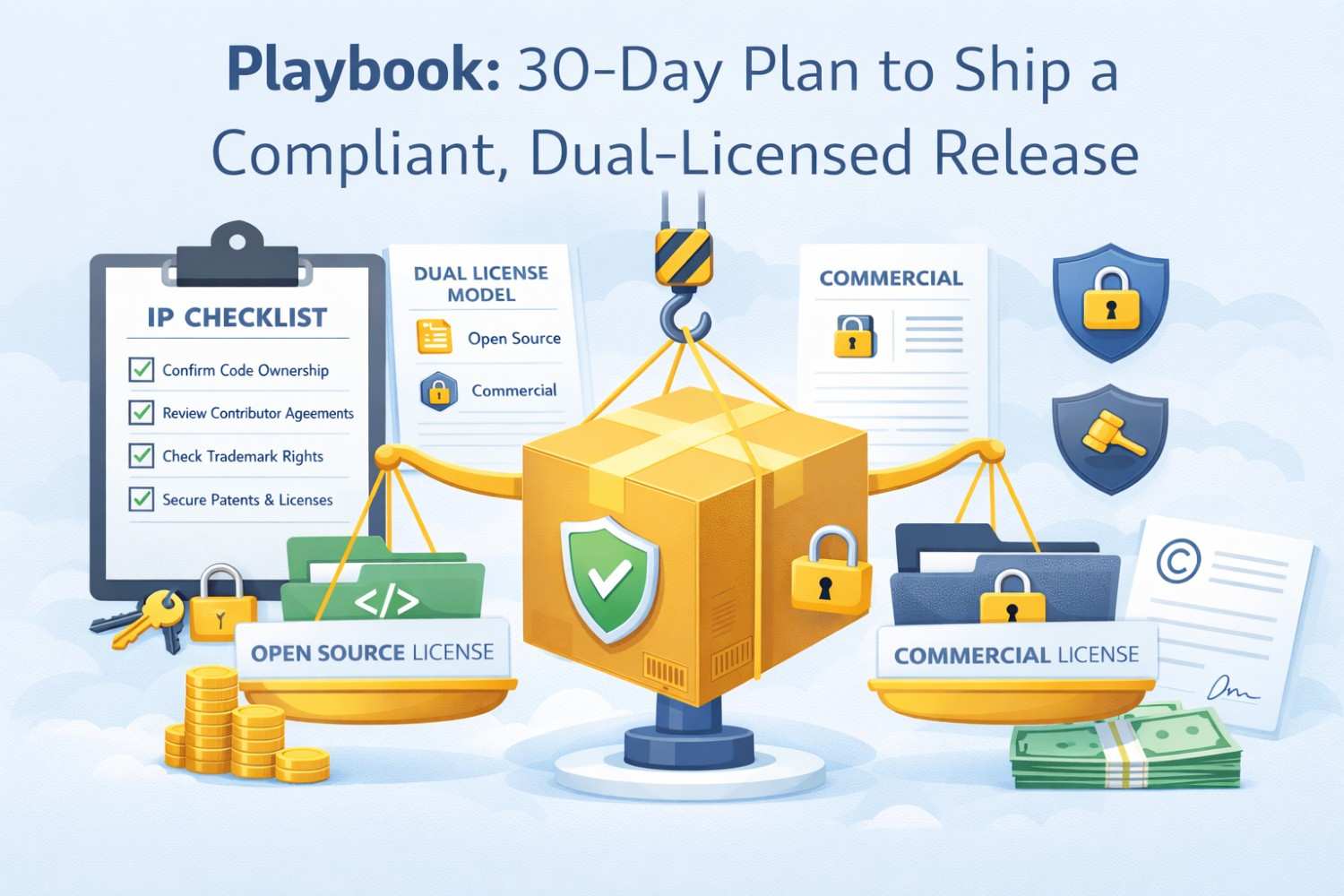
Shipping a dual-licensed release sounds hard until it is not.
Most founders wait too long. They build fast, push code, grow users, and only later realize that licenses, ownership, and patents can quietly break everything they worked for. This playbook exists so that does not happen to you. In the next thirty days, you can ship a release that is clean, safe, and ready for both open and commercial use. You do not need a big legal team. You do not need months of meetings. You need a clear plan, steady action, and the right tools backing you up.
Day 1–7: Lock Down Ownership Before You Ship Anything
The first seven days decide whether your release stands on solid ground or shaky ground. This is the quiet work that no one sees but everyone feels later. If ownership is unclear, nothing else matters. Licenses fail.
Deals slow down. Buyers walk. Fixing it later is painful and expensive. Doing it now is simple and smart.
This week is not about shipping features. It is about making sure you truly own what you are about to share with the world. Ownership is the root of compliance. Without it, there is no such thing as a safe dual-licensed release.
Why ownership comes before code
Before touching files or license text, you need to understand one simple truth. You cannot license what you do not own. Many founders assume they own everything because they started the repo.
That assumption breaks fast when contributors, contractors, or old code enter the picture.
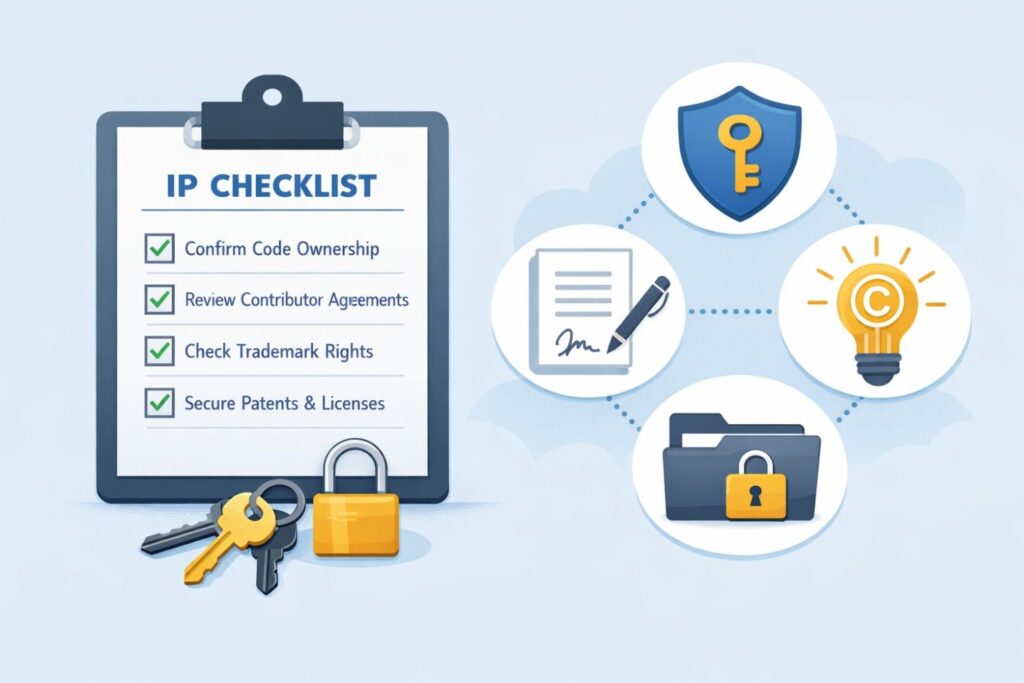
Ownership is not a feeling. It is a paper trail. This week is about building that trail in a way that is clean and future-proof.
Mapping what exists today
Start by slowing down and taking a clear look at what already exists. Your code did not appear out of nowhere. It came from commits, ideas, experiments, and sometimes borrowed pieces.
You need to know what is yours, what came from others, and what might still be unclear.
Spend time reading your own repository like an outsider would. Look at commit history. Look at pull requests. Look at comments.
Pay attention to names you do not recognize or old commits made before the company existed. This is not busy work. This is how you avoid hidden problems.
Founder code versus company code
Many startups begin before a company is formed. Code is written on nights and weekends, sometimes under a personal GitHub account. That code does not automatically belong to the company later.
It belongs to the person who wrote it unless something changes that.
If your product started this way, you need to clearly move ownership from individuals to the company.
This usually means formal assignment agreements. It is not dramatic. It is normal. It is how serious companies operate.
Do this early, while everyone is aligned and excited. Waiting creates tension that does not need to exist.
Contractors and the quiet risk they bring
Contractors are one of the most common ownership risks. You pay someone. They build something. You assume it is yours. In many places, that assumption is wrong.
Unless a contract clearly says the company owns the work, the contractor may still hold rights. This becomes a real issue during dual licensing because you are offering rights to others that you may not fully control.
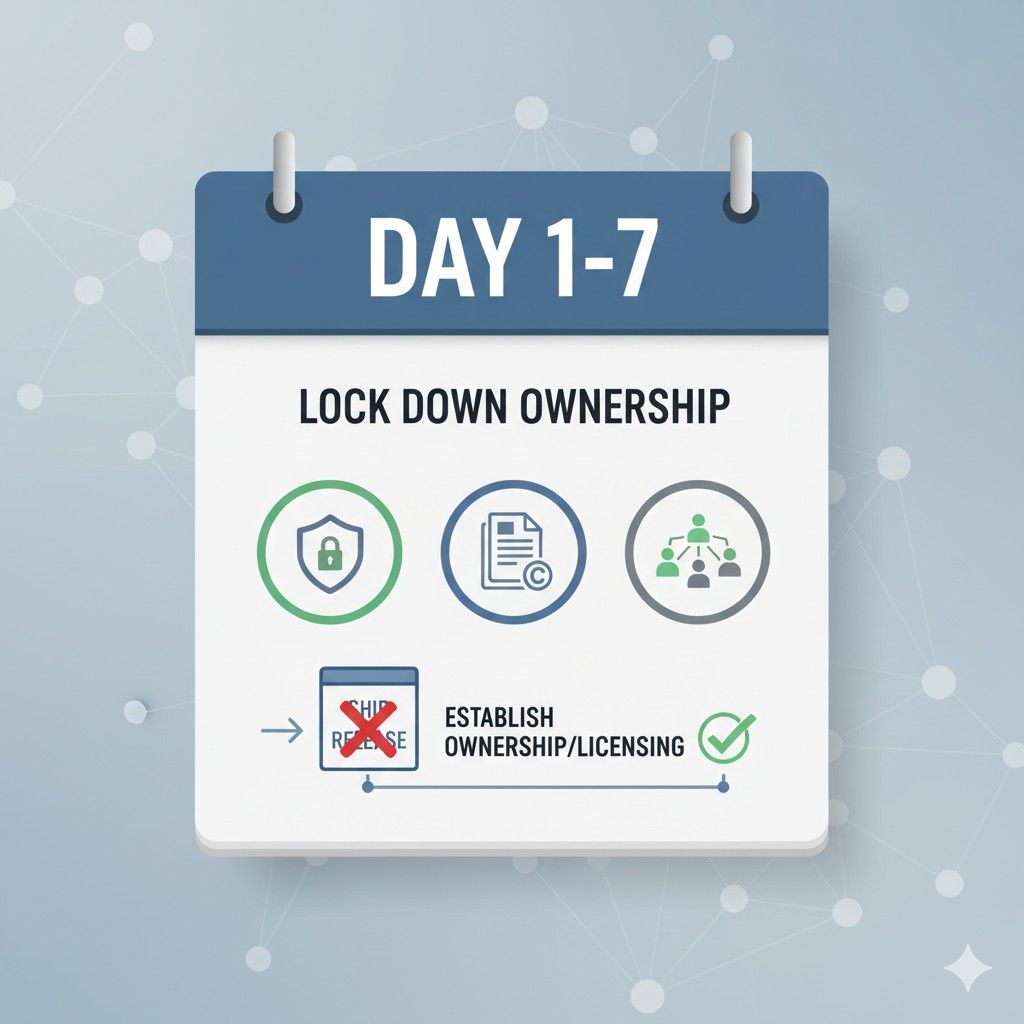
Review every contractor agreement tied to your code. If something is missing or unclear, fix it now. Most contractors expect this and will not push back when approached professionally.
Contributors and open collaboration
If outside contributors have helped your project, you need clarity on their role. Open source energy is powerful, but it must be guided. Without clear rules, contributions can muddy ownership fast.
Contributor agreements are how mature projects stay clean. They make sure contributions can be used under both licenses without future disputes. They protect contributors and the company at the same time.
Set this up early, even if contributions are small today. The earlier the rules exist, the easier it is for people to follow them.
Separating ideas from implementation
Ownership is not only about code. It is also about ideas. The core logic, the system design, the novel approach that makes your product special. These things are often the real value of your company.
This is where many founders miss an opportunity. They focus only on licenses and forget protection.
A dual-licensed release can expose ideas faster than you expect. That does not mean you should hide them. It means you should protect them properly.
This is why many teams start their patent strategy during this week. PowerPatent exists for this exact moment.
It lets you capture what makes your system unique without slowing down shipping. You can explore the process at https://powerpatent.com/how-it-works.
Aligning the team on ownership rules
Ownership work can feel sensitive if handled poorly. The key is clarity and tone. This is not about mistrust. It is about building something that lasts.
Talk openly with your team about why this matters. Explain that clean ownership protects everyone. It makes future funding easier. It makes acquisitions smoother. It keeps the company strong.
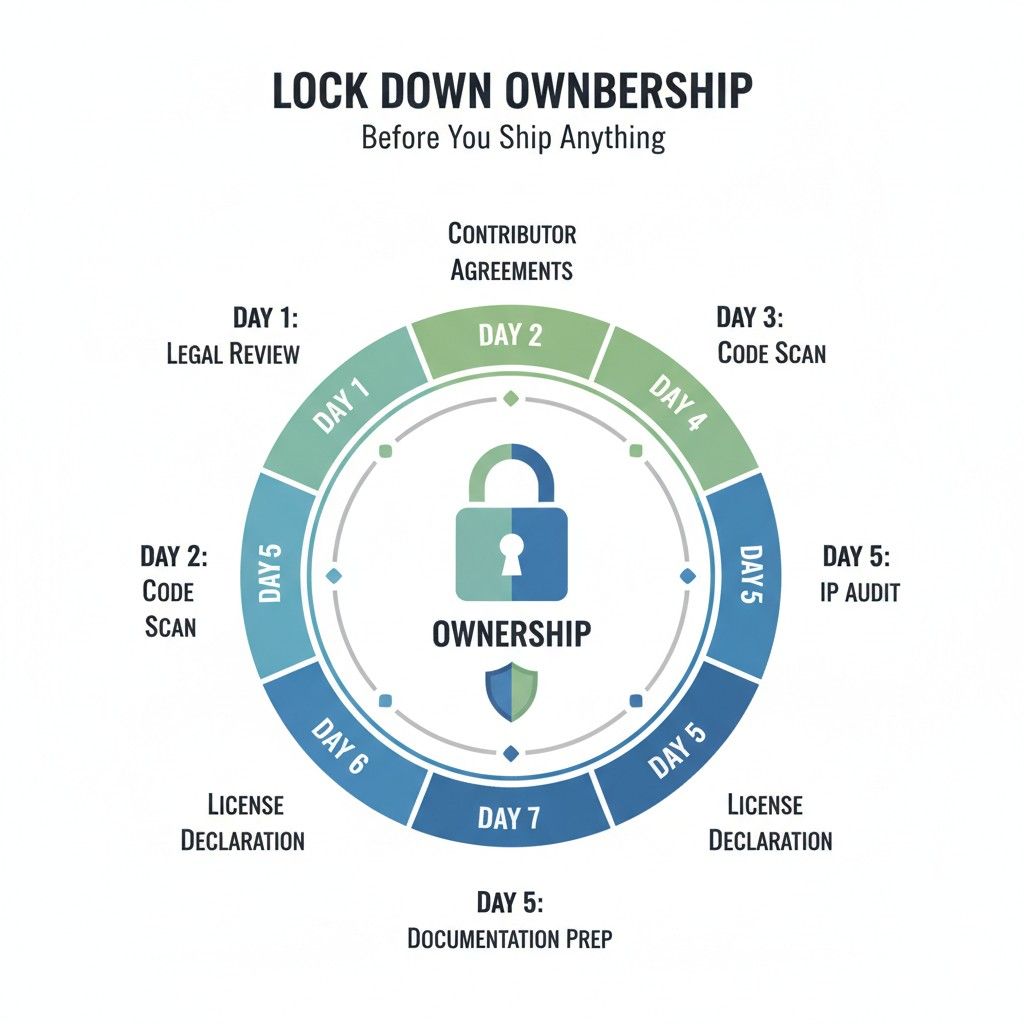
When people understand the why, the how becomes simple.
Cleaning up old dependencies
During this week, also look at what your code depends on. Libraries, frameworks, snippets, and tools all come with their own rules. Some licenses allow dual licensing easily. Others do not.
You do not need to remove everything. You need to understand what you are relying on and whether it fits your plan. If something creates friction, it is better to swap it out now than after users rely on it.
This step often uncovers quick wins. Small changes now can remove big risks later.
Creating a single source of truth
As you lock down ownership, document it in one place. This does not need to be fancy. It needs to be clear. A simple internal record that explains who owns what and why is enough.
This becomes a reference point for future hires, contributors, and partners. It saves time and prevents confusion. Most importantly, it gives you confidence when you ship.
Setting the tone for the next 23 days
By the end of day seven, you should feel calmer, not stressed. You should know that what you are about to release truly belongs to the company. You should know that you have the right to license it in more than one way.
This clarity changes how the rest of the month feels. Decisions become easier. Conversations become faster. You stop guessing and start acting with purpose.
If you want this week to also strengthen your long-term protection, this is the right time to bring patents into the picture. PowerPatent helps founders do this without breaking momentum.
The process is built for speed and clarity, just like this playbook. You can see how it works at https://powerpatent.com/how-it-works.
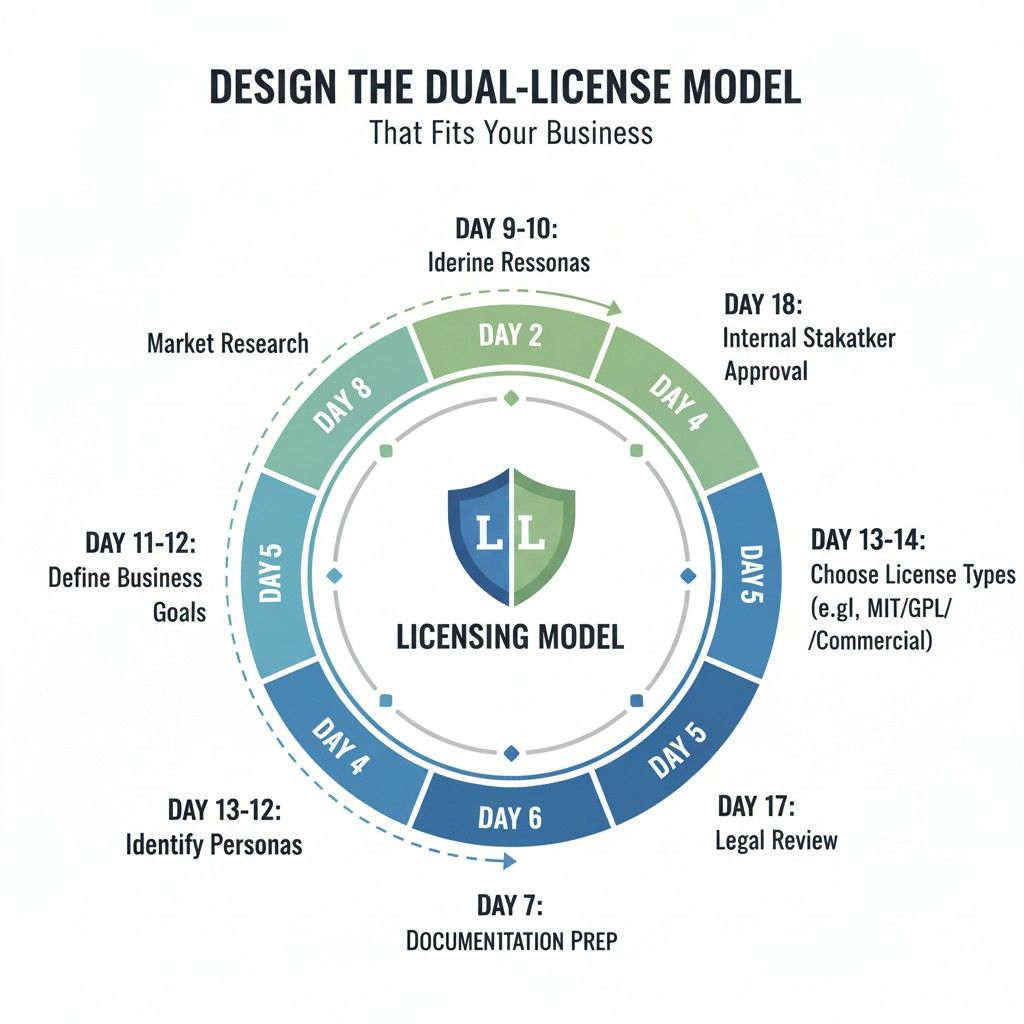
Day 8–18: Design the Dual-License Model That Fits Your Business
Once ownership is clear, the work shifts from cleanup to design. This is the phase where most founders either gain leverage or create long-term pain. Dual licensing is not just a legal choice.
It is a business decision that shapes how users see you, how customers pay you, and how partners trust you.
These days are about intention. You are deciding how open you want to be, how you want money to flow, and how much control you want to keep as you grow.
Understanding why dual licensing exists at all
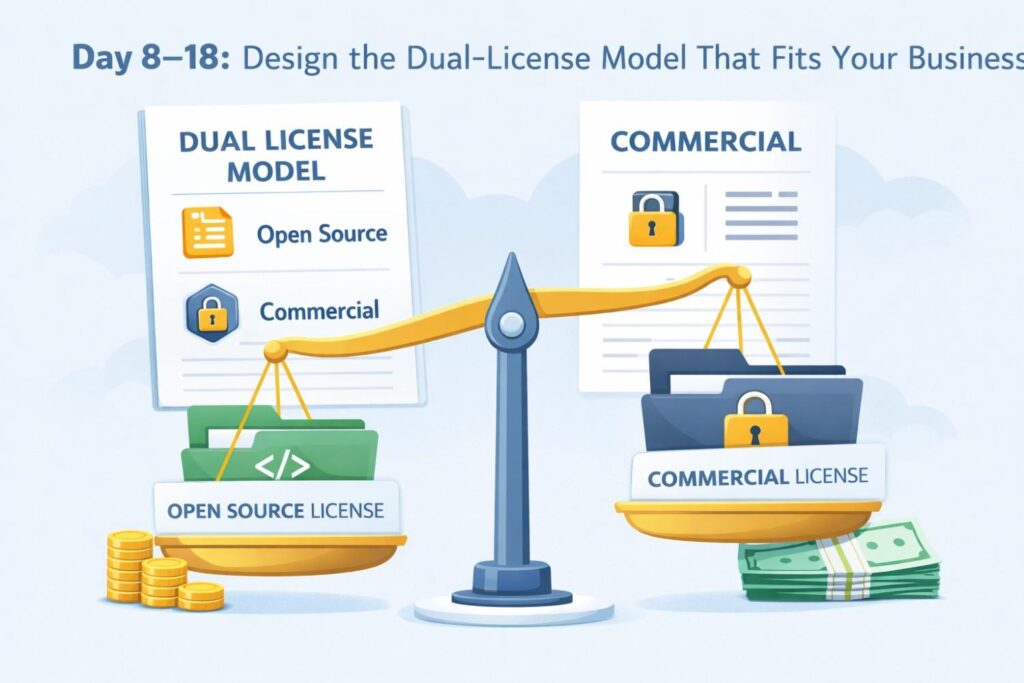
Dual licensing is not about pleasing everyone. It exists because one size rarely fits all. Some users want freedom. Others want certainty. Some want to tinker. Others want to build on top of you and sell.
A smart dual-license setup gives each group what they need without forcing you to compromise your business. But that only works if the model matches how your product creates value.
Matching the license to your real users
Before writing or choosing any license, step back and think about who actually uses your product. Not who you hope will use it someday, but who is using it or will use it next.
Are they developers experimenting on weekends, or companies embedding your tech into revenue products? These groups have very different needs and fears. Your licensing should reflect that reality.
When founders skip this step, they end up with licenses that look good on paper but confuse everyone in practice.
The open side of the license
The open license is usually the front door. It is how people discover you, trust you, and start building. This side should feel generous but not careless.
Clarity matters more than cleverness here. Users should instantly understand what they can do and what they cannot. Confusion slows adoption. Fear kills it.
The goal is simple. Let people learn, test, and build without friction, while protecting the parts that truly power your business.
The commercial side of the license
The commercial license is where value turns into revenue. This is not about being restrictive. It is about being fair.
Companies that depend on your software want certainty. They want to know they can ship, sell, and scale without surprises. A clear commercial license gives them that confidence.
Design this license with empathy. Think about what a reasonable buyer would expect. Simple terms close faster than complex ones.
Avoiding license overlap and gray zones
One of the biggest mistakes founders make is leaving gray zones between licenses. If users are not sure which license applies, they hesitate or misuse the software.
Your job during this phase is to remove ambiguity. The boundary between open and commercial use should be obvious, even to someone skimming the page.
When in doubt, simplify. Fewer rules that are clear beat many rules that are vague.
Aligning licensing with your roadmap
Licensing should support where your product is going, not just where it is today. If your roadmap includes enterprise features, hosted offerings, or partnerships, your license needs to leave room for that.
Think one year ahead. Think two years ahead. You do not need to predict everything, but you should avoid locking yourself into a corner.
This is where strategic thinking pays off. Small wording choices today can enable entire business lines later.
Handling community trust carefully
Open users are smart. They can tell when a company is being honest versus when it is baiting them. Your dual-license approach should feel respectful.
Explain your intent clearly. Share why you chose this model. When people understand that openness and sustainability can coexist, they are more likely to support you.
Trust compounds over time. It is built during moments like this.
Where patents quietly strengthen licensing
Licenses control use. Patents protect ideas. Together, they form a strong moat when used correctly.
During this phase, many teams realize that their license alone does not fully protect what makes them unique. This is often when patent planning moves from “someday” to “now.”
PowerPatent is designed for this exact moment. It lets you capture core ideas while you are already thinking deeply about how your technology is used. This alignment saves time and avoids rework later.
You can see how founders do this at https://powerpatent.com/how-it-works.
Writing for humans, not lawyers
License text does not have to feel cold or scary. While precision matters, tone matters too. Clear explanations around the license help users feel safe and informed.
Many successful projects add plain-language explanations alongside formal terms. This reduces questions and support burden while improving adoption.
Remember, your license is part of your product experience.
Testing your model before locking it in
Before finalizing anything, run your model through real scenarios. Imagine a startup using your open license. Imagine a large company embedding your software. Imagine a cloud provider offering it as a service.
Ask yourself whether each case leads to an outcome you are comfortable with. If not, adjust now. This mental testing often reveals gaps that are easy to fix early.
Setting expectations internally
Make sure your team understands the licensing model too. Sales, support, and engineering should all be aligned on what is allowed and what is not.
Misalignment inside the company leads to mixed messages outside. That erodes trust quickly.
A short internal walkthrough can prevent months of confusion.
Ending day eighteen with confidence
By the end of day eighteen, your dual-license model should feel intentional and solid. You should know who it is for, how it supports your business, and why it exists.
You are no longer guessing. You are designing.

This confidence will show when you communicate the release to the world.
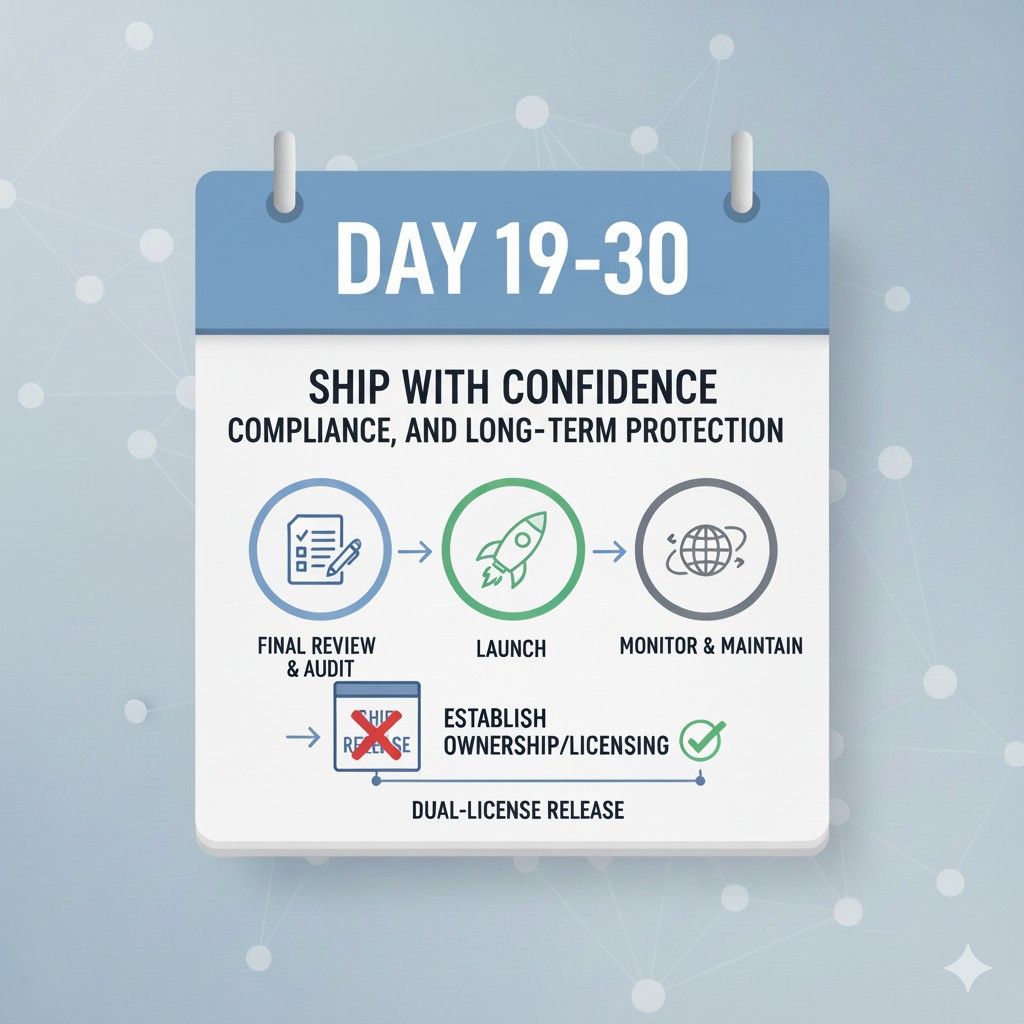
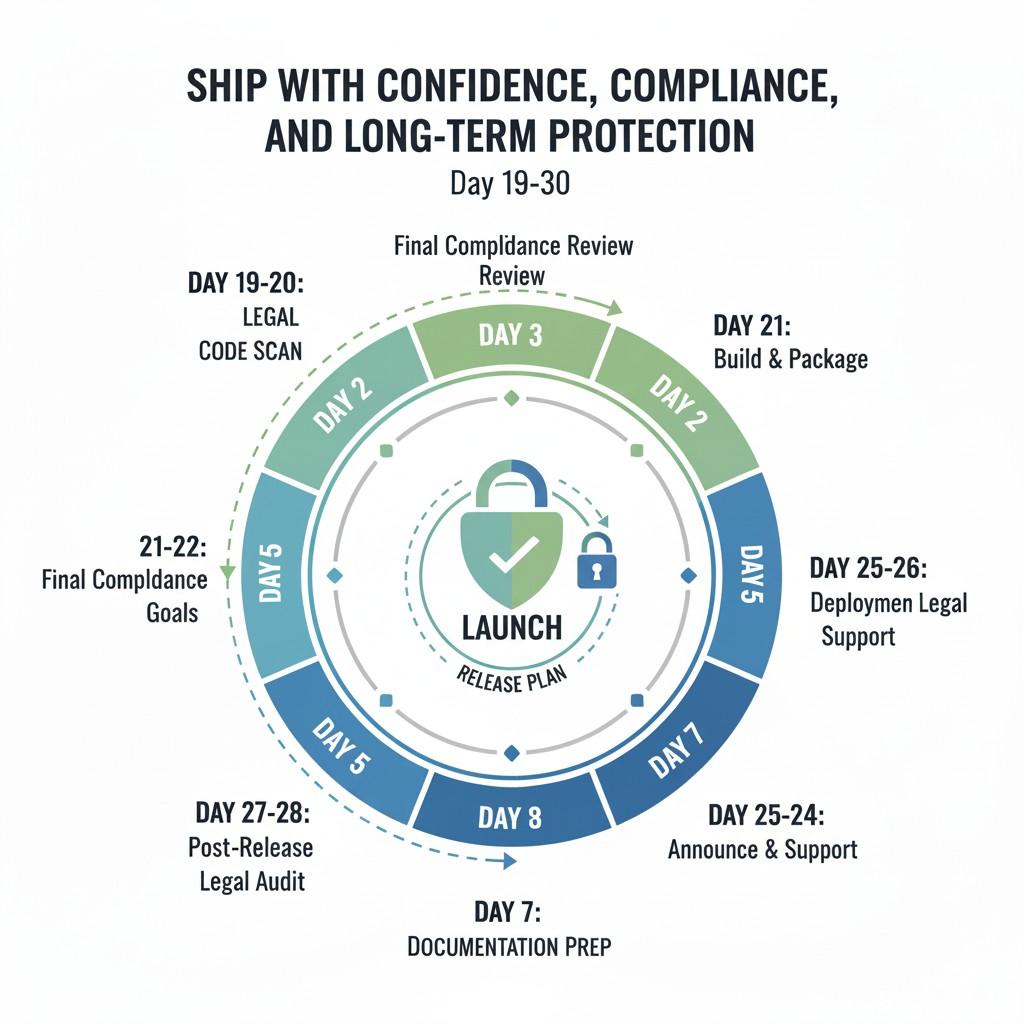
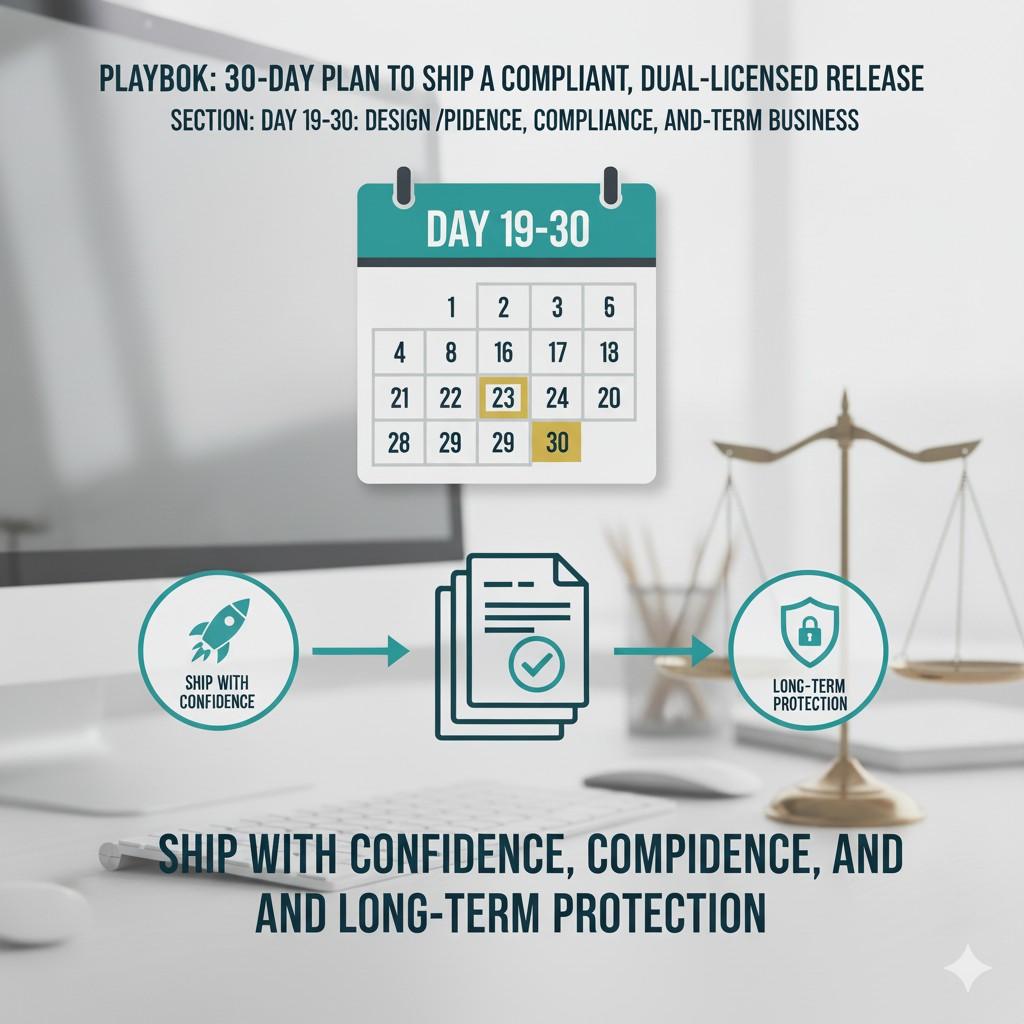
Day 19–30: Ship With Confidence, Compliance, and Long-Term Protection
The final stretch is where preparation turns into momentum. At this point, ownership is clean and the dual-license model is intentional. Now the focus shifts to execution.
These days are about shipping without fear, communicating clearly, and setting the release up to work not just today, but years from now.
Many teams rush this part. The smart ones slow down just enough to get it right.
Turning decisions into real artifacts
Strategy only matters if it shows up in the product. During this phase, everything you decided earlier becomes visible. License files, headers, documentation, and messaging all need to reflect the same truth.
Consistency is critical. If your repo says one thing, your website says another, and your docs say something else, trust breaks. Spend time aligning every surface where users interact with your project.
This is not polish. This is credibility.
Making the license easy to find and easy to understand
Users should never have to hunt for license details. If they do, they assume the worst or walk away. Place the license where it is expected and explain it where it is helpful.
Clear placement signals confidence. It tells users you are not hiding anything. It also reduces support questions before they start.
When people understand the rules, they are more likely to follow them.
Updating the repository with intent
Your repository is often the first impression. This is where developers decide whether to trust you. Make sure the license files are current, accurate, and aligned with your dual-license model.
Headers in key files help reinforce clarity. They quietly communicate how the code can be used without forcing users to read long documents.
Small touches here have an outsized impact.
Documenting the “why” behind the model
People accept rules more easily when they understand the reason behind them. A short explanation of why you chose dual licensing can change the entire tone of the conversation.
This is not a legal essay. It is a human explanation. You are building something valuable. You want to share it. You also want to sustain it.
Most reasonable users respect that honesty.
Preparing your team for external questions
Once you ship, questions will come. Some will be thoughtful. Some will be emotional. Some will be confused. This is normal.
Prepare simple, consistent answers ahead of time. When the team responds with clarity instead of hesitation, trust grows instead of erodes.
This preparation takes hours now and saves weeks later.
Aligning compliance with growth
Compliance should not slow you down. Done right, it becomes invisible infrastructure that supports growth. This is the moment to double-check that nothing in your release creates friction for future deals or partnerships.
Think about how a buyer or investor would review this release. Clean licensing and clear ownership reduce diligence time dramatically. That alone can move timelines in your favor.
Locking in protection before exposure scales
As you ship, visibility increases. More eyes see your work. More people understand your system. This is exciting, but it also means ideas travel fast.
This is why many founders finalize patent filings during this window. Not after traction. Not after press. Now.
PowerPatent is built for founders who are shipping and scaling at the same time. It lets you protect core ideas without slowing releases or drowning in process.
Teams use it during moments like this because the timing matters. You can see how it works at https://powerpatent.com/how-it-works.
Communicating the release externally
When you announce the release, lead with confidence. You are not apologizing for your license. You are explaining it.
Be direct. Be calm. Be clear. The tone you set will shape how the community responds.
Founders who speak plainly and confidently tend to attract the right users and filter out the wrong ones naturally.
Watching early signals closely
After release, pay attention. Not just to downloads or stars, but to questions and feedback. These signals tell you whether your model is working as intended.
If confusion appears, clarify quickly. If friction shows up, understand it. Small adjustments early prevent bigger problems later.
This is iteration, not failure.
Creating a repeatable release process
The goal is not just one clean release. The goal is a system you can reuse. Document what worked, what was hard, and what you would change next time.
This turns a stressful one-time effort into a repeatable advantage. Teams that do this ship faster and with less anxiety every time.
Ending day thirty with leverage
By day thirty, you should feel something rare. Control.
You know what you own. You know how it can be used. You know how it supports your business. You are not guessing. You are operating from clarity.
This is what compliant, dual-licensed releases are really about. Not rules. Not paperwork. Leverage.
If you want to keep building with that same clarity and protect what truly makes your product different, PowerPatent exists to support you as you grow.
It is designed for founders who move fast and think long-term. You can explore the process at https://powerpatent.com/how-it-works.
Wrapping It Up
Shipping a compliant, dual-licensed release is not about slowing down. It is about removing future drag before it shows up. The work you do in these thirty days saves months of cleanup later. More importantly, it protects your ability to keep building without second-guessing every decision.
Founders who skip this work often do not notice the cost right away. It shows up later during fundraising, partnerships, acquisitions, or platform shifts. By then, the fixes are harder, slower, and far more expensive. Doing it early is not cautious. It is strategic.
Leave a Reply