
Getting your patent filed should feel clear, calm, and under your control. Not confusing. Not slow. And definitely not scary. This guide is written to walk you through one of the most misunderstood parts of the patent process: customer numbers and practitioner accounts. These sound complex, but they are not. Once you understand them, you gain speed, visibility, and confidence.
What a Customer Number Really Is (And Why It Matters More Than You Think)
A customer number is one of those things that sounds small but quietly controls everything behind the scenes. Many founders skip over it because it feels administrative. That is a mistake.
This single setup step decides who has control, who sees what, and how smoothly your patent process runs months or even years later.
When done right, it gives your business leverage and clarity. When done wrong, it creates confusion that is painful to unwind.
This section breaks down what a customer number actually does, how it fits into your patent strategy, and how smart companies use it to stay in control as they grow.
The Real Purpose of a Customer Number
At its core, a customer number is your identity inside the patent system. It tells the patent office who owns the application, who should receive official notices, and where all communication should go.
Think of it as the master key that connects your company to your patents.
For businesses, this matters because patents are long-lived assets. They outlast employees, law firms, and even early versions of your company.
The customer number becomes the stable anchor that keeps ownership and records clean over time.
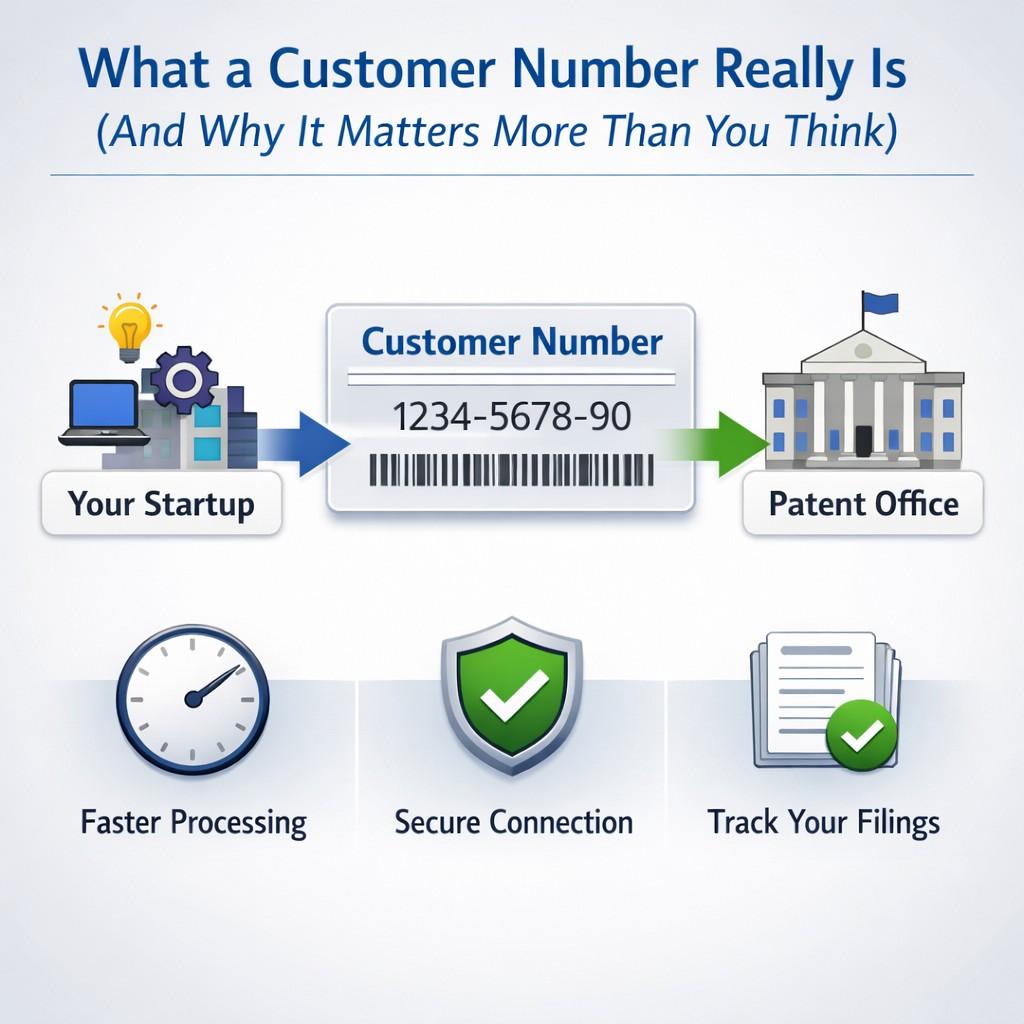
A strong setup here means that even if people change, your company stays firmly in charge.
Why Businesses Should Treat This as a Strategic Asset
Many startups treat patents as paperwork. Strong businesses treat them as infrastructure. The customer number sits at the center of that infrastructure.
When your customer number is set up correctly, your company controls correspondence, fee notices, and status updates directly. You are not relying on someone else to forward important information.
This reduces risk and gives leadership direct visibility into what is happening with valuable IP.
The most strategic companies set this up early, even before filing, so nothing ever lives only in a third party’s inbox.
How Ownership Clarity Starts Here
Ownership disputes are rare at the start and common later. A customer number helps prevent problems before they appear.
When your company is clearly tied to the customer number, there is less room for confusion about who owns what. This becomes critical during fundraising, acquisitions, or partnerships, when investors look closely at your IP trail.
Clean ownership records build trust. Messy records slow deals down. This setup quietly supports future growth.
Customer Numbers and Team Changes
Startups change fast. Engineers leave. Founders shift roles. Outside counsel may rotate.
Your customer number should not depend on any one person. It should be tied to the business itself. That way, changes in the team do not create gaps in access or missing information.
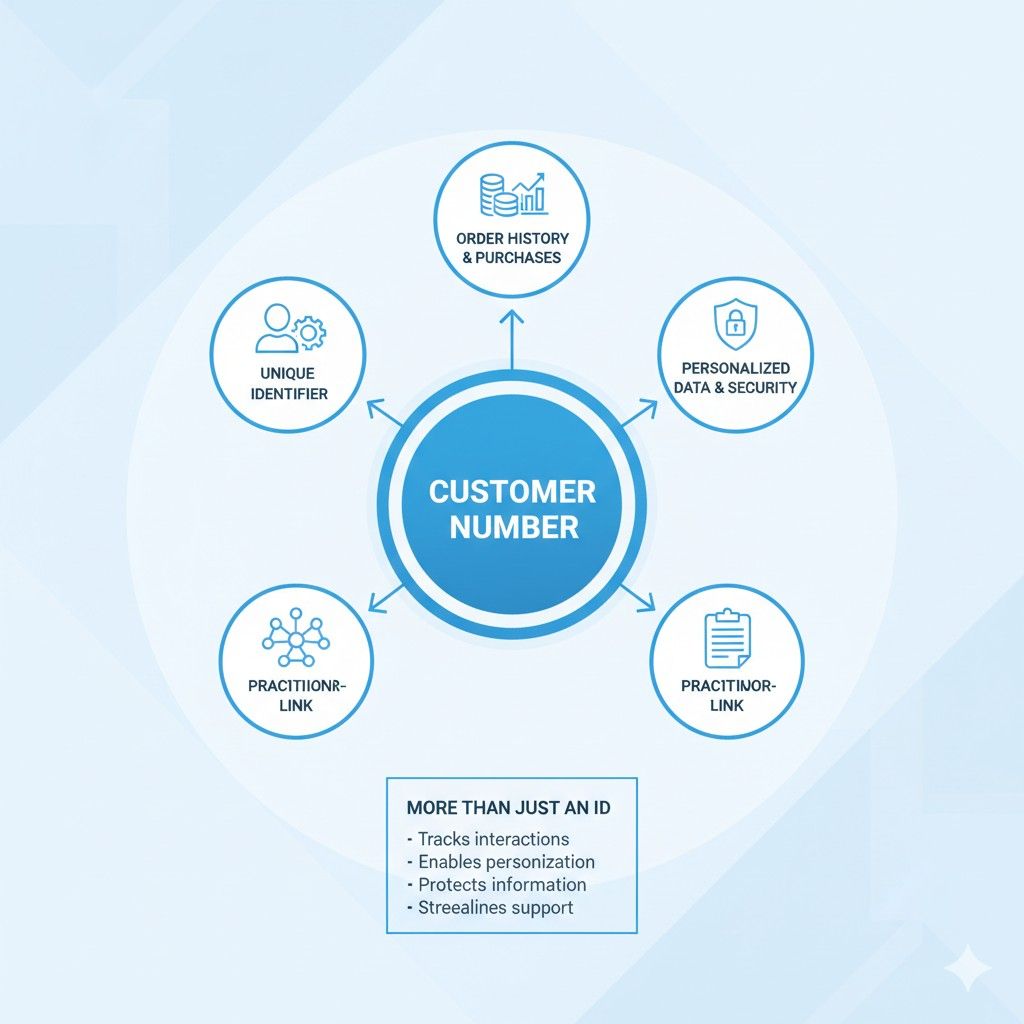
Smart companies review this setup as soon as they hire or lose key people, making sure the company remains the central point of control.
How This Impacts Speed
Speed is one of the biggest advantages modern startups have. A poorly set up customer number slows things down in ways you may not notice right away.
Missed notices can lead to late fees or rushed decisions. Delays in communication can push filings back. All of this costs time and money.
When your customer number is correct and actively managed, everything moves faster. Decisions are based on real-time information, not forwarded emails or partial updates.
The Hidden Cost of Getting This Wrong
Most founders only learn about customer numbers after something breaks. A missed deadline. A lost notice. A question from an investor that is hard to answer quickly.
Fixing this later often means extra forms, delays, and sometimes legal cleanup. These costs rarely show up on a budget but they drain focus and energy.
Setting it up right once is far cheaper than repairing it later.
How PowerPatent Approaches Customer Numbers
PowerPatent treats the customer number as a foundation, not a checkbox. The system is designed to help founders establish this correctly from the start, with real attorneys overseeing the process and software keeping everything organized.
This means your company stays in control while still moving fast. You do not need to learn the patent office’s language or processes. PowerPatent handles the complexity while keeping ownership clear and visible to you.
If you want to see how this fits into the full filing flow, you can explore it here: https://powerpatent.com/how-it-works
Practical Advice for Business Leaders
If you are building a serious company, you should know where your customer number lives, who controls it, and how it is used. You should be able to answer these questions without digging through old emails.
Treat this setup like you would treat access to your bank account or source code repository. It deserves the same level of care and review.
Strong IP protection starts with simple, quiet decisions like this one.
Looking Ahead
Once your customer number is in place, everything else becomes easier. Practitioner accounts, filings, updates, and long-term management all build on this base.
This is why the smartest founders handle it early, cleanly, and with systems designed for modern businesses.

If you want a faster, safer way to do this without slowing your build, PowerPatent was built for exactly that. You can learn more at https://powerpatent.com/how-it-works
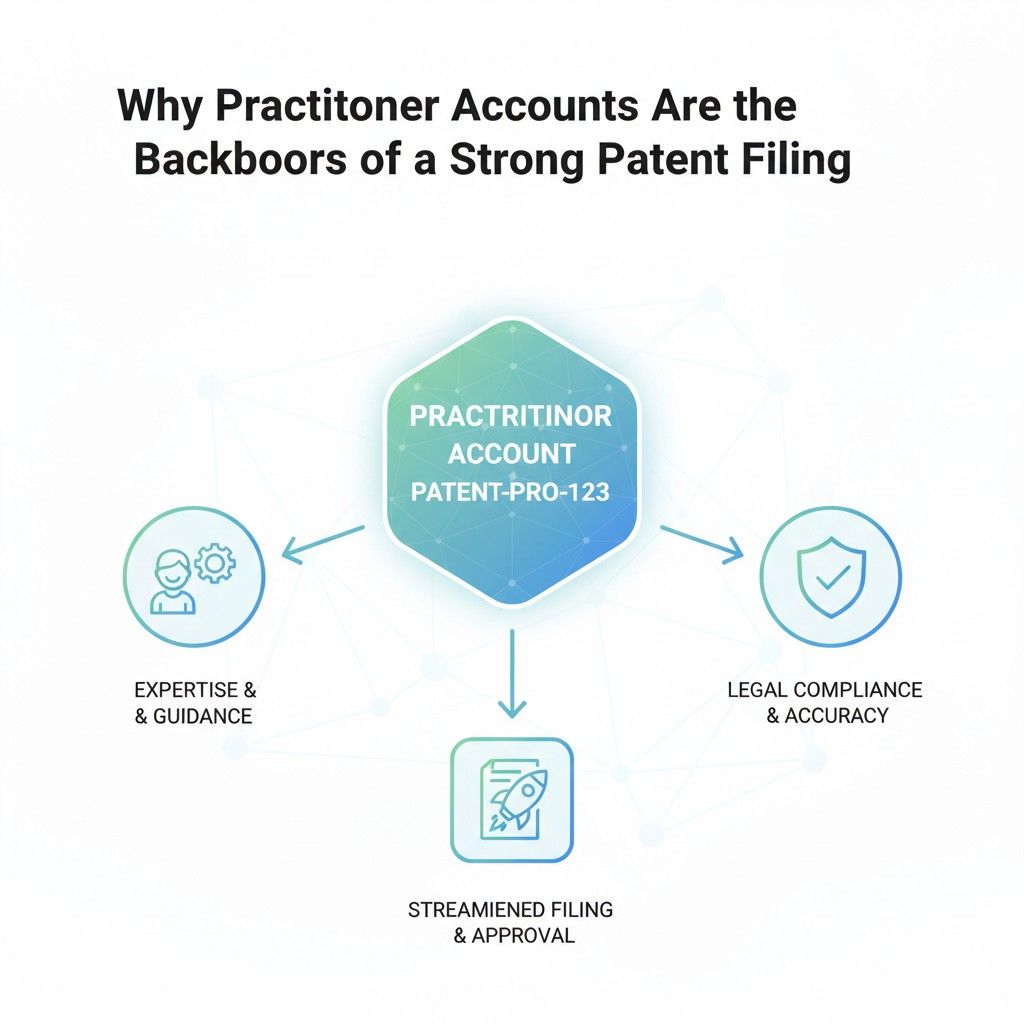
Why Practitioner Accounts Are the Backbone of a Strong Patent Filing
A patent filing is only as strong as the system managing it. Many founders focus on what is being filed and forget to think about who is allowed to act on their behalf.
That is where practitioner accounts come in. This is not about paperwork. This is about authority, accuracy, and long-term strength.
A practitioner account defines who can speak for your company inside the patent system and how cleanly that communication flows.
This section explains why practitioner accounts matter so much, how they protect your business, and how smart companies use them to avoid silent risks that can weaken an otherwise solid patent.
What a Practitioner Account Actually Does
A practitioner account is the official way a licensed patent professional interacts with the patent office for your filings.
It allows them to submit documents, respond to office actions, pay fees, and receive official messages tied to your applications.
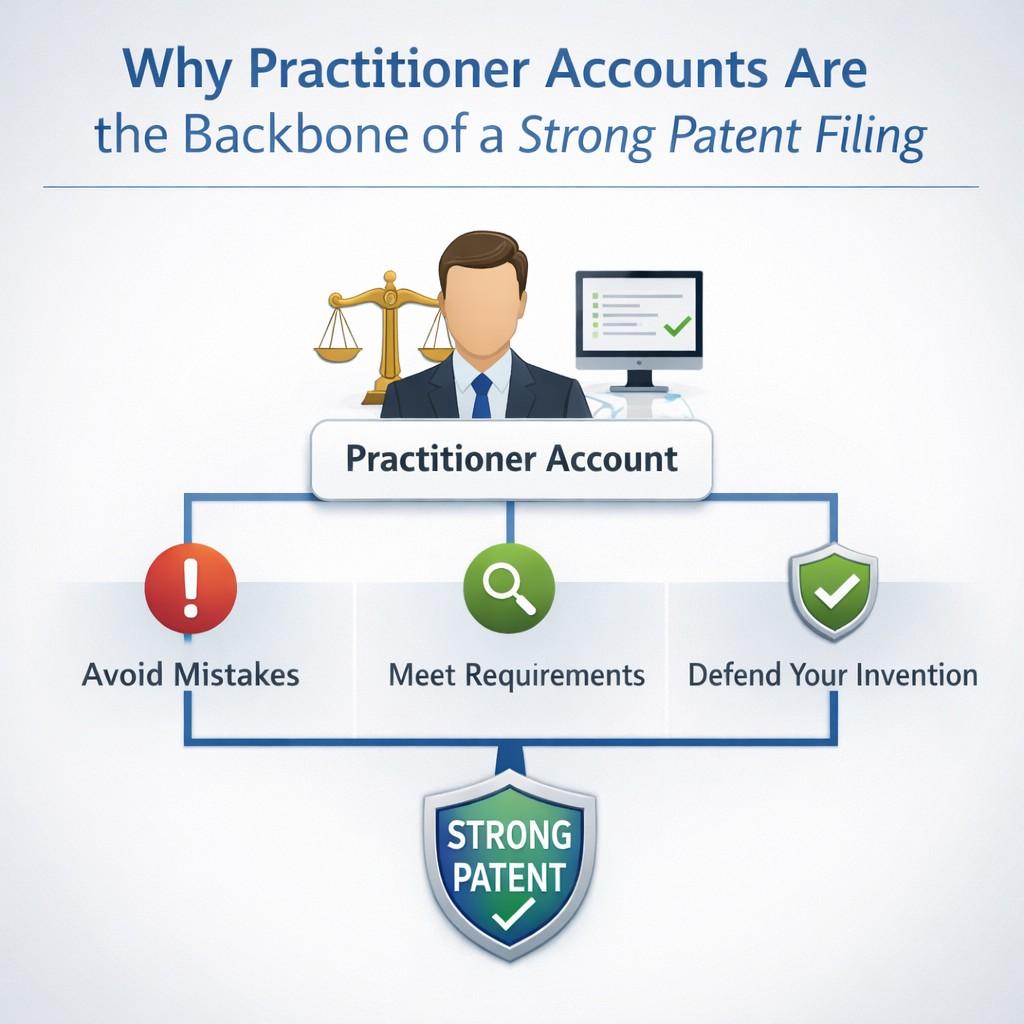
For a business, this means the right expert has the legal ability to act quickly and correctly. Without this setup, even simple actions can turn into delays. With it, your patent process runs smoothly in the background while you focus on building.
This account is not about ownership. It is about execution. And execution is what keeps patents alive and enforceable.
Why Authority Matters More Than Access
Many founders confuse access with authority. Giving someone access to documents is not the same as giving them the right to act.
A practitioner account creates clear authority. It tells the patent office that this person is approved, verified, and accountable. That clarity reduces mistakes and prevents unauthorized actions that can cause serious problems later.
Businesses that value control always make sure authority is granted deliberately, not casually.
How Practitioner Accounts Reduce Risk
Risk in patents rarely comes from big dramatic failures. It usually comes from small missed steps. A response filed late. A notice not seen. A form submitted incorrectly.
Practitioner accounts reduce these risks by creating a direct, secure channel between your company and the patent office through a qualified professional. This structure removes guesswork and keeps timelines tight.
For growing companies, this reliability is critical. You cannot afford silent failures when your IP is tied to your valuation.
The Role of Accountability
When a practitioner uses their account, their actions are traceable and regulated. This creates a layer of accountability that protects your business.
If something goes wrong, there is a clear record of who acted and when. This transparency matters during audits, diligence, or disputes.
Strong companies design systems where responsibility is clear. Practitioner accounts are part of that design.
Why Startups Often Overlook This
Early-stage founders are moving fast. They assume their attorney will “handle it.” Often that is true, but the structure behind the handling still matters.
When practitioner accounts are not set up correctly, filings may rely on temporary access, shared credentials, or manual workarounds. These shortcuts work until they do not.
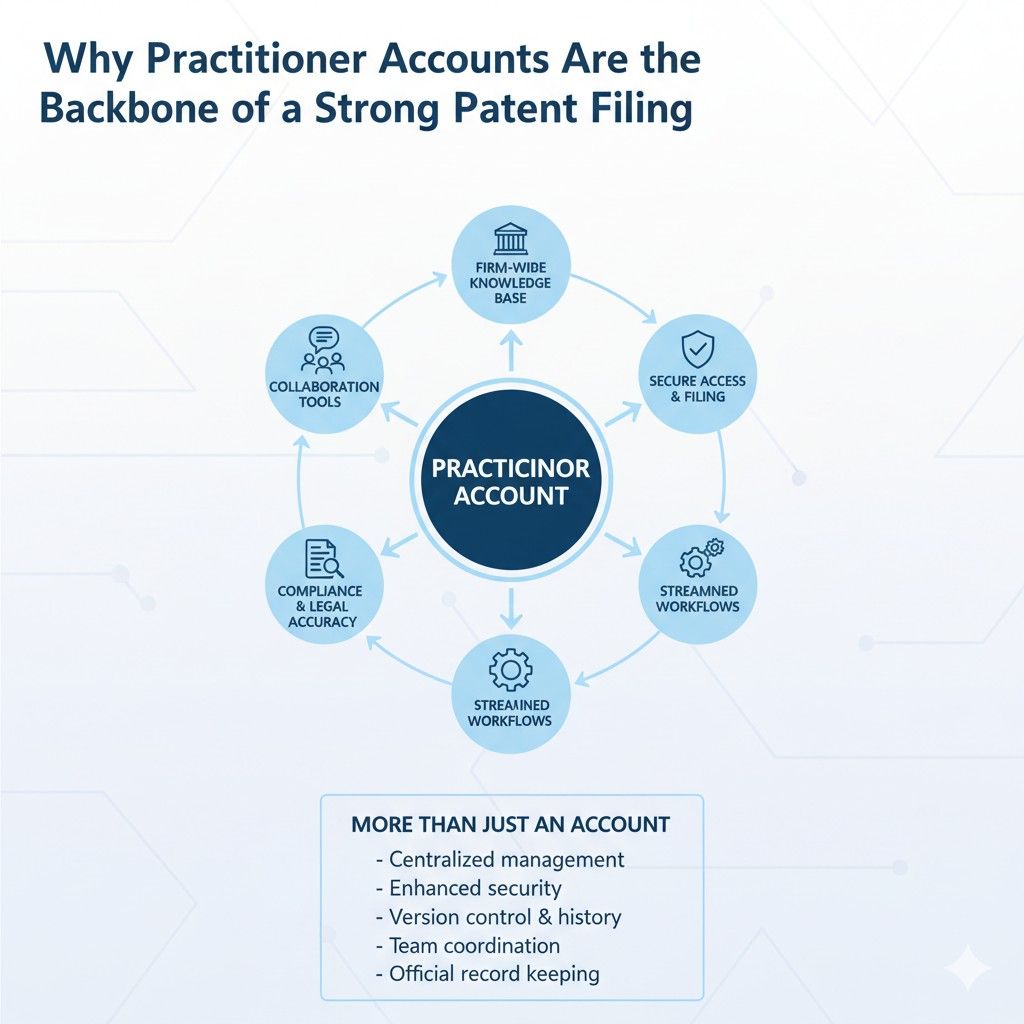
The cost of fixing this later is far higher than setting it up correctly at the start.
Practitioner Accounts and Long-Term Patent Health
Patents are not one-time events. They are living assets that require attention over years.
Practitioner accounts support this long-term view. They allow consistent handling of updates, renewals, and responses even as your company evolves.
This continuity is especially important if you plan to file multiple patents or build a portfolio. A clean structure scales. A messy one breaks under growth.
How This Impacts Fundraising and Deals
Investors and acquirers look closely at how patents are managed. They want to see clean authority lines and professional handling.
A properly configured practitioner account signals maturity. It shows that your company treats IP as a serious asset, not an afterthought.
This confidence can quietly strengthen negotiations and reduce friction during diligence.
PowerPatent’s Approach to Practitioner Accounts
PowerPatent is built around modern patent execution. Practitioner accounts are not bolted on. They are integrated from the start.
The platform ensures that real, licensed attorneys are properly authorized while the software keeps everything visible and organized for founders. You get the benefit of expert action without losing transparency or control.
This balance is what allows startups to move fast without creating hidden risks.
If you want to understand how this works step by step inside a real filing flow, you can see the full picture here: https://powerpatent.com/how-it-works
What Business Leaders Should Take Away
A strong patent is not just about the idea. It is about the system that protects it over time.
Practitioner accounts are a quiet but powerful part of that system. When set up correctly, they create speed, safety, and confidence. When ignored, they introduce uncertainty that shows up later, when it is hardest to fix.
Smart founders make this decision once, make it cleanly, and move forward knowing their filings are backed by the right authority.
How PowerPatent Sets This Up Without Slowing You Down
Speed is the lifeblood of any startup. Every system you touch should help you move faster, not slow you down. Traditional patent processes do the opposite.
They add layers, emails, meetings, and waiting. PowerPatent was built to remove that friction while still doing things the right way. The setup of customer numbers and practitioner accounts is a perfect example of this balance.
This section explains how PowerPatent handles this critical setup so you get protection early, clarity throughout, and zero drag on your momentum.
Designed for Builders, Not Paperwork
PowerPatent starts with a simple idea. Founders should not need to understand patent office systems to protect their work. The platform is designed around how builders think and work, not how legacy firms operate.
From the first step, PowerPatent collects only what matters and translates it into the proper setup behind the scenes. You are not filling out long forms or chasing signatures.
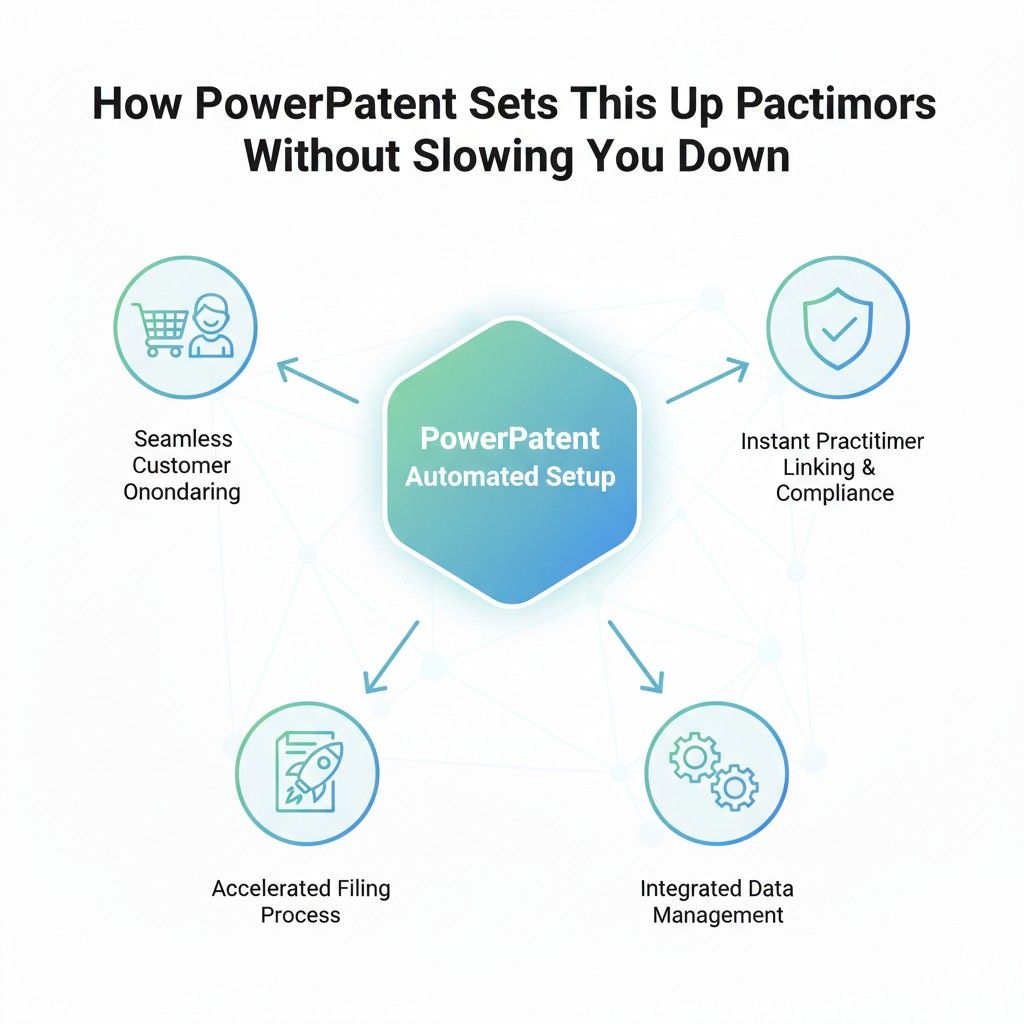
The system guides you through what is needed in plain language, so setup happens quickly and correctly.
This means you stay in build mode while the foundation is being laid.
Automation With Human Oversight
Speed without care is risky. Care without speed is useless. PowerPatent combines both.
Smart automation handles repetitive steps, checks for errors, and keeps everything organized. At the same time, real patent attorneys review and oversee the setup to ensure authority and ownership are correct.
This hybrid approach removes delays without cutting corners. You get the efficiency of software and the judgment of professionals working together.
One Flow, Not Disconnected Steps
One of the biggest time drains in traditional patent work is fragmentation. Customer numbers live in one place. Practitioner access lives in another. Communication is scattered.
PowerPatent treats setup as a single flow. Customer numbers and practitioner accounts are created and linked as part of one clear process. Nothing is left floating or dependent on follow-up emails.
This reduces back-and-forth and eliminates the pauses that slow most filings.
Clear Visibility Without Extra Work
Founders should not have to ask for updates. They should see them.
PowerPatent gives you clear visibility into your setup without forcing you to manage it manually. You always know that the right authority is in place and that filings are moving forward.

This transparency builds trust and lets you make decisions quickly, without second-guessing what is happening behind the scenes.
Built to Move at Startup Speed
PowerPatent respects how fast startups operate. Setup is aligned with your timelines, not dragged out over weeks.
By handling complexity internally, the platform removes the usual waiting periods that come from coordinating between systems and people. This allows you to file earlier, secure priority sooner, and reduce risk from day one.
Early protection often makes the biggest difference.
Fewer Decisions, Better Outcomes
Decision fatigue slows teams down. PowerPatent removes unnecessary choices by guiding you toward best-practice setups by default.
You are not asked to guess what structure is right. The platform applies proven patterns that protect ownership and authority while keeping things flexible as you grow.
This lets you move forward with confidence instead of hesitation.
Designed to Scale With You
What works for your first filing should also work for your tenth. PowerPatent sets up customer numbers and practitioner access in a way that scales naturally.
As your company grows, adds filings, or enters new phases, the foundation is already there. No rebuilds. No cleanup. Just forward motion.
This long-term thinking saves time not just now, but years from now.
The Result: Speed Without Stress
The true value of PowerPatent’s approach is not just speed. It is calm speed.
You move fast without worrying about missed steps, unclear authority, or messy records. Your patent process becomes a quiet strength instead of a constant distraction.
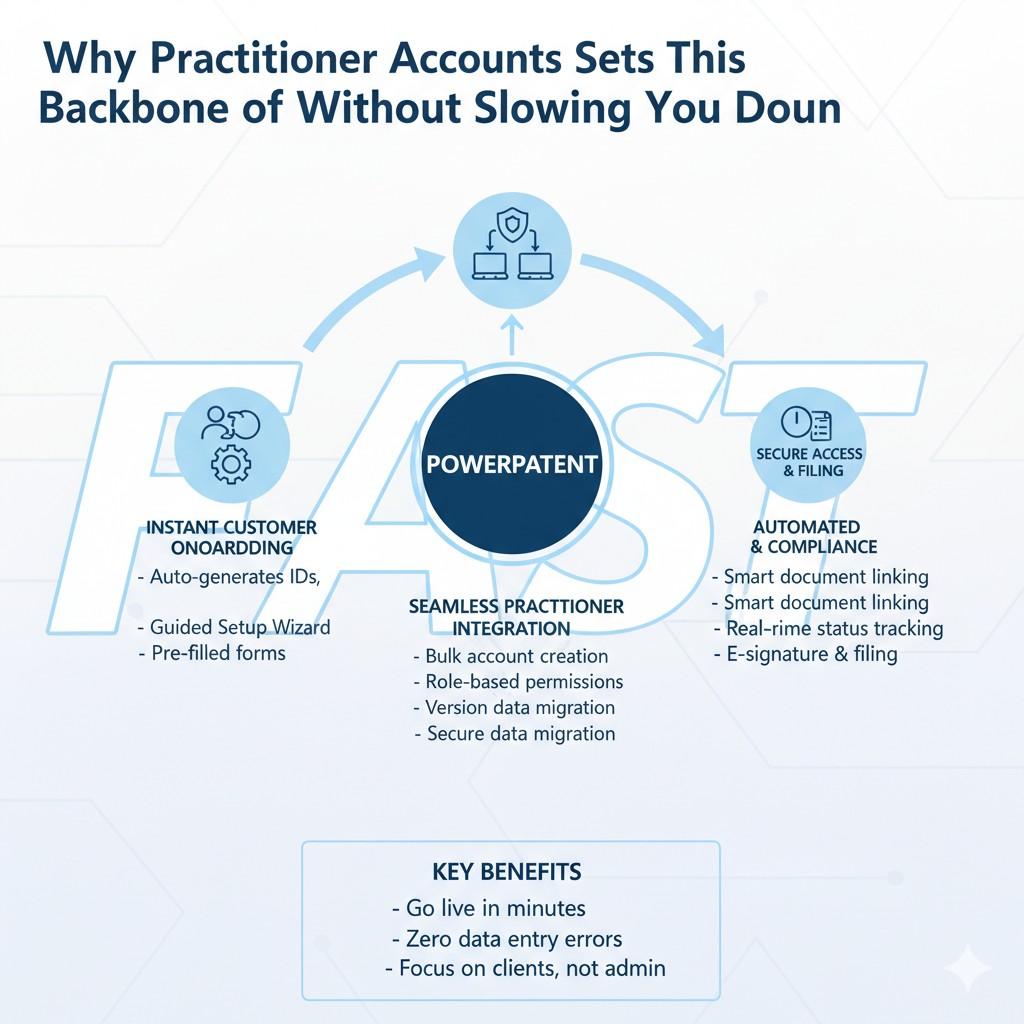
If you want to protect what you are building without slowing down, this system was designed for you. You can see exactly how it works in practice at https://powerpatent.com/how-it-works
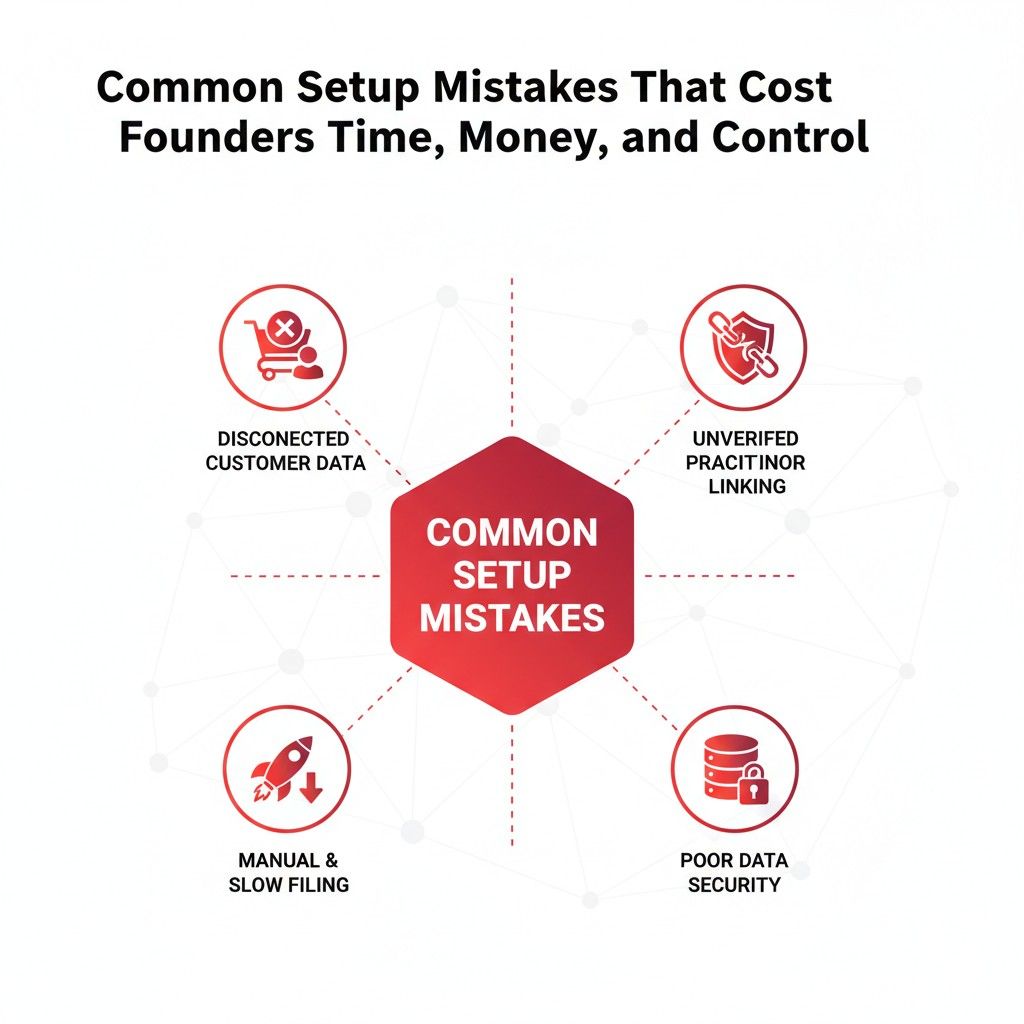
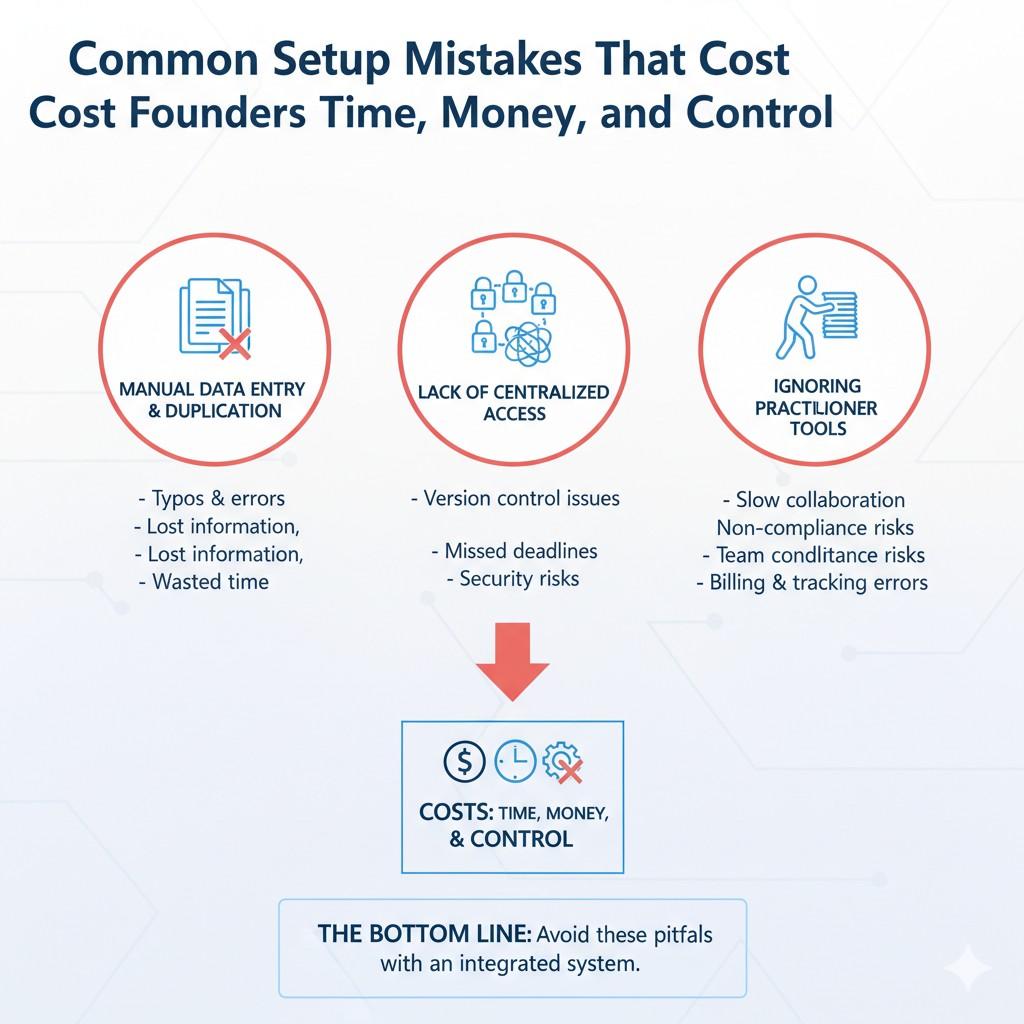
Common Setup Mistakes That Cost Founders Time, Money, and Control
Most patent problems do not come from bad ideas or weak inventions. They come from small setup mistakes made early, often without anyone realizing the impact.
These mistakes sit quietly in the background until the moment they cause real damage. By then, fixing them is slow, expensive, and distracting. This section is meant to help founders spot these risks early and avoid them completely.
PowerPatent was built to prevent these issues by design, but understanding them gives you even more confidence and control.
Treating Setup as a One-Time Task
Many founders assume that once the paperwork is done, the system will take care of itself. In reality, patent infrastructure needs light attention as your company changes.
When customer numbers or practitioner access are set up and never reviewed again, they slowly drift out of alignment with your business. Team changes, new filings, and company growth all introduce risk if the setup stays frozen in time.
Strong companies treat setup as a living system that stays aligned with reality.
Letting Everything Live With One Person
A very common mistake is tying too much authority to a single individual. This might be a founder, an early employee, or even an outside attorney.
When that person leaves or becomes unavailable, access gaps appear. Notices get missed. Decisions get delayed.
The safer approach is always to anchor control to the company, not a person. That way, people can change without breaking the system.
Relying on Forwarded Emails
Forwarded emails feel harmless until they are not. Important notices can be missed, filtered, or delayed. Over time, this creates uncertainty about whether everything is truly up to date.
Direct access through proper customer numbers and practitioner accounts removes this risk. Information flows where it should, without relying on manual forwarding.
This small change often prevents the biggest headaches.
Mixing Ownership and Execution
Ownership and execution are different roles, but founders often blur them. When the same setup controls both without clarity, confusion follows.
Ownership should always stay with the company. Execution should be handled by properly authorized professionals. When these lines are clear, decisions are easier and mistakes are rarer.
This separation is a quiet strength that shows up during growth and diligence.
Delaying Setup Until “Later”
Founders are optimistic by nature. Many plan to clean things up later, once the company is bigger or the product is further along.
Later rarely comes at a convenient time. Setup rushed under pressure leads to errors and oversights.
Early setup creates breathing room. It lets you move fast later without stress.
Not Knowing Who Has Authority
If you cannot quickly answer who is allowed to act on your behalf, that is a red flag.
Unclear authority leads to delays, duplicated work, and sometimes conflicting actions. In worst cases, it leads to filings made without proper approval.
Clear practitioner setup removes this ambiguity entirely.
Losing Visibility as Things Scale
As filings increase, complexity grows. What was manageable with one application becomes confusing with several.
Without a clean setup, visibility drops. Founders lose track of status, deadlines, and responsibility.
Systems designed for scale keep everything visible without extra effort.
How PowerPatent Eliminates These Mistakes
PowerPatent is built around prevention, not cleanup. The platform sets customer numbers and practitioner accounts correctly from the start and keeps them aligned as you grow.
Real attorneys oversee the process while software enforces structure and clarity. This combination removes common failure points without slowing you down.
You get a system that protects control, saves time, and reduces long-term cost.
If you want to see how this works in a real-world filing flow, you can explore it here: https://powerpatent.com/how-it-works
The Final Takeaway
Setup mistakes are rarely dramatic, but their impact is real. They quietly drain time, money, and focus from founders who should be building.
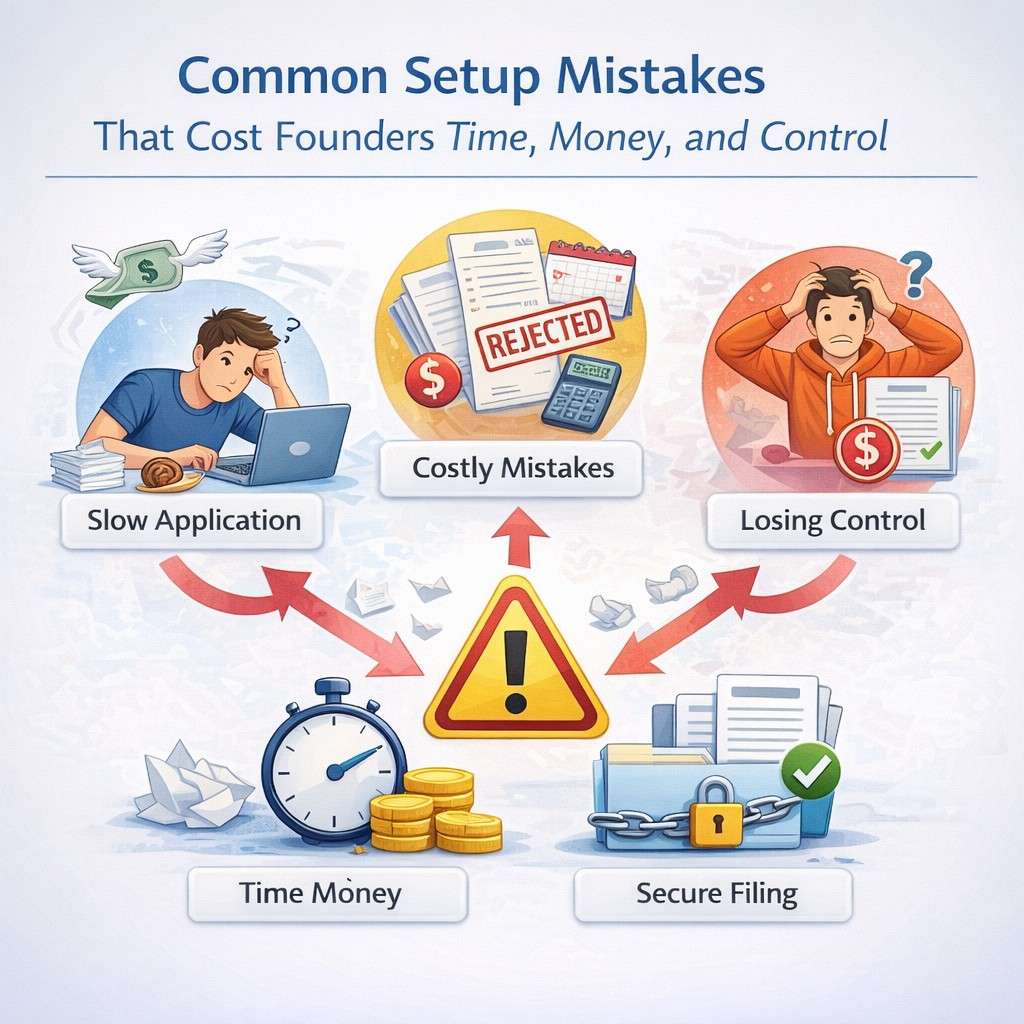
Avoiding them is not about being perfect. It is about choosing systems that are designed for modern companies and long-term growth.
Wrapping It Up
By now, it should be clear that a customer number is not just a technical detail. It is a control point. It decides who truly owns the relationship with the patent office and how clean your patent record will be as your company grows. When founders understand this early, they avoid stress later. When they ignore it, small gaps turn into big distractions at the worst possible time.
Leave a Reply