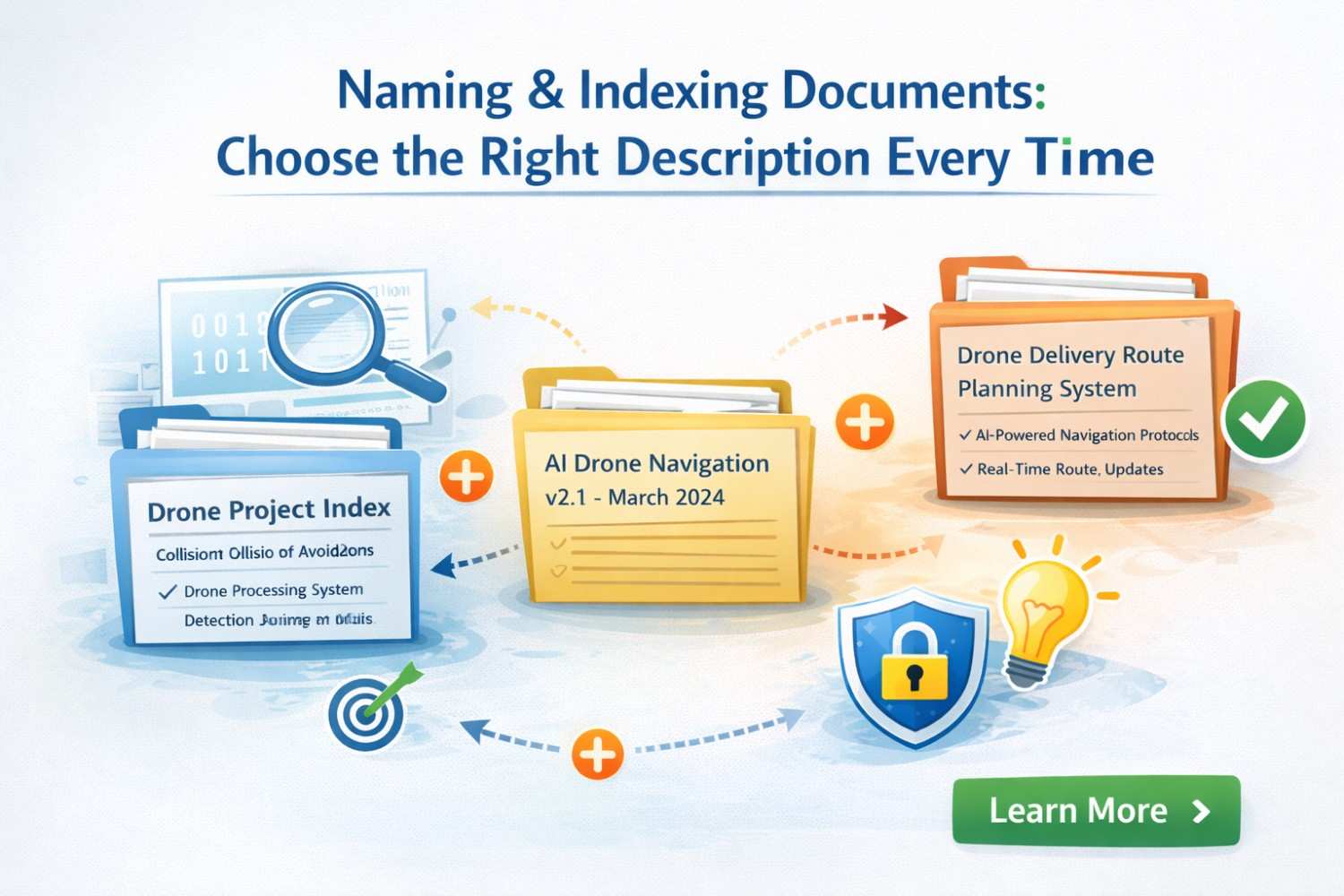
Most patent problems do not start in court. They start much earlier, when a founder saves a file with a vague name, drops it into the wrong folder, and promises themselves they will clean it up later. Later never comes. When it is finally time to protect what you built, you are stuck guessing which version matters, what changed, and how to explain it clearly. This article is about fixing that problem for good. You will learn how to name and index your documents so every idea, update, and breakthrough is easy to find, easy to explain, and ready to turn into a strong patent without slowing your team down.
Why Document Names Decide What Gets Protected
When founders think about patents, they usually think about big ideas. The model. The system. The breakthrough. Almost no one thinks about file names. That is a mistake.
The name you give a document quietly decides whether an idea is remembered, understood, and protected, or slowly lost inside your own company.
This section explains why document names matter so much, and how small choices here shape the strength of your future patent without you even noticing.
Document Names Are the First Layer of Clarity
Before an attorney ever reads your work, before a patent is ever drafted, the first thing anyone sees is the document name. That name creates an instant story.
A clear name tells the reader what problem was being solved, what was new, and roughly when it mattered. A weak name hides all of that.
Most teams name files for speed, not clarity. That feels fine in the moment. But later, when you need to explain how your invention evolved, you are stuck guessing.
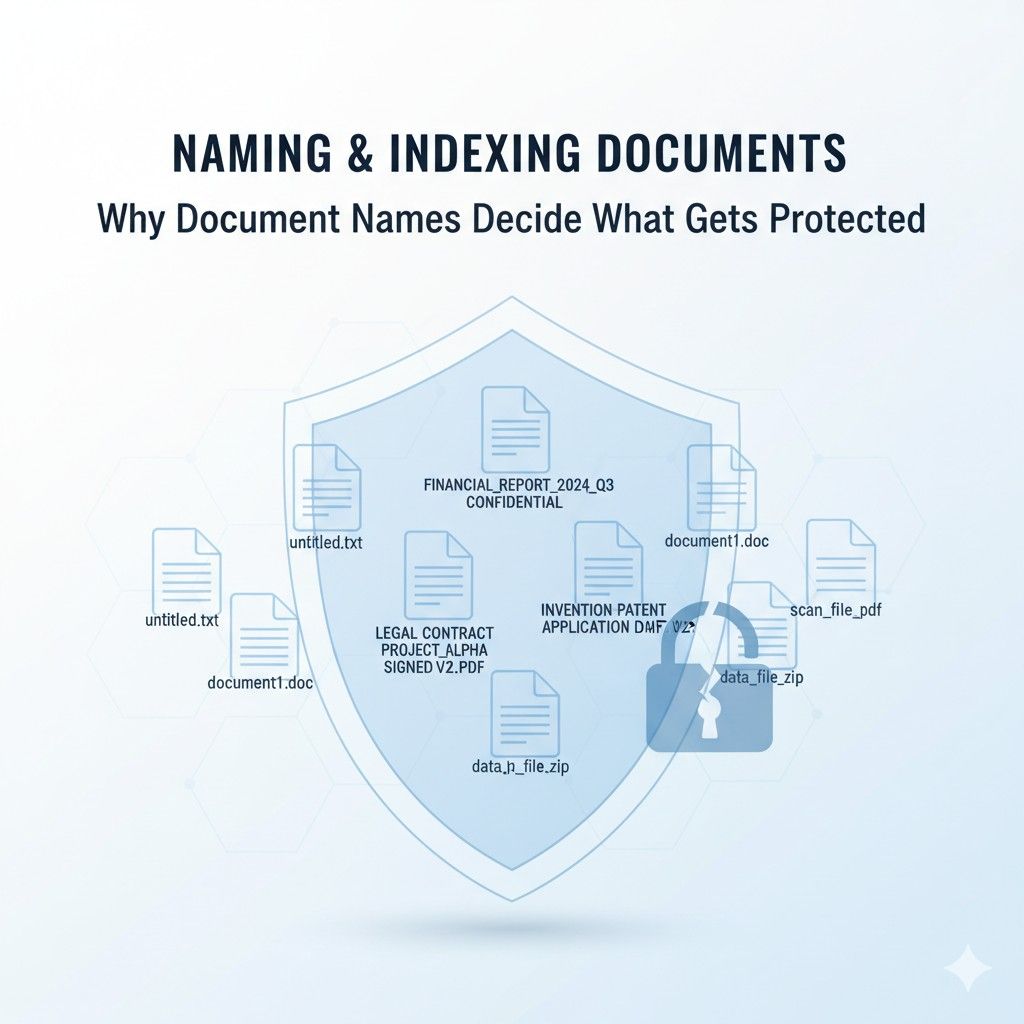
Good names remove guessing. They make intent obvious even months or years later.
For a business, clarity compounds. When clarity is missing, teams waste time, miscommunicate, and lose leverage when it matters most.
File Names Decide What Feels Important Later
Not every idea survives. Some features get cut. Some experiments fail. When you look back, the ideas that feel real are often the ones that are easiest to understand. File names play a quiet role here.
A document called “final_v3” feels disposable. A document called “Real-time fraud scoring logic for card payments” feels serious.
Even if both contain valuable ideas, one is far more likely to be remembered, reviewed, and protected.
This matters for patents because protection usually happens after the work is done.
If an idea does not feel important later, it rarely gets patented. Good naming keeps important ideas visible long after the rush of building has passed.
Naming Is How You Capture Context Without Writing More
Context is everything in patents. Why something was built. What problem existed. What made the solution different. Most teams assume they will remember this. They rarely do.
A strong document name quietly stores context. It answers basic questions without needing a long explanation. When did this matter. What was the focus. What was changing.
For busy teams, this is powerful. You do not need more meetings or notes. You just need names that carry meaning. That meaning later becomes raw material for a strong patent story.
How Weak Names Break the Chain of Evidence
Patents rely on showing a clear chain from problem to solution. If your documents are hard to connect, that chain breaks.
When files are named vaguely, it becomes difficult to show progression. Reviewers cannot easily see what came first, what improved, and what made the final version special. That weakens protection.
Strong naming creates a timeline without effort. It lets anyone trace how an idea grew. For businesses, this is critical not just for patents, but for internal trust and external defense.
Naming Is a Signal of Ownership
Clear names signal ownership. They say this idea was intentional, not accidental. They show that the team understood what they were building at the time.
This matters when you work with attorneys, investors, or partners. Clear documentation names show maturity. They show that your company treats its ideas as assets, not scraps.
PowerPatent is built around this reality. The platform works best when your documents already tell a clear story, because that makes it faster to turn real work into real protection → https://powerpatent.com/how-it-works
The Difference Between Describing Work and Describing Value
Most file names describe activity, not value. “API update,” “model tweak,” or “backend change” say what happened, not why it matters.
Value-based names focus on the outcome. They describe what the change enables or improves. This shift is subtle but powerful. It reframes technical work as innovation.
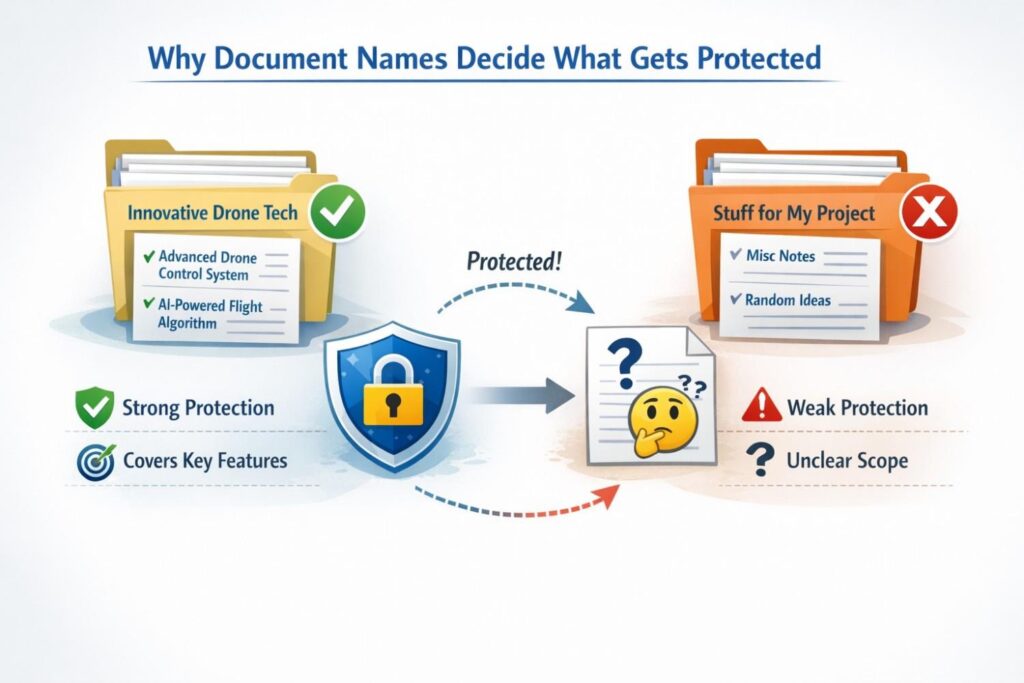
For businesses, this matters because patents protect value, not effort. A document name that captures value makes it easier to see what is worth protecting.
How Naming Shapes Attorney Understanding
Attorneys are smart, but they are not inside your head. They rely heavily on how you present your work. File names guide their reading.
Clear names reduce back-and-forth. They reduce misinterpretation. They speed up drafting. That saves time and money.
PowerPatent combines software with real attorney oversight, but even the best attorney works faster and better when your documents speak clearly from the start → https://powerpatent.com/how-it-works
Naming Is a Daily Habit, Not a Cleanup Task
Most teams treat naming as something to fix later. That rarely works. By the time later comes, the context is gone.
The best teams treat naming as a habit. A small pause before saving a file. A quick check to see if the name would make sense to someone else in six months.
This habit does not slow you down. It saves time later when you need to explain, defend, or protect what you built.
Why Speed and Good Naming Are Not Opposites
Founders often think clear naming will slow them down. In practice, the opposite is true.
When files are easy to understand, decisions happen faster. Reviews are quicker. Onboarding is smoother. Patent work becomes less painful.
Good naming is not extra work. It is invisible leverage that pays off when stakes are high.
Turning Everyday Documents Into Patent Assets
Most patentable ideas already exist in your docs. They are in specs, diagrams, and experiment notes. What is missing is structure.
Strong naming turns everyday documents into assets. It makes them usable later without rewriting history.
This is one of the reasons PowerPatent works so well for fast-moving teams. You keep building.
The system helps turn what you already have into protection, without forcing you to change how you work → https://powerpatent.com/how-it-works
The Hidden Cost of Fixing Names Too Late
Renaming files months later is risky. You may misunderstand your own past work. You may simplify something that was actually nuanced.
When names are set correctly at creation, they are honest. They reflect what you knew at the time. That honesty matters in patents.
Businesses that delay this often pay more later, either in attorney time or lost protection.
Naming as a Leadership Signal
How your team names documents reflects leadership. Clear standards signal that ideas matter. That work should be understandable. That the company plans ahead.
This does not require rules or long guidelines. It requires consistency and intent.
Founders who model good naming create teams that naturally document better, communicate better, and protect better.
Why This Matters More as You Scale
As companies grow, memory disappears. Early context gets lost. New hires were not there when decisions were made.
Document names become the memory of the company. They preserve why things exist.
For scaling businesses, this is not optional. It is infrastructure. And it directly affects how well you can protect what you build as your product becomes more complex.
Bringing It All Together
Document names are not cosmetic. They are strategic. They decide what ideas survive, what gets understood, and what can be protected.
If you want stronger patents without slowing down, this is where it starts. Clear names. Clear intent. Clear value.
How Confusing Files Turn Great Ideas Into Missed Patents
Great ideas do not fail because they are weak. They fail because they are hard to see, hard to explain, and hard to trust. Confusing files create that problem quietly over time.
This section shows how messy documents slowly erase value, and how businesses can stop that from happening while still moving fast.
Confusion Starts Small and Grows Fast
No one plans to create confusing files. It usually starts with speed. A quick save. A rushed name. A folder that feels temporary. At that moment, nothing breaks.
Weeks later, another version appears. Then a tweak. Then a fix. Soon, no one is sure which file reflects the real idea. The confusion is not obvious until someone asks a simple question and no one can answer it with confidence.
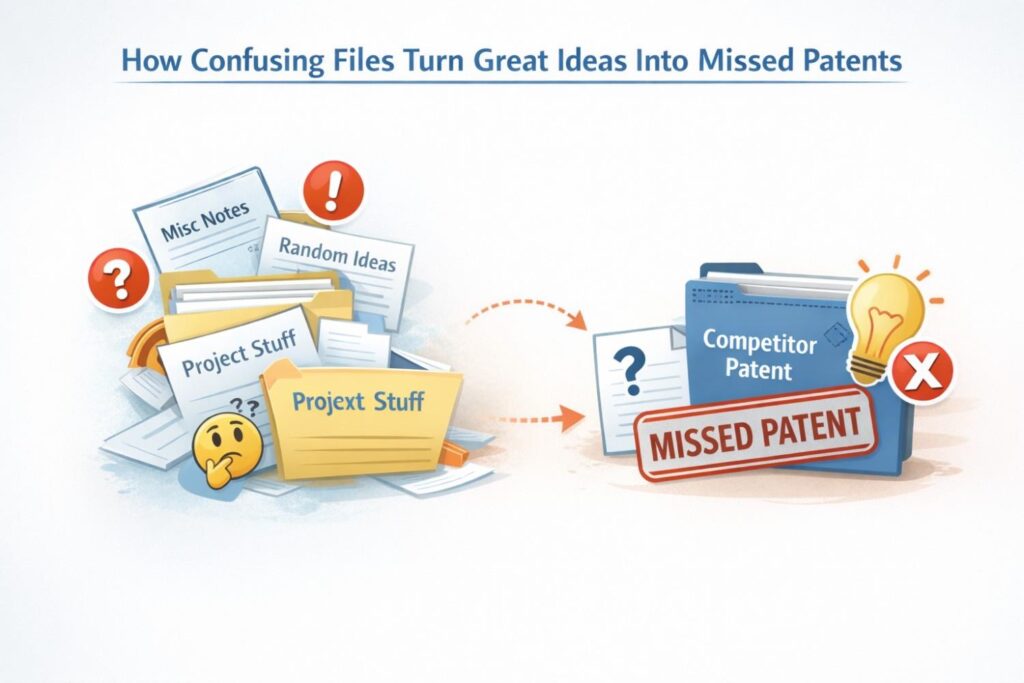
For patents, this is dangerous. Protection depends on clarity. If the team is unsure, outsiders will be too.
When Engineers Know the Truth but the Files Do Not
Inside a team, people carry context in their heads. They remember why a decision was made. They know what changed and what stayed the same.
Files do not carry that memory unless you force them to. When documents are poorly named or loosely organized, the truth lives only in people. When people leave, change roles, or simply forget, the truth disappears.
Businesses that rely on memory instead of documents often believe they are protected. They are not.
Confusion Makes Ideas Look Smaller Than They Are
A powerful system can look ordinary if its documents are scattered and unclear. Reviewers see fragments instead of a whole.
This is how big ideas get underestimated. Not because they lack depth, but because the story is broken across confusing files with no clear link between them.
Patents reward clear stories. When confusion hides the story, protection weakens.
Missed Timing Is the Silent Killer
Many patents are lost not because an idea was bad, but because the moment passed. The team moved on. The market shifted. The files became stale.
Confusing documents slow down review. By the time someone understands what matters, it may already be too late to file.
Clean naming and indexing reduce friction. They make it easy to spot what is worth protecting right now, not later.
PowerPatent is built for this exact moment. When your documents are clear, the path from idea to filing is much shorter → https://powerpatent.com/how-it-works
How Confusion Wastes Attorney Time
Attorneys spend a lot of time trying to understand what happened. When files are unclear, they ask more questions. They make cautious assumptions. They may miss subtle but important details.
This costs money and weakens outcomes. Not because the attorney lacks skill, but because the inputs are messy.
Clear documents let attorneys focus on strategy instead of cleanup. That is how you get stronger protection faster.
Confusing Files Blur Ownership
In growing teams, multiple people touch the same area. If files are unclear, it becomes hard to know who did what and when.
This matters for patents. Ownership and timing are important. Confusion creates risk, even if everyone acted in good faith.
Simple clarity avoids complex problems later.
When Internal Reviews Fail Quietly
Many teams do internal reviews to decide what to patent. These reviews often rely on document summaries.
If files are confusing, reviews become shallow. People skim. They miss depth. They choose obvious ideas and overlook subtle ones.
This leads to a narrow patent strategy that does not reflect the true strength of the product.
Confusion Breaks Trust With Decision Makers
Executives and founders rely on documents to make calls. If files are unclear, confidence drops.
When leaders do not fully trust the materials, they hesitate. That hesitation can delay filings or cancel them altogether.
Clear files support fast, confident decisions.
The Cost Shows Up During Due Diligence
Investors and acquirers look closely at IP. They review documents. They ask questions.
Confusing files raise red flags. They suggest chaos, even if the tech is strong. This can hurt valuation and slow deals.
Clean documentation signals discipline and foresight.
Why Fixing Confusion Later Rarely Works
Teams often plan to clean things up before filing. In practice, this is hard.
People reinterpret past work. Details get simplified. Important nuance disappears.
Fixing confusion at the source is easier and safer than reconstructing history later.
Confusion Turns Patents Into Guesswork
A patent should be precise. It should reflect what was actually built.
When files are unclear, patents become guesses. That weakens enforceability and confidence.
Strong patents start with strong records.
How Clear Systems Prevent Loss Without Slowing Work
The goal is not perfection. It is consistency.
When teams agree on simple habits around naming and indexing, confusion fades. People spend less time searching and more time building.
This is not about heavy process. It is about light structure that supports speed.
PowerPatent fits naturally into this approach. It does not force founders to stop building. It helps turn existing clarity into protection → https://powerpatent.com/how-it-works
Confusion Is a Business Risk, Not a Cosmetic Issue
Messy files are often treated as an annoyance. In reality, they are a risk.
They affect patents, deals, trust, and speed. They quietly erode value.
Businesses that take this seriously gain an edge without adding headcount or slowing down.
Seeing Confusion as a Signal, Not a Failure
If your files are confusing, it does not mean your team failed. It means you are moving fast.
The key is recognizing confusion early and adjusting habits before value is lost.
This shift in mindset turns documentation into a strength, not a burden.
Setting the Stage for Better Protection
Once confusion is reduced, everything downstream improves. Reviews are faster. Decisions are clearer. Patents are stronger.
The next step is learning how to create simple rules that scale as your product grows. That is where indexing and structure come in.
The Simple Rules for Naming Documents So Anyone Can Understand Them
Good document names do not need to be clever. They need to be honest, clear, and stable over time.
This section focuses on how businesses can name documents in a way that survives growth, turnover, and time, without slowing down teams or adding process.
Naming Is About Explaining, Not Labeling
Most people treat a file name like a label. It is short, vague, and only useful in the moment. A strong name does more than label. It explains.
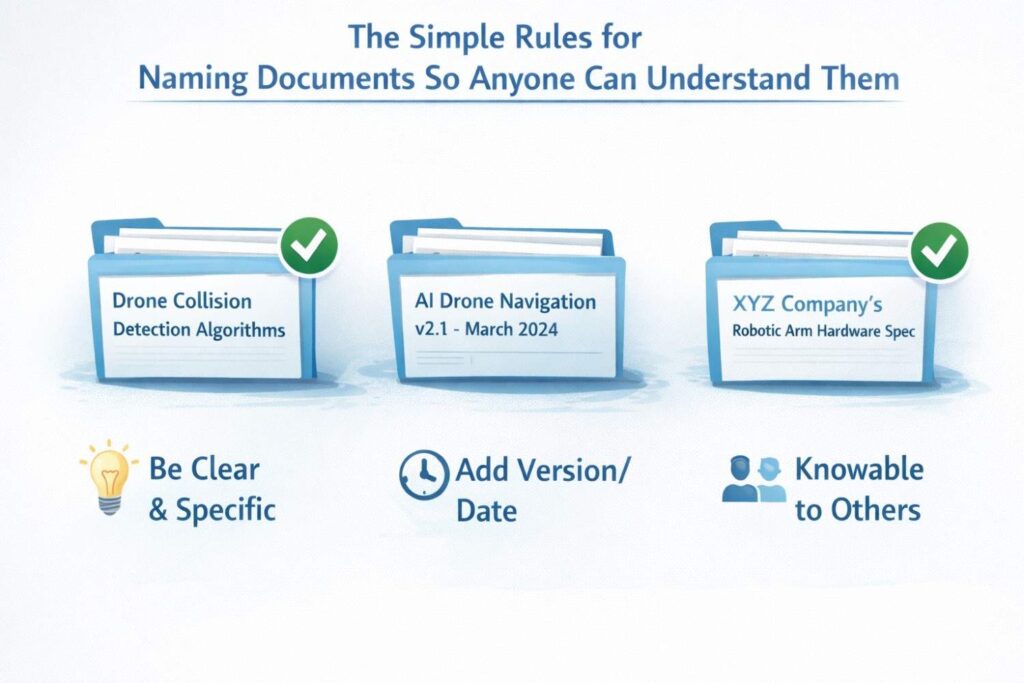
An explanatory name answers a quiet question: what is this and why should I care. When someone reads the name alone, they should understand the purpose without opening the file.
This does not require long names. It requires thoughtful ones.
Write Names for the Future, Not for Yourself
When saving a file, it is easy to assume future you will remember what it means. That assumption rarely holds.
Good naming assumes zero memory. It assumes the reader was not there. It assumes time has passed.
This shift changes everything. You stop using shortcuts that only make sense today. You start writing names that survive months or years.
Describe the Change, Not the Task
Many file names describe what someone did. Edited. Updated. Fixed.
Better names describe what changed in the system or behavior. They focus on outcome.
This helps patents because patents care about what is new, not the effort spent getting there.
Use Language a Non-Engineer Can Follow
A document name should make sense to someone smart but unfamiliar with the code. That could be a founder, an investor, or an attorney.
This does not mean dumbing things down. It means avoiding private shorthand.
Clear language reduces translation work later.
PowerPatent thrives on this kind of clarity. When your documents speak plainly, turning them into strong patent claims becomes much easier → https://powerpatent.com/how-it-works
Capture the Core Idea in One Line
Every document exists for a reason. A good name captures that reason.
If you cannot describe the core idea in one sentence, the idea may not be clear yet. Naming forces clarity.
This is a feature, not a flaw. It helps teams think better, not just document better.
Avoid Emotional or Temporary Words
Words like final, draft, new, or old lose meaning fast. What is final today changes tomorrow.
Instead, focus on substance. What makes this version different.
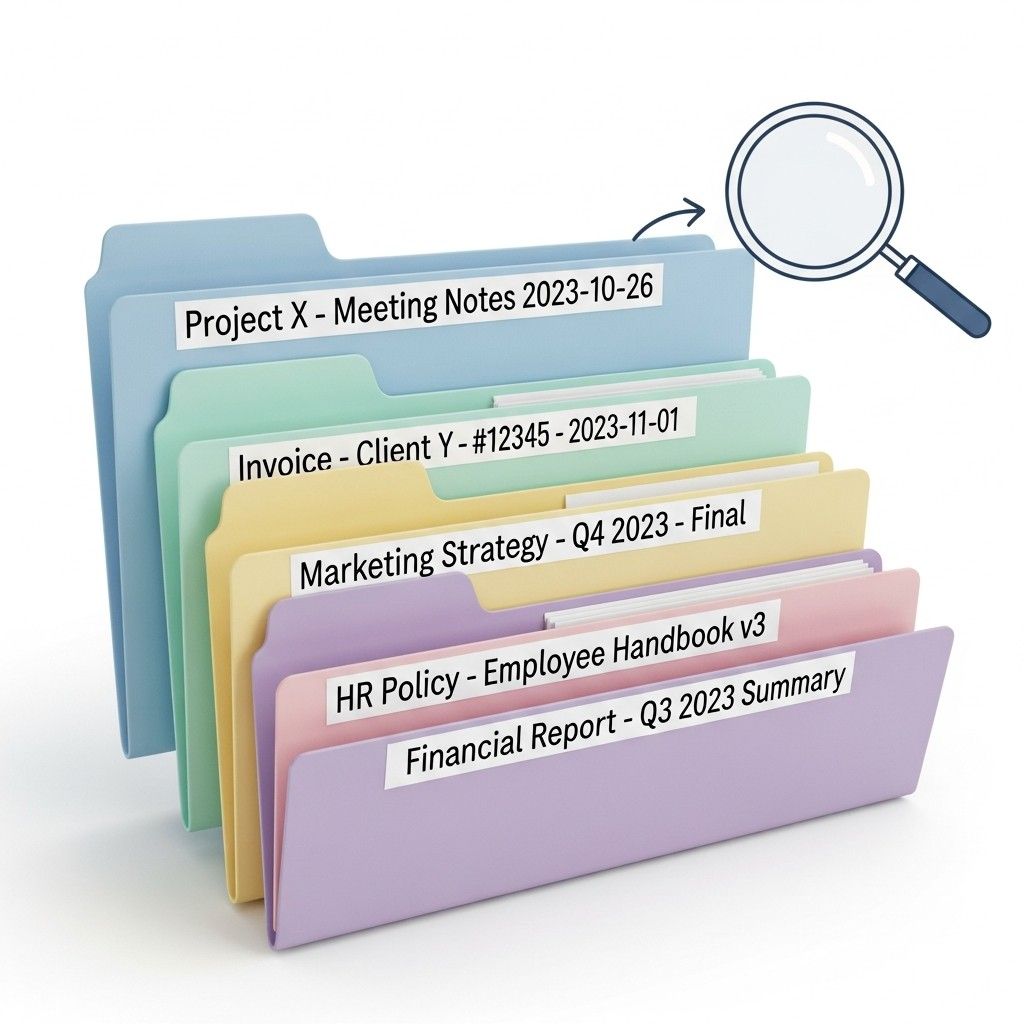
Substance lasts longer than status.
Let Versions Tell a Story, Not Create Noise
Versioning should show progression, not confusion. Each version should reflect a meaningful shift.
When versions are named clearly, anyone can see how an idea evolved. That evolution is gold for patents.
Naming as a Daily Design Choice
Naming is not administrative. It is design. You are designing how your future self and others will understand your work.
This mindset leads to better choices without extra effort.
Consistency Beats Perfection
There is no perfect naming system. What matters is consistency.
When teams follow similar patterns, understanding becomes automatic. No one has to decode meaning every time.
Consistency also helps software tools work better, including patent platforms designed to extract insight from real documents.
Making Naming a Team Habit
Habits form when leaders model behavior. When founders name things clearly, teams follow.
This does not require rules or enforcement. It requires example.
Over time, clear naming becomes cultural.
How Clear Names Reduce Meetings
Many meetings exist to explain work that could have been understood from documents.
Clear names reduce this need. People come prepared. Conversations go deeper.
This saves time and reduces friction.
Naming as a Form of Risk Management
Every unclear document is a small risk. It may be misunderstood. It may be ignored. It may be lost.
Clear naming reduces these risks quietly and cheaply.
For businesses, this is one of the highest return habits you can build.
Preparing for Indexing and Scale
Good naming is the first step. Indexing comes next.
When names are clear, building an index is easy. When they are not, indexing becomes guesswork.
This sets the stage for a system that grows with your product instead of collapsing under it.
PowerPatent supports this journey from clear documents to real protection. If you want to see how your everyday work can become strong IP without slowing down, explore how it works → https://powerpatent.com/how-it-works
Building a Living Index That Grows With Your Product
A document index should not feel like a museum. It should feel alive. It should reflect what your product is today, how it got here, and where it is heading.
This section explains how businesses can build an index that grows naturally with their work, supports patents, and stays useful without constant maintenance.
An Index Is a Map, Not a Storage System
Many teams think of an index as a place to store links. That view is too small.
A real index is a map of thinking. It shows how ideas connect, where major shifts happened, and which paths led to real outcomes.
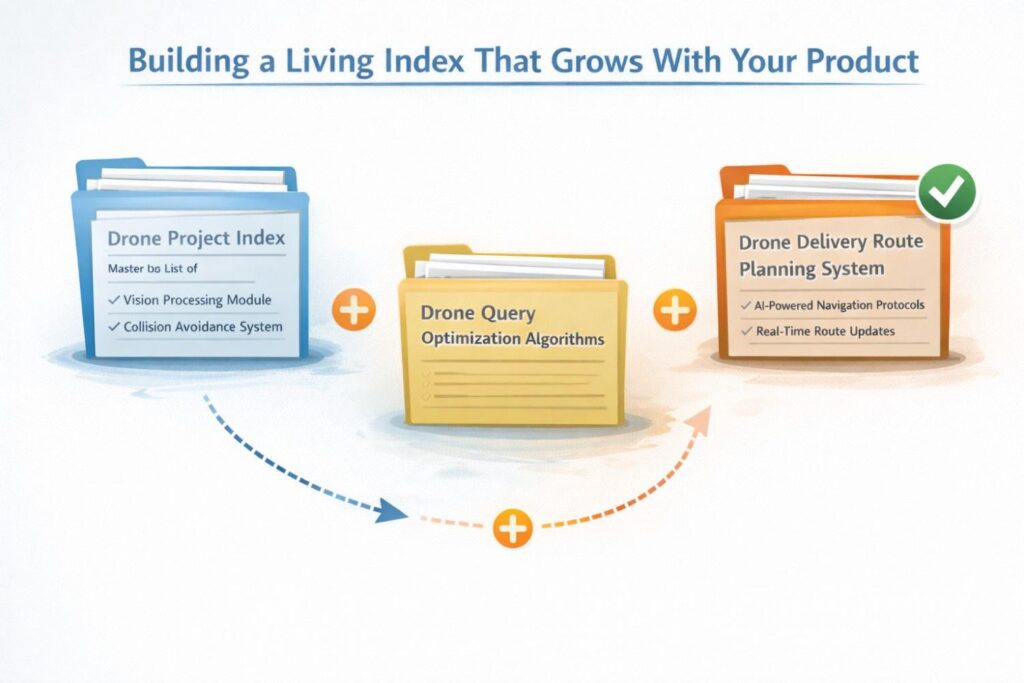
When built well, it lets anyone understand the product’s evolution without digging through every file.
Why Static Indexes Always Fail
Static indexes require discipline to maintain. When work speeds up, they fall behind.
A living index updates as work happens. It evolves with the product instead of chasing it.
This happens when the index mirrors how teams already work, not how someone wishes they worked.
Start With How You Actually Build
The best index reflects reality. If your team builds by feature, organize around features. If you build by problem, organize around problems.
Forcing a structure that does not match behavior creates friction. Friction kills maintenance.
A living index fits into existing flow.
Index by Ideas, Not Just Files
Files are containers. Ideas are what matter.
A strong index points to ideas and links to the files that support them. This makes it easy to see what is worth protecting.
For patents, this shift is crucial. Protection is about ideas, not documents.
How an Index Preserves Decision History
Products are full of forks. Choices made. Paths not taken.
A living index captures why decisions happened. It links to experiments, discussions, and outcomes.
This context strengthens patents by showing intentional design, not accidental results.
Keeping the Index Lightweight
An index should take minutes to update, not hours.
When updates feel heavy, they stop happening. The index dies quietly.
The goal is usefulness, not completeness.
Using the Index as a Review Tool
A living index becomes a powerful review surface. Founders can scan it to spot patterns and gaps.
This helps identify patentable areas early, before timing is lost.
PowerPatent integrates naturally with this approach by helping teams surface protectable ideas from real work, not forced documentation → https://powerpatent.com/how-it-works
Making the Index Useful Across Teams
An index should serve engineers, product leaders, and legal partners alike.
This means using clear language and avoiding private jargon.
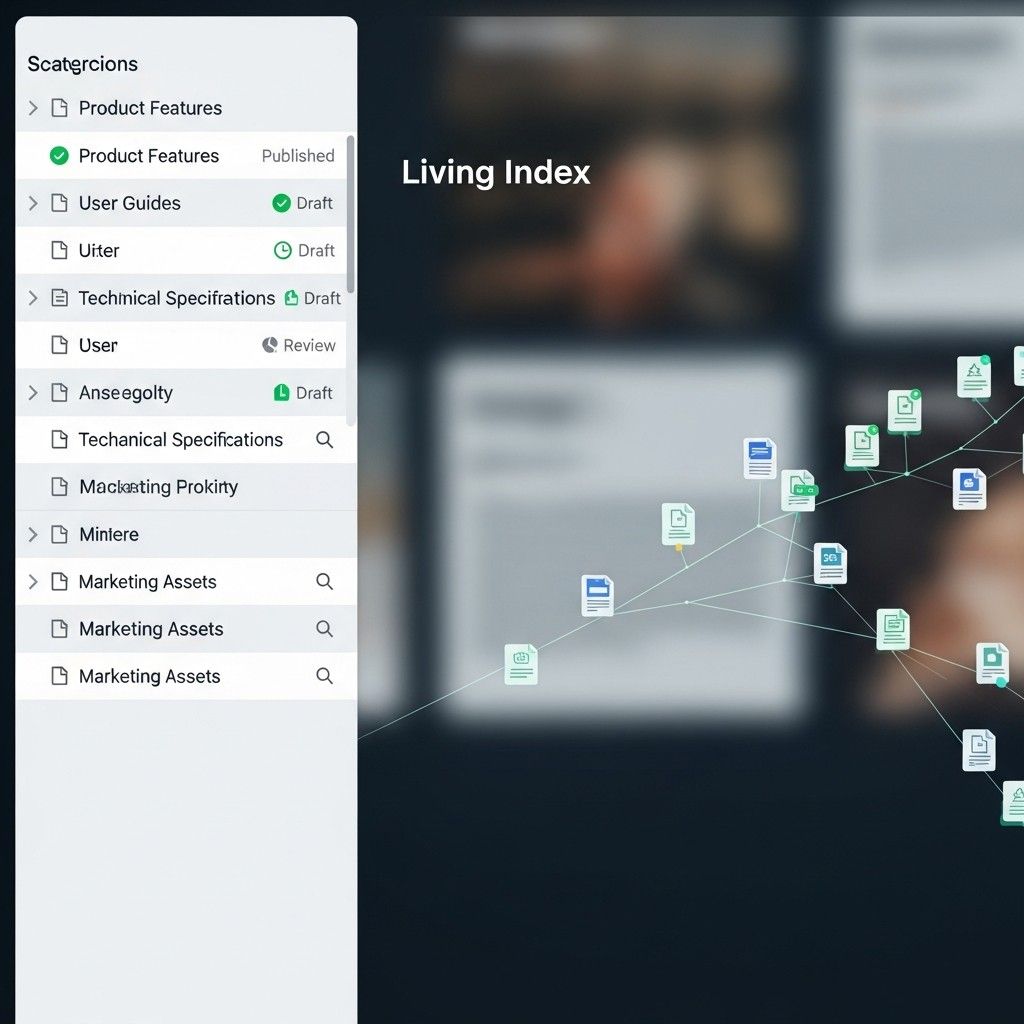
When everyone can use the same map, alignment improves.
Indexing as a Form of Storytelling
Every product has a story. A living index tells that story honestly.
It shows growth, learning, and refinement.
This story becomes the backbone of strong patent filings.
Avoiding the Trap of Over-Structure
Too much structure makes indexes brittle. Simple structures adapt better.
Leave room for change. Products evolve in unexpected ways.
A flexible index survives longer.
When to Add More Detail
Detail should be added when it creates clarity, not because time has passed.
If an idea becomes central, deepen its index entry. If it fades, let it rest.
This keeps the index aligned with reality.
The Index as a Source of Truth
When teams trust the index, they use it. When they use it, it stays alive.
Trust comes from accuracy and clarity.
This creates a virtuous cycle.
How a Living Index Reduces Patent Stress
When filing time comes, there is no scramble. The story already exists.
Attorneys can see the landscape quickly. Founders feel confident.
This turns patents from a stressful event into a natural step.
PowerPatent was built to support this exact flow. It helps founders turn a living record of work into strong protection without slowing down product development → https://powerpatent.com/how-it-works
Scaling the Index as the Company Grows
As teams grow, the index becomes even more important. Memory fades. Context spreads.
A living index preserves coherence.
It becomes part of the company’s infrastructure.
Bringing It All Together
Naming and indexing are not side tasks. They are strategic moves.
They protect ideas, save time, and strengthen patents.
When done lightly and consistently, they unlock value without friction.

If you want to see how clear documents and a living index can turn into real, defensible patents backed by real attorneys and smart software, explore how PowerPatent works → https://powerpatent.com/how-it-works
Wrapping It Up
Naming and indexing documents may feel small compared to building products, shipping features, or closing customers. In reality, they quietly decide which ideas survive and which disappear. Every clear name preserves intent. Every well-kept index protects context. Together, they form the backbone of strong, believable patents.
Leave a Reply