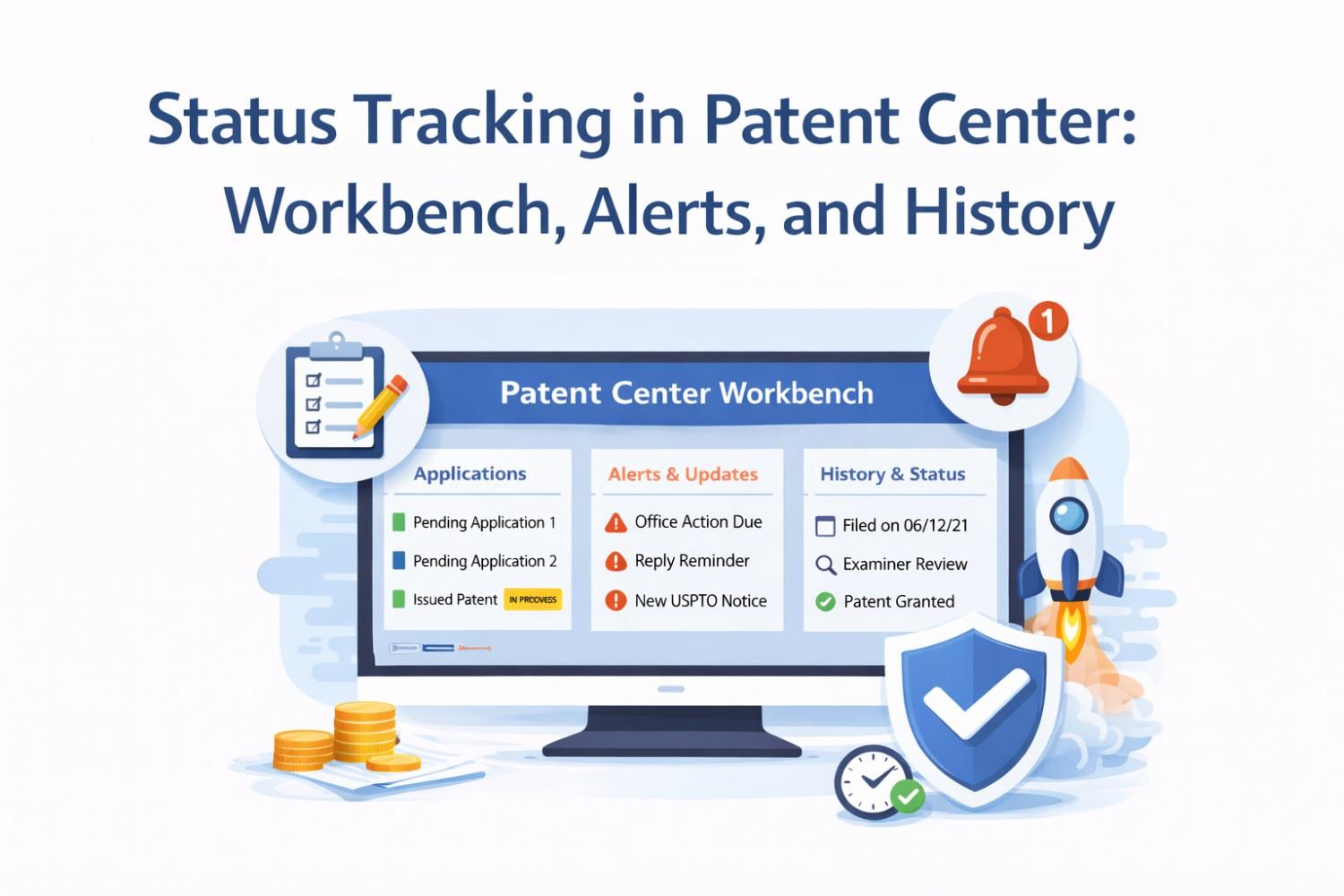
You filed a patent. Now what? This is the part no one talks about. After you hit submit, your idea does not just sit there. It moves. It gets reviewed. It gets pushed forward. It can stall. It can get questions. It can even get rejected if you miss something. If you do not track what is happening, you are flying blind. That is why understanding status tracking inside Patent Center matters. The Workbench. The alerts. The history. These are not just buttons on a screen. They are your early warning system. They are your control panel. They tell you if your invention is safe or at risk. In this guide, we are going to break it all down in simple words. No legal talk. No confusing terms. Just what you need to know to stay in control of your patent.
What the Patent Center Workbench Really Shows You
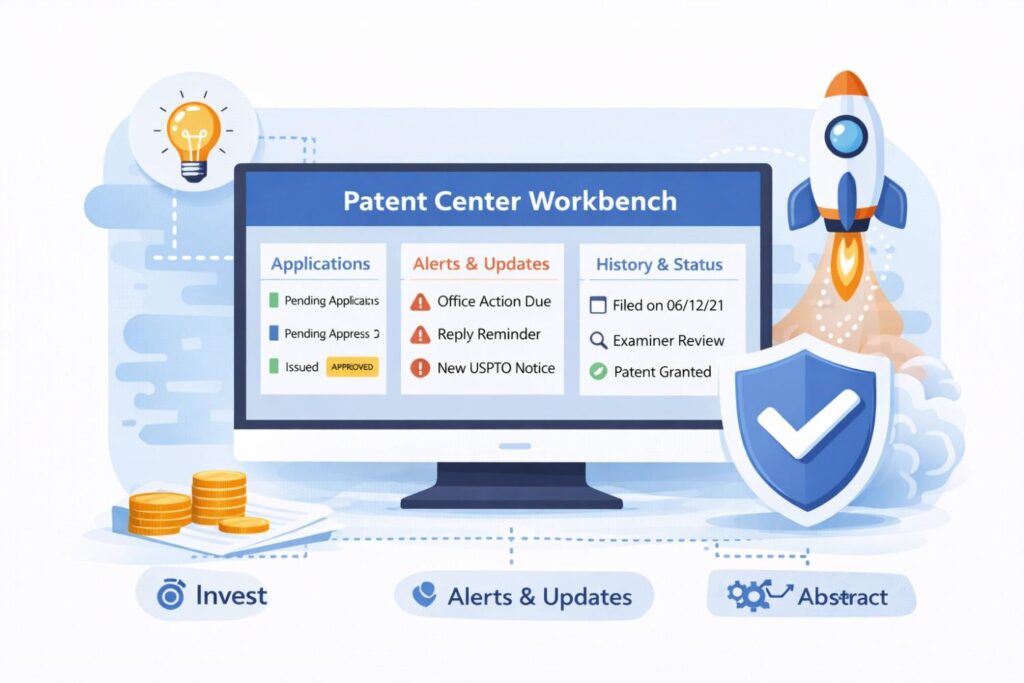
The Workbench inside Patent Center is not just a dashboard. It is your live control room.
It shows you where your patent stands right now, what the patent office is doing, and what you must do next. If you ignore it, you risk missing deadlines. If you use it well, you gain control.
Many founders think filing is the hard part. It is not. Managing what happens after filing is where deals are won or lost. Investors ask about status. Competitors watch filings.
Timelines matter. The Workbench is where you see the real story unfold.
Let’s walk through what it truly shows you and how to use it in a smart way.
Seeing the Real-Time Status of Your Application
When you open the Workbench, the first thing you notice is the status. This is not just a label. It tells you which stage your application is in right now.
You might see that it is waiting to be reviewed. You might see that an examiner has picked it up. You might see that an action has been sent to you. Each one means something different for your startup.
If your status shows that the application is under review, that tells you the patent office has assigned someone to look at it. That means your clock is moving.
This is a good time to prepare your response plan before any official letter arrives.
If the status shows that an action has been issued, that means the examiner has sent questions or objections. This is where many founders freeze. They see legal words and assume the worst.
But the Workbench is showing you something valuable. It is giving you time to respond.
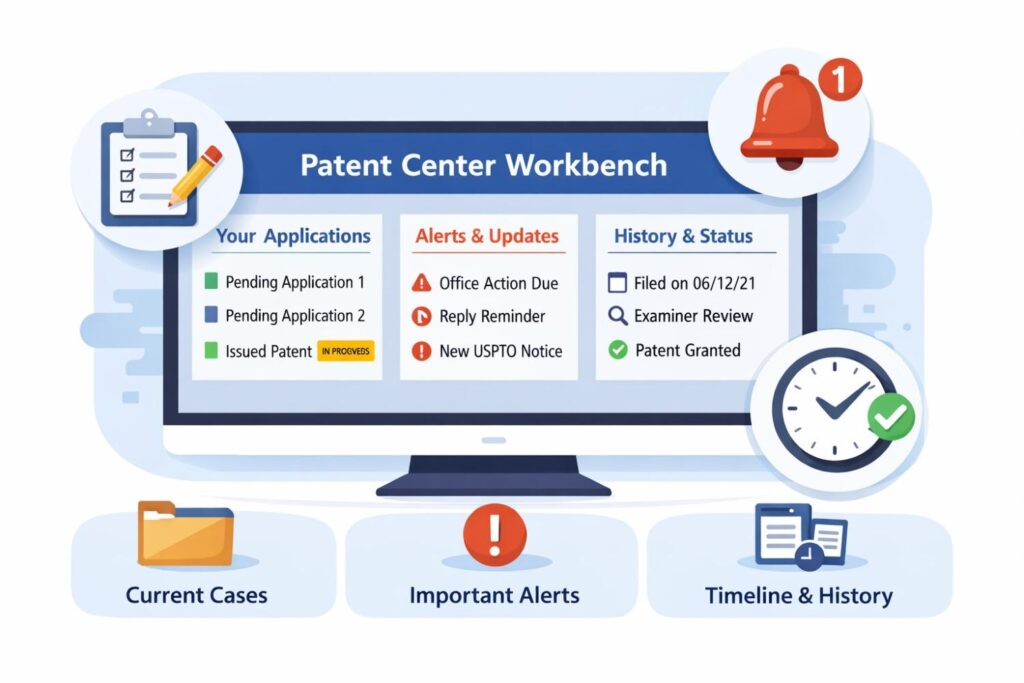
From a business angle, this is where strategy comes in. If you know an action is coming or has arrived, you can align your product roadmap. You can decide whether to push forward with certain features or wait for clarity. You can prepare your team.
You can talk to investors with confidence because you know what stage you are in.
The Workbench is not just about checking a box. It is about knowing when to move.
Understanding Deadlines Before They Hurt You
Deadlines are silent killers in patent work. They do not shout. They sit quietly until they expire.
Inside the Workbench, you can see due dates tied to actions and responses. These dates are serious. Missing one can weaken your position or even end your application.
What smart founders do is treat these dates like product launch dates. They plan backward. If a response is due in three months, they do not wait two months to start. They begin reviewing right away.
A powerful move is to create an internal buffer. If the Workbench shows a response due in ninety days, set your own internal goal for sixty days. This gives you space for review, strategy, and attorney input.
Even better, use the deadline as leverage. If you are in talks with investors, a pending response deadline can create urgency. It shows movement. It shows that your IP is active. It shows that real progress is happening.
The Workbench gives you visibility. Visibility lets you act early instead of reacting late.
Tracking Examiner Assignments and Movement
One of the most overlooked parts of the Workbench is when an examiner is assigned.
When you see that your case has been assigned to an examiner, it means your file is no longer sitting in a queue. A real person is reviewing it.
This is a signal. It tells you that feedback is likely coming. It tells you that your claims will soon be tested.
For a startup, this is the moment to review your own claims again. Ask yourself if they truly protect what makes you different. Ask whether your product has evolved since filing. If it has, you may need to think ahead about follow-up filings.
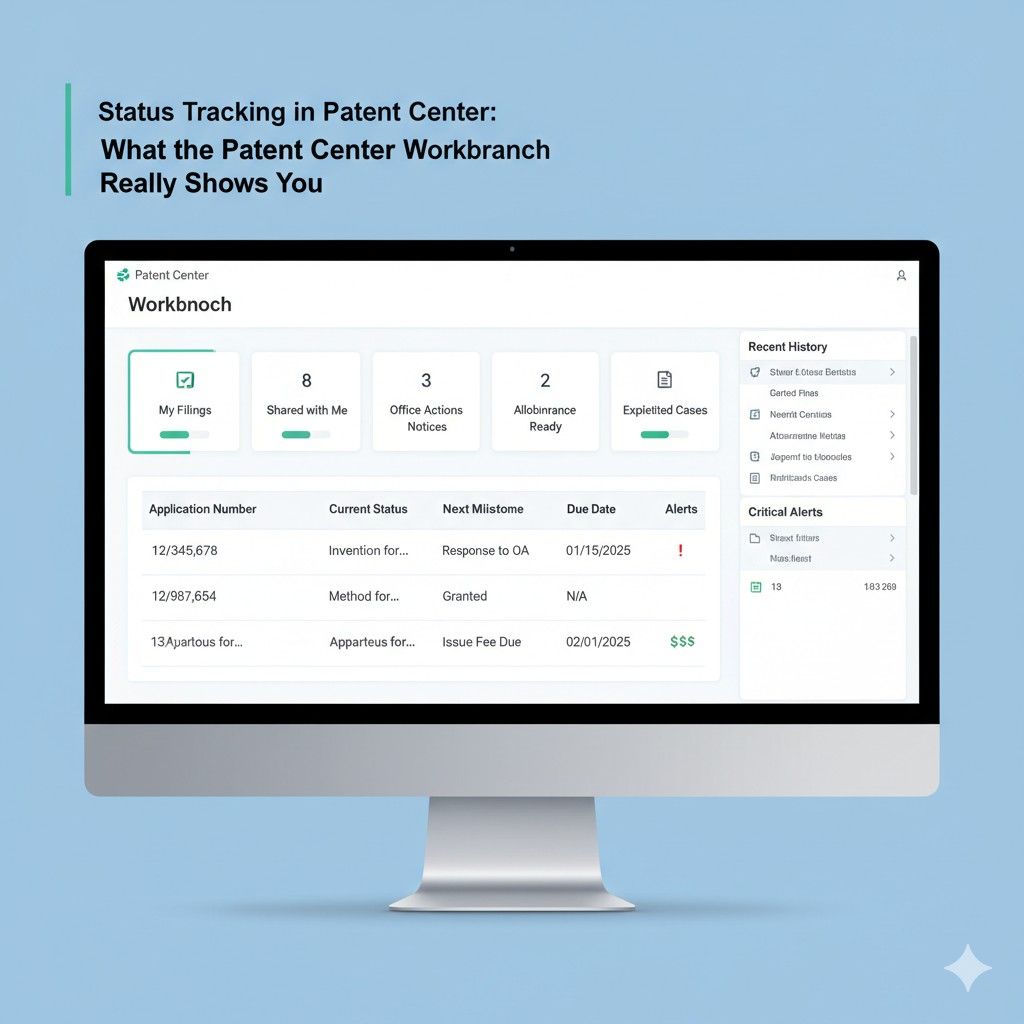
The Workbench does not just show movement at the patent office. It shows you when to reassess your protection plan.
Founders who use this signal well often avoid weak coverage. They adjust early. They work with counsel before the first action lands. They do not wait to be surprised.
This is how you stay proactive.
Monitoring Filing Documents and Confirmations
The Workbench also shows you the documents that were filed and when they were received. This may sound simple, but it is powerful.
Every document matters. If something was uploaded incorrectly, or if a document is missing, the Workbench will reflect that.
From a risk standpoint, this protects you. It gives you proof that your filing was accepted. It shows the official receipt date. That date can make a huge difference if someone else files something similar.
Smart companies review this section carefully right after filing. They confirm that every required document is there. They do not assume everything worked perfectly.
If you are raising funds, having clean filing records builds trust. Investors often ask for proof of filing. Being able to show confirmation directly from the system removes doubt.
The Workbench becomes your evidence file.
Watching for Fee Status and Payments
Another key area is fee tracking.
The Workbench shows if fees have been paid or if something is outstanding. This is not a small detail. Unpaid fees can delay processing or even abandon an application.
Treat fee tracking like payroll. It is not glamorous, but it keeps everything running.
If your company is managing multiple filings, the Workbench helps you see which applications require payments soon. This allows you to plan cash flow. Patent costs are not random. They follow a pattern. When you track them early, you avoid surprises.
A practical move is to map expected patent expenses into your financial planning. When you see upcoming fees in the Workbench, reflect that in your budget. This makes IP part of your growth plan, not an afterthought.
Using the Workbench to Support Fundraising
Most founders do not realize how powerful status tracking can be in investor conversations.
When an investor asks about your IP, vague answers create doubt. Saying “we filed something” is not strong enough.
If you know your exact status from the Workbench, you can say your application is under review, or that you are responding to an examiner’s action, or that allowance is expected soon. That shows maturity.
It signals that you are not just building product. You are building protection.
The Workbench allows you to speak clearly about timelines. If you expect a response in a few months, you can align that with funding milestones. Investors like clarity. The Workbench gives you clarity.
Turning Passive Monitoring into Active Strategy
Most people log into the Workbench only when something feels urgent. That is reactive.
The better approach is to check it on a schedule. Make it part of your monthly leadership review. Even if nothing has changed, you confirm that.
This habit changes your mindset. Instead of fearing patent updates, you own them.
You can also use what you see to guide product decisions. If you are waiting on feedback about certain claims, you may choose to refine features that are not fully protected yet. Or you may accelerate filings for new innovations before competitors move.
The Workbench is not just about compliance. It is about strategy.
Why Manual Tracking Is Not Enough
Here is the honest truth. Patent Center was built for legal professionals. It is not built for busy startup founders.
You can check the Workbench. You can review alerts. You can read status updates. But it takes time and knowledge to understand what they mean in a bigger business context.
That is where many startups fall short. They either ignore updates or overreact.
This is why platforms like PowerPatent exist. You still get full visibility. You still see your status. But you also get guidance. Real attorneys review what is happening. Smart software helps you understand next steps in plain words.
Instead of guessing what a status means, you get clarity. Instead of scrambling near deadlines, you are prepared.
If you want to see how that works in practice, you can explore the full process here: https://powerpatent.com/how-it-works
Because tracking status should not feel like babysitting paperwork. It should feel like steering your company forward.
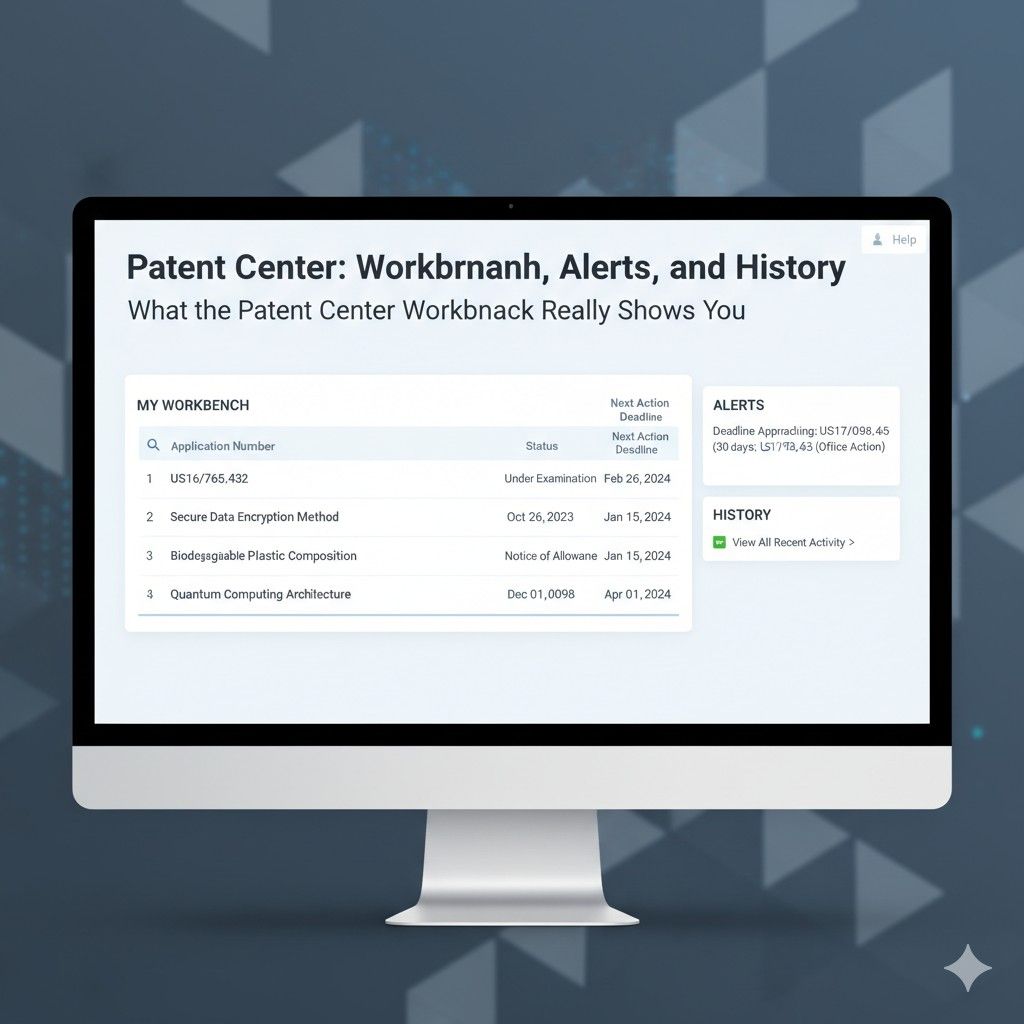
The Workbench shows you what is happening. The real question is whether you use that information to your advantage.
How Alerts Protect You from Costly Mistakes
Alerts are not noise. They are protection.
Inside Patent Center, alerts are signals that something needs attention. Sometimes it is small. Sometimes it is urgent. Either way, ignoring alerts is one of the fastest ways to damage an otherwise strong patent application.
Many founders assume that if something is truly important, someone will call them. That is not how the system works. The patent office sends notices. The system posts updates. The clock starts ticking. If you are not watching, time keeps moving without you.
Alerts are your early warning system. If you use them well, they protect your rights. If you ignore them, they can cost you months, money, or even your filing.
Let’s look at how to use alerts in a smart and controlled way.
What an Alert Really Means for Your Business
When an alert appears, it means there has been movement on your file.
That movement could be a new message from the examiner. It could be a deadline reminder. It could be a payment notice. It could be a status change.
Each alert is tied to action. Even if the action is simply to review something, it matters.
For a startup, movement on a patent is not just a legal event. It is a business event. It affects product plans. It affects funding talks. It affects competitive strategy.
An alert is not just about paperwork. It is about timing.
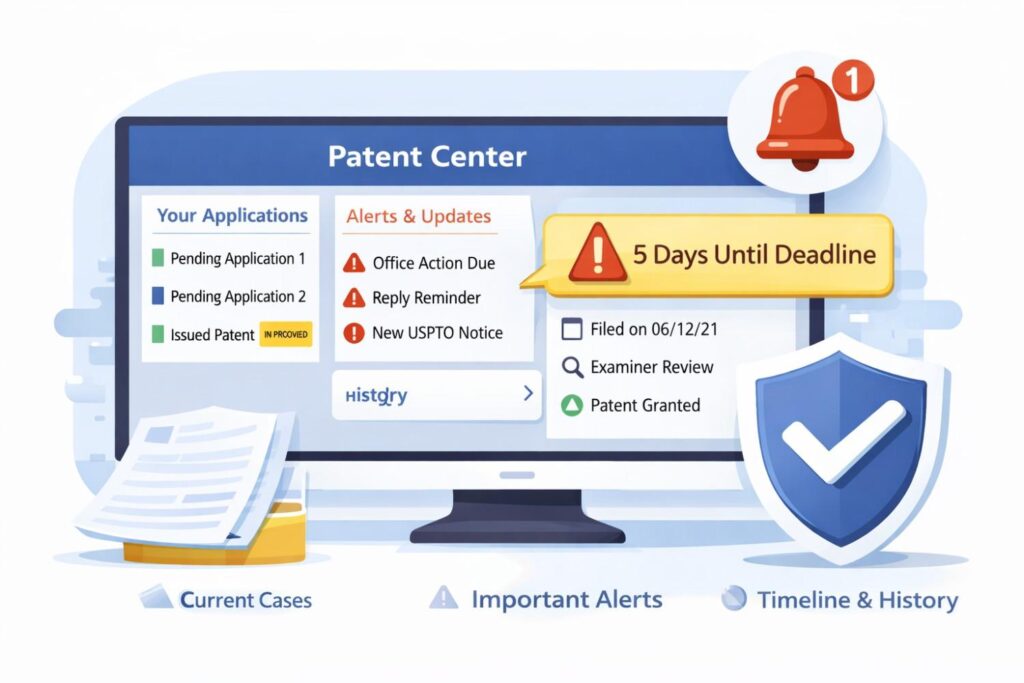
When you receive an alert, do not just clear it. Read it carefully. Ask yourself what it means for your roadmap. Does this change how you talk about your IP? Does this impact your launch timeline? Does this create risk or opportunity?
Founders who pause and think at this moment make smarter moves.
Why Small Alerts Can Turn into Big Problems
Not all alerts feel urgent. Some seem routine. That is where danger hides.
A small notice about a missing form may not feel serious. But if it is not corrected, it can slow down examination. A small payment reminder can lead to abandonment if ignored long enough.
The patent system is strict about timing. There is little room for error.
This is why you need a habit around alerts. The habit is simple. When an alert appears, you review it within forty-eight hours. Even if the deadline is months away, you acknowledge it early.
This approach prevents stress. It keeps you in control. It avoids last-minute panic.
The truth is that most costly patent mistakes are not dramatic. They are quiet. They happen because someone assumed they had more time.
Alerts exist to prevent that. But only if you treat them seriously.
Turning Alerts into a Weekly Leadership Check-In
Here is a smart move most startups do not use.
Make patent alerts part of your weekly leadership review.
Just like you review metrics, cash flow, and product progress, review your IP alerts. It does not need to take long. Five minutes is enough. But that five minutes creates discipline.
This shifts patents from being an isolated legal task to being part of company operations.
When your team sees that IP is reviewed regularly, it sends a message. Protection matters. Timing matters. Ownership matters.
It also prevents knowledge silos. If only one founder understands patent updates, the company becomes fragile. If alerts are reviewed at a leadership level, everyone understands the stakes.
That is how you build strength around your intellectual property.
Reading Between the Lines of Examiner Notices
Some alerts will tell you that an official action has been issued.
This is where many founders feel nervous. The language can sound firm. It can point out problems. It can question novelty or clarity.
Do not panic.
An examiner notice is part of the normal process. It does not mean failure. It means dialogue.
The alert is telling you that it is time to respond with strategy. This is where you decide whether to adjust claims, clarify language, or argue your position.
The key is speed and clarity.
When you see this type of alert, do not wait until the final month of the deadline. Use the first week to review the content with counsel. Map out options. Decide on direction.
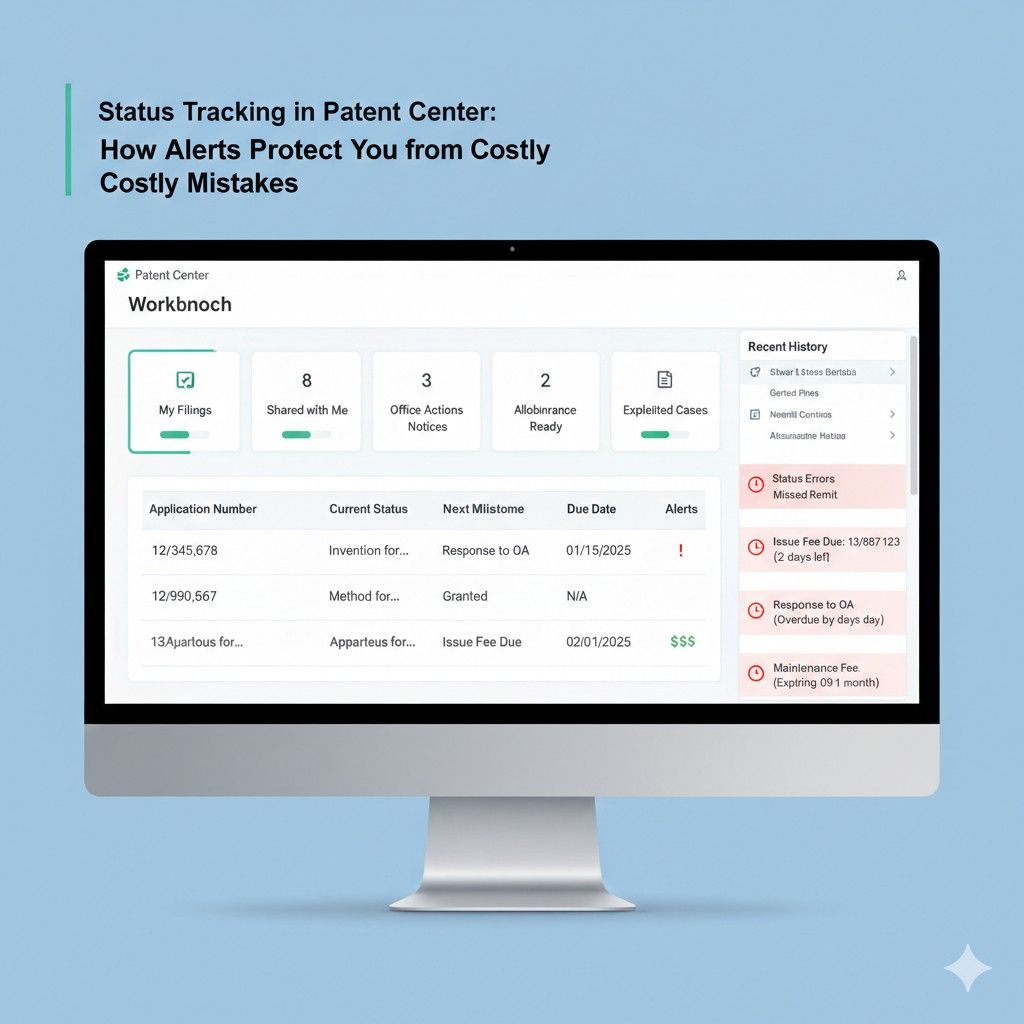
The earlier you respond internally, the stronger your reply will be.
If you are using a platform that combines software and real attorney review, like PowerPatent, this stage becomes far less stressful. You are not alone trying to decode formal language.
You have guidance. You have structure. You have someone translating the alert into plain steps.
You can see how that works here: https://powerpatent.com/how-it-works
Because alerts should trigger smart action, not fear.
Avoiding the Emotional Trap of Patent Updates
One hidden risk with alerts is emotional reaction.
Some founders overreact. They see a notice and assume the patent is doomed. Others underreact. They delay action because they believe it is routine.
Both reactions are risky.
The better approach is steady review.
When an alert comes in, treat it like data. It is information. It is not good or bad on its own. What matters is how you respond.
If the alert signals a deadline, schedule work time immediately. If it signals feedback, gather your team and discuss implications calmly. If it signals a payment, confirm processing and document it.
This mindset keeps your company stable.
Patents are long-term assets. Alerts are just checkpoints along the way.
Alerts as Competitive Intelligence Signals
There is another layer that many founders miss.
Alerts about your own case can hint at how fast the system is moving in your technology area.
If examination is happening quickly, that suggests the field is active. If delays are long, it suggests backlog. These signals can guide your competitive timing.
If your application moves fast, it may be wise to file follow-on applications quickly to build a broader fence around your technology.
If it moves slowly, you may focus on expanding product development while protection catches up.
The alert system, when viewed strategically, becomes part of market awareness.
You are not just tracking paperwork. You are sensing momentum.
The Risk of Manual Alert Monitoring
Patent Center alerts require you to log in and check. That means the system depends on your discipline.
Busy founders miss things. Travel happens. Product fires happen. Fundraising happens.
Relying only on manual checking creates risk.
That is why having structured oversight matters. With a modern platform that combines smart tracking and real attorney support, alerts are monitored continuously. You are notified clearly. You get context. You get guidance.
Instead of hoping you did not miss something, you know you are covered.
That peace of mind lets you focus on building.
If you want to see how startups are simplifying this without losing control, take a look here: https://powerpatent.com/how-it-works
Because protection should not depend on whether you remembered to log in today.
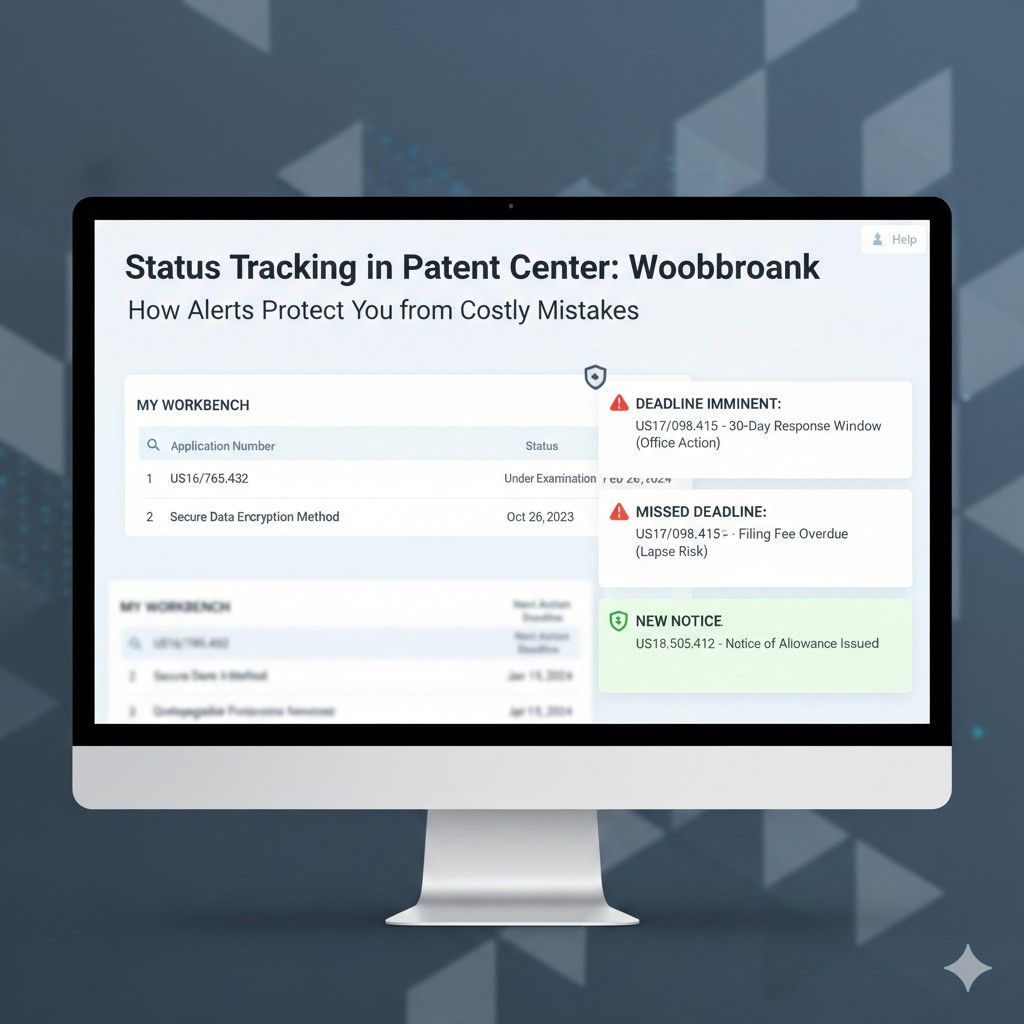
Alerts are simple in design. But they are powerful in impact. They protect your time, your rights, and your momentum.
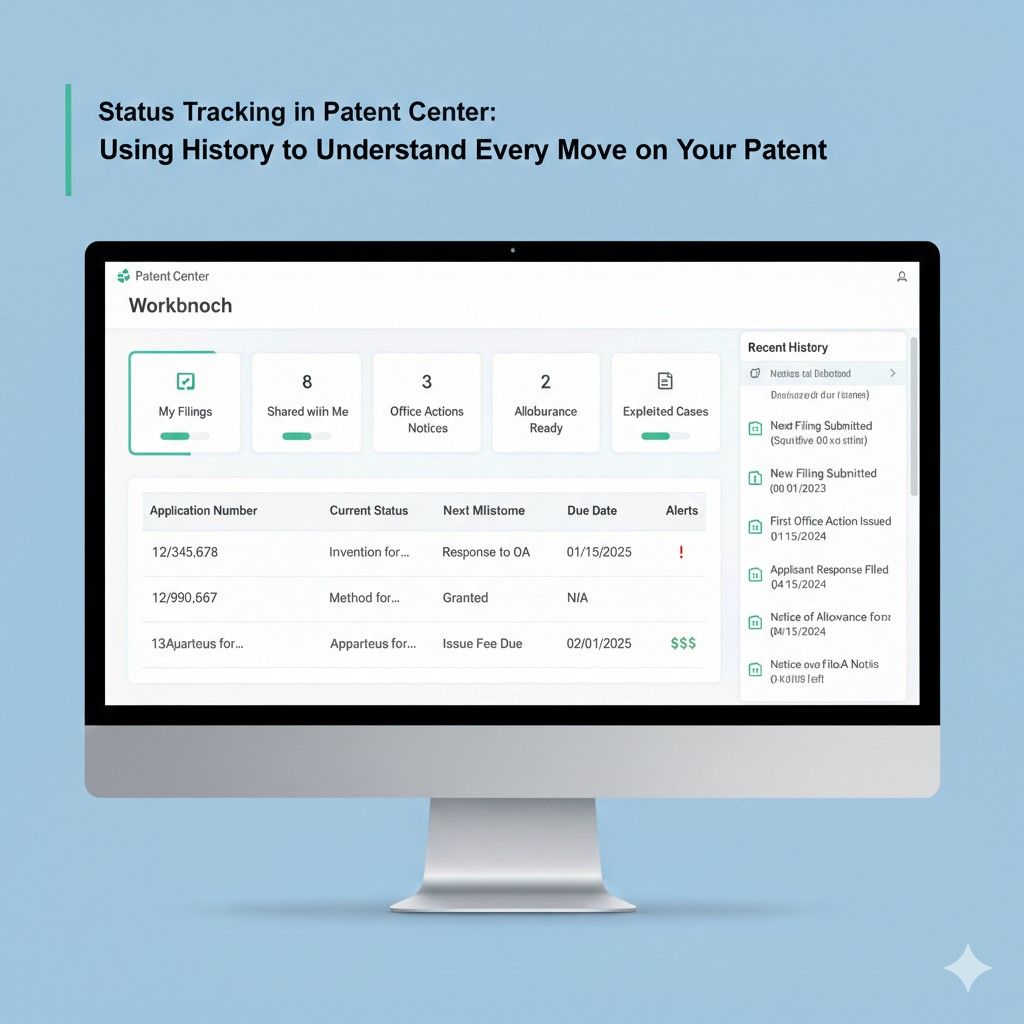
Using History to Understand Every Move on Your Patent
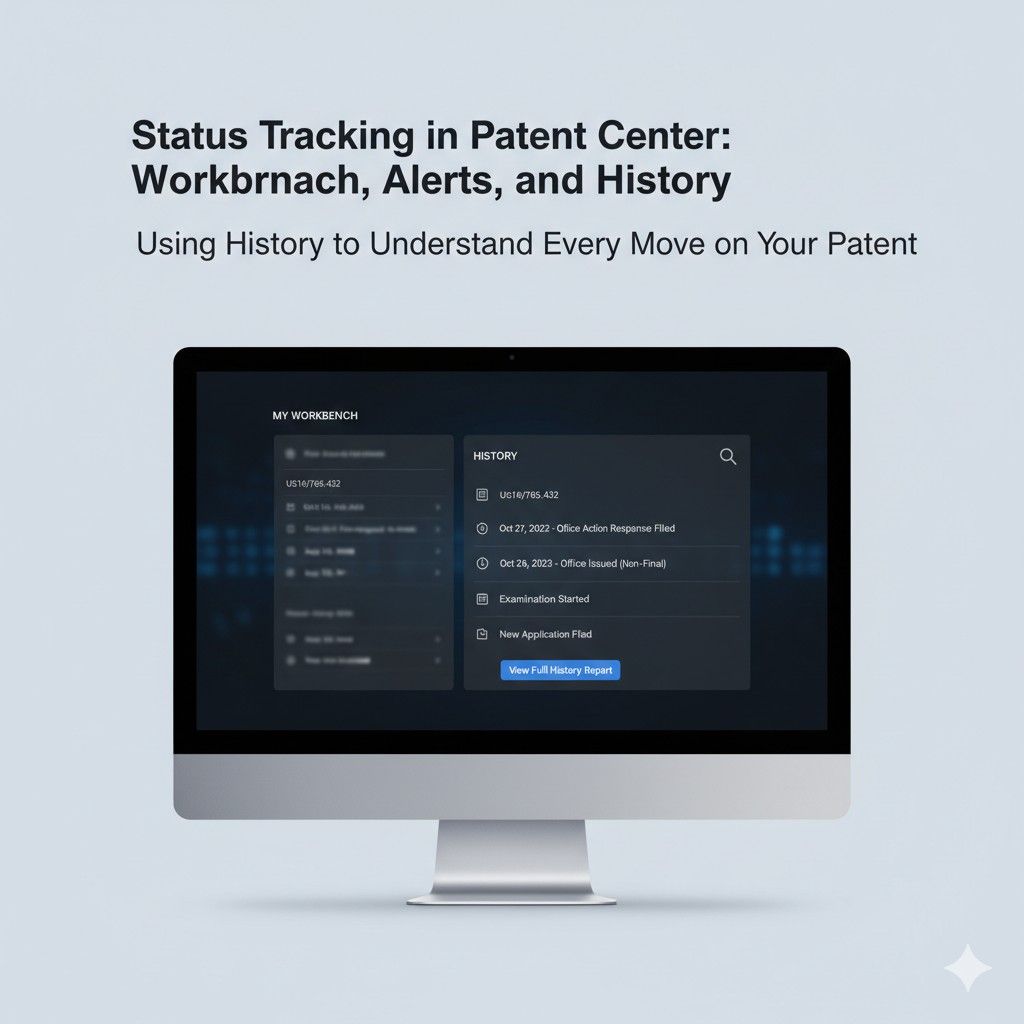
The History tab inside Patent Center is where the full story lives.
Most founders never open it.
They check status. They glance at alerts. Then they move on. But History is different. It shows every action taken on your file from the day you submitted it. Every document. Every notice. Every response. Every change.
If the Workbench is your control room, History is your black box recorder.
And if you want to run your startup like a serious company, you need to understand what that record tells you.
Why History Is More Than a Log
At first glance, History looks like a timeline of events.
You see dates. You see document names. You see system updates.
But this is not just a record. It is evidence.
In business, proof matters. When you talk to investors, partners, or acquirers, they will not just ask if you filed a patent. They will want to see what happened next.
History shows that your application was filed on a certain date. It shows when the patent office reviewed it. It shows when you responded. It shows how long each step took.
This creates credibility.
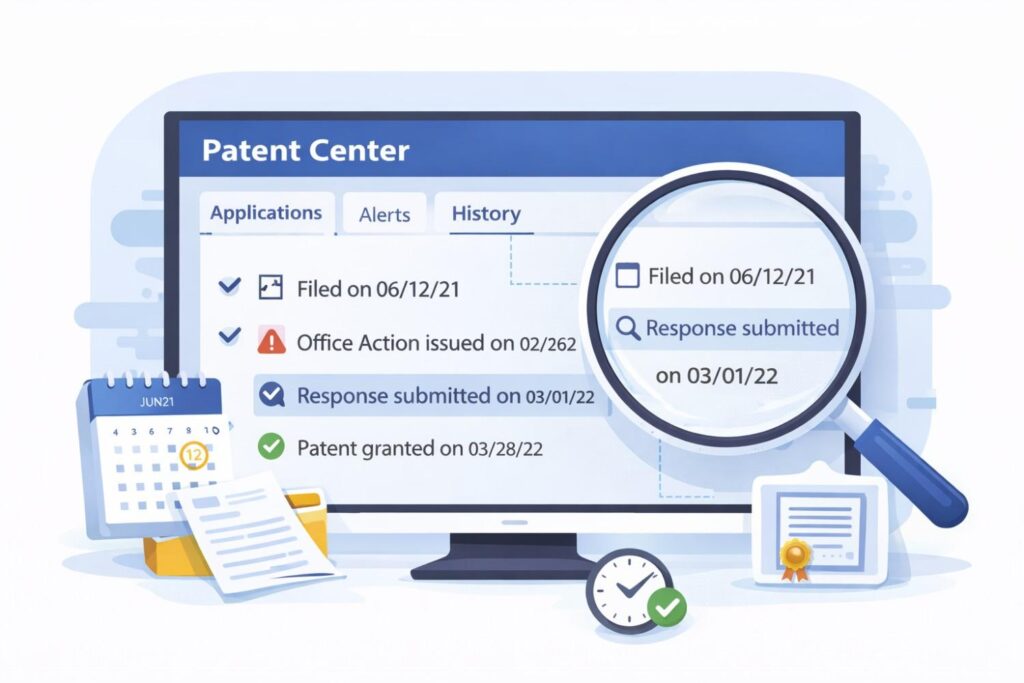
If someone questions priority or timing, you have a clean record. If someone claims you delayed action, you can show exactly when you responded.
History protects you not just legally, but reputationally.
Seeing Patterns in Examiner Behavior
When you study History closely, you begin to see patterns.
You can see how long it took for an examiner to issue the first action. You can see how quickly you responded. You can see how much time passed before the next update.
Over time, this becomes insight.
If you have multiple filings, you can compare timelines. You can see which areas move faster. You can estimate how long future steps may take.
This helps with planning.
If your History shows that responses typically take six months to receive feedback, you can build that into your roadmap. You can align marketing or fundraising conversations around likely milestones.
Instead of guessing, you are planning with data.
That shift changes how you talk about your intellectual property. It becomes predictable instead of mysterious.
Learning from Past Responses
History also shows how you responded to examiner feedback.
You can review prior amendments. You can see arguments made. You can see how claims evolved.
This is powerful.
Many startups treat each patent response as an isolated task. They forget what was said before. That can lead to weak follow-up arguments or inconsistent positioning.
When you review History before drafting a new response, you stay consistent. You understand what ground you have already covered. You avoid repeating weak points.
You also learn what worked.
If certain arguments led to progress, that is valuable knowledge. If certain language triggered objections, you can refine your approach.
History turns experience into strategy.
Using History During Due Diligence
If you plan to raise funding or sell your company, due diligence will include your patents.
Buyers and investors look at more than just issued patents. They review pending applications. They look at prosecution history. They assess risk.
When your History is clean and organized, the process moves faster.
If your file shows timely responses and steady progress, that signals discipline. If it shows missed deadlines or rushed filings, that creates concern.
This is why it is smart to review your History at least once a quarter.
Not because you expect a deal tomorrow, but because preparation creates leverage.
When opportunity comes, you are ready.
Understanding Claim Changes Over Time
One of the most important parts of History is how your claims changed.
Your original claims might have been broad. Over time, they may have been narrowed. Or clarified. Or adjusted to avoid prior art.
If you do not track this carefully, you may believe you are protected more broadly than you really are.
That misunderstanding can shape product decisions in the wrong way.
By reviewing claim changes in History, you stay aligned with reality. You understand exactly what is protected and what is still pending.
This allows you to make smarter technical choices.
If key features were narrowed, you might consider filing additional applications to protect related innovations. If certain concepts were challenged, you may decide to develop alternative implementations.
History is not backward-looking. It guides future filings.
Turning History Into Institutional Memory
Startups move fast. Team members leave. Founders get busy. Details fade.
History preserves knowledge.
If a new team member joins and needs to understand your patent position, History provides a complete timeline. If you switch attorneys, the new counsel can review prior steps quickly.
This prevents costly relearning.
Without a clear record, you risk repeating arguments or missing context. With History, you maintain continuity.
Think of it as building an internal IP memory bank.
The stronger your memory, the stronger your protection strategy.
Avoiding the Trap of Misinterpretation
There is one important caution.
History shows events, but it does not explain strategy. It does not tell you why certain choices were made. It does not explain the risk behind a change.
If you read it without context, you may draw the wrong conclusions.
This is why pairing History with expert guidance matters.
When software is combined with real attorney oversight, you do not just see the timeline. You understand it. You know why claims were adjusted. You know what options remain. You know how strong your position is today.
This combination removes guesswork.
PowerPatent was built around this idea. Founders get full transparency, but also clear explanation in simple language. You see your History. You understand what it means. You know what to do next.
If you want to see how that works step by step, you can explore it here: https://powerpatent.com/how-it-works
Because seeing the record is one thing. Knowing how to use it is another.
History shows every move on your patent. When you study it with intention, it becomes one of your strongest strategic tools.
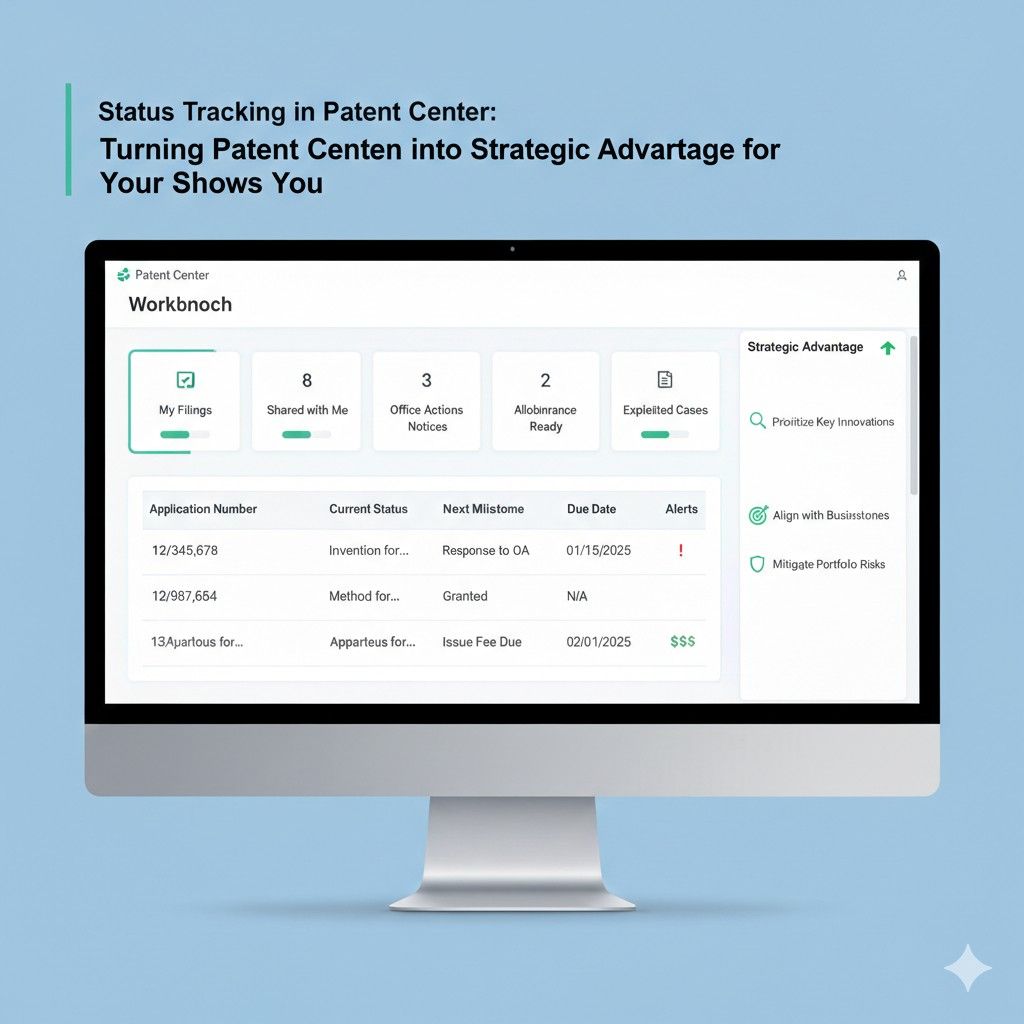
Turning Status Tracking into a Strategic Advantage for Your Startup
Most founders treat patent status like a chore.
They log in when they have to. They respond when pushed. They hope nothing goes wrong.
That approach keeps you alive. It does not make you strong.
When you shift your mindset, status tracking becomes leverage. It becomes timing control. It becomes negotiation power. It becomes a signal to the market that you are building something real and defensible.
This is where serious startups separate themselves.
Moving from Reactive to Proactive IP Management
Reactive founders wait for notices. Proactive founders expect them.
If you only act when an alert feels urgent, you are always behind. The smarter move is to assume movement is coming and prepare in advance.
If your Workbench shows that examination is likely within a certain window, start reviewing your claims before the official letter arrives. If your History shows how long prior responses took, begin drafting ideas early.
This creates calm.
When the official action comes in, you are not starting from zero. You are refining. That small shift in timing leads to stronger responses.
Examiners can sense when a reply is thoughtful versus rushed. Strong replies move cases forward faster. Faster progress means earlier protection. Earlier protection strengthens your position with customers and investors.
Status tracking, when used this way, becomes a tool for speed.
Aligning Patent Milestones with Business Milestones
Every startup has key moments.
Product launch. Beta release. Fundraising round. Enterprise contract. Acquisition talks.
Your patent timeline should not exist in isolation from these moments.
When you monitor your status carefully, you can align these timelines.
If you know your first office action is expected soon, you can prepare messaging around your pending claims. If you anticipate allowance within months, that can support investor conversations. If you see delays, you may adjust your communications to stay accurate.
This alignment builds trust.
Nothing damages credibility faster than overstating your protection. When you know your exact status, you speak clearly and confidently.
That confidence is magnetic in negotiations.
Using Status Data to Guide Filing Strategy
Status tracking also helps you decide when to file more applications.
If your current application is progressing well and nearing allowance, that may be the right time to file a continuation or related application to expand your coverage.
If examination reveals gaps in your protection, status signals that it is time to strengthen your fence.
Many startups wait too long. They focus on one filing and assume it covers everything. Over time, the product evolves beyond the original claims.
When you actively monitor status and claim development, you see these gaps earlier.
That awareness gives you a chance to file strategically instead of scrambling later.
Strong patent portfolios are not built in one shot. They are built in layers. Status tracking tells you when to add the next layer.
Strengthening Negotiation Power with Clear Status
Imagine you are in talks with a strategic partner.
They ask about your intellectual property. Instead of vague answers, you provide specifics. Your application is under active examination. You responded within thirty days. The next update is expected soon.
That level of clarity signals competence.
It shows that you are not casually protecting your technology. You are managing it with intent.
In acquisition talks, this matters even more. Buyers look for risk. If your patent history shows missed deadlines or confusion, they discount value.
If your tracking shows discipline and timely action, you reduce perceived risk.
Lower risk often means higher valuation.
Status tracking may seem administrative. In reality, it shapes financial outcomes.
Reducing Stress Through Structured Oversight
There is another benefit that is less visible but equally important.
Clarity reduces stress.
When you do not know where your patent stands, uncertainty grows. You wonder if something is pending. You question whether deadlines are approaching. You feel uneasy.
Structured status tracking removes that mental burden.
When you review Workbench, alerts, and History regularly, nothing feels hidden. You see the path ahead.
Even better, when you combine smart tracking software with real attorney oversight, the pressure drops even more.
Instead of decoding updates alone, you receive plain guidance. You understand what matters. You ignore what does not.
PowerPatent was designed with this exact problem in mind. Founders wanted control without drowning in legal process. They wanted transparency without confusion.
By combining modern software with real attorney review, you get clear status visibility and real-world strategy at the same time.
You can see how the system works here: https://powerpatent.com/how-it-works
Because the goal is not just to file patents.
The goal is to protect innovation without slowing down growth.
Building an IP Culture Inside Your Company
When founders treat status tracking seriously, the rest of the company follows.
Engineers become more aware of what is protected. Product teams think about defensibility earlier. Leadership discussions include intellectual property as a core asset, not an afterthought.
This cultural shift compounds over time.
Instead of reacting to competitors, you build barriers before they catch up. Instead of worrying about copycats, you focus on expansion.
Status tracking is the operational backbone of that culture.
It keeps protection visible. It keeps timelines clear. It keeps accountability strong.
And when investors see that culture, they recognize maturity.
The Bigger Picture
Patents are long-term assets.
Status tracking is how you nurture them.
Workbench shows you where you stand. Alerts warn you before problems grow. History records every step so you can learn and improve.
When you treat these tools as strategic levers rather than administrative chores, you unlock their real value.
You gain speed. You gain confidence. You gain leverage.
And when you pair that with a platform built for modern founders, one that combines intelligent software with real attorney oversight, you remove friction from the entire process.
If you are building something that matters, it deserves protection that moves as fast as you do.
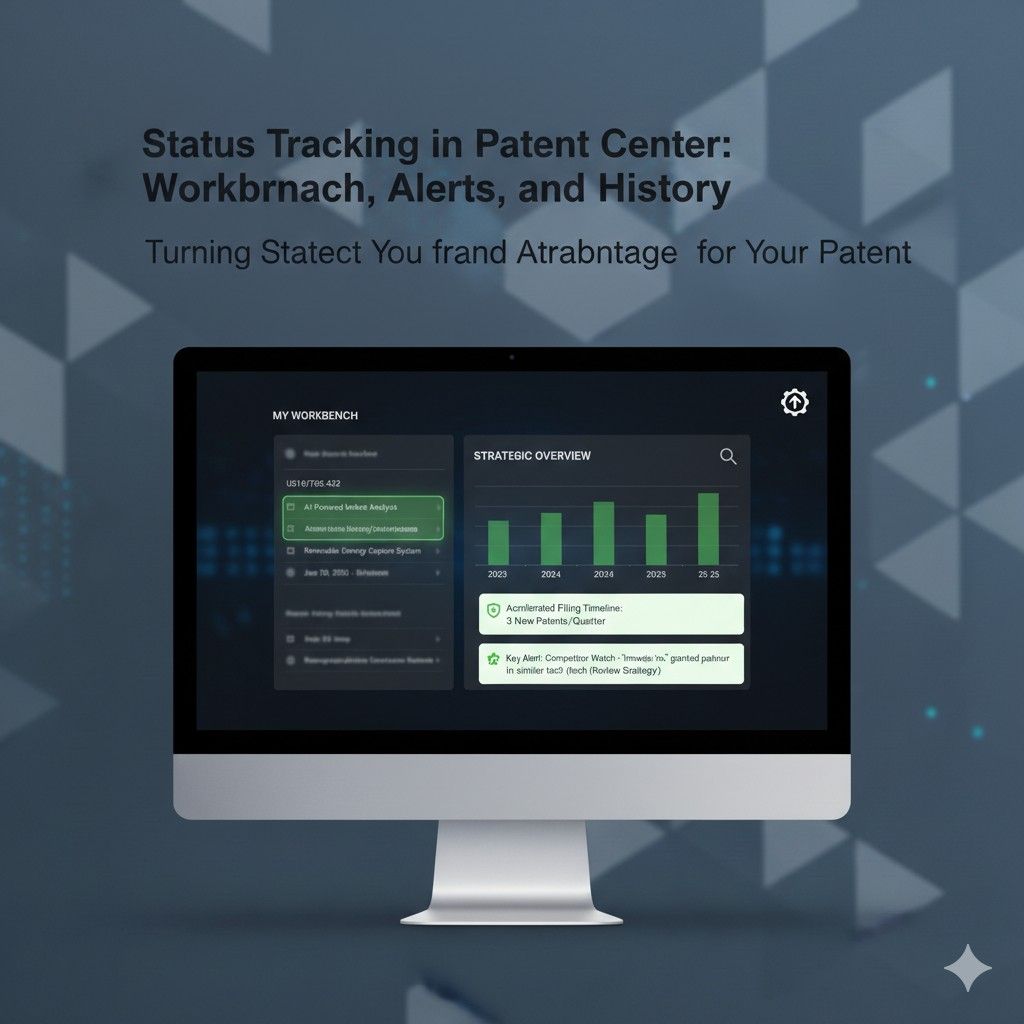
Explore how to take control of your patent process without slowing down your startup here: https://powerpatent.com/how-it-works
Wrapping It Up
Filing a patent is not the finish line. It is the starting line. What happens after you file determines whether your idea turns into real protection or fades into paperwork. The Workbench shows you where you stand. Alerts keep you from falling behind. History gives you a clear record of every move. Together, they form the backbone of smart patent management. When you ignore status tracking, you give up control. When you use it well, you take ownership of your timeline, your protection, and your leverage.
Leave a Reply