Category: Patent Filing
-
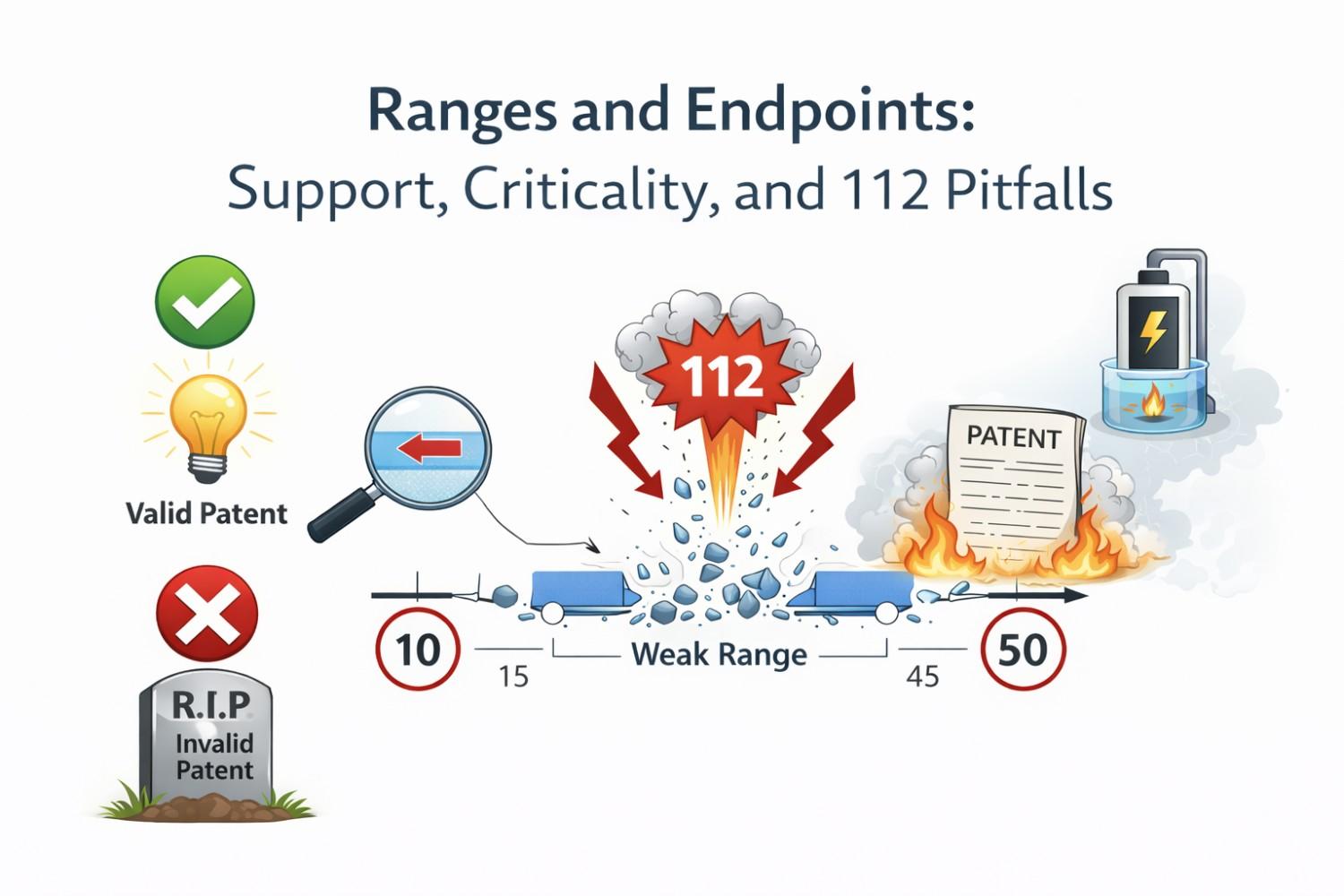
Ranges and Endpoints: Support, Criticality, and 112 Pitfalls
If you are building real tech, ranges will show up in your patent. Voltage ranges. Data size ranges. Time ranges. Threshold ranges. And this is where many strong inventions quietly break. Most founders do not lose patents because their idea is weak. They lose them because a single number, or the edge of a range,…
-
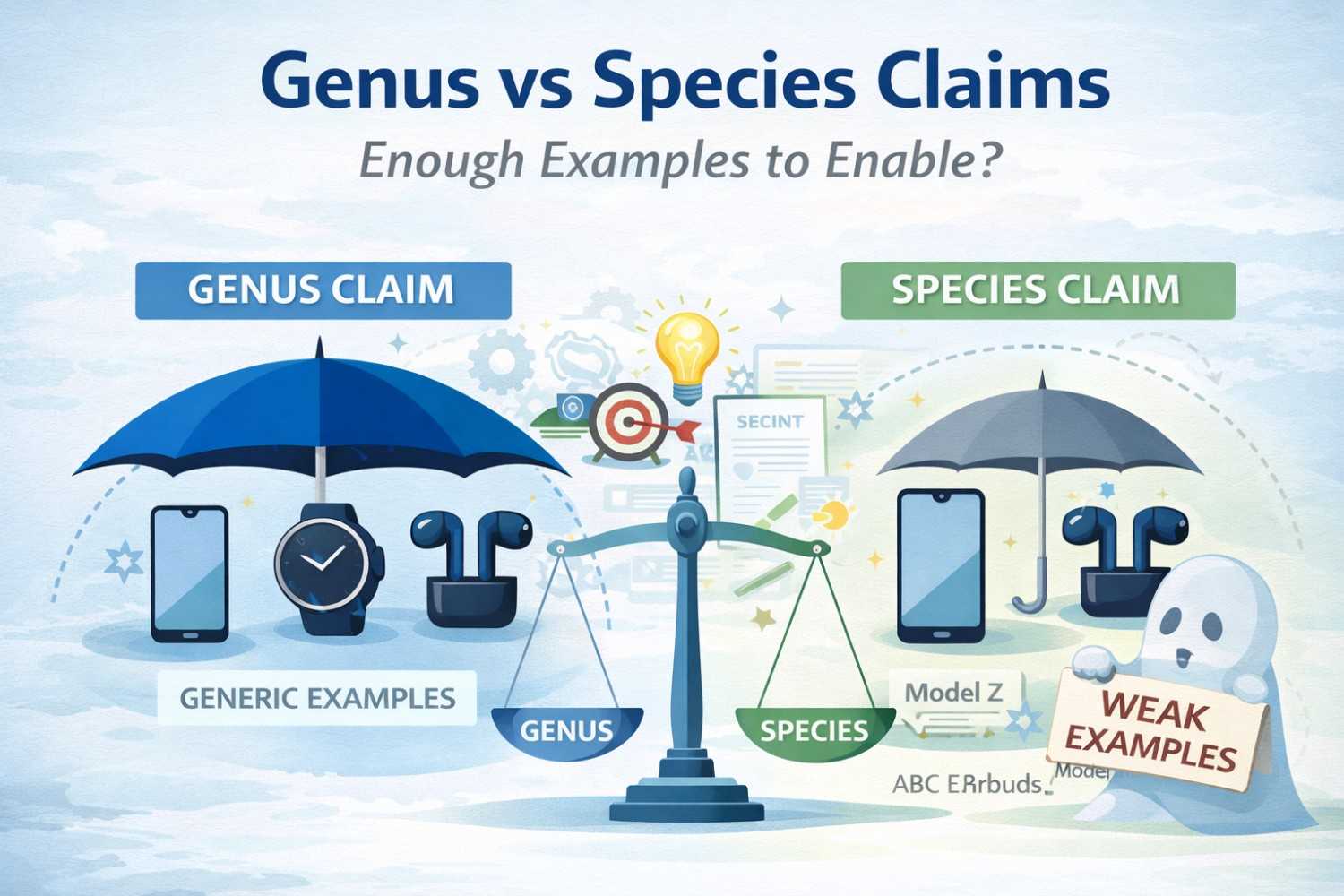
Genus vs Species Claims: Enough Examples to Enable?
If you are building something new, your patent can either protect the whole idea or just a tiny slice of it. That choice often comes down to one question: are you claiming a big category, or just a few specific versions? This is where genus and species claims come in, and where many founders quietly…
-

Algorithm Disclosure for Software Claims: What Examiners Expect
Software patents fail for one simple reason more than any other. The idea sounds smart, the product works, the code is real—but the patent does not clearly explain how the software does the work. That missing “how” is what examiners care about most. And that “how” is the algorithm. If you build software, you already…
-
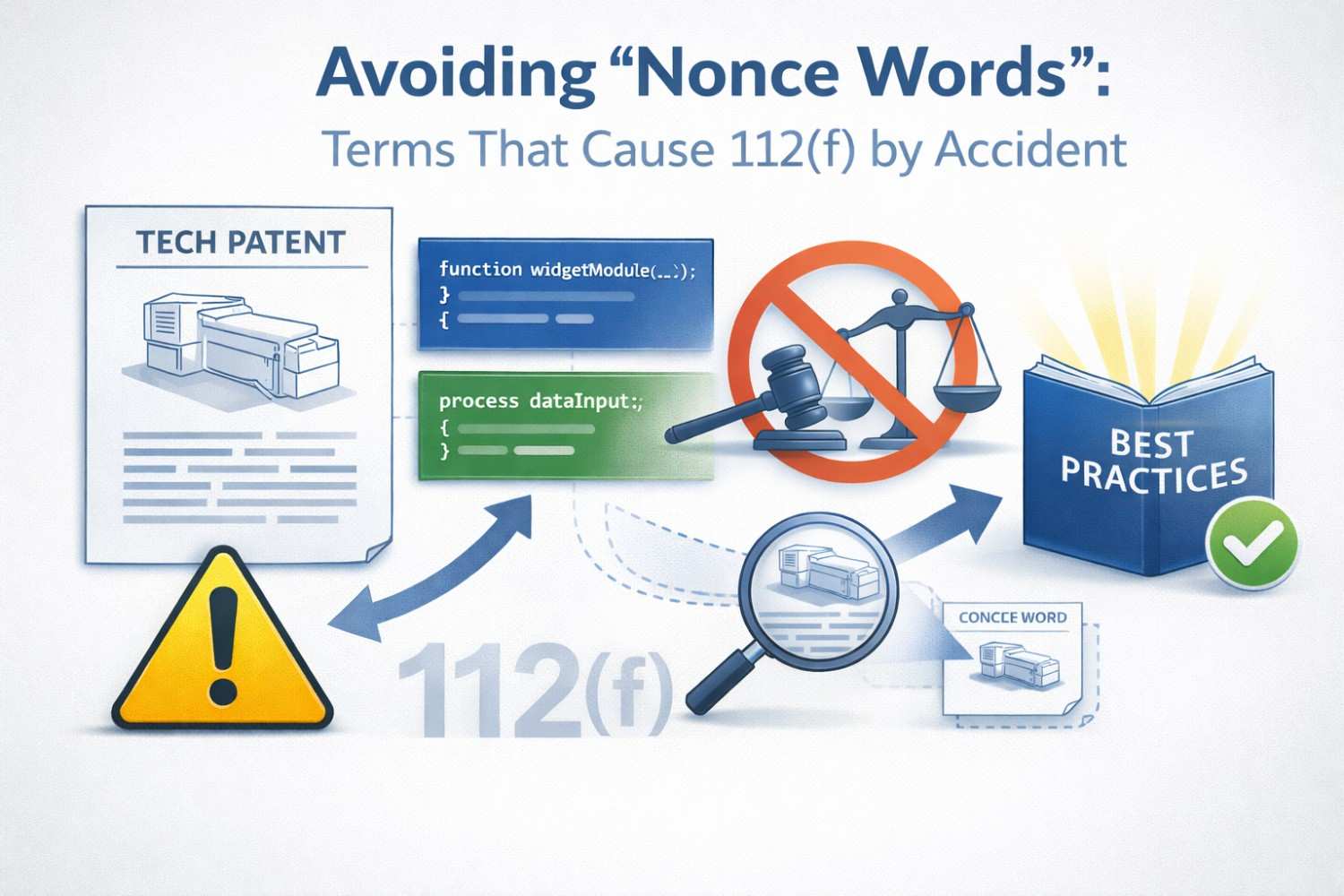
Avoiding “Nonce Words”: Terms That Cause 112(f) by Accident
Patents fail more often because of bad words than bad ideas, and one of the most dangerous problems is something called 112(f), which can be triggered by accident when you use certain innocent-looking terms known as “nonce words.” These words sound helpful and flexible, but courts often treat them as placeholders that secretly limit your…
-
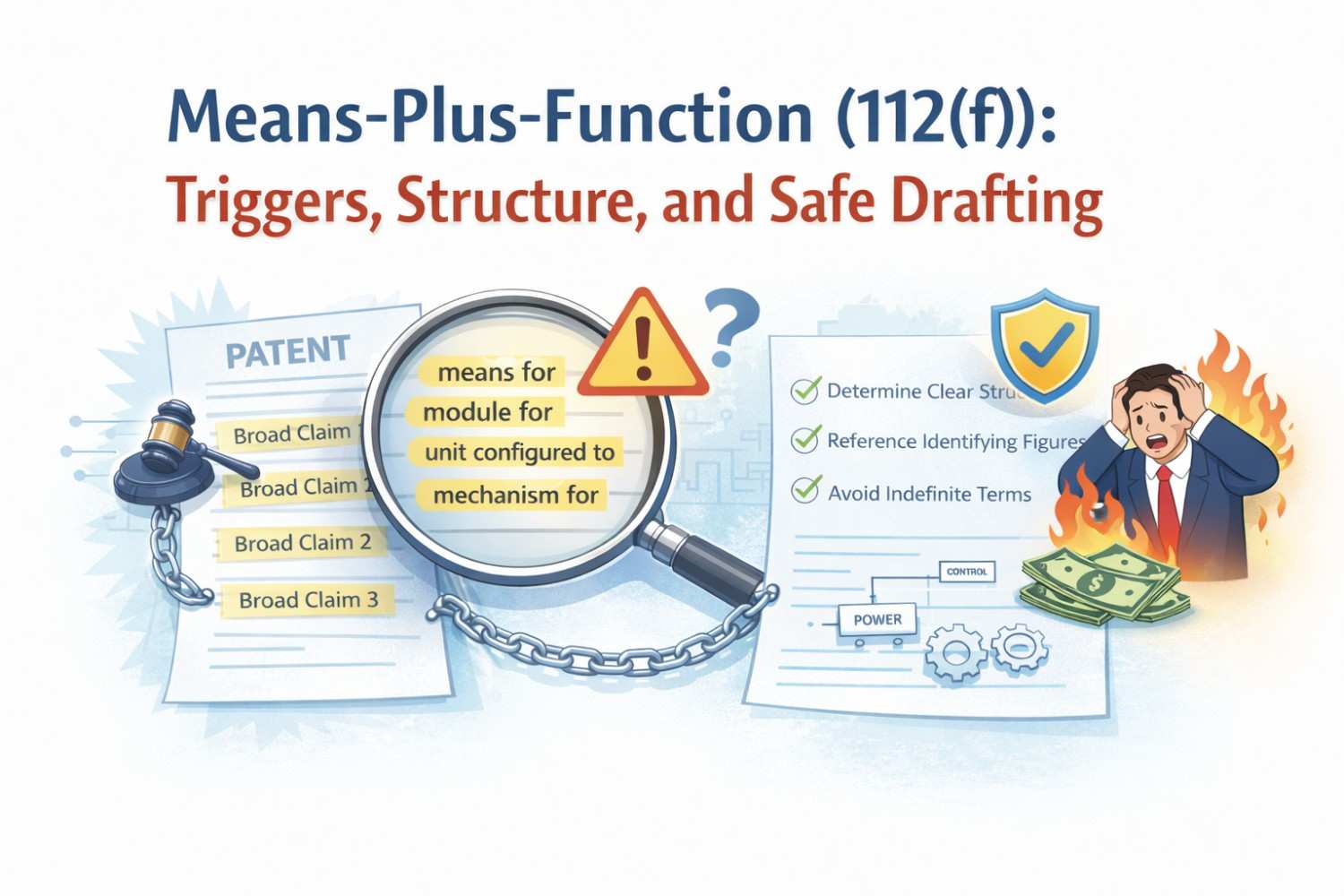
Means-Plus-Function (112(f)): Triggers, Structure, and Safe Drafting
Means-plus-function under Section 112(f) is one of the most dangerous rules in patent law because it can quietly shrink your patent without you realizing it. One innocent phrase can limit your invention to a few examples in your spec, making it easy for others to design around you later. This article explains, in plain and…
-
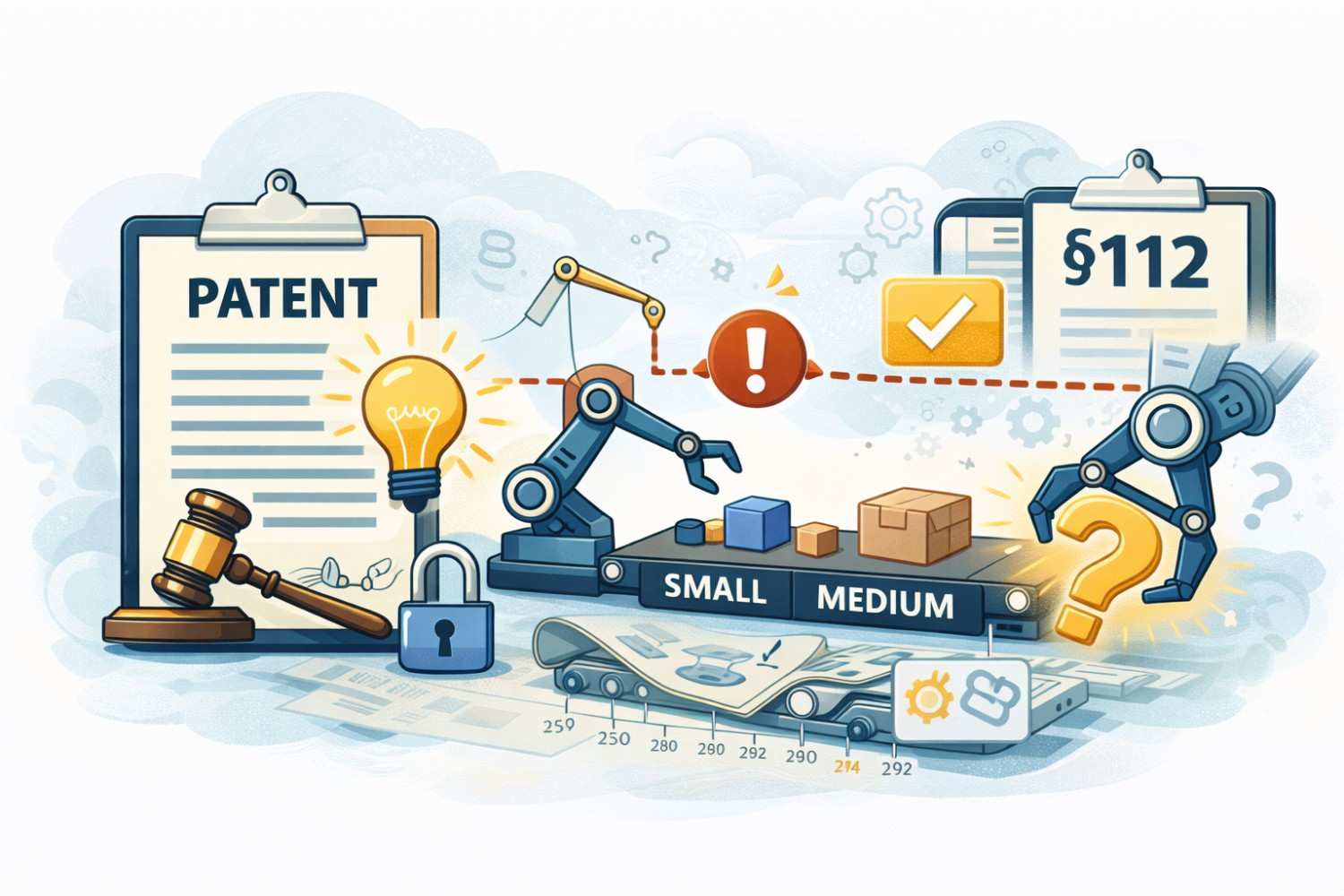
Functional Claiming: How Far You Can Go Under §112
Most founders do not lose patent rights because their idea was weak.They lose them because they described the idea the wrong way. Functional claiming sits right at the center of that problem. It is one of the most powerful tools in patent writing, and also one of the easiest ways to destroy your own patent…
-
Definiteness After Nautilus: Plain-English Rules That Pass
Patents often fail for one simple reason: the words are not clear enough. After the Supreme Court’s Nautilus decision, that problem became fatal. The rule is now strict and unforgiving—if a patent claim does not clearly tell a skilled reader exactly where the invention starts and stops, it does not survive. There is no room…
-
Written Description 101: How to Show You Really Possess the Invention
Written description is the part of a patent that proves you truly had the invention when you filed, not just a big idea or a future plan. It shows, in clear and concrete words, what you built, how it works, and why it works that way, so a patent examiner can see that you were…
-
Enablement Made Simple: The Wands Factors Explained
Most patents fail for one quiet reason. Not because the idea was bad. Not because someone else invented it first. They fail because the patent did not teach enough. That single idea is called enablement. Enablement is the rule that says your patent must explain your invention so clearly that a normal engineer could rebuild…
-
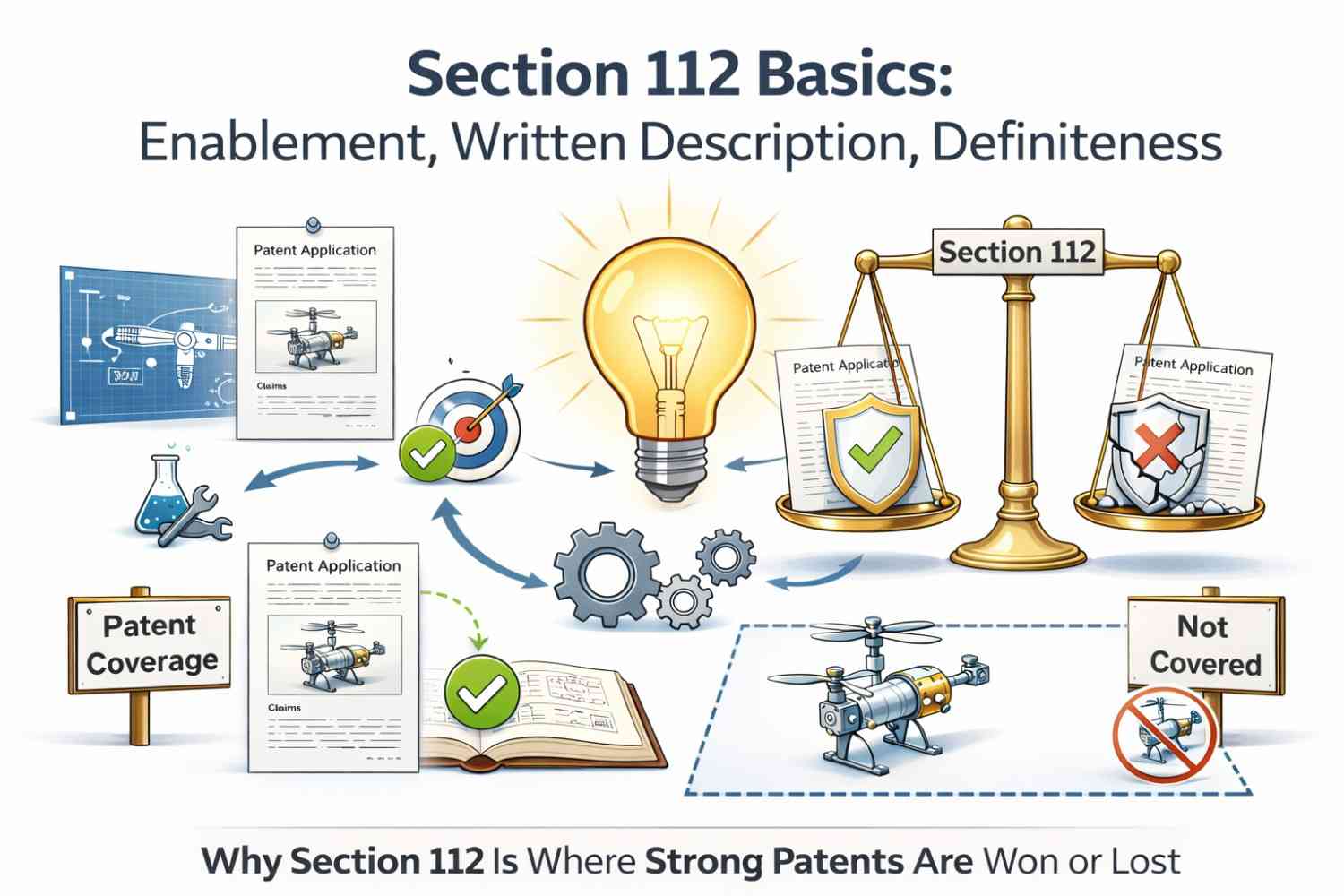
Section 112 Basics: Enablement, Written Description, Definiteness
If you are building something new, your idea lives first in your head, then in your code, then in your product. A patent is what turns that idea into something the law can protect. But here is the part most founders never hear about until it is too late. The strongest patents do not fail…