
Patents shape how modern technology gets built, shared, and sold. Most founders know patents matter, but very few understand how patents behave when they sit at the center of big, shared tech standards like Wi-Fi, 5G, video codecs, or payment systems. That confusion is exactly where FRAND comes in. FRAND sounds like legal noise. It is not. FRAND is a simple idea with huge business impact. If you build tech that plugs into a standard, FRAND can decide how much money you make, who you can work with, and how much control you really have over what you built.
Why FRAND Exists and What Problem It Was Built to Solve
FRAND did not appear by accident. It was created because technology changed faster than old patent rules could handle.
As more products began to rely on shared building blocks, patents started colliding with real-world use. FRAND exists to keep innovation moving without letting power concentrate in the wrong hands.
This section explains the real problem FRAND was designed to fix, why businesses should care early, and how founders can avoid silent traps that weaken their position later.
The moment technology stopped being built alone
There was a time when most products were built in isolation. One company designed a thing, patented it, sold it, and moved on.
That world is gone. Today, almost every serious product depends on shared systems. Phones depend on wireless standards.
Cars depend on connectivity standards. Software depends on data formats and communication rules that everyone agrees to follow.
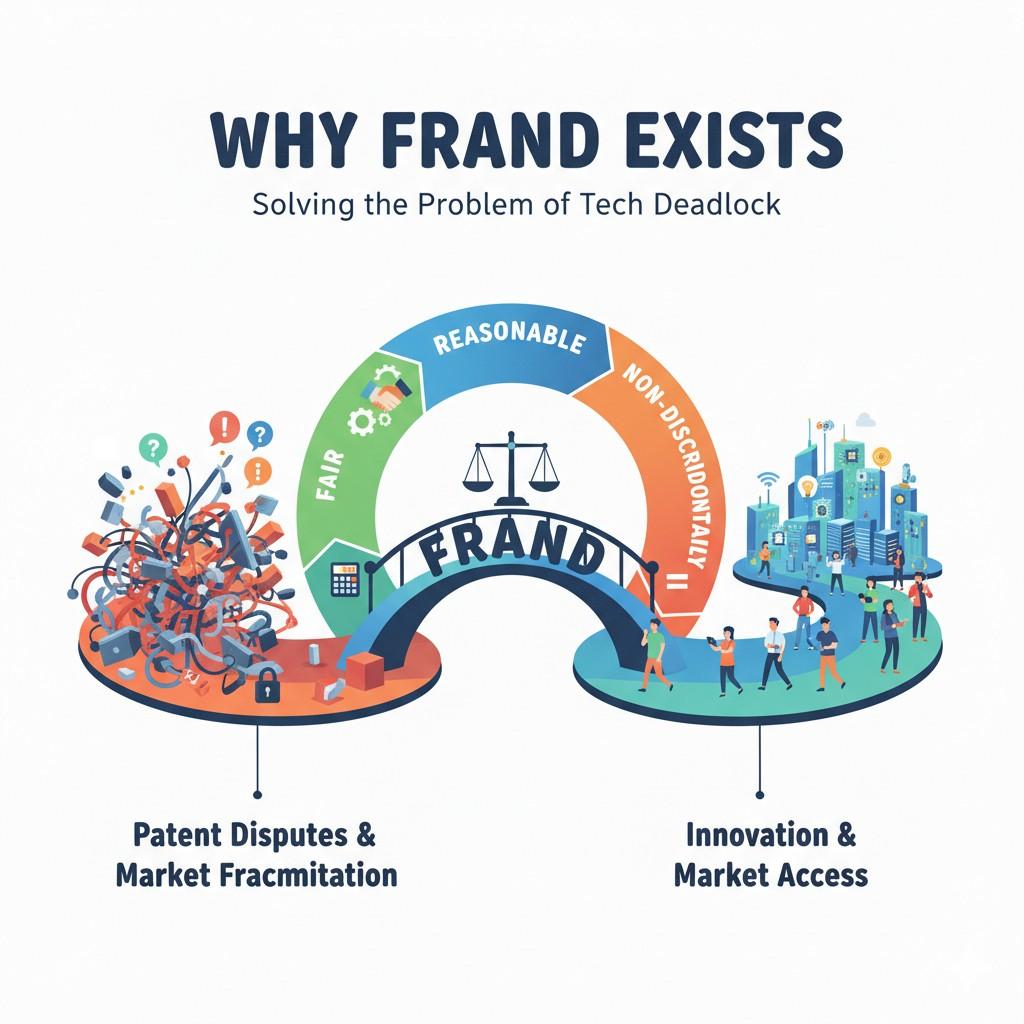
Once technology became shared, patents became pressure points. A single patent could sit inside a system that everyone must use to compete. That power imbalance is what triggered the need for FRAND.
For a business, this means your patent may matter far more than you expect. If it touches a shared system, it stops being just your private asset and becomes part of a larger machine.
When one patent can block an entire market
Before FRAND, a patent holder could wait until a standard was fully adopted and then demand extreme fees.
At that point, companies had no real choice. They had already built factories, shipped products, and trained customers. Walking away was impossible.
This behavior is often called a hold-up. It is when a patent owner uses timing as a weapon. FRAND exists to prevent this exact move.
From a business view, this matters in two ways. If you hold the patent, you need to know what you can and cannot demand. If you need the patent, you need to know what protection you have against unfair terms.
Founders who understand this early can negotiate from clarity instead of fear.
Why standards bodies had to step in
Standards do not appear magically. Groups of companies sit down and agree on how things should work together. These groups are called standards bodies. They exist to create order so markets can scale.
But standards bodies faced a serious risk. If companies feared hidden patent traps, they would stop sharing ideas. Progress would slow down. To keep trust alive, standards bodies required participants to agree to FRAND terms.
This agreement is usually made before anyone knows which patents will matter most. That timing is important. It locks in fair behavior before power shifts.
For startups, this means choices made early can bind you later. Joining a standards group without understanding FRAND can quietly shape your future revenue.
The balance FRAND is trying to protect
FRAND is not anti-patent. It does not exist to make inventions free. It exists to balance two forces that are always pulling against each other.
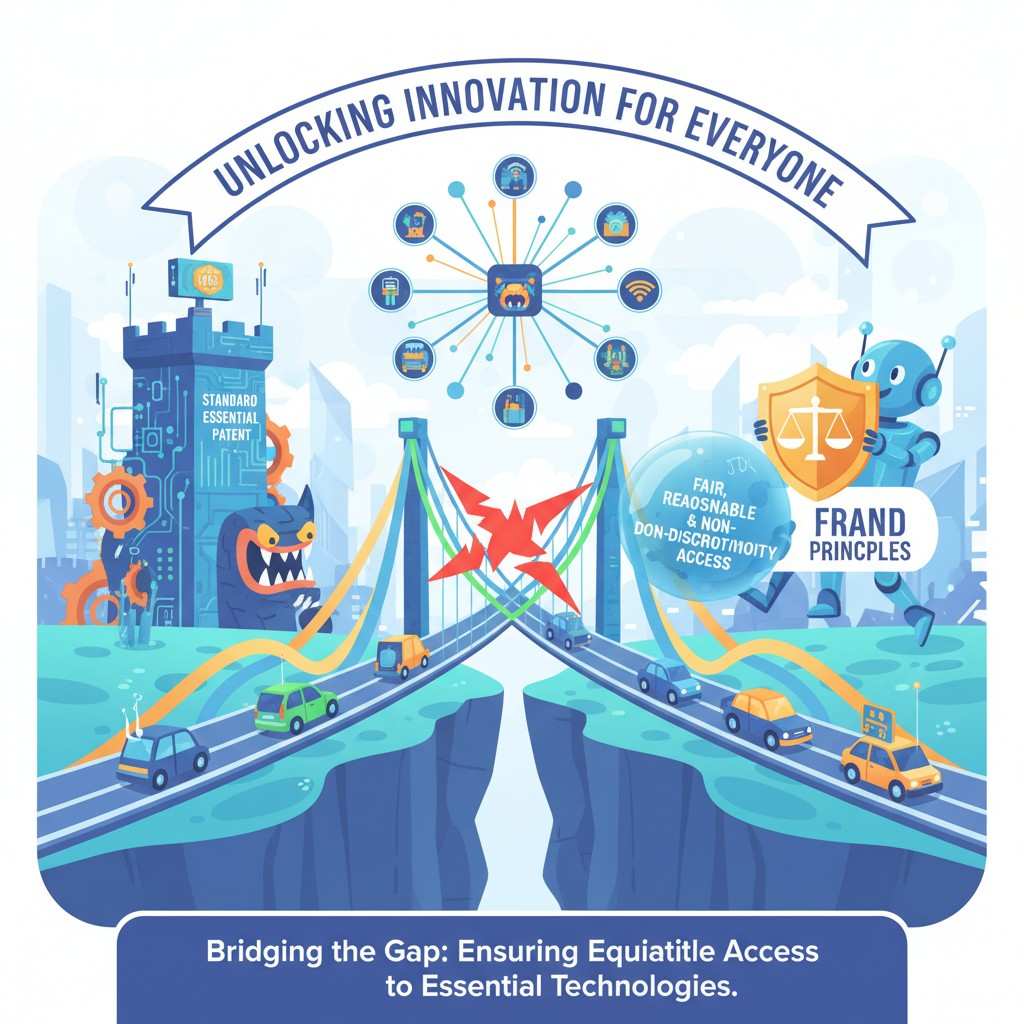
On one side, inventors deserve to be paid. On the other side, markets need access to core technology to grow. FRAND tries to keep both sides alive.
If you are building a company, you should see FRAND as a design rule, not a punishment. It defines the lane you can drive in while still letting you move fast.
How unfair licensing damages entire ecosystems
When licensing becomes abusive, damage spreads far beyond one deal. Smaller companies exit markets. Prices rise. Innovation slows. Regulators step in. Lawsuits drain capital that could have built better products.
FRAND was built to prevent this spiral. It encourages predictable behavior so companies can plan, invest, and ship with confidence.
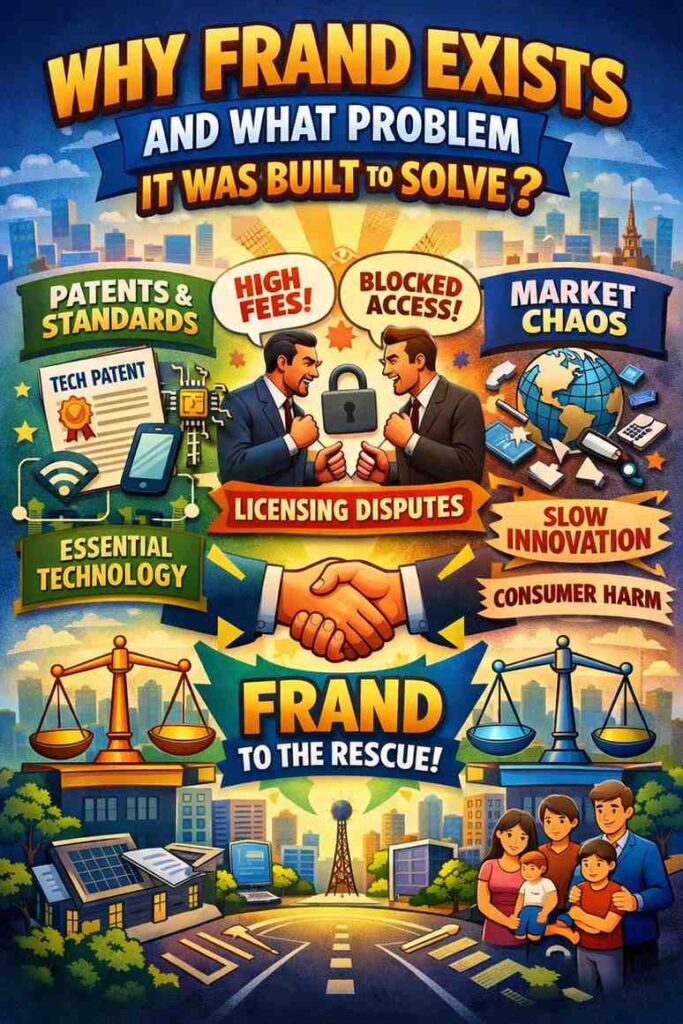
For founders, predictability is oxygen. Knowing the rules early lets you raise money with clearer stories and fewer surprises.
Why courts became involved at all
Ideally, FRAND would live quietly in contracts. In reality, disputes happen. Courts stepped in to interpret what fair and reasonable actually means.
Over time, courts around the world developed patterns. They look at comparable deals. They examine market impact. They study behavior, not just words.
This matters because your actions today may be judged years later. Clean behavior early creates evidence that protects you later.
The silent risk of ignoring FRAND until it is too late
Many startups do not think about FRAND until a big company sends a letter. By then, leverage is already lost. Your options shrink. Stress rises.
The smarter move is to map where your technology sits. If it touches shared systems, you should assume FRAND might apply someday.
Action here is simple but powerful. Document your design choices. Track standards discussions. Be intentional about how your patents align with shared tech.
How FRAND affects fundraising and exits
Investors care about risk more than theory. If your core patents are tied to standards, investors will ask how FRAND affects revenue.
A clear answer builds trust. A vague answer raises red flags.
Founders who understand FRAND can explain upside without overselling. That honesty often leads to better terms and smoother exits.
Why startups need modern patent strategy, not old advice
Most FRAND advice was written for giant companies with legal teams. Startups move faster and need clarity, not paperwork.
This is where modern tools matter. You need patents written with real-world use in mind, not abstract claims that collapse under pressure.
PowerPatent was built for exactly this gap. It helps founders turn real technology into strong patents while staying aligned with how standards and markets actually work. You can see how that process works here: https://powerpatent.com/how-it-works
Turning FRAND from a risk into a lever
The biggest mistake is seeing FRAND as a threat. In reality, it can be a lever. A well-positioned patent inside a standard can create steady, long-term value.
The key is intent. Know where you stand. Know what you agreed to. Build patents that reflect real contributions, not wishful thinking.
That clarity gives you control even inside shared systems.
What to do right now if FRAND might touch your business
You do not need to slow down or hire a giant firm. You need awareness and structure.
Review where your technology connects to shared rules. Write patents that match real use. Keep records of your involvement in standards work.
These steps cost little but protect a lot.
If you want to see how founders do this without losing speed, explore PowerPatent here: https://powerpatent.com/how-it-works
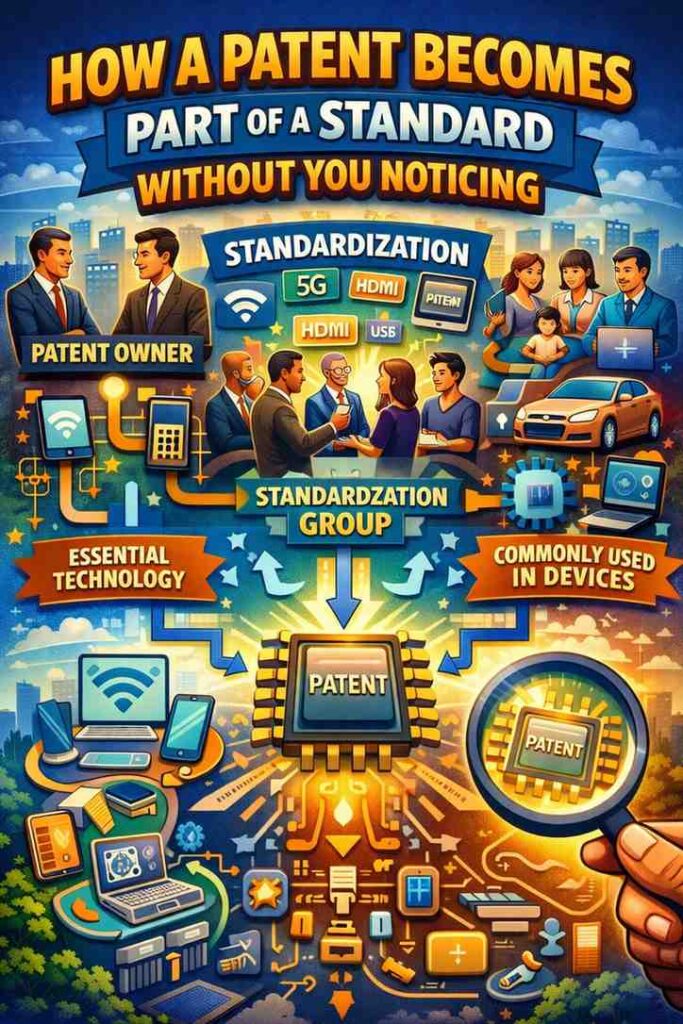
How a Patent Becomes Part of a Standard Without You Noticing
Most founders do not wake up one day and decide to build a “standard-essential” patent.
It happens quietly, piece by piece, while teams are focused on shipping product, fixing bugs, and winning customers. By the time anyone uses the word FRAND, the decision has already been made.
This section explains how patents slide into standards without drama, why it happens so often, and how businesses can stay aware without slowing execution.
The invisible overlap between products and standards
Standards are not abstract documents sitting on a shelf. They describe how real systems must behave to work together. When you build a product that needs to talk to other systems, you are already operating inside those rules.
A founder may believe they invented a unique solution. In practice, that solution often becomes the cleanest way to meet a standard’s requirements. That is where patents and standards begin to overlap.
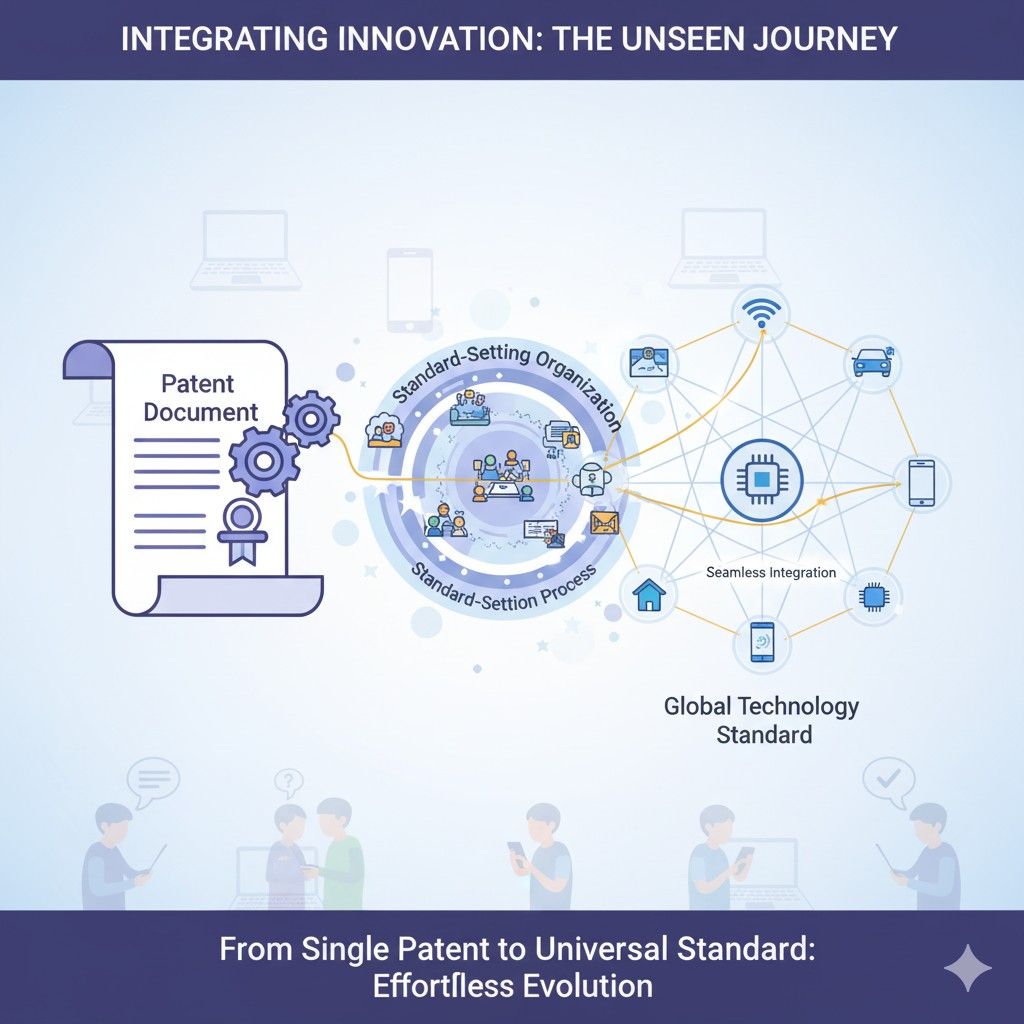
The key point for businesses is this: you do not need to aim for a standard to end up inside one. Alignment happens naturally when you solve shared problems well.
Why engineers rarely notice the shift
Engineers think in terms of performance, reliability, and simplicity. They do not think in terms of legal categories. When a technical choice works better, it gets adopted.
If that choice spreads through working groups or becomes referenced in technical drafts, it may slowly become the expected way of doing things. Once that happens, your invention is no longer just a feature. It is infrastructure.
From a business view, this is both powerful and risky. Power comes from adoption. Risk comes from obligations you did not plan for.
The role of standards meetings and working drafts
Standards evolve through conversations, proposals, and drafts. Many startups participate casually, sharing insights or implementation details to gain influence or credibility.
What feels like harmless collaboration can later be cited as contribution. If your patented idea appears in a draft and survives revisions, it may become mandatory for compliance.
This is one of the most common paths to FRAND exposure. No contracts are signed in the moment. The impact only appears later.
When disclosure rules quietly apply to you
Most standards bodies require participants to disclose relevant patents. Many founders do not realize this applies to them personally, not just to big corporations.
If you join discussions, submit ideas, or even observe closely, disclosure rules may already be in play. Ignoring them does not remove responsibility.
The business takeaway is simple. Participation equals visibility. Visibility creates expectations.
How timing changes leverage forever
Once a standard is finalized and widely adopted, leverage shifts. The market has already chosen the path. Alternatives disappear.
If your patent becomes essential at this stage, you may earn steady value, but you lose the ability to demand extreme terms. FRAND locks in fairness precisely because the market is locked in.
Founders who understand timing can decide when to push ideas forward and when to protect quietly.
Why patents written too narrowly cause trouble later
Many early patents focus tightly on one implementation. That feels safe and fast. But when standards evolve, narrow language may either miss the standard entirely or trap you into unintended obligations.
Broad but accurate patents perform better in shared systems. They capture the idea without boxing it into one version.
This is where modern patent drafting matters. The goal is coverage that reflects real technical contribution, not just current code.
PowerPatent was designed to help founders do this without legal overload. You can see how that works here: https://powerpatent.com/how-it-works
How competitors influence whether your patent becomes essential
Standards are group decisions. Competitors may support your approach because it benefits them too. They may also push alternatives to avoid licensing your patent.
This dynamic means adoption is not just technical. It is strategic. Companies back ideas that balance performance and cost.
For startups, awareness of this dynamic helps shape how much you reveal and when.
The myth that only giant companies own standard patents
Many founders assume only massive corporations hold standard-essential patents. That is false. Startups contribute key ideas all the time.
The difference is that large companies have teams watching the process closely. Startups often do not.
Knowledge levels the field. You do not need size to protect value. You need awareness and structure.
How internal documentation becomes future evidence
Emails, design docs, and commit histories matter more than founders expect. In FRAND disputes, courts often examine who knew what and when.
Clean records showing good-faith behavior protect you. Sloppy communication creates risk.
This is not about fear. It is about discipline. Treat your technical history as part of your asset base.
Why silence can be interpreted as consent
If a standard adopts your patented idea and you remain silent, others may assume FRAND terms apply. Silence can be read as acceptance of norms.
Founders should understand that inaction is still a choice. Strategic clarity beats accidental agreement.
Turning awareness into a simple operating habit
You do not need a legal department. You need a habit.
When your product touches shared systems, pause and ask how it fits into existing rules. When you engage with standards groups, note what you share. When you file patents, align them with how technology is actually used.
These small habits prevent big surprises.
Using patent strategy as part of product strategy
The best companies align patents with roadmaps. They protect not just what exists, but what will become important as systems scale.
When standards are involved, this alignment becomes critical. Patents should anticipate adoption, not chase it.
PowerPatent helps founders build this alignment without slowing development. If you want to see how modern teams do this in practice, explore here: https://powerpatent.com/how-it-works
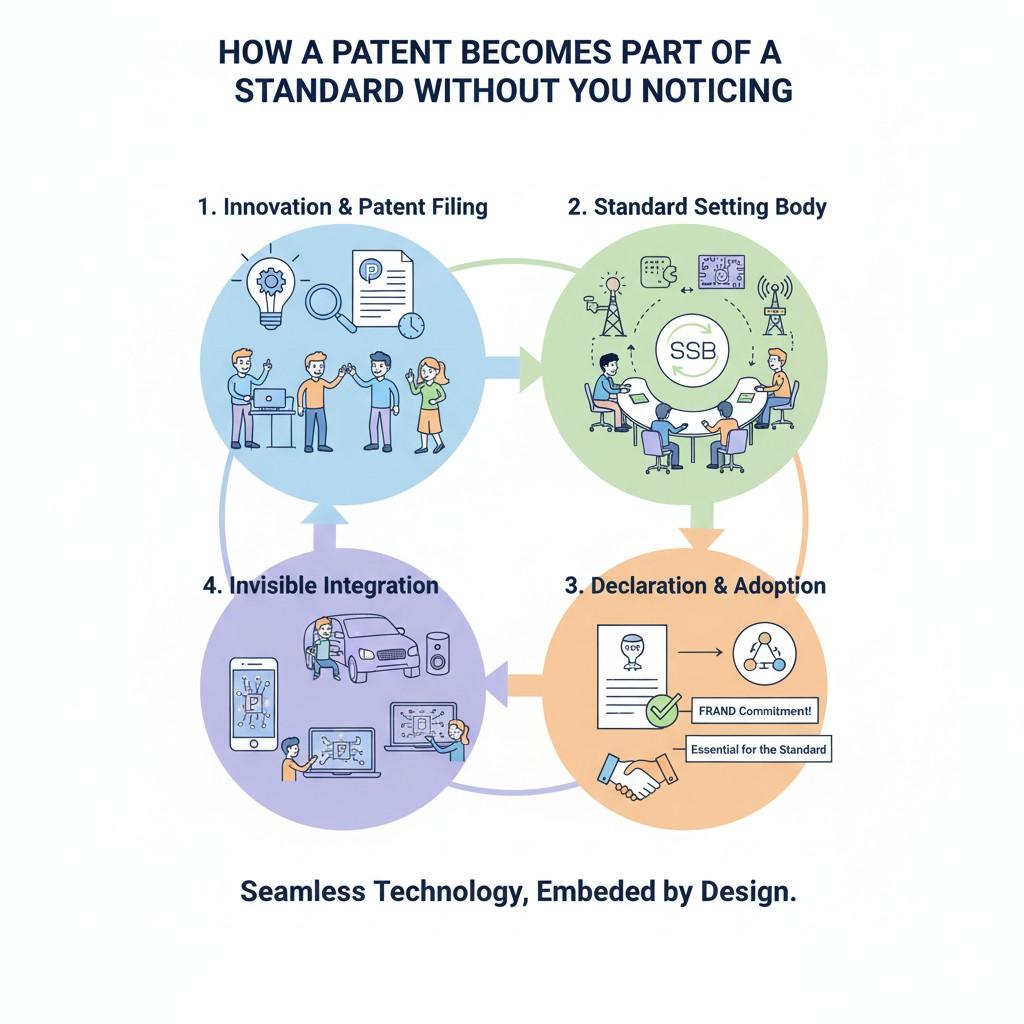
This section shows how easily patents drift into standards without founders realizing it. The next section breaks down what fair, reasonable, and non-discriminatory actually mean in real licensing conversations.
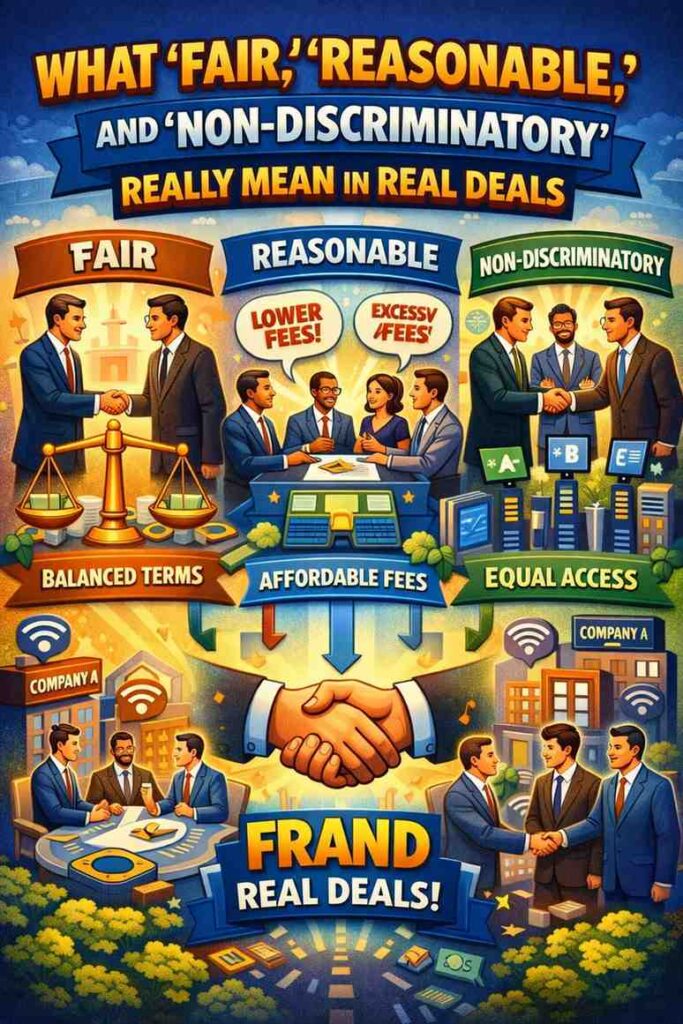
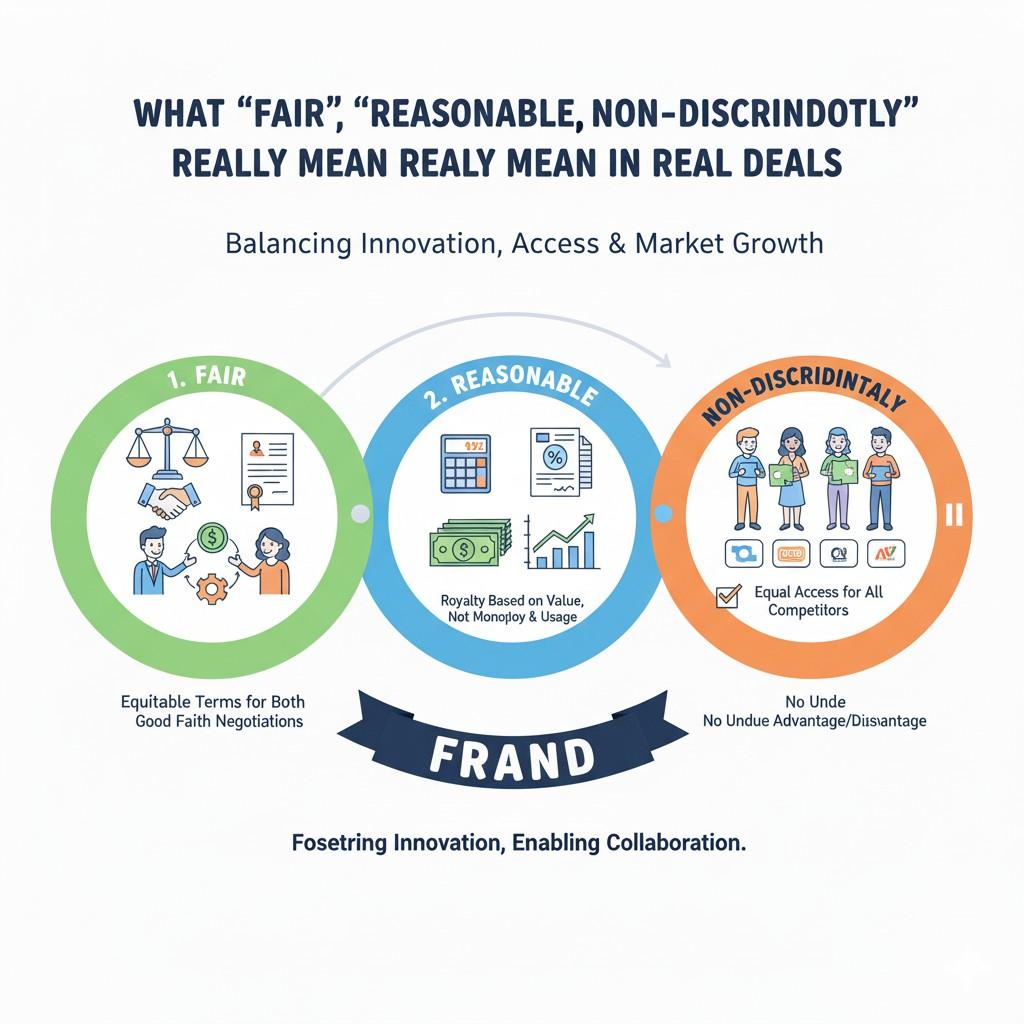
What “Fair,” “Reasonable,” and “Non-Discriminatory” Really Mean in Real Deals
FRAND sounds simple on paper, but in real business conversations it often feels vague. Many founders assume these words are empty or symbolic. They are not.
Each one has real weight, and courts, investors, and large companies treat them seriously.
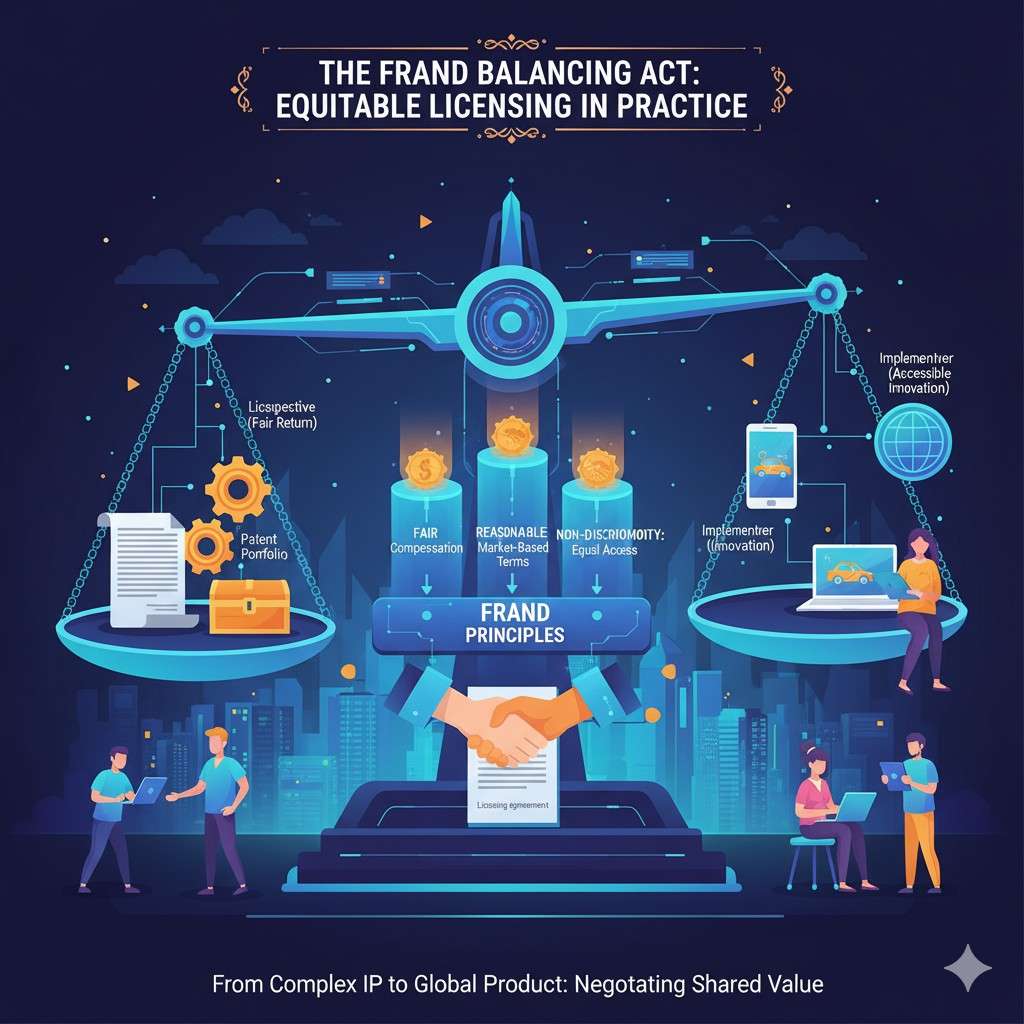
This section explains how these terms show up in actual deals, how they shape money and control, and how startups can work within them without losing leverage.
Why the words matter more than the acronym
Most people focus on the acronym and forget the words themselves. That is a mistake. Fair, reasonable, and non-discriminatory are not technical terms. They are business principles that guide behavior.
When disputes arise, decision-makers look at conduct. They ask whether actions matched these words in practice. Founders who internalize this early avoid future friction.
Fair does not mean cheap
Many startups fear that FRAND forces them to give away value. That fear is misplaced. Fair does not mean minimal. It means balanced.
A fair rate reflects the value of the invention at the time it was adopted, not after the market is locked in. It also considers how important the patented idea is compared to the rest of the system.
For founders, the lesson is clear. Build patents that capture true technical value. Do not rely on market pressure alone to justify pricing.
How fairness is judged years later
Fairness is rarely decided in the moment. It is judged later, often under stress.
Courts look at early offers, negotiation behavior, and willingness to explain numbers. Extreme positions with no logic tend to backfire.
The most strategic move is transparency without weakness. Show how your invention improves performance or reduces cost. Anchor value in facts, not threats.
Reasonable is about context, not averages
Reasonable does not mean average. It means appropriate for the situation.
A license rate that is reasonable for a global hardware giant may be unreasonable for a small manufacturer. FRAND allows flexibility based on scale, risk, and use case.
This is where startups can be smart. Tailor deals to context while staying consistent in principle. Consistency protects credibility.
Why comparable deals matter so much
When people argue about reasonableness, they reach for comparisons. Prior licenses, industry norms, and historical rates become reference points.
If you have no history, you borrow from similar technologies. That makes early deals important. They set tone.
Founders should treat first licenses as precedent, not quick wins.
Non-discriminatory does not mean identical
Non-discriminatory does not require identical terms for everyone. It requires equal treatment for similarly situated parties.
Differences are allowed when justified. Volume, duration, and risk can all explain variation.
The mistake is arbitrary differences. If you cannot explain why one party pays more, trouble follows.
How startups accidentally violate non-discrimination
Many startups negotiate instinctively. They react to pressure, urgency, or cash needs. That can lead to inconsistent terms.
Later, those differences resurface as accusations. Even if intentions were good, the pattern looks bad.
The fix is simple. Track deals. Know why terms differ. Write down reasoning while memory is fresh.
The role of good faith in every FRAND deal
FRAND is built on good faith. That concept shows up again and again in disputes.
Good faith means engaging seriously, responding promptly, and explaining positions. It does not mean agreeing quickly.
Founders who show good faith gain credibility. That credibility becomes leverage when negotiations tighten.
Why extreme positions usually fail
Some companies start with sky-high demands to see what sticks. In FRAND settings, this often backfires.
Courts and counterparties view extreme positions as bad faith. Even if the final number drops, the damage remains.
A strategic approach is firm but defensible. Start where you can stand comfortably later.
How FRAND shapes negotiation pacing
FRAND affects not just price, but timing. Delays can be seen as pressure tactics.
Dragging out talks to force adoption can trigger penalties. Moving too fast without diligence can undercut value.
Balanced pacing shows seriousness and respect for the process.
Why documentation is your quiet ally
Written explanations, valuation models, and negotiation notes matter. They show intent.
When questions arise years later, documentation tells your story for you.
This is where modern patent workflows help. They keep technical and business reasoning aligned from day one.
PowerPatent supports this alignment by tying patents closely to real-world use and value. You can see how that works here: https://powerpatent.com/how-it-works
Turning FRAND into a trust signal
Many founders view FRAND as a limitation. In reality, it can be a trust signal.
Clear, fair licensing attracts partners. It reduces friction. It opens doors to ecosystems that fear abuse.
Trust compounds faster than threats.
Using FRAND to protect long-term value
Short-term gains often conflict with long-term stability. FRAND pushes founders toward sustainable value.
By pricing reasonably and behaving consistently, you create assets that survive scrutiny and scale.
That stability matters in acquisitions and public markets.
Preparing your team for FRAND conversations
FRAND should not live only in legal discussions. Product, sales, and leadership teams should understand the basics.
Misaligned messaging creates risk. Unified understanding creates confidence.
Simple internal education prevents expensive misunderstandings.
This section breaks down what the FRAND words mean when money and control are on the line. The next section focuses on why FRAND often matters more to startups than to large companies, even though startups think about it less.
Why FRAND Matters More to Startups Than Big Companies
At first glance, FRAND looks like a problem for large corporations. They own huge patent portfolios, sit on standards boards, and fight public legal battles. Startups often assume they are too small for FRAND to matter.
That assumption is one of the most expensive mistakes a founder can make.
This section explains why FRAND has a bigger impact on startups than on giants, how power dynamics really work, and what founders can do to protect themselves while still moving fast.
The power gap startups feel but rarely name
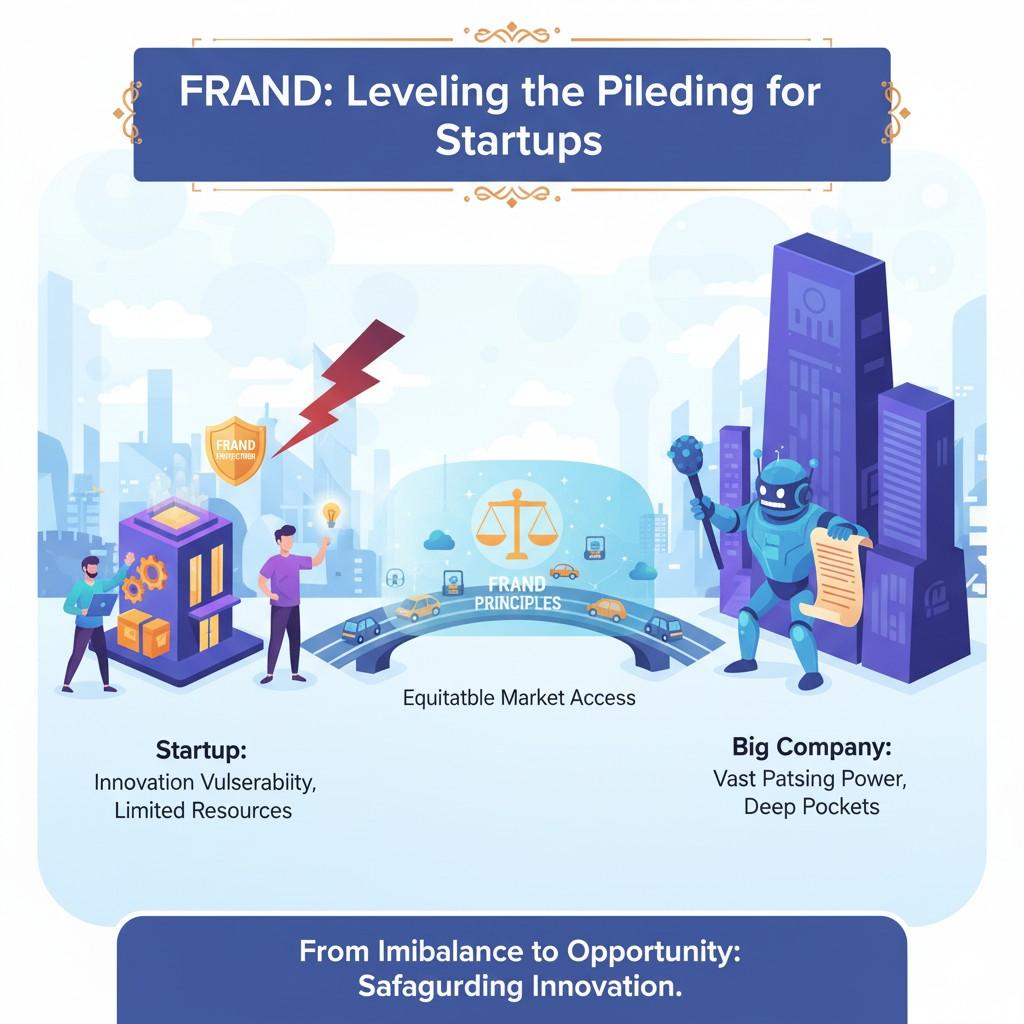
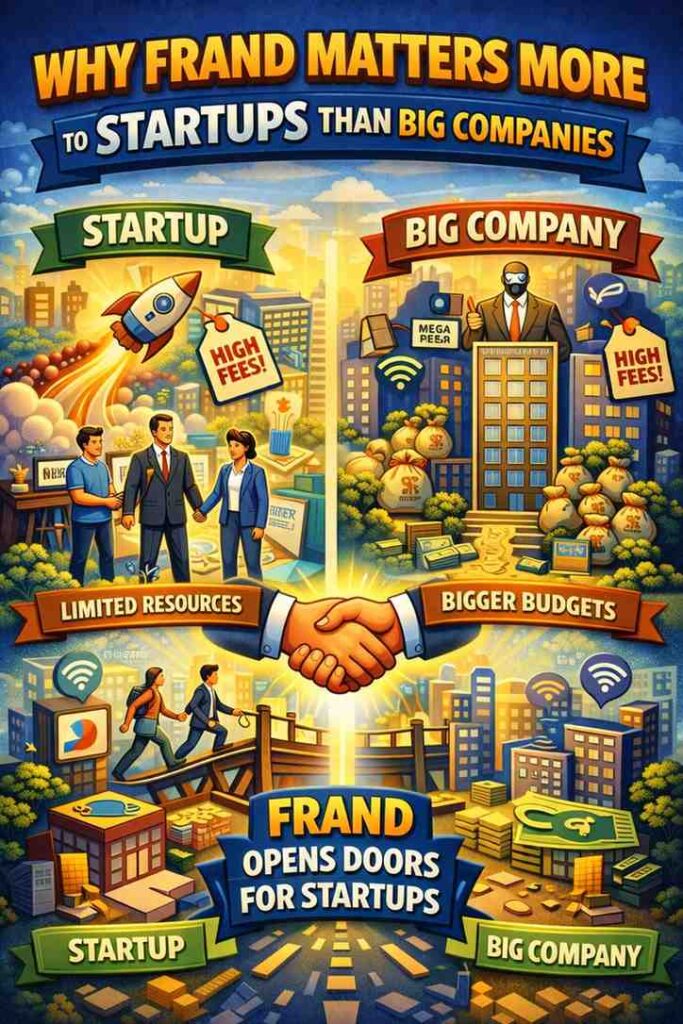
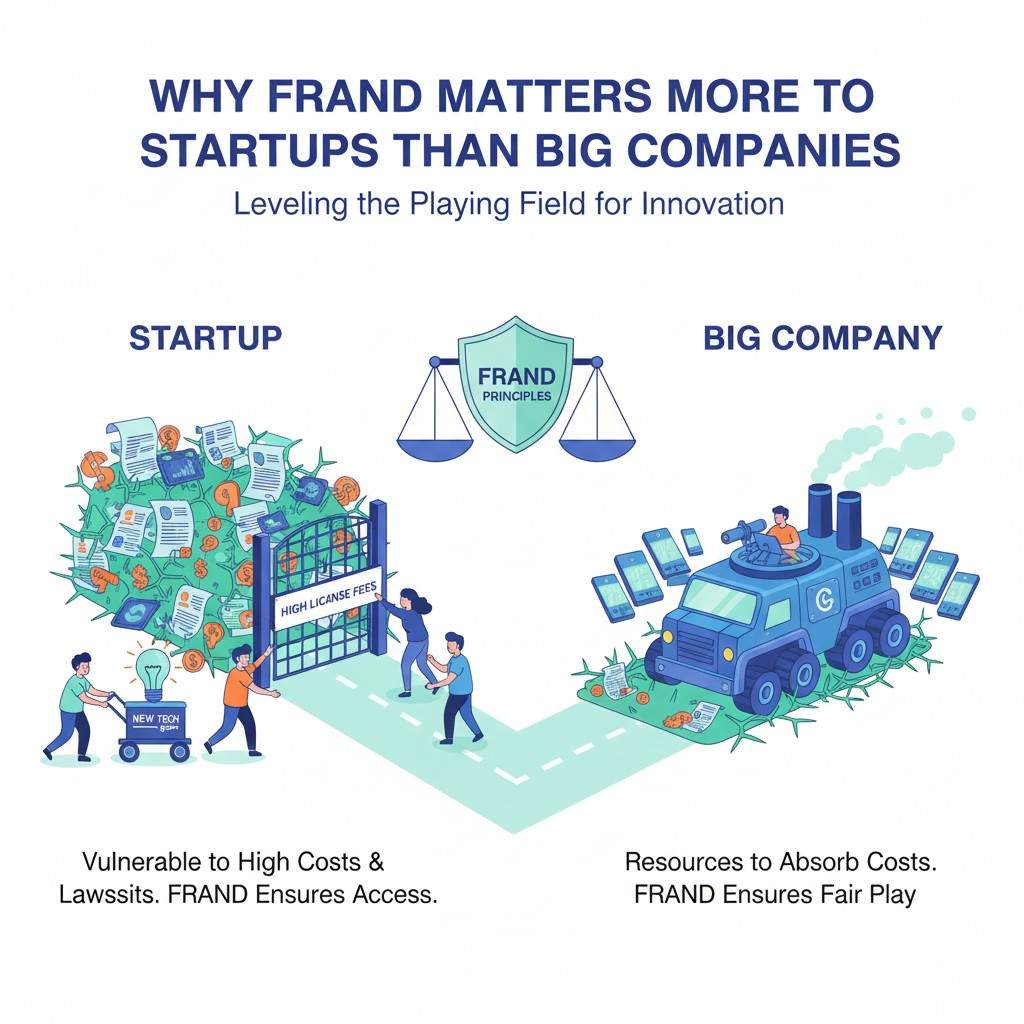
Big companies can afford long disputes. They can delay, absorb cost, and outlast opponents. Startups cannot.
FRAND exists partly to soften this imbalance, but only if startups understand how to use it. Without that understanding, the same rules that protect markets can quietly strip leverage from smaller players.
For founders, the issue is not whether FRAND applies. It is whether you are prepared when it does.
Why large companies plan for FRAND from day one
Large companies assume their technology will touch standards. They budget for it. They staff for it. They design patents with that future in mind.
Startups usually do the opposite. They focus on product-market fit and speed. That focus is correct, but ignoring patent strategy creates blind spots.
The result is asymmetry. One side plays chess while the other plays checkers.
How FRAND compresses negotiating room for startups
When FRAND applies, there are boundaries. Prices must be justified. Behavior must look reasonable.
Large companies are used to working inside those boundaries. They have playbooks. Startups often do not.
Without preparation, founders either ask for too little out of fear or too much out of instinct. Both outcomes hurt long-term value.
Why early mistakes follow startups forever
Big companies can reset narratives. Startups cannot.
An early license that undervalues your patent becomes a benchmark. An aggressive email becomes evidence. A rushed deal becomes precedent.
FRAND disputes often look backward. What you did when no one was watching matters most.
The hidden cost of being seen as inexperienced
In FRAND conversations, perception shapes reality. If you appear unaware of norms, others will test limits.
This does not mean you need to sound legal. It means you need to sound intentional.
Confidence grounded in understanding earns respect faster than bluster.
Why investors care quietly but deeply
Investors rarely ask founders about FRAND directly. Instead, they probe risk, defensibility, and predictability.
If your core patents sit inside standards, FRAND affects all three. A founder who can explain this calmly signals maturity.
That signal influences valuation, not just legal comfort.
How FRAND can actually protect startups
FRAND is often framed as a ceiling. It is also a floor.
It prevents powerful players from squeezing you out by refusing access or imposing extreme conditions. It gives you a framework to demand engagement.
Startups that know this can push back with credibility instead of emotion.
The danger of copying big-company tactics
Some founders try to mimic aggressive tactics used by giants. That rarely works.
Big companies have buffers that startups lack. What looks strategic at scale looks reckless when small.
The smarter move is to act consistently, explain clearly, and document well.
Why speed makes awareness more important, not less
Startups move fast. That speed amplifies consequences.
A quick design decision can align you with a standard. A quick patent filing can lock in scope. A quick conversation can trigger disclosure duties.
Awareness does not slow speed. It directs it.
How founders can keep leverage without heavy process
You do not need layers of approval or long memos. You need a few clear habits.
Know where your tech touches shared systems. Write patents that reflect real contribution. Treat early deals as signals, not cash grabs.
These habits fit inside fast teams.
The role of modern patent tools for startups
Traditional patent workflows assume time and money. Startups have neither.
Modern tools bridge that gap. They help founders capture inventions accurately, align them with real use, and stay ready for future scrutiny.
PowerPatent was built to give startups this edge without legal drag. It combines smart software with real attorney oversight so founders can protect value while building.
You can see how it works here: https://powerpatent.com/how-it-works
How FRAND affects exits more than founders expect
In acquisitions, patents are examined closely. If FRAND applies, buyers want clarity.
Unclear obligations create discounts. Clear stories preserve value.
Founders who prepare early avoid painful renegotiations later.
Why understanding FRAND builds quiet confidence
Confidence changes behavior. Founders who understand FRAND negotiate calmly. They avoid extremes. They plan ahead.
That calmness is felt by partners, investors, and buyers.
It turns a scary acronym into a manageable rule set.
Turning knowledge into a competitive edge
Most startups ignore FRAND. That creates opportunity.
Founders who understand it can move into shared systems with eyes open. They can design patents that matter. They can license with intention.
Knowledge becomes differentiation.
This section shows why FRAND often matters more to startups than to large companies, even though startups think about it less. The next step would be tying all of this together into practical next moves and long-term strategy.
Wrapping It Up
FRAND is not a trap, and it is not a gift. It is a rule set that exists because modern technology cannot grow without shared ground. Once you see it that way, the confusion fades and the strategy becomes clear. This final section pulls everything together and focuses on what founders should carry forward after closing this page.
Leave a Reply