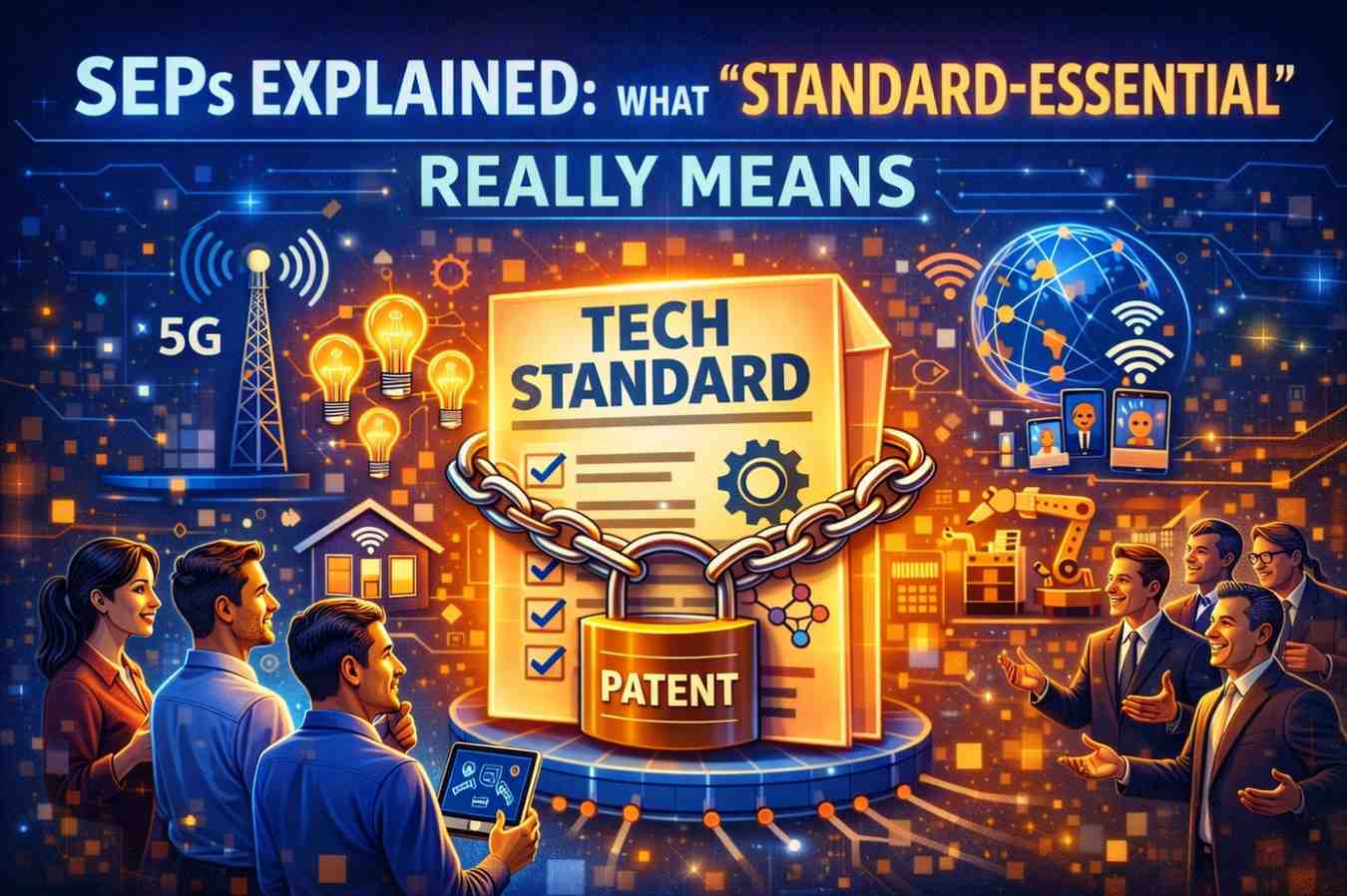
If you build tech that talks to other tech, this topic matters to you. A lot. Standard-essential patents, or SEPs, quietly control how modern products work, who gets paid, and who gets locked out. Founders often hear the term too late, usually when a big company sends a scary letter. This article fixes that. We are going to explain what SEPs really are, why they exist, and how they can either protect your startup or crush it if you ignore them.
What a “Standard” Really Is (And Why Tech Companies Depend on Them)
A standard is one of those ideas everyone uses but few people stop to define. For founders and builders, this is dangerous.
If you do not understand what a standard is, you cannot see how it shapes your product, your market, or your risk. This section breaks it down in plain words and shows how standards quietly decide who wins and who pays.
A Standard Is Just a Shared Agreement
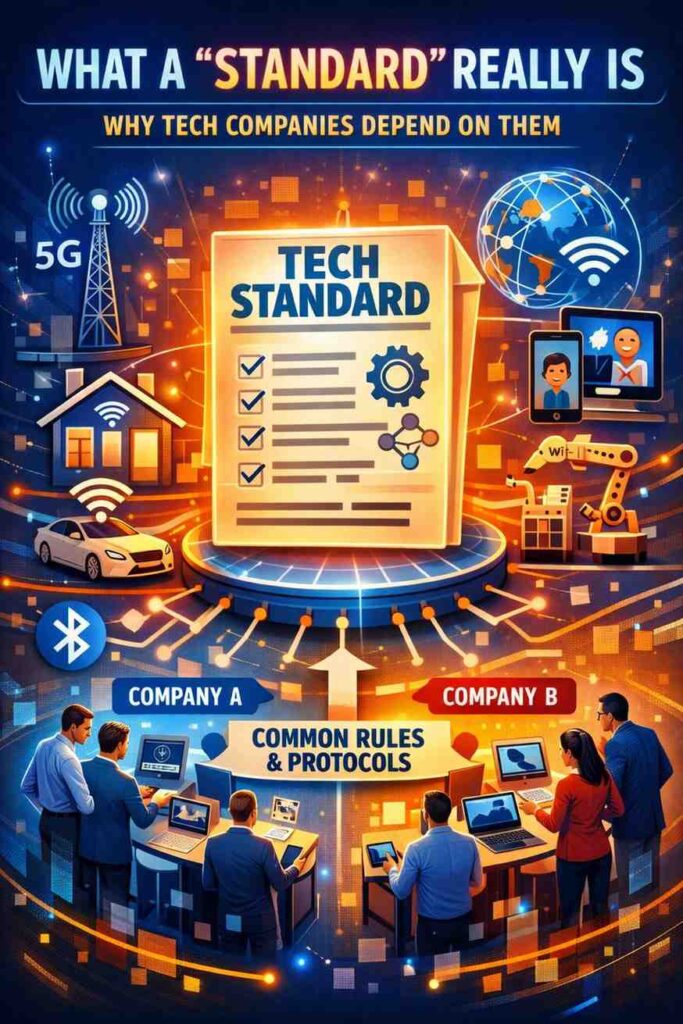
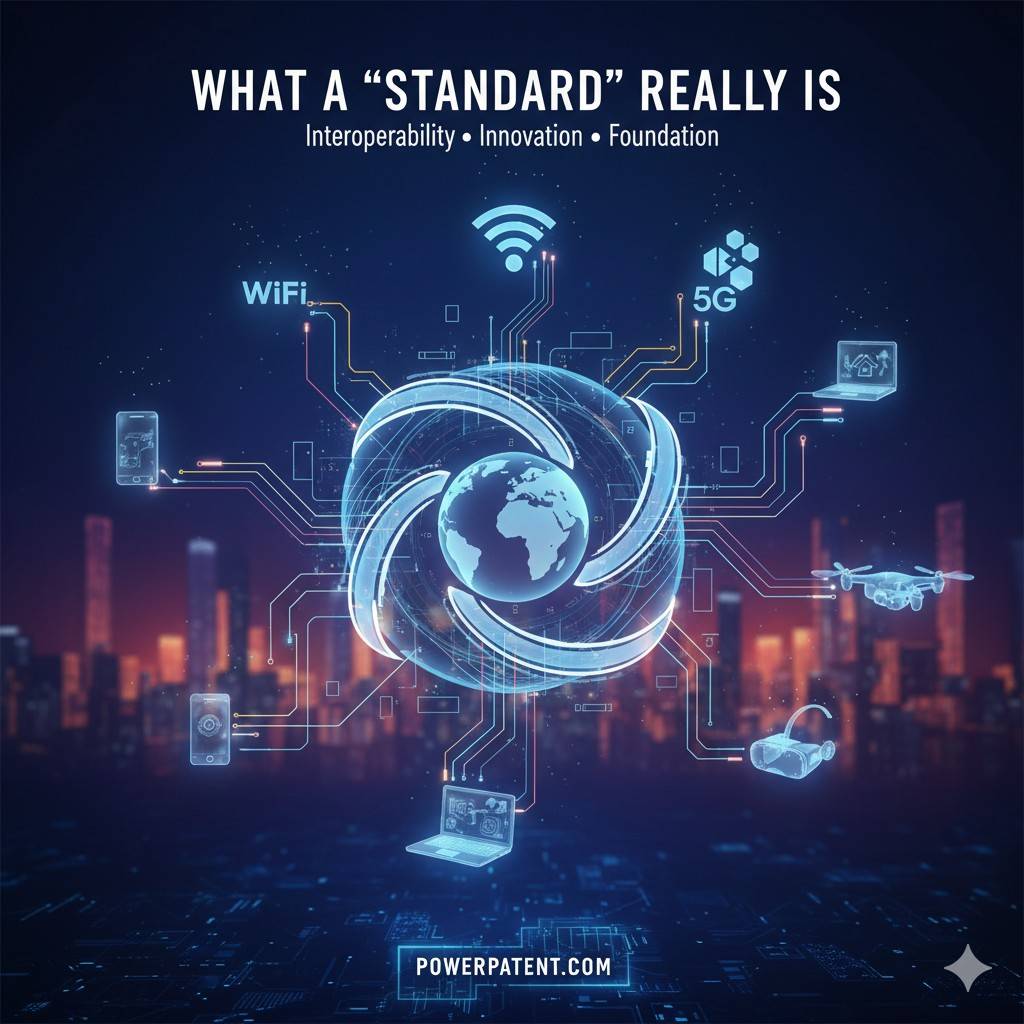
At its core, a standard is a shared agreement about how something should work. It is not magic. It is not law. It is simply a rule that many companies agree to follow so their products can talk to each other.
Think about Wi-Fi. Your laptop connects to a router made by another company, which connects to the internet run by many others.
That only works because everyone agreed on the same basic rules. Those rules are the standard.
For a business, this matters because standards create trust. Customers buy products that “just work.”
Investors back companies that fit into the ecosystem. Partners want systems that connect easily. Standards make all of that possible.
Standards Exist to Remove Friction
Every standard exists for one main reason. It removes friction. Without standards, every connection would need a custom fix. Every integration would be slow. Growth would stall.
For startups, this can feel like a gift. You build on top of a standard and instantly plug into a big market. But there is a tradeoff. When you depend on a standard, you also depend on the rules behind it.
Actionable advice here is simple but powerful. When you choose a standard, pause and ask who controls it.
Ask who helped shape it. Ask whether it is open in name only or truly open in practice. This one habit can save you years of pain later.
Standards Are Set by Groups, Not Governments
Many founders assume standards come from governments. Most do not. They come from standard-setting groups. These are industry clubs where companies meet, argue, test ideas, and vote on technical rules.
Big names show up. Small startups usually do not. That imbalance matters. The companies in the room influence the final shape of the standard. They also know what is coming years before the rest of the market.
If your business depends on a fast-moving technical area, one smart move is to track these groups early.
You do not need to join them right away. You just need awareness. Knowing where standards are headed helps you decide what to build and what to protect.
Standards Create Markets Overnight
One of the most overlooked facts about standards is how fast they create markets. Before a standard, everything is uncertain. After a standard, adoption explodes.
When a standard is set, buyers feel safe. Vendors rush in. Hardware and software suddenly fit together. This is why standards attract so much attention from large companies.
They know that owning a piece of the standard means owning a piece of the future market.
For founders, this is both a warning and an opportunity. If your product aligns with a rising standard, you can ride that wave. If you invent a better way that could become part of a standard, you may be sitting on your most valuable asset.
This is where early patent strategy matters. PowerPatent helps teams capture these ideas while they are still forming, before standards lock them in. You can see how that works here: https://powerpatent.com/how-it-works
Standards Quietly Shape Your Product Design
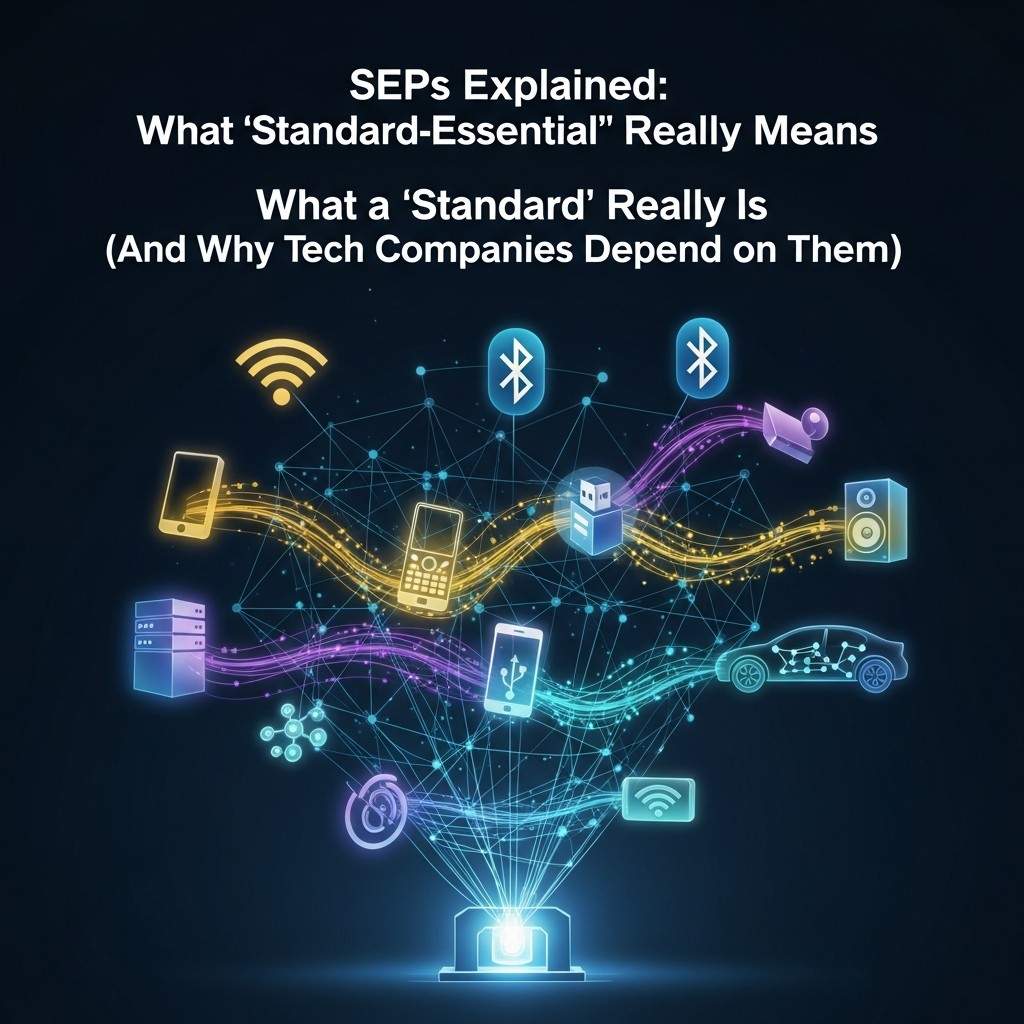
Even if you never say the word “standard” out loud, standards shape your product every day. File formats, communication rules, data structures, and security methods often come from standards.
This means design choices are never neutral. When you choose to follow a standard exactly, you gain speed and compatibility. When you bend it or extend it, you may gain advantage but also risk.
A practical move for businesses is to map where your product touches standards.
Not in a legal sense, but in a technical sense. Ask your engineers where they rely on shared rules. Those touchpoints are where both risk and leverage live.
Standards Favor Scale, Not Speed
Standards are slow by nature. They favor companies with time, lawyers, and patience. This is why startups often ignore them at first.
But ignoring standards does not make them go away. It just means you discover them later, usually when it is expensive to change course.
A smarter approach is to separate speed from awareness. You can still move fast while staying informed. You can build now and protect later, as long as “later” is not too late.
PowerPatent is designed around this idea. Founders can file quickly without stopping product work, while real attorneys ensure the protection holds up. That balance is key when standards are involved.
Standards Are Neutral, Power Comes From Patents
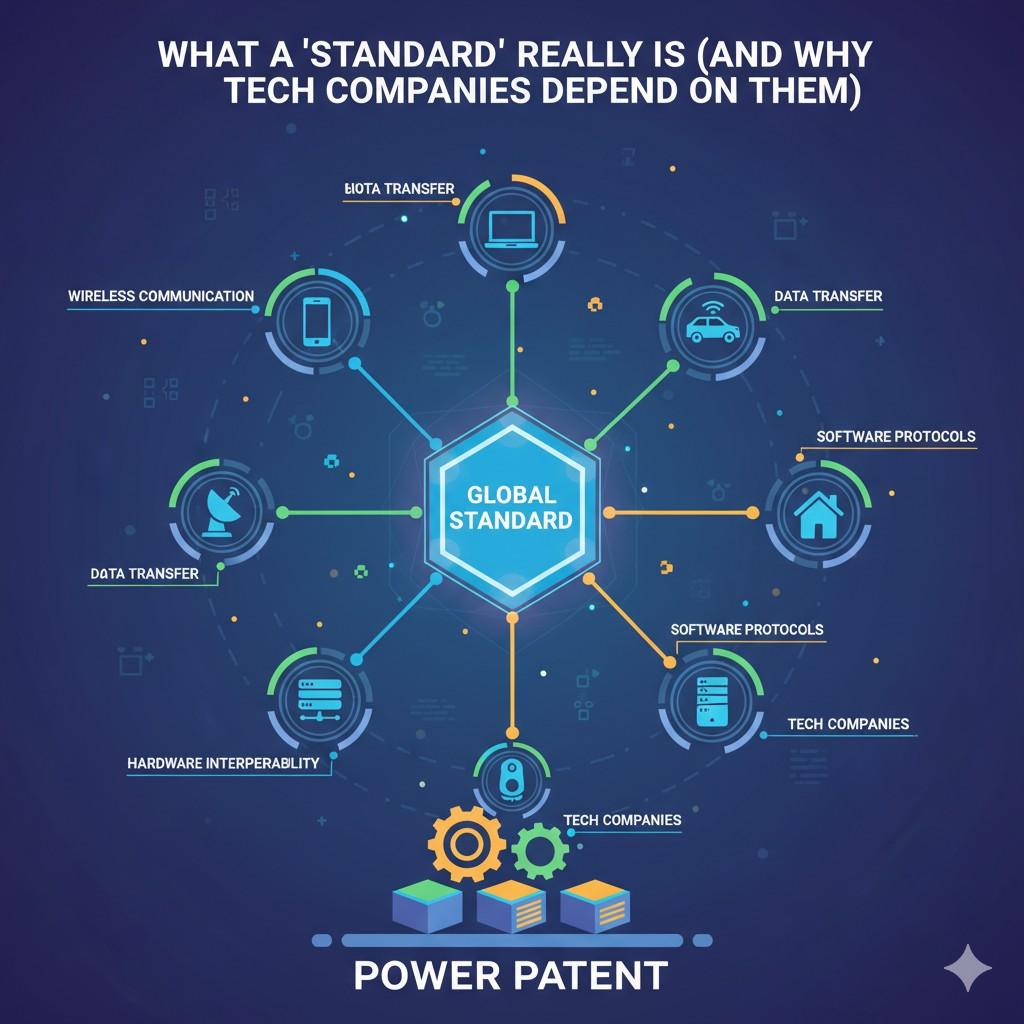
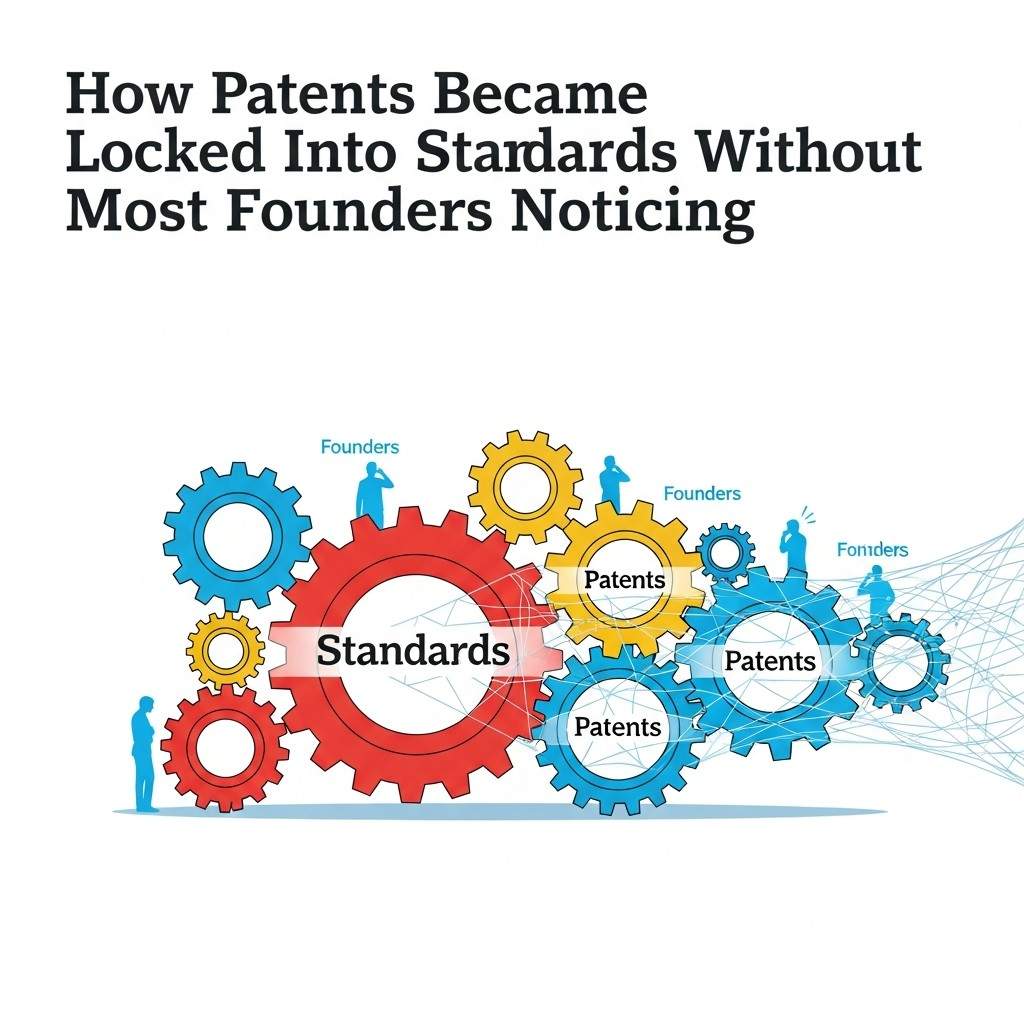
It is important to understand that standards themselves are not owned. Anyone can read them. Anyone can follow them. The power does not come from the standard. It comes from the patents tied to it.
This is the bridge to standard-essential patents. When a standard requires a certain method, and that method is patented, the patent becomes unavoidable.
For now, the takeaway is simple. Standards feel open, but they are built on private rights. If you build blindly, you may end up paying for access. If you plan carefully, you may be the one others need permission from.
In the next section, we will explore how patents quietly became baked into standards, and why most founders never see it happening until it is too late.
If you want to get ahead of this now, not later, PowerPatent can help you turn your technical work into strong protection while you build. You can explore the process here: https://powerpatent.com/how-it-works
How Patents Became Locked Into Standards Without Most Founders Noticing
This is the part of the story almost no founder hears early enough. Standards sound open and shared, but patents slipped into them quietly over time. Not by accident. By design.
Understanding how this happened helps you see why standard-essential patents exist and why they matter so much to your business.
The Early Days Were More Innocent
In the early days of technology, standards were mostly about basic alignment. Engineers wanted machines to connect. Companies wanted compatibility. The goal was simple cooperation.
Patents existed, but they were not front and center in standard talks. Many technologies were new, and the patent landscape was thin. The focus was on making things work, not on controlling them.
That world is gone. Modern standards cover deep technical ground.
They include advanced math, complex code paths, and very specific methods. Those methods are often invented by private companies long before the standard is finalized.
Innovation Came Before the Standard
This is a key point founders often miss. Most standards do not invent technology. They select it.
A company builds something new. It works well. Others test it. Over time, that approach becomes popular. Then a standards group chooses it as the official way forward.
If that original company patented the method, the patent does not disappear just because it became part of a standard. Instead, the patent becomes essential.
This is where leverage is created. The standard now depends on private innovation. Anyone who wants to follow the standard must use that patented idea.
Disclosure Rules Changed the Game
As patents started to appear inside standards, standard-setting groups tried to manage the risk. They created disclosure rules.
These rules usually say that companies should tell the group if they own patents related to the standard. The idea was transparency, not surrender.
But disclosure does not mean free use. It just means others are warned that patents exist.
For founders, the lesson is clear. Being transparent does not mean giving up value. Many of the most valuable SEPs were disclosed early and still generate massive returns.
The Rise of “Fair” Licensing Changed Nothing for Startups
You may hear that SEPs must be licensed on “fair” terms. This sounds comforting. It is not.
What is fair is often argued years later, in court, with massive legal bills. Large companies can wait. Startups cannot.
Even when rates are reasonable, the obligation to license still exists. If your margins are thin, that cost matters. If your product relies on multiple standards, those costs stack up fast.
The actionable move here is to model this risk early. If your product roadmap depends on a standard, assume licensing will be required. Decide now whether you want to be a payer or a holder.
Engineers Rarely See the Trap Being Set
Most engineers do not think about patents when they write code. They focus on solving problems. That is how innovation should work.
But this creates a blind spot. A technical choice today can lock your product into a patent tomorrow.
This is why founder awareness matters. You do not need your engineers to become lawyers. You need leadership to ask the right questions at the right time.
At PowerPatent, we help teams bridge this gap. Engineers keep building.
We translate what they build into protection that matches where standards are heading. You can see how that works here: https://powerpatent.com/how-it-works
Standards Reward Those Who Show Up Early
The companies that benefit most from standards are not always the biggest. They are often the earliest.
Showing up early means contributing ideas before the rules are fixed. It means filing patents while the standard is still forming. It means understanding which parts of your invention are likely to become unavoidable.
Startups can do this too. The myth is that standards are only for giants. In reality, small teams often invent the core ideas. They just fail to protect them.

A practical step is to track where your technical edge overlaps with shared problems in the industry. Those overlaps are prime candidates for future standards and future SEPs.
Once a Standard Is Set, Options Shrink
After a standard is finalized, flexibility drops fast. Products must comply. Alternatives struggle to gain traction. Customers expect compatibility.
If you discover a patent issue at this stage, your choices are limited. You either pay, redesign at great cost, or exit the market.
This is why timing matters more than size. Early awareness gives you choices. Late awareness takes them away.
PowerPatent is built around speed for this reason. We help founders lock in protection before standards harden, without slowing down product momentum.
The Quiet Shift From Collaboration to Control
Standards still talk about collaboration. But beneath the surface, control matters more than ever.
Companies invest heavily in shaping standards because they know what comes next. Licensing revenue. Negotiating power. Defensive shields against competitors.
This is not something to fear. It is something to understand and use wisely.
For founders, the strategic takeaway is this. If your work contributes to how an industry functions, you are not just building a product. You may be building part of a standard. Treat it with the respect and protection it deserves.
In the next section, we will explain why a standard-essential patent is so powerful once a standard takes off, and how that power shows up in real business terms.

If you want help identifying which parts of your technology could become essential, PowerPatent can guide you through that process with real attorney support and fast execution. You can explore it here: https://powerpatent.com/how-it-works
Why a Standard-Essential Patent Is So Powerful Once a Standard Takes Off
This is where everything comes together. Once a standard is adopted and spreads across an industry, the patents tied to it change in value overnight.
What once looked like a narrow technical idea can suddenly control access to an entire market. Founders who understand this early think very differently about what they protect and when.
A SEP Turns Optional Technology Into Mandatory Technology
Before a standard exists, no one has to use your idea. They can work around it. They can ignore it. They can choose a different path.
After a standard exists, that freedom disappears.
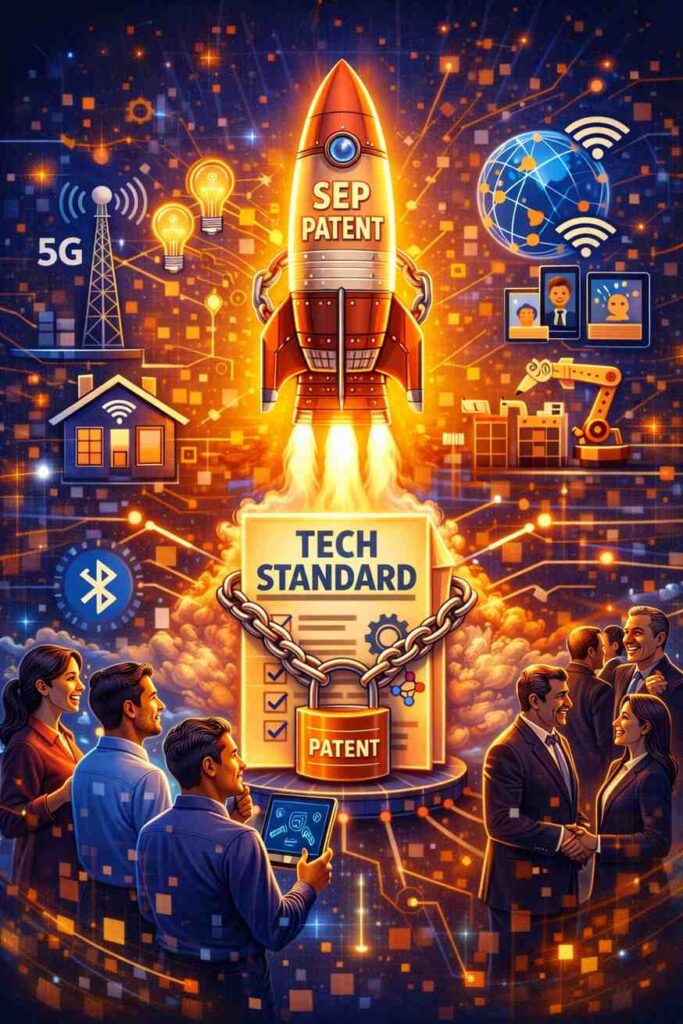
If your patent covers a method that the standard requires, then anyone who follows the standard must use your invention.
There is no clean way around it without breaking compatibility. That shift from optional to mandatory is the source of all SEP power.
For businesses, this is a rare position to be in. Very few assets force competitors to come to you. SEPs do exactly that.
Adoption Is the Multiplier Most Founders Miss
A patent by itself does not guarantee value. A standard by itself does not guarantee control. When the two combine, scale does the rest.
As a standard spreads, more products rely on it. More companies enter the market. More revenue flows through the same technical path.
If your patent sits on that path, its reach grows without you doing anything new. This is why large companies invest heavily in standards work. They are not chasing today’s product. They are positioning for tomorrow’s volume.
Founders can apply this thinking too. When deciding what to patent, look beyond your current customer. Ask whether the idea could scale across an industry if standardized.
SEPs Create Leverage Without Direct Competition
One of the most misunderstood benefits of SEPs is that they create leverage without requiring you to win the market yourself.
You do not need to be the biggest vendor. You do not need the best sales team. You do not even need to ship a product at scale.
If others need your patented method to comply with the standard, they still need a license.
This is powerful for startups. It means you can focus on innovation while still capturing value from the ecosystem around you.
Licensing Becomes a Business Strategy, Not a Side Effect
For non-essential patents, licensing is often optional and reactive. For SEPs, licensing becomes structured and expected.
This creates predictability. Revenue models can be planned. Partnerships can be negotiated from a position of strength. Defensive strategies become clearer.
The actionable advice here is to treat licensing as part of your product strategy if you believe your work may touch a standard. Do not wait until someone knocks on your door. Decide early how you want to engage.
PowerPatent helps founders think through this before filings happen, not after.
That foresight is what turns patents into business tools instead of legal paperwork. You can explore that approach here: https://powerpatent.com/how-it-works
SEPs Change Negotiations With Much Bigger Players
Startups often feel small when talking to large companies. SEPs level that field in a quiet way.
When a large company needs access to a standard, size matters less than necessity. If your patent is essential, the conversation shifts. It becomes about terms, not permission.
This does not mean conflict is inevitable. In fact, many SEP deals are calm and professional. The key difference is balance. You are not begging to be included. You are already included by design.
Courts Treat SEPs Differently, For Better or Worse
SEPs live in a special legal space. Courts recognize their importance but also their impact on markets.
This can work both ways. Enforcement may involve extra rules. Licensing expectations may be debated. Outcomes can vary.
The strategic takeaway is not to fear this complexity, but to prepare for it. Strong drafting, clear disclosures, and early planning reduce risk later.
This is where real attorney oversight matters. Automated tools alone are not enough for SEP-quality protection. PowerPatent combines speed with human review for this exact reason.
Timing Determines Who Captures the Value
The biggest mistake founders make with SEPs is waiting too long.
If you file after the standard is fixed, your options narrow. If you file while ideas are still forming, your leverage grows.
You do not need certainty. You need awareness. You need to recognize when your work solves a shared problem that others will likely adopt.
That moment is when protection matters most.
SEPs Are Not About Aggression, They Are About Position
There is a myth that SEPs are only used to threaten others. In reality, most value comes from quiet positioning.
SEPs help companies secure a seat at the table. They enable cross-licenses. They reduce risk. They provide stability.
For startups, this can mean easier partnerships, better acquisition terms, and stronger long-term control.
The core idea is simple. Standards decide how industries work. SEPs decide who benefits.
In the next section, we can explore how founders can spot SEP opportunities early and avoid becoming trapped by standards they did not plan for.
A Standard Turns Choice Into Obligation
Before a standard exists, companies can choose how they build. They can adopt your idea, work around it, or ignore it entirely. Nothing forces their hand.
Once a standard is adopted, that freedom disappears. To stay compatible, companies must follow the rules.
If your patented method sits inside those rules, your technology is no longer optional. It becomes required.
This is why SEPs are different from normal patents. They do not rely on market preference. They rely on market necessity.
Scale Does the Work for You
One of the quiet strengths of SEPs is that value grows without extra effort. As more products adopt the standard, more companies pass through the same technical path.
Your patent does not need to change. Your enforcement does not need to increase. The market itself amplifies the importance of the invention.

For founders, this means timing matters more than reach. Capturing a key method early can matter more than owning a large share of the market later.
Wrapping It Up
Standard-essential patents are not a legal curiosity. They are a business reality hiding in plain sight. If you build technology that needs to connect, communicate, or work alongside other systems, standards already shape your future. SEPs decide whether you simply follow those rules or help write them. The most important shift founders need to make is mental. Standards are not something that happen after you succeed. They form while you are building. The choices your team makes early, often for speed or convenience, can later become locked into industry rules. When those choices are protected, they create leverage. When they are not, they create dependency.
Leave a Reply