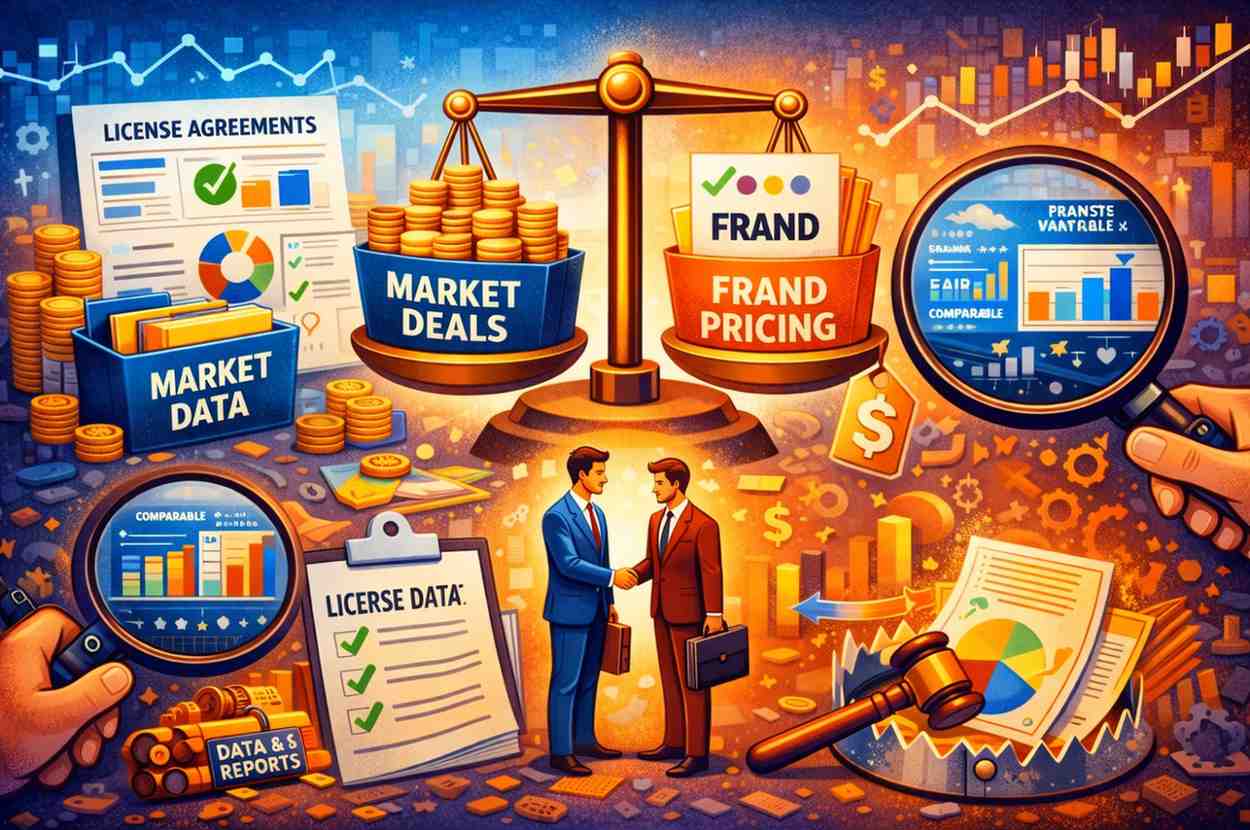
Most fights over FRAND do not start in court. They start with confusion. One side says a license fee is fair. The other side says it is not. Both sides claim the market supports them. And suddenly, a technical issue turns into a long, slow, expensive problem. Comparable licenses are the clean way out of this mess. They are not theory. They are not guesses. They are real deals made by real companies in the real world. When used the right way, they anchor FRAND to facts instead of opinions.
Why FRAND Is About Evidence, Not Opinions
FRAND sounds soft on the surface. Fair. Reasonable. Non-discriminatory. Those words feel flexible, almost emotional.
Many teams fall into the trap of thinking FRAND is about what feels right or what sounds polite. That mistake costs leverage.
In practice, FRAND is hard, cold, and data driven. It is not about who argues better. It is about who can point to real market proof and say, “This is what companies already agreed to.”
When businesses understand this early, they stop guessing and start preparing. That shift alone can change the outcome of future negotiations by millions of dollars.
The Core Problem With Opinions in FRAND Talks
FRAND disputes often begin with strong opinions on both sides.
One company believes its technology is critical and deserves a high rate. The other believes the rate is inflated and unfair. Both sides may be honest. Both may be wrong.
Opinions do not survive scrutiny when real money is at stake.
Courts, regulators, and experienced negotiators do not care how valuable you think your invention is. They care about what the market has already shown it will pay. That is why opinions fade quickly once evidence enters the room.
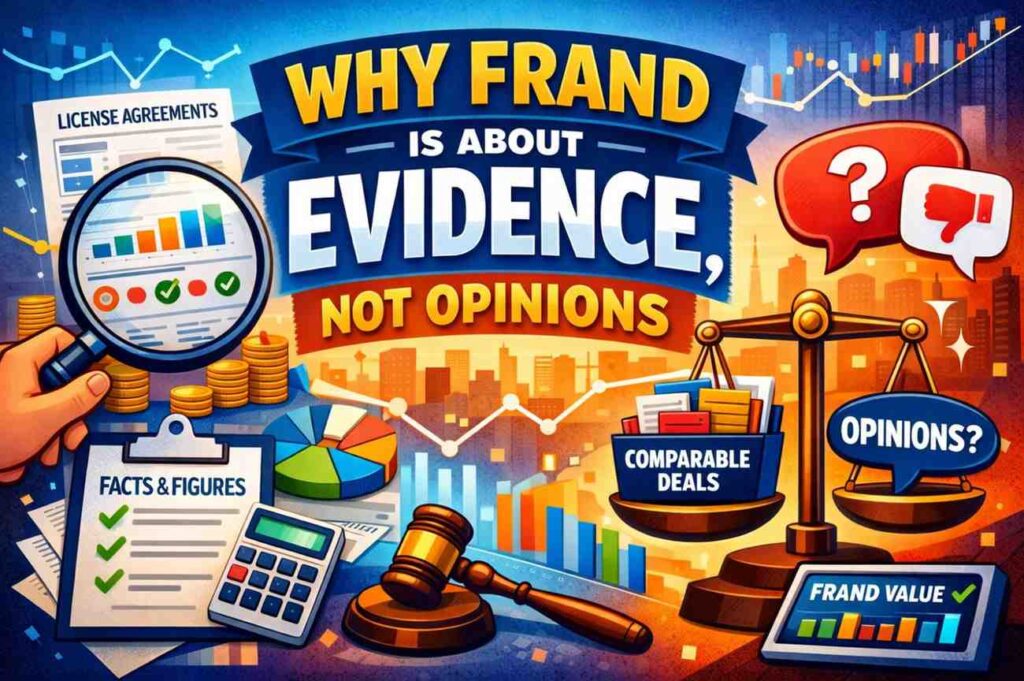
For businesses, this means one thing. If your FRAND position cannot be backed by data, it is weak no matter how logical it sounds.
Evidence Is What Turns FRAND From Words Into Numbers
FRAND only becomes real when it turns into a number. That number must come from somewhere.
Comparable licenses are the bridge between abstract fairness and concrete pricing. They show how similar technology has been priced in actual deals. Not in theory. Not in forecasts. In signed agreements.
This is why evidence matters more than passion. A calm presentation of market data beats an emotional speech every time.
Businesses that understand this do not wait until a dispute starts to gather proof. They collect it quietly and early.
Courts Do Not Guess, And Neither Should You
When FRAND disputes reach court, judges are not inventors or startup founders. They are trained to weigh evidence. They look for patterns, not promises.
They ask simple questions. Who licensed similar technology before? At what rate? Under what conditions? How close is that deal to the one being argued now?
If you cannot answer those questions clearly, the court will fill the gaps for you. That rarely ends well for the party without data.
Smart companies prepare as if every negotiation could one day be reviewed by a neutral third party. That mindset keeps pricing grounded and defensible.
Market Reality Always Wins Over Internal Belief
Many teams spend years building a product. They know how hard it was. They know how clever the solution is. That effort creates emotional value.
The market does not reward effort. It rewards usefulness at a price others accept.
Comparable licenses strip away internal bias. They show what others paid without knowing your story. That is uncomfortable, but it is powerful.
For businesses, the lesson is clear. Separate pride from pricing. Let the market speak, even when it challenges your assumptions.
Evidence Protects You From Being Pushed Around
FRAND negotiations are not always friendly. Large companies may pressure smaller ones. Smaller companies may accuse larger ones of abuse. Without evidence, the stronger party often wins by default.
Market data changes the balance. When you can point to comparable deals, pressure loses its force. The conversation shifts from power to proof.
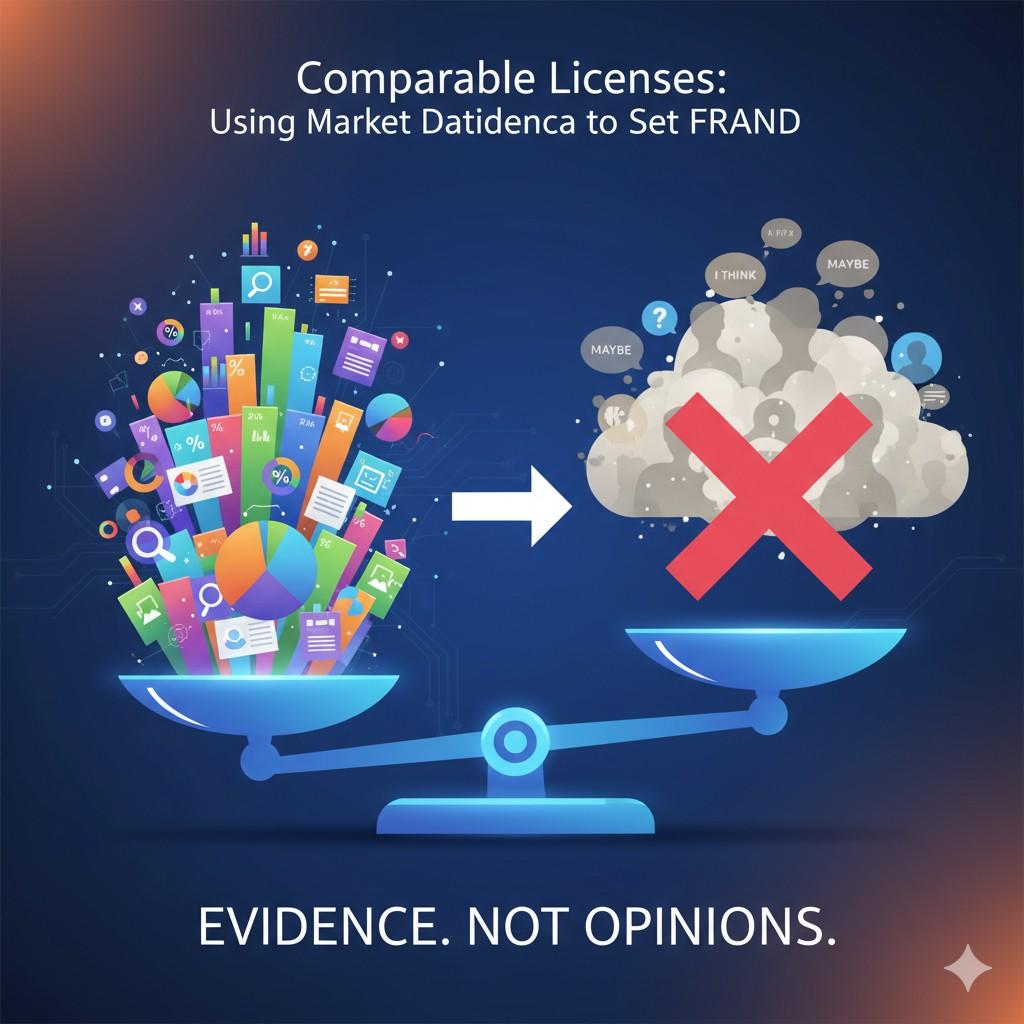
This is especially important for startups. You may not have size, but you can have facts. Facts travel well across boardrooms, legal teams, and regulators.
Evidence Also Protects You From Overreaching
There is another side to this. Evidence does not only protect licensees. It protects licensors too.
Asking for too much can be just as dangerous as asking for too little. Unrealistic demands slow deals, trigger disputes, and invite scrutiny. Comparable licenses act as guardrails.
They keep expectations aligned with reality.
Businesses that respect market signals close deals faster and with less friction. That speed often matters more than squeezing out an extra point of royalty.
How Early Data Collection Changes Future Outcomes
Many companies wait too long to think about FRAND. They wait until a standard is adopted. They wait until a license is requested. By then, leverage is already set.
The smart move is to track market signals early. Watch how similar tech is licensed. Pay attention to public filings, press releases, and industry chatter. Even partial data builds intuition.
This early awareness helps teams shape strategy long before a formal negotiation begins. It also informs how patents are written and grouped, which directly affects future comparability.
Evidence Turns Negotiations Into Calm Conversations
Without data, FRAND talks feel personal. Voices rise. Emails get tense. Each side feels misunderstood.
With data, the tone changes. The discussion becomes analytical. People ask questions instead of making accusations.
Businesses that lead with evidence often find negotiations end faster and with fewer scars. That is not luck. It is structure.
Why Technical Teams Should Care About Evidence
FRAND is often treated as a legal issue. That is a mistake. Engineers and product leaders shape the inputs long before lawyers step in.
Design choices, implementation details, and documentation all affect how comparable a license looks later. Technical teams who understand this can make small decisions that have huge pricing impact years down the line.
When engineers see FRAND as a data problem instead of a legal problem, the entire company becomes stronger.
Turning Evidence Into a Habit, Not a Reaction
The biggest shift businesses can make is mental. Stop treating evidence as something you scramble for under pressure. Treat it as a habit.
Build systems that track market deals. Keep internal notes on how your tech compares. Revisit assumptions as the market evolves.

FRAND rewards consistency. Companies that stay grounded in evidence year after year rarely get surprised. They are ready when it matters most.
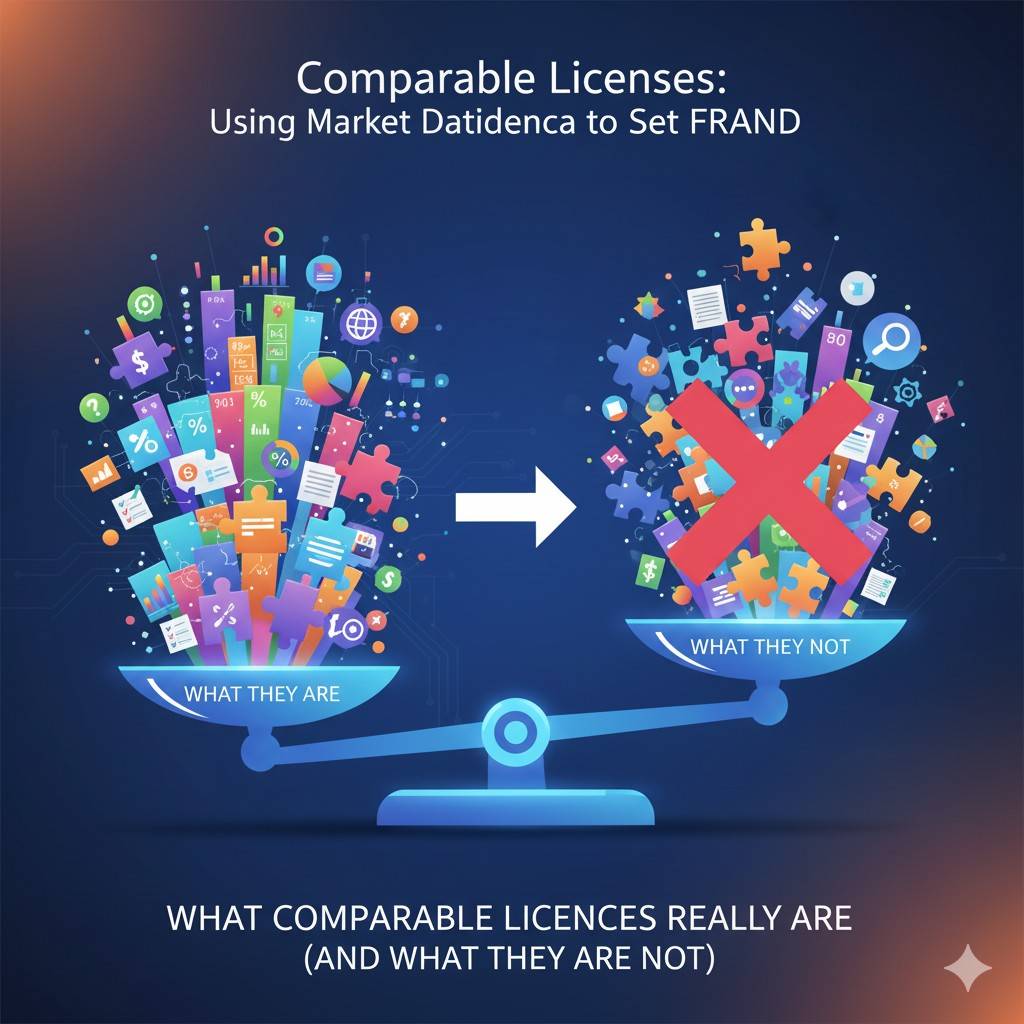
What Comparable Licenses Really Are (And What They Are Not)
Comparable licenses are often talked about, but rarely understood the right way. Many businesses think they know what a comparable license is, until they try to use one and realize it does not hold up under pressure.
This section breaks down what makes a license truly comparable, why most examples fail, and how companies can avoid building strategy on weak ground.
The goal is not theory. The goal is to help you spot solid evidence and ignore noise before it costs you time and leverage.
A Comparable License Is a Market Signal, Not a Marketing Tool
At its core, a comparable license is proof that someone else paid for similar technology under similar conditions.
That sounds simple, but many companies stretch the definition. They point to any license, in any market, with any structure, and call it comparable. That approach collapses fast when challenged.

A real comparable license reflects how the market values a specific kind of technology in a specific context. It does not exist to make your position look better. It exists to show reality, even when that reality is uncomfortable.
Businesses that respect this difference avoid self-inflicted damage later.
Similar Technology Matters More Than Famous Names
A common mistake is focusing on who signed the license instead of what was licensed.
A deal involving a well-known company feels powerful. But fame does not make a license comparable. Technical overlap does.
If the licensed patents solve a different problem, sit in a different layer of the stack, or are used in a different way, the comparison weakens. Courts and counterparties look past logos quickly.
The strongest comparable licenses are often boring. They involve companies you may not recognize, but technologies that align closely with yours.
Context Is What Gives a License Meaning
Licenses do not exist in a vacuum. Every deal has context.
Was the license signed early or late in a market’s life? Was it part of a settlement or a clean business deal? Did it cover one product or a full portfolio? These details matter more than the headline number.
Ignoring context leads to false confidence. Two licenses with the same rate can mean very different things depending on timing and scope.
Smart businesses document context alongside numbers. That habit turns raw data into usable evidence.
Volume, Scope, And Geography Change Everything
A license that covers global rights is not the same as one limited to a single country. A license covering millions of units is not the same as one covering a niche product.
These differences affect value directly. Treating them as minor details weakens your argument.
Comparable licenses work best when scope lines up closely. When it does not, adjustments must be thoughtful and conservative. Over-adjusting is just another form of opinion dressed up as math.
Comparable Does Not Mean Identical
No two licenses are exactly the same. Waiting for perfect matches leads nowhere.
Comparable means close enough that a rational person sees the connection. The closer the fit, the stronger the evidence.
The mistake many teams make is forcing comparisons that are too far apart. That invites pushback and erodes trust.
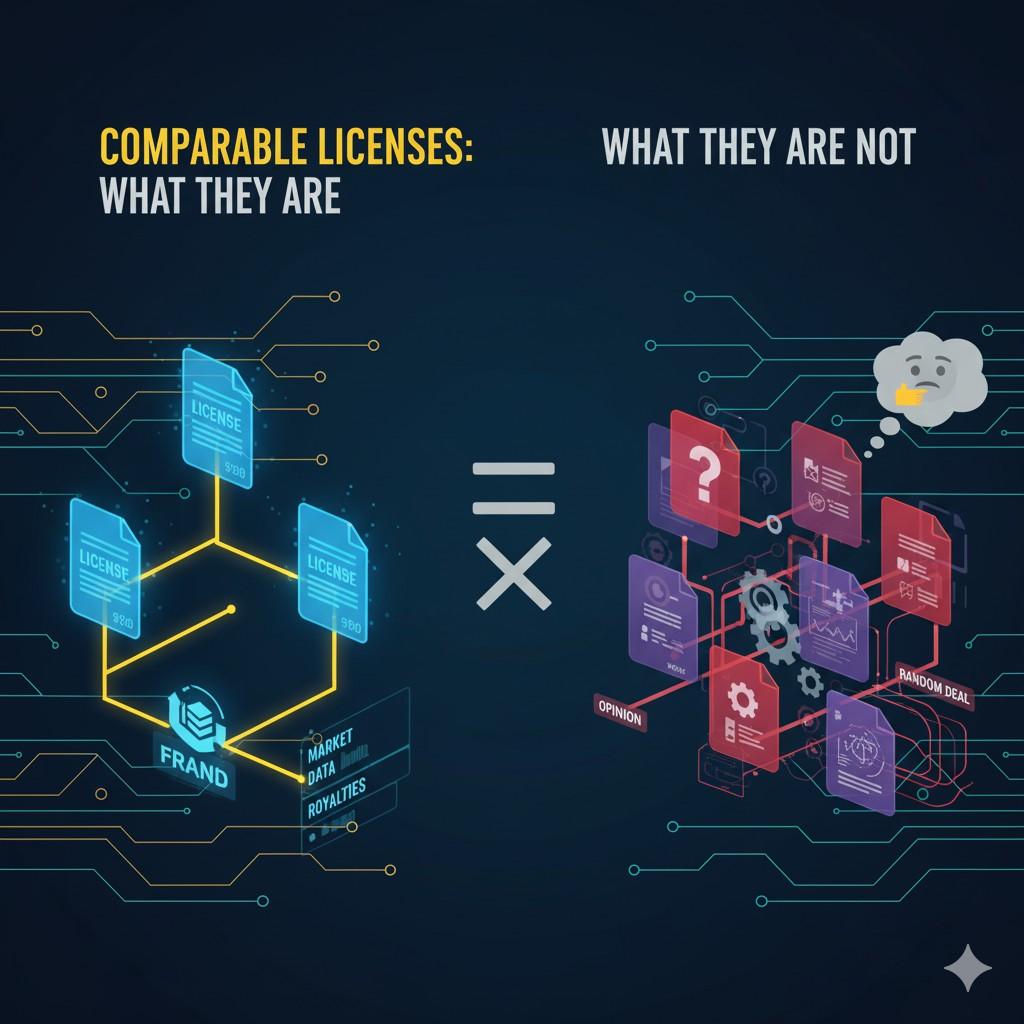
A smaller number of strong comparisons beats a long list of weak ones every time.
Why Internal Deals Rarely Count
Some companies try to use internal transfers or friendly licenses as comparables. These almost never hold up.
Internal deals lack market pressure. Friendly deals often include hidden trade-offs. Neither reflects what an independent buyer would pay in the open market.
Courts and experienced negotiators discount these quickly. Using them can signal desperation or inexperience.
External, arm’s-length deals are the gold standard. Everything else is secondary.
The Danger Of Cherry-Picking
Cherry-picking is the fastest way to lose credibility.
Selecting only the highest or lowest licenses while ignoring the rest paints a distorted picture. It may feel strategic in the short term, but it backfires once the full landscape is revealed.
Markets leave patterns. Comparable licenses should show a range, not a single point.
Businesses that present balanced data appear more trustworthy, even when arguing for a strong position.
Comparable Licenses Are Living Evidence
Markets change. Technology matures. What was fair five years ago may not be fair today.
Treating old licenses as timeless truth is risky. Time affects value.
Smart teams revisit comparables regularly. They update assumptions as adoption grows and competition shifts. This keeps FRAND positions aligned with current reality, not outdated snapshots.
Why Weak Comparables Invite Longer Disputes
Using poor comparables does not just weaken your case. It slows everything down.
The other side challenges relevance. Experts get hired. More data is requested. Costs rise. Timelines stretch.
Strong comparables shorten conversations. They narrow disagreement and focus debate on specifics instead of fundamentals.
For businesses, that efficiency can be the difference between a quick deal and a multi-year distraction.
How Comparable Licenses Shape Patent Strategy Early
Comparable licenses do not only matter at negotiation time. They shape how patents should be written in the first place.
Claims that align with market practices are easier to compare later. Vague or overly broad claims make comparability harder.
This is why patent strategy and licensing strategy are connected. Decisions made during filing echo years later.
Companies that understand this build portfolios that fit cleanly into existing market frameworks instead of fighting them.
Turning Comparable Analysis Into A Competitive Advantage
Most companies treat comparable licenses as a defensive tool. They use them only when challenged.
The best companies go further. They use comparables proactively to guide pricing, messaging, and deal structure.
When you know the market better than the other side, negotiations feel calmer and move faster. That confidence is hard to fake.
Comparable licenses, when used correctly, are not just evidence. They are leverage.
If you want your patents to support strong, clean comparability later, that work starts at filing.
PowerPatent helps founders and technical teams build patents with future licensing reality in mind. You can see how it works at https://powerpatent.com/how-it-works.
How Market Deals Shape Fair and Reasonable Pricing
Market deals are where FRAND stops being abstract and starts becoming measurable.
They show how much real companies paid when they had a real choice. No pressure. No theory. Just decisions made with money on the line.
This section explains how pricing is actually shaped by past deals, how those deals influence what is seen as fair, and how businesses can use this understanding to avoid costly mistakes before they happen.
Pricing Is Set By Patterns, Not Single Numbers
One license never tells the full story. Markets speak in patterns.
When multiple deals cluster around a similar range, that range becomes the quiet center of gravity. It is not written down anywhere, but everyone in the market feels it. Push too far outside it, and resistance appears fast.
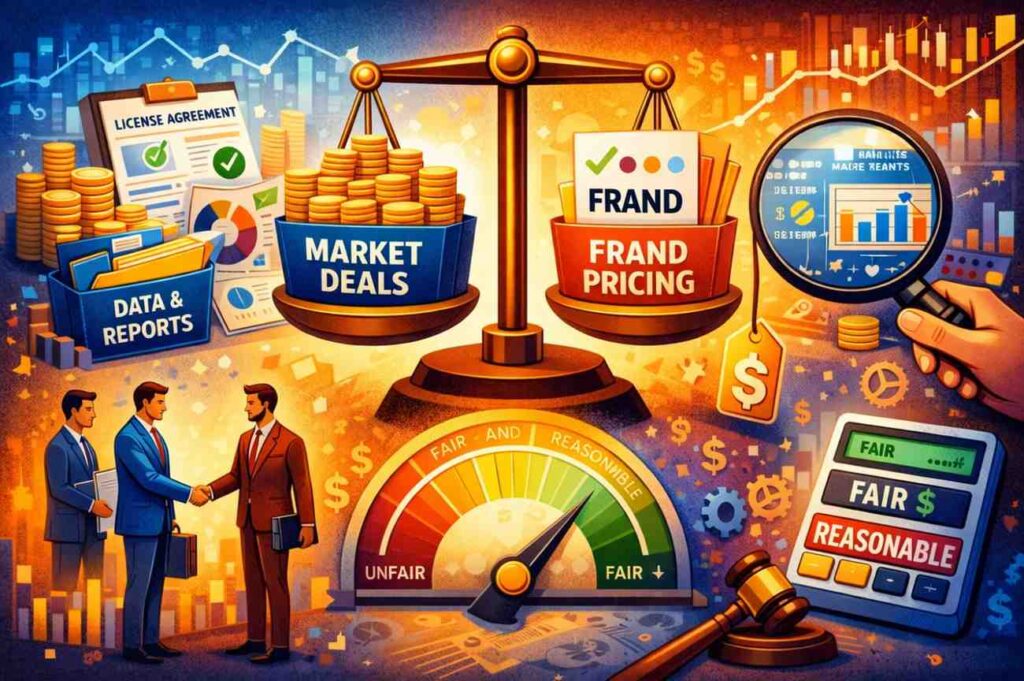
Businesses that study patterns instead of chasing extremes set prices that feel reasonable without needing long explanations. That alone can prevent conflict before it starts.
Fairness Emerges From Repetition
Fair pricing is not declared. It emerges.
When similar technologies are licensed again and again at similar levels, those levels start to feel fair to everyone involved. Even new entrants inherit that expectation.
Trying to reset the market without strong justification rarely works. Markets have memory. Comparable deals are how that memory shows itself.
Understanding this helps businesses decide when to follow the market and when they truly have grounds to ask for more.
Reasonable Pricing Reflects Risk At The Time Of The Deal
Every license captures a moment in time. At that moment, both sides weighed risk.
Early licenses often reflect uncertainty. The technology may not be proven. Adoption may be unclear. Rates tend to be lower because buyers take on more risk.
Later licenses reflect confidence. The tech works. The market is real. Rates often rise.
Comparing deals without accounting for timing leads to bad conclusions. Smart pricing adjusts for the risk that existed when the deal was signed, not the certainty that exists now.
Volume Quietly Drives Price Down
One of the strongest forces in market pricing is volume.
Deals covering large numbers of products often settle at lower per-unit rates. This is not generosity. It is efficiency. The licensor trades margin for reach and predictability.
Ignoring volume effects makes pricing look unfair even when it is not. Markets expect this adjustment, whether it is written into the contract or not.
Businesses that understand this structure deals that align with expectations instead of fighting them.
Market Deals Set Boundaries Even For New Technology
A common belief is that breakthrough technology deserves a clean slate. In reality, markets still look sideways for reference points.
Even new ideas are compared to old ones that solve similar problems or sit in similar layers. Those comparisons set boundaries.
You can argue for a premium, but the argument must be anchored. Market deals provide that anchor.
Without it, pricing feels arbitrary, no matter how impressive the innovation.
How Outlier Deals Distort Expectations
Not all market deals are healthy signals.
Some deals are signed under pressure. Some are part of settlements. Some include side agreements that never make headlines.
Using these outliers as anchors creates distorted expectations. They pull pricing away from the center and invite pushback.
Experienced negotiators recognize outliers quickly. Relying on them weakens trust.
Strong pricing strategy filters noise and focuses on deals that reflect normal market behavior.
The Quiet Role Of Confidential Deals
Many of the most important licenses are never public. They still shape the market.
People talk. Advisors carry knowledge. Patterns emerge even without documents.
This is why anecdotal evidence, when consistent across sources, matters. It helps fill gaps left by public data.
Businesses that stay connected to industry conversations often understand pricing better than those who rely only on what they can download.
Pricing Signals Travel Faster Than Technology
Once a few deals set expectations, those expectations spread.
New licensees ask for similar terms. New licensors reference existing ranges. Over time, the market converges.
Trying to ignore these signals isolates you. Working with them integrates you.
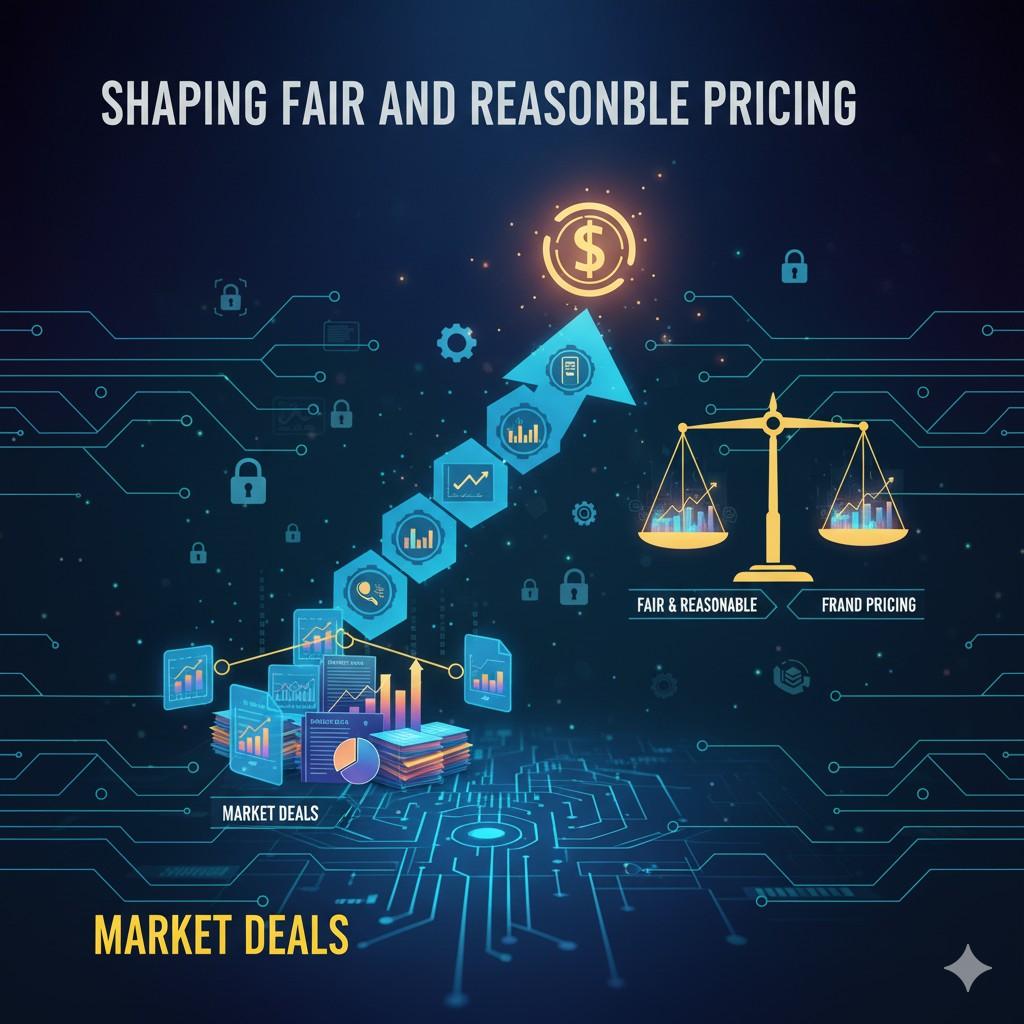
Understanding how fast pricing norms travel helps businesses time their moves and avoid surprises.
Market Deals Reduce Emotional Negotiation
Pricing debates often turn emotional when there is no shared reference.
Market deals provide a neutral third voice. They shift discussion from feelings to facts.
This makes negotiations calmer and faster. Even when sides disagree, they argue about data, not intent.
Businesses that lead with market evidence are often seen as reasonable, even when holding firm.
Using Market Deals To Test Your Own Assumptions
Comparable pricing is not just a weapon. It is a mirror.
It forces businesses to test their own beliefs. Are you really underpricing, or does the market disagree? Are you asking too much, or do the numbers support you?
This self-check prevents strategic drift and builds internal alignment before external talks begin.
How Early Pricing Awareness Shapes Product Decisions
Pricing signals influence more than licensing. They influence product direction.
If the market consistently values certain features higher, that information matters. It guides where to invest engineering time.
Teams that connect pricing data to product strategy build technology that aligns with market value, not just technical elegance.
Turning Market Deals Into A Long-Term Asset
The best companies treat market data as a living asset.
They track deals, update models, and refine assumptions over time. This creates institutional memory that survives team changes.
When negotiations arise, they are not starting from zero. They are building on years of quiet preparation.
This readiness is hard to replicate and easy to underestimate.
Why Pricing Strategy Starts Before Licensing
By the time a license is requested, the pricing window has narrowed.
The real work happens earlier. Understanding market deals early shapes expectations on both sides.
This is why pricing strategy belongs in early planning, not last-minute negotiation.
If you want your patents and product decisions to support fair, defensible pricing later, that work starts now.

PowerPatent helps founders build IP with market reality in mind, not after-the-fact fixes. You can see how it works at https://powerpatent.com/how-it-works.
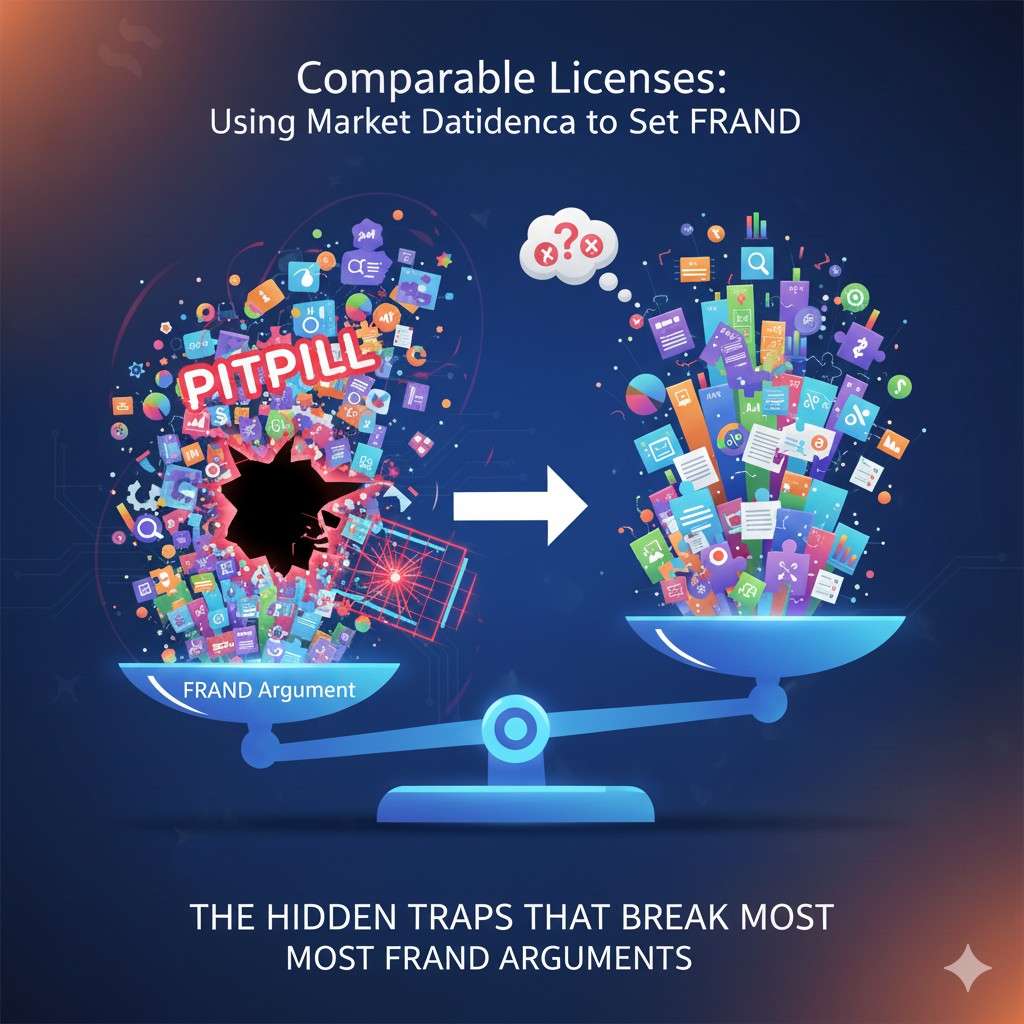
The Hidden Traps That Break Most FRAND Arguments
Most FRAND positions do not fail because the technology is weak. They fail because the argument is built on quiet assumptions that collapse under pressure.
These traps are easy to miss when things are calm and very expensive once a dispute starts.
This section exposes the most common breakdowns in FRAND reasoning and explains how businesses can avoid them long before lawyers get involved.
Treating FRAND As A Moral Claim Instead Of A Market Claim
One of the fastest ways to weaken a FRAND position is to frame it as a matter of fairness in a human sense.
Statements like “this feels fair” or “this seems reasonable” sound persuasive internally, but they mean nothing externally. Markets do not respond to feelings. They respond to precedent.

FRAND is not about being kind or cooperative. It is about aligning with demonstrated market behavior. Businesses that forget this often sound sincere and still lose.
Assuming Standards Automatically Mean High Value
Being part of a standard feels powerful. It can create the belief that any standard-essential technology must command a premium.
The market does not agree by default. Some standard features are critical. Others are replaceable. Some are implemented widely. Others are rarely used.
Assuming high value without evidence leads to overreach. Overreach invites resistance.
The only safe way to claim premium value is to show that others already paid it.
Ignoring How The Other Side Sees Comparability
Many FRAND arguments are built from one viewpoint only.
A company identifies licenses it believes are comparable and stops there. The other side looks at the same deals and sees differences.
FRAND arguments break when they fail to anticipate counter-interpretations. Businesses should always ask how a skeptical outsider would view their evidence.
This mental shift strengthens arguments and exposes weak spots early, when they are easier to fix.
Over-Relying On A Single Deal
Putting too much weight on one license is risky.
Even a strong deal can be challenged as unique. Context can be questioned. Motives can be debated.
Markets speak through repetition. FRAND arguments need more than one data point to feel stable.
Businesses that build around clusters of deals stand on firmer ground than those leaning on a lone example.
Forgetting That FRAND Is Forward-Looking
FRAND is not only about past deals. It is also about future access.
Licenses should allow standards to spread without distortion. Pricing that chokes adoption may look strong on paper but weak in practice.
Arguments that ignore market growth and long-term use often feel short-sighted.
Strong FRAND positions acknowledge how pricing affects the ecosystem, not just immediate revenue.
Misreading Silence As Agreement
A lack of pushback does not mean the market agrees with you.
Some companies accept terms to move on. Others lack resources to fight. Others plan to challenge later.
Using silent acceptance as proof of fairness is dangerous. Silence is not validation.
True validation comes from repeated, voluntary deals under normal conditions.
Confusing Patent Count With Patent Impact
Large portfolios feel impressive. They are easy to count and hard to ignore.
But FRAND pricing is not about quantity alone. It is about what actually matters in implementation.
Counting patents without tying them to real technical impact weakens credibility. Markets care about function, not volume.
Businesses that focus on impact instead of size tell clearer, stronger stories.
Letting Lawyers Build The Story Alone
Legal teams are essential, but they should not work in isolation.
FRAND evidence is shaped by technical facts, product decisions, and market behavior. Lawyers step in later.
When business and technical teams disengage, arguments become abstract. That abstraction creates gaps.
The strongest FRAND positions are built cross-functionally, long before formal disputes arise.
Waiting Too Long To Stress-Test Your Argument
Many companies first test their FRAND position when challenged.
By then, changes are hard. Assumptions are baked in. Options are limited.
Early stress-testing reveals weaknesses quietly. It allows adjustments without pressure.
This is one of the most practical steps a business can take to protect future leverage.
Treating FRAND As A One-Time Exercise
FRAND is not set once and forgotten.
Markets evolve. New deals happen. Old assumptions expire.
Arguments that are not refreshed drift away from reality. That drift is often invisible until it is exposed.
Businesses that revisit FRAND thinking regularly stay aligned with the market instead of chasing it.
How To Build FRAND Arguments That Survive Pressure
Strong FRAND arguments share a few traits. They are grounded, balanced, and calm.
They acknowledge limits. They explain context. They invite scrutiny.
This tone is not weakness. It is confidence rooted in evidence.
When arguments are built this way, they survive negotiation, review, and challenge with minimal damage.
Why Avoiding These Traps Starts At Filing
Many of these traps trace back to early decisions.
How patents are written. How features are described. How value is framed internally.
Fixing these issues later is expensive. Avoiding them early is efficient.
This is why patent strategy cannot be separated from licensing reality.
If you want to build patents that support clean, defensible FRAND positions instead of fragile arguments, PowerPatent is designed for that exact purpose. It helps founders and technical teams think ahead, not react later. You can see how it works at https://powerpatent.com/how-it-works.
Wrapping It Up
FRAND does not have to be a source of stress or uncertainty. When handled the right way, it becomes a stabilizing force. It creates predictability. It reduces conflict. It turns vague obligations into clear business outcomes. Everything in this article points to one central idea. FRAND is not won with clever language or strong opinions. It is won with preparation grounded in market reality.
Leave a Reply