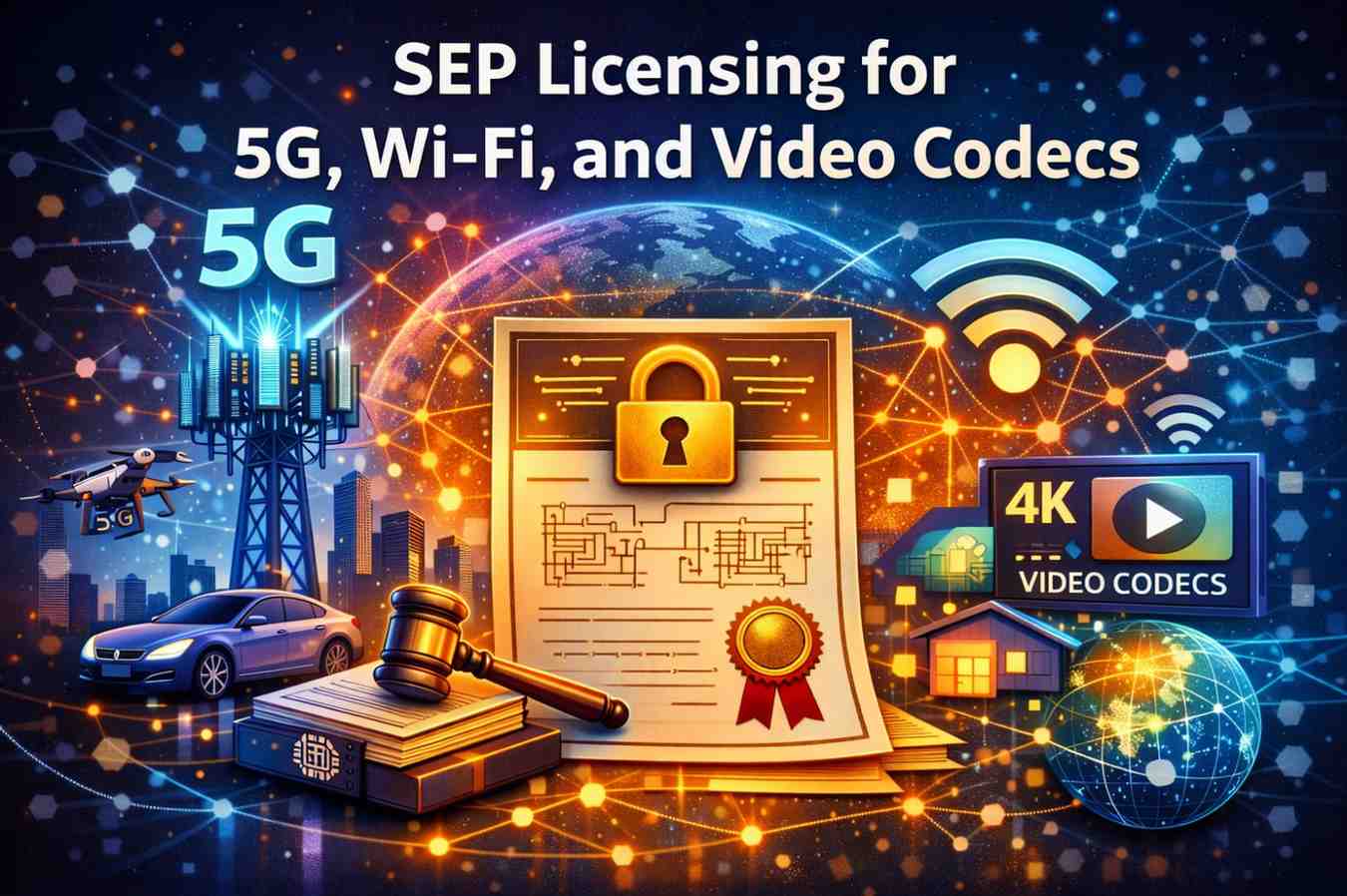
Patents should protect progress, not slow it down. But when it comes to 5G, Wi-Fi, and video codecs, many founders feel stuck the moment they hear the words “SEP licensing.” It sounds heavy, legal, and risky. The truth is simpler. If you are building anything that talks, streams, connects, or shares data, SEPs already touch your product. Ignoring them can quietly become one of the biggest risks in your company.
Why Standard-Essential Patents Control Modern Connectivity
Standard-essential patents sit at the center of modern technology, even when most founders never see them.
They decide who can build, how products talk to each other, and what it costs to play in global markets.
If your product connects to a network, sends video, or moves data in a common way, SEPs already shape your business reality. Understanding this early is not a legal exercise. It is a strategy move.
The hidden rules behind every connection
Every major tech standard is built on shared rules. These rules define how devices connect, how data is sent, and how quality stays consistent across the world.
Once a standard is locked, anyone who wants to use it must follow those rules exactly. There is no shortcut. If a patent protects one of those rules, that patent becomes essential.
For a business, this means the patent owner has leverage, not because they are aggressive, but because the market depends on the standard. This is why SEPs quietly control so much value.
They sit inside the rules everyone depends on, not at the surface where founders usually focus.
The actionable move here is awareness. Teams that know which standards their product relies on can plan early. This planning affects pricing, partnerships, and even which markets to enter first.
Why standards cannot exist without patents
Standards and patents grow together. Standards bodies bring companies together to agree on how tech should work. Many of those companies bring patented ideas into the room.
Once the group agrees to use a patented idea, that patent becomes essential.
This is not a trick. It is the price of progress. Without patents, companies would not share their best ideas. Without standards, products would not work together. SEPs are the bridge between cooperation and ownership.
For founders, the lesson is simple. Standards are not free. They come with built-in IP obligations. Treating them as free infrastructure is one of the most common and costly mistakes startups make.
How SEPs shape product design choices
Most teams design products around features, performance, and speed to market. Very few think about how design choices lock them into certain standards. Once a design relies on a standard, SEP exposure is automatic.
This does not mean you should avoid standards. It means you should make conscious choices.
Sometimes there are multiple ways to solve a problem. One may rely heavily on a patented standard. Another may reduce exposure or give you more leverage later.

Action here starts with cross-team conversations. Engineering, product, and leadership should align early on which standards are essential to the roadmap and why. This clarity helps you avoid accidental lock-in and surprise costs.
The power imbalance founders rarely see coming
Large companies often own large SEP portfolios. Startups usually own none at the beginning.
This creates a natural imbalance when licensing talks begin. The bigger company is not stronger because of size alone, but because their patents sit inside standards your product must use.
Founders who wait until they receive a licensing notice are already behind. Those who prepare early can rebalance the discussion by building their own IP, documenting innovation, and understanding where they stand.
This is where tools matter. Platforms like PowerPatent help founders turn real technical work into defensible patents without slowing down product development.
That early IP foundation can change the tone of future SEP conversations. You can see how that works here: https://powerpatent.com/how-it-works.
FRAND is not a shield, it is a framework
Many founders hear that SEP licenses must be fair and think this alone will protect them.
Fair terms help, but they do not remove the obligation to license. FRAND sets boundaries, not outcomes. It does not mean cheap. It does not mean easy.
The strategic takeaway is preparation, not reliance. Understanding typical rates, common deal structures, and industry norms gives you real leverage. Waiting for fairness to save you is not a strategy.
Businesses that win here treat SEP licensing as a commercial negotiation, not a legal argument.
Why timing matters more than most founders think
When you deal with SEPs is often more important than how. Early engagement, even informal, gives you more options. Late engagement limits them.
Before revenue, licensors may see you as a future partner. After scale, you are seen as a payer. Before fundraising, you can clean up risk. After due diligence starts, the same issue becomes a red flag.
The action is to map SEP exposure alongside your business milestones. Funding rounds, product launches, and market expansions should trigger internal reviews. This keeps you ahead instead of reactive.
SEPs as a business planning tool, not just a risk
Most people see SEPs only as a cost. Smart companies also see them as signals. They show where value concentrates in an ecosystem. They reveal which players matter most.
They highlight where innovation is rewarded long term.
By studying SEP landscapes, founders can spot partnership opportunities, acquisition targets, or even future areas to patent. This turns a perceived burden into strategic insight.
Doing this well requires clean IP records and a clear view of your own inventions.
That is exactly what PowerPatent is built to support, combining smart software with real attorney review so founders stay fast and informed. Learn more here: https://powerpatent.com/how-it-works.
The real reason SEPs control markets, not just tech
At the end of the day, SEPs control connectivity because connectivity depends on trust. Everyone agrees to follow the same rules so the world works together. Those rules are locked in by patents.
Founders who respect this system early gain confidence. They make better decisions. They avoid panic. They protect value while building momentum.
Understanding why SEPs control modern connectivity is the first step. Acting on that understanding is what separates resilient companies from fragile ones.
How SEP Licensing Really Works in 5G, Wi-Fi, and Video Tech
SEP licensing feels mysterious because most founders only see it when something goes wrong. In reality, it follows patterns that repeat across industries and standards.
Once you see those patterns, the system becomes predictable. Predictability is power.
This section explains how SEP licensing actually plays out in 5G, Wi-Fi, and video codecs, and what businesses can do to stay ahead instead of reacting under pressure.
The moment a standard becomes unavoidable
Once a standard is finalized and widely adopted, it becomes infrastructure. 5G is not optional for mobile devices. Wi-Fi is not optional for connected products.
Video codecs are not optional for streaming, conferencing, or content platforms.
At that moment, licensing stops being theoretical. Any product that implements the standard is automatically using the patented ideas inside it. There is no extra step.
You do not sign up. You do not opt in. You are in by design.
The strategic move for businesses is to identify the exact point where their product crosses from optional experimentation into standard dependence.
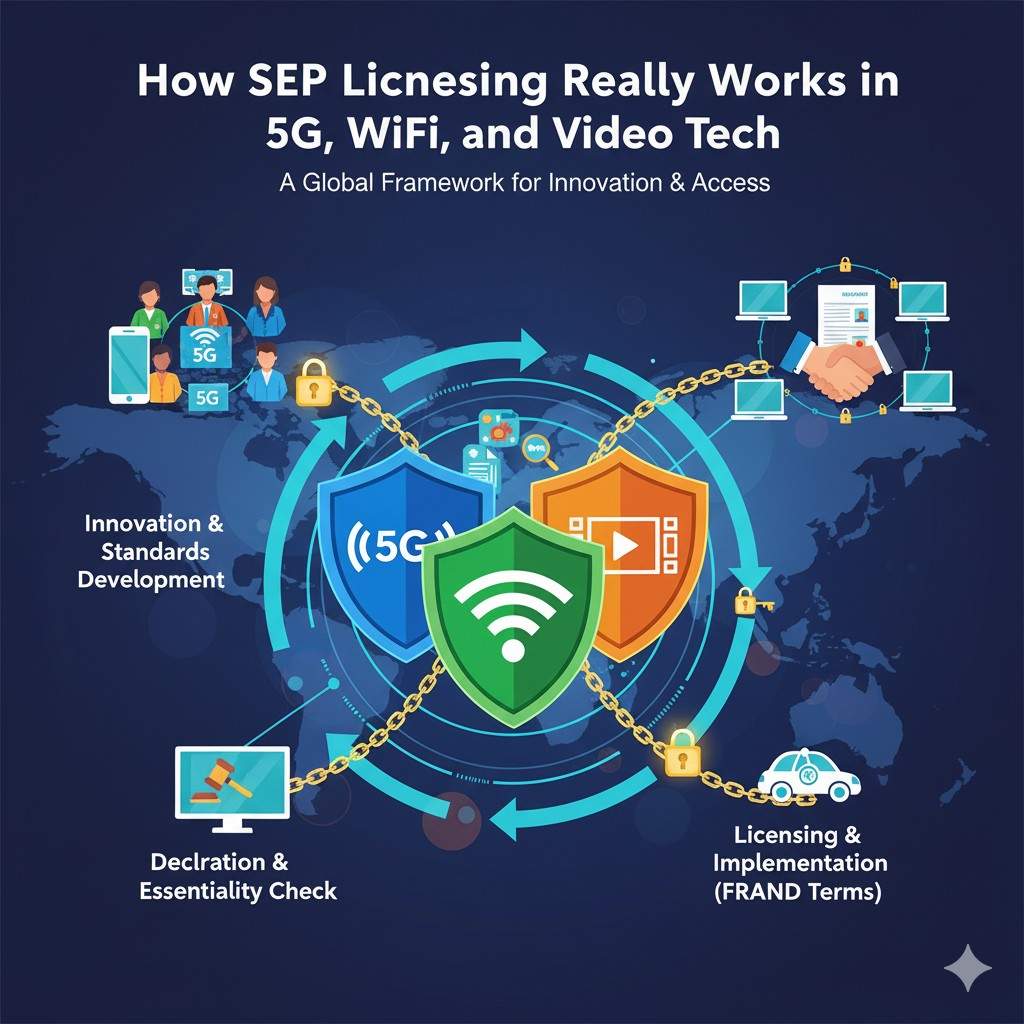
That point should trigger internal alignment around licensing exposure and long-term cost planning.
Why licensing is often delayed but never disappears
Many SEP holders do not chase early-stage startups. There is little money to collect, and enforcement is expensive. This creates a false sense of safety for founders. Silence is often mistaken for permission.
Licensing discussions usually start when revenue grows, when devices ship at scale, or when visibility increases. By then, the product is locked in, customers depend on it, and leverage has shifted.
The actionable insight is to treat silence as temporary. Businesses that prepare before the first outreach can respond calmly, with data and options, instead of scrambling.
The role of licensing programs and patent pools
In 5G, Wi-Fi, and video codecs, many SEP holders group their patents into licensing programs or pools. These pools offer a single license that covers many patent owners. On the surface, this feels simpler. One deal instead of many.
In practice, pools are business tools. They set market expectations for pricing and terms. They can be helpful, but they are not always the best or only option.
Founders should evaluate pools as reference points, not defaults. Understanding what is included, what is excluded, and how rates scale with volume is key.
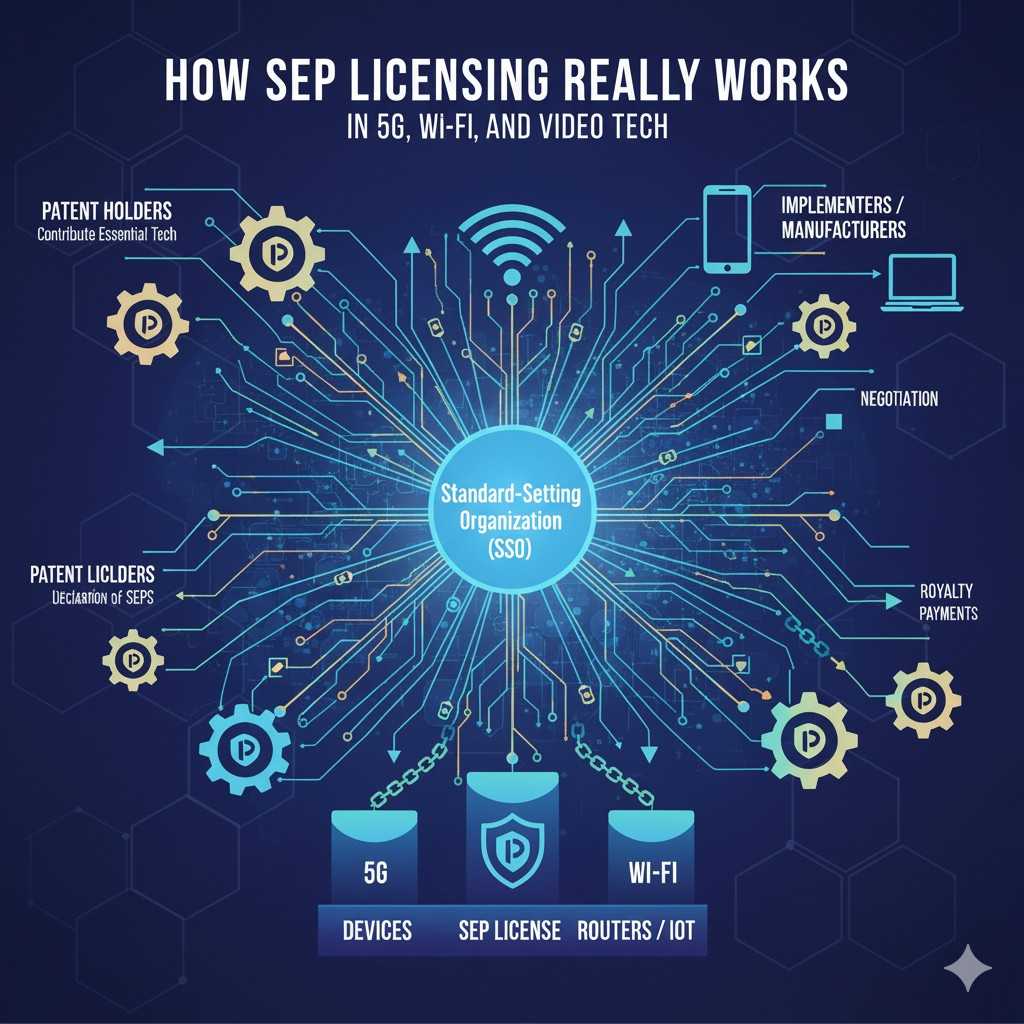
Sometimes direct licensing makes more sense. Sometimes pools reduce risk. The right answer depends on your product and growth plan.
How rates are actually discussed
Despite the technical nature of standards, licensing talks are commercial. Rates are influenced by product category, selling price, volume, and market position. Two companies using the same standard may pay very different amounts.
This is where many startups lose ground. They assume rates are fixed and non-negotiable. In reality, context matters. Timing matters. Preparedness matters.
Businesses that enter discussions with a clear picture of their product economics and roadmap are better positioned to shape outcomes. Those who rely on assumptions often overpay or accept unnecessary constraints.
The difference between device makers and service builders
SEP licensing plays out differently depending on what you sell. Hardware devices often face per-unit royalties. Software and services may face user-based or revenue-based structures.
In video codecs, this difference is especially sharp. A company building a camera chip faces different obligations than a platform streaming video to millions of users.
The strategic takeaway is to understand how licensors classify your business. Sometimes reframing your role or architecture changes how licensing applies. This is not about hiding. It is about accurately representing what you do.
Why implementation details matter more than founders expect
Not all implementations are equal. Small technical choices can affect licensing exposure. Which profiles you support. Which features you enable. Which fallback options you include.
These details are often decided deep inside engineering teams, far from business discussions. When teams work in silos, licensing risk grows quietly.
The action here is integration. Legal, IP, and engineering should share context early. Even light alignment can prevent costly redesigns or unexpected obligations later.
How SEP enforcement usually escalates
Most SEP disputes do not start in court. They start with notices, discussions, and proposals. Escalation happens when communication breaks down or when positions harden.
Founders sometimes ignore early outreach out of fear or confusion. This almost always makes things worse. Silence is read as resistance.
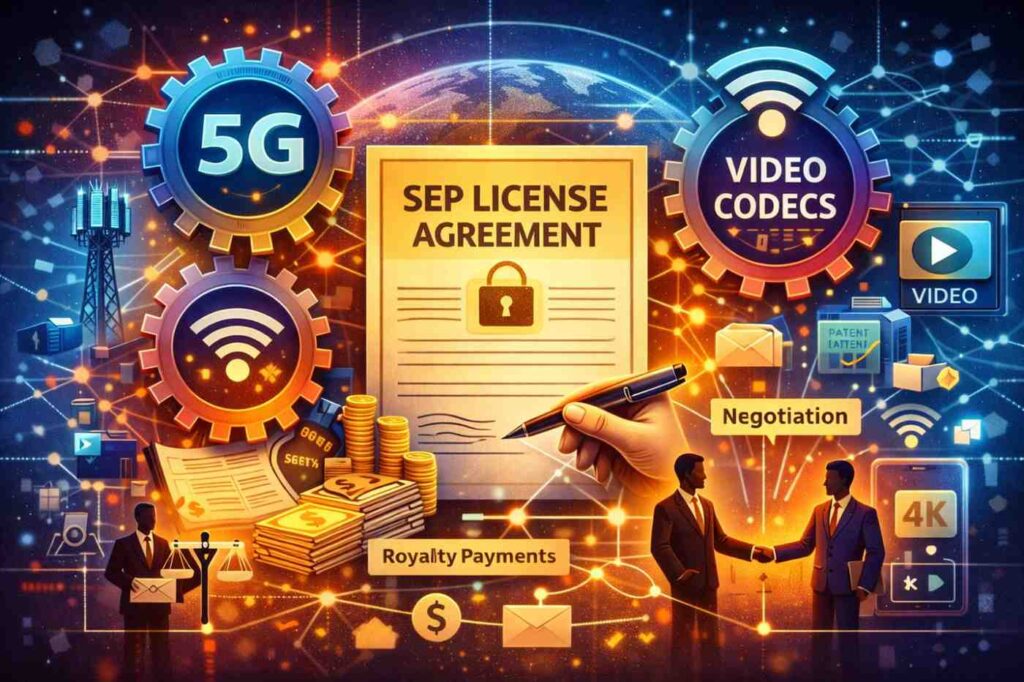
A calm, informed response keeps options open. Even if you disagree, engaging professionally signals seriousness and buys time. Time is leverage.
Why your own patents change the conversation
Companies with their own patents, even outside the specific standard, often negotiate from a stronger position. This is not about threats. It is about balance.
Owning IP shows that you are a contributor, not just a user. It opens doors to cross-licensing or broader commercial discussions. It signals long-term intent.
This is why building your patent foundation early matters, even if you never plan to enforce.
PowerPatent helps founders capture real innovation as it happens, without slowing down teams or adding complexity. If you want to see how that works, explore it here: https://powerpatent.com/how-it-works.
The quiet link between licensing and fundraising
Investors pay attention to SEP exposure, especially in connectivity-heavy products. Unclear licensing status can delay deals or reduce valuation. Clear planning does the opposite.
Founders who can explain their SEP position simply and confidently earn trust. They show they understand the landscape and are not blind to hidden risks.
The actionable step is documentation. Keep a clear internal record of standards used, assumptions made, and conversations started. This turns a scary topic into a manageable one.
Seeing SEP licensing as a process, not an event
SEP licensing is not a single moment. It evolves as your product evolves. Rates change. Standards update. Your role in the market shifts.
Businesses that treat licensing as an ongoing process stay flexible. Those who treat it as a one-time hurdle often get stuck when conditions change.
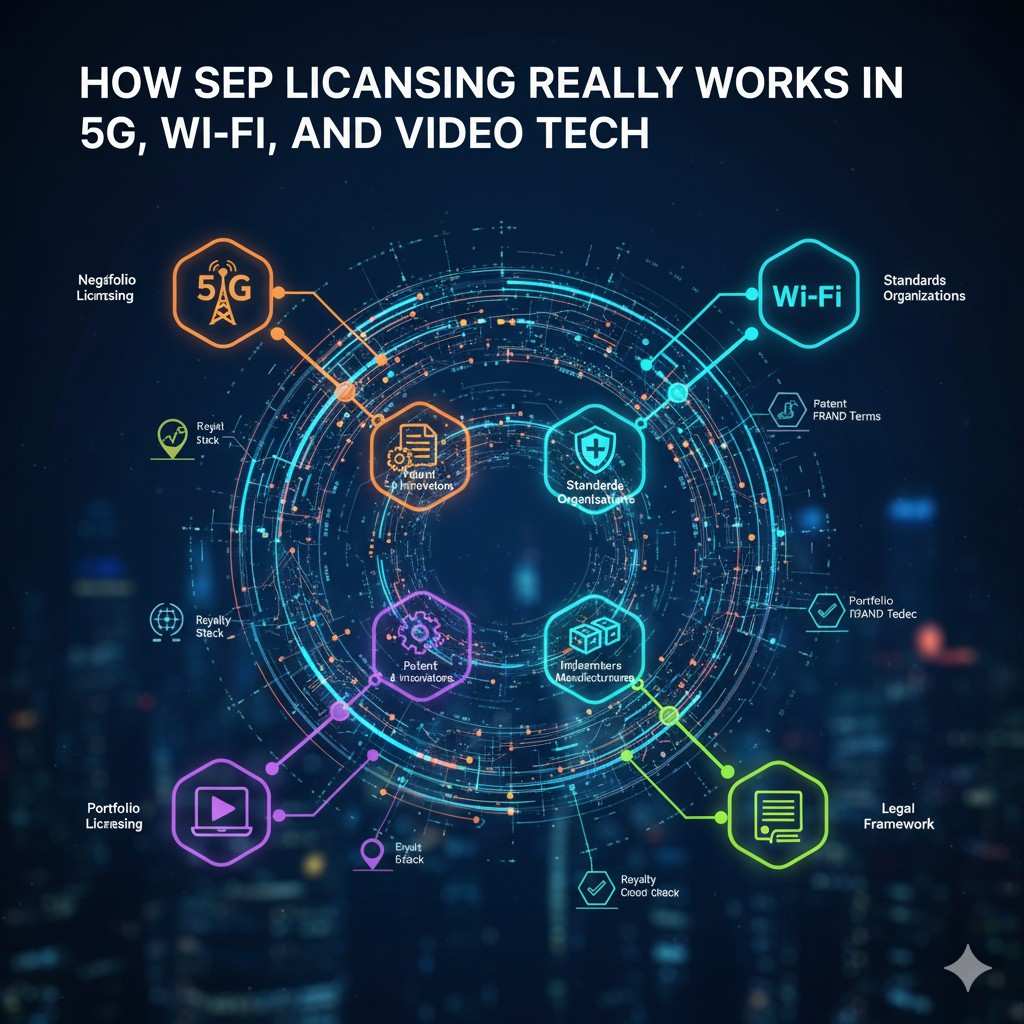
Understanding how SEP licensing really works removes fear. It replaces uncertainty with structure. That structure lets founders focus on what matters most: building great products with confidence.
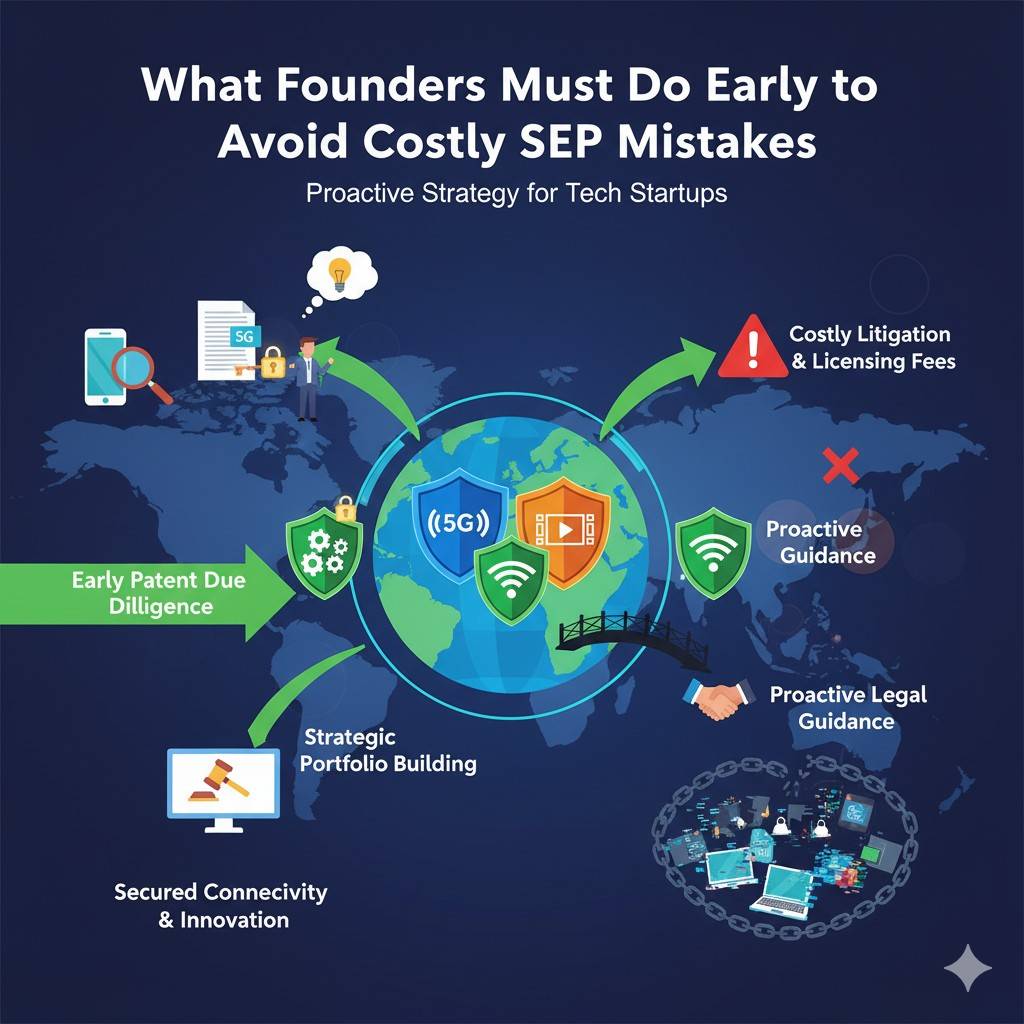
What Founders Must Do Early to Avoid Costly SEP Mistakes
Most SEP problems are not caused by bad intent or poor decisions. They are caused by delay. Founders move fast, focus on product, and assume they will deal with patents later.
Later is usually too late. The companies that avoid pain do a few simple things early, quietly, and consistently. This section explains what those moves are and why they work.
Shifting mindset from reaction to readiness
The biggest change founders need to make is mental. SEP issues are not emergencies waiting to happen.
They are predictable parts of building connected products. When treated as part of normal business planning, they stop feeling scary.
Readiness does not mean slowing down or hiring a large legal team. It means knowing where you stand before someone else tells you. That clarity alone removes most of the risk.
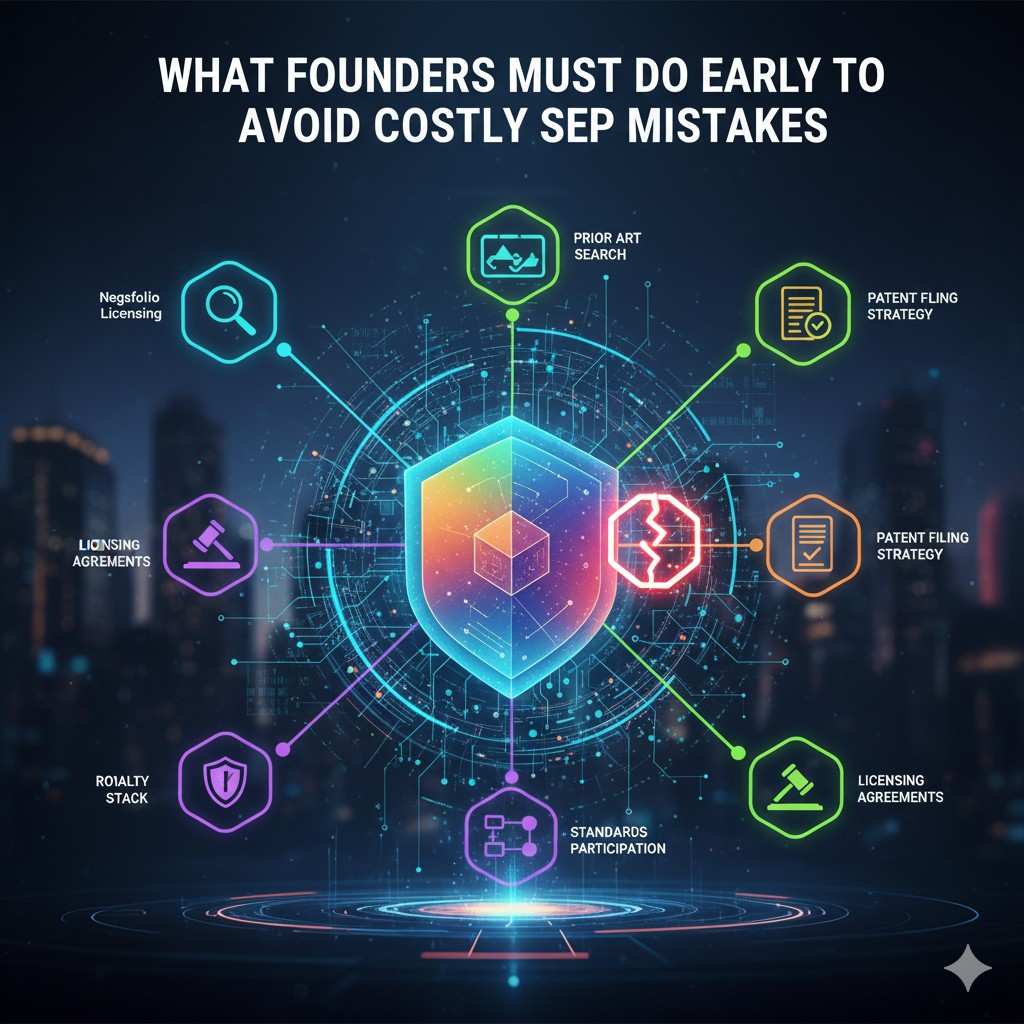
Founders who adopt this mindset early tend to make calmer decisions under pressure and avoid rushed deals later.
Mapping standards as soon as the product takes shape
As soon as a product roadmap exists, standards are already implied. If your product connects, streams, syncs, or communicates, it relies on shared rules. Those rules come from standards.
The actionable step here is simple. At an early stage, write down which standards your product depends on today and which ones it may depend on in the future. This is not a legal document. It is a working map.
This map becomes a reference point for engineering decisions, partnership talks, and investor questions. It also highlights where SEP exposure may grow over time.
Aligning engineering and business before problems appear
Engineering teams often make decisions based on performance and feasibility. Business teams think about cost and scale. SEP risk lives in the gap between them.
Early alignment does not require deep legal training. It requires context. Engineers should know that certain choices affect licensing exposure.
Business leaders should understand that not all technical paths carry the same long-term cost.
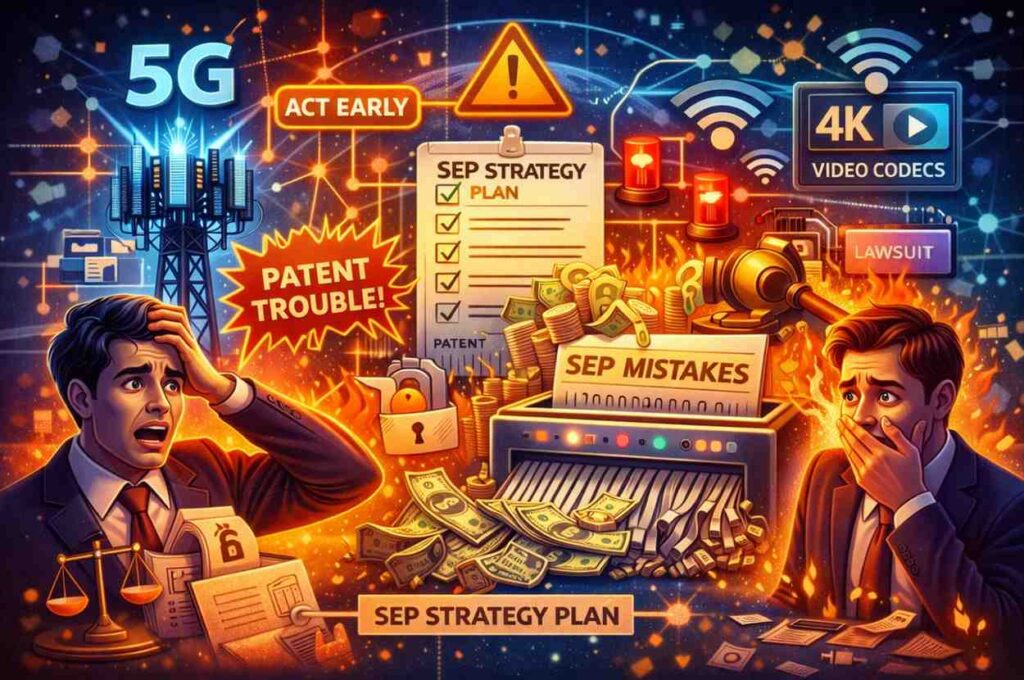
A short, regular check-in between product and leadership can surface these issues early. Catching them early is almost always cheaper than fixing them later.
Treating silence from licensors as temporary
One of the most dangerous assumptions founders make is that no one cares because no one has reached out. In SEP licensing, silence often just means timing is not right yet.
The moment revenue grows, visibility increases, or customers become well known, that silence can end. At that point, leverage often shifts away from the startup.
The strategic move is to plan before contact. Knowing your position ahead of time lets you respond with confidence instead of surprise.
Building your own IP before you need it
Many founders think patents only matter when enforcing them. In SEP contexts, patents matter even when they are never used aggressively. They signal seriousness and balance.
Owning patents shows that you are not just consuming standards but contributing innovation to the ecosystem. This changes how licensors view you. It can open doors to better terms or broader discussions.
The key is timing. Patents filed early are stronger and cheaper. Waiting until a dispute arises limits options.
PowerPatent was built to make early patenting practical for founders, using smart software guided by real attorneys so nothing slows down. You can see how that works here: https://powerpatent.com/how-it-works.
Documenting decisions while context is fresh
Many SEP disputes turn messy because no one remembers why certain choices were made. Years later, teams struggle to explain design decisions or assumptions.
Keeping lightweight records solves this. Notes on why a standard was chosen, what alternatives were considered, and what assumptions were made about licensing can be invaluable later.
This documentation is not for regulators or courts. It is for your future self, investors, and partners.
Understanding when to engage and when to wait
Not every situation requires immediate outreach to licensors. Sometimes early engagement makes sense. Sometimes observation is better.
The difference comes from understanding your trajectory.
If you are approaching scale, entering regulated markets, or raising significant capital, early engagement often helps. If you are still validating a concept, monitoring may be enough.
The mistake is not choosing wrong. The mistake is choosing blindly. Awareness lets you decide intentionally.
Preparing for licensing talks before they happen
Licensing discussions go better when they are expected. Preparation does not mean rehearsing arguments. It means knowing your numbers, your product boundaries, and your growth plan.
Founders who can clearly explain how their product works and how it creates value tend to command more respect. This respect influences outcomes, even in tough negotiations.
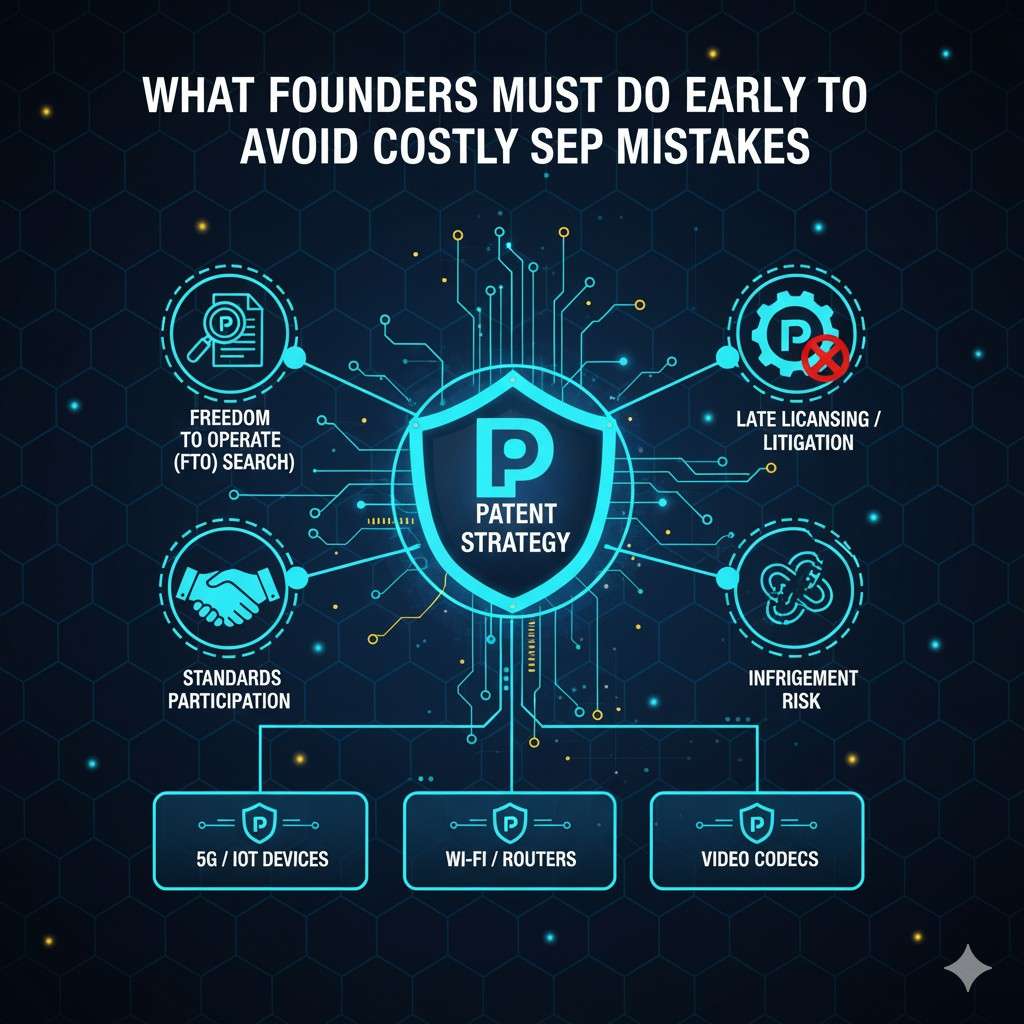
Preparation also includes knowing what you are willing to accept and what you are not. Clarity reduces stress.
Avoiding the trap of treating SEPs as purely legal issues
SEP licensing is a business issue first. Legal frameworks exist, but outcomes are shaped by commercial realities.
Founders who delegate everything to lawyers without understanding the basics often feel disconnected and frustrated. Those who stay involved make better decisions.
This does not mean becoming an expert. It means staying informed enough to guide strategy.
Using due diligence as a forcing function
Fundraising, partnerships, and exits all involve scrutiny. SEP exposure often comes up during these moments. Founders who prepare early turn due diligence into a non-event.
Clear explanations build trust. Uncertainty raises questions. Questions slow deals.
The actionable step is to rehearse your SEP story internally before anyone asks. This story should be simple, honest, and grounded in preparation.
Turning early action into long-term confidence
Avoiding costly SEP mistakes is not about perfection. It is about momentum. Each early action builds confidence. Confidence improves decisions. Better decisions reduce risk.
Founders who take these steps rarely regret them. They move faster, not slower. They stay focused on building, not reacting.
PowerPatent exists to support exactly this kind of early, founder-friendly action. By combining software speed with attorney judgment, it helps teams stay ahead without distraction.
If you want to explore that approach, you can do so here: https://powerpatent.com/how-it-works.
This is the foundation for navigating SEP licensing with control instead of fear.
Wrapping It Up
SEP licensing is not a side issue. It is part of the operating system of modern technology businesses. 5G, Wi-Fi, and video codecs are not trends that come and go. They are foundations. Founders who understand this do not panic when patents come up. They plan, act early, and keep moving. This final section brings everything together and focuses on how to carry this knowledge forward in a practical, founder-friendly way.
Leave a Reply