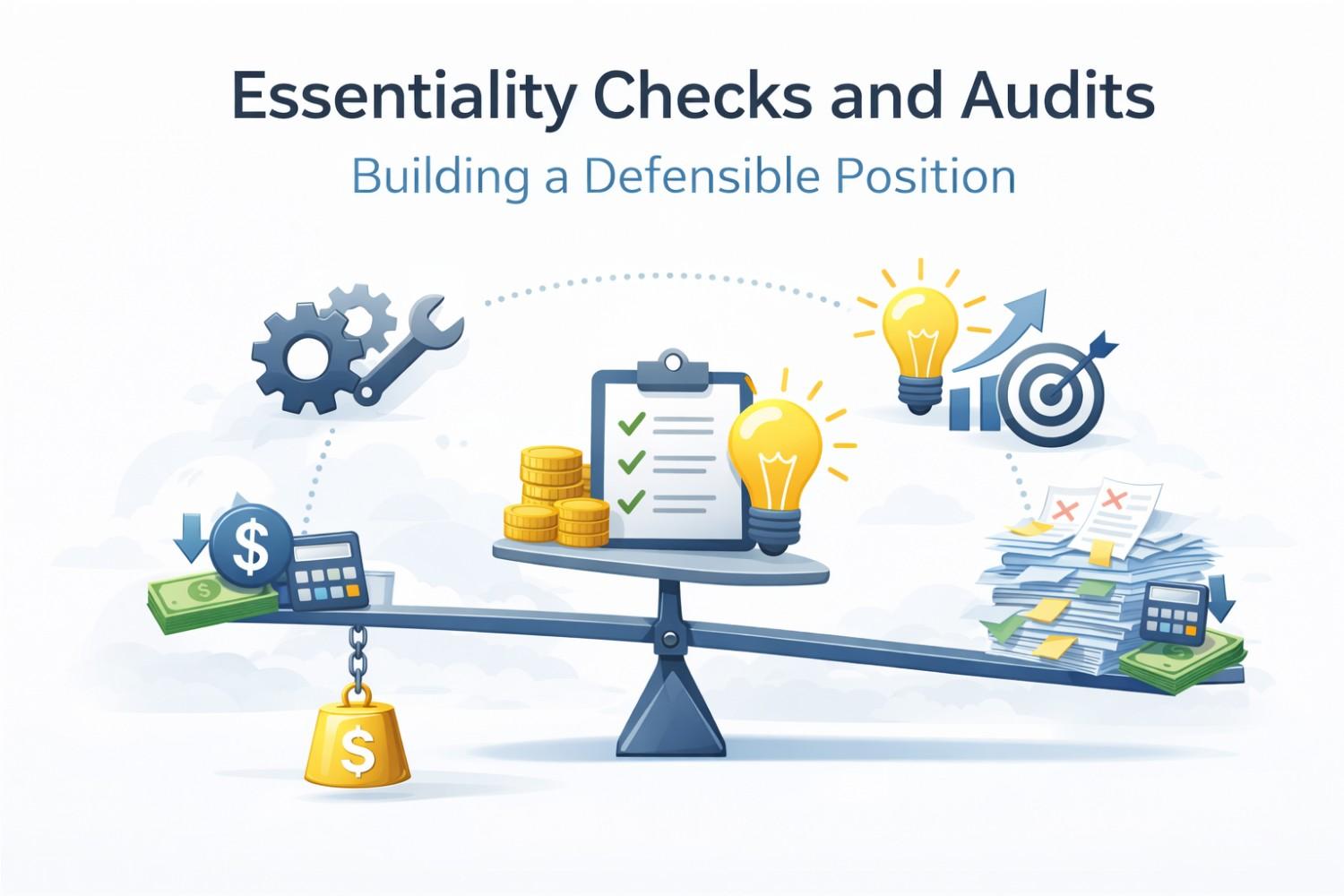
Most founders do not lose IP because their idea was weak.
They lose it because they never checked what really mattered. Essentiality checks and audits sound heavy and slow. They are not. At their core, they are simple questions asked early, while you still have control. What part of what you built truly matters? What parts would hurt the most if a competitor copied them? And can you prove, clearly and calmly, that those parts are yours?
What “Essential” Really Means in a Startup
When people hear the word essential, they often think about what feels important today. Revenue. Users.
Growth. Speed. Those things matter, but essentiality in a startup means something very different when you look at it through the lens of ownership and defense.
Essential is not about what looks impressive. It is about what would break your business if it was taken away. It is about the smallest core idea that makes everything else work.
If you remove it, the product collapses. If a competitor copies it, your edge disappears.
This section is about learning how to see that core clearly, before someone else does.
Essential Is About Dependency, Not Features
Every startup has features. Most of them feel important when you build them. But essential parts are the ones other parts depend on to exist.
If you shut off one component and nothing works the same way, that component is essential. If you remove it and the system can still run with small changes, it is probably not.
Founders often confuse visible features with core systems. A clean dashboard looks important, but the logic that decides what data shows up and when is usually where the real value lives.
The same is true in hardware, biotech, AI, and infrastructure products. The outer layer is replaceable. The inner engine is not.
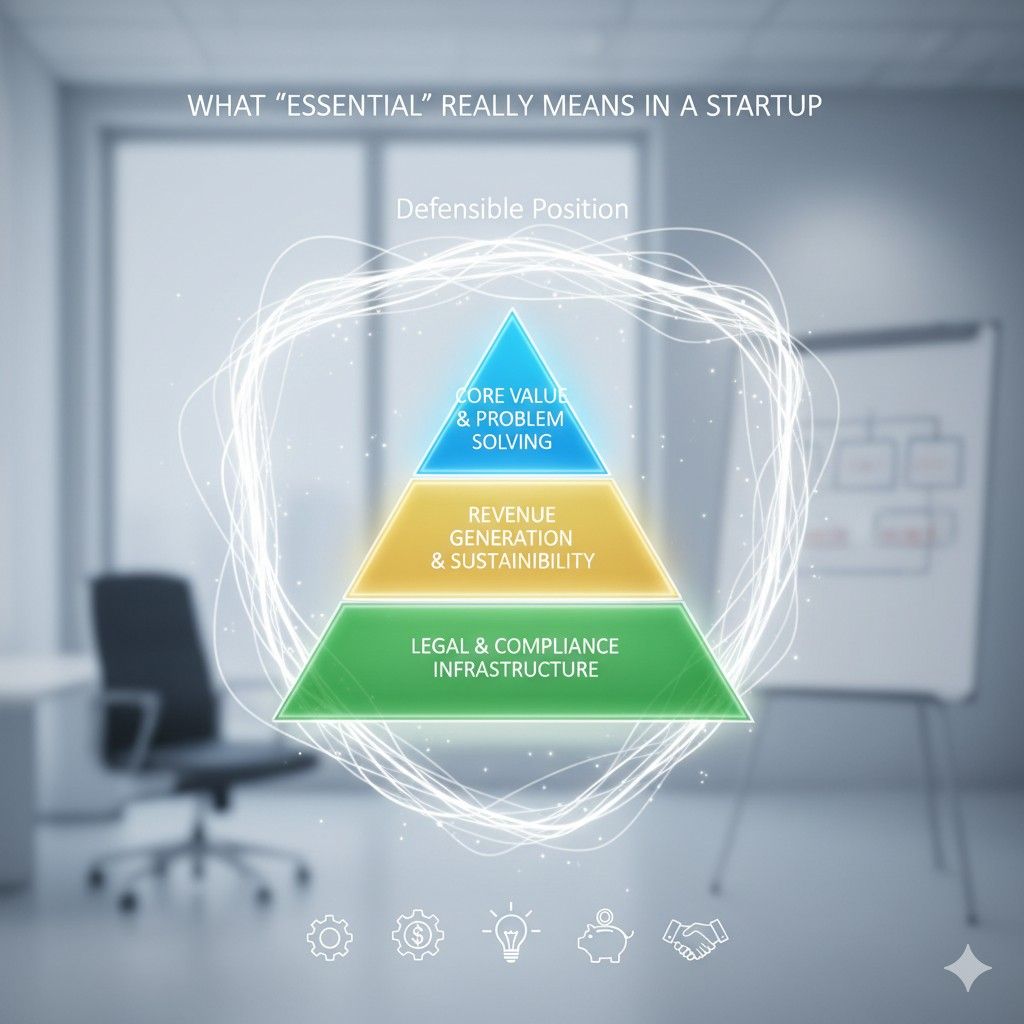
A practical way to test this is to imagine a smart competitor rebuilding your product from scratch. Ask yourself what part they would struggle to recreate without deep insight. That struggle point is often where essentiality lives.
This is exactly the kind of thinking PowerPatent pushes founders toward early, before everything gets messy. You can see how that process works here: https://powerpatent.com/how-it-works
Essential Does Not Mean Large or Complex
One of the biggest mistakes founders make is assuming essential ideas must be big or complicated. In reality, essential ideas are often small, quiet, and easy to miss.
A single data transformation step. A specific training method. A timing rule. A control loop. A way systems talk to each other. These things do not look flashy, but they often hold the entire product together.
If you can explain the idea in one or two simple sentences and still feel nervous about someone else using it, that is a strong signal. Essential ideas feel obvious only after you see them. Before that, they hide in plain sight.
The goal is not to collect many ideas. The goal is to clearly identify the few that matter most.
Essential Is What Creates Switching Pain
Another way to spot essentiality is to look at switching pain. When users leave your product, what do they miss the most? What forces them to change how they work?
That pain usually comes from something deep in your system, not from surface-level design. It might be the way results are generated, the way decisions are made, or the way outcomes improve over time.
If users can move to another product without retraining, without losing performance, and without rethinking their workflow, then the essential piece is missing or unprotected.
Founders who understand this early can shape their IP around real lock-in, not fake stickiness.
Essential Ideas Often Sit Between Components
Many essential ideas live in the gaps. Not in a single module, but in how modules connect.
This is especially true for software-heavy startups. The handoff between systems, the rules that govern interaction, and the logic that resolves conflicts often carry more value than the components themselves.
Competitors can copy individual parts. Copying coordination is much harder.
When you review your system, do not just look at components in isolation. Look at flows. Look at decisions. Look at how information moves and changes. Essentiality often shows up there.
Essential Is Closely Tied to Business Risk
If losing a specific idea would put your revenue, partnerships, or valuation at risk, that idea is essential.
Investors and acquirers may not say this directly, but they look for it. They want to know what cannot be easily copied. They want to see clear ownership around the core advantage.
If you cannot explain, in plain words, what makes your business hard to clone, that is a warning sign. It does not mean the advantage is not there. It means it has not been clearly identified and protected.
This is where essentiality checks matter most. They force clarity before someone else forces the issue.
Essential Changes as the Startup Evolves
What is essential at seed stage is often different from what is essential at scale. Early on, it may be a single algorithm or approach. Later, it may be a system, a process, or a way data compounds over time.
This means essentiality is not a one-time decision. It should be revisited as the product grows.
Founders who treat IP as a static task usually protect the wrong things. Founders who revisit essentiality as part of product evolution build a much stronger position over time.
Audits are not about checking boxes. They are about asking the right questions again, with better context.
Essential Is What You Can Clearly Explain
If you cannot explain why something matters, you cannot defend it.
Clarity is a powerful filter. When you force yourself to explain the core idea to someone smart but unfamiliar with your product, weak ideas fall away fast.
This does not require legal language. In fact, legal language often hides confusion. Simple words expose truth.

When founders work with PowerPatent, one of the first steps is translating complex systems into clear explanations that still capture the value.
That clarity becomes the foundation for everything else. You can see how that process works here: https://powerpatent.com/how-it-works
Essential Thinking Leads to Better Product Decisions
An unexpected benefit of essentiality thinking is better product focus.
When you know what truly matters, it becomes easier to say no. You stop adding features that do not strengthen the core. You invest more deeply in the parts that do.
This focus compounds. The product gets stronger. The story gets clearer. The defensibility improves without extra effort.
Essentiality is not just an IP exercise. It is a strategic lens that sharpens how you build.
Essential Is About Control
At the end of the day, essentiality is about control. Control over your future. Control over your leverage. Control over how your startup grows and exits.
If the essential parts of what you built are vague, unprotected, or poorly understood, you are relying on luck. If they are clear and defended, you are playing with intent.
That difference shows up when things get hard. And they always do.
This is why essentiality checks and audits are not optional for serious builders. They are how you turn hard work into lasting ownership.
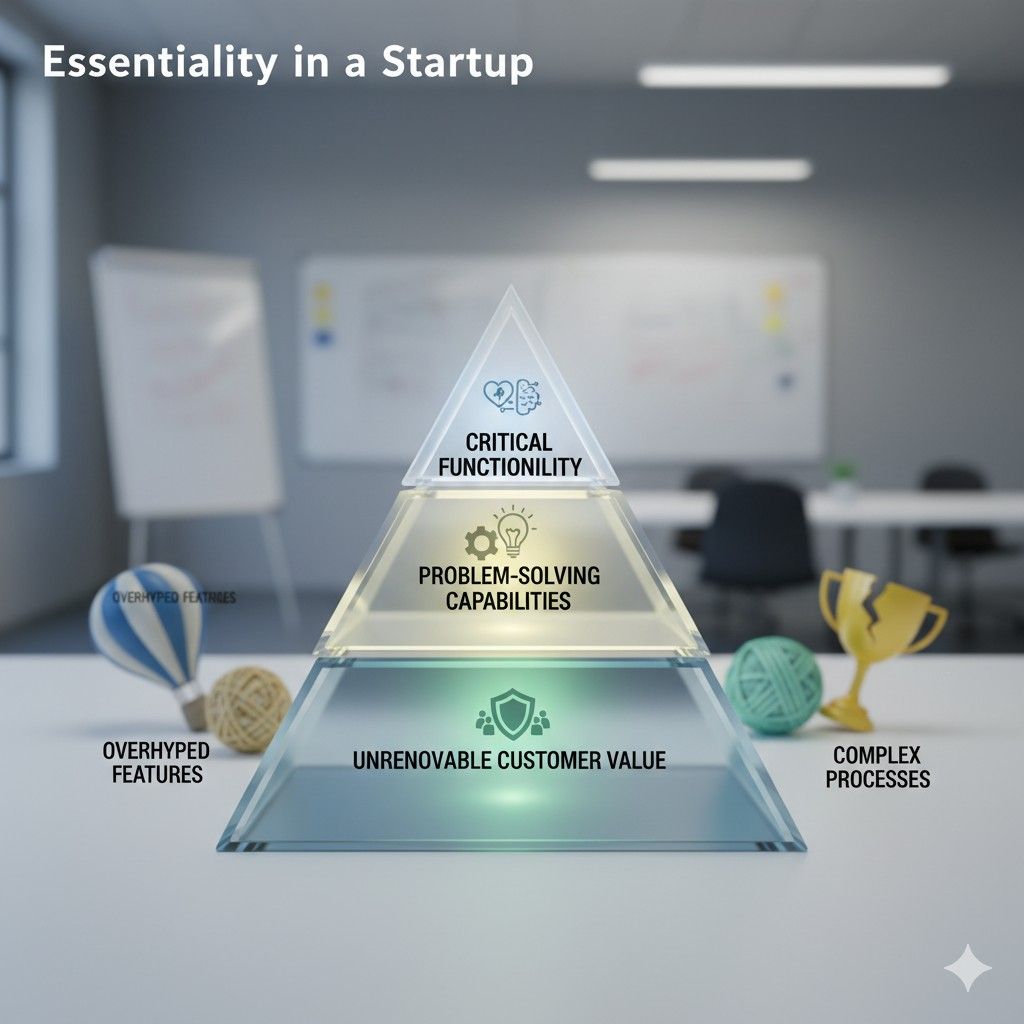
If you want to start identifying and locking down what is truly essential in what you are building, PowerPatent was designed for that exact moment. You can explore how it works here: https://powerpatent.com/how-it-works
Why Most Founders Miss the Parts That Matter Most
Most founders are not careless. They are focused. And that focus, while necessary to survive, is also the reason essential ideas often get missed.
When you are building fast, shipping weekly, talking to users, and trying to stay alive, it is easy to look past the quiet parts of your product.
The parts that do not scream for attention. The parts that just work. Those are often the most valuable ones.
This section breaks down why that happens and how to fix it without slowing down.
Speed Pushes Attention to the Surface
Startups reward visible progress. New features. New demos. New metrics. These things are easy to show and easy to talk about.
Essential ideas, on the other hand, tend to sit under the surface. They are buried in architecture choices, data handling decisions, edge cases, and system rules.
They do not make for exciting updates, so they get less attention.
Over time, founders start equating visibility with value. That is where the gap forms.

To counter this, founders need moments where they slow their thinking without slowing execution. Not meetings. Not paperwork. Just structured reflection on what actually makes the product work.
This is exactly what a good essentiality check forces you to do.
Familiarity Creates Blind Spots
You built the system. You know it deeply. That familiarity makes some ideas feel obvious and unimportant.
When something feels obvious, it rarely gets protected. Founders assume everyone would do it that way. Most of the time, that is not true.
What feels obvious to you is often the result of weeks or months of iteration, failure, and learning. The final result hides the path that led there.
Competitors do not have that path. They only see the outcome. If the outcome looks simple, they will try to copy it.
The mistake is not failing to innovate. It is failing to recognize where innovation already happened.
Founders Think in Products, Not in Leverage
Most founders think in terms of what they are building, not what they are defending.
This is natural. Building is concrete. Defense feels abstract and future-focused. But leverage lives in defense, not in features.
Leverage is about what you can say no to. No to copycats. No to unfair deals. No to pressure from bigger players.

Essential ideas are leverage points. If they are unclear or unclaimed, your negotiating position weakens before you even sit down.
The founders who win long-term are the ones who quietly build leverage while everyone else is chasing traction.
Legal Myths Keep Founders Away
Many founders avoid thinking about essentiality because they think it requires legal knowledge. They assume it means long documents, complex rules, and slow lawyers.
That belief is outdated. Modern tools and processes make it possible to identify and protect core ideas without drowning in legal talk.
The real work is not legal. It is conceptual. It is about understanding your system deeply and explaining it clearly.
Once that is done, the legal layer becomes much simpler. This is the philosophy behind PowerPatent. Start with clarity, then layer protection. Not the other way around.
You can see how that works here: https://powerpatent.com/how-it-works
Teams Focus on What Is New, Not What Is Stable
Engineering teams are trained to push forward. Bugs get fixed. Features get added. Old decisions fade into the background.
But essential ideas are often stable ideas. They are the decisions that have not changed because they work too well.
Stability is easy to ignore because it does not cause pain. But stability is often a sign of deep correctness.
When you audit essentiality, pay attention to the parts of the system that have barely changed. Ask why. There is usually a strong reason.
External Feedback Skews Priorities
Users talk about what they see. Investors talk about what they can understand quickly. Advisors talk about what they have seen before.
None of these groups naturally point you to your most essential ideas.
That does not mean their feedback is wrong. It means it is incomplete.
Founders need a private space to think about what matters beyond external noise. Essentiality checks create that space. They are inward-facing by design.
Early Wins Create False Confidence
If your product works and users are happy, it is easy to assume you are safe.
Success can hide risk. When things go well, founders delay hard questions. What if someone copies this? What if a bigger company ships something similar? What if we need to prove ownership quickly?

By the time those questions become urgent, options are fewer.
The best time to identify essential ideas is when things are going well, not when they are on fire.
Essentiality Requires Translation, Not Discovery
Many founders think they need to find new ideas to protect. In reality, most of the time, the ideas already exist.
The missing step is translation. Turning working systems into clearly defined concepts that can be understood, explained, and defended.
This translation step is uncomfortable because it forces precision. Vague thinking does not survive translation.
But once done, it unlocks confidence. You know what you own. You know why it matters. And you can prove it if needed.
Missing Essentiality Leads to Weak Stories
A weak IP story is not always obvious. It often shows up as a story that sounds fine but does not feel solid.
When asked what makes the startup hard to copy, the answer drifts. It becomes long. It becomes vague.
Strong stories are short. They point to a clear core. Essentiality gives you that core.
This matters more than most founders realize. Stories shape outcomes. In fundraising. In partnerships. In exits.
Awareness Is the First Fix
The biggest shift happens when founders realize that missing essential ideas is normal. It is not a failure. It is a pattern.
Once you see the pattern, you can interrupt it.
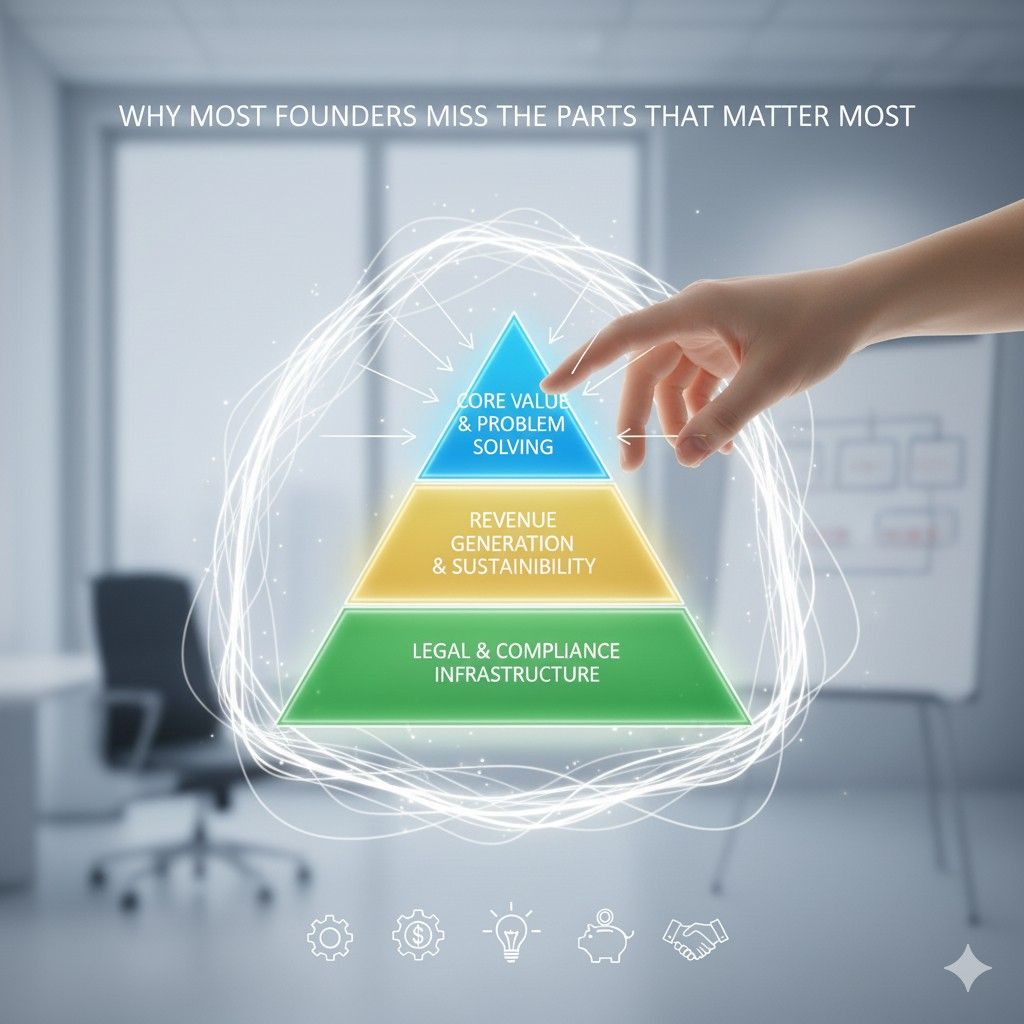
Essentiality checks and audits are simply tools to interrupt that blindness. They do not slow you down. They sharpen your vision.
If you want help building that clarity without adding friction to your startup, PowerPatent was designed for exactly this problem. You can explore the process here: https://powerpatent.com/how-it-works
How Essentiality Checks Create Real Leverage, Not Paperwork
Essentiality checks are often misunderstood as documents or formal steps. In reality, they are thinking tools. When done right, they do not add weight to your startup. They remove uncertainty.
This section explains how essentiality checks quietly create leverage, how that leverage shows up in real situations, and how founders can use these checks as a strategic weapon rather than a compliance task.
Leverage Starts With Clarity, Not Filing
Leverage does not come from having a patent number. It comes from knowing exactly what you would defend if challenged.
An essentiality check forces you to answer that question before someone else asks it. What is the core idea that gives you an edge? Why does it matter? What happens if it is copied?

When those answers are clear, every decision gets easier. You stop guessing. You stop overexplaining. You stop reacting.
Paperwork comes later. Leverage comes first.
Essentiality Checks Reduce Decision Stress
Founders make dozens of decisions every day. Most of them feel urgent. Few of them are strategic.
When essential ideas are unclear, everything feels equally important. That creates mental noise and stress.
An essentiality check cuts through that noise. It gives you a reference point. When a new feature request comes in, you can ask whether it strengthens the core or distracts from it.
When a partnership opportunity appears, you can judge whether it exposes or reinforces what matters most.
This kind of clarity reduces second-guessing. That alone is a competitive advantage.
Audits Turn Gut Feelings Into Proof
Many founders have a strong gut sense of what matters. The problem is that gut feelings do not travel well.
They do not convince investors. They do not hold up in negotiations. They do not survive scrutiny.
An essentiality audit takes that gut sense and turns it into something concrete. It captures the reasoning behind key decisions. It documents how systems work and why they were built that way.
This does not mean writing long reports. It means capturing insight while it is fresh.
Founders who do this early save themselves months of backtracking later.
Leverage Shows Up When Stakes Rise
Essentiality rarely matters in calm moments. It matters when stakes rise.
When you raise a serious round, investors look for defensibility. When you sign enterprise deals, partners want confidence. When competitors show up, boundaries get tested.
In those moments, founders who have done essentiality checks move faster. They answer questions clearly. They set terms. They avoid panic.

Founders who have not done the work often scramble. They promise too much. They reveal too much. Or they freeze.
The difference is not intelligence. It is preparation.
Essentiality Checks Protect You From Your Future Self
Startups evolve. Teams grow. Early decisions get forgotten. New hires make changes without full context.
An essentiality check creates a snapshot of intent. It captures why things were done a certain way at a certain time.
This protects you from accidental drift. It helps future versions of your team understand what cannot be compromised.
This is especially important in fast-growing startups where knowledge spreads thin.
Audits Are Most Powerful When They Are Lightweight
The word audit scares people because it sounds heavy. In practice, the best audits are simple.
They focus on understanding, not compliance. They ask why, not just what.
A good essentiality audit feels like a structured conversation with your own product. It surfaces insights you already have but have not named.

PowerPatent was built around this idea. Make the process light enough that founders actually do it, but rigorous enough that the outcome holds up. You can see how that balance works here: https://powerpatent.com/how-it-works
Leverage Is Also Psychological
There is a quiet confidence that comes from knowing you are prepared.
Founders who understand their essential ideas behave differently. They negotiate differently. They respond to threats calmly. They take smarter risks.
This confidence is not arrogance. It is grounded.
Competitors sense it. Investors sense it. Teams sense it.
That psychological edge compounds over time.
Essentiality Checks Improve Communication
Clear internal thinking leads to clear external communication.
When essential ideas are defined, it becomes easier to explain your startup in simple words. Not just what it does, but why it matters.
This improves pitches, sales conversations, hiring, and alignment.
People trust clarity. They distrust vagueness.
Essentiality checks remove vagueness at the source.
Audits Help You Avoid Overexposure
One of the hidden risks for startups is oversharing.
In demos, talks, blog posts, and sales calls, founders often reveal more than they should without realizing it.
When you know what is essential, you know what to protect. You can share outcomes without revealing mechanisms. You can talk about value without giving away the engine.
This balance is hard to strike without intentional thinking.
Real Leverage Is Quiet
True leverage does not announce itself. It sits in the background, ready when needed.
Essentiality checks and audits build that quiet leverage. They do not slow you down. They do not turn you into a legal project.
They give you control.

If you want to build that control into your startup without friction, PowerPatent was designed to support exactly this kind of work. You can explore how it works here: https://powerpatent.com/how-it-works
Wrapping It Up
By now, one thing should be clear. A defensible position is not built at the last minute. It is built quietly, early, and with intent. Essentiality checks and audits are not about paperwork or fear. They are about respect for what you are building. When you take the time to understand what truly matters in your startup, you change how you operate. You stop guessing. You stop reacting. You start moving with purpose.
Leave a Reply