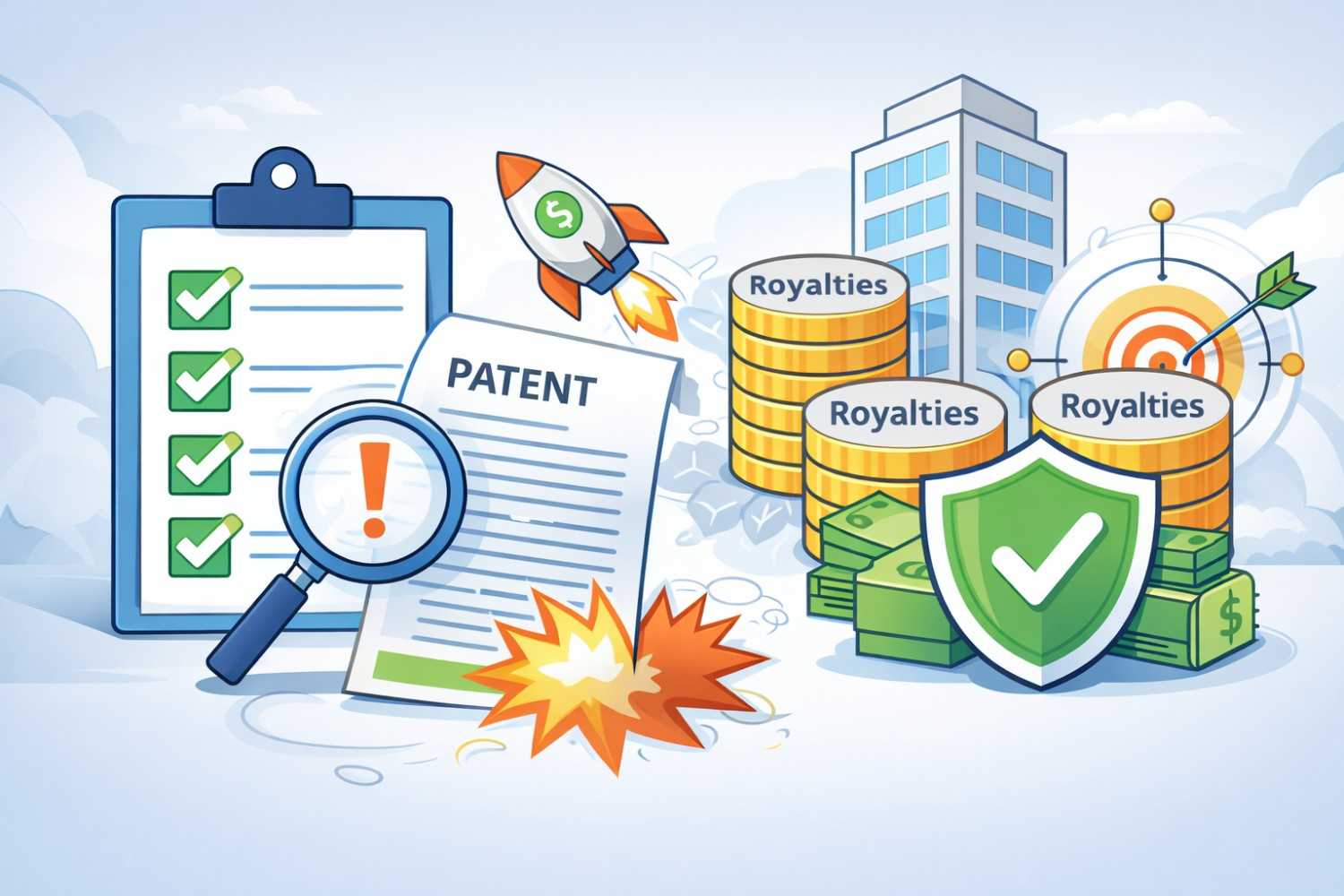
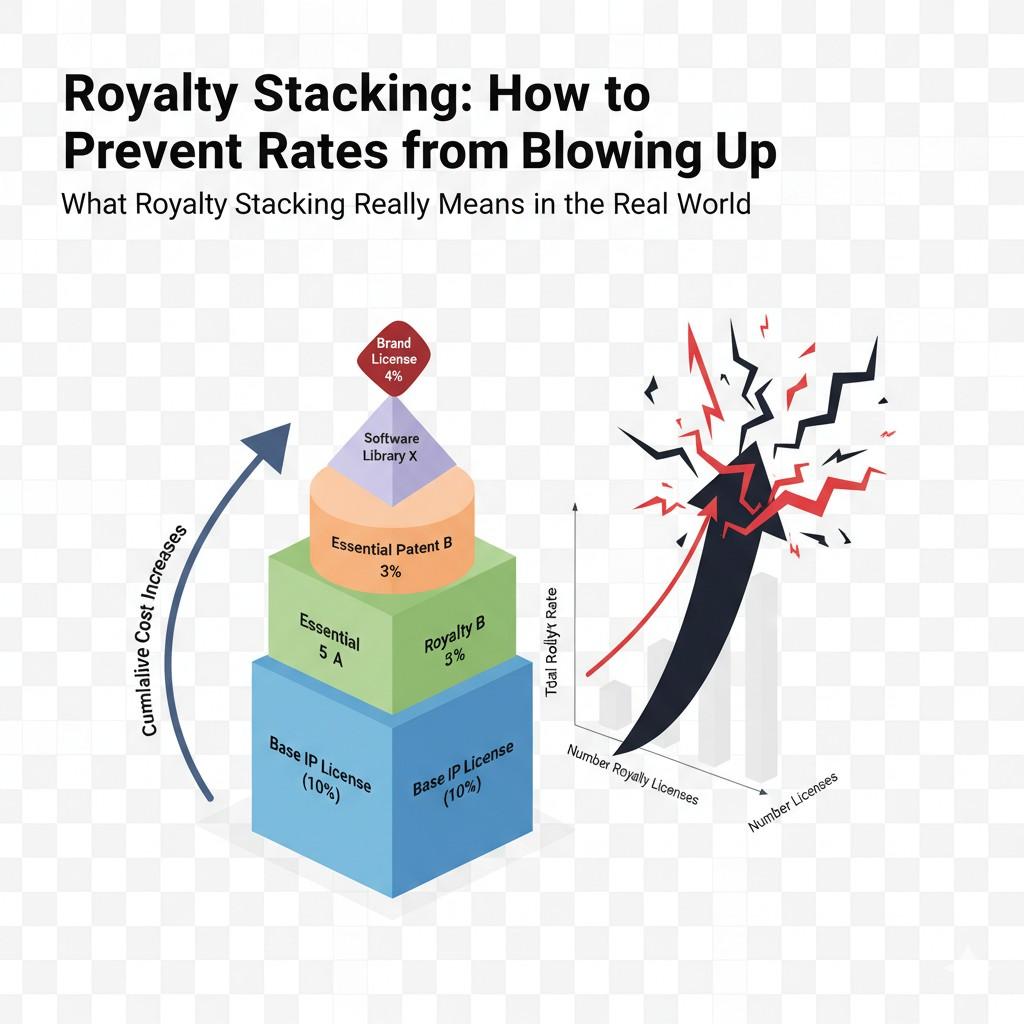
Royalty stacking is one of those quiet problems that can sink a great product without anyone noticing until it is too late. It does not feel dangerous at first. It sounds small. A few percent here. A few percent there. But if you build on top of many patents, those small numbers can pile up fast and crush your margins, scare investors, and slow your company down right when speed matters most.
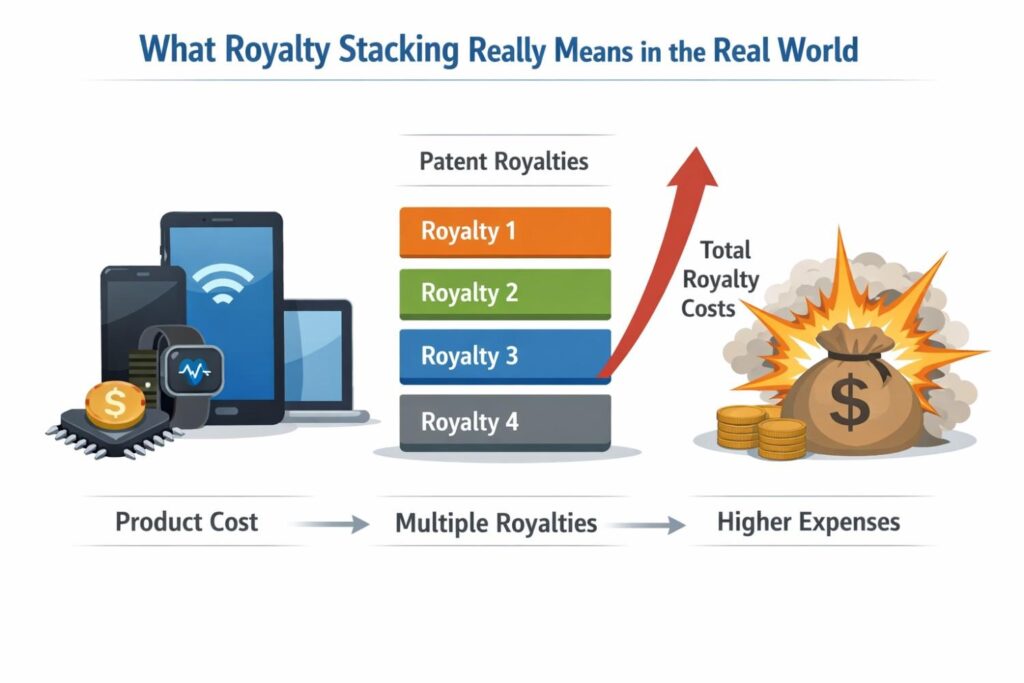
What Royalty Stacking Really Means in the Real World
Royalty stacking sounds like a clean math problem, but in real companies it shows up as stress, confusion, and slow decisions.
It is not just about paying fees. It is about how control over your product slowly slips away when too many other people own pieces of it.
To understand how to stop it, you first need to see how it actually appears when a business is growing.
Royalty stacking is not a theory, it is a cash drain
In the real world, royalty stacking shows up on profit reports, investor calls, and pricing meetings. A company launches a product that works well. Customers like it.
Revenue starts to come in. Then legal and finance teams realize that several patents touch the same product. Each patent holder wants a royalty. None of them feel unreasonable on their own.
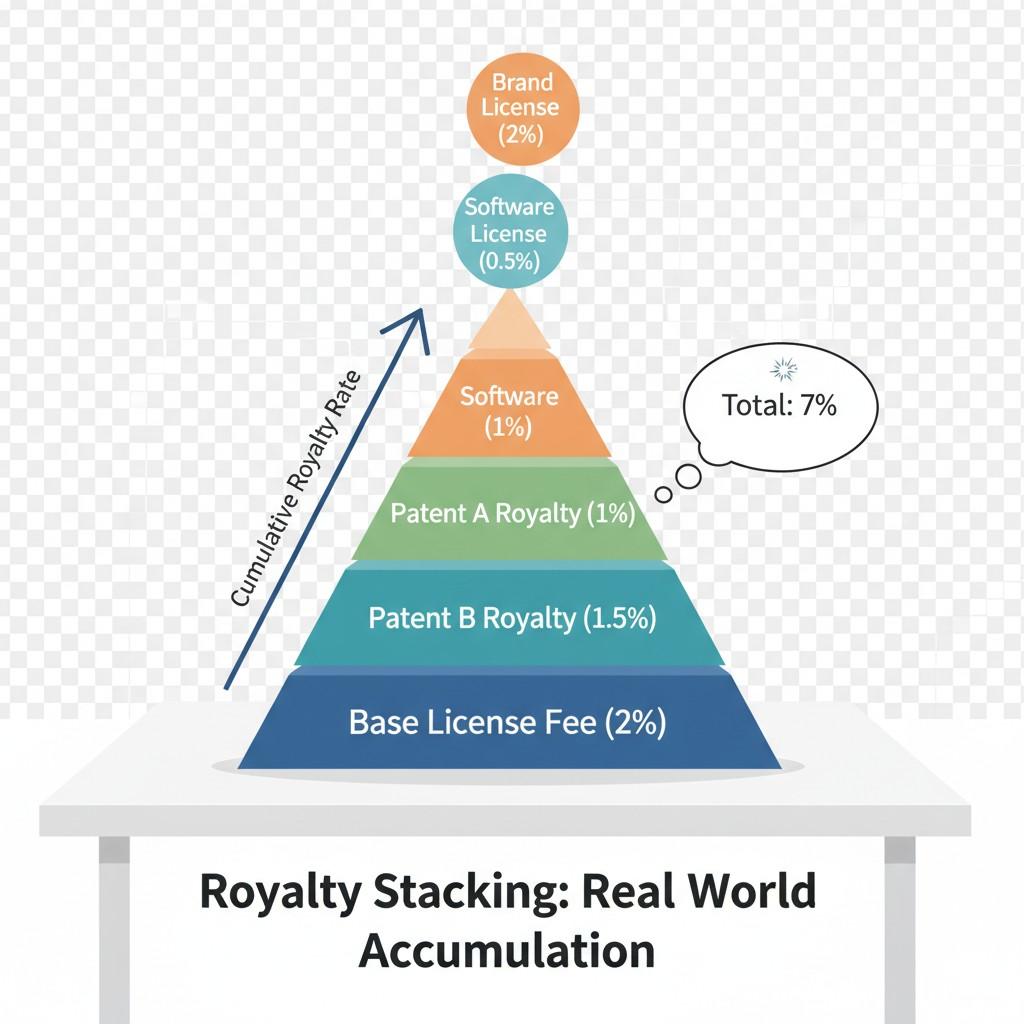
Together, they can quietly eat up the entire margin.
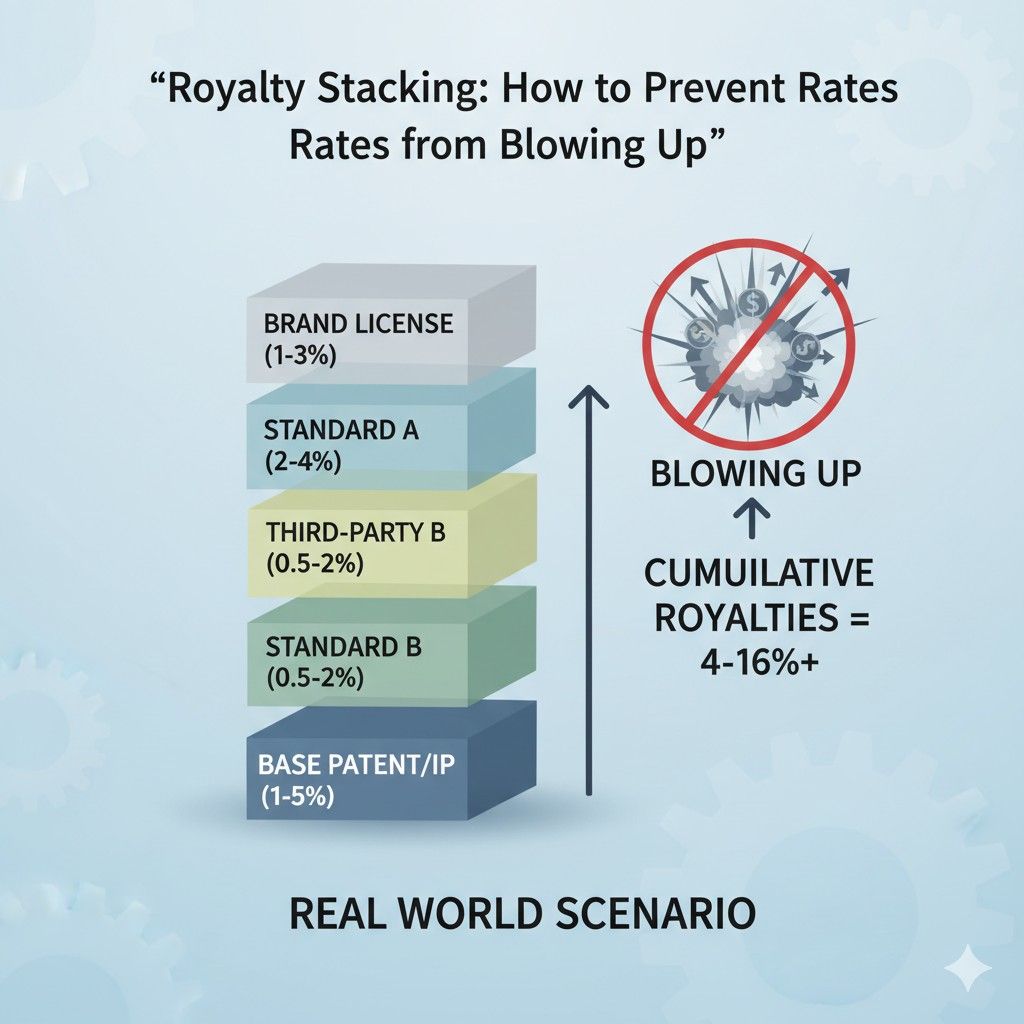
This is how strong businesses end up selling a great product with almost no profit. Not because demand is weak, but because too many tolls sit on the same road.
It usually starts with one innocent license
Most royalty stacking problems begin with a single decision that feels small and safe. A team licenses a patent to move faster. They tell themselves it is temporary.
They plan to fix it later. Then the product grows, features expand, and more patents come into play. Each new license feels justified in isolation.
Over time, the company realizes it is paying multiple owners for the right to sell one thing. At that point, renegotiation becomes hard. Leverage is gone. The product is already built around those technologies.
The stack grows fastest in complex products
Royalty stacking hits hardest when a product touches many technical areas at once. Software platforms, hardware systems, AI tools, and connected devices are prime targets.
Each layer may trigger different patents owned by different players.
In practice, this means a single feature can be linked to multiple claims across multiple patents.
Even if you did not copy anyone, overlapping patents can still exist. Patent law allows that. The stack forms even when everyone acted in good faith.
Investors see royalty stacking as hidden risk
From an investor’s point of view, royalty stacking looks like an unknown tax on future growth. It makes forecasts less reliable. It raises doubts about pricing power. It creates fear that margins will shrink as sales increase.
This is why investors ask about intellectual property early. They are not just checking if you own patents.
They want to know if you are exposed to too many outside rights. A clean patent position gives confidence. A messy one raises red flags.
Royalty stacking limits how you price your product
Pricing feels like a marketing problem, but royalty stacking turns it into a legal problem. When every sale triggers multiple payments, your ability to lower prices or offer bundles disappears.
Competitors with cleaner IP can undercut you.
In real markets, this means losing deals not because your product is worse, but because your cost structure is heavier. Customers never see the reason. They just see the price.
It reduces freedom to pivot or expand
A stacked royalty structure locks you into narrow paths. Adding a new feature may trigger a new patent issue. Entering a new market may require another license. What should be fast experiments become long negotiations.
For startups, this is deadly. Speed is your advantage. Royalty stacking turns speed into friction.
Patent owners know when you are stuck
Once your product depends on licensed technology, patent owners gain leverage. They know switching costs are high. They know redesigns are expensive.
This can lead to tougher renewal terms, higher rates, or demands tied to revenue growth.
Even friendly licensors behave differently once they see success. The deal you signed early may not protect you later.
How royalty stacking sneaks past founders
Founders often miss royalty stacking because it is spread across teams. Engineering focuses on shipping. Legal focuses on risk avoidance. Finance focuses on short-term costs. No one owns the full picture.
By the time leadership sees the total stack, it is already baked into the product. Undoing it means rewrites, delays, or lawsuits. None of those are good options.
Why relying only on licenses is dangerous
Licenses feel safe because they reduce immediate risk. But relying only on licenses without building your own patent position is like renting every tool you use. You can work, but you never gain leverage.
Companies with their own patents can cross-license, negotiate lower rates, or block claims entirely. Companies without them must accept terms set by others. This is where royalty stacking becomes unavoidable.
Building your own patents changes the balance
Owning patents does not just protect your invention. It changes how others treat you. When you have patents that matter, negotiations become balanced. You are no longer just a payer. You are a holder.
This can prevent royalty stacking before it starts. Patent holders are far more flexible when they know you also control valuable rights.
Action starts before the product is finished
The most effective way to deal with royalty stacking is early awareness. Before features are locked in, before dependencies are deep, before licenses are signed.
Mapping where your product may touch existing patents gives you choices.
This does not mean slowing down. It means being intentional. Smart teams design around problems they can see coming.
Simple questions that change outcomes
Asking simple questions early can prevent years of pain. Who owns the core ideas behind this feature. Are we building on standards or private patents. Do we have anything of our own that others might need.
These questions guide better decisions without stopping progress. They help you choose paths with fewer tolls.
Royalty stacking is easier to prevent than fix
Once a stack exists, options shrink. Prevention keeps options open. This is why patent strategy should grow alongside product strategy, not after it.
PowerPatent was built to support this exact moment. It helps founders turn what they are already building into real patents, quickly, with attorney review, without slowing teams down.
You can see how that works here: https://powerpatent.com/how-it-works
The real goal is control, not paperwork
At its core, royalty stacking is about control. Who controls the right to sell your product. Who controls your margins. Who controls your future moves.
Patents, when done right, give that control back to builders. They are not about lawsuits. They are about freedom to grow without invisible costs piling up.
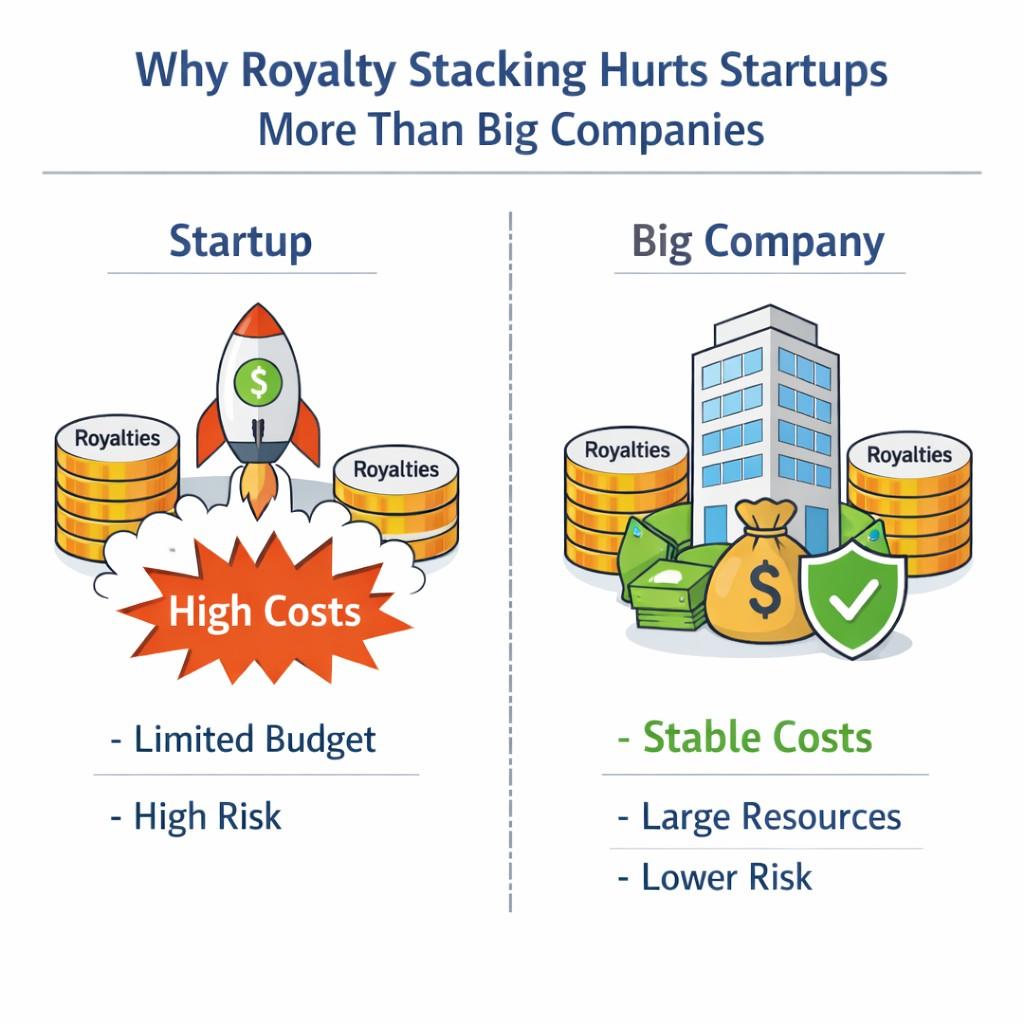
Why Royalty Stacking Hurts Startups More Than Big Companies
Royalty stacking sounds abstract until you’re the one trying to ship a product while five different patent holders want a cut.
For startups, this problem shows up earlier, hurts faster, and limits options in ways big companies rarely feel.
This section digs deeper into why the imbalance exists and what founders can actually do about it while they’re still building.
Startups Pay the Price First
Startups feel royalty stacking pain long before revenue even shows up. That’s because young companies are usually building on top of existing technology ecosystems rather than inventing everything from scratch.
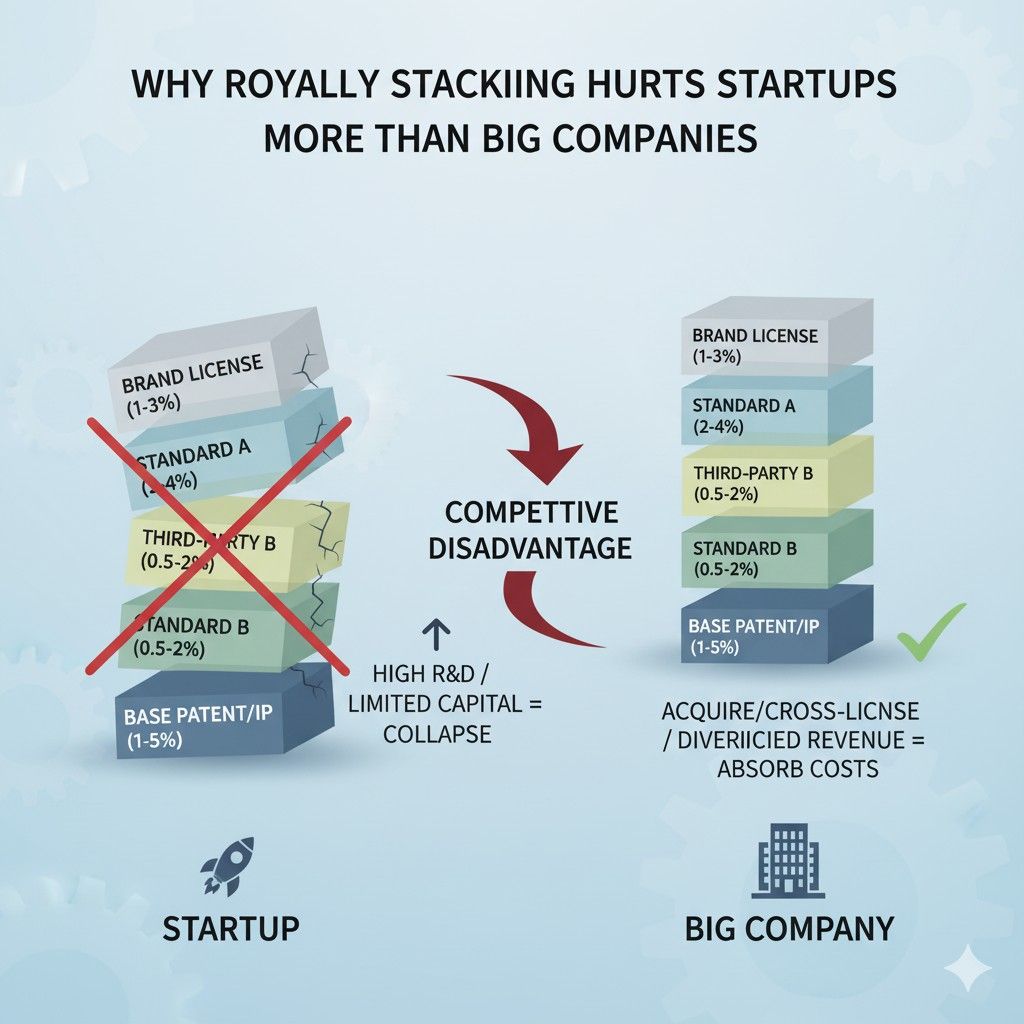
When a startup launches, every extra royalty dollar comes straight out of survival money. Payroll, cloud costs, and customer acquisition don’t shrink just because royalties grew.
Unlike large companies, startups don’t have decades of margin or diversified revenue streams to absorb that pressure.
This is why even small per-unit royalties can quietly kill a promising product. They don’t look dangerous at first, but they stack up faster than early-stage revenue can handle.
If you want to avoid this trap, it helps to think about patent exposure at the same time you’re thinking about product-market fit. Protecting what you own early gives you leverage later.
That’s exactly what PowerPatent is built for, helping founders lock down their core inventions before royalty demands start piling up. You can see how that works here: https://powerpatent.com/how-it-works
Big Companies Can Spread the Pain
Large companies rarely panic about stacked royalties because they spread costs across huge portfolios. One product might be paying high royalties, but dozens of other products are carrying the load.
Startups don’t have that luxury. Most are betting everything on one or two products. When royalties rise, there’s no fallback business line to keep the lights on.
This difference also affects negotiations. Big companies can walk away from bad deals. Startups usually can’t. That imbalance often leads to accepting terms that feel manageable today but become crushing once scale arrives.
The most practical move for founders is to build bargaining chips early. Owning patents in your core technology gives you something to trade instead of just something to pay.
Startups Lack Defensive Patent Shields
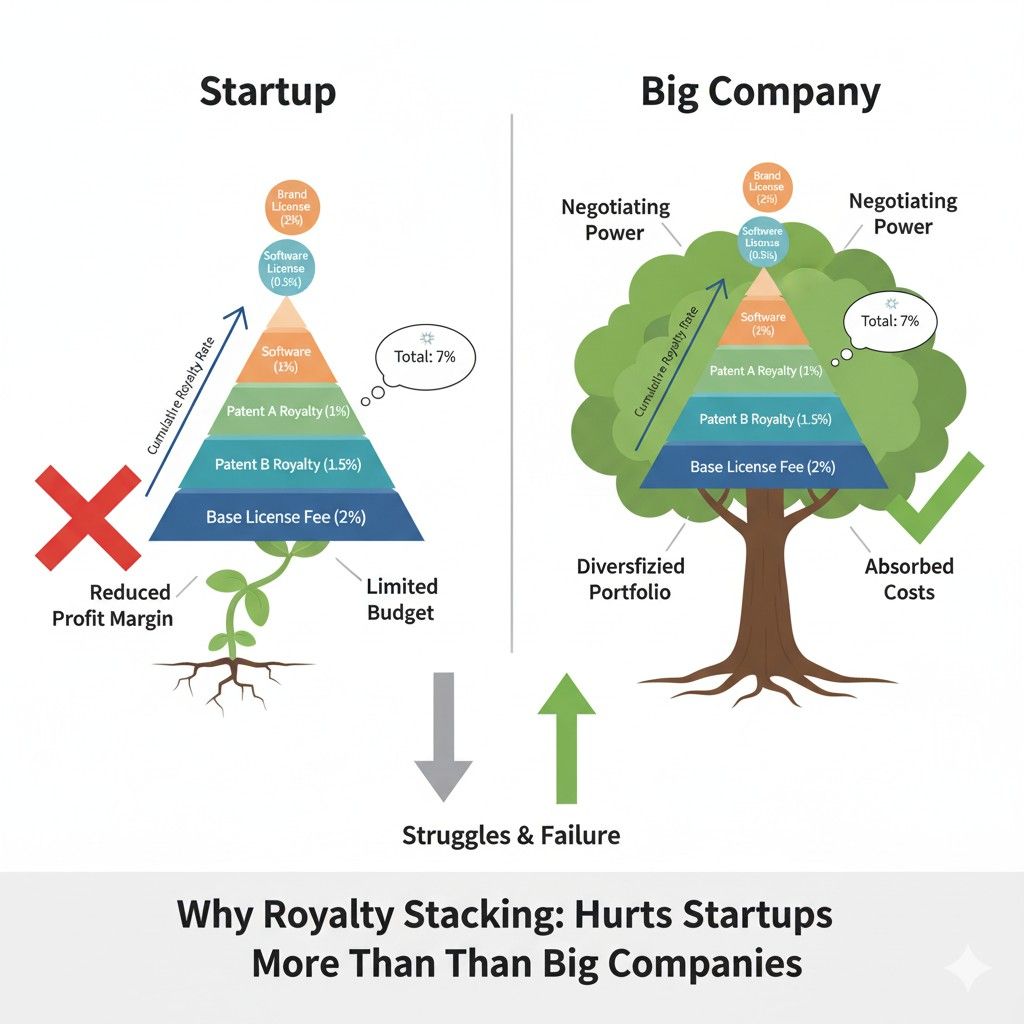
Big companies often hold thousands of patents, many of which they don’t even use. Those patents act as shields. If someone demands a royalty, the company can counter with its own claims or negotiate a cross-license.
Startups usually enter the market with zero patents. That makes them easy targets. Anyone with a broad patent can demand payment knowing the startup has nothing to push back with.
This is why filing early matters even if you’re not thinking about enforcement. Patents aren’t just swords. They’re shields that reduce how much others can charge you.
PowerPatent focuses heavily on helping startups capture their real technical advantages quickly, so you’re not walking into negotiations empty-handed.
Founders who do this early often avoid royalty stacking entirely because counterparties know there’s mutual risk. Learn more here: https://powerpatent.com/how-it-works
Royalties Compound Faster Than Revenue
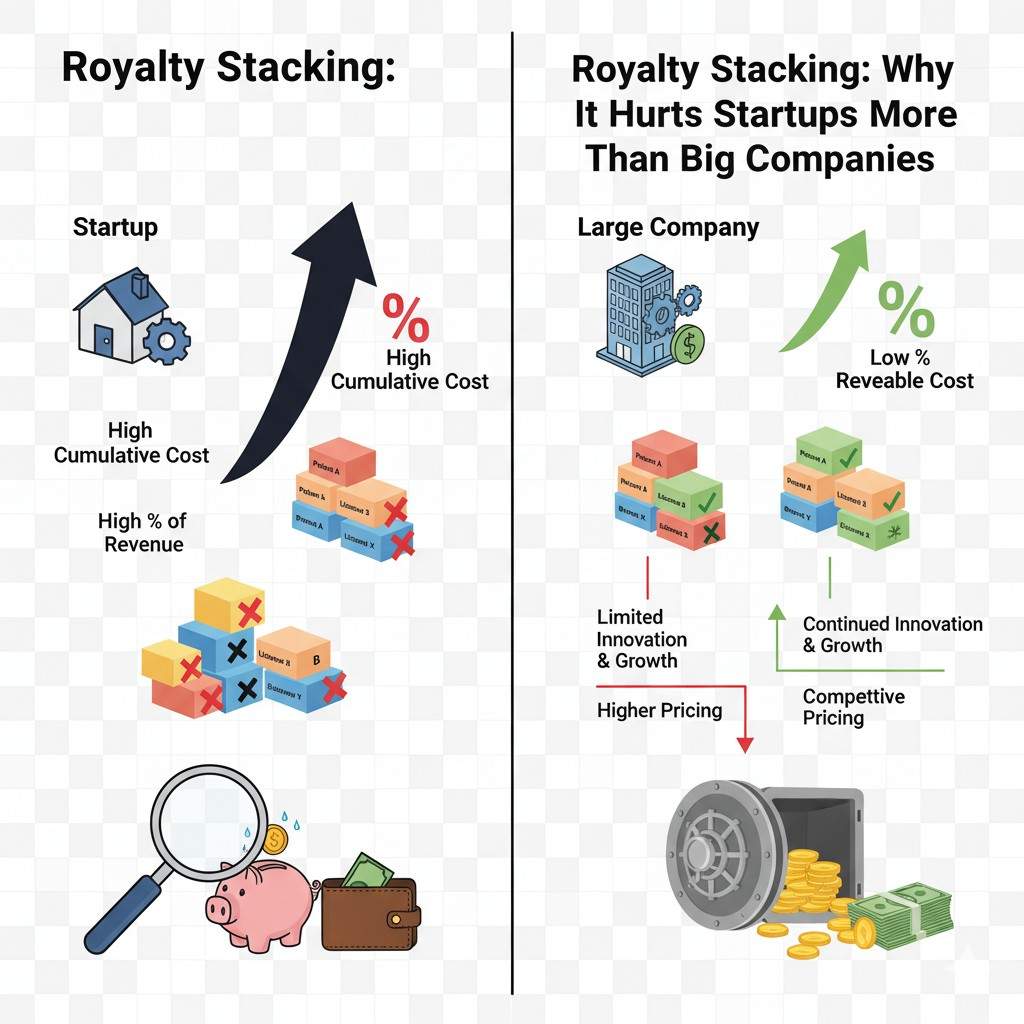
One of the most dangerous aspects of royalty stacking for startups is timing. Royalties often scale per unit, but revenue doesn’t always scale at the same rate early on.
In the first years, margins are thin, customers are price-sensitive, and costs are unpredictable. Add multiple royalties on top of that, and growth can actually make things worse instead of better.
Founders should model royalties like fixed risk, not variable cost. If royalties exceed a small percentage of projected mature margins, that’s a warning sign.
Addressing that risk early through patent strategy or design choices can save years of pain.
Investors Notice Stacking Before Customers Do
Customers rarely see royalty stacking, but investors almost always do. During diligence, stacked royalty obligations raise red flags immediately.
Investors worry that future growth will be capped or that exits will be discounted because acquirers inherit the royalty mess. Even if the product is great, messy IP economics can kill deals.
Startups that show clear ownership of their core technology stand out. It signals control, foresight, and reduced downstream risk. That’s why many founders now treat patents as part of fundraising prep, not a post-Series B chore.
PowerPatent was built with this exact moment in mind, making it realistic to secure strong patents before investors start asking hard questions. You can explore that process here: https://powerpatent.com/how-it-works
Limited Legal Budgets Mean Fewer Options
When royalty stacking hits, big companies throw legal teams at the problem. They renegotiate, litigate, or redesign products if needed.
Startups don’t have that flexibility. Legal budgets are tight, and every unexpected cost delays growth. That means founders often accept bad terms simply to keep moving.
The smartest way to avoid that scenario is preparation, not reaction. Securing your own patents early is far cheaper than trying to fight stacked royalties later.
Early Patent Strategy Reduces Future Royalties
Royalty stacking isn’t inevitable. Many startups avoid it entirely by owning patents in the right places.
When you protect the unique way your product works, you reduce how many external patents you depend on. Even when licenses are required, having your own IP often leads to better terms or full cross-licenses.
This is less about volume and more about relevance. One well-written patent covering your core system can be more powerful than ten vague filings.
PowerPatent helps founders focus on exactly that, capturing the inventions that matter most without slowing down development.
If you’re building something technical and want to stay in control as you scale, this is worth looking into: https://powerpatent.com/how-it-works
The Hidden Cost of Waiting Too Long
Many founders assume they’ll deal with patents later, once revenue is stable. Unfortunately, that’s usually when royalty stacking problems surface.
By then, design choices are locked in, leverage is gone, and filing options are narrower. What could have been prevented cheaply becomes expensive or impossible to fix.
The takeaway is simple. Startups suffer more from royalty stacking because they wait longer and have fewer defenses. Acting early flips that equation.
If your company is still building its core tech, now is the easiest and cheapest moment to protect it.
PowerPatent exists to make that step fast, clear, and founder-friendly. You can see how to get started here: https://powerpatent.com/how-it-works
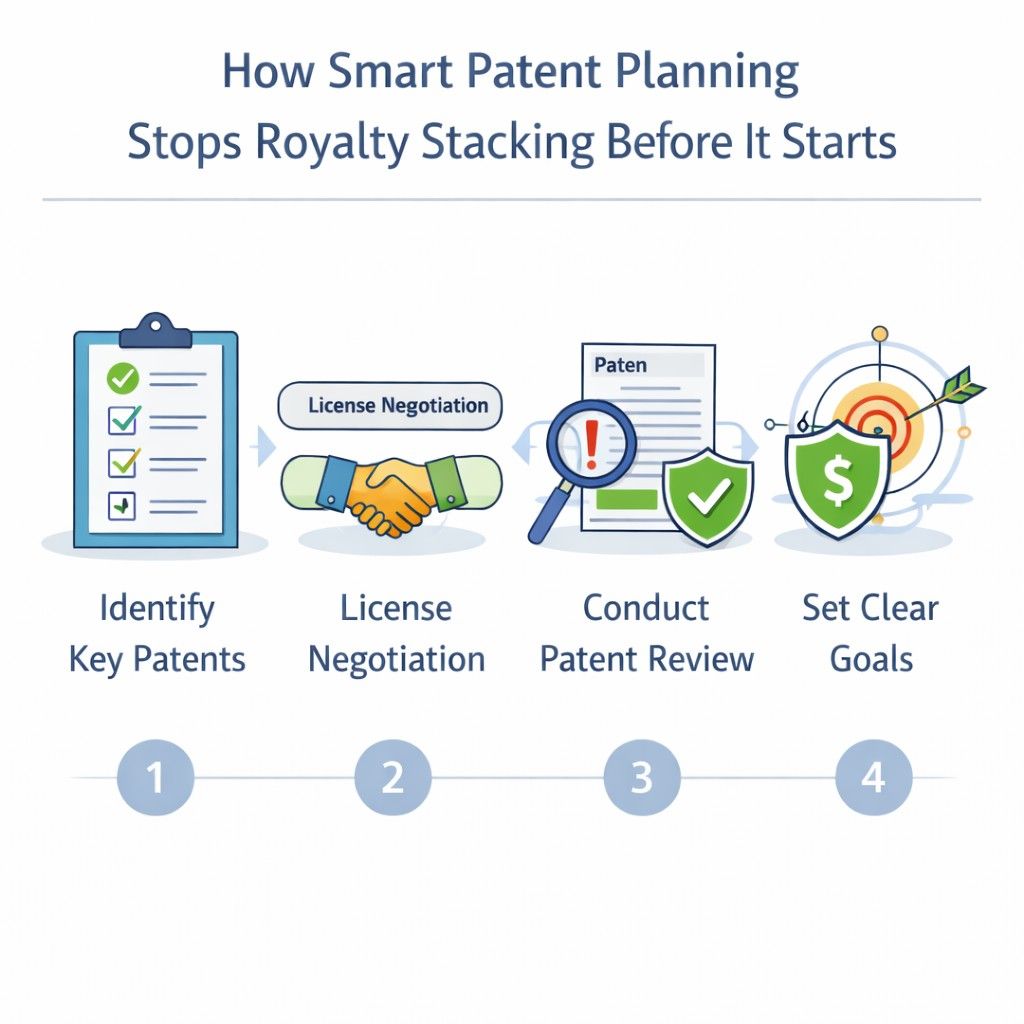
How Smart Patent Planning Stops Royalty Stacking Before It Starts
Royalty stacking rarely shows up as a sudden problem. It builds quietly, decision by decision, until it becomes expensive and hard to unwind.
Smart patent planning stops that chain reaction early by giving founders control over the parts of their product that matter most.
Starting With Ownership, Not Fear
The goal of smart patent planning is not to avoid building. It is to own what you build.
When founders focus early on claiming their core technical ideas, they shift from a defensive mindset to an ownership mindset.
That ownership reduces how often others can demand royalties later because your product is no longer just assembling other people’s ideas.
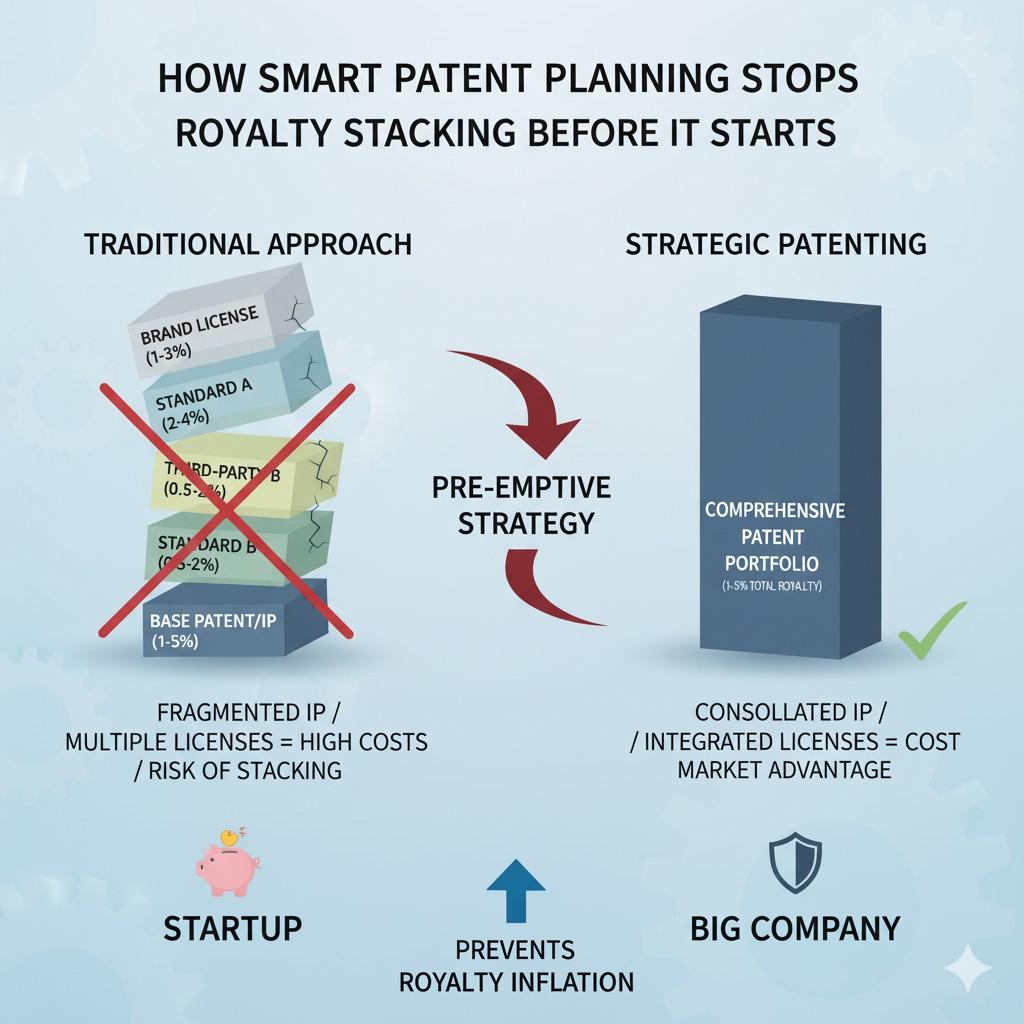
This approach works best when patents are tied directly to real engineering work, not theoretical concepts. Capturing what your system actually does in practice makes it much harder for overlapping claims to squeeze you later.
PowerPatent was built around this exact philosophy, helping founders translate real code and systems into patents quickly and clearly. You can see how it works here: https://powerpatent.com/how-it-works
Planning Around Your Product’s Economic Engine
Royalty stacking becomes dangerous when it hits the parts of your product that generate revenue. Smart planning starts by identifying that economic engine.
Founders who map patents to the workflows that drive pricing, usage, or lock-in gain protection where it matters most. When those areas are covered, outside royalties lose leverage because they can’t touch the core value of the product.
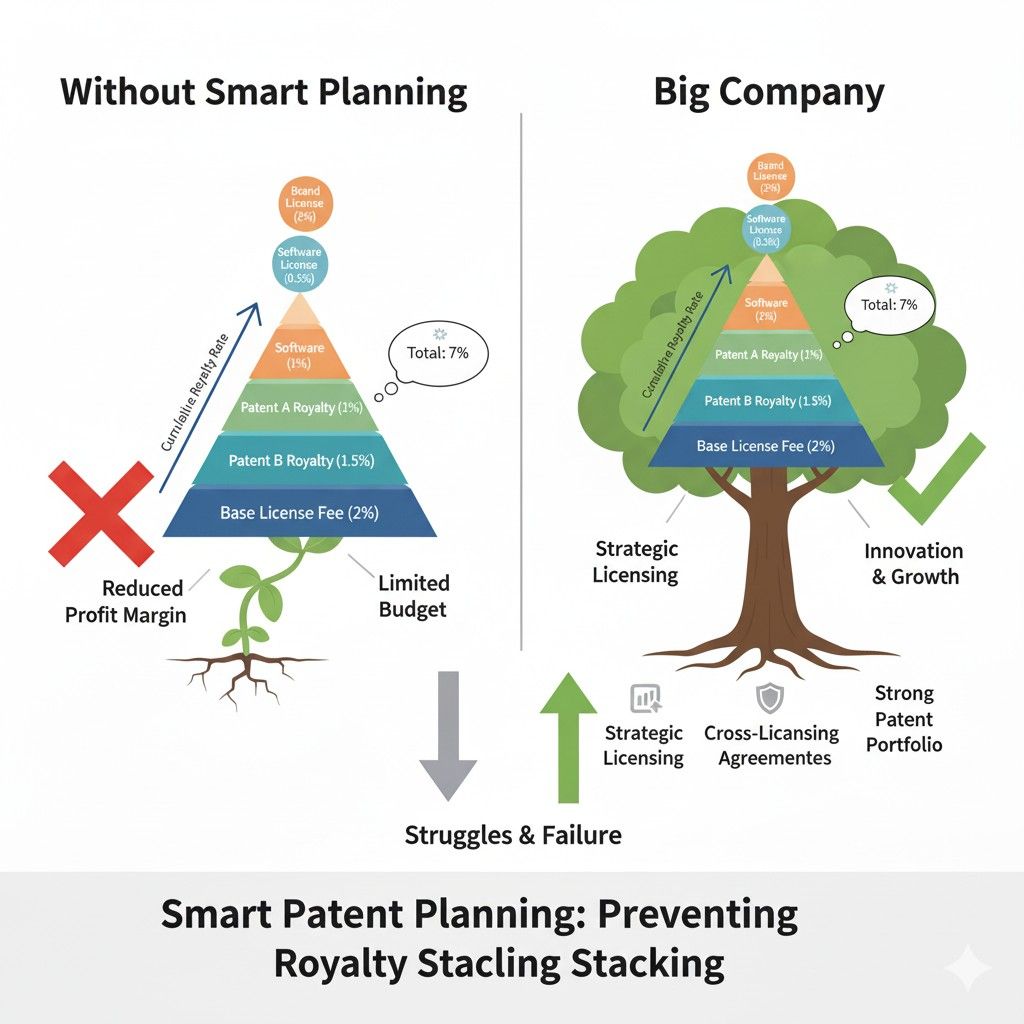
This kind of planning also helps teams prioritize what to patent first, keeping costs focused and strategy tight instead of filing randomly.
Patents Shape Architecture Choices Early
Patent planning influences how products are designed long before customers ever see them.
When teams think about protectability during architecture discussions, they often make cleaner, more original design choices.
Those choices reduce dependency on existing patented methods and lower the chance that multiple licenses will be required later.
This doesn’t mean redesigning for legal reasons. It means choosing approaches that reflect your own insight rather than defaulting to industry norms that are already crowded with patents.
Filing Early Preserves Leverage Later
Timing is everything when it comes to patents.
Filing early preserves optionality. It gives founders leverage before negotiations ever start and before revenue makes the company an easy target.
Once traction is visible, outside patent holders become far more aggressive.
Smart planning treats early filings as leverage insurance. You may never need to assert a patent, but its presence often prevents royalty demands from surfacing in the first place.
PowerPatent makes early filing practical by combining software speed with real attorney oversight, so founders don’t have to choose between moving fast and protecting themselves. Learn more here: https://powerpatent.com/how-it-works
Aligning Patent Strategy With Growth Stages
Royalty stacking risk changes as startups grow. What matters at seed stage is different from what matters post-launch.
Smart patent planning evolves with the company. Early filings focus on core systems. Later filings protect scaling mechanisms, integrations, and performance improvements that become valuable as usage grows.
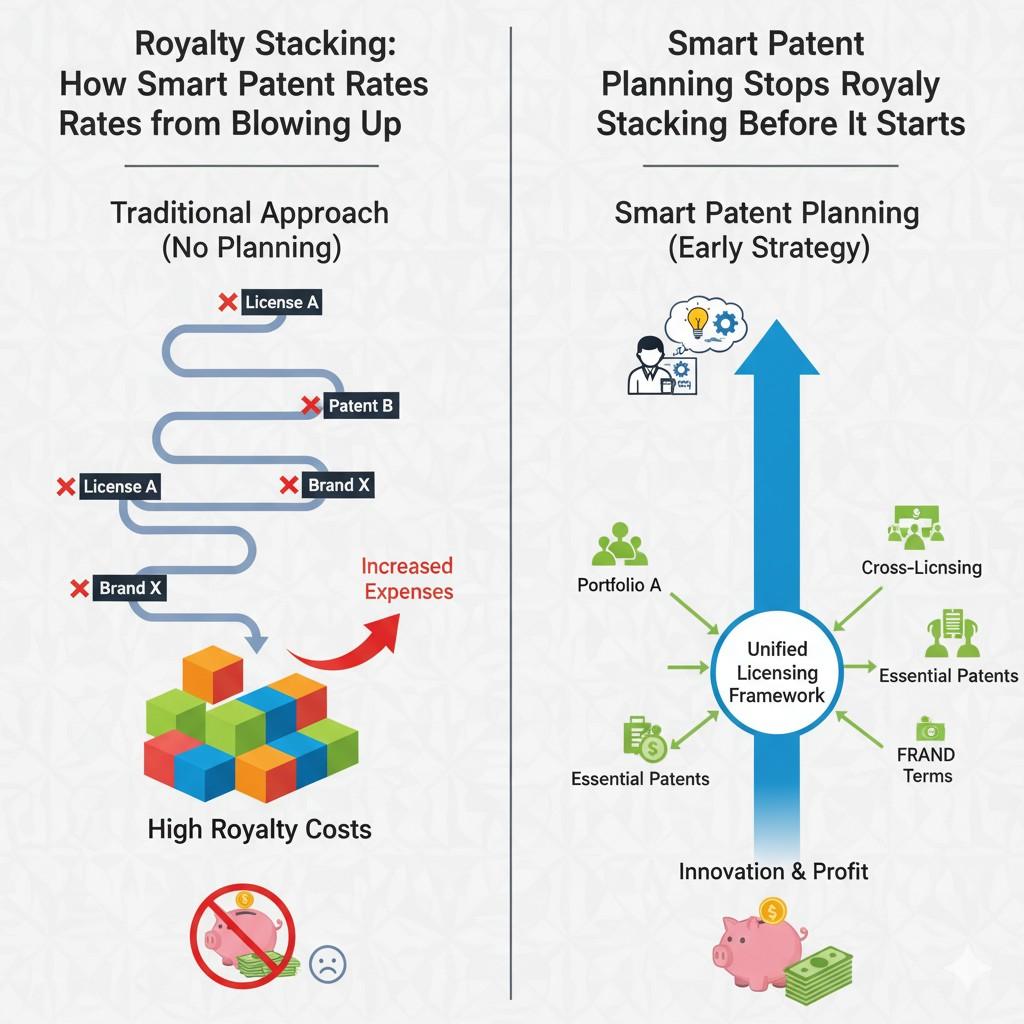
This staged approach keeps protection aligned with reality and prevents sudden exposure when new features or markets are added.
Turning Patents Into Negotiation Tools
When patent planning is done right, patents rarely end up in court. Instead, they quietly reshape negotiations.
Partners, platforms, and even competitors behave differently when they know you own key pieces of the technology. Royalties become negotiable. Demands soften. In many cases, discussions never happen at all.
That is how smart patent planning stops royalty stacking before it starts, not by fighting after the fact, but by building leverage into the company from day one.
If you’re building technical products and want to scale without hidden royalty risk, now is the best time to plan.
PowerPatent helps founders do exactly that, fast and founder-friendly. You can explore the process here: https://powerpatent.com/how-it-works
Wrapping It Up
Royalty stacking is rarely the result of one bad decision. It’s usually the outcome of moving fast without a plan for ownership. For startups, that cost shows up as thinner margins, weaker leverage, slower deals, and smaller exits. The common thread across all of this is control. Startups that plan their patent strategy early stay in control of how their product evolves, how revenue scales, and how negotiations play out. They aren’t reacting to royalty demands. They’re shaping the environment those demands would come from.
Leave a Reply