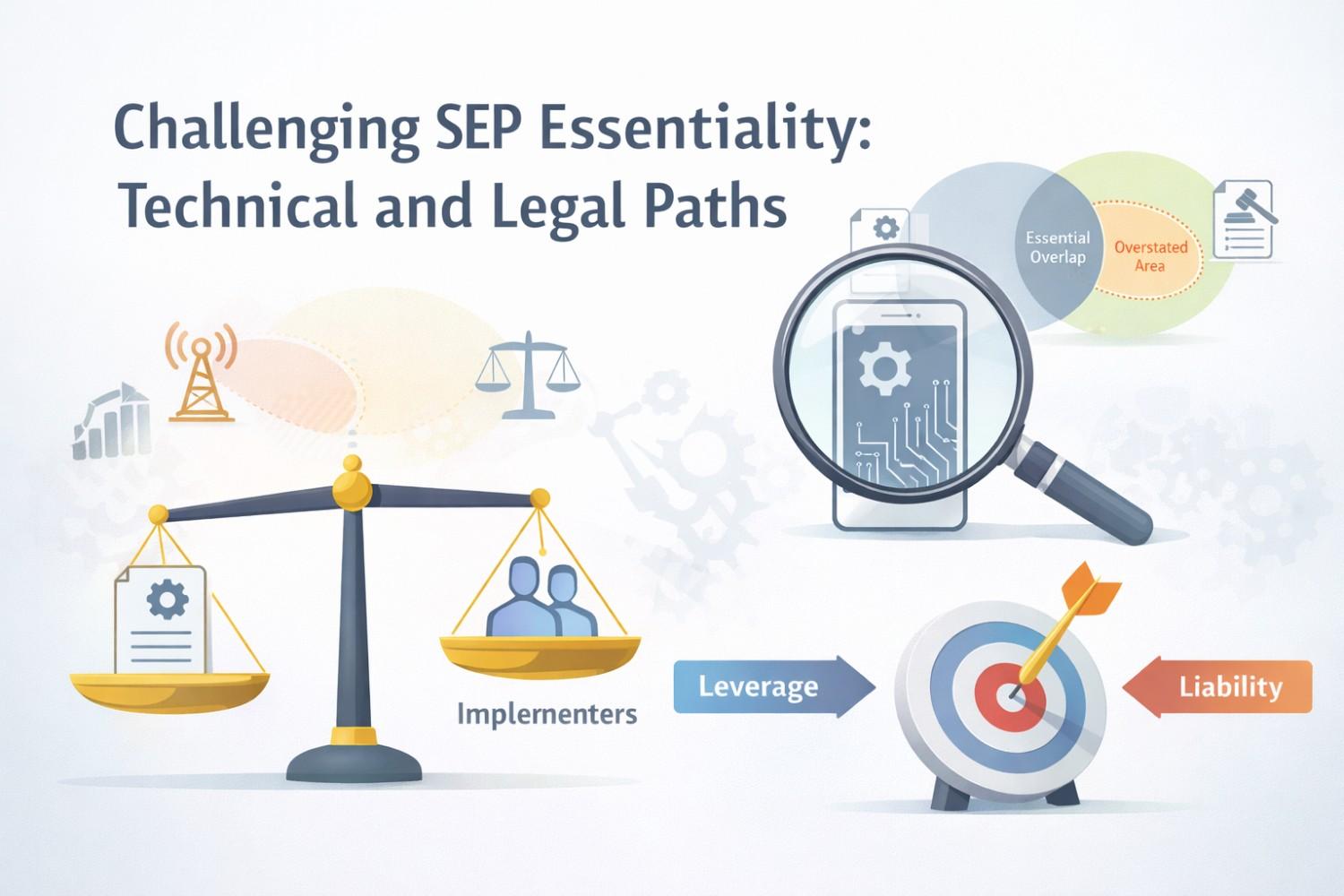
If you build real tech, you will run into standards. And if you run into standards, you will run into SEPs. Standard Essential Patents sound scary, expensive, and unavoidable. Most founders assume they must accept them as fact and just pay up. That belief is wrong. SEP essentiality can be challenged, and strong companies do it all the time. When you understand how, you gain leverage, save money, and protect your roadmap instead of freezing it.
What SEP Essentiality Really Means (And Why It Is Often Overstated)
Before you can challenge SEP essentiality, you need to understand what it actually means in the real world, not how it is described in demand letters or court filings.
Most businesses hear the word “essential” and assume it means unavoidable.
That assumption is exactly what SEP owners rely on. Once you see how essentiality is defined, claimed, and enforced, the pressure drops fast and strategy takes over.
SEP essentiality is not a fact of nature. It is a claim. And like any claim, it can be tested, weakened, and sometimes broken entirely.
The Basic Idea Behind Essentiality
At a high level, a patent is called essential if you cannot build a product that follows a specific technical standard without using what the patent covers. That sounds simple, but the details matter more than the headline.
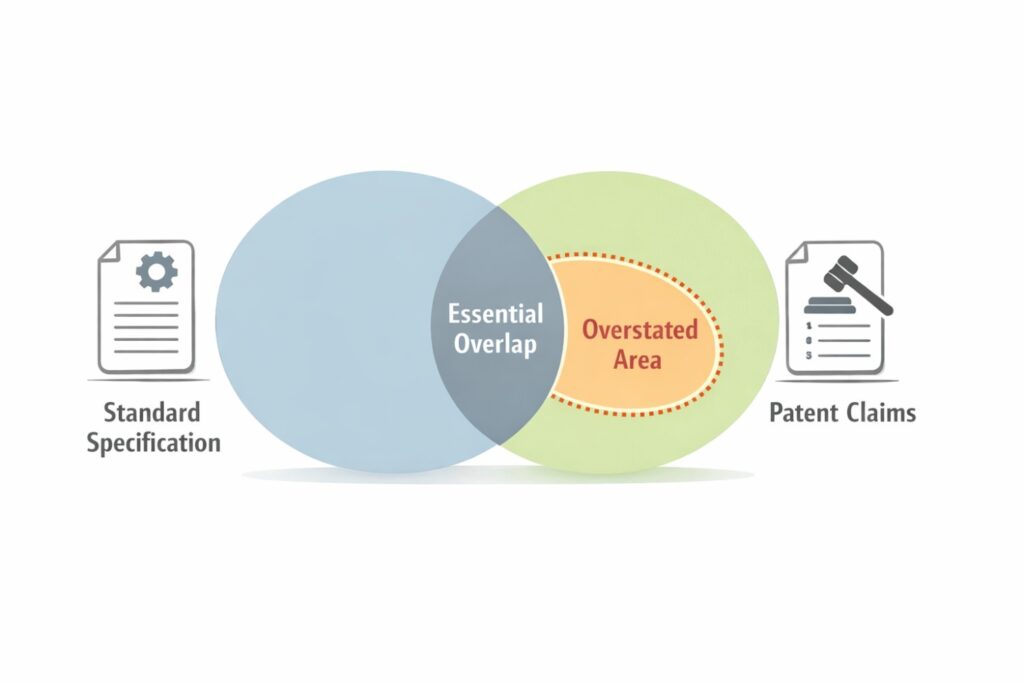
Standards are not products. They are long documents full of options, ranges, and flexible language.
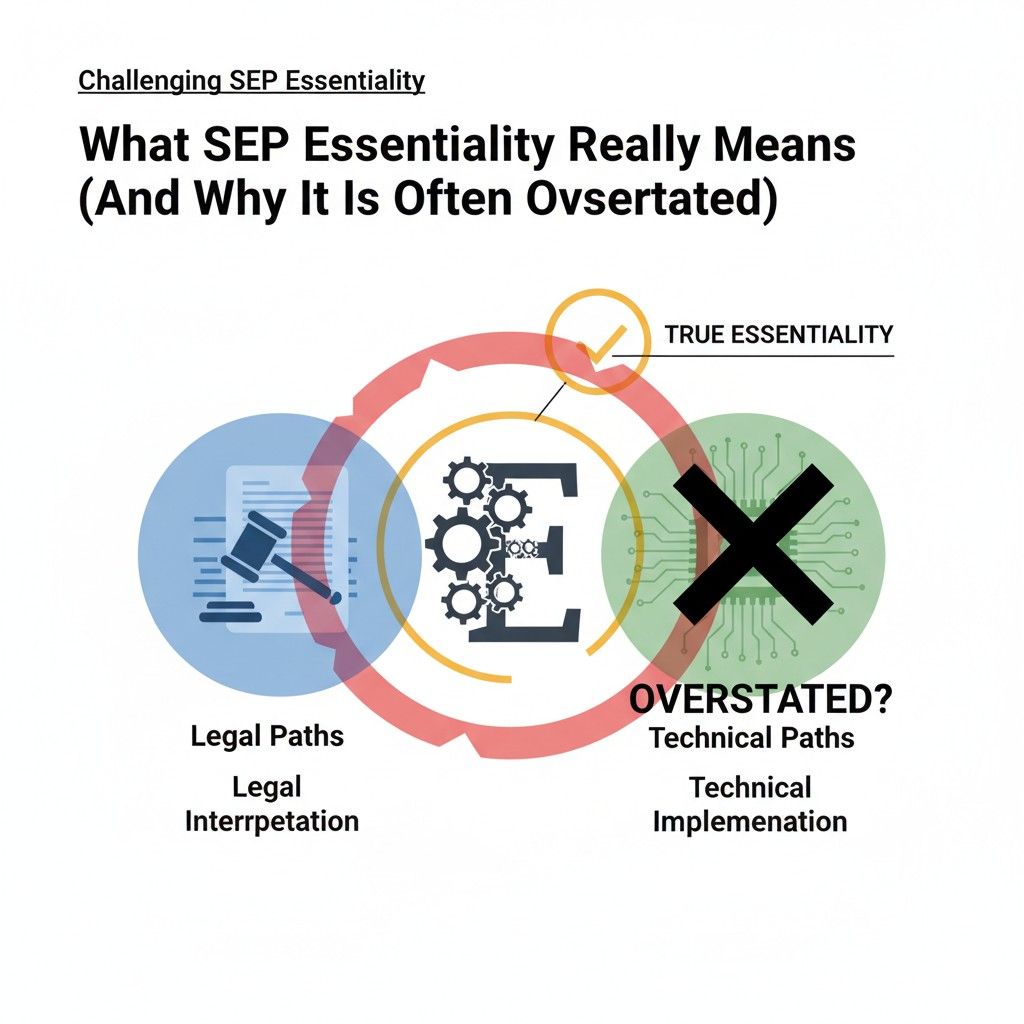
Patents, on the other hand, are narrow legal tools that cover very specific technical ideas. Essentiality only exists where those two things overlap perfectly.
In practice, that overlap is often assumed, not proven.
Why “Essential” Does Not Mean “Used”
One of the biggest misunderstandings is the idea that if your product follows a standard, you must be using every SEP tied to that standard. That is almost never true.
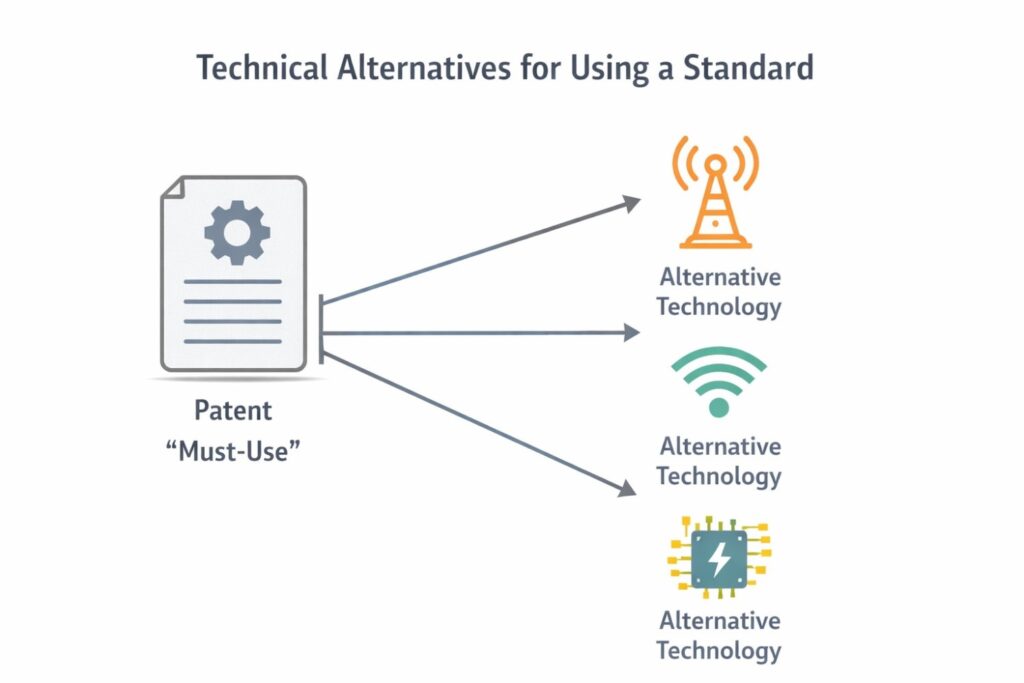
Standards usually allow many ways to achieve the same outcome. A patent might describe one way, but your product may use a different one. SEP holders often skip this detail and jump straight to payment demands.
For a business, this means the first real question is not “Is this a SEP?” but “Does our implementation actually touch this claim?” That question alone can change the entire conversation.
How SEP Declarations Are Made
Most SEPs become SEPs because the patent owner says so. When companies participate in standards groups, they are asked to disclose patents that might be relevant. The word “might” matters.
There is no deep review at that stage. No one checks claim charts. No one tests real products. The declaration is often broad, cautious, and sometimes strategic.
This means many patents labeled as essential were never truly analyzed for essentiality in the first place. Businesses that know this do not treat declarations as truth. They treat them as starting points.
The Gap Between Standards Text and Patent Claims
Standards documents are written to be flexible and future-proof. Patent claims are written to be narrow enough to get approved. That gap creates room to maneuver.
A standard might describe a goal, like syncing data or encoding signals. A patent might describe a very specific method to reach that goal. If your product reaches the goal another way, essentiality falls apart.
This is where technical teams quietly win battles that legal teams alone cannot. Reading the standard closely and mapping it to actual product behavior often reveals that the patent is optional, not required.
Why Overstatement Is Common
SEP holders often start negotiations from the strongest possible position. Calling a patent essential sounds absolute and urgent. It puts fear into teams that just want to ship.
But overstating essentiality is not the same as proving it. Many companies never push back, which reinforces the behavior. The ones that do push back often find the claims soften quickly.
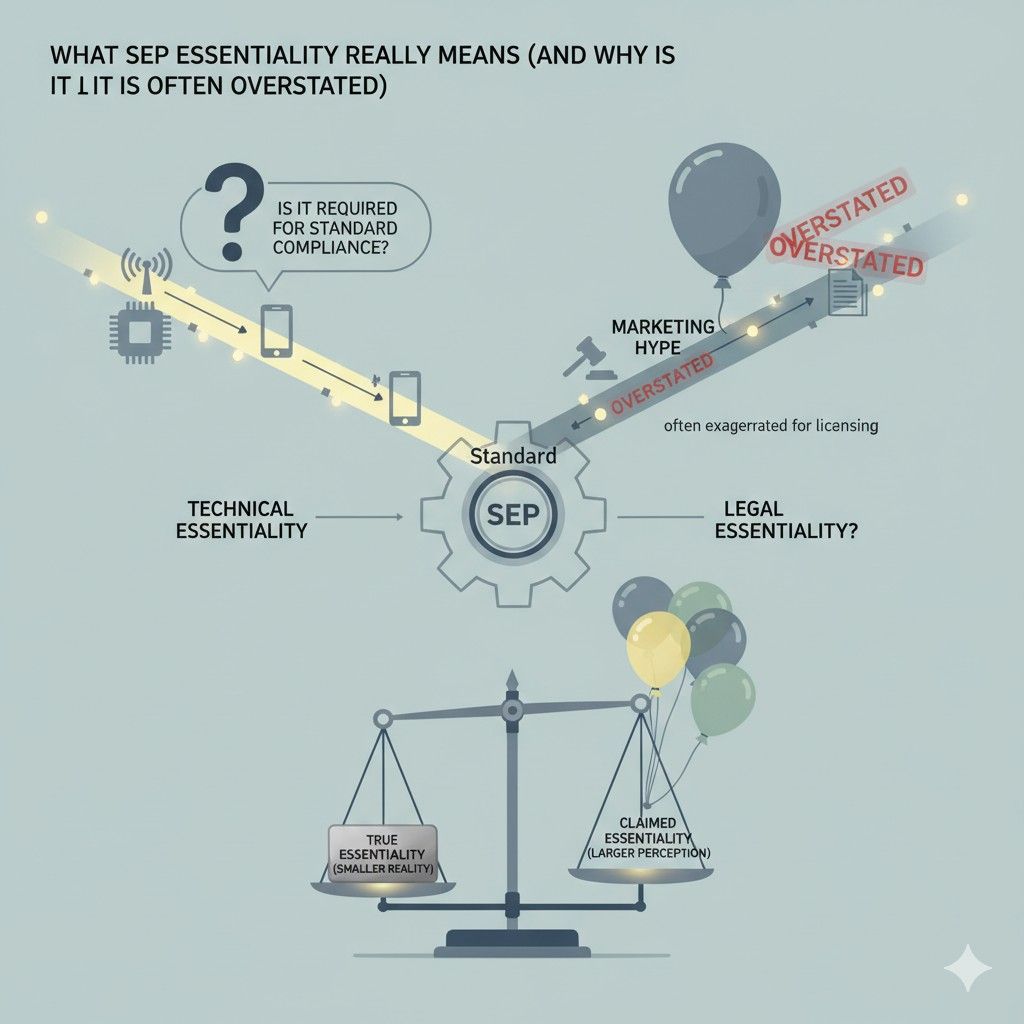
For your business, this means silence is expensive. Asking for proof is not aggressive. It is responsible.
Essentiality Is Claim-by-Claim, Not Patent-by-Patent
Another hidden detail is that essentiality does not apply to an entire patent by default. It applies to individual claims inside the patent.
A patent might have twenty claims. Maybe one of them is arguably tied to a standard. The rest may be irrelevant. Yet demands are often based on the patent as a whole.
When businesses focus on claims instead of titles, the scope shrinks fast. This can reduce exposure, weaken leverage, or remove essentiality entirely.
Timing Matters More Than Most Teams Realize
Essentiality can change over time. Standards evolve. Products evolve. Interpretations evolve.
A patent that looked important when a standard was first released may no longer matter years later. Many SEP assertions rely on outdated assumptions about how products work today.
For businesses, this means old patents deserve fresh eyes. Do not assume past relevance equals current necessity.
How Engineers Quietly Hold the Power
Legal teams often get the first call when an SEP letter arrives. But the real answers live with engineers.
Engineers know what the product actually does. They know what is optional, what is configurable, and what was never implemented.
When their knowledge is brought into the discussion early, essentiality claims lose their mystery.
Smart companies build a bridge between technical truth and legal strategy. That bridge is where leverage is created.
Turning Uncertainty Into Strategy
Once you accept that essentiality is rarely black and white, you can stop reacting and start planning.
You can ask better questions. You can request detailed claim charts. You can slow down unreasonable demands without slowing down your roadmap. You can decide when to fight, when to negotiate, and when to redesign.
This is not about avoiding standards. It is about understanding them deeply enough to avoid being cornered.
Companies that do this well rarely talk about it publicly. They just quietly pay less, move faster, and stay in control.
If your team is building core technology and wants to protect its position without getting trapped by old-school patent tactics, this is exactly where modern tools and attorney-guided systems matter.
You can see how PowerPatent helps teams build strong, clear patents and avoid future SEP traps here: https://powerpatent.com/how-it-works
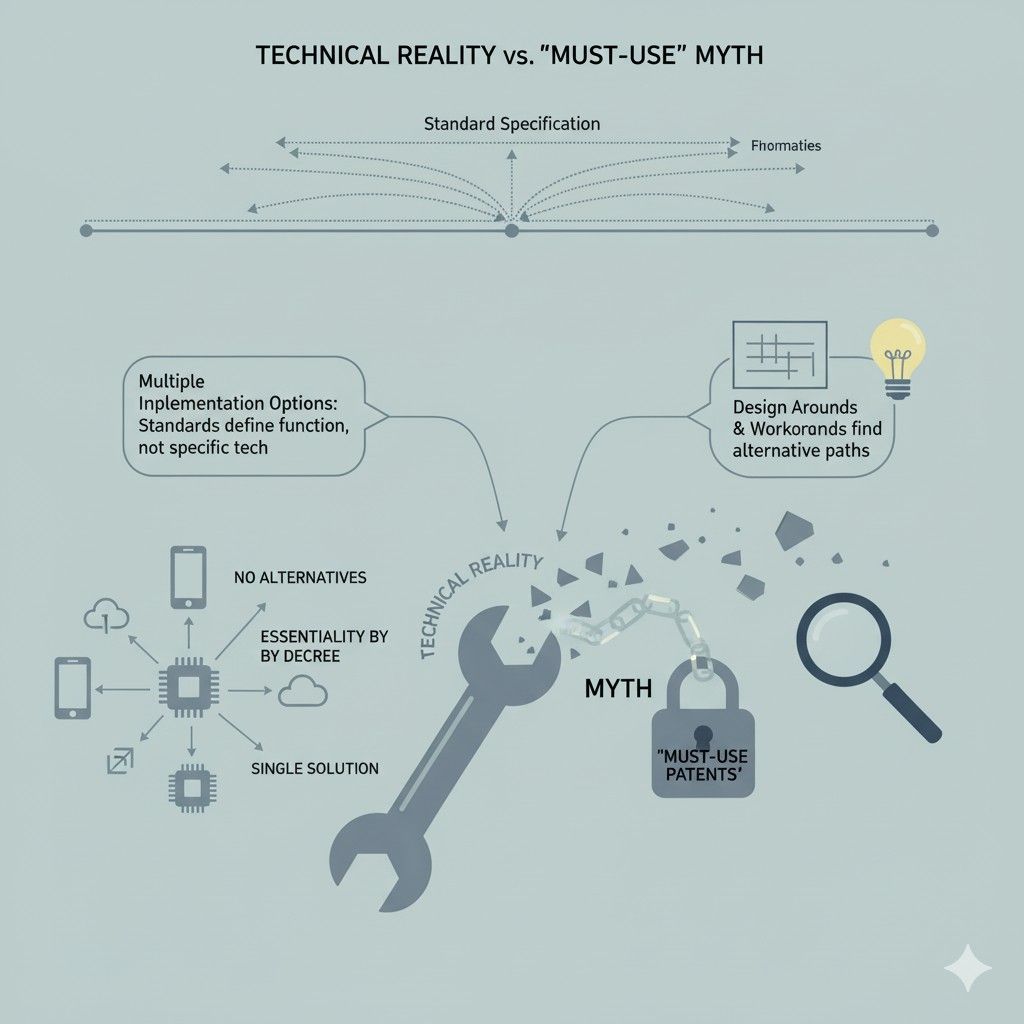
How Technical Reality Breaks the Myth of “Must-Use” Patents
Once you move past the label of essentiality, the real work begins. This is where technical reality matters more than legal noise.
Many SEP disputes are won or lost not in courtrooms, but in quiet technical reviews where assumptions fall apart. Businesses that understand how products actually work gain a level of control that demand letters cannot touch.
This section is about how real systems behave, how standards are implemented in practice, and how that reality often undercuts claims that a patent must be used.
Standards Describe Possibilities, Not Products
A standard does not tell you exactly how to build your product. It gives boundaries. It describes what must be achieved, not always how to achieve it.
Engineers fill in the gaps. They choose architectures, trade-offs, and shortcuts that make sense for performance, cost, and scale. Those choices matter deeply when SEP claims appear.

Many patents try to anchor themselves to the standard text, but they miss the fact that real products live in the space between the lines. That space is where essentiality weakens.
Optional Features Are a Hidden Escape Hatch
Most standards include optional features. These are often ignored in SEP discussions, even though they matter a lot.
A patent might be tied to an optional mode, enhancement, or edge case. If your product does not use that option, the patent may be irrelevant. Yet SEP holders frequently gloss over this detail and assume full adoption.
Businesses that document which parts of a standard they actually implement put themselves in a strong position. Silence creates risk. Clarity creates leverage.
Implementation Choices Create Distance From Claims
Two products can follow the same standard and work completely differently inside.
One might rely on hardware acceleration. Another might use software shortcuts. One might precompute values. Another might calculate them on the fly.
These differences are not cosmetic. They can determine whether a patent claim is touched or avoided.
When technical teams map claims directly to code paths or system diagrams, they often discover gaps that lawyers alone would never see.
Real Products Cut Corners on Purpose
Standards often assume ideal conditions. Real products rarely operate there.
Latency targets are softened. Precision is reduced. Edge cases are ignored. Features are disabled. These decisions are made to ship faster and scale better.
Many SEP claims rely on idealized behavior that never happens in real deployments. When this is exposed, the claim of necessity becomes fragile.
Businesses that understand and explain these gaps clearly gain room to negotiate or walk away.
Version Drift Changes Everything
Standards evolve over time. Products evolve faster.
A patent may align closely with an early version of a standard, but modern products may rely on later updates, workarounds, or alternate flows.
SEP assertions often ignore this drift and freeze time at the most favorable moment.
Engineering teams that track which version of a standard they actually implement can dismantle claims based on outdated assumptions.
Claim Charts Are Where Myths Go to Die
SEP holders often resist producing detailed claim charts for a reason. Claim charts force specificity.
Once each word of a claim must be mapped to a real system behavior, hand-waving stops. Ambiguity becomes obvious. Overreach is exposed.
Businesses should not fear claim charts. They should ask for them early and review them slowly with technical eyes.
Even when a chart exists, it is often optimistic. That optimism fades when engineers respond with facts instead of guesses.
Engineers Should Lead, Not Follow
One of the biggest mistakes companies make is treating SEP disputes as purely legal events.
Lawyers are essential, but they do not write code or design systems. Engineers do. When engineers are brought in late, assumptions harden and leverage is lost.
Companies that involve engineers from day one turn uncertainty into insight. They replace fear with evidence.
This is not about being confrontational. It is about being accurate.
Design Flexibility Is Strategic Power
Sometimes a patent does touch part of a system. That does not end the story.
Many systems can be adjusted. A small design change can avoid a claim entirely. A configuration tweak can remove dependency. A software update can change behavior without breaking compatibility.
Businesses that understand their own flexibility can turn technical choices into negotiation tools.
This is especially powerful early in a product’s life, before decisions become locked in.
Documentation Becomes a Defensive Asset
Good documentation is often seen as a burden. In SEP contexts, it becomes a shield.
Clear design notes, version histories, and implementation rationales help establish what a product does and does not do. They reduce guesswork and limit speculation.
When SEP holders rely on assumptions, documentation replaces assumptions with facts.
Companies that invest in this early save time and money later.
Technical Truth Slows Down Pressure
SEP enforcement often relies on speed. Fast letters. Tight deadlines. Urgent threats.
Technical review slows everything down in a good way. It forces precision. It introduces doubt. It shifts the conversation from payment to proof.
Businesses that respond with thoughtful technical questions instead of rushed answers often find the pressure eases. Time becomes an ally instead of an enemy.
Where Strong Patents Actually Help
There is an important flip side here. Companies that build their own strong, well-documented patents understand this game better than anyone.
When you know how claims map to real systems, you write better patents. You avoid vague language. You focus on what truly matters.
This not only protects your inventions but prepares you for SEP discussions on both sides of the table.
PowerPatent was built for exactly this reality. It helps teams turn real technical work into clear, defensible patents with attorney guidance, without slowing down development. You can see how it works here: https://powerpatent.com/how-it-works
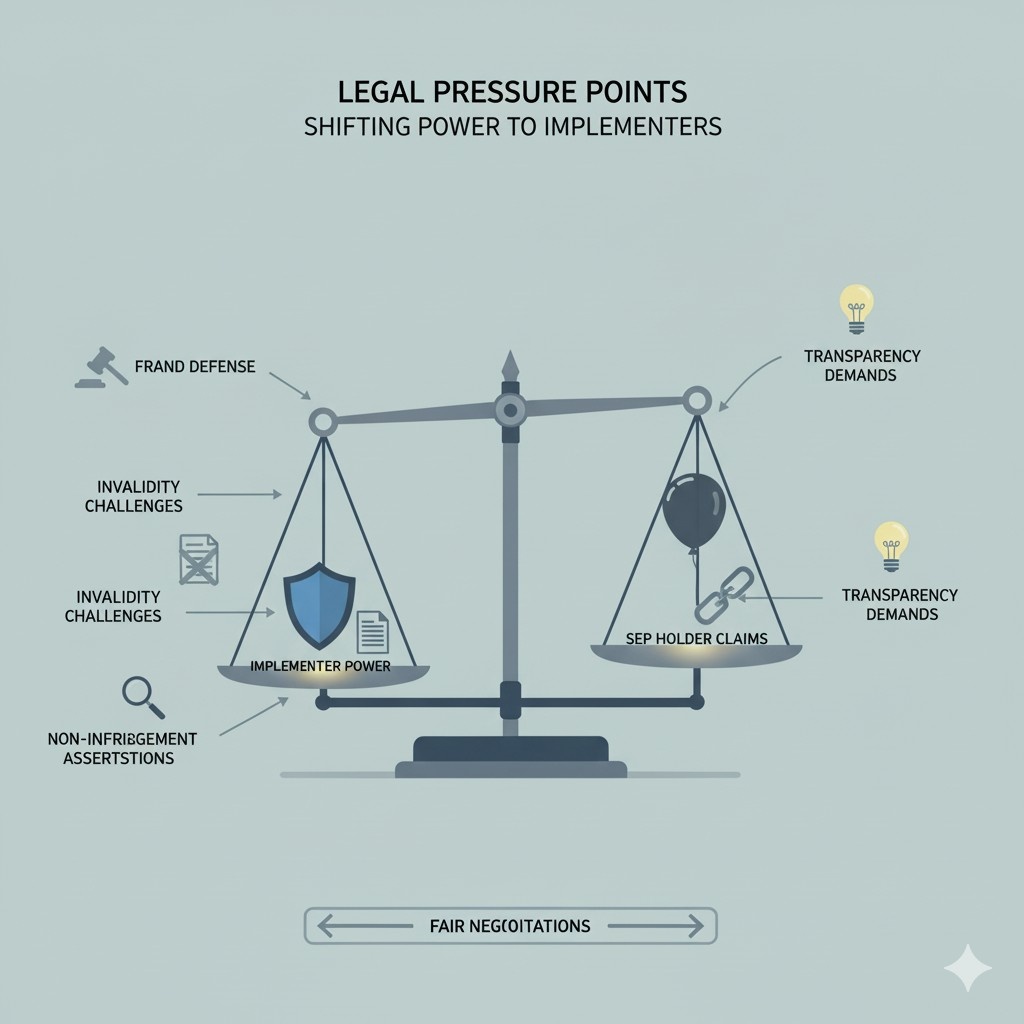
Legal Pressure Points That Shift Power Back to Implementers
Technical truth opens the door, but legal strategy is what lets you walk through it. Many businesses think the law around SEPs is stacked against them.
In reality, SEP enforcement comes with strict rules, and those rules create pressure points. When you understand them, the balance of power changes fast.
This section explains how the legal side actually works in practice and how smart companies use it to slow down, reshape, or even shut down weak SEP demands.
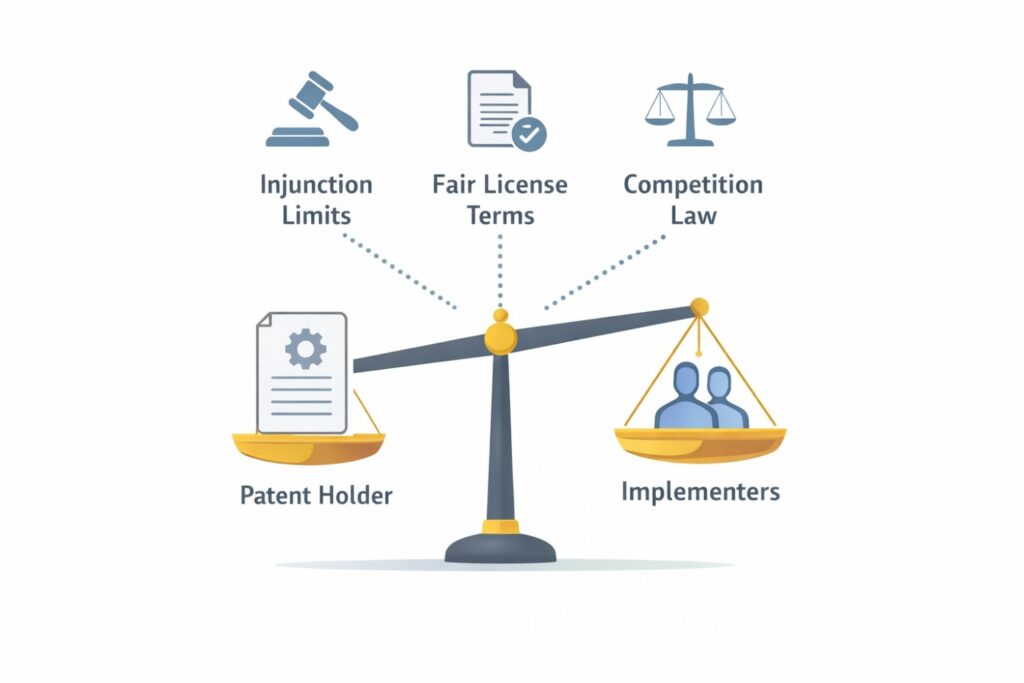
SEP Rights Come With Obligations
A company that claims a patent is essential does not get unlimited power. By declaring a patent essential to a standard, the owner accepts obligations.
The most important one is the promise to license on fair terms. This promise is not optional. It is the tradeoff for being part of a standard.

For businesses, this means SEP owners must act reasonably. When they do not, their leverage weakens.
Fair Terms Are Not Whatever the SEP Owner Says
One of the most common tricks is presenting a number as if it is fixed and obvious.
It is not.
Fair terms depend on context. They depend on how much value the patent actually adds. They depend on how widely the patent is used. They depend on comparable licenses.
When SEP owners refuse to explain how they reached a number, that silence matters. Courts notice it. Regulators notice it. Negotiators notice it.
Asking simple questions about how a rate was calculated often exposes how thin the claim really is.
Proof of Essentiality Is Not Optional
An SEP owner who wants to be taken seriously must show how their patent is essential.
That means explaining, in detail, how each claim maps to the standard. Vague statements are not enough. General references are not enough.
Businesses that calmly request this proof are not being hostile. They are asserting their rights.
When proof is weak or missing, the entire enforcement effort slows down.
Good Faith Cuts Both Ways
SEP law cares deeply about behavior.
SEP owners must act in good faith, but so must implementers. This is where strategy matters.
Responding clearly, on time, and with thoughtful questions builds credibility. Ignoring letters or sending emotional responses does not.
Businesses that act reasonably gain protection. They show they are not avoiding licenses, just demanding fairness.
That posture matters if disputes escalate.
Delay Is Not Always the Enemy
Many founders fear delays more than costs. SEP owners know this and use urgency as a weapon.
But in SEP disputes, delay often favors the implementer.
Careful review takes time. Technical analysis takes time. Legal clarification takes time.
When delays are tied to legitimate questions and good faith review, they are not a weakness. They are a shield.
Time forces SEP owners to invest more effort. Weak cases often fade under that pressure.
Jurisdiction Changes the Game
SEP rules are not applied the same way everywhere.
Some regions are more friendly to SEP holders. Others focus heavily on fairness and balance.
Understanding where a dispute might land shapes strategy. It affects how aggressive an SEP owner can be and how much risk they face.
Businesses that quietly assess jurisdictional risk early avoid surprises later.
Injunction Threats Are Often Overplayed
Many SEP letters hint at injunctions, implying products could be blocked or banned.
In practice, injunctions for SEPs are rare. Courts are cautious. They look closely at behavior and balance.
If an SEP owner has not acted fairly, injunction threats lose credibility.
Businesses that know this do not panic. They focus on substance, not scare tactics.
Comparable Licenses Tell a Story
SEP owners often claim their rate is standard. Comparable licenses test that claim.
If other companies pay less, the rate is questionable. If terms vary widely, fairness is in doubt.
Requesting information about comparable licenses is a powerful move. Resistance to sharing this information often signals weakness.
Even partial insight can reshape negotiations.
Overreach Creates Risk for SEP Owners
Aggressive behavior cuts both ways.
SEP owners who overstate essentiality, demand extreme rates, or ignore good faith questions expose themselves to counterclaims and regulatory scrutiny.
Businesses that stay calm and document interactions build a record. That record becomes leverage if things escalate.
Sometimes the strongest move is simply letting the other side overreach.
Internal Alignment Is a Legal Asset
Legal strategy fails when teams are not aligned.
Engineering, legal, and leadership must share a clear understanding of what the product does and what the business wants.
Mixed messages weaken credibility. Clear alignment strengthens it.
Companies that prepare internally before responding externally move with confidence instead of confusion.
When Walking Away Is a Strategy
Not every SEP claim deserves negotiation.
Some are so weak that the best move is to stand firm and wait. Others fall apart under light scrutiny.
Knowing when to walk away requires technical clarity and legal confidence.
This is where experienced guidance matters most.
Strong Patents Change the Conversation
There is one last pressure point that many companies overlook.
When you own strong, clearly written patents of your own, SEP discussions change tone. You are no longer just a target. You are a peer.
Companies with solid patent portfolios are taken more seriously. Their questions carry more weight. Their positions are respected.
This is why modern teams invest early in patent strategy that reflects real technical work, not abstract ideas.
PowerPatent helps teams do exactly that. It connects real product decisions to clear patent protection, with attorney oversight and modern tools that keep you moving fast.
You can see how it works here: https://powerpatent.com/how-it-works
Turning SEP Challenges Into Leverage, Not Liability
By the time a company understands both the technical gaps and the legal limits of SEP essentiality, something important shifts. The discussion is no longer about fear or exposure.
It becomes a business decision. This is where strong teams separate themselves. They stop reacting and start using SEP challenges as tools to protect margin, control timing, and strengthen long-term position.
This section focuses on how companies turn what looks like a threat into a source of leverage, without slowing down product or losing focus.
The Mental Shift That Changes Outcomes
The biggest change is internal, not external.
When a team sees an SEP claim as a problem to solve instead of a danger to avoid, better decisions follow. Panic leads to fast payments. Confidence leads to better terms.
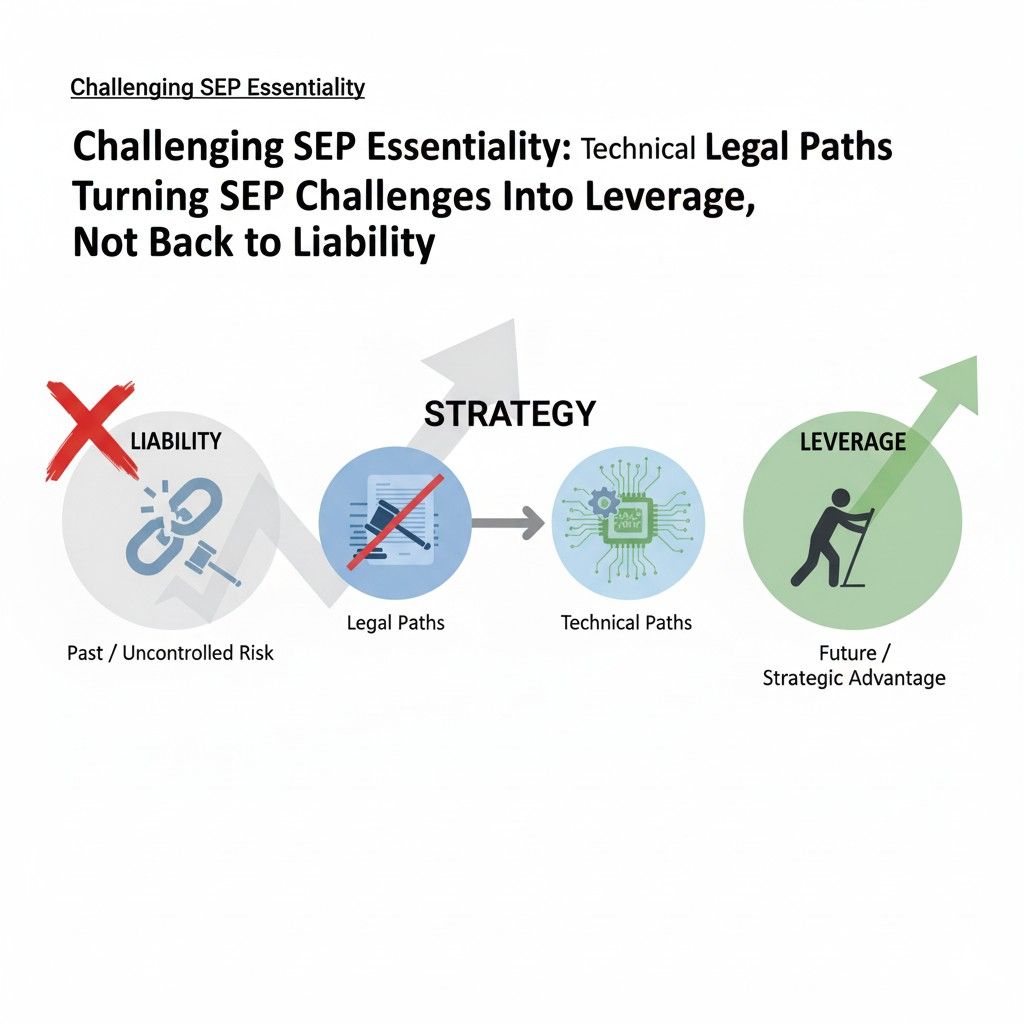
This shift does not come from bravado. It comes from understanding. Teams that know what they are building and why it works are harder to intimidate.
Using Questions as a Strategic Tool
One of the most effective moves in SEP situations is asking the right questions.
Not aggressive questions. Not loaded questions. Clear, simple ones.
How does this claim map to our implementation? Which version of the standard are you relying on? Which claims are you asserting? How was this rate calculated?
Each question forces precision. Each answer reveals strength or weakness.
Strong cases survive questioning. Weak ones do not.
Controlling the Pace Without Stalling the Business
SEP holders often push for fast closure. Implementers often want to keep building.
These goals do not have to conflict.
By separating technical review from business operations, companies keep shipping while discussions continue. Engineers review quietly. Legal teams respond carefully. Leadership stays focused.
This approach prevents SEP issues from hijacking roadmaps.
Leveraging Design Choices Proactively
When a team understands which parts of a system are flexible, design becomes leverage.
Sometimes the mere ability to change direction weakens a demand. If a feature can be removed, simplified, or replaced, the cost of enforcement rises for the SEP holder.
This does not mean redesigning on demand. It means knowing your options before you need them.
Options create power.
Building a Record That Protects You Later
Every interaction matters.
Clear responses. Reasonable timelines. Documented questions. Consistent positions.
This record shows good faith. It protects the company if disputes escalate. It also discourages escalation in the first place.
SEP holders think carefully before pushing hard against teams that look prepared.
Negotiation Is Not Admission
Many businesses fear that engaging means conceding.
It does not.
Negotiation is exploration. It is information gathering. It is boundary setting.
Strong teams negotiate without admitting essentiality. They keep language precise. They avoid assumptions. They focus on facts.
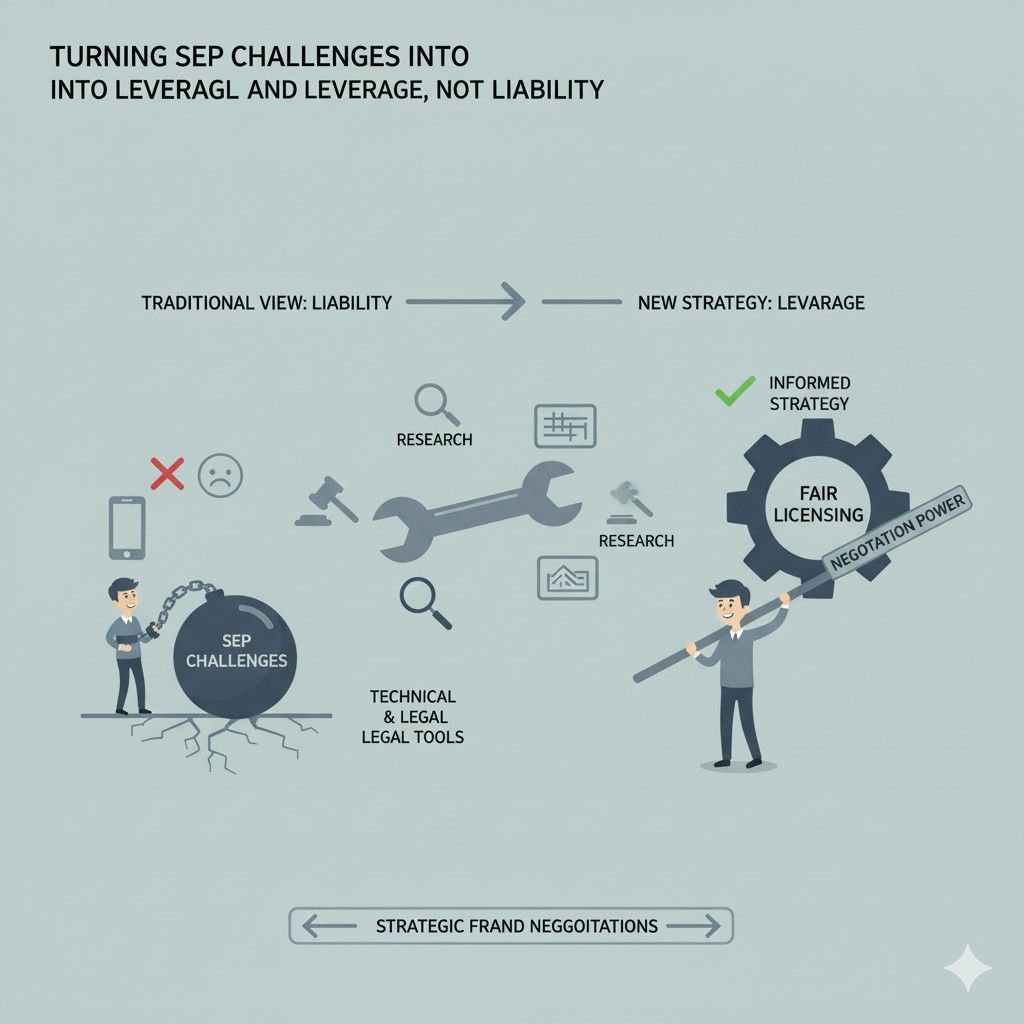
This keeps doors open without giving ground.
Knowing When to Settle and When to Stand Firm
Not all SEP claims are equal.
Some make business sense to resolve quickly. Others deserve resistance. The difference lies in technical impact, legal risk, and business value.
Companies that rush this decision often regret it. Companies that analyze it calmly make better calls.
The goal is not to win every fight. It is to make smart tradeoffs.
Turning SEP Experience Into Institutional Knowledge
Every SEP interaction teaches something.
About standards. About patent drafting. About negotiation dynamics.
Companies that capture these lessons improve over time. They write better code. They file better patents. They respond faster and smarter the next time.
This compounding effect is powerful.
Why Early Patent Strategy Changes Everything
The strongest leverage often comes from decisions made long before any SEP letter arrives.
Companies that document inventions early, tie patents to real implementations, and think about standards exposure in advance are rarely caught off guard.
They know where they stand. They know what they own. They know what they can defend.
This is not about building massive portfolios. It is about building the right ones.
Modern Tools Make This Practical
In the past, this level of preparation required large legal teams and slow processes.
Today, it does not.
Modern platforms combine smart software with real attorney oversight, making it possible for fast-moving teams to protect themselves without losing momentum.
PowerPatent was built for teams that want that edge. It helps founders turn real engineering work into strong patents, avoid costly mistakes, and stay in control as they scale.
You can explore how it works here: https://powerpatent.com/how-it-works
The Real Goal
Challenging SEP essentiality is not about fighting standards. It is about understanding them well enough to avoid being trapped by them.
The companies that do this best are not louder or more aggressive. They are clearer, calmer, and better prepared.
They build with confidence, negotiate with facts, and protect what matters most while still moving fast.
That is the real advantage.
Wrapping It Up
SEP essentiality is often treated as a fixed truth. It is not. It is a position taken by someone who benefits if you accept it without question. The moment you slow down, ask for proof, and connect the claim to real technical facts, the dynamic changes. The companies that struggle with SEPs are not weaker or less innovative. They are usually just less informed. Once teams understand how standards actually work, how patents are written, and how legal obligations limit SEP power, fear loses its grip.
Leave a Reply