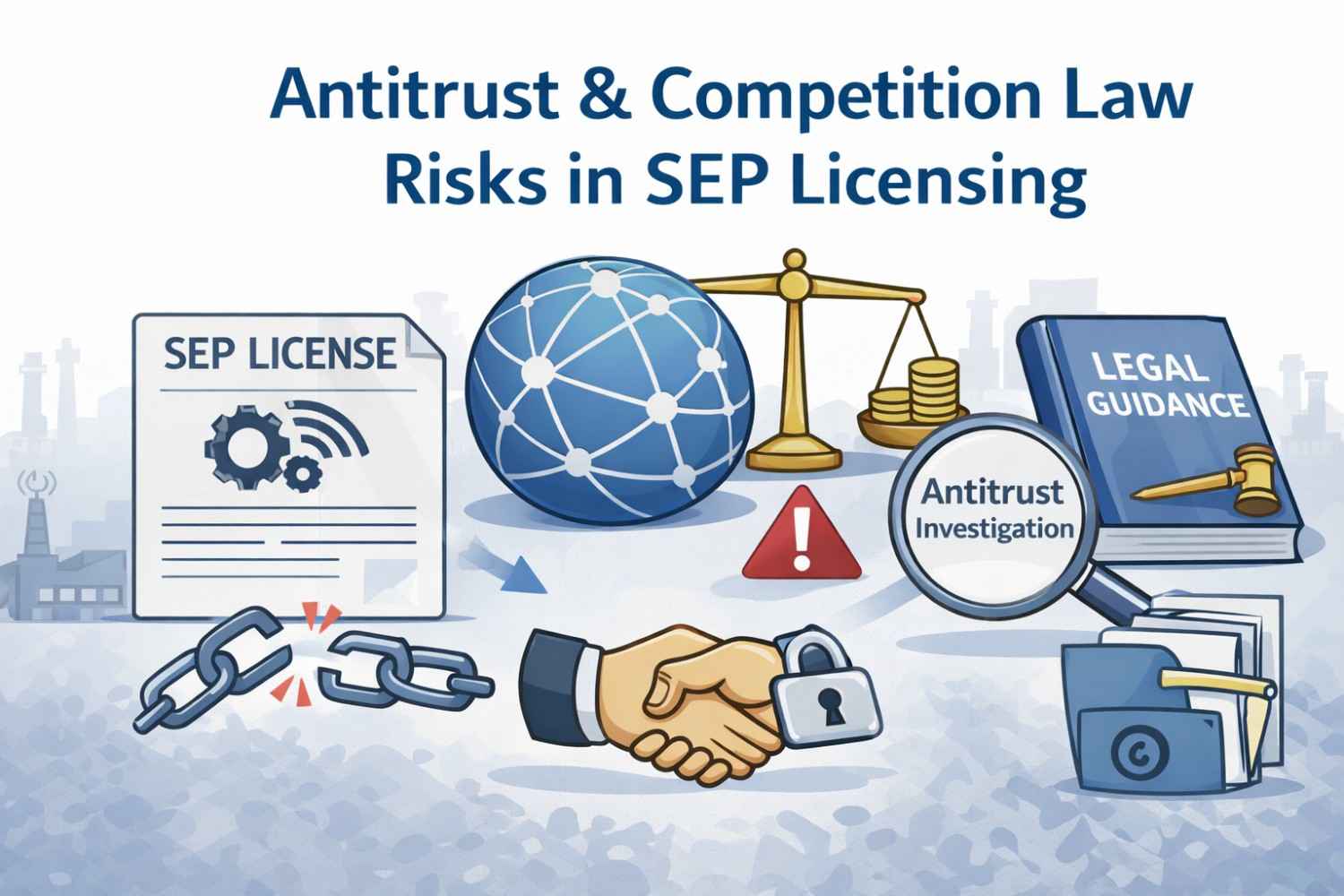
Standards shape almost every modern product. Phones talk to towers. Cars talk to roads. Software talks to hardware. None of this works without shared rules, called standards. And behind many of those standards sit patents. These are called standard-essential patents, or SEPs. If you build tech that touches a standard, SEPs are part of your world whether you like it or not.
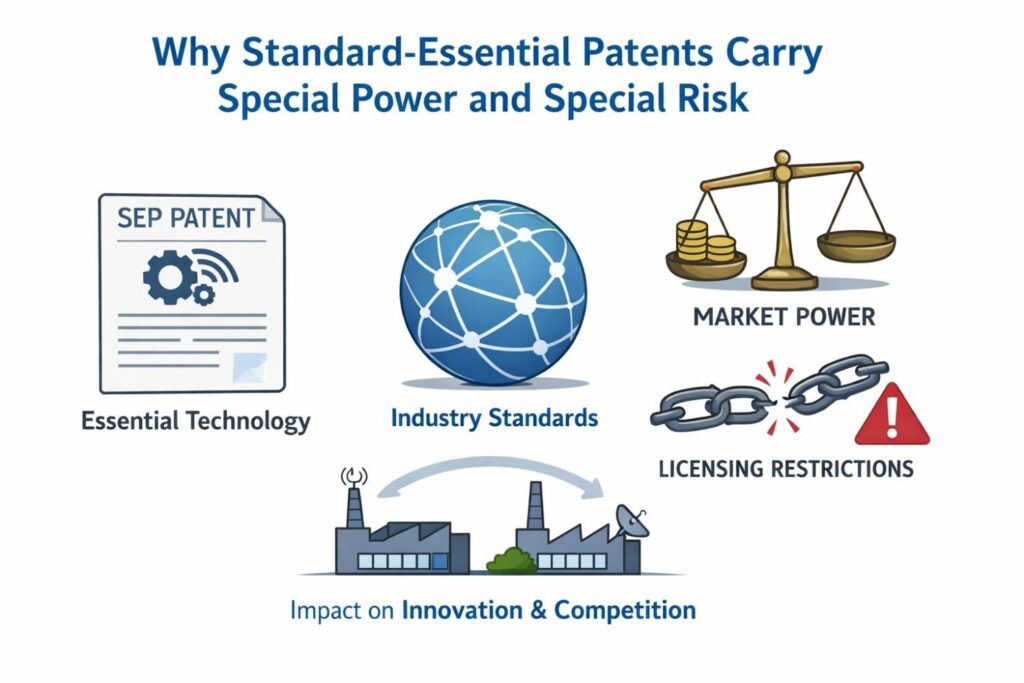
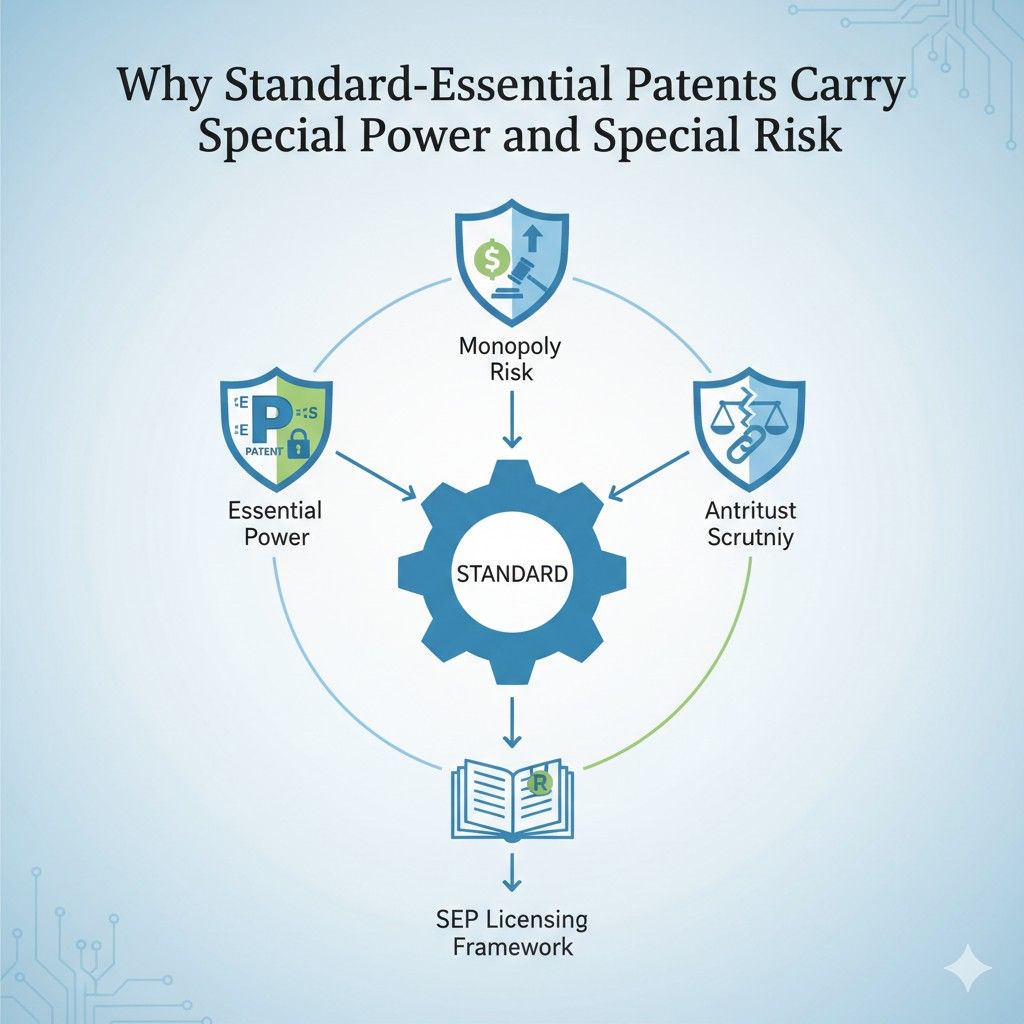
Why Standard-Essential Patents Carry Special Power and Special Risk
Standard-essential patents sit in a very different place than normal patents. They are not just about owning an idea. They are about controlling access to a shared system that many others depend on.
This mix of power and reliance is what creates both value and danger.
To use SEPs well, businesses must understand why regulators treat them differently and why small choices in licensing behavior can create large legal problems later.
The Moment a Patent Becomes Essential, the Game Changes
The instant a patent becomes essential to a standard, it stops behaving like a normal patent. Before that point, others can design around it. After that point, they cannot.
Anyone who wants to build a compliant product must use that patent. That single fact is what gives SEPs their strength.
This strength is not limited to big companies. A startup that holds one key SEP can suddenly have leverage over much larger players.
That leverage can feel exciting, especially for founders who have struggled to get noticed. But this is also the moment when competition law starts watching closely.
Actionable takeaway here is simple but critical. Once your patent is tied to a standard, you should stop thinking only like an inventor and start thinking like a market participant with responsibility.
Your internal mindset matters because courts and regulators will judge your actions based on how much power you had, not how small your company felt.
Standards Create Dependence, and Dependence Creates Duty
Standards exist to make markets work smoothly. They allow products from different companies to talk to each other.
Regulators support standards because they increase choice and lower costs for users. But standards also create dependence. When everyone builds around the same rules, they are locked in.
That lock-in is why SEP owners are expected to act carefully. The law assumes that SEP holders can block entire markets if they choose to. Even if you never plan to do that, the risk is assumed to exist.
This is where many businesses get surprised. They think antitrust law only applies if they act aggressively or unfairly on purpose. In reality, the law often looks at outcomes, not intent.
If your licensing behavior limits competition, even indirectly, you can face scrutiny.
The practical move here is to document your thinking early. If you decide on a licensing approach, write down why it is fair and market-based.
If regulators ever ask questions, clear records can make the difference between a fast resolution and a long fight.
FRAND Promises Are Not Optional, Even When They Feel Vague
When patents are declared essential, they usually come with a promise to license on fair, reasonable, and non-discriminatory terms. This promise is often called FRAND.
Many founders hear this and assume it is flexible enough to adjust later. That assumption causes problems.
FRAND is not a slogan. It is a commitment. While the words sound soft, courts treat them seriously.
If your actions look like you are avoiding licensing, delaying talks, or pushing extreme terms, that promise can turn into a legal weapon against you.
What makes this risky is that FRAND is judged in context. Your pricing, your negotiation style, and even how fast you respond to emails can matter. Silence or delay can be framed as abuse of power.
A smart move is to build a licensing playbook early. Decide how you respond to license requests. Decide who handles them. Decide timelines. Consistency reduces risk.
PowerPatent often helps founders think through these decisions early so they do not have to scramble later when the pressure is on. You can see how that works at https://powerpatent.com/how-it-works.
The Same Behavior Can Be Legal for Normal Patents and Illegal for SEPs
This is one of the most confusing parts for businesses. Actions that are fine with normal patents can become risky with SEPs. For example, refusing to license a normal patent is often allowed.
With SEPs, refusal can trigger antitrust claims if it blocks access to the standard.
The reason is simple. With a normal patent, competitors can often find another path. With SEPs, there is no other path. The law steps in to keep markets open.
This means founders must adjust their instincts. Hardball tactics that work elsewhere may backfire here. Aggressive enforcement can look like market control. High royalty demands can look like exploitation.
The safest approach is to test your assumptions with outside perspective. Before sending tough letters or making strong demands, ask whether the same move would look fair if everyone in the market had to follow it.
If the answer feels shaky, slow down.
Injunctions Feel Powerful but Carry Heavy Competition Risk
Many SEP holders dream of injunctions. Stopping a competitor from selling feels like the ultimate leverage. In SEP cases, injunctions are one of the fastest ways to attract antitrust attention.
Courts and regulators worry that injunction threats force companies to accept bad deals just to stay in business. Even hinting at this pressure can be risky if you have made FRAND commitments.
This does not mean injunctions are never allowed. It means they are closely examined. If you pursue them too quickly, or without serious licensing effort, you may face claims that you abused your position.
A more careful path is to show willingness to license first. Real offers. Real discussions. Clear terms. If talks fail for solid reasons, your position is much stronger. The key is patience and proof of good faith.
Market Power Is Often Assumed, Even If You Do Not Feel Powerful
Many founders think antitrust law applies only to giants. With SEPs, that is not how it works. Market power can be assumed because the standard itself creates it.
You might have ten employees and still be treated as holding significant leverage.

This gap between how founders feel and how the law sees them causes mistakes. Casual emails. Informal pricing comments. Off-hand remarks about blocking competitors. All of this can be used later to paint a picture of misuse.
The practical advice here is to professionalize early. Treat SEP licensing like a core business function, not a side task. Use clear language. Avoid emotional statements. Keep communications clean and factual.
Global Standards Mean Global Risk
SEPs rarely stop at one country. Standards are global, and so are the risks. A licensing dispute in one region can spill into others fast. Different countries have different views on competition law, and some are more aggressive than others.
This means that a single bad decision can multiply into several legal fronts. Founders often underestimate how fast this can happen once a dispute becomes public.
Planning for this does not require massive legal teams.
It requires awareness. When setting licensing terms or enforcement plans, think about how they would look not just at home, but abroad. Consistency across regions reduces surprise.
Why Early Patent Strategy Shapes Later Competition Outcomes
Most antitrust risk tied to SEPs is baked in early. How patents are written. How broadly they read on the standard. How they are declared essential. These early moves shape later leverage and scrutiny.
If patents are drafted too aggressively, they invite challenges. If claims are unclear, disputes grow. If your SEP position looks overstated, credibility drops.
This is why SEP strategy starts long before licensing. It starts when the patent is first filed.
PowerPatent focuses heavily on this stage, helping founders align patent scope with real technical contributions so value is strong but defensible.
That early alignment can reduce competition risk years later. Founders who want that level of control can explore it at https://powerpatent.com/how-it-works.
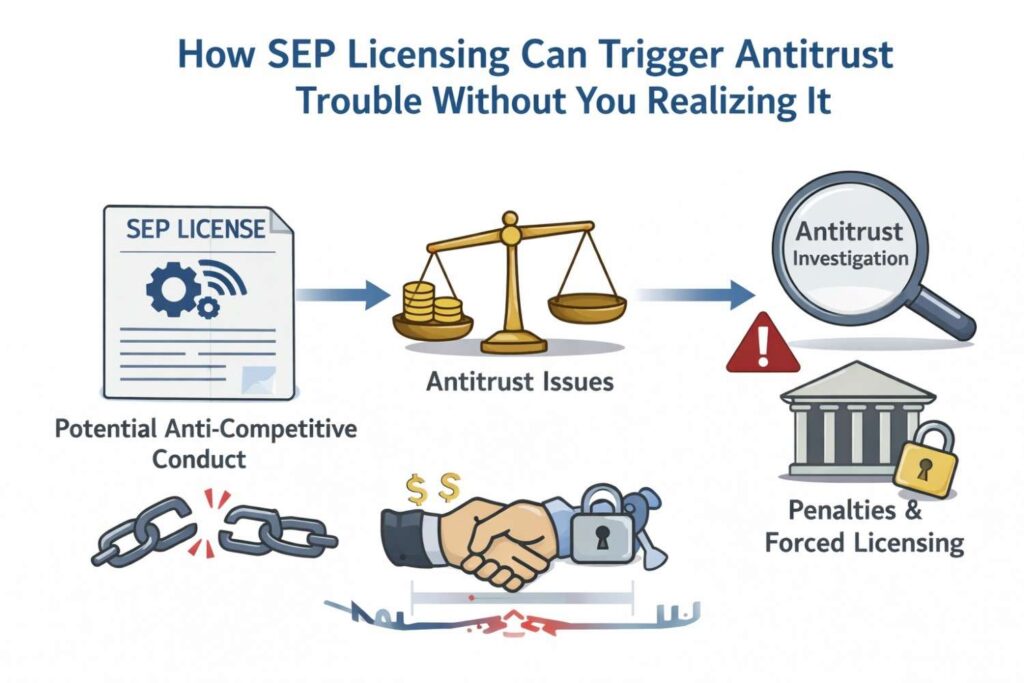
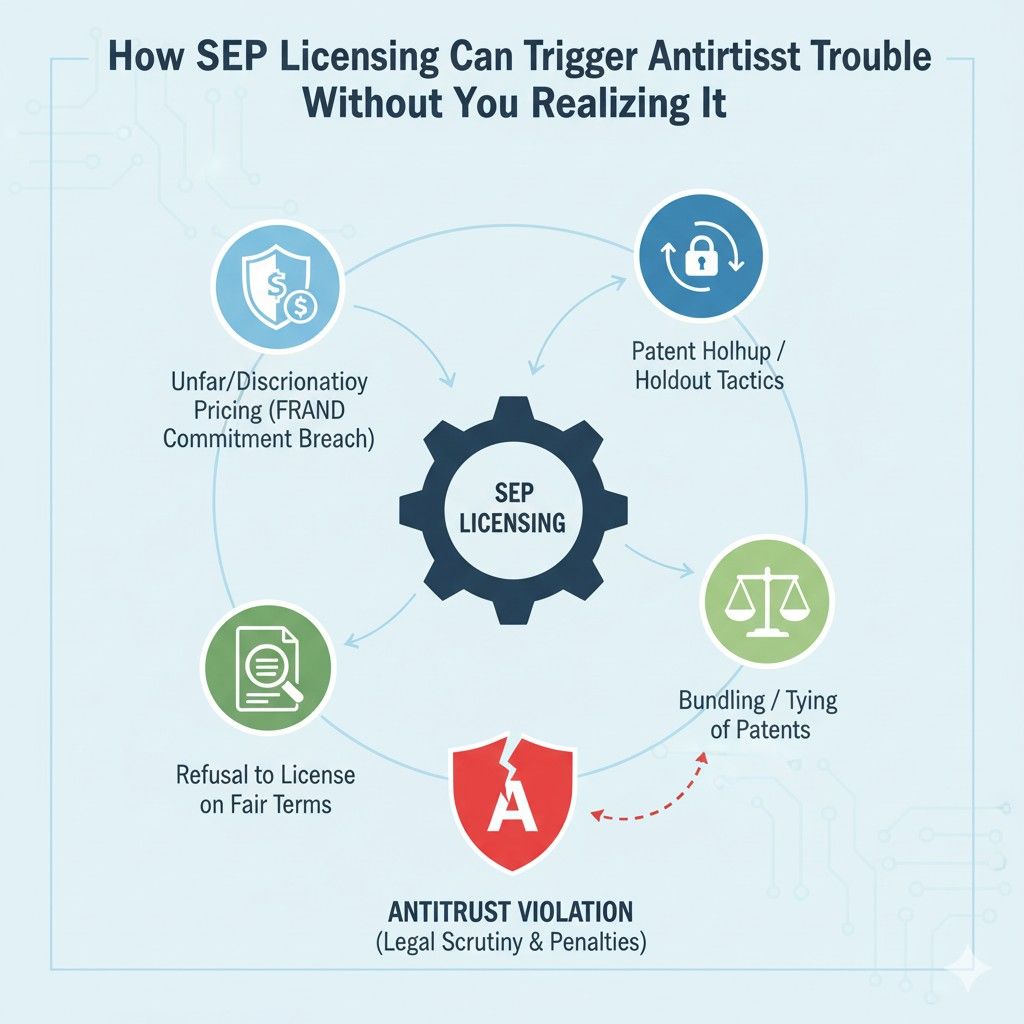
How SEP Licensing Can Trigger Antitrust Trouble Without You Realizing It
Many antitrust problems in SEP licensing do not start with bad intent. They start with small choices that feel reasonable in the moment. A delayed reply. A vague offer.
A tough negotiation stance copied from normal patent deals. Over time, these choices stack up and form a pattern. That pattern is what regulators and courts focus on.
This section explains how everyday licensing behavior can quietly cross legal lines, and what businesses can do to stay on solid ground while still protecting their value.
Silence and Delay Can Look Like Refusal
One of the most common mistakes SEP holders make is moving too slowly. Licensing requests arrive. The team is busy. Product deadlines feel more urgent. Emails sit unanswered. Weeks turn into months.
From the SEP holder’s view, nothing bad happened. From the license seeker’s view, access to the standard is being blocked. From a regulator’s view, delay can look exactly like refusal.
In SEP cases, time matters. Markets move fast. Products launch on tight schedules. If your delay forces another company to pause or redesign, the harm is already done, even if you never meant it.
A practical move is to treat licensing requests like customer support tickets. Set response timelines internally.
Even if you cannot give full terms quickly, acknowledge the request and outline next steps. Showing engagement reduces risk even when deals take time.
Vague Licensing Offers Create More Risk Than Clear Ones
Some SEP holders send high-level offers with little detail. They do this to keep flexibility or avoid early commitment. In practice, this often backfires.
Vague terms make it hard for the other side to assess fairness. That uncertainty fuels disputes. It also allows claims that the offer was not serious or not made in good faith.
Courts often look for concrete numbers and clear conditions. Without them, SEP holders can be accused of hiding the ball or setting traps.
The smarter approach is clarity with room to adjust. Provide a starting point. Explain how rates are calculated. Tie them to real market data when possible. Transparency builds trust and weakens antitrust arguments before they start.
Asking for Extreme Terms Can Be Seen as Market Pressure
SEP holders sometimes aim high on royalties, expecting to negotiate down. This is common in many deals. With SEPs, extreme opening positions can be framed as coercive.
If a license seeker must accept your terms to stay in business, high demands look less like negotiation and more like pressure. This is especially risky when combined with threats of enforcement.
The law does not require cheap licenses. It requires reasonable ones. What counts as reasonable depends on context, but courts often compare terms across similar deals.
Founders should ground their demands early. Use benchmarks. Look at comparable licenses. Avoid numbers that cannot be justified with logic and evidence. A strong story behind your pricing is often more powerful than a high number alone.
Treating Similar Companies Differently Raises Red Flags
Non-discrimination is a core part of SEP obligations. Treating similar companies differently without clear reasons is one of the fastest ways to trigger scrutiny.
This does not mean all licenses must be identical. It means differences must make sense. Size, volume, and scope can justify changes. Personal relationships or competitive threats cannot.
Problems often arise when early deals are informal. A friendly partner gets a good rate. Later license seekers discover the gap. Suddenly, your licensing history works against you.
A practical habit is to keep internal summaries of each deal and the reasons behind key terms. This makes it easier to explain differences later and harder for critics to claim favoritism.
Using Litigation as Leverage Can Backfire
Filing lawsuits or threatening them can feel like strength. In SEP contexts, it can look like bullying if done too early or too aggressively.
Regulators often ask whether litigation was a last resort or a first move. If talks barely started and lawsuits appear, motives are questioned.
This does not mean litigation is forbidden. It means timing and tone matter. Courts expect real efforts to license before escalation.
A safer pattern is steady escalation. Start with dialogue. Move to structured negotiation. Bring in neutral processes if needed. Litigation should come only after clear breakdowns, not as a pressure tool from the start.
Bundling SEPs With Non-Essential Patents Can Create Issues
Some SEP holders bundle essential patents with non-essential ones. They do this to increase deal value. This can raise competition concerns if license seekers are forced to take patents they do not need.
The risk increases when refusal to license SEPs alone blocks access to the standard. That can look like tying, which regulators dislike.

If bundling is part of your strategy, be careful. Make sure SEP-only options exist or that bundling brings real efficiency, not just leverage. Document why the structure makes sense.
Internal Emails and Messages Often Become External Evidence
Many antitrust cases are built on internal communications. Casual comments about blocking competitors or squeezing margins can become damaging evidence.
Founders often forget that private messages may not stay private. Years later, they can be read out of context and framed as intent.
The best protection is discipline. Keep internal language professional. Focus on business goals, not competitor harm. Assume that anything written could be read by others later.
Licensee Behavior Also Matters, But SEP Holders Are Held Higher
Some SEP holders believe that if a license seeker behaves badly, they are free to respond in kind. This assumption is dangerous.
Courts often hold SEP holders to higher standards because of their position. Even if the other side delays or negotiates hard, your response must stay measured.
This does not mean you must accept unfair treatment. It means your reactions should stay proportionate and well documented.
Early Structure Prevents Later Firefighting
Most SEP antitrust problems come from unplanned licensing. Founders focus on building tech, then scramble when requests arrive.
The companies that avoid trouble build structure early. Clear roles. Clear processes. Clear principles.
This is where early patent and licensing strategy pays off.
PowerPatent helps founders think about these issues long before they explode, aligning patent strength with clean licensing paths that support growth instead of blocking it. You can see how that works at https://powerpatent.com/how-it-works.
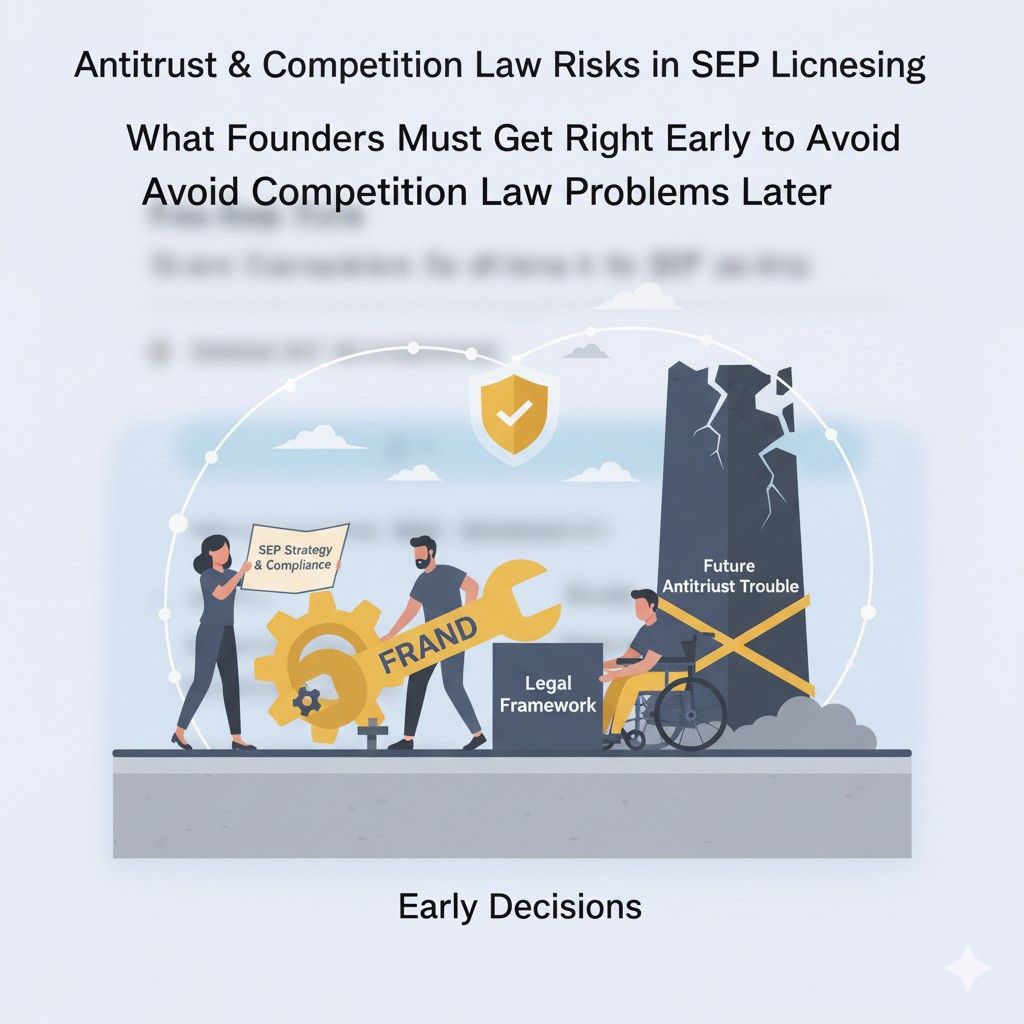
What Founders Must Get Right Early to Avoid Competition Law Problems Later
Most antitrust risk tied to SEP licensing is created long before the first license request arrives. It is shaped by early choices that feel technical, small, or purely internal at the time.
By the time disputes surface, those choices are hard to undo. This section focuses on what founders should lock in early so growth does not come with legal drag later.
SEP Risk Starts at the Patent Drafting Stage
Many founders think competition law comes into play only when money changes hands.
In reality, it often starts when the patent is written. The way claims are framed can influence how much power the patent appears to hold over a standard.
If claims are drafted far broader than the actual technical contribution, they invite challenges.
Regulators and courts may see this as an attempt to capture more of the standard than deserved. That perception alone can weaken your position.
Founders should aim for precision. Claims should track real contributions to the standard, not imagined future leverage.
Strong patents are not vague patents. They are clear ones that map cleanly to real technical value.
Declaring SEPs Is a Strategic Act, Not a Checkbox
When a patent is declared essential to a standard, that declaration carries weight. It signals to the world that others depend on it. Over-declaring can create credibility problems. Under-declaring can create enforcement gaps.
Many companies declare defensively, marking everything just in case. This can backfire. If challenged, you may be forced to prove essentiality across many weak patents.
A smarter approach is selective confidence. Declare only what you can support. This makes later licensing cleaner and reduces accusations of overreach. It also signals seriousness to regulators and counterparties alike.
Align Business Goals With SEP Obligations Early
Founders often separate product strategy from patent strategy. With SEPs, this separation causes tension. If business plans depend on exclusivity while SEPs require openness, conflict is built in.
This does not mean SEPs limit business ambition. It means ambition must be expressed through fair access, not exclusion.
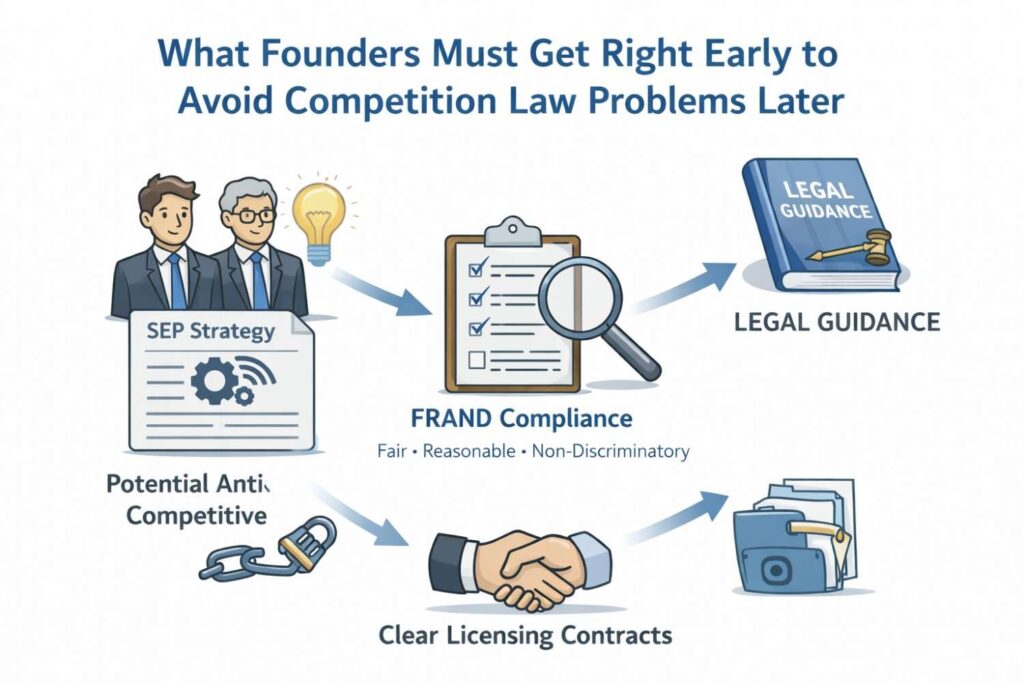
Early alignment helps. Decide whether licensing revenue, ecosystem growth, or strategic positioning is the main goal. Let that goal guide how SEPs are used. Mixed signals create disputes later.
Build Licensing Discipline Before You Need It
Many companies invent licensing processes only after the first request arrives. At that point, pressure is high and mistakes happen.
Discipline means knowing who responds, how fast, and on what terms. It means having templates, benchmarks, and approval paths ready.
This does not require a large team. It requires forethought. Even a small startup can set basic rules. That early structure often prevents rushed decisions that lead to antitrust claims.
Keep Technical and Commercial Stories Aligned
One common problem in SEP disputes is mismatch. Technical teams describe narrow contributions. Commercial teams demand broad compensation. Courts notice these gaps.
Alignment reduces risk. The story told to standards bodies, licensees, and regulators should be consistent. Overstating value in one place and understating it in another creates credibility problems.
Founders should encourage cross-team understanding. Licensing decisions should be informed by engineers. Technical claims should be understood by business leaders. Unity strengthens trust.
Document Fairness as You Go
Many companies try to justify their behavior only after disputes arise. This is backward. Documentation should be created during decision-making, not after.
When setting rates, record the logic. When adjusting terms, note why. When negotiations stall, capture what happened.
These records often become the backbone of defense if questions arise. They also improve internal clarity and reduce emotional decisions.
Treat Early Deals as Future Precedent
The first few licenses set the tone for everything that follows. Even if they feel small, they often become benchmarks.
Founders sometimes offer generous terms early to speed adoption. Later, they regret it when those terms are used against them. Others go too hard early and scare off partners.
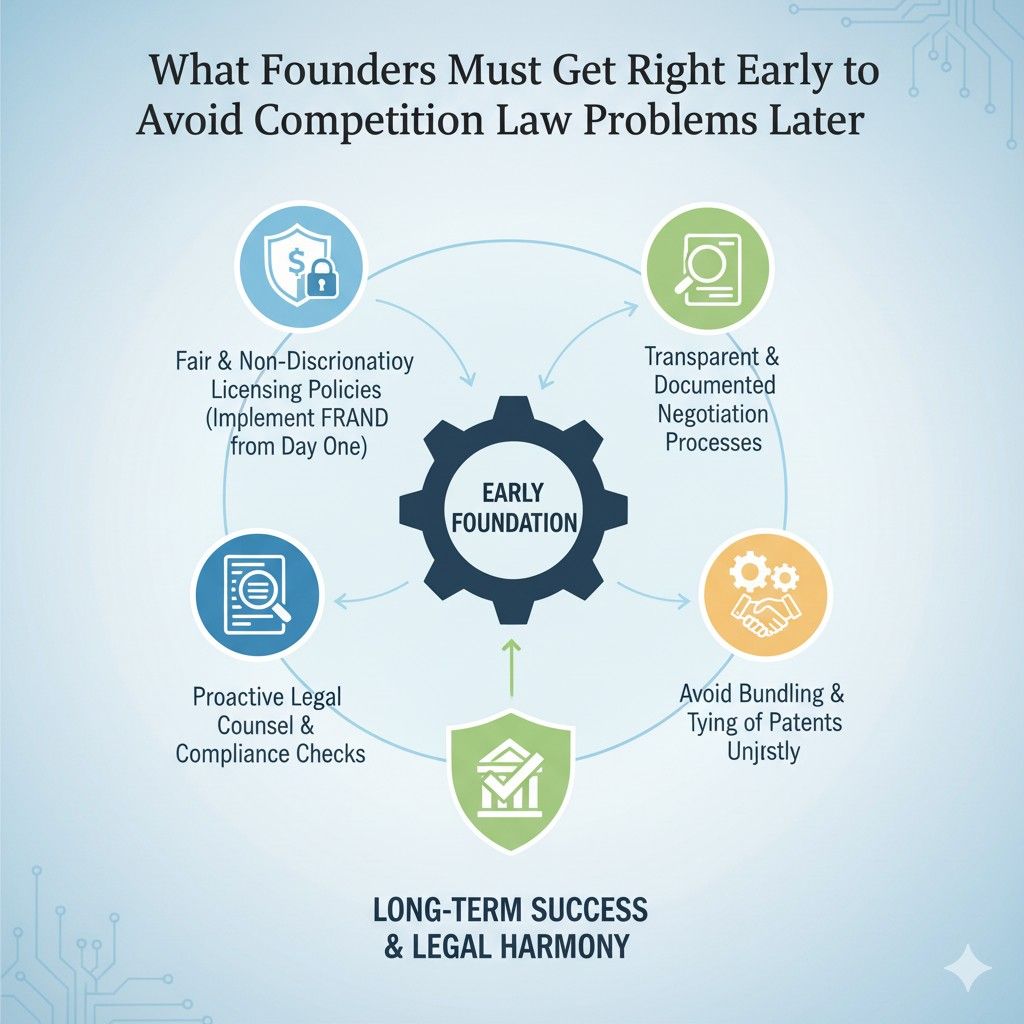
Balance matters. Early deals should reflect long-term intent, not short-term convenience. Thinking ahead here saves pain later.
Competition Law Is Global, Even for Small Teams
Startups often think local. SEPs are global by nature. A decision made for one market can echo elsewhere.
Founders should assume that actions may be judged across borders. Consistency helps. Extreme positions in one region can undermine credibility in another.
This does not mean complexity must be overwhelming. It means being mindful that SEP behavior rarely stays contained.
Choosing the Right Support Early Changes Outcomes
Many SEP problems arise because founders rely on tools or advice built for normal patents. SEPs are different. They sit at the intersection of tech, markets, and regulation.
Having the right support early can change trajectories.

PowerPatent is built to help founders think through these issues from day one, combining smart software with real attorney oversight so patent strength and competition safety grow together.
You can explore how that works at https://powerpatent.com/how-it-works.
Wrapping It Up
Standard-essential patents are not just legal assets. They are market tools. When used well, they support growth, trust, and wide adoption of technology. When used poorly, they attract regulators, lawsuits, and long delays that drain time and focus. The central tension with SEPs is simple. They give control over access, but the law demands restraint. This is not a weakness. It is the price of being essential. Founders who understand this early are better positioned to win in the long run.
Leave a Reply