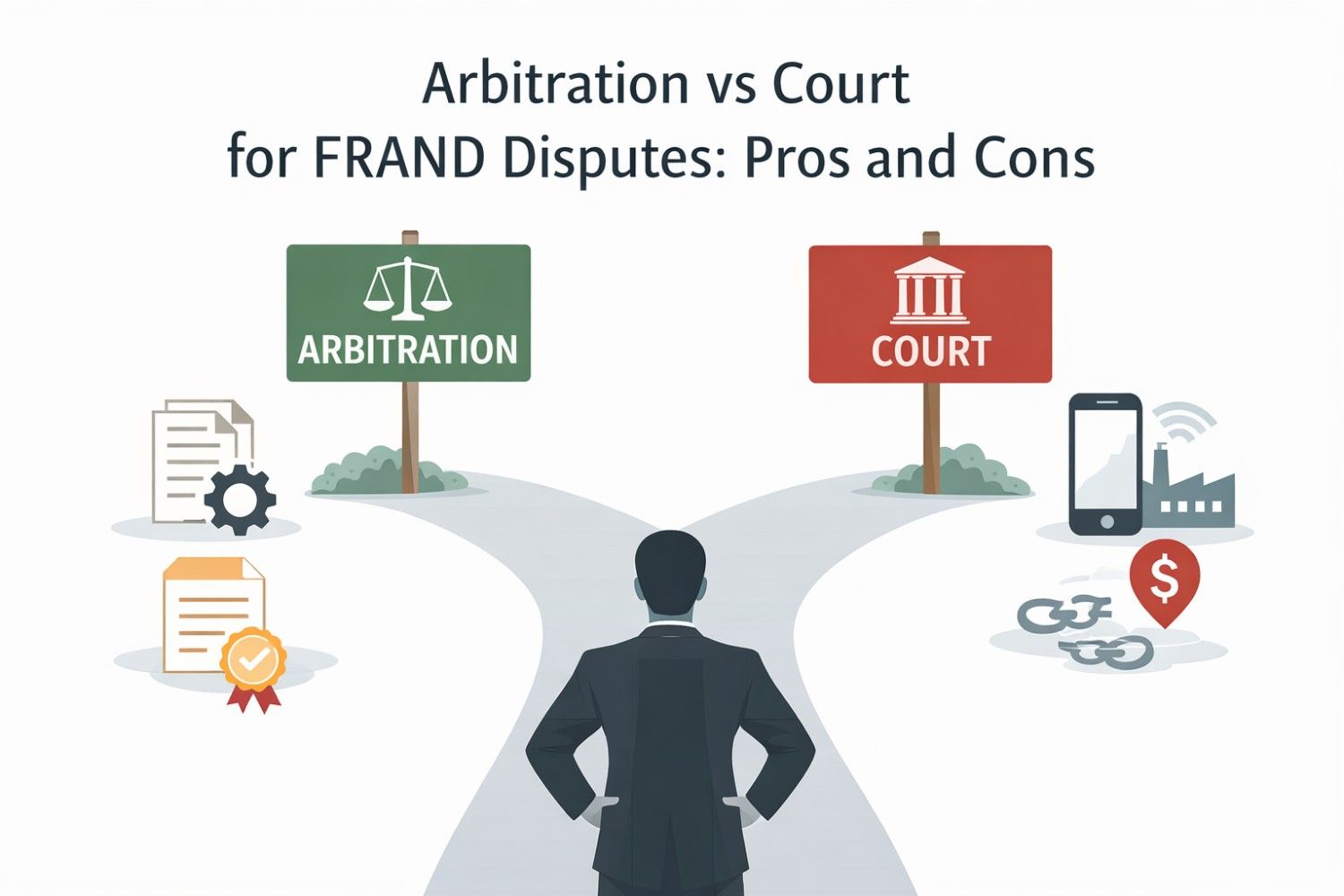
When a company builds technology that becomes part of a global standard, patents turn into power. But they also turn into pressure. FRAND disputes sit right at that pressure point. They decide who gets paid, how much, and how fast. They can shape the future of a startup or quietly drain it dry. Most founders do not think about arbitration or court battles when they file patents.
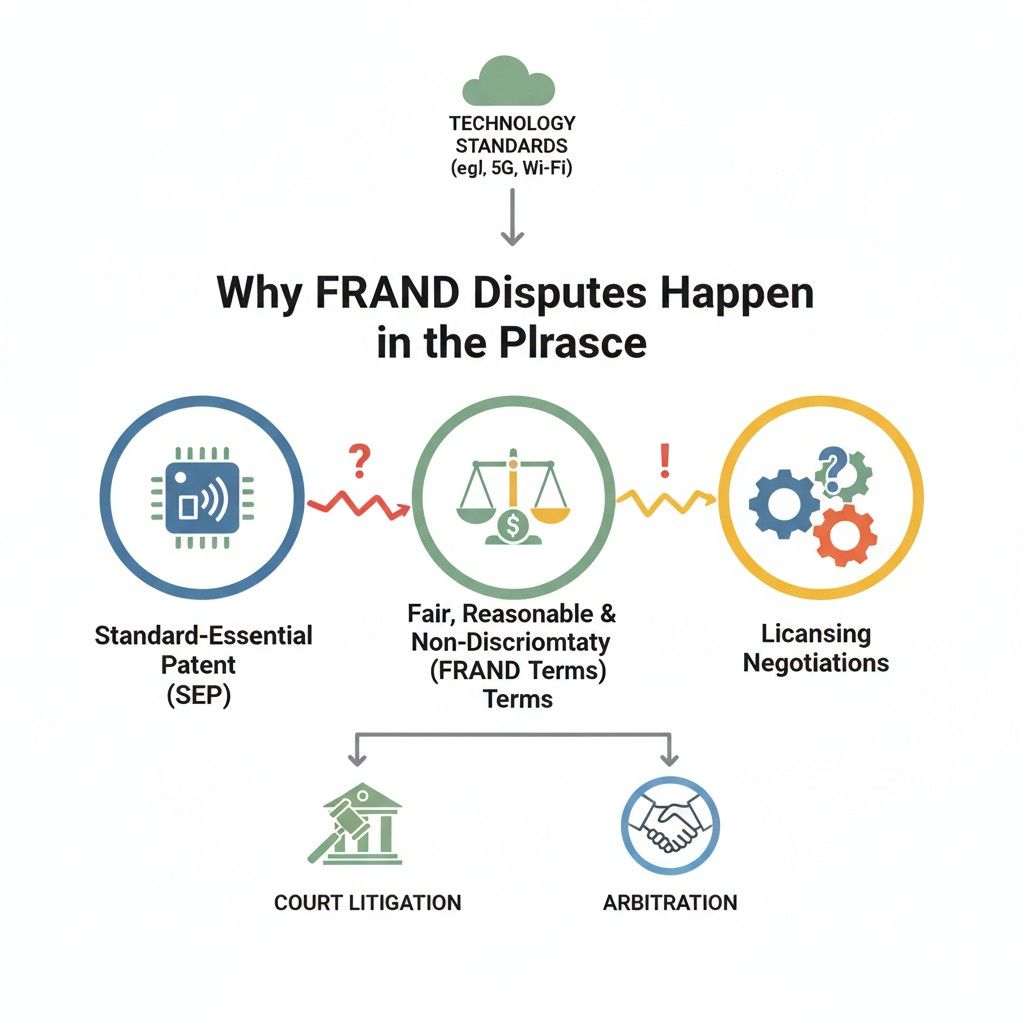
Why FRAND Disputes Happen in the First Place
FRAND disputes rarely start with bad intent. Most of them begin with two smart companies looking at the same patent and seeing very different values.
One side sees years of research, risk, and early bets on a standard that finally paid off.
The other side sees a single feature inside a much larger product and questions why it should carry so much weight. That gap in perspective is where conflict grows.
Understanding why these disputes happen is the first real step toward avoiding them, or at least controlling the damage when they arise.
Businesses that treat FRAND as a strategy problem instead of a legal problem are the ones that stay in control.
The Hidden Tension Inside Standards
Standards are built to make markets bigger. They allow devices, networks, and software from different companies to work together. That cooperation is good for growth, but it creates a quiet tension from the start.
When a company contributes technology to a standard, it agrees to license related patents on fair terms.
At the same time, it gives up some control because it cannot fully choose who uses the invention or how widely it spreads. This balance works only if both sides believe the deal stays fair as the market grows.
Problems appear when the standard succeeds more than expected. What once felt like a small contribution can suddenly sit at the center of a massive global market.
The patent owner feels underpaid. The implementer feels trapped. That is the first spark of many FRAND disputes.
For businesses, the lesson is simple. If you are contributing to a standard, you must assume success and plan for it early. Patents written without a clear view of how they fit into the standard often become harder to defend later.
This is where strong upfront patent work matters more than any later argument.
PowerPatent helps teams lock this clarity in from the start by aligning patents with how the technology will actually be used in the market. You can see how that works here: https://powerpatent.com/how-it-works
Different Views of What Fair Means
The word fair sounds clear, but it is not. What feels fair to one company can feel extreme to another, even when both are acting in good faith.
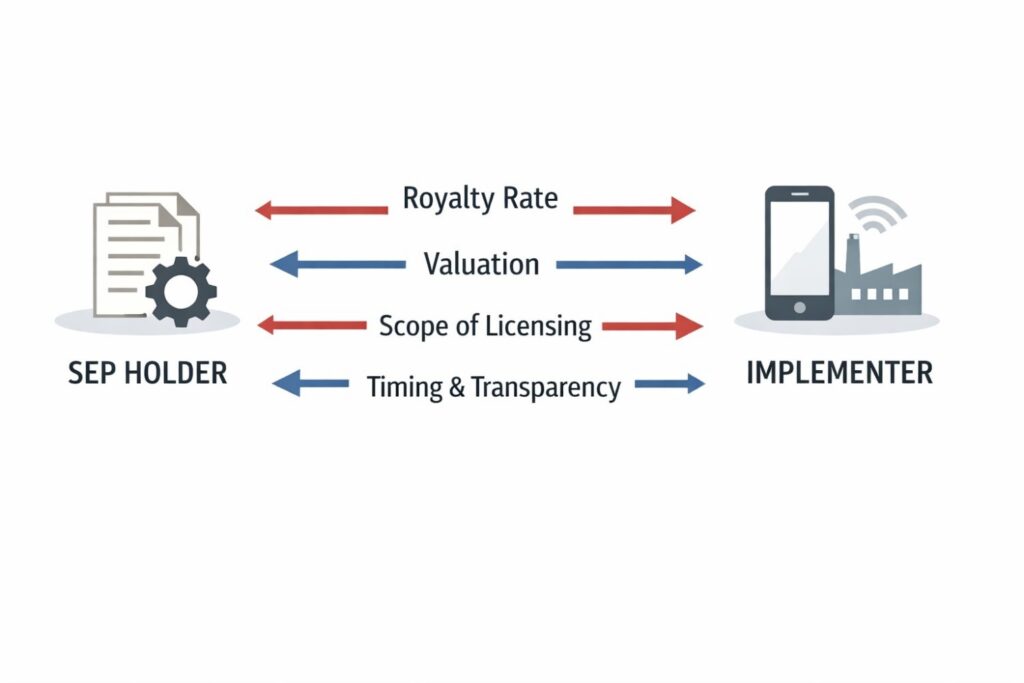
Patent holders often look at the value their invention brings to the standard as a whole. They focus on performance gains, reliability, or cost savings that would not exist without their work.
Implementers often look at the product level instead. They see hundreds or thousands of patents and worry about stacking fees until margins disappear.
FRAND disputes grow when these two views never meet. Each side talks past the other, using different anchors for value. Without a shared frame, negotiations slow down, then stop.
A practical move for businesses is to prepare a clear value story long before talks begin. Not a legal brief, but a simple explanation of why the invention matters in real use.
If your internal teams cannot explain that story in plain words, it will be even harder to convince a counterparty later. Building that story early also makes it easier to decide whether arbitration or court makes sense if talks fail.
Timing Pressure and Market Deadlines
Time pressure is a quiet driver of FRAND disputes. Product launches, regulatory deadlines, and competitive moves all push companies to make fast decisions.
When licensing talks lag behind development schedules, frustration rises.
Implementers may move forward without a license, believing they will sort it out later. Patent owners may feel ignored or rushed. Once timelines slip, trust erodes, and positions harden.
Companies can reduce this risk by syncing licensing discussions with product planning instead of treating them as an afterthought.
That means identifying standard-essential patents early and starting conversations before products hit the market. It also means having internal alignment so business teams and legal teams move at the same pace.
This is another place where preparation pays off. When your patents are clear, well-scoped, and tied to actual features, discussions move faster. That clarity often determines whether a dispute ever reaches arbitration or court.
Power Imbalance Between Parties
FRAND disputes often involve companies of very different sizes. A global corporation negotiating with a smaller innovator brings uneven resources to the table. That imbalance shapes behavior on both sides.
Large companies may delay, knowing smaller firms feel pressure to settle. Smaller companies may overreach, hoping strong patents will force quick results.
Both strategies can backfire and push the dispute into formal resolution.
Businesses should be honest about their leverage and limits. If you are smaller, speed and precision matter more than aggression. If you are larger, consistency and transparency reduce long-term risk.
In both cases, the quality of the patent portfolio matters more than the volume.
Strong patents narrow the gap between unequal parties. They make arguments simpler and outcomes more predictable.
That is why many founders regret cutting corners on patent work early. Fixing weak patents during a dispute is far harder than building them right at the start.
Lack of Clear Licensing Benchmarks
Many FRAND fights happen because there is no clear reference point for pricing. Past licenses may be confidential, outdated, or based on very different products. Without benchmarks, each side fills the gap with assumptions.
Patent holders may anchor to high-value deals from peak markets. Implementers may point to low-cost licenses from unrelated contexts. The result is a wide spread that feels impossible to bridge.
Companies can protect themselves by documenting licensing logic early. Even if terms change over time, having a reasoned starting point helps guide discussions.
This also makes it easier for arbitrators or judges to follow your position if talks collapse.
The more structured your internal thinking is, the less emotional negotiations become. That alone can prevent many disputes from escalating.
Global Markets and Local Laws
Standards are global, but enforcement is local. A single FRAND dispute can touch multiple countries, each with its own rules and courts. That complexity creates friction and confusion.
One side may prefer a country known for fast decisions. The other may push for a jurisdiction with slower processes. These tactical moves often overshadow the original licensing issue.
Businesses should map this risk early. Knowing where your patents are filed and where products are sold shapes your options later. Arbitration can sometimes simplify this mess, but only if both sides agree.
The smarter move is to align patent filing strategy with expected markets from the beginning. That foresight keeps more doors open when disputes arise and gives you more control over where and how conflicts are resolved.
Internal Misalignment Inside Companies
Not all FRAND disputes are driven by the other side. Many are fueled by confusion inside a company itself. Engineering teams, business leaders, and legal teams may all see the same patent differently.
When internal goals clash, external talks suffer. Mixed signals weaken credibility and slow progress. Counterparties sense uncertainty and push harder.
Businesses can avoid this by treating FRAND planning as a cross-team effort. Everyone should understand the role of the patent, the value it brings, and the limits of acceptable terms.
That shared view speeds up decisions and reduces reactive moves.
Tools that connect technical work directly to patent strategy make this easier. PowerPatent was designed to create that bridge, helping teams stay aligned from invention through enforcement.
You can explore that approach here: https://powerpatent.com/how-it-works
When Communication Breaks Down
At their core, FRAND disputes are communication failures. Assumptions replace dialogue. Silence replaces progress. Once trust drops, every move feels hostile, even when it is not.
The most effective companies invest in communication before conflict. They keep records clear, responses timely, and positions consistent. That discipline does not guarantee agreement, but it keeps options open.
If a dispute does arise, those habits shape whether arbitration feels like a calm resolution or court feels like the only path left.
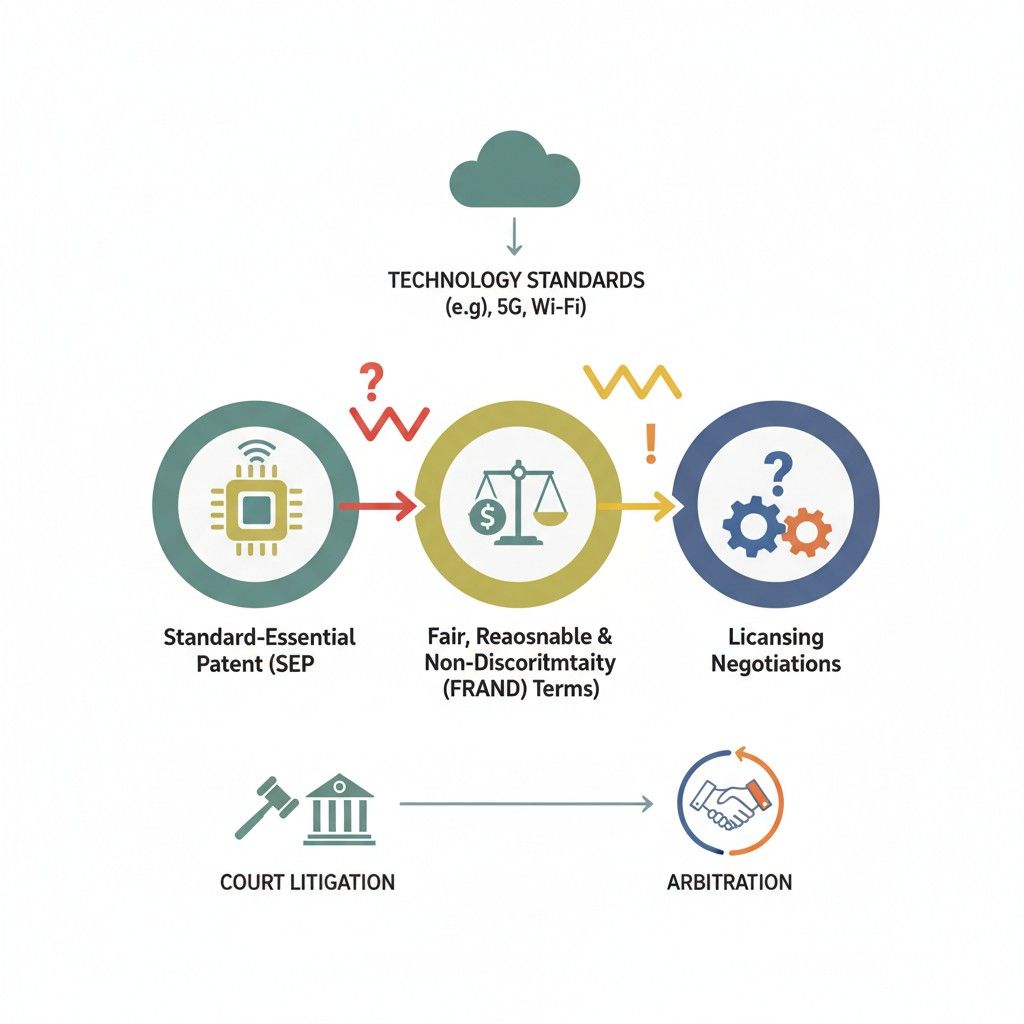
Understanding why FRAND disputes happen gives businesses a real advantage.
It turns surprise into preparation and fear into strategy. The rest of the article builds on this foundation, showing how arbitration and court play out once these pressures collide.
How Arbitration Really Works in FRAND Fights
Arbitration often sounds softer than court. Faster. Cleaner. Less hostile. For many businesses, that impression is partly true. But arbitration is not a shortcut or a safe harbor by default.
It is a different arena with its own rules, pressures, and tradeoffs. Understanding how it actually works in FRAND disputes helps companies use it as a tool instead of stumbling into it.
This section explains what arbitration really looks like once a FRAND fight begins, and how businesses can prepare to use it to their advantage instead of being surprised by it.
What Arbitration Is Designed to Do
At its core, arbitration exists to resolve disputes without the full weight of public courts. It is private. The process is shaped by agreement, not rigid procedure. In FRAND cases, this flexibility is often the main attraction.
Instead of a judge who handles many types of cases, arbitration usually involves decision-makers with deep experience in patents, licensing, or standards. That focus can reduce misunderstanding and speed up outcomes.
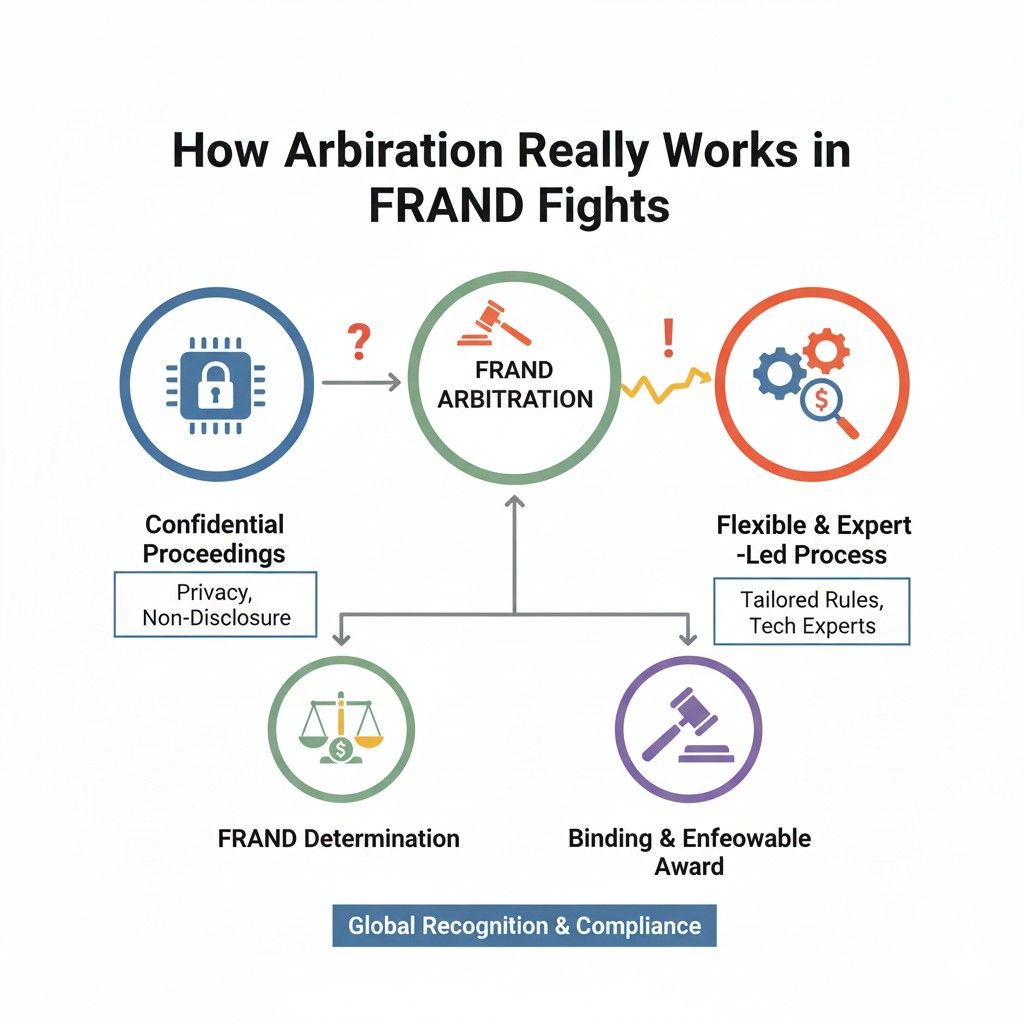
For businesses, this means arbitration works best when the real disagreement is about value, scope, or terms, not about basic facts.
If both sides agree a license should exist but cannot agree on price or structure, arbitration can be an efficient way to bridge the gap.
How Arbitration Gets Triggered
Arbitration does not happen by accident. It usually starts because both parties agreed to it earlier or choose it later when talks stall. That agreement may be buried in contracts, standard-setting rules, or licensing frameworks.
Many companies do not realize they have already agreed to arbitrate certain disputes until conflict appears. Others resist arbitration until court feels too risky or too slow.
The strategic move is to know your arbitration exposure before negotiations begin. That means reviewing contracts and standard obligations early, not during a crisis.
Businesses that understand their options ahead of time are better positioned to steer the process instead of reacting to it.
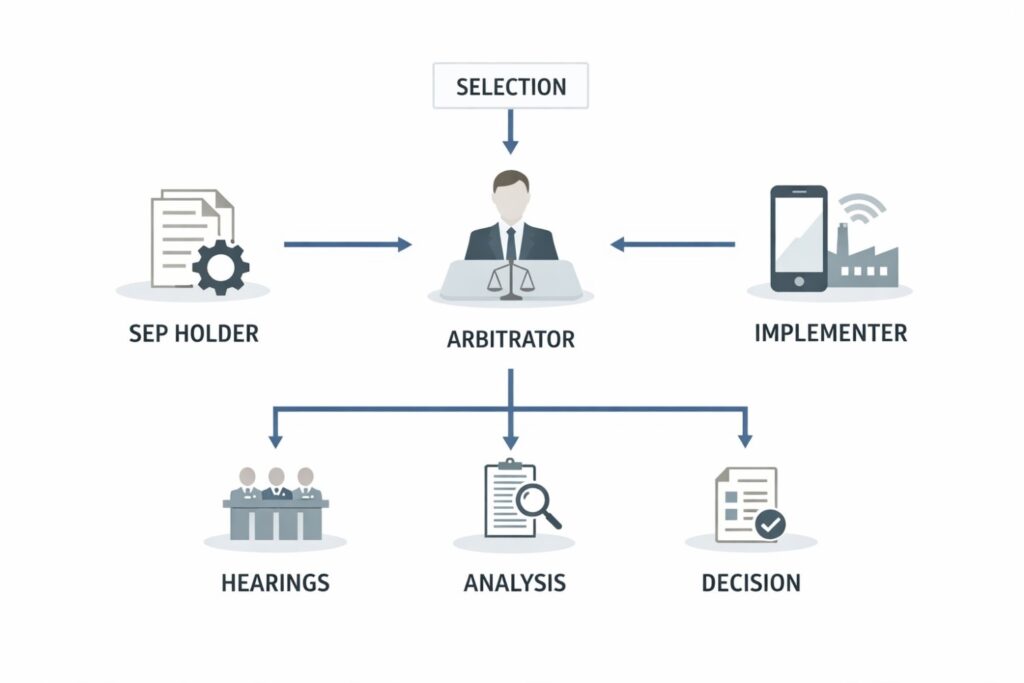
The Role of the Arbitrator
In FRAND arbitration, the arbitrator often becomes the single most important figure in the dispute. This person does not just apply rules. They interpret fairness, reasonableness, and industry norms.
Unlike judges, arbitrators are often chosen by the parties. That choice matters. Background, experience, and even worldview can shape outcomes.
Businesses should treat arbitrator selection as a strategic decision, not an administrative step.
The best outcomes often come when both sides respect the arbitrator’s expertise and trust the process. That trust is easier to build when your case is clear, focused, and grounded in real-world use of the technology.
This is where patent quality shows up again. Arbitrators respond better to patents that clearly map to products and standards. Vague claims and overreach weaken credibility fast.
Speed and Its Hidden Costs
One of arbitration’s biggest selling points is speed. FRAND disputes in arbitration often move faster than court cases, sometimes much faster. That can be a real advantage when markets move quickly.
But speed cuts both ways. Shorter timelines mean less room to adjust strategy midstream. Weak preparation becomes visible faster. Mistakes are harder to correct.
Businesses that benefit most from arbitration invest heavily upfront. They gather technical explanations, licensing logic, and market context early. They enter arbitration ready, not hopeful.
If your patents are scattered, unclear, or poorly documented, arbitration can expose those gaps faster than court would. This is why building strong, well-structured patents from the beginning is not optional.
PowerPatent focuses on this exact need, helping teams avoid painful surprises later. You can see the approach here: https://powerpatent.com/how-it-works
Privacy and Its Strategic Impact
Arbitration is private. Filings are not public. Decisions are often confidential. For many companies, this is a major benefit.
Privacy reduces reputational risk and keeps licensing strategies out of competitors’ hands. It also allows more open discussion of numbers without setting public benchmarks.
However, privacy also limits precedent. Arbitration decisions usually do not shape industry-wide rules. They solve one problem at a time.
Businesses should ask what they want from the dispute. If the goal is a quiet resolution and continued business relationships, arbitration fits well.
If the goal is to set a public standard or send a signal to the market, court may be more effective.
Finality and Limited Appeals
Arbitration decisions are hard to appeal. This finality is often praised, but it carries real risk. A bad outcome is difficult to undo.
That makes preparation even more important. There is less room for second chances. Businesses must be comfortable living with the result before they choose arbitration.
This also changes negotiation dynamics. Knowing the decision will likely stand pushes parties to be more realistic. That pressure can drive settlements earlier, which is often a positive outcome.
The smartest companies use arbitration not as a threat, but as a credible backstop. They prepare for it fully, which often makes reaching agreement easier before a final decision is needed.
Cost Control Versus Cost Surprise
Arbitration is often described as cheaper than court. In many cases, it is. Shorter timelines and fewer procedural steps can reduce overall spend.
But arbitration is not automatically inexpensive. Arbitrator fees, expert costs, and concentrated work periods can add up quickly.
Businesses should budget realistically and plan resource use carefully. Knowing where costs are likely to concentrate helps avoid surprises and rushed decisions.
Clear patents reduce cost here too. When the scope and value of the invention are easy to explain, fewer experts and fewer rounds of argument are needed.
How Arbitration Shapes Long-Term Relationships
Many FRAND disputes happen between companies that will continue to interact for years. Arbitration’s quieter tone can help preserve working relationships.
Because the process feels less adversarial than court, it can leave room for future collaboration. That matters in standards-driven industries where today’s opponent may be tomorrow’s partner.
Businesses that care about long-term positioning often prefer arbitration for this reason. They see it as a way to resolve tension without burning bridges.
This only works when the dispute is handled professionally and strategically. Emotional arguments and aggressive tactics undermine the very benefits arbitration offers.
When Arbitration Becomes the Wrong Tool
Arbitration is not always the right answer. If one side needs injunctions, public clarity, or broad precedent, arbitration may fall short.
It also struggles when facts are deeply contested or when one party refuses to engage in good faith. In those cases, court oversight can provide structure and enforcement power arbitration lacks.
The key is alignment. Arbitration works best when both sides want resolution more than spectacle.
Businesses that understand these limits make better choices and avoid wasted time.
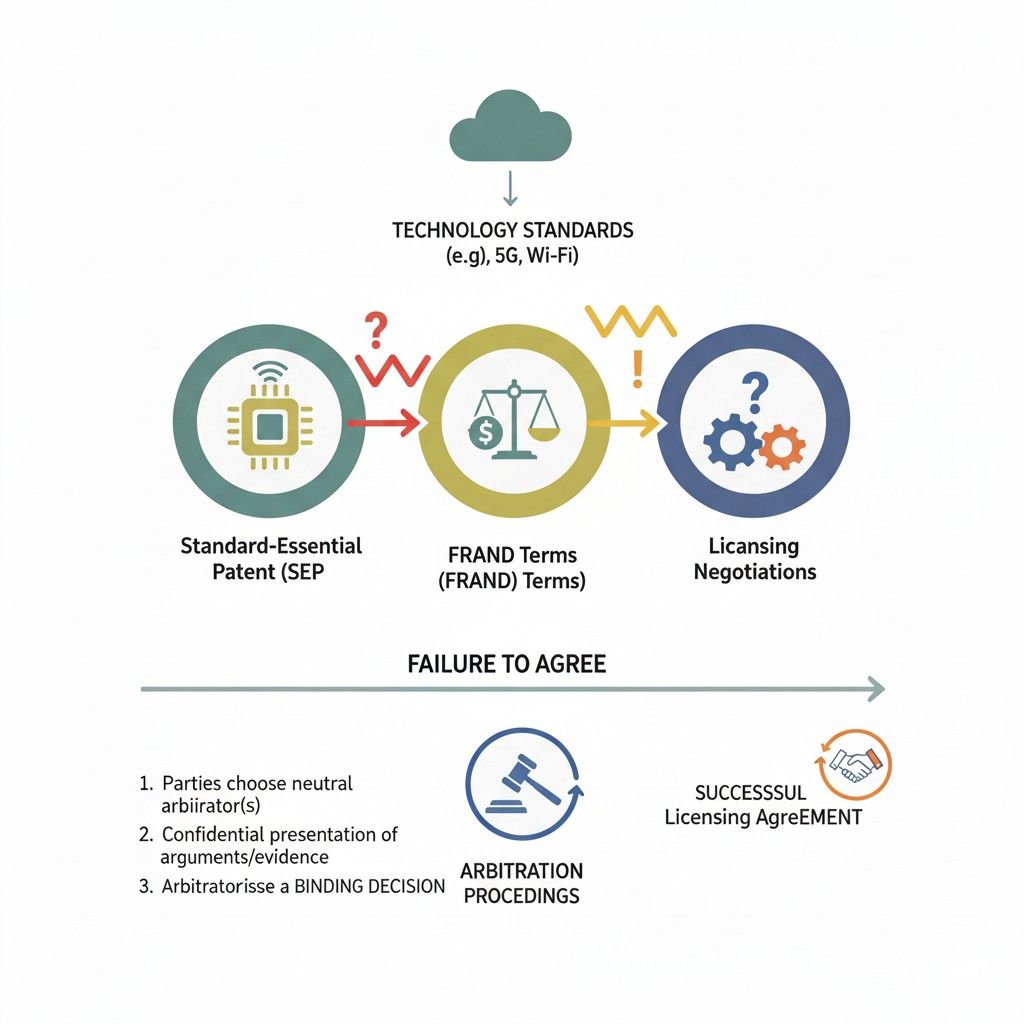
This section shows that arbitration is neither a shortcut nor a compromise by default. It is a strategic choice that rewards preparation, clarity, and strong patents.
What Going to Court Means for Your Patents and Your Business
Court is the most visible and most misunderstood path in FRAND disputes. Many companies assume court is the natural end point when talks fail. Others fear it as slow, hostile, and out of their control.
The truth sits somewhere in between. Court can be powerful, but it demands patience, discipline, and a clear reason for being there.
This section explains what court really means in FRAND disputes, how it shapes outcomes beyond a single case, and what businesses should consider before stepping into a public fight.
Courts Turn Private Disagreements Into Public Records
The moment a FRAND dispute enters court, it becomes public. Filings, arguments, and often licensing positions are exposed to competitors, partners, and the market at large.
For some companies, this transparency is a feature, not a bug. Public decisions can clarify rules and influence future negotiations. For others, it creates risk.
Numbers that were once flexible become anchors. Strategies that were once private become roadmaps for others.
Businesses should think carefully about what they are comfortable revealing. Once information is public, it cannot be pulled back. This makes early planning critical.
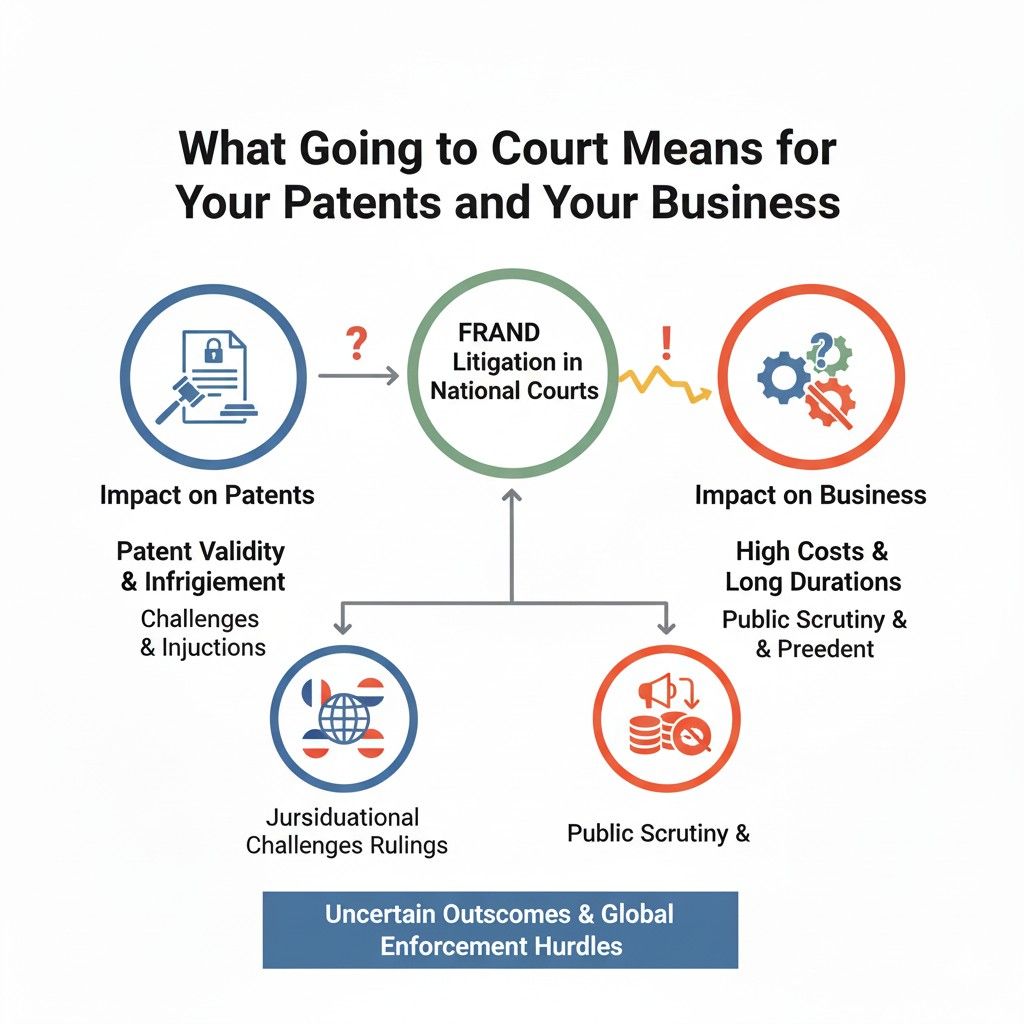
Knowing which patents, terms, and arguments you are willing to defend openly helps avoid regret later.
Judges Are Generalists, Not Industry Insiders
Unlike arbitrators, judges rarely specialize in FRAND or standards. They handle a wide range of cases, from contracts to criminal matters.
That does not mean they cannot decide FRAND disputes, but it changes how arguments land.
Technical nuance must be translated into simple stories. Economic logic must be explained clearly. Assumptions that feel obvious inside an industry may not be obvious in court.
Businesses that succeed in court invest heavily in clarity. They focus on explaining why the invention matters in real use, not just why it is novel. Patents that are tightly written and easy to map to products perform better here.
This is another reason why early patent quality matters. Courts reward precision. Vague claims invite skepticism.
Time Works Differently in Court
Court moves slowly. FRAND cases can take years from filing to final resolution, especially if appeals are involved. This timeline affects business decisions in ways many founders underestimate.
Long cases tie up attention, capital, and leadership focus. They also create uncertainty that can impact partnerships and investor confidence.
At the same time, time can be a tool. In some situations, delay pressures one side more than the other. Larger companies may absorb long timelines better. Smaller companies may need faster answers.
Businesses should assess not just whether they can win, but whether they can wait. Aligning legal strategy with business runway is essential.
Appeals Change the Risk Profile
One of court’s biggest differences from arbitration is the right to appeal. This can be comforting or exhausting, depending on perspective.
Appeals provide a safety net if a decision feels wrong. They also extend uncertainty and cost. In FRAND disputes, appeals can reshape licensing terms years after products have launched.
Businesses should plan for this reality. A court win is rarely final until appeals end. That means cash flow expectations and enforcement plans must be conservative.
This also affects settlement dynamics. The possibility of appeal can push parties to settle earlier to avoid prolonged exposure.
Injunctions and Leverage
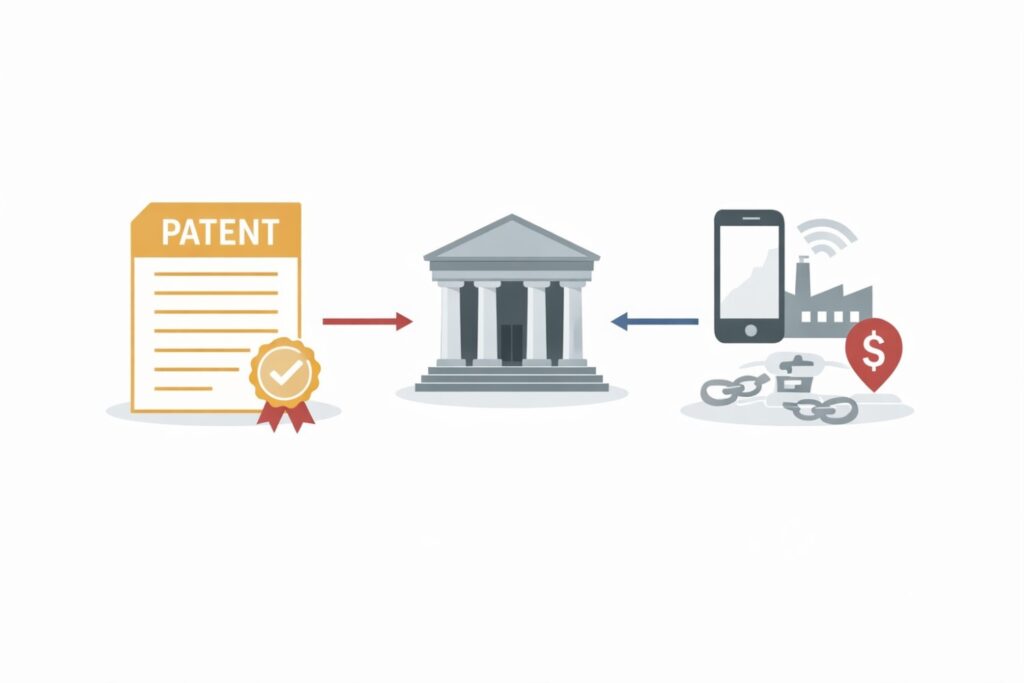
Courts have powers arbitration often lacks. Injunctions are a prime example. The ability to stop product sales can change negotiation dynamics overnight.
In FRAND disputes, injunctions are sensitive and not always granted, but their possibility shapes behavior. The mere risk can bring parties back to the table.
Businesses should be realistic about this leverage. Courts weigh public interest, market impact, and fairness carefully. Strong patents and good-faith behavior increase credibility.
Using court as a threat without substance often backfires. Judges notice patterns, and reputations matter.
Court Decisions Shape the Industry
Unlike arbitration, court rulings can set precedent. A single FRAND decision can influence licensing norms across an entire sector.
For companies seeking to define rules, not just resolve a dispute, this is a powerful reason to choose court. Public clarity can reduce future friction and strengthen long-term positioning.
However, shaping precedent also means accepting uncertainty. Courts may set rules that neither side expected. Once set, those rules apply broadly.
Businesses should ask whether they are ready to live with the outcome beyond their own case.
Cost Is More Than Legal Fees
Court cases are expensive, but the real cost often shows up elsewhere. Management time, internal distraction, and missed opportunities add up quietly.
Long litigation can slow product development and strategic moves. Competitors may exploit that distraction.
Companies that go to court successfully build internal systems to manage this load. Clear roles, disciplined communication, and strong outside support reduce friction.
Once again, strong patents reduce cost. When claims are clear and evidence is solid, cases move more efficiently.
Courts Reward Consistency and Good Faith
Judges pay close attention to behavior. How parties negotiate before litigation, how they respond to requests, and how consistent their positions are all matter.
In FRAND disputes, good faith is not just a concept. It is a practical factor. Courts look for reasonableness, not perfection.
Businesses should document negotiations carefully and maintain a professional tone, even when talks stall. Those records often resurface later.
When Court Is the Right Choice
Court makes sense when public clarity matters, when enforcement power is needed, or when one side refuses to engage fairly. It is also useful when precedent is more valuable than speed.
Court is not a default path. It is a deliberate choice that should align with business goals, not just legal frustration.
Companies that treat court as part of a broader strategy, not an emotional response, fare better.
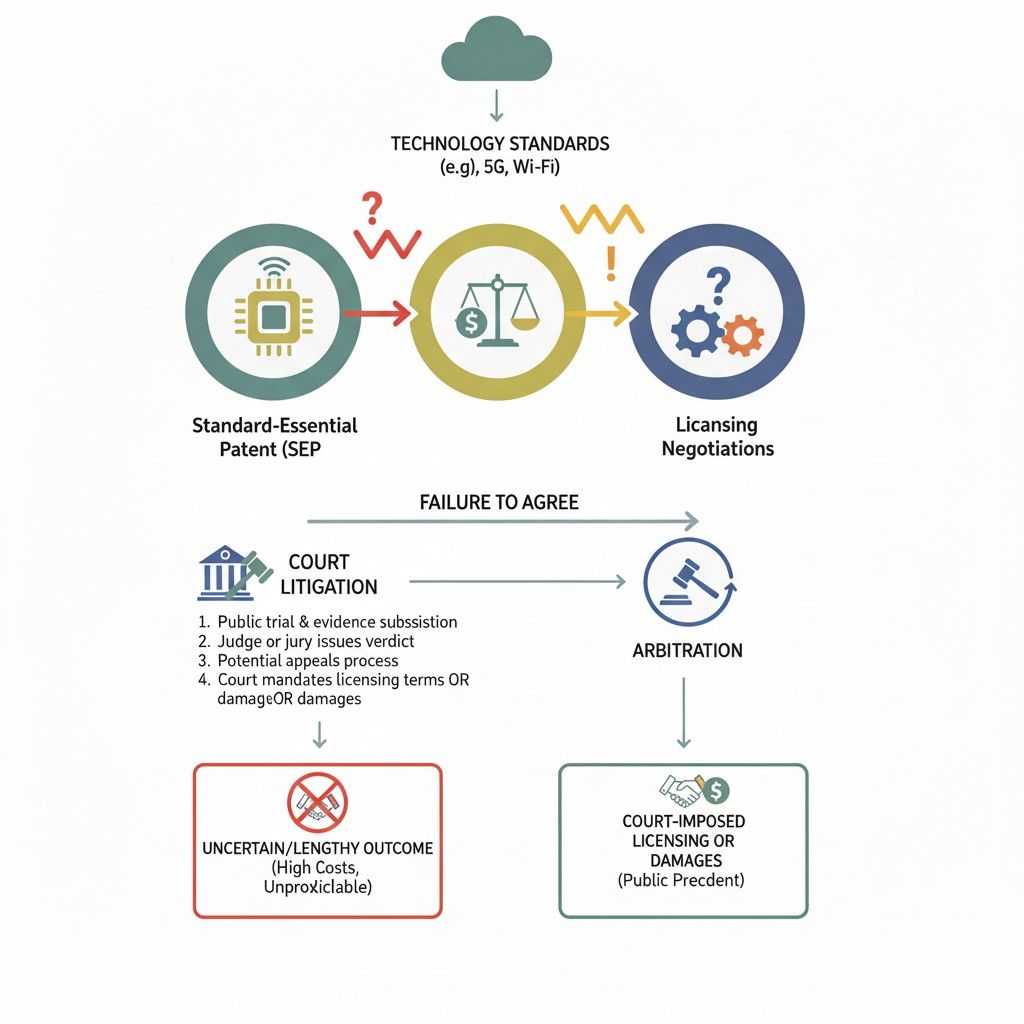
This section shows that court is neither a last resort nor a guaranteed win. It is a tool with weight and consequences.
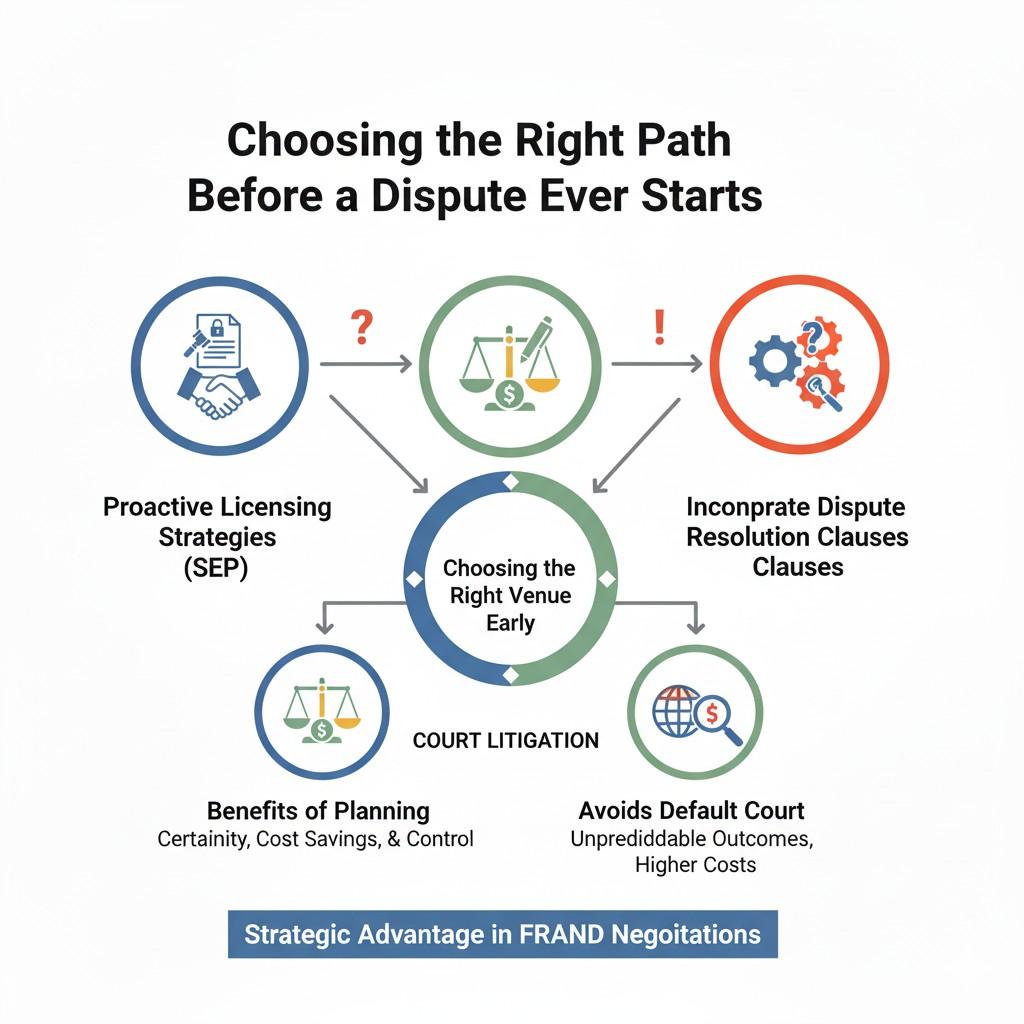
Choosing the Right Path Before a Dispute Ever Starts
Most companies think about arbitration or court only after negotiations fail. By then, options are narrower, emotions are higher, and leverage is already set.
The smartest decisions around FRAND disputes happen much earlier, often years before a disagreement becomes visible.
This section focuses on how businesses can shape outcomes in advance, reduce risk, and keep control long before they ever need to choose a forum.
Strategy Starts Before the Patent Is Filed
The path you end up on in a FRAND dispute is often determined at the patent drafting stage. How claims are written, how clearly they map to standards, and how well the invention’s role is explained all shape future choices.
Patents that clearly align with specific standard features are easier to license, easier to explain, and easier to defend in both arbitration and court. Patents that are broad but vague create friction and invite challenge.
Businesses that treat patents as strategic assets, not paperwork, keep more doors open. This is one of the biggest advantages early-stage teams can give themselves.
PowerPatent was built around this idea, helping founders turn real technical work into patents designed for real-world pressure. You can see how that works here: https://powerpatent.com/how-it-works
Know Your Business Goal Before Picking a Forum
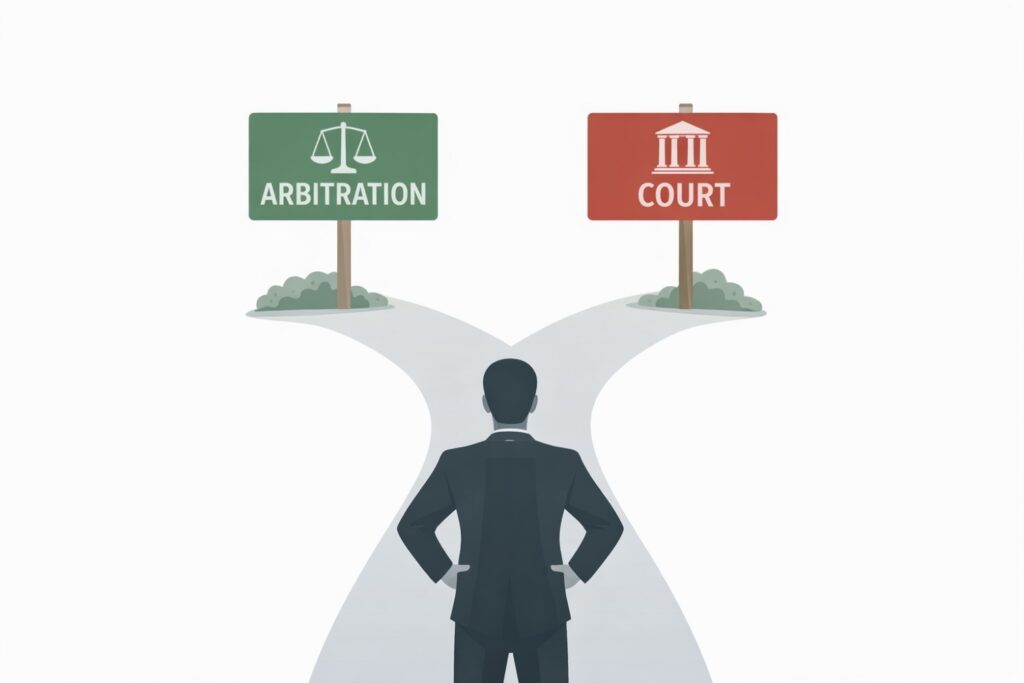
Arbitration and court solve different problems. Choosing between them should start with a business goal, not a legal preference.
If speed and confidentiality matter most, arbitration often fits better. If public clarity, enforcement power, or industry signaling matter more, court may be the better tool.
The mistake many companies make is letting the other side frame the choice. When you know your goal early, you can steer discussions and agreements in that direction.
Build Flexibility Into Agreements
Many FRAND paths are locked in by contracts signed long before disputes arise. Arbitration clauses, jurisdiction choices, and dispute resolution terms quietly shape future outcomes.
Businesses should review these terms with intention, not habit. Flexibility matters. Options matter.
A well-chosen clause can preserve choice instead of removing it. That flexibility becomes invaluable when circumstances change.
Align Internal Teams Early
One of the biggest hidden risks in FRAND disputes is internal misalignment. Engineering, business, and legal teams may all want different outcomes without realizing it.
Choosing the right path early requires shared understanding. Everyone should know what the patents protect, why they matter, and what success looks like.
Companies that align early move faster later. They negotiate with confidence instead of confusion.
Prepare as If You Will Need to Explain Everything
Whether in arbitration or court, explanation wins. Businesses that assume decision-makers already understand the technology often struggle.
Preparing clear explanations early pays off everywhere. It helps licensing talks, reduces disputes, and strengthens your position if resolution is needed.
This preparation should be ongoing, not reactive. It is part of building durable IP.
Use Process as Leverage, Not a Threat
The possibility of arbitration or court can influence negotiations without ever being used. That leverage works only if it is credible.
Credibility comes from preparation, strong patents, and consistent behavior. Empty threats weaken trust and position.
Businesses that quietly prepare tend to settle on better terms.
Revisit Strategy as the Market Changes
Standards evolve. Markets grow. What felt fair early may feel outdated later.
Choosing the right path is not a one-time decision. Businesses should revisit strategy as products, competitors, and scale change.
Regular review keeps surprises small and options open.
Control Comes From Early Decisions
FRAND disputes feel chaotic only when companies meet them unprepared. With early strategy, clear patents, and aligned teams, even serious disputes become manageable.
The choice between arbitration and court is not about right or wrong. It is about fit. Fit with your patents. Fit with your business. Fit with where you are going.
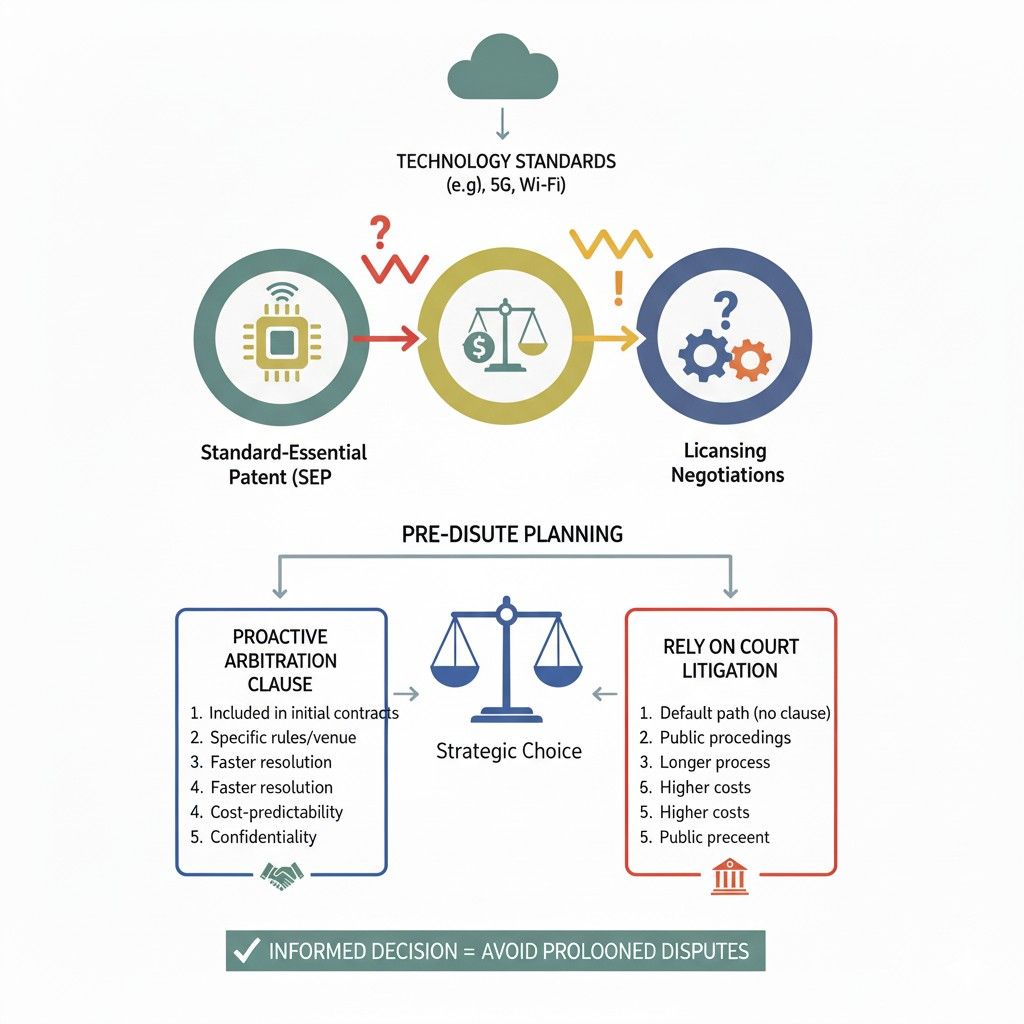
Companies that plan early choose calmly later.
Wrapping It Up
FRAND disputes are not sudden events. They are the result of years of decisions layered on top of each other. How a company files its patents, how it joins standards, how it negotiates early licenses, and how it communicates under pressure all shape where it ends up. Arbitration and court are not enemies. They are tools. Each one rewards a different kind of preparation. Arbitration favors clarity, speed, and focus. Court favors structure, consistency, and the ability to explain value in simple, public terms. Neither can fix weak foundations. Both can amplify strong ones.
Leave a Reply