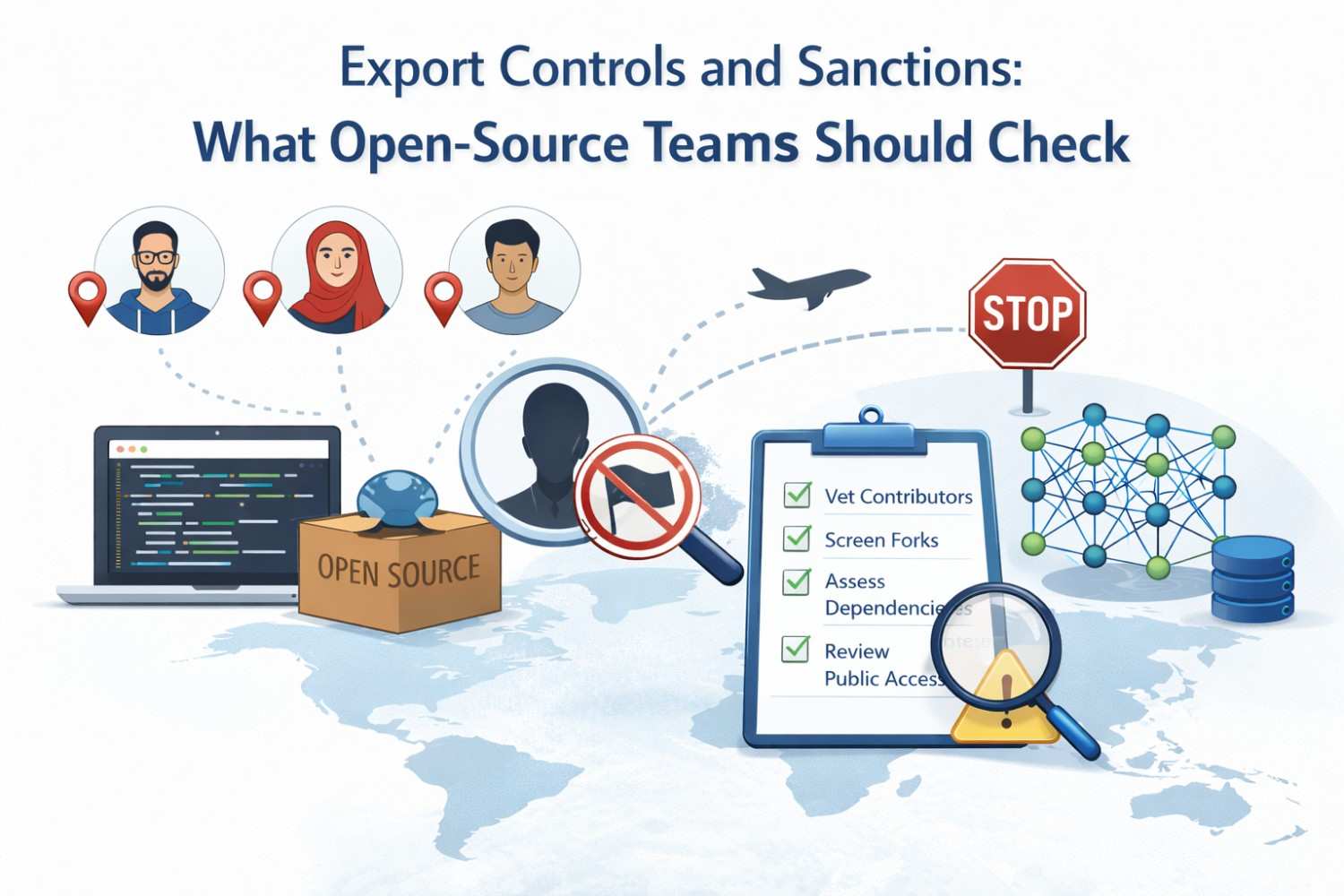
Open source feels free. Code moves fast. Teams ship from everywhere. That freedom is why open source wins. But there is a quiet risk many teams miss until it hurts. Governments care deeply about who gets certain tech, who can use it, and where it flows. Even if your code is public. Even if you never charge a dollar. Even if you are just “sharing.”
Why Open Source Is Not Exempt From Export Rules
Open-source teams often believe that public code lives outside government rules. The logic feels natural. If anyone can see it, copy it, or improve it, how could it be controlled?
This belief is common, understandable, and wrong. Export rules care less about how code is shared and more about what the code can do and who might use it.
This section explains why open source is still covered, where teams get confused, and how to stay safe without slowing down.
The Law Cares About Capability, Not Intent
Many teams assume intent matters. They believe that if their goal is learning, research, or community building, the law will look the other way. Export rules do not work like that.
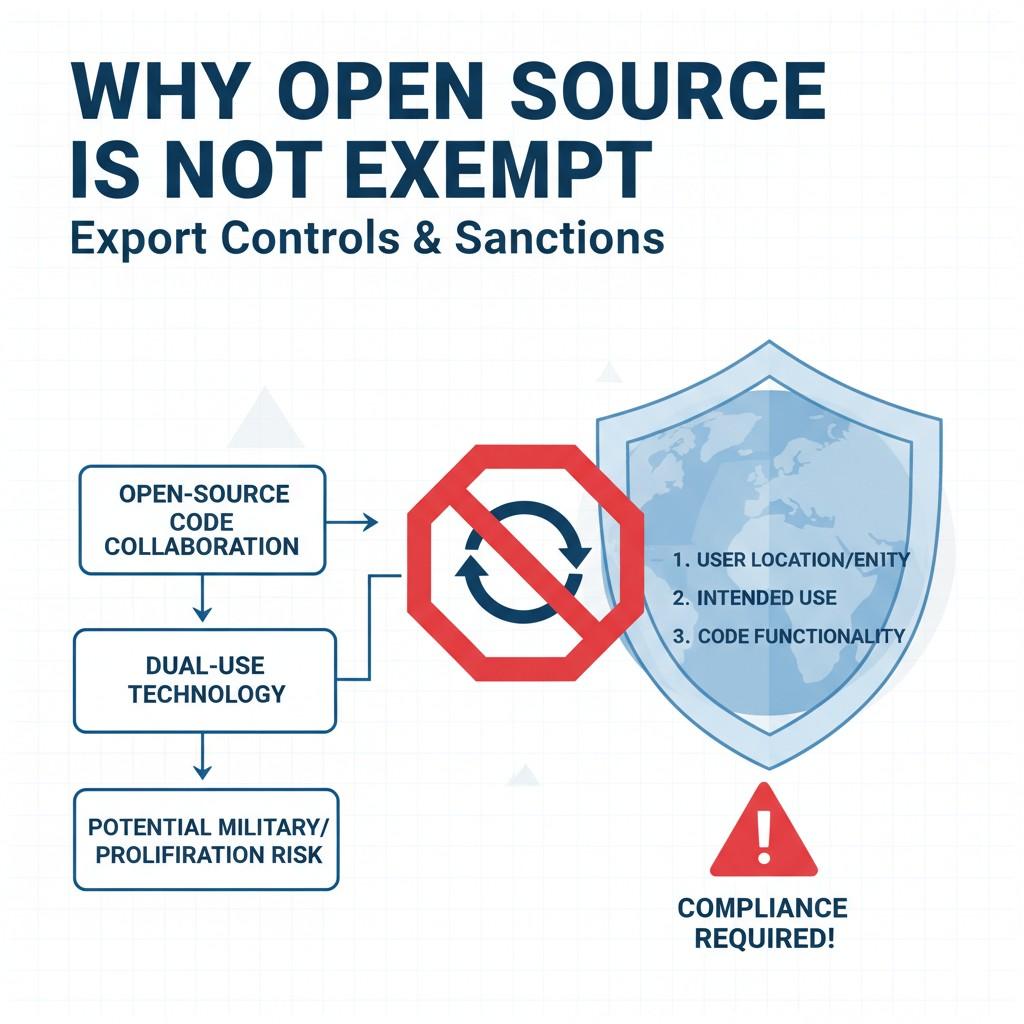
They focus on capability. If your code can be used to train advanced AI systems, secure communications, break encryption, control hardware, or move money in restricted ways, it may fall under export rules even if you never planned that use.
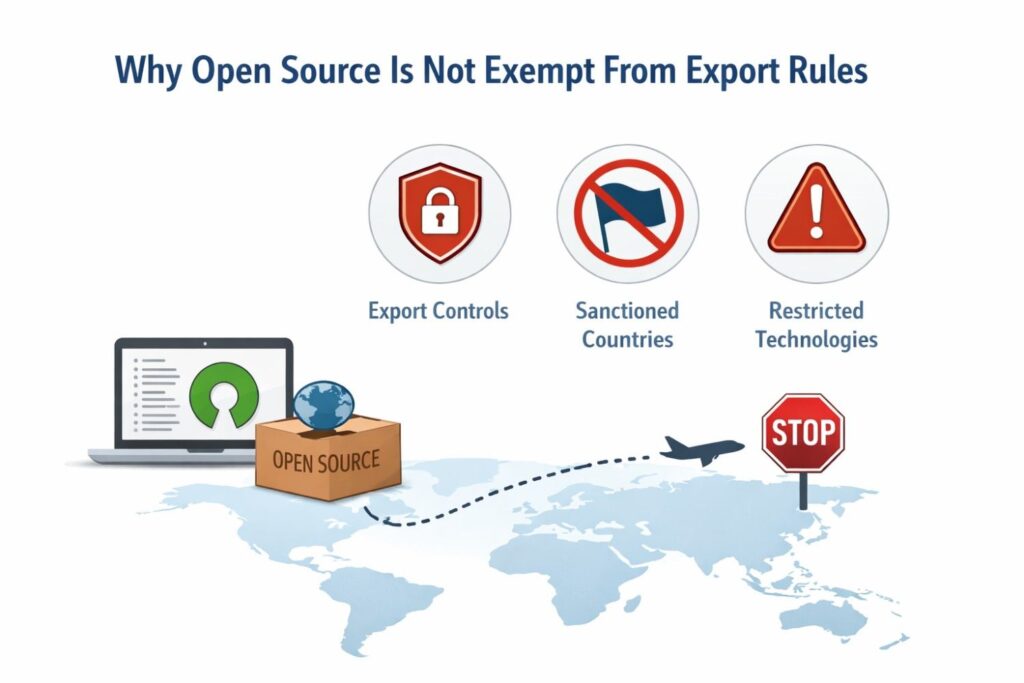
This means a harmless-looking library can still raise issues if it enables serious technical power. The safest move is to look at what your software makes possible, not why you built it.
Teams that do this early avoid painful surprises later when users take the software in directions they never expected.
Public Does Not Mean Uncontrolled
A big myth in open source is that once code is public, it is outside regulation. In reality, public release is often the moment when export rules start to matter.
When code is shared online, it becomes available across borders instantly. That is exactly what export rules are designed to manage.
Governments treat publishing advanced code online as a form of export. Even if no money changes hands, even if no download is tracked, the act of making it available can count.
This is especially true when code is hosted in the United States or built by U.S.-based contributors. Teams should assume that public release is not neutral. It is an action with legal meaning.
Open Source Licenses Do Not Override Export Law
Licenses like MIT, Apache, or GPL are powerful tools for sharing. But they do not replace export rules. A license gives permission under copyright law. Export rules sit above that and can limit who is allowed to receive or use the software.
This creates a tricky gap. A license may say anyone can use the code, but the law may say certain people or countries cannot. Teams that ignore this gap risk violating rules without realizing it.
The smart move is to align your licensing approach with basic export awareness so your permissions and your obligations do not conflict.
The Role of Where Your Team Is Based
Export rules are heavily tied to geography. If your core team, company, or servers are based in certain countries, especially the United States, those rules likely apply to your project.
Even global teams are often pulled into these systems if key maintainers or decision-makers sit in regulated regions.
This means that a small open-source project run by a few engineers can still be covered if one founder lives in the wrong place.
Teams should map where key contributors are located and understand which laws follow them. This is not about exclusion. It is about clarity and risk control.
How Advanced Tech Triggers Extra Scrutiny
Not all open-source projects face the same risk. Simple tools and basic utilities usually pass without concern. Problems arise when projects touch advanced or sensitive areas.
AI models that improve decision-making, tools that manage secure networks, cryptography libraries, and software tied to physical systems often attract attention.
If your project makes advanced systems easier to build or scale, assume higher scrutiny.
This does not mean you should stop. It means you should slow down for one moment, understand the rules, and then move forward with confidence instead of guessing.
Why Community Contributions Can Create Exposure
Open source thrives on global contribution. But contributions from everywhere can also introduce export risk.
If contributors are based in sanctioned regions or restricted countries, even reviewing or merging their code can raise questions.
Teams should think carefully about how they accept contributions. Clear contribution rules, contributor location awareness, and basic screening processes can protect the project without closing the door to the community.
The goal is not to police contributors but to avoid accidental violations that can hurt everyone involved.
The Difference Between Source Code and Trained Models
Many teams assume that sharing source code is safer than sharing trained models or compiled tools. Often, this is true.
But not always. Some rules apply specifically to trained systems, especially in AI. A trained model can be seen as more powerful than the code that created it.
If your project distributes trained models, weights, or pre-built binaries, the risk profile changes. Teams should treat these outputs as separate assets with their own rules.
Understanding this difference early helps teams design their release strategy in a way that avoids later shutdowns or forced takedowns.
Why Investors and Partners Care More Than You Think
Even if regulators never knock on your door, investors and partners will ask these questions. Due diligence now includes export risk checks, especially for deep tech and AI startups that began as open-source projects.
Teams that can explain their approach clearly gain trust faster. Teams that cannot often face delays, renegotiations, or lost deals. Thinking about export rules early is not just legal hygiene. It is business leverage.
Simple Actions That Reduce Risk Immediately
Open-source teams do not need full legal teams to act wisely. Small steps go a long way.
Document what your software does in plain terms. Be clear about where your core team is based. Think through who your main users are likely to be. Pay attention to whether your project enables sensitive systems.
These steps create a paper trail of good faith and thoughtful design. If questions arise later, you are not starting from zero. You are showing that you acted responsibly from the start.
How Early IP Strategy Supports Compliance
When teams think about export rules early, they often also see the value of protecting their core ideas. Patents help define what your invention is and what it is not.
That clarity makes compliance easier and gives you control over how your work spreads.
Modern tools like PowerPatent make this process fast and founder-friendly, without pulling you away from building.
When IP and compliance grow together, open-source teams stay fast while avoiding traps that slow others down later. You can see how that works at https://powerpatent.com/how-it-works.
How Export Controls Quietly Apply to Code and Models
Export rules rarely announce themselves. There is no warning pop-up when you push code. No alert when someone forks your repo. For most open-source teams, the risk shows up quietly, buried inside normal workflows.
This section explains how export controls actually attach to code and models, why teams miss the signals, and how to spot issues early without slowing development.
Code Is Treated Like a Technical Asset
Export law treats certain code the same way it treats physical tools. The idea is simple. If software gives someone the power to do something sensitive, then sharing that software is similar to shipping equipment across borders.
This catches teams off guard because code feels abstract. But from a regulator’s point of view, it is a delivery system for capability.
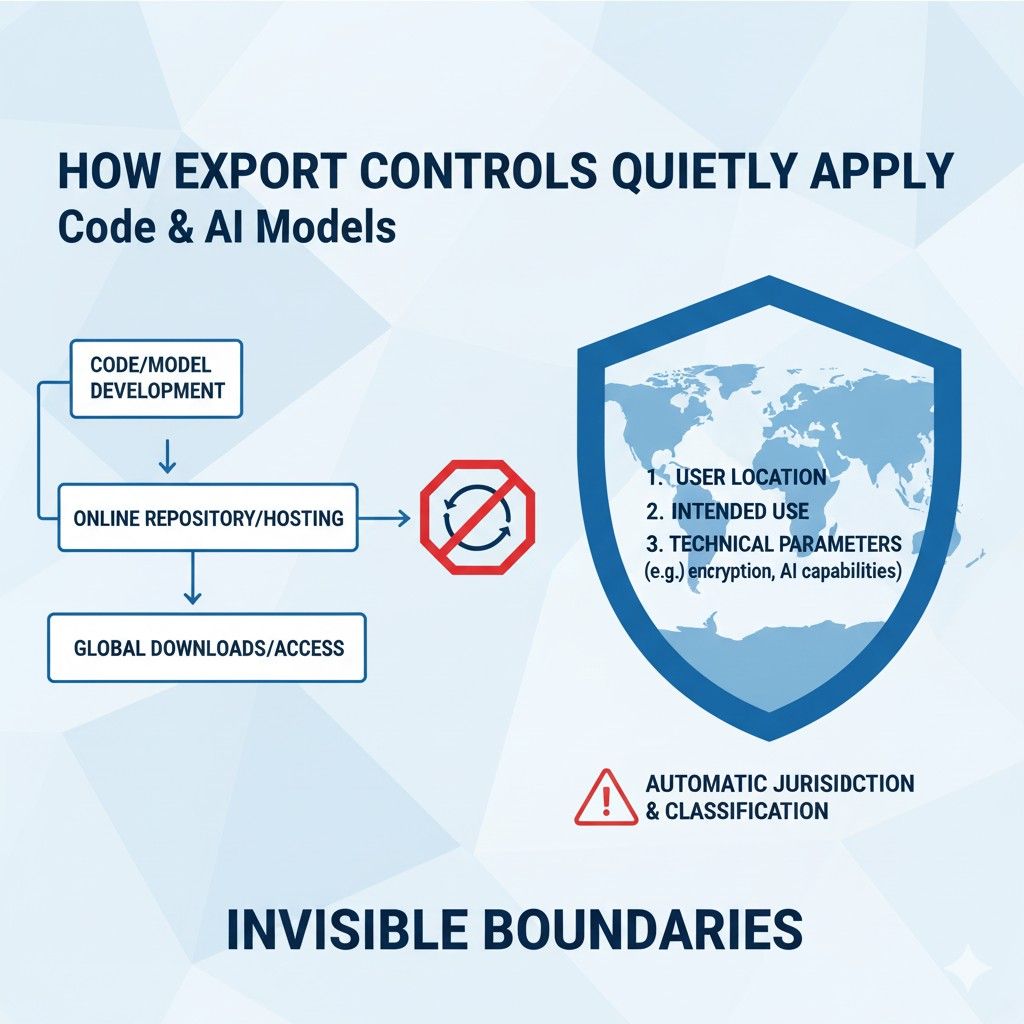
If your software helps build secure networks, train powerful models, analyze sensitive data, or control machines, it may be seen as a regulated asset even if it lives on GitHub.
Teams should shift their mindset here. Code is not just expression. In some cases, it is infrastructure.
The Trigger Is Often Technical Depth
Most export controls are not about simple apps or basic tools. They focus on depth. How advanced is the system. How precise is the output. How hard would it be to recreate without this code.
If your project handles optimization at scale, advanced prediction, real-time control, or complex data processing, it may cross invisible thresholds.
These thresholds are not always clear in advance, which is why teams get surprised later.
A good habit is to periodically ask a simple question. If this tool landed in the hands of a well-funded actor, what could they build faster because of it? That answer often points directly to export relevance.
Models Change the Risk Profile Overnight
Many teams start with open-source code and later add trained models. This is where things often shift from low risk to real exposure. A trained model is not just instructions. It is knowledge baked into a form that can be reused instantly.
Export rules often care more about what is already trained than how it was trained. A model that performs advanced tasks can be seen as a finished capability, not a research artifact.
Once released, it can travel far faster than hardware ever could.
Teams should treat model releases as a major decision point. Even if the code was fine to share, the model may need extra thought before public release.
Hosting Location Can Create Jurisdiction
Where your code is hosted matters more than most teams think. Servers located in certain countries can pull a project into that country’s export rules. The same applies to cloud providers and distribution platforms.
This means that a global open-source project can suddenly fall under strict rules because of a hosting choice made early on.
Teams should understand where their infrastructure lives and what laws come with it. This is not about moving servers constantly. It is about making conscious choices instead of accidental ones.
Access Control Is Still Control
Some teams believe export rules only apply when access is restricted. The truth is more subtle. Even open access can count as export if it allows unrestricted global use.
That said, how access is structured can still matter. Gated releases, delayed access, or clear usage terms can sometimes reduce risk or show intent to comply.
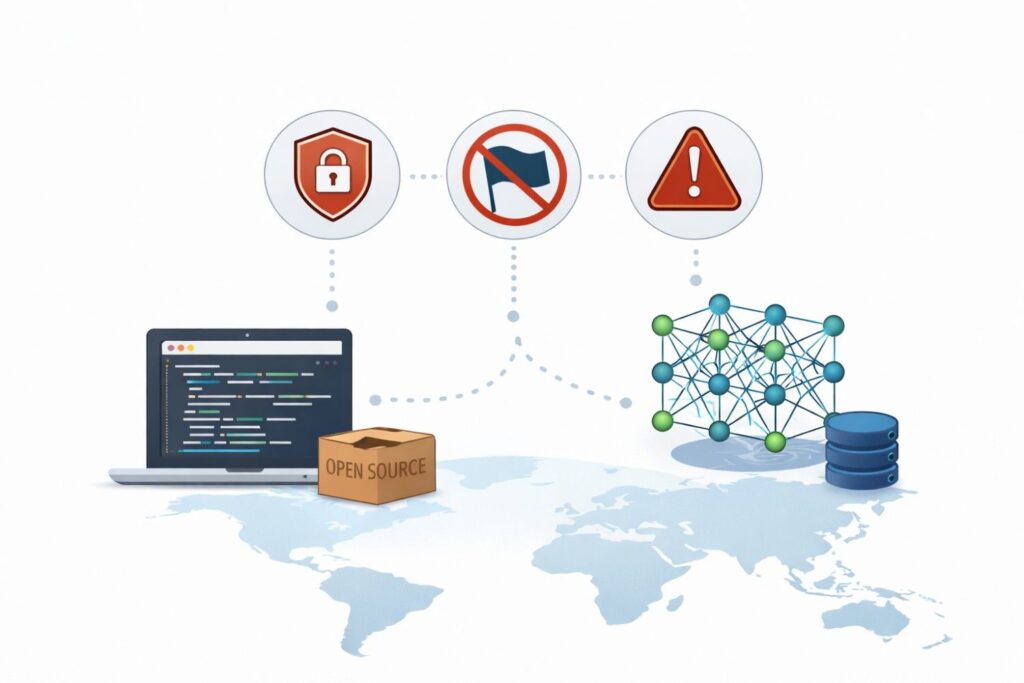
The key is not to hide the project but to show that access decisions are thoughtful and documented.
Teams that design access intentionally tend to fare much better if questions arise later.
Collaboration Tools Can Be Export Channels
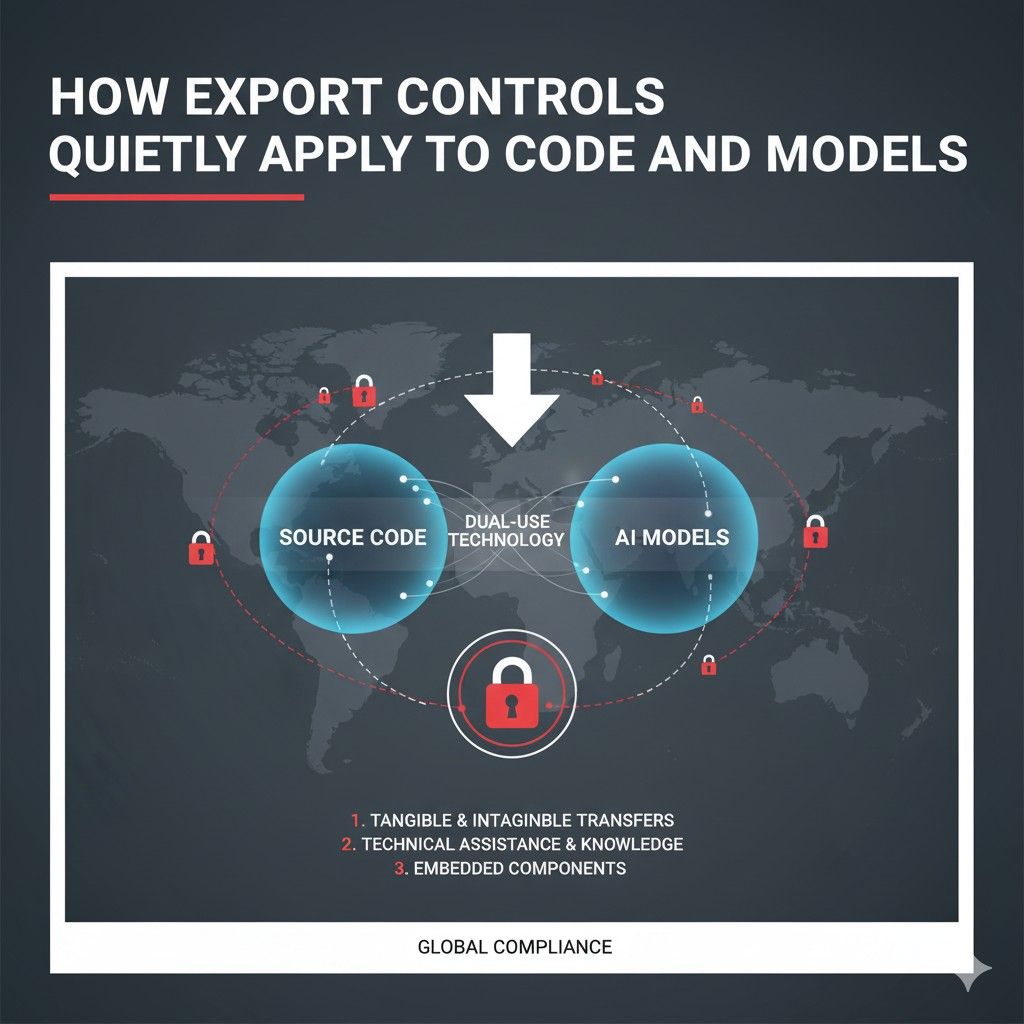
Export does not only happen when users download code. It also happens during collaboration. Code reviews, shared docs, model weights sent for testing, and even private discussions can count as transfers.
This surprises many open-source teams because collaboration feels internal. But when collaborators are spread across borders, these exchanges can matter.
Teams should be aware that private sharing is not automatically safer than public sharing.
Clear collaboration rules and awareness of who has access to what can dramatically reduce risk without changing how teams work day to day.
Updates Can Be New Exports
Many teams assume that once code is released, the export event is over. In reality, every meaningful update can be a new export.
New features, performance improvements, or added capabilities can change the legal picture.
This is especially true for models. A retrained model with better performance may cross thresholds that the earlier version did not.
Teams should avoid thinking of export as a one-time check. It is an ongoing process tied to technical growth.
Building this awareness into release cycles keeps teams from being caught off guard as their project succeeds.
Why Research Labels Do Not Always Help
Labeling a project as research or academic does not guarantee safety. Export rules look at practical use, not labels. If the output can be applied in real systems, the research tag may not matter.
This is hard for teams rooted in open science culture. But it is better to be realistic than surprised. Teams should describe their work honestly and understand how others could use it, even if that use was not the goal.
Honesty here is a strength. It leads to better decisions and stronger positioning later.
Turning Awareness Into a Competitive Advantage
Teams that understand how export rules apply can move faster in the long run. They make cleaner releases. They answer investor questions with confidence. They avoid sudden takedowns or forced changes.
This clarity also supports stronger IP strategy. When you know what parts of your system matter most, protecting them becomes simpler.
Tools like PowerPatent help founders lock in those core ideas early, while still supporting open-source growth. You can explore how that works at https://powerpatent.com/how-it-works.
Understanding how export controls apply is not about fear. It is about building with your eyes open and staying in control as your project grows.
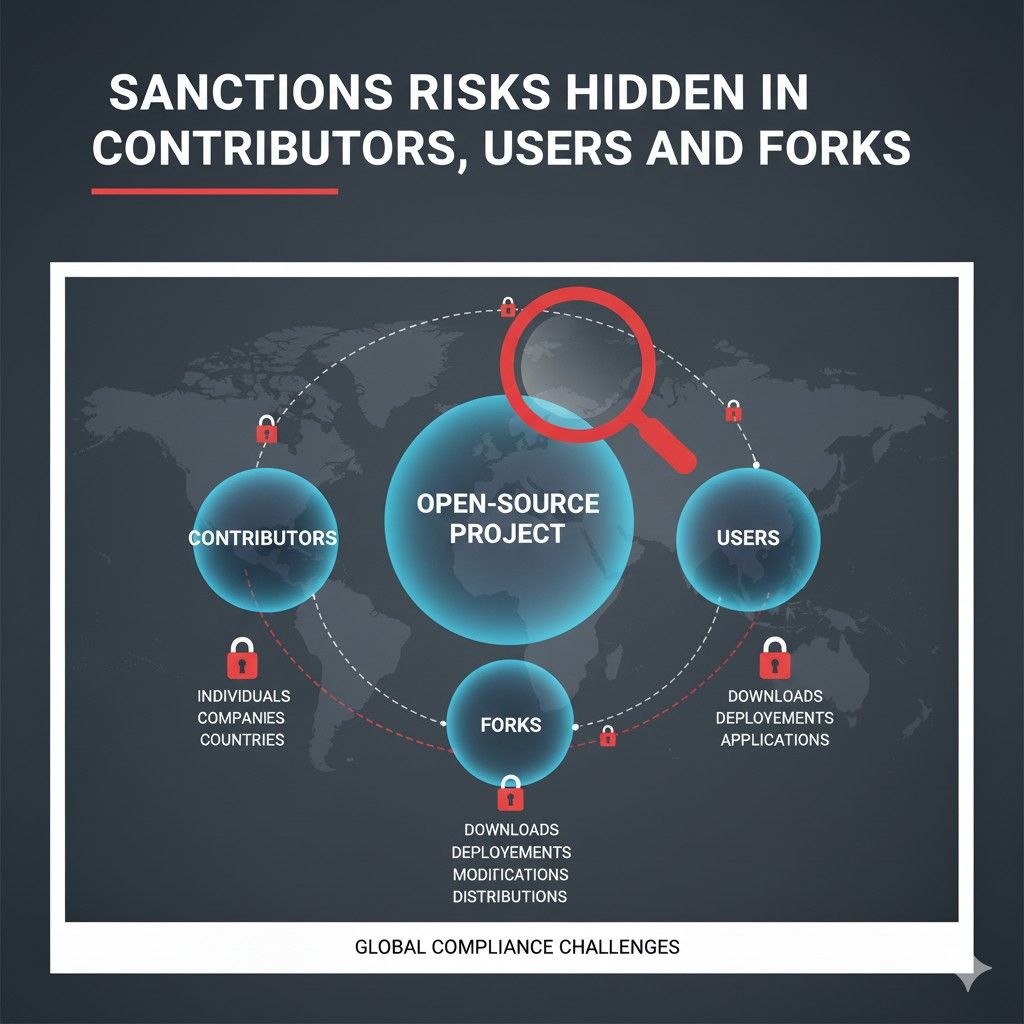
Sanctions Risks Hidden in Contributors, Users, and Forks
Sanctions are quieter than export controls and often more dangerous for open-source teams. They do not focus on technology alone. They focus on people, places, and relationships.
This is where many well-meaning teams get caught, not because of what they built, but because of who touched it, used it, or helped improve it.
This section breaks down where sanctions risk hides in open source and how teams can manage it without breaking trust or slowing growth.
Sanctions Are About People and Places
Sanctions rules are designed to limit interaction with certain countries, entities, and individuals.
They apply regardless of whether money is involved. This is what makes them tricky for open source. A pull request, a bug report, or a shared model can all count as interaction.
Teams often assume sanctions only matter when selling software or doing business deals. In reality, collaboration itself can trigger issues.
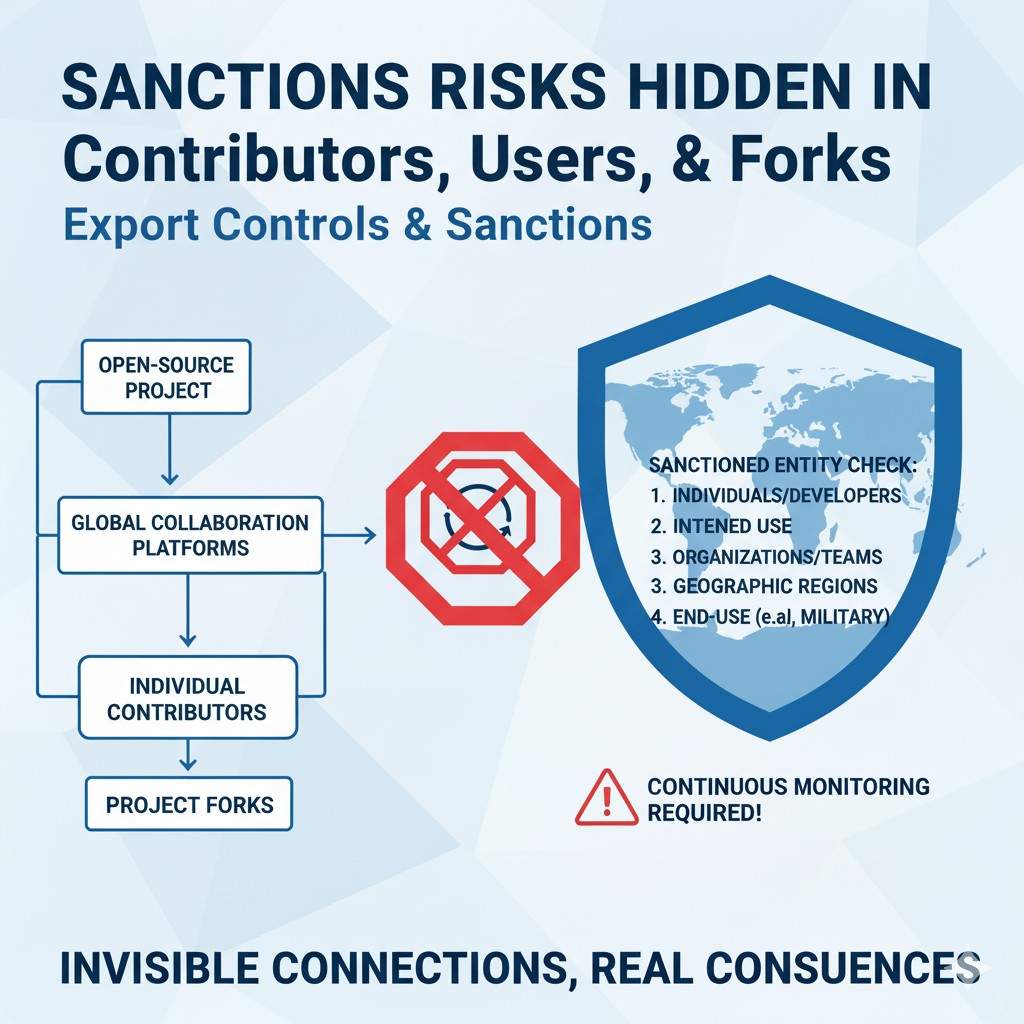
If a contributor is located in a sanctioned region or linked to a restricted entity, even unpaid collaboration can raise red flags.
The key shift in thinking is this. Sanctions are not about profit. They are about contact.
Contributors Can Create Risk Without Knowing It
Most contributors do not announce where they live or who they work for. Open-source culture values anonymity and merit. But sanctions law does not care about intentions. It cares about facts.
This means a single contributor from a sanctioned country can create exposure for maintainers, especially if maintainers actively engage, review, or guide their work.
Many teams only discover this risk years later during audits or acquisitions.
Teams do not need to interrogate contributors. But they should be aware that contributor identity matters in a legal sense, even if it does not matter technically.
Maintainers Carry the Heaviest Burden
In sanctions analysis, maintainers are not neutral. They are seen as decision-makers. Approving code, providing feedback, or granting access can all be viewed as active participation.
This is why maintainers face more risk than casual contributors. The more control you have, the more responsibility follows. Teams should recognize this and protect maintainers with clear rules and boundaries.
Documented contribution policies are not bureaucracy. They are shields.
Forks Are Not Always Safe Distance
Many teams believe that once someone forks a repo, responsibility ends. Sanctions rules do not always see it that way. If a team actively supports, promotes, or collaborates with a fork tied to a sanctioned party, risk can return.
This is especially relevant when forks are closely linked or publicly endorsed. Silence is often safer than support when geography is unclear. Teams should be careful about how they highlight or integrate forks into the main project.
Distance matters, but only if it is real.
Users Can Trigger Risk Without Ever Talking to You
Sanctions also apply to end users, even if they never contribute. If a project provides direct support, updates, or services to users in sanctioned regions, that interaction can matter.
Purely passive availability is often treated differently than active engagement. Answering questions, offering help, or customizing features can all be seen as providing a service.
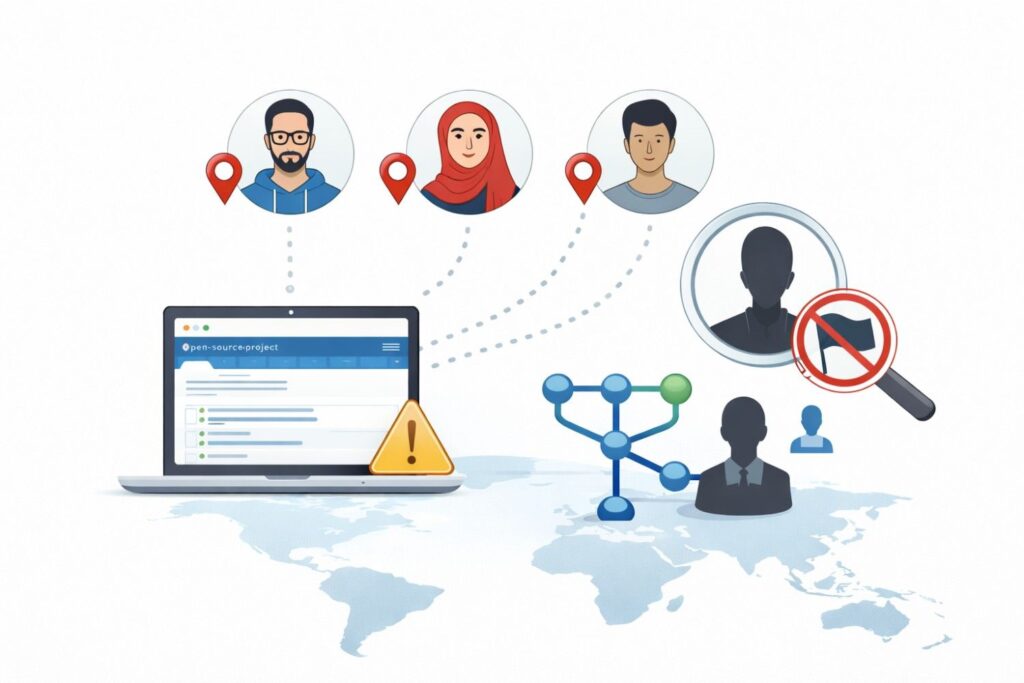
Teams should be mindful of how they interact with users publicly. Community forums, issue trackers, and chat tools can all become channels of risk if not managed thoughtfully.
Automation Can Hide Exposure
Many teams rely on bots, automated merges, and CI systems. These tools feel neutral, but they still act on behalf of the project. Automatically merging code or responding to issues can count as interaction.
This creates a strange situation where a team thinks no human engagement happened, but the system still facilitated collaboration. Teams should understand what their automation does and where it interacts with people globally.
Sometimes the safest move is to slow automation slightly in sensitive areas.
Transparency Beats Guessing
Trying to secretly manage sanctions risk often backfires. Teams that are open about having basic rules tend to face less backlash than teams that quietly block or remove contributors without explanation.
Simple public statements about compliance expectations set boundaries early. They signal that decisions are not personal and not political. They are procedural.
Transparency builds trust while protecting the project.
Sanctions Risk Grows With Success
Small projects often fly under the radar. As usage grows, visibility increases. Popular open-source projects attract attention from governments, enterprises, and regulators.
This is why sanctions risk often appears late, right when a project starts to win. Teams that prepare early avoid emergency changes at the worst possible moment.
Growth should not come with panic.
Aligning Governance With Long-Term Goals
Sanctions awareness is not just defensive. It helps teams design governance structures that scale. Clear maintainer roles, documented processes, and defined boundaries make projects stronger and more investable.
This also ties closely to IP strategy. When ownership, control, and contribution rules are clear, protecting core innovations becomes much easier.
PowerPatent helps teams formalize these foundations early, without slowing development, so growth feels intentional instead of reactive. You can see how that works at https://powerpatent.com/how-it-works.
Understanding sanctions is about protecting people, not limiting openness. The goal is to keep building, collaborating, and shipping, while avoiding hidden traps that can undo years of work.
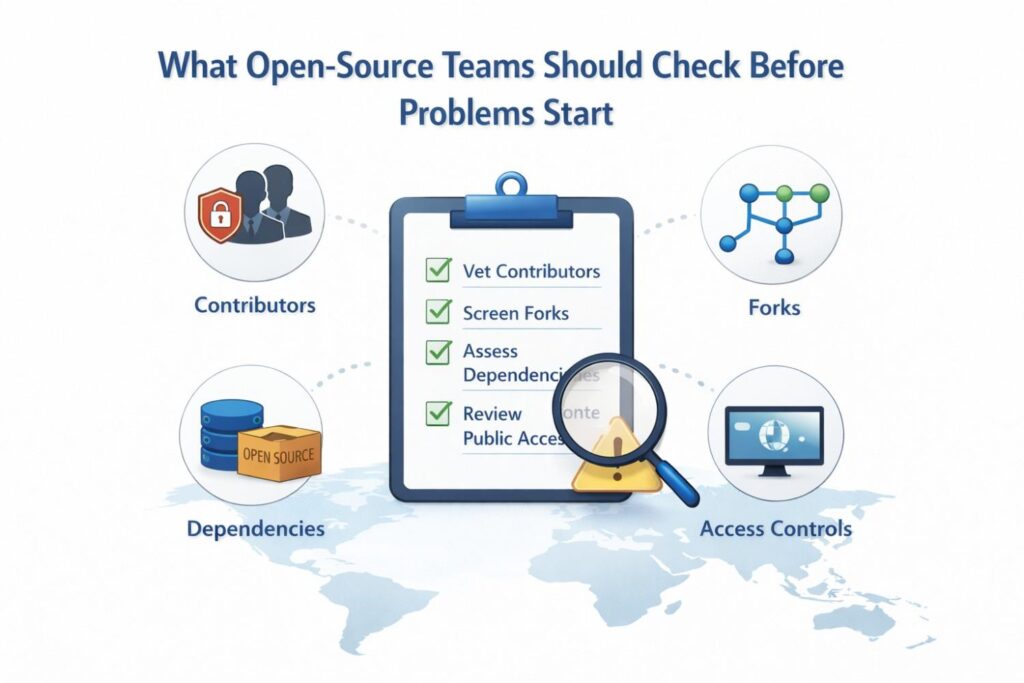
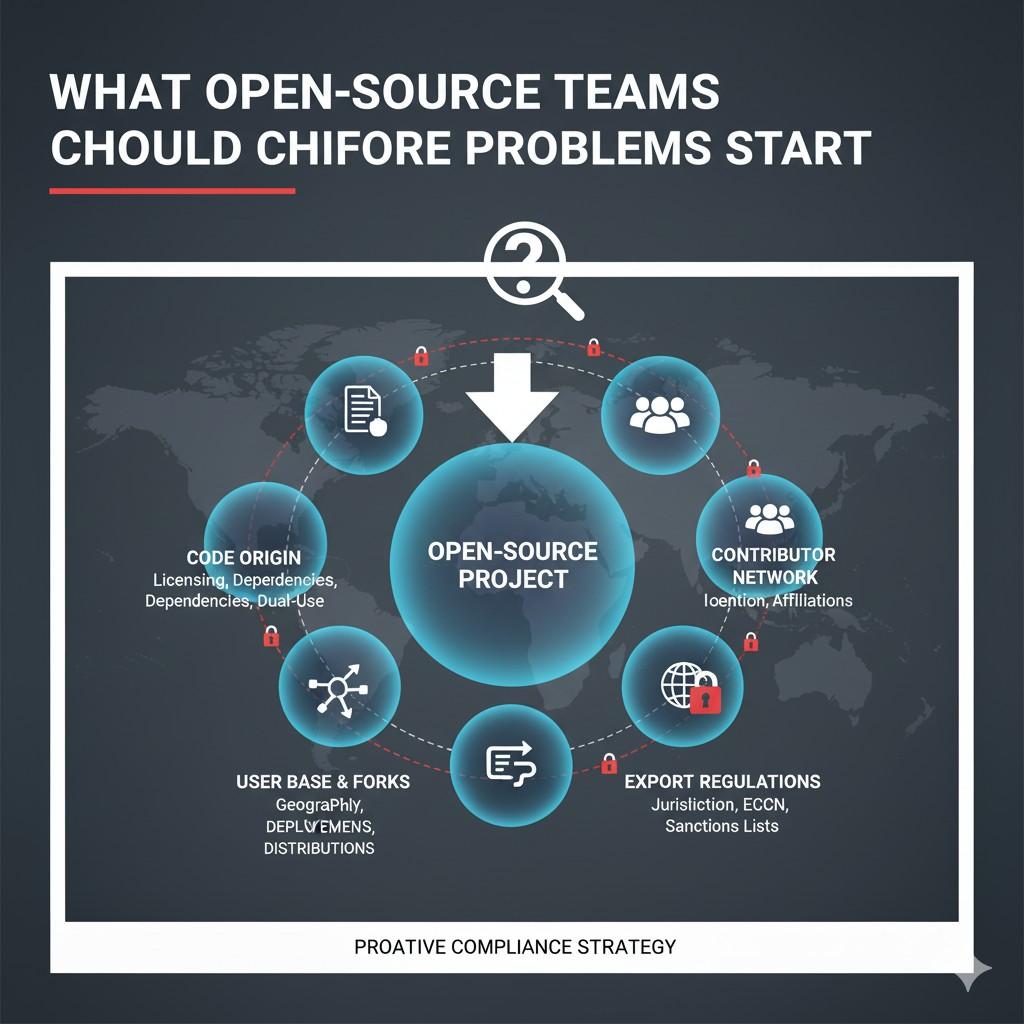
What Open-Source Teams Should Check Before Problems Start
Most export and sanctions problems do not come from bad actors. They come from teams that moved fast without pausing to look around. This final section is about building simple awareness into how your project runs, so issues are caught early or avoided entirely. The goal is not perfection. The goal is foresight.
Clarity About What You Are Really Building
Every open-source team should be able to explain their project in plain words. Not marketing words. Not academic words. Simple, direct language about what the software actually does and what it enables others to do.
This clarity matters because export and sanctions rules hinge on function, not labels. Teams that cannot explain their own technology clearly struggle to assess risk. Teams that can often spot issues quickly and adjust before release.
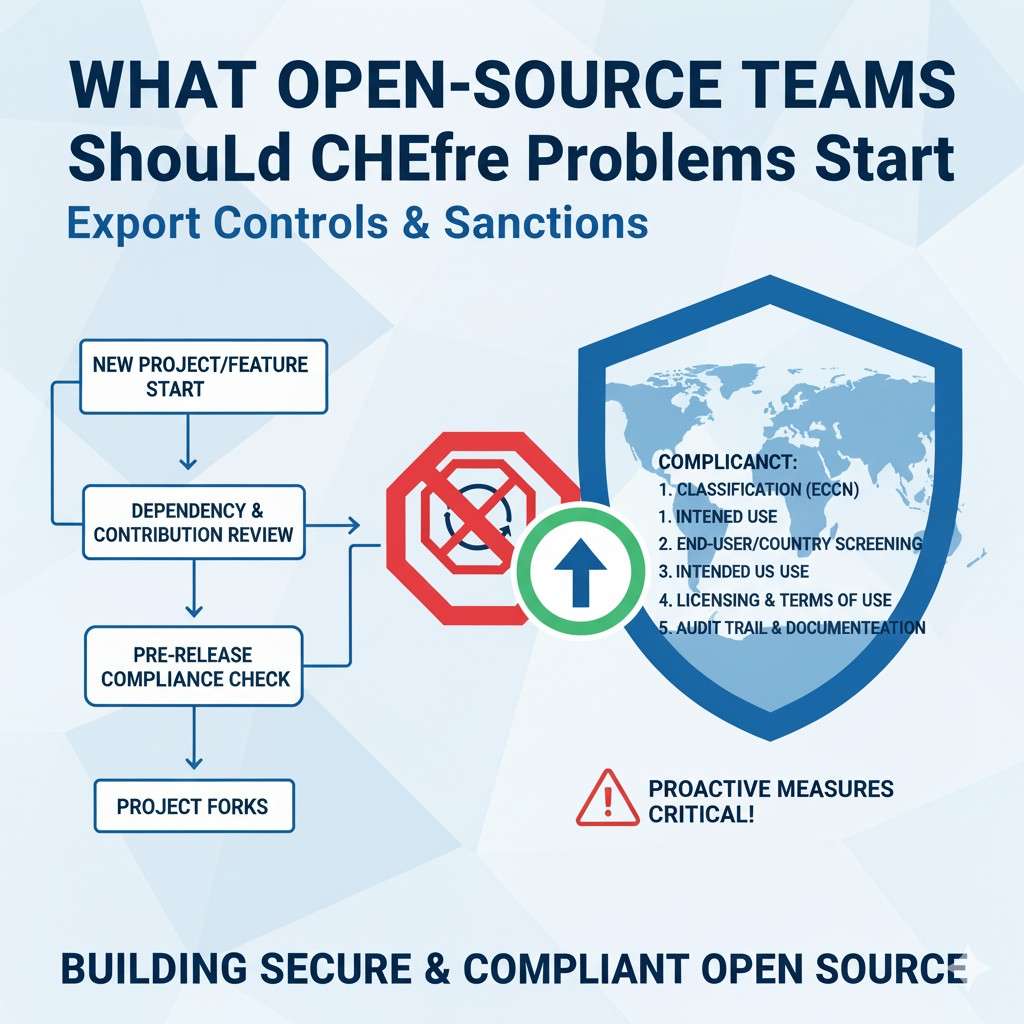
A useful exercise is to imagine explaining your project to a smart person outside your field. If you can describe the power it gives users, you are already ahead.
Awareness of Where Power Lives in the Project
Not all parts of a project carry the same weight. Some components are generic. Others unlock real leverage. Models, optimization layers, control logic, and security features often matter far more than scaffolding code.
Teams should know which parts of their system are sensitive and which are not. This helps guide decisions about what to open fully, what to release carefully, and what to keep under tighter control.
Knowing where power lives also supports better patent strategy. When the core ideas are clear, protecting them becomes straightforward instead of overwhelming.
Intentional Release Decisions
Releases should be conscious moments, not just routine pushes. Each release is a chance to ask whether anything meaningful has changed in terms of capability, reach, or risk.
This does not mean adding heavy reviews. It means building a short pause into the process. Has this update made the system significantly stronger? Has it opened new use cases? Has it changed who might care?
Teams that treat releases as decisions rather than habits catch issues early without slowing momentum.
Understanding Who You Are Interacting With
Open source thrives on global interaction, but blind interaction carries risk. Teams should have a basic sense of who their maintainers are, where core contributors are located, and who they engage with most actively.
This is not about tracking everyone. It is about knowing where sustained collaboration happens. Patterns matter more than one-off interactions.
Even light awareness here can prevent serious issues later.
Designing Governance That Scales
Many teams start with informal governance and never update it. This works until it does not. Export and sanctions risk grows with scale, visibility, and success.
Clear governance does not kill openness. It protects it. Defined maintainer roles, contribution guidelines, and decision authority help teams respond consistently instead of emotionally.
When rules are clear, enforcement feels fair. When rules are vague, every decision feels personal.
Preparing for Investor and Customer Questions
At some point, someone will ask about compliance. It might be an investor, a large customer, or an acquirer. Teams that have thought ahead answer calmly. Teams that have not scramble.
You do not need perfect answers. You need reasonable ones. Being able to explain how you think about export and sanctions risk shows maturity and leadership.
Preparation here can shorten deals and build trust fast.
Why Waiting Makes Everything Harder
Teams often delay thinking about these issues because they feel complex or premature. But delay increases cost. Fixing governance, releases, or licensing after a project is widely adopted is far harder than shaping them early.
Early action keeps options open. Late action forces trade-offs.
The best time to think about this is before anyone forces you to.
How IP Strategy Supports Everything Else
Strong intellectual property strategy brings clarity. It forces teams to define what is novel, what is valuable, and what deserves protection. That clarity directly supports compliance and governance.
PowerPatent helps open-source and deep tech teams capture their core ideas early, with speed and confidence, while staying aligned with how modern software is built.
It is designed to support builders, not slow them down. You can see how it works at https://powerpatent.com/how-it-works.
Export controls and sanctions are not barriers to open source. They are constraints that reward teams who think clearly and act early. With the right awareness and tools, open-source teams can stay open, stay fast, and stay protected.
Wrapping It Up
Open source moves the world forward because it lowers friction. Ideas spread fast. Teams build together. Progress compounds. But speed without awareness creates hidden risk, and export controls and sanctions are exactly the kind of risk that stays invisible until it suddenly is not.
The core message is simple. Open source is not outside the system. It lives inside real-world rules that care about capability, reach, and relationships. These rules do not exist to punish builders. They exist to manage power. When teams understand that, the fog lifts and smart decisions become easier.
Leave a Reply