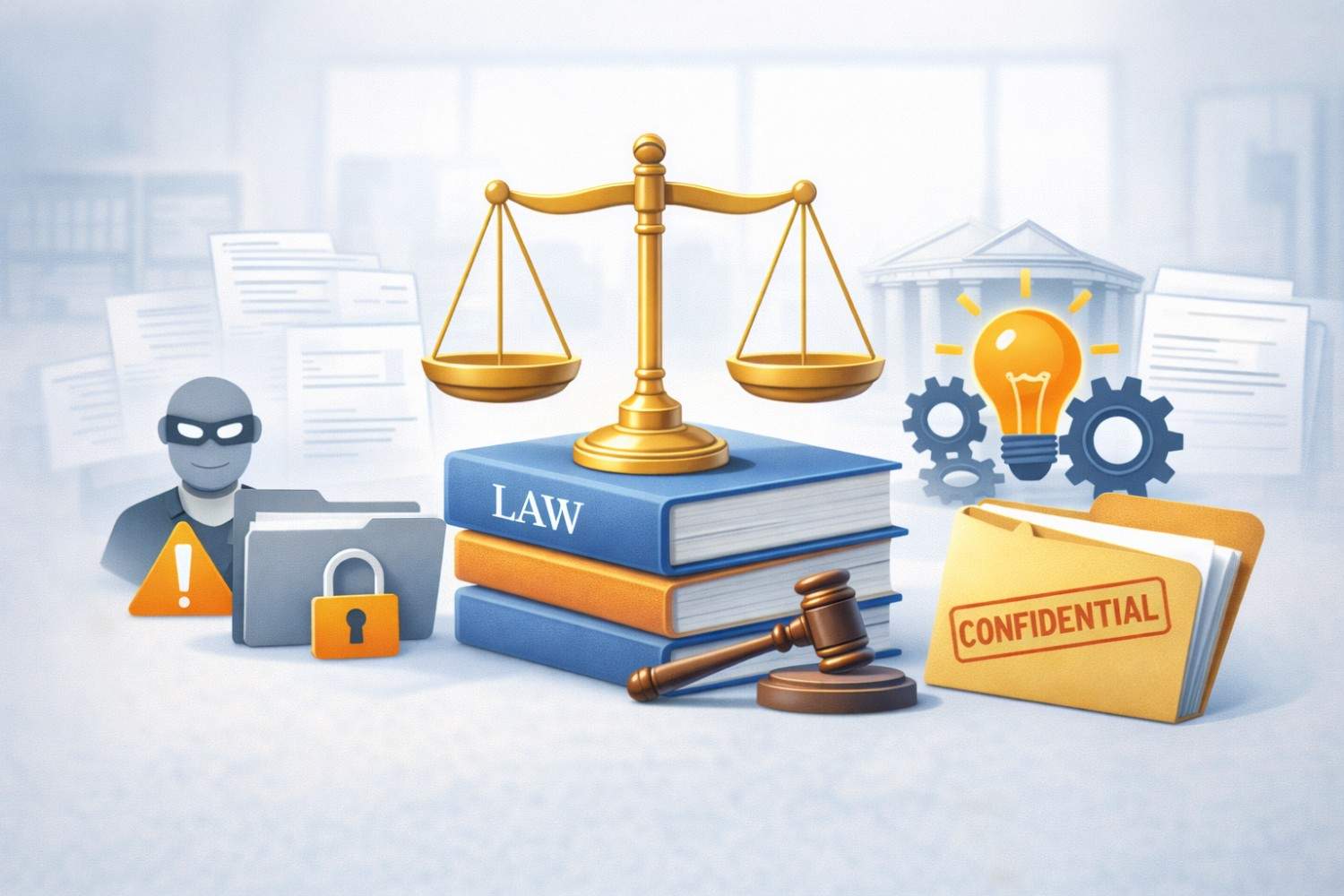
If you are building something valuable, someone will want it. Sometimes they copy it. Sometimes they walk out the door with it. Sometimes they pretend it was theirs all along. That is where trade secret law comes in, and that is where the Defend Trade Secrets Act, or DTSA, matters more than most founders realize.
This article is about the real-world basics of DTSA litigation. Not theory. Not law school talk. Just what it is, when it applies, what you can win, what you can lose, and how smart founders protect themselves before things get messy. If you are building tech, models, data systems, processes, or software, this applies to you right now.
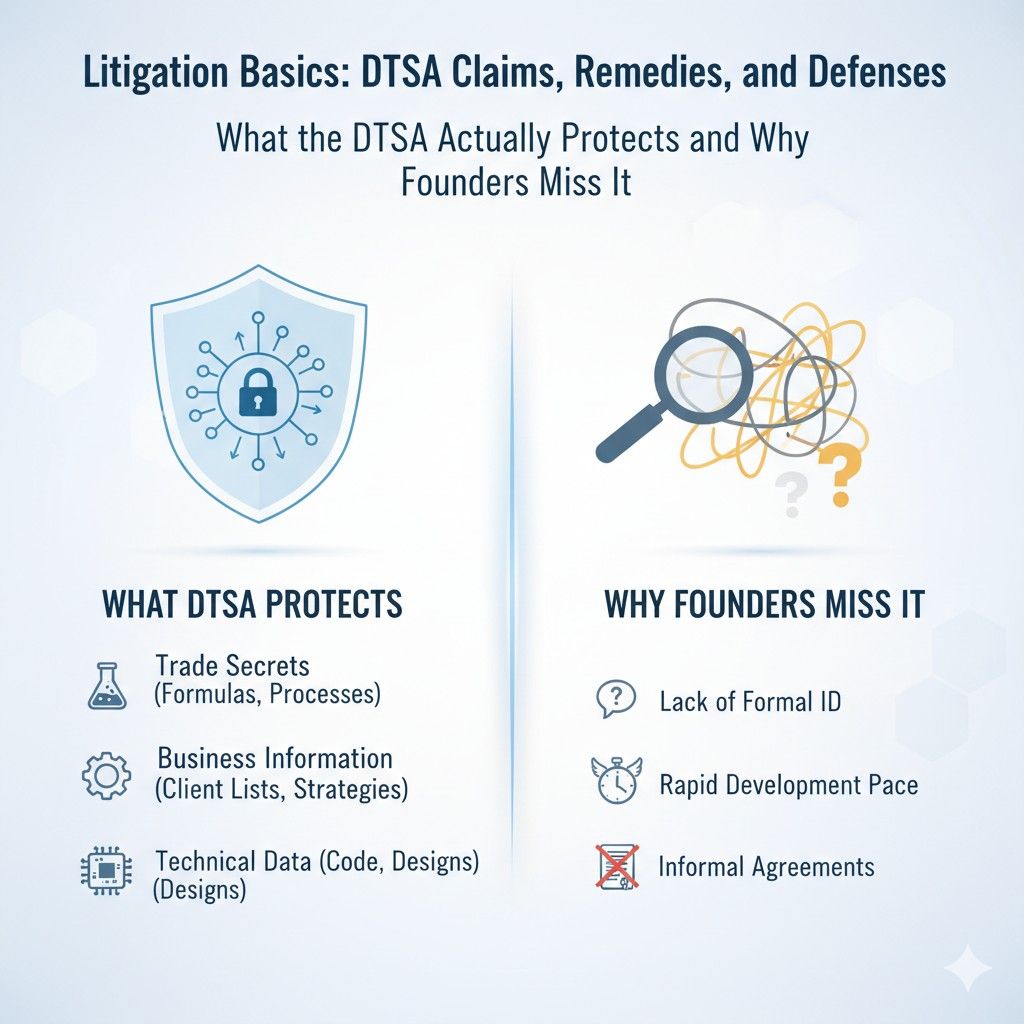
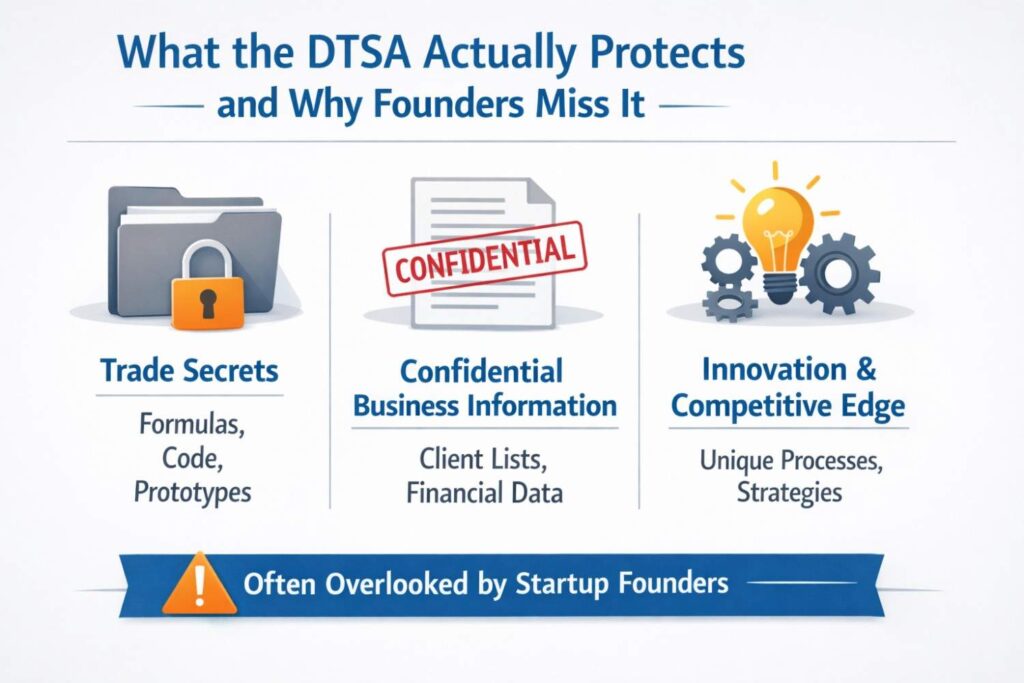
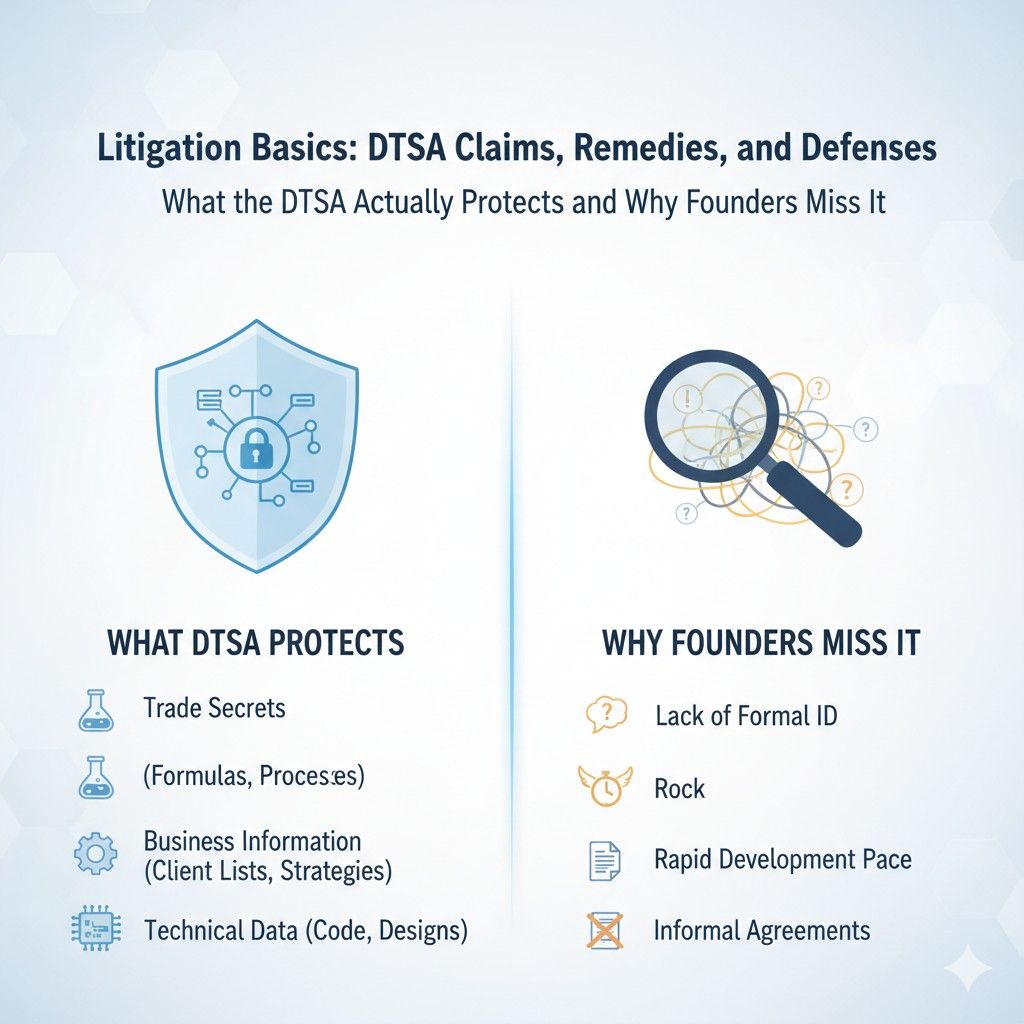
What the DTSA Actually Protects and Why Founders Miss It
The DTSA sounds simple on the surface. It protects trade secrets. But most founders misunderstand what that really means, and that misunderstanding is where companies get hurt.
This law does not protect ideas in your head. It protects valuable business information that you actively treat as valuable. The gap between those two things is where lawsuits are won or lost.
This section breaks down what the DTSA truly covers, how courts look at it in real cases, and why even smart teams fail to qualify for protection when it matters most.
If you build technology, systems, or data-driven products, this is not optional knowledge. It is part of running a real company.
Trade Secrets Are About Behavior, Not Brilliance
A trade secret is not defined by how smart it is. It is defined by how it is handled.
Founders often assume that if something is complex, hard to build, or took years to refine, it must be protected.
Courts do not see it that way. Under the DTSA, the question is not how clever your system is. The question is whether you acted like it mattered.
If your company treated key systems casually, shared them freely, or failed to draw clear lines around who could access what, judges tend to assume the information was not truly secret.
This surprises founders because internally everyone knew it was important. But courts care about proof, not intention.
The most actionable takeaway here is simple. If something would seriously hurt your business if a competitor got it, you must treat it like a locked room.
Limited access, clear rules, and documented controls change the legal outcome later.
PowerPatent helps founders think through this early, when it is still easy to fix. You can see how that works here: https://powerpatent.com/how-it-works
What Counts as a Trade Secret Under the DTSA
The DTSA covers a wide range of business assets, far beyond source code alone. Algorithms, training data, internal tools, pricing logic, system designs, workflows, and even customer behavior insights can qualify.
What matters is that the information gives your business an edge and is not easily found in public sources.
Founders often miss protection because they assume trade secrets only apply to technical inventions. In reality, courts regularly protect operational systems, growth methods, and data pipelines. If it took real effort to build and gives you leverage, it likely qualifies.
The strategic move here is to map your company’s value drivers. Ask what would slow a competitor down by months or years if they had to rebuild it. Those assets deserve structured protection and clear ownership.
Treating them casually is one of the most common and expensive mistakes startups make.
Why Public Exposure Quietly Destroys DTSA Protection
One of the fastest ways to lose DTSA protection is accidental exposure. Demo videos, sales decks, investor materials, and marketing blogs often reveal more than founders realize.
Once information is publicly available, even in pieces, it may no longer qualify as a trade secret.
Founders often believe partial disclosure is safe. Courts often disagree. If someone can reasonably reconstruct the secret from what you shared, protection weakens fast.
This is especially dangerous in competitive markets where rivals actively watch everything you publish.
The practical advice is to separate storytelling from substance. You can explain outcomes without revealing mechanics. You can show value without showing the engine.
Teams that plan this early avoid painful clawbacks later when litigation is already underway.
Internal Sharing Is Where Most Trade Secrets Die
Most DTSA failures do not come from hackers or spies. They come from inside the company.
Employees who had broad access, unclear rules, or no exit process are the most common source of trade secret disputes. Founders often trust their team completely, which is human, but courts look for systems, not trust.
If an engineer can copy core systems to a personal drive without friction, courts question whether the company truly treated that information as secret.
If departing employees were not reminded of obligations or had no clear agreements, enforcement becomes harder.
A strong operational habit is to assume turnover will happen. Build access controls, clear confidentiality rules, and exit steps that protect the company without being hostile. This is not about suspicion. It is about maturity.
The Difference Between Confidential and Trade Secret
Many founders think labeling something confidential is enough. It is not.
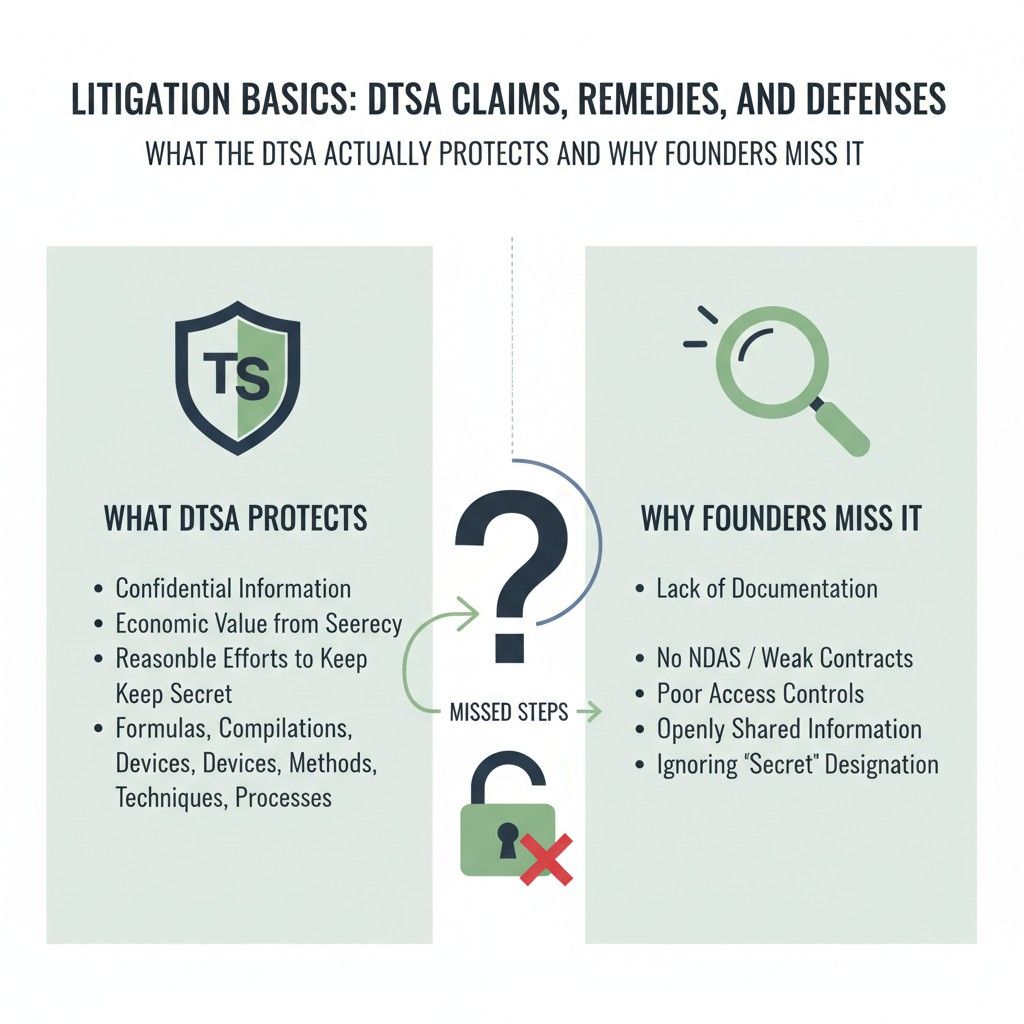
Confidential information is a broad category. Trade secrets are a narrower, stronger subset. Courts require proof that you took reasonable steps to keep the information secret. That usually means more than a line in an agreement.
Reasonable steps look like restricted access, internal policies, technical safeguards, and consistent behavior over time.
If everyone had access, if files were shared casually, or if controls existed only on paper, judges often rule against protection.
The actionable insight here is alignment. Your contracts, tools, and daily habits must match. When they do, DTSA claims become far stronger. When they do not, even good lawyers struggle to fix it after the fact.
Why Speed Matters More Than Perfection
Founders delay trade secret planning because they think it requires heavy process or legal complexity. That delay is costly.
Courts do not expect startups to act like large corporations. They expect reasonable steps for the size and stage of the company. Early action, even if imperfect, is better than perfect action taken too late.
Putting basic controls in place early creates a clear story if litigation ever happens. It shows intent, awareness, and responsibility. Waiting until after someone leaves or copies data often looks reactive, and reactive stories lose credibility.
PowerPatent is built for this exact moment. Helping founders lock in protection without slowing momentum is the core mission.
If you want to understand how to do this without turning your startup into a legal maze, explore it here: https://powerpatent.com/how-it-works
Why Founders Think DTSA Applies When It Does Not
Many founders assume DTSA protection exists automatically. It does not.
The DTSA is powerful, but it is conditional. If you cannot show that the information was secret, valuable, and actively protected, courts will not apply it. This is why so many founders are shocked when their claims fail.
The law rewards discipline, not hindsight. Founders who treat IP protection as a core business function, rather than a future cleanup task, win more often and settle faster. That is not theory. That is pattern.
Turning Trade Secrets Into Leverage, Not Just Defense
The smartest companies do not think about DTSA only as a lawsuit tool. They think about it as leverage.
When your trade secrets are clearly defined, documented, and protected, disputes resolve faster. Competitors back off sooner. Former employees take obligations seriously. Investors gain confidence that your edge is defensible.
This leverage starts long before court. It starts with clarity. Knowing what matters, protecting it intentionally, and aligning your team around it changes how others interact with your company.
That is why strong IP foundations are not just legal hygiene. They are strategic assets.
PowerPatent helps founders build that foundation early, while speed still matters. You can see how the process works here: https://powerpatent.com/how-it-works
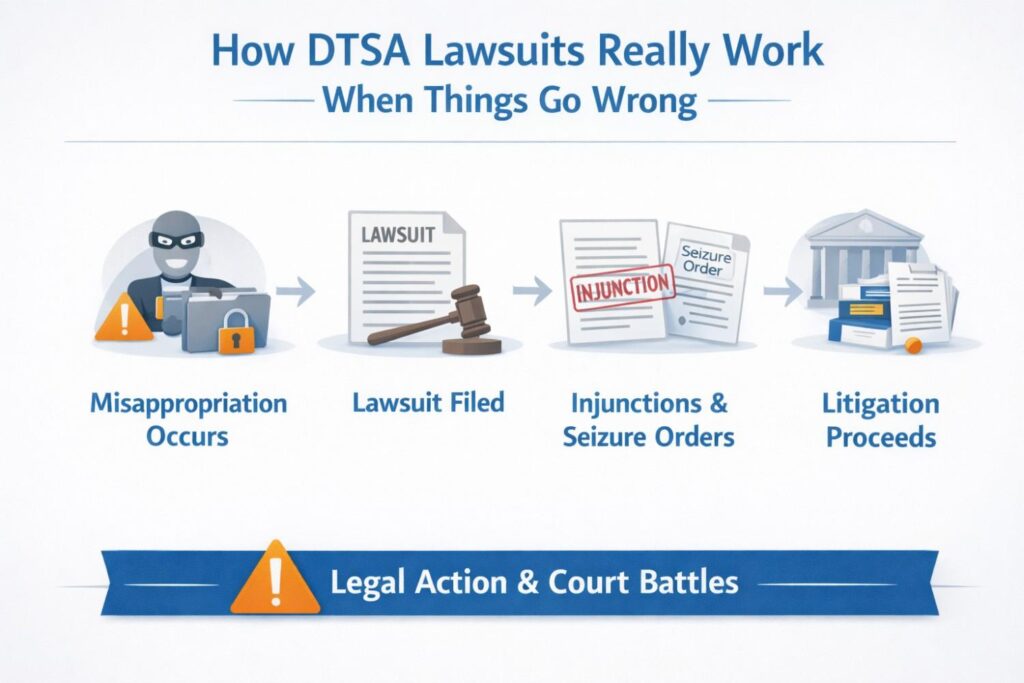
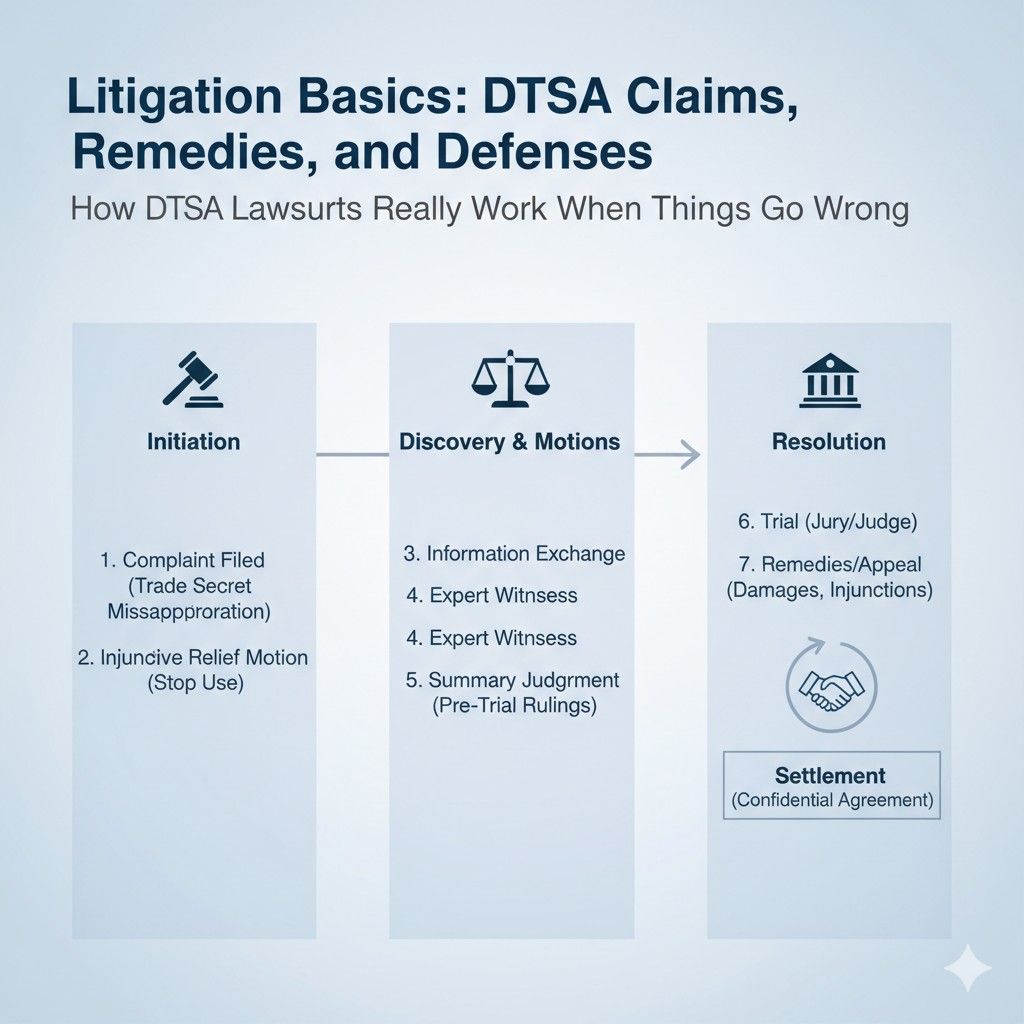
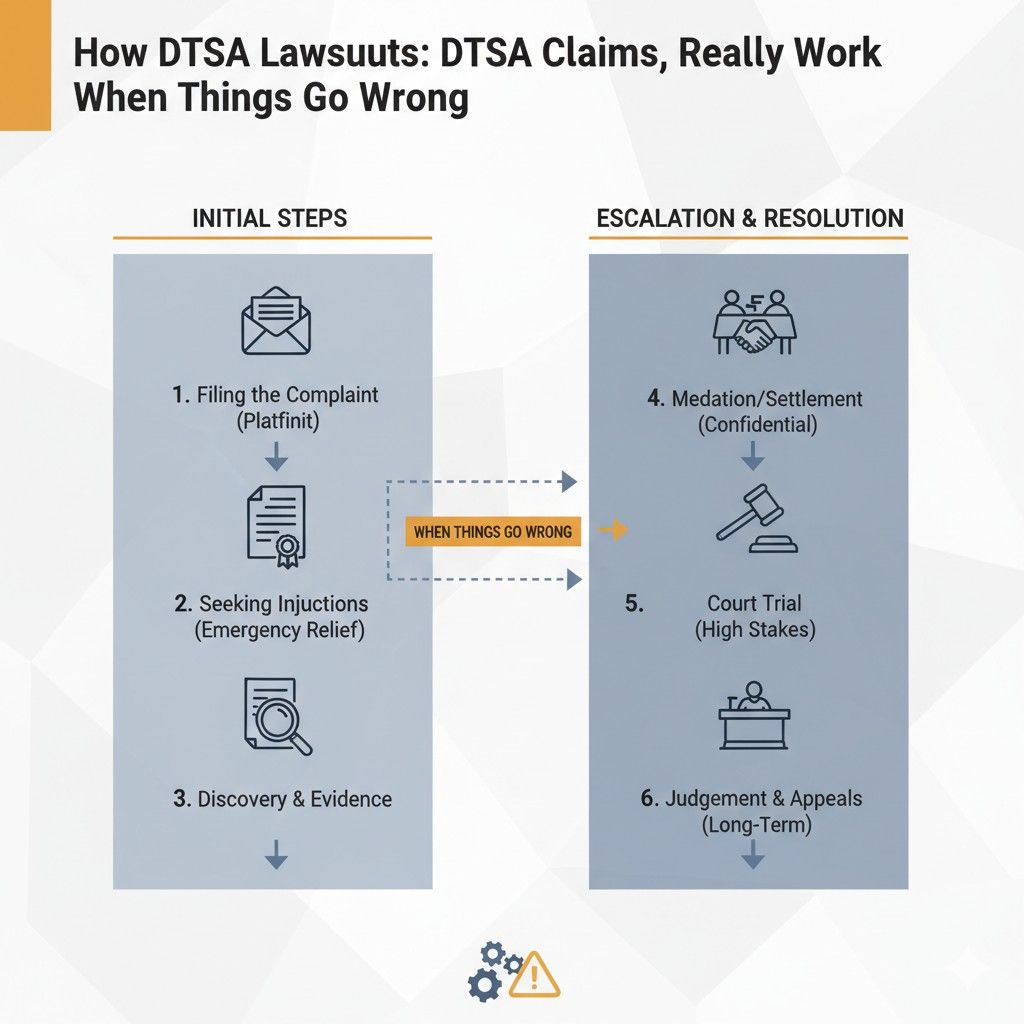
How DTSA Lawsuits Really Work When Things Go Wrong
When a DTSA lawsuit begins, most founders are already behind. Not because they did something wrong on purpose, but because they assumed logic and fairness would carry the day.
DTSA litigation does not reward assumptions. It rewards preparation, timing, and clean stories backed by proof.
This section explains how these cases actually unfold in the real world, what judges focus on early, and how companies either gain leverage fast or lose control almost immediately.
This is not about fear. It is about understanding the battlefield before you are forced onto it.
How DTSA Disputes Usually Start
Most DTSA cases do not start with a lawsuit. They start with a quiet moment that feels small at the time.
An engineer leaves for a competitor. A founder splits with a cofounder. A vendor relationship ends badly. A demo looks a little too familiar. These moments trigger concern long before lawyers get involved.
The companies that do well act early. They investigate internally, preserve evidence, and lock down access before confronting anyone.
The companies that do poorly jump straight to accusations or wait too long hoping the issue resolves itself.
Speed matters here, but calm matters more. Courts look closely at how a company reacted once it suspected misuse. Thoughtful steps signal credibility. Emotional reactions weaken it.
The First Legal Moves Shape the Entire Case
Once lawyers get involved, the early filings often matter more than the final trial. DTSA cases are front-loaded. Judges want to know quickly whether this is a real trade secret dispute or just business rivalry dressed up as one.
The initial complaint must clearly explain what the trade secret is, why it matters, and how it was taken or used.
Vague claims fail fast. Saying “our technology” or “our platform” is not enough. Courts expect specificity without revealing the secret itself, which is a delicate balance.
Founders are often surprised by this. They feel forced to describe what they are trying to protect.
But companies that prepared early already know how to frame their secrets cleanly and confidently. This is where prior IP planning quietly pays off.
Emergency Relief Is Where Power Shifts Fast
One of the most powerful parts of the DTSA is the ability to seek immediate court orders.
These early motions can stop a competitor from using information, freeze systems, or limit employee actions while the case is ongoing.
Judges do not grant this lightly. They look for clear proof of harm, real risk, and responsible behavior by the company seeking relief.
If the court believes the company waited too long or failed to protect the information internally, emergency relief is often denied.
This moment often decides the practical outcome. If relief is granted, leverage shifts quickly. If it is denied, the case becomes longer, more expensive, and less predictable.
The actionable lesson is simple. If trade secrets truly matter, you must be ready to explain their value and protection immediately. Scrambling after damage occurs is rarely effective.
Evidence Wins These Cases, Not Stories
Founders love narratives. Courts love evidence.
DTSA cases rely heavily on digital proof. Access logs, download records, email trails, repository activity, and device usage patterns often matter more than testimony.
What someone could access, when they accessed it, and what they did next creates the factual backbone of the case.
Companies that invested in basic tracking and controls can reconstruct events with confidence. Companies that did not are forced to rely on assumptions, which courts distrust.
This is not about surveillance. It is about accountability. If your systems cannot show who touched what, enforcing rights later becomes far harder.
Why Former Employees Are the Most Common Defendants
Most DTSA cases involve people who once belonged to the company. This creates emotional tension and legal complexity.
Courts are cautious here. They do not want to punish people for changing jobs. They want to stop misuse of protected information. That distinction matters deeply in how cases are argued and decided.
If a company appears to be blocking competition rather than protecting secrets, judges push back.
Clear boundaries help. Showing that the employee had access to specific secrets and that those secrets appear in the new role or product is key.
This is where clarity beats aggression. Companies that calmly show overlap and misuse do better than those that sound threatened or defensive.
The Hidden Cost of Overreaching
Some founders make the mistake of claiming everything is a trade secret. That approach often backfires.
Judges expect restraint. When every document is labeled critical, none of them appear credible. Overreach weakens trust and invites deeper scrutiny into whether the company actually protected anything at all.
Strong DTSA cases focus on core assets. The few things that truly matter. Narrow, well-supported claims move faster and are more persuasive.
The strategic advice here is discipline. Decide early what matters most and protect it deeply. That focus makes enforcement stronger and cheaper.
Settlement Pressure Starts Earlier Than Founders Expect
Most DTSA cases do not reach trial. They resolve through settlement, often early.
The pressure to settle depends heavily on early rulings. If emergency relief is granted or denied, both sides reassess risk quickly. Companies with strong positions gain negotiating power.
Those with weak ones often settle defensively.
Founders often misunderstand this phase. They think settlement means weakness. In reality, smart settlements preserve momentum and reduce distraction. The goal is not to win emotionally. It is to protect the business.
Clear IP foundations make settlements cleaner. When ownership and protection are obvious, disputes resolve faster with less drama.
Litigation Is a Distraction Tax on Growth
Even strong DTSA cases cost time and focus. Founders pulled into depositions are not building product. Engineers answering discovery requests are not shipping features.
This is why prevention matters more than enforcement. The best DTSA strategy is to never need one. Clear ownership, clean controls, and thoughtful planning reduce both risk and cost.
PowerPatent helps founders think this way from the start. Not as a legal exercise, but as a growth strategy that protects speed instead of slowing it down.
You can see how that approach works here: https://powerpatent.com/how-it-works
Why Courts Care About Founder Intent
Judges pay attention to how founders talk about their business. Emails, internal messages, and public statements often appear in court.
If founders treated IP casually, joked about copying, or dismissed protection internally, those words can resurface later. Intent matters. Not just what you did, but how you thought about it.
The actionable insight is awareness. Assume your internal decisions reflect your values. Build habits that show respect for your own work. That respect translates into credibility when it counts.
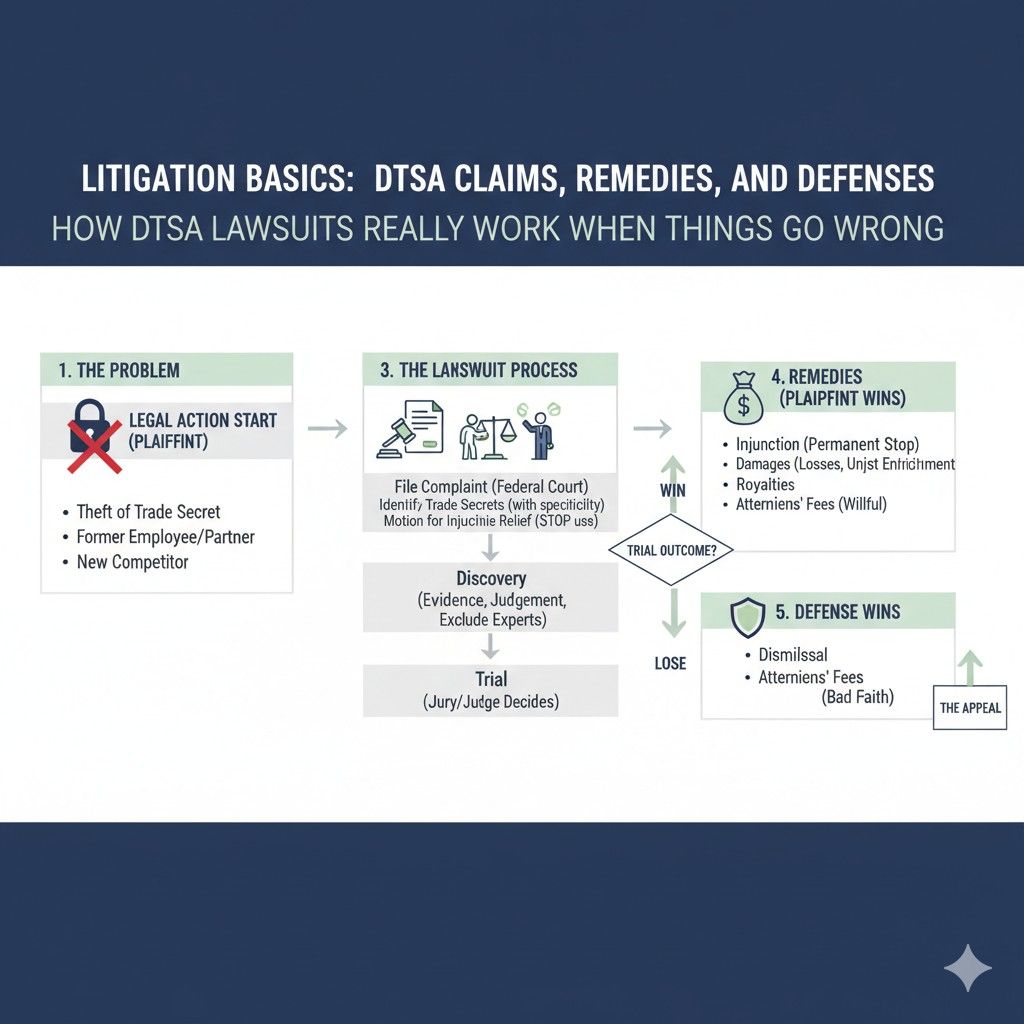
This section shows one clear truth. DTSA lawsuits are not random. They reward companies that acted deliberately long before anything went wrong.
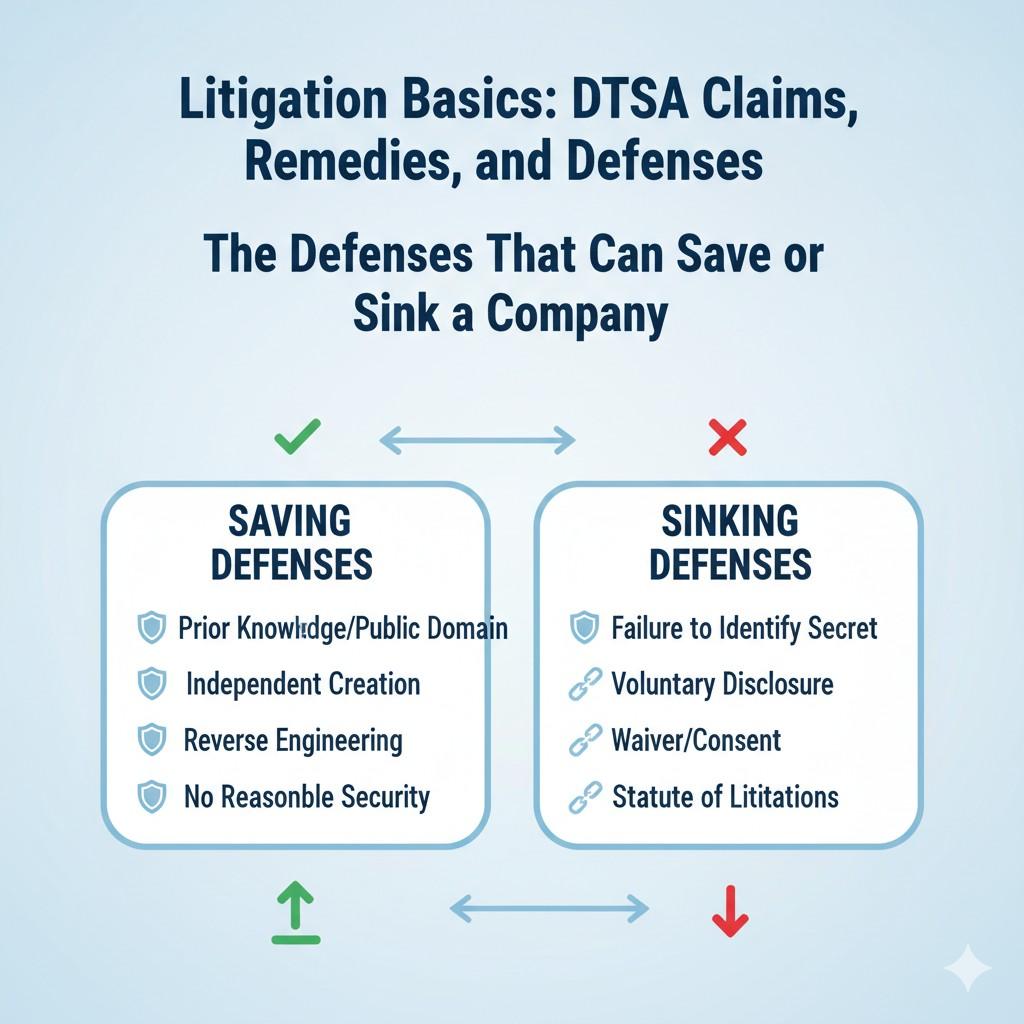
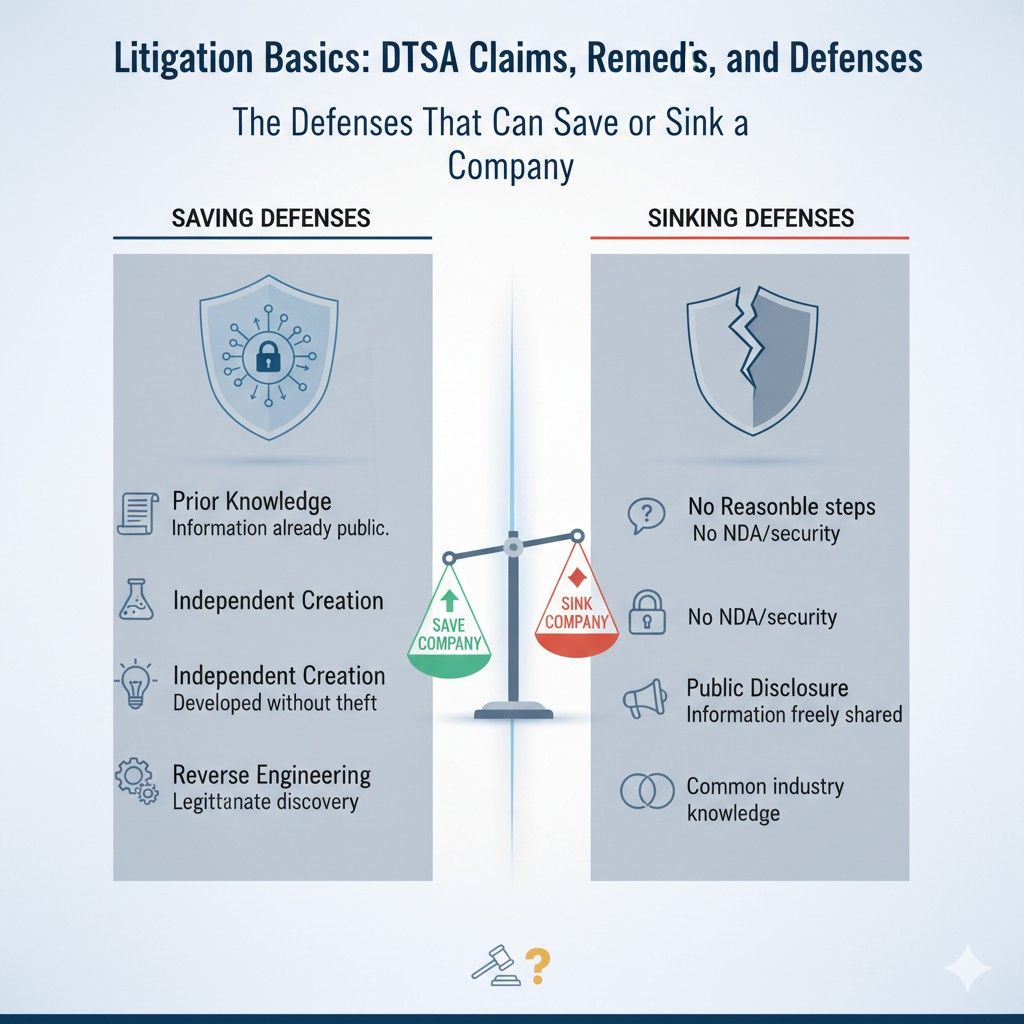
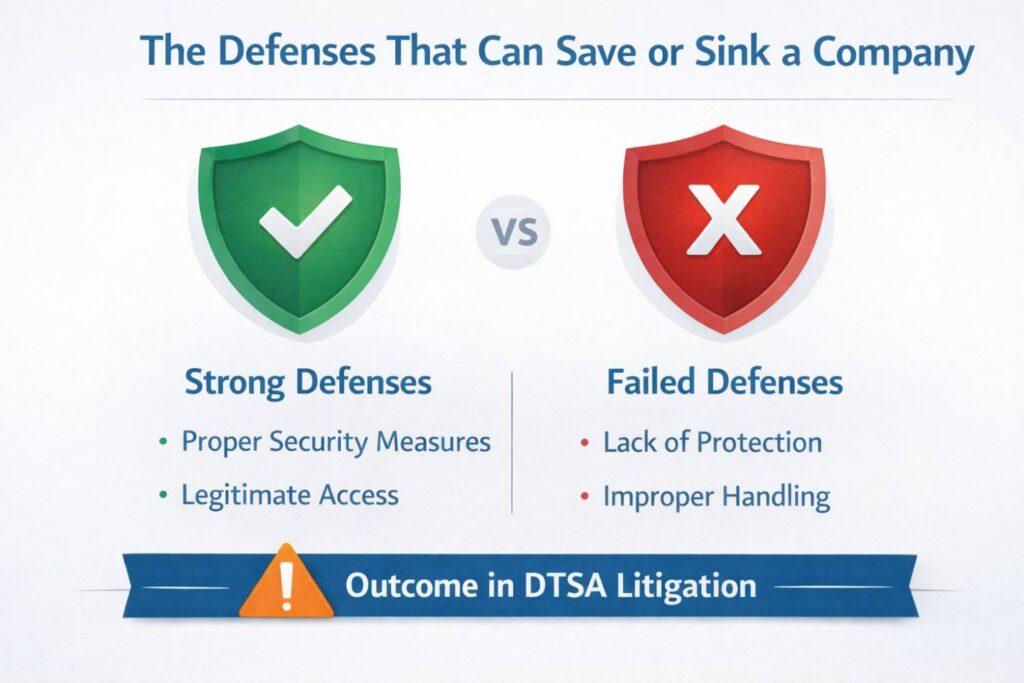
The Defenses That Can Save or Sink a Company
Once a court decides that a trade secret was taken or misused, the case shifts into a phase most founders misunderstand. This is where remedies come in.
Remedies decide what happens next in the real world. They determine whether damage stops, whether money changes hands, and whether a company can move forward without carrying a permanent wound.
Many founders assume remedies are automatic. They are not. Courts have wide discretion, and outcomes depend heavily on how the company behaved before and during the dispute.
This section explains what remedies really look like under the DTSA and how smart companies quietly position themselves to get the outcomes they want.
Injunctions Are About Control, Not Punishment
The most powerful remedy under the DTSA is an injunction. This is a court order that tells someone to stop doing something. It might stop a former employee from using certain knowledge.
It might stop a competitor from selling a product. It might force changes to how systems are built or deployed.
Courts grant injunctions to prevent harm, not to punish bad behavior. That distinction matters. Judges ask whether the trade secret is still at risk and whether stopping use is necessary to protect the company that owns it.
Companies that can show ongoing risk tend to succeed here. Companies that only show past wrongdoing often do not. This is why speed matters so much. If the misuse is still happening, courts are more willing to step in.
If the damage already happened and stopped, courts often lean toward money instead.
The actionable insight is this. If you discover misuse, do not wait to act. Delays weaken the argument that control is still needed.
Why Courts Avoid Blocking Entire Careers
Founders sometimes expect courts to completely block former employees from working in a field. That rarely happens.
Judges are careful not to prevent people from earning a living. Even when trade secrets were misused, courts try to craft narrow remedies.
They may restrict use of specific systems or knowledge, but they avoid broad bans unless absolutely necessary.
This means companies must be precise. If you cannot clearly separate protected secrets from general skills, remedies become harder to enforce. Vague claims lead to weak injunctions.
Strong companies define boundaries early. They know what is protected and what is fair game. That clarity leads to remedies that actually work.
Monetary Damages Are Harder Than Founders Expect
Money damages under the DTSA sound straightforward, but they are often complex in practice.
Courts look at real harm. Lost profits, unjust enrichment, or reasonable royalties are common theories, but each requires proof. Founders often struggle here because startups rarely have clean financial baselines.
If the company cannot show how misuse directly caused financial loss, damages shrink quickly. Judges do not guess. They require evidence.
The practical takeaway is documentation. Knowing how your product makes money, how your edge drives revenue, and how misuse changes that equation makes a huge difference later.
Why Reasonable Royalties Matter for Early Companies
Early-stage companies often lack revenue history. In those cases, courts sometimes use reasonable royalties to calculate damages.
This is not about what you would have charged in a perfect world. It is about what a fair license would have looked like at the time of misuse. Courts consider industry norms, the value of the secret, and how critical it was to the product.
Founders who understand their own value story do better here. If you can explain why the trade secret mattered, courts are more willing to assign meaningful value.
This is another reason why early IP planning matters. Clear articulation of what you built and why it matters helps long before any dispute arises.
Exemplary Damages Change the Risk Equation
In cases of willful and malicious misuse, courts can award extra damages. This is where things get serious.
These enhanced damages are not automatic. Courts look for clear intent, deception, or reckless disregard. Evidence like deleted files, secret copying, or lying under oath can push cases into this territory.
For defendants, this is where risk multiplies. For plaintiffs, this is where leverage increases. But courts are cautious. They reserve these awards for truly bad behavior.
The lesson for founders is cultural. How your company behaves matters. Ethical conduct, clear rules, and honest responses reduce exposure. Cutting corners quietly increases risk later.
Attorneys’ Fees Shift the Settlement Dynamic
Under certain conditions, courts can award attorneys’ fees to the winning party. This changes how cases settle.
If one side appears unreasonable, aggressive without basis, or clearly in the wrong, fee shifting becomes a real possibility. That threat alone often drives early resolution.
Founders should understand this pressure point. Reasonable positions backed by evidence protect not just the case, but the balance sheet.
This is another reason overreaching hurts. Claiming too much can expose the company to fee risk if the court disagrees.
Seizure Orders Are Rare but Powerful
The DTSA includes a unique remedy that allows courts to order the seizure of property to prevent dissemination of trade secrets. This might involve devices, servers, or storage media.
These orders are extremely rare. Courts treat them as last-resort tools. They require strong proof and careful tailoring.
Founders should not rely on this remedy. But knowing it exists changes behavior. It signals how seriously courts treat active, ongoing theft.
Companies that behave responsibly are far more likely to be trusted with such relief.
Remedies Depend on Pre-Lawsuit Behavior
One of the most important truths about DTSA remedies is this. Courts look backward before they decide what to do going forward.
If a company failed to protect its secrets, ignored warnings, or behaved inconsistently, remedies shrink. If the company acted deliberately and responsibly, remedies expand.
This is why remedies are not just legal outcomes. They are business reflections. Courts reward preparation and consistency.
PowerPatent helps founders build this consistency early, before remedies ever matter. If you want to understand how strong IP foundations influence outcomes long after filing, explore it here: https://powerpatent.com/how-it-works
Winning Remedies Without Destroying the Business
Founders often fear that enforcing rights will scare investors or stall growth. That fear is valid if handled poorly.
Smart companies enforce narrowly, communicate clearly, and resolve disputes efficiently. Remedies become tools, not weapons. The goal is stability, not spectacle.
When handled well, DTSA remedies protect momentum rather than slow it down. That is the real win.
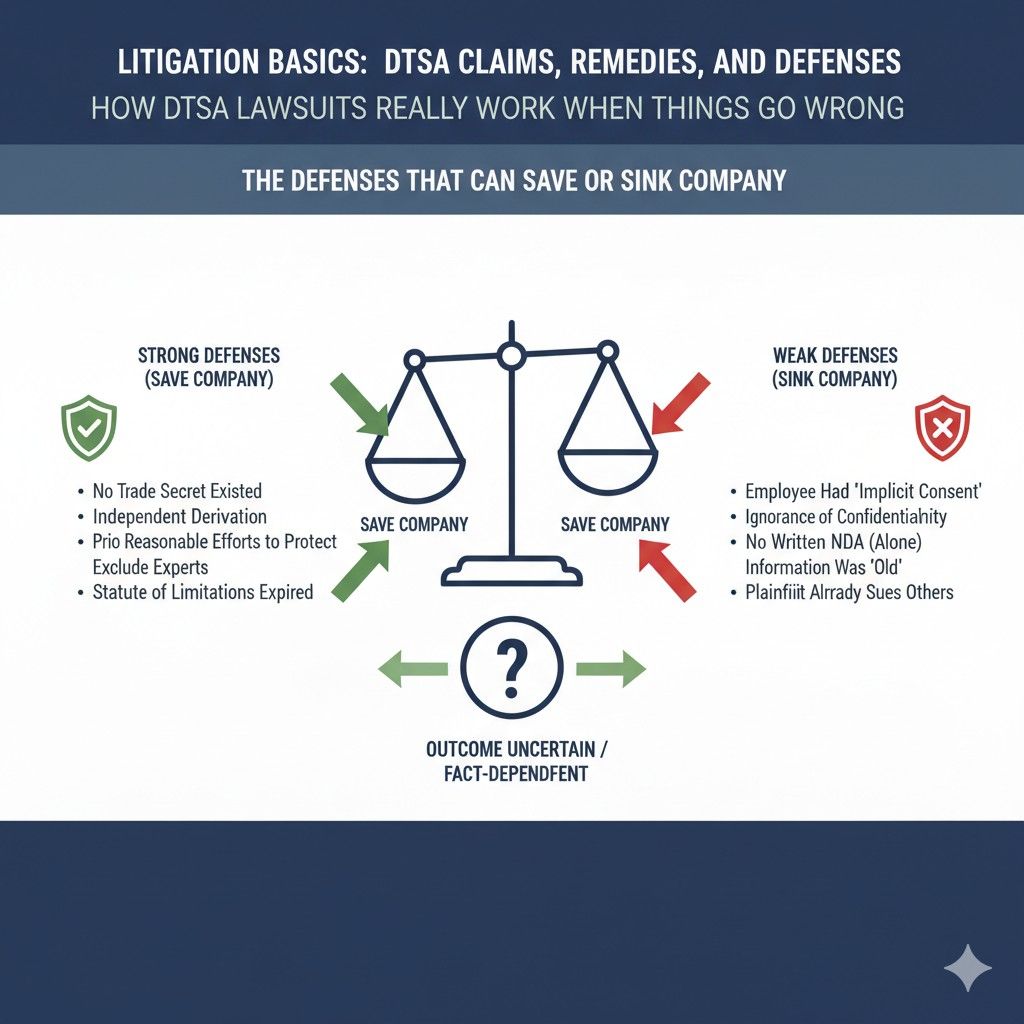
This section shows that remedies are not abstract penalties. They are practical levers that shape business outcomes.
Wrapping It Up
The DTSA is not a weapon you pull out when things go wrong. It is a framework that quietly rewards companies that took protection seriously from day one. Founders who understand this do not panic when disputes arise. They already know where their value lives, who owns it, and how it is protected. The real lesson from DTSA litigation is not about lawsuits. It is about discipline. Companies that treat their core systems, data, and processes as real assets build leverage without slowing down. They move faster because they are not guessing. They act with confidence because they know what is theirs.
Leave a Reply