Most founders know they have something special. A clever system. A smart process. A quiet edge that competitors cannot see. What many do not know is how to explain that value to investors in a way that feels real, solid, and worth betting on. This is where trade secrets come in. A trade secret is not an idea written on a napkin. It is the hard-earned know-how inside your company that makes your product better, faster, or cheaper.
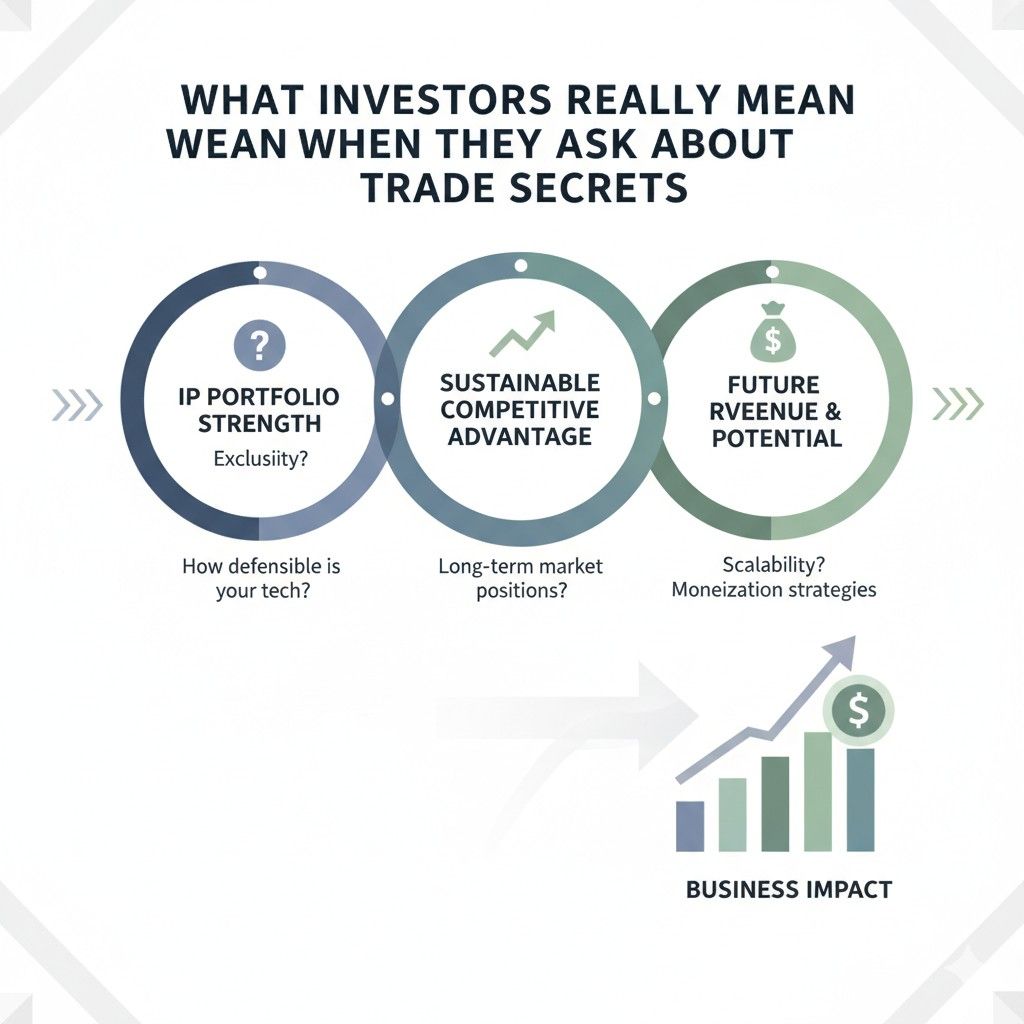
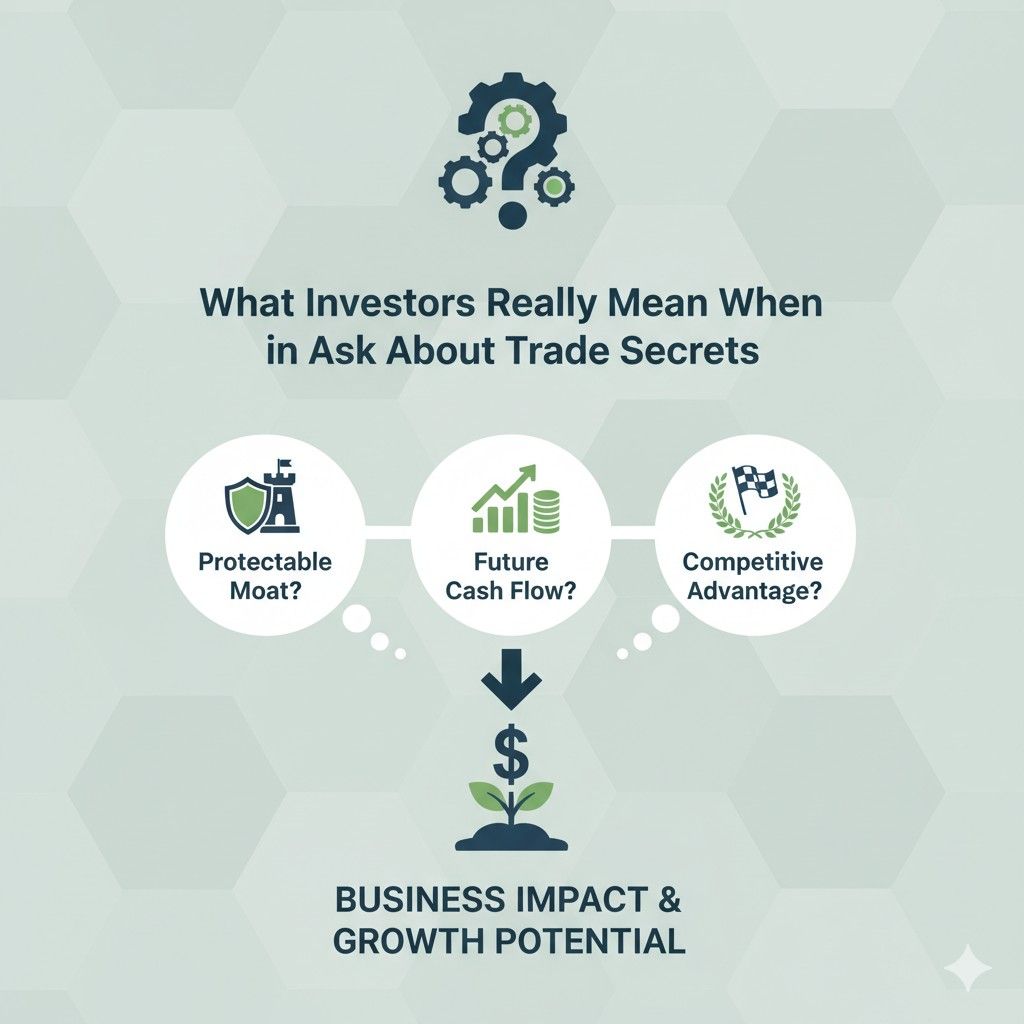
What Investors Really Mean When They Ask About Trade Secrets
When an investor asks about trade secrets, they are not testing your legal knowledge.
They are not asking you to quote definitions or explain case law. They are asking a much simpler and much more important question.
They want to know why your company will still matter in five or ten years, even when others try to copy you.
This section is about learning to hear the question behind the question. Once you understand what investors are really listening for, your answers become clearer, calmer, and far more convincing.
Investors Are Looking for Proof of a Moat
When trade secrets come up, investors are usually thinking about protection. They want to know what stops a well-funded competitor from watching your demo, hiring a smart engineer, and building the same thing in six months.
After this heading, it helps to pause and reset how you think about protection. Investors do not expect perfection. They expect friction. They want to see that copying you would be slow, costly, and risky.
The most effective way to answer is not to say “our system is complex.” Complexity alone is not protection. Instead, explain how long it took to develop your internal process and why that time cannot be compressed.
Talk about the failed experiments, the data that only exists because of your early choices, and the small decisions that compound into a big edge.
Actionable advice here is to map your development timeline and identify moments where knowledge was created that cannot be reverse engineered from the outside.
These moments are the heart of your trade secrets, even if you have never labeled them that way before.
They Are Testing How Well You Understand Your Own Business
Another thing investors are quietly measuring is your clarity. Founders who truly understand their trade secrets can explain them without hiding behind buzzwords or vague claims.
After this heading, it is important to slow down and reflect. If you struggle to explain what is secret and why it matters, investors notice. It signals that the advantage may be accidental rather than intentional.
A strong answer sounds grounded. It explains what part of the business relies on internal knowledge and how decisions would change if that knowledge disappeared tomorrow. This shows ownership and awareness.
A practical step is to ask yourself a simple question. If a new team tried to rebuild our company using only public information, where would they fail first? The honest answer usually points directly to your most valuable trade secret.
Investors Want to See Revenue, Not Just Ideas
Trade secrets only matter to investors when they connect to money. A secret that does not change revenue, margins, or growth speed is interesting, but not valuable.
After this heading, founders should focus on translation. Your job is to translate technical advantage into business impact.
If your secret improves efficiency, explain how that lowers costs over time. If it improves quality, explain how that leads to retention or pricing power.
One useful approach is to tie your trade secret to a metric investors already care about.
Instead of saying “we have a unique internal workflow,” say “this workflow lets us ship updates twice as fast, which is why customers stay longer and pay more.”
This is actionable because it forces discipline. Every claimed secret should point to a measurable outcome. If it does not, it may not be as strong as you think, or it may need better framing.
They Are Evaluating Risk Without Saying the Word
Investors rarely say “tell me about your risks” in plain terms. Asking about trade secrets is one way they assess risk quietly.
After this heading, the conversation shifts to trust. Investors want to know what happens if something goes wrong. If an employee leaves. If a partner relationship ends. If a competitor gets aggressive.
You earn confidence by showing that your trade secrets are not locked in one person’s head.
You can explain how knowledge is shared internally, how access is controlled, and how key processes are documented without exposing them publicly.
An actionable move is to review who knows what inside your company. If one person holds all the critical knowledge, that is a risk investors will see even if you do not mention it.

Spreading knowledge carefully while keeping it internal strengthens both your business and your story.
They Want Signals of Long-Term Thinking
Trade secrets also act as a signal of maturity. Companies that take them seriously tend to think further ahead.
After this heading, founders should emphasize intention. Investors respond well when they see that you have made conscious choices about what to keep private and why. This shows discipline and foresight.
You do not need a perfect system. You need a clear philosophy. Explain how you decide what to publish, what to patent, and what to keep secret. This tells investors that your advantage is not accidental. It is managed.
A simple exercise is to write down three things your company will never share publicly, no matter how much pressure there is to market or explain. Those boundaries often reveal your true trade secrets.
Investors Are Listening for Consistency Across the Pitch
Trade secrets should not appear out of nowhere. They should quietly support everything else you say.
After this heading, it is helpful to think holistically. If you claim fast growth, your trade secrets should help explain that speed. If you claim strong margins, your secrets should help justify them.
When answers feel disconnected, investors get uneasy. When everything lines up, confidence grows.
An actionable step is to review your pitch and note where your trade secrets show up implicitly. Then decide where a short, clear explanation would strengthen the story without overexposing details.
They Are Assessing How Easy You Are to Compete Against
At the end of the day, investors are asking a simple question. If this company succeeds, how hard will it be to take their place?
After this heading, founders should be honest. No company is unbeatable. But every strong company has areas where competition hurts.
Your job is to identify where competition feels the most pain. That pain often comes from trade secrets. Maybe it is the cost of recreating your data. Maybe it is the time required to tune your system.
Maybe it is the deep customer understanding built over years.
A practical way to sharpen this is to imagine you are starting a competitor tomorrow. Write down what would slow you down the most. Those slowdowns are what investors care about.
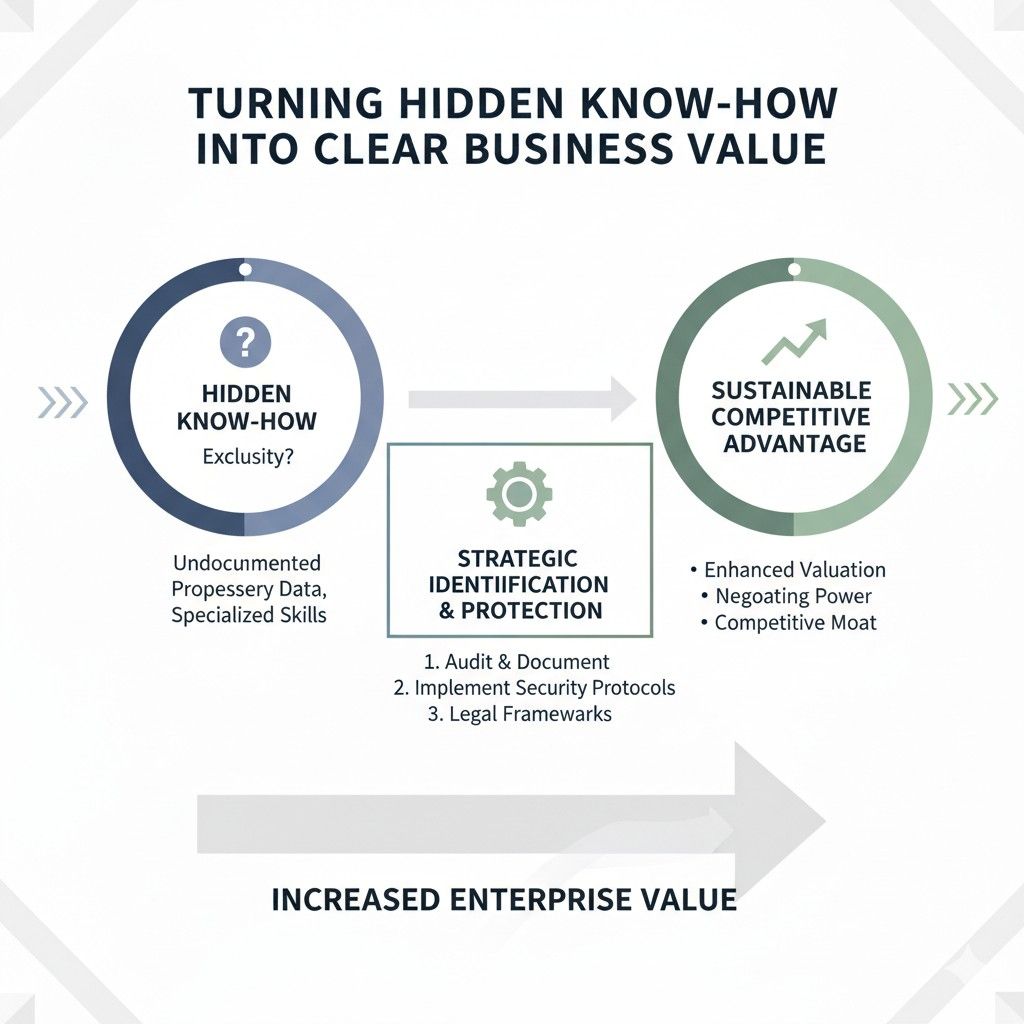
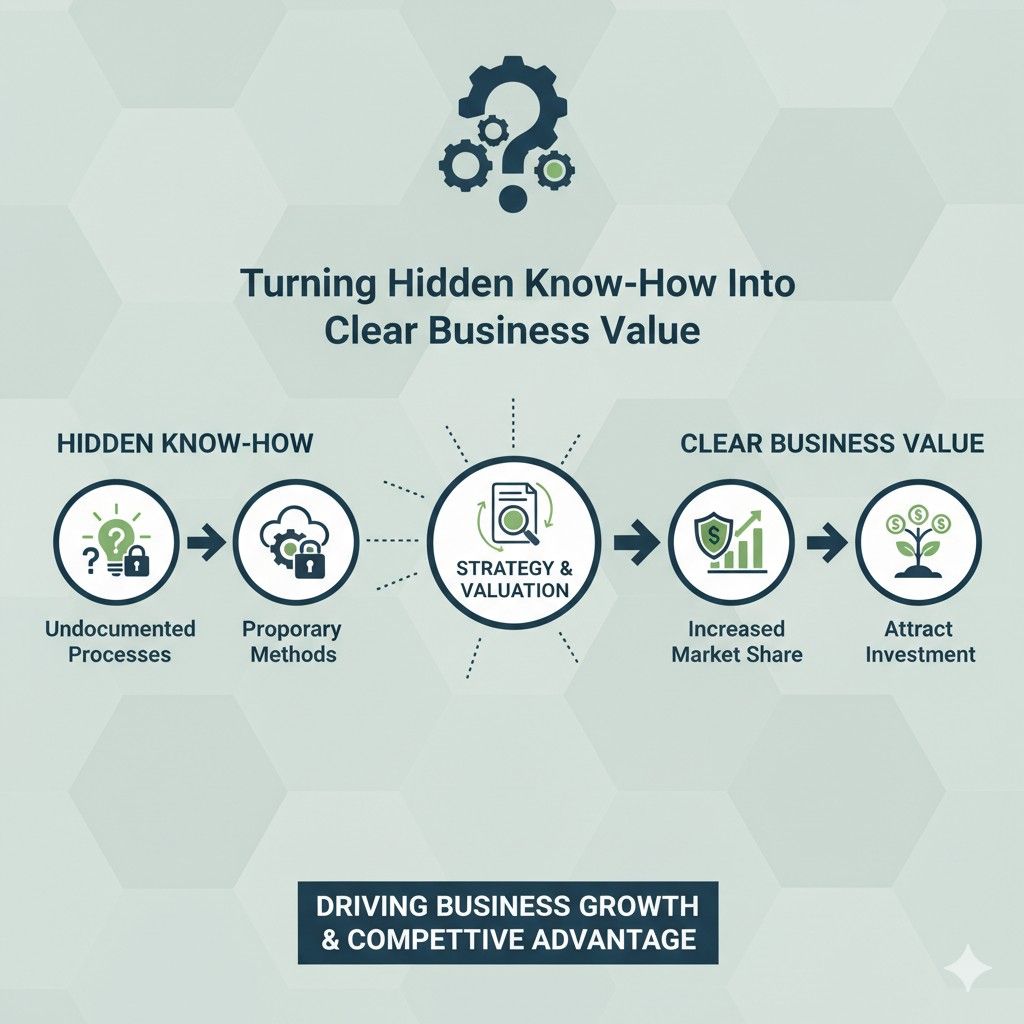
Turning Hidden Know-How Into Clear Business Value
Many companies have valuable know-how, but very few know how to turn it into something investors can clearly see and trust.
Hidden knowledge only becomes valuable in an investor’s eyes when it is connected to outcomes.
This section focuses on how to move from “we know something others don’t” to “this knowledge drives our business forward in a measurable way.”
Understanding the Difference Between Knowledge and Value
It is easy to assume that knowledge is automatically valuable. In reality, value only appears when that knowledge changes decisions, results, or direction.
After this heading, it helps to reframe how you think about what your team knows.
Internal expertise becomes valuable when it shapes how you build, sell, price, or scale. If your know-how does not influence one of these areas, investors will struggle to care.
A practical step is to trace how a piece of internal knowledge travels through your company. Does it change how features are designed? Does it affect how fast issues are fixed?
Does it allow you to serve customers others cannot? That path is what converts knowledge into business value.
Connecting Know-How to Customer Outcomes
Investors care deeply about customers, even when they are asking about internal systems. Trade secrets matter most when they improve the customer experience in ways that are hard to copy.
After this heading, the focus should shift outward. Instead of describing what you do internally, explain what customers get because of it.
Faster onboarding, fewer errors, better results, or lower costs all point back to internal know-how.
This is actionable because it changes how you talk. When preparing for investor conversations, practice explaining your trade secret without mentioning internal tools at all.
Start with the customer result, then work backward. This forces clarity and keeps the conversation grounded in impact.
Translating Technical Depth Into Simple Business Language
Many founders lose investors by explaining too much detail and too little meaning. Deep knowledge is impressive, but only when it is translated into simple language that connects to business goals.
After this heading, the goal is simplification, not dumbing down. You are not removing substance. You are removing friction.
A useful exercise is to explain your trade secret as if you were talking to a smart person outside your field.
If they can understand why it matters in under a minute, you are on the right track. If they get lost, investors likely will too.
This translation also helps internally. Teams that can explain their advantage simply tend to make better strategic decisions because everyone understands what truly matters.
Showing How Know-How Speeds Up Execution
Speed is one of the most valuable advantages a startup can have. Trade secrets often play a quiet but powerful role in how fast a company can move.
After this heading, focus on time. Investors want to know how long things take and why. If your internal knowledge lets you test ideas faster, recover from mistakes quicker, or launch improvements ahead of others, that is real value.

An actionable way to show this is to compare timelines. Explain how long a key task would take without your internal process versus with it. Time saved is easy to understand and hard to ignore.
Linking Trade Secrets to Cost Structure
Costs are another area where hidden knowledge creates visible impact. Many strong trade secrets exist not in flashy features, but in efficient operations.
After this heading, founders should look closely at where money is saved. This might be through automation, smarter resource use, or fewer errors. These savings compound over time and directly affect margins.
The key is to explain this clearly. Instead of saying you operate efficiently, explain how your internal process reduces waste or prevents expensive mistakes.
Investors appreciate founders who understand their cost drivers deeply.
Making Intangible Value Feel Tangible
Trade secrets are often invisible, which makes them hard to trust. The goal here is not to reveal the secret, but to make its effects visible.
After this heading, focus on evidence. This can be trends, comparisons, or outcomes that only make sense if the secret exists.
Consistent performance, steady improvements, or resilience during stress all point to strong internal foundations.
A helpful tactic is to anchor your explanation in history. Talk about a moment when your trade secret made a clear difference during a challenge or pivot. Stories like this make intangible value feel real.
Aligning Know-How With Long-Term Strategy
Investors invest in futures, not just current performance. Trade secrets matter most when they support where the company is going, not just where it has been.
After this heading, connect your internal knowledge to your roadmap. Explain how what you know today opens doors tomorrow. This shows that your advantage grows over time rather than fading.
An actionable step is to map your future plans against your trade secrets. If a future goal does not rely on your unique knowledge, it may be easier for competitors to reach.
This insight can guide both strategy and communication.
Avoiding the Trap of Over-Explaining
There is a fine line between clarity and overexposure. Many founders either say too little or too much.
After this heading, the emphasis is balance. You want to explain impact without revealing instructions. Focus on results, not recipes.
A simple rule is to explain the “what” and the “why,” but keep the “how” at a high level. Investors do not need the blueprint. They need confidence that one exists and that it works.
Making Business Value Repeatable and Defensible
One-time success is not enough. Investors want to know if value can be repeated and defended.
After this heading, highlight systems, not heroics. Trade secrets that live in processes, tools, and shared understanding are stronger than those tied to individual brilliance.
A practical move is to review where your value comes from today and ask whether it would still exist if the team doubled in size. If the answer is yes, your trade secrets are likely well-structured.
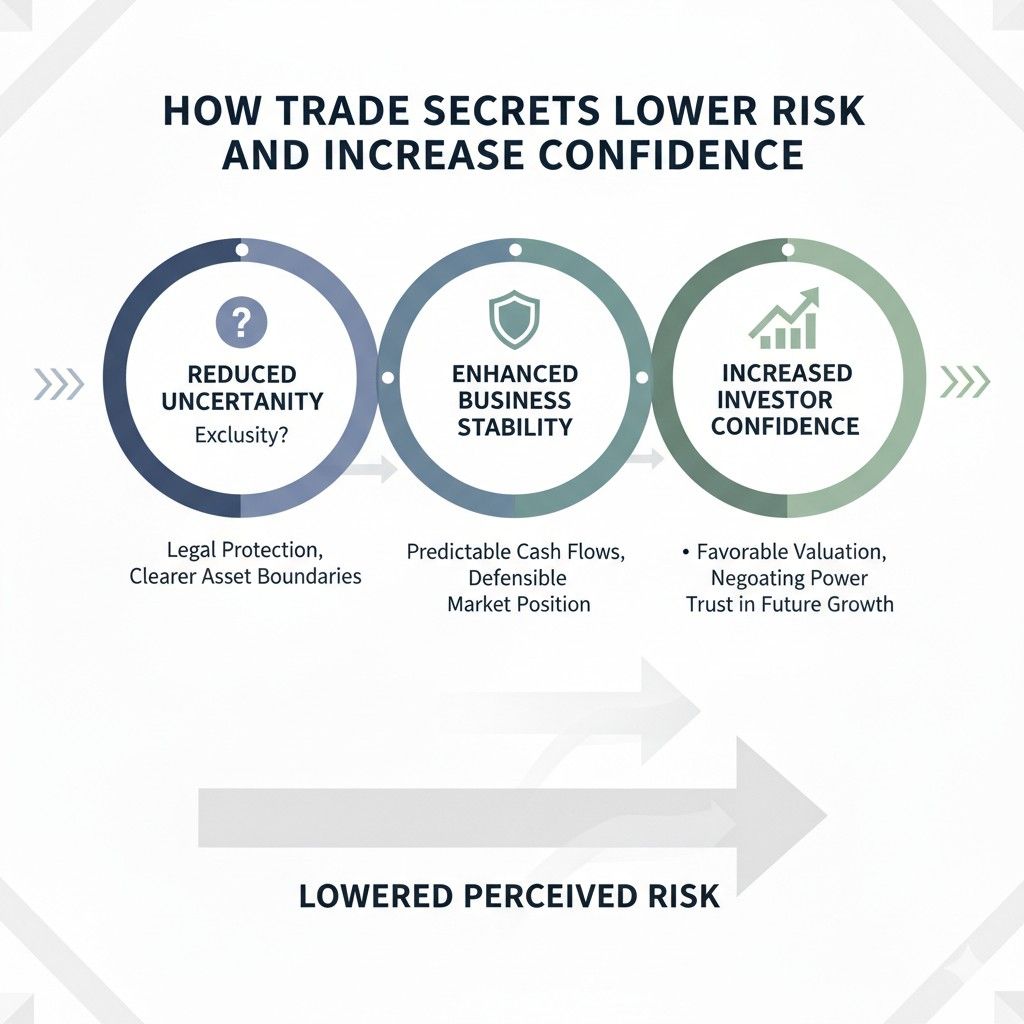
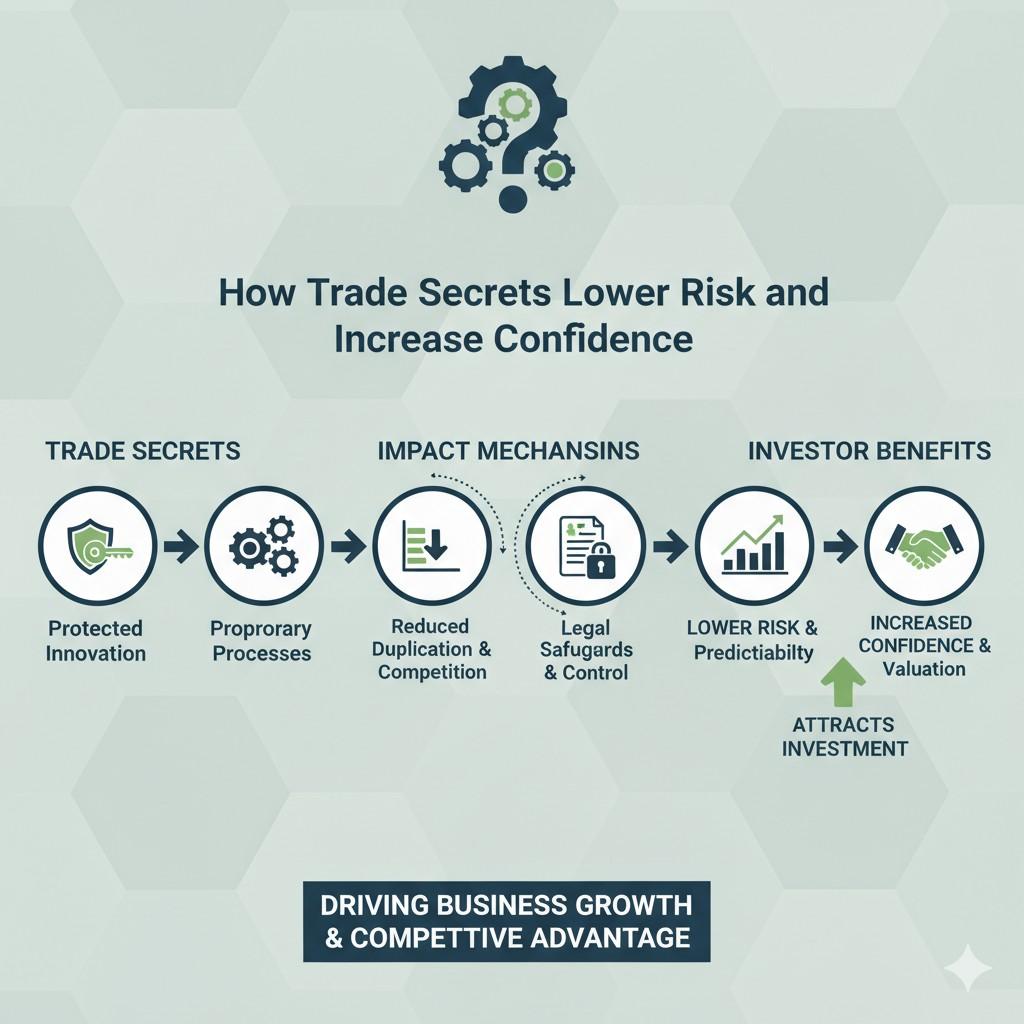
How Trade Secrets Lower Risk and Increase Confidence
Investors are not only looking for upside. They are constantly scanning for hidden risk. Trade secrets play a quiet but powerful role here. When handled well, they reduce uncertainty and increase trust.
This section explains how trade secrets signal stability, foresight, and control, even when markets are uncertain or products are still evolving.
Why Risk Matters More Than Big Promises
Big vision gets attention, but low risk closes rounds. Investors have seen many exciting ideas fail because they were easy to copy or fell apart under pressure.
After this heading, it is important to ground the conversation. Trade secrets show that your company is not built on hope alone. They show that there are internal strengths that hold things together when plans change.
A useful way to think about this is resilience. If growth slows or a competitor appears, what inside your company helps you adapt without starting over?
Often, the answer lives in trade secrets that guide decision-making and execution.
Trade Secrets as Insurance Against Competition
Competition is expected. What investors want to avoid is fragile companies that collapse when competition arrives.
After this heading, founders should focus on durability. Trade secrets make competition expensive. They force others to spend time, money, and energy just to catch up, and even then, results are not guaranteed.
An actionable approach is to explain how your internal knowledge changes the economics of copying you.
If it would take years of trial and error, or access to data that cannot be bought, say so clearly. This reframes competition as a long-term problem rather than an immediate threat.
Reducing Dependence on External Factors
Many startups rely heavily on partners, platforms, or third-party tools. This can create risk that investors notice quickly.
After this heading, trade secrets help rebalance that risk. Internal processes and know-how reduce dependence on outside systems that you do not control.
You can show this by explaining what your company can do internally that others must outsource or license.
Control over key parts of your operation increases confidence because fewer things can be taken away from you overnight.
Showing That Success Is Not Accidental
Investors are wary of luck-driven success. They want to believe that wins can be repeated.
After this heading, the focus should be intention. Trade secrets suggest that results come from deliberate choices, not happy accidents.
A practical way to show this is to connect past outcomes to internal decisions. When you can say “this worked because of how we do things internally,” you are showing that success is understood and repeatable.
Protecting Against Team Changes
People leave. Investors know this. What they worry about is knowledge walking out the door.
After this heading, founders should address continuity. Strong trade secret management spreads knowledge across systems and teams without making it public.
You can explain how key insights are documented, reviewed, and shared internally. This reassures investors that the company is bigger than any one person and can survive change.
Creating Predictability in an Uncertain Market
Markets shift quickly. Predictability becomes a valuable asset.
After this heading, trade secrets matter because they create internal consistency. Even when external conditions change, internal processes provide steady ground.

An actionable insight is to show how your internal knowledge helps you forecast better, plan faster, or react with confidence. Predictable execution reduces perceived risk and makes future projections feel more credible.
Building Confidence Without Revealing Too Much
There is always tension between transparency and protection. Investors need enough detail to trust you, but not so much that your advantage leaks.
After this heading, the key is framing. Focus on effects and outcomes rather than methods. Explain what your trade secrets allow you to do, not exactly how you do it.
This approach keeps conversations safe while still building confidence. It also signals maturity, which investors value deeply.
Trade Secrets as a Signal of Operational Discipline
Strong trade secrets rarely exist in chaotic companies. They usually reflect thoughtful processes and clear priorities.
After this heading, founders can highlight discipline. Investors notice when teams know what to keep private and why. It shows judgment.
A simple way to demonstrate this is to talk about decisions you chose not to make public, even when it might have helped marketing. That restraint signals long-term thinking and lowers perceived risk.
Increasing Trust Through Consistent Messaging
Confidence grows when stories stay consistent over time. Trade secrets help anchor that consistency.
After this heading, ensure that what you say about your advantage today matches what you said six months ago. Investors track this more than founders realize.
An actionable step is to write a short internal explanation of your core trade secrets and their impact. Use it to align pitch decks, investor updates, and strategy discussions. Consistency builds trust quietly but powerfully.
How This Ties Back to Real Protection
Trade secrets reduce risk only when they are treated seriously. Casual handling weakens their impact.
After this heading, it is worth noting that structure matters. Clear ownership, internal controls, and smart decisions about what to protect make your story stronger.
This is where many founders benefit from guidance. Platforms like PowerPatent help teams think clearly about what should stay secret, what should be protected formally, and how to communicate value without giving away the edge.
You can explore how that works at https://powerpatent.com/how-it-works.
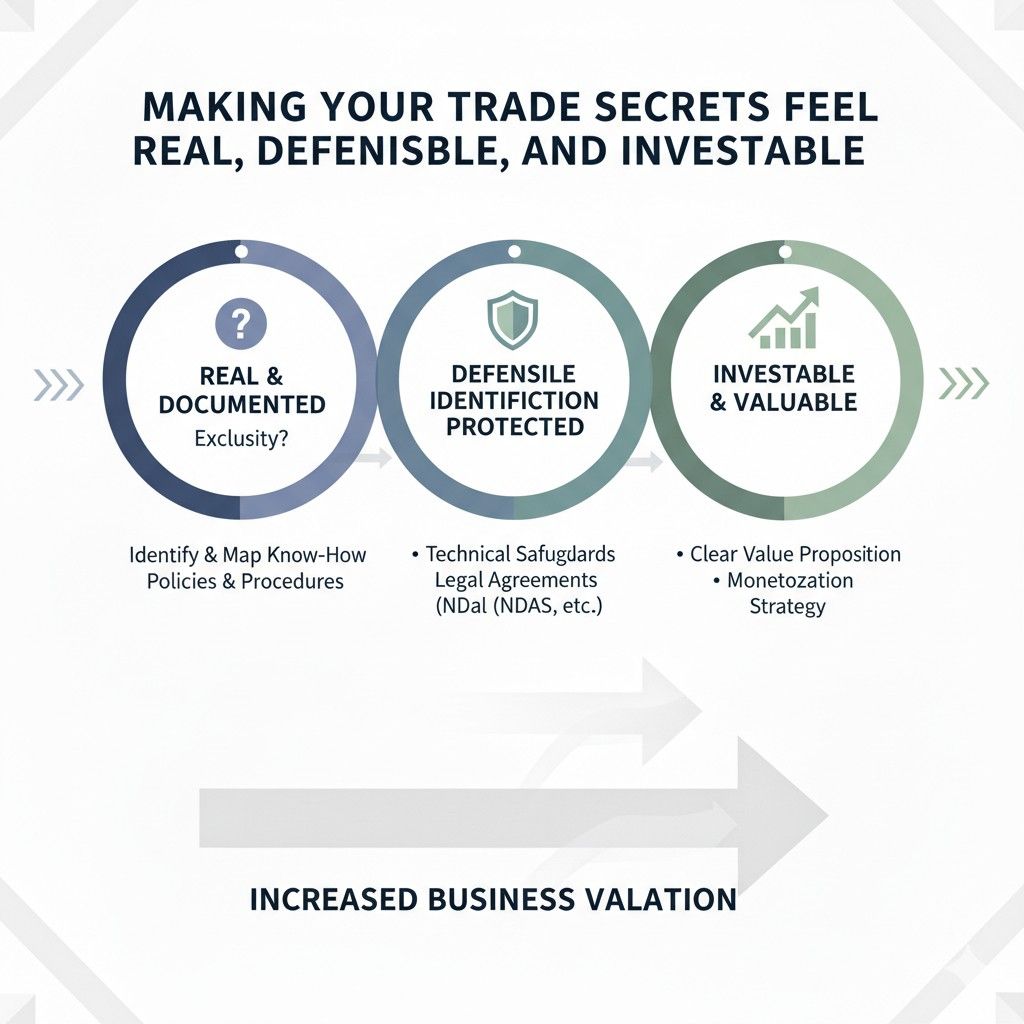
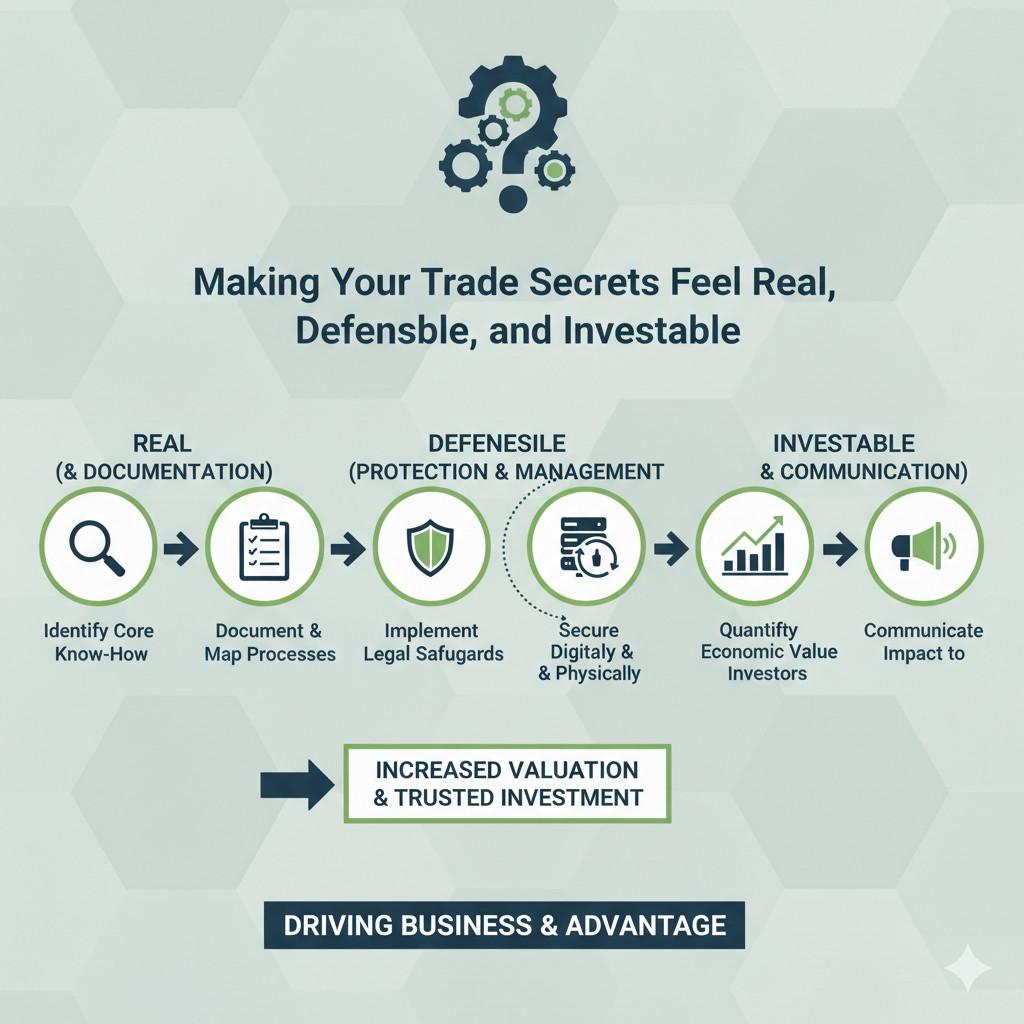
Making Your Trade Secrets Feel Real, Defensible, and Investable
Trade secrets only matter to investors when they feel solid. Not abstract. Not theoretical. They need to feel like something that actually exists inside the business and will continue to exist as the company grows.
This section focuses on how founders can turn invisible advantages into something investors trust, respect, and are willing to back.
Why “Trust Us” Is Never Enough
Investors hear confident claims all day. What they rarely hear is evidence that confidence is earned.
After this heading, it is important to recognize a hard truth. Saying you have trade secrets does not make them real. Investors want to see signals that your advantage is grounded in daily operations, not just in a pitch.
You can create this sense of reality by anchoring your trade secrets in routine behavior.
When you describe how teams work, how decisions are made, and how problems are solved, your secrets begin to feel embedded rather than imagined.
Turning Internal Behavior Into External Proof
What happens inside your company leaves traces. Investors look for those traces.
After this heading, focus on outcomes that would be difficult to explain without strong internal knowledge. Stable performance, steady improvement, and calm execution under pressure all suggest that something deeper is at work.
A helpful way to approach this is to describe moments of stress. Product failures, market shifts, or customer demands often reveal the strength of internal systems.
When your company handles these moments well, investors infer that there is valuable know-how behind the scenes.
Showing Defensibility Without Revealing Details
Defensibility is not about secrecy alone. It is about effort. Investors want to know how hard it would be for someone else to achieve the same result.
After this heading, explain the cost of imitation. This cost might be time, data, learning curves, or organizational change. The higher the cost, the stronger the defense.
You do not need to explain the process step by step. You only need to explain why shortcuts do not work. This reassures investors that your advantage cannot be copied quickly or cheaply.
Using Time as a Measure of Strength
Time is one of the clearest indicators of value. Things that take a long time to build are harder to replace.
After this heading, connect your trade secrets to your company’s history. Explain how long it took to develop key insights and why that timeline matters.
This helps investors understand that your advantage is the result of sustained effort, not a single clever idea. It also suggests that even well-funded competitors would need patience to catch up.
Making Trade Secrets Part of the Growth Story
Investors are not just buying what you are today. They are buying what you will become.
After this heading, show how your trade secrets scale. Explain how internal knowledge becomes more powerful as the company grows, rather than breaking under pressure.

This might mean that more data improves decisions, or that refined processes unlock new markets. When trade secrets support growth, they feel like assets rather than constraints.
Demonstrating Control Over Knowledge
Control is a key theme investors care about. Who has access. How information flows. What stays inside.
After this heading, explain how knowledge is managed without going into sensitive details. Investors want to know that you are intentional, not careless.
This can include how teams are onboarded, how critical insights are shared, and how access is limited where necessary. Control signals professionalism and reduces fear of leakage.
Aligning Trade Secrets With Company Culture
Culture often sounds soft, but it has hard consequences. Strong trade secrets usually live in strong cultures.
After this heading, connect how your team thinks and works to the protection of key knowledge. A culture of ownership, documentation, and accountability helps trade secrets survive change.
This reassures investors that your advantage is supported by people and systems, not just rules.
Making the Advantage Feel Ongoing, Not Static
A static advantage fades. An evolving one compounds.
After this heading, explain how your trade secrets are not frozen in time. They grow as the company learns.
This could mean continuous improvement, feedback loops, or experimentation. Investors gain confidence when they see that your edge sharpens rather than dulls over time.
Avoiding the Mistake of Underplaying Value
Some founders downplay trade secrets out of fear of sounding boastful. This often backfires.
After this heading, remember that clarity is not arrogance. Investors want you to understand your value.
The key is to speak factually and calmly. Describe what exists, how it works in practice, and why it matters. Let the impact speak for itself.
When to Formalize Protection
At some point, informality becomes a risk. Investors notice when protection does not match value.
After this heading, it is useful to acknowledge that trade secrets and formal protection can work together. Knowing when to keep something secret and when to protect it formally is a strategic decision.
This is where many companies benefit from modern tools and guidance. PowerPatent helps founders identify what truly matters, structure protection thoughtfully, and communicate value clearly to investors.
If you want to see how that process works, you can explore it here: https://powerpatent.com/how-it-works
Wrapping It Up
Trade secrets are often the most powerful part of a business, yet they are the least talked about in clear business terms. Founders live with this knowledge every day, so it can feel obvious. Investors do not have that context. They need help seeing how hidden know-how turns into real outcomes. The key idea to take away is simple. Trade secrets are not about secrecy for its own sake. They are about control, consistency, and confidence. They explain why your company can move faster, make better decisions, and protect its position over time. When you connect those dots clearly, investors stop guessing and start believing.
Leave a Reply