
If you are building something new, your patents are not just paperwork. They are weapons, shields, and leverage. But not all patents are equal. Some are strong and valuable. Others sit there and do nothing. The question is simple: how do you tell the difference? The answer is also simple. You look at citation data and litigation data. These two signals show you which patents matter and which ones do not. In this guide, I will show you exactly how to use them to rank patents the smart way, so you can protect what you are building with real confidence.
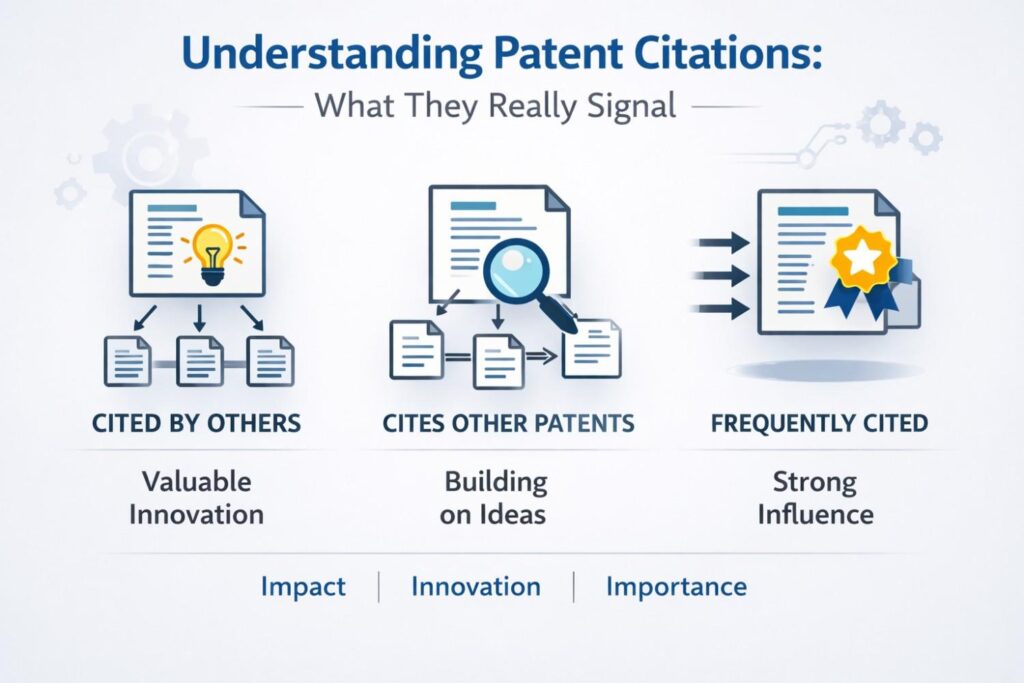
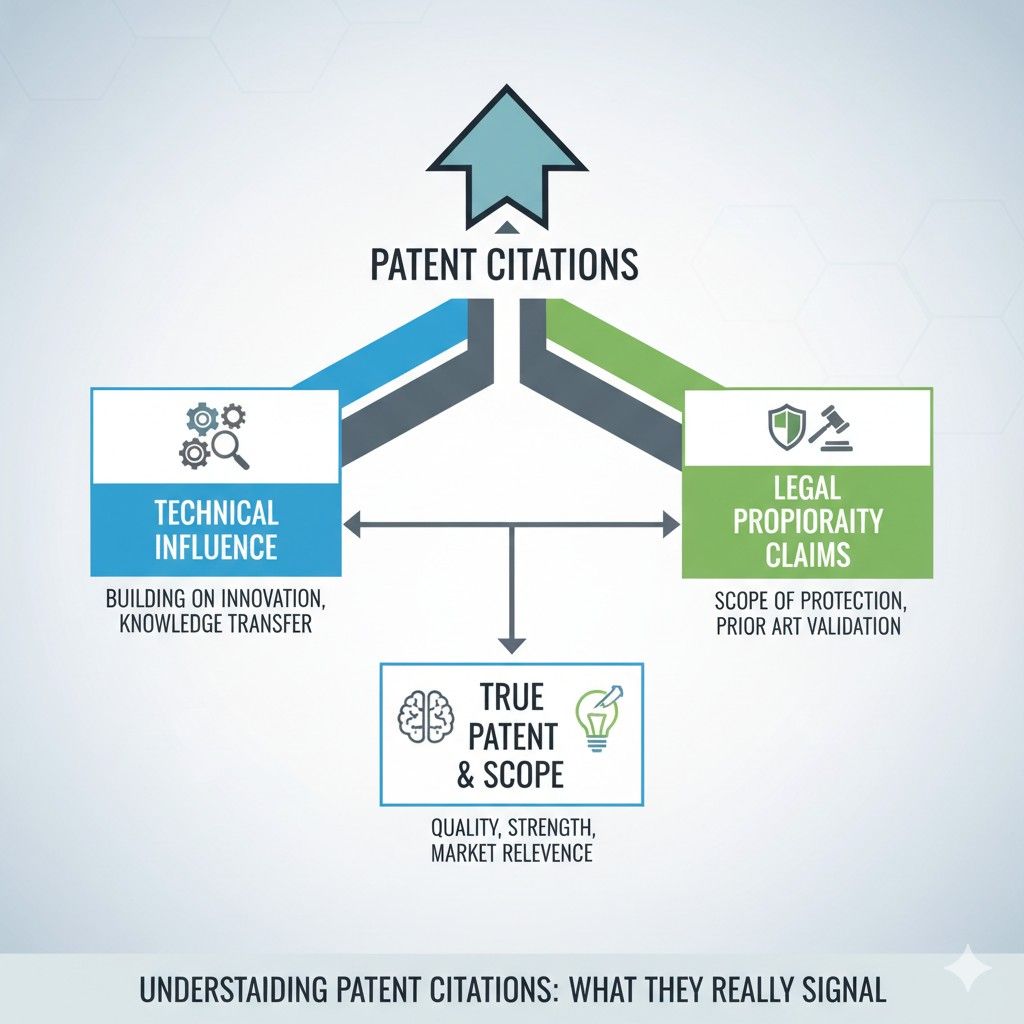
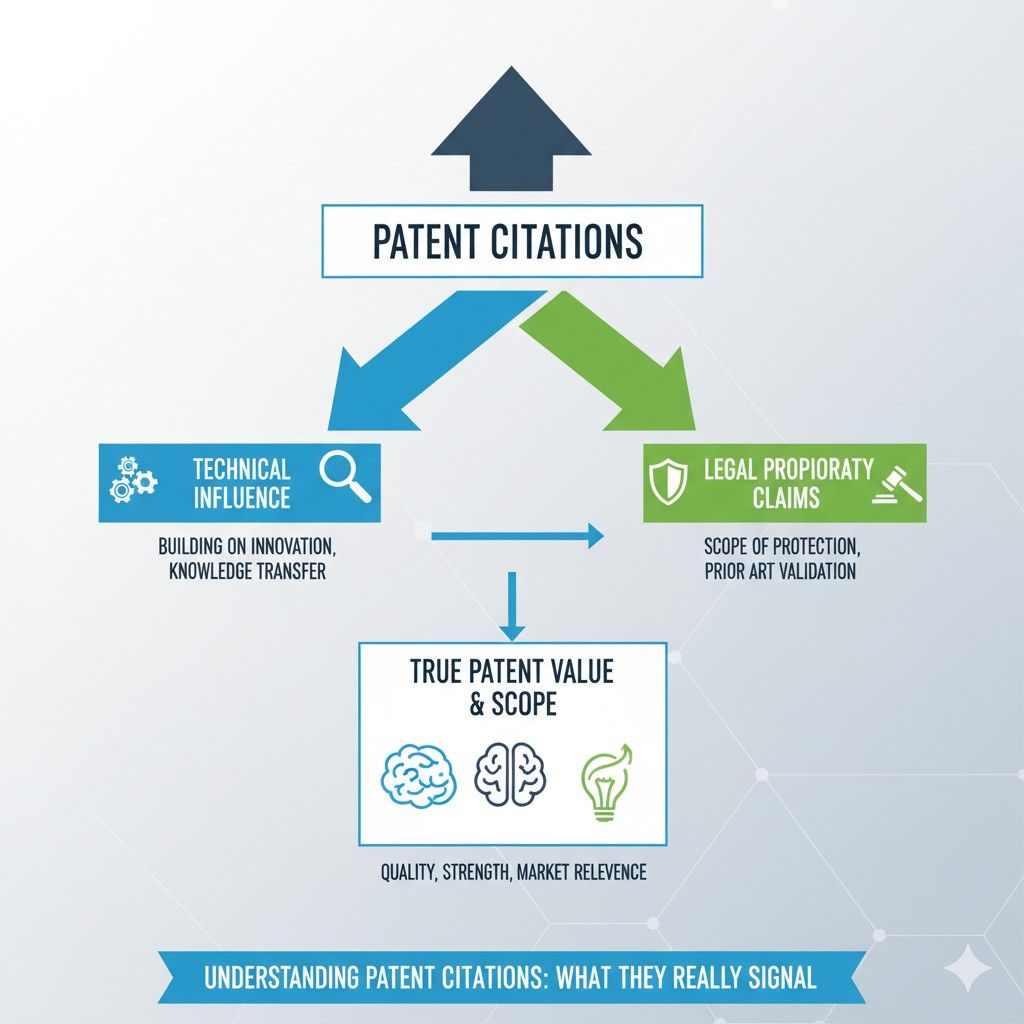
Understanding Patent Citations: What They Really Signal
Patent citations are not random footnotes. They are signals. They show how ideas connect. They show how knowledge moves. And if you read them the right way, they show where power sits inside a market.
Most founders look at patents as isolated documents. That is a mistake. A patent is part of a living network. Every citation ties one invention to another. When you learn to read that network, you stop guessing and start seeing patterns.
If you are building a serious company, this skill changes how you invest, how you design, and how you protect your edge.
The Hidden Story Behind Every Citation
Every citation tells a story about influence and boundaries. It shows what came before and what shaped the invention.
When a patent cites another patent, it is not giving praise. It is marking territory. It is saying, “This is the edge of what already exists.” That boundary matters because it shows how crowded or open a space is.
If you look closely at the citations inside a patent you care about, you can see the technical neighborhood it lives in. You can see whether it sits in a dense cluster of similar ideas or stands at the edge of a new branch.
For a business, this tells you risk level. A dense neighborhood means more overlap and more potential conflict. A sparse area may mean more freedom to operate, but also possibly less validation.
You should regularly map the citation neighborhood around your core technology. Look at the patents your competitors cite again and again. Those are often the anchors of the field. If your roadmap touches those anchors, you need a plan.
Backward Citations Reveal Technical Foundations
Backward citations are the references a patent makes to older patents. These show the technical roots.
Studying backward citations helps you understand how mature a field is. If a new patent relies on very old prior art, it may mean the space has been stable for years. If it relies heavily on recent patents, it may signal rapid change.
For founders, this insight is strategic. A fast-changing field often rewards speed and aggressive filing. A stable field rewards depth and careful claim drafting.
You can also study which older patents appear again and again across many new filings. Those older patents are often foundational. If they are still active, they may control key technical ground.
If you are entering a market, start by identifying the most cited older patents in that domain.
Then check their expiration dates. If key patents are close to expiring, that opens opportunity. If they have many years left, you must design with awareness.
Forward Citations Show Market Pull
Forward citations are more than academic influence. They show market pull.
When many new patents cite an older one, it often means the older invention solved a core problem. Others are building on top of it because it works.
As a business, you should track forward citations over time. Do not just look at totals. Look at growth patterns.
If citations spike in the last two years, that signals renewed relevance. Maybe a new market trend made the old invention important again. That can guide product direction.
You can also compare forward citation growth between competitors. If one company’s patents are being cited more often and more quickly than others, that company may be shaping the direction of the industry.
This does not always mean they are winning commercially. But it often means they are influencing technical standards.
Influence leads to leverage.
The Quality of the Citing Entity Matters
Not all citations carry equal weight. A citation from a serious operating company often signals more than one from a minor filer.
When you review citation data, look at who is doing the citing. Are the citations coming from major players in your industry?
Are they coming from companies that are raising large funding rounds? Are they coming from entities known for active enforcement?
If respected companies repeatedly cite a patent, that patent likely covers something essential.
You can take this further by ranking the citing entities themselves. If a patent is cited by companies that hold strong portfolios, that is a stronger signal than citations from weak portfolios.
This layered analysis gives you a clearer picture of influence. You are not just counting mentions. You are measuring who respects the invention enough to cite it.
Citation Clusters Reveal Competitive Pressure
Citations tend to form clusters. Groups of patents cite each other within the same technical theme.
When you identify a dense cluster, you are looking at a hot zone. Many players are innovating in that narrow area.
For a startup, entering a dense cluster without strong protection is risky. You may face blocking patents or infringement claims.
But dense clusters also show demand. They show that the problem is important.
The key is to study where the cluster has gaps. Look for subtopics that have fewer filings. Look for adjacent technical paths that are less crowded but still connected to the main theme.
This is where smart filing strategy wins. You do not always need to fight in the center. You can protect the edges that others will later need.
Time Patterns Reveal Technology Shifts
Citations change over time. A patent that once had little attention can suddenly become central.
Tracking citation trends year by year shows shifts in focus. If older patents in a specific niche suddenly start getting cited more often, it may signal that the industry is revisiting that approach.
As a founder, this can help you avoid betting on declining paths. If citation activity around a method is fading, it may mean the market is moving on.
You can also use time patterns to identify early signals. When a small set of patents begins to receive citations quickly after publication, it may mark the start of a new wave.
If you are early in filing around that wave, you position yourself near the core of a future cluster.
That is long-term leverage.
Examiner Citations Reflect Core Prior Art
Examiner citations are added by the patent office during review. They often reflect what the examiner believes is central prior art.
If a specific patent is frequently cited by examiners across many applications, it likely defines the baseline for that technical area.
For strategy, this matters because baseline patents often shape claim boundaries. If your invention builds on top of one of these baseline patents, you must draft carefully.
Ignoring heavily cited examiner references can lead to weak claims or unnecessary rejections.
A strong patent strategy starts with studying what examiners see as core. This reduces friction and increases the chance of smoother prosecution.
When you combine this awareness with smart drafting tools and real attorney oversight, you avoid common mistakes. That is exactly the kind of clarity modern founders need when protecting serious innovation. If you want to see how that process can be structured without slowing your team down, explore how it works here → https://powerpatent.com/how-it-works
Self-Citations Show Portfolio Strategy
Companies often cite their own earlier patents. This is called self-citation.
High self-citation can signal a focused, layered strategy. It may show that a company is building depth around a core platform.
If a competitor’s patents heavily cite each other, it suggests they are building a defensive wall. Each new filing reinforces earlier ones.
For your business, this tells you how serious they are about that domain.
If you see little self-citation, it may indicate scattered innovation without strong portfolio structure.
You can also use this insight internally. As you file patents, think about how they connect. Building linked filings around your core system increases strength over time.
This does not mean filing randomly. It means building deliberately, where each new invention strengthens the previous one.
Geographic Citations Indicate Global Importance
Citations across different countries show global relevance.
If a patent filed in one country is cited in applications across multiple jurisdictions, it suggests broader importance.
For startups with global ambitions, this matters. A technology that attracts international citation may become part of global standards.
When you see that pattern, you should consider international filing strategy early. Waiting too long can close doors.
Citation data helps you see where your market might expand before revenue even shows up.
That foresight allows you to protect ahead of growth.
Using Citation Insights to Guide Product Roadmaps
Citation data is not just for legal teams. It should influence product decisions.
If you see heavy citation activity around a certain architecture or method, it may signal that the market believes in that direction.
If your team is debating between two technical approaches, citation density can serve as a proxy for ecosystem support.
This does not replace engineering judgment. But it adds market intelligence.
Strong companies use every signal available.
Before you build your next major feature, scan the citation landscape. Are you moving into a crowded zone controlled by others? Or are you stepping into an emerging area where you can shape the narrative?
This kind of awareness separates reactive companies from strategic ones.
Understanding patent citations at this level gives you control. It removes guesswork. It turns public data into a strategic advantage.
If you are building something that matters, you should not rely on blind filing or slow, outdated processes. You need speed, clarity, and attorney-backed precision.
That is why modern founders are choosing smarter systems that combine technology and legal expertise in one streamlined workflow → https://powerpatent.com/how-it-works
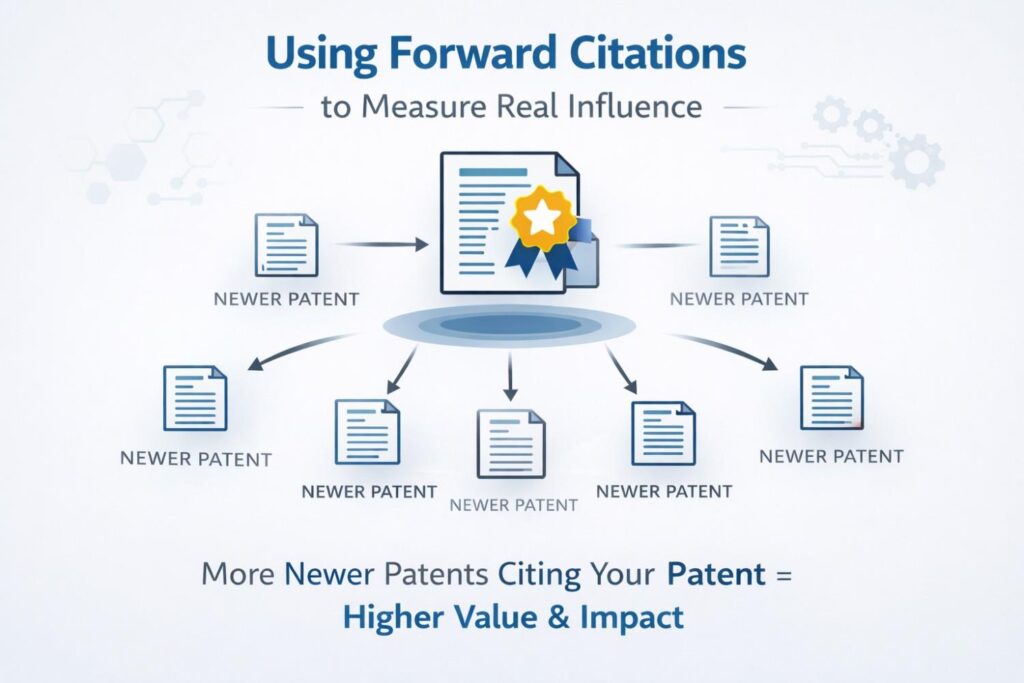
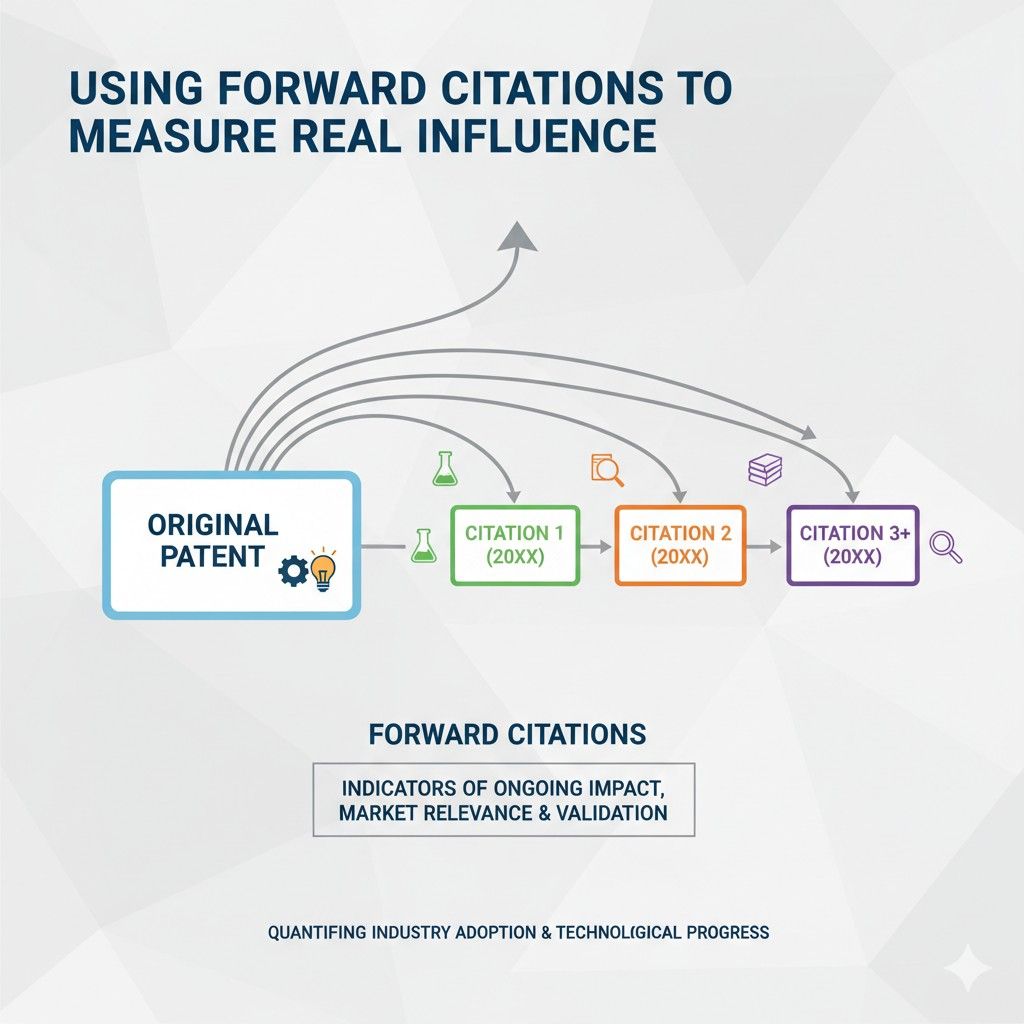
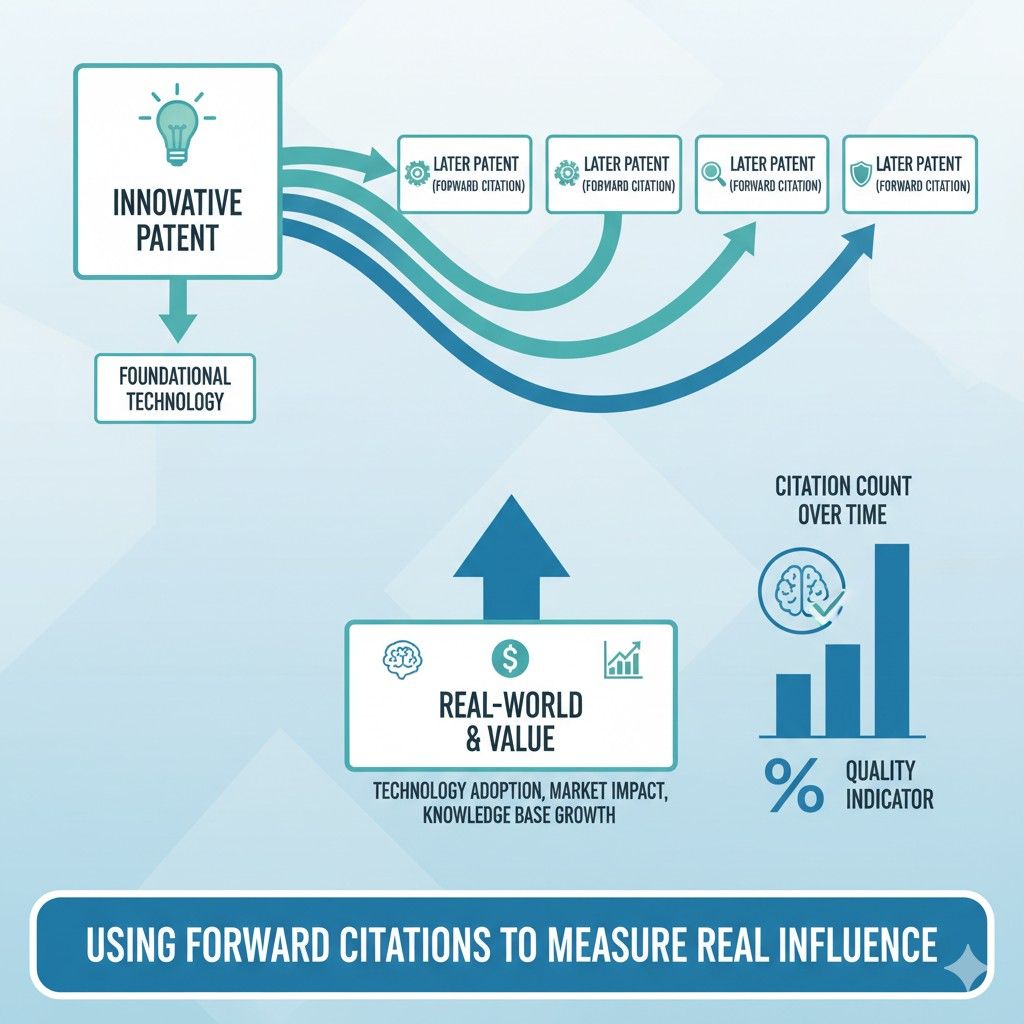
Using Forward Citations to Measure Real Influence
Forward citations are one of the clearest signals of patent impact. They show who is building on an invention after it is published. But most people use them the wrong way. They glance at the total number and move on.
That surface view leaves value on the table.
If you want to rank patents with precision, you need to treat forward citations as dynamic signals. They change over time. They reveal shifts in power. They show where attention is flowing.
When you read them properly, they help you see which patents shape the direction of a market and which ones sit quietly in the background.
Looking Beyond Raw Citation Counts
A large citation number can look impressive. But without context, it can mislead.
Older patents have had more time to collect citations. Patents in fast-moving industries naturally gather more references. That means raw totals distort reality.
Instead, focus on citation rate. How many citations does a patent receive per year since publication? This allows fair comparison between older and newer filings.
If a three-year-old patent already has a strong annual citation rate compared to ten-year-old patents in the same field, that is a strong signal of influence.
You should also compare patents only within the same technical category. Ranking an AI patent against a mechanical device patent makes no sense. Each field has its own pace and density.
Smart ranking always uses like-for-like comparison.
Measuring Citation Velocity
Citation velocity is one of the most powerful metrics you can track.
Velocity measures how quickly citations are increasing. Is the rate steady, rising, or slowing down?
A rising velocity often signals growing relevance. It may show that the market is moving toward that technical approach.
For example, imagine a patent that received two citations per year for the first three years, then suddenly receives ten citations in the fourth year. That jump may reflect a broader industry shift.
As a founder, this matters because it may indicate that a once small idea is becoming central.
Tracking velocity quarterly or yearly helps you detect these changes early. You do not need complex systems to start. Even simple trend tracking in a spreadsheet can reveal patterns.
When you notice acceleration in a competitor’s patent, it is a signal to investigate deeper. What are they protecting? Why is the industry referencing it more often now?
Identifying Breakout Patents
Some patents become breakout patents. They move from normal relevance to central importance.
You can spot breakout patents by comparing citation velocity against field averages. If one patent significantly outpaces peers filed around the same time, that patent may be shaping future development.
Breakout patents often attract attention from both startups and major companies. They may influence standards or common architectures.
For your business, identifying breakout patents early helps in two ways. First, it warns you about potential blocking risks. Second, it shows you which technical themes are gaining traction.
You can then decide whether to design around the patent, pursue licensing discussions, or strengthen your own filings in adjacent areas.
Studying Who Cites and Why
Forward citations are not equal in meaning. The intent behind the citation matters.
When a patent is cited by direct competitors, it often signals overlap. That competitor likely reviewed the patent closely during drafting.
If a patent is cited by companies entering the space for the first time, it may indicate that the patent represents a starting point for new entrants.
Study the profiles of citing companies. Are they large incumbents? Are they fast-growing startups? Are they global players expanding into new markets?
Each pattern tells a different story.
When large companies repeatedly cite a startup’s patent, that startup may hold valuable ground. If you are competing in that area, you need awareness.
This analysis also reveals partnership opportunities. If companies working in complementary areas cite your patents, that may open doors for collaboration.
Comparing Portfolio-Level Influence
Do not rank patents in isolation only. Look at influence across an entire portfolio.
Some companies have one highly cited patent and many quiet ones. Others have consistent citation strength across multiple filings.
Portfolio-level citation analysis shows strategic depth.
If a competitor has several patents with strong forward citation rates across related themes, they may be building a defensible wall.
If citation strength is concentrated in a single patent, their position may be narrower.
For your own strategy, aim to build connected filings that reinforce each other. A series of patents that cite each other and attract outside citations creates compounding strength.
This layered protection is more resilient than one isolated filing.
PowerPatent was built to help founders structure this kind of thoughtful portfolio without drowning in paperwork. The combination of smart drafting tools and real attorney review makes it easier to think long-term while moving fast → https://powerpatent.com/how-it-works
Detecting Defensive Versus Offensive Influence
Not all highly cited patents are used offensively.
Some patents are heavily cited because they define basic technical standards. These may serve as defensive anchors.
Others are cited frequently in areas where companies compete aggressively. These may become tools for enforcement.
You can distinguish between the two by combining citation analysis with market behavior.
If a patent has high forward citations and is owned by a company known for active enforcement, that patent may be both influential and risky.
If it has high citations but belongs to a company focused on cross-licensing, the risk profile differs.
Understanding the owner’s business model changes how you interpret the same data.
Tracking Emerging Subfields
Forward citations often cluster around emerging subfields before revenue numbers show clear trends.
By grouping citing patents by topic, you can detect micro-trends.
For example, within AI, citations might begin to concentrate around edge inference rather than centralized training. That pattern shows a directional shift.
When you see forward citations concentrating around a niche you operate in, it may validate your thesis.
If you see citations drifting away from your focus area, you may need to reassess your roadmap.
Forward citation tracking becomes an early-warning system.
Using Forward Citations in Competitive Due Diligence
If you are raising capital, entering a partnership, or evaluating an acquisition target, forward citation analysis adds depth to due diligence.
When reviewing a target company’s patents, do not rely on claims about portfolio strength. Check citation metrics.
Are their patents cited by serious industry players? Is citation velocity increasing? Are citations concentrated around their core product?
This tells you whether the technology is influencing the market or sitting idle.
Investors increasingly look at these signals. As a founder, being proactive about understanding and presenting your citation data builds credibility.
It shows you are not just filing patents, but managing strategic assets.
Turning Citation Insight into Action
Data alone does nothing. Action creates value.
When forward citation analysis reveals strong competitor influence in a specific area, you have options.
You can adjust your design to avoid overlap. You can file patents that improve upon gaps in their claims. You can strengthen your own position before launching publicly.
When citation velocity highlights a rising theme, you can accelerate filings in that direction.
When portfolio analysis reveals your own weak spots, you can reinforce them.
The key is to integrate citation tracking into quarterly strategy reviews, not treat it as a one-time research project.
Companies that treat patents as living strategic assets outperform those that treat them as static documents.
If you want a system that supports this level of strategic visibility while keeping the process simple and founder-friendly, you should see how modern patent workflows are evolving → https://powerpatent.com/how-it-works
Forward citations are more than numbers. They are signals of influence, direction, and risk. When read correctly, they help you rank patents with clarity and act with confidence.
Reading Litigation History to Judge Patent Strength
Litigation data tells you something citation data cannot. It shows what happens when a patent is tested under pressure. Anyone can file a patent. Very few are strong enough to survive a real dispute.
When money, market share, and reputation are on the line, weak patents collapse. Strong ones hold their ground. That is why litigation history is one of the most powerful signals you can use when ranking patents.
But you need to read this data carefully. A lawsuit alone does not mean strength. The outcome, the pattern, and the behavior around it matter far more.
Why Litigation Is a Signal of Value
Companies do not file lawsuits for fun. Patent litigation is expensive and slow. Legal fees alone can reach millions. Businesses only take that risk when they believe the patent is worth defending or enforcing.
If a patent has been asserted in court, it means the owner believed it had real leverage. That alone tells you the patent is not sitting idle.
However, your job is to go deeper. You want to understand whether that enforcement created pressure or failed quickly.
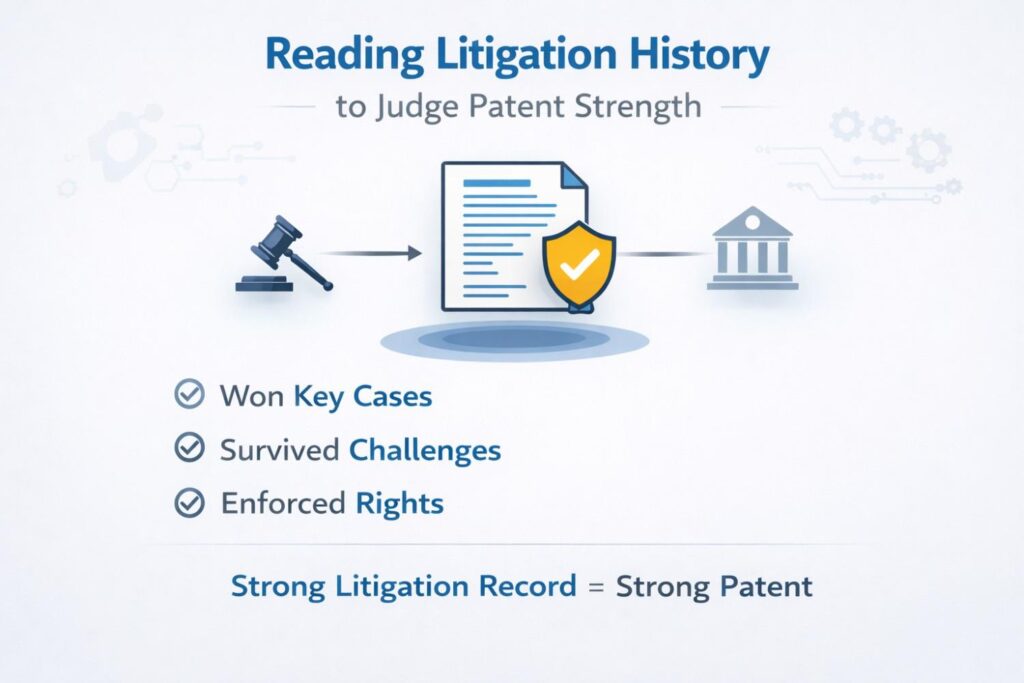
A patent that has never been enforced is not automatically weak. But a patent that has been enforced and survived serious challenge carries added weight.
Looking at Case Outcomes
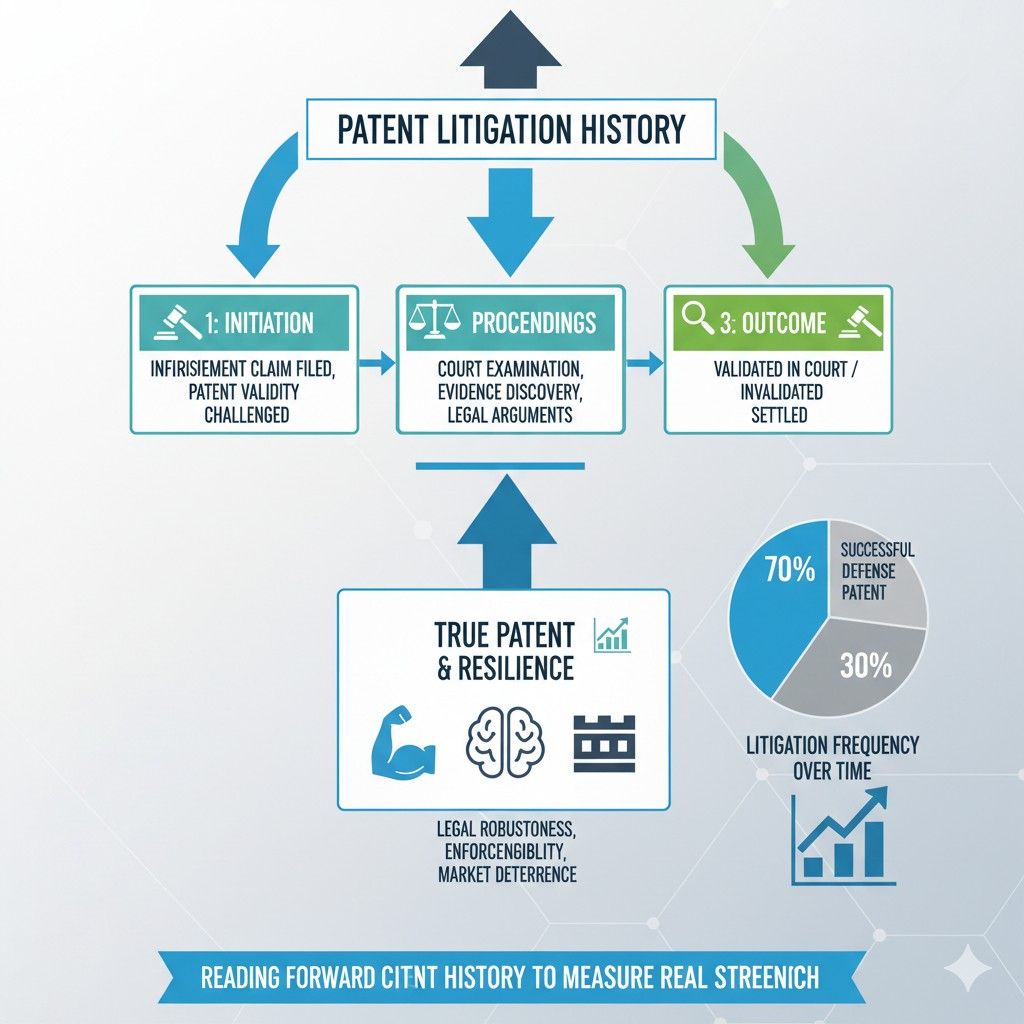
When reviewing litigation data, the outcome tells the real story.
If a patent was invalidated, meaning a court ruled it should never have been granted, that is a major red flag. Even if the patent still exists formally, its strength is damaged.
If the patent survived validity challenges, that increases confidence in its durability.
If cases ended in settlement, that can signal strength as well. Many settlements happen because defendants see real risk in fighting further.
But settlement details are often private. So you read patterns instead of headlines. If multiple defendants settle rather than push for invalidation, that is meaningful.
Repeated survival through challenges builds credibility. Think of it like stress testing. The more pressure a patent withstands, the more confidence the market places in it.
Frequency of Enforcement
One lawsuit can be random. A consistent enforcement pattern is strategic.
If a patent owner has asserted the same patent against several companies over time, that suggests a deliberate monetization strategy.
This tells you two things. First, the patent likely covers technology used by many players. Second, the owner believes the claims are broad and defensible.
If you operate in that same technical space, this pattern is a clear warning. You should assess overlap carefully before scaling.
On the other hand, if a patent was asserted once and never again, it may have limited scope or weak positioning.
Consistency reveals seriousness.
Defensive Litigation and What It Signals
Not all litigation is offensive. Sometimes a company is sued and must defend its patent in response.
When a patent survives a counterattack, such as a challenge to its validity during a dispute, that is a powerful strength indicator.
In these cases, courts often analyze prior art closely. If the patent remains intact, it has passed a meaningful test.
For ranking purposes, you should assign higher confidence to patents that survive structured legal review compared to patents that have never been examined beyond initial approval.
This type of survival shows resilience.
Litigation Timing Matters
The timing of litigation also provides insight.
If enforcement happens shortly after a patent is granted, it may indicate the owner was waiting strategically to assert rights.
If litigation occurs many years later, it may reflect growing market adoption of the covered technology.
Late-stage enforcement sometimes shows that the patented idea became standard practice. That means the invention gained real traction.
As a founder, you should look at how long after grant enforcement begins. Early assertion can signal aggressive strategy. Late assertion can signal widespread industry use.
Both affect risk in different ways.
Studying the Type of Defendant
Who gets sued matters.
If a patent owner targets small startups only, that suggests one enforcement style. If they target large, well-funded companies, that signals confidence.
Suing major companies requires resources and belief in strength. Large companies fight back hard.
If the patent owner consistently takes on serious defendants and continues asserting the patent, that tells you they believe in its durability.
For ranking, patents asserted against sophisticated defendants and not invalidated often deserve higher strength scoring.
Patterns Across a Portfolio
You should not study litigation in isolation. Look at portfolio behavior.
Some companies build portfolios primarily for defense. Others actively monetize through enforcement.
If multiple patents from the same portfolio have been litigated successfully, that portfolio likely has strategic depth.
This matters because companies with litigation experience understand claim drafting, prosecution strategy, and enforcement pathways better than passive filers.
If you see repeated litigation success across a portfolio, that owner likely has strong internal or external legal support.
When you combine that with citation data, you can see both influence and enforcement capacity.
That combination signals serious power.
Using Litigation Data in Competitive Strategy
Litigation data should directly shape your product and patent roadmap.
If you identify heavily enforced patents in your technical area, you have three paths. You can design around their claims. You can pursue licensing discussions early. Or you can strengthen your own filings to create negotiation leverage.
Ignoring litigation history is dangerous. Many founders focus only on product-market fit and forget about intellectual property risk until too late.
By reviewing litigation trends quarterly, you stay ahead.
You also protect investor confidence. No investor wants to discover hidden enforcement risk during due diligence.
Modern founders need tools that surface this information clearly without requiring endless manual research. That is why combining smart software analysis with real attorney guidance makes such a difference. You stay informed without slowing down your build cycle → https://powerpatent.com/how-it-works
Distinguishing Noise from Real Risk
Not every lawsuit should scare you.
Some patent owners file aggressive suits with weak claims hoping for quick settlements. These patents often fail when challenged seriously.
To separate noise from real risk, look at outcomes. Look at repeat patterns. Look at survival under review.
If courts repeatedly narrow or invalidate claims from the same owner, future assertions may carry less weight.
If courts uphold claims repeatedly, that owner commands respect.
Ranking patents accurately requires this nuance.
Turning Litigation Insight into Ranking Power
When you integrate litigation data into your ranking model, you move beyond surface metrics.
A patent with moderate citation numbers but proven enforcement success may outrank a heavily cited patent that has never faced scrutiny.
Strength is not only about popularity. It is about resilience.
By assigning weight to enforcement history, survival rate, defendant profile, and portfolio behavior, you create a more realistic view of patent power.
This helps you allocate resources wisely. It helps you avoid technical traps. It helps you protect your own core innovations with intention.
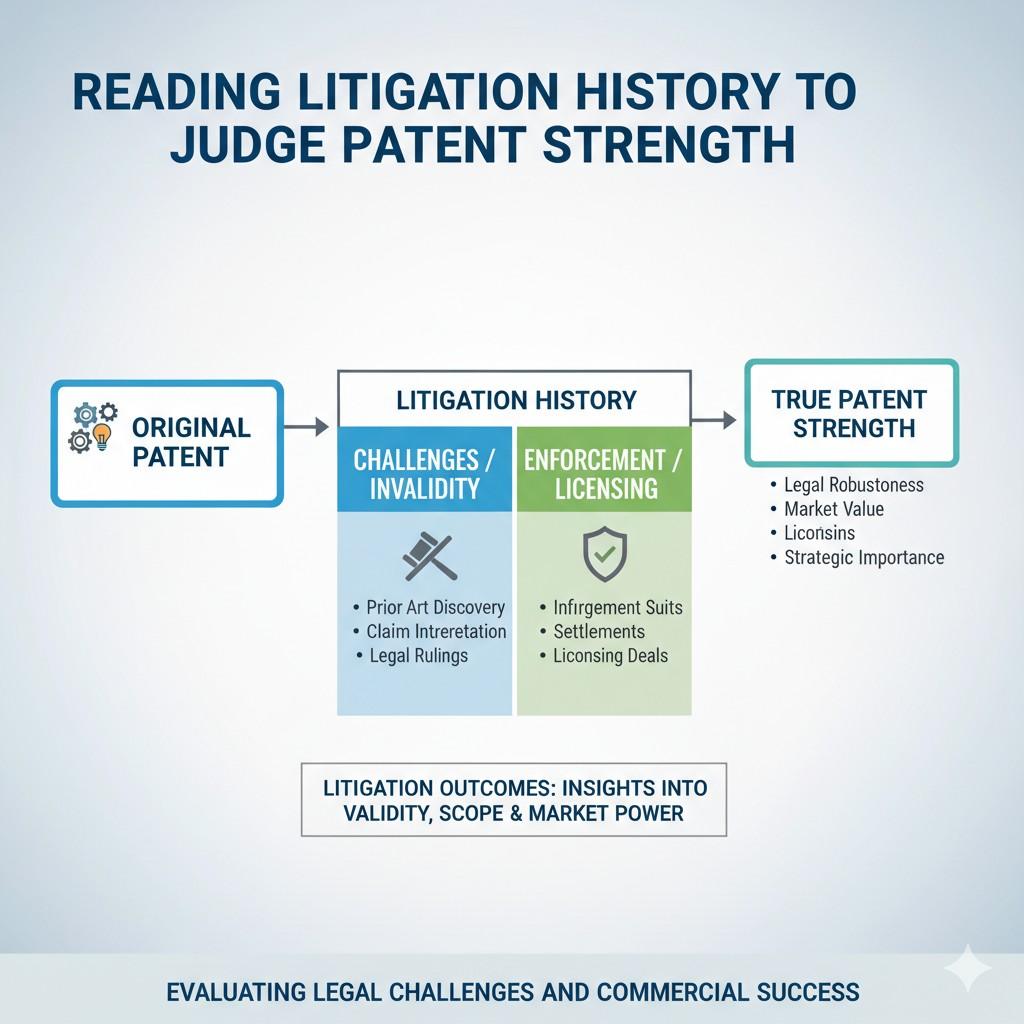
Patents are business tools. Litigation data shows how those tools perform when used.
When you combine litigation insight with forward citation analysis, you gain a complete picture of influence and durability.
Building a Practical Patent Ranking Framework for Strategic Decisions
Data is only useful if it leads to better decisions. You now understand what citation data reveals. You also see how litigation history exposes real-world strength. The final step is turning those signals into a working framework you can use inside your company.
This is where most businesses fall short. They collect information but never convert it into a repeatable system. A true ranking framework gives you clarity. It tells you where to focus, where to avoid risk, and where to invest.
If you build this correctly, patent intelligence becomes part of your strategy rhythm, not a one-time research project.
Start With a Clear Objective
Before assigning scores or building spreadsheets, define your goal.
Are you ranking patents to assess competitive risk?
Are you identifying acquisition targets?
Are you evaluating your own portfolio strength?
Are you preparing for fundraising?
Your objective shapes your weighting.
If your goal is risk management, litigation survival may carry more weight. If your goal is market influence analysis, forward citation velocity may matter more.
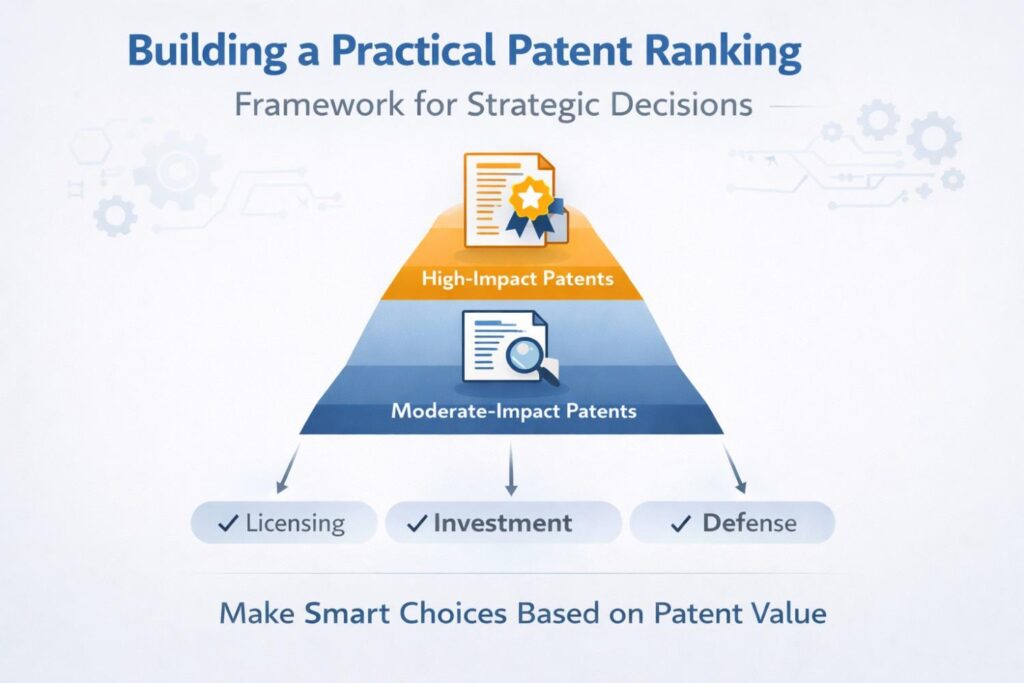
Without a defined objective, rankings become noise.
Clarity comes first.
Create Weighted Scoring That Reflects Business Reality
A strong framework assigns weight to different signals.
Forward citations adjusted for age and field show influence. Citation velocity shows momentum. Quality of citing entities shows ecosystem respect. Litigation survival shows durability. Frequency of enforcement shows confidence.
But you must decide how much each factor matters to your specific business model.
For example, a startup entering a crowded enterprise software space may care deeply about enforcement patterns because litigation risk is real.
A research-focused company exploring new technical ground may prioritize citation growth and emerging clusters.
Do not treat all metrics equally. Assign weight based on strategic importance.
This transforms raw data into directional insight.
Separate Core Patents From Peripheral Ones
Not every patent deserves the same level of attention.
In any market, a small group of patents shapes the core technical path. Others protect edge features or incremental improvements.
Your framework should identify which patents sit at the center of a technical cluster and which ones orbit around it.
Core patents often have strong forward citation rates, cross-industry referencing, and higher likelihood of enforcement.
Peripheral patents may have low citation counts and narrow scope.
This distinction helps you focus resources. When designing around risk, prioritize understanding core patents first.
When strengthening your own portfolio, aim to create core positioning rather than scattered coverage.
Integrate Competitive Context
Ranking patents in isolation is incomplete. You must overlay competitive landscape data.
If a patent is highly ranked but owned by a company outside your market, its immediate risk may be low.
If a moderately ranked patent is owned by your closest competitor and aligns directly with your roadmap, it may deserve high attention.
This is where many founders make mistakes. They see a high citation count and panic without asking whether the owner operates in their segment.
Context transforms fear into strategic thinking.
Map ranked patents directly against your product architecture and planned features. Identify overlap zones clearly.
This allows you to design with awareness instead of reacting later under pressure.
Use Ranking to Guide Filing Strategy
Your framework should not only evaluate others. It should guide your own patent creation.
When you identify highly cited clusters, ask where gaps exist. Are there technical improvements not yet protected? Are there adjacent applications others have not claimed?
This is where strategic filing wins.
Instead of filing randomly, you file with intent. You aim to sit near the center of future citation growth.
You also evaluate your own patents through the same ranking lens. If one of your filings shows early citation acceleration, that may be a signal to file continuation applications to strengthen coverage.
If another filing shows limited engagement and narrow scope, you may adjust future drafting to improve impact.
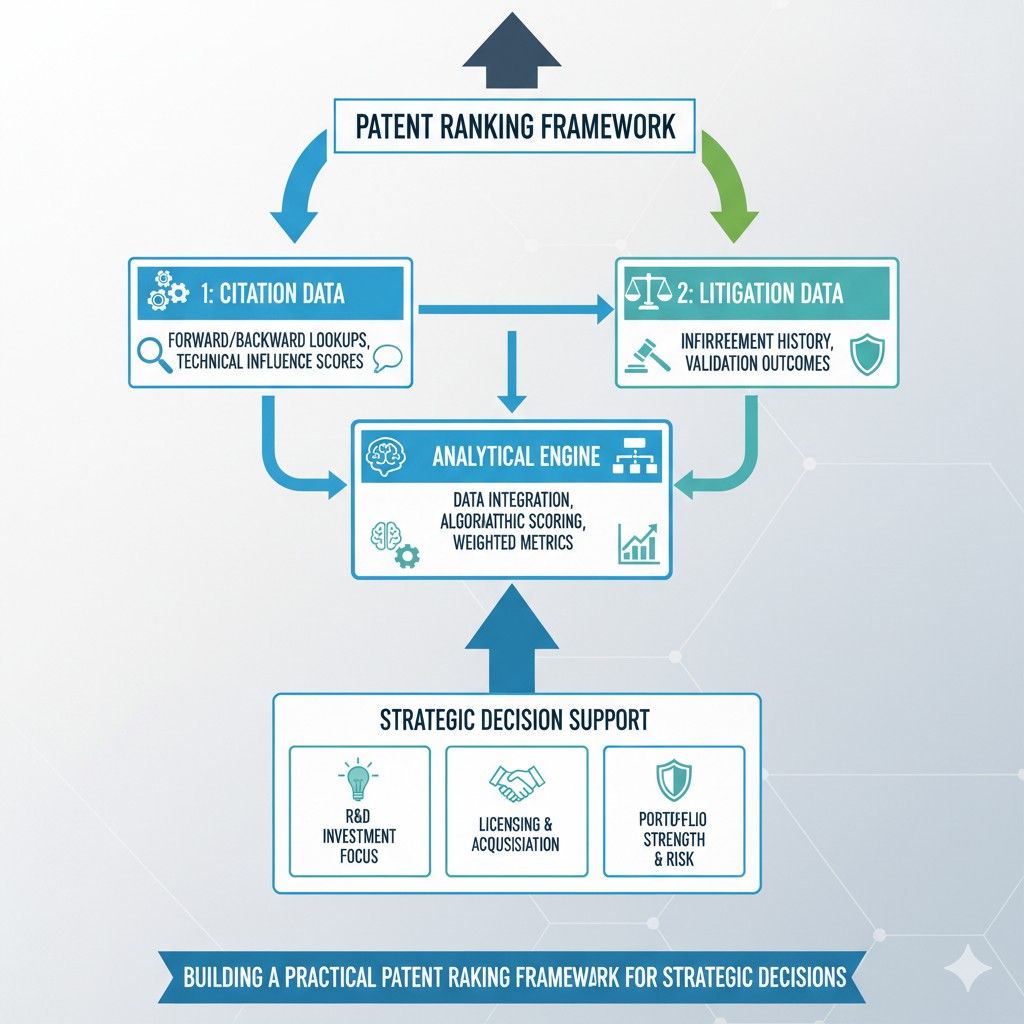
Smart portfolio growth is deliberate, not reactive.
PowerPatent was designed to make this level of strategic thinking accessible to founders.
With structured workflows and real attorney review built into the process, you can build a portfolio that aligns with your business roadmap instead of slowing it down → https://powerpatent.com/how-it-works
Update Rankings on a Predictable Cadence
Markets evolve. So should your rankings.
Citation data changes quarterly. Litigation patterns shift. New players enter.
Your framework should include a regular review cycle. For most startups, a quarterly review is enough.
During each cycle, update citation counts, velocity metrics, and any new litigation events. Recalculate rankings using your weighted model.
Then discuss findings at leadership level.
Treat patent intelligence like financial metrics. It deserves structured attention.
Over time, this habit builds institutional awareness. You reduce surprise. You increase control.
Align Patent Ranking With Fundraising and Growth
Investors care about defensibility.
When you can demonstrate that your patents rank strongly within your field based on objective signals, it strengthens your narrative.
Instead of vague claims about intellectual property, you present data-driven positioning.
You can show citation growth trends. You can explain how your core patents sit within emerging clusters. You can highlight absence of litigation risk around your main architecture.
This shifts conversations from abstract protection to measurable leverage.
Sophisticated investors notice the difference.
Keep the Framework Simple but Disciplined
Do not overcomplicate your model.
You do not need advanced statistical tools to start. A structured spreadsheet with clearly defined weightings can provide strong insight.
What matters is consistency. Apply the same methodology across patents. Document your assumptions. Revisit them annually.
Over time, your internal understanding deepens.
You begin to recognize patterns faster. You anticipate shifts earlier.
That is strategic maturity.
Turning Insight Into Confident Action
The ultimate goal of ranking patents is not analysis. It is confidence.
Confidence to build in the right direction.
Confidence to avoid costly traps.
Confidence to invest in protection where it matters most.
When citation influence and litigation durability are evaluated together inside a structured framework, you stop operating blindly.
You move from reactive to proactive.
That shift alone can save years of distraction and millions in unnecessary risk.
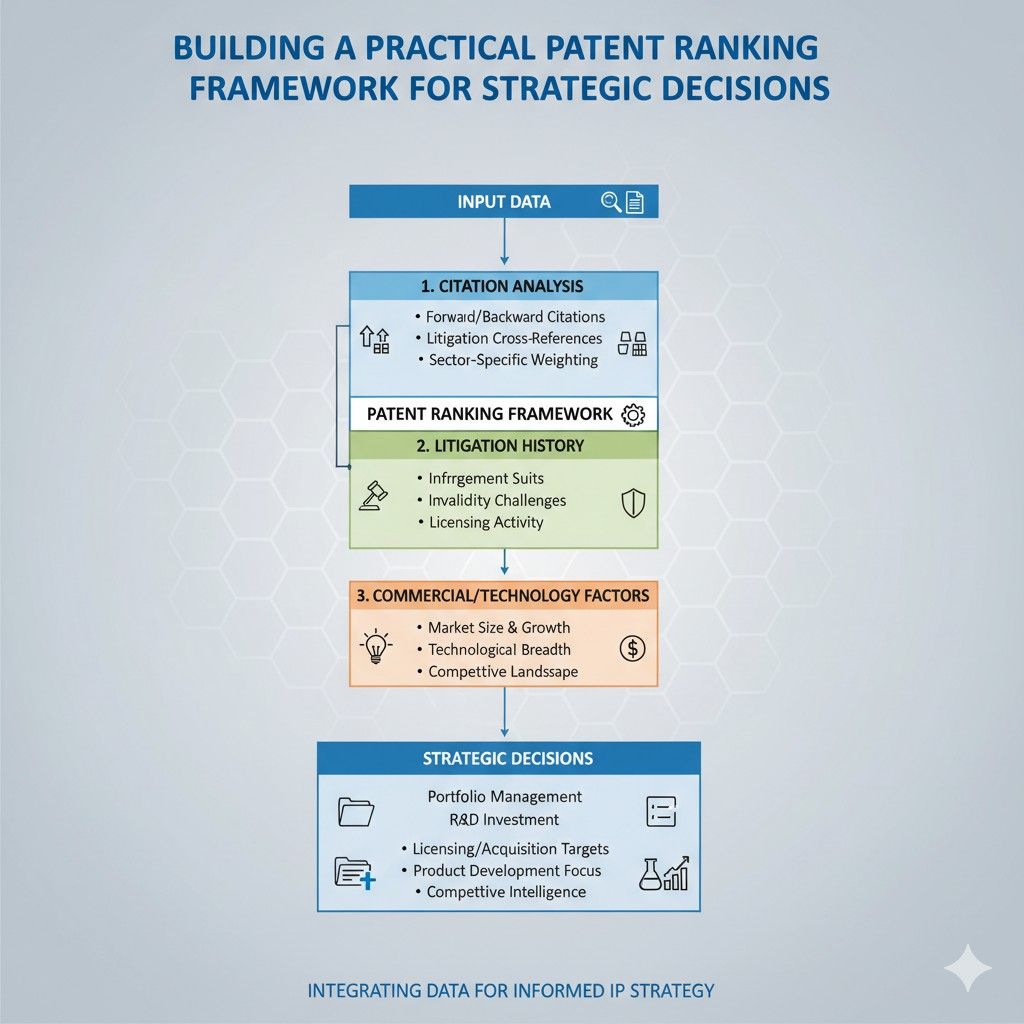
Patents should empower your growth, not slow it down. When managed with clarity and supported by the right tools and real legal oversight, they become strategic assets instead of administrative burdens.
If you are serious about building strong, defensible patents while keeping your startup fast and focused, explore how a modern, software-driven approach with real attorney backing can transform the process → https://powerpatent.com/how-it-works
Wrapping It Up
Patents are not trophies. They are tools. Some protect real ground. Others only look impressive on paper. If you want to know the difference, you cannot rely on guesswork. You look at influence and you look at pressure. Citation data shows influence. It reveals who is building on an idea, how fast attention is growing, and where the center of gravity sits in a market. Litigation data shows pressure. It tells you which patents survive challenge, which owners enforce aggressively, and which claims collapse when tested.
Leave a Reply