
Most patents fail before they even begin. Not because the idea is weak, but because the intake process is messy, rushed, or unclear. When the first conversation between an inventor and a patent attorney is shallow, the entire patent suffers. Claims become weak. Important details get missed. Costs rise. Timelines stretch. And the final patent may not protect what really matters.
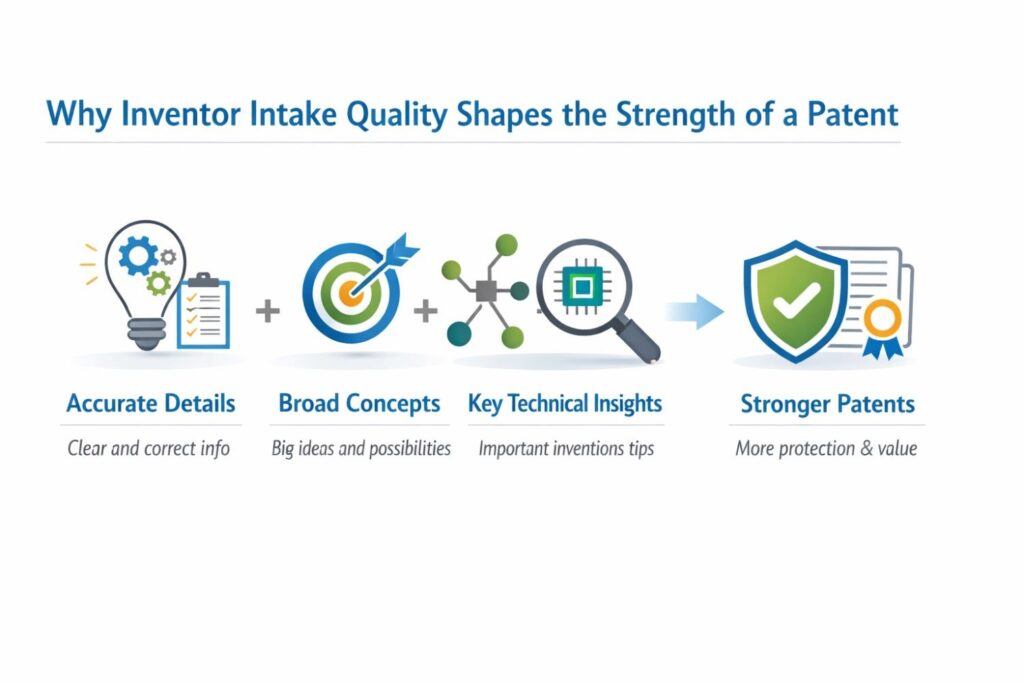
Why Inventor Intake Quality Shapes the Strength of a Patent
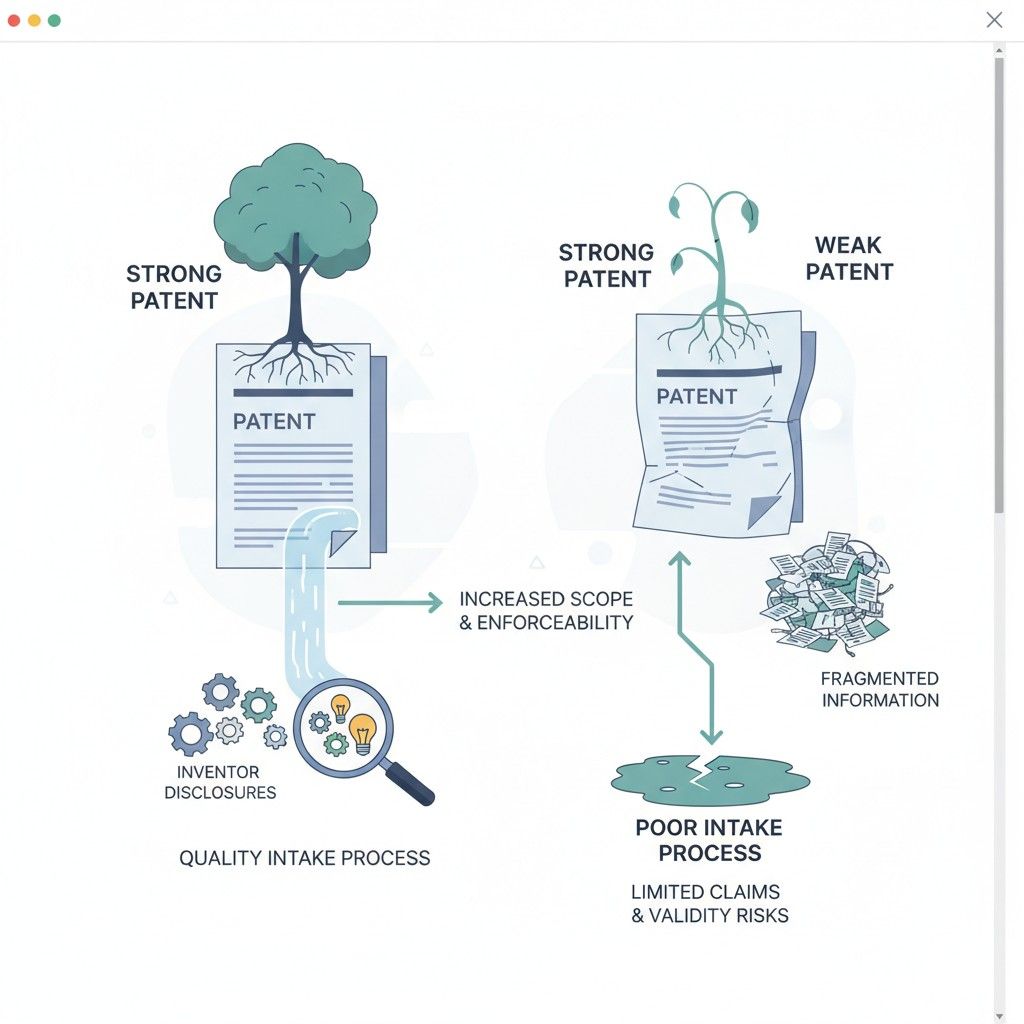
A patent is only as strong as the information used to build it. When intake quality is low, the patent becomes narrow, unclear, or easy to work around.
When intake quality is high, the patent becomes a real business asset that protects revenue, attracts investors, and creates leverage in the market.
This section explains how intake quality directly affects patent strength and what attorneys can do to improve it in a practical way.
Intake Sets the Direction for the Entire Patent
The intake conversation decides what the patent will cover and how wide that protection can be. If the intake only captures surface details, the patent will focus on small features instead of the full system.
That leads to weak claims that competitors can easily avoid.
Attorneys should guide inventors to explain the problem, the technical approach, and the business goal. When inventors share the real purpose behind the invention, attorneys can shape claims that protect the core value instead of small pieces.
This requires slowing down the first conversation just enough to understand how the invention fits into the product roadmap and future plans.
For businesses, this means preparing before the intake call. Founders should document how the invention connects to revenue, customer demand, and future features.
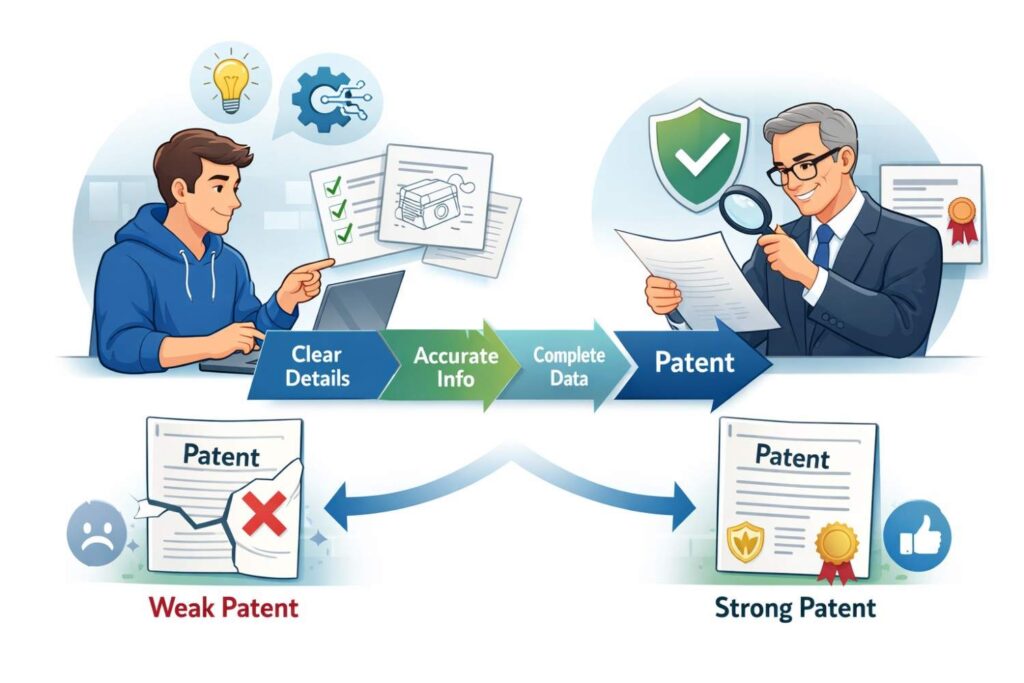
When attorneys receive this context early, they can build broader and stronger protection.
Clear Technical Detail Leads to Broader Claims
Strong patents rely on technical depth. If intake notes are vague, attorneys must guess or fill gaps later, which increases risk.
Missing technical detail forces narrow claims because the attorney cannot safely claim what was not clearly described.
Attorneys can improve intake quality by asking inventors to walk through the system step by step. Instead of asking for a summary, they should ask how data moves, how decisions are made, and what makes the invention different from current solutions.
This level of detail allows attorneys to write claims that cover variations and future improvements.
Businesses should treat intake as a technical design review, not a casual discussion. Sharing diagrams, code snippets, or architecture notes during intake helps attorneys capture the invention accurately.
Tools that allow founders to upload this material in a structured way can save hours later and prevent costly revisions.
PowerPatent helps founders capture this technical detail early with guided prompts and structured workflows, making it easier for attorneys to write strong claims without delays.
You can explore how that works here: https://powerpatent.com/how-it-works
Early Clarity Prevents Expensive Rewrites
Poor intake often leads to multiple rewrites of the application. Each rewrite adds cost and pushes filing timelines further out. When intake quality is high, the first draft is much closer to final, which saves time and money for both the attorney and the client.
Attorneys can reduce rewrites by confirming understanding during intake. After the inventor explains the invention, the attorney should restate it in simple terms and ask if that summary is correct.
This quick validation step prevents misunderstandings that would otherwise appear later in the drafting phase.
For startups, this means being patient during intake instead of rushing to filing. Spending an extra hour clarifying the invention can save weeks of back-and-forth later.
It also gives founders more confidence that the patent truly reflects what they built.
Intake Quality Drives Examiner Outcomes
Patent examiners rely on the written description to evaluate novelty and scope. If the intake process fails to capture alternative versions, fallback options, and technical advantages, the application may struggle during examination.
Examiners may reject claims simply because the application lacks supporting detail.
Attorneys should use intake to gather variations of the invention. Asking what happens if certain steps change or what alternative components could be used helps build a stronger specification. This gives attorneys more room to adjust claims during prosecution without losing protection.
Businesses should view intake as a chance to future-proof their patent. Founders often focus on the current version of the product, but attorneys need insight into where the technology is heading.
Sharing planned features or expected improvements allows the patent to cover future releases, not just today’s build.
Strong Intake Builds Trust Between Founder and Attorney
A structured intake process shows professionalism and builds trust. When inventors feel heard and understood, they are more willing to share deeper insights about their technology. This leads to better patents and smoother collaboration.
Attorneys can build this trust by setting expectations early. Explaining how intake information will be used, what level of detail is needed, and how the process will move forward helps inventors feel confident.
Clear communication reduces stress and keeps the project moving.
For founders, choosing a patent partner who values structured intake is critical. Platforms like PowerPatent combine smart software with real attorney oversight, ensuring that intake is thorough but still fast.
This approach gives startups control over their timeline while avoiding common mistakes that weaken patents. Learn more here: https://powerpatent.com/how-it-works
Better Intake Supports Long-Term IP Strategy
Patent strength is not just about one application. It is about building a portfolio that supports the company’s long-term strategy.
High-quality intake helps attorneys identify additional inventions, continuation opportunities, and areas where protection can expand.
Attorneys should listen for signals during intake that suggest future filings. If an inventor mentions related features or adjacent systems, those details should be captured for later use.
This creates a roadmap for future patents that align with product growth.
Businesses can support this by treating intake as part of their overall IP strategy. Instead of thinking about a single patent, founders should share their product vision and competitive landscape.

This allows attorneys to suggest filing strategies that create layered protection over time.
How Better Questions Lead to Better Patent Applications
The quality of a patent depends on the quality of the information behind it. That information comes from the questions an attorney asks during intake. When questions are shallow, the patent becomes shallow.
When questions are thoughtful, specific, and focused on real-world use, the patent becomes stronger, wider, and more useful for the business.
This section explains how better questions change the outcome of a patent application and how attorneys can ask in ways that unlock deeper insight from inventors.
Questions Shape the Story of the Invention
Every patent tells a story. It explains what problem exists, how the invention solves it, and why that solution matters. The attorney controls how complete that story becomes through the questions asked at the start.
If the attorney asks only what the invention does, the answer will be basic. But when the attorney asks why the invention exists, what failed before, and what tradeoffs were considered, the inventor begins to share the thinking behind the solution.
That context allows the attorney to draft a stronger description that shows technical advantage and business value.
For businesses, this means choosing attorneys who go beyond surface questions. Founders should expect intake conversations that feel more like a product deep dive than a legal form.
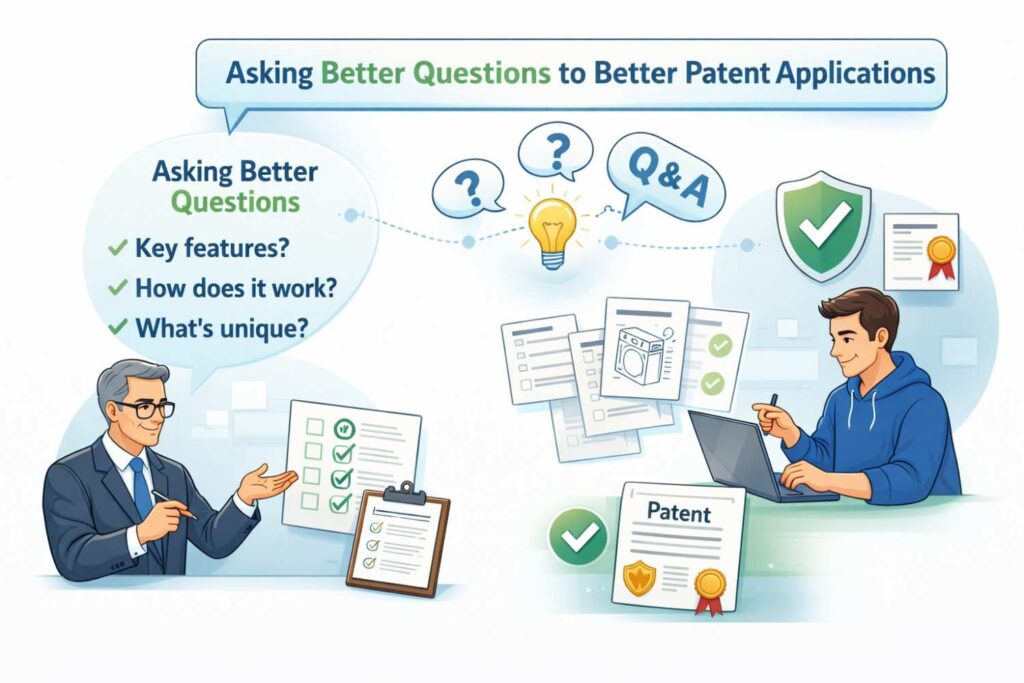
This kind of questioning leads to patents that protect the real innovation, not just the visible features.
Asking About the Problem Unlocks Broader Protection
Many patents become narrow because the intake focused only on the final implementation. When attorneys ask about the underlying problem first, they open the door to broader claim language.
Understanding the problem helps attorneys claim the invention in a way that covers different technical approaches that solve the same issue. This makes it harder for competitors to design around the patent.
Attorneys can guide inventors by asking how customers experienced the problem, what existing solutions failed, and what constraints shaped the final design.
These questions help frame the invention at a higher level, which supports stronger claim strategy later.
For startups, preparing answers to these questions ahead of intake can dramatically improve patent quality. Founders should think about user pain, technical bottlenecks, and market gaps before meeting with counsel.
Questions About Alternatives Build Stronger Specifications
A strong patent does not describe only one version of the invention. It describes multiple ways the invention could be built. This gives attorneys flexibility during prosecution and helps maintain protection even if claims must change.
Attorneys can uncover these variations by asking inventors what else they considered. Even ideas that were rejected can be valuable because they show alternative paths.
These alternatives can be included in the specification to support broader claims.
Businesses benefit when attorneys capture these variations early. Founders often move fast and forget older design paths, but those early concepts can strengthen the patent.
Using structured tools that prompt inventors to upload past designs, diagrams, or architecture changes can make this process easier and faster.
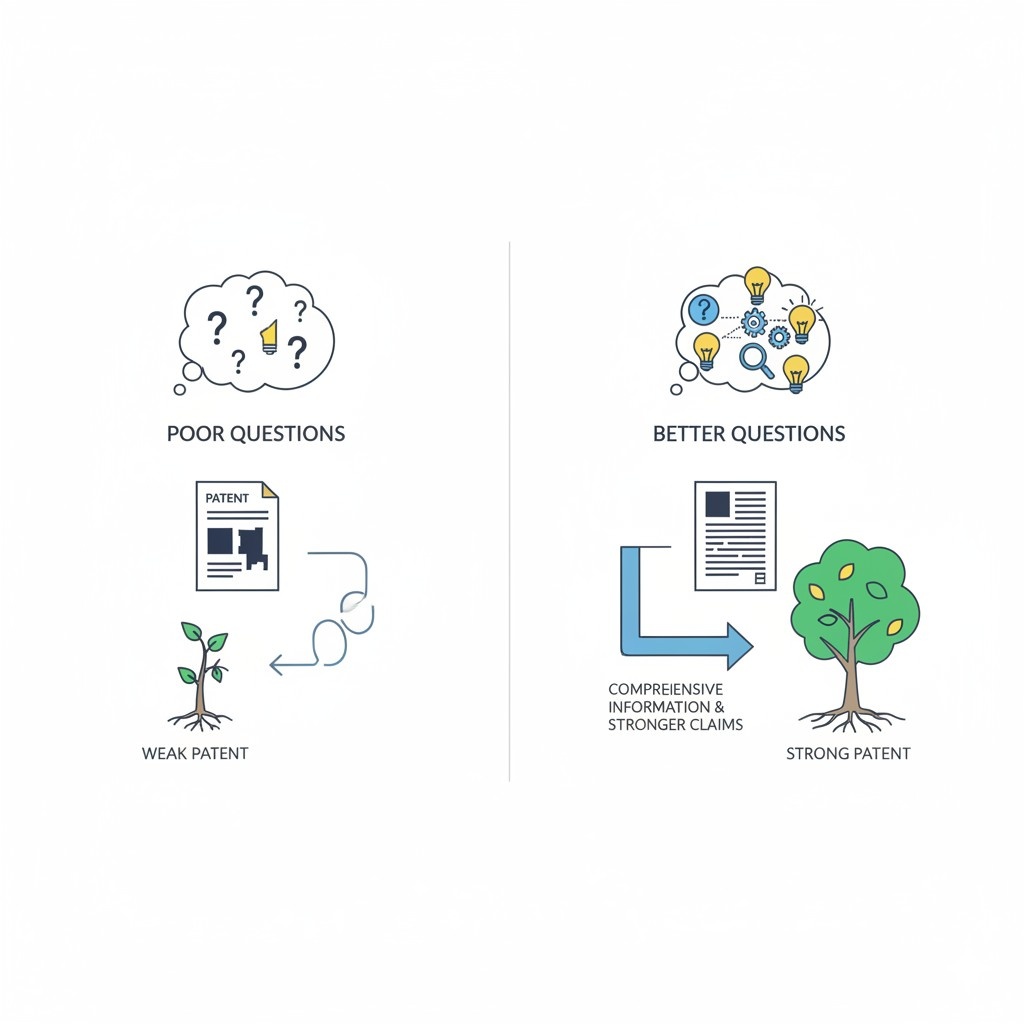
PowerPatent supports this kind of structured capture, helping inventors share technical depth without slowing their build cycle. You can see how it works here: https://powerpatent.com/how-it-works
Questions That Focus on Impact Improve Claim Strategy
Not every technical detail deserves equal attention. Some features are core to the invention, while others are optional. Attorneys who ask about impact can identify which parts must be protected and which parts can remain flexible.
By asking which features drive performance, reduce cost, or create user value, attorneys can focus claims on the elements that truly matter.
This results in patents that align with business goals instead of covering minor implementation details.
For founders, this means being honest about what makes the invention valuable. Sharing metrics, performance improvements, or customer feedback helps attorneys understand what deserves the strongest protection.
Questions That Explore Future Plans Extend Patent Value
A patent should protect not just the current version of a product, but also where the product is heading. Attorneys who ask about future plans can draft applications that remain relevant as the technology evolves.
Questions about upcoming features, planned integrations, and expected scaling challenges give attorneys insight into how the invention may grow.
This allows the patent to cover future releases, reducing the need for urgent filings later.

Startups should treat intake as part of long-term planning. Even if certain features are months away, sharing that roadmap with counsel allows those ideas to be captured while the application is still being drafted.
Questions That Clarify Ownership and Contributors Prevent Risk
Patent quality is not only technical. Legal clarity matters too. Attorneys who ask clear questions about contributors, development timelines, and prior disclosures can prevent future disputes.
Understanding who contributed to the invention helps ensure proper inventorship, which protects the enforceability of the patent.
Asking about public demos, code releases, or investor pitches helps attorneys manage timing and filing strategy.
For businesses, being open about development history avoids costly corrections later.
A structured intake system that captures contributor details and disclosure timelines can reduce legal risk while keeping the process smooth.
Better Questions Save Time for Everyone
It may seem that asking more questions slows intake, but the opposite is true. When attorneys gather the right detail upfront, drafting becomes faster, revisions decrease, and filing timelines stay predictable.
Attorneys who rely on structured question flows and guided prompts can capture deep technical detail without long meetings. This allows founders to share information asynchronously, which fits better with startup schedules.
Modern tools like PowerPatent are designed to support this smarter questioning process.
They guide inventors through clear prompts that surface key details, while real attorneys review and refine the information. This approach keeps intake efficient while improving patent strength.
Learn more here: https://powerpatent.com/how-it-works
Better Questions Lead to Better Business Outcomes
At the end of the day, the goal of a patent is not just approval. The goal is business protection. Better questions lead to applications that support fundraising, partnerships, and competitive positioning.
When attorneys ask the right questions, they uncover the strategic value of the invention. This allows the patent to become a tool for growth rather than just a legal document.
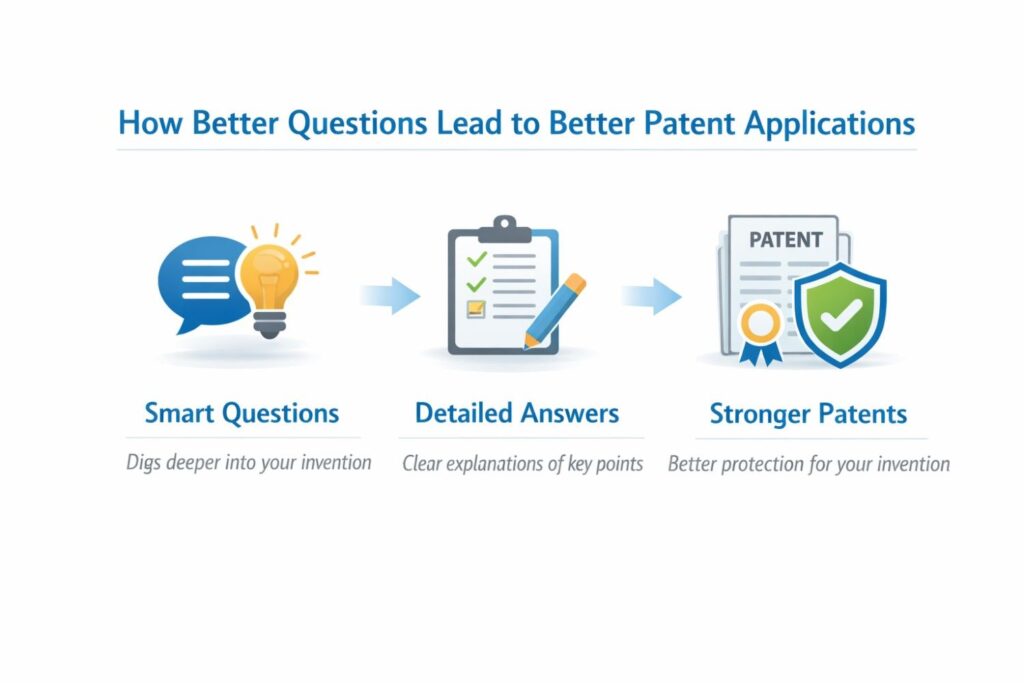
Founders who experience this level of intake often gain clarity about their own technology and roadmap. The process becomes more than paperwork. It becomes a strategic conversation about how to protect and scale innovation.
Using Smart Tools to Capture Technical Detail Without Slowing Founders Down
Modern startups move fast. Features ship every week. Code changes daily. In this environment, the patent process must keep up. If capturing technical detail feels heavy or slow, founders delay filing.
That delay can cost protection, funding leverage, and market advantage. Smart tools solve this problem by helping attorneys collect deep technical detail without interrupting product momentum.
Technology Can Turn Intake Into a Natural Part of Building
Traditional intake often relies on long calls, scattered notes, and endless email threads. This slows everyone down and leads to missing information. Smart tools change the experience by allowing inventors to share details as they build.
When founders can upload diagrams, code snippets, product specs, and design notes in real time, attorneys receive richer information with less effort.
This makes the patent process feel like an extension of product development rather than a separate legal task.
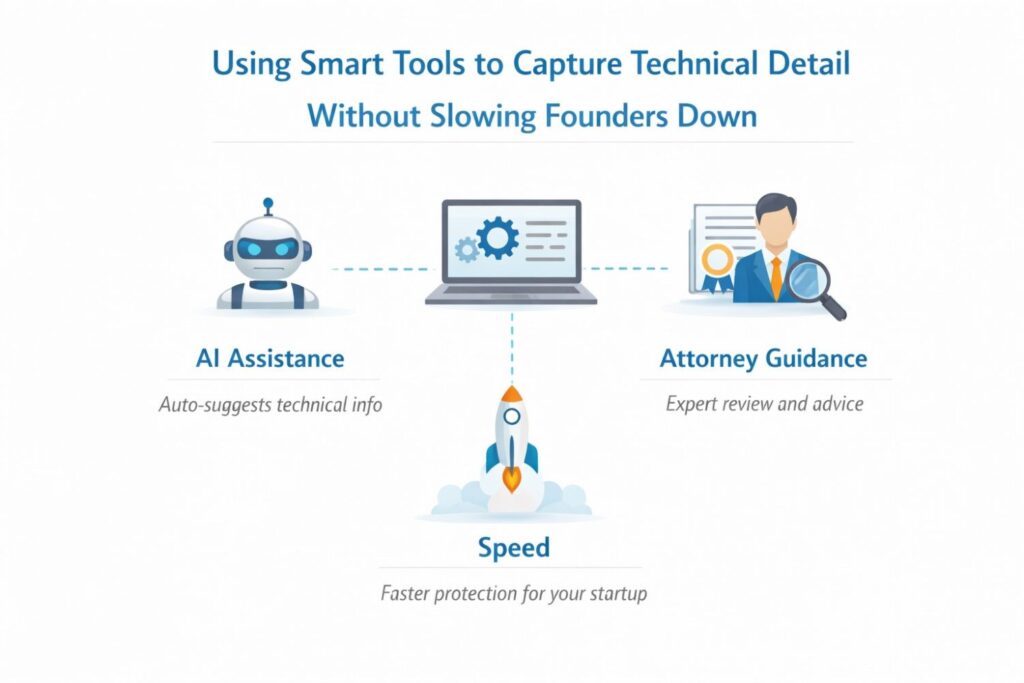
For businesses, this means fewer interruptions and more control. Founders can document their invention when it is fresh in their mind, which leads to better accuracy and stronger patents.
Structured Prompts Help Inventors Share the Right Detail
Most inventors do not know what information attorneys need. Without guidance, they either overshare random details or provide only surface descriptions.
Smart tools solve this by guiding inventors through clear prompts that ask the right questions at the right time.
Instead of asking founders to “describe the invention,” structured prompts ask how the system works, what data flows through it, and what makes it different from existing solutions.
This helps attorneys receive usable technical detail without repeated follow-ups.
For startups, this removes confusion and saves time. Founders do not have to guess what to include. They simply respond to guided prompts, and the system organizes the information in a format attorneys can use immediately.
PowerPatent was built around this idea. It uses smart workflows that help inventors capture technical insight quickly while real patent attorneys review and refine the material.
You can explore how that process works here: https://powerpatent.com/how-it-works
Real-Time Collaboration Reduces Miscommunication
Miscommunication is one of the biggest causes of weak patents. When information passes through emails or scattered notes, important details can get lost.
Smart platforms allow real-time collaboration between inventors and attorneys, which improves clarity and reduces errors.
When both sides can see the same diagrams, descriptions, and updates, questions can be resolved quickly.
Attorneys can leave comments directly on technical material, and inventors can respond without scheduling long meetings. This keeps the process moving while maintaining accuracy.

Businesses benefit from this transparency. Founders stay involved in the patent drafting process without spending hours on calls. This leads to stronger applications that reflect the true invention.
Automation Handles Routine Tasks So Attorneys Focus on Strategy
Attorneys provide the most value when they focus on claim strategy, risk analysis, and long-term protection planning.
Routine tasks such as formatting, document organization, and version tracking can consume valuable time if handled manually.
Smart tools automate these routine steps. They organize technical input, track revisions, and prepare draft materials so attorneys can spend their time thinking about protection strategy instead of administrative work.
For startups, this means faster turnaround and lower cost. When attorneys can focus on high-value work, the patent process becomes more efficient without sacrificing quality.
Secure Document Capture Protects Confidential Information
Startups often hesitate to share detailed technical material because they worry about confidentiality. Smart platforms address this concern by providing secure environments where documents, diagrams, and code can be shared safely.
When inventors trust that their information is protected, they are more willing to provide deeper technical detail. This leads to stronger patents and reduces the risk of missing critical information.
Businesses should look for tools that combine security with ease of use. A system that is secure but difficult to navigate will still slow down intake. The best tools balance protection with simplicity.
Smart Tools Help Attorneys Spot Additional Patent Opportunities
When technical material is captured in a structured way, attorneys can quickly identify new inventions that may deserve their own filings. This creates opportunities to build a broader patent portfolio without extra effort from the founder.
For example, an uploaded architecture diagram might reveal a unique data routing method that was not initially considered patentable.

With the right tools, attorneys can flag this insight early and discuss it with the founder before the filing window closes.
Startups benefit from this proactive approach. Instead of reacting late, they can plan filings that support product growth and investor conversations.
Speed Without Sacrificing Quality Is the New Standard
Founders often believe they must choose between speed and quality in the patent process.
Smart tools remove that tradeoff. By capturing technical detail efficiently, these tools allow attorneys to draft strong applications quickly.
This matters for businesses preparing for fundraising or product launches. A well-prepared patent application can strengthen investor confidence and signal long-term thinking.
When the process moves fast, startups gain protection without slowing their roadmap.
PowerPatent combines smart software with real attorney oversight to deliver this balance.
Founders can move quickly while knowing their patents are being built on strong technical foundations. Learn more here: https://powerpatent.com/how-it-works
Smart Tools Make Patent Intake a Repeatable Process
As startups grow, they create multiple inventions across different teams. A repeatable intake process ensures that each invention receives the same level of attention and quality.
Smart tools make this possible by standardizing how information is captured and reviewed.
When intake becomes repeatable, businesses can scale their patent strategy alongside product development. This reduces chaos and ensures that valuable ideas are not missed.
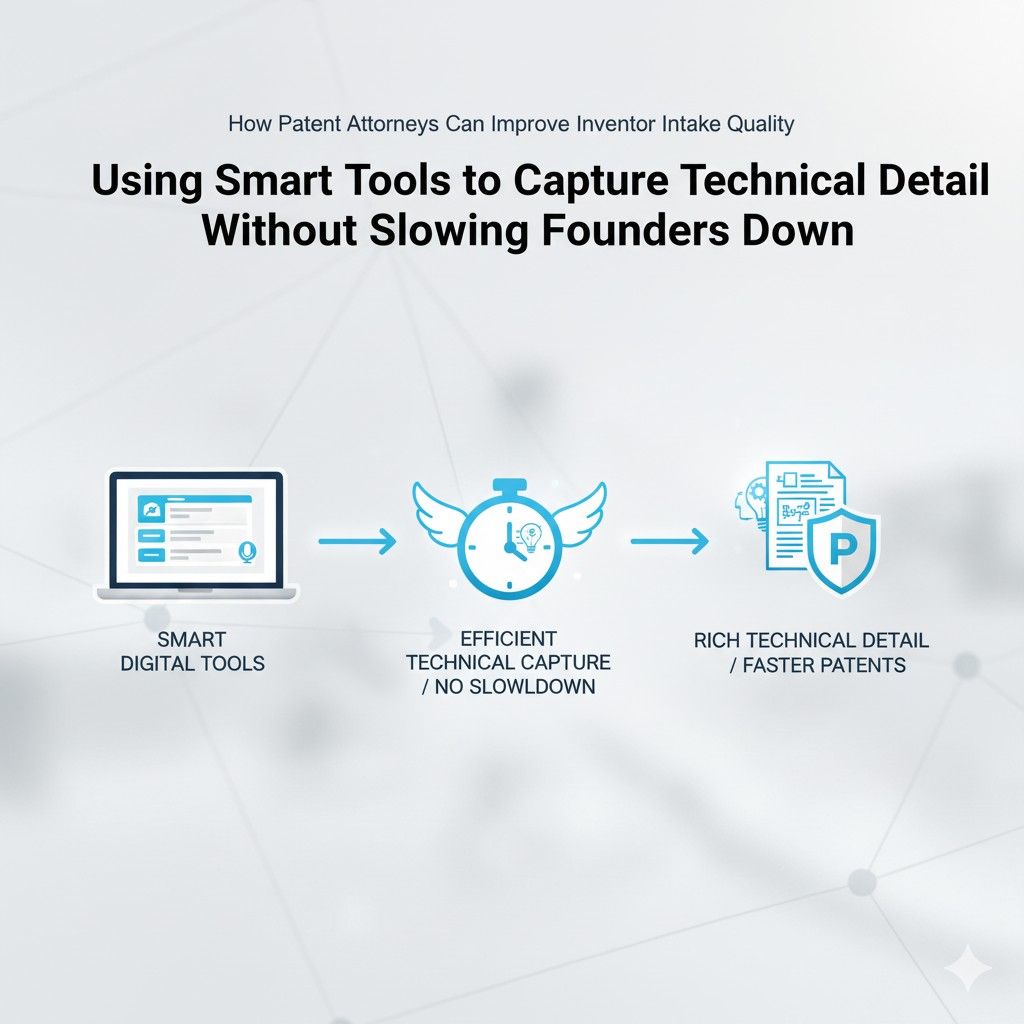
For attorneys, repeatable processes lead to consistent quality across applications. For founders, it creates confidence that every invention is being protected properly without extra effort.
Wrapping It Up
Strong patents do not happen by chance. They begin with strong intake. When patent attorneys improve how they collect, understand, and structure inventor input, everything else becomes easier. Drafting becomes faster. Claims become broader. Costs become more predictable. And most importantly, the final patent actually protects the business.
Leave a Reply