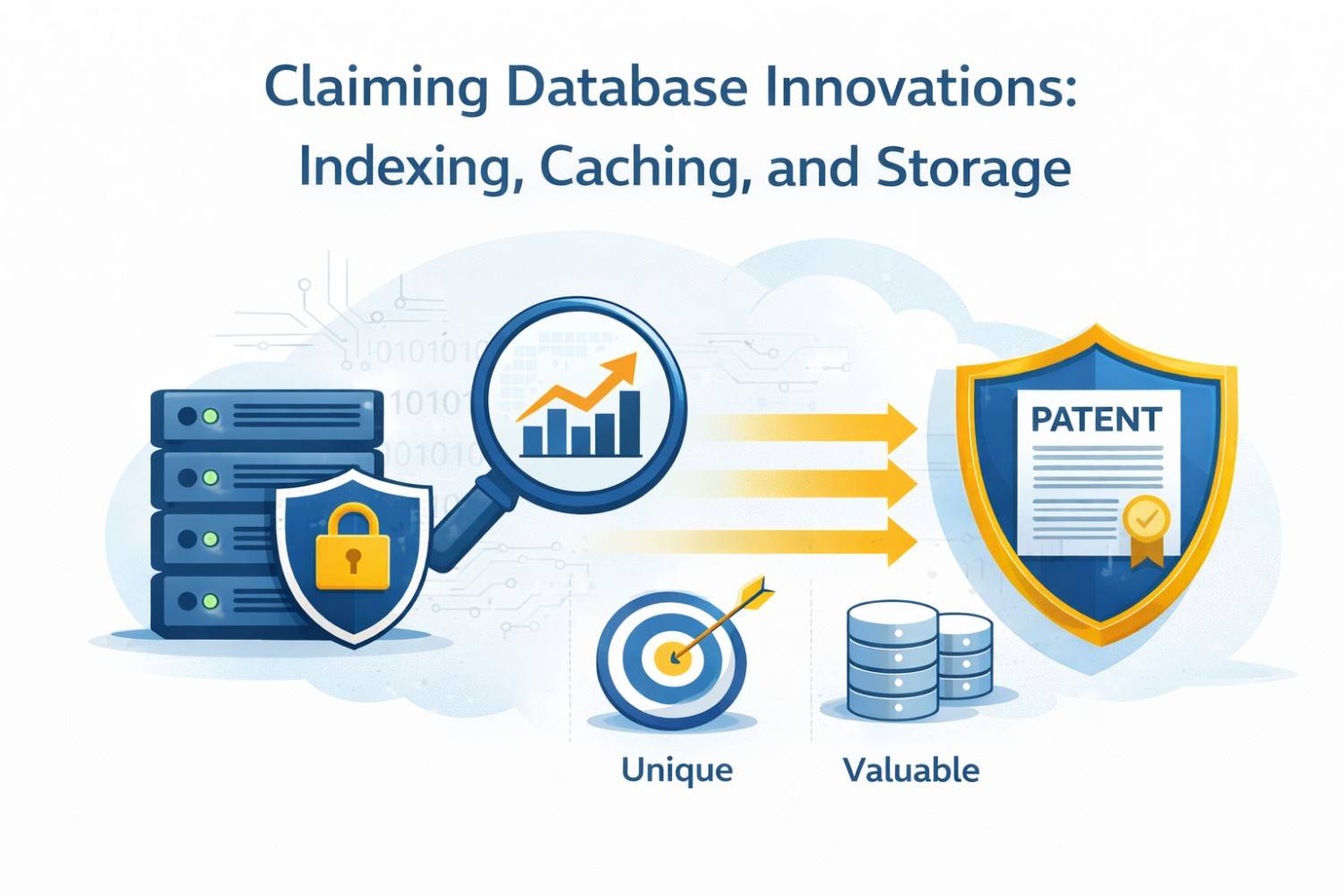
Databases do far more than hold data. They decide how fast your product feels, how well your app scales, and how smoothly your team can ship new features. That is why database work is not just back-end plumbing. It is often real invention. If you have built a better way to find records, speed up reads, reduce storage cost, cut query time, keep hot data ready, or move data across systems with less waste, you may be sitting on valuable patent material right now. Many founders miss this.
Why Database Innovation Is Often More Valuable Than Founders Realize
Most founders do not miss the value of database work because they are careless. They miss it because the work lives in the middle of the stack, away from flashy demos and market-facing features.
It often looks like pure engineering upkeep from the outside. Inside the business, though, that same work may be the reason the product feels fast, scales well, costs less to run, and stays reliable when usage spikes.
That is not support work. That is business value in technical form.
When a company improves how data is stored, found, moved, or served, it is often building a quiet edge that competitors will struggle to copy. A founder may see a faster query path or a smarter cache rule as just one more optimization sprint.
In reality, that kind of improvement can shape retention, margins, user trust, and even go-to-market timing. The database layer is often where deep, durable advantage starts to form.
The Market Rarely Sees the Engine Room
What users notice is speed, smoothness, and reliability. They do not usually ask how a product got there. They do not care whether a page loaded quickly because of a new index structure, a better cache invalidation flow, or a storage format that reduced disk reads.
They only know the product worked when they needed it. That is exactly why database innovation is easy to undervalue. The benefit is obvious, but the source of the benefit stays hidden.
For a business, hidden value can be some of the strongest value. It is harder for competitors to spot. It is harder for buyers to compare directly. It is harder for others to reverse engineer quickly.
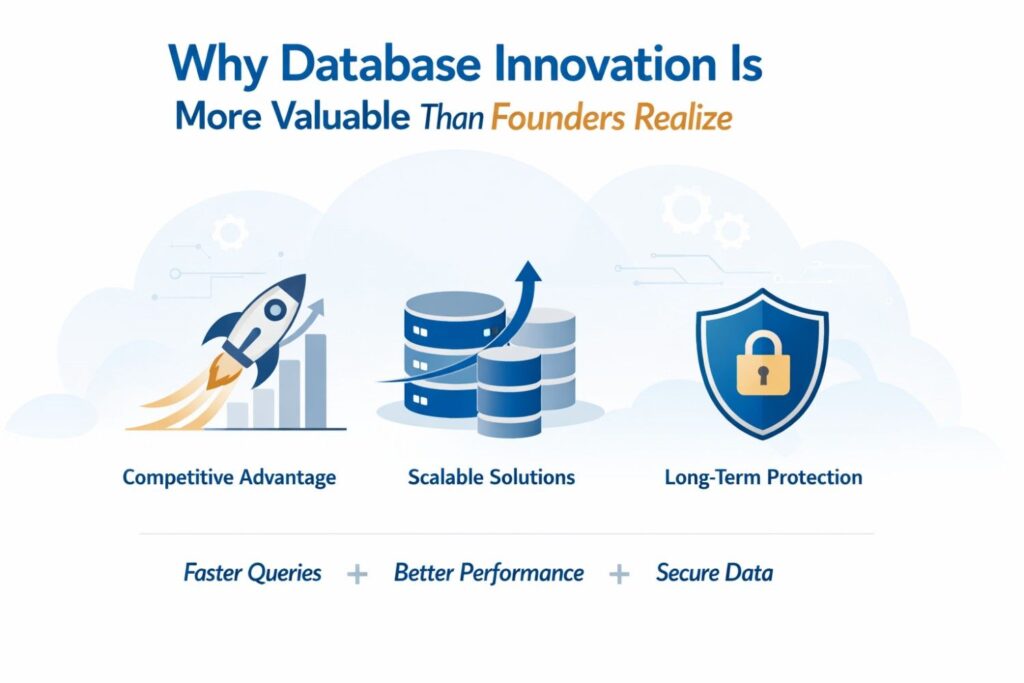
If your company has found a way to make large-scale data use cheaper, faster, or more stable, that work may deserve far more strategic attention than it has received.
The Best Technical Edge Is Often Invisible
A visible product feature can be copied once a rival sees it in the market. A database improvement is different.
It may be buried deep in your infrastructure, tied to your workflows, and supported by a chain of design choices that are not obvious from the outside. That makes it more than a simple feature.
It becomes a hidden system advantage.
This matters because strong businesses are rarely built on surface polish alone.
They are built on repeatable performance. If your product can serve users faster at scale, recover more cleanly from load spikes, or support richer data operations without breaking cost limits, you have something far more useful than a cosmetic differentiator.
What Looks Small in Engineering May Be Big in Business
A change that removes milliseconds from a data access path may sound minor during sprint planning.
But if that same change improves every search, feed refresh, model lookup, or transaction request, the business result can be massive. Better performance can lift conversion, reduce support burden, and delay expensive infrastructure upgrades.
Founders should train themselves to ask a better question. Instead of asking, “Was this just an internal optimization?” ask, “What business pain did this remove, and how often does that pain appear?” If the answer touches core product flow, customer experience, or operating cost, the innovation may be far more valuable than it first appears.
Database Work Often Protects Margin, Not Just Performance
Database innovation is not only about speed. In many startups, it is one of the strongest tools for protecting gross margin.
Every unnecessary read, write, copy, cache miss, recompute cycle, and storage overhead has a cost. At small scale that cost hides easily. At larger scale it becomes a tax on growth.
When a team invents a new way to reduce storage duplication, shrink hot-path latency, or avoid wasteful recomputation, it may be improving the financial model of the company.
That is especially true in data-heavy products, AI systems, SaaS platforms, marketplaces, and enterprise tools where usage grows faster than pricing power.
Better Data Systems Can Delay Expensive Hiring and Rebuilds
Many companies respond to scale pressure by adding more people, more tooling, and more infrastructure. Sometimes that is needed. Often it is covering for an inefficient system design.
A stronger index path, a better tiered storage model, or a smarter cache refresh policy can buy a company time. That time matters.
Time means the team can postpone a rushed migration. Time means fewer emergency fixes.
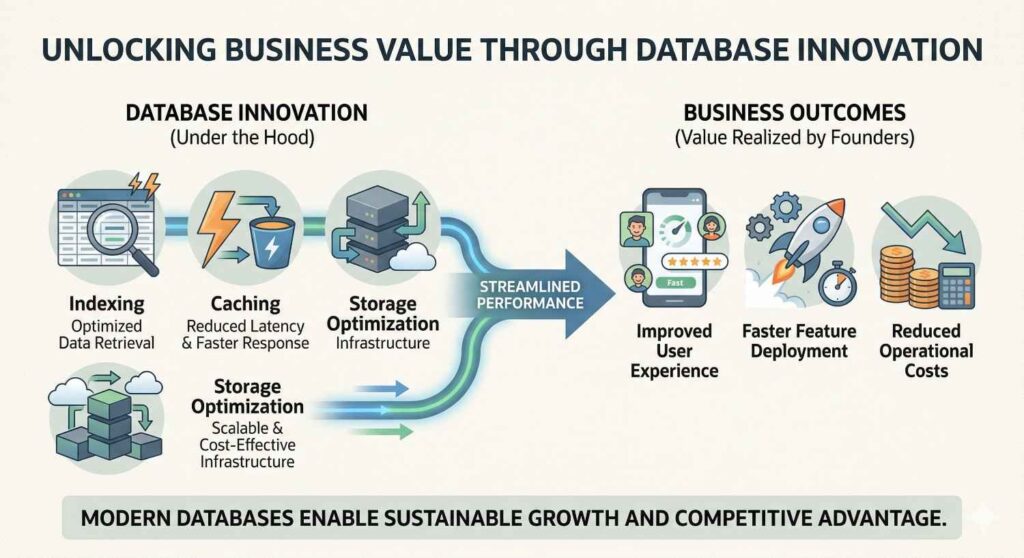
Time means the product roadmap can stay focused on growth instead of constant operational recovery. When technical work creates that kind of breathing room, it has direct business value. It protects execution.
Efficiency Gives Startups Strategic Freedom
Startups do not win only by having better ideas. They win by staying alive long enough to compound those ideas.
A more efficient database system gives a company more room to operate. It reduces pressure on burn. It lowers the need for reactive architecture changes. It helps small teams act bigger than they are.
This is why founders should not treat database design as a pure cost center. In many cases, it is one of the strongest control points for preserving optionality. A system that can do more with less gives the business more choices later.
Customers Feel Database Innovation Even When They Cannot Name It
A user may never say, “I love your indexing strategy.” But they will feel the result when their dashboard loads fast, their search returns feel instant, and their work does not disappear during peak traffic.
Enterprise buyers may never ask for details about your storage layout on the first call, yet they will care deeply that the platform remains stable as their data volume grows.
That is why technical founders should connect database improvements to customer outcomes early. Not by overselling internals, but by translating them into plain business language.
Faster response time means less friction. Lower failure rates mean more trust. Smarter storage means better economics, which can support better pricing or better margins.
Internal System Gains Can Become External Sales Strength
A company that knows how its database innovation affects the customer can turn that insight into a stronger market story.
This is useful not only for positioning, but also for deciding what to protect. If a technical change supports a customer promise, it deserves closer attention.
For example, if your product can support real-time analytics at lower cost because of a new storage compaction approach, that is not just architecture. It may be part of your sales edge.
If your platform handles personalized results faster because of a hybrid cache and index design, that may be part of what wins deals. The more clearly you tie infrastructure work to customer value, the easier it becomes to see its strategic importance.
Founders Often Underclaim the Work That Took the Most Real Thinking
Some of the most valuable inventions inside a startup do not arrive as dramatic breakthroughs. They emerge through painful engineering trade-offs. A team tries one path, then another.
It runs into memory pressure, stale reads, poor locality, rebuild delays, or write amplification. Over time, the team creates a new method that resolves those conflicts in a practical way.
Because the result comes from iteration, founders sometimes dismiss it. They think it was just problem solving. But real invention often looks exactly like that. It is not always a sudden flash. It is the creation of a concrete new method that works better under real-world constraints.
The Hard-Won Solution Is Often the Most Defensible One
A business should pay close attention when a technical solution was hard to reach and hard to replace. Those are signs that the work may carry defensible value.
If your team found a way to balance read speed, write cost, and storage footprint in a new way, that matters. If you solved invalidation problems across distributed caches without creating fresh consistency failures, that matters too.
The more a solution reflects careful trade-off handling, the more likely it is to contain specific technical substance worth protecting.
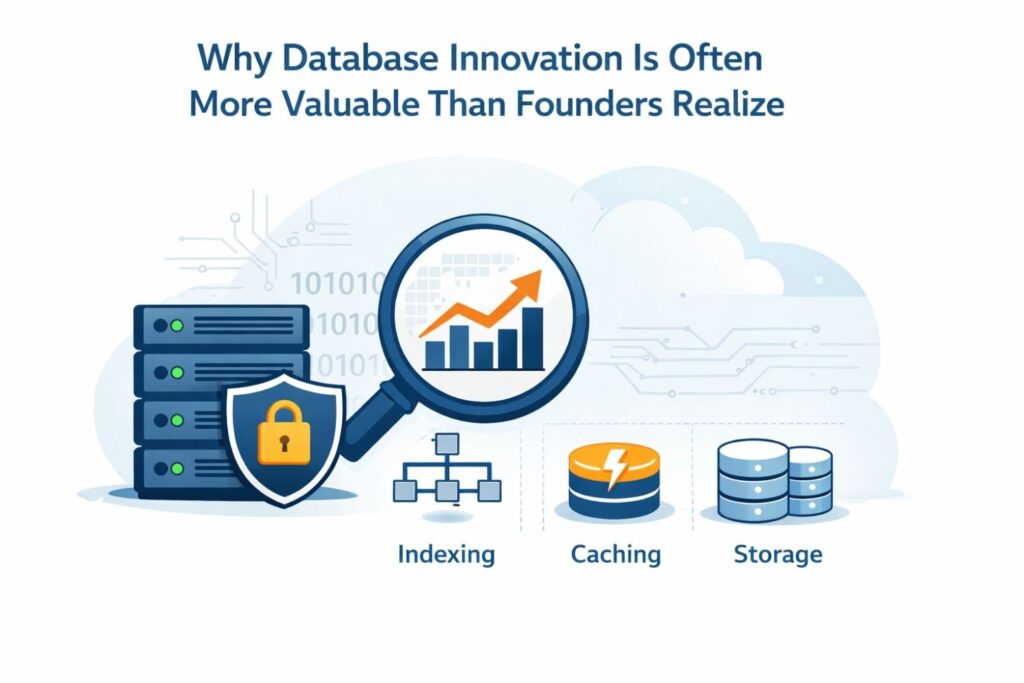
Founders should not assume that only big platform inventions count. In many cases, the edge comes from the exact way smaller problems were resolved together.
Pain Is Often a Signal of Patentable Value
One practical way to spot hidden value is to look at engineering pain. Where did the team spend weeks or months because the normal options did not work?
Where did standard tools fail under your product’s needs? Where did the team invent a custom approach because available systems were too slow, too expensive, or too brittle?
These pain points are useful because they point to genuine technical problems. If your team created a repeatable solution to one of them, there may be strong material there for a patent strategy.
Businesses that document these moments well are much more likely to capture value instead of letting it disappear into code history.
Database Innovation Can Strengthen Company Value in Fundraising and M&A
Investors and acquirers care about more than product screens. They care about whether the company owns real technical advantage.
A startup that can show unique infrastructure, especially in a hard technical area like indexing, caching, or storage, may present a stronger story around defensibility and long-term leverage.
This does not mean every investor wants a lecture on internals. It means they want confidence that the company is not easy to clone.
When your system advantage is deep, proven, and tied to important business outcomes, it becomes part of the company’s strategic value.
Strong Internal Documentation Makes Strategic Protection Easier
One of the biggest missed chances in growing companies is poor technical memory.
Teams ship major infrastructure improvements, but the reasoning stays trapped in old tickets, pull requests, chats, and the minds of a few engineers.
Months later, when someone asks what was truly novel, the company struggles to explain it cleanly.
That problem can be fixed with simple habits. After each major database improvement, capture what the old method was, what broke, what the team changed, and what improved as a result.
Write down not only what the code does, but why that design was chosen over other options. Those notes can become the foundation for future protection and better business decisions.
Treat Architecture Decisions Like Business Assets
A founder does not need to turn every design note into a legal memo. But the company should treat important architecture decisions with more respect.
If a database change improves latency, throughput, cost, resilience, or scale in a meaningful way, it deserves a short internal record. That record should explain the problem, the approach, and the result in plain language.
This is highly actionable because it can be done during normal product work. A lightweight habit is enough.

At the end of each important infrastructure project, ask the team to produce a one-page summary of what was invented or materially improved. Over time, that creates a map of the company’s hidden technical assets.
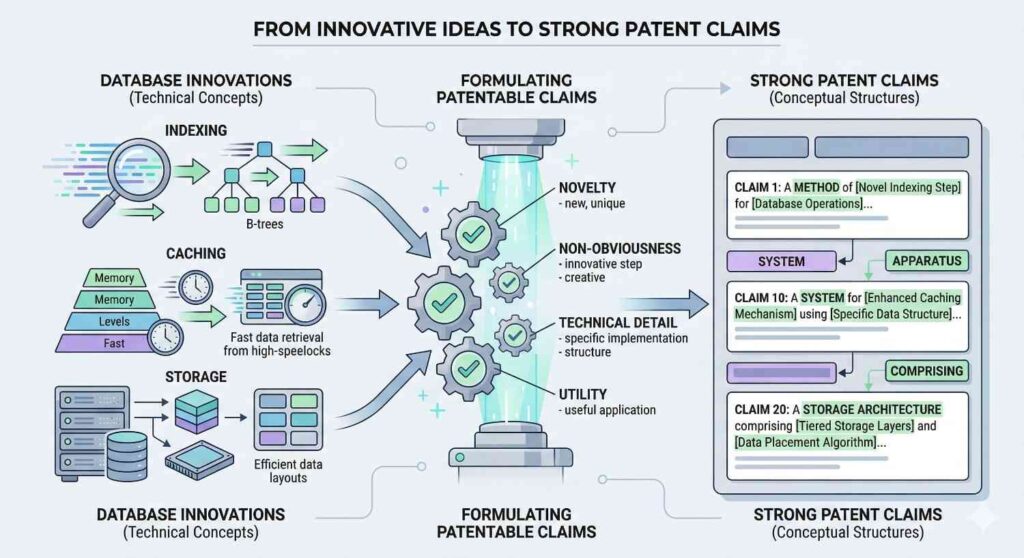
How Indexing, Caching, and Storage Ideas Become Strong Patent Claims
A lot of founders think the hard part is building the system. In truth, the harder part is often explaining the system in a way that can be protected. That is where many strong ideas get lost.
The team ships real technical work, but when it is time to describe the invention, the write-up turns vague, too broad, or too close to plain engineering talk.
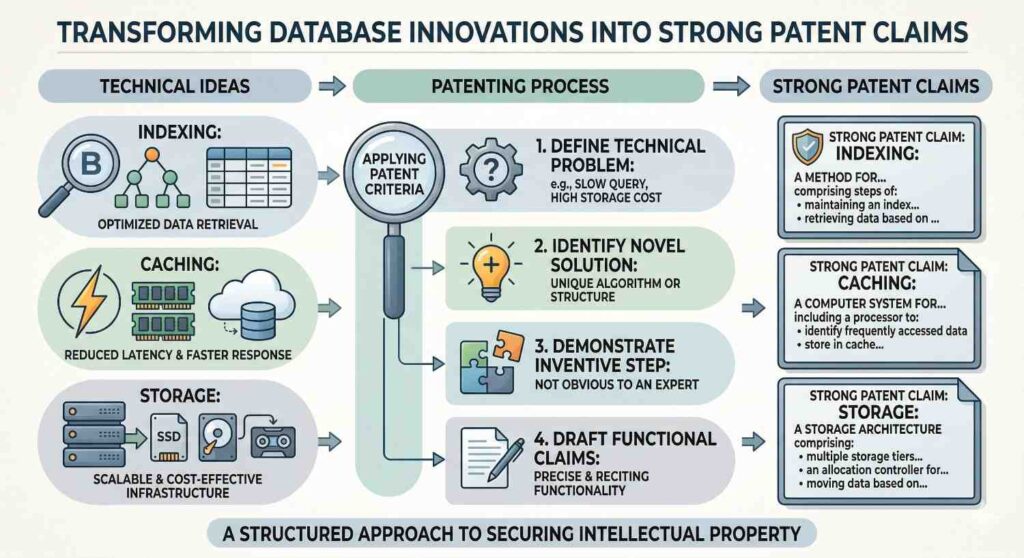
A strong patent claim does not come from saying your system is faster. It comes from showing how it becomes faster in a clear and concrete way.
It Starts With a Real Technical Problem
Every strong claim begins with a real problem that had to be solved. That problem is the anchor. Without it, the invention can sound like a generic software idea.
With it, the claim begins to show why the work matters and why the solution is not random.
A good place to start is not with the final feature, but with the friction that forced the team to invent something new. Maybe large tables made lookups too slow.
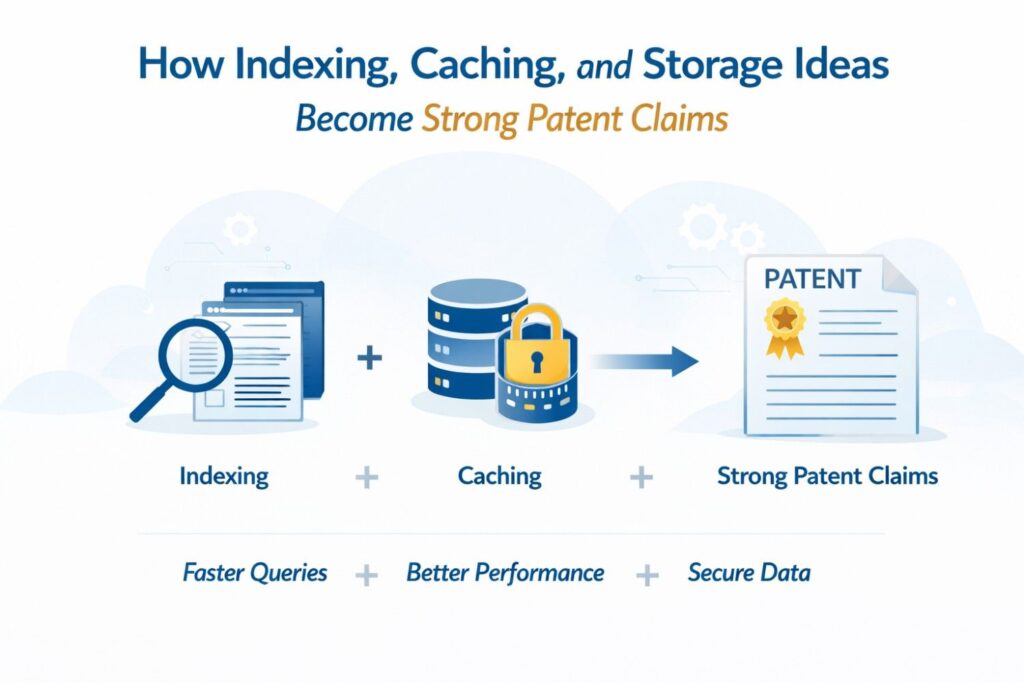
Maybe cache invalidation caused stale reads at the worst time. Maybe storage costs grew too fast as the product scaled. The stronger the problem statement, the easier it becomes to explain why your approach is not ordinary.
Weak Claims Usually Skip the Pain
When teams rush, they often describe only the happy ending. They say they built an improved cache system or an efficient storage engine. That is not enough.
A claim gets stronger when it is tied to the problem conditions that made the old ways fail.
That means writing down the bottleneck in plain terms. What broke first. What trade-off kept getting worse. What normal approach was tried and did not hold up. Those details help separate a true invention from a general idea.
The Claim Needs the Mechanism, Not Just the Result
Patent strength lives in the mechanism. Speed, lower latency, better compression, fewer misses, and lower cost are outcomes. They matter, but they are not the invention by themselves.
The invention is the method that creates those outcomes.
For example, if your indexing system improves retrieval time, the key question is how. Did it split records in a new way based on query intent? Did it maintain two coordinated structures for different access patterns?
Did it update index segments using a special background process that reduced write pressure? That is the material that matters.
Business Teams Should Push for the “How”
This is where founders can help a lot. When engineers describe a new system, ask one simple question again and again: how exactly does it work?
Not at a code line level, but at a method level. What inputs come in, what decisions get made, what gets stored, what gets skipped, what gets updated, and what happens next.
That habit is highly useful because it forces the invention out of abstract language. Once the method becomes visible, it becomes much easier to shape it into a strong claim.
Indexing Ideas Become Strong Claims When the Structure Is Specific
Indexing work is often rich with patent value because it sits right at the point where scale pain becomes real.
Teams create new ways to organize, update, merge, rank, or retrieve data because old structures stop working for their product needs.
A strong indexing claim usually does not say, “we use an index to speed up search.” That says almost nothing.
A stronger version explains the exact structure, what data it tracks, when it changes, and how it interacts with the query path. The more concrete the structure and behavior, the more useful the claim becomes.
The Best Indexing Claims Capture the Trade-Off
Most indexing inventions come from trade-offs. The team wants fast reads without slow writes.
It wants low memory use without poor lookup speed. It wants freshness without costly rebuilds. That tension is valuable. It is often where the invention lives.
So when shaping the claim, do not erase the trade-off story. Use it. If your system balances competing needs in a new way, that balance can become one of the strongest parts of the claim.
It shows that the invention is not just an arrangement of parts. It is a solution to a hard technical conflict.
Claim the Update Logic, Not Only the Lookup Path
A common mistake is focusing only on how the index is used during search. That matters, but the update path can be just as important. In many systems, the true novelty is in how the index stays fresh without too much cost or delay.
If your team created a special process for partial rebuilds, deferred writes, grouped updates, or selective reordering, that may deserve as much attention as the read path itself.
Strong protection often comes from covering both the structure and the maintenance flow around it.
Caching Ideas Become Strong Claims When They Solve a Hard Consistency Problem
Cache ideas sound simple from the outside, but real cache design is rarely simple at scale.
The hard part is not storing hot data. The hard part is deciding what belongs in cache, when it should be refreshed, how stale data is handled, and how different system parts stay in sync.
That is why caching work can become strong patent material.
Many teams create custom methods because normal cache rules do not fit the demands of real-time apps, high-write systems, AI workloads, or distributed platforms. When the team finds a repeatable way to solve those problems, there may be a real claim there.
Strong Cache Claims Focus on Decision Logic
A useful cache claim usually centers on the logic that decides something important.
It may decide when to prefetch, when to invalidate, when to fall back to source data, when to preserve stale data for continuity, or when to move an item between cache layers.
That decision flow is often where the invention sits. If your system uses context, workload type, user behavior, data volatility, or system state to guide those choices in a new way, that should be captured clearly.
General statements about using a cache are weak. Specific decision rules tied to system behavior are much stronger.
Timing Can Be the Novel Part
Many good caching inventions are not about what is cached, but when the system acts.
Timing can change everything. A refresh that happens before likely demand, a delayed invalidation that avoids waste, or a staged update flow that reduces contention may be the heart of the invention.
This matters because teams often overlook timing logic. They treat it like a small implementation detail.
In reality, timing behavior can be central to the technical gain and should be written as part of the core method, not as an afterthought.
Storage Ideas Become Strong Claims When the Data Layout Changes System Behavior
Storage inventions often look ordinary to people outside engineering. Inside the system, though, data layout can shape cost, speed, durability, and scale in major ways.
A new storage method can change how much data is written, how often it is moved, how quickly it is read, and how well it survives failures.
For a storage idea to become a strong claim, the write-up should explain how the data is arranged, transformed, grouped, compressed, tiered, or retrieved. The claim gets stronger when that layout is tied to a real technical effect.
Storage Claims Should Show More Than “Saving Space”
Space savings alone are not enough. The write-up should show how the storage method works and what broader system effect it creates. Maybe the layout reduces read amplification.
Maybe it improves locality for a certain workload. Maybe it allows faster recovery after interruption. Maybe it moves colder data in a way that cuts cost without hurting hot-path speed.
These are the kinds of details that turn a storage idea from a nice design choice into a real technical invention. The more directly the storage method changes system behavior, the more clearly that connection should be stated.
Hybrid Storage Designs Can Be Especially Valuable
Many modern systems do not rely on a single storage pattern. They blend multiple forms depending on access needs, update frequency, latency goals, or retention rules.
When a team creates a smart way to move data across those layers, that can be highly valuable.
The important thing is to explain the rule set that drives the movement. What signals trigger transfer. What metadata is tracked. How the system avoids duplication, delay, or inconsistency. Those details can form the backbone of a strong claim.
Strong Claims Usually Cover More Than One Layer
Many database inventions are not isolated to one component. An indexing improvement may depend on a cache rule. A storage method may enable a better retrieval path.
A cache design may rely on special metadata generated during writes. That cross-layer relationship is often where the real edge sits.
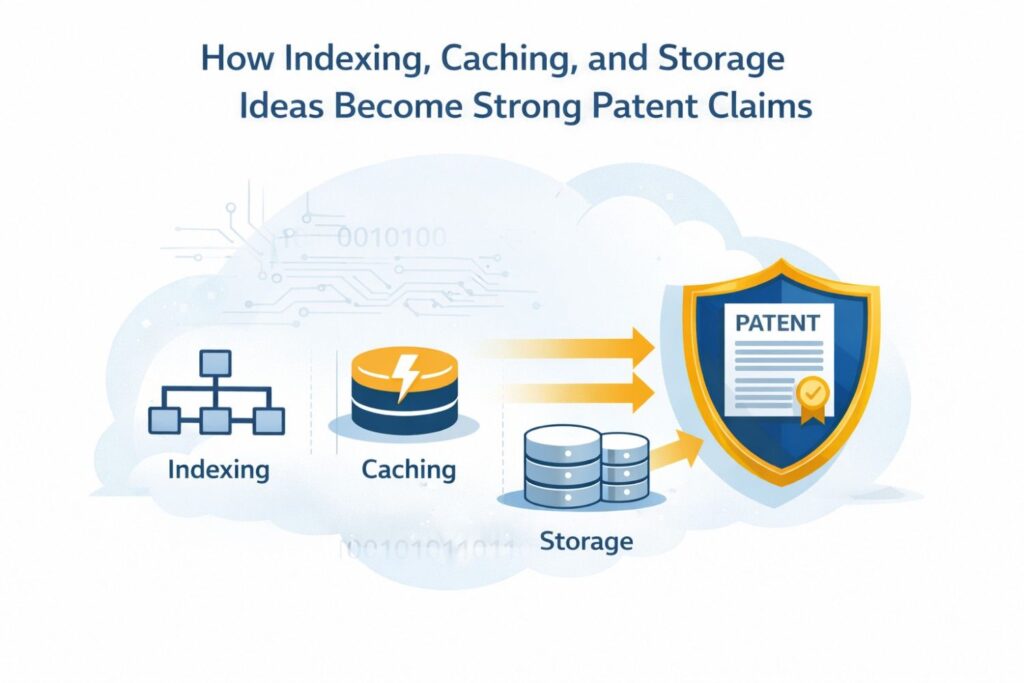
This is why the write-up should not be too narrow too early. The team should capture the full system flow before carving it into claim form.
A strong patent strategy often includes claims around the core method, the surrounding system behavior, and the practical variations that make the invention harder to work around.
Do Not Let the Architecture Get Split Into Unrelated Pieces
One risk in fast-moving teams is that each part gets described alone. The index is one story.
The cache is another. The storage engine is a third. But in reality, the invention may be the way they operate together. If that combined behavior is what creates the gain, it should be documented as one coordinated method.
This is strategic because competitors often copy the high-level outcome while changing one surface detail. Claims that cover the deeper interaction between system parts can be much harder to dodge.
The Best Source Material Is Already Inside the Team
Founders often think they need to start from scratch when turning engineering work into patent material. Usually they do not.
The best raw material is already there in design docs, pull requests, tickets, test notes, incident reviews, and internal messages where the team explained why the old way failed.
Those records are useful because they capture real thinking before hindsight cleans it up.
They show the dead ends, the design choices, and the exact trade-offs that shaped the final solution. That is often where the invention becomes easiest to see.
Capture the Alternatives That Were Rejected
One of the most useful things a business can do is preserve the options the team considered and did not choose.
That may sound minor, but it is very powerful. When you know what other paths were on the table and why they were rejected, the distinct value of the chosen method becomes clearer.
This is actionable right away.
After a major database project, ask the lead engineer to write a short note on what other methods were tested or discussed and why they failed. That note can become extremely valuable when it is time to shape a claim.
Claim Drafting Gets Better When the Team Separates Core and Optional Parts
Not every part of the system belongs in the center of the claim. Some details are essential.
Others are helpful examples. Strong patent work depends on knowing the difference. If the claim includes too many narrow details, it may be easy to avoid. If it stays too broad, it may lose force.
The right move is to identify the smallest set of steps or components that make the invention work.
That is the core. Then identify useful variations that can be added in supporting claims or descriptions. This helps protect the main idea without trapping it inside one exact product version.
Ask What Must Stay True for the Gain to Exist
A good way to find the core is to ask this: if we changed this part, would the main technical gain still happen?
If the answer is no, that part may belong close to the heart of the claim. If the answer is yes, it may be a variation rather than the center.
What Makes a Database Improvement Worth Protecting
Not every database change deserves the same level of attention. Some changes are useful but routine. Some are clean engineering. Some are just good maintenance.
But some improvements do something more. They solve a hard technical problem in a way that changes how the system performs, scales, or behaves under pressure. That is where real protection value often begins.
For founders and technical teams, the key is not asking whether the work felt hard. The better question is whether the work created a real and repeatable technical advantage that matters to the business.
If the answer is yes, then it may be worth protecting before it becomes just another buried part of the stack.
A Valuable Improvement Solves More Than a Minor Nuisance
A database improvement becomes more important when it addresses a problem that was blocking growth, hurting reliability, increasing cost, or limiting product capability.
That kind of work usually carries more value than a minor cleanup. It changes outcomes that the company cares about in a direct way.
The strongest candidates are often tied to problems that kept showing up. Maybe a system became slow once data passed a certain size. Maybe write load created instability.
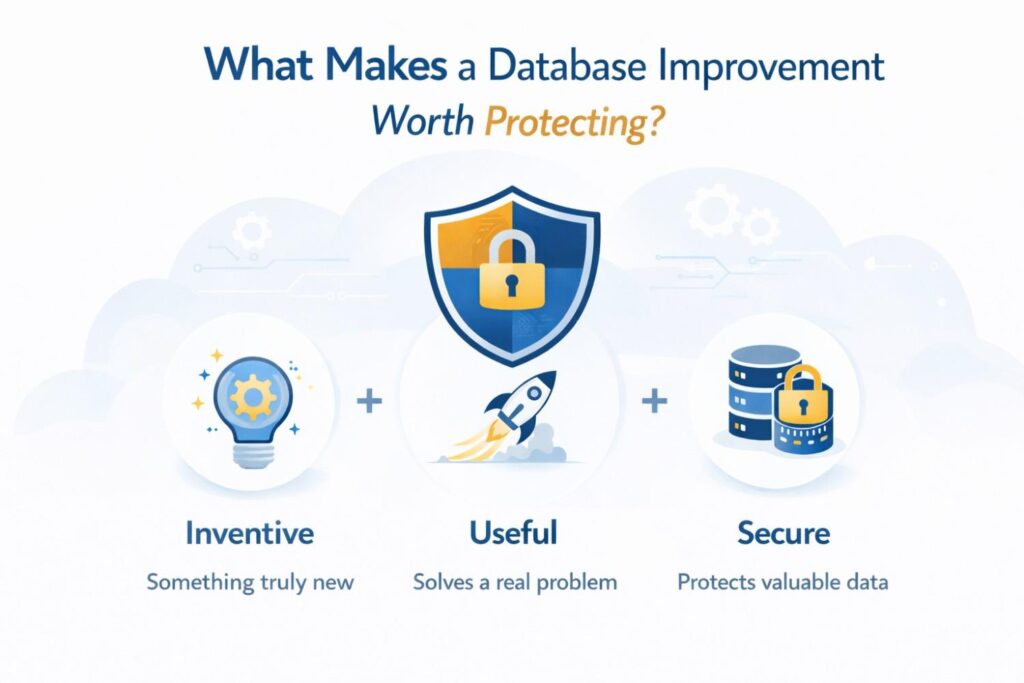
Maybe cache misses drove up compute cost. Maybe storage design made recovery too slow. When a team solves a pain point that touched the product again and again, that solution deserves a closer look.
Worth Protecting Means Worth Repeating Across the Business
A good sign of protectable value is repeat use. If the improvement helps only in one rare corner case, it may still matter, but its strategic value may be smaller.
If it improves many queries, many customers, many workloads, or many parts of the product, that is different. Now the change is not just a fix. It is part of how the business runs better.
This matters because broad internal impact often points to broader business impact. A change that affects large parts of the system can shape customer experience, cloud spend, scaling speed, and roadmap flexibility at the same time.
Ask Where the Gain Shows Up Repeatedly
One smart habit for founders is to ask where the gain appears over and over. Does the improvement reduce latency in the product’s main user flow. Does it lower storage use across all accounts.
Does it improve sync behavior every time data is updated. Repeated value is often a sign that the work is more than ordinary tuning.
That kind of repeated effect also makes the business case much easier to explain later, whether the audience is internal leadership, investors, or patent counsel.
A Protectable Improvement Usually Solves a Technical Trade-Off
Many strong database inventions are born from conflict. The team wants faster reads without slower writes. It wants better consistency without destroying performance.
It wants lower storage cost without making access harder. It wants fresh cache data without constant invalidation churn.
When a system solves one of these tensions in a new and practical way, the result can be very valuable. That is because trade-offs are where standard approaches often fail.
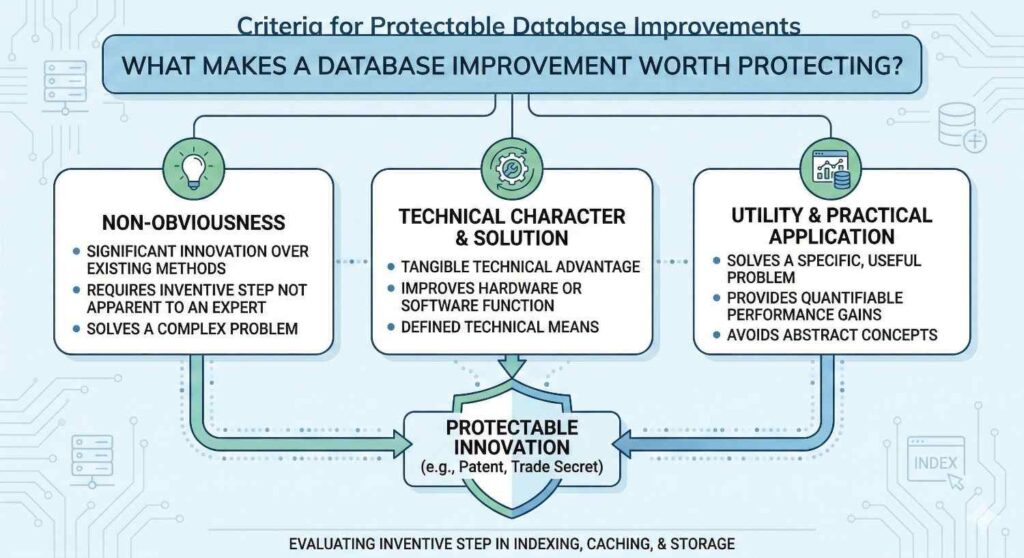
If your team found a way through that conflict, it may have created something other teams will struggle to match.
Easy Wins Are Less Likely to Be the Real Prize
If a change came straight from a well-known pattern and worked exactly as expected, it may still be good engineering, but it may not be your strongest protection candidate.
On the other hand, if the team tried common options and none fit the product, that is often a stronger sign.
This is one of the most useful filters a business can use. Look at the work that forced the team to invent around product-specific pain. Those are often the places where the deepest technical value sits.
Painful Design History Is Often a Good Signal
The path that caused the most debate, testing, and rework is often worth revisiting. Not because pain alone creates value, but because hard trade-offs usually push teams into original problem solving.
If the final method was shaped by real limits and real failures, it may contain the kind of concrete technical substance worth protecting.
The Improvement Should Change System Behavior in a Meaningful Way
A database change is more likely to matter when it changes what the system can do, not just how clean the code feels.
That change may appear as faster retrieval, better throughput, less hardware use, smoother failover, lower error rates, or more stable performance during spikes. The exact result can vary, but it should be meaningful.
The core point is that the improvement should make the system behave differently in a way that matters under real operating conditions.
It should not just make the implementation nicer for the team. It should change outcomes that the product or business can feel.
Better Behavior Under Stress Often Matters More Than Average Improvement
A lot of teams focus on average performance. That helps, but what often matters more is what happens under stress. Does the system still hold up during peak load.
Does it avoid collapse when cache state goes stale. Does it reduce long-tail query delay. Does it recover better after interruption. Those conditions often reveal the true value of an improvement.
For businesses, this is a highly practical way to evaluate technical work. Improvements that make the system more reliable when things get ugly are often much more strategic than ones that look good only in calm conditions.
The Edge May Show Up in Extremes, Not in Demos
A founder should pay close attention to improvements that shine at scale, during burst traffic, or under unusual data patterns. These are often the places where competitors break first.
If your system keeps working well when normal systems start failing, that resilience may be one of your strongest hidden assets.
The Improvement Should Be Hard for Others to Recreate Quickly
One useful business test is this: if a competitor understood the high-level outcome, could they recreate the method quickly. If the answer is yes, then the protection value may be lower.
If the answer is no because the solution depends on specific architecture logic, update flows, metadata handling, or system interactions, then the improvement may be much more valuable.
This does not mean the idea must be impossible to copy. It means it should carry enough specific technical shape that rebuilding it is not trivial. The more the solution depends on a carefully designed method, the more strategic it may be to protect it.
Hidden Complexity Can Be a Business Advantage
Some of the most valuable database improvements look simple from the outside. A product gets faster. A query path gets smoother. Storage cost drops.
But under the hood, the result may depend on carefully timed updates, layered indexing logic, selective caching rules, or coordinated data movement across tiers.
That hidden complexity matters because it is often where defensibility lives. A business should not dismiss an improvement just because the user-facing result looks clean.
Often the cleaner the product feels, the more valuable the underlying system work may be.
Simplicity on the Surface Can Hide Real Invention
A polished result can make the engineering disappear. That is good for users, but risky for the company if no one stops to document what made that result possible.
If the product feels simple because the system became technically smarter, then the company may be sitting on protection-worthy value without realizing it.
The Best Candidates Often Tie Directly to Revenue or Margin
Businesses should look carefully at database improvements that affect money. That effect may be direct or indirect. Faster systems may improve conversion.
Better scale behavior may support enterprise growth. Smarter storage may lower infrastructure cost. More reliable caching may reduce churn caused by poor user experience.
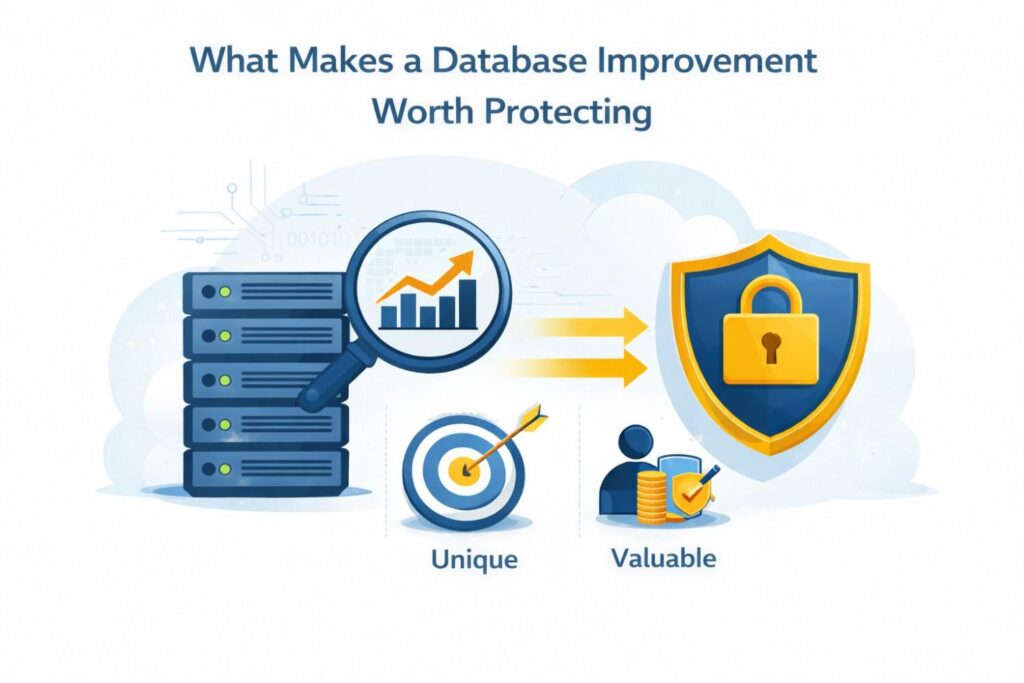
A protectable improvement becomes even more important when it touches these business levers. Now it is not just helping engineering metrics. It is shaping how the company earns, retains, or preserves value.
A Strong Signal Is When the Improvement Unlocks a Product Capability
Sometimes the biggest sign of importance is not a speed gain. It is that the improvement made a feature possible at all. Maybe the product could not support live collaboration until the storage path changed.
Maybe real-time analytics only worked after the indexing model was redesigned. Maybe low-cost AI output serving needed a new cache approach to become viable.
When a database improvement unlocks something the market can actually buy, use, or depend on, its strategic value rises sharply. It becomes part of the product engine, not just its plumbing.
Ask What the Business Could Not Do Before
This is a very helpful internal question. Before this database change, what was impossible, too expensive, too slow, or too unstable to offer? After the change, what became possible?
The clearer that before-and-after story is, the easier it becomes to see whether the improvement deserves protection.
Improvements With Clear Rules Are Easier to Protect Than General Ideas
A database idea becomes stronger when it can be described as a method with real rules. What triggers the action. What data is tracked. What condition changes the path.
What gets stored, skipped, merged, or refreshed. The more the improvement depends on defined system behavior, the more substance it has.
This matters because broad ideas are weak on their own. “Use a cache to improve speed” is not enough.
“Update selected cache entries based on a change priority score and a freshness threshold tied to query frequency” is much closer to a real technical method. The details make the value visible.
Process Matters as Much as Structure
Teams often focus on components. They talk about the index, the cache, the storage tier.
But the protectable value may sit in the process instead. It may be the order of operations, the update path, the decision logic, or the recovery flow that creates the real gain.
Businesses should therefore pay attention not only to what exists in the system, but to what the system does over time. A dynamic method is often harder to spot and easier to overlook, but it may be the heart of the invention.
Movement Through the System Can Be the Novel Part
In many database improvements, the smart part is not static. It is how data moves, when state changes, how the system responds to load, and how different layers coordinate.
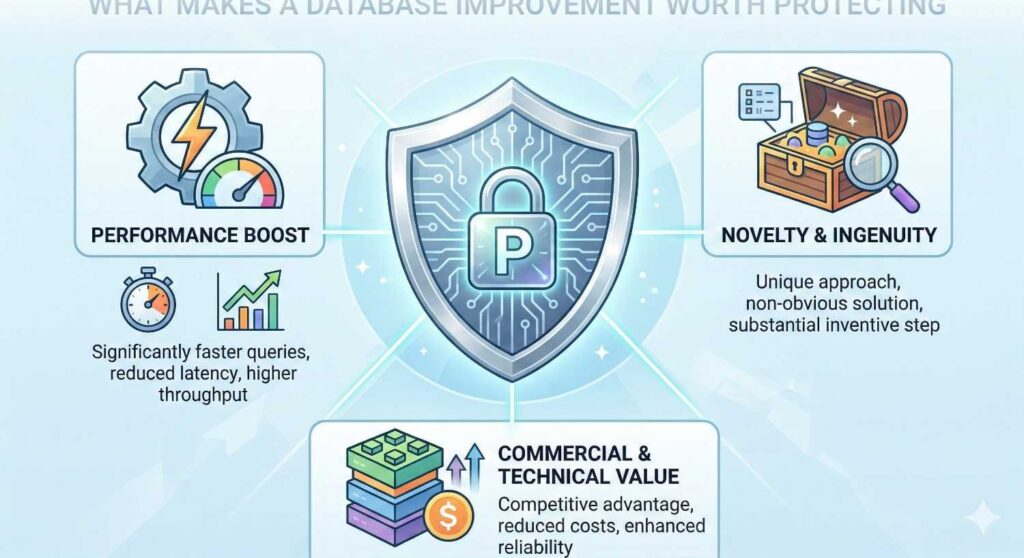
That moving logic can be where the unique value sits. If the company only records the final structure and not the process, it may miss the most protectable part.
Wrapping It Up
Database work is easy to overlook because it sits behind the scenes. But that is often where some of the most valuable invention happens. A better index can make a product feel instant. A smarter cache flow can reduce cost and improve trust. A stronger storage design can help a company scale without breaking under pressure. These are not minor backend choices. They can become real business assets.
Leave a Reply