If someone wanted to buy your company tomorrow, could you prove what you actually own? That single question decides whether deals move fast, stall, or fall apart. In mergers and acquisitions, trade secrets often matter more than patents. Your code, models, data pipelines, processes, and know-how are usually the real value. But here is the hard truth: most startups say they have trade secrets, yet very few can show them in a clean, trusted way. This is where M&A readiness begins. Not with a banker. Not with a pitch deck. It starts with a data room that tells a clear story about your trade secret program. A data room that answers buyer questions before they ask. A data room that shows control, discipline, and intent.
Why Buyers Care More About Trade Secrets Than You Think
Buyers do not acquire companies for ideas. They acquire them for advantage. Trade secrets are often the quiet engine behind that advantage.
They explain why your product works better, faster, or cheaper than anything else on the market.
When buyers look at your business, they are trying to answer one core question: can this advantage survive after the deal closes?
This section explains why trade secrets carry so much weight in M&A, what buyers are really testing when they review them, and how founders can prepare in ways that directly increase deal value.
Buyers Are Buying What Others Cannot Recreate
Every serious buyer assumes competitors will try to copy what you have built. The real value is not the surface-level product.
It is the hidden work behind it. This includes internal systems, tuning methods, data handling logic, decision rules, workflows, and edge cases learned the hard way.
From a buyer’s view, trade secrets are proof that your advantage is not obvious or easy to rebuild.
They want to see that the core of your business lives in places outsiders cannot reach. If everything can be reverse engineered from the product, your leverage drops fast.

Actionable takeaway here is simple. Start writing down what would be hardest for a competitor to recreate even if they had your product in hand. Those are the trade secrets buyers care about.
If you cannot explain them clearly, neither can a buyer to their investment committee.
Trade Secrets Reduce Integration Risk After Closing
Buyers worry about what breaks after the acquisition. Trade secrets matter because they signal continuity. If critical knowledge only exists in a few engineers’ heads, buyers see risk.
If that knowledge is captured, controlled, and protected, buyers see stability.
A clean trade secret program tells a buyer that the business can survive team changes, growth, and integration into a larger organization. It shows that systems are repeatable and not fragile.
Founders can act on this by capturing internal know-how while teams are still small. Write simple internal documents explaining how key systems work and why certain choices were made.
Store them in controlled locations. Make it clear that these materials belong to the company, not individuals.
Buyers Use Trade Secrets to Justify Valuation Premiums
When buyers pay above-market prices, they need reasons. Trade secrets are often the quiet justification. They support claims that revenue will grow faster, margins will stay strong, or competitors will struggle to catch up.
During diligence, buyers look for evidence that your advantage is defendable without constant reinvention. A strong trade secret story supports this argument. A weak or messy one forces buyers to price in uncertainty.
If you want higher valuation, treat trade secrets like assets, not background noise. Tie them directly to revenue, performance, or cost savings.
Make it easy for a buyer to draw a straight line from your secret work to business outcomes.
Buyers Check Ownership More Than Existence
Founders often assume that because they created something, the company owns it. Buyers do not assume this at all. They verify.
They want proof that trade secrets were developed under proper agreements and remain fully owned by the company.
This includes employee agreements, contractor terms, and clear policies around confidentiality. Missing paperwork creates doubt. Doubt kills momentum in deals.
A practical step is to audit who touched what. Review whether everyone who contributed to sensitive systems signed agreements assigning rights to the company. Fix gaps early, not during diligence when time pressure is high.
Buyers Look for Proof of Intentional Protection
Trade secrets only matter if they were treated like secrets. Buyers assess whether the company acted as if the information was valuable.
If sensitive materials were shared freely, stored loosely, or discussed openly without controls, buyers question enforceability.
They look for signals of intent. Access controls. Internal labels. Clear boundaries around who can see what. These signals matter even more than perfect documentation.
Founders should set simple rules and follow them consistently. Limit access to core systems. Use internal tools that track permissions. Make confidentiality part of everyday operations, not a one-time legal step.
Buyers Want Fewer Surprises Late in Diligence
Late-stage diligence is where deals often slow down. Trade secrets become a problem when buyers discover gaps too late. Missing records. Conflicting claims. Unclear ownership. Each surprise adds friction and legal review.
A strong data room avoids this by telling the full story upfront. It shows what exists, how it is protected, and who owns it. Buyers trust companies that volunteer clarity instead of reacting defensively.

You can prepare for this by reviewing your own materials as if you were a buyer seeing them for the first time. If something feels unclear or incomplete, it likely will to them as well.
Buyers Prefer Quiet Strength Over Loud Claims
Big claims without evidence backfire. Buyers are trained to discount marketing language and focus on proof. Trade secrets work best when presented calmly and clearly, without hype.
A simple explanation of how something works, why it is hard to copy, and how it has been protected carries more weight than grand statements about innovation.
This is where tools like PowerPatent become valuable. They help founders turn real technical work into structured records, reviewed by real attorneys, without slowing teams down. You can see how this approach fits into M&A readiness here: https://powerpatent.com/how-it-works
Buyers Use Trade Secrets as a Signal of Founder Maturity
Finally, trade secrets reflect how founders think about building a lasting business. Buyers see strong trade secret programs as a sign of discipline, foresight, and leadership. Weak ones suggest short-term thinking.
This perception influences more than price. It affects trust. Trust affects deal speed. Deals that move fast often win over better offers that move slow.

Founders who take trade secrets seriously early send a quiet message: this company is built to last.
What a Serious Buyer Expects to See in a Trade Secret Data Room
When a buyer opens your data room, they are not browsing. They are testing. Every folder, every file, every gap sends a signal.
A strong trade secret data room does not overwhelm. It reassures. It quietly answers questions before they become problems.
This section explains what buyers actually expect to see, how they interpret what you share, and how founders can prepare a data room that builds trust instead of raising doubt.
Buyers Expect Clarity, Not Volume
More documents do not mean more value. Buyers are not impressed by clutter. They want to understand, quickly, what matters and why it matters. A good trade secret data room feels intentional.
It shows that someone thought carefully about what to include.
Buyers look for a clear line between your business advantage and the materials that support it. If they cannot tell why a document exists, they assume it exists by accident. Accidents make buyers nervous.

Founders should review every item and ask one simple question. Does this help a buyer understand what makes us hard to copy? If the answer is unclear, it does not belong there.
Buyers Look for a Defined Scope of Secrets
Buyers do not expect every internal detail to be a trade secret. They expect focus. They want to see that the company knows which parts of its work truly matter and which do not.
A defined scope tells buyers that trade secrets are managed, not accidental. It shows discipline. It also reduces fear that something critical has been overlooked.
You can do this by grouping secrets around real business drivers. Core algorithms. Data handling logic. Unique processes. Internal tools that create speed or quality. Keep the story tight and grounded in reality.
Buyers Want to See How Secrets Are Created
Buyers care about origin stories. They want to know how trade secrets came into existence. Were they developed in-house? Were contractors involved? Did they evolve over time?
This matters because origin affects ownership. Buyers trace the path from idea to implementation to make sure nothing is at risk. Gaps in this story slow deals down.
Founders can prepare by documenting when and how key systems were built. This does not require long narratives. Simple timelines and context go a long way in building confidence.
Buyers Check Who Had Access and When
Access control is a silent test. Buyers review who could see sensitive materials and whether that access made sense. Broad access suggests weak protection. Narrow access suggests intent.
They also look for consistency. If everyone had access to everything, buyers question whether the company truly treated the information as secret.

A practical step is to align access with roles. If someone did not need access to build or maintain a system, they probably should not have had it. Buyers notice when this alignment exists.
Buyers Expect Evidence of Ongoing Care
Trade secrets are not a one-time setup. Buyers expect to see signs of ongoing care. Updates. Maintenance. Internal handling practices that evolved as the company grew.
Static records feel stale. Active ones feel alive. Buyers trust living systems more than forgotten folders.
Founders can show this by keeping records current and relevant. Update descriptions when systems change. Note improvements. This shows that trade secrets are part of the company’s rhythm, not an afterthought.
Buyers Look for Clean Ownership Records
Ownership clarity is non-negotiable. Buyers expect to see that everyone who contributed to trade secrets was properly bound to the company. This includes early hires, interns, and outside help.
If ownership is unclear, buyers assume the worst until proven otherwise. Fixing this late is painful and expensive.
Founders should gather and organize agreements early. Tie them clearly to the work performed. This turns a potential red flag into a non-issue.
Buyers Want Confidence Without Overexposure
Buyers want enough detail to trust the value without being handed the keys too early. A good data room balances transparency with restraint.
This balance shows maturity. It tells buyers that the company understands both value and risk.
Tools that structure trade secret records help here. They allow founders to explain what exists and why it matters without exposing unnecessary detail.
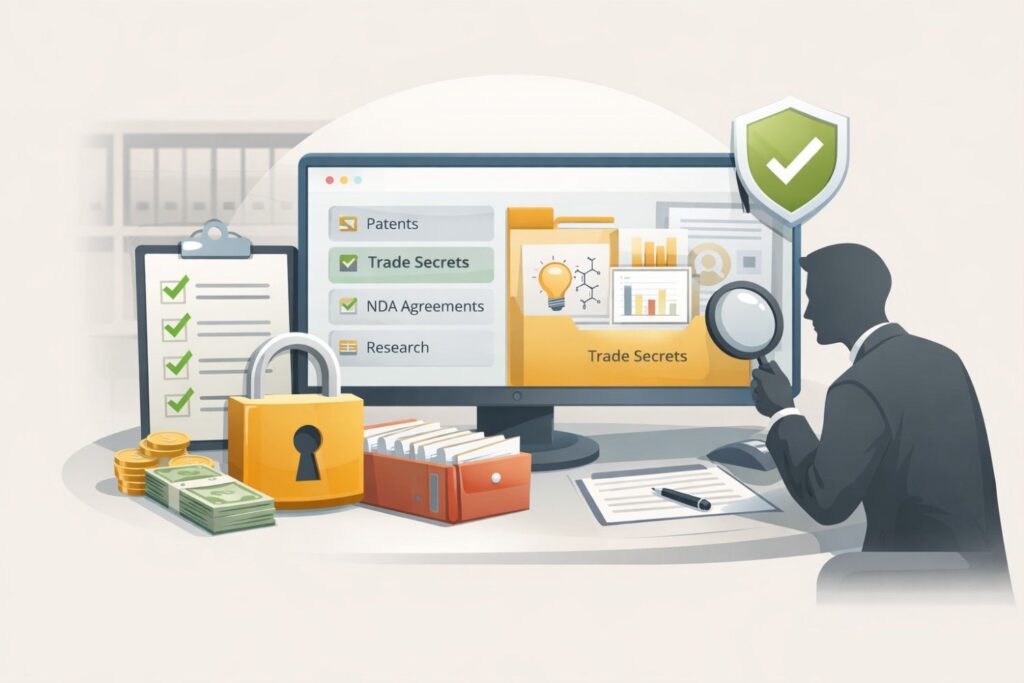
This is one reason many teams use platforms like PowerPatent to prepare for diligence in advance. You can see how that works here: https://powerpatent.com/how-it-works
Buyers Interpret Order as a Signal
Even the way a data room is organized sends messages. Clean structure suggests clear thinking. Messy structure suggests chaos behind the scenes.
Buyers assume that internal organization reflects external operations. If the data room feels rushed, they worry the business is too.
Founders should aim for calm presentation. Logical flow. Nothing hidden. Nothing excessive. This builds trust faster than any pitch.
Buyers Are Testing Readiness, Not Perfection
Finally, buyers do not expect perfection. They expect readiness. They want to see that the company understands its own value and took reasonable steps to protect it.
Small gaps can be explained. Big surprises cannot.

The goal is not to impress. It is to remove friction. When trade secrets are clearly presented, deals move faster, legal review shrinks, and confidence grows on both sides.
How Weak Trade Secret Records Kill Deals Without Warning
Weak trade secret records do more than slow deals down. Over time, they change how buyers think about your entire company. What starts as a documentation issue quietly turns into a trust issue.
And trust, once lost, is almost impossible to win back during an active deal.
This continuation goes deeper into the less obvious ways weak records hurt outcomes, especially for technical founders who assume the strength of the product will speak for itself.
Buyers Question Whether the Advantage Is Real or Just Timing
When trade secret records are unclear, buyers begin to wonder if your success is due to skill or simply good timing. They ask themselves whether your lead will disappear once the market catches up.
Strong records show deliberate choices, learned lessons, and hard-earned insight. Weak records make success look accidental.

Founders should remember that buyers are buying the future, not the past. Trade secrets help prove that future performance is repeatable. Without them, buyers hedge their bets.
Weak Records Trigger Deeper Technical Audits
When high-level explanations feel thin, buyers respond by digging deeper. They ask for more access, more demos, more technical calls. This increases exposure and stress for the founding team.
What could have been a smooth review becomes a series of defensive conversations. Engineers get pulled into diligence. Product roadmaps slow down.
Strong trade secret documentation reduces this need. It answers many technical questions upfront, allowing diligence to stay focused and contained.
Founders Lose Narrative Control
In every acquisition, there is a story being told internally by the buyer. Weak records allow others to write that story for you.
If buyers cannot clearly see why your systems are special, they fill in the blanks themselves. Often, those assumptions are conservative.
Strong records let founders control the narrative. They frame the value in plain, grounded terms that buyers can repeat internally with confidence.
Weak Records Make Future Enforcement Look Unlikely
Buyers think ahead. They consider what happens if a former employee leaks information or a competitor pushes too close. Weak trade secret records make enforcement feel unrealistic.
Even if enforcement never happens, the perception matters. Buyers discount assets they believe cannot be defended.
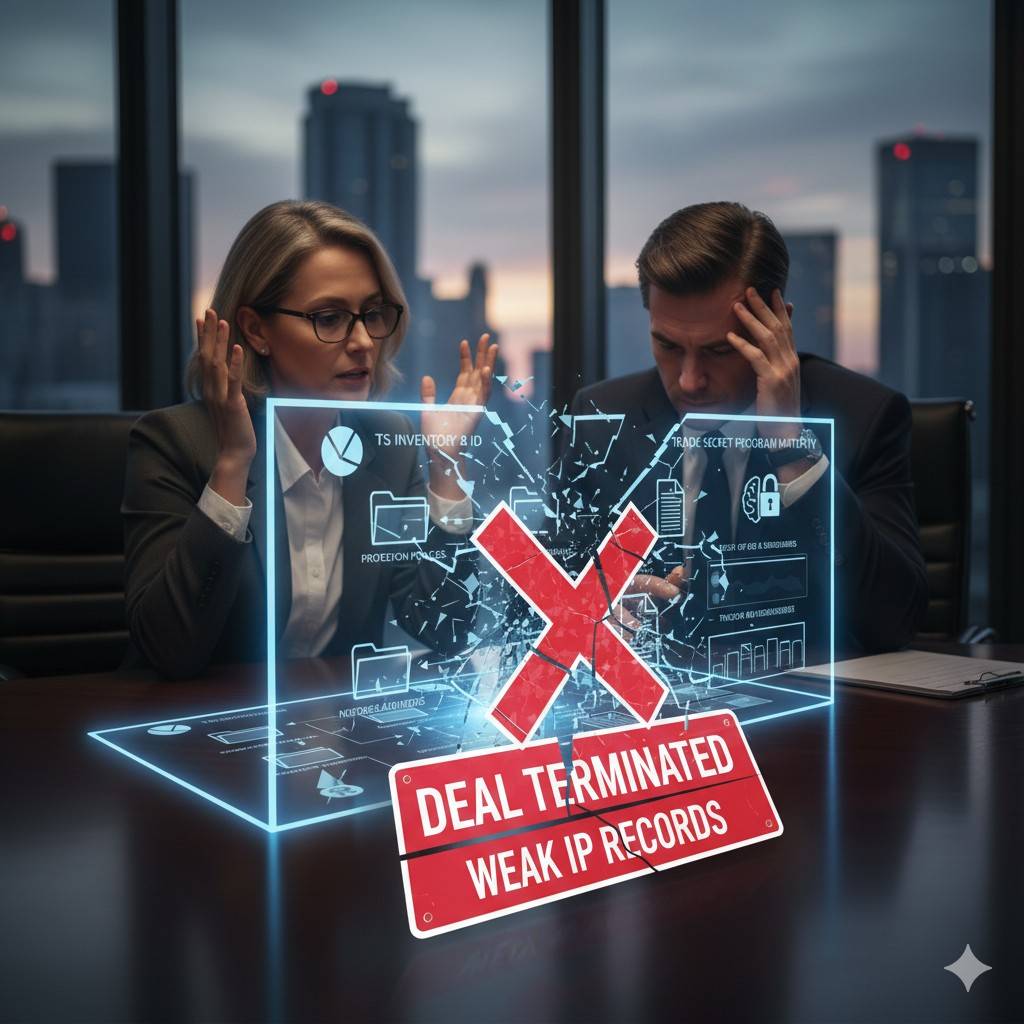
Founders can improve this perception by showing that secrets were identified, limited, and treated with care. This signals enforceability, even without conflict.
Poor Documentation Makes Scaling Look Risky
Buyers often plan to scale what they acquire. Weak trade secret records raise questions about whether scaling will break the system.
If core logic is undocumented or loosely held, buyers worry about training, quality control, and operational drift.
Clear records show that systems can be taught, transferred, and expanded without losing their edge. This directly affects how buyers model growth.
Weak Records Increase Post-Closing Dependence on Founders
Buyers want optionality. Weak trade secret records suggest that founders must stay involved longer to protect value.
This can lead to longer lockups, stricter non-competes, or uncomfortable post-closing obligations.
Founders who document trade secrets well reduce this dependency. They make the company easier to own, which buyers appreciate.
Internal Misalignment Becomes Visible
Diligence has a way of exposing internal gaps. When trade secret records are weak, differences in understanding between teams surface quickly.
Engineering describes one thing. Leadership describes another. Documentation says something else entirely.
Buyers notice this misalignment. It raises concerns about execution and communication beyond just trade secrets.
Founders should align internally before diligence ever starts. A shared understanding strengthens both records and culture.
Weak Records Signal Short-Term Thinking
Buyers read trade secret preparation as a sign of maturity. Weak records suggest the company optimized only for speed, not durability.
This perception affects how buyers think about risk across the board. It can influence views on compliance, governance, and long-term planning.
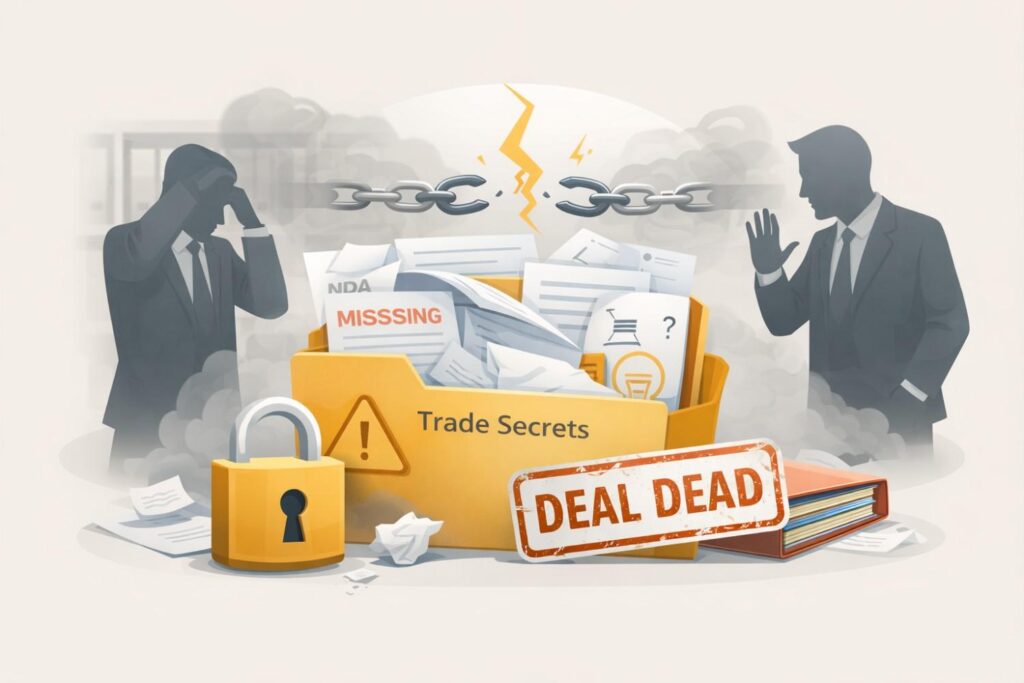
Strong records quietly communicate that the company was built with intention, not just urgency.
Last-Minute Cleanup Often Backfires
Founders sometimes rush to clean up trade secret records once a deal is in motion. While better than nothing, this approach often feels rushed to buyers.
Buyers can tell when documents were created overnight. The timing raises questions about why the work was not done earlier.
Preparation done calmly, over time, always looks stronger than preparation done under pressure.
This is where ongoing systems matter. Platforms like PowerPatent help teams capture trade secret value as work happens, not months later during diligence.
That ongoing approach builds credibility naturally. You can explore how that works here: https://powerpatent.com/how-it-works
Weak Records Affect More Than One Deal
The impact of weak trade secret records does not end with a single buyer. Once an issue surfaces, it often resurfaces with future buyers.
Founders may think a deal failed for unrelated reasons, but the same concerns quietly follow them.
Fixing trade secret records is not about one transaction. It is about long-term optionality.
The Cost Is Often Invisible Until It Is Too Late
The hardest part about weak trade secret records is that founders rarely see the damage directly. There is no clear error message. No obvious rejection.
Just slower conversations. Lower offers. More conditions.
By the time founders realize what happened, the leverage is gone.
The good news is that this is fixable. Trade secret readiness is one of the few areas where early effort pays off exponentially later.

Strong records do not guarantee a deal. But weak ones almost guarantee friction.
Wrapping It Up
Most founders think M&A readiness starts when bankers call or inbound interest appears. In reality, it starts much earlier, in quiet decisions made while the company is still being built. Trade secrets sit at the center of that readiness, even when no one is talking about a sale. Buyers care about trade secrets because they explain why your company wins and why it will keep winning after the founders step back. A clean trade secret data room is not about showing off. It is about removing doubt. It allows buyers to move forward with confidence instead of caution.
Leave a Reply