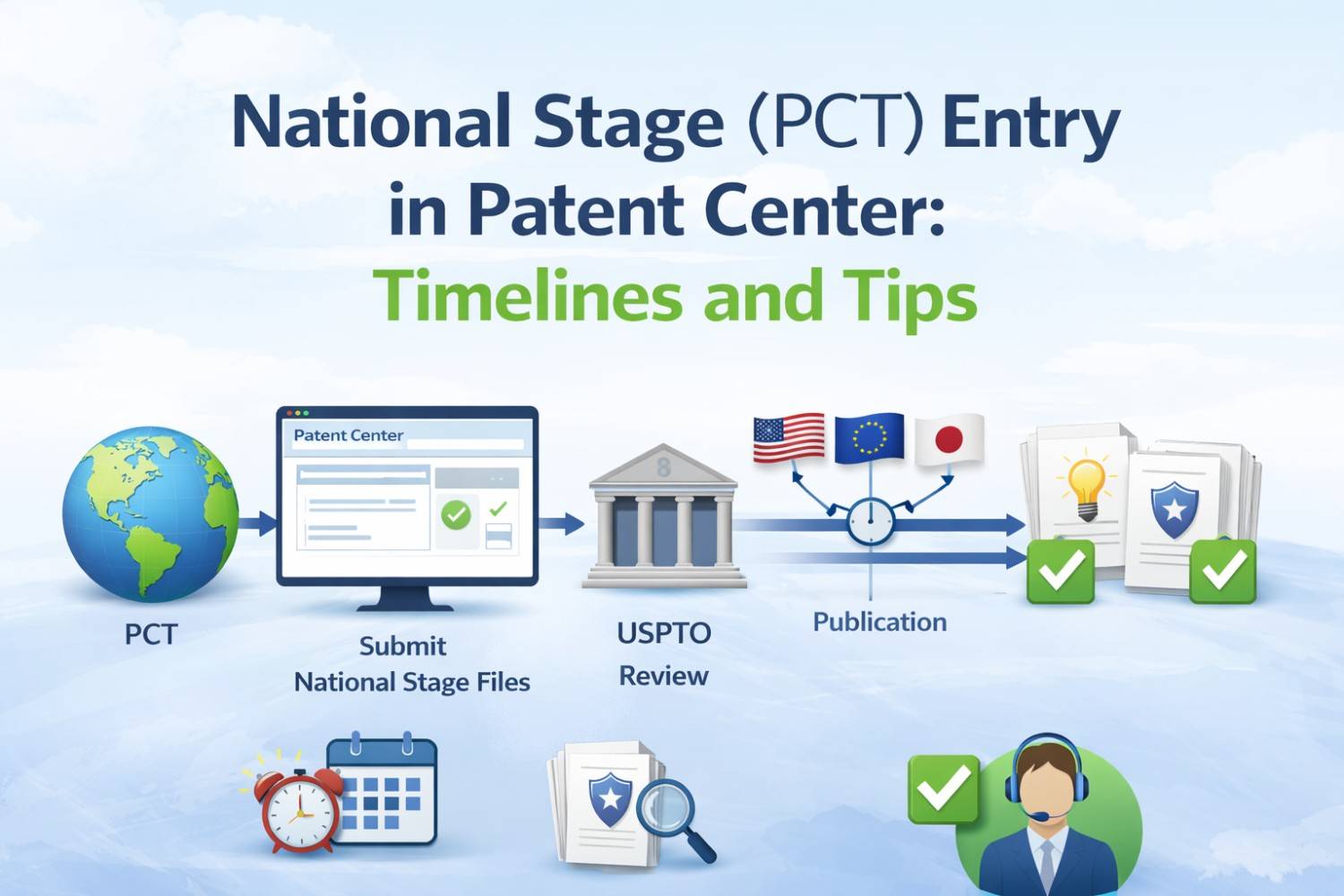
National stage entry is the moment when an international patent idea turns into real protection in each country that matters to your business. It sounds heavy, slow, and risky, but it does not have to be. This article will walk you through how national stage (PCT) entry works inside Patent Center, what the timelines really look like, and how to avoid the quiet mistakes that cost founders years and money later. If you are building real tech and plan to sell, raise, or scale, this step matters more than most people realize.
What National Stage Entry Really Means for Founders
National stage entry is not just a filing step.
It is a business decision that locks in how your invention will be treated in the countries you care about most. Many founders think of it as paperwork that happens after the PCT, but in reality, it is where strategy meets execution.
This is where global plans turn into country-by-country rights, deadlines become real, and small choices start to matter a lot.
If you treat this step casually, it can quietly weaken your patent. If you handle it with intent, it can become a strong asset that supports growth, fundraising, and exits.
The Shift From Global Idea to Local Rights
Once you enter the national stage, your patent is no longer a single international application floating in theory. It becomes a set of local applications, each judged under local rules, timelines, and examiner habits.
This shift catches many teams off guard because the PCT phase feels unified and slow, while the national stage feels fragmented and fast.
Founders should understand that this is the moment where control either increases or slips away. Each country will look at your invention slightly differently.
Language, claim style, and even how software or AI is viewed can change the outcome.
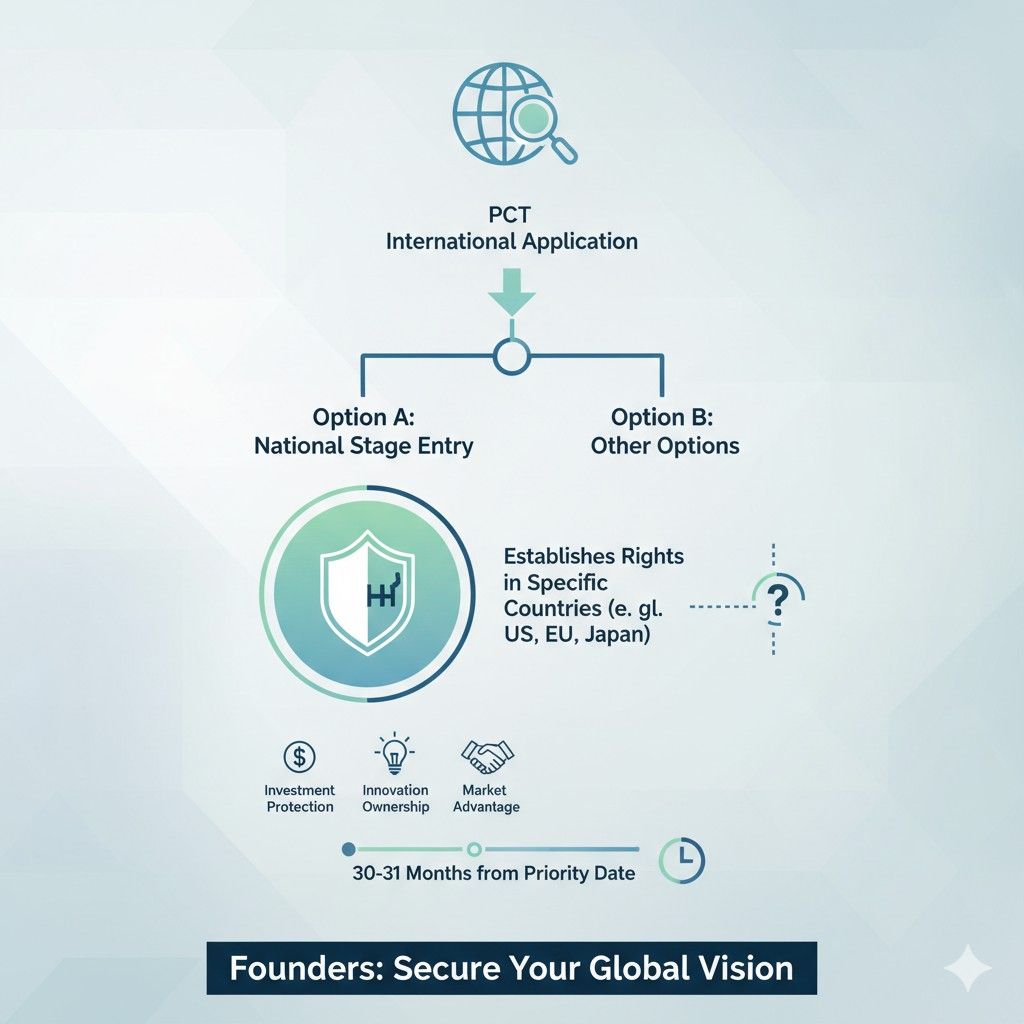
This is why preparation before entry matters just as much as filing itself. PowerPatent helps teams think through this shift early, so the transition feels planned instead of rushed.
You can see how this approach works here: https://powerpatent.com/how-it-works
Why This Step Is a Business Lever, Not a Legal Task
National stage entry shapes how investors, acquirers, and partners view your company. A clean and well-planned entry signals maturity and foresight.
A sloppy or late entry raises quiet questions that rarely get asked directly but often affect deals.
For founders, the key is to align national stage decisions with business goals. If a country is central to revenue, manufacturing, or future licensing, that filing needs extra care.
If a market is more defensive, the approach can be lighter. The mistake is treating all countries the same or letting defaults decide for you. Strategic teams decide upfront what role each country plays in the larger plan.
Timing Pressure Is Real and Often Misunderstood
The deadline for national stage entry feels far away when the PCT is first filed. Thirty months seems generous.
In practice, it disappears quickly. Product launches, hiring, and fundraising push patent planning to the background until the deadline suddenly feels urgent.
Founders should treat the six months before national stage as active planning time, not waiting time. This is when claims should be reviewed, markets confirmed, and budgets locked.
Waiting until the last minute increases cost and reduces options. Modern tools like PowerPatent are designed to keep this step visible without becoming a distraction, helping teams move early while still focusing on building.
Patent Center Is the Front Door, Not the Strategy
Patent Center is where filings happen, but it does not decide what you file or how strong it is. Many founders assume that using Patent Center correctly is enough. It is not.
Patent Center executes instructions. Strategy lives outside of it.
This means founders need clarity before logging in. You should know which claims matter most, what variations are acceptable, and how much flexibility you want to preserve for future changes.
Without that clarity, Patent Center becomes a form-filling exercise instead of a strategic move.
PowerPatent bridges this gap by combining software flow with real attorney guidance, so what gets filed matches what the business actually needs. Learn more here: https://powerpatent.com/how-it-works
Claim Choices Start to Have Real Weight
During the PCT phase, claims often feel abstract. In the national stage, they become concrete. Examiners will test them. Competitors will read them. Investors will ask about them.
Founders should focus on claims that protect how value is created, not just how the system works. If your edge is speed, data handling, or a unique workflow, that should be reflected clearly.
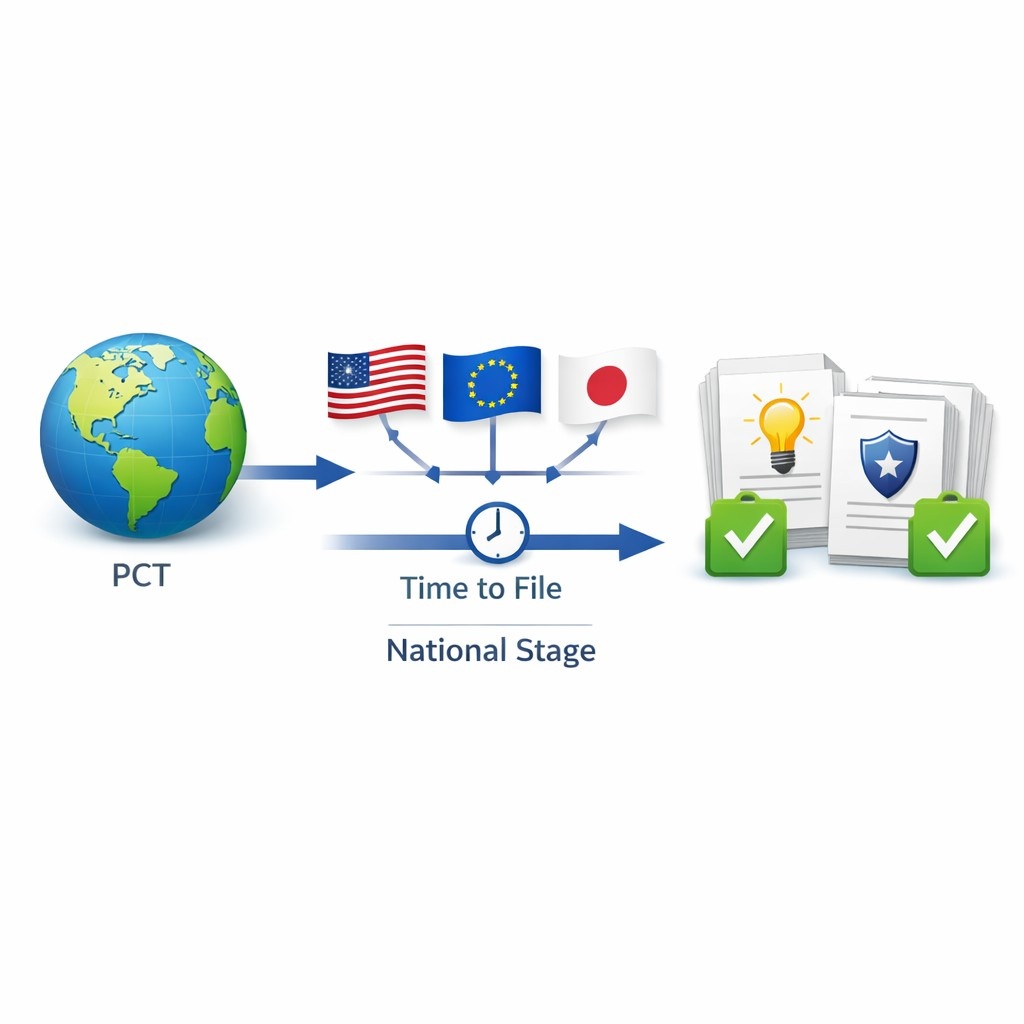
This is also the moment to trim claims that look clever but add little protection. Fewer strong claims often beat many weak ones. Making these choices early saves time and cost later.
Country Selection Reflects Confidence and Focus
Choosing where to enter national stage sends a signal. Entering everywhere can look unfocused and expensive. Entering nowhere important can look risky. The best signal is alignment.
Founders should tie each country to a real reason. Customers, partners, manufacturing, or enforcement potential all count. If a country does not support a clear business story, it may not deserve immediate entry.
This does not mean you abandon it forever, but it does mean you act with intent. Strategic entry shows confidence and discipline, which resonates with serious stakeholders.
Cost Control Comes From Planning, Not Cutting Corners
National stage entry can be expensive, but most waste comes from poor planning, not necessary steps. Last-minute filings, rushed translations, and reactive changes drive costs up fast.
Founders who plan early can spread costs, avoid emergency fees, and make smarter trade-offs. For example, adjusting claims before entry can reduce future office actions.
Choosing the right filing approach per country can limit translation revisions.
PowerPatent is built around this idea of cost control through clarity, helping teams avoid spending money where it adds no value. You can explore this model here: https://powerpatent.com/how-it-works
This Is Where Patents Start to Defend Themselves
A patent that survives national stage entry with strong claims and clear scope is far easier to defend later. Weak entry leads to years of patching and narrowing that often ends with limited protection.
Founders should view national stage entry as the foundation of enforcement, even if lawsuits are not on the horizon.
Strong foundations make future conversations easier, whether with partners, acquirers, or competitors. This step is less about fear and more about confidence.
Treat National Stage Entry as a Milestone, Not a Chore
The most successful teams mark national stage entry as a milestone in their company timeline. It is proof that the invention is real, valuable, and worth protecting long term.
When handled with care, this step adds quiet strength to the business. When rushed or ignored, it creates hidden risk. With the right tools and guidance, founders can move through this phase smoothly and stay focused on growth.
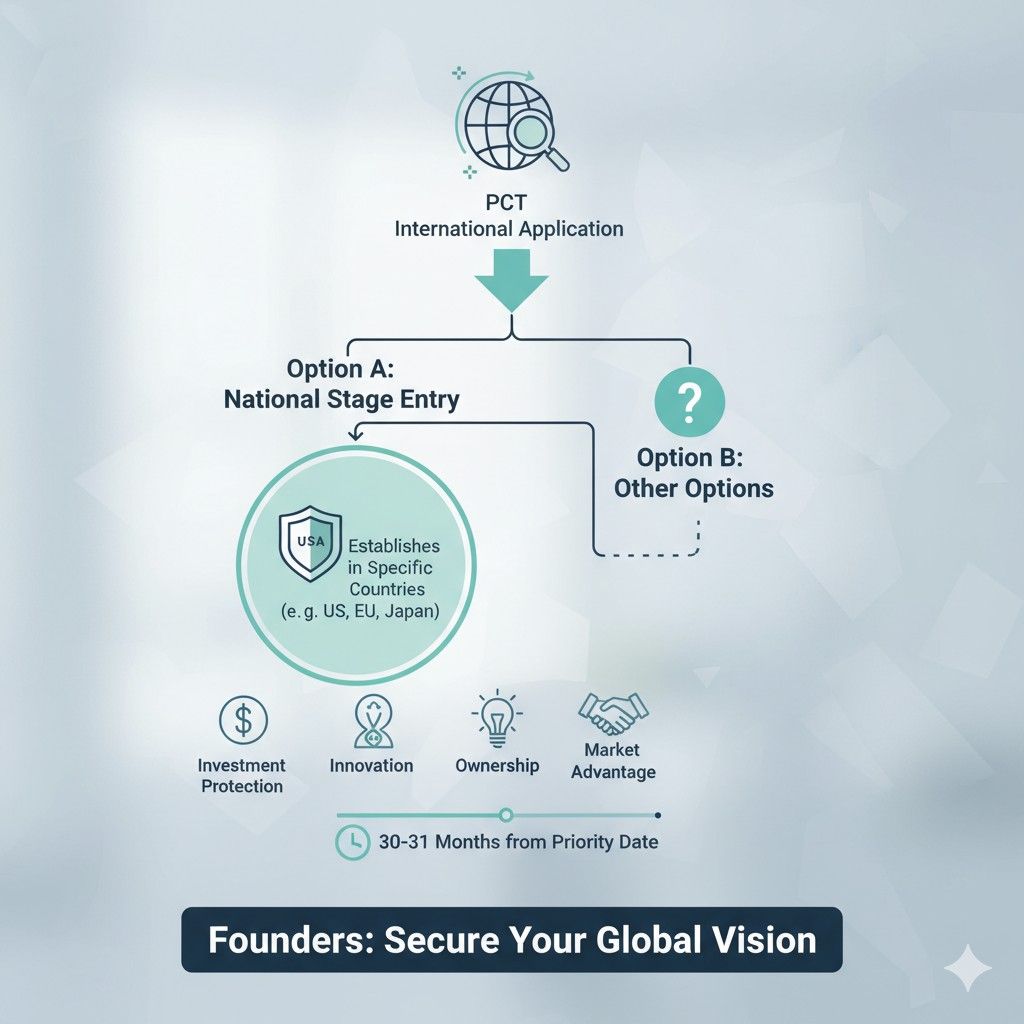
If you want to see how modern teams do this without slowing down, take a look at how PowerPatent works: https://powerpatent.com/how-it-works
Understanding the PCT Timeline Without the Confusion
The PCT timeline looks simple on paper but feels unclear in real life, especially for founders who are busy shipping product and talking to customers. Dates come and go quietly, and nothing feels urgent until suddenly everything is.
This section breaks down how the timeline actually behaves in practice, how founders should think about time during the PCT phase, and how to stay ahead without turning patents into a daily worry.
The Thirty-Month Deadline Is Not the Real Clock
Most founders hear one number when they file a PCT application. Thirty months. That number becomes a mental anchor, and everything else fades into the background.
The problem is that the real work should happen well before that date.
The final deadline is simply the last possible moment to act. It is not the moment when planning should start. Smart teams treat month twenty-four as the real decision point.
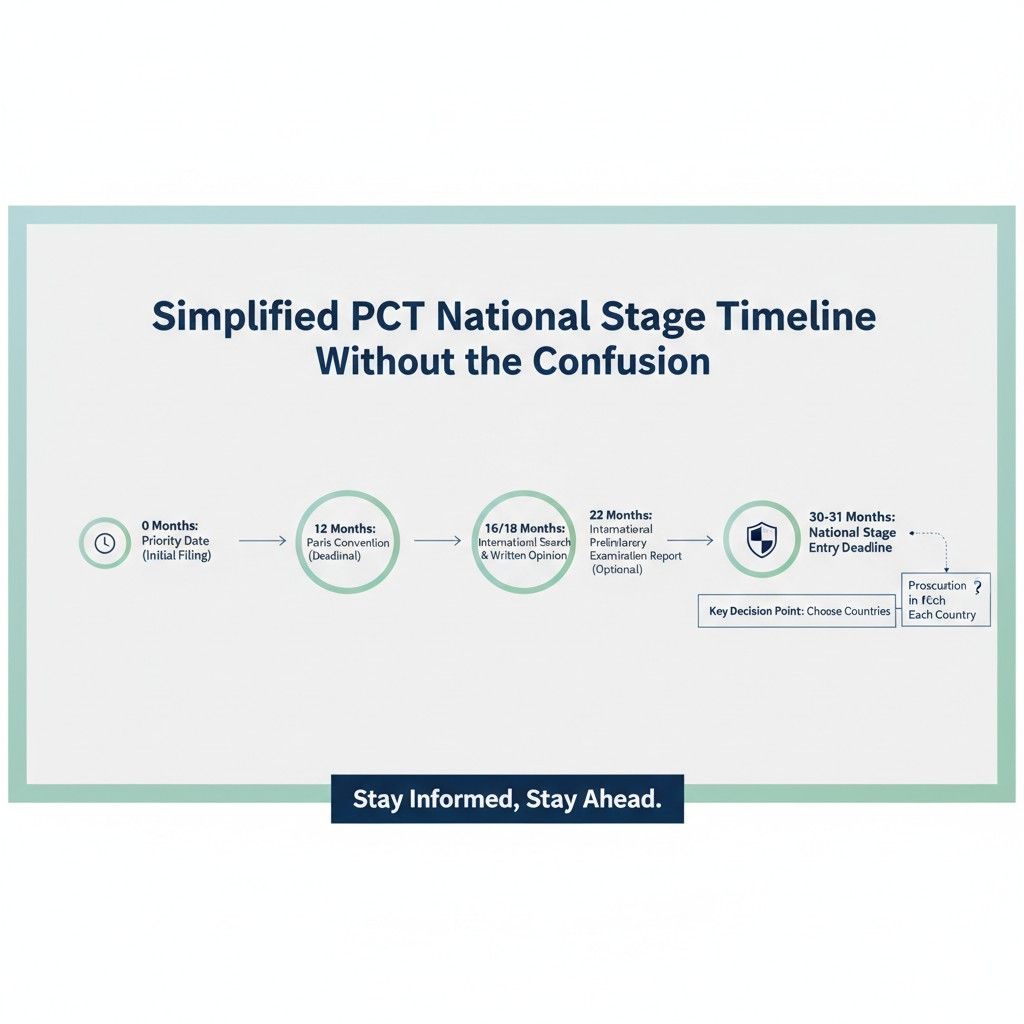
By then, you should already know which countries matter, how your product has evolved, and whether your original claims still match what you are building.
Waiting until month twenty-nine puts you in a reactive mode where speed replaces strategy.
Early Months Are Quiet but Valuable
The first year after filing a PCT often feels calm. There are no filings due, no urgent emails, and no visible pressure. This quiet period is where many founders lose momentum on patent thinking.
This is actually the best time to review the invention with fresh eyes. Your product will likely change during this period. New features may become core. Old ideas may fade.
Founders who revisit their patent during this time can align it with reality instead of history. This makes national stage entry smoother and stronger later.
The International Search Report Is a Signal, Not a Verdict
When the international search report arrives, many founders either panic or ignore it. Both reactions miss the point. The report is not a final judgment. It is a signal about how examiners might think.
Founders should read it to understand where questions may arise and where clarity is needed. If certain parts of the invention are misunderstood, that is a cue to adjust language or focus.
If some claims look strong, that is a hint about where value lies. Treating the report as feedback rather than a scorecard leads to better decisions down the line.
Product Changes Should Trigger Patent Check-Ins
One of the biggest timeline mistakes is separating product work from patent planning. If your product changes meaningfully during the PCT phase, your patent strategy should change too.
Founders should build a habit of checking in on the patent whenever a major feature ships or a pivot happens.
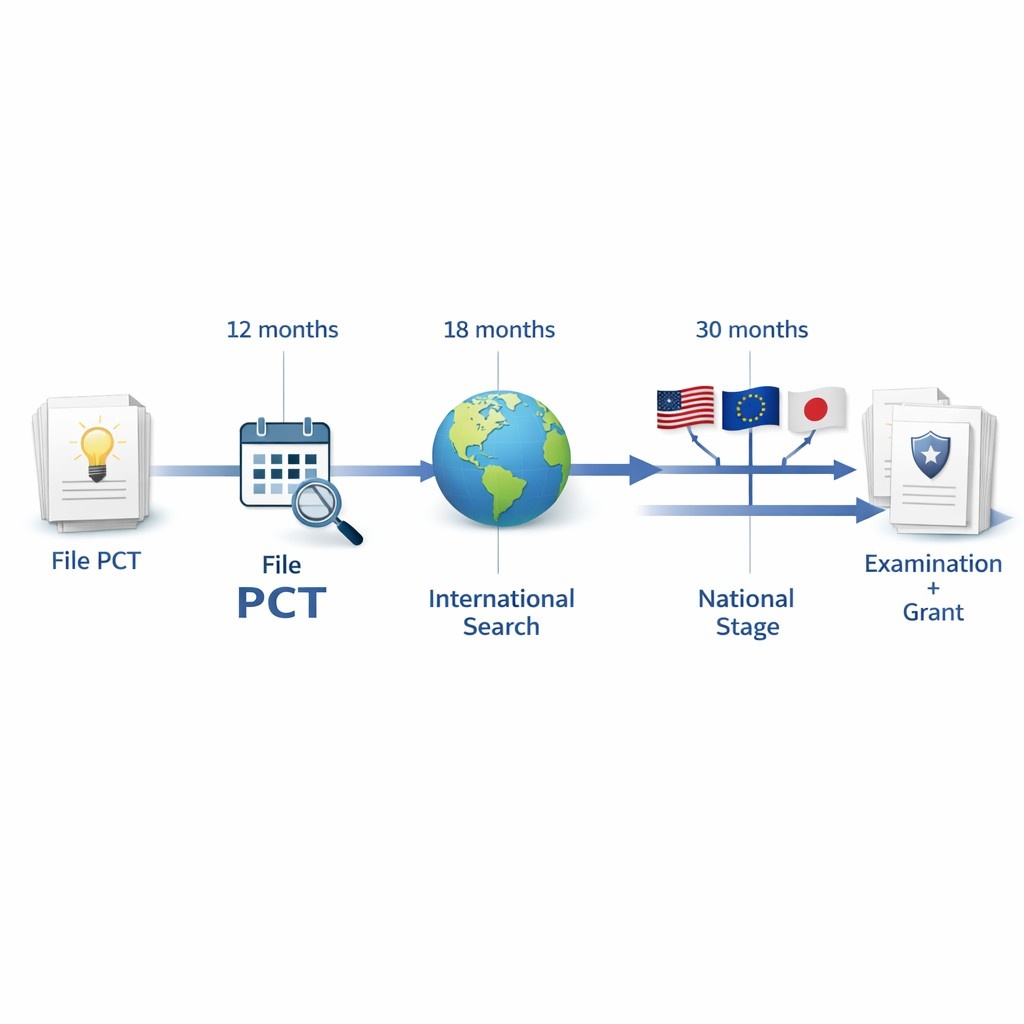
This does not mean refiling everything. It means asking whether the core idea being protected still matches the core value being delivered. Small adjustments early prevent big fixes later.
Country Decisions Take Longer Than Expected
Choosing where to enter national stage seems simple until you start discussing it.
Questions about market size, enforcement, cost, and future plans surface quickly. These conversations take time, especially when multiple founders or investors are involved.
Starting these discussions early avoids rushed decisions. It also gives room to revisit assumptions as the business grows.
PowerPatent encourages these conversations well before deadlines, using clear visuals and guidance to keep them focused. You can see how this works here: https://powerpatent.com/how-it-works
Translation and Formatting Are Hidden Time Traps
Many founders underestimate how long translations and formatting take. These steps feel mechanical, but they involve review, coordination, and revision. Delays here often compress the final weeks before filing.
Planning for these steps early reduces stress and cost. It also allows time to ensure that translated claims still reflect the invention accurately. Poor translations can quietly weaken a patent, even if everything else is done right.
The Last Three Months Should Feel Boring
If national stage entry feels exciting or chaotic at the end, something went wrong earlier. The final months should feel calm and predictable, with decisions already made and documents mostly ready.
Founders should aim for a timeline where the last steps are simple execution. This is a sign that planning happened early and well.
Platforms like PowerPatent are built to support this calm finish, keeping everything organized and visible long before deadlines arrive. Learn more here: https://powerpatent.com/how-it-works
Time Management Is About Reducing Decisions
The real challenge of the PCT timeline is not time itself. It is decision load. Every delayed choice adds pressure later.
Founders who make small decisions early remove weight from the final stretch.
Confirming countries, aligning claims with product, and setting budgets ahead of time turns a complex process into a manageable one. This frees mental space for building the company.
Treat the Timeline as a Guide, Not a Threat
When understood clearly, the PCT timeline becomes a helpful guide rather than a looming threat. It creates natural checkpoints that can strengthen your patent if used wisely.
Founders who respect the timeline without fearing it gain control and confidence. With the right tools and support, this phase can run quietly in the background while the company moves forward.
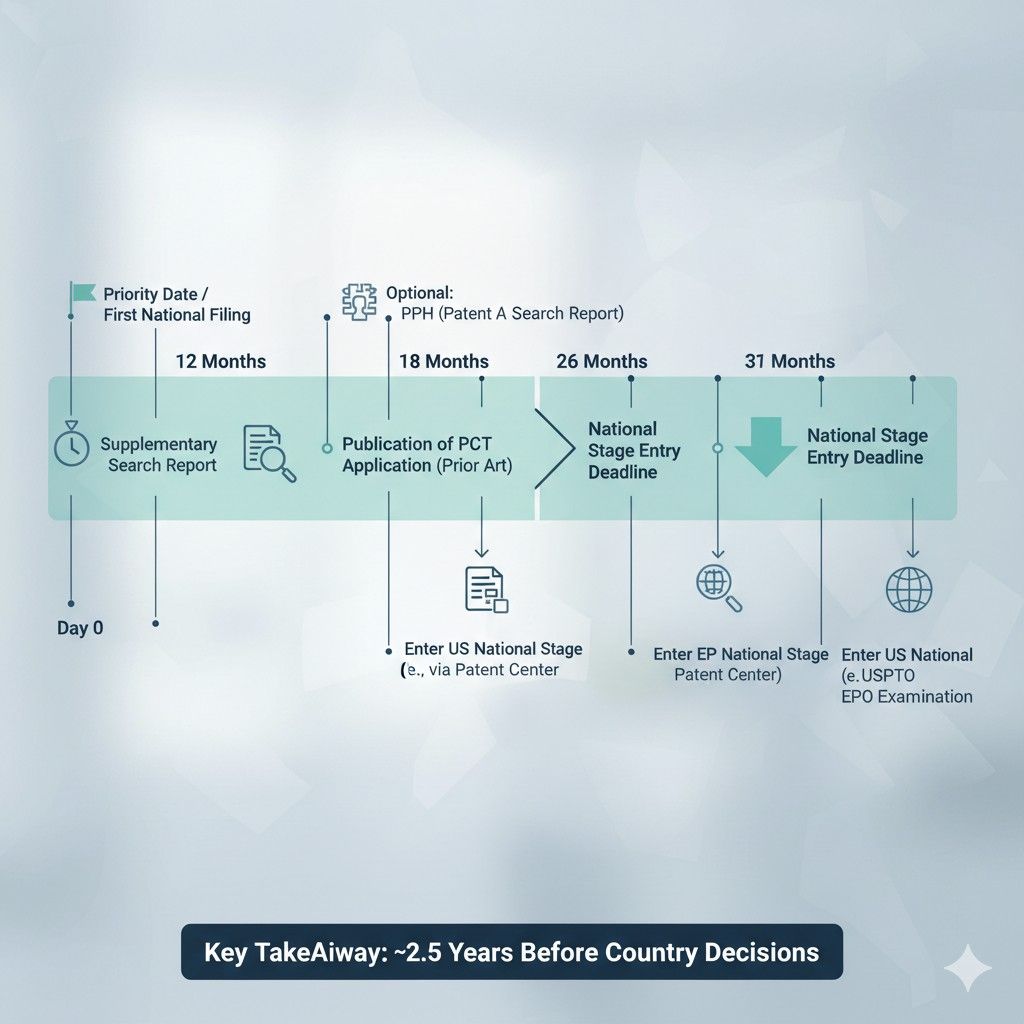
If you want to see how teams manage this without losing focus, explore how PowerPatent works: https://powerpatent.com/how-it-works
Filing Through Patent Center: What Actually Happens
For many founders, Patent Center feels like a black box. You know it is required. You know filings go through it.
But what really happens inside the system, and how much of the outcome depends on the choices you make before you log in, is often unclear.
This section explains how Patent Center fits into national stage entry, what founders should expect during the process, and how to stay in control instead of reacting to screens and deadlines.
Patent Center Is an Execution Tool, Not a Decision Maker
Patent Center does not tell you what to file. It simply carries out what you submit. This distinction is critical.
Founders who walk into Patent Center without clear decisions often feel overwhelmed because the system assumes you already know what you want.
Before touching Patent Center, you should already have alignment on claims, countries, and timing. When these are decided upfront, the system becomes straightforward.
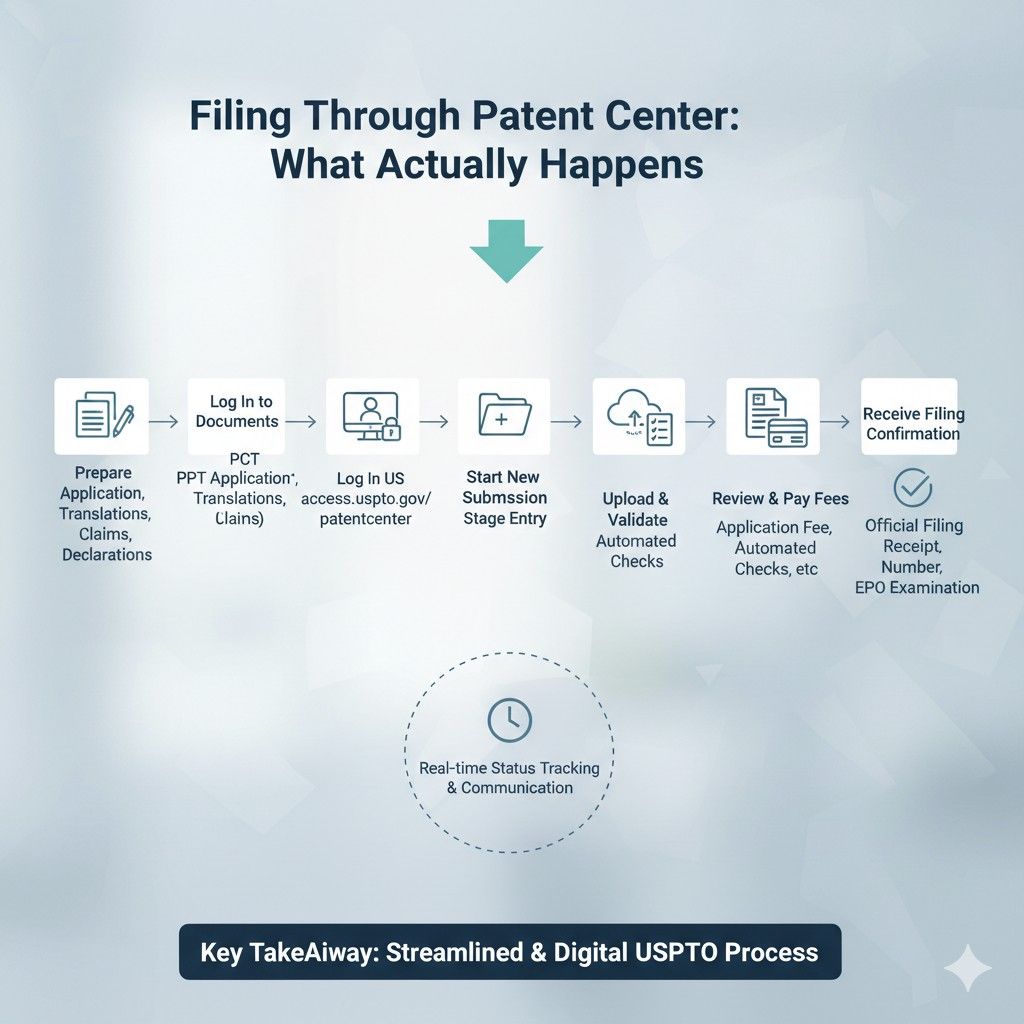
When they are not, it feels rigid and unforgiving. The strongest outcomes happen when strategy is settled first and Patent Center is used as the final step, not the planning space.
The Interface Rewards Preparation
Patent Center is built for accuracy, not education. It expects correct inputs, clean documents, and clear intent. Founders who prepare documents and data ahead of time move through it smoothly.
Those who try to figure things out mid-process often slow down and second-guess themselves.
Preparation means more than having files ready. It means understanding how your invention is described, how claims are framed, and how each country’s requirements differ.
With the right preparation, filing feels like confirmation. Without it, filing feels like risk.
Small Errors Can Have Outsized Impact
One of the most overlooked aspects of Patent Center is how small details matter. A missed field, a misnamed document, or an incorrect designation can create delays that are hard to unwind later.
Founders should treat each submission with care, even if the system feels routine. This is not the place for rushing. A few extra minutes of review can prevent months of correction.
PowerPatent helps reduce this risk by guiding founders through what matters and flagging issues before submission. You can see how this safeguard works here: https://powerpatent.com/how-it-works
Claims Become Fixed Faster Than You Expect
Once filings move through Patent Center, flexibility drops quickly. While some changes are possible later, many choices made at entry shape the path forward in ways that are hard to reverse.
Founders should assume that what they file will be closely examined and relied upon. This mindset encourages thoughtful choices rather than placeholder language.
It also reinforces why aligning claims with real product value before filing is so important.
Communication With Attorneys Still Matters
Using Patent Center does not replace human judgment. Founders sometimes assume that because filing is digital, strategy is automated. This is not true.
Clear communication with patent counsel before and during filing ensures that what goes into the system matches the business goal. Questions should be resolved before submission, not after.
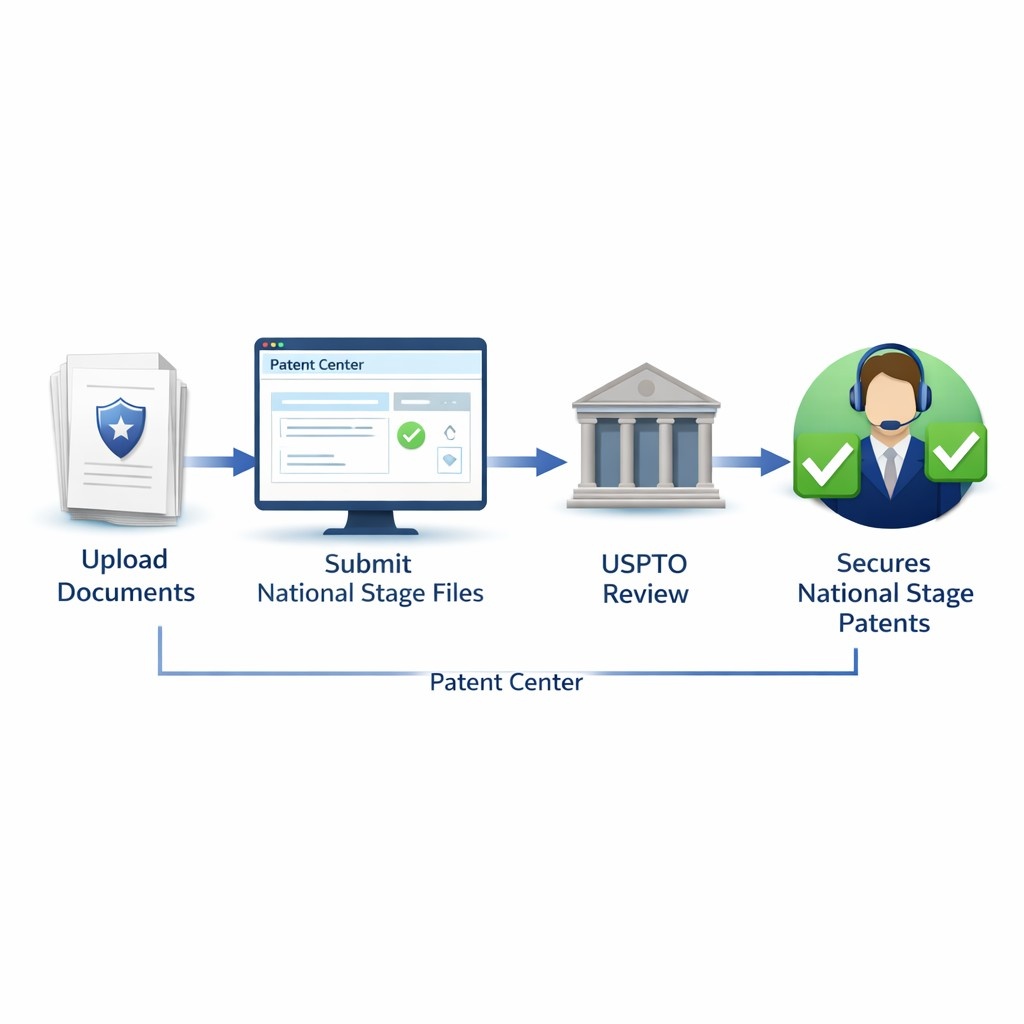
PowerPatent is designed around this blend of software speed and real attorney oversight, so founders are never guessing alone. Learn more here: https://powerpatent.com/how-it-works
Filing Dates Are Silent but Powerful
When Patent Center accepts a filing, the date becomes part of your patent’s permanent record. That date affects priority, enforcement, and future strategy.
Founders should be intentional about timing. Filing earlier than required can be smart if markets move fast. Filing at the last moment can increase stress without adding value.
Treating filing dates as strategic markers rather than technical details changes how this step feels and functions.
After Submission, Attention Should Shift Forward
Once national stage entry is complete, many founders either forget about patents entirely or worry constantly about what comes next. Neither extreme helps.
The healthy approach is to acknowledge the milestone and then refocus on building, knowing that the foundation is set.
Future office actions and reviews will come, but they are easier to handle when the entry was done cleanly. Strong entry reduces future friction.
Filing Should Feel Controlled, Not Draining
The best signal that national stage filing was handled well is how it feels afterward. Founders should feel calm, not exhausted. Confident, not uncertain.
When preparation, timing, and execution align, Patent Center becomes a quiet step rather than a disruptive event. This is exactly what modern patent workflows aim to achieve.
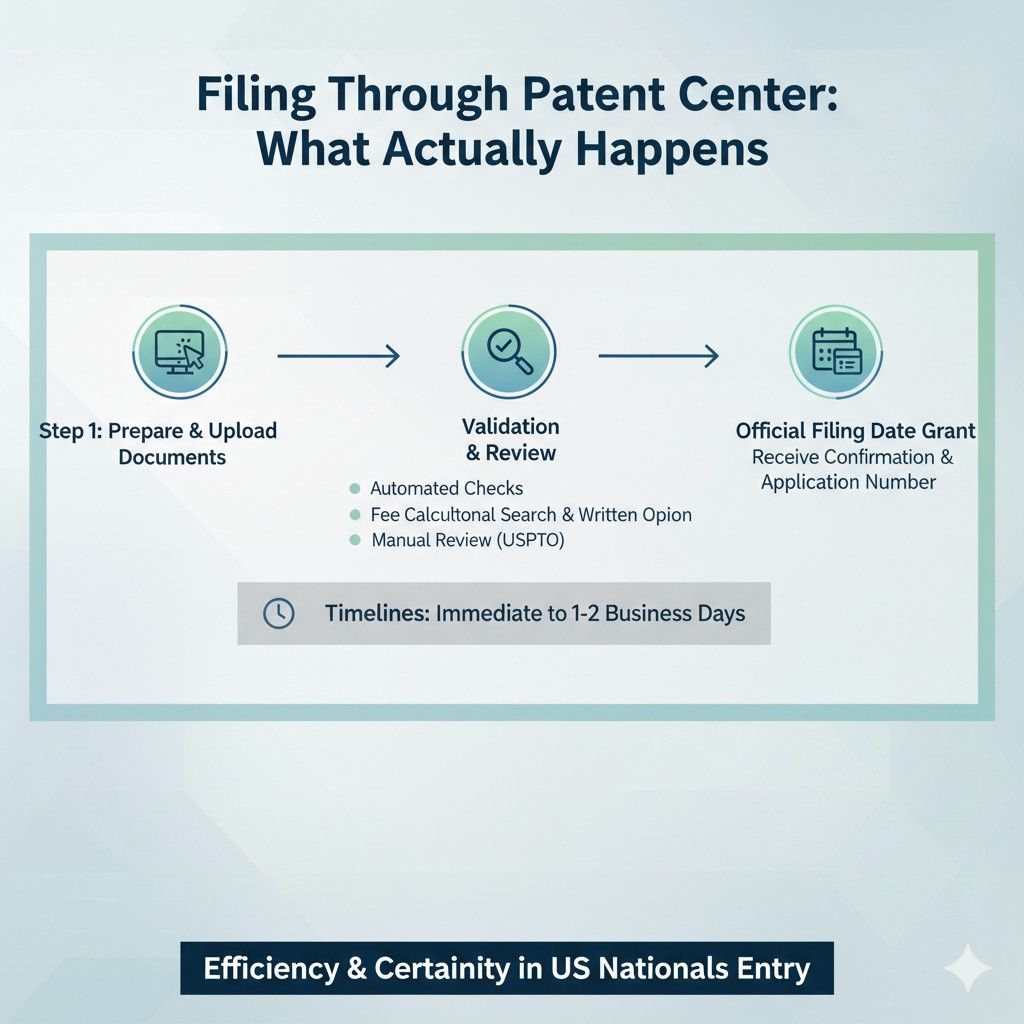
If you want to see how founders file with clarity instead of stress, explore how PowerPatent works: https://powerpatent.com/how-it-works
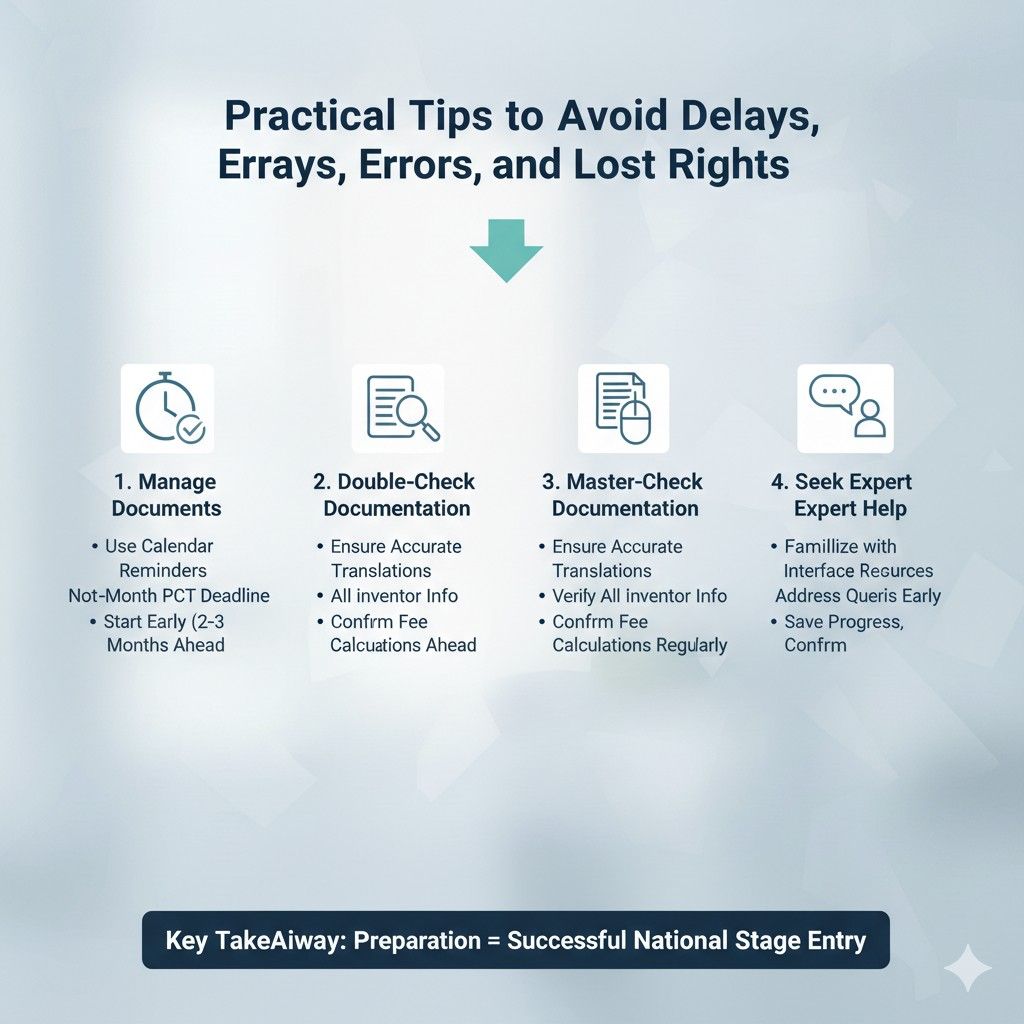
Practical Tips to Avoid Delays, Errors, and Lost Rights
National stage entry is where most long-term patent problems quietly begin. Not because founders do not care, but because the risks are subtle and the consequences show up years later.
This section focuses on practical ways founders can protect themselves from avoidable delays, silent errors, and accidental loss of rights, while keeping their attention on growing the business.
Delay Often Starts With Unclear Ownership
One of the most common causes of delay during national stage entry is uncertainty around who owns what.
If inventors have changed, contractors contributed, or early team members left, these details can surface late and slow everything down.
Founders should confirm ownership well before national stage entry. This means making sure assignments are signed, inventor lists are accurate, and company records match reality.
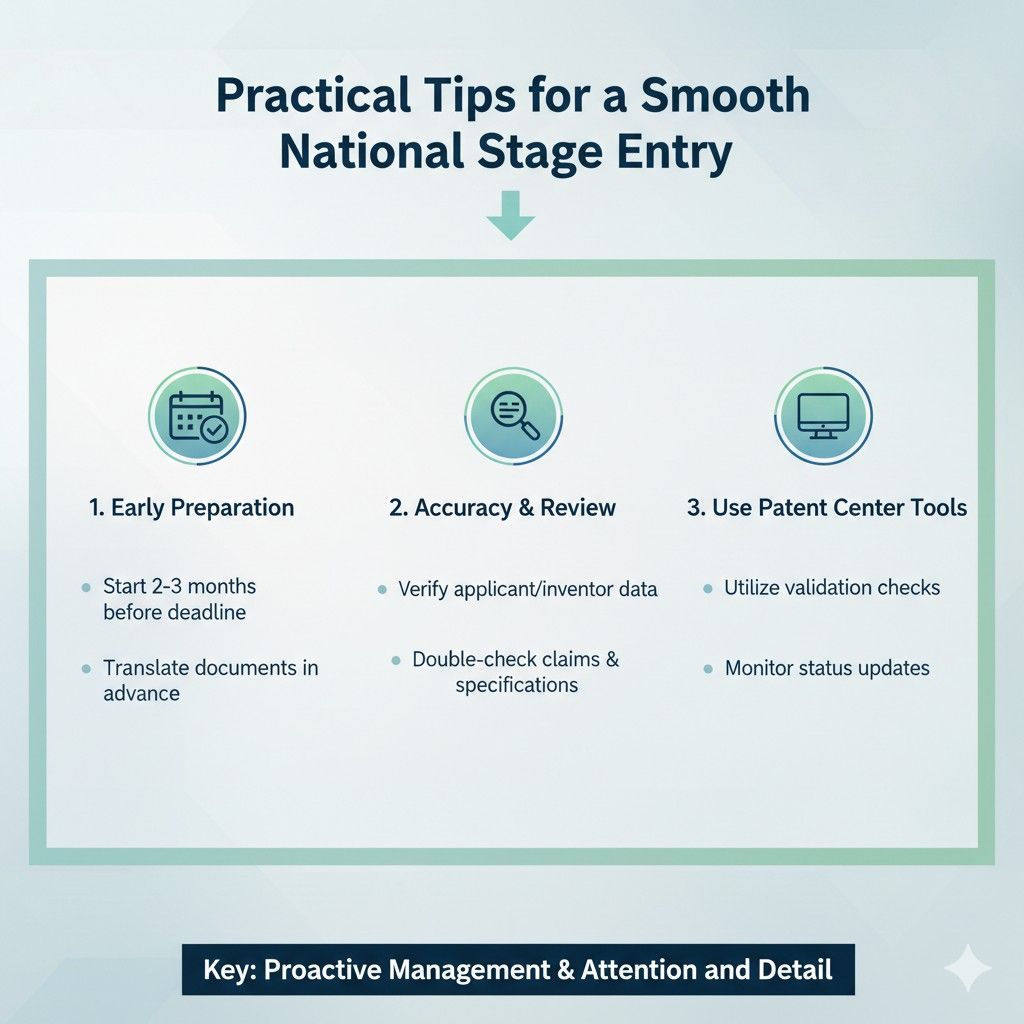
Doing this early avoids last-minute scrambles that can derail timelines and raise red flags.
Silence From the System Does Not Mean Safety
Patent systems are quiet by design. If something is missing or weak, you are rarely warned right away. This silence creates a false sense of security.
Founders should not assume that no news is good news. Regular check-ins on status, deadlines, and filings help catch issues early.
A proactive posture prevents surprises. PowerPatent keeps these checkpoints visible and understandable, so nothing important fades into the background. You can see how that works here: https://powerpatent.com/how-it-works
Lost Rights Often Come From Missed Follow-Through
Many founders believe that once national stage entry is complete, the hard part is over. In reality, follow-through matters just as much.
Deadlines for responses, fees, and local requirements continue. Missing one can reduce scope or end a patent entirely in a specific country.
Founders should treat the months after entry as an active monitoring period, not a rest phase. Setting clear reminders and ownership inside the team makes this manageable without stress.
Assumptions About Software and AI Are Risky
In many countries, software and AI are examined with extra scrutiny. Founders who assume that one description works everywhere often face delays and rejections.
Before national stage entry, it is smart to review how your invention is framed in each target country. Adjusting language to emphasize technical improvements or system behavior can make a meaningful difference.
This does not mean changing the invention, only how it is explained. Early alignment reduces back-and-forth later.
Overcorrecting Can Be as Harmful as Doing Nothing
When founders spot a potential issue, the instinct is sometimes to overreact. Narrowing claims too much or removing valuable ideas out of caution can weaken protection permanently.
The goal is balance. Address real risks without giving up core value. This is where experienced guidance matters.
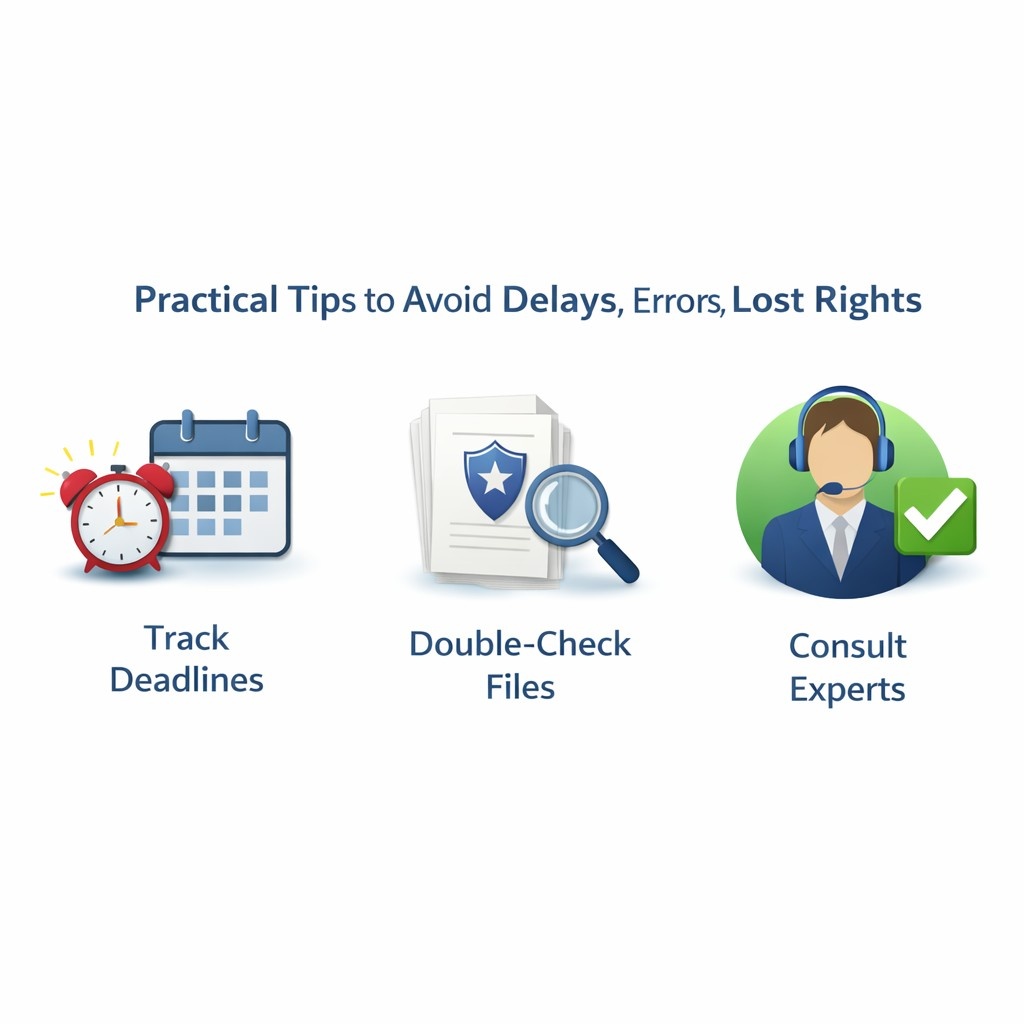
PowerPatent helps founders make measured adjustments that preserve strength while improving clarity, avoiding both extremes. Learn more here: https://powerpatent.com/how-it-works
Communication Gaps Create Hidden Errors
Errors often happen at the edges of communication. A founder assumes counsel understands the product. Counsel assumes the product has not changed. The result is a filing that no longer matches reality.
Founders should clearly explain how the product works today, not how it worked when the PCT was first filed.
Short, focused updates before national stage entry can prevent misalignment. This small effort protects years of future value.
Budget Stress Leads to Bad Timing Choices
Cost pressure often pushes founders to delay decisions or compress timelines. This usually backfires. Rushed filings and emergency work cost more than planned steps taken earlier.
Founders should budget for national stage entry as a known milestone, not an unexpected expense. Even rough estimates help. When cost planning is done early, decisions stay rational and quality stays high.
PowerPatent is built to bring transparency to this process so cost never forces poor timing. You can explore this approach here: https://powerpatent.com/how-it-works
Every Country Needs a Reason to Exist
One subtle way rights are lost is by spreading attention too thin. Entering many countries without a clear reason increases complexity and the chance of missing something important.
Founders should be able to explain why each country matters. That clarity sharpens focus and reduces risk. Fewer well-managed filings often outperform many neglected ones.
Intentional scope is safer than broad ambition without follow-through.
Treat Documentation as a Living Asset
Documents prepared for national stage entry should not be viewed as static. They represent how your invention is understood by the world.
Founders who review these documents periodically stay closer to their IP. This familiarity makes it easier to respond quickly and accurately when questions arise. Distance creates errors. Engagement prevents them.
Confidence Comes From Systems, Not Memory
Relying on memory for deadlines and details is risky. Founders juggle too many priorities for that to work.
The safest approach is to use systems that surface what matters at the right time. When reminders, documents, and decisions live in one place, nothing slips through cracks.
This is the core idea behind modern patent platforms like PowerPatent, which aim to reduce mental load while increasing control. Learn more here: https://powerpatent.com/how-it-works
National Stage Entry Should Reduce Risk, Not Add It
When done well, national stage entry simplifies the future. It creates clear paths, defined rights, and predictable next steps.
When done poorly, it creates lingering uncertainty that drains time and confidence. The difference is not effort, but approach. Founders who plan early, communicate clearly, and use the right tools turn this phase into a strength rather than a stress point.
National stage entry is not just a requirement. It is an opportunity to lock in value that supports everything you build next.
Wrapping It Up
National stage entry is one of those moments that quietly defines the long-term strength of a company. It rarely feels dramatic at the time, yet its impact shows up years later when investors ask hard questions, partners review diligence, or competitors start paying attention. Founders who understand this step early treat it with respect, not fear.
Leave a Reply