Brand conflicts usually show up at the worst time. You’re getting ready to launch, investors are excited, your product finally feels real… and then a name check, a domain search, or a trademark scan hints that someone else might already be using something close to your brand. Suddenly the thing that was supposed to carry your startup into the world becomes a legal question mark.
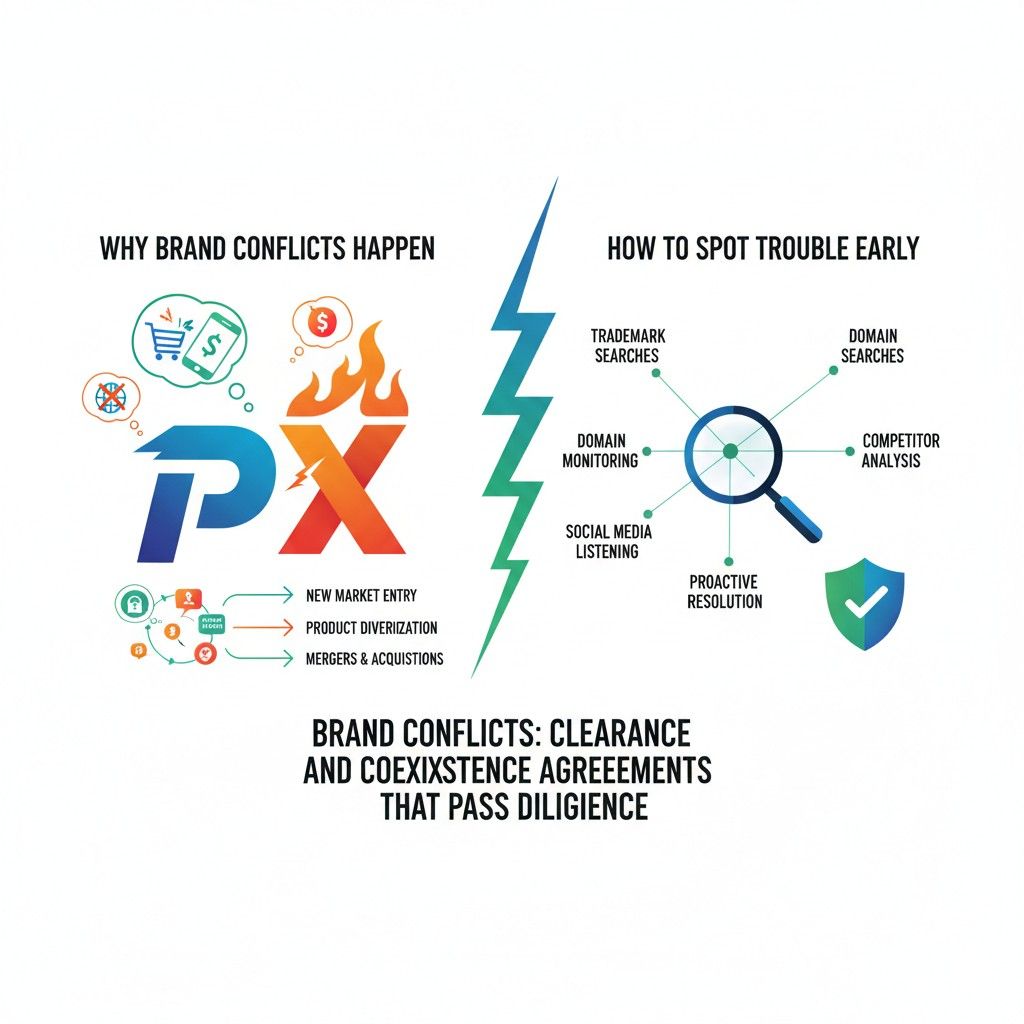
Why Brand Conflicts Happen and How to Spot Trouble Early
Before diving into the moving parts of brand conflicts, it helps to understand why these problems show up in the first place.
Most founders never intend to clash with another brand. It happens because the market moves fast, names evolve, and language repeats itself across industries.
The key is learning to see conflict signals before they turn into expensive fights. Early spotting gives you space to adjust your strategy without losing momentum, and it keeps investors calm because they know you are managing risk with intention.
How Similar Words Create Big Problems
Every brand lives inside a crowded world of names, slogans, and symbols.
Even if you create a name from scratch, other companies may be using something close to it in ways that confuse customers or violate trademark rules. The tricky part is that similarity is not just about spelling.
It is about how the word sounds, how it looks, and what the customer thinks it means. Two brands do not have to be identical to create conflict, and this often surprises teams during early diligence.
When you review a name, try to notice not only what the word is, but what a rushed or distracted customer might assume it means.
Understanding perception gives you an edge because conflicts rarely start with intention. They start when a customer thinks two brands are connected when they are not.
How Overlapping Markets Trigger Risk
Even a strong name can face trouble if it enters a market where another company already owns rights to something close. Some founders assume that operating in different industries means they are safe.
But modern markets overlap much more than they used to. A payments company can become a lending company. A wellness brand can roll into software. A hardware startup can add a subscription service.
When markets shift, trademark rights shift with them. This is why it is smart to picture where your product might grow in the next few years.
If your roadmap pushes you into a space where someone else already holds rights nearby, the name you love today may become a blocker tomorrow. Spending a few hours mapping future categories can save you months of conflict later.
How Search Engines Act as the First Diligence Gate
Customers often discover brands through search, so search engines can reveal early warning signs that your name may collide with others.
If you type your brand name into a search bar and get pages of results from a similar company, your customers will experience the same confusion.
This does not automatically mean conflict, but it does mean you should take a closer look and understand who those other brands are and how they use their names.
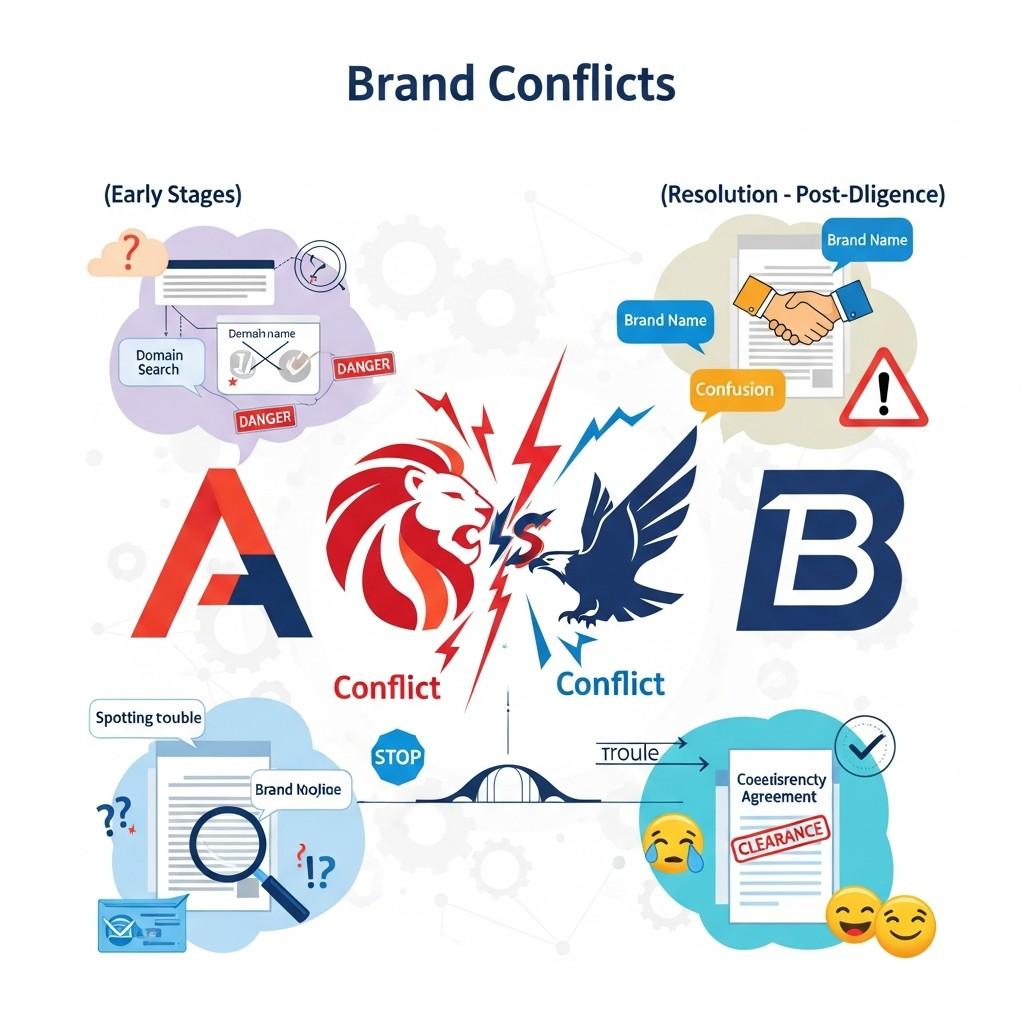
A useful trick is to repeat the search using misspellings and shortened versions of your name. These results help you see how real users might mistype or abbreviate your brand.
If these variations lead to another company, you have found a risk worth examining before launch.
How Trademark Databases Reveal Patterns You Cannot See on Your Own
Public trademark databases show not just active names but also abandoned filings, expired registrations, and older disputes. These patterns teach you what kinds of names tend to cause friction in your industry.
Even if a registration is no longer active, the story behind it can show you the limits of what regulators consider too close for comfort.
The most helpful part of a trademark search is not the yes or no answer. It is the landscape view. When you understand how crowded a space is, you make cleaner decisions about how distinctive your brand needs to be.
And when an attorney later reviews your choices, you already have grounding that shows you are thinking ahead, which matters during diligence.
How Competitor Behavior Predicts Future Conflict
Some companies defend their trademarks aggressively. Others barely monitor them. Knowing who you might be up against matters just as much as knowing whether your names match.
If a competitor has a long history of sending enforcement letters or filing oppositions, you should assume they will continue that behavior.
This does not mean you must abandon your name, but it means you need a stronger plan and better documentation showing why your use is safe.
If a competitor is less active in defending their marks, your risk may be lower, but you should still take steps to document why your brand is distinct.
Clear evidence becomes valuable if the market shifts and they eventually wake up and begin enforcing rights they once ignored.
How Early Documentation Makes You Diligence Ready
Brand conflicts rarely cause problems during early launch. They show up later when investors dig into your materials and want to know how secure your name really is.
If you can show that you checked the landscape early, made thoughtful decisions, and tracked the reasons behind your choice, you immediately look more prepared than most teams at your stage.
The goal is not to create a stack of legal documents. It is to capture your thinking as you go.
A short note explaining why another brand is not a conflict, or why your market is separate, or why your spelling matters, can help an attorney or investor understand your reasoning in seconds.
These notes reduce doubt, speed up diligence, and give everyone more confidence that your brand will hold up as you scale.
How Tools and Support Make the Process Faster
Many founders try to handle brand clearance on their own and end up feeling overwhelmed.
The steps are not hard, but the judgment calls often are. That is where having the right mix of software and expert oversight makes all the difference.
Software can surface the conflicts fast. A human expert can explain what those conflicts mean in plain language and help you decide the safest path forward.
This is the same philosophy behind PowerPatent. We help founders protect what they are building without slowing them down.
Thoughtful guidance plus smart automation keeps your brand strong and your team moving. If you want to see how our system works, you can always explore it at https://powerpatent.com/how-it-works.
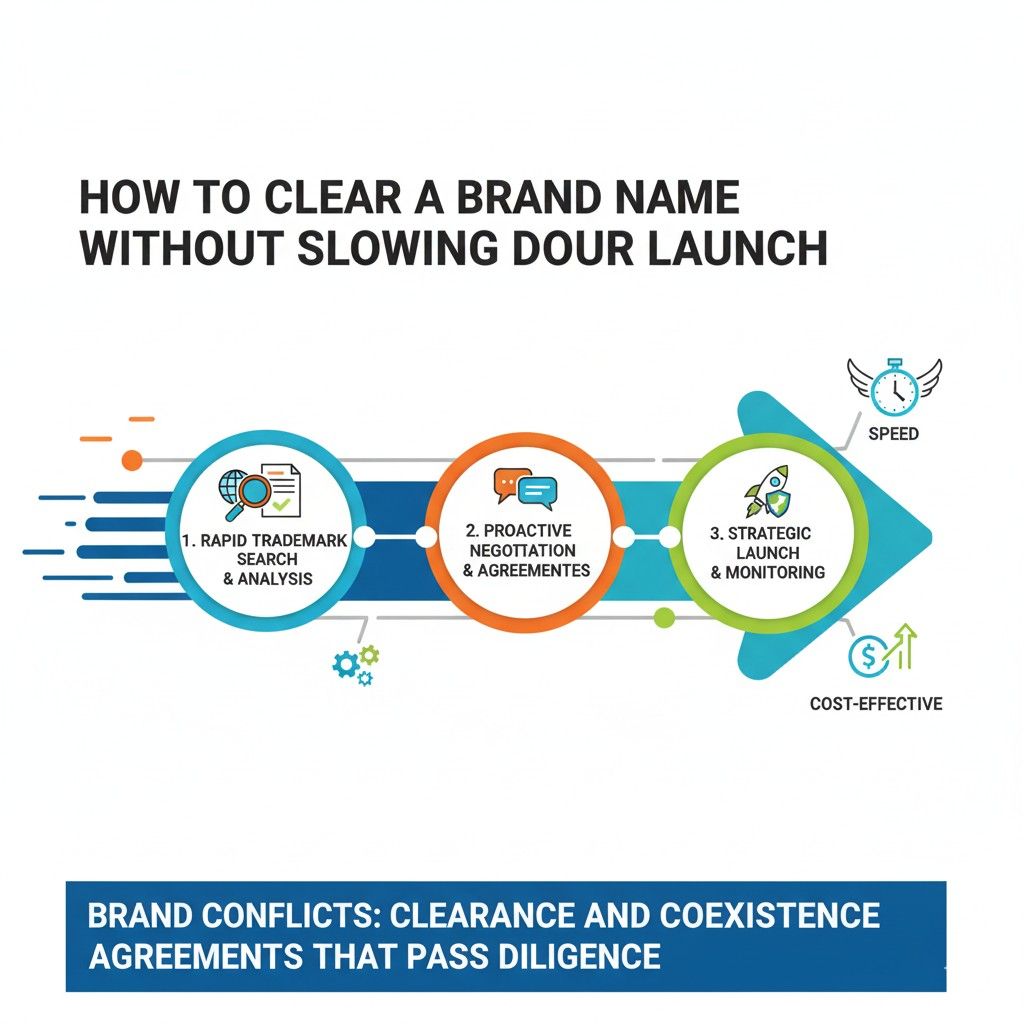
How to Clear a Brand Name Without Slowing Down Your Launch
Before diving into the details, it helps to understand the purpose of brand clearance. It is not about perfection or predicting every future scenario. It is about creating enough certainty that you can move fast without stepping on landmines.
Clearance gives you a stable foundation so your name does not collapse the moment you start getting traction.
When handled the right way, it supports your growth instead of slowing it down, and it turns something that usually feels legal and heavy into a simple part of your launch strategy.
Why Early Screening Saves Months Later
Most founders wait until the last possible moment to check name conflicts, usually when the product is ready to ship or an investor asks about trademarks.
This late timing creates pressure and forces rushed decisions. Early screening takes that pressure away.
The moment you start considering names, you gain an unfair advantage because you are spotting issues before design, marketing, or engineering wraps around them.
Early screening does not need to be perfect. It only needs to give you a first signal of whether your name is safe enough to explore.
It is far better to catch trouble while your team is flexible than after your brand has already entered the world. Momentum is precious in a startup. Early work protects that momentum.
How Everyday Research Helps You Catch Risks Faster
You do not need special tools to begin. A simple search across the web, social platforms, and app stores reveals how people currently use the word you want.
This quick research often uncovers unexpected surprises, like a smaller company using your same name in a nearby market or a new product gaining traction with a similar sound.
When doing this research, the goal is perspective rather than certainty. You are learning who you might be confused with and how your future customer might react when they see the name for the first time.
If someone else already controls the story around that word, you will have to fight harder to claim meaning later. Early research gives you clarity on how much of a fight you are signing up for.
Why Checking Visual Identity Matters
Brand conflicts are not only about words. They include logos, colors, and shapes that could cause confusion if they look too similar.
Some founders ignore visuals during clearance because they assume trademarks focus solely on language. But many real-world disputes begin with design similarities rather than words.
If your logo shares the same basic shape, angle, or symbol as another brand in your market, you may be stepping too close. What makes this tricky is that visual similarity is often subjective.
This is where a trained eye can help you understand the difference between inspiration and infringement, and why building your visual identity early in the clearance process can save headaches later.
How Descriptiveness Can Slow Down Protection
Startups often choose names that describe their function because it feels intuitive and clear. The problem is that descriptive names are harder to protect and easier for others to copy.
If your name explains what you do rather than who you are, regulators may treat it as generic. And generic names cannot be defended, which leaves your brand vulnerable as you grow.
This does not mean descriptive names are worthless. It just means you should be realistic about the tradeoffs. If you want stronger protection, aim for a name with its own personality.
Distinctiveness makes clearance easier and reduces the chance of future disputes. It also helps your brand stand out, which matters as you scale into crowded markets.
Why Considering Global Expansion Changes the Equation
Even if you are launching locally, investors want to know whether your name can travel. A name that is safe in one country may be blocked in another.
A word that sounds clean in one language may take on an unfortunate meaning in another. And a trademark that looks available in your home market might collide with a strong brand abroad.
Thinking globally does not mean filing worldwide trademarks from day one. It means running a simple check on where your company might expand in the next few years.
By spotting international conflicts early, you avoid choosing a name that limits your roadmap or forces you to rebrand when you enter new markets.
How Documentation Protects You During Funding
The moment you raise serious capital, diligence begins. Investors will ask whether your name is safe and whether you control the rights you claim to own.
This is where founders often wish they had captured their clearance work more carefully.
A simple document showing your research steps, your reasoning, your search results, and your plans for protection can satisfy most early diligence questions in minutes.
This documentation does not need to be formal. It only needs to show that your decisions were thoughtful.
The goal is to reduce uncertainty. Investors do not expect perfection; they expect awareness. When they see that you understand your brand risk, they trust your leadership more.
How Smart Tools Make Clearance Faster and More Accurate
Clearance becomes much easier when you combine your own research with the right tools. Automated systems can scan databases, search for similar marks, identify lookalike logos, and show conflicts that might take hours to find manually.
But software alone is not enough, because it does not interpret context. That judgment requires a human expert.
This is why the best approach blends automation with attorney review. You get speed without losing quality.
You get expert clarity without paying traditional firm prices. And you avoid the common mistake of misreading a search result, which is one of the biggest causes of startup brand delays.
This balance between smart tools and expert oversight is exactly what PowerPatent brings to patent protection, and the same philosophy applies to brand strategy.
If you want to see how our platform helps you move faster without risk, you can always explore it at https://powerpatent.com/how-it-works. It is built for the way founders work today, not the way legal teams worked twenty years ago.
How Clear Criteria Help You Make the Final Decision
Choosing a name can feel emotional. You may love a name because it sounds right or fits your story. But clearance requires objectivity. You need criteria that help you compare names without bias.
Consider distinctiveness, conflict risk, visual identity, global potential, domain availability, and investor expectations. When you evaluate names through consistent criteria, patterns become clearer and decisions feel less personal.
Clear criteria also help you communicate with your team. Instead of debating taste, you focus on risk and growth.
This reduces friction and allows everyone to move forward confidently. It also makes it easier to explain your choice to advisors, partners, or investors who may challenge your direction.
How Speed and Safety Can Work Together
Many founders believe brand clearance slows them down. The opposite is true when done well. Fast checks paired with expert guidance give you certainty early, which means fewer interruptions later.
A name that clears easily lets you focus on building, selling, and scaling. A name that confuses customers or raises legal issues slows everything.
Speed and safety are not competing goals. They are two sides of a smart launch strategy. When you take the time to clear your name early, you protect your future pace.
If you want help building IP that grows with you, you can always explore how PowerPatent supports founders at https://powerpatent.com/how-it-works.
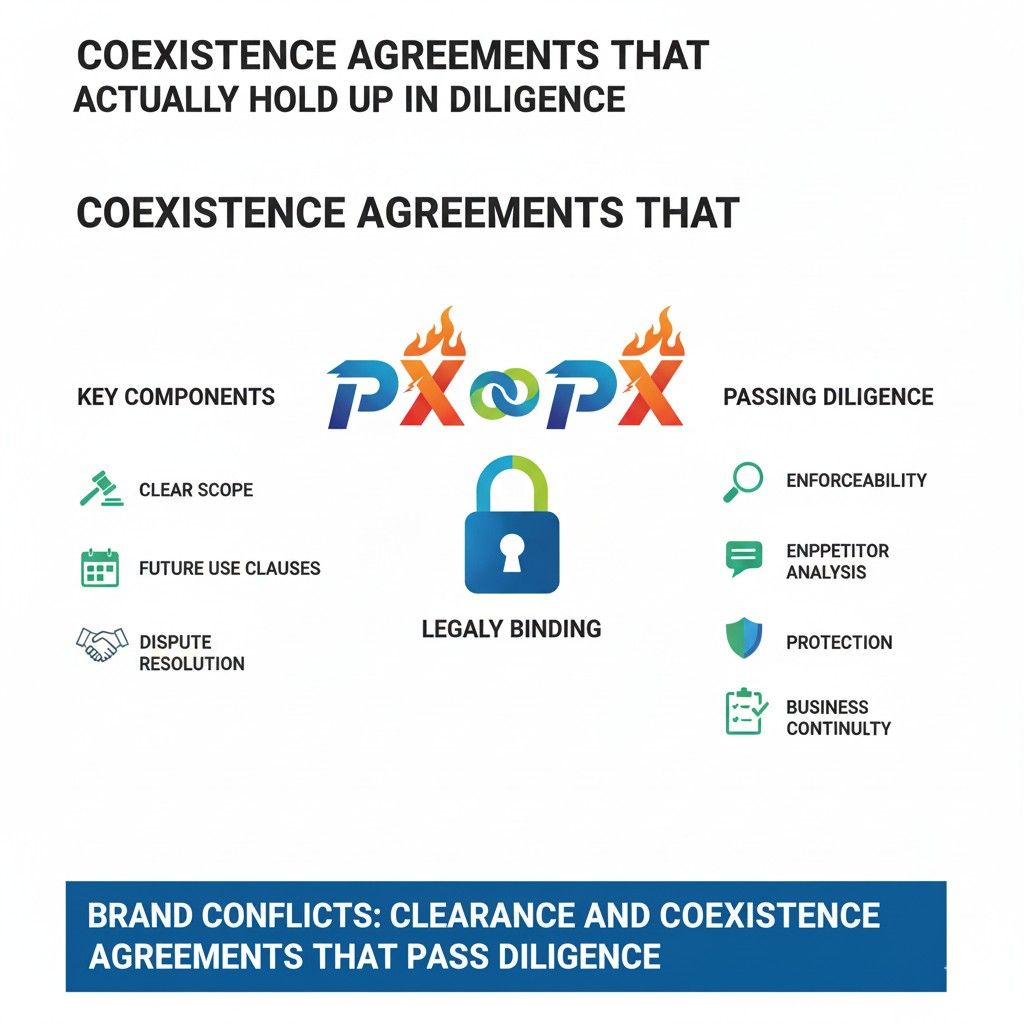
Coexistence Agreements That Actually Hold Up in Diligence
Before exploring how coexistence agreements work, it helps to understand why they matter. A conflict does not always mean someone must abandon their brand or enter a long legal battle.
Many companies can share similar names or visuals if they operate in different spaces, use different styles, or agree on boundaries that prevent confusion.
A coexistence agreement is the tool that makes this possible. It defines who can do what so both sides stay out of each other’s way.
When written well, it removes uncertainty, protects your roadmap, and satisfies investors who want clarity before they write a check.
Why Coexistence Is Often Better Than Fighting
Most disputes settle long before anyone steps into a courtroom because conflict drains time, money, and focus. A coexistence agreement shifts the conversation from confrontation to alignment.
Instead of arguing over who has stronger rights, both sides agree on how they can operate without harming each other. This keeps teams focused on growth rather than legal tension.
The power of coexistence lies in its flexibility. You can tailor the boundaries to match how your company actually works. Maybe one party keeps digital products while the other keeps physical goods.
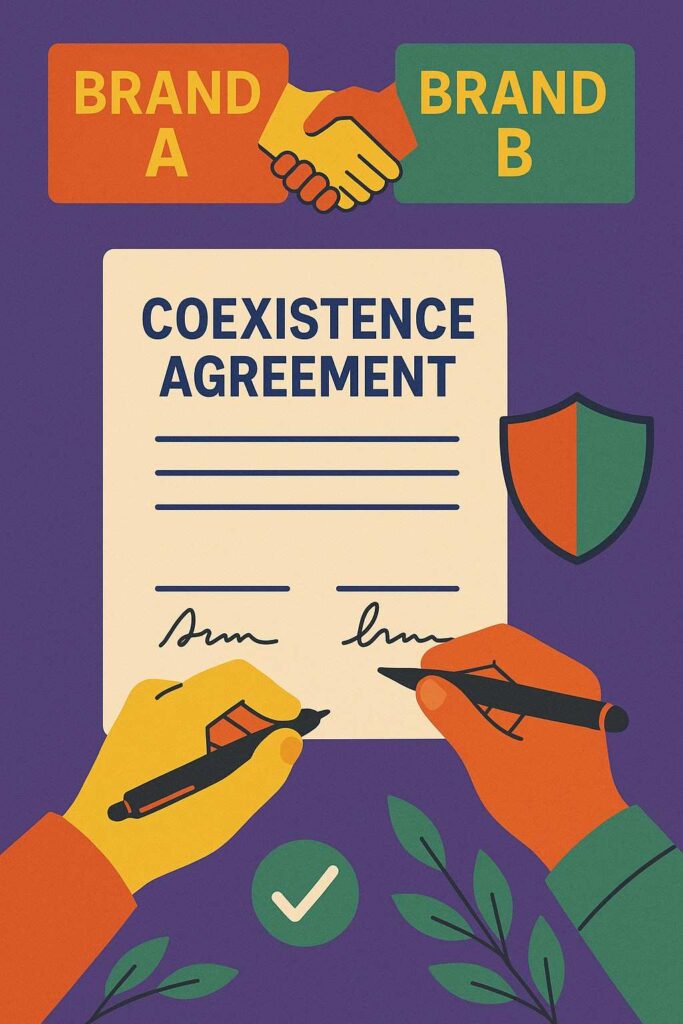
Maybe one stays in enterprise sales while the other focuses on consumers. When both sides get room to grow, the agreement becomes a win rather than a reluctant compromise.
How Clear Boundaries Prevent Future Problems
A good coexistence agreement removes ambiguity. Ambiguity is what sparks conflict years later when markets shift, products evolve, or new investors enter the picture.
The clearer your agreement, the less chance you will face disputes in the future.
These boundaries usually focus on how and where each party uses its brand. They can define territories, product lines, industries, colors, taglines, or even marketing tone.
The goal is not to restrict your creativity but to prevent confusion. When customers can easily tell the two brands apart, everyone is safer.
Strong boundaries also matter for diligence. Investors and acquirers look for predictable growth paths.
When they see a well-structured coexistence agreement, they know you have protected your ability to scale without facing a surprise dispute.
Why Agreements Need Practical Language
The most common mistake in coexistence agreements is using vague or overly legal language. When terms sound complicated, founders misinterpret them later.
This is where agreements fall apart during diligence because no one knows exactly what was promised. The best agreements use simple language that tells both sides exactly what they can and cannot do.
Practical language makes the agreement usable. Your team can follow it without calling a lawyer.
Your future investors can understand it at a glance. And your partners or distributors can rely on it when making decisions. The easier the agreement is to read, the stronger it becomes.
How Market Changes Challenge Weak Agreements
A coexistence agreement may work during year one but collapse during year three if it does not consider how markets evolve. Businesses rarely stay in one lane.
You may expand into new software categories, introduce hardware, launch subscriptions, or move into enterprise markets. If your agreement does not anticipate reasonable expansions, you may accidentally breach it later.
A strong agreement includes flexibility. It allows you to grow naturally while still respecting the boundary lines.
Instead of freezing both companies in place, it supports long-term progress by defining which expansions are safe and which require a new conversation.
This future-focused approach impresses investors because it shows you are not just solving today’s problem but protecting tomorrow’s opportunities.
Why Mutual Respect Builds Stronger Agreements
Coexistence works best when both sides trust each other. A cooperative mindset makes it easier to negotiate terms that feel fair.
Even if you and the other company start from a place of tension, the goal is to leave the conversation with a stable relationship. Agreements built on mutual respect tend to last longer and generate fewer disputes.
Part of building trust involves transparency. Share your roadmap at a high level. Explain why the name matters to your brand story. Show willingness to adjust your visual style or marketing tone if it reduces confusion.
When both sides understand the other’s perspective, they are more likely to agree on terms that support real-world use rather than theoretical limits.
How Documentation Makes Enforcement Easier
If an agreement is clear but not documented carefully, you risk losing the ability to enforce it. Every term must be written down, and both parties must sign. Even small details matter.
Dates, jurisdictions, use cases, product categories, domain names, marketing channels, color palettes, and disclaimers can all influence how the agreement works in practice.
Documentation helps both sides remember what they agreed to. It keeps future team members informed even if the original founders or managers leave.
It also protects you during diligence, where investors want to see not just that you made an agreement but that you captured every important detail.
Why Regular Reviews Keep the Agreement Healthy
A coexistence agreement is not something you sign once and forget. As your brand grows, you may add new products, explore new regions, or refresh your identity.
When these shifts happen, you must check whether your agreement still fits. A periodic review ensures you stay within your boundaries and avoid unexpected breaches.
Even if nothing has changed, revisiting the agreement once a year strengthens internal awareness. New hires understand its importance.
Marketing, product, and executive teams make decisions with boundaries in mind. And if adjustments are needed, you can approach the other party from a place of preparation rather than urgency.
How Digital Presence Complicates Coexistence
Online visibility blurs the lines between markets. Even if your agreement allows you to operate in different industries, websites, social media, and ads can bring brands closer together.
Search platforms may place your companies side by side. Algorithms may mix both of your names in recommendation feeds. This overlap can trigger confusion even when your underlying industries differ.
This is why coexistence agreements should address digital use. You might define how each party uses search ads, what disclaimers appear on websites, how hashtags are handled, or how brand names appear in metadata.
These rules prevent digital confusion and offer clarity during diligence, especially for companies with strong online strategies.
How Agreements Influence Rebrands
Sometimes coexistence is the bridge that lets one company rebrand on its own timeline without rushing. A startup might want to keep a name for another year while preparing a new identity.
A coexistence agreement can give that breathing room. Investors appreciate this predictability because a rushed rebrand often causes brand dilution, customer confusion, and operational friction.
When drafting such an agreement, it helps to outline not just the temporary terms but also the transition path.
This protects both parties and aligns expectations. It also shows diligence teams that you handled the conflict responsibly rather than impulsively.
Why Investor Confidence Depends on Clarity
During diligence, investors want to know whether your brand can scale without hitting legal barriers.
A vague agreement raises concerns because it introduces risk. A clear one gives them confidence that you have a stable, defensible foundation.
They look for signs that the agreement is reasonable, enforceable, and aligned with your growth plan. They also want to see that it includes enough detail to survive leadership changes on either side.
The easier it is for investors to understand your brand rights, the faster they can move through diligence.
How Expert Support Strengthens Every Clause
Coexistence agreements touch on law, marketing, brand strategy, and business growth. This mix makes them hard to draft without expert guidance.
A single unclear phrase can create years of uncertainty. The right expert can translate your business goals into clean, enforceable terms that reduce risk and help the agreement stand up during diligence.
This blend of clarity, speed, and expert oversight is the same approach PowerPatent uses for patents. Our platform helps founders make safer decisions without slowing down.
If you want to see how we support IP protection in a simple, founder-friendly way, you can explore it at https://powerpatent.com/how-it-works.
Wrapping It Up
Before closing everything out, it helps to step back and look at the bigger picture behind brand conflicts, clearance, and coexistence. What seems like a legal maze is really just a clarity exercise. You are building a name that will carry your company for years. You want it to be strong. You want it to be safe. You want it to survive the kind of scrutiny that comes with real growth, real traction, and real investment. When you understand how conflicts arise and how to navigate them calmly, you gain more control over your future than most teams ever realize.
Leave a Reply