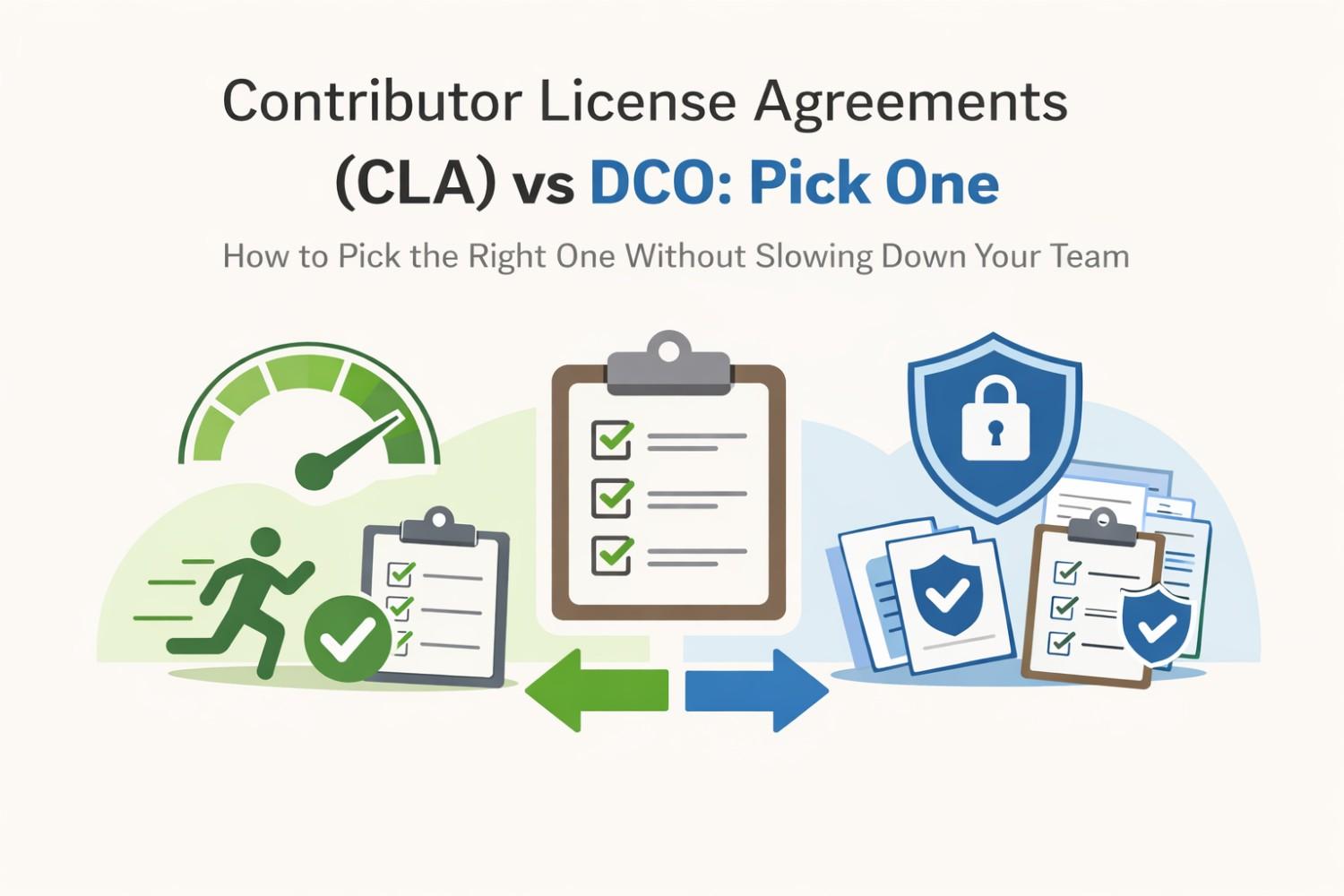
If you build software in the open, this question will hit you sooner than you expect. Someone sends a pull request. It looks great. You want to merge it fast. Then a quiet fear pops up: Do we really own the rights to this code?
That fear is not silly. It is one of the most common ways open-source projects create future legal messes without knowing it. This is where CLAs and DCOs come in.
Why Contributor Rights Become a Problem Later, Not Now
This issue almost never shows up when you expect it to. It does not appear when the pull request is opened. It does not appear when the code ships. It does not even appear when users start paying.
It shows up much later, when changing it is expensive, slow, and stressful.
Most teams do not create problems on purpose. They create them by moving fast and assuming things will work out. Contributor rights are a perfect example of this pattern.
Everything feels fine until someone outside your team starts asking hard questions.
The Moment Everything Still Feels Easy
In the early days, your project is small. Contributors are friendly. Everyone is excited. Code comes in through GitHub. You merge it. The product improves. Life is good.
At this stage, ownership feels obvious. The code is in your repo. You control the roadmap. You decide what ships. It feels like the problem is already solved by default.
This is exactly why founders ignore contributor rights early on. There is no pain signal yet. Nothing is broken. Nothing is blocking progress. Adding paperwork feels unnecessary and even rude.
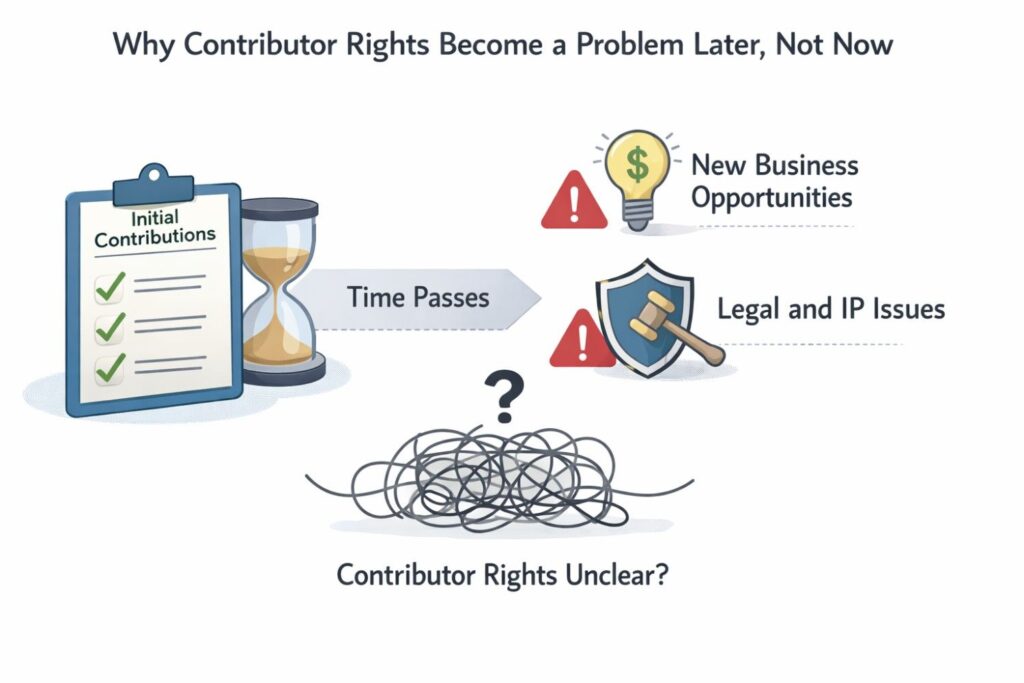
The mistake here is assuming that control and ownership are the same thing. They are not. Control is what you feel today. Ownership is what others will test tomorrow.
The most actionable step at this stage is to decide, even before your first external contribution, how you want ownership to work. That decision costs almost nothing early. Waiting makes it expensive.
When the First Real Stakeholder Appears
Contributor rights become real the moment someone with leverage enters the picture. This could be an investor. It could be an acquirer. It could be a large customer. It could be your own legal team preparing for something bigger.
These people do not care how friendly your community is. They care about risk. They want to know if anyone can later claim that you do not have the right to use, sell, or protect your own product.
This is when vague answers stop working. Saying “it’s open source” is not enough. Saying “everyone agreed by contributing” is not enough. Silence is interpreted as risk.
At this point, you are no longer deciding how things will work. You are explaining choices you already made by accident.
A very practical move here is to imagine a due diligence call happening six months from now. If you cannot clearly explain how contributor rights are handled in one calm sentence, you already know there is a problem.
Why Patents Make This Much Worse
Contributor rights are not just about licenses. They are about patents too, even if nobody says that word out loud.
If someone contributes code that later becomes part of a patented system, ownership of that contribution matters. If rights were never clearly granted, that contributor may still hold claims that complicate enforcement or defense.
This is where things get ugly fast. Patent reviewers, buyers, and partners look closely at provenance. They want to know where ideas came from and who had the right to give them away.
The painful truth is that patent risk does not show up when you file. It shows up when you try to assert, license, or sell.
The smart move for businesses is to align contributor rights with future patent goals early. That does not mean turning your project into a legal fortress. It means being intentional before code becomes core IP.
This is also where PowerPatent helps founders think ahead instead of cleaning up later. You can see how the process is designed for this reality here: https://powerpatent.com/how-it-works
Open Source Does Not Mean Free of Ownership Questions
There is a common belief that open source magically removes ownership issues. It does not. It simply changes where the questions live.
Licenses define how code can be used, not who owns the underlying rights. Without a clear contributor agreement, each contributor may still own their piece, even if they allowed you to use it.
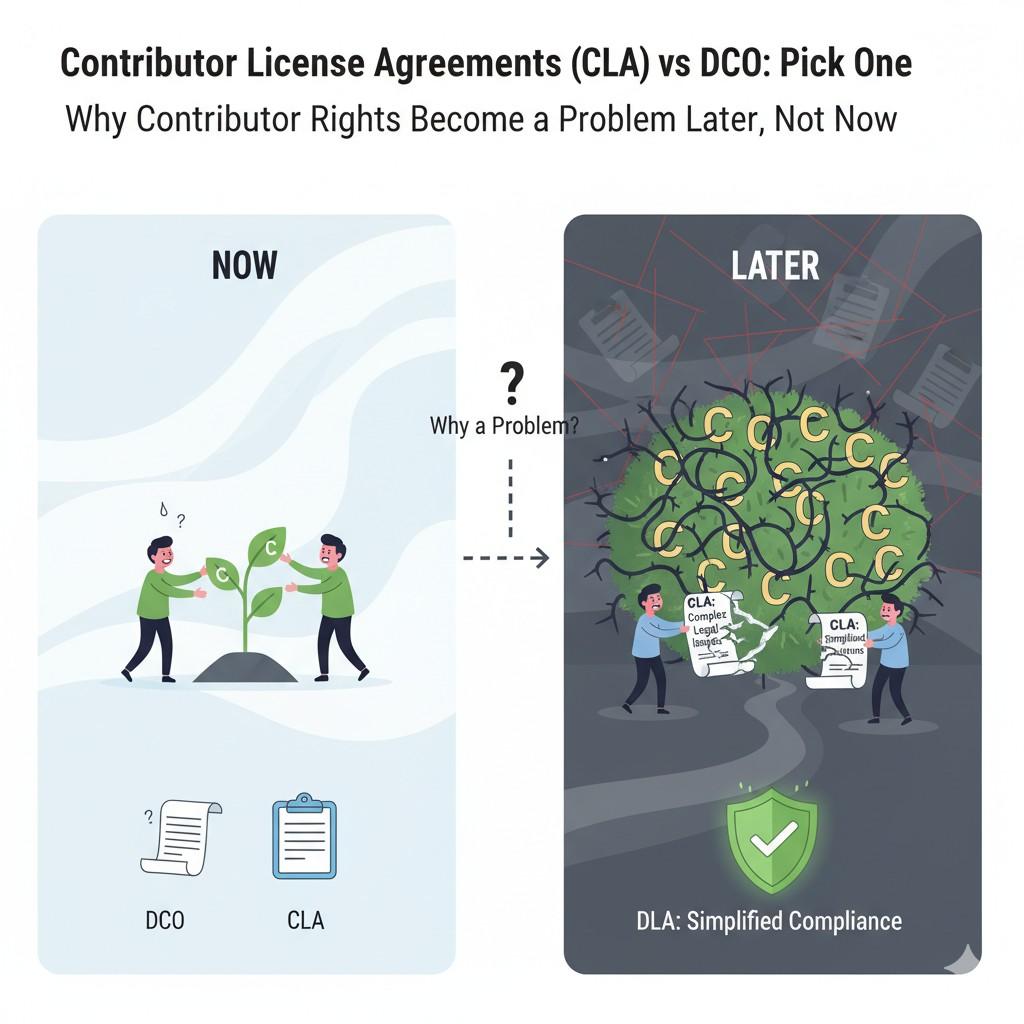
This matters more as your project grows. More contributors mean more unknowns. Each unknown adds friction later.
A strong habit to build early is separating community openness from legal clarity. You can welcome contributors while still being clear about rights. These two ideas do not conflict unless you let them.
The Cost of Fixing This Later
When contributor rights are ignored early, fixing them later becomes a project of its own. You may need to track down old contributors. Some will not respond.
Some will ask questions. Some will ask for money. Some will simply say no.
This is not a theoretical risk. It happens often, especially when startups prepare for funding or acquisition.
At that point, you are negotiating from a weak position. You need something from people who no longer need anything from you.
The most actionable takeaway here is simple. Every contribution you accept without clarity is a small debt. Debt compounds. Paying it early is cheap. Paying it later hurts.
Why Teams Keep Delaying the Decision
Founders delay this choice because it feels like slowing down. They worry contributors will leave. They worry it feels too corporate. They worry about doing it wrong.
In reality, most contributors do not mind clarity. What they mind is surprise. Clear rules early feel fair. Rules added later feel suspicious.
The strategic move is to choose a path before contributions scale. Whether that path is a CLA or a DCO matters less than the fact that you picked one on purpose.
Making This a Business Decision, Not a Legal One
The biggest mistake teams make is framing contributor rights as a legal task. It is a business decision.
You are deciding how much friction you want now versus how much risk you are willing to carry later. You are deciding how attractive your company will look under scrutiny. You are deciding how strong your IP story will be.
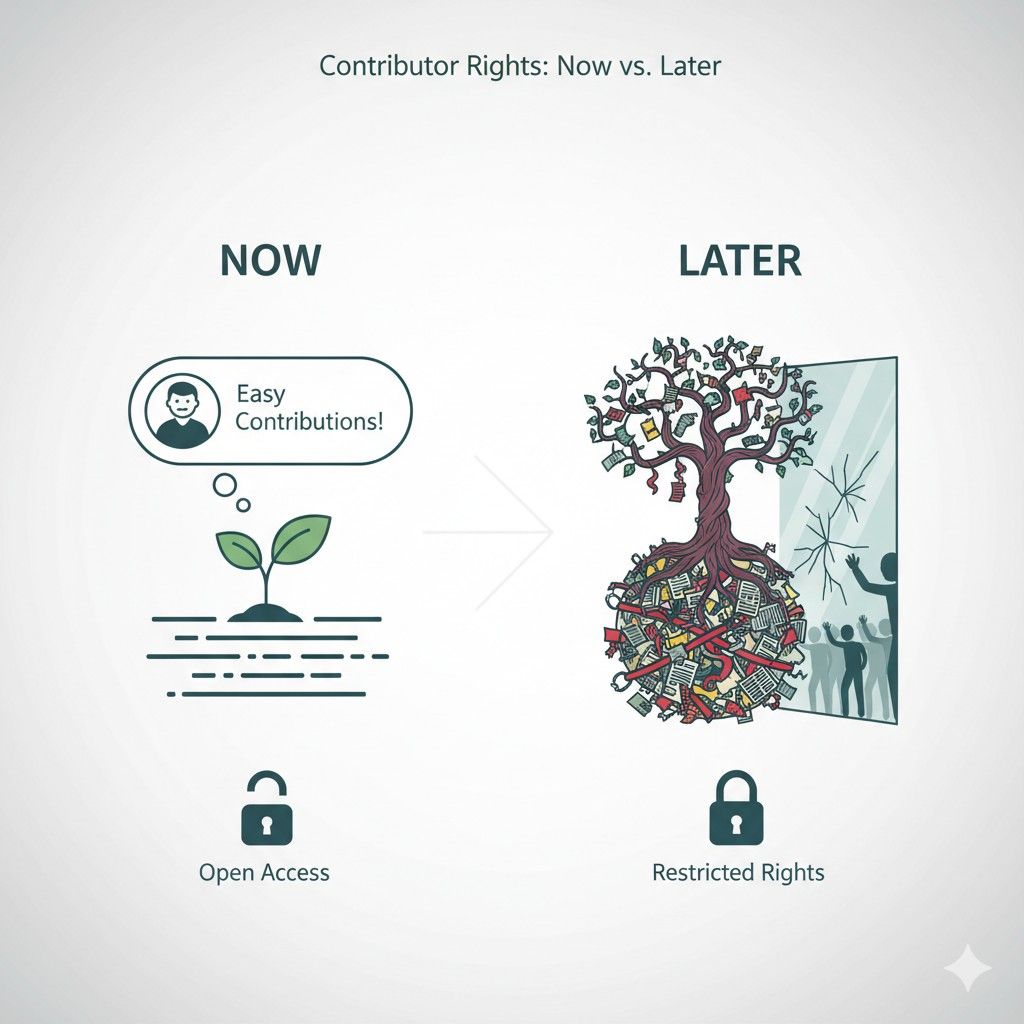
Seen this way, the decision becomes clearer. Speed without clarity is not speed. It is borrowed time.
If your goal is to build something real, defensible, and valuable, this choice is part of the foundation, not an afterthought.
What a Contributor License Agreement Really Does
A Contributor License Agreement sounds heavy, but its job is very simple. It makes sure your company has clear rights to use, ship, protect, and grow the code that others contribute. That is it. Everything else is detail.
The reason CLAs exist is not because companies want control for ego reasons. They exist because unclear ownership kills momentum later. A CLA is a way to turn future questions into present clarity.
The Core Promise Behind a CLA
At its heart, a CLA is a promise from the contributor to the project owner. The contributor is saying that they have the right to give you what they are contributing and that you can use it in specific ways.
This matters more than people think. Without that promise, you are relying on assumptions. Assumptions feel fine until someone challenges them.
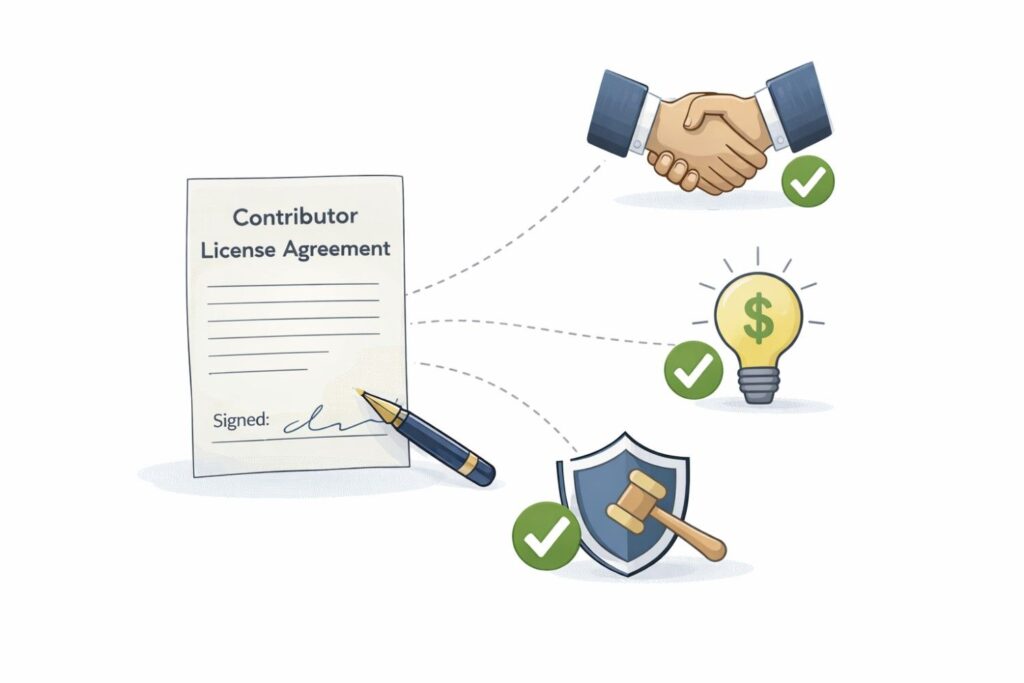
The most important thing a CLA gives you is certainty. You know where rights live. You know what you can do. You know what you can protect.
For a business, certainty is leverage.
Why Companies Feel Safer With CLAs
When a company uses a CLA, it removes ambiguity. That matters when the codebase becomes valuable.
Investors and acquirers understand CLAs. They see them as a sign of maturity. It tells them you took ownership seriously early on.
This does not mean they expect perfection. It means they expect intention.
If your long-term plan includes monetization, licensing, or patents, CLAs reduce friction. They make it easier to say yes to opportunities instead of pausing to untangle rights.
A very practical action here is to align your CLA with your future plans. If you plan to dual-license, say so. If you plan to file patents, make sure the language supports that. Doing this later is far harder.
How CLAs Shape Contributor Behavior
Some founders worry that CLAs scare contributors away. In practice, clarity filters in the right people.
Contributors who are serious about the project usually understand why a CLA exists. They want to know the rules too. They want to know what happens to their work.
The friction CLAs create is front-loaded. It happens once. After that, contributions flow normally.
The real risk is not friction. The real risk is silence. When contributors are unsure about rights, they hesitate. When they hesitate, engagement drops.
A clear CLA actually speeds things up after the initial setup.
Individual CLAs Versus Corporate CLAs
As your project grows, contributors may not just be individuals. They may be employees contributing on behalf of companies.
This is where CLAs quietly save you. A well-designed CLA can handle both individual and corporate contributors without forcing you to invent new processes each time.
Without this, you may later discover that a contributor did not have the right to contribute what they did. That is a nightmare scenario during diligence.
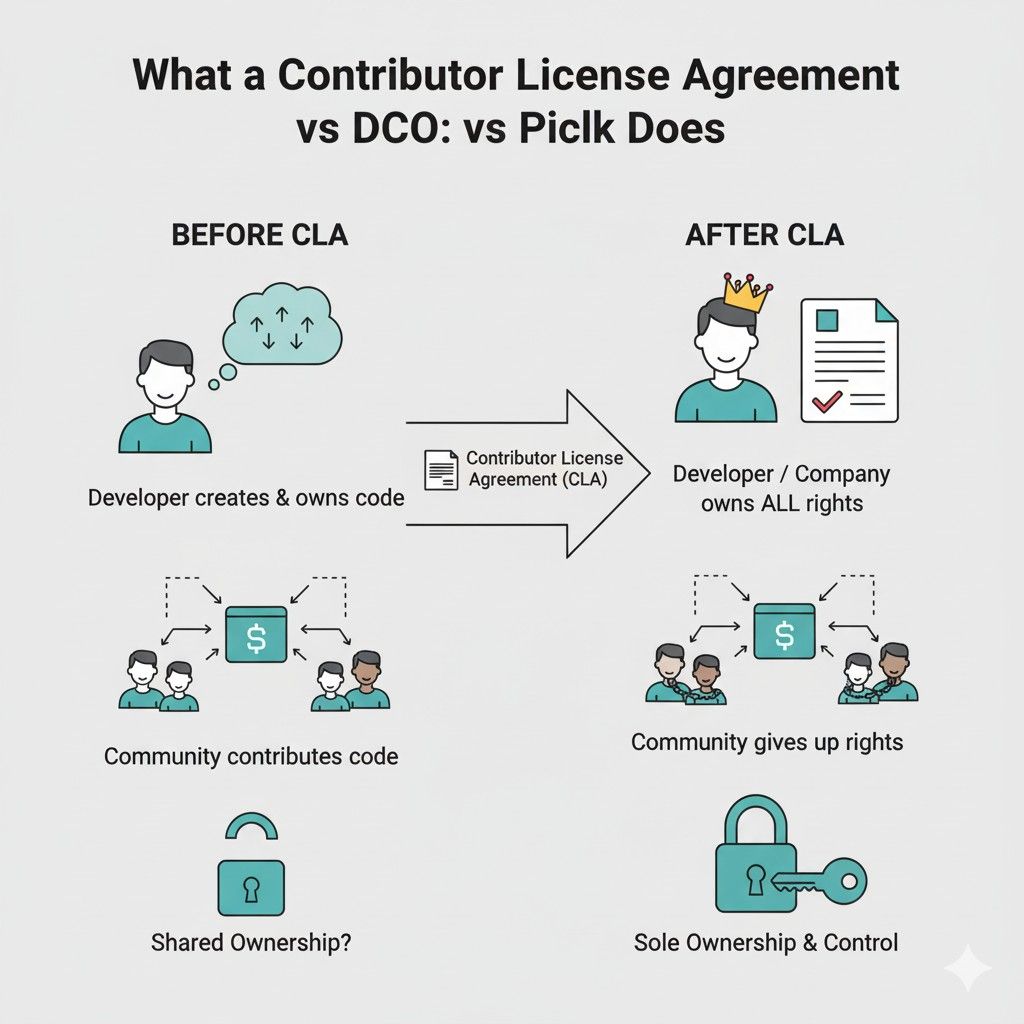
A strong business move is to treat contributor identity as part of your intake process. Not as bureaucracy, but as hygiene. Clean inputs create clean outcomes.
The Patent Angle Most Founders Miss
CLAs often include patent grants. This is not about being aggressive. It is about avoiding dead ends.
If a contributor holds patent rights related to their contribution and does not grant them to you, you may be blocked from using or defending your own product.
This does not mean contributors are trying to hurt you. It means the system defaults to fragmentation unless you fix it.
From a strategy standpoint, this is critical. If you ever plan to file patents, enforce patents, or even just look clean in an IP review, this matters.
PowerPatent works with founders who realize too late that missing rights weaken otherwise strong inventions. Seeing this early changes how you build. You can explore how that works here: https://powerpatent.com/how-it-works
Why CLAs Feel Heavy to Early Teams
CLAs feel heavy because they introduce formality into an informal moment. Early teams value speed and trust. Paperwork feels like the opposite.
The problem is not the CLA itself. The problem is bad implementation.
When CLAs are unclear, hard to sign, or badly explained, they feel hostile. When they are simple and transparent, they feel normal.
A very actionable tip is to explain your CLA in plain language next to the link. Tell contributors why it exists. Tell them what it does and what it does not do. Silence creates fear. Explanation creates trust.
One-Way Versus Two-Way CLAs
Not all CLAs are the same. Some only protect the company. Others also protect contributors.
From a business perspective, two-way clarity builds goodwill. Contributors want to know they are not giving up more than they intend.
The smartest CLAs are balanced. They give companies what they need while respecting contributors as partners, not resources.
This balance matters for reputation. Open-source communities talk. How you handle rights sends a signal about how you handle power.
When CLAs Become a Growth Asset
Once your project scales, a CLA stops being paperwork and starts being infrastructure.
It enables clean audits. It enables faster deals. It enables confident IP strategy.
Most importantly, it lets founders sleep at night knowing that growth is not quietly creating risk.
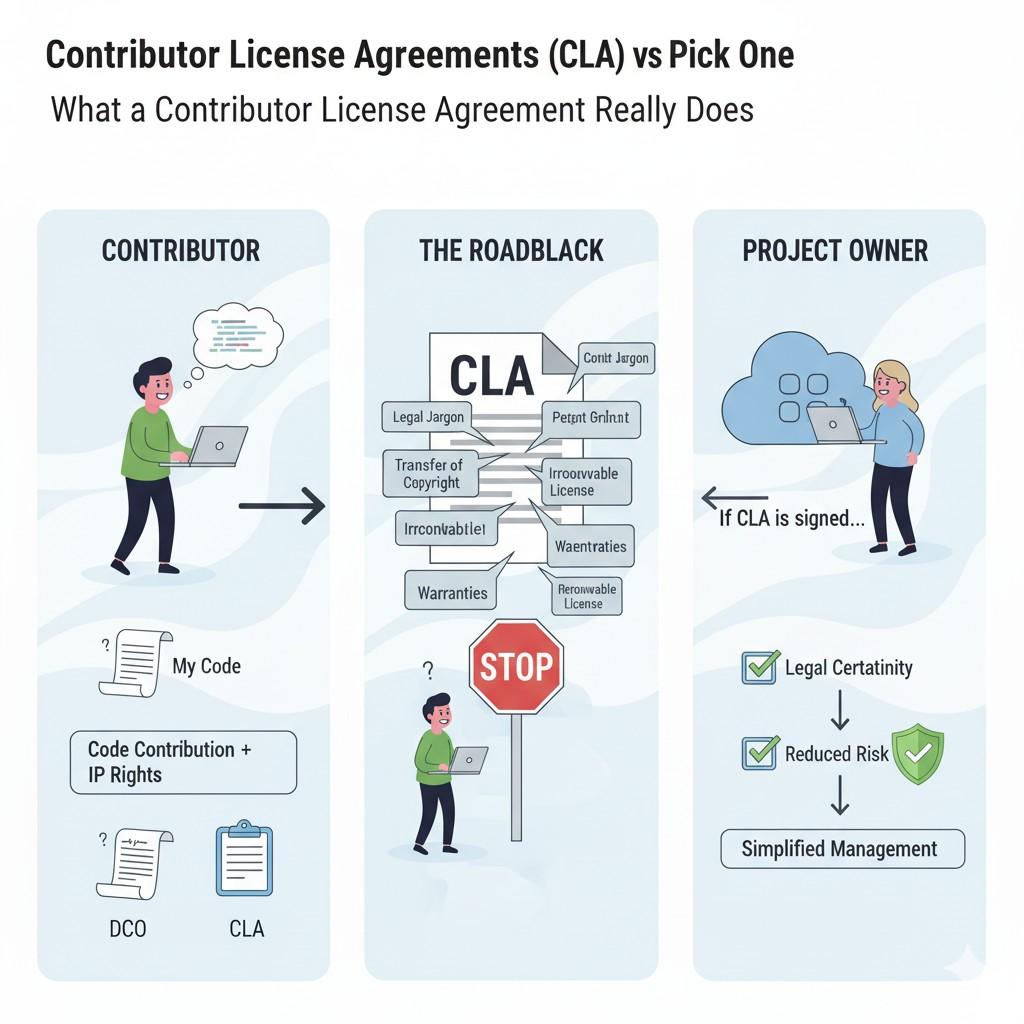
The key takeaway is this. A CLA is not about control. It is about alignment. It aligns contributors, companies, and future plans around a shared understanding.
That alignment is hard to retrofit and easy to build early.
What a Developer Certificate of Origin Actually Means
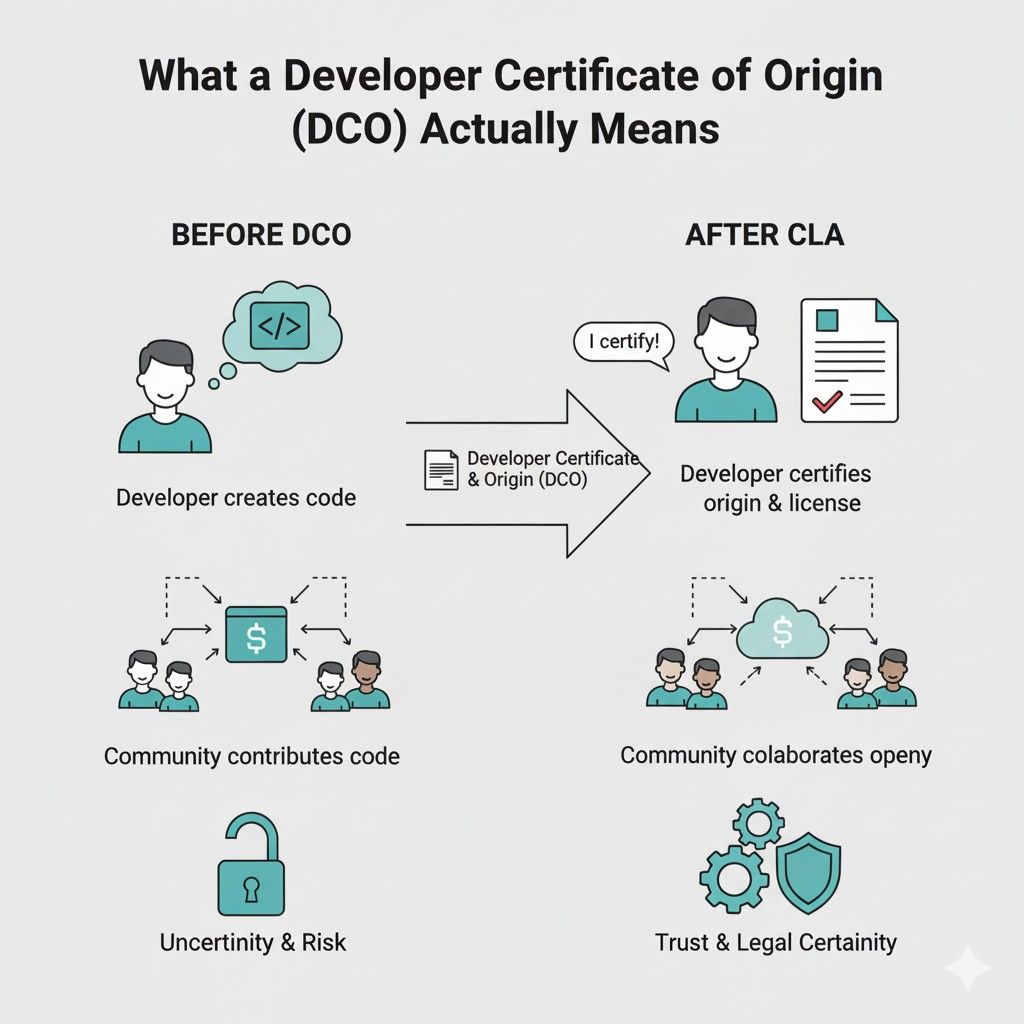
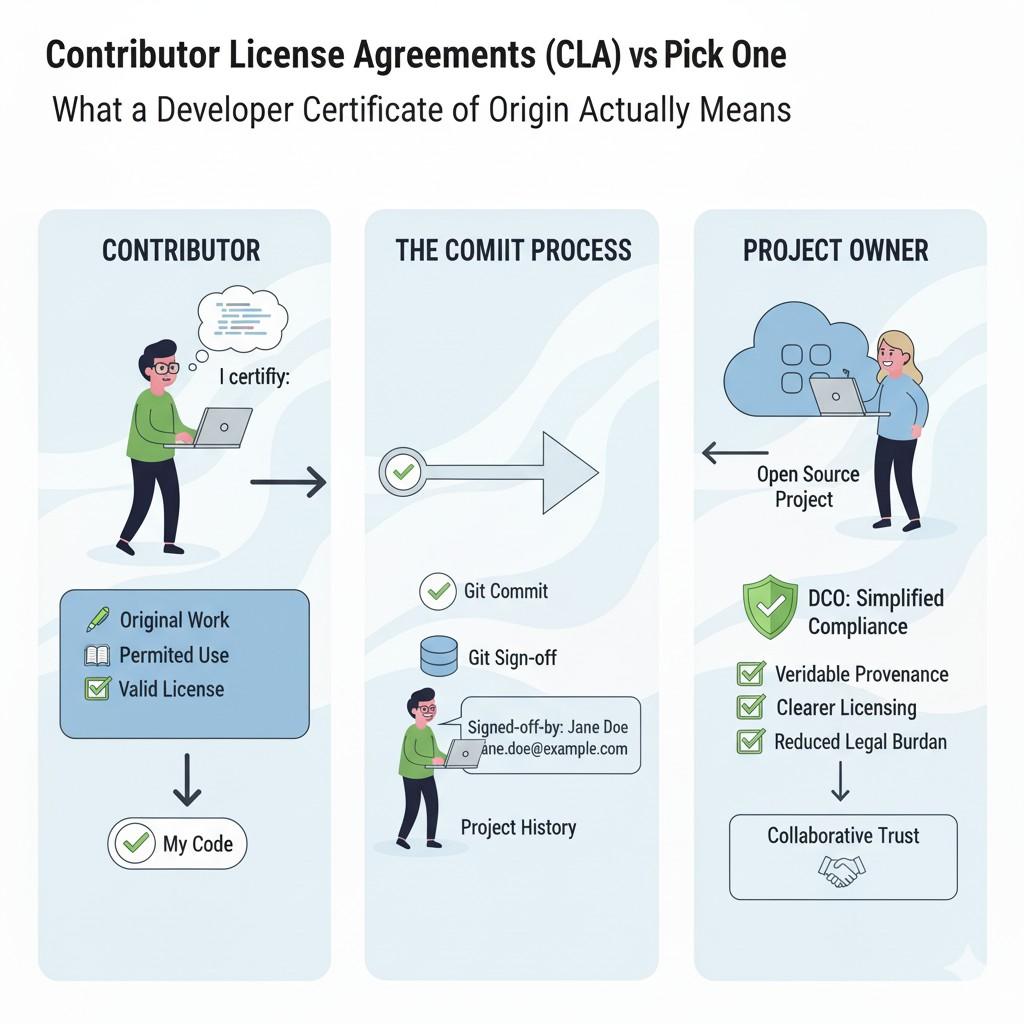
A Developer Certificate of Origin, or DCO, takes a very different approach to the same problem. Instead of signing a separate agreement, the contributor makes a statement every time they submit code.
That statement says, in simple terms, that they have the right to contribute the code and that they are not hiding anything.
This feels lighter. It feels faster. It feels more in line with how developers already work. That is why many teams are drawn to it.
But lighter does not mean weaker or stronger by default. It just means different tradeoffs.
The Philosophy Behind the DCO
The DCO is built on trust with accountability. It assumes contributors understand what they are doing and are willing to stand behind it.
Instead of a document signed once, the DCO lives in the workflow. Each commit includes a sign-off line. That line is the contributor saying, “I wrote this, or I have the right to submit it.”
For teams that care deeply about keeping things simple, this is appealing. There is no separate onboarding step. There is no extra form.
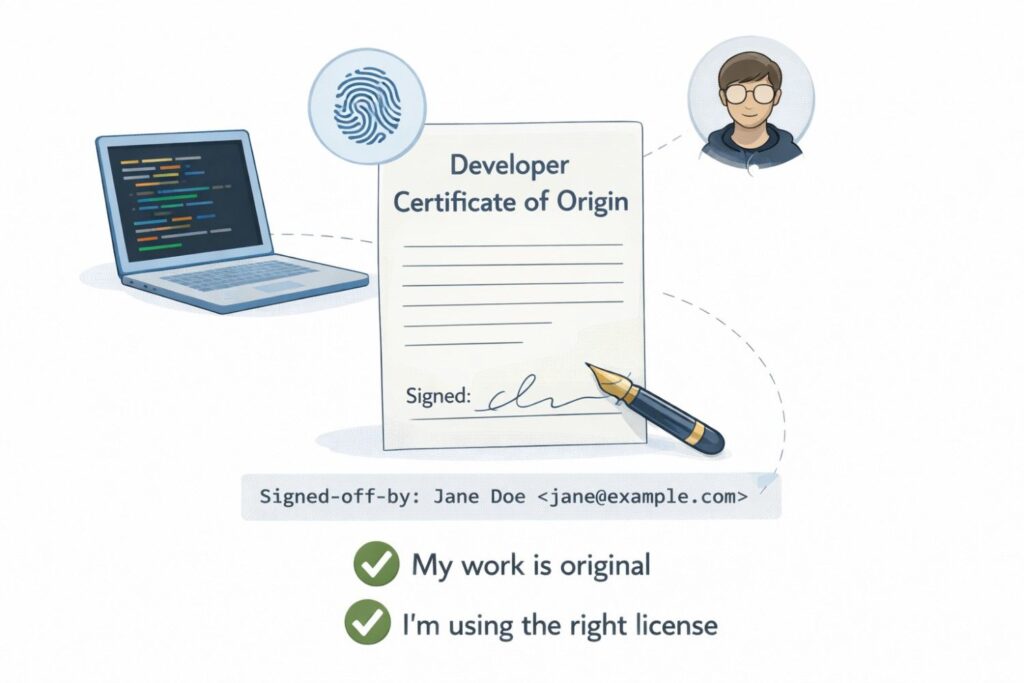
The key insight here is that the DCO shifts responsibility outward. The contributor keeps ownership but confirms legitimacy.
Why Developers Like the DCO
Developers prefer tools that stay out of the way. The DCO fits that mindset.
There is no portal. There is no waiting. There is no legal language to read through before making a small fix.
This matters for community growth. Lower friction often leads to more contributions, especially from casual contributors who just want to help.
If your project thrives on drive-by fixes and small improvements, the DCO supports that style.
The actionable lesson is to match the system to the behavior you want. If speed and ease are your top priorities, the DCO aligns well.
What the DCO Does Not Give You
The DCO confirms origin. It does not transfer rights.
This is the part many founders miss. A DCO says the contributor has the right to submit the code. It does not say you own it or can use it however you want.
In most cases, usage rights come from the open-source license itself. That may be enough for many projects. But it is not always enough for businesses.
If you plan to relicense, offer commercial terms, or file patents, this gap matters.
A smart step here is to map your revenue model against what rights you actually need. If the answer includes exclusive or expanded rights, the DCO alone may not cover you.
How the DCO Plays During Due Diligence
In diligence, a DCO is better than nothing. It shows process. It shows awareness.
However, it often leads to follow-up questions. Reviewers may ask how patent rights are handled or whether contributors agreed to anything beyond origin.
This does not mean the DCO fails. It means it leaves some questions open.
From a strategy view, open questions equal delay. Delay costs money and momentum.
If you use a DCO, be ready to clearly explain how your license model and contributor process work together.
The Patent Blind Spot
The DCO does not usually include patent language. This is intentional, but it has consequences.
If a contributor holds patent rights related to their contribution, the DCO does not automatically address that. You may still be exposed.
This does not mean contributors will assert patents against you. It means the possibility exists.
For companies building defensible technology, this uncertainty can be uncomfortable.
Founders who care about patents often discover too late that their contributor system was not built with IP protection in mind.
PowerPatent often helps teams uncover these gaps early, before they turn into blockers. You can see how that thinking works here: https://powerpatent.com/how-it-works
When the DCO Is a Strong Fit
The DCO shines in projects where openness is the point. Infrastructure projects, standards, and community-led tools often fit this model well.
If your business does not rely on owning contributions and your value comes from services, hosting, or scale, the DCO may be enough.
The practical move is to be honest about your business goals. If ownership is not central, do not over-engineer.
The Risk of Assuming the DCO Will Scale With You
What works at one stage may not work at the next.
Many startups begin with a DCO because it feels right. Later, as the product becomes core IP, the same system starts to feel thin.
Changing systems midstream is hard. Contributors who signed off one way may not agree to another later.
The strategic takeaway is to think forward, not just current. Pick a system that fits where you are going, not just where you are.
DCOs Reward Discipline
A DCO only works if it is enforced. Every commit needs a sign-off. Automation helps, but culture matters more.
If sign-offs are optional in practice, the protection disappears.
If you choose a DCO, treat it as real, not symbolic. Make it part of how you work, not a checkbox you forget.
Clarity Over Comfort
The DCO feels comfortable because it avoids paperwork. But comfort is not the same as clarity.
The best choice is the one that makes your future boring. Boring means fewer surprises. Fewer surprises mean faster growth.
Understanding what a DCO does and does not do is the difference between intentional simplicity and accidental risk.
How to Pick the Right One Without Slowing Down Your Team
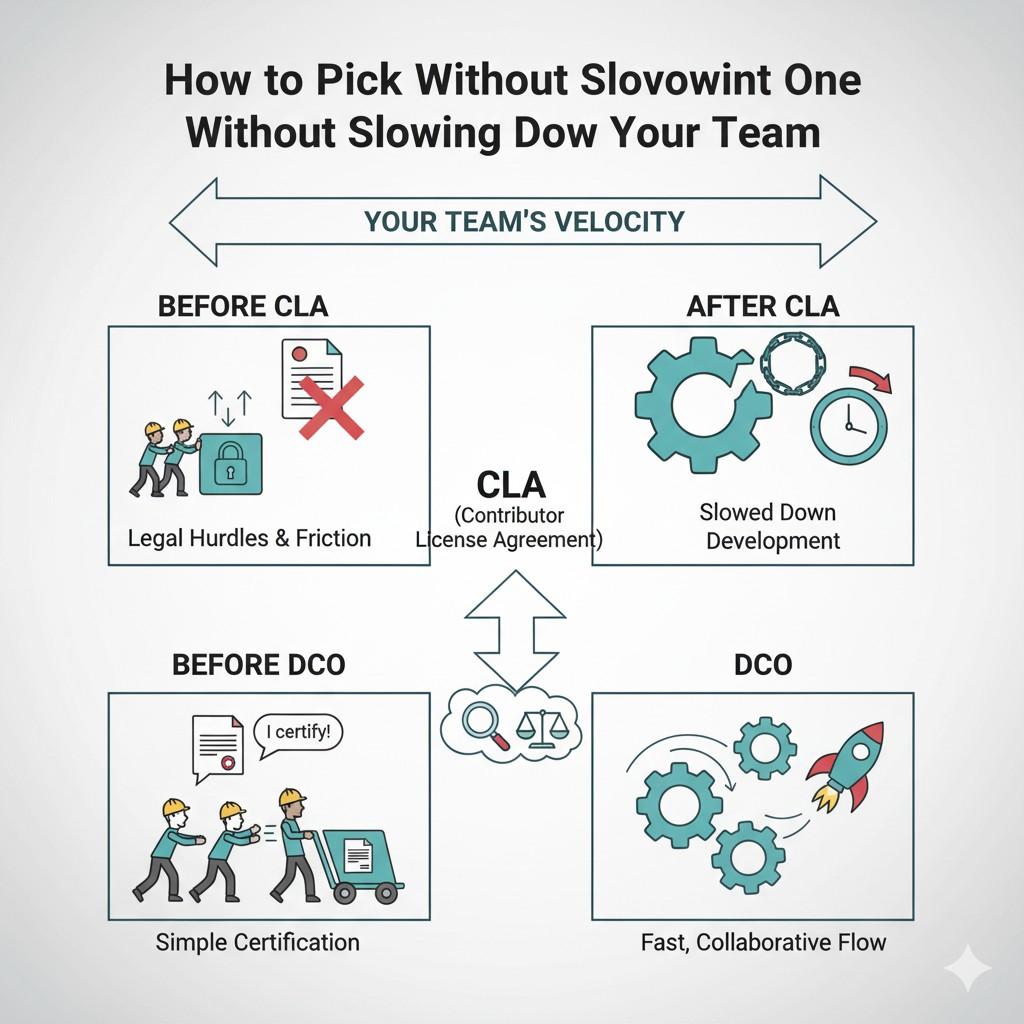
This decision feels bigger than it is, but it matters more than it seems. The goal is not to choose the most perfect system.
The goal is to choose a system that supports how your company grows without creating hidden drag later.
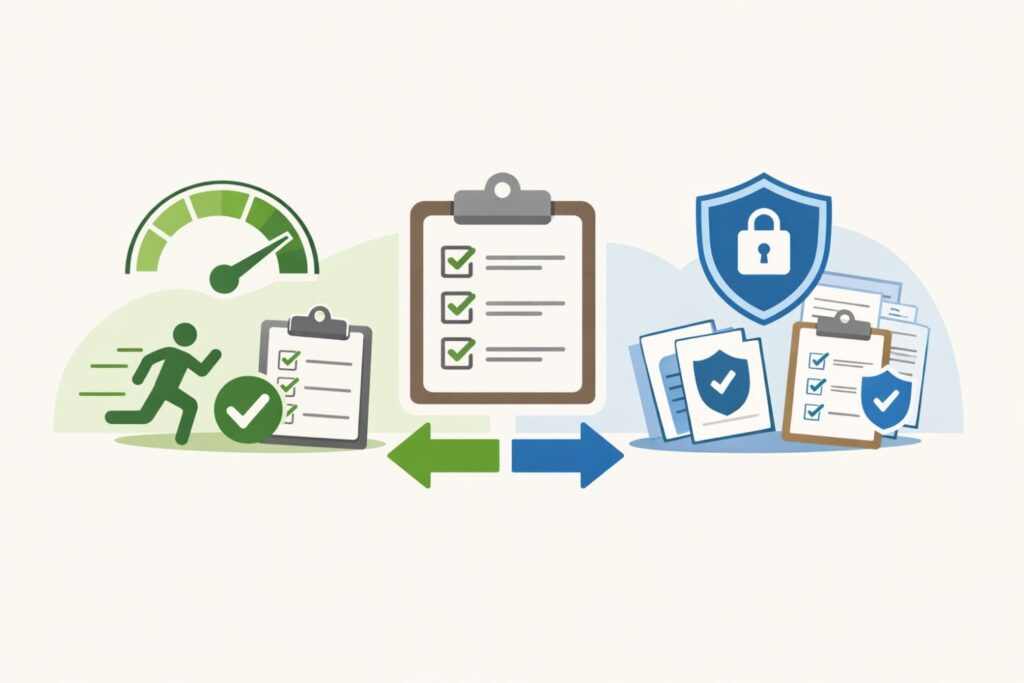
Speed and structure do not have to fight each other. When done right, they reinforce each other.
Start With Where Value Will Live
Every business creates value in a different place. For some, value lives in the community. For others, it lives in the product. For others, it lives in the data, the model, or the system design.
Contributor rights should follow value, not ideology.
If your company depends on owning and protecting what is built, clarity matters more than convenience. If your company depends on wide adoption and trust, simplicity matters more than control.
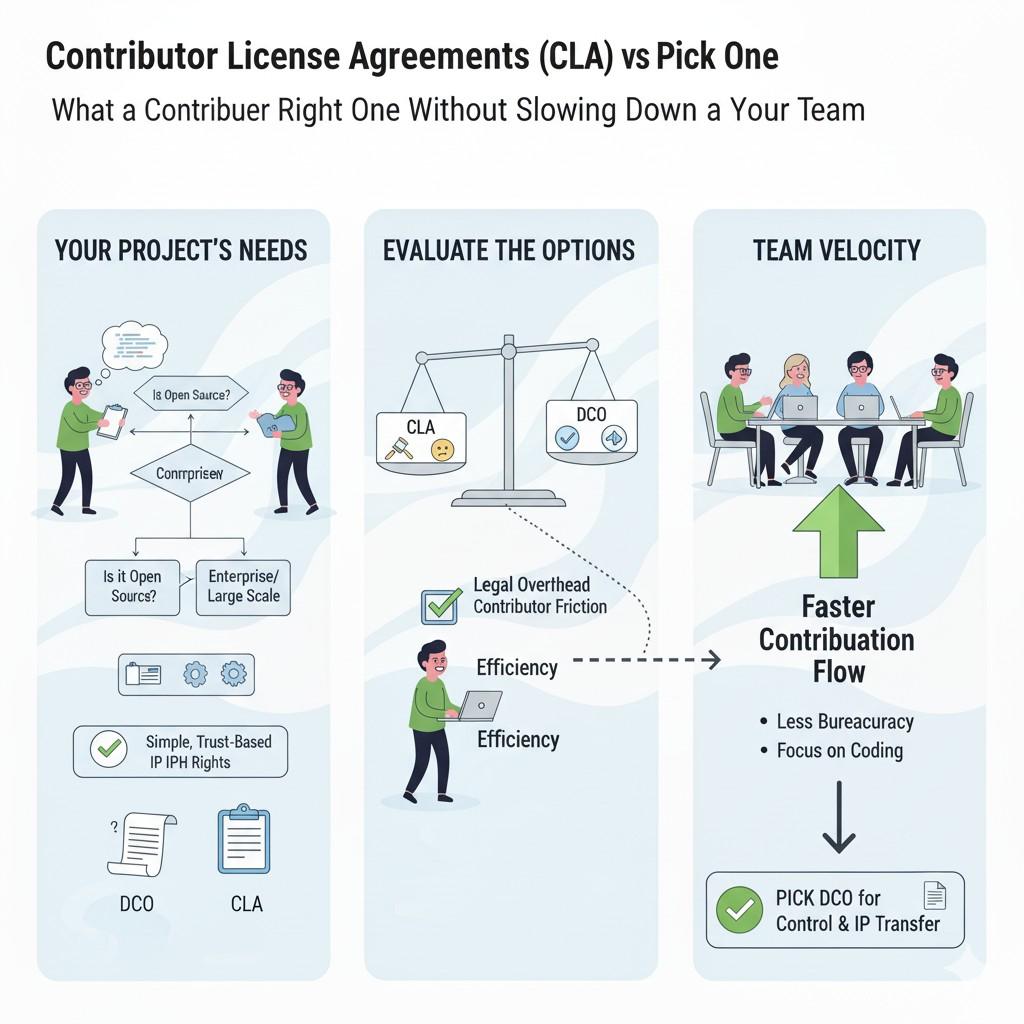
The practical step here is to write down, in plain words, where you expect your company’s value to be in two years. Not what you hope, but what is realistic. Then work backward.
Think About the Question You Will Be Asked Later
You are not choosing between a CLA and a DCO for today. You are choosing an answer to a future question.
That question usually sounds like this: “Do you have clean rights to this code?”
If your answer requires a long explanation, that is a signal.
The strongest systems produce short answers. Short answers build confidence. Confidence keeps deals moving.
An actionable habit is to practice your answer out loud. If you stumble, the system is doing you no favors.
Reduce Friction by Making the Choice Invisible
The best systems feel invisible once set up.
If you choose a CLA, automate it. Make signing part of the first contribution. Do not ask contributors to chase links or emails. The more natural it feels, the less resistance you will face.
If you choose a DCO, enforce it consistently. Use tools that block unsigned commits. Consistency removes debate.
The mistake teams make is choosing a system and then half-using it. That creates the worst of both worlds.
Do Not Optimize for Edge Cases
Founders often get stuck worrying about rare scenarios. A contributor refusing to sign. A public complaint. A philosophical disagreement.
These things happen far less often than teams imagine.
Most contributors want to help and move on. Clear rules help them do that.
Optimizing for rare discomfort often creates common risk. Optimize for clarity instead.
Treat This as Part of Your IP Strategy
Contributor rights are not separate from your IP strategy. They are the front door.
If you care about patents, licensing, or defensibility, this choice matters. Weak inputs create weak outputs.
This is why teams that think about patents early tend to make better contributor decisions. They are already thinking long-term.
PowerPatent was built around this exact mindset. Helping founders connect daily building decisions with long-term protection. You can see how that works here: https://powerpatent.com/how-it-works
Make the Decision Once, Then Move On
This is not a decision you should revisit every month.
Pick a system. Document it clearly. Communicate it simply. Then focus on building.
Changing later is far more painful than deciding early.
The most actionable advice here is to set a deadline. Decide before your next major release or before accepting your next external contribution. Waiting does not make the choice easier.
Signals You Picked the Right One
You know you picked the right system when contributions flow normally and nobody is confused.
You know you picked wrong when you avoid talking about it or hope nobody asks.
Clarity creates calm. Calm creates speed.
The Real Goal Is Boring Confidence
The best outcome is not excitement. It is boredom.
Boring processes mean fewer surprises. Fewer surprises mean smoother growth.
Whether you choose a CLA or a DCO, the win is intentionality. Accidental systems break under pressure. Intentional systems hold.
If you are building something that matters, treat contributor rights with the same care you treat your product. Not because you fear problems, but because you want freedom later.
And if you want help building that freedom into your IP from the start, PowerPatent is built for founders who think ahead. Learn how it works here: https://powerpatent.com/how-it-works
Wrapping It Up
Contributor rights are one of those decisions that feel small while you are making them and huge once time has passed. That is why they deserve attention early, before growth adds weight to every choice.
A CLA and a DCO are not rivals in the abstract. They are tools. Each solves a different version of the same problem. One favors clear ownership and future flexibility. The other favors speed and low friction. Neither is wrong. What hurts teams is drifting into one without realizing what they gave up.
Leave a Reply