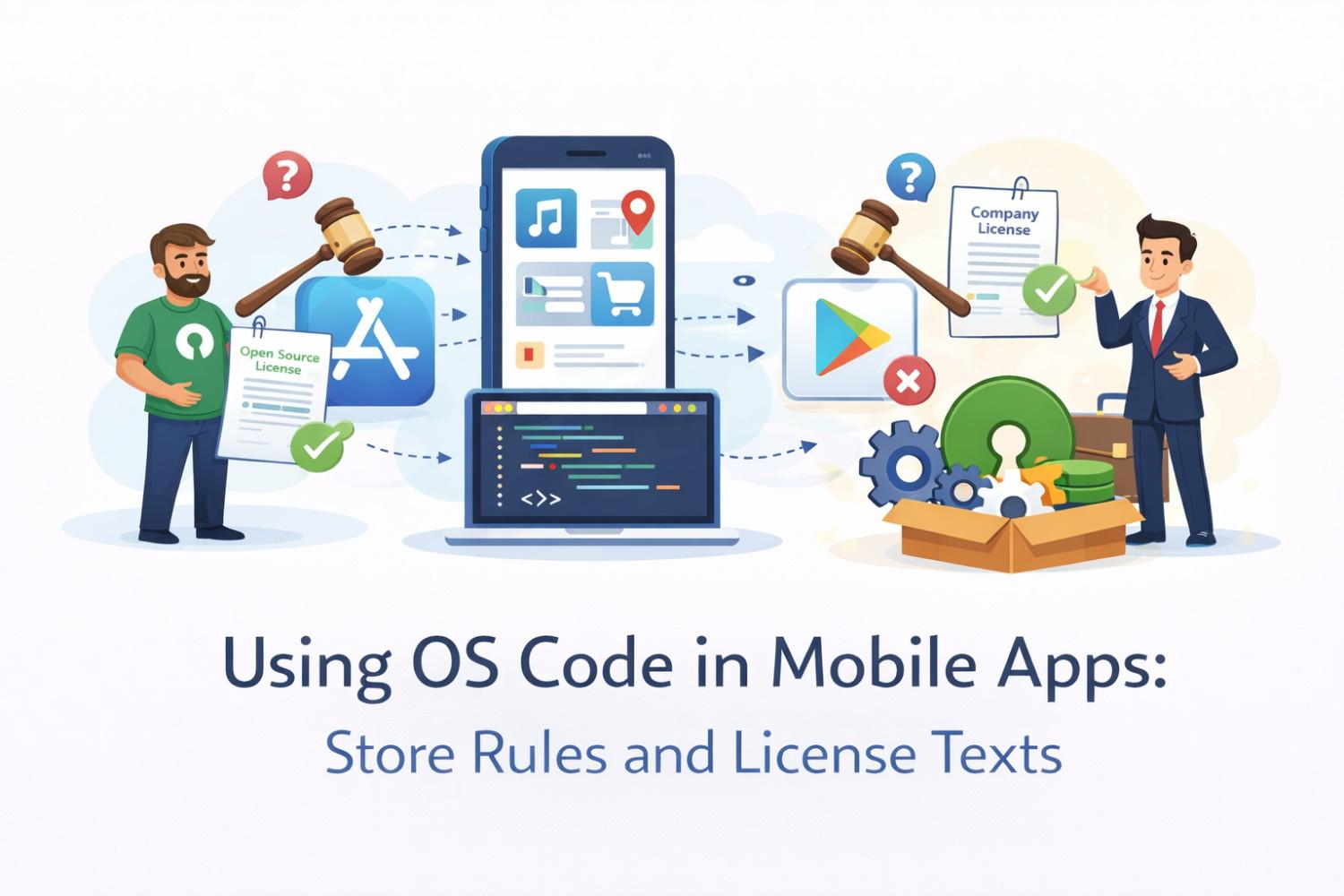
If you build mobile apps, you are already using open source code, even if you do not realize it. Every mobile app today sits on layers of shared code. Operating systems, system libraries, SDKs, and tiny helper files written by strangers across the world. This shared code makes it possible to build fast, ship often, and stay focused on what makes your product special. But here is the part most founders miss. Using open source code inside a mobile app is not just a tech choice. It is a business choice. It affects whether your app stays in the App Store. It affects whether Google flags your release. And it quietly affects whether your company can own and protect what it builds later on.
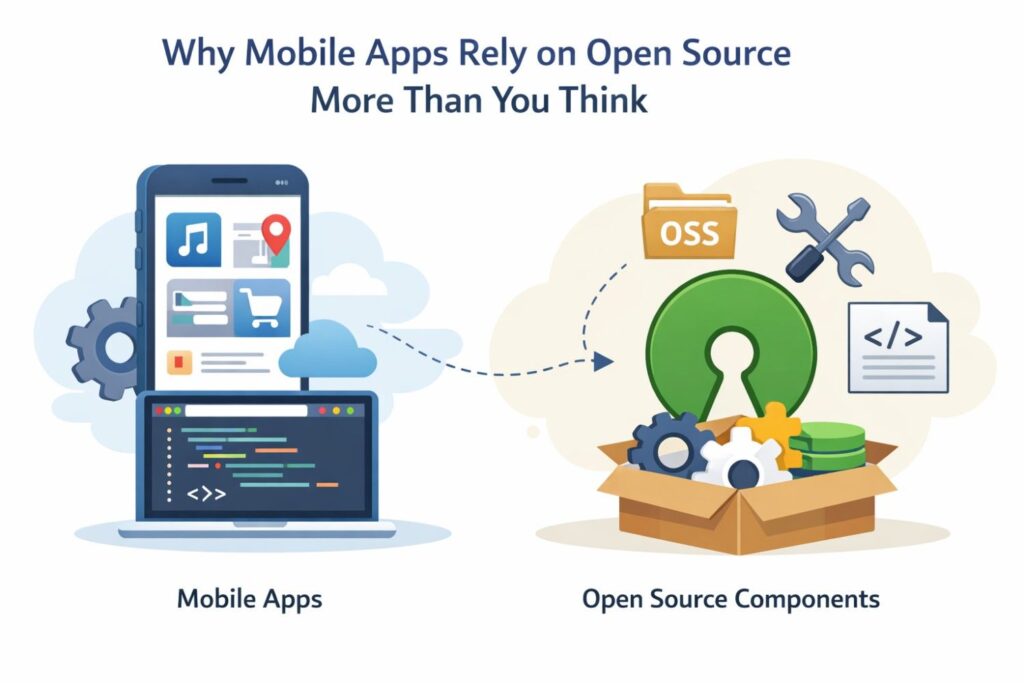
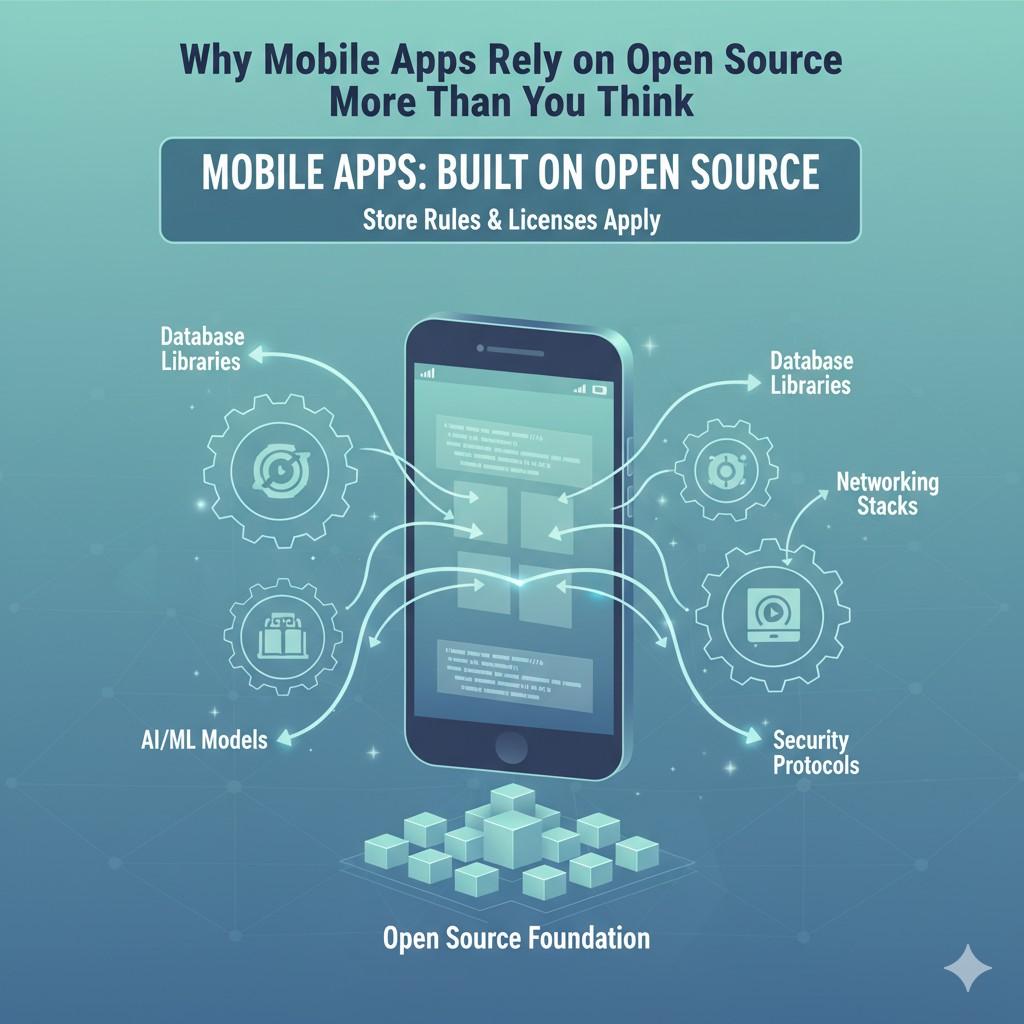
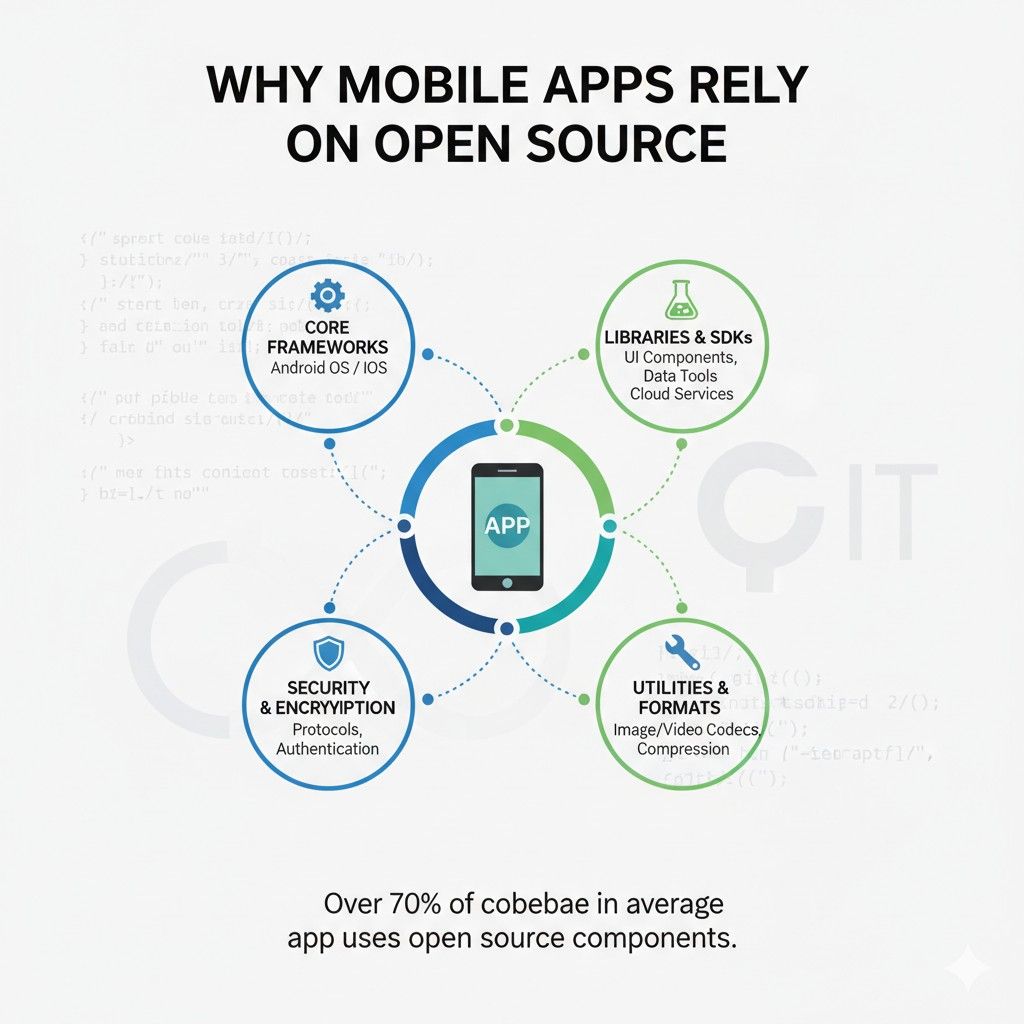
Why Mobile Apps Rely on Open Source More Than You Think
Mobile apps feel like clean, closed products. You download them, tap an icon, and everything just works. But under the surface, almost every mobile app is built on top of shared code written by thousands of people who will never meet you.
This is not a bad thing. In fact, it is the reason small teams can compete with large companies. The problem is that most businesses do not fully understand how deep this reliance goes or what it means for long-term control.
This section breaks that illusion and replaces it with clarity. Once you see how open source actually shows up in your app, you can make smarter choices that protect your product, your speed, and your future.
The Mobile Operating System Is Already Open Source
Every mobile app lives inside an operating system. On Android, that system is built largely on open source code. On iOS, it is more controlled, but it still exposes open components, tools, and behaviors that developers rely on every day.
This means your app is never fully standalone. It depends on system code for memory, security, networking, file access, and user input.
When you call a system function, you are trusting code you did not write. When the system updates, your app changes behavior without you touching a line of code.
For businesses, the key takeaway is this: your product is shaped by rules you did not create. That is why platform rules and licenses matter. If you treat system code as invisible, you miss where real risk lives.
A practical step here is to treat OS updates as business events, not just engineering tasks.
Track which system APIs you depend on and review how those APIs are licensed and governed. This gives you early warning when something changes.
SDKs Are Open Source Shortcuts With Strings Attached
Most mobile apps use SDKs to move faster. Payment tools, analytics, maps, cameras, and login systems all come wrapped in SDKs. Many of these SDKs include open source parts, even when the product itself is commercial.
This creates a hidden stack of licenses inside your app. You may think you are just using one tool, but that tool may pull in dozens of open source files. Each one comes with its own rules.
From a business view, this matters because SDK choices shape future options. Some licenses allow free use but limit how you can change or resell your product. Others require you to share parts of your code if you ever distribute it in certain ways.
Action here is simple but often skipped. Before locking in an SDK, ask what open source code it includes and what licenses apply. This is not a legal deep dive. It is a basic risk check. If the vendor cannot explain it clearly, that is a signal to slow down.
Frameworks Do More Than Save Time
Cross-platform frameworks like React Native, Flutter, and others exist to reduce build time. They work by sitting between your app and the operating system. Many of these frameworks are open source themselves.
That means your core app logic may be running on top of shared code that anyone can read, copy, or fork. This does not mean your app is not unique. It means your value is in how you use the framework, not the framework itself.
The business mistake happens when teams confuse usage with ownership. You cannot protect the framework, but you can protect how you use it. That line must be clear in your mind and in your documentation.
A smart move is to keep your custom logic cleanly separated from framework code. This makes it easier to explain what you actually own later, whether to investors, buyers, or patent reviewers.
This separation also reduces friction when frameworks change or fall out of favor.
Small Utility Code Adds Up Faster Than You Expect
Most apps include tiny pieces of code copied from blogs, forums, or GitHub snippets. A helper to format dates. A fix for a layout issue. A quick patch for a device bug. Each one feels harmless.
Over time, these pieces become part of your product. And many of them come with licenses that require credit, disclosure, or specific usage rules. Ignoring those rules does not make them go away.
For a business, this creates quiet exposure. Not because someone is hunting you, but because problems show up during growth moments. App store reviews, enterprise deals, or funding rounds surface questions that are hard to answer retroactively.
The practical habit to build is simple awareness. When code comes from outside your team, note where it came from and under what terms. This takes seconds in the moment and can save weeks later.
Open Source Shapes App Store Decisions
Apple and Google care deeply about how apps behave and what they include. Some open source licenses conflict with store policies, especially around redistribution, attribution, or dynamic code loading.
This is where many teams get surprised. They did nothing malicious. They just used popular code without realizing how store rules interpret it.
From a strategic angle, this means app compliance is not just about content or privacy. It is also about code origin. If your app includes code that forces behavior the store does not allow, you may face rejection or removal.
An actionable step is to align engineering and release teams early. Before a major release, review whether any new dependencies bring licensing obligations that clash with store rules.
This avoids last-minute scrambles and stalled launches.
Open Source Is a Competitive Advantage When Used Right
None of this means you should avoid open source. Quite the opposite. Open source is what lets small teams build powerful apps fast. The advantage comes from knowing where it ends and where your value begins.
Businesses that win treat open source as infrastructure, not identity. They build unique flows, data handling, and user experience on top of shared tools. They document that uniqueness clearly.
This clarity pays off when you want to protect your work. Whether through patents, trade secrets, or clean ownership stories, knowing how open source fits into your app makes everything else easier.
This is where tools like PowerPatent help founders. Not by slowing them down, but by helping them map what is truly new and protectable versus what is shared. You can see how that process works here: https://powerpatent.com/how-it-works
The Cost of Ignoring the Stack
When teams ignore how much open source they rely on, they often pay later. They lose time fixing preventable issues. They answer hard questions under pressure. They limit exit options without realizing it.
Understanding your open source stack is not about fear. It is about leverage. The more you understand it, the more confidently you can move fast.
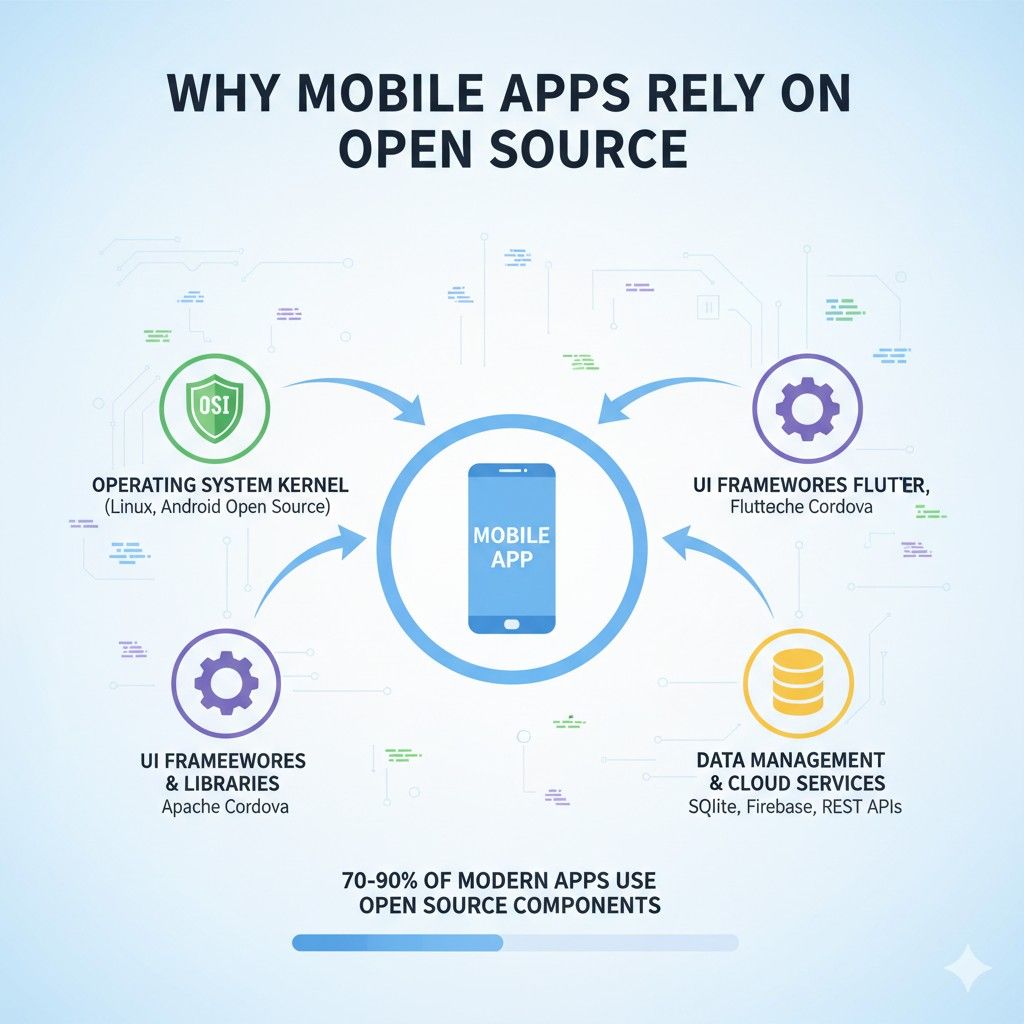
This section sets the foundation. Next comes how store rules and license texts turn this foundation into real-world constraints that affect shipping, growth, and ownership.
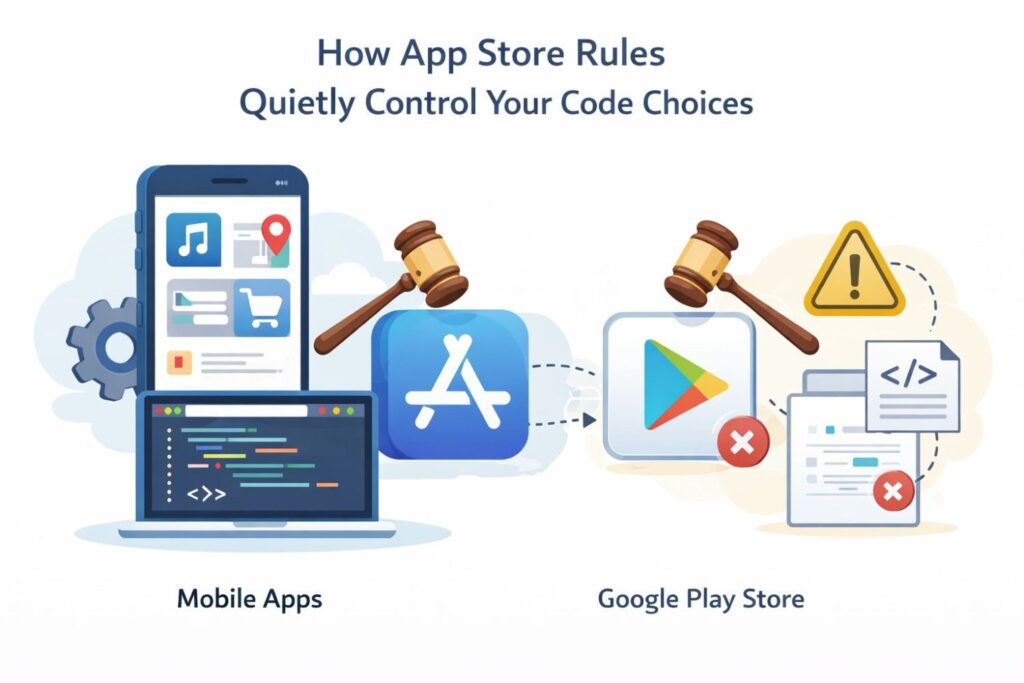
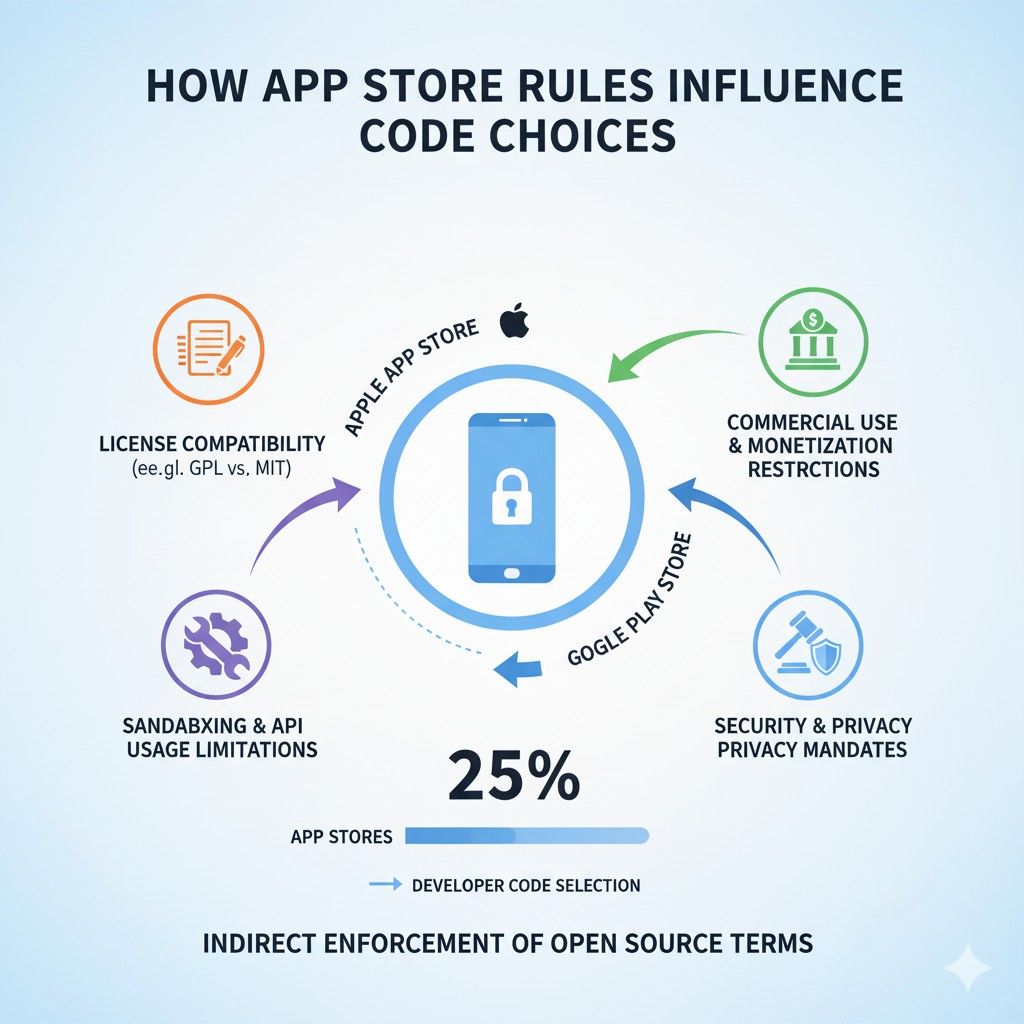
How App Store Rules Quietly Control Your Code Choices
App stores feel like simple marketplaces. You upload your app, pass a review, and reach users.
But behind that clean surface sits a powerful set of rules that shape what code you can use, how you can use it, and even how your product can evolve over time.
Most founders think of app store rules as design or content checks. In reality, they are also code rules. They quietly influence which open source code is safe, which is risky, and which can block your business at the worst moment.
This section explains how that control works in practice and how to stay ahead of it without slowing your team down.
App Stores Care About Behavior, Not Intent
Neither Apple nor Google cares why you used a piece of code. They care only about what that code does inside the app. If it changes app behavior in a way that breaks store policy, your intent does not matter.
This is where open source code can cause surprise issues. A library may dynamically load code, enable hidden features, or access system areas in ways that trigger review flags.
Even if the library is popular and widely used, the store may still reject your build.
For businesses, this means you must judge code by outcomes, not popularity. A smart habit is to test how third-party code behaves under store review conditions.
Treat the review process as a product constraint, not an afterthought.
Dynamic Code Is a Common Trap
Many open source tools are designed for flexibility. They allow code to change after install, fetch new logic from servers, or modify behavior at runtime. App stores often dislike this.
Apple, in particular, is strict about apps changing behavior after approval. If open source code enables this, even indirectly, it can violate policy.
The strategic move here is to understand whether your app’s logic is fixed at build time or can change later. If it can change, ask why and whether that flexibility is worth the review risk.
For most businesses, stable behavior wins. You can still move fast by shipping updates often, without crossing policy lines.
Licensing and Store Rules Intersect in Subtle Ways
Some open source licenses require attribution inside the app or bundled with the distribution. App stores allow this, but only in certain formats and places.
Problems arise when license terms require actions that conflict with store design rules or user experience guidelines. For example, forcing visible notices in places the store does not allow.
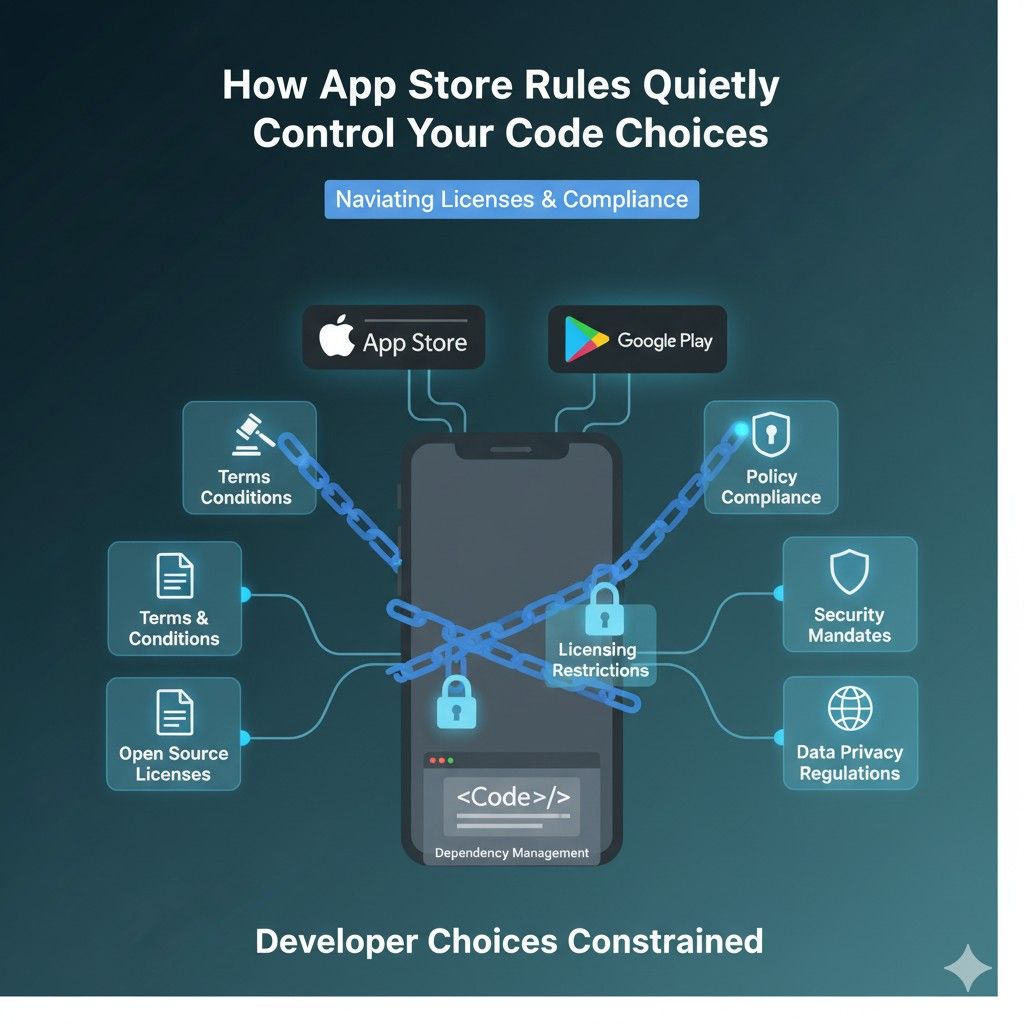
This is not theoretical. Apps get delayed or rejected over missing or misplaced license text.
A simple and effective practice is to decide early where license notices live. Many teams use an in-app settings screen or an about page. Once chosen, keep it consistent across releases.
This turns license compliance into a solved problem instead of a recurring fire drill.
Review Is Manual, But Memory Is Long
App store review is done by people, but those people work within systems. If your app triggers a warning once, it may trigger it again, even after fixes.
This matters when open source code is involved. If a dependency caused a past issue, reviewers may scrutinize future updates more closely.
From a business view, this means first impressions matter. Clean early releases set a baseline of trust. Sloppy early choices can slow you down later.
If you are early-stage, this is a strong reason to be thoughtful now. A little care up front protects future speed.
Platform Updates Can Break Old Assumptions
App store rules change. Operating systems change. What was allowed last year may be restricted tomorrow.
Open source code that is no longer actively maintained can lag behind these changes. When that happens, your app carries the risk.
Strategically, this means dependency age matters. Code that has not been updated in years is not just a technical risk. It is a distribution risk.
A useful practice is to periodically review your dependency tree and ask which pieces are still alive. If a core library is abandoned, plan a replacement before the store forces your hand.
Store Rules Shape Architecture Choices
Many architecture decisions feel purely technical. Where logic lives. How data flows. What runs on device versus server.
In reality, app store rules influence all of this. Some architectures work smoothly within store limits. Others constantly fight them.
Open source tools often push certain patterns. Before adopting them, consider whether those patterns align with long-term store compliance.
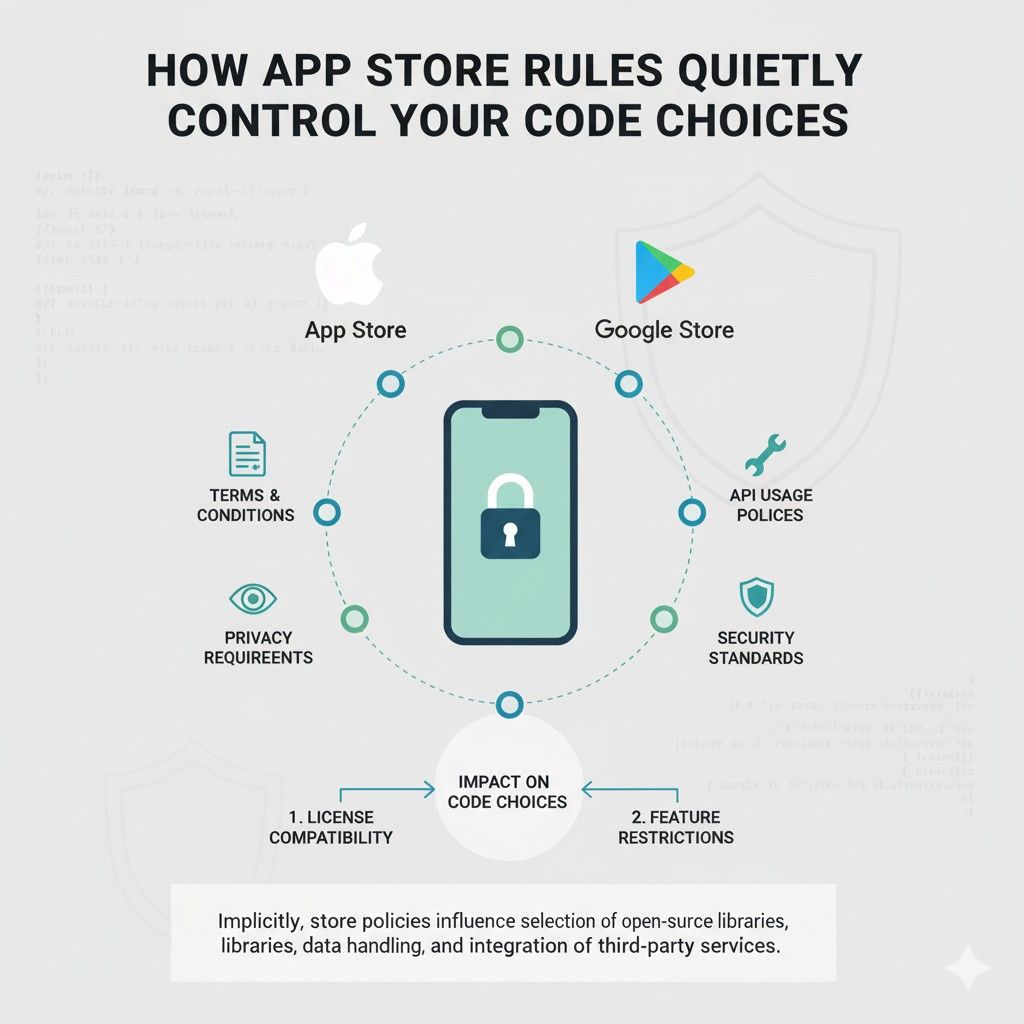
Businesses that win choose boring, compliant paths for core functionality and save experimentation for layers that do not threaten distribution.
Compliance Is a Business Asset
Founders often see compliance as friction. In practice, it is an asset. Apps that ship smoothly build momentum. Teams that understand store rules move faster because they avoid rework.
When open source code is chosen with store rules in mind, it becomes leverage instead of liability.
This is where clarity helps with protection too. Knowing which parts of your app are constrained by platform rules makes it easier to explain what is truly yours and what is shared infrastructure.
PowerPatent helps founders think through these boundaries early, so code choices today do not limit protection tomorrow. You can explore how that works here: https://powerpatent.com/how-it-works
Quiet Control Is Still Control
The key insight is simple. App stores do not shout about code rules, but they enforce them consistently. Open source code lives inside that enforcement.
Ignoring this control does not make it disappear. Understanding it gives you options.
In the next section, we will look at why license text, often ignored and misunderstood, can quietly decide who owns your app and how freely you can grow it.
Why License Text Can Decide Who Owns Your App
License text feels boring. Most founders never read it. Many engineers scroll past it, copy the code, and move on. That habit is one of the most common ways businesses lose control without realizing it.
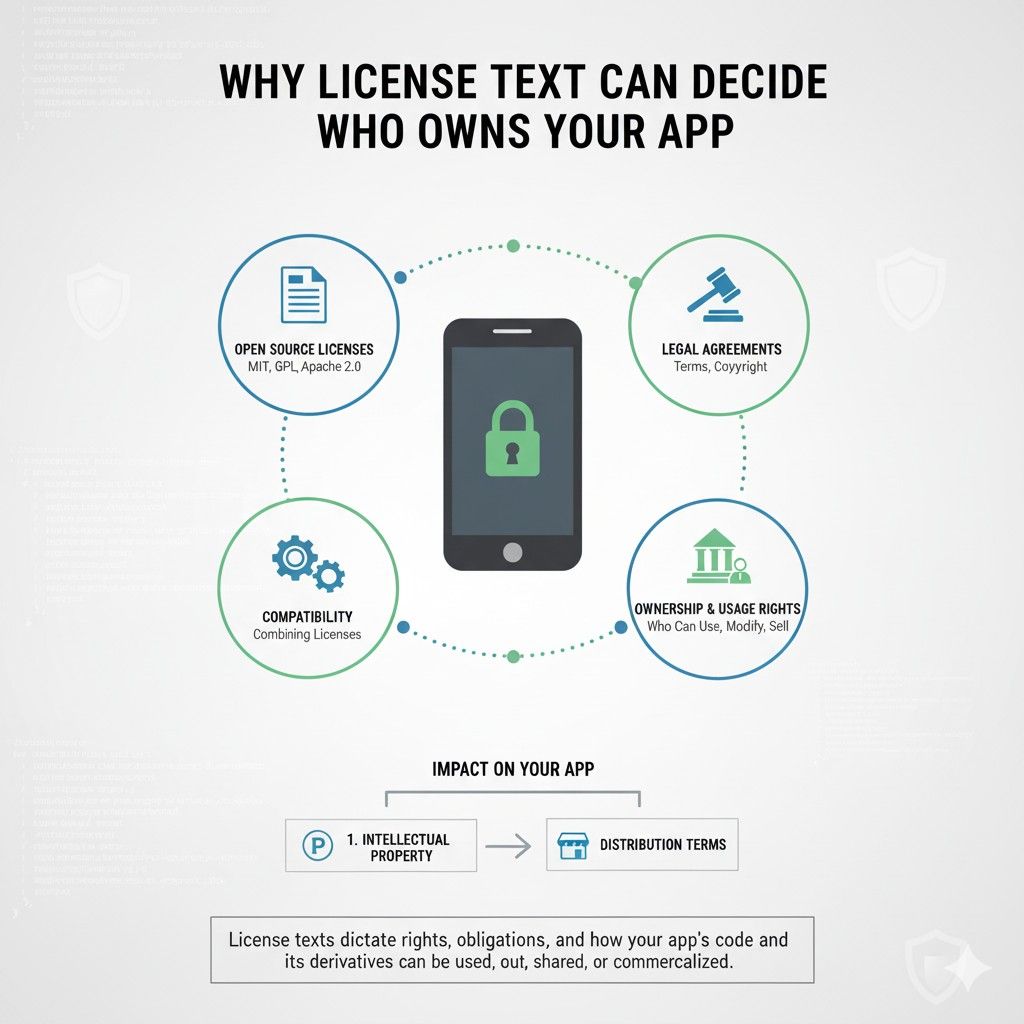
License text is not decoration. It is not optional. It is the written rulebook that decides what you are allowed to do with code and what you must give back in return.
In mobile apps, where distribution is tightly controlled and visibility is high, license text quietly shapes ownership, freedom, and future options.
This section explains why those few paragraphs matter more than most people think and how to handle them in a way that protects your business instead of slowing it down.
License Text Is a Contract You Already Accepted
When you use open source code, you are agreeing to its license whether you read it or not. There is no signature, no warning, and no grace period. The moment the code enters your app, the license applies.
From a business perspective, this means ownership is conditional. You may own your original code, but how you can use, sell, or protect it may be limited by the licenses attached to shared code inside your app.
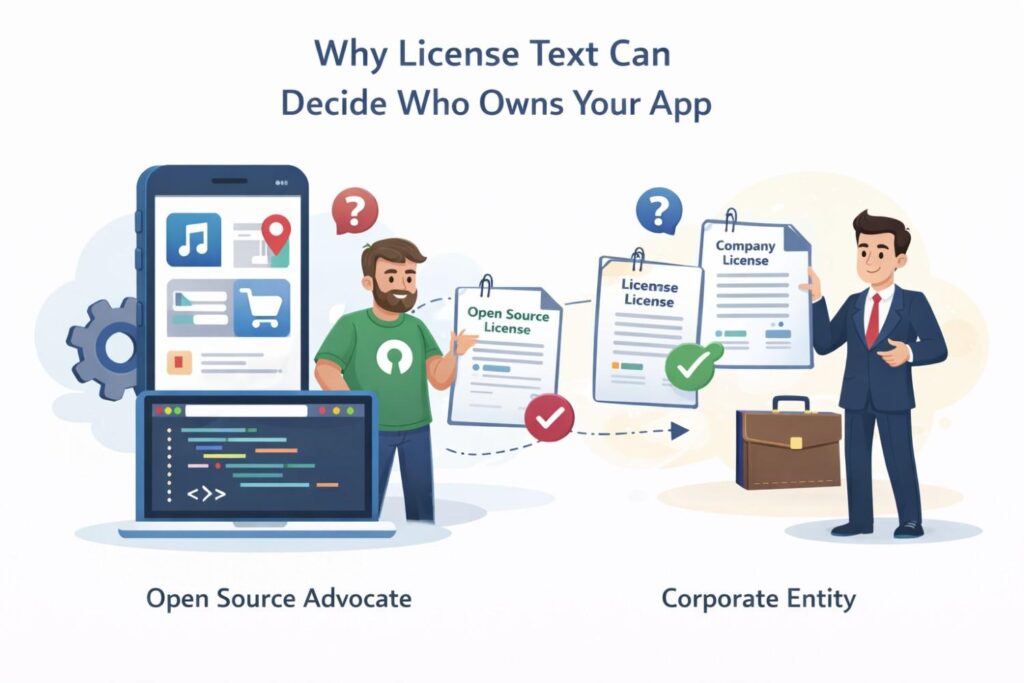
The key shift in mindset is to treat license text as part of your product design. It shapes what your app can become. Ignoring it is like ignoring pricing terms in a contract you plan to sign later.
Some Licenses Are Quiet, Others Are Loud
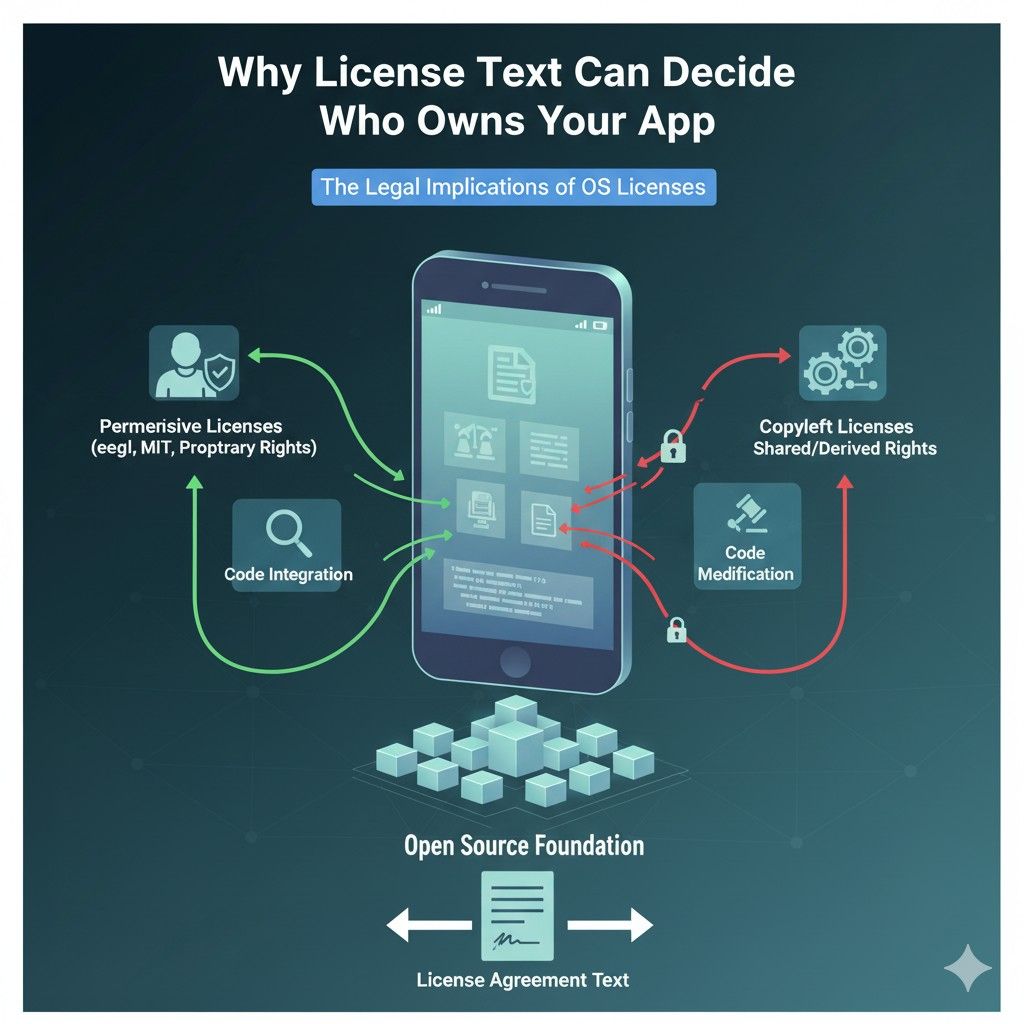
Not all open source licenses behave the same way. Some are very permissive. They allow use, change, and distribution with minimal requirements. Others are more demanding.
They may require sharing changes, exposing source code, or applying the same license to your own work.
The danger is not using demanding licenses. The danger is using them without knowing.
In mobile apps, loud licenses can clash with app store rules or business goals. For example, a license that requires sharing source code may conflict with how apps are distributed or monetized.
A practical step is to classify licenses early, even informally. Ask one simple question for each dependency: does this license ask anything back from me? If yes, understand what and when.
Attribution Is Not Just a Footer Problem
Many licenses require attribution. This often means including a notice inside the app or bundled with it. Teams often treat this as a last-minute task.
That approach creates risk. Missing attribution can lead to complaints, takedowns, or store issues. Worse, adding attribution late can force UI changes or rushed updates.
A better approach is to plan attribution from the start. Decide where license notices live and treat that space as part of your product. This turns compliance into routine work instead of emergency work.
From a business view, this also signals maturity. Clean attribution shows partners and reviewers that your team takes ownership seriously.
License Text Can Affect Patent Strategy
This is where things get subtle and important.
Some open source licenses include patent-related language. They may grant patent rights to users or restrict how patent claims can be enforced. This does not mean you cannot file patents.
It means the scope and strength of those patents can be affected by how code is licensed.
If your core invention depends heavily on open source code with certain license terms, your ability to protect that invention may be narrower than you expect.
The actionable insight here is separation. Keep your novel ideas and logic clearly distinct from shared code. Document what is new and what is reused. This clarity helps later when deciding what to protect and how.
This is exactly where PowerPatent helps founders. By mapping inventions cleanly, even in open source-heavy products, founders can protect what truly matters without confusion.
You can see how that works here: https://powerpatent.com/how-it-works
Copying License Text Without Understanding It Is Risky
Many teams copy license files from other projects without reading them. This spreads mistakes quietly.
If the original project misunderstood the license, your app inherits that misunderstanding. Over time, these errors stack.
A smarter move is to treat license text as source material, not boilerplate. Even a quick skim can reveal obligations that affect distribution, branding, or protection.
You do not need to become a lawyer. You just need to know enough to ask the right questions early.
App Stores Do Not Enforce Licenses, But Others Do
App stores generally do not check license compliance directly. This creates a false sense of safety.
In reality, license enforcement often comes from the community, companies, or rights holders behind the code. When enforcement happens, it is usually public and uncomfortable.
From a business standpoint, this risk grows with visibility. The more users you have, the more likely someone notices a missing notice or misuse.
The best defense is boring consistency. Clear records of what code you use, what licenses apply, and where notices live.
License Clarity Helps During Growth Moments
Fundraising, partnerships, acquisitions, and enterprise sales all surface questions about ownership. License confusion slows these moments down.
When you can clearly explain how open source fits into your app, these conversations move faster. Confidence replaces doubt.
This clarity is not built overnight. It comes from habits formed early, when the app was smaller and decisions were easier to change.
Treat License Text as a Strategic Input
The biggest mindset shift is this: license text is not legal noise. It is a strategic input like pricing, architecture, or roadmap.
Teams that treat it this way move faster in the long run. They avoid rewrites, rejections, and renegotiations.
Understanding license text does not mean avoiding open source. It means using it with intention.
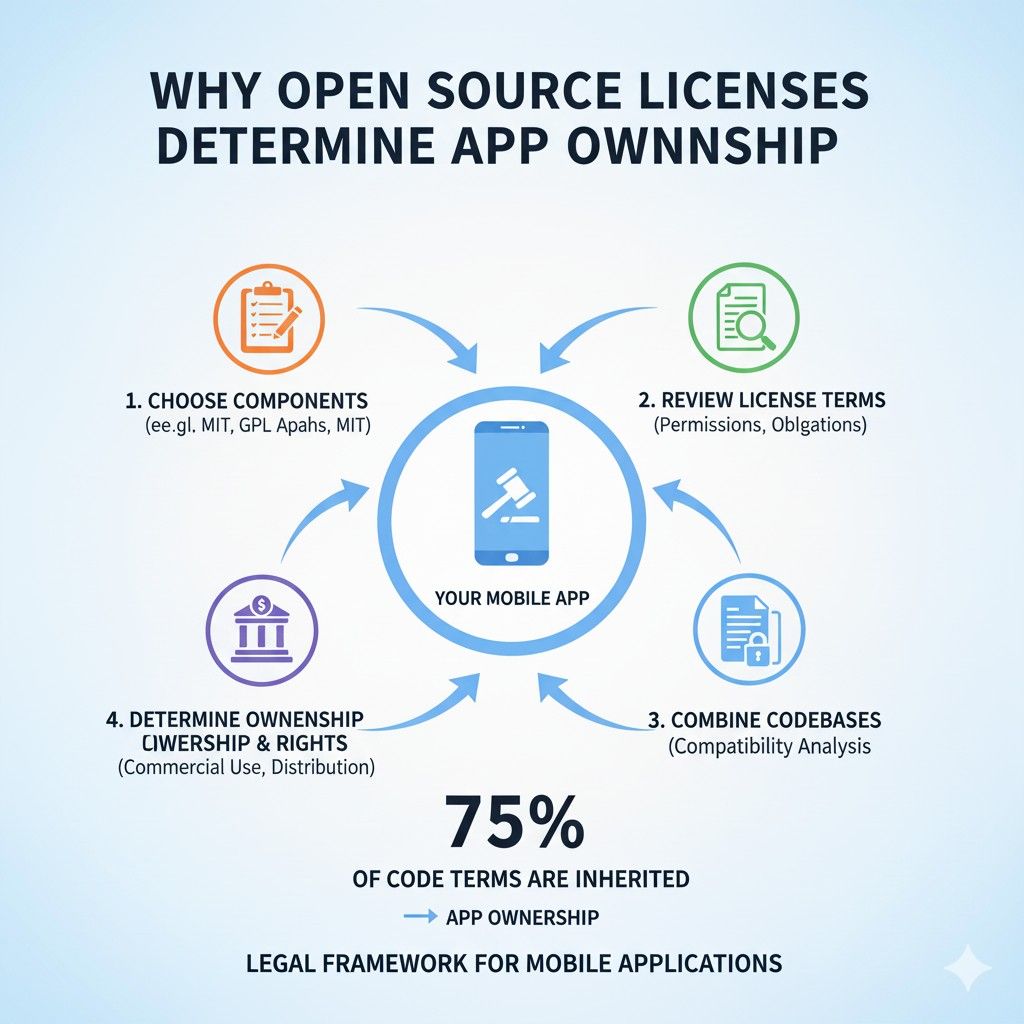
That intention is what separates apps that scale smoothly from those that hit invisible walls.
Wrapping It Up
Mobile apps move fast. Code ships daily. Dependencies change weekly. It is easy to believe that ownership and protection can wait until later. In practice, later is when problems become expensive.
Open source code is not the enemy. It is the reason modern apps exist at all. The real risk comes from using it without awareness. Operating systems shape behavior. App store rules quietly limit choices. License text defines boundaries that do not move just because you ignored them.
Leave a Reply