Open source moves fast. Faster than most teams expect. One day you copy a small library to save time. A few months later, that same code sits deep inside your product, your pitch deck, and your future valuation.
That is where things get risky.
An open-source governance policy is not about rules for the sake of rules. It is about staying in control while you build fast. It is about knowing what code is inside your product, who owns it, and what rights come with it. Most founders skip this step because it sounds heavy, slow, or legal. In reality, it is one of the simplest ways to protect what you are building.
Why Open Source Needs Clear Rules From Day One
Open source is not the problem. The lack of rules is.
Most companies that run into trouble with open source did not make a bad choice on purpose. They simply moved fast, trusted good intent, and assumed things would work out later.
Later is exactly when problems show up. Clear rules from the start are not about slowing people down. They are about removing confusion, avoiding hidden risk, and protecting the value of what you are building.
A strong open-source governance policy gives everyone the same map. Engineers know what is allowed. Leaders know what is inside the product. Future investors see a company that runs with discipline.
Below are the core reasons this matters, explained in plain terms and with actions you can take right now.
Speed Without Rules Always Creates Hidden Drag
Moving fast without guardrails feels good in the moment. Engineers pull in libraries, reuse snippets, and solve problems quickly. The product ships. Customers are happy. But under the surface, uncertainty grows.
Every unknown license is a question mark. Every copied file without a record is a future delay. When diligence starts, teams slow down because they have to dig through years of decisions they never tracked.
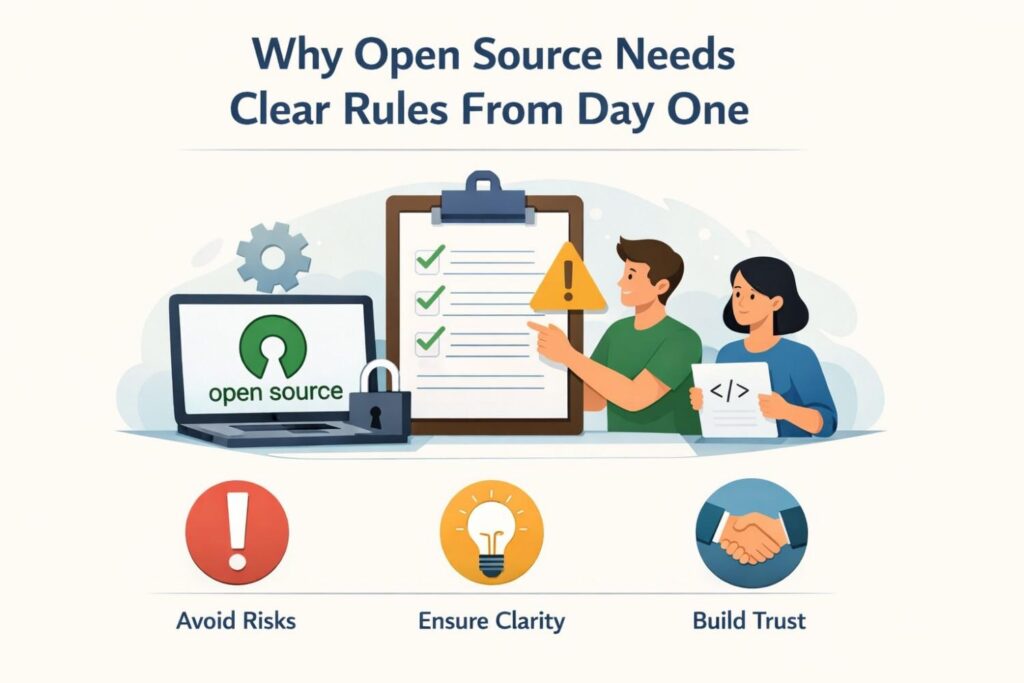
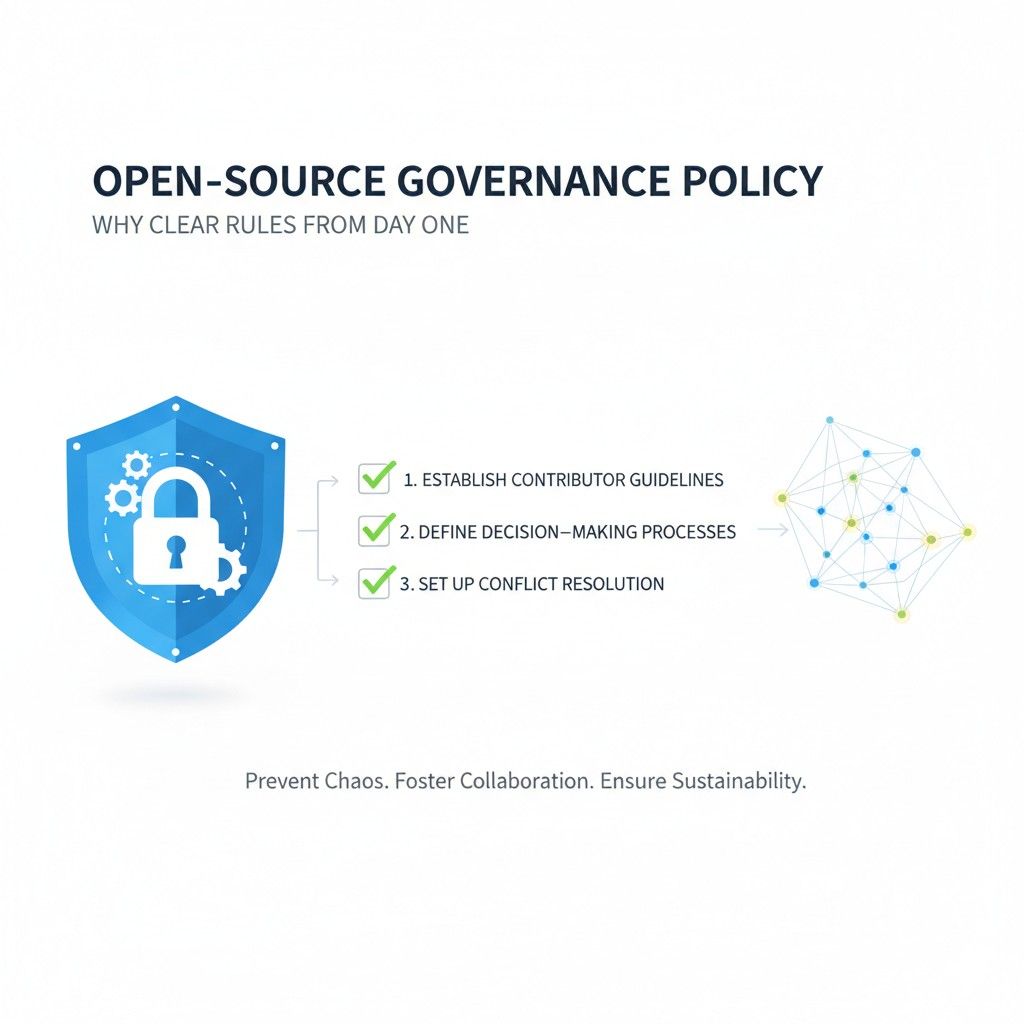
Clear rules from day one replace that chaos with confidence. They let teams move fast while keeping a clean record of what is being used and why.
A simple action here is to decide early that no open-source code enters the main product without at least a quick check and a short note. That one habit alone saves weeks later.
Ownership Confusion Starts Earlier Than You Think
Many founders assume ownership problems only appear at exit or acquisition. In reality, they start the moment outside code mixes with your own ideas.
If your core feature relies heavily on code with unclear terms, it becomes harder to say what you truly own.
Clear rules help draw a line between what you created and what you borrowed. This matters not just legally, but strategically.
Ownership clarity makes it easier to raise money, file patents, and explain your product story with confidence.
If you want to protect your inventions, including through patents, this step is critical.
Tools like PowerPatent work best when your codebase is clean and well understood. You can explore how that process fits together at https://powerpatent.com/how-it-works.
Investors Notice What You Ignore
Sophisticated investors do not expect perfection. They do expect awareness. When asked about open-source use, saying “we are not sure” raises a red flag. Saying “we have a simple policy and we follow it” builds trust.
Clear rules show maturity. They signal that the team understands risk and manages it. This can make a real difference in late-stage conversations where small issues can delay or derail a deal.
A practical step is to prepare a short internal explanation of how your team handles open source. If you can explain it in a few sentences, you are already ahead of most startups.
Engineers Want Clarity More Than Freedom
It may sound counterintuitive, but most engineers prefer clear boundaries. When rules are vague, they hesitate or guess. That creates inconsistency. Some people play it safe. Others take risks without realizing it.
Clear guidance removes that mental load. Engineers know which licenses are fine, which need a second look, and who to ask when unsure. This leads to better decisions and fewer mistakes, without killing creativity.
An easy win is to document common tools and libraries that are already approved. This saves time and keeps everyone aligned.
Small Decisions Compound Over Time
Open-source choices stack up quietly. One dependency pulls in another. A quick fix becomes a permanent part of the system. Without rules, these choices compound into something hard to untangle.
With rules, each decision is small and intentional. Over time, this creates a codebase that is easier to understand, easier to defend, and easier to protect as an asset.

You do not need a complex system to start. Even a shared document that tracks major open-source use is enough to change the trajectory.
Governance Is About Control, Not Restriction
Many teams hear “governance” and think control means limitation. In practice, it means visibility. It means knowing what you rely on and why. That knowledge gives you options.
When you know your dependencies, you can replace them, license around them, or build on top of them with confidence. Without that knowledge, you are stuck reacting.
This same control mindset applies to patents. You cannot protect what you cannot clearly explain. Open-source governance and smart patent strategy work together.
If you want to see how modern teams handle this without slowing down, PowerPatent lays it out clearly at https://powerpatent.com/how-it-works.
Starting Early Costs Almost Nothing
The biggest myth is that it is too early to care. Early is when it is cheapest. A rule made today affects ten decisions. A rule made later has to clean up hundreds.
Starting early does not require lawyers, long meetings, or heavy tools. It requires agreement. Decide how your team will think about open source. Write it down. Share it. Revisit it as you grow.
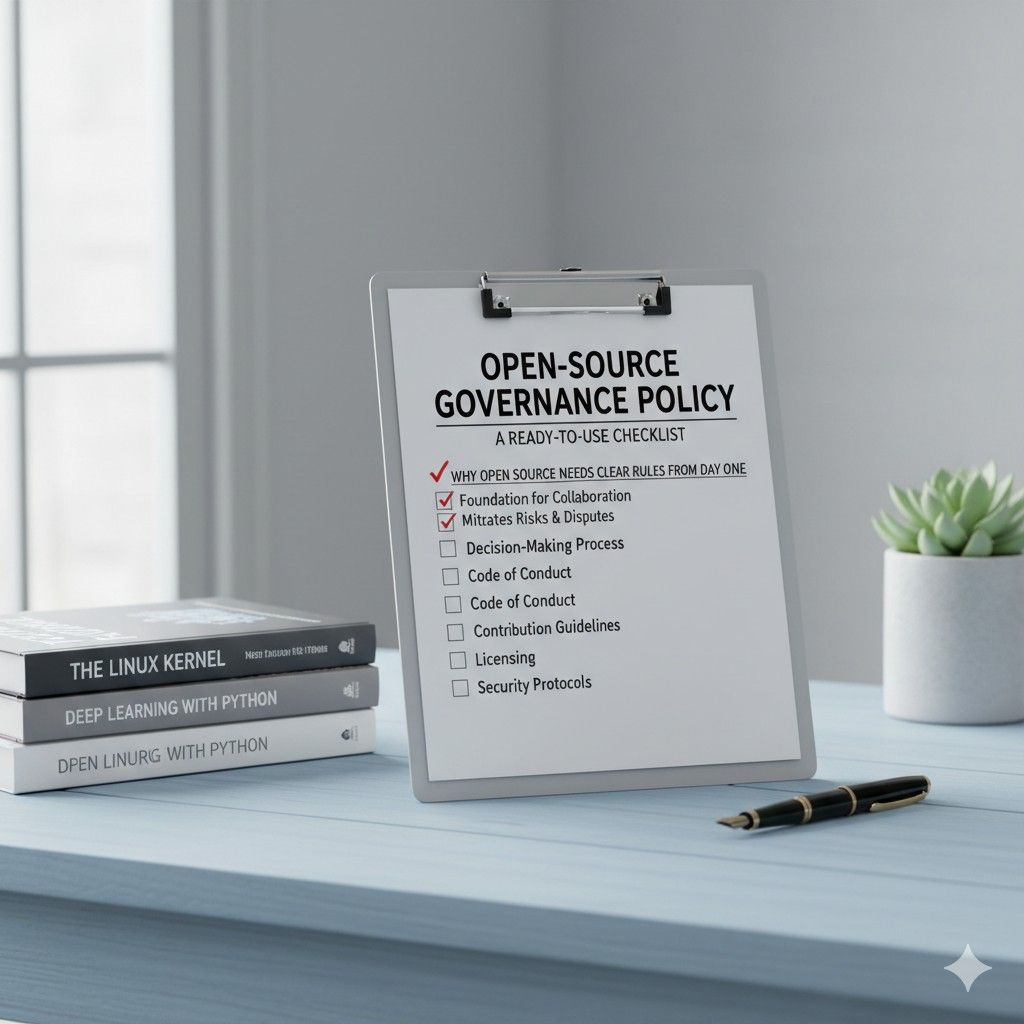
That single step creates momentum and reduces risk before it ever becomes visible.
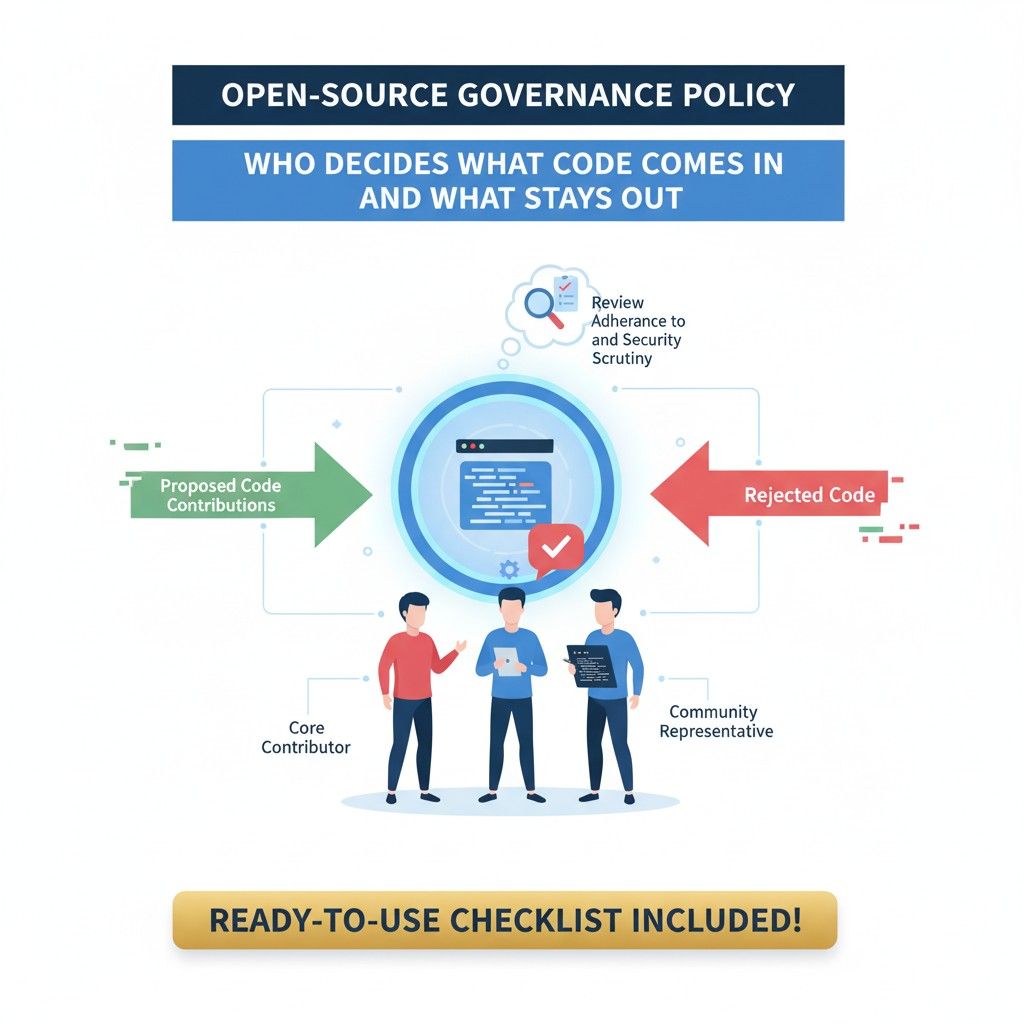
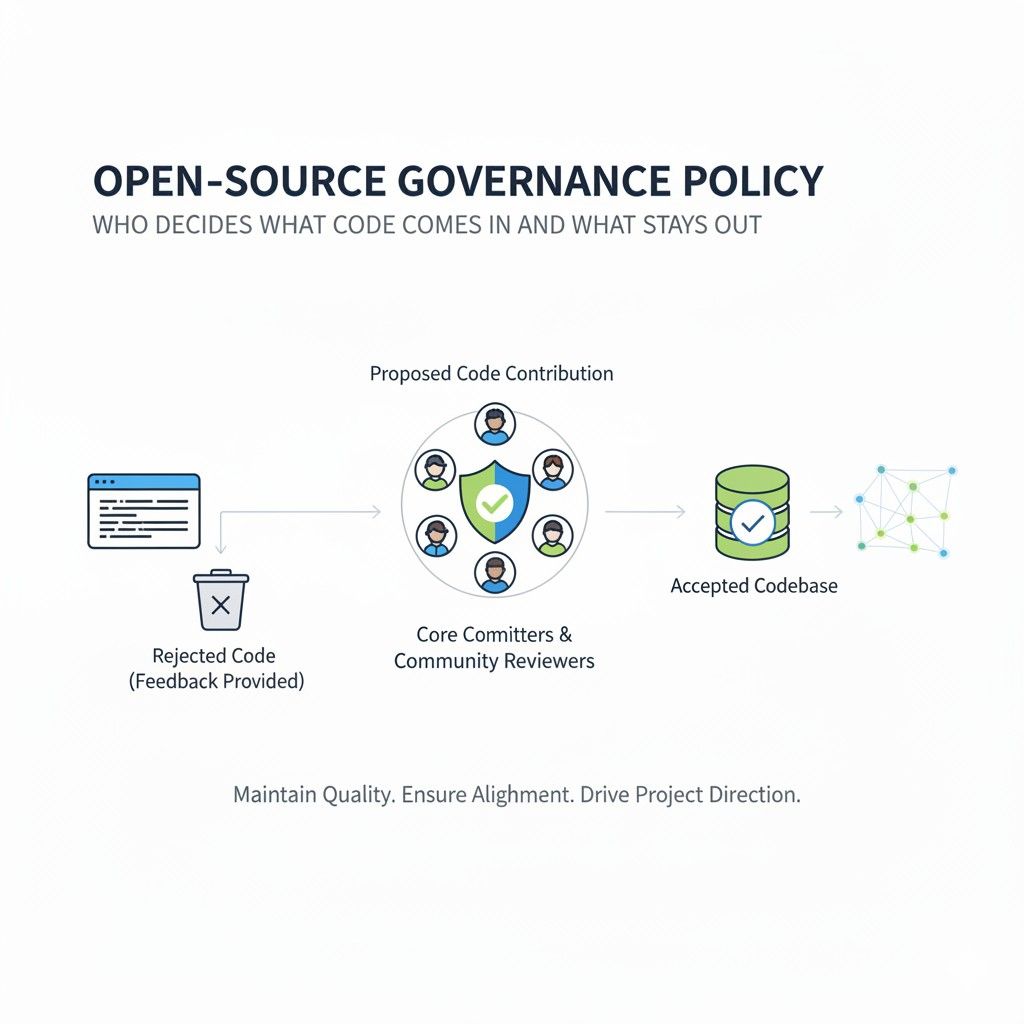
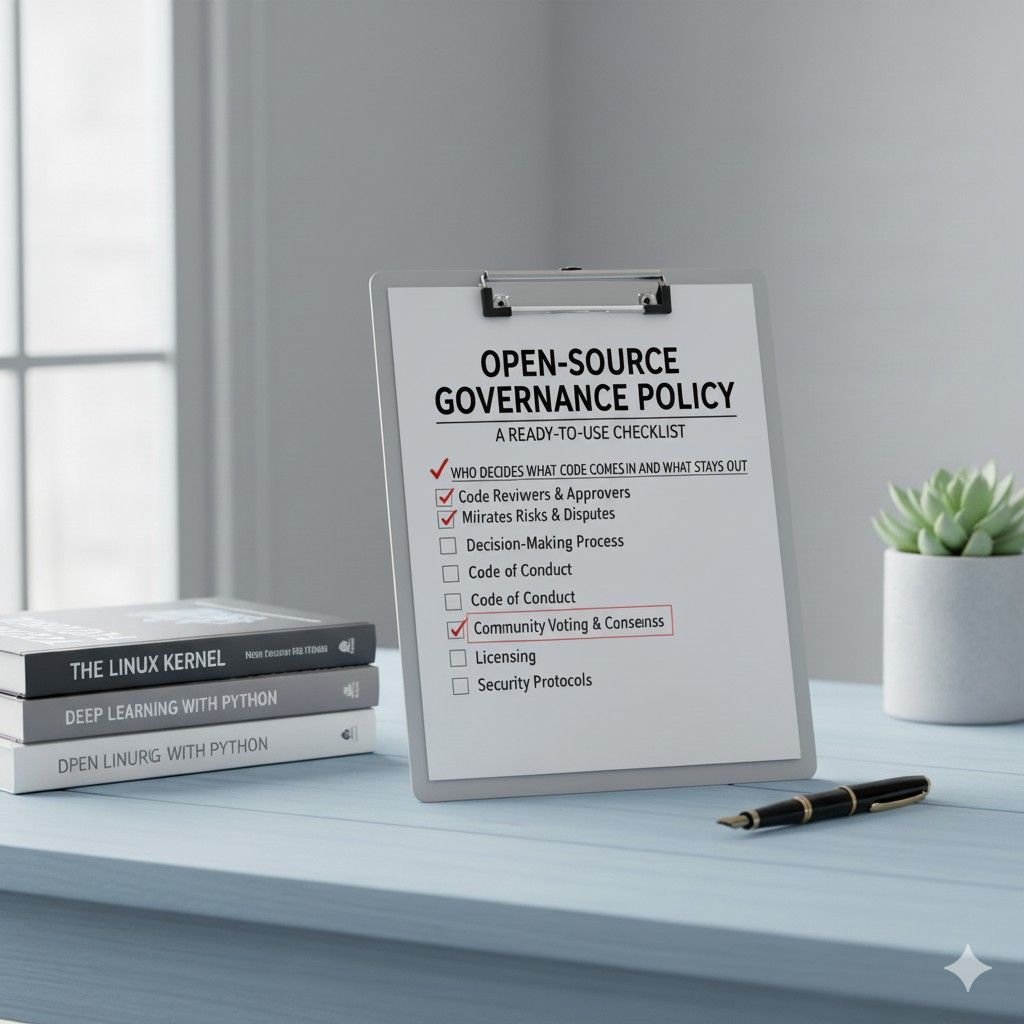
Who Decides What Code Comes In and What Stays Out
Every company, whether it admits it or not, already has a decision system for open source. In many teams, that system is silence. Whoever touches the code last decides. That works for a while, until it does not.
Clear ownership over these decisions is one of the most important parts of open-source governance. Not because control is needed, but because responsibility is.
When everyone owns the decision, no one really does. This section explains how to set decision ownership in a way that keeps speed high and risk low.
Why Decision Ownership Cannot Be Vague
When no one is clearly responsible, decisions default to convenience. A library gets added because it solves a problem quickly. A snippet gets copied because it works.
Nobody stops to ask whether it fits the company’s long-term goals.
Vague ownership leads to uneven standards. One engineer may be careful. Another may not think about licenses at all. Over time, this creates a codebase with mixed assumptions and unclear boundaries.
Clear ownership removes that gap. It creates a single point of accountability without turning every choice into a meeting.
The Difference Between Authority and Gatekeeping
Many founders worry that assigning ownership will slow the team down. They picture a gatekeeper who blocks progress. That is not what good governance looks like.
Authority here means guidance, not control. The owner’s job is to enable good decisions quickly. They create rules that handle most cases automatically, so only edge cases need discussion.
A useful mental shift is this: the goal is not to approve code, but to approve paths. Once a path is approved, engineers can move freely within it.
Choosing the Right Owner Inside the Company
The right decision owner is usually someone close to the code, but aware of the business.
This might be a senior engineer, a tech lead, or a founder with technical depth. It should not be someone disconnected from day-to-day building.
This person does not need to know every license detail by heart. They need to know when to ask, when to pause, and when to document a decision.
The key is consistency. One owner making steady, simple calls is far better than many people making random ones.
How Early Decisions Shape Long-Term Outcomes
Early owners set the tone. If early decisions favor clarity and documentation, the team follows. If early decisions ignore structure, that habit spreads.
This matters later when the company grows. New hires look at existing behavior to decide what is normal. If open-source decisions are clean and visible, they continue that pattern without being told.
This is also where future protection comes into play. If your goal is to build defensible technology, including patents, early clarity makes everything easier.
Clean inputs lead to clean outputs. PowerPatent works best when teams already understand what is theirs and what is shared. You can see how that process fits together at https://powerpatent.com/how-it-works.
When Engineers Should Decide on Their Own
Not every choice needs oversight. In fact, most should not. A good governance policy defines safe zones where engineers can decide freely.
For example, tools used only in development, testing, or internal workflows often carry less risk. Allowing engineers to choose freely in these areas keeps morale high and friction low.
The decision owner’s role is to clearly state where freedom exists. When people know the boundaries, they rarely cross them by accident.
When Decisions Need a Second Look
Some choices deserve extra care. These are usually cases where code becomes part of the product itself, touches core features, or affects how customers interact with your system.
In these moments, a short pause saves long pain. A quick review of license terms and usage intent is often enough. The key is that everyone knows when that pause is expected.
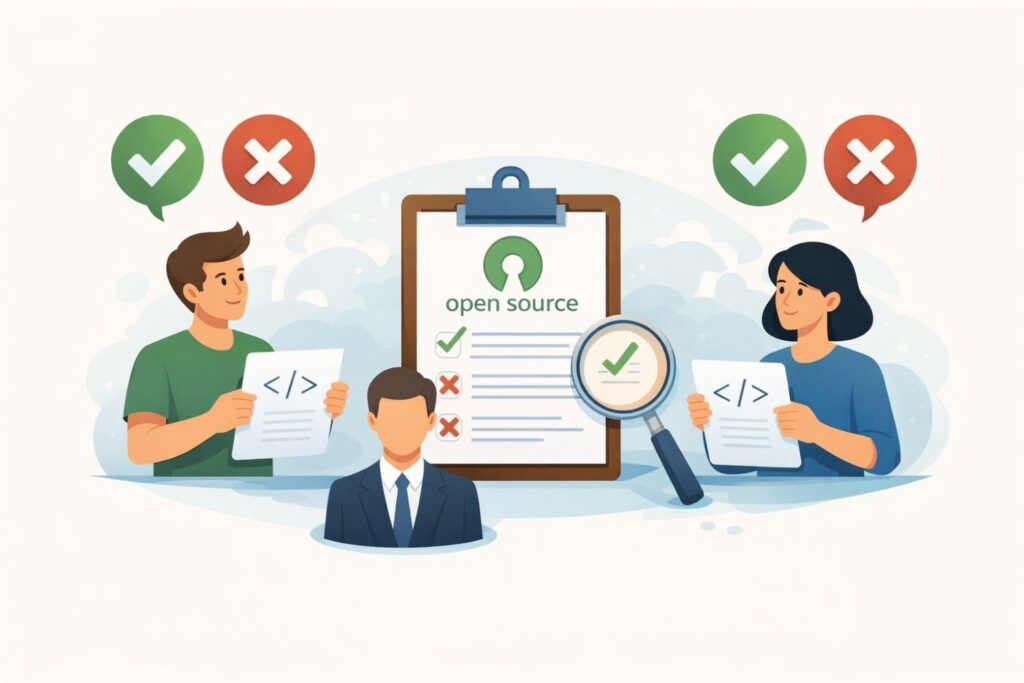
This predictability builds trust. Engineers do not feel blocked, and leaders do not feel surprised later.
Documenting Decisions Without Slowing Work
Documentation does not need to be heavy. In fact, heavy documentation often gets ignored. The goal is memory, not perfection.
A short note explaining why a library was chosen, where it is used, and who approved it is usually enough. Over time, these notes form a clear story of how the product evolved.
This story becomes extremely valuable during audits, fundraising, or acquisition talks. It shows intention, not chaos.
How Decision Ownership Supports Growth
As teams grow, informal systems break. What worked for five people fails at fifty. Clear ownership scales better than shared assumptions.
When new teams or contributors join, they need to know how decisions are made. A visible owner gives them a place to start and a standard to follow.
This also reduces founder load. Instead of answering every question, founders can trust the system they helped set up.
Decision Clarity Builds Confidence Outside the Company
Partners, customers, and investors all sense when a company knows its own house. Clear decision ownership shows discipline without rigidity.
When asked about open-source use, the company can explain who decides, how decisions are made, and how risks are handled. That confidence often matters more than the details themselves.
This same clarity helps when explaining your innovation story. Strong patents, strong code ownership, and strong governance all reinforce each other.
PowerPatent was built to support teams that think this way. If you want to explore that path, https://powerpatent.com/how-it-works is a good place to start.
How to Keep Ownership Clear While Moving Fast
Speed is the lifeblood of young companies. It is also the easiest excuse for cutting corners. Many teams believe they must choose between moving fast and keeping ownership clean.
That tradeoff is not real. With the right habits, you can do both at the same time.
This section focuses on practical ways to protect ownership without slowing delivery. The goal is not paperwork. The goal is clarity that travels with the code as the company grows.
Why Ownership Gets Blurry During Fast Growth
Ownership problems rarely come from bad intent. They come from momentum. When features ship quickly, people focus on what works, not on what is documented.
Code is reused, refactored, and expanded by different hands. Over time, the original source becomes harder to trace.
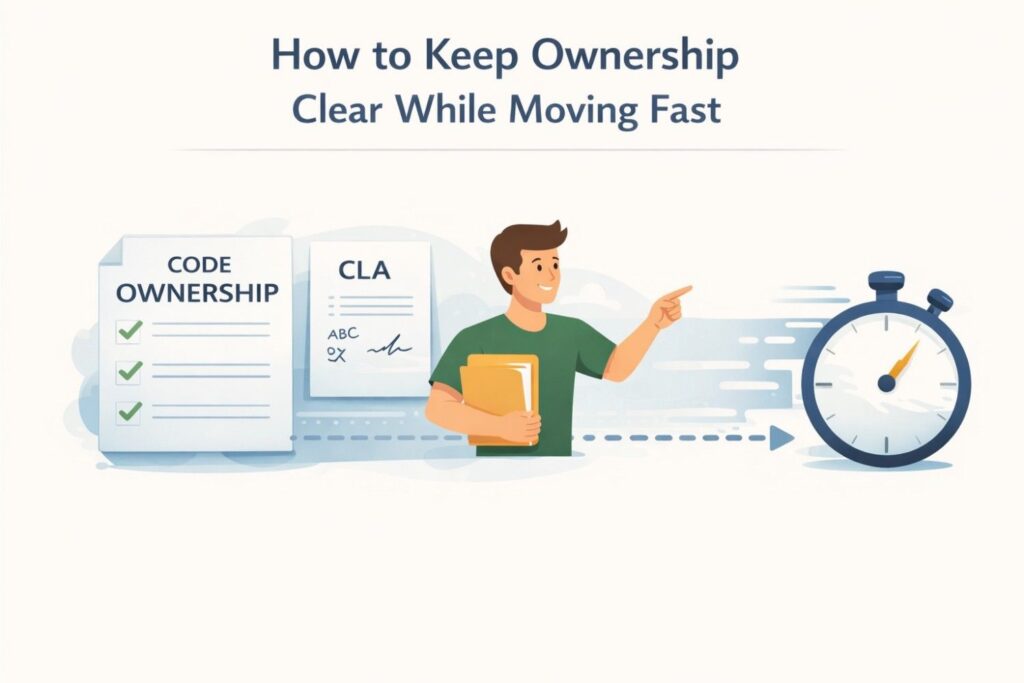
This blur is dangerous because it hides risk. If you cannot clearly explain where key parts of your product came from, you cannot fully control how they can be used, licensed, or protected.
The fix is not to slow down. It is to attach light signals to decisions while they are still fresh.
Treating Code Like an Asset, Not a Shortcut
Many teams subconsciously treat open-source code as free fuel. It feels unlimited and low cost. In reality, it is an asset with conditions attached. When you treat it that way, behavior changes.
Assets are tracked. Assets have owners. Assets are reviewed before being mixed with other valuable things. This mindset shift alone improves decision quality without adding process.
A simple internal rule like “core product code is always treated as owned property” can reshape how engineers think about reuse and integration.
The Role of Context in Preserving Ownership
Context disappears faster than code. Six months later, nobody remembers why a library was chosen or how it was modified. Without context, it is hard to argue ownership or intent.
Keeping context does not require long explanations. A few sentences written at the time of decision are enough. What problem did this solve. How is it used. What parts were changed. That small effort preserves clarity far into the future.
This habit is especially useful when teams rotate or grow. New engineers inherit understanding, not just files.
Designing Workflows That Protect Ownership by Default
The best governance systems are invisible. They do not rely on people remembering rules under pressure. They build protection into normal workflows.
For example, tying open-source review to code review ensures it happens naturally. Engineers are already explaining changes. Adding a short note about external code fits right in.
When protection becomes part of how work already flows, it stops feeling like overhead.
Keeping Product and Infrastructure Separate in Your Mind
Not all code carries the same ownership weight. Infrastructure code, internal tools, and experiments often have different risk profiles than customer-facing product code.
Clarity improves when teams mentally separate these areas. Product code deserves the highest level of ownership care. Internal tools can often tolerate more flexibility.
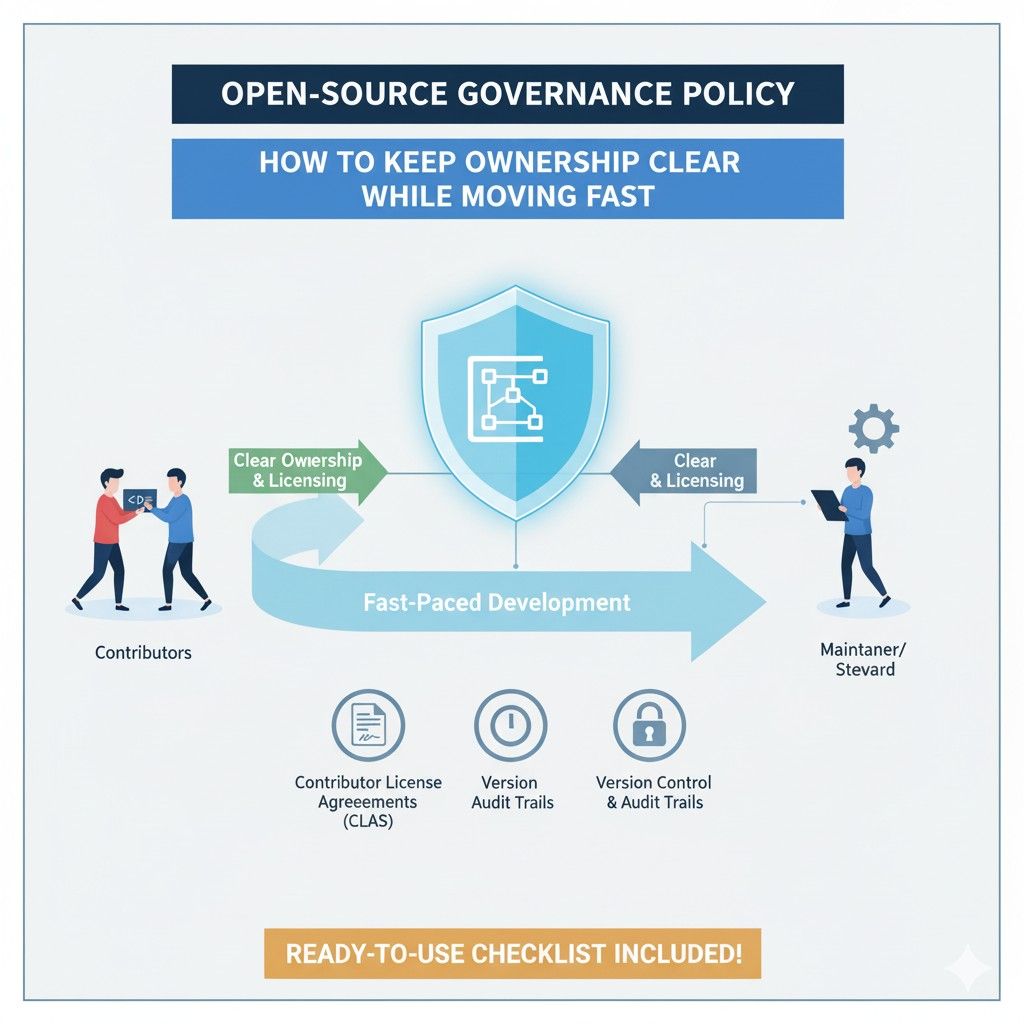
This separation helps teams move fast where it is safe, while staying careful where it matters most.
Why Clean Ownership Makes Patents Easier
Patents are about explaining what you invented and why it is new. That story is much harder to tell when your core logic is tangled with unclear sources.
When ownership is clear, patent conversations are simpler and stronger. You can confidently describe what your team built versus what was reused. This reduces risk and increases the quality of protection.
PowerPatent is designed for teams that build fast but want real control over their inventions. Clean ownership upstream makes the entire patent process smoother.
You can see how this works in practice at https://powerpatent.com/how-it-works.
Avoiding the Trap of Retroactive Cleanup
Many companies delay ownership work until a big event forces it. Fundraising, acquisition talks, or audits trigger a rush to clean up years of decisions. This is expensive, stressful, and often incomplete.
Retroactive cleanup is always harder than doing it right once. The earlier you attach clarity, the cheaper it is. This is why starting with simple habits matters more than building a perfect policy.
Even if your company already has history, starting now still reduces future cost. Every clean decision from this point forward shrinks the problem.
Teaching Ownership Without Slowing Onboarding
New hires learn by watching. If ownership care is visible in daily work, they adopt it naturally. If it is hidden or inconsistent, they guess.
Explaining ownership expectations during onboarding sets the tone early. This does not need to be formal. A short explanation of how the team treats external code is enough.
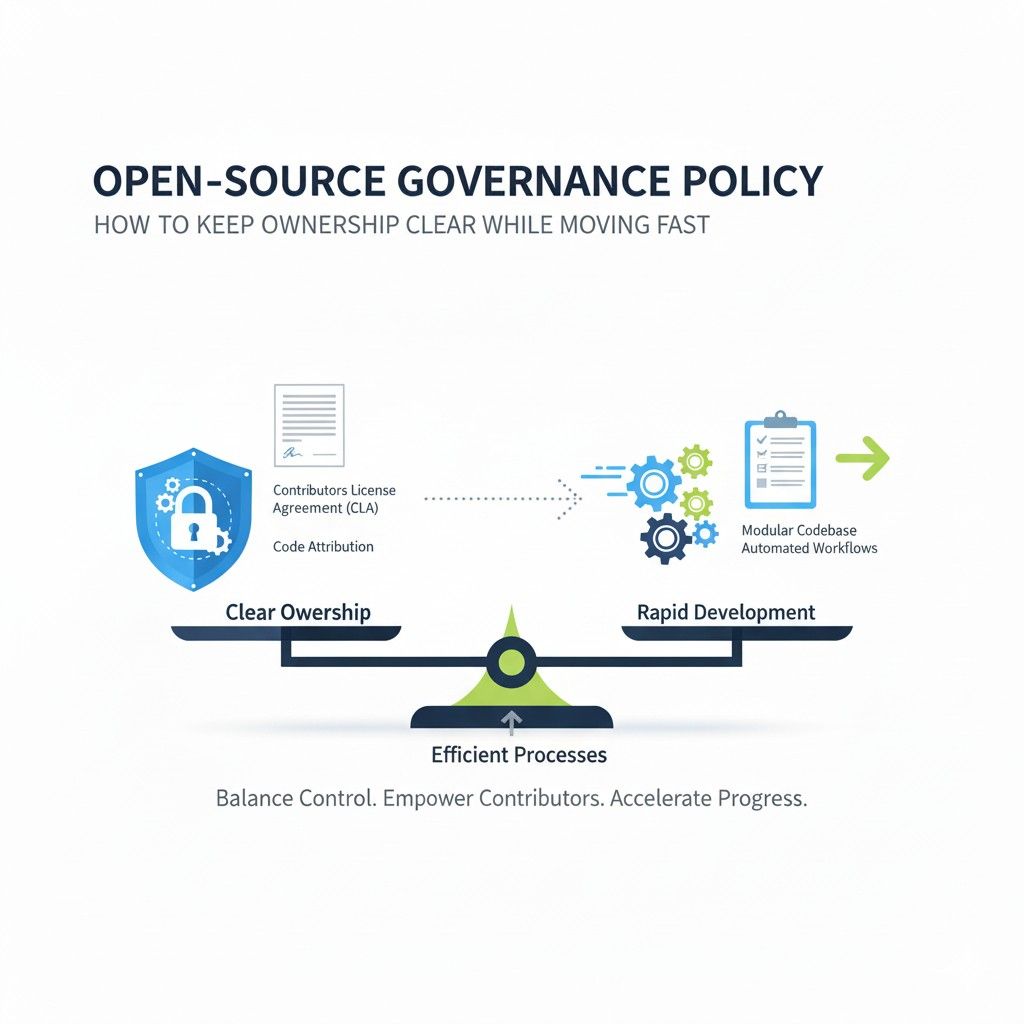
This early signal prevents mistakes and builds trust between engineers and leadership.
How Clear Ownership Supports Strategic Flexibility
When you know exactly what you own, you gain options. You can relicense, spin out products, partner, or pivot without fear of hidden constraints.
Unclear ownership limits choices. It forces conservative decisions because risk is unknown. Clarity expands what is possible.
This flexibility is one of the most underrated benefits of good governance. It keeps doors open long after the code is written.
Making Ownership a Shared Value, Not a Rulebook
Rules alone do not scale. Values do. When teams understand why ownership matters, they make better decisions even when rules are not explicit.
Talking openly about ownership as part of company values reinforces its importance. It frames governance as care for the product, not fear of mistakes.
This cultural layer is what keeps systems working under pressure.
Ownership Clarity Builds Long-Term Confidence
At its core, clear ownership is about confidence. Confidence in your product. Confidence in your story. Confidence when tough questions are asked.
That confidence shows up everywhere. In investor meetings. In customer trust. In internal decision-making.
Open-source governance is one piece of that foundation. Patents are another. When they work together, companies move faster with less fear.
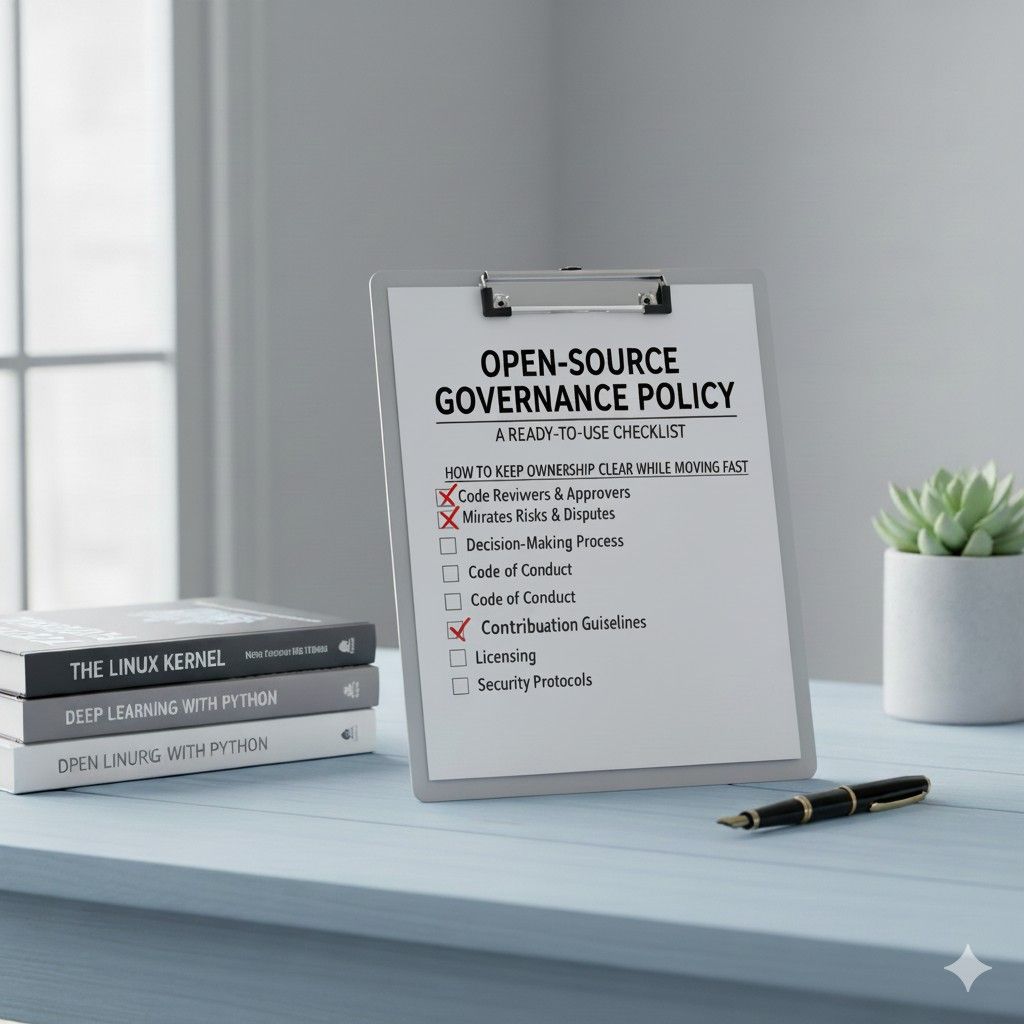
PowerPatent exists to support founders building this way, with speed and clarity side by side. If you want to see how that looks in practice, visit https://powerpatent.com/how-it-works.
Wrapping It Up
Open-source governance is not about fear, control, or slowing down. It is about awareness. It is about knowing what you are building, what you are standing on, and what you truly own. When this awareness is built into daily work, it stops being a policy and starts being part of how the company thinks.
The biggest mistake teams make is treating governance as something to fix later. Later is always louder, more expensive, and more stressful. Early clarity is quiet. It works in the background. It lets teams focus on building while protecting the value of that work.
Leave a Reply