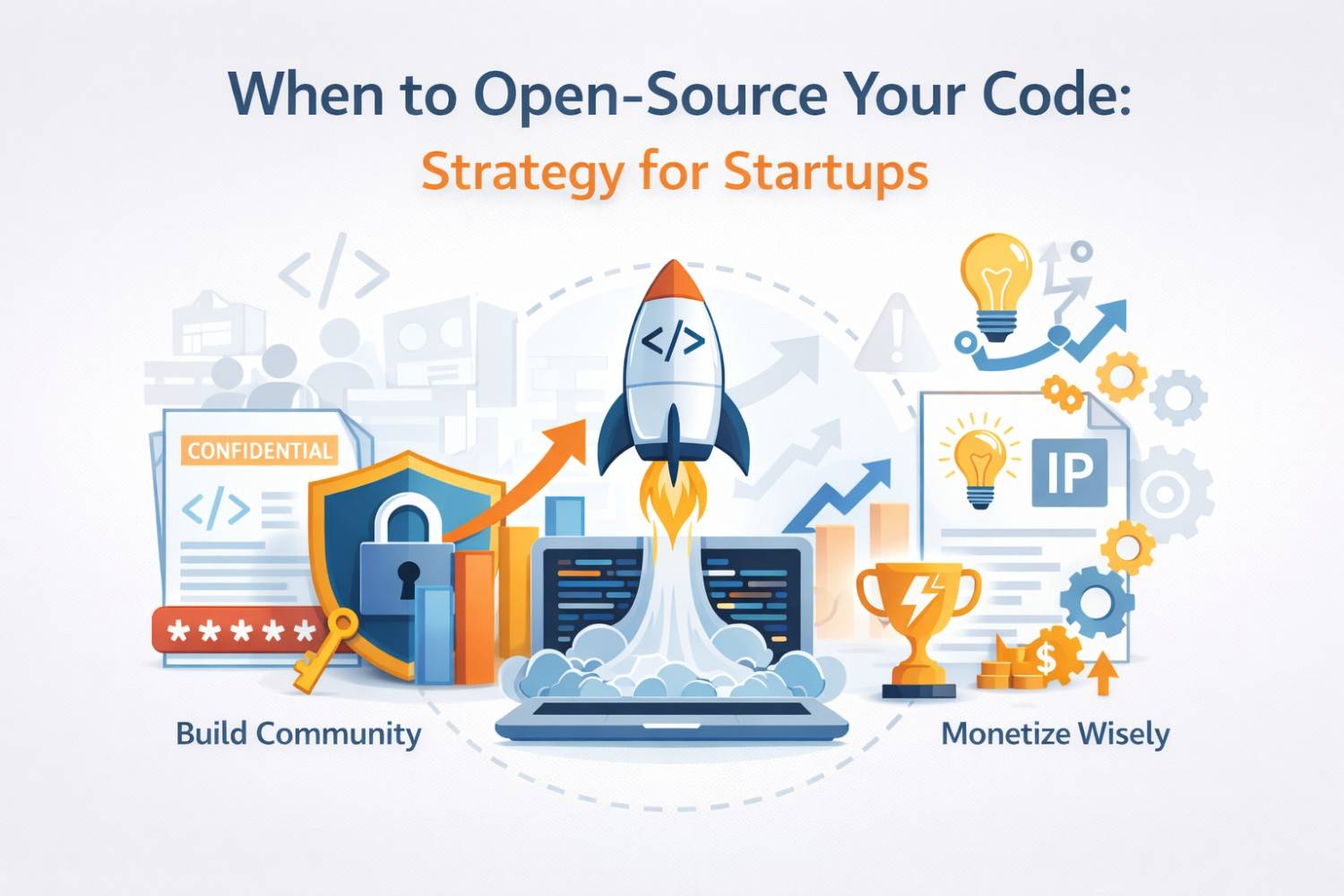
Open-sourcing your code can feel like giving away the crown jewels. For some startups, it turns into fuel that drives growth. For others, it quietly kills leverage, value, and future options. The difference is not luck. It is timing, intent, and protection.
This article is about making that choice with clear eyes. Not from a theory view. Not from a feel-good tech culture angle. From the view of a founder who wants speed, trust, adoption, and long-term control. If you are building something real and valuable, this decision matters more than most people admit.
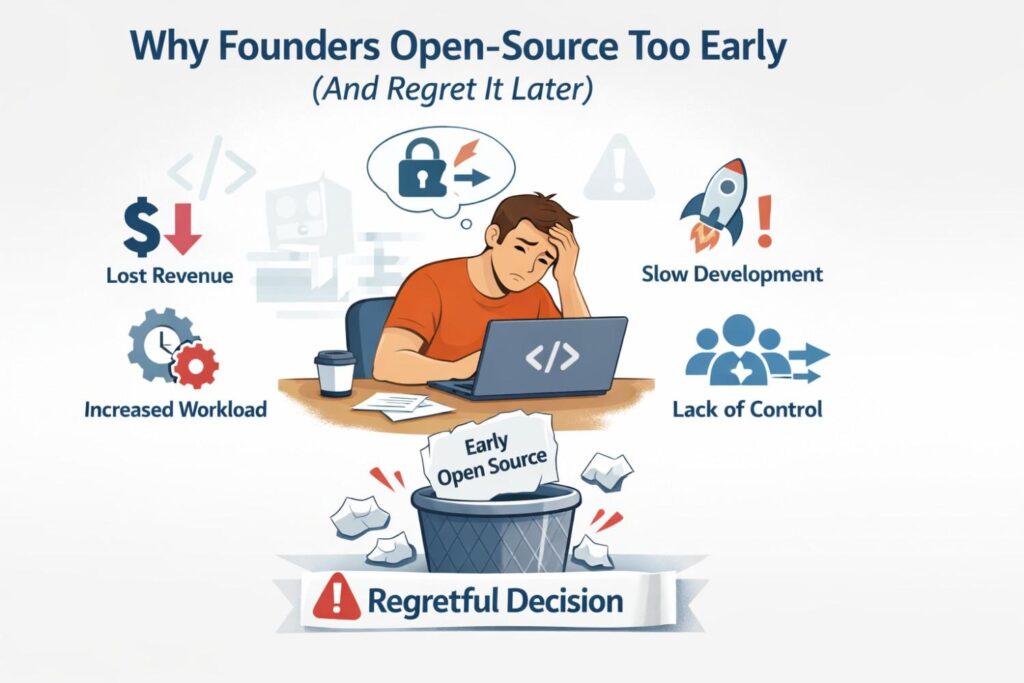
Why Founders Open-Source Too Early (And Regret It Later)
Open-sourcing too early rarely comes from a bad place. Most founders do it because they believe it will help. They want users. They want trust. They want others to build with them.
The problem is not the goal. The problem is the timing and the lack of strategy behind the move.
This section breaks down the real reasons founders rush into open-source, what they miss in the process, and how to avoid giving away leverage you cannot get back. This is not about fear. It is about control.
The Pressure to Look Open and Friendly
Many founders feel that open-source is expected. Especially in developer circles, closed code can feel secretive or outdated. There is a strong pull to show that you are open, modern, and community-first.
This pressure often shows up early, before the product is stable, before customers exist, and before the company understands what truly makes it different.
Founders worry that keeping code private will slow adoption or reduce trust.
The truth is that trust does not come from open code. It comes from reliability, clarity, and follow-through. Users trust tools that work and teams that ship. Open code alone does not solve that.
Before sharing anything, ask whether openness is actually removing friction for users or if it is simply easing social pressure. If it is the second, that is not a good reason to move fast.
Confusing Adoption With Value Creation
Early-stage startups are hungry for traction. Open-source can look like a shortcut to users, stars, forks, and attention. It feels like progress.
What often gets missed is that attention is not the same as value. A thousand users running your code does not matter if none of them pay, commit, or stay.
Even worse, if those users are extracting value without giving anything back, you are funding their success with your future.
This is where regret begins. Founders realize too late that the most valuable part of their product is now free and widely copied, while the business side is still unclear.
The smarter move is to separate learning from giving. You can learn from users without giving away the core. Early feedback does not require full access. It requires thoughtful exposure.
Not Knowing What the Core Really Is
One of the biggest mistakes founders make is open-sourcing before they understand their own product deeply. Early code often feels messy and replaceable. Founders assume the real value will come later.
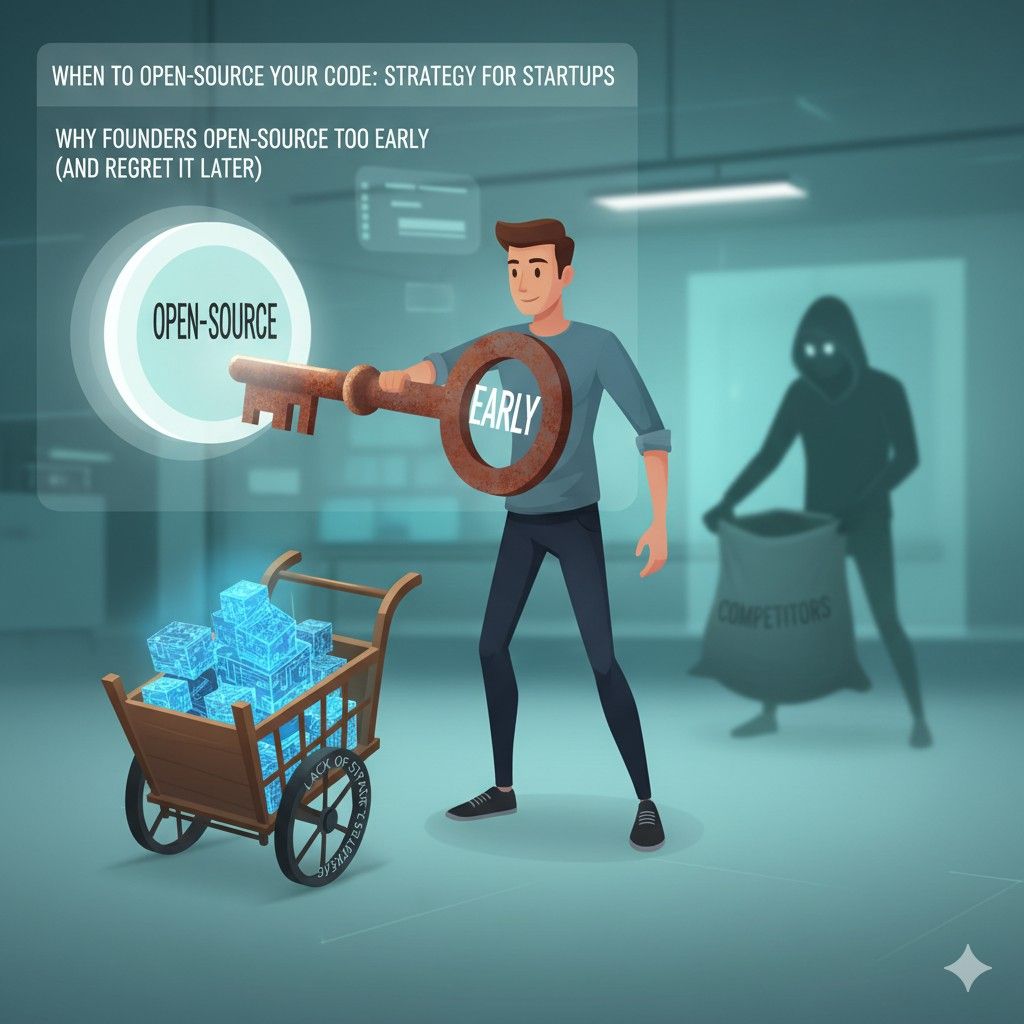
In reality, the early architecture, workflows, and insights baked into that code often become the foundation of the entire company. Once it is public, competitors can study it, copy patterns, and move faster with fewer mistakes.
This is especially risky for deep tech startups. Infrastructure tools, ML systems, data pipelines, and platform logic may not look flashy, but they are extremely hard to recreate.
Giving that away early removes a key moat before it even forms.
A simple rule helps here. If you cannot clearly explain what makes your product hard to build, you are not ready to share it.
Treating Open-Source as a Marketing Hack
Some founders treat open-source as content marketing. They hope that visibility will lead to inbound interest, partnerships, or press.
This approach fails when open-source becomes the only story. If people know your code but not your company, you have a problem. Code does not raise money. Companies do.
Investors often ask a simple question. What do you own? If the answer is vague, future conversations get harder. Even if open-source fits long-term, doing it before ownership is clear weakens your position.

Marketing should amplify value, not replace it. If open-source is doing the work of explaining your business, it is doing too much.
Forgetting That Code Is Only Part of IP
Founders often think intellectual property means patents only or code only. In reality, IP includes systems, processes, methods, and ways of solving problems.
When code goes public, it often reveals more than expected. It shows how data flows, how decisions are made, and how edge cases are handled. These insights are just as valuable as the code itself.
Once exposed, these ideas cannot be pulled back. Even if licenses limit use, the learning is already out there.
This is why many strong companies protect the method before sharing the tool. It allows them to benefit from openness without losing the underlying advantage.
If you want to explore how founders protect methods without slowing down, PowerPatent was built exactly for that moment. You can see how it works here: https://powerpatent.com/how-it-works
Moving Faster Than the Legal Foundation
Speed is everything for startups. Legal steps often feel slow and painful, so founders skip them. Open-source feels easy by comparison.
The irony is that skipping protection early often creates more legal complexity later. Once code is public, patent options narrow fast. Ownership questions become harder. Future deals take longer.
Founders later find themselves paying more to fix problems that could have been avoided with a small amount of early planning.
Protecting key ideas does not mean slowing down. With the right tools and guidance, it can happen alongside building. The mistake is thinking protection must wait.
Overestimating Community Contributions
Many founders believe open-source will bring free help. They imagine a wave of contributors improving the product.
This does happen, but rarely early and rarely without cost. Most early contributors are users, not builders. They want fixes for their needs, not your roadmap.
Managing contributions takes time. Reviewing code takes focus. Aligning direction takes energy. If the company is small, this can slow progress instead of speeding it up.
Before opening the door, be honest about what you can manage. A quiet, focused build often beats a loud, scattered one.
Losing Control of Direction
When code becomes public, direction becomes shared. Even if you keep final say, public expectations form fast. Changes get debated. Decisions get questioned.
For founders still searching for product-market fit, this pressure can distort learning. Instead of listening to customers, they listen to commenters. Instead of testing ideas, they defend choices.
Control matters early. Not because founders are always right, but because speed of learning depends on clear direction.
Open-source works best when direction is already set, not when it is still forming.
Giving Away Leverage Before Negotiations
Partnerships, acquisitions, and enterprise deals all rely on leverage. When your core is open and unprotected, leverage drops.
Potential partners can build instead of buy. Larger companies can wait instead of commit. Your urgency becomes their advantage.
Founders often realize this only when they try to negotiate and feel the imbalance.
Leverage is not about secrecy. It is about ownership. You can share and still own. But ownership must come first.
How to Slow Down Without Missing the Moment
The goal is not to avoid open-source forever. The goal is to open-source with intent.
A strong approach is to pause before sharing and ask one clear question. If this code spreads everywhere tomorrow, am I better off or worse off?
If the answer is unclear, wait. Use the time to define what must stay protected and what can safely be shared.
This is where many founders choose to protect the core idea first, then open-source surrounding tools, libraries, or interfaces. It keeps momentum without sacrificing control.
If you want a fast, founder-friendly way to do that, PowerPatent helps teams lock down what matters while still shipping fast. You can learn more here: https://powerpatent.com/how-it-works
What to Lock Down Before You Share Anything Publicly
Open-source done right starts with clarity. Before a single line of code leaves your repo, you need to know what actually deserves protection. Most founders skip this step because it feels abstract.
In reality, it is very practical. This section shows how to identify what to lock down first, without slowing your team or turning your startup into a legal maze.
Understanding What Actually Makes You Different
Every startup believes it is unique. Very few can clearly say why. Before you open-source anything, you need to slow down just enough to answer that question honestly.
Your difference is rarely the entire product. It is usually a small set of ideas that quietly do the heavy lifting.
It might be how data is processed, how results improve over time, how systems scale without breaking, or how users move from input to outcome faster than anywhere else.
These ideas often live deep in the code, not in the UI. Founders underestimate them because they feel obvious after months of building. To an outsider, they are not obvious at all. They are shortcuts earned through hard work.

Locking down starts with naming these ideas in plain language. If you cannot explain them to a smart friend in five minutes, you are not ready to share them with the world.
Separating Core Logic From Supporting Code
Not all code is equal. Some code carries insight. Some code is just plumbing. The mistake is treating it all the same.
Supporting code includes setup scripts, integrations, helpers, and basic tooling. This code can often be shared safely. It helps users adopt your product and lowers friction without revealing how the engine works.
Core logic is different. It includes decision rules, workflows, data handling, optimization steps, and system design choices that took time to figure out. This is the code that competitors study.
Before open-sourcing, teams should draw a clear line between these two worlds. The goal is not to hide everything. It is to expose what helps adoption while protecting what creates advantage.
This separation also makes future decisions easier. You stop debating every file and start thinking in systems.
Protecting Ideas, Not Just Code
Many founders think protection means locking up code or filing something heavy and slow. That view misses the point.
What matters most are the ideas inside the code. The method. The sequence. The way problems are solved. Once these ideas are public, they can be reused even if the exact code cannot.

This is where early protection becomes powerful. By locking down the method before sharing the implementation, you preserve ownership while still allowing openness later.
This approach fits how startups actually build. Ideas come first. Code follows. Protecting ideas early gives you freedom later.
PowerPatent was designed around this reality. It helps founders capture and protect core ideas without interrupting build speed. You can see how it works here: https://powerpatent.com/how-it-works
Timing Matters More Than Perfection
Founders often delay protection because things feel unfinished. They want the final version before doing anything formal.
This is a trap. Early versions are often the most valuable because they capture the original insight. Later versions add polish, not core novelty.
Protection does not require perfection. It requires clarity. Once you can explain how something works and why it is better, that is enough to start.
Waiting too long often means missing the window entirely. Once code is public, options shrink fast.
The best time to lock things down is when the idea works for the first time, not when it looks perfect.
Avoiding the Fear of Slowing Down
Speed is the oxygen of startups. Any step that feels like drag gets ignored. Founders worry that protecting ideas will slow shipping or distract the team.
This fear comes from outdated models. Modern tools make protection lightweight and parallel. It does not need long meetings or thick documents.
The key is choosing the right moment and the right scope. You are not protecting everything. You are protecting the few things that matter most.
When done well, this process actually increases speed. Teams build with more confidence. Decisions feel safer. Sharing becomes intentional instead of risky.
Preparing for Investors Without Overthinking It
Investors rarely ask for legal details early. What they look for is ownership clarity. They want to know that if things work, the company controls its destiny.
When you can say that core ideas are protected and open-source choices are strategic, conversations change. Confidence replaces hesitation.

You do not need to lead with documents. You need to lead with intent. Showing that you thought ahead signals maturity far beyond your stage.
This is another reason to lock things down early. It keeps future conversations clean and simple.
Building Optionality Instead of Commitment
Once code is open, paths close. You commit to a direction whether you mean to or not.
Locking down first creates options. You can choose to open-source later. You can license. You can partner. You can stay closed longer if needed.
Optionality is power. Startups survive by keeping doors open as long as possible.
This does not mean being secretive. It means being deliberate.
Knowing When You Are Ready to Share
You are ready to share when three things are true. You understand your core idea. You have protected it in some form. You know why sharing helps the business right now.
If any of these are missing, wait.
Waiting does not mean hiding. You can still talk about your product. You can still show demos. You can still build in public without giving away the engine.
Sharing works best when it supports a clear goal, not when it fills a gap in confidence.
Turning Protection Into a Growth Enabler
The biggest shift founders experience after locking down their core is mental. Fear drops. Hesitation fades. Sharing becomes exciting instead of stressful.
This is when open-source can actually work. Not as a gamble, but as a tool.
If you want to reach that point faster without dealing with old-school processes, PowerPatent helps founders do exactly that. You can explore it here: https://powerpatent.com/how-it-works

This sets the stage for the final question. How do you actually use open-source as a growth weapon once the foundation is solid?
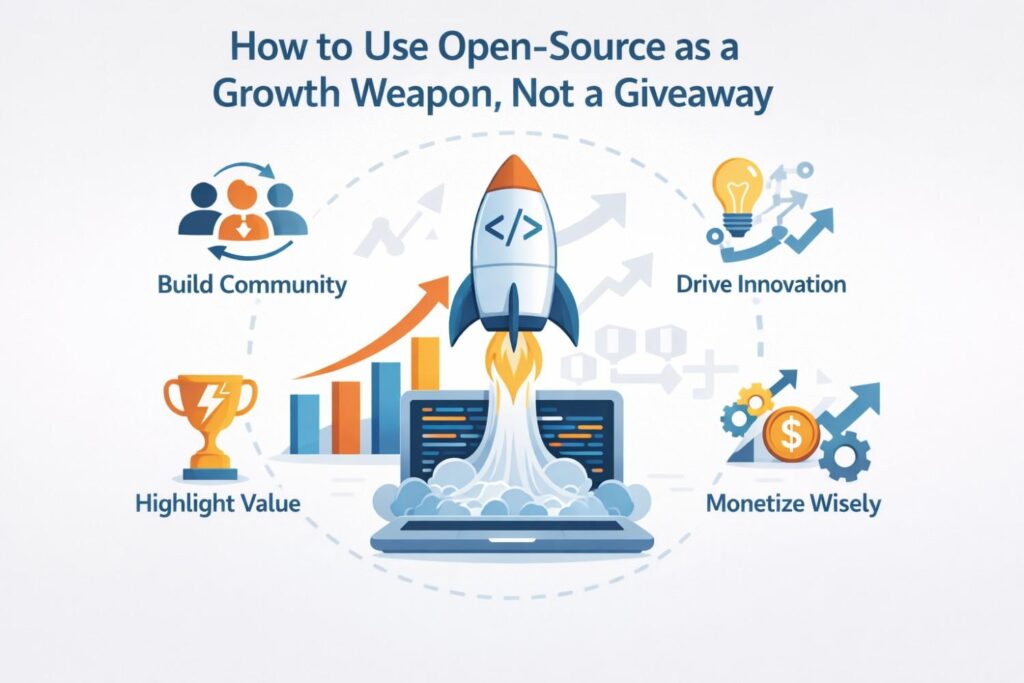
How to Use Open-Source as a Growth Weapon, Not a Giveaway
Open-source becomes powerful only after the ground is stable. Once the core is protected and the direction is clear, sharing code can turn into a growth engine that compounds over time.
This section explains how founders can open-source with purpose, guide attention where it matters, and grow faster without losing control.
Shifting the Mindset From Sharing to Positioning
The biggest mistake founders make at this stage is thinking open-source is about generosity. In reality, it is about positioning.
Every public repository tells a story. It shows what you care about, how you think, and who the product is for. When done right, it attracts the exact users and partners you want while quietly filtering out the rest.

Before releasing anything, decide what story you want your code to tell. Are you signaling speed, reliability, scale, or simplicity? The code you share should reinforce that message.
Open-source is not about giving everything away. It is about putting the right signal into the market.
Choosing Code That Pulls Users In
The best open-source projects solve a real pain fast. They remove a blocker. They save time. They feel useful within minutes.
For startups, this often means sharing tooling that sits close to the problem but not at the heart of the solution. Think setup helpers, testing tools, SDKs, or small utilities that make your product easier to adopt.
When users rely on these tools, they naturally move closer to your ecosystem. Trust builds without you needing to push.
The goal is pull, not push. Let the code create momentum on your behalf.
Designing Open-Source to Lead Somewhere
Open-source should never be a dead end. It should lead users toward something more valuable.
This does not mean tricks or lock-in. It means clarity. Documentation, examples, and structure should make it obvious how the open piece connects to the larger product.
When users understand the path forward, conversion feels natural. They do not feel sold to. They feel guided.
Founders often miss this step and wonder why usage does not turn into growth. Code without direction is just noise.
Letting the Community Work for You
Community is often talked about like magic. In practice, it needs shape.
The healthiest open-source communities form around clear ownership. Founders who guide discussions, set direction, and respond consistently attract the right contributors.
You do not need volume. You need alignment. A few contributors who care about the same problems are worth more than hundreds of random pull requests.

Set expectations early. Be clear about what you accept and why. This saves time and builds respect.
Using Open-Source as Proof, Not the Product
For many startups, open-source works best as proof. Proof that the team can build. Proof that the idea works. Proof that users care.
This proof shows up in real ways. Usage data. GitHub activity. External projects built on top. These signals help with hiring, partnerships, and fundraising.
The key is to treat open-source as evidence, not the offering. Your business should stand on its own value.
When proof replaces promises, conversations change.
Avoiding the Trap of Maintaining Everything
One hidden cost of open-source is maintenance. Every issue, request, and bug becomes public.
Founders need to be careful not to overcommit. Not every repo needs full support. Not every request needs action.
It is okay to set boundaries. It is okay to say no. Clarity beats availability.
A well-scoped project with clear limits lasts longer and creates more trust than an overextended one that burns out.
Keeping Control While Staying Open
Control does not mean restriction. It means direction.
Founders should keep final say on major changes, roadmap decisions, and architectural shifts. This keeps the project aligned with the company’s goals.
Transparency helps here. When users understand why decisions are made, they respect them even if they disagree.
Open-source thrives under leadership, not absence.
Turning Visibility Into Business Results
Visibility alone does not build a company. It must be converted.
This happens when open-source users become product users, customers, or advocates. The transition should feel smooth and logical.
Education plays a big role. Content, examples, and clear messaging help users understand when they have outgrown the open tool and need more.
The best conversions feel like the next step, not a sales pitch.
Protecting the Future While Growing Today
Even after open-sourcing, protection still matters. New ideas emerge. New methods form. These should be captured early.
Open-source is not a one-time decision. It is an ongoing strategy that evolves with the company.
Founders who revisit their protection as they grow stay flexible. They avoid surprises. They keep options open.
This is where having a simple, modern system matters. PowerPatent helps teams protect new ideas as they emerge, without slowing momentum. You can see how it works here: https://powerpatent.com/how-it-works
Making Open-Source Work for You
Open-source is not good or bad. It is powerful or dangerous depending on how it is used.
When done with intent, it builds trust, speeds adoption, and strengthens the brand. When done without protection, it leaks value.
The difference is preparation. Lock down what matters. Share what helps. Lead with clarity.

That is how open-source becomes a growth weapon instead of a giveaway.
Wrapping It Up
Open-source is one of those decisions that feels simple on the surface and heavy underneath. Many founders think it is a culture choice or a moral stance. In reality, it is a strategy choice. And like any strategy, timing and intent decide whether it helps or hurts.
The strongest startups do not rush to share or rush to hide. They pause just long enough to understand what they own, why it matters, and how sharing fits into the bigger picture. They protect the ideas that give them leverage. Then they open the doors where openness creates pull, trust, and momentum.
Leave a Reply