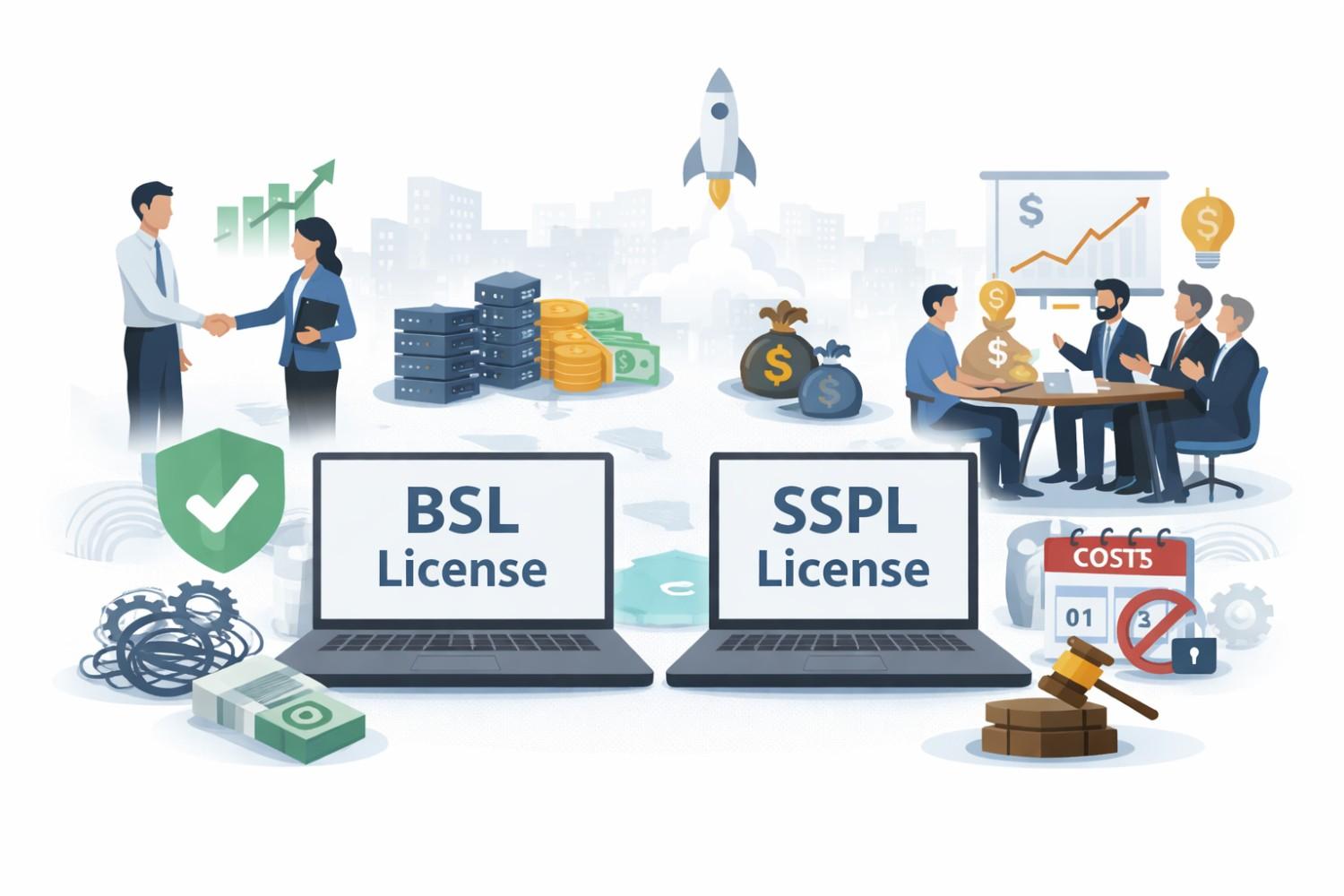
If you are building software today, the license you choose can help you win—or quietly set you up to lose. Business Source License (BSL) and Server Side Public License (SSPL) were created to solve a real problem: big cloud companies taking open source work, selling it, and giving nothing back. On paper, both licenses sound like smart shields. In real life, they come with sharp edges that many founders do not see until it is too late.
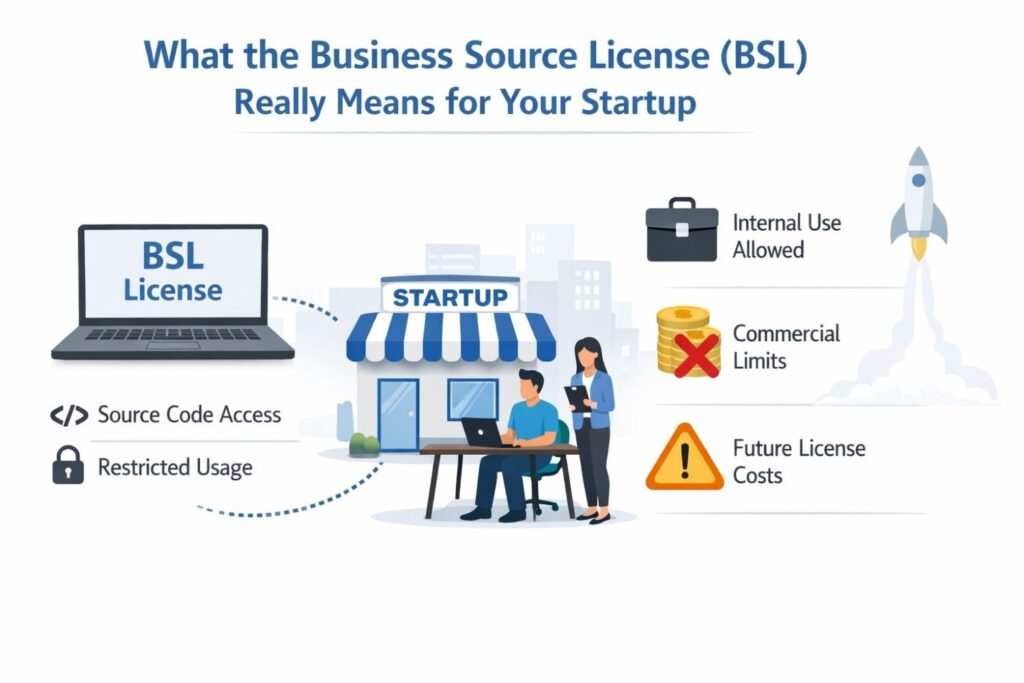
What the Business Source License (BSL) Really Means for Your Startup
Before you choose BSL, it is important to slow down and understand what you are really signing up for. BSL is not open source in the classic sense. It is also not fully closed.
It sits in the middle, and that middle ground creates both power and risk. Many founders like BSL because it feels flexible and founder-friendly at first. The details matter more than the headline.
BSL was built to give you control during your early growth years while still promising openness later.
That promise sounds simple. In practice, it shapes how users trust you, how customers buy from you, and how your company evolves over time.
The core idea behind BSL in plain terms
At its heart, BSL says this: people can see and use your code, but they cannot use it for certain business purposes unless you allow it. After a set time, usually a few years, the code turns into open source.
That delay is the main lever. It is designed to stop large companies from turning your product into a competing service while you are still building your business.
For founders who fear cloud providers copying their work, this feels like a safety net.
But here is the part that gets missed. That delay also affects everyone else, not just the big players.
Small companies, partners, and even future customers read your license closely. If they feel unsure, they hesitate. Hesitation slows adoption.
How BSL affects early adoption
In the early days, your biggest enemy is not competition. It is being ignored. You want developers to try your product without thinking too hard. BSL introduces a pause.
People ask themselves whether they are allowed to use it in their job, in a side project, or inside a company product.
That pause can be small, but it adds up. Some developers move on. Others ask for legal review.
Some companies decide it is safer to avoid it entirely. None of this shows up in metrics right away, but it quietly shapes your growth curve.
If you choose BSL, you need to plan for this friction. You should assume fewer casual users and focus more on direct relationships with customers who understand your value.
This means your sales motion must be clearer and stronger earlier.
The time delay promise and why it matters later
BSL always includes a change date. This is the moment when your code becomes open source. Early on, that date feels far away. Founders often treat it as a problem for the future.
Investors and acquirers do not. They look at that date as a real event. It affects valuation, long-term moat, and exit options. If your core product becomes open source in a few years, buyers will ask what still protects you then.
This is where many teams realize too late that a license is not a moat. It is a speed bump. When the speed bump disappears, you need something else holding the line.
This is why strong companies pair BSL with patents that protect the core system, not just the surface code.
If you want to see how modern startups do this without slowing down development, you can explore PowerPatent’s approach here: https://powerpatent.com/how-it-works.
Custom terms mean custom risk
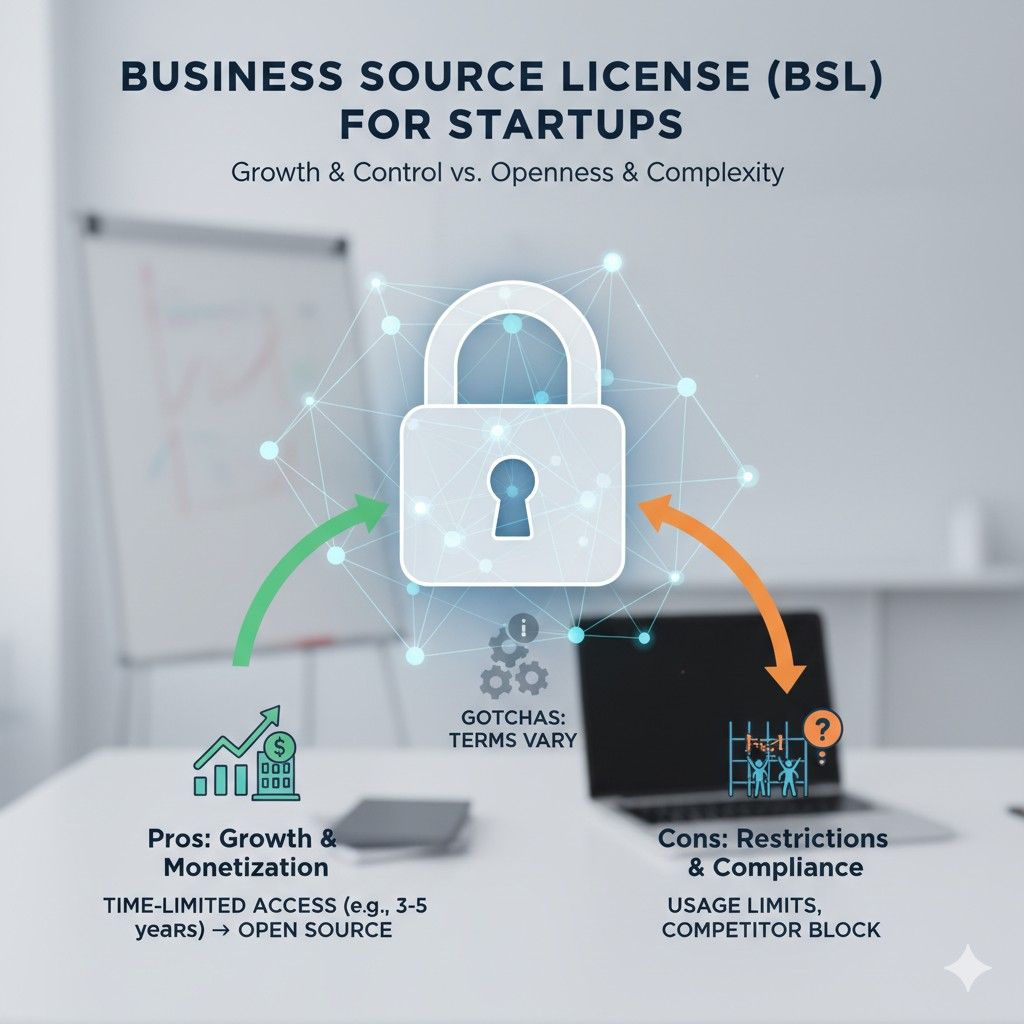
One reason founders like BSL is that it lets you define what “business use” means. That sounds empowering. It also means you are now responsible for clarity.
If your terms are vague, users get confused. If they are too strict, adoption suffers. If they are too loose, you lose protection. There is no default safe zone.
You should write your BSL terms as if a stranger will read them without context. Because they will. Clear language builds trust. Confusing language creates fear. Fear slows growth.
A smart move is to test your license language the same way you test onboarding. Share it with friendly users.
Ask them what they think it allows and blocks. If they cannot explain it back to you in simple words, you need to rewrite it.
Sales conversations under BSL
BSL changes how sales works. Prospects often ask questions about the license before they ask about features. This can be good or bad depending on how prepared you are.
You need a clean, simple explanation ready. Not legal talk. A short story that explains why you chose BSL and how it protects both sides. When done right, this can actually build confidence. When done poorly, it sounds defensive.
The key is to frame BSL as a fairness tool, not a restriction. You are not blocking use. You are protecting the ability to keep improving the product. That story should be consistent across your site, docs, and sales calls.
Partnerships and integrations
BSL can complicate partnerships if you are not careful. Other companies may worry about building on top of something that could limit them later. This is especially true for platform deals and deep integrations.
If partnerships are part of your growth plan, you should address this upfront. Spell out what partners can and cannot do. Make it easy for them to say yes.
Some startups create simple partner agreements that sit alongside BSL to remove doubt. This takes effort early, but it prevents long delays later when a big opportunity is on the table.
Hiring and internal culture
Licenses also affect your team. Engineers care about openness. Some prefer working on projects that are clearly open source. BSL sits in a gray area that can raise questions during hiring.
This does not mean you should avoid BSL. It means you should be honest about why you use it. Teams respond well when the reason is clear and aligned with long-term goals.
Make sure your team understands the roadmap. Explain what happens when the change date arrives. Transparency builds trust inside the company just as much as outside.
When BSL makes sense
BSL tends to work best when you are building something that is hard to copy but easy to host.
Databases, infrastructure tools, and developer platforms often fall into this bucket. If cloud providers are your main fear, BSL can buy you time.
That time is valuable only if you use it well. You should treat the BSL period as a window to build brand, community, and deeper protection around your core ideas. Waiting and hoping is not a strategy.
Using BSL as part of a bigger protection plan
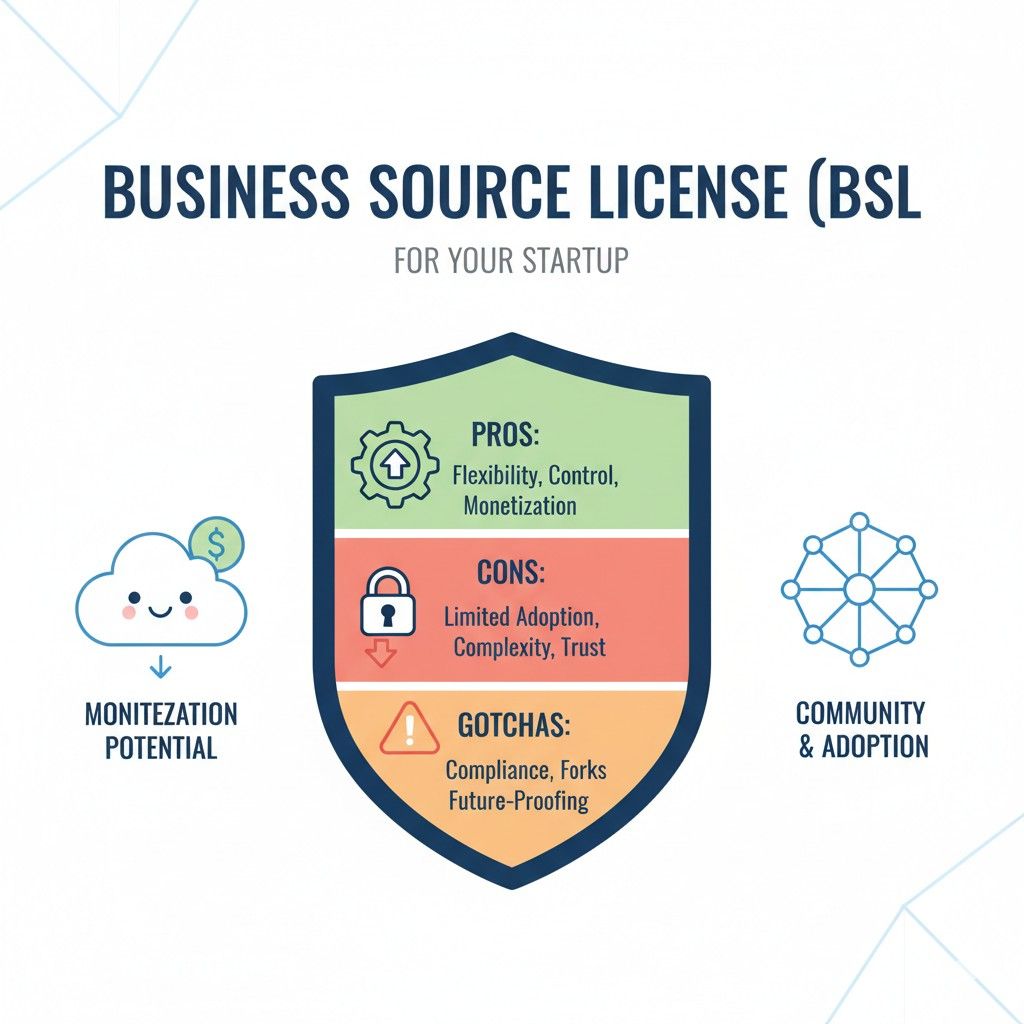
The strongest approach is to see BSL as one layer, not the whole shield. It controls how code is used. It does not protect the ideas behind it.
Patents fill that gap. They protect the system, the workflow, and the technical edge even after the license changes.
This combination gives founders confidence to grow without fear of being copied the moment they succeed.
PowerPatent was built specifically to help teams do this fast and without legal pain. You can see how it works here: https://powerpatent.com/how-it-works.
Why Some Founders Turn to SSPL—and What They Often Miss
SSPL usually enters the conversation when founders feel burned. They see a large company take open source work, wrap it as a service, and profit while the original creators struggle.
SSPL promises a hard stop to that pattern. It feels decisive. It feels protective. For many teams, it feels like drawing a line in the sand.
That feeling is understandable. But SSPL is not just a stronger version of open source. It is a very different beast.
It solves one problem very well while quietly creating several others. Founders who choose it without thinking through the second-order effects often regret it later.
The emotional pull of SSPL
SSPL is attractive because it is clear and forceful. It says that if someone offers your software as a service, they must open source everything they use to run it. That includes tooling, automation, and internal systems.
For a founder who fears cloud giants, this sounds perfect. It turns the tables. It makes exploitation expensive. It feels fair.
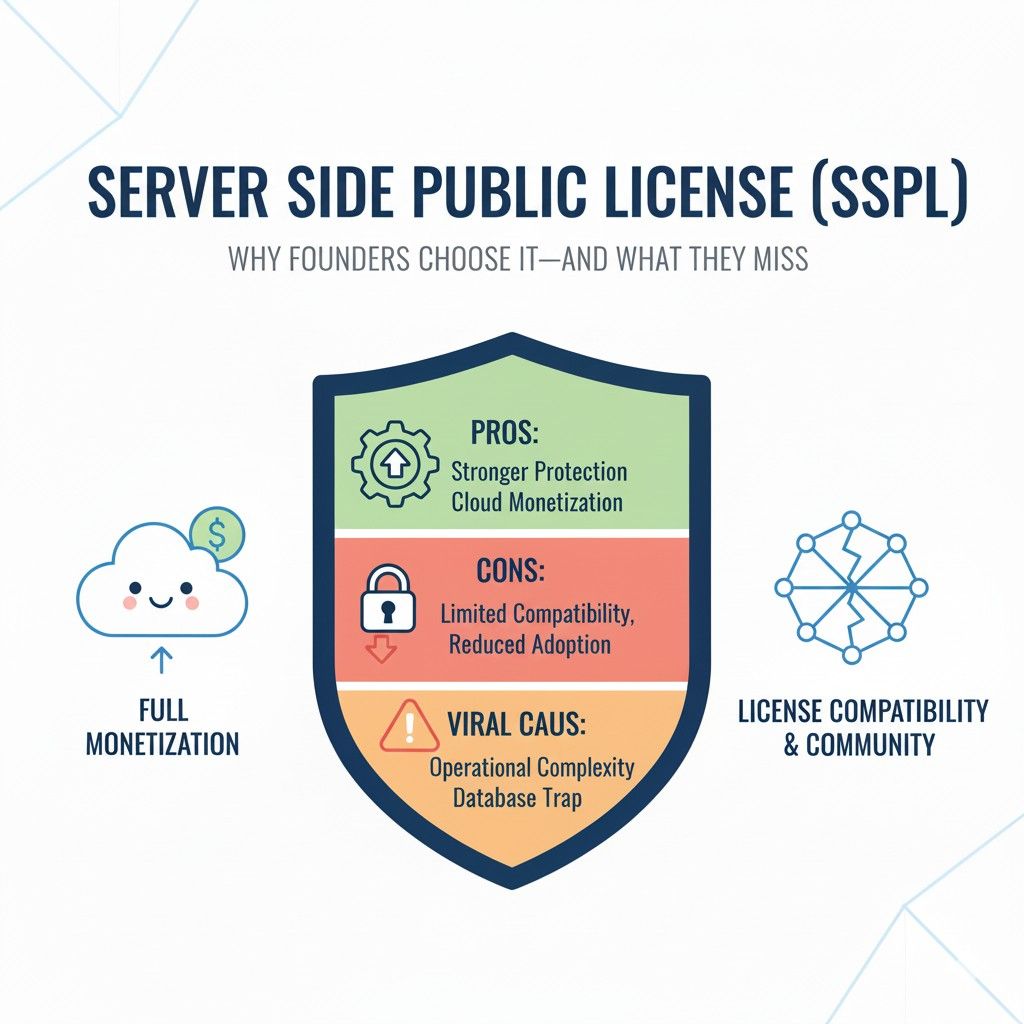
But business decisions made from emotion tend to ignore edge cases. SSPL is one of those licenses where the edge cases are not rare. They show up in normal customer conversations.
How SSPL changes who can use your product
The biggest thing founders miss is how wide SSPL’s net is. It does not only affect massive cloud providers. It affects anyone who might offer your software as part of a service.
That includes managed service providers, consultants, SaaS companies with internal tools, and even some enterprises. Many of these groups are not trying to compete with you. They just want to use your product as part of their stack.
When they see SSPL, many of them walk away. Not because they plan to violate it, but because they do not want the risk of misunderstanding it.
Enterprise buyers and SSPL fear
Large companies move slowly for a reason. They avoid risk. SSPL triggers internal reviews almost every time. Legal teams flag it. Procurement teams hesitate. Deals take longer or die quietly.
Even when a company is allowed to use SSPL software internally, the fear of accidental non-compliance can stop adoption. No one wants to be the person who approved something that later creates an obligation to open internal systems.
If your growth plan includes selling into enterprises, this matters. SSPL adds friction at the exact point where you want momentum.
The open source label problem
Another issue is perception. Many people do not consider SSPL to be open source at all. Some communities reject it outright. Some distributions will not include SSPL software.
This affects your reach in ways that are hard to measure. You may still get users, but you lose entire channels of distribution. Over time, that shapes your ecosystem.
Founders often underestimate how much distribution comes from trust and familiarity. When your license is controversial, you start every conversation from a defensive position.
Community growth under SSPL
Communities thrive on freedom. Contributors want to know that their work will not be locked into something they cannot use later. SSPL creates uncertainty here.
Some contributors are fine with it. Many are not. They worry about how their code might be used or restricted in the future. This can reduce outside contributions, especially from experienced engineers who have options.
If your product depends on community growth, this tradeoff is real. You may gain control but lose energy.
Monetization pressure increases
SSPL often forces founders into monetization earlier than planned. Since fewer people can safely use the free version in production services, paid offerings become the main path forward.
This can work if you are ready. If not, it can create stress. You end up selling before your product or messaging is mature. Early sales under pressure tend to shape a company in ways that are hard to undo.
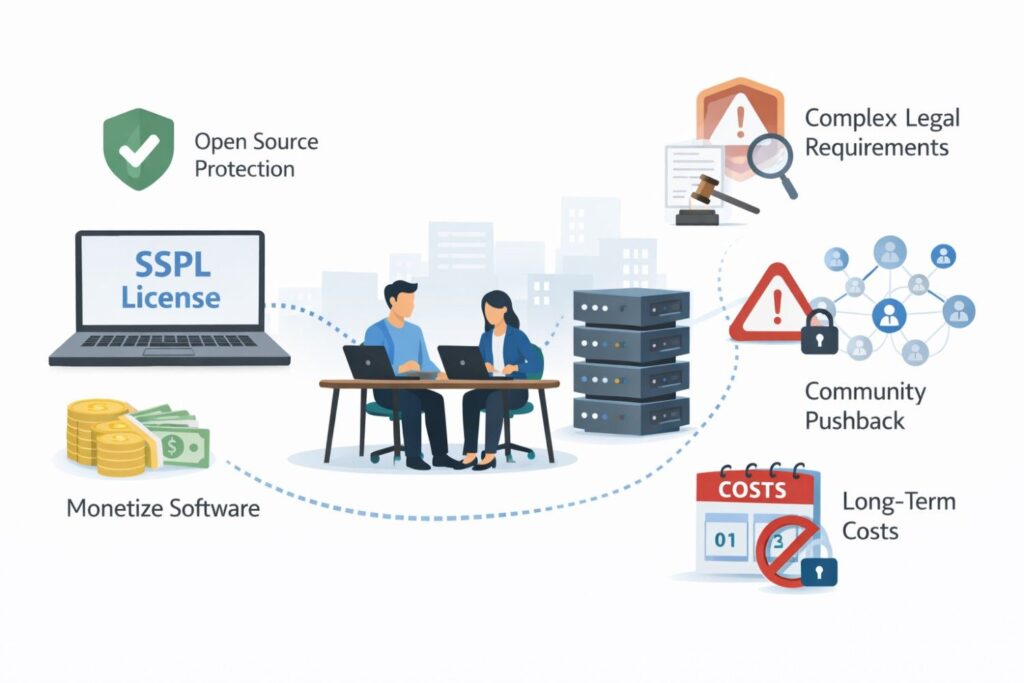
A license should support your business model, not force it prematurely.
SSPL does not replace real protection
Here is the quiet truth. SSPL does not protect your ideas. It controls how software is used, not how systems are designed.
A well-resourced competitor can still study your product, understand the approach, and build something similar from scratch. The license does nothing to stop that.
This is where many founders feel safe when they are not. True protection comes from owning the core technical ideas. That is what patents do when done right.
They protect the how, not just the code. This is why teams that rely only on SSPL often feel exposed later.
PowerPatent exists to fix that gap by helping founders protect real innovation without slowing down. You can see how it works here: https://powerpatent.com/how-it-works.
Long-term exits and SSPL
If you plan to sell your company one day, SSPL will come up. Buyers will ask how it affects customers, integrations, and future growth. Some acquirers are fine with it. Others are not.
The risk is not that SSPL blocks an exit. The risk is that it narrows your options. Fewer interested buyers usually means lower leverage.
Founders rarely think about this early, but licenses are sticky. Changing later is painful and sometimes impossible.
When SSPL actually makes sense
SSPL can make sense if your primary threat is direct service competition and you are comfortable limiting who can use your product. It works best when you control most of the value chain and do not rely on broad adoption.
If your strategy is narrow and focused, SSPL can be a strong wall. If your strategy depends on wide use, partnerships, and trust, it can become a cage.
Making SSPL a conscious choice
The biggest mistake is choosing SSPL by default or by copying another company. Your product, market, and goals are different.
If you are considering SSPL, write down who you are willing to lose as users. If that list surprises you, pause. A license should be chosen with open eyes.
And remember, licenses are only one part of protection. The strongest companies layer licensing with patents that lock down the core innovation.
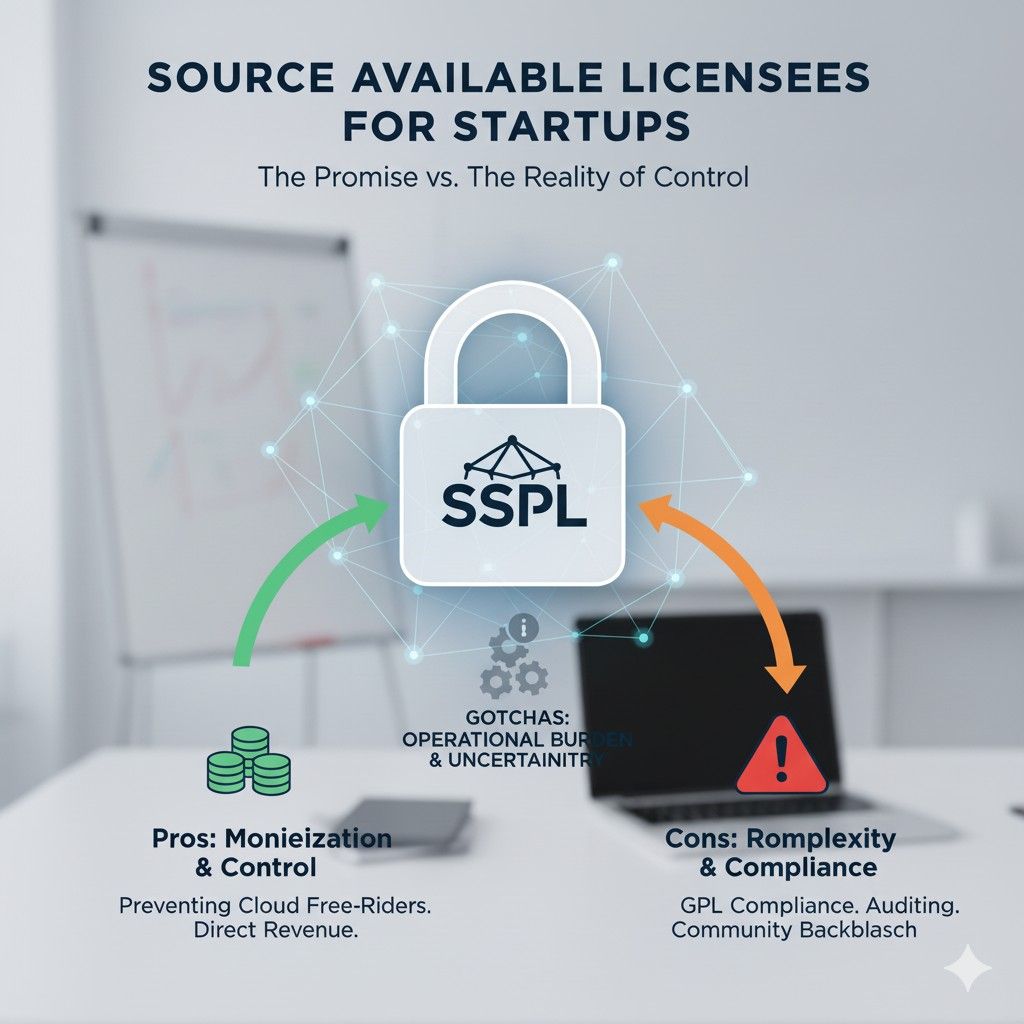
That way, even if the license changes or is challenged, the heart of the business stays safe. PowerPatent helps founders do exactly this without the old legal mess. Learn more here: https://powerpatent.com/how-it-works.
How BSL and SSPL Change Sales, Growth, and Fundraising
Licenses do not live in a vacuum. They show up in sales calls, growth charts, and investor meetings whether you plan for it or not. BSL and SSPL both send strong signals.
Those signals shape how people judge your company before they ever use your product.
Founders who understand these effects early can turn them into an advantage. Founders who ignore them usually feel confused when deals stall or questions keep repeating.
The first sales call feels different
When you sell software under a permissive license, the product usually leads the conversation. With BSL or SSPL, the license often comes up first.
Prospects want to know what they are allowed to do. They want to know what happens if they grow. They want to know if using your product today could limit them tomorrow.
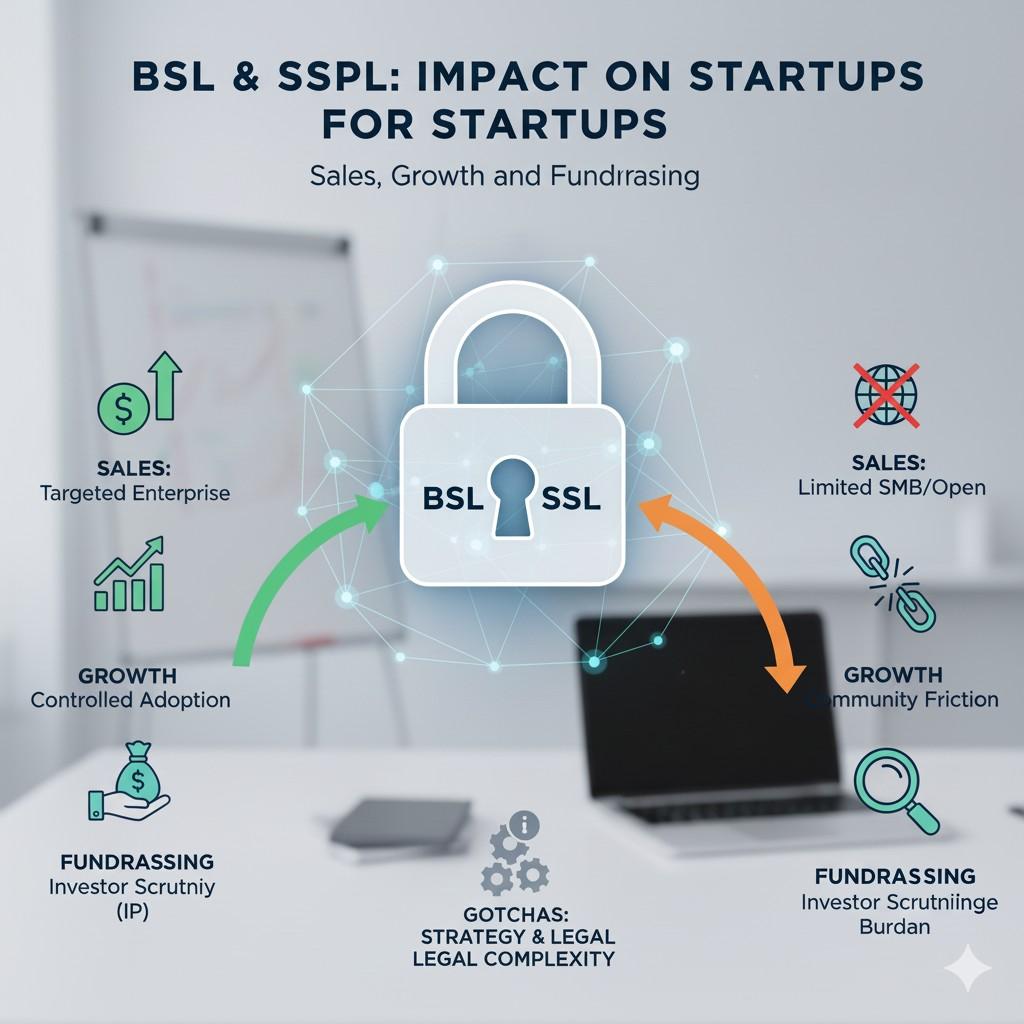
This means your sales team must be educated and calm. If they sound unsure, trust drops fast. If they overpromise, risk goes up. The best teams practice a short, honest explanation that ties the license back to customer benefit.
You are not just selling features. You are selling clarity.
Pricing pressure shows up earlier
BSL and SSPL tend to push pricing discussions forward in the timeline. Users cannot always test quietly and decide later. At some point, they must either pay or stop.
This can be good if your product delivers clear value fast. It can be painful if onboarding takes time or if value shows up only at scale.
Founders should map the moment when the license becomes relevant and align pricing with that moment. If the license hits before value is obvious, frustration grows. If value comes first, the license feels fair.
Growth curves look different
Companies using BSL or SSPL often see slower top-of-funnel growth but higher intent users. Fewer people try the product, but those who do are more serious.
This changes how you measure success. Raw user numbers matter less. Conversion quality matters more.
If you compare yourself to open source competitors without adjusting for this, you may think you are failing when you are not. Growth under restrictive licenses is quieter and more deliberate.
Marketing needs to be sharper
With BSL and SSPL, vague marketing does not work. People need to understand what you offer and why it is worth the constraints.
Clear positioning matters more than volume. You should speak directly to the users who are allowed and eager to use your product. Trying to appeal to everyone usually backfires.
The license itself should be part of the story, not hidden in the footer. When founders explain their choice openly, it builds respect even among people who choose not to use the product.
Fundraising conversations change tone
Investors care deeply about risk and defensibility. BSL and SSPL raise both.
Some investors see these licenses as smart defense. Others see them as adoption blockers. Most will ask why you chose them and what happens if they fail to protect you.
You should be ready with a clear answer that connects licensing to long-term value. Saying “we did it to stop big companies” is not enough. You need to show how it fits into a broader plan.
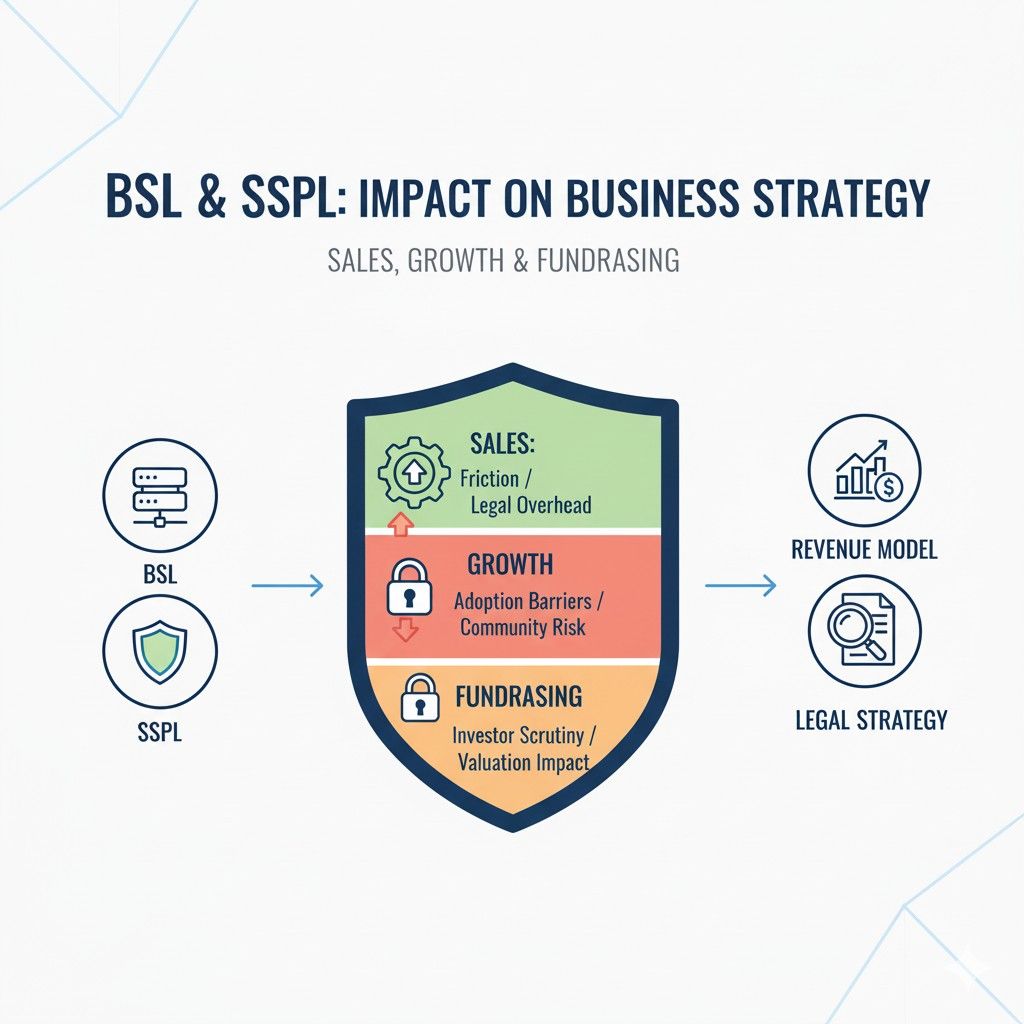
This is where patents change the conversation. When investors see that your core ideas are protected, licenses become a tactic, not a crutch.
PowerPatent helps founders build that story early, which often makes fundraising smoother and faster. You can learn more here: https://powerpatent.com/how-it-works.
Due diligence gets deeper
As you raise more money, scrutiny increases. Licenses are reviewed line by line. Edge cases are explored. Investors ask what happens if a major customer pushes back or if a partner refuses to sign.
Founders who cannot answer confidently lose momentum. Those who have thought it through move faster.
A simple internal document that explains your license strategy, risks, and mitigation plans can save weeks during diligence. It also forces you to face issues early instead of under pressure.
Sales cycles can stretch or shrink
For some customers, BSL and SSPL slow deals because of internal review. For others, they speed things up by forcing a decision.
Understanding which customers fall into which group helps you focus. If a segment consistently stalls, it may not be worth chasing.
Good founders adjust their ideal customer profile based on real license behavior, not theory.
Partnerships affect revenue paths
Revenue often comes through partnerships. Licenses influence who wants to partner and how deals are structured.
Some partners prefer permissive terms because they want flexibility. Others value protection because it reduces competition. Knowing which type you are targeting matters.
If partnerships are key to your growth, you should model how your license affects partner incentives. Ignoring this can leave revenue on the table.
Planning for the long game
Licenses are not just about today’s deals. They shape the company you become.
Founders who plan only for the next year often feel trapped later. Those who think five years ahead choose more carefully.
Ask yourself how your license supports your exit goals, market expansion, and product evolution. If the answer feels unclear, pause.
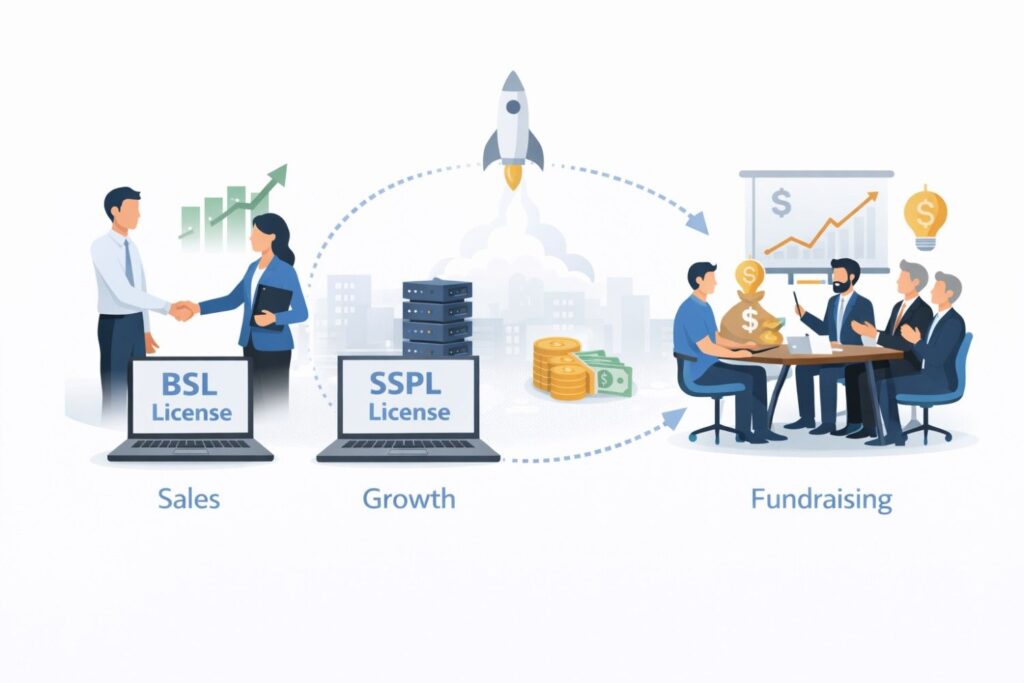
Strong companies pair thoughtful licensing with strong IP protection. That way, even if the market changes, the foundation holds.
PowerPatent exists to help founders build that foundation without slowing down building or selling. Explore how it works here: https://powerpatent.com/how-it-works.
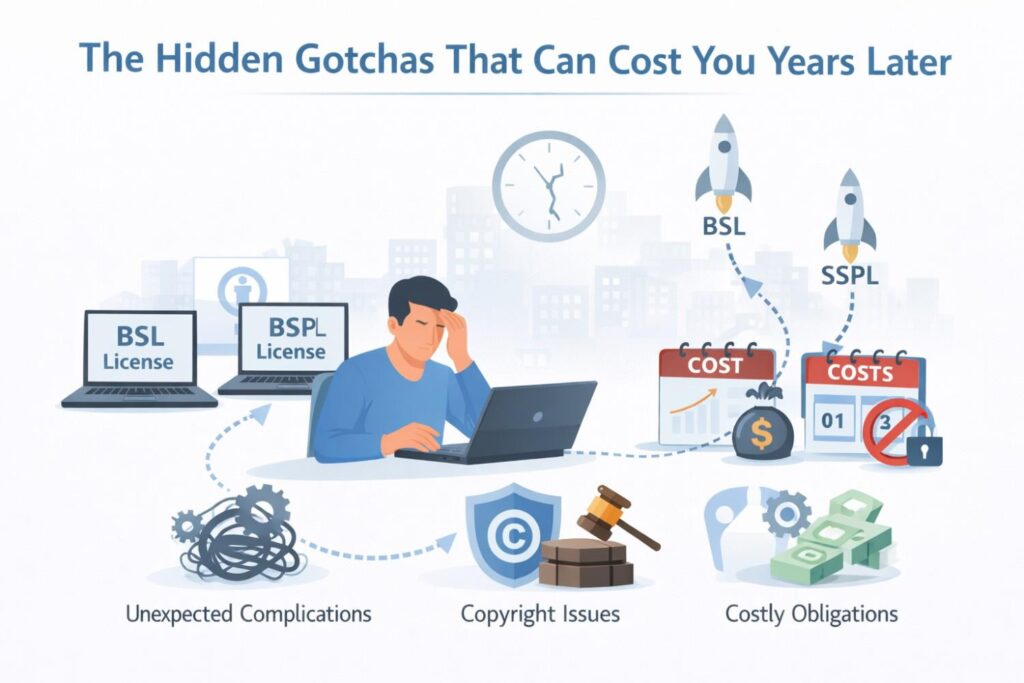
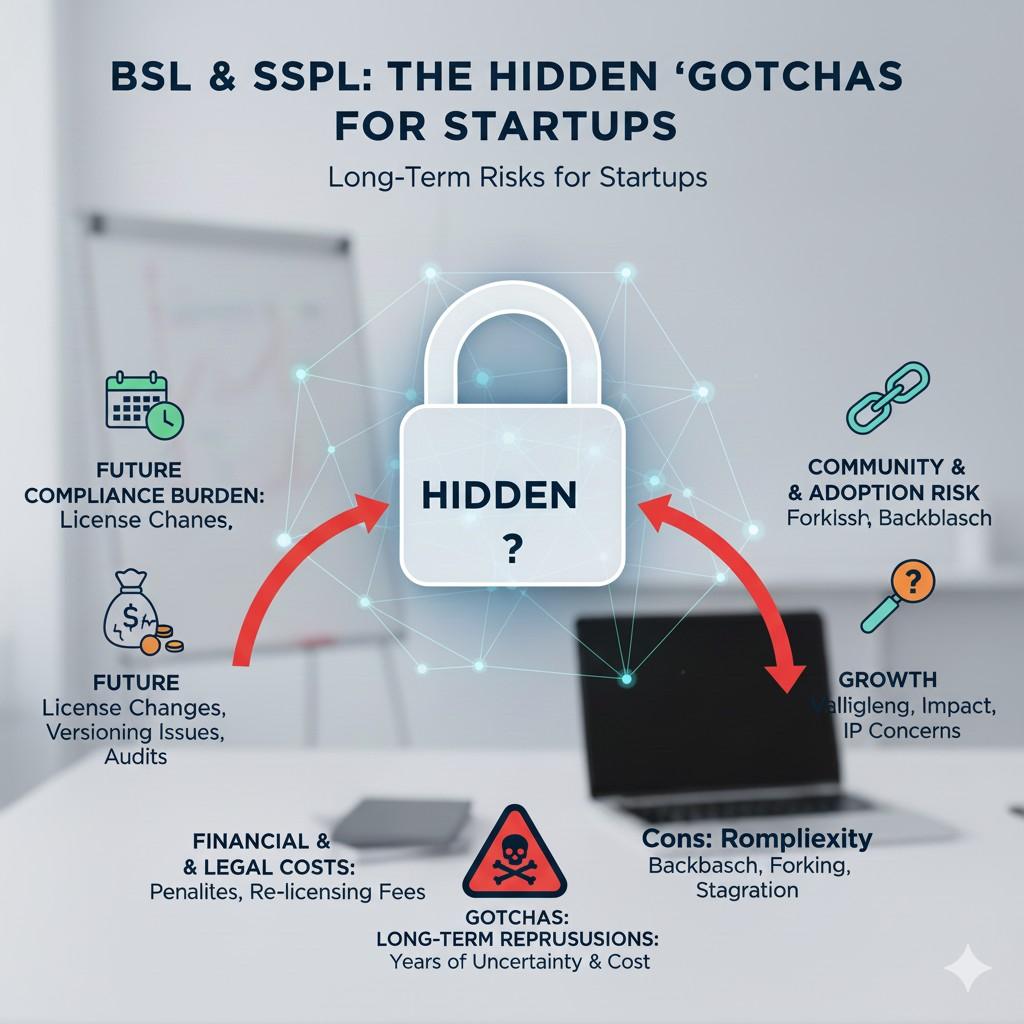
The Hidden Gotchas That Can Cost You Years Later
Most licensing mistakes do not explode right away. They sit quietly in the background while you build, sell, and grow. Then one day, when the company finally has momentum, they show up as blockers.
A deal falls apart. An acquisition stalls. A competitor moves faster than expected. At that point, changing course is painful and expensive.
BSL and SSPL both carry hidden risks that only become visible over time. Founders who know where these traps are can avoid them. Founders who do not often learn the hard way.
License lock-in is real
Once users adopt your product under a specific license, changing it becomes extremely hard. Early adopters feel entitled to the terms they signed up for. Communities push back. Customers demand exceptions.
Even if you are legally allowed to change the license for future versions, the damage is often already done. You end up supporting multiple versions or creating confusion in the market.
This means your first license choice deserves serious thought. Treat it like a long-term decision, not a temporary experiment.
Ambiguity becomes a liability
Vague language feels flexible at first. Later, it becomes a weapon.
When your company grows, people interpret your license in ways you did not expect. Some push the boundaries. Others freeze out of fear. Both outcomes hurt.
Ambiguity also invites disputes. You may never plan to enforce aggressively, but the existence of unclear rules creates stress for customers and partners.
Clear terms reduce conflict. If something is allowed, say it plainly. If it is not, explain why. Clarity builds trust, and trust scales.
Enforcement costs more than you think
Writing a restrictive license is easy. Enforcing it is not.
When someone violates your terms, you face a choice. Ignore it and weaken your position, or act and spend time, money, and focus. Neither option is great.
Many founders assume enforcement will be rare. In reality, success attracts attention. The more valuable your product becomes, the more people test the limits.
This is another reason licenses alone are weak protection. Patents shift the burden. They give you leverage without constant policing. That is why strong teams use them as a quiet backstop.
PowerPatent helps founders do this early, when it is easiest and cheapest. You can see how it works here: https://powerpatent.com/how-it-works.
Ecosystem stagnation risk
Ecosystems grow when people build on top of your work without fear. Restrictive licenses can slow that growth in subtle ways.
Developers may avoid deep integration. Companies may choose alternatives for strategic projects. Over time, your product becomes a tool rather than a platform.
This is not always bad, but it should be a conscious choice. If your vision includes becoming a core layer in other products, your license must support that.
Surprise conflicts with customers
Some customers will grow into restricted use cases without realizing it. What started as internal use turns into a service. What started as a small deployment becomes critical infrastructure.
When this happens, conversations can turn tense. Customers feel trapped. You feel justified. Neither side is happy.
The best way to avoid this is proactive communication. Make sure customers understand what growth paths are allowed and which ones require a conversation. Surprises damage relationships.
Acquisition friction appears late
When an acquirer shows interest, every risk is magnified. Licenses are examined for edge cases, enforcement history, and potential backlash.
If your license limits future business models or creates ongoing obligations, buyers may lower their offer or walk away.
Founders often assume their success will override these concerns. Sometimes it does. Often it does not.
The false sense of safety
The biggest gotcha is psychological. BSL and SSPL can make founders feel protected when they are not.
Licenses do not stop competitors from learning. They do not stop reimplementation. They do not protect ideas.
Only patents do that. They protect the underlying system, the unique approach, and the technical advantage. When founders realize this late, competitors may already be catching up.
This is why modern startups combine smart licensing with strong patents early. It is easier, cheaper, and far more effective than reacting later.
PowerPatent was built to make this process fast and founder-friendly. You can explore how it works here: https://powerpatent.com/how-it-works.
Making a future-proof choice
The goal is not to avoid BSL or SSPL. The goal is to choose them with full awareness.
Ask yourself how this license will feel when you have ten customers, then one hundred, then one thousand. Ask how it affects partnerships, hiring, and exits.
Most importantly, do not rely on a license as your only shield. Build real protection around what makes your product special.
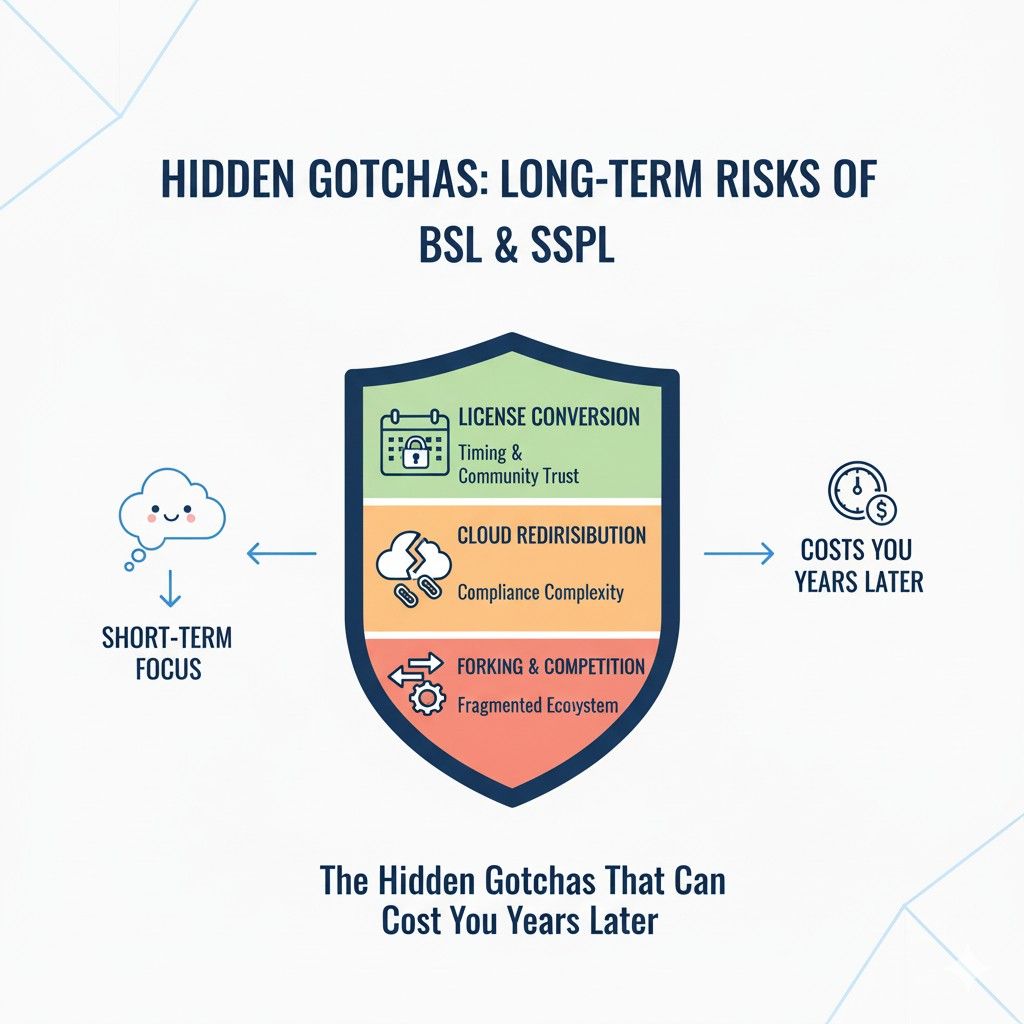
Founders who think this way early move faster with less fear. They spend less time worrying about being copied and more time building something worth protecting.
If you want help turning your innovation into real, lasting protection without slowing down your company, PowerPatent is built for exactly that. Learn how it works here: https://powerpatent.com/how-it-works
Wrapping It Up
Choosing between BSL and SSPL is not about picking the “strongest” license. It is about choosing the one that matches how you want your business to grow, sell, and survive long term. Both licenses were created for good reasons. Both can help in specific situations. Both can quietly hurt you if chosen without a full picture.
Leave a Reply