
If you are raising money or thinking about a sale, your code will be opened, touched, and questioned. Not in a casual way. In a very serious way. Investors and buyers will dig into it because your code is the product. If it breaks, leaks, or belongs to someone else, deals slow down or die. This article is about how to audit your codebase before that happens, so you stay in control and move fast.
Why Your Code Suddenly Becomes the Center of the Deal
When fundraising or an acquisition starts to feel real, something shifts. Conversations move from vision and growth to proof and risk.
This is the moment when your code stops being just a tool you use to build and starts being the asset everyone is judging. Understanding why this happens puts you back in control instead of reacting under pressure.
Your Code Is the Product, Not the Pitch
At the early stage, stories matter. You talk about the problem, the market, and the future. But once real money or a real buyer is on the table, stories are no longer enough. Your code becomes the proof that what you claim is real.
Investors and buyers know that slides can be fixed in a weekend. Code cannot.
If your system actually works, scales, and does what you say, the code will show it. If it does not, that truth also shows up fast. This is why your code suddenly matters more than your deck.
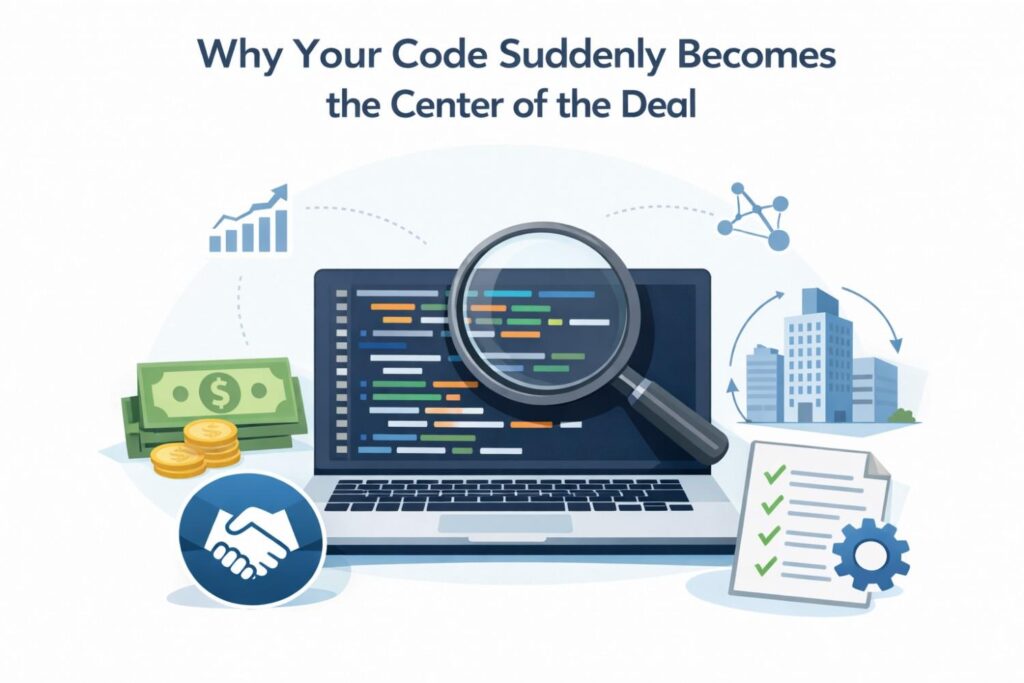
A smart move here is to step back and read your own codebase as if you did not write it. Ask yourself if it clearly shows what your product does and why it is hard to copy.
If the answer is no, you have time to fix that before someone else points it out.
Risk Is the Real Enemy in Any Deal
Every deal is about removing fear. People investing or buying are not looking for perfection. They are looking for reasons not to lose money. Your code is one of the biggest sources of hidden risk.
Messy ownership, unclear logic, or parts of the system no one understands all raise red flags.
Even if the product works today, risk makes people slow down. Slowing down often kills momentum, and momentum is everything in a deal.
One practical step is to identify the parts of your system that only one person understands.
Those areas create fear. Start writing simple explanations in plain language, even if they live in a basic text file. This shows maturity and lowers perceived risk fast.
Ownership Questions Come First, Always
Before anyone cares how smart your tech is, they want to know who owns it. This sounds basic, but it is one of the most common deal blockers.
If contractors wrote core code and agreements are missing, that becomes a problem. If early experiments live in the same repo as your core system, that creates confusion.
If open source code is mixed in without clear tracking, questions follow.
You do not need a perfect system, but you do need clarity. Go through your repo and tag what is core, what is experimental, and what is third party.
When you can explain this calmly and clearly, you look prepared. When you cannot, people assume the worst.
This is also where patent strategy connects directly to code audits. When you understand what is truly yours and what makes it special, protecting it becomes easier.

Platforms like PowerPatent help founders turn that clarity into real protection without slowing down. You can see how that works here: https://powerpatent.com/how-it-works
Code Quality Signals Team Quality
People do not just judge your product through your code. They judge your team. Clean structure, clear naming, and thoughtful decisions tell a story about how you build.
Even non-technical investors rely on advisors who can read these signals. Sloppy shortcuts taken without reason suggest future problems. Thoughtful tradeoffs explained clearly suggest a team that knows what it is doing.
A useful exercise is to pick one critical part of your system and write a short explanation of why it was built that way. Not how it works line by line, but why the choices were made. This shows intent and maturity, which builds trust fast.
The Code Shows Whether You Can Scale
Promises about growth mean nothing if the system cannot handle it. When people review your code, they are looking for signs that it can grow without breaking.
This does not mean everything needs to be perfect. It means the foundation should make sense. Clear separation of key parts, reasonable data handling, and an obvious path to improvement matter more than fancy tricks.
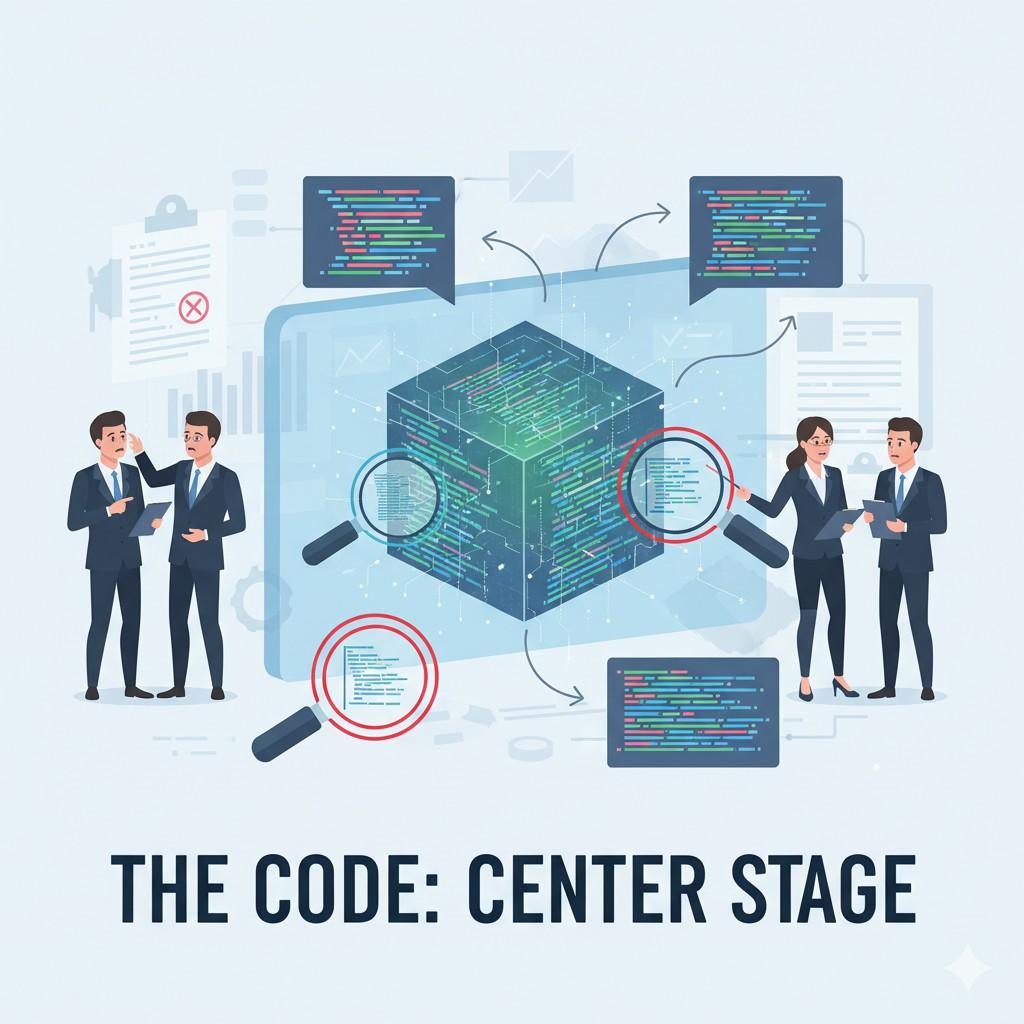
If you know certain parts will need work later, say that. But also show that you understand the problem and have thought about the solution. Confidence paired with honesty goes a long way in technical review.
Due Diligence Is Not the Time to Discover Surprises
Many founders wait until due diligence starts to really look at their code through an outside lens. That is usually too late. When surprises show up during diligence, timelines slip and leverage shifts.
The goal of auditing early is not to impress. It is to remove surprises. When reviewers find exactly what you said they would find, trust grows. When they find things you did not mention, trust shrinks.
Set aside time well before fundraising to do a mock review. Pretend you are answering tough questions from someone who does not care about your feelings. This mindset alone changes how prepared you are when it counts.
Your Code Is Evidence of Defensibility
At some point, someone will ask what stops others from copying you. Your answer should not rely only on speed or brand. Your code should show real depth.
This does not mean complex code for the sake of complexity. It means clear systems, thoughtful logic, and unique approaches that are hard to replicate quickly. When your code reflects that, your story becomes believable.
This is also where turning code into patents matters. When your audit reveals what is truly novel, capturing that with the right tools gives you leverage.

PowerPatent is built for founders who want to do this without drowning in process. You can explore that here: https://powerpatent.com/how-it-works
What Investors and Buyers Really Look for Inside Your Repo
When someone serious opens your repository, they are not browsing out of curiosity. They are looking for answers to very specific questions, even if they do not say them out loud.
Understanding those questions changes how you prepare and how you present what you have built.
They Are Looking for Truth, Not Perfection
The first thing to understand is that reviewers are not expecting flawless code. They know real products are built under pressure. What they want is honesty baked into the system.
They are reading your repo to see if what you claim matches what exists. If you say the product is stable, they look for patterns that suggest stability.
If you say it is early but improving fast, they look for signs of momentum and learning.
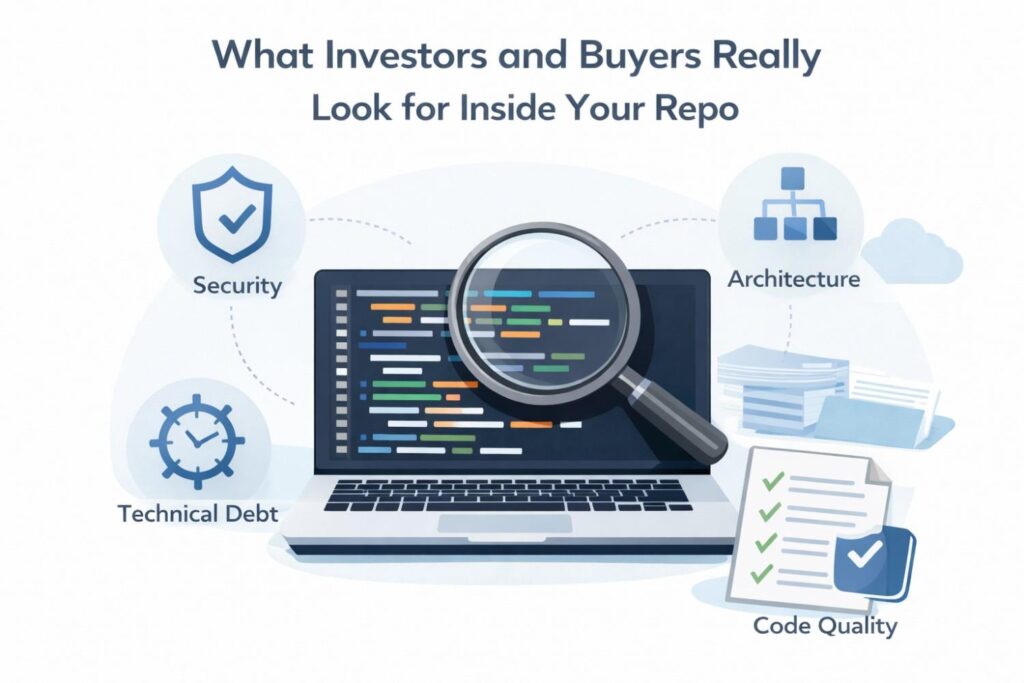
Trying to hide problems almost always backfires. Clear comments, simple explanations, and visible decisions tell a much better story than silence. Truth creates trust, and trust keeps deals moving.
They Want to See a Clear Shape to the System
One of the fastest ways to lose confidence is a repo that feels random. When nothing has a clear place, reviewers assume the system grew without direction.
They are not looking for a perfect architecture. They are looking for intent. A clear sense that the system has a core, that supporting parts are separate, and that changes do not ripple everywhere at once.
A very practical step is to walk through your main product flow and make sure the code reflects that flow. If it does not, small refactors that improve clarity can pay off more than weeks of new features.
They Check How Easy It Is to Understand
Every deal includes a quiet question: what happens if the founding engineers leave? Your code is one of the answers.
If understanding the system requires tribal knowledge locked in one person’s head, that is a risk. If a smart engineer could get oriented with reasonable effort, that is reassuring.

You can improve this quickly by adding simple explanations at key entry points. Not long documents. Just short notes that explain what this part is responsible for and how it fits into the whole.
They Look for Signs of Discipline Over Time
Good reviewers can tell if a system evolved thoughtfully or chaotically. They look at commit history, structure changes, and how old code interacts with new code.
Consistency matters more than style. A system that follows the same patterns over time feels safer than one that constantly reinvents itself without reason.
If you know there are areas where discipline slipped, acknowledge it internally and clean up the worst offenders. Even small improvements signal that you care about long-term quality.
They Are Watching How You Handle Tradeoffs
No real product is built without compromises. Reviewers are not judging you for making them. They are judging whether you understood them.
When performance was chosen over simplicity, is that clear? When speed mattered more than polish, does the code show awareness of future cleanup?
One useful habit is to leave short notes where major tradeoffs exist. This turns what could look like a mistake into a conscious decision. Conscious decisions inspire confidence.
They Pay Attention to Dependencies and Boundaries
Hidden coupling scares people. When one small change can break many things, systems feel fragile.
Reviewers look for clear boundaries between parts of the system. They want to see that data flows are understandable and that responsibilities are not mixed everywhere.
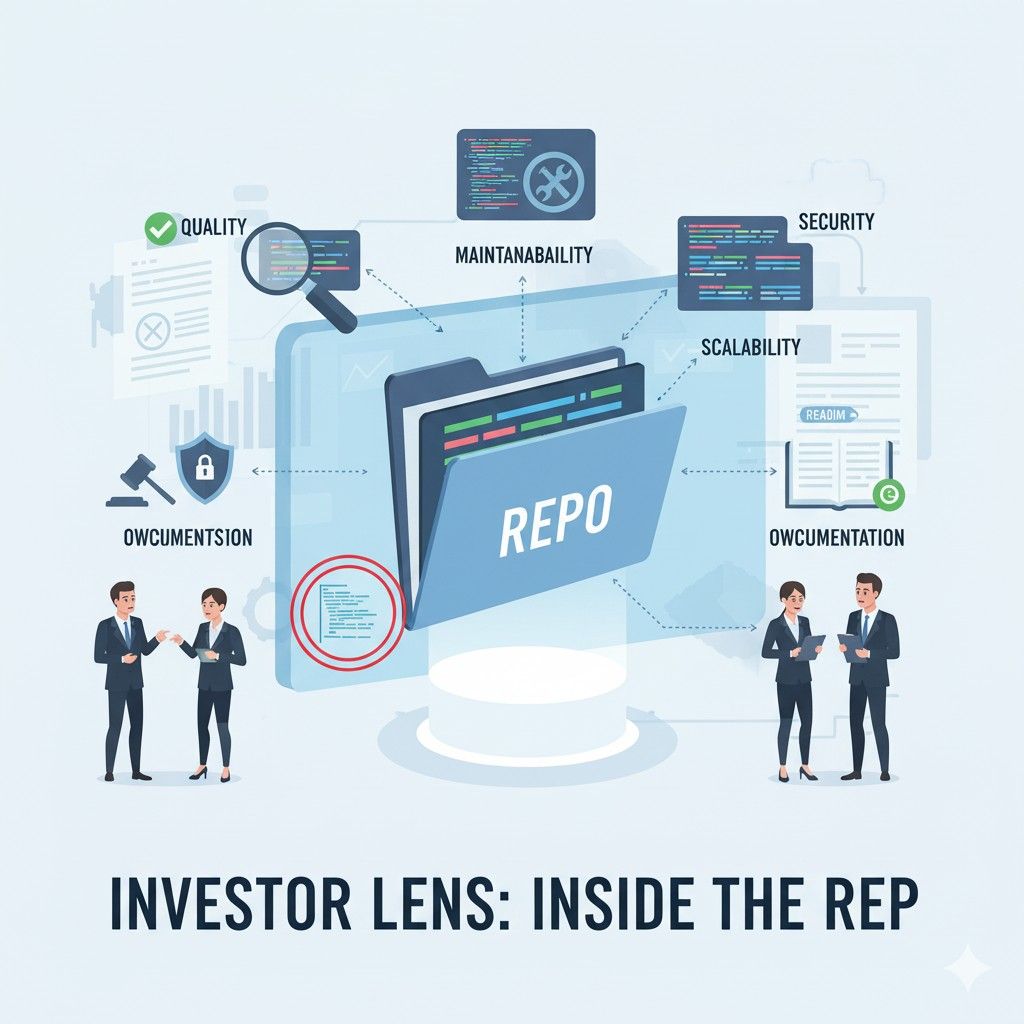
You do not need to redesign everything. Often, simply clarifying boundaries through naming and structure makes a huge difference in how safe the system feels.
They Are Assessing How Hard It Is to Copy
Even if they never say it directly, reviewers are always thinking about defensibility. Your repo gives clues.
If the system is mostly glue code around common tools, that is easy to copy. If it shows deep understanding of a problem and thoughtful solutions, copying becomes harder.
This is where your audit connects to intellectual property. When you can clearly point to what is unique in your code, you are in a strong position to protect it.
PowerPatent helps founders do exactly this by turning real technical work into strong patents without slowing the business. You can see how here: https://powerpatent.com/how-it-works
They Notice How You Treat Security and Data
Even early-stage companies are expected to think about data safety. Reviewers look for basic care, not enterprise perfection.
Clear handling of sensitive data, reasonable access controls, and an absence of obvious leaks go a long way. Ignoring these areas completely raises concerns that are hard to undo.
If security is still evolving, that is fine. What matters is showing that it is on your radar and improving intentionally.
They Care About How Fast You Can Move From Here
Finally, reviewers are trying to answer one last question. How quickly can this product grow after the deal?
Your code should suggest that adding features, fixing issues, and onboarding new engineers is possible without everything breaking. Flexibility and clarity matter more than clever tricks.

When your repo tells that story, conversations shift. Instead of focusing on risk, people start talking about upside.
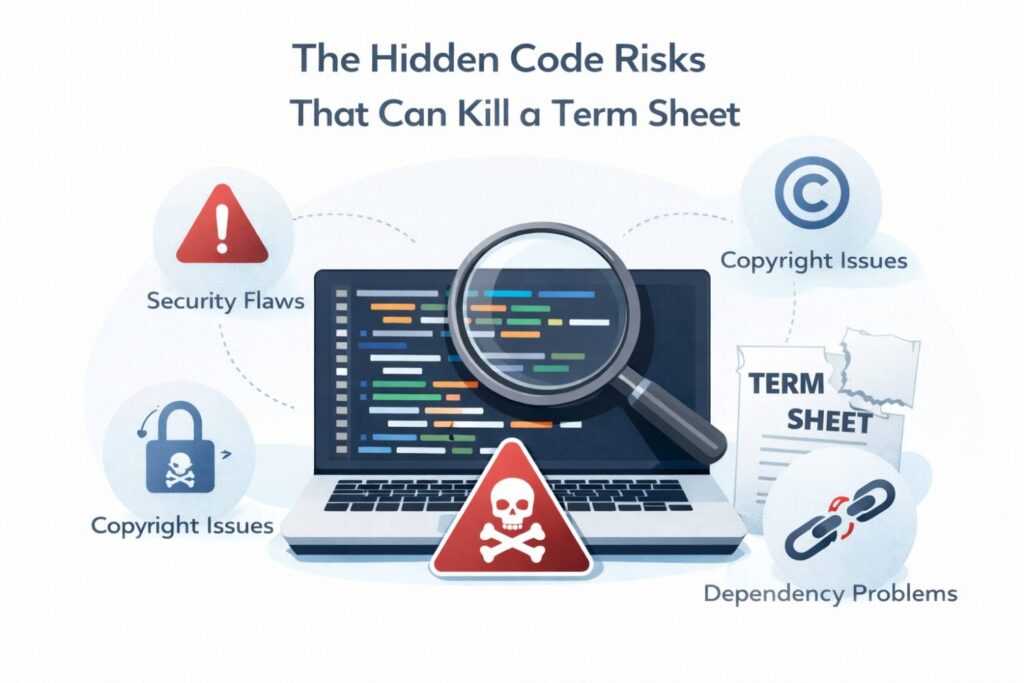
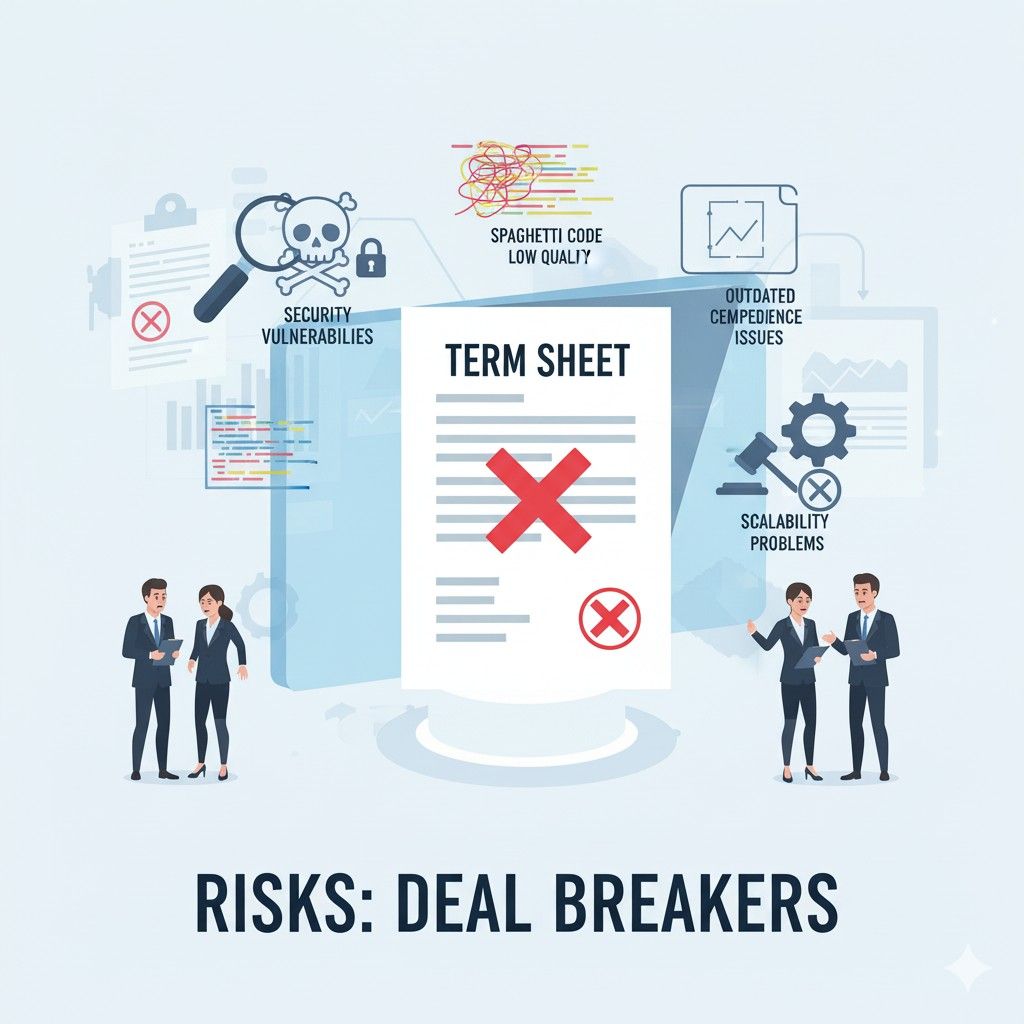
The Hidden Code Risks That Can Kill a Term Sheet
This is the part most founders never hear about until it is too late. Deals rarely fall apart because the product does not work. They fall apart because small, quiet risks stack up inside the codebase and make people nervous.
These risks do not announce themselves. They show up as pauses, extra questions, and suddenly slower replies. Understanding them early gives you leverage when it matters most.
Silent Ownership Gaps That No One Flags Out Loud
One of the most dangerous risks is unclear ownership. Reviewers often spot it early but do not always raise it directly. Instead, it lingers in the background as doubt.
If parts of your core system were written by people who are no longer involved, and the paperwork is fuzzy, that creates fear. Even if nothing is technically wrong, uncertainty alone can stall a deal.
The best move is to trace every meaningful part of the system back to a clear source. When you can confidently explain who built what and under what terms, tension drops immediately.
Old Experiments Mixed With Core Logic
Most startups move fast and experiment early. That is normal. The problem appears when early experiments never get separated from what truly matters.
When reviewers see test ideas living alongside core logic, they struggle to understand what is essential. This confusion turns into concern about maintainability and focus.
Taking time to isolate core functionality sends a strong signal. It shows that you know what actually drives value and what can be ignored or removed.
Code That Only One Person Understands
This risk is common and often underestimated. If your system relies heavily on the knowledge of a single person, the company feels fragile.
Reviewers imagine scenarios where that person is unavailable. Even if it is unlikely, the mere possibility affects confidence.
You do not need to eliminate this risk completely. You need to reduce it enough. Adding simple explanations and spreading understanding across the team makes the company feel safer overnight.
Unspoken Technical Debt That Surfaces at the Worst Time
Every product has technical debt. The problem is not the debt itself. The problem is pretending it does not exist.
When reviewers uncover issues you never mentioned, they wonder what else is hidden. This is how trust erodes quietly.
A better approach is to acknowledge known weak spots before they are discovered. When framed honestly, technical debt becomes a roadmap item, not a deal killer.
Dependencies That Create Hidden Lock-In
External libraries and services help teams move fast. But heavy dependence without clear understanding creates risk.
If your system would break without a third-party service and there is no backup plan, reviewers notice. They start asking about long-term costs and control.
Being able to explain why a dependency exists and what alternatives look like changes the tone of the conversation completely.
Security Assumptions That Were Never Tested
Many early teams assume security can wait. That assumption becomes visible in the code.
Hardcoded secrets, loose access controls, or unclear data handling raise immediate concerns. Even small issues can overshadow bigger strengths.
You do not need perfect security. You need evidence of care. Fixing obvious issues and documenting intentions goes much further than founders expect.
Inconsistent Patterns That Suggest Rushed Decisions
When different parts of the system follow different rules without reason, reviewers sense chaos.
This does not mean everything must look the same. It means differences should make sense.

Taking time to align the most important paths of the system reduces this risk and makes the whole codebase feel calmer and more reliable.
Tests That Exist but Do Not Protect Anything
Having tests is not enough. Reviewers look at what the tests actually cover.
If critical flows are untested while minor helpers are well covered, it sends the wrong signal. It suggests priorities may be misaligned.
Even a small number of meaningful tests around core behavior can dramatically improve confidence in the system.
Promises in the Pitch That the Code Cannot Support
This is a subtle but deadly risk. When claims about scalability or features do not match what the code can realistically do, reviewers notice.
They may not challenge you directly, but the gap creates doubt.
Aligning your story with your code before diligence starts keeps everything consistent and credible.
Intellectual Property That Was Never Clearly Defined
One of the biggest hidden risks is not knowing what part of your code is actually novel.
If everything feels generic, defensibility becomes questionable. If novelty exists but is not articulated, it gets overlooked.
This is where a thoughtful audit pays off twice. First, it reduces deal risk. Second, it helps you protect what matters.
PowerPatent helps founders capture this value by turning real technical differentiation into strong patent protection without slowing the company down. You can explore how that works here: https://powerpatent.com/how-it-works
Small Fixes That Prevent Big Delays
The most important insight is this. Most deal-killing risks are easy to reduce once you see them.
They do not require rewriting your product. They require clarity, honesty, and a bit of preparation.
Founders who address these risks early do not just pass diligence. They lead it. They answer questions before they are asked and keep momentum on their side.
Unclear Boundaries Between Product and Infrastructure
When product logic and infrastructure concerns are mixed together, reviewers struggle to see how flexible the system really is.
They want to understand what part of the code delivers user value and what part simply keeps the lights on. When these are tangled, future change feels expensive.
Separating concerns, even conceptually, helps outsiders see that the product can evolve without rebuilding everything from scratch.
Feature Flags That Never Got Cleaned Up
Feature flags are useful when moving fast, but forgotten flags create confusion.
Reviewers notice dead paths, unused toggles, and logic that depends on conditions no one remembers. This suggests rushed decisions that were never revisited.
Cleaning up old flags or documenting why they still exist removes mental clutter and makes the system feel more intentional.
Data Models That Drifted Without Control
As products grow, data models often change. When those changes are not handled carefully, the code reveals it.
Inconsistent naming, unused fields, and unclear relationships make reviewers worry about data integrity. Data problems are expensive to fix later.
Taking time to align models with how the product actually works today reduces this concern and shows operational maturity.
Error Handling That Assumes Everything Works
Systems that assume success everywhere feel brittle.
When reviewers see missing error handling or vague fallbacks, they imagine edge cases bringing everything down. Even if that never happened before, the risk feels real.
Adding simple, explicit handling in key paths reassures reviewers that failures were considered, not ignored.
Configuration That Lives Only in People’s Heads
If critical behavior depends on environment settings that are not clearly defined, that creates fear.
Reviewers want to know how the system behaves in different situations. When configuration is scattered or undocumented, it feels unpredictable.
Centralizing and explaining configuration choices makes the system easier to reason about and trust.
Logs That Do Not Tell a Story
Logging is often overlooked, but it sends strong signals during review.
Sparse or noisy logs suggest that diagnosing problems would be hard. Clear, meaningful logs suggest operational awareness.
Improving logs around core flows helps reviewers believe the system can be monitored and managed at scale.
Performance Assumptions That Were Never Measured
Claims about speed or efficiency without evidence raise eyebrows.
When code suggests assumptions instead of measurements, reviewers question future scalability.
Even basic instrumentation or comments acknowledging known limits can shift this from a risk to a known constraint.
Migration Paths That Do Not Exist
As products evolve, migrations are inevitable. When there is no clear approach to handling change, the system feels stuck.
Reviewers look for signs that the team has thought about change over time, not just the present.
Showing how the system can adapt, even at a high level, increases confidence in long-term viability.
Code That Solves the Right Problem in the Wrong Place
Sometimes logic lives where it does not belong simply because it was convenient at the time.
Reviewers notice when responsibilities feel misplaced. This suggests future complexity as the system grows.
Relocating or clarifying these decisions makes the code easier to understand and evolve.
Risk That Comes From Not Claiming What Is Yours
Finally, one of the quietest risks is failing to assert ownership over your innovation.
If your unique approach is buried in the code without explanation or protection, it loses strategic value. Reviewers may miss it entirely.
This is where code audits, storytelling, and patents meet. When you know what makes your system special, tools like PowerPatent help you lock that value in without slowing momentum. You can see how founders do this here: https://powerpatent.com/how-it-works
Wrapping It Up
By the time fundraising or acquisition talks begin, it is already too late to start caring about your code. At that stage, your system is no longer just something you are building. It is something being judged. Every file, every decision, and every shortcut tells a story about how you operate and how safe it is to bet on you. A strong code audit is not about chasing perfection. It is about removing doubt. When your code clearly shows what the product does, who owns it, and why it is hard to copy, conversations change. Investors stop digging for problems and start asking how big this can get. Buyers stop slowing down and start planning what comes next.
Leave a Reply