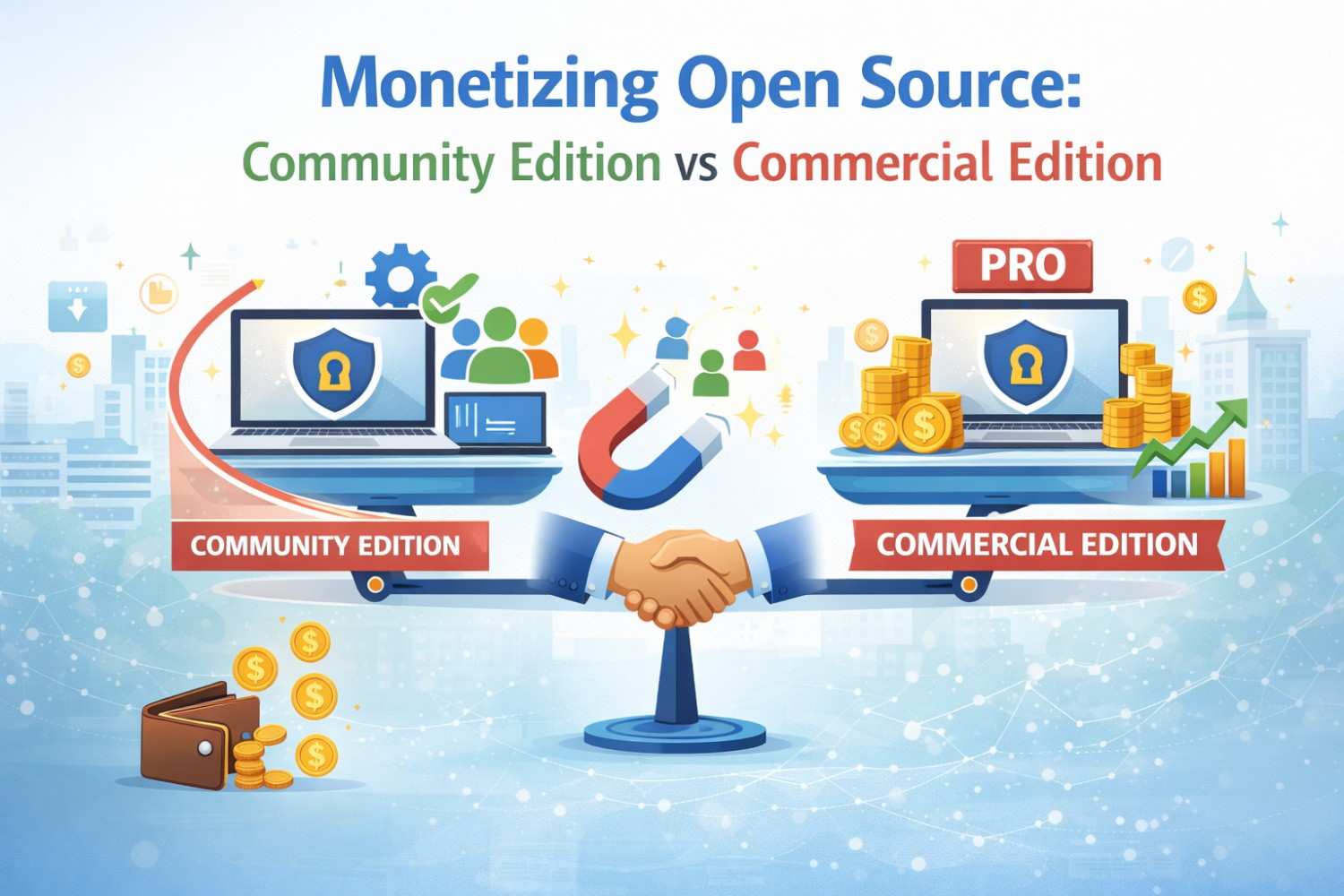
Open source is no longer just about sharing code. It is about building trust, growing a real community, and turning that trust into a strong business. Many founders start with open source because it feels right and because it helps adoption grow fast. Then a hard question shows up. How do you make money without breaking the spirit of open source?
Why Open Source Attracts Users but Does Not Automatically Create Revenue
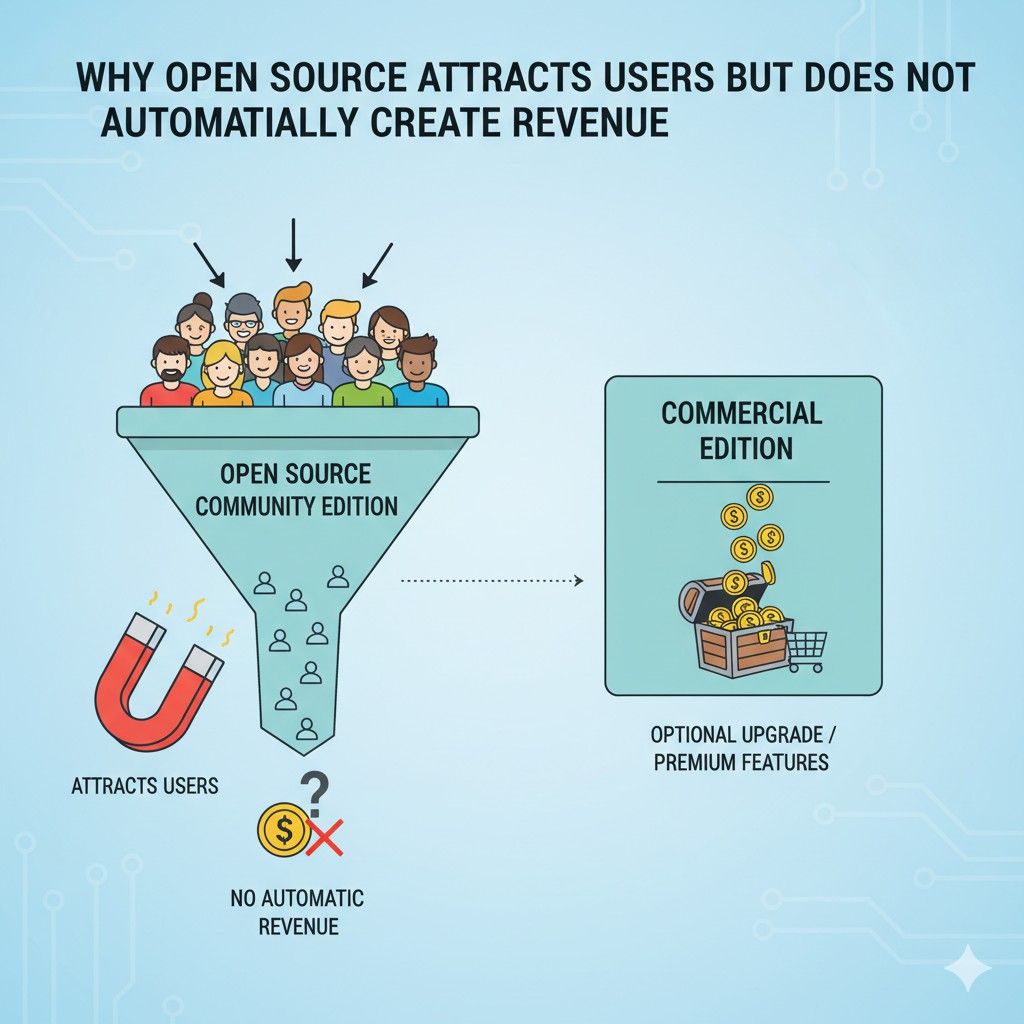
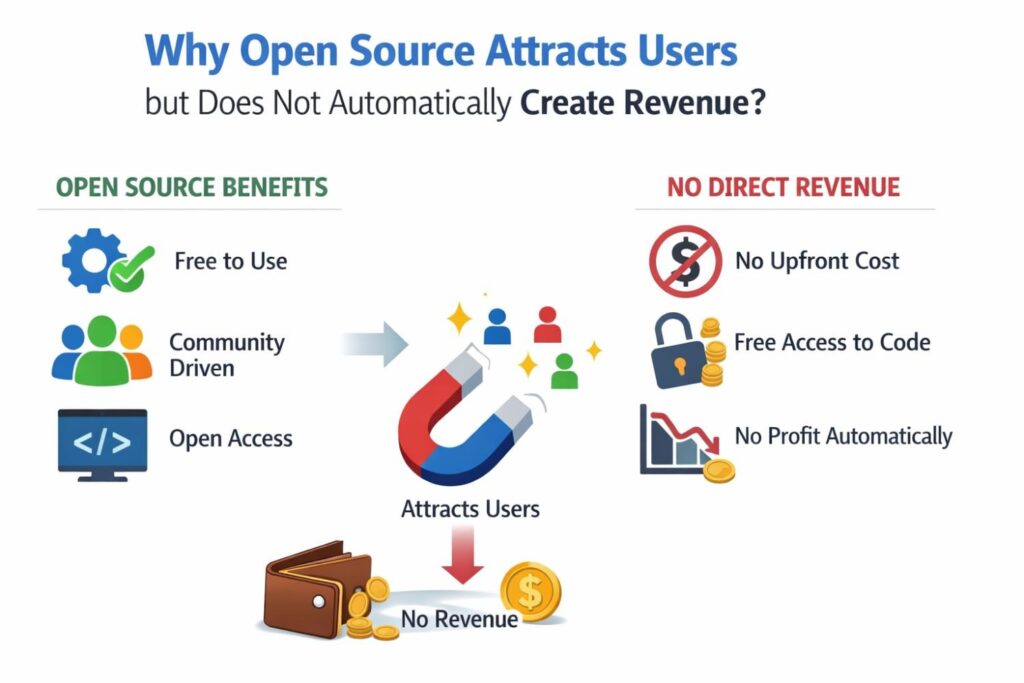
Open source has a powerful pull. It spreads fast, builds trust quickly, and often becomes the default choice for developers. But many teams confuse adoption with income.
They see stars on GitHub, active forums, and growing downloads, then feel surprised when revenue stays flat. This section explains why that gap exists and how smart businesses think about closing it without hurting growth.
The Trust Effect That Open Source Creates
Open source lowers fear. Users can see the code, test it, and trust that they are not locked into something risky. This feeling is why adoption grows so fast.
Developers talk about it, recommend it, and even contribute back. For a business, this trust is gold. But trust alone does not cause people to pay.
The key idea to understand is that trust opens the door, but value exchange closes the deal. If users feel they already get everything they need for free, there is no clear reason to move to a paid plan.
Many founders accidentally train users to expect zero cost forever. That mistake is hard to undo later.
Adoption Is Not the Same as Willingness to Pay
One of the biggest mental traps is assuming that high usage means high future revenue. In reality, most open source users are happy users, not paying users.
They might use your product daily and still never feel the need to spend money.
Businesses need to separate these two ideas early. Adoption shows interest. Payment shows urgency. If your open source version solves urgent problems too well, users never reach a point where paying feels necessary.
A strong business design leaves some important problems unsolved in the free version, without making it feel broken or dishonest.
The Free User Mindset and How It Forms
When someone installs open source software, they come with a certain mindset. They expect freedom, flexibility, and no sales pressure.
This is good for growth, but it also shapes behavior. If the product works well enough, they mentally label it as a free tool, not a commercial product.
Once this label sticks, it becomes much harder to change. That is why the first experience matters so much. Businesses should guide users early to understand that there is a free layer and a professional layer.
Not with popups or pressure, but through clear positioning and gentle reminders in the product itself.
When Community Love Becomes a Business Risk
A strong community feels amazing. People help each other, write tutorials, and defend your product online.
But there is a hidden risk. Communities often push back hard when companies try to monetize later. They feel ownership, even if they never paid.
This does not mean you should avoid community. It means you should set expectations early.
Be clear about what the company exists to do. Be open about the fact that you are building a business, not just a hobby project. Transparency early prevents anger later.
The False Hope of Scale Alone
Many founders believe that if usage grows large enough, revenue will naturally follow. This is rarely true in open source. Scale helps only if the product design already points users toward paid value.
Without that path, scale just increases costs like support, infrastructure, and time.
A smarter approach is to design revenue signals into the product. These are moments where users feel friction that is reasonable and expected.
Examples include needing better performance, stronger security, or simpler management as usage grows. These moments should align with the commercial edition, not feel like artificial limits.
Why Enterprises Pay and Individuals Often Do Not
Another important pattern is who actually pays. Individual developers love open source, but companies write checks. Businesses should design monetization around organizational pain, not personal curiosity.
Things like compliance, reliability, uptime guarantees, and support matter far more to companies than to solo users.
If your open source project mostly attracts individual users, that is fine. But your revenue strategy should aim slightly above them.
Think about teams, managers, and decision makers who care about risk and time more than tinkering. The commercial edition should speak directly to those needs.
How to Observe Real Buying Signals Early
Before building complex pricing plans, teams should watch behavior. Look at what users struggle with. Notice when they ask for features that reduce risk or save time. These requests are clues. They show what people might pay for.
Good businesses talk to users often, not to sell, but to listen. Ask how the product fits into their work. Ask what breaks when it scales.
These answers guide monetization better than any pricing theory.
The Role of Clear Ownership in Monetization
Monetization also depends on ownership. If your core idea can be copied freely and offered as a service by others, your revenue path becomes fragile. This is where many open source companies stumble.
They build value, then watch others monetize it faster.
Protecting the core innovation does not mean closing the code. It means being thoughtful about what truly differentiates your product.
In many cases, patents quietly protect that edge while keeping the community open. PowerPatent helps founders do this in a way that fits modern development speed. You can learn more here: https://powerpatent.com/how-it-works
Turning Open Source Into a Funnel, Not a Giveaway
The healthiest view of open source is as a starting point, not the final destination.
It is the top of the funnel where users learn, trust, and explore. The business is built by guiding a small but important group of users toward paid value.
This requires patience and clarity. You are not trying to convert everyone. You are trying to serve the users who need more, who rely on the product deeply, and who value stability. When designed well, monetization feels natural, not forced.
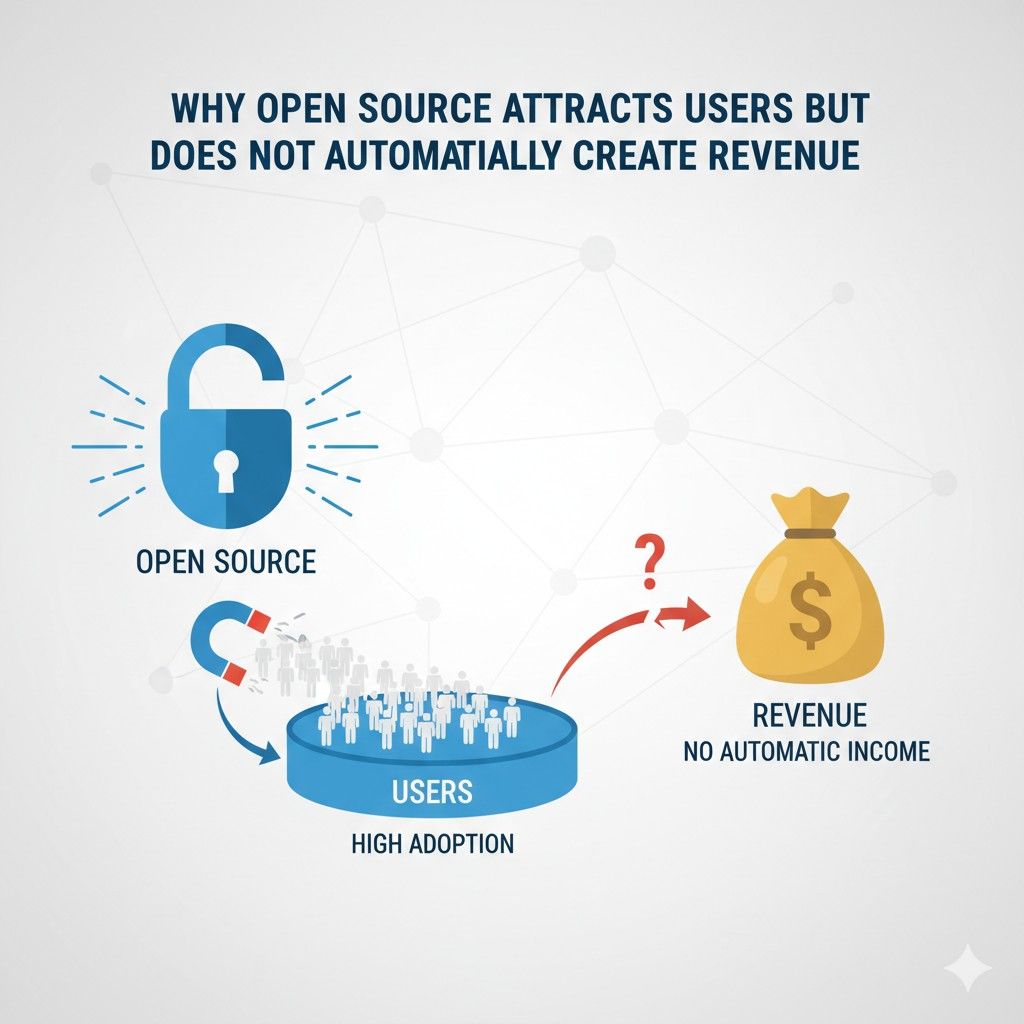
Open source attracts users because it removes barriers. Revenue comes when you thoughtfully introduce structure, protection, and value on top of that freedom.
The companies that win are the ones that plan for this from day one, even if they do not monetize right away.
What a Community Edition Is Really For and Where It Should Draw the Line
A Community Edition is often misunderstood. Many teams treat it as a full product that just happens to be free. Others treat it as a stripped-down demo.
Both approaches usually fail. The real purpose of a Community Edition is neither generosity nor sales pressure. It is clarity. It exists to help users understand the problem you solve, trust how you solve it, and see where the limits are.
When designed with intent, a Community Edition becomes the strongest asset in your business. When designed casually, it becomes the reason monetization never works.
The Real Job of a Community Edition
The Community Edition has one main job. It should let users succeed at the basic version of the problem. Not the entire problem. Not the hardest version. Just enough that they feel confident your product is the right foundation.
This is where many founders go wrong. They overdeliver because they are proud of the product or afraid of backlash.
They end up solving advanced problems for free. Once users build workflows and businesses on top of that free power, charging later feels unfair to them, even if it is reasonable.
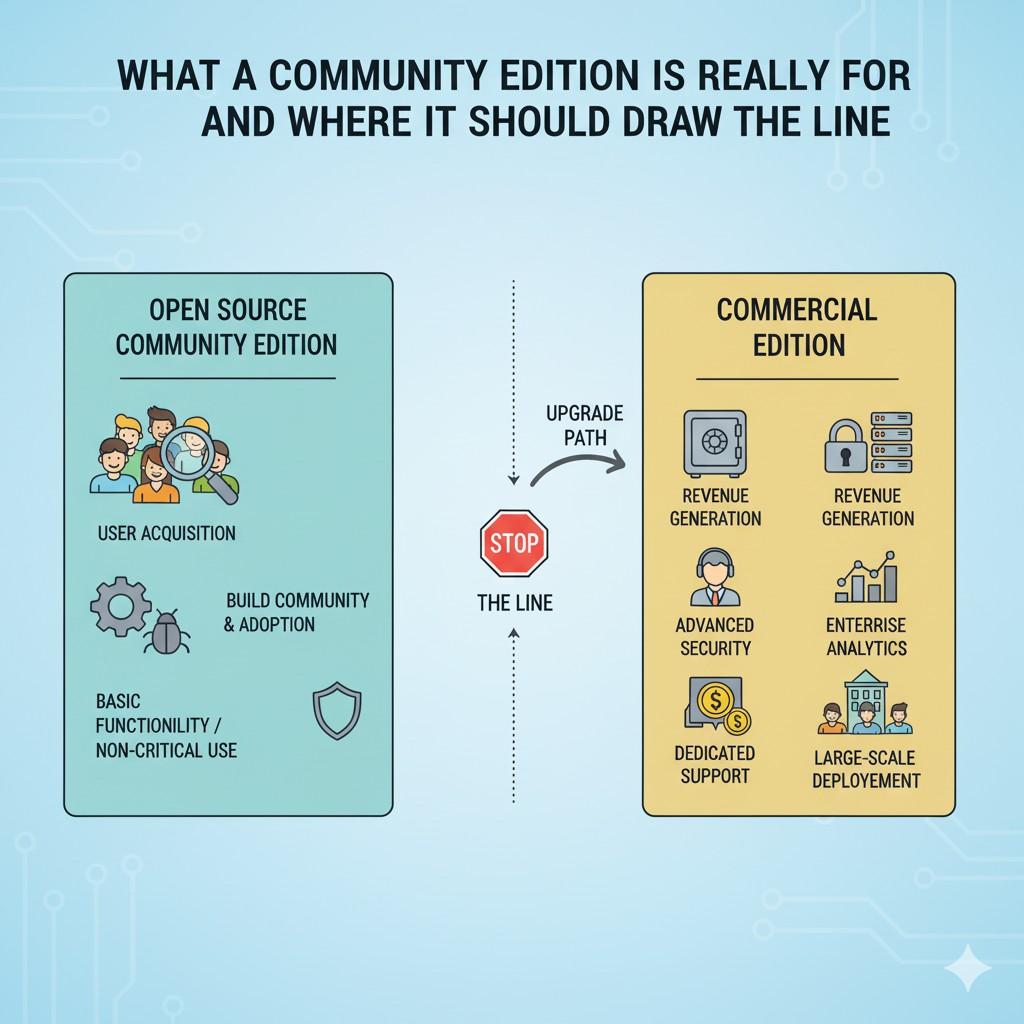
A strong Community Edition creates progress, not completion. Users should feel momentum, but also feel the ceiling.
Designing Limits That Feel Honest
Limits are not evil. Hidden limits are. The fastest way to lose trust is to surprise users with restrictions after they are deeply invested. Limits should be visible early and feel logical.
For example, if your product helps manage systems, the Community Edition might work well for a single setup or small scale.
As usage grows, complexity increases. That is where the Commercial Edition should naturally step in. Users should think, this makes sense, not, this feels like a trap.
The rule is simple. Limits should align with growth, not block learning.
Avoiding the “Good Enough Forever” Trap
One of the most common mistakes is making the Community Edition good enough forever. This happens when teams focus only on features and forget context.
They ship everything except branding or support, thinking companies will pay anyway.
In reality, many users are resourceful. They will accept inconvenience to avoid paying. If the free version solves core operational needs, many businesses will stop there.
The fix is not to cripple the product. The fix is to reserve outcomes, not buttons. The Community Edition can have powerful tools, but the Commercial Edition should deliver smoother operations, fewer risks, and less mental load.
How Community Edition Shapes User Expectations
Your free version sets the tone for how users think about your company. If it feels like a hobby project, people treat it like one. If it feels professional and intentional, users assume there is a serious business behind it.
This matters because buying decisions are emotional. Companies pay when they believe the vendor will be around, will improve the product, and will protect them from future problems.
A well-positioned Community Edition signals stability, not desperation.
This is also where clear messaging matters. Simple language in your docs and site should explain that the Community Edition is part of a larger offering, not the whole story.
The Hidden Cost of Supporting Free Users
Support is expensive, even when it looks free. Every question, bug report, and feature request takes time. If your Community Edition attracts heavy users with complex needs, support can quietly consume your team.
Smart companies design the Community Edition to be mostly self-serve. Documentation should be strong. Defaults should be safe. Advanced configurations should be reserved for paid plans.
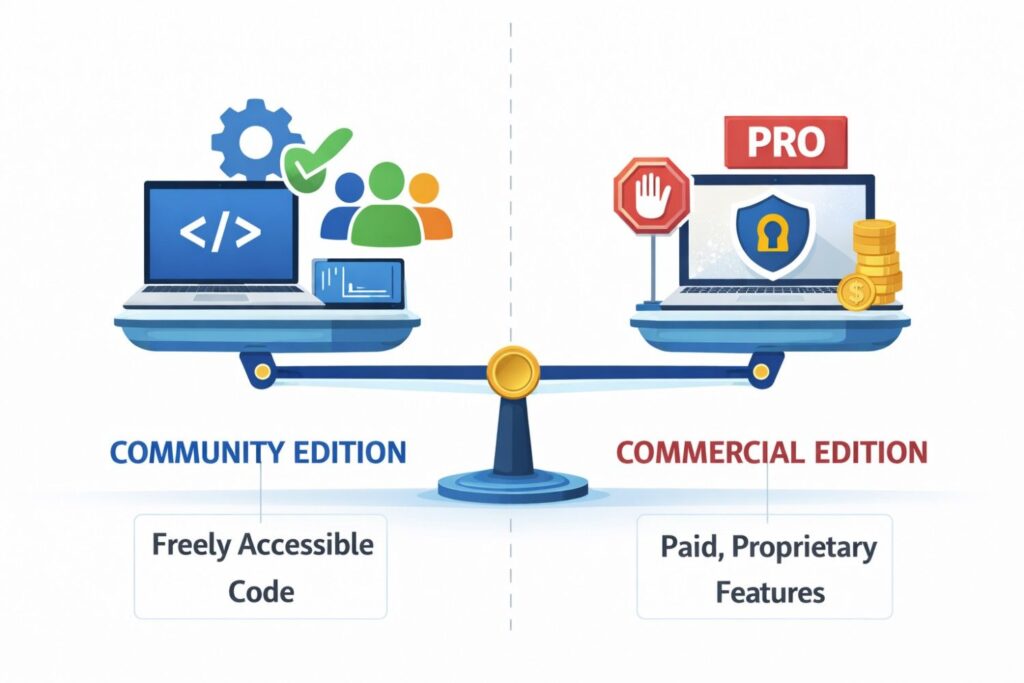
This protects your team and makes paid support feel valuable, not arbitrary.
Community Contribution Without Losing Control
Open source invites contributions, which is a huge advantage. But unmanaged contributions can pull the product in directions that do not support the business.
Clear contribution guidelines help here. They set expectations about what kinds of changes are welcome and how decisions are made. This does not limit community spirit. It protects focus.
The goal is alignment. The Community Edition should grow in ways that strengthen the Commercial Edition, not compete with it.
Drawing the Line Around What Matters Most
Every product has a core advantage. It might be speed, intelligence, reliability, or integration depth. That core is what customers ultimately pay for. The Community Edition should showcase it, but not fully unlock it.
This line is different for every product, but the thinking is the same. Ask yourself what would truly hurt if a competitor copied it and sold it tomorrow. That part deserves extra protection.
Many founders use patents quietly here. Not to attack the community, but to protect the business layer built on top of open code.
PowerPatent was built for this exact situation, helping teams protect what matters without slowing development. You can see how founders use it here: https://powerpatent.com/how-it-works
Making the Upgrade Feel Like a Relief
The best signal that you drew the line correctly is how users feel when they upgrade. If they feel relief, you got it right. If they feel forced, you went too far.
Relief comes when the Commercial Edition removes stress. Less manual work. Fewer risks. Clear accountability. These are things people are happy to pay for.
When users say, we should have done this sooner, you know the Community Edition did its job.
Treating the Community Edition as a Product, Not a Giveaway
Finally, the Community Edition deserves real product thinking. Roadmaps, quality standards, and communication all matter. This is often the first and longest relationship users have with your brand.
When treated seriously, it becomes the strongest growth engine you have. It attracts the right users, teaches them the value of your approach, and prepares them to pay when the time is right.
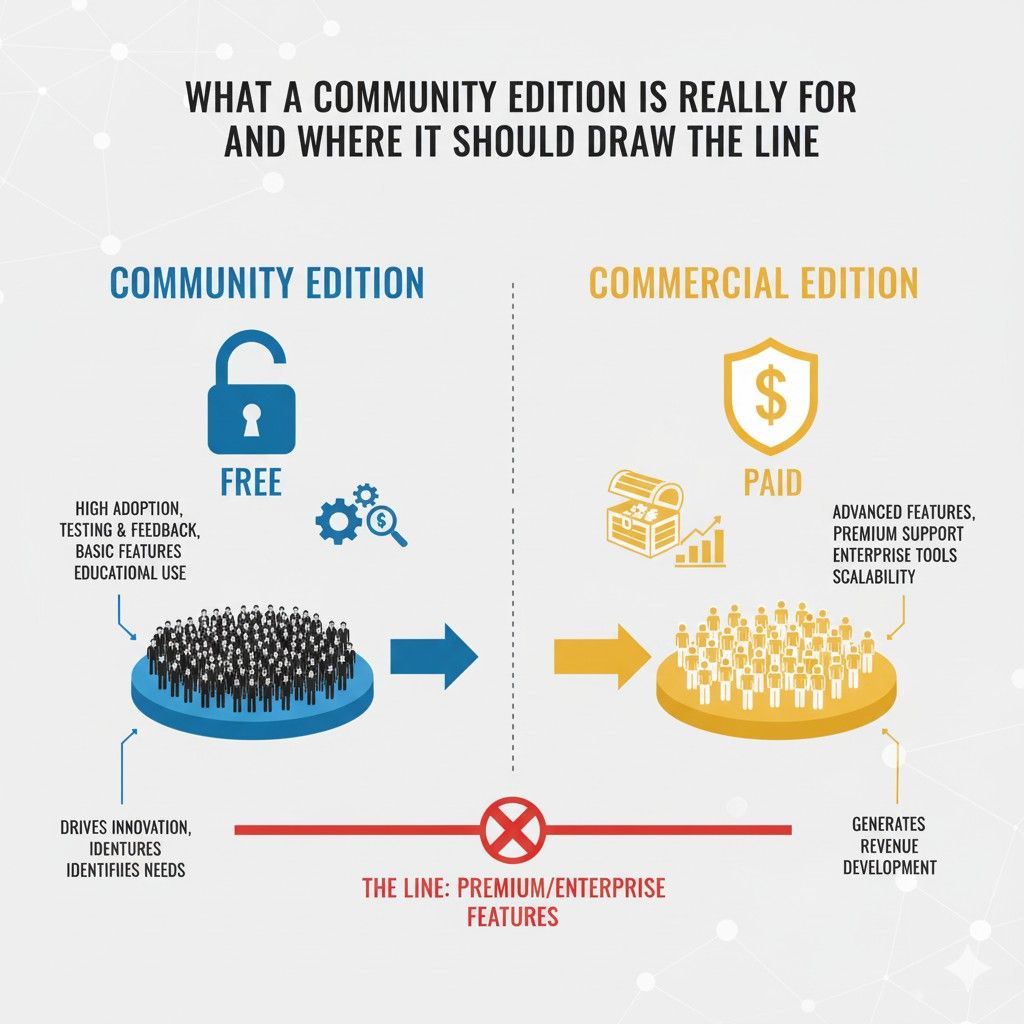
The Community Edition is not about free versus paid. It is about now versus later. When that difference is clear, monetization becomes much easier.
How a Commercial Edition Turns Trust Into a Sustainable Business
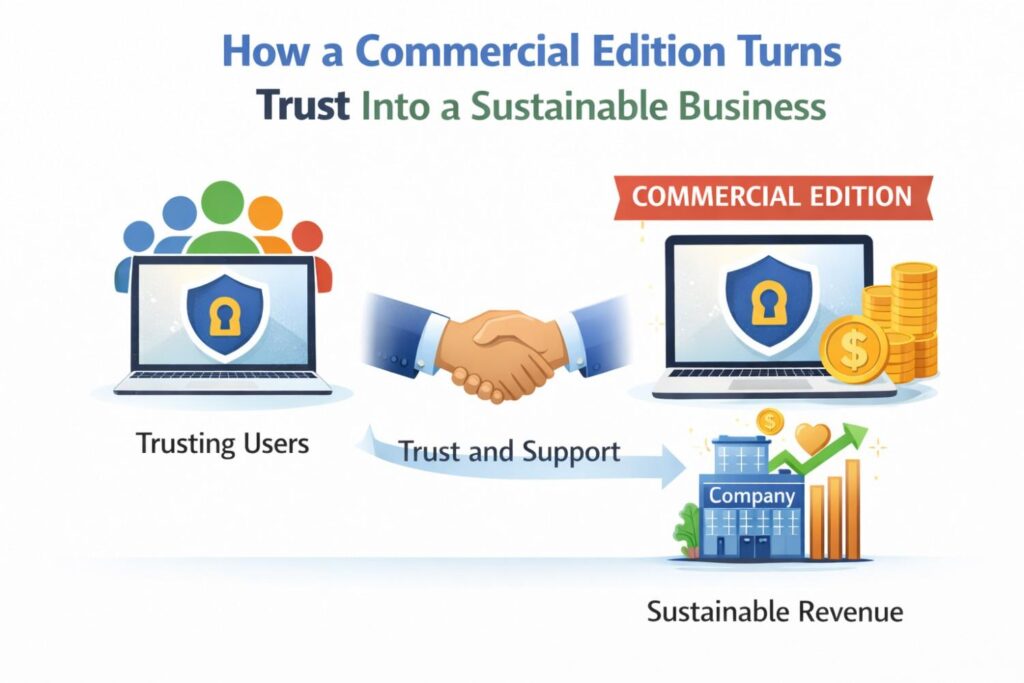
A Commercial Edition is where open source stops being a passion project and becomes a real company. This is the part many founders feel uneasy about.
They worry about backlash, about being seen as greedy, or about losing the goodwill they worked so hard to earn. In reality, a well-built Commercial Edition does the opposite. It rewards trust instead of breaking it.
The Commercial Edition exists to solve problems that free software cannot solve well. When it is designed with care, users do not feel sold to. They feel supported.
The Emotional Shift From User to Buyer
The move from using to paying is not just financial. It is emotional. A buyer is making a promise to rely on you. That promise only happens when the product feels stable and the company feels accountable.
Open source builds belief in the code. The Commercial Edition builds belief in the company.
Things like contracts, support, and guarantees are not boring extras. They are signals that you are serious and that the user is safe choosing you.
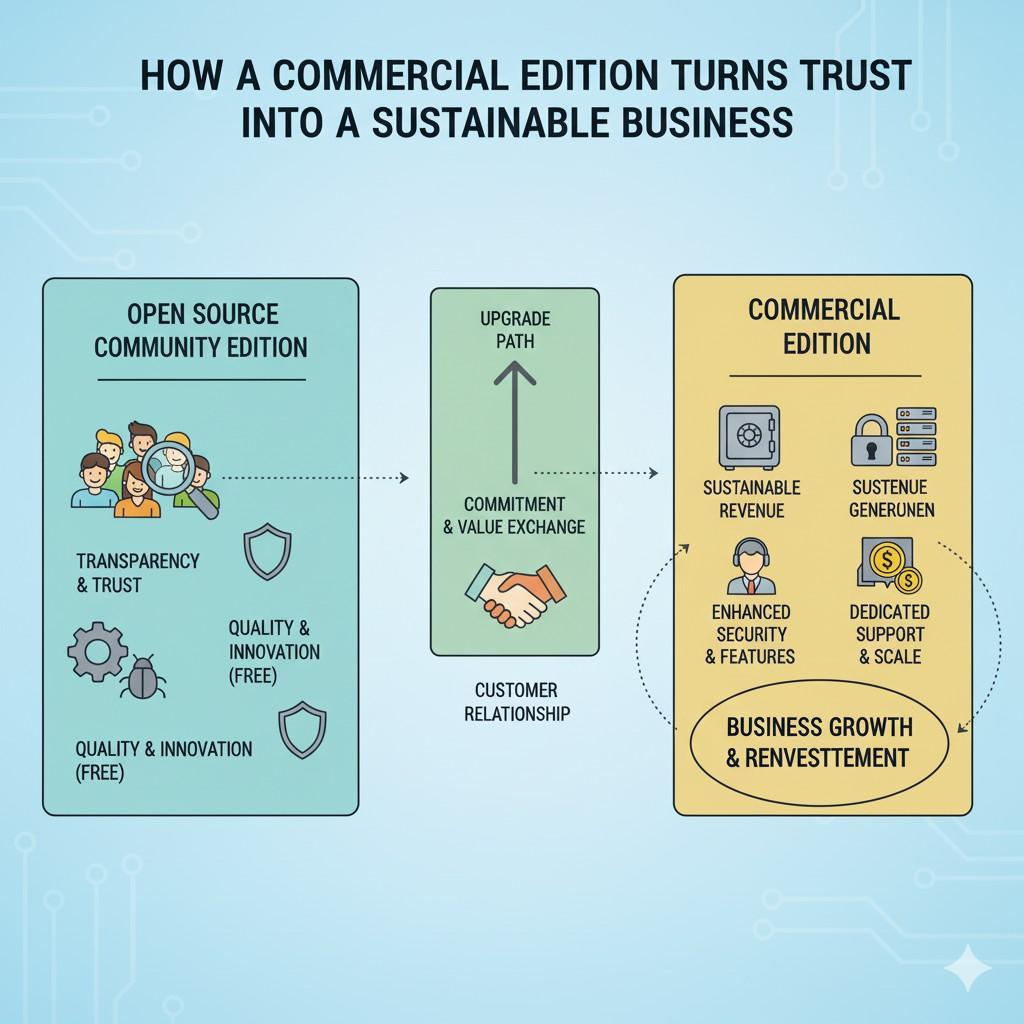
Founders who understand this focus less on features and more on confidence.
Selling Outcomes Instead of Features
Many Commercial Editions fail because they are framed as feature bundles. More buttons, more settings, more power. While features matter, they are not what decision makers buy.
They buy outcomes. Fewer outages. Faster delivery. Lower risk. Less stress on the team. The Commercial Edition should clearly promise these outcomes and show how it delivers them.
This also helps avoid comparisons with the Community Edition. When the paid version is about peace of mind, not just extra tools, the value feels different and fair.
Where Commercial Value Should Live
The strongest Commercial Editions focus on areas that are hard to replace or copy. These often include things like managed services, enterprise-grade security, performance at scale, and deep integrations.
These are areas where companies feel pain quickly when things go wrong. They are also areas where support and accountability matter. That makes them ideal for monetization.
Trying to sell minor conveniences usually fails. Selling protection and reliability usually works.
Pricing That Respects the User Journey
Pricing should match how users grow. Early usage should feel accessible. As reliance increases, pricing can rise naturally.
This is why many successful open source companies tie pricing to scale, usage, or team size. It aligns cost with value. Users feel they are paying because they are winning, not because they are being punished.
Clear pricing also reduces friction. Confusion kills trust. If users cannot easily understand what they are paying for, they hesitate.
The Role of Support in Conversion
Support is one of the most underestimated revenue drivers. Free users tolerate slow or community-based help. Paying users expect speed and responsibility.
This difference alone converts many teams. When something breaks in production, waiting for a forum reply is not acceptable. A Commercial Edition that offers real support becomes an easy decision.
Support also creates feedback loops. Paying customers share insights that improve the product and guide future development.
Why Sales Should Feel Like Education
Sales in open source businesses works best when it feels like guidance, not pressure. Users often come with questions, not objections. They want to know if the Commercial Edition is worth it for their situation.
Good sales conversations focus on understanding context. What are you building? How critical is this system? What happens if it fails? These questions help users realize the value themselves.
This approach preserves trust and shortens sales cycles.
Protecting the Business Without Closing the Code
One of the hardest challenges is protecting the Commercial Edition from being copied or undercut. Open source makes this risk real.
This is where legal strategy quietly supports product strategy. Protecting core inventions through patents allows companies to keep innovating without fear that others will simply resell their work.
The key is balance. You protect what enables the business while keeping the community open. PowerPatent is designed for founders who need this balance.
It helps teams secure their advantage without slowing down or creating legal friction. You can explore how it works here: https://powerpatent.com/how-it-works
Measuring Success Beyond Revenue
Revenue matters, but it is not the only signal. Healthy Commercial Editions also show strong retention, expansion, and advocacy. Customers stay, upgrade, and recommend.
These signals mean trust is intact. They show that monetization strengthened the relationship instead of damaging it.
Founders should track these signals closely. They reveal whether the Commercial Edition is truly serving users.
When Monetization Feels Like a Natural Next Step
The ultimate goal is simple. Users should feel that upgrading is the obvious next step in their journey. Not a surprise. Not a compromise.
When the Community Edition teaches value and the Commercial Edition delivers safety and scale, monetization feels earned. This is how open source turns into a durable business.
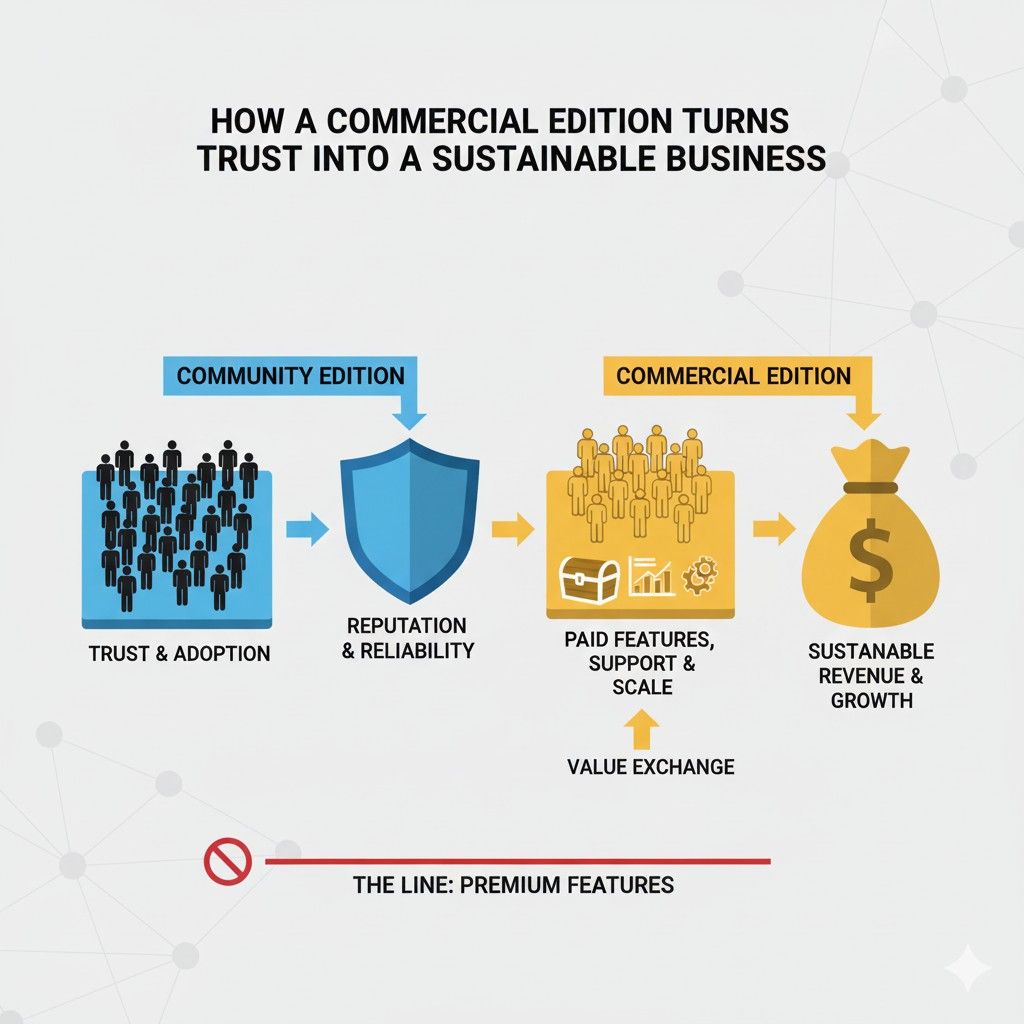
The Commercial Edition is not about charging for code. It is about standing behind it.
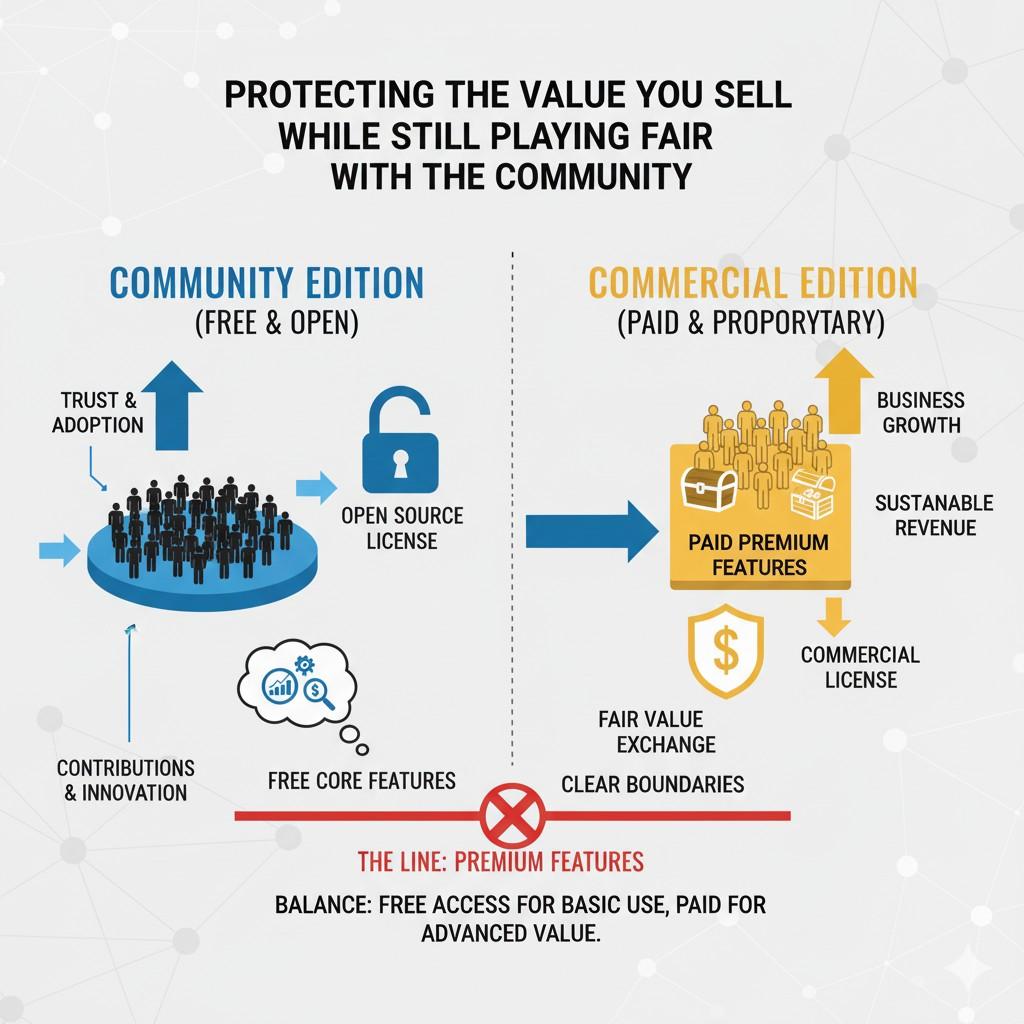
Protecting the Value You Sell While Still Playing Fair With the Community
This is the hardest part of monetizing open source. Not the pricing. Not the features. The hardest part is protecting what makes your business valuable without breaking the trust of the people who helped you grow.
Many founders feel like they must choose one side. Either protect the business or respect the community. That belief is wrong.
The strongest open source companies do both. They protect the value they sell and stay fair to the people who use and contribute to the project. The key is being intentional early and honest always.
Why Protection Is Not the Same as Control
Protection often gets confused with restriction. Founders hear words like patents or licensing and imagine lawsuits and closed doors. In reality, protection is about clarity.
It defines what is open, what is shared, and what belongs to the company.
Without protection, the company carries all the risk while others can freely capture the upside. That imbalance makes long-term investment hard. Teams burn out. Innovation slows. The community suffers in the long run.
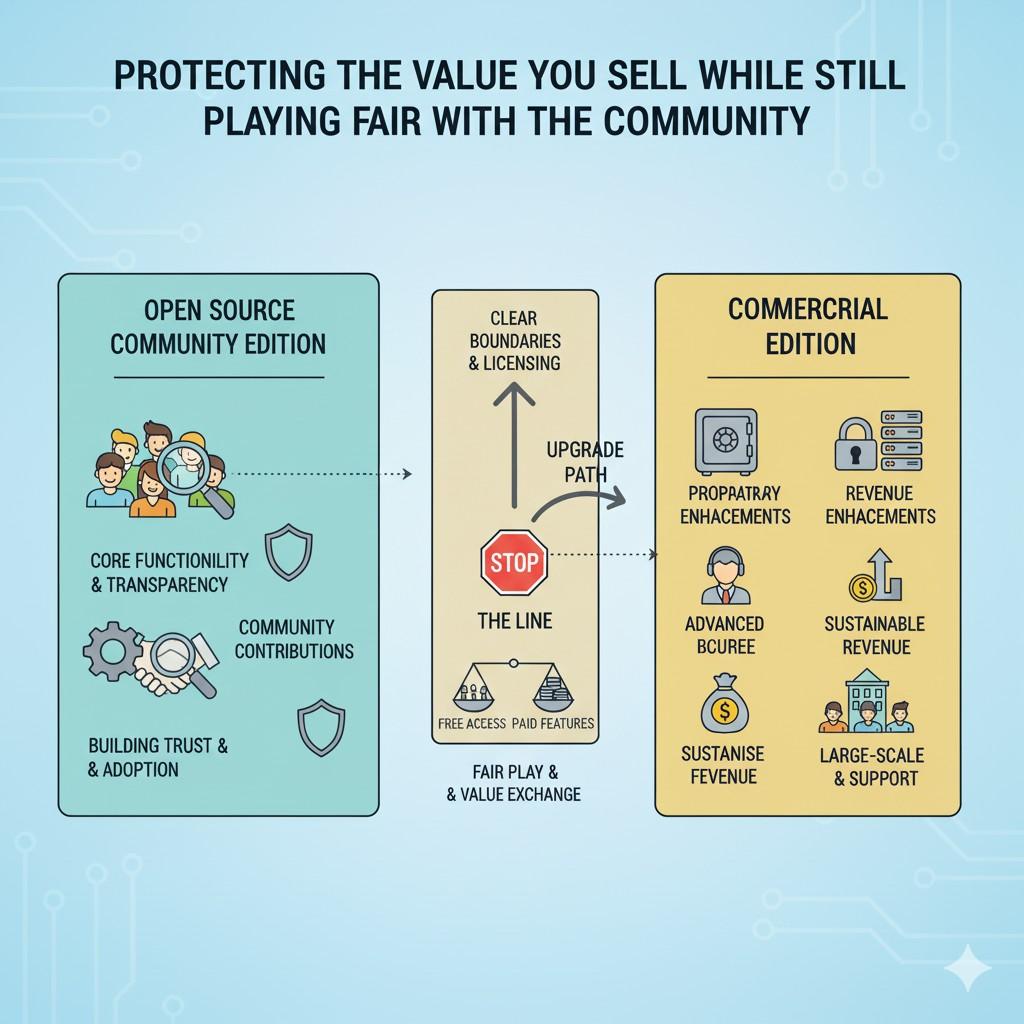
Protection, when done right, keeps the project alive and improving.
The Silent Threat of Fork-and-Sell
One of the most common fears in open source businesses is the fork-and-sell problem.
A third party takes your open code, adds a thin layer, and sells it as a service. Sometimes they move faster. Sometimes they have more reach. Suddenly, you are competing with your own work.
This is not theoretical. It happens often, especially when a project shows traction. The community may not even notice the difference. Customers may not care who built the original idea.
Founders who plan for this early are calmer and more focused. Those who ignore it often scramble later when options are limited.
Setting Boundaries That Feel Fair
Fairness is about expectations. If users know from day one what is open and what is commercial, trust stays intact. Problems arise when boundaries move suddenly or without explanation.
Clear licensing, simple language, and visible separation between community and commercial layers help a lot. Users do not need legal details. They need honesty.
When people understand that the company must protect certain parts to survive, most respect that decision.
Open Core Done With Integrity
The open core model works when the core truly serves the community and the commercial layer truly serves the business. The mistake many teams make is slowly shifting value out of the core until it feels empty.
This creates resentment. Contributors feel used. Users feel tricked.
A better approach is stability. Keep the core useful and evolving. Let the commercial layer grow in parallel around scale, reliability, and business needs. This balance keeps both sides healthy.
How Communication Prevents Backlash
Silence creates fear. When companies change licenses, add paid features, or enforce boundaries without context, the community fills in the gaps with worst-case assumptions.
Regular communication prevents this. Blog posts, roadmap notes, and honest explanations go a long way. You do not need to justify every decision. You need to explain the direction.
People are far more forgiving when they feel included, even if they disagree.
The Role of Patents in Open Source Businesses
Patents are often misunderstood in open source circles. They are seen as weapons. In reality, for startups, they are shields.
A patent does not stop people from using your open code. It protects the underlying invention so others cannot simply repackage and sell it without contributing back.
This protection gives founders confidence to invest more into the product.
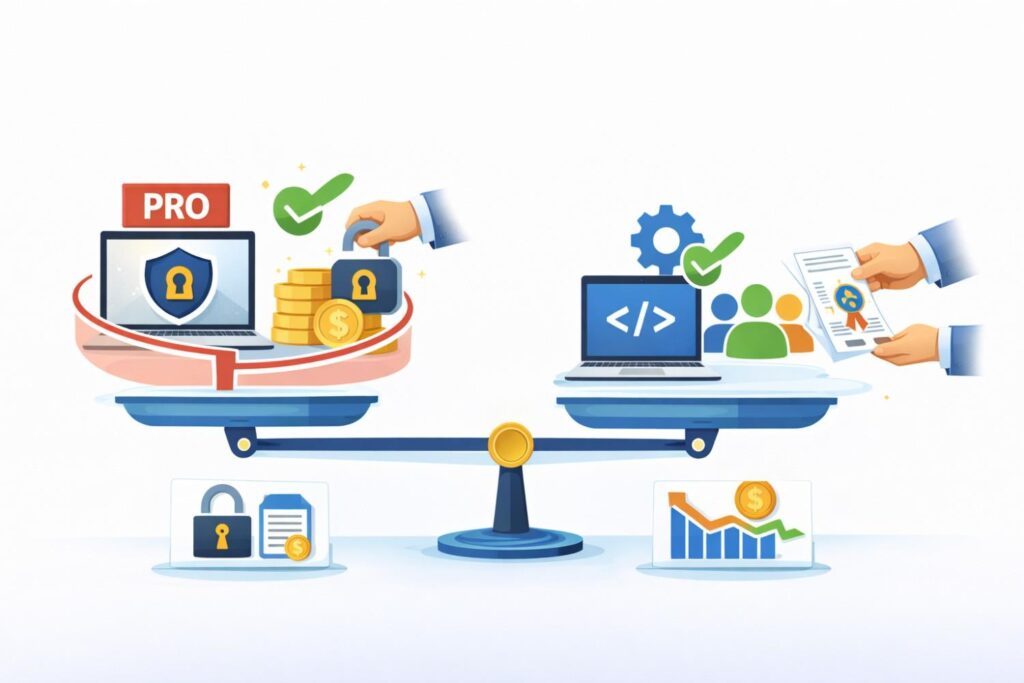
Modern patent platforms like PowerPatent are built for this exact need. They help founders protect real technical value without slowing down development or drowning in legal complexity.
If you are building something others could easily monetize, this protection matters. You can see how it works here: https://powerpatent.com/how-it-works
Avoiding the Trap of Overprotection
While protection is important, too much of it can suffocate growth. Overly complex licenses, aggressive enforcement, or hostile language scare users away.
The goal is not to threaten. The goal is to set clear rules. Simple rules scale better and feel more human.
When in doubt, protect the business layer, not the learning layer. Let people explore, build, and contribute without fear.
How Fairness Builds Long-Term Loyalty
Fairness is remembered. Users remember when a company respected them, even when charging. Contributors remember when their work was valued. Customers remember when promises were kept.
This memory turns into loyalty. Loyal users defend the product, recommend it, and stay longer. That loyalty is more valuable than any short-term gain from squeezing users.
Fairness is not about giving everything away. It is about aligning incentives so everyone wins.
Designing for the Future, Not Just Today
Many monetization decisions feel small at first. A feature here. A license tweak there. Over time, these decisions shape the culture around your product.
Founders should think in years, not months. Ask what kind of company you want to be known as. Ask how future users will interpret today’s choices.
Protection that supports innovation and fairness that supports trust create a foundation that lasts.
When the Community and the Business Grow Together
The best outcome is simple. The community grows because the product is useful and open. The business grows because the value it sells is protected and clear.
This is not luck. It is design.
Open source does not fail because monetization exists. It fails when monetization is careless. With thoughtful boundaries, honest communication, and smart protection, open source becomes one of the strongest business models available today.
If you are building on open source and want to protect what you are creating without slowing down, PowerPatent was built for founders like you. Learn how it works here: https://powerpatent.com/how-it-works
Wrapping It Up
Monetizing open source is not about choosing between community and revenue. It is about designing a system where both can grow together without friction. The founders who succeed are not the ones who give everything away or lock everything down. They are the ones who make clear choices early and stand by them with confidence.
Leave a Reply