
Most programs fail in quiet ways. Not because the idea was bad, but because no one tried to break it early. Red teaming is the habit of attacking your own work before the world does. You look for cracks on purpose. You test the edges. You assume something will go wrong and you go find it first. This is how strong systems are built, and it is also how strong patents are built. If you are building software, models, hardware, or any deep tech product, this matters more than you think. The same weak spots that cause bugs, outages, or bad launches are the same weak spots that can destroy your patent later. That is why smart founders treat red teaming as both an engineering skill and an IP skill.
Why Most Programs Break in Ways No One Sees Coming
Programs rarely fail because someone ignored the obvious. They fail because teams trusted things that felt safe, familiar, or “good enough.”
In the context of M&A readiness and trade secret programs, these failures are even harder to spot because nothing explodes. Deals just slow down, valuations get haircut, or buyers quietly walk away. The damage happens in silence.
When acquirers review a company, they are not just buying revenue or users. They are buying certainty.
They want proof that what makes the company valuable is real, protected, and transferable. Most programs break because they were built to operate, not to be examined.
The Illusion of “It Works in Practice”
Most teams judge their program by whether it works day to day. The system runs. Customers are happy. Engineers know what to do. That feels like success.
In an acquisition, that logic collapses. Buyers do not care that things work because people remember how. They care that things work because they are documented, repeatable, and defensible.
A trade secret program that lives in people’s heads is invisible during diligence. Invisible assets do not survive scrutiny.
A practical step here is to pretend your most senior engineer leaves tomorrow.
If you cannot explain, in writing, what makes your system unique and how it stays secret, the program is already broken from an M&A perspective.
Silent Drift Over Time
Trade secret programs often start strong and then drift. Early on, access is tight, decisions are intentional, and documentation exists. As the company grows, speed takes over.
New hires get broad access. Old controls stop being enforced. Exceptions become the norm.
No one notices because nothing bad happens right away. But during diligence, this drift becomes obvious. Buyers look for consistency. When they see gaps between policy and practice, trust drops fast.
One way to counter this is to snapshot your program once a quarter. Not with a heavy audit, but with a simple check-in.
Ask whether access still matches roles, whether sensitive materials are still tracked, and whether anything critical moved outside approved systems. This habit alone prevents years of silent decay.
Overconfidence in Informal Controls
Many companies rely on culture to protect trade secrets. They trust employees to “do the right thing.” While culture matters, it does not show up in a data room.
Buyers cannot rely on goodwill. They look for proof. If your controls are informal, they are fragile in the eyes of an acquirer. This does not mean building bureaucracy. It means translating trust into simple, visible actions.
For example, if you expect employees to treat certain files as sensitive, those files should be labeled, stored consistently, and referenced in onboarding materials. When intention becomes visible, it becomes defensible.
Confusing Secrecy With Security
Another hidden failure is treating secrecy as a technical problem only. Teams focus on passwords, permissions, and tools, but forget about process.
Trade secrets leak most often through normal business actions. A pitch deck sent to a partner. A demo shown without an NDA. A contractor given access without clear limits. None of these feel like security failures in the moment.
To address this, teams should map how information actually moves. Not how it is supposed to move, but how it really moves during sales, hiring, support, and fundraising.
Once you see those paths, you can put light guardrails in place that align with reality.
Documentation That Explains Too Little or Too Much
Documentation is a double-edged sword. Too little, and buyers assume chaos. Too much, and you risk exposing the very secrets you are trying to protect.
Programs break when documentation exists without strategy. Acquirers want clarity, not raw dumps of internal files.
They want to understand what the secret is, why it matters, and how it is protected, without being handed the secret itself too early.

A strong approach is layered explanation. High-level descriptions first, focused on value and uniqueness. Deeper technical detail only when needed and only under tighter controls.
This structure keeps you in control of the narrative during diligence.
Assuming Legal Language Is Enough
Many companies believe that having NDAs and employment agreements solves the problem. These documents are important, but they are not a program.
Buyers look for behavior that matches the paper. If agreements say information is confidential, but the company treats it casually, the agreements lose weight. Legal language without operational follow-through signals risk.
An actionable habit is to tie agreements to real actions. Reference confidentiality obligations in onboarding. Reinforce them during role changes. Acknowledge them again during exits.
When documents connect to moments in the employee lifecycle, they become credible.
Programs Built for Today, Not Tomorrow
A final reason programs break is short-term thinking. Teams build controls for their current size, not for growth or acquisition.
What works for ten people fails at fifty. What works for a private startup fails under buyer scrutiny. M&A readiness requires imagining future stress before it arrives.
A useful exercise is to build your data room story early, even if a deal is years away. Ask what you would show a buyer to prove your trade secrets are real. If the answer is unclear, that gap is where the program needs work.
This forward-looking mindset is also where tools like PowerPatent quietly help. By turning technical work into clear, structured IP with real attorney oversight, founders avoid scrambling later.

You can explore how that works at https://powerpatent.com/how-it-works.
Programs that survive diligence are not perfect. They are intentional, visible, and honest about risk. Most break because they were never designed to be seen.
Thinking Like a Buyer Instead of a Builder
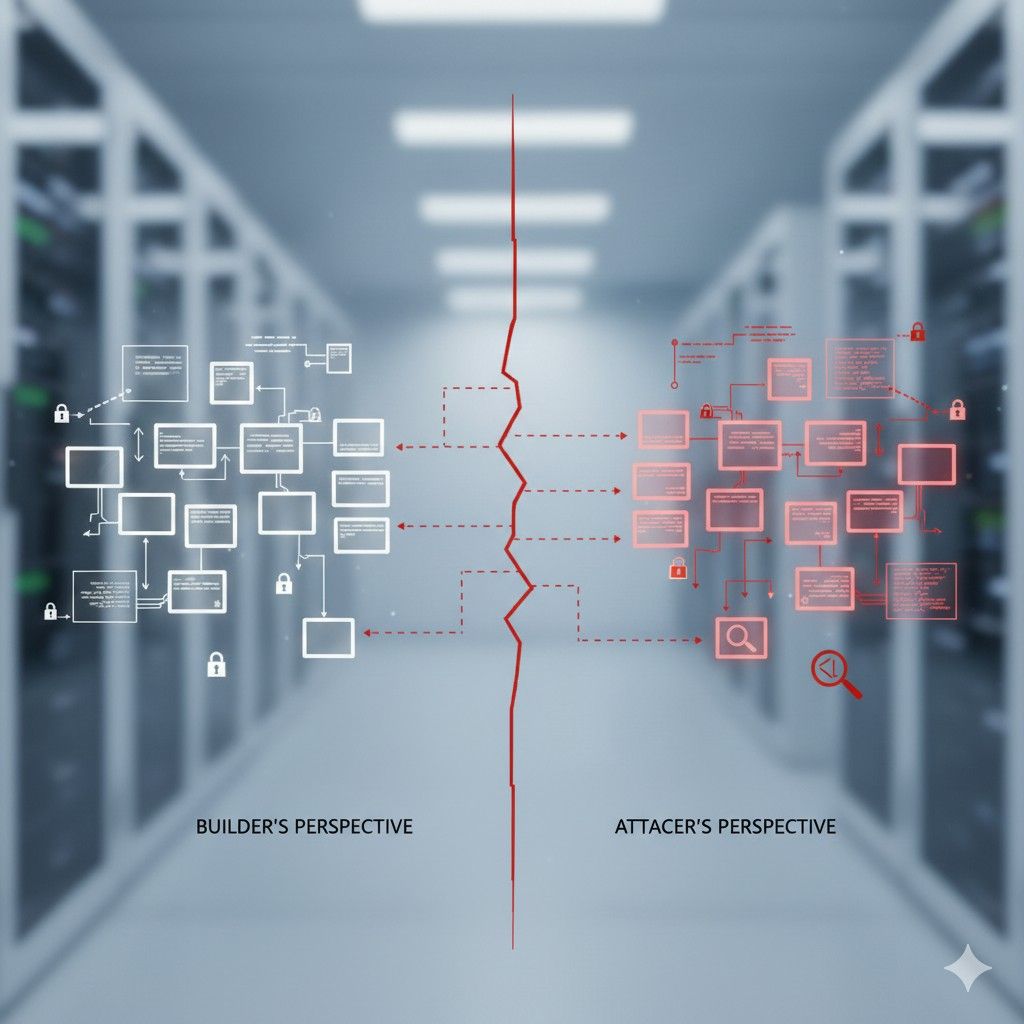
Most founders look at their program through the lens of creation. Buyers look at the same program through the lens of risk. This gap in perspective is where many otherwise strong companies lose leverage during an acquisition.
To be M&A ready, especially when trade secrets are central to value, you must train yourself to see your program the way an outside party will see it.
This shift in mindset is not natural. Builders focus on momentum. Buyers focus on exposure. Builders celebrate speed.
Buyers ask what could go wrong after the deal closes. Until you fully internalize this difference, your program will always feel stronger than it actually appears in diligence.
What a Buyer Is Really Buying
A buyer is not purchasing code, documents, or systems in isolation. They are purchasing confidence. Confidence that the value they see today will still exist tomorrow, after people leave, systems change, and priorities shift.
Trade secrets only matter if they survive that transition. If a buyer cannot clearly trace how knowledge is identified, protected, and controlled, they discount it mentally, even if they never say so directly.

A useful exercise is to write a one-page explanation of why your trade secrets will still be safe one year after acquisition. If that explanation depends on specific individuals, unwritten norms, or “how we usually do things,” it will not survive scrutiny.
The Data Room as a Stress Test
Many teams treat the data room as a storage problem. They collect files late, upload them fast, and hope nothing important is missing. This approach almost always backfires.
In reality, the data room is a stress test of your entire program. Every gap becomes visible. Every inconsistency raises questions. Every unclear answer slows momentum.
Strong companies prepare their data room narrative long before a deal. They know what story each document supports. They know what questions will follow. They control the order in which information is revealed.
To do this well, you must stop thinking of the data room as a folder and start thinking of it as a guided tour. Each item should answer a buyer’s question before it is asked, without exposing more than necessary.
Where Buyers Start Looking First
Buyers almost always begin with ownership and control. They want to know who created the core technology, under what agreements, and with what restrictions. Any uncertainty here immediately puts trade secrets at risk.
If contractor work, early advisors, or overseas teams were involved, buyers will zoom in. They are not suspicious by default, but they are trained to assume that gaps hide problems.
This is why clean contributor records matter so much. Even if everything is technically fine, confusion alone can slow a deal. Clear, simple documentation that ties creation to ownership is one of the fastest ways to build trust.
The Danger of Over-Explaining
Another common failure is trying to prove value by dumping detail. Teams overwhelm buyers with technical depth, internal chatter, and raw artifacts. This often has the opposite effect.
When buyers see too much, they worry about control. They wonder who else has seen this information and under what conditions. They start asking how secrecy has been maintained if disclosure is so easy.
A better approach is disciplined restraint. Explain the secret at a level that shows uniqueness and business impact, not implementation trivia. Let the buyer ask for more. This keeps you in control and signals maturity.
Process Gaps Buyers Notice Immediately
Buyers are very good at spotting process gaps, even small ones. They notice when access logs are incomplete, when policies exist but are outdated, or when documents reference tools you no longer use.
These issues rarely kill a deal on their own, but they chip away at confidence. Each small inconsistency adds friction. Over time, friction becomes leverage for renegotiation.
The fix is not perfection. The fix is alignment. Your written policies, actual behavior, and data room materials should tell the same story. When they do, buyers relax.
The Human Risk Nobody Plans For
One of the least discussed risks in trade secret programs is transition risk. Buyers worry about what happens when founders and early engineers leave. This concern is often unspoken, but it shapes valuation.
If trade secrets are deeply tied to individuals, buyers see fragility. If they are embedded in systems, documentation, and controls, buyers see durability.
You can address this directly by showing how knowledge is transferred, how access is managed, and how secrets are compartmentalized. The goal is to show that no single person holds the keys to everything.
Why Timing Matters More Than Teams Realize
Many companies wait too long to think about M&A readiness. They assume they will clean things up once a deal is on the table. By then, it is too late.
Buyers can tell when a program was assembled under pressure. Documents feel rushed. Explanations feel reactive. Gaps feel intentional, even when they are not.
Programs that hold up best are built gradually. They grow alongside the company. This is not about extra work. It is about small, steady habits that compound over time.
This is also why founders who integrate IP thinking early tend to move faster later. Platforms like PowerPatent support this approach by turning technical progress into structured, defensible IP as you build, not after the fact.
You can see that approach in detail at https://powerpatent.com/how-it-works.
Turning Buyer Anxiety Into Advantage
When done well, M&A readiness becomes a competitive advantage. Buyers move faster. Diligence feels smoother. Negotiations focus on growth, not risk.
This does not happen by accident. It happens when teams stop assuming their program will speak for itself and start shaping how it is seen.
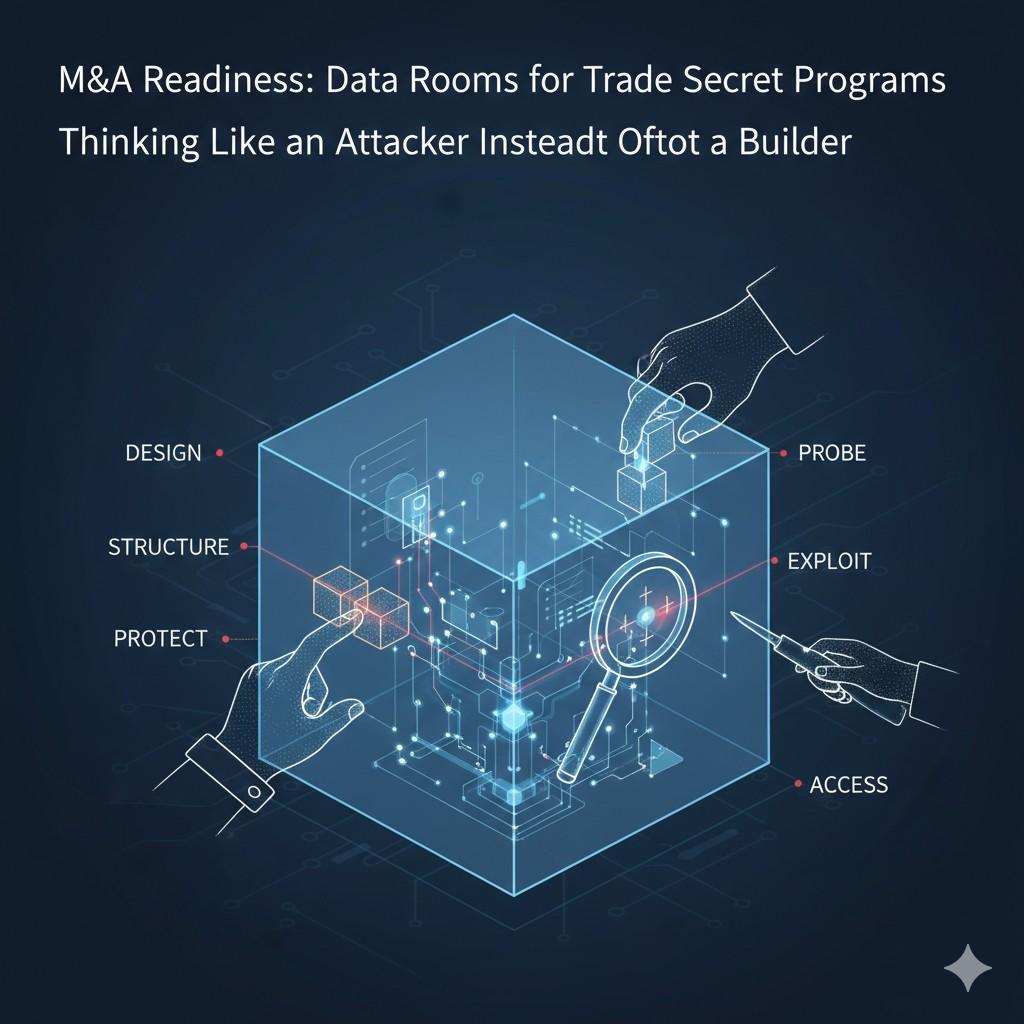
Thinking like a buyer does not mean being defensive. It means being prepared. And preparation, more than brilliance, is what keeps programs from breaking when it matters most.
Finding the Quiet Assumptions Hiding Inside Your Program
Every program is built on assumptions. Most teams do not write them down. They do not argue about them. They do not even notice them. And yet, these quiet assumptions are where trade secret programs fail most often during M&A.
Assumptions feel harmless because they make daily work easier. They let teams move fast.
They reduce friction. But when a buyer steps in, assumptions turn into unanswered questions. Unanswered questions turn into perceived risk. And perceived risk quietly lowers deal value.
This section is about slowing down just enough to see what you have been taking for granted.
Assumptions About Who Knows What
Most teams assume they know who has access to sensitive information. In reality, access grows organically. Someone needed a file once. Someone was added to a repo temporarily. Someone kept access after switching roles.
Over time, the mental map of “who knows what” stops matching reality. During diligence, buyers will ask how access is controlled and reviewed. If your answer depends on memory instead of records, confidence drops.
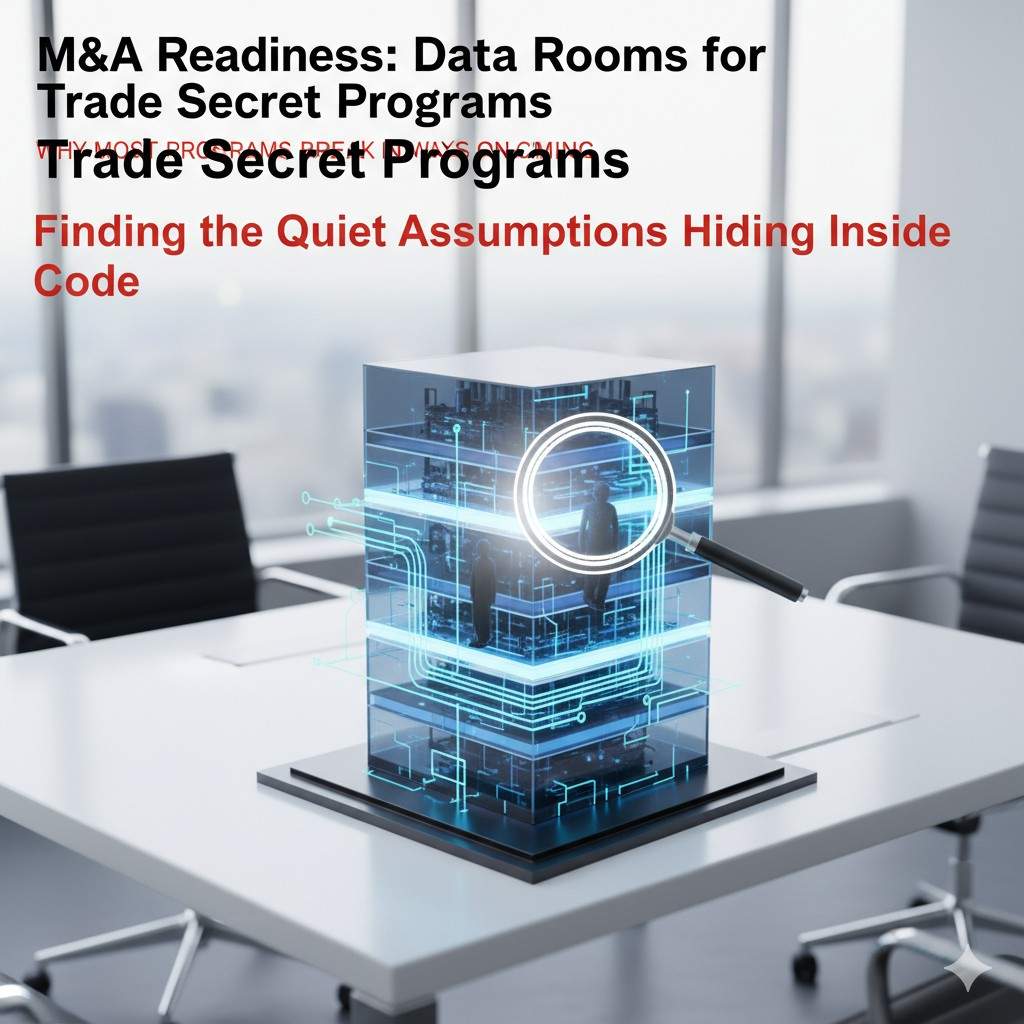
A strong move here is to treat access as something that expires unless renewed. Even informal reviews force you to confront reality. When you see access written down, assumptions dissolve quickly.
Assumptions About What Is Actually Secret
Another common blind spot is assuming everyone agrees on what counts as a trade secret. Founders may have a clear picture in their head, but that picture is rarely shared in a precise way.
Engineers might think the secret is the model architecture. Product teams might think it is the workflow. Sales might think it is pricing logic. All of them could be partially right, but partial clarity is not enough in M&A.
Buyers look for definition. They want to see that the company has intentionally identified what is secret and why. This does not require heavy language. It requires alignment.
One useful practice is to explain your core secret to a new hire in plain words, then write down that explanation. If it feels vague or overly broad, that is a sign the assumption needs work.
Assumptions About Normal Behavior
Many programs assume people will behave carefully by default. They assume employees will not forward files, reuse slides, or overshare in conversations. Most of the time, this is true. Until it is not.
Buyers assume the opposite. They assume normal human behavior under pressure. That is why they ask about guardrails, not intentions.
When programs break, it is often because they relied on assumed caution instead of designed constraints. Simple things like watermarking, access logging, or clear usage guidelines reduce reliance on perfect behavior.
The goal is not mistrust. The goal is realism.
Assumptions About Growth Staying Manageable
Early-stage programs often work because everyone knows everything. Information flows freely. Secrets feel safe because the circle is small.
Growth breaks this assumption. New hires do not share the same context. Contractors rotate in and out. Partners get deeper access. Suddenly, the old way of working becomes risky.

Buyers are very sensitive to this transition point. They want to know when controls scaled and how decisions changed as the company grew.
If your answer is “we haven’t really changed anything,” that signals a hidden assumption that size does not matter. In M&A, size always matters.
Assumptions About Documentation Being Optional
Many teams assume documentation is optional as long as results are good. This is true internally. It is false externally.
During diligence, undocumented processes might as well not exist. Buyers cannot rely on oral explanations. They rely on artifacts.
This does not mean documenting everything. It means documenting the few things that prove intent and consistency. What is secret. Who owns it. How it is protected. How access changes over time.
When those answers live only in conversations, the program feels fragile.
Assumptions About Legal Coverage Solving Gaps
It is very common to assume that signed agreements cover operational gaps. NDAs, invention assignments, and confidentiality clauses feel like safety nets.
Buyers view them as supporting evidence, not substitutes. If the day-to-day reality does not match the paper, the paper loses weight.

This is why alignment matters so much. When agreements are referenced in onboarding, reinforced in tooling, and reflected in behavior, they feel real. When they sit in a folder untouched, they feel cosmetic.
Assumptions About Speed During Diligence
Teams often assume they can explain things quickly when asked. They believe they will “just answer the questions” when diligence starts.
In practice, diligence is not forgiving. Questions come fast. Answers must be consistent. Multiple stakeholders are listening.
If your program depends on on-the-fly explanations, stress will expose cracks. Buyers will notice hesitation, contradictions, or missing context.
Preparing explanations in advance, even informally, removes this pressure. It also forces you to confront weak assumptions before someone else does.
Assumptions About What Buyers Care About
Perhaps the most dangerous assumption is thinking buyers care about the same things you do. Builders focus on elegance, innovation, and clever solutions. Buyers focus on durability, ownership, and downside protection.
When trade secret programs are framed only in builder language, buyers struggle to translate value into safety. That translation gap becomes risk.
The fix is not changing what you built. It is changing how you explain it. Framing secrets in terms of business impact and defensibility makes them legible to non-builders.
This is where structured IP thinking helps founders stay grounded. When technical progress is continuously translated into clear, defensible assets, assumptions surface earlier.
PowerPatent was designed around this idea, helping teams avoid hidden gaps long before diligence begins. You can see how that works at https://powerpatent.com/how-it-works.
Turning Assumptions Into Assets
The goal is not to eliminate assumptions. That is impossible. The goal is to make the most important ones visible.
When assumptions are visible, they can be tested. When they are tested, they either strengthen the program or point to focused fixes. Both outcomes are good.
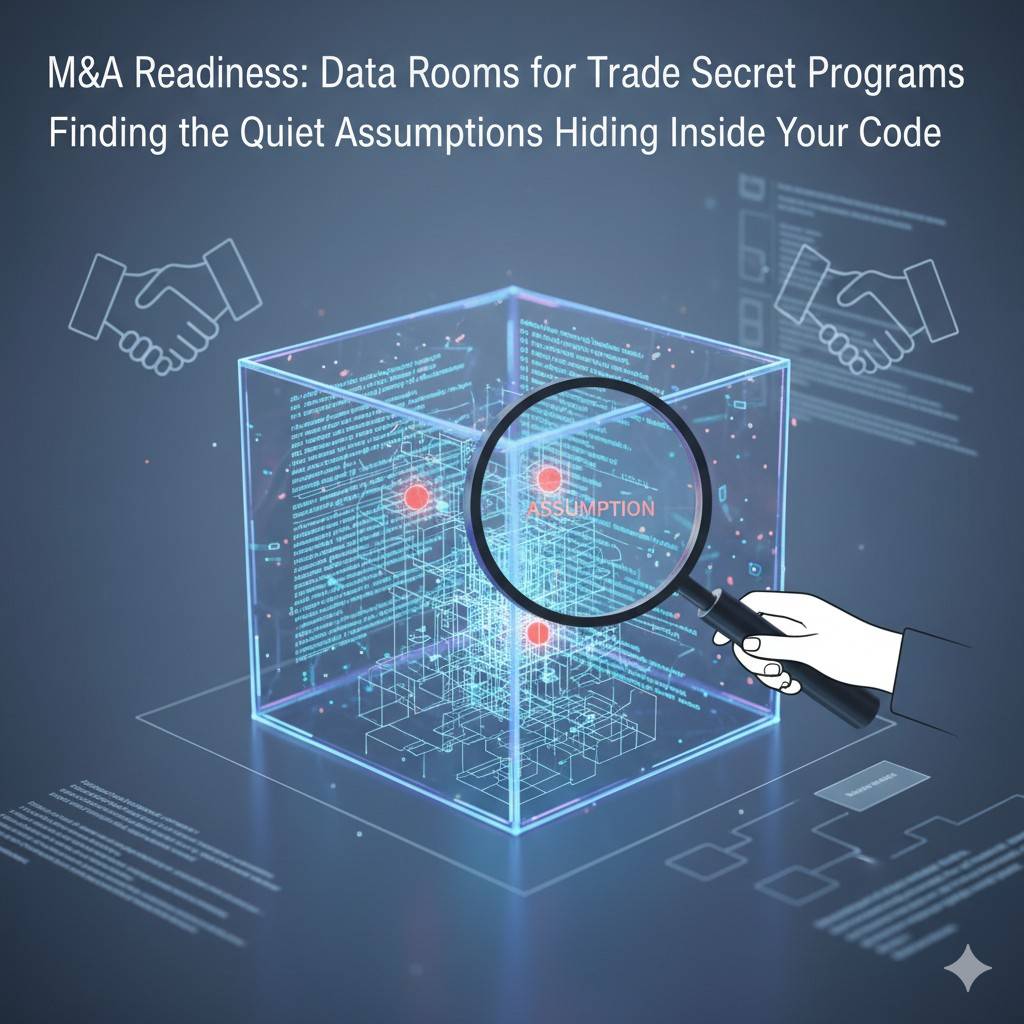
Most programs do not break because they were careless. They break because they were invisible to themselves. M&A forces that invisibility into the open.
Wrapping It Up
By the time a deal is real, it is already too late to discover weak spots. M&A does not create risk. It reveals it. The programs that hold up are not the ones with the most rules or the thickest folders. They are the ones built with intention, clarity, and honesty long before anyone else was watching. Trade secret programs fail quietly because they are rarely tested. They are built to support work, not to survive inspection. Red teaming your program means choosing to test it early, on your own terms, instead of letting a buyer do it for you under pressure.
Leave a Reply