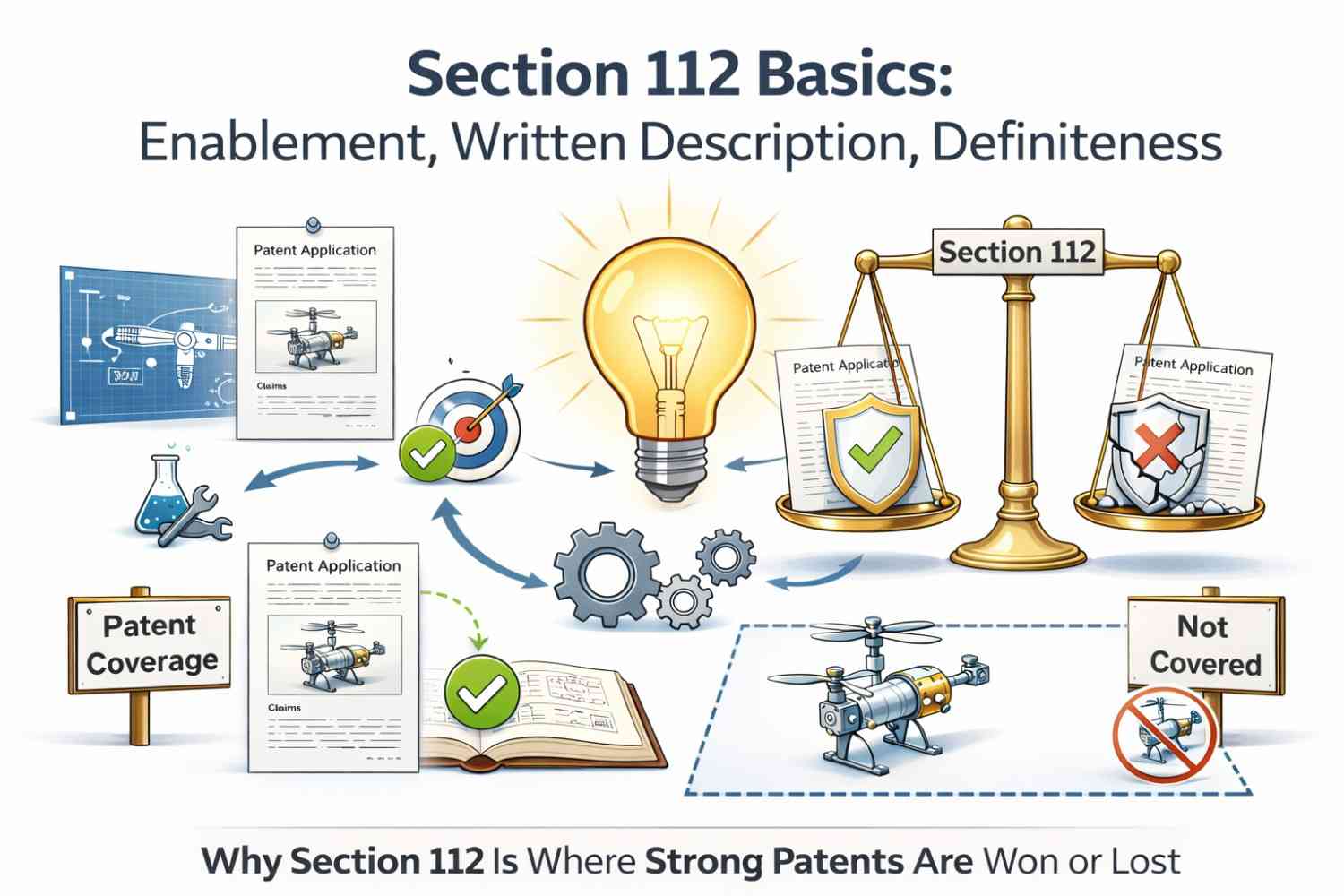
If you are building something new, your idea lives first in your head, then in your code, then in your product. A patent is what turns that idea into something the law can protect. But here is the part most founders never hear about until it is too late. The strongest patents do not fail because the idea is weak. They fail because the words are weak. Section 112 is the part of patent law that judges your words. Not your vision. Not your pitch deck. Not your demo. Just the way you explain what you built and how it works.
Enablement: Teaching the World How Your Invention Works
Enablement is the first real test of whether your patent deserves to exist. It is not about how smart your idea is. It is about whether your patent teaches someone else how to make and use what you built without guessing.
This is where many business-critical patents quietly fail.
When courts or examiners look at enablement, they are asking one simple question: if your company disappeared tomorrow, could a skilled person rebuild your invention using only your patent?
If the answer is no, your patent is weak, no matter how impressive the idea sounds.
This section is where strategy matters. A well-enabled patent does more than pass review. It becomes a moat around your business.
What Enablement Really Means in Business Terms
Enablement is often explained in legal language, but for founders, it is easier to think about it as trust. The patent system gives you exclusive rights in exchange for teaching the world something new.
Enablement is how you keep your side of that deal.
For a business, this means your patent must show that your invention is real, built, and repeatable. Vague promises do not count. Aspirational language does not count.

What counts is whether the invention can actually be carried out based on what you wrote.
Strong enablement signals maturity. It shows investors, partners, and acquirers that your technology is not just a concept. It is engineered.
The Invisible Line Between Insight and Instruction
Many founders describe why their invention is clever, but forget to describe how it works. Enablement lives in that gap. Insight is not instruction.
If your patent explains the outcome but skips the steps, you are standing on thin ice.
Courts do not reward mystery. They reward clarity. The more complex your technology, the more carefully you must walk the reader through it.
This does not mean dumping raw code or math. It means explaining the logic, the flow, the moving parts, and how they interact. Think about the questions a smart engineer would ask if they tried to recreate your system.
Enablement is about answering those questions before they are asked.
Enablement Is Judged as of the Filing Date
One of the biggest mistakes businesses make is assuming they can rely on future improvements. Enablement is frozen in time. It is judged based on what you knew and disclosed when you filed.
If your invention only works because of later discoveries, your patent may not be enabled. This is why timing matters. Filing too early can be just as dangerous as filing too late.
From a strategy view, this means you should file when your core system works, not when the idea is still fragile.
PowerPatent is designed around this idea. It helps you capture what is real today, not what you hope to build later. You can see how that works here: https://powerpatent.com/how-it-works
Teaching Without Giving Away the Farm
Founders often worry that enablement means giving competitors a free blueprint. This fear leads to vague language that weakens the patent. The reality is more nuanced.
Enablement does not require you to disclose trade secrets that are not necessary to practice the invention. It requires you to disclose enough so the invention can be made and used.
The art is knowing what is essential and what is optional.
A strong patent teaches the core idea clearly while still leaving room for optimization. That balance is strategic. It keeps your patent valid without handing over unnecessary advantages.
The Role of Assumptions and Defaults
Enablement allows reasonable assumptions, but only when they are truly standard in the field. If your invention relies on a special setup, a unique data structure, or a non-obvious configuration, you must say so.
Businesses get into trouble when they assume the reader knows what they know. What feels obvious inside your team may not be obvious to an outsider. Enablement punishes insider thinking.

A good test is this: if you hired a new engineer tomorrow, could they understand the system using only the patent? If not, the enablement is likely thin.
Enablement Across the Full Scope of Your Claims
Enablement must cover everything you claim, not just your favorite version. If your claims are broad, your explanation must be equally broad.
This is where many patents break. The description only supports a narrow example, but the claims try to cover a wide range of uses. Courts see this as overreach.
From a business angle, this means your claims and your explanation must grow together. If you want wide protection, you must teach how to achieve that width.
PowerPatent helps align these pieces so your ambition does not outrun your disclosure.
Enablement in Software and AI Inventions
Software enablement is one of the hardest areas today. Simply saying “the system uses an algorithm” is not enough. Examiners expect logic, flow, and structure.
For AI inventions, this goes even further. You often need to explain how data is prepared, how models are trained, how outputs are used, and how the system improves.
You do not need to reveal secret weights or datasets, but you must explain the process.
Businesses that treat AI as magic struggle here. The ones that treat it as engineering win.
The Danger of Over-Abstract Language
Abstract language feels safe, but it is dangerous. Words like “optimized,” “intelligent,” or “automated” do not teach anything by themselves.
Enablement improves when abstract ideas are tied to concrete actions. What is being optimized? How is intelligence expressed? What steps are automated? Each answer strengthens your patent.
This is not about adding length. It is about adding substance.
Enablement as a Defensive Weapon
A well-enabled patent is harder to invalidate. When competitors challenge your patent, enablement is one of their first attacks. If your disclosure is thin, they will exploit it.
From a defensive standpoint, strong enablement reduces risk. It makes litigation less scary. It also increases the chance that competitors design around you instead of copying you.
That outcome saves time, money, and stress.
Using Enablement to Support Future Growth
Enablement is not just about today’s product. It can support tomorrow’s roadmap if done right.
By explaining variations, alternatives, and extensions that you have already thought through, you create space for future products under the same patent family.
This must be done carefully and honestly, but it is powerful when executed well.
This is where experienced attorney review matters. PowerPatent combines software structure with human judgment to help founders do this responsibly.
If you want to see how that works in practice, visit https://powerpatent.com/how-it-works
Enablement Is About Respecting the Reader
At its core, enablement is about respect. You are respecting the examiner, the court, and the system by explaining your invention clearly.
Patents that respect the reader tend to survive. Patents that hide behind fog do not.

Enablement is not a checkbox. It is a mindset. When you adopt it, your patent becomes clearer, stronger, and far more valuable to your business.
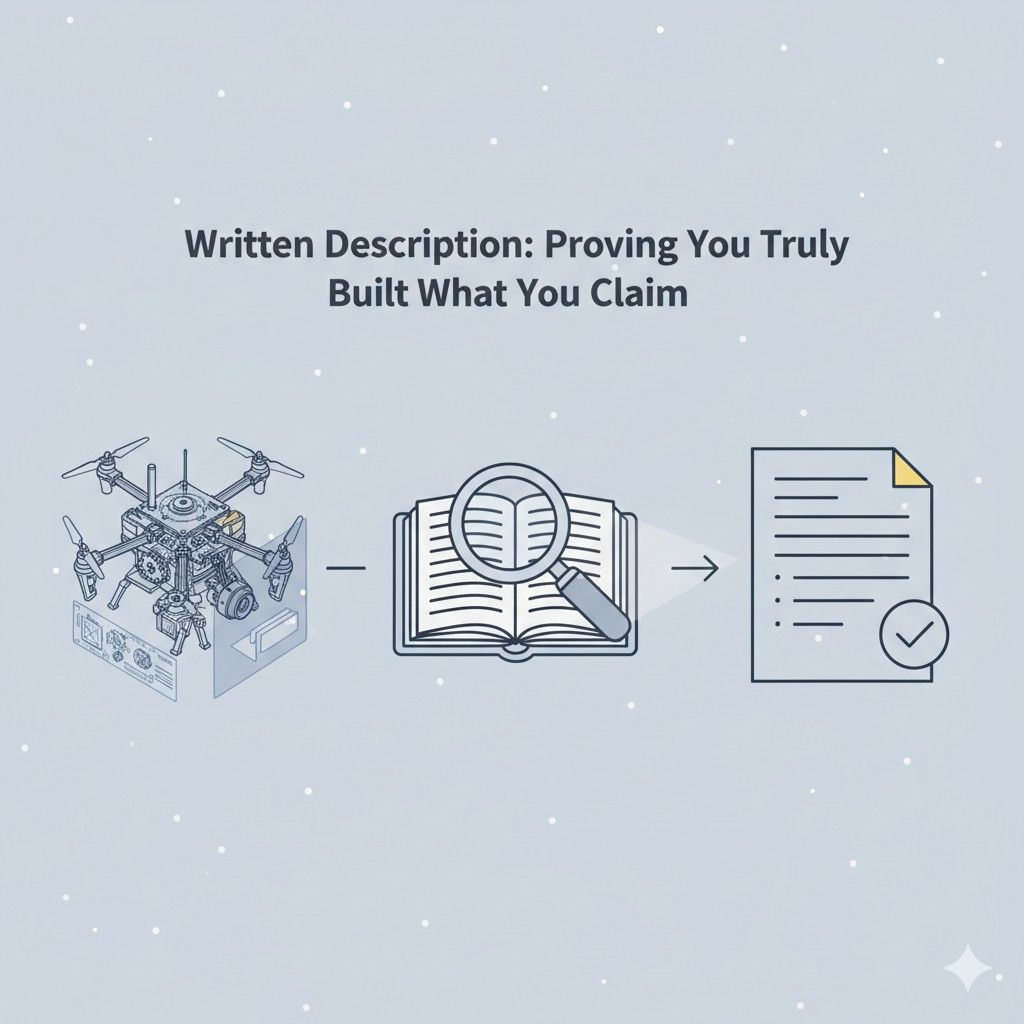
Written Description: Proving You Truly Built What You Claim
Written description answers a very different question than enablement. Enablement asks whether someone else could build your invention. Written description asks whether you actually had the invention in the first place.
This sounds subtle, but it is one of the most powerful and misunderstood parts of patent law.
Written description is about ownership. It is about showing that what you claim as yours truly came from you, not from later thinking, guessing, or stretching.
For businesses, this section often decides whether a patent feels solid or fragile. A strong written description tells a clear story of invention. A weak one feels like a moving target.
Written Description Is About Credibility
When examiners and courts read your patent, they are reading it like a timeline frozen in ink. They want to see evidence that, at the moment you filed, you had already conceived what you now claim.
Written description is how you prove that. It is not enough that the invention could work. You must show that you understood it.
From a business view, credibility matters. Investors, acquirers, and partners often look closely at patents during diligence. A patent that reads like it was written after the fact raises quiet red flags.
The Difference Between Possibility and Possession
Written description draws a hard line between what is possible and what you possessed. You cannot claim ideas that you had not yet worked through, even if they seem like a natural extension today.
This is where many ambitious patents stumble. Founders want broad coverage, so they describe a small core and then claim a much larger space. Written description pushes back on that instinct.
If your description does not clearly show that you had the full scope in mind, your claims can be cut down or invalidated. For a business, that can mean losing protection right where competitors attack.
Showing the Shape of the Invention
One useful way to think about written description is shape. Your patent should give the invention a clear shape in the reader’s mind.
This shape comes from explaining key parts, how they relate, and what makes the invention different from what came before. It is not about perfection. It is about coherence.
When the description feels grounded and intentional, it signals that the invention was real and complete at filing.
Why Written Description Hits Hard in Fast-Moving Fields
In fast-moving areas like software, AI, and biotech, written description is especially unforgiving. These fields evolve quickly, and it is tempting to claim future versions of your system.
Courts are cautious here. They want to make sure patents do not lock up ideas that were not actually invented yet. Written description is their filter.
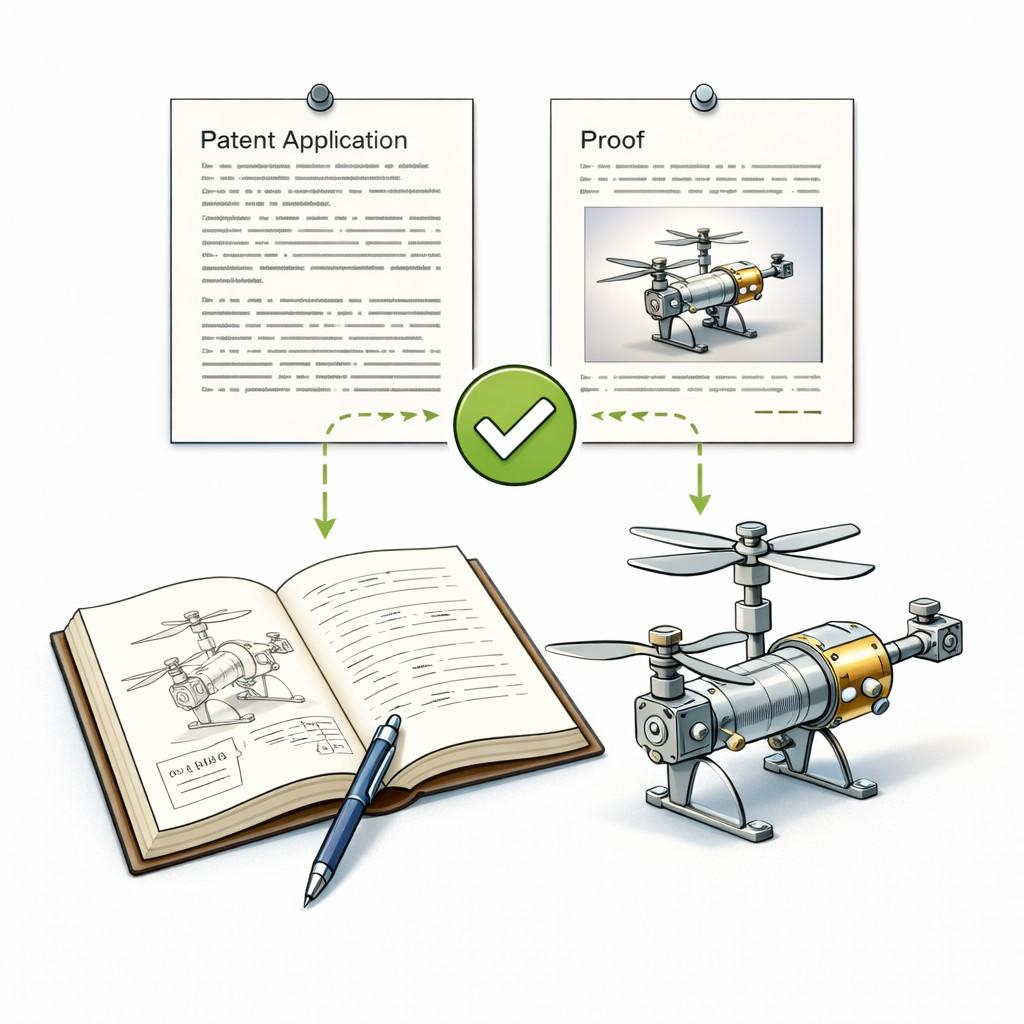
For startups, this means you must be honest about what you had and what you did not. The goal is not to shrink your protection, but to anchor it in reality so it holds.
Written Description and Claim Amendments
Many founders do not realize that written description also limits how you can change claims later. During prosecution, you often need to amend claims to get around prior art.
Those amendments must be supported by the original description. If they are not, they fail written description.
From a strategy view, this means your original filing should be rich enough to support future moves. This is one reason rushed or thin filings cause problems later.
PowerPatent is built to help founders capture enough detail upfront so they have room to maneuver later. You can see how that process works here: https://powerpatent.com/how-it-works
The Role of Examples and Variations
Examples play a quiet but important role in written description. They show that you did more than imagine the invention. You explored it.
Describing variations, alternatives, and different configurations helps demonstrate possession. It shows that you understood the invention as a concept, not just a single instance.
For businesses, this also supports broader claims. When variations are thoughtfully described, they act like proof points for scope.
Avoiding the “Wish List” Trap
A common mistake is turning the written description into a wish list. Founders describe what the invention could do in every possible scenario, without grounding those scenarios in the actual design.
This weakens written description. It feels speculative. Courts notice this tone.
A better approach is to describe what you built, why it works, and how it can reasonably be adapted. This keeps the description honest and strong.
Written Description as a Story of Invention
Strong written description reads like a quiet story. It starts with a problem, moves through a solution, and ends with a clear picture of what exists.
This does not mean marketing language. It means logical flow. When the story makes sense, ownership feels natural.
From a business standpoint, this also makes patents easier to explain to non-lawyers. Clear patents are easier to value.
The Link Between Written Description and Founder Confidence
Founders who truly understand their invention tend to produce better written descriptions. The act of writing forces clarity.
This clarity often spills back into the business. Teams align better. Product decisions sharpen. Messaging improves.
In this way, written description is not just a legal requirement. It is a forcing function for thinking deeply about what you actually own.
Using Written Description to Reduce Risk
Written description challenges are common in litigation. Competitors argue that the inventor did not really have what they claimed.
A strong description reduces this risk. It makes attacks harder and more expensive.
For startups, reducing legal risk is not about being defensive. It is about freeing focus. When your IP foundation is solid, you can build faster with less fear.
Written Description Is About Respecting Time
Written description respects the time of the reader. It does not make them guess. It does not overpromise. It shows the work.
Patents that do this tend to last. Patents that do not often fail quietly.
This is why combining structured software with real attorney oversight matters. PowerPatent helps founders express what they truly built in a way that stands up over time.
If you want to explore that approach, visit https://powerpatent.com/how-it-works
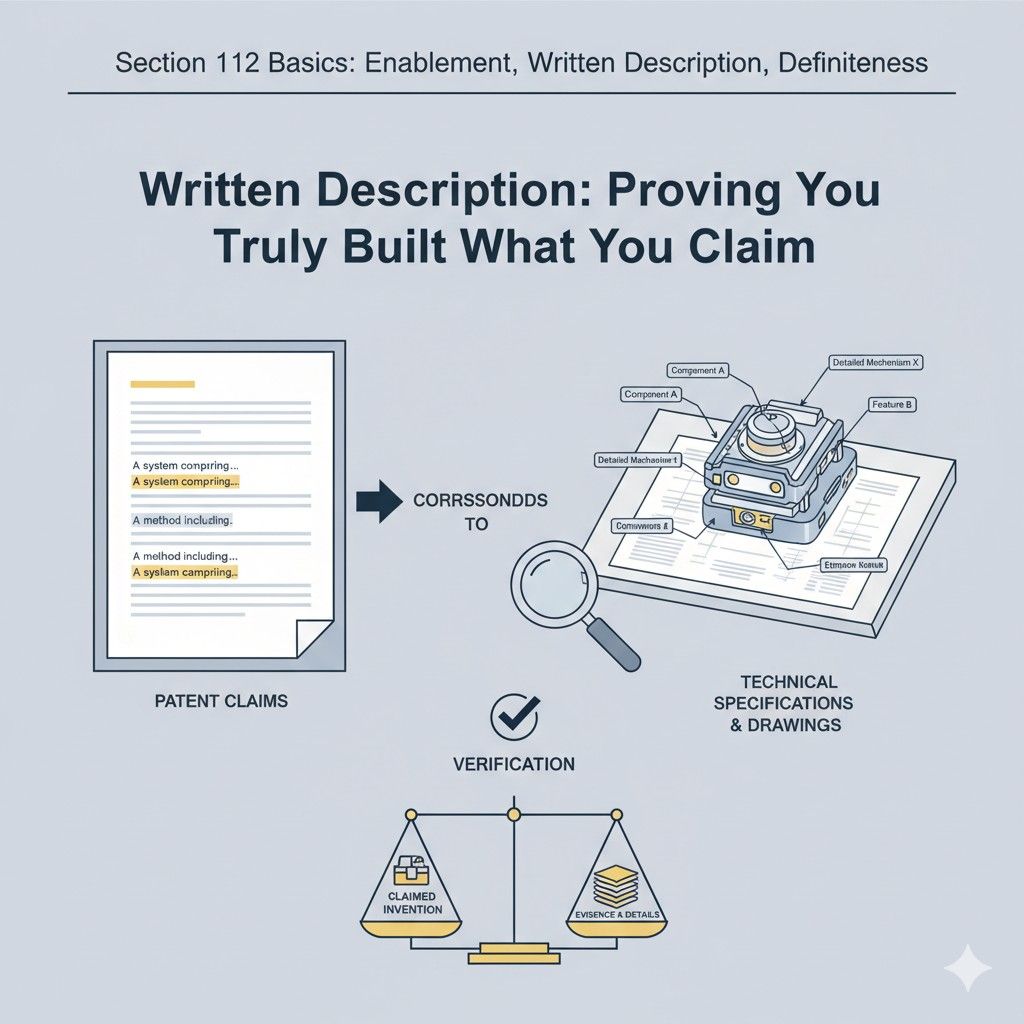
Written description is not about being conservative. It is about being precise. Precision is what turns invention into ownership.
Definiteness: Drawing Clear Lines Around What You Own
Definiteness is where your patent draws its borders. It answers a simple but serious question: can someone clearly tell what is inside your invention and what is outside it.
If enablement is about teaching and written description is about ownership, definiteness is about boundaries.
For a business, this section decides whether your patent acts like a fence or a fog. Clear fences protect. Fog invites conflict.
Courts care deeply about definiteness because patents are exclusive rights. If the borders are unclear, the law sees that as unfair. Competitors must be able to look at your patent and understand what they are not allowed to do.
Definiteness Is About Fair Notice
At its core, definiteness is about fairness. The patent system expects you to clearly tell the public what you claim as yours.
This does not mean every edge case must be solved. It means a skilled reader should not be left guessing. If reasonable people cannot agree on what your claim covers, the claim is indefinite.
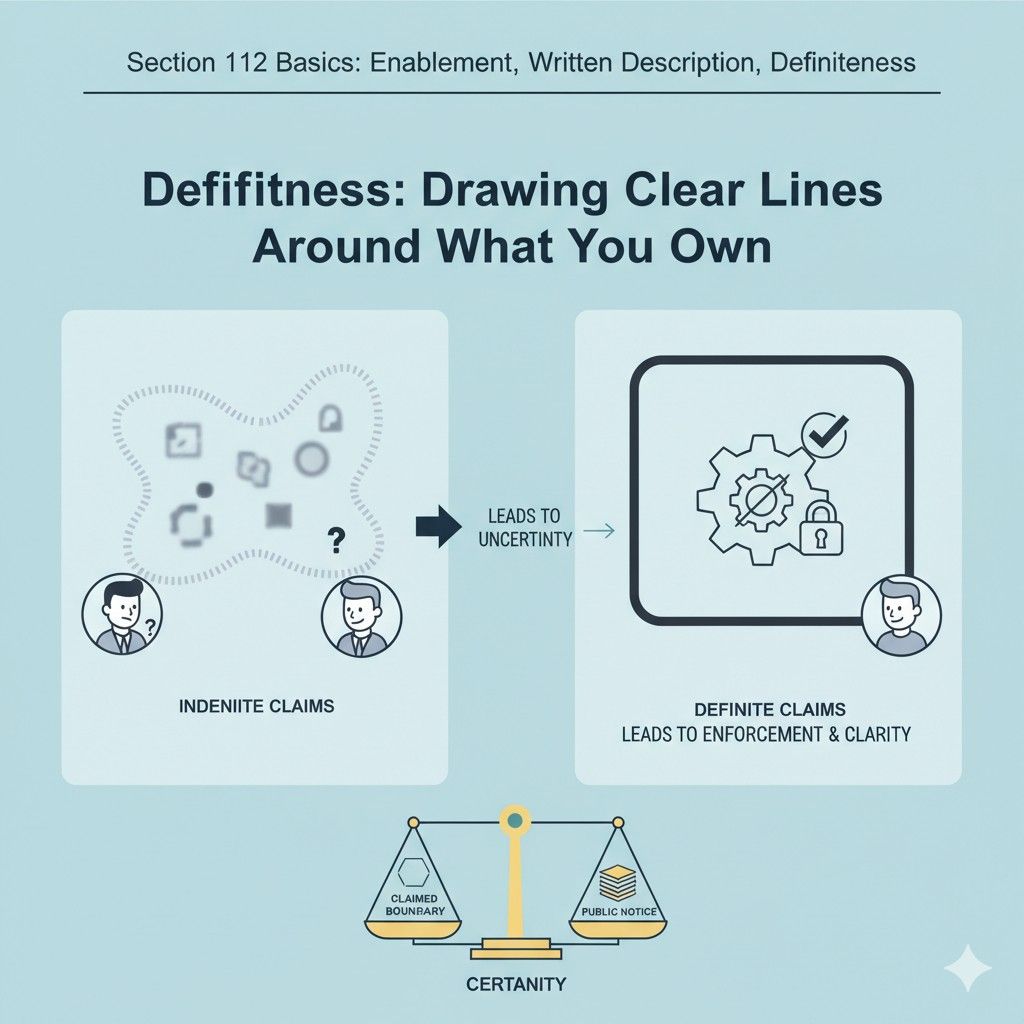
From a business view, fair notice reduces friction. Clear patents discourage accidental infringement and push competitors to design around you instead of fighting you.
Why Vague Language Is the Biggest Risk
Vague words feel flexible, but they are dangerous. Terms like “substantially,” “about,” or “configured to” are not automatically bad, but they must be anchored in context.
Definiteness problems arise when claims rely on words that have no clear reference point. If a term could mean many things and the patent does not explain which meaning applies, the claim weakens.
Businesses often lose here by trying to sound broad without being clear. Breadth without clarity is fragile.
Definiteness Lives Mostly in the Claims
While enablement and written description focus on the full patent, definiteness lives in the claims. Claims are the legal definition of your invention.
Each claim must stand on its own. If a claim relies on unclear terms, missing relationships, or undefined components, it can fail even if the rest of the patent is solid.
This is why claim drafting is not a place to cut corners. Claims are not marketing copy. They are precision tools.
The Hidden Cost of Ambiguity
Ambiguous claims create business risk long before litigation. They confuse investors. They complicate licensing. They weaken negotiations.
If a potential partner cannot tell what rights they would get, deals slow down. If an acquirer cannot map claims to products, value drops.
Definiteness supports clarity in every downstream business conversation.
How Context Saves Otherwise Risky Language
Many claims use functional language, especially in software. This can still be definite if the patent explains how the function is achieved.
Context matters. When claims are read in light of the specification, terms can become clear. This is why the description and claims must work together.
A business-friendly patent uses the description to support the claims, not to rescue them. When done well, this creates confidence.
Definiteness and Measurement Problems
Claims that rely on measurements or results must be especially careful. If a claim depends on a threshold, a comparison, or a performance outcome, the patent should explain how that is measured.
Without this, two readers might reach different conclusions using different methods. Courts see this as indefiniteness.
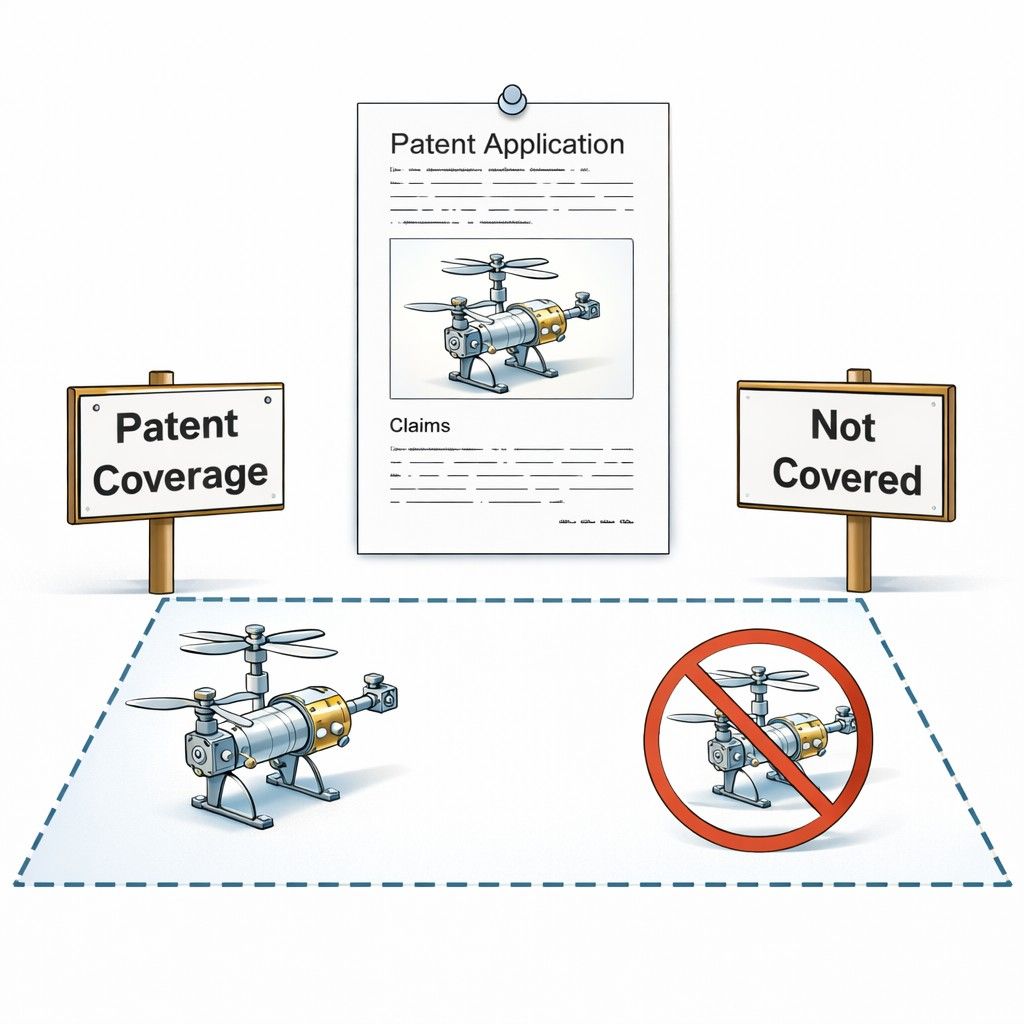
For businesses building performance-driven products, this point is critical. Clear measurement language protects claims from easy attacks.
Software Claims and Functional Boundaries
Software patents often struggle with definiteness because functions can be described at many levels. Saying a system “processes data” means very little without more detail.
Definiteness improves when claims specify inputs, outputs, and transformations. You do not need code, but you need structure.
Clear functional boundaries help competitors understand where your invention starts and stops.
Why Overloading Claims Backfires
Some patents try to pack too much into a single claim. This often leads to tangled language and unclear scope.
From a business perspective, clarity beats density. A clean claim with a clear focus is easier to enforce and harder to challenge.
Definiteness rewards discipline. It favors claims that know what they are about.
Definiteness as a Litigation Filter
In litigation, indefiniteness is a common early attack. If a claim is thrown out for being indefinite, the rest of the case may collapse.
Strong definiteness raises the cost of attack. It forces competitors to argue substance instead of exploiting language gaps.
For startups, this can be the difference between a quick settlement and a long fight.
Using Definiteness to Strengthen Negotiation Power
Clear claims are powerful in negotiation. They allow you to point directly to what is covered.
This clarity makes licensing discussions smoother and enforcement discussions shorter. It also signals seriousness.
PowerPatent emphasizes this clarity by structuring claim language carefully and having real attorneys review it for sharp boundaries.
If you want to understand that approach, you can explore it here: https://powerpatent.com/how-it-works
Definiteness Is About Confidence
Definiteness gives confidence to everyone involved. You know what you own. Others know what you own. The rules are visible.
Patents with confidence age better. They survive challenges and remain relevant as businesses grow.
Definiteness is not about being narrow. It is about being clear.
When Definiteness and Strategy Meet
The best patents balance scope and certainty. They claim enough to matter, but not so much that meaning breaks down.
This balance is strategic. It requires understanding both the technology and the business goals behind it.
When definiteness is done right, your patent becomes easier to explain, easier to defend, and easier to use as leverage.

Definiteness turns words into borders. Borders turn ideas into assets.
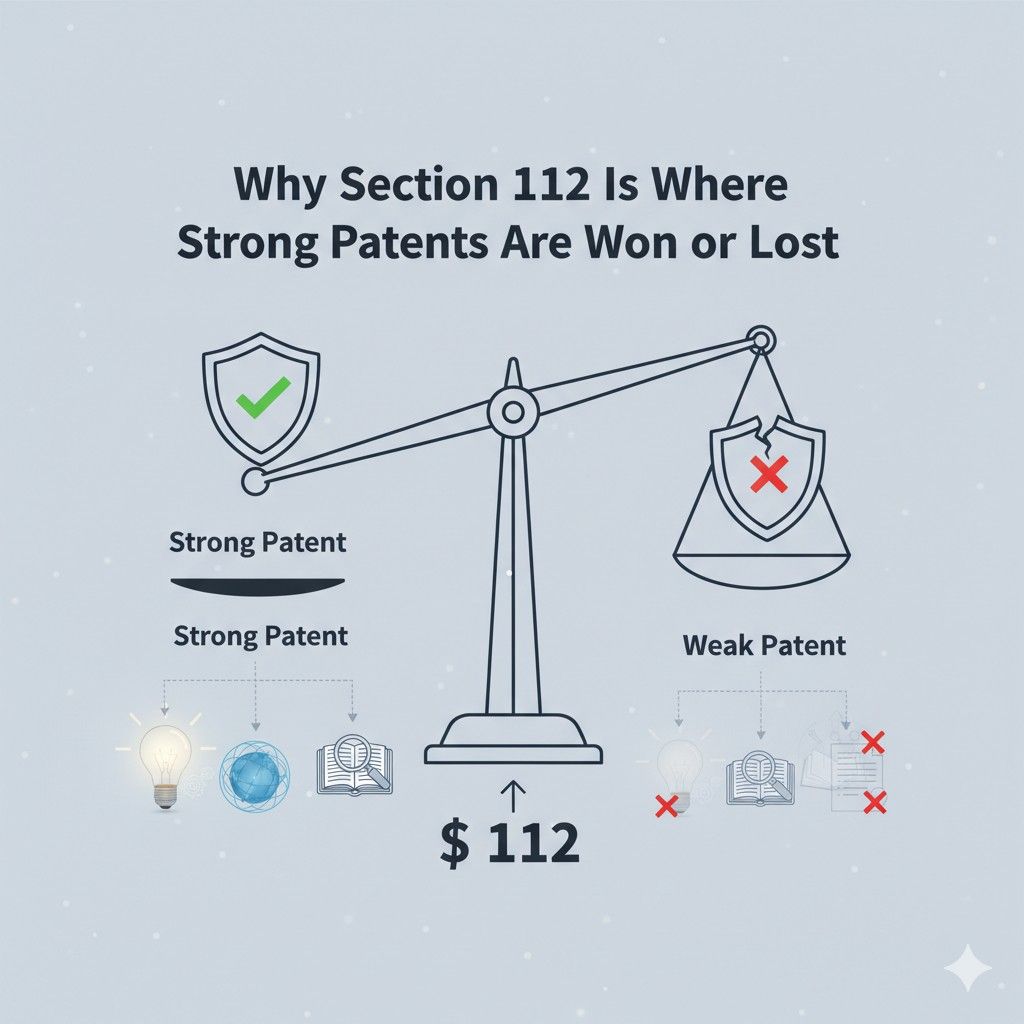
Why Section 112 Is Where Strong Patents Are Won or Lost
Section 112 is not a technical detail buried in patent law. It is the backbone of whether your patent works for your business or quietly works against you.
Enablement, written description, and definiteness are not three separate hurdles. They are three views of the same core question: did you clearly, honestly, and precisely explain what you built and what you want to protect?
When these three line up, patents become powerful. When even one is weak, the entire structure is at risk.
How Enablement, Written Description, and Definiteness Interlock
Enablement shows that your invention can be built and used. Written description shows that you actually had the invention. Definiteness shows exactly where the invention begins and ends.
If one is missing, the others suffer. A claim that is definite but not enabled fails. A claim that is enabled but not supported by written description fails. A claim that is enabled and described but unclear still fails.
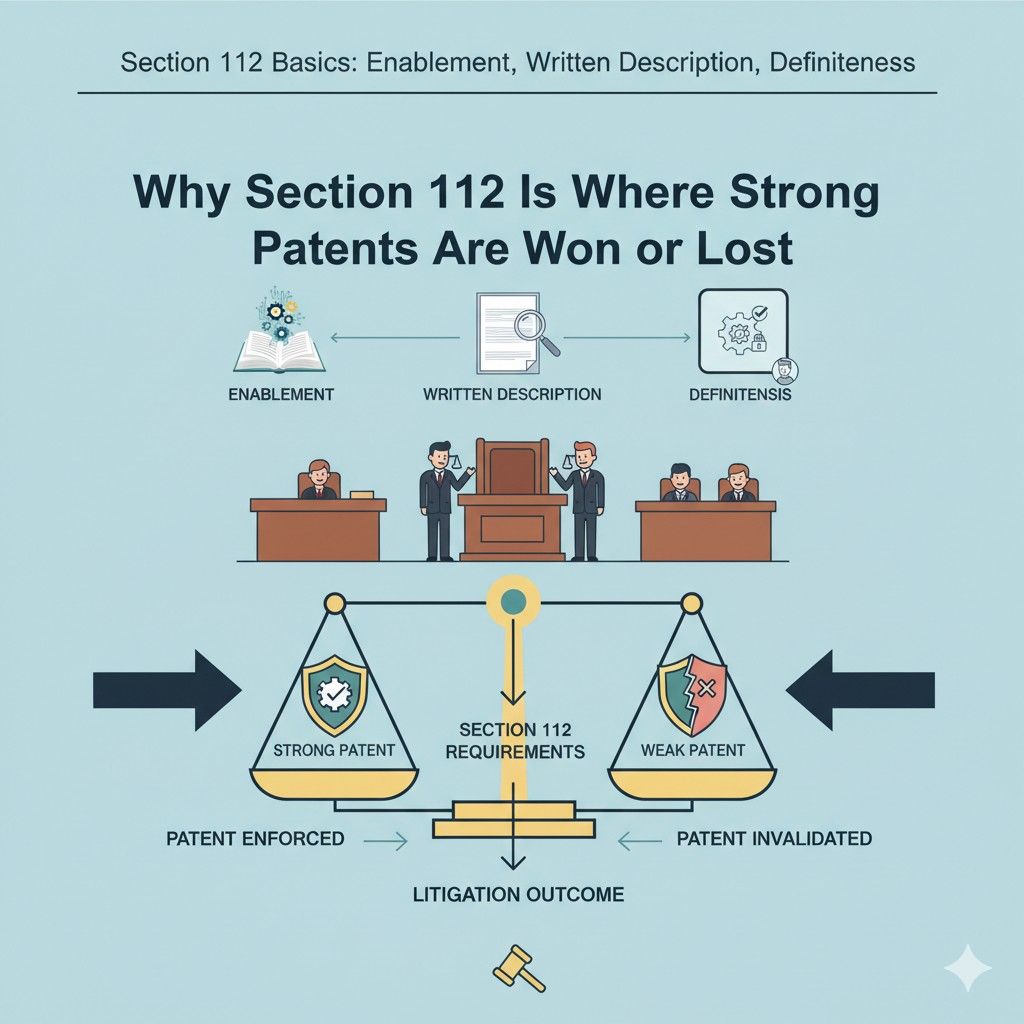
From a business perspective, this means patent quality is holistic. You cannot fix one part later if the foundation is weak.
Why Section 112 Is a Startup Issue, Not a Legal One
Many founders think Section 112 is something lawyers deal with. In reality, it reflects how well you understand your own product.
If you cannot explain how your system works, you will struggle with enablement. If you are not sure what you truly invented versus what you hope to build, written description will expose that.
If you cannot clearly define your competitive edge, definiteness will be fuzzy.
Strong Section 112 compliance often mirrors strong product thinking.
The Cost of Getting Section 112 Wrong
The cost is rarely immediate. Patents often issue even when Section 112 is weak. The damage shows up later, when money and momentum are on the line.
Challenges succeed. Claims shrink. Deals stall. What looked like protection turns into paper weight.
For startups, this delayed failure is dangerous because it creates false confidence.
Section 112 as a Force Multiplier
When Section 112 is done right, the opposite happens. Your patent becomes easier to defend, easier to explain, and easier to leverage.
Investors ask fewer questions. Partners move faster. Competitors hesitate longer.
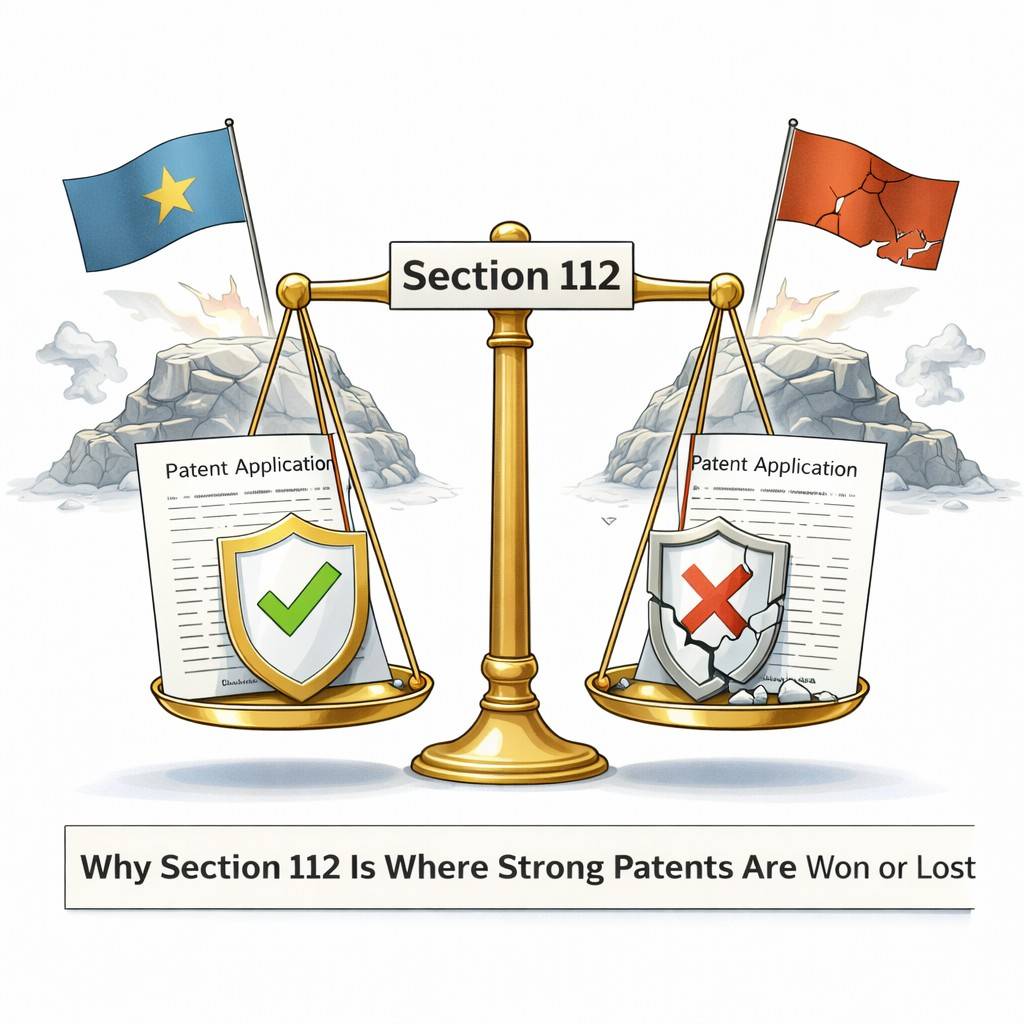
This is not because they love patents. It is because clarity reduces risk.
Why Tools Alone Are Not Enough
No form, template, or cheap filing service can solve Section 112 by itself. Software can help organize thinking, but judgment still matters.
This is why PowerPatent pairs smart software with real attorney oversight. The software helps founders explain their invention clearly. Attorneys make sure that explanation holds up under Section 112 scrutiny.
The goal is not to sound legal. The goal is to be clear, honest, and strong.
If you want to see how that balance works in practice, you can explore the process here: https://powerpatent.com/how-it-works
Section 112 as a Strategic Advantage
Founders who understand Section 112 think differently about patents. They see them as engineered assets, not paperwork.
They file with intent. They explain with precision. They claim with confidence.
This mindset turns patents into tools for growth instead of insurance policies.
Final Thought for Founders
Your invention deserves more than vague words and rushed filings. It deserves a patent that actually protects it.
Section 112 is how that protection is tested. When you respect it, your patent becomes durable. When you ignore it, your patent becomes fragile.
Strong patents are not about complexity. They are about clarity.
And clarity, done right, compounds.
Wrapping It Up
At the end of the day, Section 112 is not a legal trap designed to trip founders. It is a mirror. It reflects how clearly you understand what you built, why it works, and where its real value lives. Enablement forces you to explain your invention in a way that proves it is real and usable. Written description forces you to show that the invention truly came from you and was not stitched together later. Definiteness forces you to draw clean lines around what you own so the rest of the world can see and respect them.
Leave a Reply