
When patents fall apart, it is almost never because the invention was weak; it is because the words were weak. Simple, everyday terms like “about,” “substantially,” or “roughly” can quietly destroy an otherwise strong patent if they are not handled with care. These words feel harmless, even helpful, but in patents they can create uncertainty, and uncertainty is the fastest way to invite rejection, delays, or future attacks from competitors.
Why Small Words Can Break a Big Patent
Small words rarely feel important when you are building a company. You focus on shipping, customers, performance, and growth. Language feels secondary. In patents, that instinct can cost you more than almost any technical mistake.
A single unclear word can quietly shrink the value of an entire filing, even if the invention itself is solid, novel, and hard to copy.
This section goes deep into why that happens and how founders can think about words the same way they think about system design and architecture.
Patents Are About Boundaries, Not Descriptions
A patent is not meant to simply describe what you built. It is meant to draw a boundary around what you own. That boundary must be clear enough that someone else can look at it and know where they would cross the line.
Relative terms blur that line. They feel descriptive, but they often fail to define an edge. When a claim says a value is “about” a number, the boundary moves depending on who is reading it.
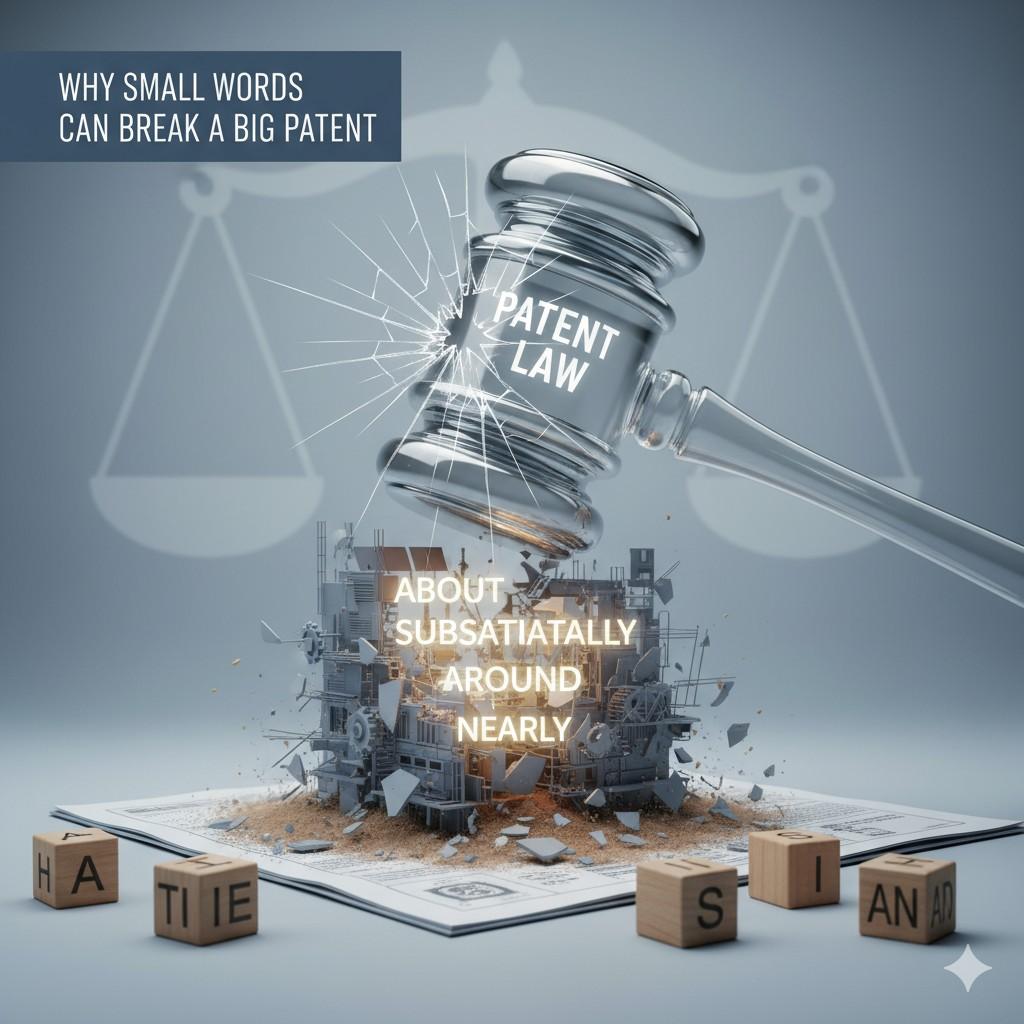
One reader might think the range is narrow. Another might think it is wide. A patent cannot survive on that kind of disagreement.
Founders who understand this early tend to write stronger patents. They stop asking, “Does this sound right?” and start asking, “Does this draw a clear border?”
How Ambiguity Becomes a Legal Weak Point
Ambiguity is not just a drafting issue. It becomes a legal weakness the moment someone challenges your patent. Courts and examiners both look for clarity because clarity is what makes a patent fair to the public.
If a claim can be read in multiple reasonable ways, the patent owner usually loses that fight. The law does not reward clever vagueness. It rewards precision that can be explained and defended.
This is why small words matter so much. They often introduce multiple reasonable readings without you realizing it.
Why Founders Overuse Relative Terms
Most founders use relative terms for good reasons. They know systems vary. Hardware drifts. Data changes. Models behave differently at scale. Words like “substantially” feel honest because they reflect real-world behavior.
The problem is not the instinct. The problem is stopping there. In a patent, honesty must be paired with explanation. If the patent does not explain what “substantially” means in this specific system, the honesty turns into uncertainty.
Strong patents do not pretend systems are perfect. They explain imperfection in a controlled way.
The Examiner Is Not Filling in the Gaps for You
One common mistake is assuming the examiner will understand what you meant. Examiners are technical, but they are not mind readers. They are trained to rely on what is written, not what was intended.
If a claim relies on shared assumptions that are never spelled out, those assumptions do not exist in the eyes of the patent office.
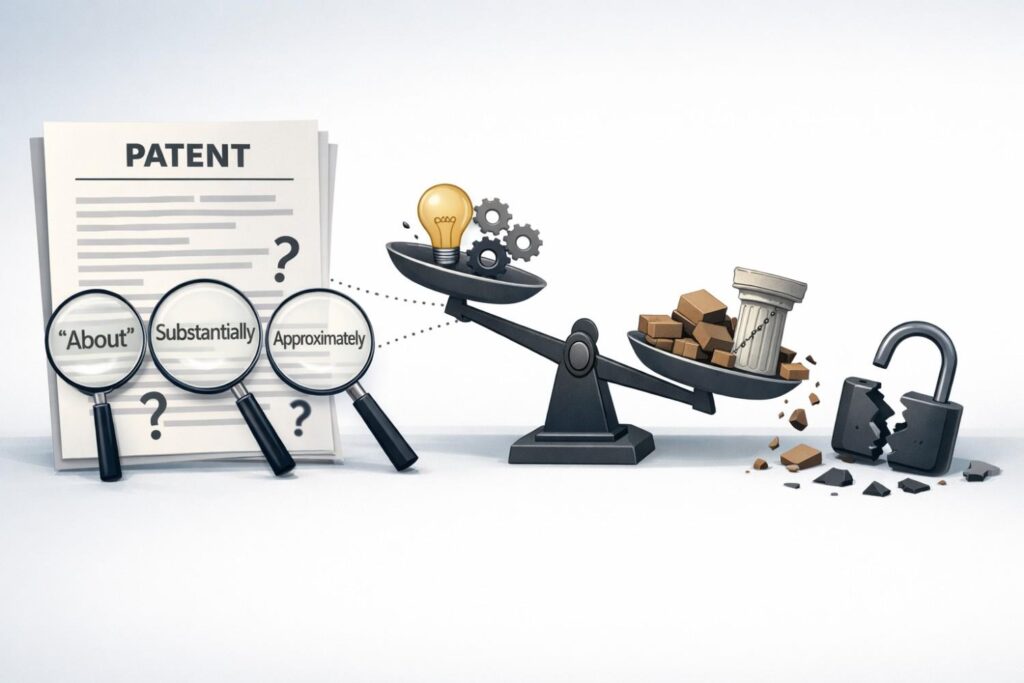
The examiner cannot guess your tolerance ranges or design goals. They can only evaluate what is on the page.
This is why patents that seem obvious to the inventor still get rejected. The meaning lived in the founder’s head, not in the document.
When “Everyone Knows” Is Not Good Enough
In engineering culture, there is a lot of shared understanding. If you say two components are “substantially aligned,” most engineers in the field will picture something similar. Patent law does not rely on that shared intuition.
The audience for a patent includes competitors, courts, and future readers who may not share today’s norms. The patent must stand on its own, years later, without your explanation.
Whenever a word relies on “everyone knows what this means,” it is a signal to slow down and add clarity.
How Relative Terms Can Shrink Claim Scope
There is a belief that vague language creates broader protection. In practice, it often does the opposite. When a term is unclear, it becomes easier for others to argue that their product falls outside the claim.
A competitor does not need to prove your interpretation is wrong. They only need to show that another reasonable interpretation exists. That uncertainty weakens enforcement.
Clear language, even if it feels narrower at first, often results in stronger real-world coverage because it is harder to argue around.
The Hidden Cost During Fundraising and Diligence
Patent language is not only tested in court. It is tested in boardrooms. During diligence, investors and acquirers look closely at core IP. They want to know whether the company truly owns its edge.
When claims rely heavily on relative terms without explanation, it raises concern. It suggests the protection may not hold up under pressure. That concern can affect valuation, deal terms, or even whether a deal happens at all.

Clear patents reduce friction in these moments. They let the business story flow without constant caveats.
Turning Relative Language Into Defined Language
The safest way to use relative terms is to give them context inside the patent. Context turns a soft word into a structured concept. It shows how the term functions within the system.
If “about” is used, the patent should explain why variation exists and what range still achieves the intended result. If “substantially” is used, the patent should connect it to performance, efficiency, or error tolerance.
This does not require complex math or heavy detail. It requires intention. The goal is to show that the word has boundaries, even if those boundaries allow flexibility.
Thinking Like a Systems Designer While Writing
Founders who write the strongest patents think like system designers, not writers. They treat words as components. Each one has a role. Each one affects behavior.
If a component is vague, the system behaves unpredictably. The same is true for patent language. Every term should serve a purpose and interact cleanly with the rest of the claim.
This mindset naturally reduces indefiniteness because it forces you to ask how each word functions.
Why Early Drafting Choices Matter the Most
Fixing vague language later is expensive and limiting. Once a patent is filed, you are constrained by what was originally disclosed. You cannot simply redefine terms without support.
That is why early drafting choices matter so much. Catching soft language early gives you room to shape it without giving anything up.
This is one of the biggest advantages of modern patent workflows. With PowerPatent, risky language is flagged early, and experienced patent attorneys help refine it while the scope is still flexible.

That means fewer surprises, faster progress, and stronger protection without slowing down product work.
If you want to see how that process works, you can explore it here: https://powerpatent.com/how-it-works
How Patent Examiners See “About” and “Substantially”
Patent examiners do not read claims the way founders do. They are not thinking about product vision, roadmaps, or market pressure. They are trained to read every word as a potential source of confusion or dispute.
This section explains how examiners actually react when they see words like “about” and “substantially,” and how understanding their mindset can help businesses avoid slowdowns, rejections, and costly rewrites.
Examiners Are Trained to Look for Ambiguity First
When an examiner opens a patent application, their first instinct is not to admire the invention. Their job starts with risk detection. They scan for places where the scope of the claim might be unclear.
Relative terms jump out immediately because they are common sources of indefiniteness.
This does not mean examiners dislike these words. It means they are conditioned to question them.
When an examiner sees “about,” their next question is simple: about compared to what? If the application does not answer that clearly, the examiner has little choice but to raise an objection.
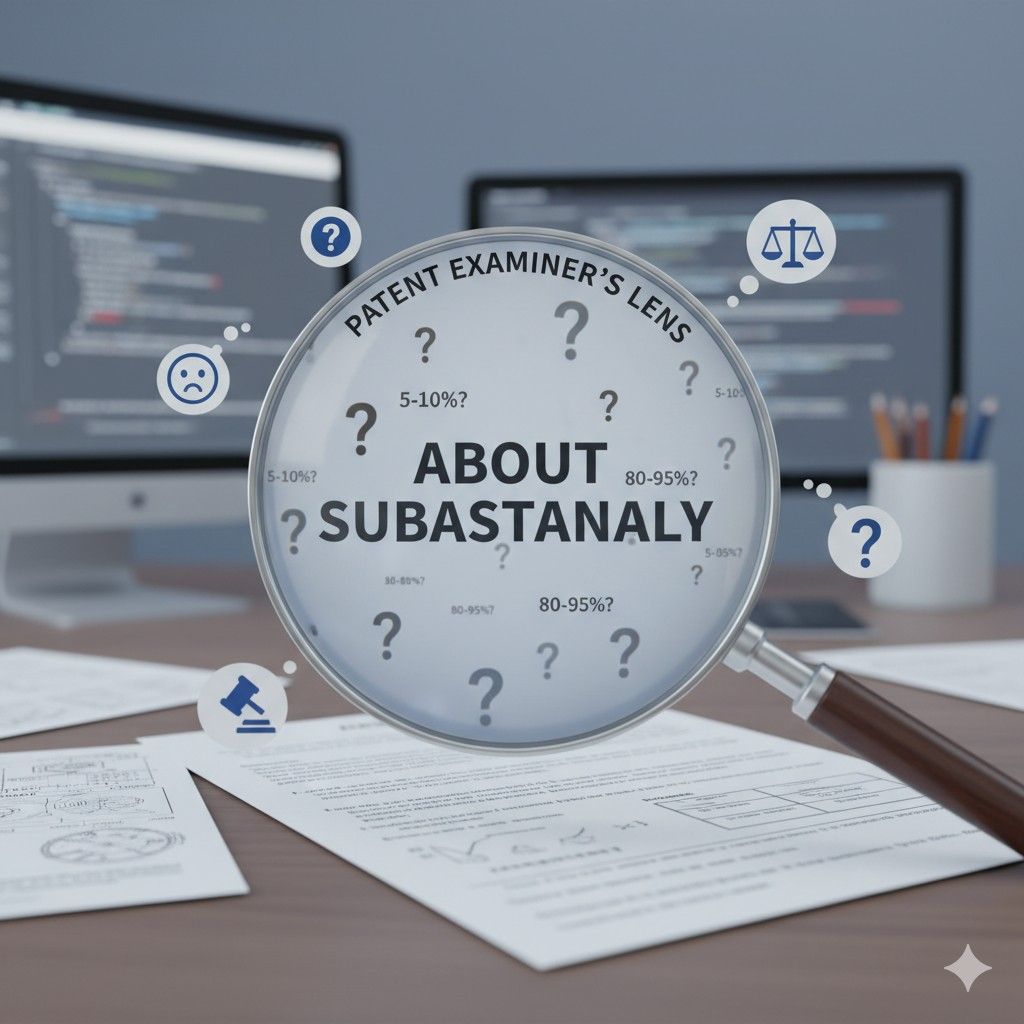
From the examiner’s perspective, clarity is not optional. It is required for the patent system to work.
Why “About” Triggers Follow-Up Questions
The word “about” almost always signals variability. That variability can be acceptable, but only if it is explained. Examiners look for support in the specification that shows what range was intended and why that range matters.
If a claim says “about 100 milliseconds” and the description never explains why timing varies or what still works, the examiner is left guessing. Guessing is not allowed. The examiner must be able to point to the document and say, “This is what the inventor meant.”
When that explanation is missing, the examiner often issues a rejection even if the invention itself is strong.
How “Substantially” Raises Scope Concerns
“Substantially” is one of the most misunderstood words in patent drafting. Founders often use it to mean “close enough for the system to work.” Examiners read it as “potentially very broad.”
The concern is not just vagueness. It is overreach. If “substantially aligned” or “substantially identical” is not grounded in function or outcome, the examiner worries the claim could be stretched too far.
To an examiner, a word that can stretch without limit is dangerous. It creates uncertainty for competitors and the public. That uncertainty is exactly what patent law tries to avoid.
The Examiner’s Question Is Always the Same
No matter the technology, examiners return to one core question: can someone skilled in this field clearly understand the scope of the claim from the text alone?
Relative terms fail this test when they rely on intuition instead of explanation. Even if most engineers would agree on what “substantially parallel” means, the examiner needs that agreement reflected in the document itself.
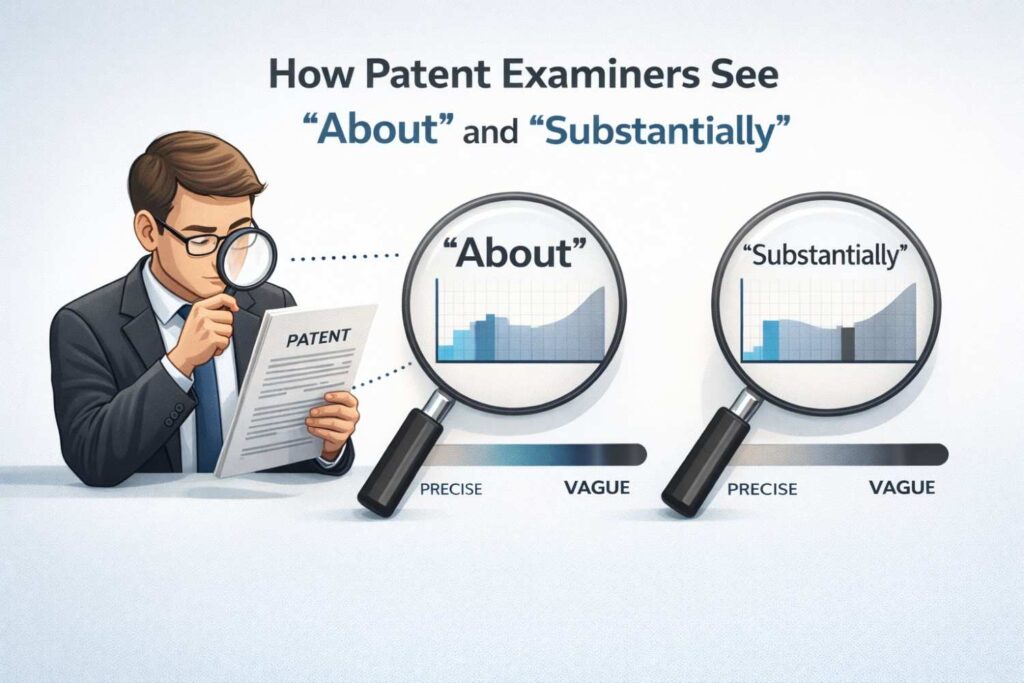
The standard is not whether the word makes sense. The standard is whether the meaning is anchored in the patent.
Why Technical Background Does Not Save Vague Language
Many founders assume that because examiners have technical training, they will naturally understand the intent behind certain words. This assumption causes real problems.
Examiners are not allowed to fill in gaps based on personal knowledge. They must rely on what is written. If the patent does not define or contextualize a relative term, the examiner must treat it as unclear, even if they personally understand the concept.
This rule exists to keep the system fair. It also means founders must do more work upfront to protect their ideas.
How Examiners Use Indefiniteness Strategically
Indefiniteness rejections are not always about killing an application. Often, they are a signal that the examiner wants clearer boundaries before allowing the claims.
From a business perspective, this is important. Every back-and-forth with an examiner costs time. It delays issuance. It can push a key patent past a fundraising milestone or partnership negotiation.
Understanding how examiners think allows founders to avoid these delays by addressing clarity before filing.
When Relative Terms Are Accepted Without Issue
Relative terms can and do survive examination when they are supported properly. Examiners are comfortable with them when the specification explains how the term operates within the invention.
For example, if “about” is tied to manufacturing tolerances or environmental variation, and the patent explains that link, examiners often accept it.

The same is true for “substantially” when it is tied to performance thresholds or functional outcomes.
The difference is not the word itself. It is the explanation surrounding it.
The Role of Examples in Examiner Comfort
Examiners look for examples that make abstract terms concrete. When a patent shows how a relative term applies in real scenarios, it reduces uncertainty.
These examples do not need to be exhaustive. They need to be representative. They show that the inventor has thought through the boundaries and is not trying to hide behind vague language.
From an examiner’s view, this signals good faith and strong drafting.
How Examiner Feedback Shapes Claim Scope
When an examiner flags a relative term, the fix often involves narrowing or clarifying the claim. If this happens late, it can force compromises that reduce business value.
Founders who anticipate examiner concerns can shape claims proactively. They can choose where to be flexible and where to be precise, rather than reacting under pressure.
This proactive approach leads to smoother prosecution and stronger final patents.
Why Modern Tools Change the Game
Catching examiner-triggering language before filing is one of the biggest advantages of modern patent platforms. PowerPatent is built to surface these risks early. The system highlights soft language, and experienced patent attorneys help founders decide how to anchor it without losing scope.
This approach aligns patent drafting with business goals. You move faster, avoid unnecessary rejections, and end up with protection that examiners understand and respect.

If you want to see how that works in practice, you can explore it here: https://powerpatent.com/how-it-works
Writing Claims That Are Clear, Defensible, and Hard to Attack
Writing a patent claim is not an academic exercise. It is a business decision expressed in words.
Every sentence is a choice about what you want to protect, how clearly you want to protect it, and how hard it will be for someone else to argue their way around it.
This section focuses on how founders can write claims that hold up under pressure, especially when relative terms are involved.
Claims Are Where Value Actually Lives
Most of a patent can be descriptive without doing much harm. The claims are different. The claims define what you own. If the claims are weak, the patent is weak, no matter how impressive the rest of the document looks.
Relative terms often sit inside claims because founders want flexibility. That instinct is understandable, but claims are not the place for unbounded flexibility. They are the place for controlled scope.
Strong claims feel deliberate. Every word earns its place.
Starting With the Business Risk, Not the Technology
One of the biggest mistakes founders make is starting claim drafting from a technical standpoint alone. A better starting point is risk. What would you be upset about if a competitor copied it? Where would it hurt most if someone found a loophole?
When you frame claims around those questions, clarity becomes easier. You naturally focus on the parts that matter and describe them in a way that leaves less room for interpretation.
Relative terms that survive this process tend to be purposeful, not accidental.
Using Relative Terms to Reflect Real-World Variation
Real systems are not perfect. Claims that pretend they are often fail. The goal is not to eliminate relative terms entirely, but to use them in a way that mirrors how the system actually behaves.
If a value changes based on load, environment, or scale, the claim should acknowledge that.
The key is to explain what still holds true across that variation. The claim should tell the reader what outcome remains consistent, even as inputs shift.
This approach keeps the claim grounded while preserving flexibility.
Defining the Edges Without Over-Narrowing
Founders often fear that adding detail will narrow claims too much. In practice, detail often protects the core while allowing variation around it.
Clear edges do not mean tight edges. They mean understandable edges. A competitor should know exactly what line they are crossing, even if that line allows some movement.
When relative terms are tied to function or result, they define edges in a way that courts and examiners respect.
Writing for the Reader You Cannot See
Claims are written today for readers you will never meet. Future examiners. Judges. Engineers at rival companies. Each of them will read your words without context.
This is why self-contained clarity matters. If a claim depends on unwritten assumptions, it will eventually be read by someone who does not share them.
Good claim writing assumes nothing and explains just enough to remove doubt.
Pressure Testing Claims Before Filing
One of the most effective tactics is to challenge your own claims. Ask how someone might argue they do not infringe. Look for words that give them room to maneuver.
Relative terms are common escape hatches. If a competitor could reasonably say their system is not “about” a value or not “substantially” a condition, the claim may need reinforcement.

This exercise often reveals weaknesses that are easy to fix early and painful to fix later.
Balancing Breadth and Defensibility
Breadth without clarity is fragile. Defensibility comes from language that can be applied consistently. The best claims strike a balance between covering variations and drawing firm boundaries.
Relative terms should serve that balance. They should widen coverage in a controlled way, not open the door to endless interpretation.
This balance is what turns a patent into a real business asset.
Why Specification and Claims Must Work Together
Claims do not exist alone. They rely on the specification for support. Relative terms in claims should be explained in the description in a way that reinforces their meaning.
When the specification provides context, examples, and reasoning, claims become harder to attack. The words gain weight because they are backed by explanation.
This is where many DIY patents fail. The claims and description drift apart instead of working as a unit.
Learning From Past Enforcement Failures
Many patents that fail in court fail for the same reason. The language could not be pinned down. Judges and juries could not agree on what the claims meant.
Founders who study these failures notice a pattern. Clear claims survive. Vague claims collapse under scrutiny.
Writing with enforcement in mind changes how you approach every word.
How PowerPatent Helps Founders Write Stronger Claims
Clear claim writing is a skill, but it is also a process. PowerPatent supports founders by identifying risky language early and guiding them toward clearer, more defensible wording. The combination of smart software and real patent attorneys means claims are reviewed not just for novelty, but for strength.
This helps founders move fast without sacrificing quality. It reduces back-and-forth with examiners and produces patents that stand up when they matter most.

If you want to see how this works in practice, you can explore it here: https://powerpatent.com/how-it-works
Wrapping It Up
Patents do not fail loudly. They fail quietly, years after filing, when the language is finally tested. By then, the cost of unclear words is no longer theoretical. It shows up as lost leverage, delayed deals, or competitors operating just outside the lines you thought you had drawn.
Words like “about” and “substantially” are not mistakes by default. They become mistakes when they are used without care, without context, and without a clear reason for being there. The strongest patents are not the ones that try to sound broad. They are the ones that are understood the same way by everyone who reads them.
Leave a Reply