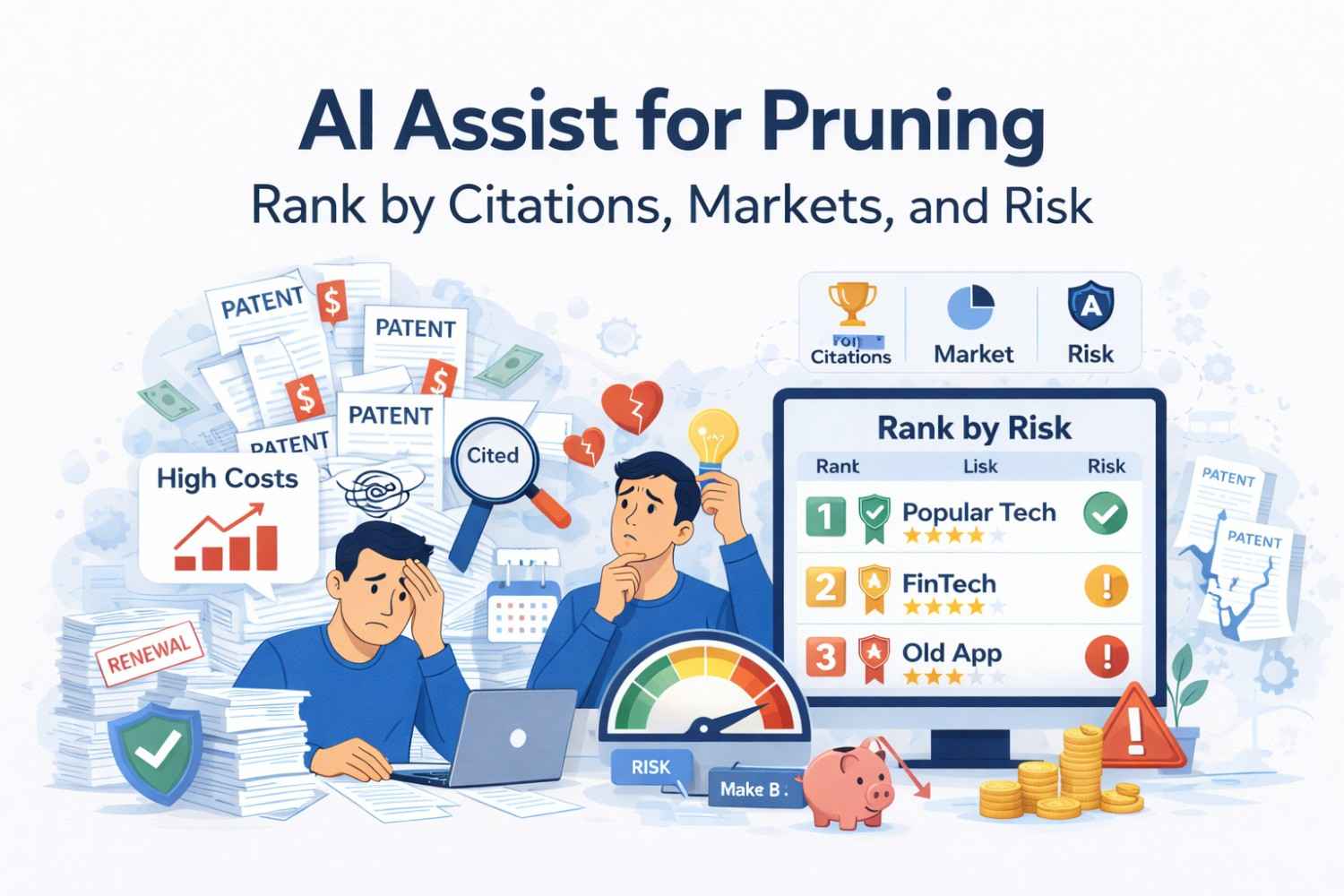
You are building fast. New features. New models. New code. But your patent list keeps growing—and you are not sure which ideas matter most. Some filings look strong. Some feel weak. Some might never turn into real value. This is where smart founders win or lose. You do not just need more patents. You need better ones. You need to prune. And now, with AI assist, you can rank your portfolio by real signals—citations, market pull, and risk—so you protect what truly counts and let go of what does not. That is what we are going to break down.
Why Most Patent Portfolios Get Bloated (And Cost You More Than You Think)
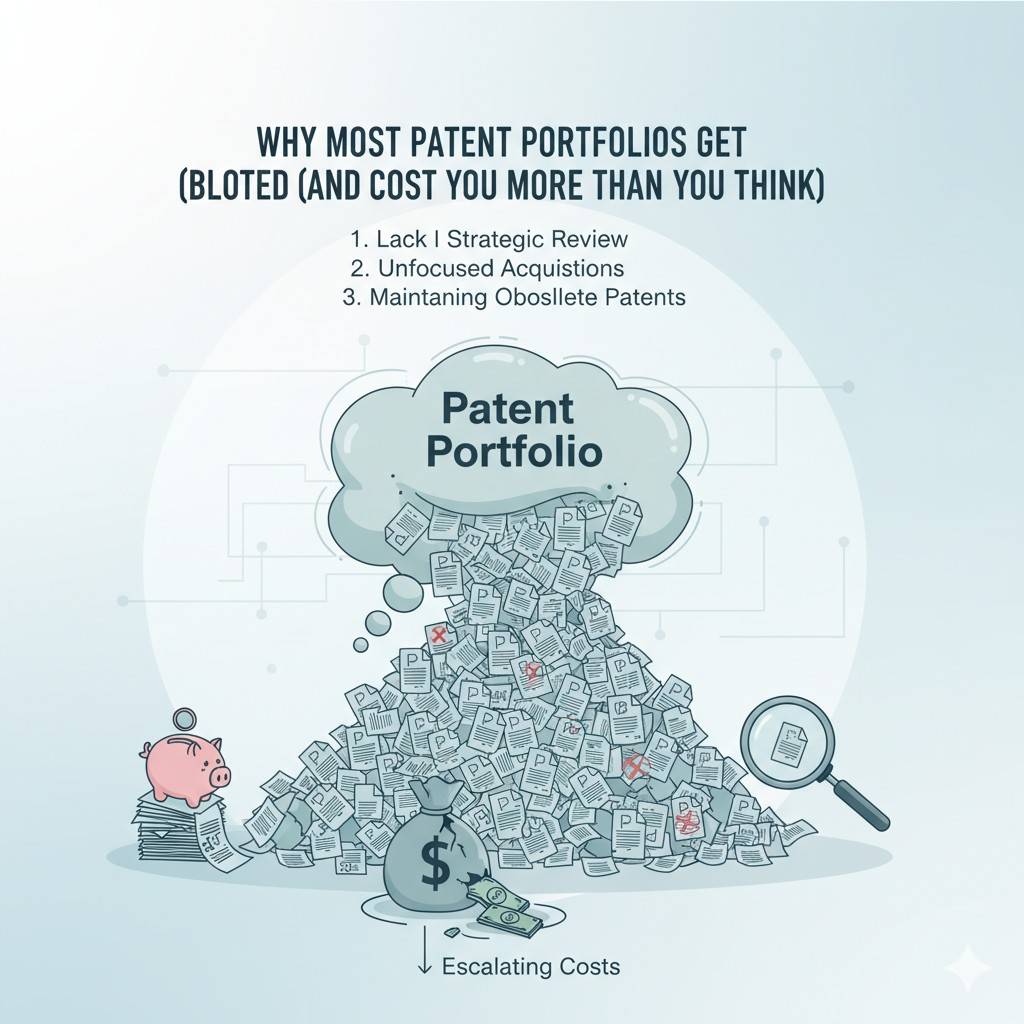
Growth feels good. Filing feels safe. Every time you ship a new feature or train a new model, it feels smart to lock it down. So you file. Then you file again. Soon you have a stack of applications and issued patents.
On paper, it looks like strength. In reality, it can quietly drain time, money, and focus. A bloated portfolio is not a badge of honor. It is often a sign of fear, speed without strategy, or advice that rewards volume over value.
If you want your patents to protect your company instead of weighing it down, you have to understand how the bloat happens in the first place.
The “File Everything” Mindset
Many founders believe that more patents mean more safety. The logic feels simple. If one patent is good, ten must be better. But this thinking ignores one key truth: not all ideas deserve long-term protection.
When you file everything, you treat small improvements the same as core breakthroughs. A minor UI tweak ends up in the same bucket as a new architecture.
Over time, you pay maintenance fees on ideas that no longer matter. You spend legal time reviewing filings that no longer match your roadmap. You carry weight that slows you down.
A better move is to pause before every filing and ask a hard question: if this became our only patent, would it still matter in three years? If the answer is no, it may not belong in your long-term strategy.
Emotional Attachment to Ideas
Founders fall in love with their early work. That first version of the product. That clever algorithm you built during a late night sprint. That feature customers barely used but you felt proud of.
Emotion is powerful. It pushes you to build. But it can also push you to protect things that have no future market value.
As your company evolves, your patents must evolve too. What felt critical at seed stage may be irrelevant at Series B.
If you do not step back and review your portfolio through a cold, business lens, you will keep paying for yesterday’s vision instead of protecting tomorrow’s growth.
One tactical move that works well is to tie every patent to a current revenue stream or a clear product line. If you cannot link a patent to where your company makes money or plans to make money, that is a signal to rethink its priority.
Filing Without a Clear Commercial Path
Some companies treat patents like lottery tickets. They file broadly, hoping one becomes valuable. But patents are not magic. They only matter if they protect something the market wants.
When filings are not tied to a business plan, they drift. You end up with protection around features that never shipped, models that never scaled, or hardware that never reached production.
A disciplined approach is to align patent filings with product milestones. When your product roadmap changes, your patent plan should change too. If you pivot, your portfolio must pivot. Otherwise, you are protecting ghosts.
At PowerPatent, we see this often. Teams build fast. They innovate deeply. But without clear structure, their patent filings do not track their real business direction.
Smart AI tools combined with real attorney oversight help prevent that drift. You want filings that move with your company, not behind it.
If you are not sure whether your filings match your growth plan, it may be time to rethink how you manage them. You can see how a smarter system works here: https://powerpatent.com/how-it-works
The Hidden Cost of Maintenance Fees
The real damage of a bloated portfolio does not show up on day one. It shows up years later when maintenance fees hit. Each patent you keep alive demands payment.
Multiply that by dozens of filings and multiple countries, and the cost becomes serious.
Worse, these payments are automatic. Many companies pay simply because the reminder arrives. There is no fresh review. No fresh analysis. Just inertia.
You can stop this cycle by creating a simple annual patent review process. Every year, before paying any maintenance fee, review each patent as if you were deciding to file it today. Would you invest fresh money into this idea right now? If not, that is a strong signal.
This one habit alone can save a company hundreds of thousands of dollars over time.
When Law Firms Incentivize Volume
Traditional firms often work on a per-filing model. More applications mean more revenue. This is not evil. It is just how the model works. But it does create a quiet push toward more filings.
If no one challenges whether a patent truly supports your business, your portfolio grows by default. You become reactive instead of strategic.
Founders need to take back control. You should treat your patent budget like your engineering budget. Every dollar must tie to impact. Every filing must serve a goal.
With the right tools, you can see your portfolio clearly. You can rank patents by strength, by market relevance, by risk exposure.
That is where AI assist becomes powerful. It shifts the conversation from “should we file more?” to “which filings actually increase our advantage?”
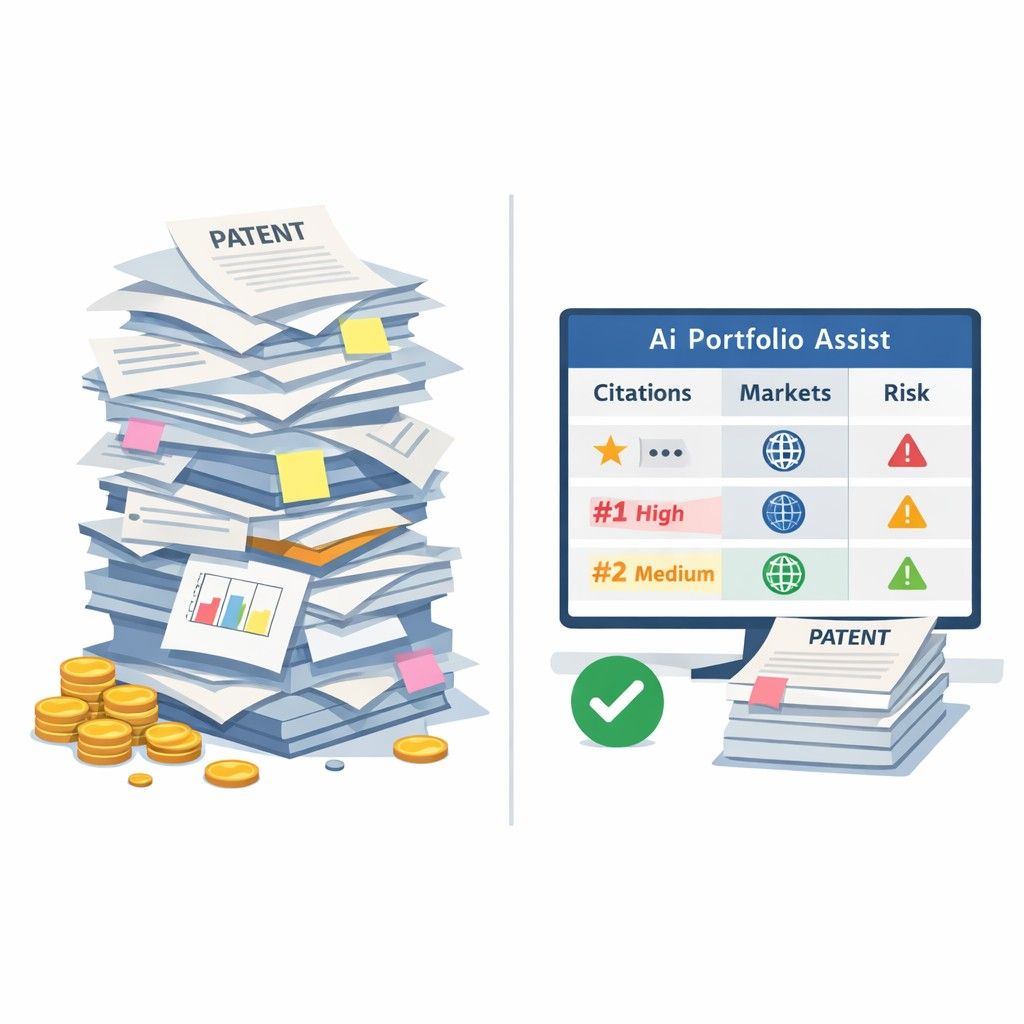
PowerPatent was built to give founders that control. Software helps you see patterns and signals. Real attorneys guide the strategy. You are not guessing. You are deciding with data.
Explore how that works in practice here: https://powerpatent.com/how-it-works
The Illusion of Investor Pressure
Some founders file heavily because they think investors expect it. They believe a thick patent stack signals innovation. But sophisticated investors look deeper.
They ask: Are these patents defensible? Do they protect the core technology? Do they block competitors? Or are they surface-level filings that look impressive but add no moat?
A smaller, focused portfolio tied directly to your product engine is often stronger than a large, scattered one. Quality creates confidence. Clarity creates leverage.
Before your next raise, imagine explaining each patent in one simple sentence. If you cannot clearly state how it protects your main advantage, you may be carrying extra weight.
Patents That Outlive the Product
Technology moves fast. Products change. Markets shift. Yet patents last for many years. That mismatch creates risk.
If your early patents protect technology you no longer use, competitors can design around them easily. You are left with documents that sit on a shelf while your real innovation goes unprotected.
This is why pruning matters. It is not about cutting for the sake of cutting. It is about making sure your active portfolio mirrors your current engine.
One smart move is to map each patent to a live feature in your product. If the feature is gone, ask whether the patent still supports your long-term direction. If not, consider whether it deserves ongoing investment.
Complexity That Slows Decision Making
A large patent portfolio is harder to manage. Every partnership discussion requires review. Every acquisition conversation demands due diligence. Every new feature needs freedom-to-operate checks against your own filings.
What should protect you can start slowing you down.
A tight portfolio is easier to understand and defend. It allows faster decisions because you know exactly what you own and why it matters.
AI tools can scan your portfolio and highlight overlap, redundancy, and weak claims. Instead of manually reviewing hundreds of pages, you get signals that guide focus. That is the difference between reactive cleanup and proactive control.
Opportunity Cost You Do Not See
Money spent maintaining low-impact patents is money not spent on stronger protection. It is money not spent expanding into key markets. It is money not spent refining claims around your most defensible technology.
Every dollar has a job. When it is tied up in weak filings, your strongest ideas may remain under-protected.
A powerful strategy is to redirect savings from pruning into strengthening core patents.
File continuation applications around your best assets. Expand coverage in markets where competitors are growing. Reinforce what truly matters.
This turns pruning into growth. It is not about shrinking. It is about sharpening.
Building a Lean, Strategic Portfolio
A lean portfolio does not mean a small one. It means a focused one. Every patent has a role. Every role supports revenue, defense, or leverage.
Start by asking three questions about each filing. Does this protect our core technology? Does it block real competitors? Does it support future product lines? If a patent fails all three, it may not belong.
When you combine this discipline with AI-assisted ranking by citations, market signals, and legal risk, you gain clarity. You stop filing out of habit. You stop paying out of fear. You start protecting with intent.
If you want to see how software and real attorneys can help you rank and prune your portfolio without losing protection, take a closer look at how PowerPatent works: https://powerpatent.com/how-it-works
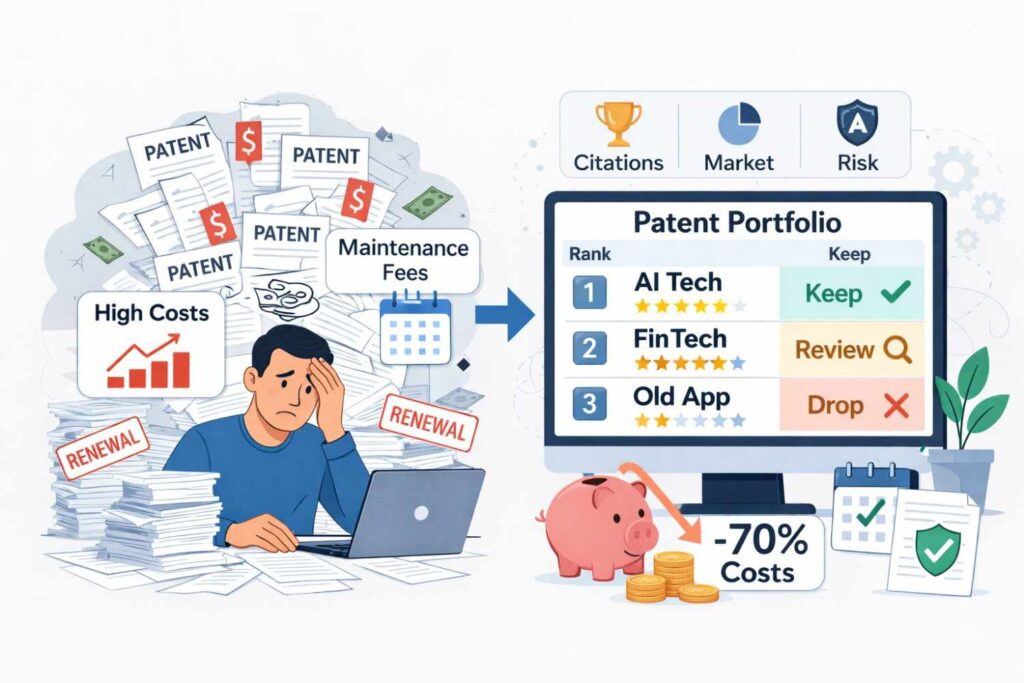
Pruning is not about cutting back innovation. It is about making your protection as sharp as your product.
Ranking by Citations: What the Patent World Is Quietly Telling You
Most founders never look at patent citations. They file. They wait. They move on. But citations are one of the clearest signals hiding in plain sight. They tell you which patents matter in the real world.
They show you where competitors are looking. They reveal which ideas are shaping the field. If you ignore citation data, you are ignoring the market’s quiet feedback loop.
Citations are not perfect. But they are powerful. When you use AI to read and rank citation patterns across your portfolio, you stop guessing. You start seeing which patents carry real weight.
What a Citation Really Means
When another patent cites yours, it is not random. It means your invention is relevant to something new. It could mean your idea is foundational. It could mean others are building on it. It could also mean they are trying to work around it.
Either way, it is attention.
Attention in the patent world matters because patents are legal territory. If others must reference your patent, it often means your work sits close to the center of innovation in that space.
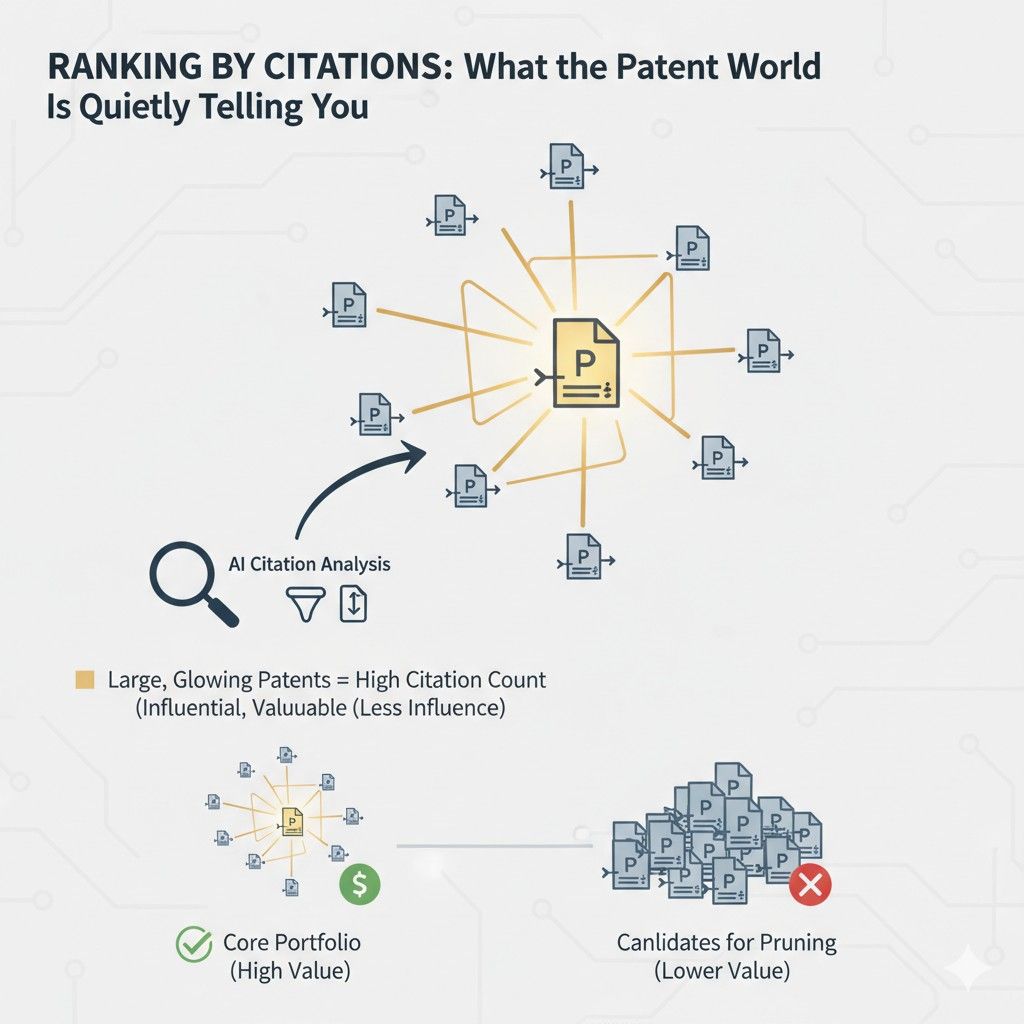
That is signal. And signal is what you use to rank strength.
Forward Citations vs Backward Citations
Not all citations tell the same story. When your patent cites older patents, that is normal. That is just part of the filing process. But when newer patents cite yours, that is forward movement. That shows impact.
Forward citations often indicate influence. They show that your idea did not sit still. It became part of the ongoing conversation.
AI tools can quickly surface which of your patents are receiving forward citations and how often. Instead of manually reviewing records, you see ranked insights in seconds. This helps you focus your energy on the patents that are shaping your space.
If you are still managing this through spreadsheets or scattered reports, you are working too hard.
Modern tools can surface this automatically and help you interpret what it means for your business. You can see how that works here: https://powerpatent.com/how-it-works
The Speed of Citations Matters
Timing tells a story. If a patent begins receiving citations quickly after issuance, that suggests rapid relevance. Your idea entered the field and immediately became part of the competitive landscape.
Slow citation growth may still matter, but rapid early citations often signal high strategic value.
You can use this insight tactically. If one of your recent patents is already being cited by major players, that may be a sign to strengthen that area. You might file additional claims.
You might expand protection into new regions. You might prepare for licensing conversations.
The point is simple. Citations help you decide where to double down.
Who Is Citing You
The name behind the citation is just as important as the number.
If small unknown startups are citing your patent, that tells one story. If a global tech company is citing it, that tells another.
AI analysis can cluster citation sources by company size, geography, and technical field. This shows whether your patent is drawing attention from serious competitors.
If a direct competitor cites your patent multiple times, that is not noise. That is proximity. They are operating close to your territory.
That insight can shape product strategy. It can influence partnership talks. It can prepare you for defensive action if needed.
Without ranking by this data, you may miss early signals of competitive movement.
Citation Clusters and Technology Trends
Patents rarely exist alone. They live in networks. When several of your patents are cited together in the same new filings, that suggests a cluster of related value.
AI tools can map these clusters. They show which parts of your portfolio are interconnected and which stand alone.
Clusters often represent core technology platforms. Standalone patents may be side projects or narrow features.
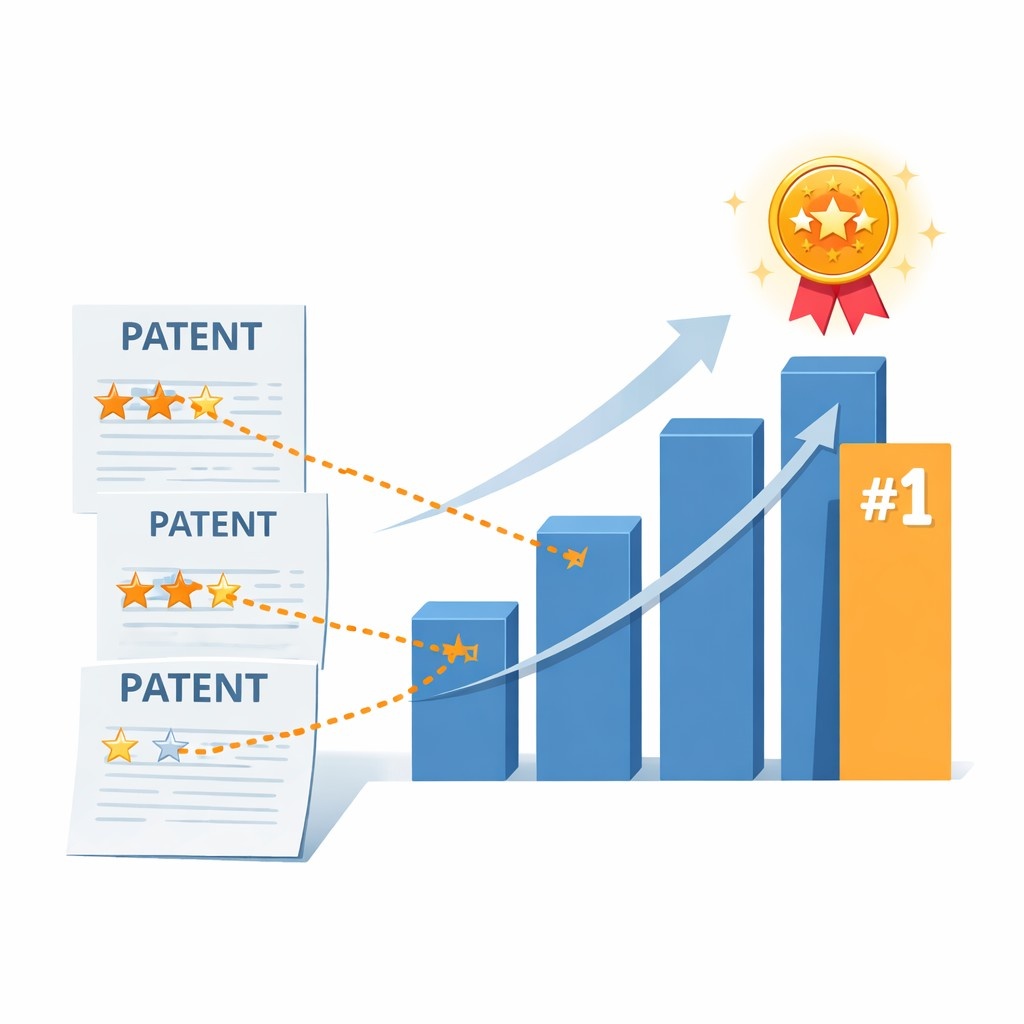
When pruning, this matters. You may choose to protect and expand clusters while reconsidering isolated filings that do not connect to your main engine.
This is not about cutting blindly. It is about seeing structure clearly.
Low-Citation Patents Are Not Always Weak
It is important to stay balanced. A patent with few citations is not automatically useless. Some patents sit in niche markets. Some protect internal process advantages that competitors cannot easily see.
But if a patent has low citations, no product tie-in, and no clear market link, that combination raises questions.
AI ranking helps you see these patterns side by side. Instead of reviewing each patent in isolation, you evaluate them in context.
Context drives better decisions.
Using Citation Strength in Investor Conversations
Investors care about defensibility. When you can show not only that you hold patents but that your patents are cited by major players, you shift the narrative.
You move from “we filed some patents” to “our technology influences the direction of this space.”
That is powerful.
Before fundraising, review your citation-ranked patents. Identify the top tier. Make sure your pitch clearly connects those patents to your core product and market.
If your portfolio lacks citation strength, that is also useful to know. It may signal the need to refine claim scope or focus on more foundational inventions moving forward.
Clarity builds confidence.
Turning Citation Data Into Action
Data alone does nothing. Action creates value.
Once you rank your patents by citation strength, decide what each tier means.
Top-tier patents may deserve expanded filings, global coverage, or closer monitoring of competitors.
Mid-tier patents may need refinement or strategic positioning.
Low-tier patents may be candidates for pruning, especially if they also lack market alignment.
The key is discipline. Review annually. Update rankings. Tie decisions to business goals.
With PowerPatent, you do not have to manually track this. The system surfaces citation signals and pairs them with attorney guidance so you make informed choices, not reactive ones.
If you want to see how AI and real legal oversight combine to give you that edge, explore the process here: https://powerpatent.com/how-it-works
Citations as Early Warning Signals
Citations can also alert you to risk. If competitors frequently cite your patent while filing similar claims, they may be navigating around your protection.
That can prompt a strategic review. Are your claims broad enough? Should you file continuations? Is enforcement worth preparing for?
Without monitoring citations, you may discover competitive pressure too late.
With AI assist, alerts can surface shifts early. You gain time. And time is leverage.
Making Citation Ranking Part of Your Culture
The strongest companies treat patents as living assets. They review them like product metrics. They measure influence. They track shifts.
If you embed citation ranking into your annual planning process, you create a feedback loop between innovation and protection.
Engineers understand which inventions create real impact. Leadership understands where competitive gravity sits. Legal strategy aligns with product direction.
This is how pruning becomes intelligent, not emotional.
A focused portfolio backed by citation insight is sharper, more defensible, and more credible.
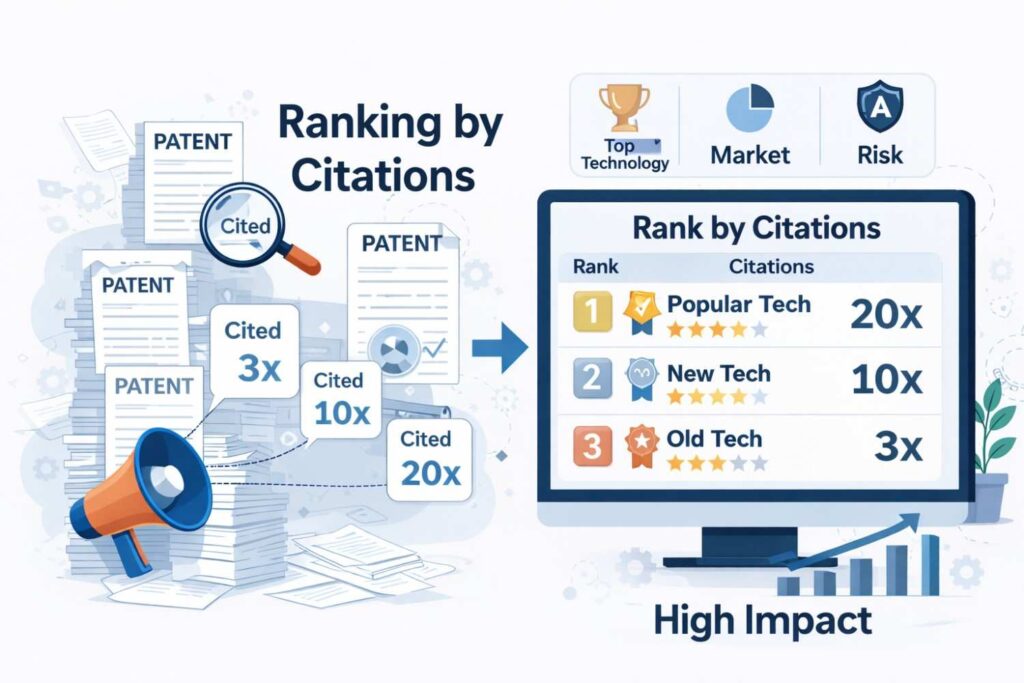
And when you combine citation ranking with market signals and risk analysis, you get a full picture of which patents deserve fuel and which deserve reconsideration.
That is where we go next.
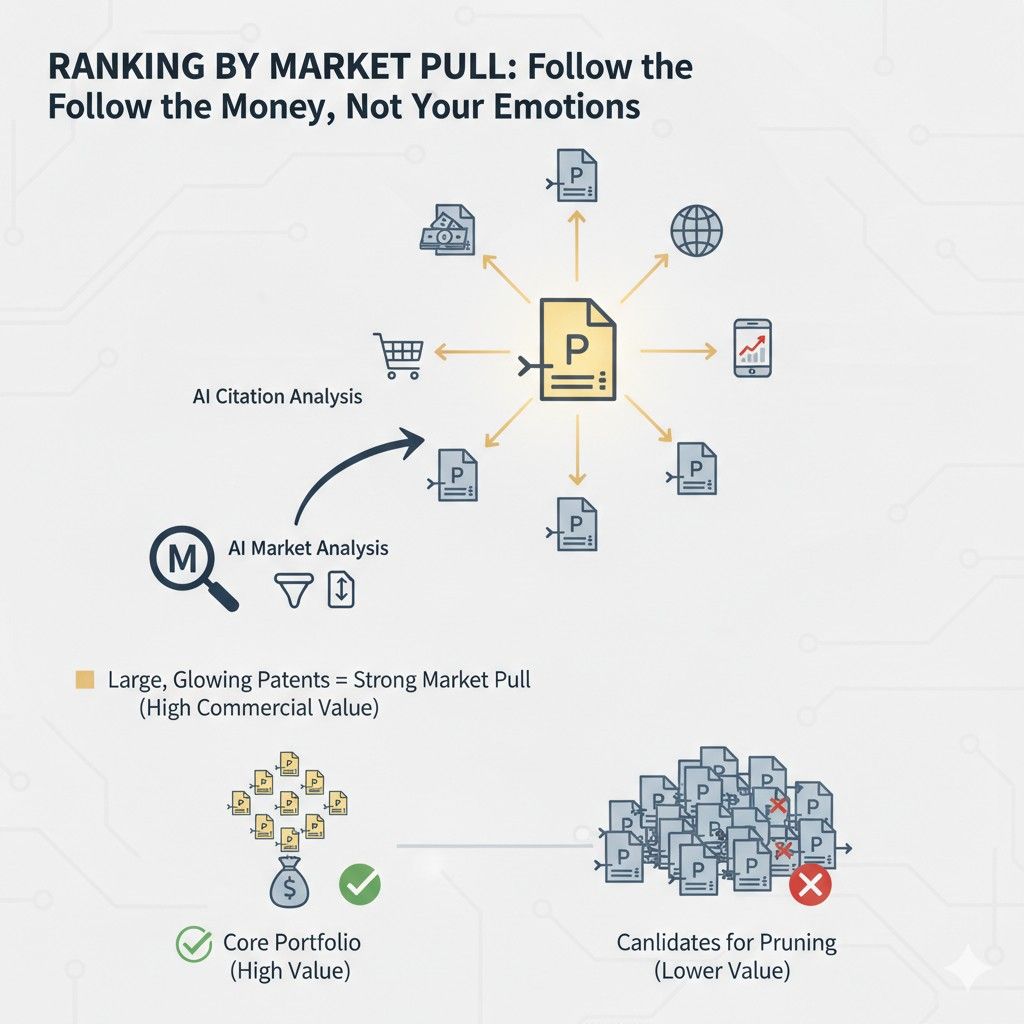
Ranking by Market Pull: Follow the Money, Not Your Emotions
Citations tell you what the patent world thinks. Market pull tells you what customers are willing to pay for. And if you are building a real company, revenue matters more than ego.
You can have a technically brilliant patent that never touches a paying customer.
You can also have a simple invention that protects the exact feature driving your growth. When you rank your patents by market pull, you force your portfolio to align with reality.
Market pull is about demand. It is about usage. It is about money changing hands.
When you combine AI analysis with business data, you can see which patents sit closest to your revenue engine. That clarity changes how you invest in protection.
Revenue Mapping Changes Everything
Most founders never connect patents to revenue lines in a structured way. The patent sits in one system. Sales data sits in another. Product metrics live somewhere else. No one draws the line between them.
But when you map each patent to a specific product, feature, or service that generates revenue, the fog lifts.
If a patent protects a feature used by eighty percent of your customers, that is high pull. If another patent protects a feature used by five percent of users with no growth trend, that is a different story.
AI tools can help connect product documentation, usage data, and patent claims. This makes ranking faster and less subjective. Instead of debating opinions, you look at numbers.
If you want to build a patent strategy around real business traction instead of guesswork, you need that visibility.
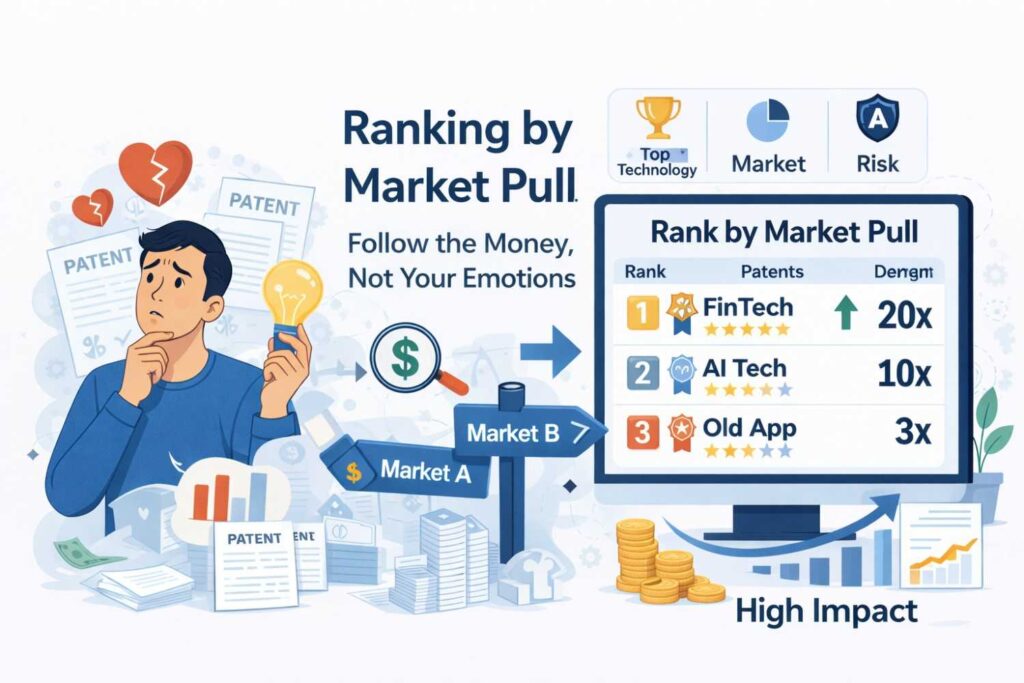
PowerPatent helps founders tie their inventions directly to product impact while keeping real attorneys in the loop to ensure claims match the business direction. You can see how it works here: https://powerpatent.com/how-it-works
Growth Rate Is a Strong Signal
Revenue today is important. Growth rate may be even more important.
A patent tied to a fast-growing product line might deserve more protection than one tied to a mature line with flat numbers.
If your AI platform feature is doubling usage every quarter, that feature’s protection should be reinforced early.
Waiting too long can leave gaps.
When ranking by market pull, look at forward momentum. Which patents sit closest to products that are expanding? Which ones support features in beta that show strong early adoption?
AI can surface product analytics trends and cross-reference them with your patent coverage. This helps you see whether your protection matches your growth curve.
If growth is happening in one corner of your company but your strongest patents sit elsewhere, you may need to rebalance.
Market Size Shapes Long-Term Value
Not all revenue streams are equal. A niche feature may generate solid income but operate in a small total market. Another product may still be early but sits in a massive expanding space.
Ranking by market pull means looking at both current traction and total opportunity.
If a patent protects technology in a rapidly expanding field, that patent may deserve expansion into more countries or broader claims.
If another patent protects something in a shrinking segment, it may not warrant heavy investment.
AI tools can monitor industry signals, competitor filings, and funding flows in adjacent sectors. When combined with your internal data, you get a clearer view of where the market is heading.
That insight helps you avoid over-investing in yesterday’s opportunity.
Customer Dependence Tells a Story
Ask a simple question. If this patent disappeared tomorrow, would customers notice?
Some patents protect background systems. They matter, but customers may not directly feel them. Others protect the exact feature customers mention in testimonials.
When customers choose you because of a specific capability, and that capability is patented, that patent carries weight.
Ranking by customer dependence means reviewing feedback, sales calls, and churn reasons. Which features close deals? Which features reduce churn?
When those features are backed by strong patents, you have leverage.
If they are not protected, that is a risk worth fixing quickly.
Pricing Power and Patent Strength
Strong patents often support pricing power. If your patented technology enables performance others cannot easily match, you may justify higher pricing.
When you analyze which products command premium margins and connect those margins to patented technology, you see true market pull.
AI can help analyze margin data alongside patent coverage. This reveals which filings protect high-value offerings versus low-margin add-ons.
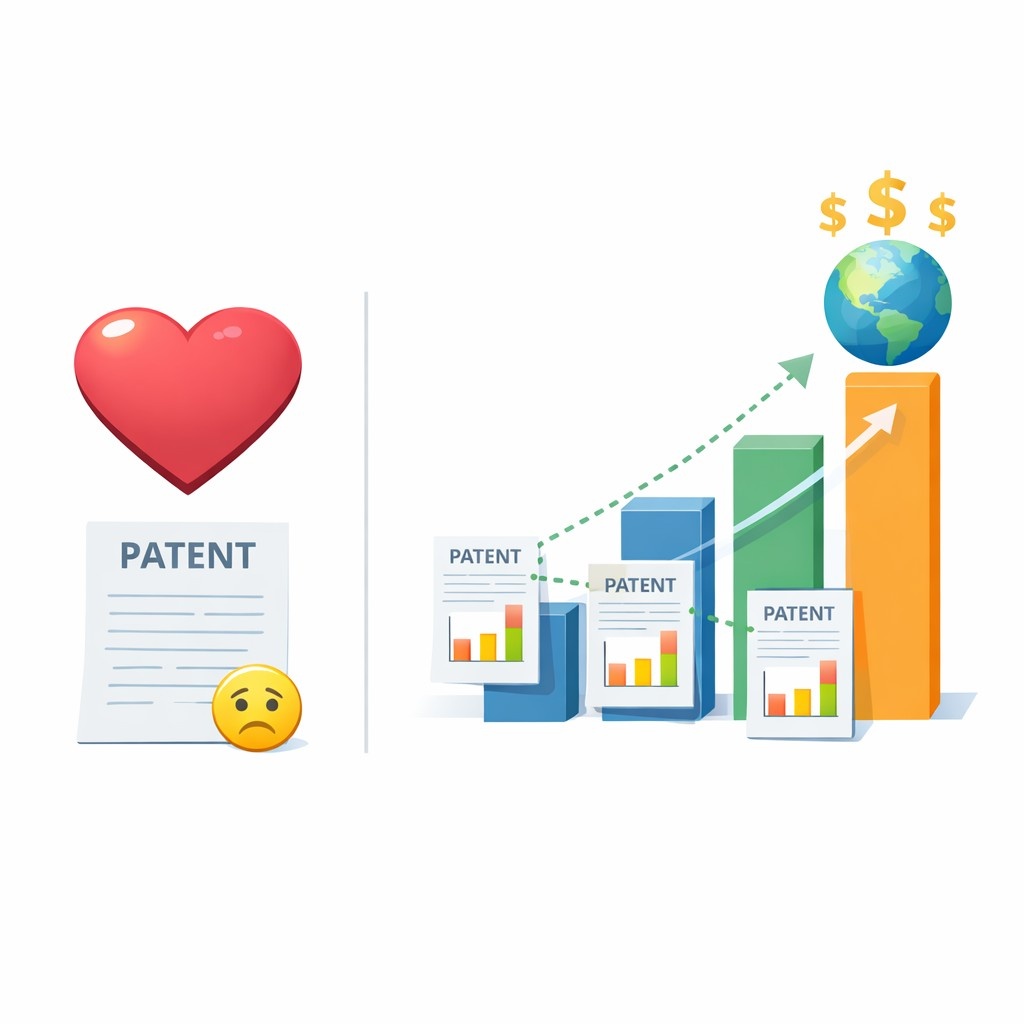
If a patent supports your highest margin product, strengthening that protection can protect future profit.
Geographic Expansion and Market Ranking
Market pull is not limited to one country. If you are expanding into new regions, your patent coverage should follow demand.
If usage data shows strong growth in Europe or Asia for a specific feature, but your patent coverage is limited to the United States, that is a gap.
Ranking patents by regional market pull helps you decide where international filings are worth the cost.
Without this analysis, companies often file internationally out of habit instead of strategy.
Smart pruning sometimes means reducing filings in low-impact regions while expanding in high-growth ones.
Product Roadmap Alignment
Your roadmap is your future revenue story. If your next major release centers around a new engine, model, or hardware system, your patent focus should shift accordingly.
Ranking by market pull means including forward-looking data, not just past numbers.
Which patents align with the next twelve to twenty-four months of development? Which ones protect features you are quietly deprecating?
AI can scan internal documentation, roadmap notes, and technical changes to highlight mismatches between where you are headed and what you have protected.
This allows you to prune with confidence and invest with purpose.
Avoiding the Sunk Cost Trap
One of the hardest parts of pruning is emotional resistance. You already spent money filing that patent. You defended it. You maintained it. Letting it go feels like waste.
But sunk cost should not drive future investment.
Ranking by market pull forces a forward view. It asks whether continued protection supports real business goals today and tomorrow.
If the answer is no, freeing up that budget allows you to reinforce stronger areas.
This is not loss. It is reallocation.
Using Market Pull in Strategic Conversations
When discussing strategy with your leadership team or board, ranking patents by market pull changes the tone.
Instead of abstract legal discussions, you speak in business language. You show which patents protect core revenue. You explain where expansion is justified. You highlight areas that no longer support growth.
This builds trust.
It also ensures your patent strategy is not isolated from company direction.
With PowerPatent, founders can view their portfolio through this business lens while still ensuring legal strength through real attorney review.
The goal is simple: protection that mirrors your revenue engine, not protection that drifts away from it. Learn more here: https://powerpatent.com/how-it-works
Market Pull as a Pruning Filter
When you combine citation ranking with market pull, patterns become clear.
Some patents may have strong citation counts but weak revenue alignment. Others may have modest citation activity but protect your most valuable feature.
By layering these signals, you make smarter decisions.
Patents that score low on both citation impact and market pull become obvious pruning candidates.
Patents that score high on both become strategic pillars.
And those in the middle require thoughtful review.
This layered approach removes guesswork. It replaces emotion with evidence.
In the next section, we will look at the third layer that completes the picture: risk. Because even a high-revenue, highly cited patent can carry hidden weaknesses if risk is ignored.
Ranking by Risk: Spot Weak Patents Before They Hurt You
Citations show influence. Market pull shows money. Risk shows danger.
You can have a patent that is heavily cited and tied to strong revenue, yet still be exposed. The claims may be narrow. The language may leave room for easy workarounds.
Prior art may sit closer than you realized. If you do not rank your portfolio by risk, you may build your strategy on assets that look strong but crack under pressure.
Risk ranking is about stress testing your patents before someone else does.
Legal Strength Is Not Equal Across Your Portfolio
Not all patents are written with the same depth. Some were filed quickly to hit a deadline. Some were written before the product fully matured. Others may have broader claims because the invention was more foundational.
Over time, this creates uneven strength across your portfolio.
AI tools can scan claim language and compare it to similar patents in the field. They can flag narrow phrasing, heavy limitations, or patterns that competitors often design around. This does not replace attorney judgment. It enhances it.
When software highlights potential weaknesses and real attorneys review them, you get clarity faster.
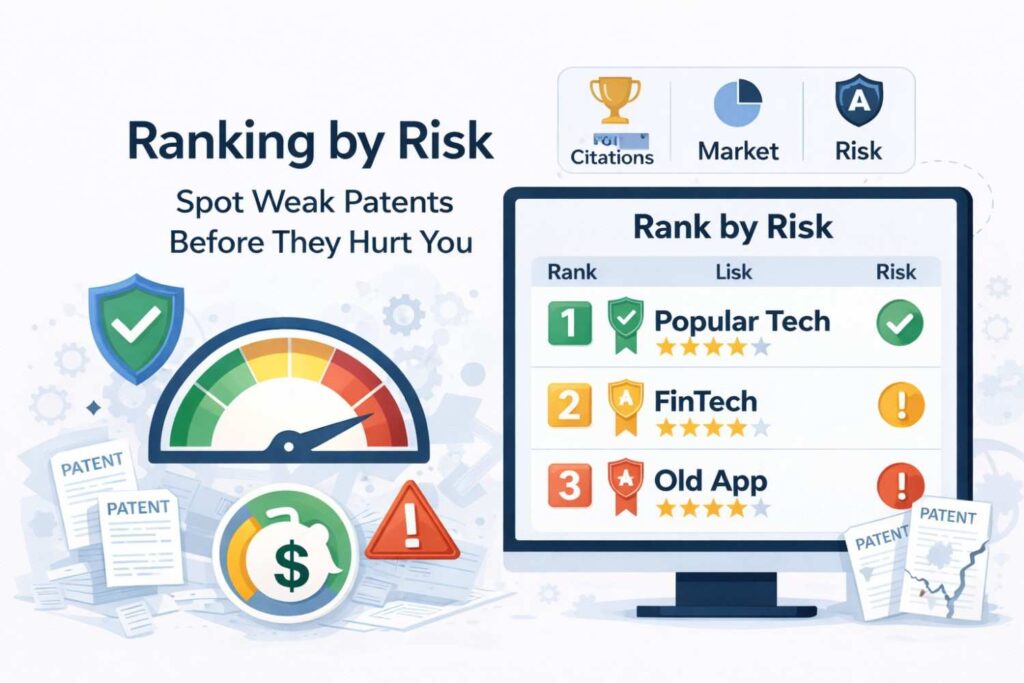
If you never evaluate legal strength after issuance, you are assuming durability without proof.
Prior Art Exposure
Every patent sits in a field of existing ideas. Sometimes new prior art surfaces after your filing date that makes enforcement harder. Sometimes earlier references were overlooked but become more relevant as the industry evolves.
Ranking by risk means periodically scanning for new prior art close to your claims.
AI can monitor newly issued patents and publications and measure how close they sit to your protected space. If overlap grows over time, your risk profile changes.
This gives you options. You may file continuation applications to broaden coverage. You may adjust product features to better align with your strongest claims. You may prepare a defensive plan.
Without this monitoring, you may only discover exposure when conflict arises.
Enforcement Reality
A patent only creates value if it can be enforced when needed. Some patents look strong on paper but would be costly or complex to defend due to claim ambiguity.
Risk ranking involves reviewing how clearly your patent maps onto real-world products.
If you cannot easily demonstrate infringement because claims are too abstract or too narrow, enforcement becomes difficult.
AI can assist by mapping your claims against competitor products and public documentation. This does not mean you plan to litigate. It means you understand your leverage.
Clarity equals power. Uncertainty equals risk.
Geographic Gaps
Risk is also geographic. If your revenue grows in regions where you have no patent coverage, you face exposure.
Competitors may replicate your technology freely in those markets. Even if you dominate in one country, lack of protection elsewhere weakens your global position.
Ranking by risk includes identifying where revenue growth outpaces patent coverage.
This allows you to act early instead of reacting after market share is challenged.
PowerPatent helps founders see these gaps clearly and make expansion decisions with real attorney guidance. You can explore how the system supports this here: https://powerpatent.com/how-it-works
Dependency Risk
Some companies rely heavily on a single patent family. If that patent were invalidated, much of their defensive wall would fall.
AI can analyze how much of your revenue ties to specific patent clusters. If too much weight sits on one narrow set of claims, that concentration creates risk.
Diversifying claim coverage across related inventions can reduce this vulnerability.
When pruning, you must be careful not to remove filings that serve as backup layers around core technology. Risk ranking helps you see which patents provide redundancy and which are truly isolated.
Competitor Design-Around Patterns
Competitors rarely copy directly. They adjust. They tweak. They find edges.
AI can analyze competitor filings and detect patterns of design-around behavior. If multiple companies avoid certain language in your claims, that signals awareness and possible vulnerability.
This insight allows you to file improved claims that close gaps.
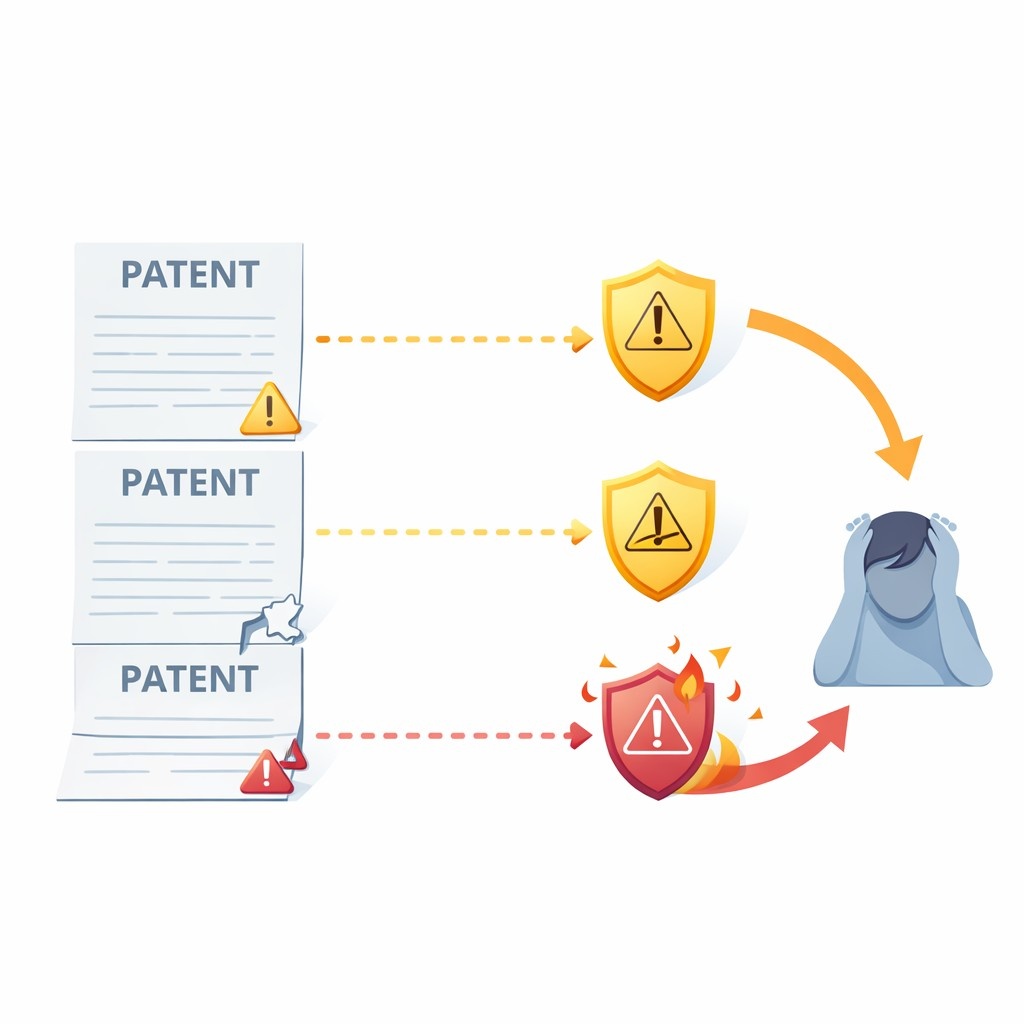
Without ranking by this risk factor, you may assume protection that competitors have already learned to bypass.
Regulatory and Policy Shifts
In fast-moving areas like AI, biotech, and software, policy shifts can affect patent strength. Court decisions may narrow what is considered eligible subject matter. Examination standards may change.
Ranking by risk includes monitoring how these shifts affect your claim types.
AI tools can track trends in patent office rejections and court rulings across similar technologies. When patterns shift, you can adapt your filing strategy.
This proactive stance prevents future surprises.
Internal Documentation Risk
Sometimes the biggest risk is internal inconsistency. If product documentation, marketing language, and patent claims diverge too far, enforcement becomes harder.
AI can compare internal technical documents with claim language and highlight mismatches.
If your patent describes one architecture but your current product uses another, you may face alignment issues.
Catching this early gives you time to adjust filings or file new applications that reflect your true system.
Turning Risk Ranking Into Action
Risk ranking should not create fear. It should create focus.
High-risk, high-revenue patents may deserve immediate reinforcement. You might file continuations, expand geographic coverage, or refine claim scope.
Low-revenue, high-risk patents may become pruning candidates.
Low-risk, low-revenue patents may sit quietly without heavy investment.
The goal is balance.
When you layer risk analysis on top of citation strength and market pull, you gain a three-dimensional view of your portfolio.
You stop thinking in terms of quantity. You start thinking in terms of durability.
Building a Living Patent Strategy
The most strategic companies treat their patent portfolio like a living system. They review influence through citations. They measure business impact through market pull. They stress test durability through risk ranking.
AI makes this scalable. Real attorneys make it reliable.
PowerPatent combines both so founders can move fast without sacrificing protection. You stay in control. You see where to invest. You know where to prune. And you avoid costly blind spots that traditional processes often miss.
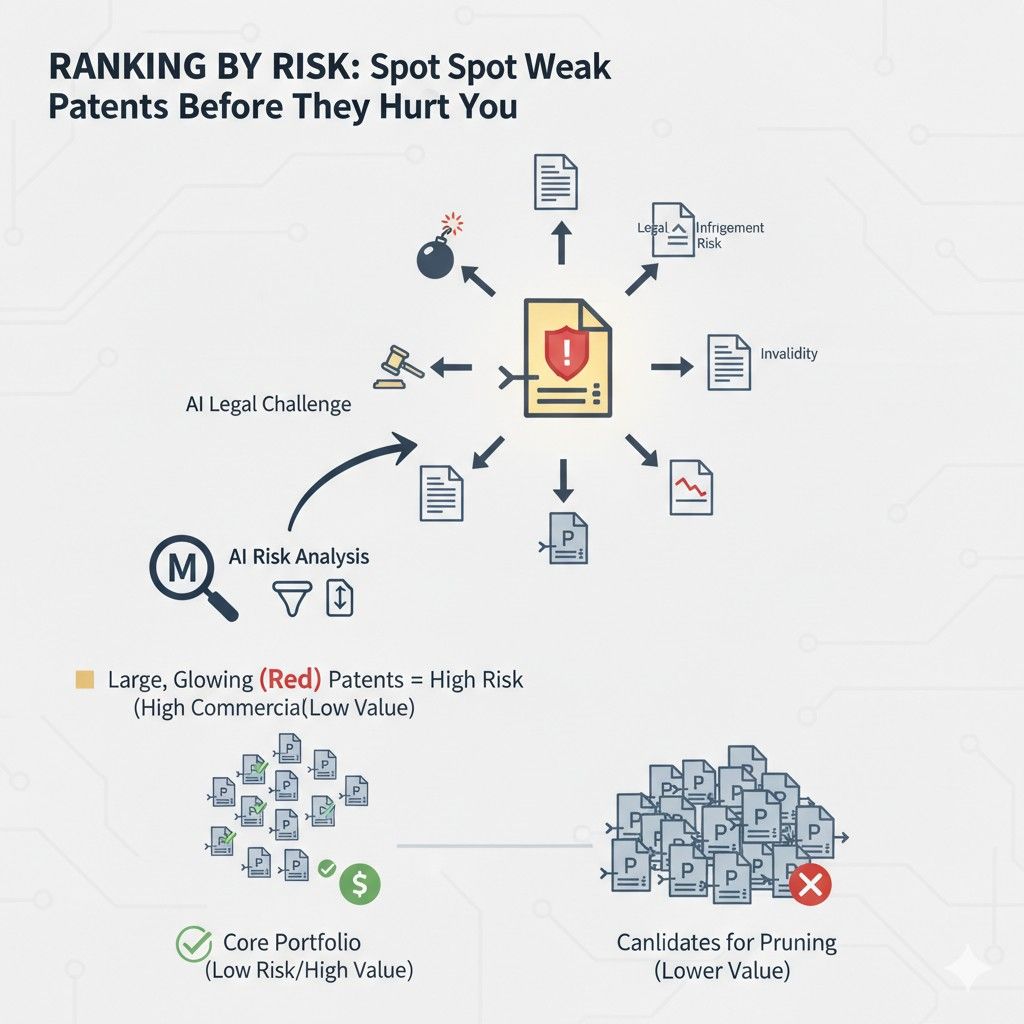
If you want to turn your patent portfolio into a sharp, ranked, and actively managed asset instead of a growing expense line, take a closer look at how PowerPatent works: https://powerpatent.com/how-it-works
When you rank by citations, markets, and risk together, pruning stops feeling like loss. It becomes strategy.
Wrapping It Up
Most companies do not have a patent strategy. They have a patent history. A series of filings made at different stages. Different product versions. Different funding rounds. Different advisors. Over time, that history turns into a pile. Some of it is gold. Some of it is noise. Most founders never stop to separate the two. AI assist changes that.
Leave a Reply