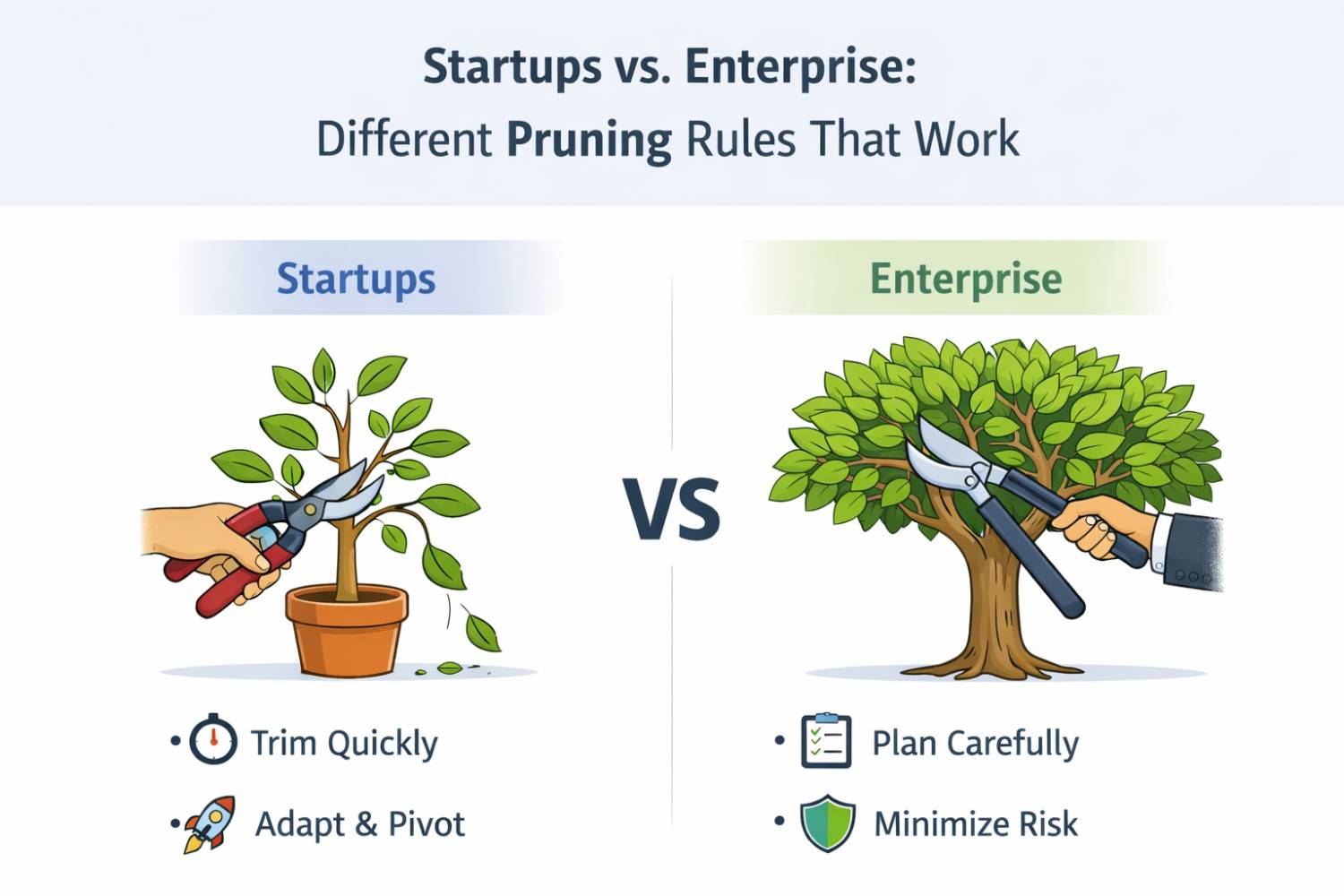
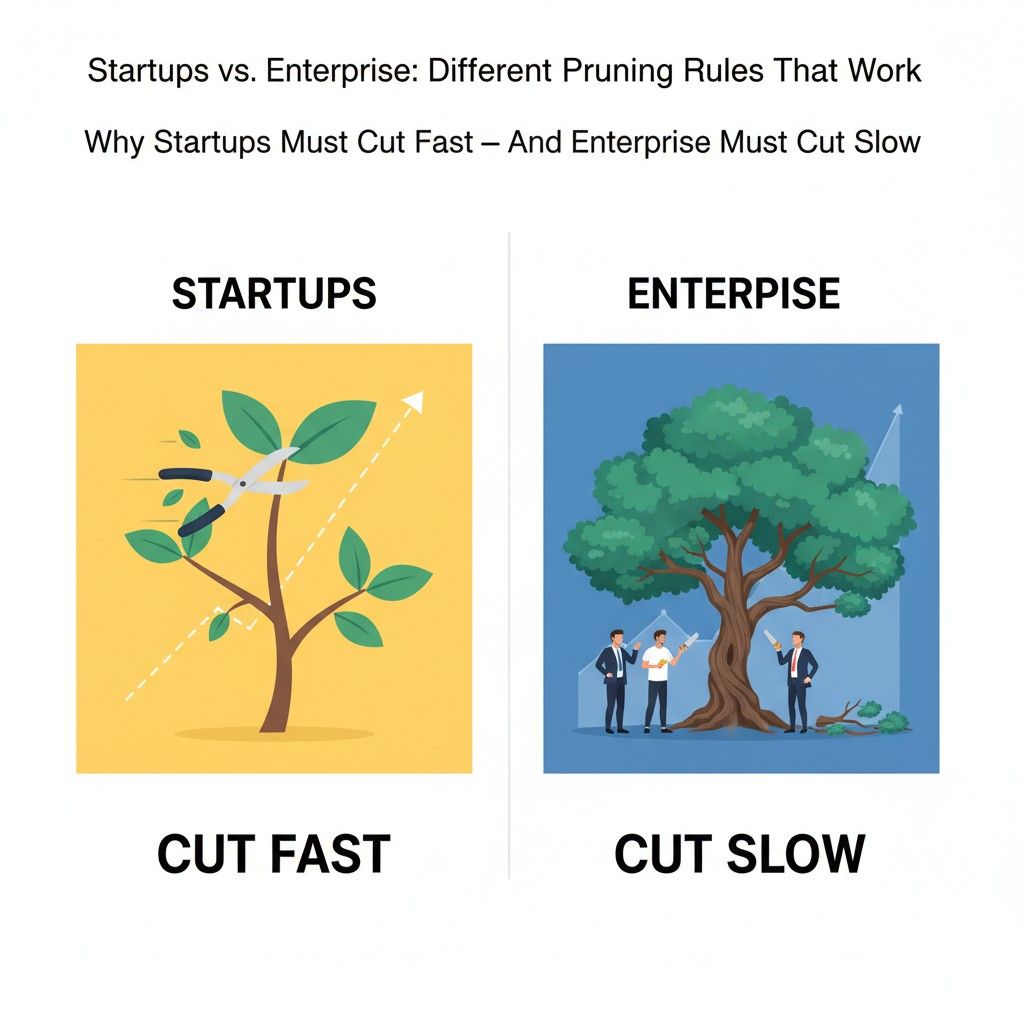
Startups and big companies both need to cut things. They cut features. They cut projects. They cut ideas. They cut even people. But the rules they use to decide what stays and what goes are not the same. If you use enterprise rules inside a startup, you can quietly kill your own growth. If a large company uses startup rules, chaos takes over. The pruning rules are different because the risk is different, the speed is different, and the stakes are different. In this article, we will break down what to cut, when to cut it, and how to protect the parts of your business that matter most—especially your core tech and IP. If you are building something new and want to make sure you are not cutting the wrong branch, this will help.
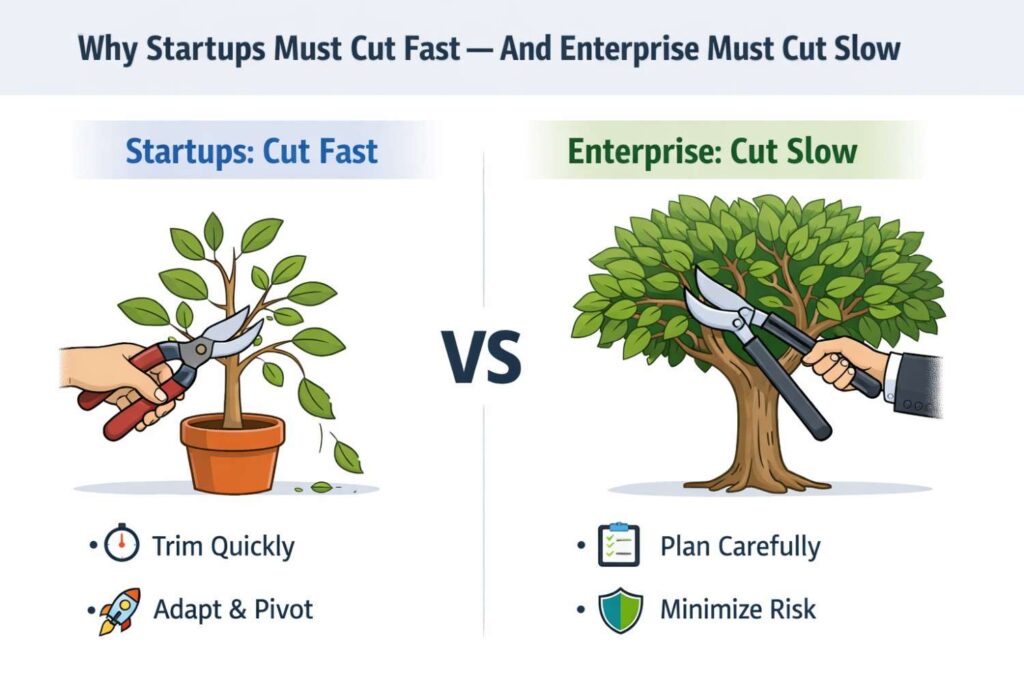
Why Startups Must Cut Fast — And Enterprise Must Cut Slow
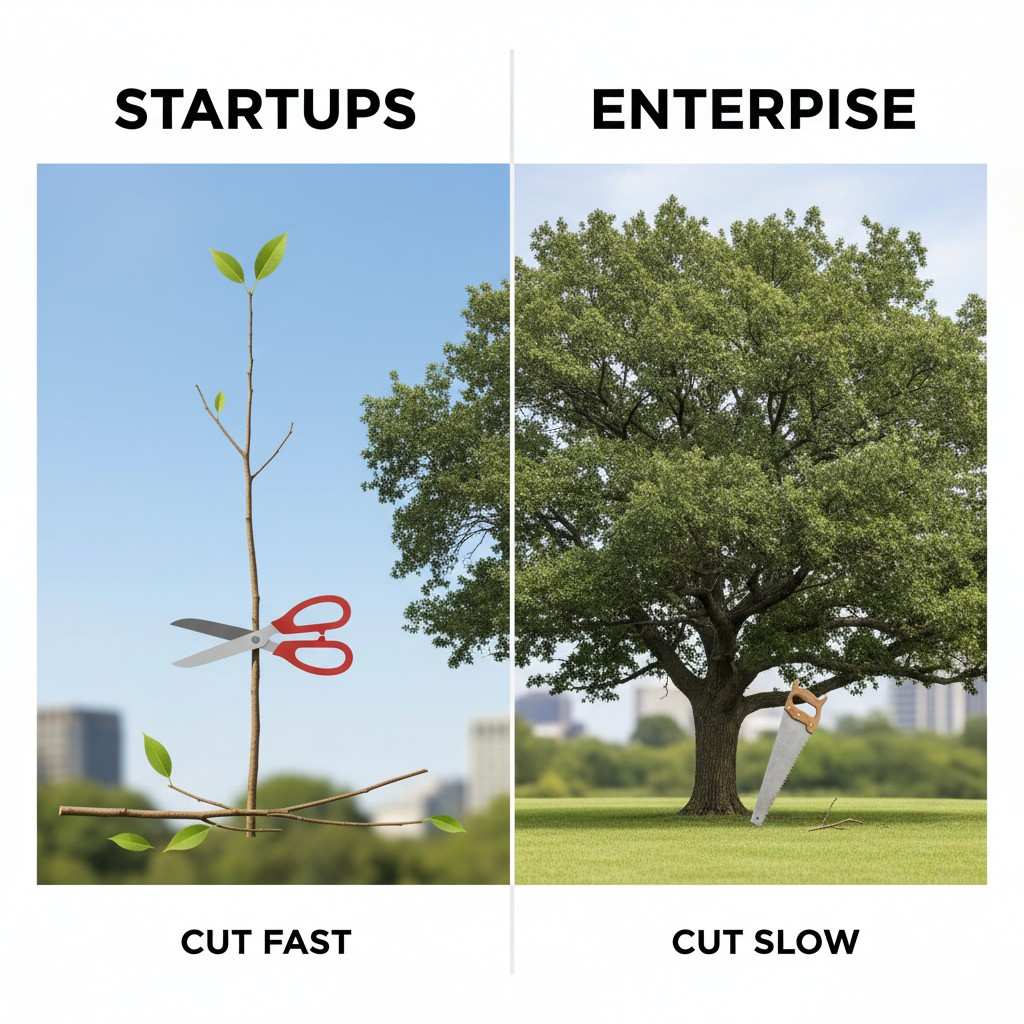
Speed can save a startup. Speed can also destroy a large company. The rule is simple but hard to follow: young companies survive by cutting fast, while big companies survive by cutting with care.
The reason is not style. It is math. A startup runs on limited time and money. A large company runs on systems, contracts, and reputation. The pruning rule must match the size and stage of the business. If it does not, damage follows.
Let us break this down in a practical way.
The Startup Clock Is Always Ticking
A startup does not have the luxury of long debates. Cash is limited. Runway is short. Every week matters. When something is not working, delay becomes expensive.
In a startup, holding onto a weak product feature for six months can drain money that should go into the core product.
Keeping a side project alive because “it might work later” can block the team from focusing on what customers actually want today.
Founders need to ask one sharp question every month: If we were starting today, would we still build this? If the answer is no, cut it.
This does not mean panic cutting. It means clear thinking. It means looking at data. Are users using this feature? Is this market responding? Is this partnership moving revenue? If not, do not wait for hope to fix it.
Hope is not a strategy. Focus is.
Focus Is Oxygen for Early Teams
Startups die from distraction more often than from competition. Every extra feature adds weight. Every extra market adds confusion. Every extra idea pulls energy away from the core.
The best early companies do fewer things better. They prune not because they failed, but because they choose strength over spread.
If your team is under 20 people, every person should know the main goal of the company without thinking. If they cannot say it clearly, you are likely doing too much.
Cutting fast creates clarity. Clarity builds speed. Speed builds learning. Learning builds advantage.
And here is something founders rarely consider: cutting also protects your intellectual property.
When your team chases ten ideas, you produce scattered innovation. When you narrow to one core breakthrough, you build depth. Depth is what turns into strong patents.
Depth is what investors value. Depth is what competitors cannot easily copy.
If you are building real technology, pruning is not just about product. It is about deciding which inventions are worth protecting.
This is where many startups make a silent mistake. They delay protecting their best idea because they are unsure if it is “final.” But your core engine does not need to be perfect to be protected. It needs to be defined.
If you are unsure what part of your tech is truly core, take a closer look at how PowerPatent helps founders turn code and models into defensible patents without slowing down development.
You can explore how it works here: https://powerpatent.com/how-it-works
Protecting the right branch while cutting the wrong ones is how you build real leverage.
Cutting Features vs. Cutting Vision
A common fear is that cutting means shrinking ambition. That is not true. You cut features to protect the vision. You cut markets to protect the mission.
The vision should stay stable. The execution can change weekly.
For example, if your startup’s mission is to build secure AI systems for healthcare, you may try three product angles in year one. One may fail. One may show small traction.
One may grow fast. You cut the two weaker paths and double down on the one that works.
You do not change the mission. You refine the path.
This is a powerful mindset shift. Many founders confuse activity with progress. Enterprise companies can afford activity because they have steady income. Startups cannot. Every move must create learning or revenue.
If a project does neither within a clear time frame, it becomes a candidate for pruning.
Enterprise Has a Different Risk Profile
Now let us flip the lens.
Large companies move slower because their cuts ripple outward. A feature in a big company may serve millions of users. A department may support long-term contracts. A small decision can impact brand trust.
Enterprise pruning is less about survival and more about optimization.
If a large company cuts too fast, it can break trust with customers. It can weaken long-term strategy. It can create legal exposure. It can also destroy internal morale.
That is why enterprise leaders must ask a different question: What are the second and third effects of this cut?
Startups worry about runway. Enterprises worry about reputation and structure.
This is why copying enterprise strategy too early can hurt a startup. Long approval chains, heavy planning cycles, and multi-layer review processes slow learning. In early stages, speed beats polish.
But if you scale, your pruning rules must evolve.
Build Temporary Systems in Early Stages
One practical tactic for startups is to treat systems as temporary unless proven essential.
Instead of building heavy internal processes, keep things light. Instead of launching full product lines, launch minimum versions. Instead of hiring large teams, hire sharp generalists.
Then review quarterly. What is creating growth? What is creating drag?
If something slows decision-making without adding clear value, remove it.
This mindset also applies to legal and IP decisions. Early startups often delay patents because they think legal work must be long and painful. That belief often comes from watching enterprise processes.
But modern tools change that.
With the right system, you can document your invention as you build it. You can work with real attorneys without endless back and forth. You can protect what matters while staying fast.
PowerPatent was built for exactly this stage. It blends software speed with real legal oversight so founders do not have to choose between moving fast and protecting their edge. You can see how the process works here: https://powerpatent.com/how-it-works
The key idea is simple: prune slow systems, not your innovation.
Enterprise Must Protect Stability
Large companies prune to maintain health, not to discover product-market fit. That discovery phase already happened years ago.
An enterprise may cut a division not because it failed, but because it no longer fits long-term direction. It may exit markets to protect margins. It may merge teams to improve efficiency.
These are structural moves.
For startups, structure should remain flexible. For enterprises, structure is an asset.
This difference explains why a startup should not overbuild internal policy too early. Policies are hard to undo. Flexibility is easier to maintain when the company is small.
As a founder, ask yourself: Are we building this system because we truly need it now, or because we think serious companies should have it?
That question alone can save months of wasted effort.
The Cost of Emotional Attachment
One of the hardest parts of pruning fast is letting go of ideas you love.
In startups, founders are often deeply attached to early features. They remember late nights building them. They remember the original spark.
But markets do not reward effort. They reward value.
If customers are not responding, it is not a personal failure. It is feedback.
Enterprise leaders deal with emotion too, but in a different form. They manage teams that may lose roles. They manage public perception. The emotional weight is broader.
Startups feel internal emotion. Enterprises manage external impact.
To prune well, founders must separate identity from output. The company is not any single feature. It is the mission.
If cutting something increases the chance that the mission survives, it is the right move.
Protect the Branch That Creates Leverage
Here is the most strategic lens of all.
When pruning, do not ask only what is profitable today. Ask what creates leverage tomorrow.
Leverage can be data. It can be distribution. It can be proprietary technology.
If your startup is building unique infrastructure or a novel algorithm, that core engine is leverage. Even if revenue is early, that asset may define your future power.
This is where pruning and patent strategy connect.
When you narrow focus to your strongest technical advantage, you gain clarity on what to protect. When you protect it early, you increase company value. Investors see ownership. Competitors see barriers.
But if you keep chasing side ideas, your leverage becomes diluted.
Prune noise. Protect signal.
If you want to understand how to identify and secure your core innovation without slowing development, review the process here: https://powerpatent.com/how-it-works
Speed and protection are not opposites anymore. They can work together.
When to Slow Down the Cutting
Even startups must know when to pause.
If you are in a scaling phase with clear traction, constant cutting can create instability. At that stage, consistency matters more.
The rule changes again. Early stage is about survival and discovery. Growth stage is about strengthening what works.
Enterprise pruning is often about refining strong systems. Startup pruning is about finding the strong system in the first place.
Understanding which phase you are in is critical. Misreading this leads to chaos.
A founder who keeps pivoting after product-market fit loses trust. A founder who refuses to pivot before fit burns runway.
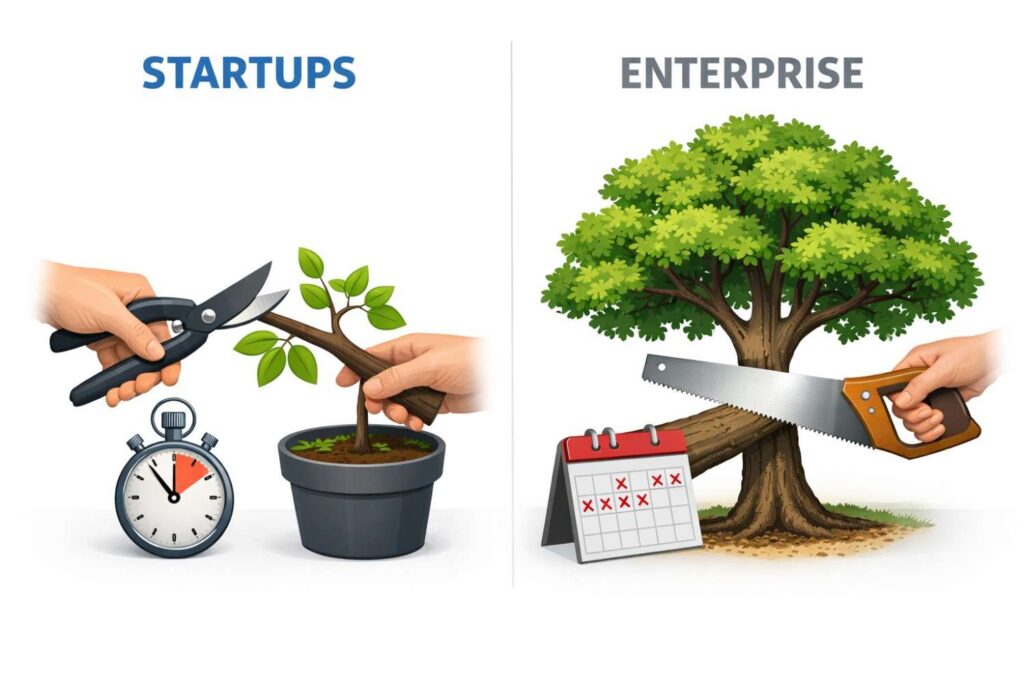
The skill is not just cutting fast. It is cutting at the right time.
And that judgment improves when your core assets are clear, documented, and protected.
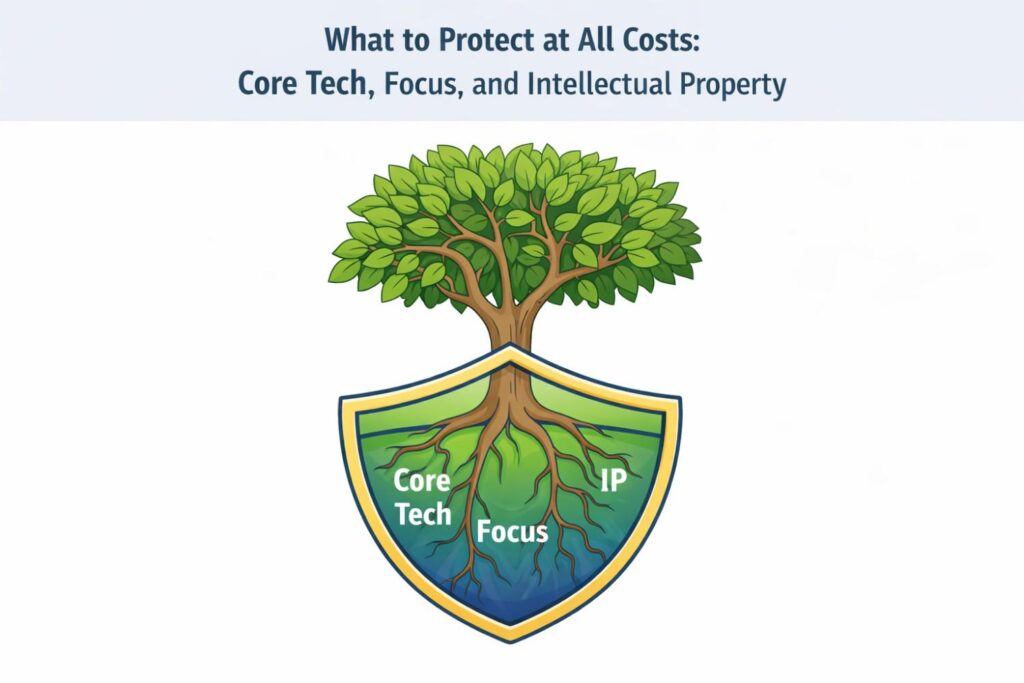
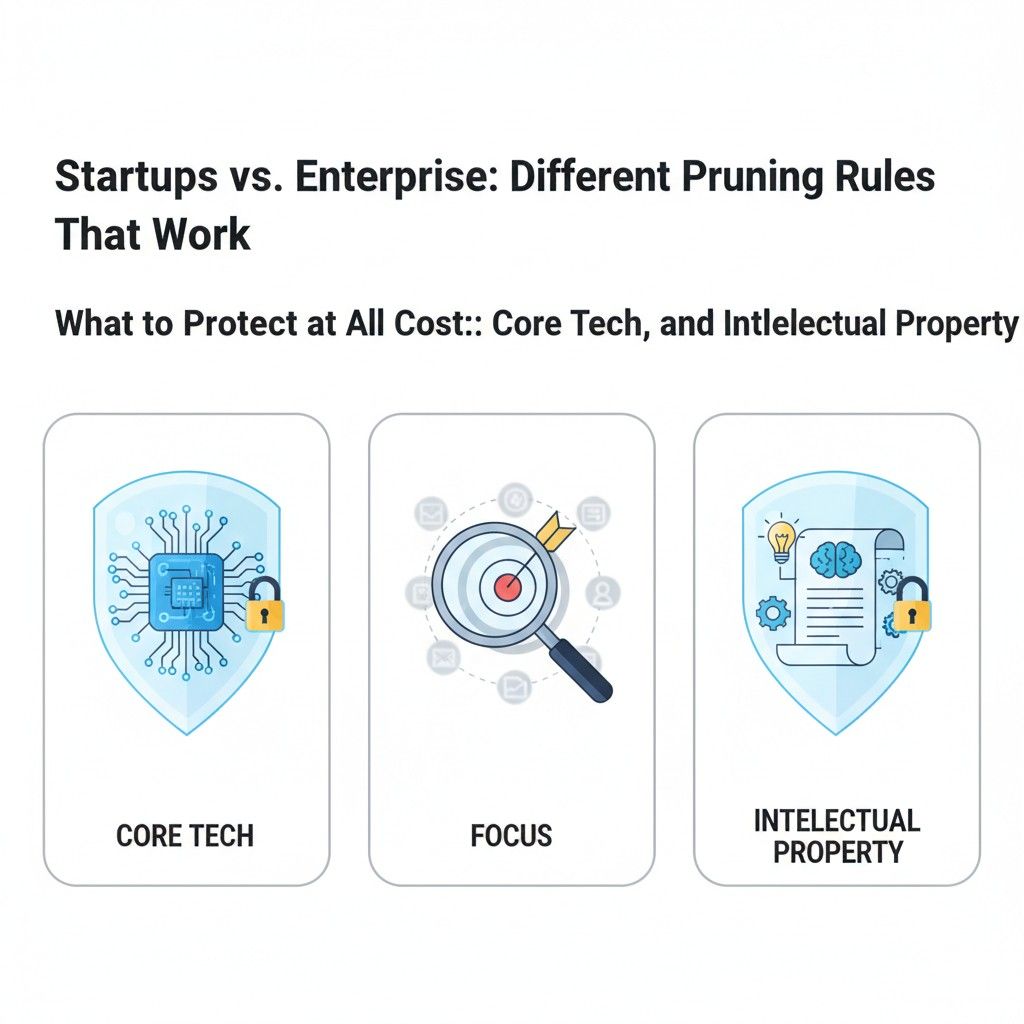
What to Protect at All Costs: Core Tech, Focus, and Intellectual Property
Cutting is powerful. But cutting without knowing what must stay is dangerous. Every company, no matter the size, has a few things that cannot be touched. These are not always the loudest parts of the business.
They are not always the most visible. But they are the source of long-term power. If you cut the wrong branch, the tree weakens. If you protect the right one, growth becomes easier.
Startups and enterprise both prune. The difference is what they refuse to prune.
The Core Engine Is Not Up for Debate
Every serious startup has a core engine. It may be a model, a system, a chip design, a new process, or a new way of solving a hard problem. This engine is the reason the company exists.
Revenue experiments can change. Pricing can change. Messaging can change. But the core engine should become sharper over time.
Many founders make a mistake here. They treat the core innovation like just another feature. They test it casually. They delay protecting it. They assume they will “figure out IP later.”
Later often becomes too late.
If you are building something that is hard to build, assume it is worth protecting. Do not wait for a competitor to validate it by copying it. Do not wait for investors to ask about your patent position.
Protection is not about ego. It is about leverage.
A strong patent around your core technology gives you options. It can help in fundraising. It can protect against copycats. It can increase valuation. It can create licensing paths in the future.
And most important, it lets you build with confidence.
If you want to see how modern startups protect their core tech without slowing down shipping, look at how PowerPatent works.
It was built so founders can turn technical work into real, defensible patents with software speed and real attorney support. You can explore the process here: https://powerpatent.com/how-it-works
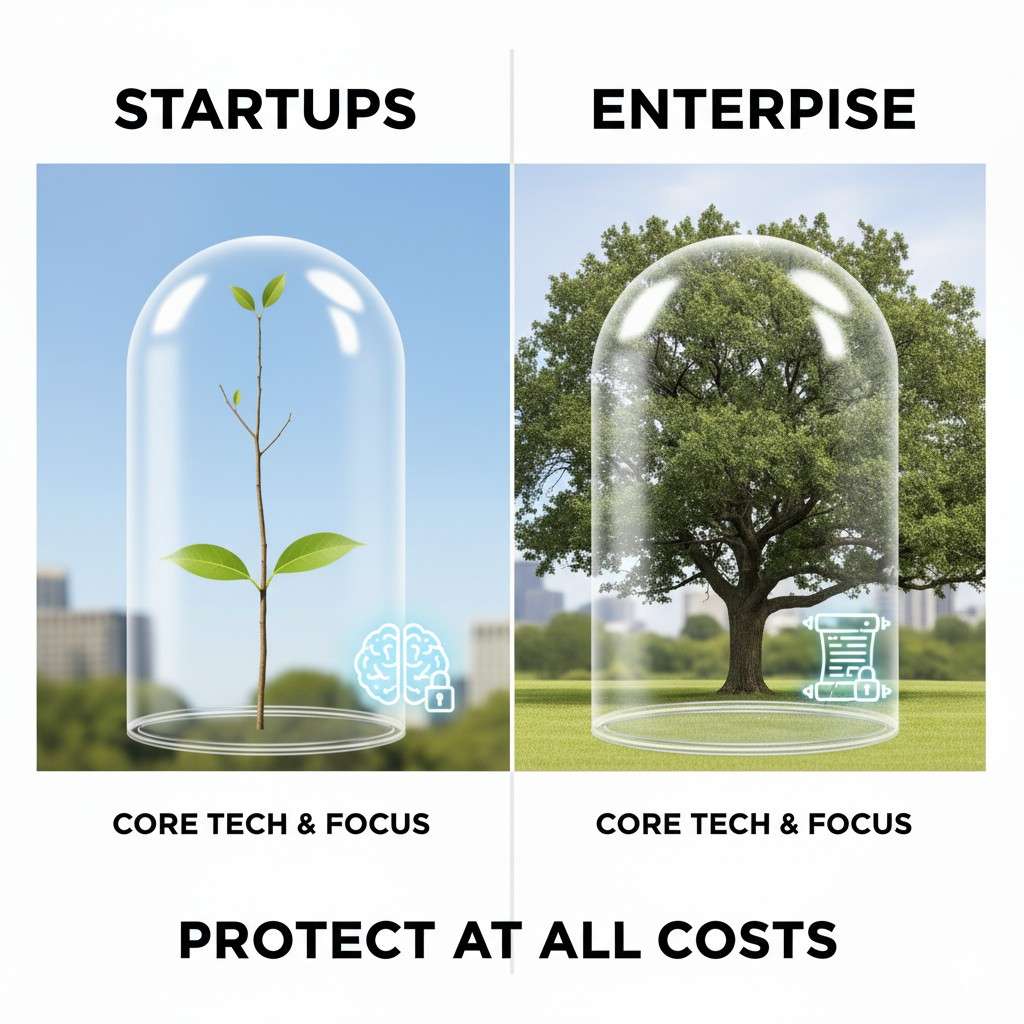
When pruning, never cut the engine. Strengthen it.
Focus Is a Strategic Asset
Focus is not just about productivity. It is a competitive advantage.
In a startup, focus allows depth. Depth creates better product. Better product creates loyalty. Loyalty creates data. Data creates insight. Insight creates more depth.
It becomes a flywheel.
If you protect focus the same way you protect code, your company becomes hard to beat.
Enterprise companies often struggle here. Over time, they add layers, teams, initiatives, and goals. Focus spreads thin. This is why large companies sometimes buy startups. They are buying concentrated focus.
As a founder, your job is to guard focus like cash.
If a partnership distracts from your main user, question it. If a feature does not strengthen your main value, reconsider it. If a new idea pulls your engineering team away from the core roadmap, pause before saying yes.
Focus does not mean small thinking. It means clear thinking.
And clarity makes it easier to see what is truly protectable.
When your roadmap is tight and your innovation is defined, patent strategy becomes cleaner. You are not trying to protect ten scattered ideas. You are protecting one powerful system.
Intellectual Property Is Not Optional in Deep Tech
If you are building deep tech, AI, hardware, biotech, or infrastructure, intellectual property is not a side topic. It is part of the product.
Some founders treat patents like paperwork. That mindset is risky.
In deep tech, your advantage is often invisible. It sits in architecture, training methods, signal processing, system design, or workflow innovation. If you do not protect it, others can study it and rebuild it.
Speed alone is not enough in technical markets. Protection matters.
Enterprise companies understand this well. They build patent portfolios over years. They use them defensively and offensively. They think long term.
Startups must think long term too, even while moving fast.
The good news is that modern tools make this easier than before. You do not need months of slow back and forth. You do not need to stop building to document everything.
PowerPatent combines smart software with real patent attorneys so founders can capture their innovation as they build. That means less friction, fewer delays, and stronger protection.
If your startup depends on unique technology, it is worth seeing how this works: https://powerpatent.com/how-it-works
Protection should feel like progress, not a burden.
Culture Is Also Something to Protect
Technology matters. Focus matters. But culture might be the hidden asset.
In startups, culture drives speed. A culture of ownership, clarity, and urgency creates results. If pruning decisions damage trust inside the team, productivity falls.
This is why communication matters when cutting.
When you remove a project, explain why. When you shift direction, explain the data. When you pause an initiative, connect it back to the mission.
People accept change when they understand purpose.
Enterprise companies often struggle with culture during pruning because layers of management blur communication. Rumors spread. Clarity drops.
Startups can avoid this trap by being direct and transparent.
Protecting culture does not mean avoiding hard decisions. It means handling them with honesty.
And honesty builds alignment. Alignment builds execution. Execution builds value.
Customer Trust Must Remain Stable
In both startups and enterprise, customer trust is sacred.
You may cut features. You may narrow scope. But if you break promises to users, you damage brand.
For startups, early users are precious. They give feedback. They forgive bugs. They refer others. If pruning removes something critical to them, communicate early.
Explain the reason. Offer alternatives. Show them the bigger vision.
Enterprise companies face even higher stakes. Millions of users, contracts, and public markets increase pressure. That is why their pruning moves often include long transition periods.
As a startup, you can move faster, but do not move blindly.
Protecting trust ensures that every cut strengthens the company instead of weakening relationships.
Data Is a Long-Term Weapon
One of the most overlooked assets is data.
If your system improves based on user behavior, performance metrics, or unique inputs, that data becomes part of your edge.
Pruning should never remove your ability to collect or learn from meaningful data.
Sometimes founders cut analytics work because it feels secondary. That is short-term thinking.
Data helps refine product. It helps support patent claims. It helps attract investors. It helps defend your position in competitive markets.
Enterprise companies invest heavily in data infrastructure because they understand its power.
Startups should not ignore it.
Protect your learning loop.
Legal Strength Is Strategic, Not Reactive
Many founders only think about legal strategy when there is a problem. That is reactive thinking.
Smart companies think ahead.
They ask: If we succeed, what will competitors try to copy? If we raise funding, what will investors ask? If we enter new markets, what barriers protect us?
Answering these questions early shapes what you protect.
A strong patent strategy signals seriousness. It shows that you are not just experimenting. You are building an asset.
And when pruning decisions arise, this clarity helps. You will know which technical paths align with your long-term protection plan and which ones do not.
This alignment prevents wasted effort.
If you want a clearer picture of how to turn ongoing development into structured protection without slowing momentum, review how PowerPatent guides founders step by step: https://powerpatent.com/how-it-works
The companies that win long term are not the ones that build the most features. They are the ones that protect the most important breakthroughs.
Guard the Mission
Above all, protect the mission.
Markets shift. Tools evolve. Teams grow. But the reason your company exists should remain stable.
When pruning decisions connect directly to mission, they feel strategic. When they do not, they feel random.
A startup that protects its mission while refining execution becomes stronger each year. An enterprise that forgets its mission during restructuring becomes fragile.
Every cut should make the mission clearer.
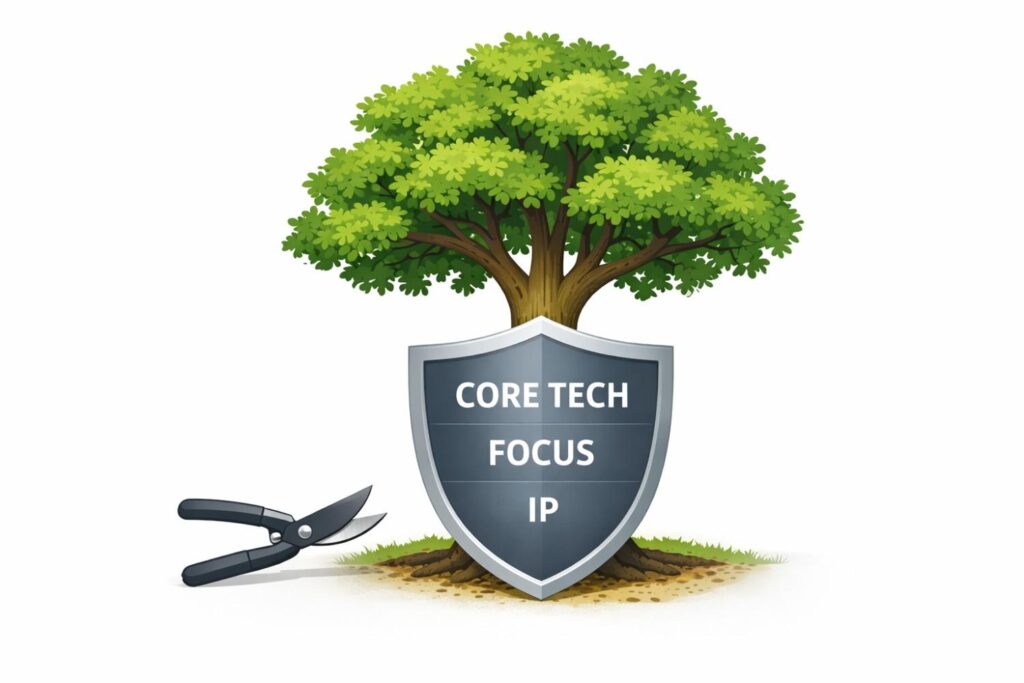
Every protected asset should support it.
That is how pruning becomes a growth tool instead of a survival tactic.
How Smart Pruning Builds Long-Term Power Instead of Short-Term Relief
Most pruning decisions feel urgent. Revenue is tight. Burn is high. Growth is slower than expected. Pressure builds from investors, board members, or the market.
In that moment, cutting feels like relief. Expenses drop. Complexity shrinks. The dashboard looks cleaner.
But short-term relief is not the same as long-term strength.
Smart pruning is not about panic. It is about positioning. The goal is not to feel safer this month. The goal is to become stronger next year.
This is where many companies get it wrong.
The Difference Between Cost Cutting and Power Building
Cost cutting reduces pain. Power building increases advantage.
They are not the same.
If a startup cuts marketing because cash is low, that may reduce burn. But if it also cuts the only channel that brings qualified users, growth stalls. The company feels stable for a few months and then weakens.
If an enterprise cuts research to improve quarterly margins, investors may respond well at first. But in two years, innovation slows. Competitors pass them.
Smart pruning asks a deeper question: Does this cut increase our ability to win?
Winning does not always mean revenue today. It may mean deeper technology, stronger IP, better data, tighter focus, or faster execution.
When you prune with this mindset, decisions shift.
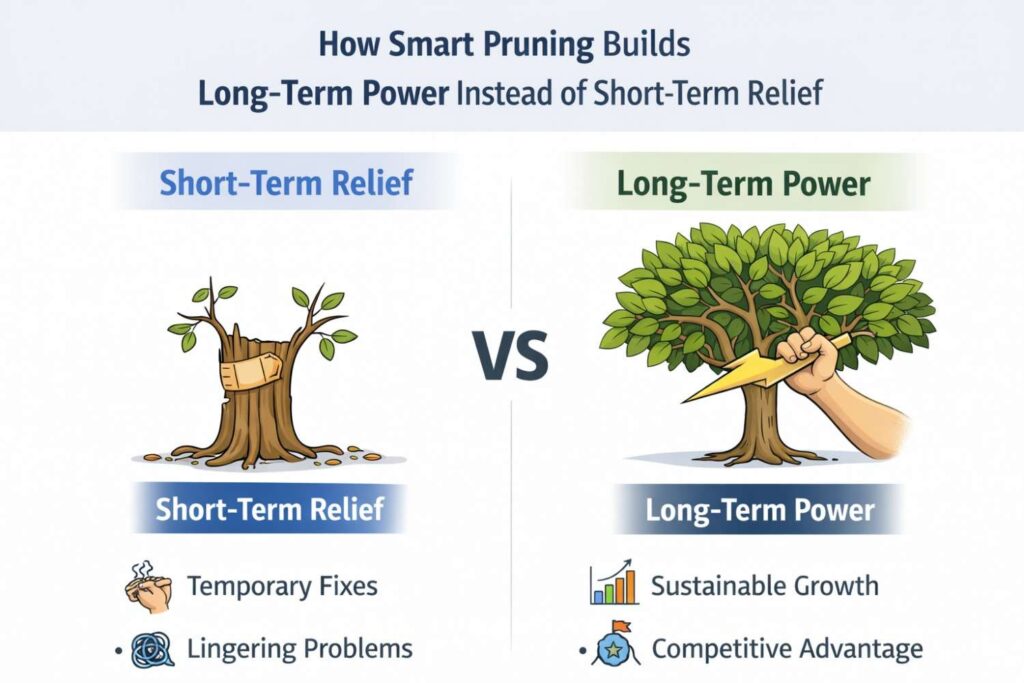
You stop asking, “What is expensive?” and start asking, “What creates leverage?”
Leverage Is the Real Goal
Leverage means small input, large output.
In startups, leverage often comes from unique technology, automation, network effects, or defensible intellectual property. In enterprise, leverage may come from brand, distribution, partnerships, or scale.
When pruning, protect what multiplies your effort.
For example, if your engineering team builds internal tools that cut development time in half, that tool is leverage. Removing it to save short-term cost may slow everything else.
If your startup is building a core algorithm that improves performance in a measurable way, that algorithm is leverage. It should be refined, documented, and protected.
This is where patent strategy becomes directly connected to pruning.
If you identify the systems that give you leverage, those are often the systems worth protecting legally. They represent unique value. They are hard to replicate. They define your edge.
Instead of waiting until fundraising to think about patents, align protection with leverage early.
PowerPatent was built around this idea. It helps founders capture and protect the exact technical breakthroughs that create leverage, without slowing product development.
It blends software efficiency with real attorney oversight, so you do not sacrifice quality for speed. If you are serious about building long-term power, it is worth seeing how this works: https://powerpatent.com/how-it-works
Leverage without protection is fragile. Protection without leverage is pointless. Smart pruning aligns both.
Prune to Increase Signal Strength
Every company produces noise.
Too many features create confusion. Too many markets dilute brand. Too many experiments stretch teams thin.
Noise hides signal.
Signal is what makes customers say yes. It is what makes investors lean forward. It is what makes competitors nervous.
When you prune well, your signal becomes stronger.
Imagine a startup that tries to serve five industries with one platform. Messaging becomes vague. Sales cycles become complex.
Product priorities conflict. Now imagine that same startup focuses on one industry and solves one painful problem better than anyone else. Messaging sharpens. Case studies deepen. Word spreads faster.
The product did not grow wider. It grew clearer.
Signal strength also improves patent clarity.
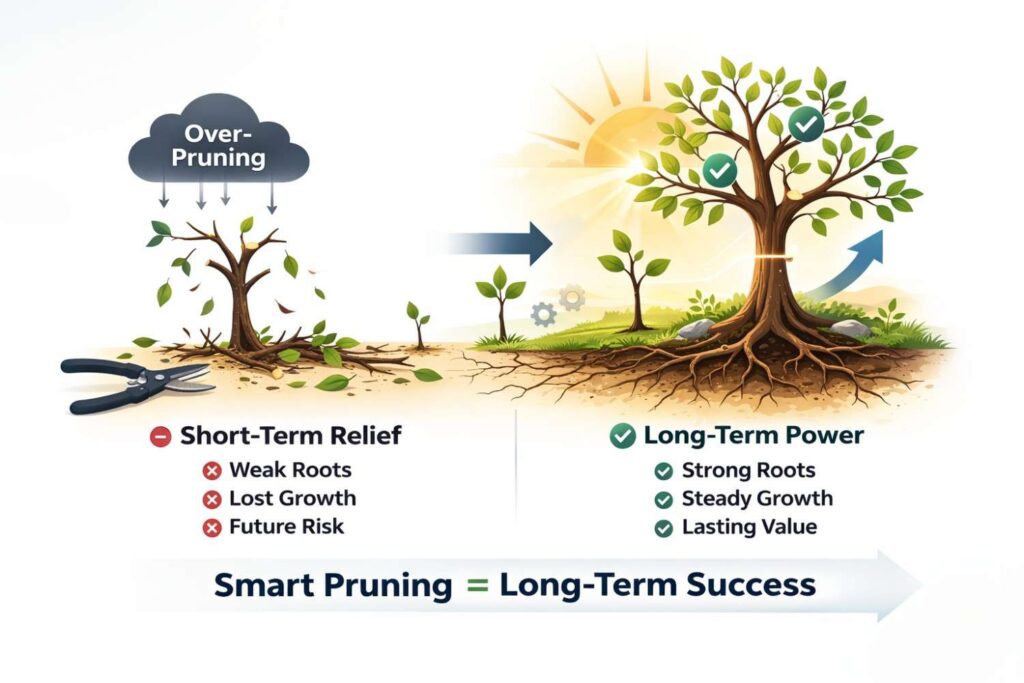
When your innovation is focused, your claims can be tighter. Your documentation becomes stronger. Your competitive position becomes easier to explain.
Scattered innovation leads to weak positioning. Concentrated innovation leads to defensible territory.
Build a Habit of Strategic Review
Smart pruning is not a one-time event. It is a habit.
Set structured moments to step back from daily execution. Look at your roadmap. Look at user data. Look at revenue sources. Look at technical development.
Ask uncomfortable questions.
If we removed this product line, would our core business improve?
If we doubled down here, would we widen the gap with competitors?
If a competitor studied our system today, what could they copy easily?
These questions force clarity.
Enterprise companies often conduct annual strategic reviews. Startups should conduct lighter but more frequent reviews. Not endless meetings. Just honest evaluation.
The key is discipline.
Emotion drives many poor pruning decisions. Structured review creates distance from emotion.
When your strategy, product focus, and IP roadmap are aligned, pruning becomes easier because you know what truly matters.
Avoid the Trap of Endless Expansion
Growth can create its own risk.
After early traction, startups often expand too fast. New hires. New features. New geographies. New experiments.
Expansion feels like progress. Sometimes it is. But without discipline, it weakens the core.
Enterprise companies face a similar trap through acquisitions. Buying new units can increase revenue but also increase complexity.
Smart pruning acts as a counterbalance to expansion.
Before adding something new, define what must be true for it to survive six months from now. Define metrics. Define learning goals. Define ownership.
If those conditions are not met, cut quickly.
This creates a culture where expansion is earned, not assumed.
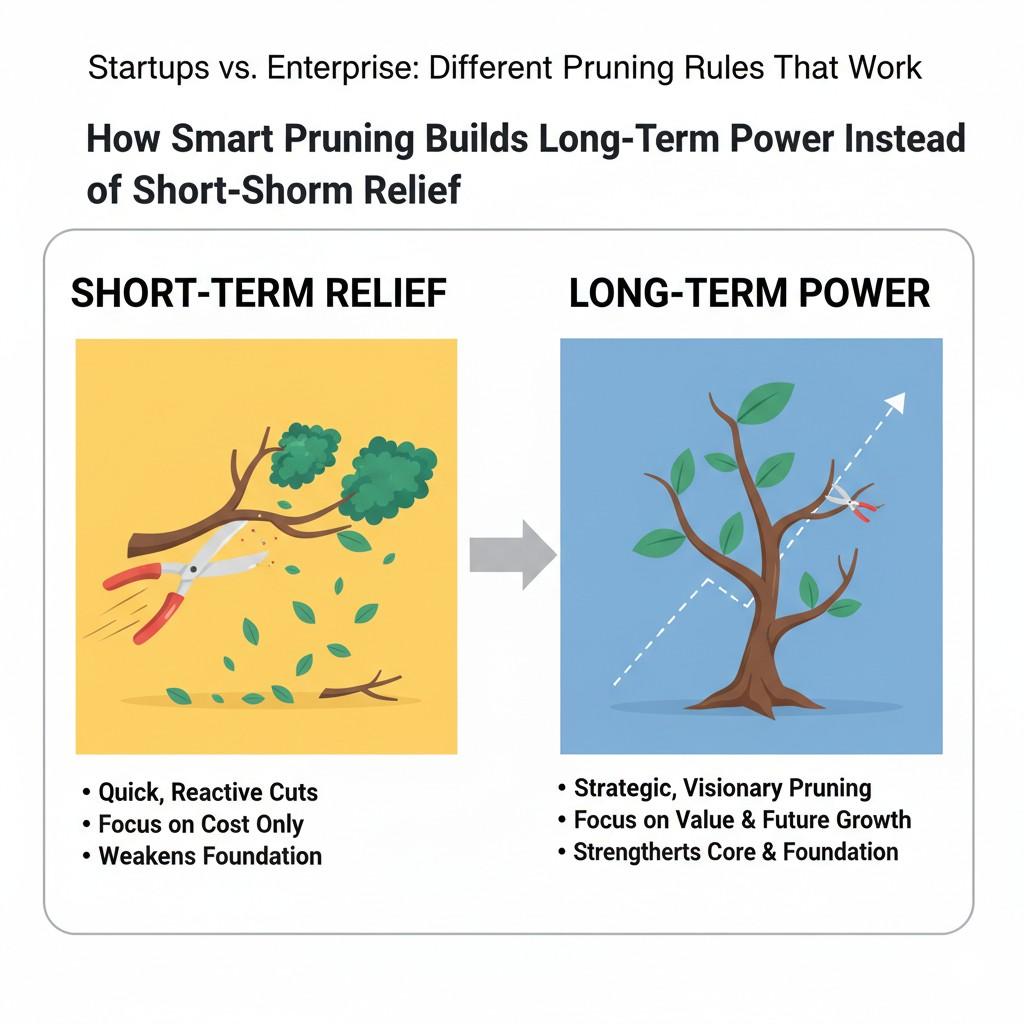
And when expansion is earned, it strengthens the company instead of stretching it.
Protect What Raises Valuation
Founders often think about valuation only during fundraising. That is a mistake.
Valuation is shaped by assets.
Revenue is one asset. Growth rate is another. But defensible technology and intellectual property can dramatically change how investors see your company.
If two startups have similar revenue but one has protected core technology and the other does not, the protected one often appears safer and more strategic.
This is not theory. It is pattern recognition in the market.
Smart pruning ensures that resources flow toward assets that increase long-term value.
If you are investing heavily in building something technically unique, but you never protect it, you leave value on the table.
Modern patent workflows no longer require slowing down development. With the right system, you can document innovation in parallel with building.
PowerPatent was designed so that founders do not need to choose between speed and security. You can review how it works here: https://powerpatent.com/how-it-works
Pruning removes weak branches. Protection strengthens the trunk.
Together, they increase valuation.
Stability Creates Strategic Freedom
When you prune wisely and protect core assets, something powerful happens. You gain strategic freedom.
You are less reactive. You are less fearful of competitors. You are less pressured by short-term swings.
Enterprise companies with strong patent portfolios can negotiate from strength. Startups with protected core tech can raise capital with more confidence. Both gain options.
Options are power.
But options only exist when the foundation is strong.
Short-term relief feels good in the moment. Long-term power feels calm and steady.
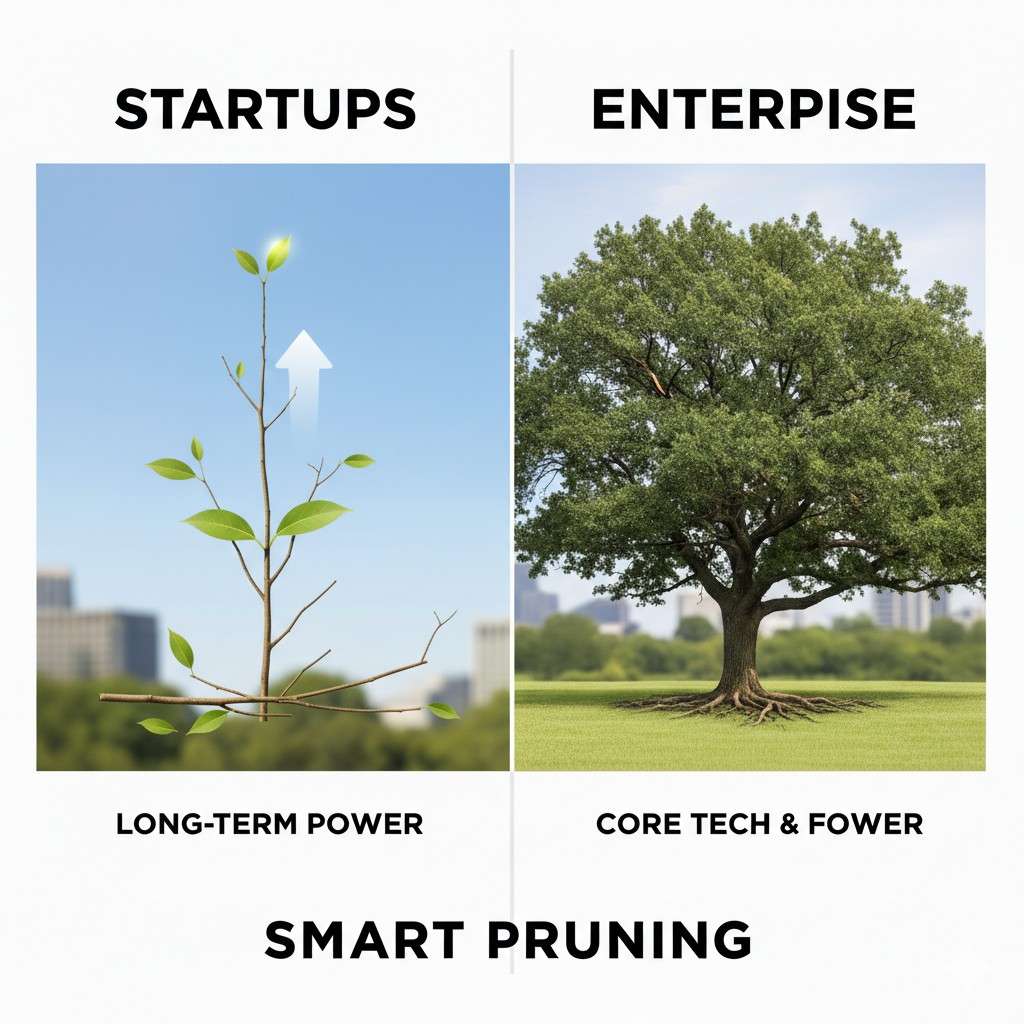
If you lead a startup, your job is not just to survive this quarter. It is to build something durable. That requires discipline in what you remove and intention in what you protect.
Prune to clarify. Protect to strengthen. Review to refine.
That is how pruning becomes a growth engine instead of a crisis response.
Wrapping It Up
Startups and enterprise companies both cut. Both refine. Both adjust. But the rule is never just “reduce.” The rule is align. Startups must cut fast because time is fragile. Enterprise must cut slow because structure is heavy. One protects runway. The other protects stability. Confusing these rules leads to damage. But the deeper truth is this: pruning is not about shrinking. It is about shaping. Every decision to remove something should make the company sharper. Every decision to protect something should make the company stronger. If a cut creates clarity, speed, and leverage, it is strategic. If it only creates temporary comfort, it is avoidance.
Leave a Reply