
You are building something new. Something bold. And every day you wait to protect it, you take a risk. The problem is not that you don’t care about patents. It’s that the process feels slow, confusing, and stuck in the past. Long forms. Endless back and forth. Weeks of silence. That’s where AI-powered invention intake changes everything. It turns the first step of patent filing into something fast, clear, and actually helpful. Instead of fighting paperwork, you capture your ideas in a smarter way — and move forward with confidence. If you want to see how modern patent filing should work, you can explore it here: https://powerpatent.com/how-it-works
Why Traditional Invention Forms Slow Down Great Ideas
Most founders do not struggle with building. They struggle with stopping. The moment you sit down to fill out a traditional invention disclosure form, momentum drops.
Instead of building features, talking to users, or shipping updates, you are asked to pause and translate your fast-moving ideas into stiff boxes on a page.
That pause costs more than time. It creates doubt. It creates delay. And in many cases, it causes founders to push patent protection to “later.” Later often becomes never.
If you are serious about protecting what you are building, it is important to understand why the old intake process creates friction in the first place.
Static Forms Do Not Match How Founders Think
The first issue is simple. Traditional forms are static. Your mind is not.
When you design a new system, you do not think in straight lines. You jump between features, edge cases, use cases, and user flows. You think in diagrams, in code snippets, in whiteboard sketches.
But most invention forms ask rigid questions in a fixed order. They expect neat answers before your idea has fully matured.
That mismatch slows you down because you are forced to reshape your thinking to fit the form. Instead of capturing your idea naturally, you spend energy trying to “answer correctly.” This drains clarity.
A smarter approach is to capture your invention while it is alive. Write or record your explanation the way you would explain it to your technical co-founder.
Speak through the problem, your solution, and why it is different. If your current intake process does not allow that flexibility, it is already slowing you down.
Modern AI-powered intake tools are designed to adapt to how you think. They guide you with smart prompts and follow-up questions that adjust based on your answers.
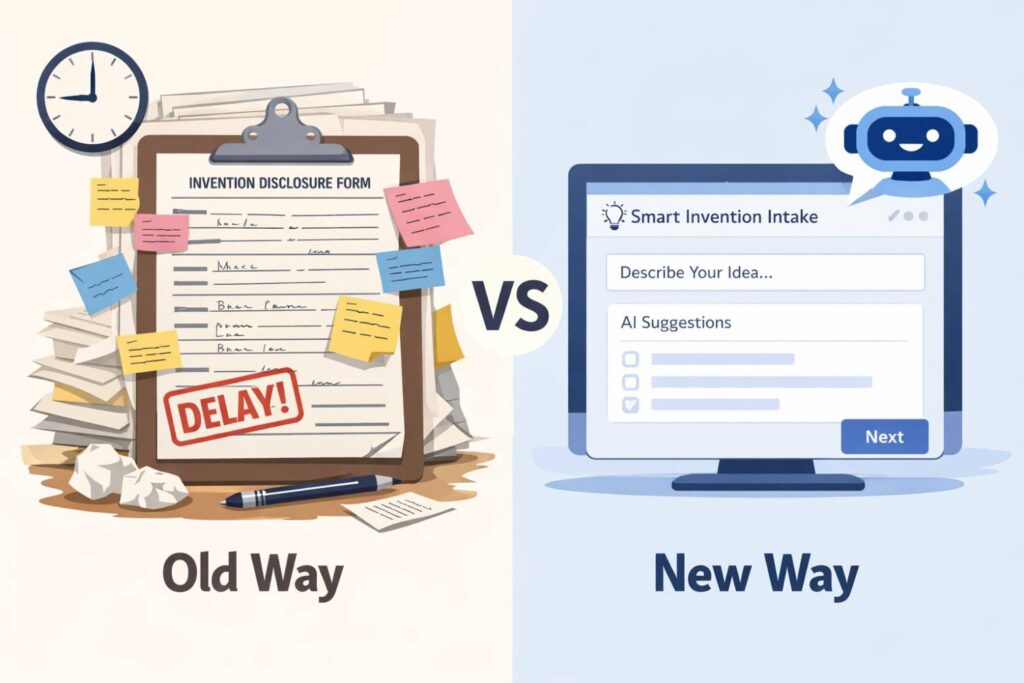
This keeps the flow intact. If you want to see how this works in practice, you can explore it here: https://powerpatent.com/how-it-works
Too Many Questions, Not Enough Direction
Traditional invention forms often overwhelm you with long questionnaires. Pages of open-ended prompts with little guidance. The result is predictable. You either write too little or too much.
When you write too little, key technical details are missed. That weakens your patent later. When you write too much, the core invention gets buried in noise. Both outcomes create more back-and-forth with attorneys and more revisions.
The deeper issue is not the number of questions. It is the lack of smart direction. A good intake process should help you focus on what actually matters for protection.
A strategic move for any business is to treat invention capture as a structured conversation, not a paperwork task. Instead of filling blank fields, imagine you are walking someone through your system step by step.
Start with the technical problem. Then describe how your solution works at a high level. Then go deeper into the unique mechanisms that make it work.
If your intake system cannot guide you through this flow in a logical way, it is adding friction instead of removing it.
Delays Create Risk Windows
Speed matters in startups. But speed also matters in patent filing.
Every week you delay formalizing your invention is a week where competitors can move. In fast-moving sectors like AI, biotech, robotics, and deep tech, ideas spread quickly.
Teams ship features fast. Research papers go live. Conference talks happen.
Traditional intake forms often sit untouched in inboxes. Founders plan to fill them out “next month.” The process feels heavy, so it keeps getting pushed.
That delay creates a risk window. If someone else files first on a similar concept, your position weakens. If you publicly disclose your invention before filing, you may limit protection options in some regions.
From a strategic standpoint, businesses should reduce the time between invention and filing as much as possible. One practical step is to build invention capture into your product cycle.
When you complete a major technical milestone, immediately record the core innovation while it is fresh.
AI-powered intake tools make this easy. You can capture details quickly without blocking your workflow. The faster you convert ideas into structured patent drafts, the stronger your defensive position becomes.
If you want to protect your lead instead of reacting later, this is worth exploring: https://powerpatent.com/how-it-works
Manual Back-and-Forth Slows Everyone
Traditional forms rarely end the conversation. They begin a long chain of emails.
You submit the form. The attorney reviews it. Questions come back. Clarifications are needed. Diagrams are missing. More examples are requested. Weeks pass between responses because everyone is busy.
This back-and-forth is expensive. Not only in legal fees, but in lost focus. Each time you revisit the invention, you must reload context into your mind. That costs cognitive energy.
A more strategic model reduces this loop upfront. AI-powered intake systems can identify gaps instantly. If your explanation lacks technical detail, the system can prompt you in real time.
If your claims seem too broad or unclear, it can ask for specific examples before the draft ever reaches an attorney.
This improves first-pass quality. It means attorneys spend time refining and strengthening, not extracting missing basics. That saves both time and money.
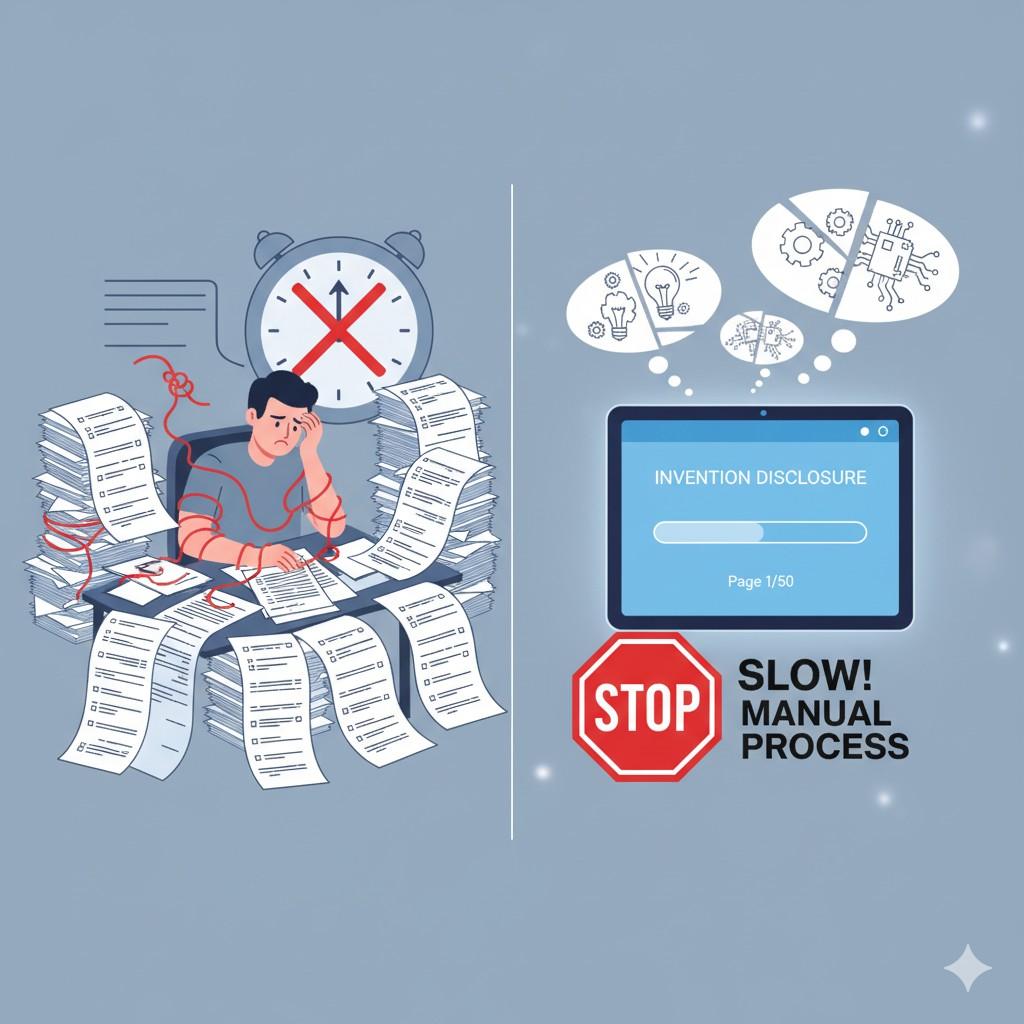
For businesses that file multiple patents each year, this difference compounds. Better intake leads to cleaner drafts, fewer revisions, and faster filings.
Poor Inputs Lead to Weak Patents
The strength of a patent often depends on the clarity of the initial input. If the original disclosure is shallow, the final document may miss important variations or edge cases.
Traditional forms do little to help you think beyond your first explanation. They capture what you type. They do not challenge you.
A strategic intake process should push you gently. It should ask, “What happens if this parameter changes?” or “How does your system behave under different conditions?”
These prompts surface additional embodiments that make your patent harder to design around.
For founders, the lesson is simple. Do not treat invention capture as a formality. Treat it as a design review for protection. Take the time to think about alternatives, fallback options, and technical variations.
AI systems excel here. They can suggest angles you may not have considered.
They can help expand narrow descriptions into broader coverage without losing precision. Combined with real attorney oversight, this leads to patents that are not just filed fast, but built to last.
If you want your patent to be more than a checkbox, and instead a true asset for your company, you can see how modern intake makes that possible here: https://powerpatent.com/how-it-works
Founders Lose Control of the Narrative
When invention capture is weak, founders often lose control of how their technology is described.
An attorney who receives incomplete or unclear input must interpret what you meant. Even the best attorneys are not inside your head. Subtle technical distinctions can get simplified. Core innovations can be framed too narrowly.
Over time, this shapes how investors, partners, and even acquirers see your IP portfolio. A patent is not just a legal document. It is a story about what makes your technology unique.
To stay in control, founders should ensure the first description of their invention is rich, clear, and technically grounded. AI-powered intake tools help preserve your voice while organizing it into a structured format that attorneys can refine.
This balance matters. You keep ownership of your idea. The attorney strengthens it. The software ensures nothing critical falls through the cracks.
Traditional forms rarely offer that level of collaboration.
Internal Teams Struggle With Consistency
As startups grow, more engineers create patentable ideas. Without a modern intake system, each person describes inventions differently. Some write detailed documents. Others submit a few vague paragraphs.
This inconsistency makes portfolio management harder. It slows review cycles and creates uneven patent quality.
From a business perspective, consistency is power. A standardized, guided intake system ensures every invention is captured at the same level of detail. It creates repeatable quality.
If you plan to build a real patent portfolio, not just file one or two applications, you need a scalable intake process. AI-powered systems create that structure without making engineers feel trapped in bureaucracy.
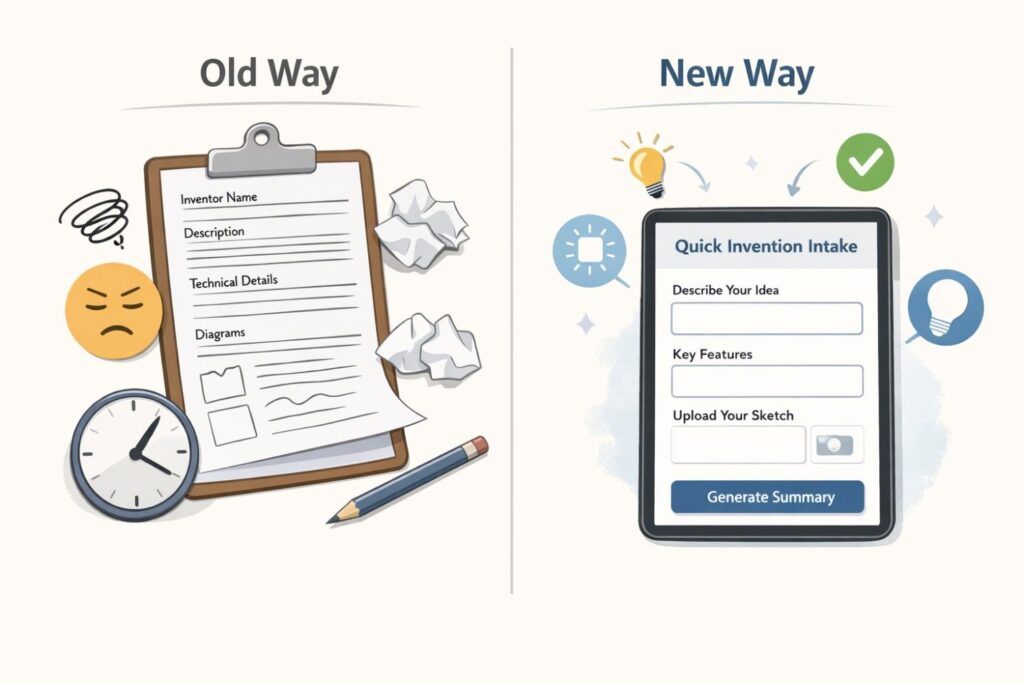
The result is simple. Faster forms. Better inputs. Stronger patents.
If you would like to see how PowerPatent blends smart AI with real attorney review to make this possible, you can explore the full process here: https://powerpatent.com/how-it-works
How AI-Powered Intake Captures What Really Matters
Speed alone is not enough. You do not just want to file fast. You want to file right.
The real power of AI-powered intake is not that it replaces paperwork. It replaces confusion with clarity. It helps you focus on the parts of your invention that truly create value.
It filters noise. It pulls out the signal. And it does this while you are still in builder mode.
If traditional forms slow you down, AI-powered intake aligns with how you actually think and work.
It Starts With the Problem, Not the Paperwork
Most old-school forms jump straight into technical descriptions. They ask you to define components, systems, and diagrams before grounding the core problem.
AI-powered intake flips this.
It begins by helping you clearly state the problem your invention solves. This is not just a warm-up question. It is strategic. Strong patents are built around problems and solutions.
If the problem is framed well, the claims can be broader and more defensible.
When you describe the real-world pain point, the system can guide you to explain why existing solutions fail. That context matters. It strengthens the story of novelty. It helps shape claims that stand apart from what already exists.
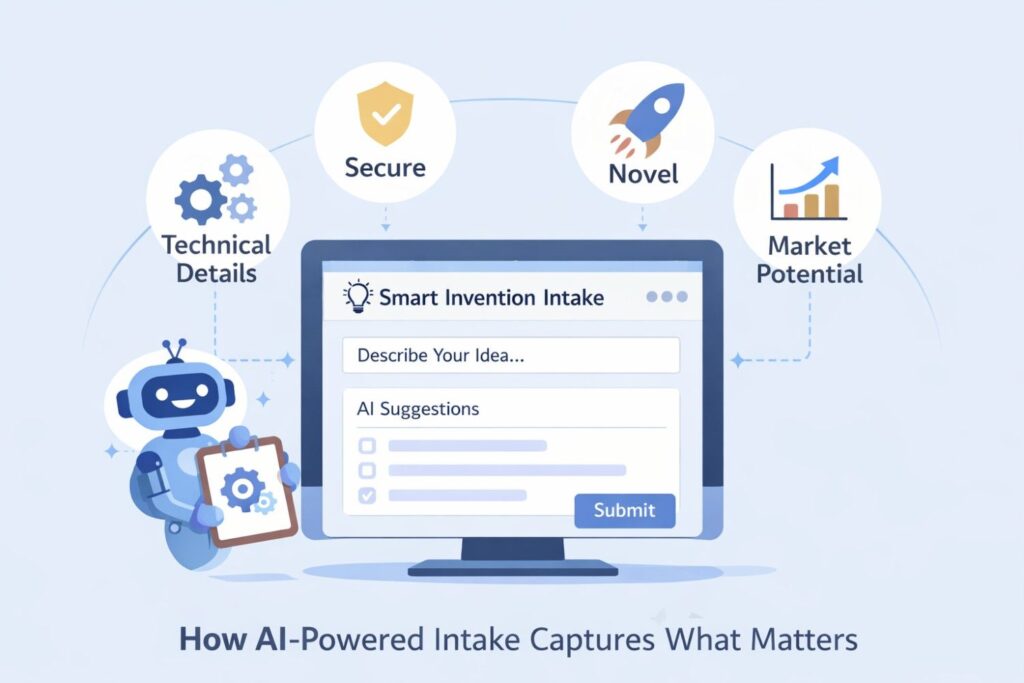
For founders, this means you should not rush this stage. Take a moment to explain the gap in the market.
What was broken? What was slow? What was expensive or inaccurate? AI-powered intake tools prompt you to clarify this in simple, focused language.
This clarity becomes the foundation of a stronger patent.
If you want to see how a modern system walks you through this step, you can explore it here: https://powerpatent.com/how-it-works
Smart Prompts Pull Out Hidden Details
When you build something complex, you often forget which parts are not obvious to others.
What feels “normal” to you may actually be the key innovation.
AI-powered intake tools use adaptive prompts. When you describe a model, a pipeline, or a hardware setup, the system asks follow-up questions based on your answers.
It might ask how data flows between modules. It might ask how parameters are selected. It might ask what happens when inputs change.
These prompts are not random. They are designed to surface depth.
This is critical for businesses working in AI, software infrastructure, robotics, biotech, or other deep tech fields. The real innovation is often in the implementation details, not just the idea itself.
Strategically, you should treat these prompts as an opportunity, not a hurdle. When the system pushes you to go deeper, that is where you expand your protection.
That is where you uncover alternative versions of your solution that competitors might try to copy.
By capturing these variations early, you widen the protective wall around your invention.
It Translates Technical Language Into Structured Protection
Engineers think in code. Founders think in product terms. Patent documents require structured language that covers both.
AI-powered intake acts as a bridge.
You can explain your system naturally. You can paste in architecture notes. You can describe model training steps. The system then organizes that raw input into a structured draft framework that attorneys can refine.
This reduces friction. You do not need to guess what “legal language” should sound like. You focus on the technical truth. The software helps shape it into something usable for protection.
From a business view, this is powerful. It lowers the barrier to filing. It also reduces misinterpretation.
When your input is structured correctly from the start, attorneys spend less time reworking and more time strengthening. That means fewer revisions and faster submission.
If you are moving quickly and want your IP process to match that pace, this kind of structured capture makes a real difference: https://powerpatent.com/how-it-works
It Identifies the Core Novelty
Not every feature deserves equal weight in a patent.
AI-powered intake systems are trained to help identify the core novel elements in your description. When you explain your system, the software analyzes what appears standard and what appears new.
It can highlight areas that seem routine and areas that seem inventive. This does not replace attorney judgment. Instead, it prepares a cleaner starting point.
This matters because many founders over-focus on surface features. They describe user interface elements or general system goals instead of the technical mechanism that creates the breakthrough.
A strategic approach is to always ask yourself: what part of this system would be hardest for a competitor to replicate? What technical step gives us leverage?
AI-powered intake helps you surface that answer.
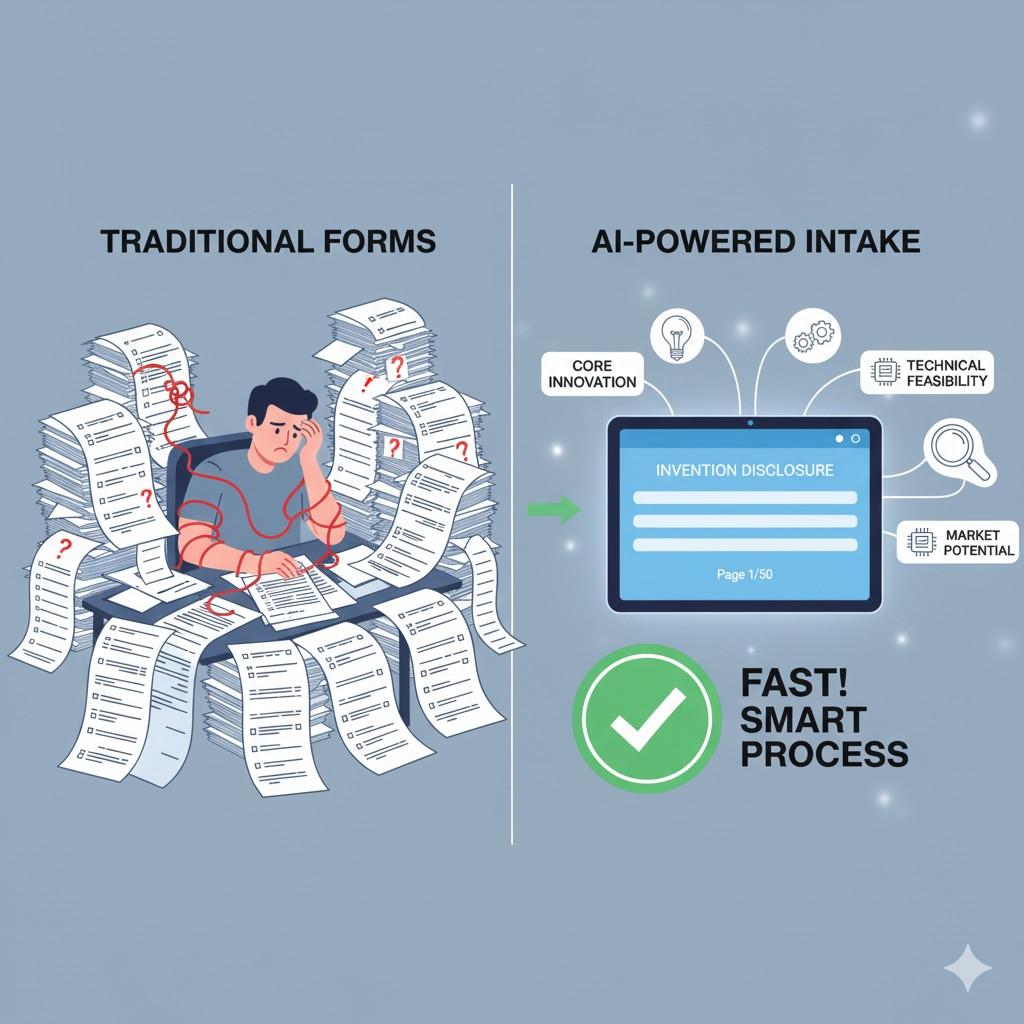
By centering the patent around true novelty, you increase defensibility. You also improve alignment between your patent strategy and your business moat.
It Encourages Broader Thinking Early
One of the biggest mistakes in patent filing is thinking too narrowly.
You built version 1 of your system. So you describe version 1. But competitors may design around that exact implementation by tweaking small details.
AI-powered intake tools can prompt you to think about variations. What if the input source changes? What if the processing layer uses a different algorithm? What if the hardware environment shifts?
By exploring these scenarios during intake, you build a stronger safety net.
For businesses, this is highly strategic. It turns your patent from a snapshot into a platform. Instead of protecting only today’s version, you protect the underlying approach.
You should use intake sessions as a moment to zoom out. Ask where your product is heading in the next 12 to 24 months. Are there improvements already on the roadmap?
Mention them. Even early-stage concepts can sometimes be included if described properly.
AI-powered systems make this brainstorming structured rather than chaotic.
It Reduces Cognitive Load
Founders are busy. Engineers are deep in code. The last thing anyone wants is a draining legal task.
Traditional forms increase cognitive load. You must decide what matters. You must structure answers. You must worry about missing something.
AI-powered intake reduces this mental burden.
It guides the flow. It breaks complex inventions into manageable sections. It keeps track of context so you do not repeat yourself unnecessarily.
This matters because lower friction means more consistent filing behavior. When the process feels manageable, teams are more likely to capture ideas early and often.
For growing startups, this creates a culture of protection. Innovation does not slip through the cracks. Technical wins are documented while they are fresh.
And because PowerPatent combines smart AI with real attorney oversight, you are not left alone with software.
Every draft is reviewed and strengthened by experienced professionals. That balance gives you speed without sacrificing quality.
If you want to see how that combination works in practice, you can take a closer look here: https://powerpatent.com/how-it-works
It Creates Clean Handoffs to Attorneys
The final advantage is often invisible but powerful.
When intake is structured and detailed, attorneys receive a near-complete foundation. They can focus on claim strategy, competitive positioning, and long-term portfolio planning.
This shifts their role from data collector to strategic partner.
For businesses, that shift saves money and increases value. You spend fewer billable hours on clarification and more on thoughtful protection.
AI-powered intake does not remove human expertise. It elevates it. It ensures the right information reaches the right hands in a clear format.
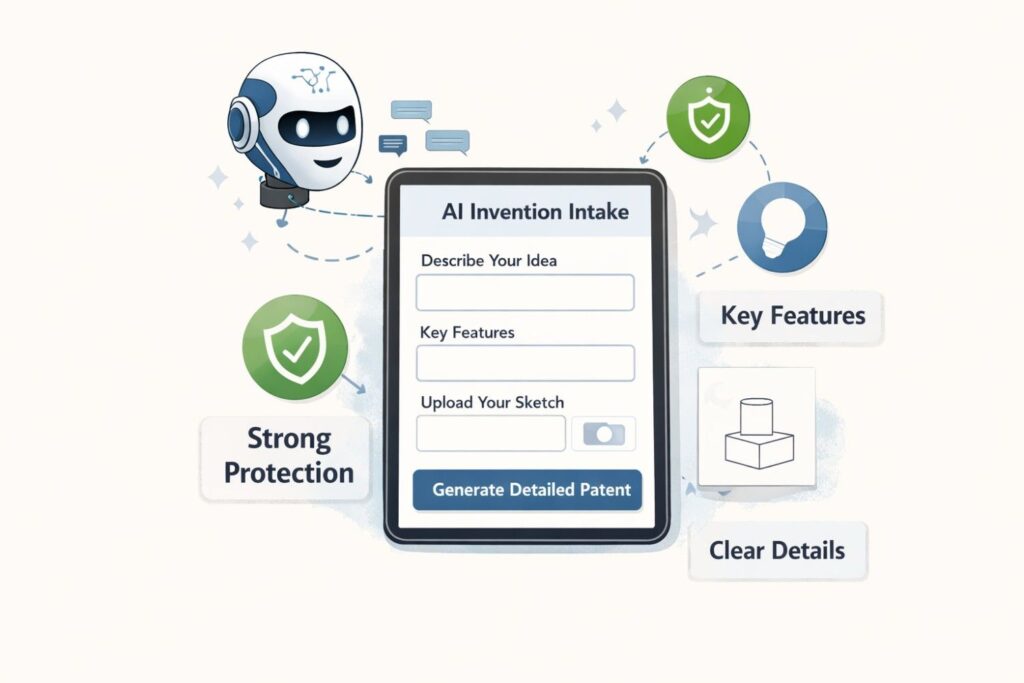
That is how you capture what really matters.
Better Inputs Mean Stronger Patents
A patent is only as strong as the information behind it.
If the first description of your invention is vague, rushed, or incomplete, the final patent will reflect that. If the original input is clear, deep, and strategic, the patent becomes a real asset.
Not just a document you filed, but a shield around your core advantage.
This is why invention intake is not a small step. It is the foundation. When you improve the quality of inputs, everything downstream gets better. The draft is sharper.
The claims are broader and more precise. The review process is smoother. The final protection is harder to attack.
Strong patents do not happen by accident. They start with better inputs.
Clarity at the Start Prevents Weak Claims Later
Many weak patents can be traced back to one problem: unclear early explanations.
If your original description does not clearly define what is new, the claims may end up too narrow. They may protect only one specific version of your system. A competitor can then change a small detail and avoid infringement.
Clear input fixes this.
When you describe your invention in simple, precise terms, you give the drafting process room to expand intelligently. Instead of locking the patent to one implementation, you create space to protect the underlying concept.
For founders, this means slowing down for one key moment. During intake, ask yourself if someone outside your team could understand what makes this system different.
If the answer is no, refine it. Explain the flow. Explain the mechanism. Explain why your approach works better.
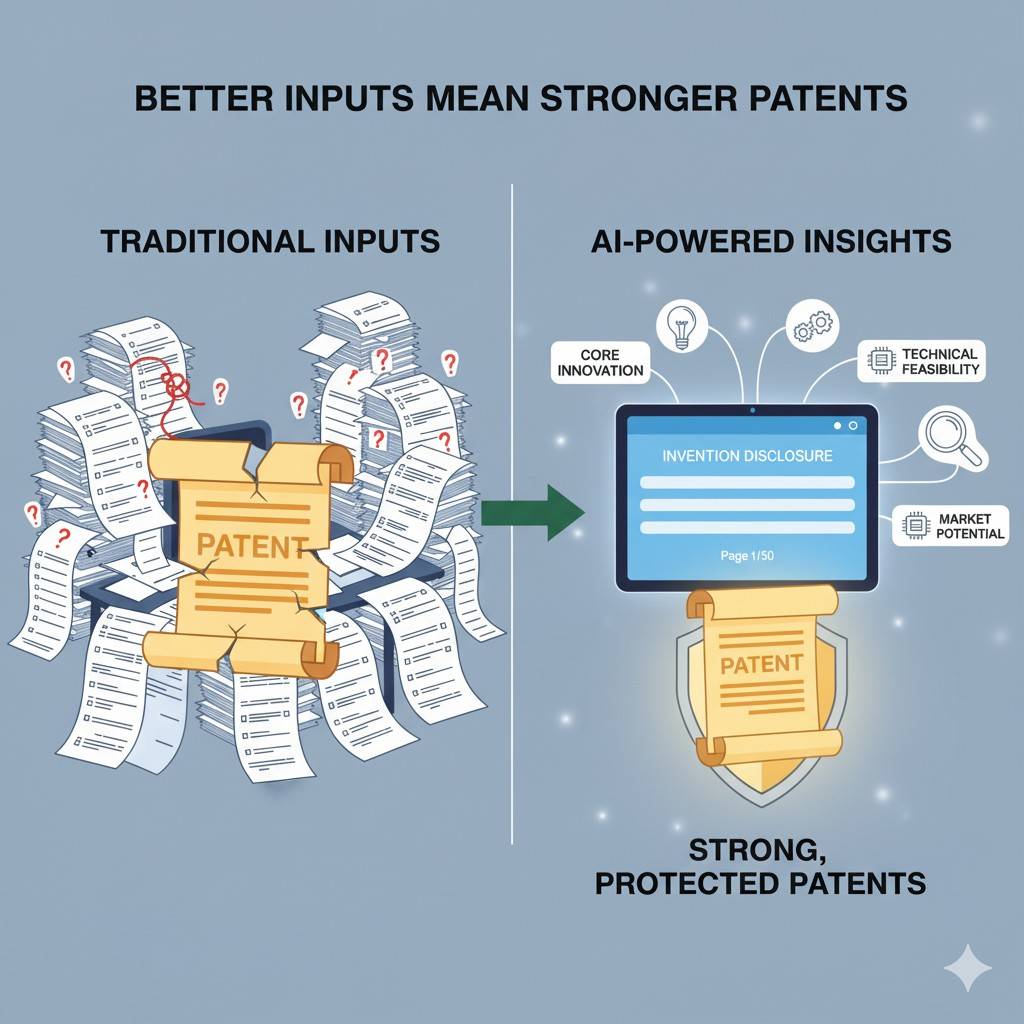
AI-powered intake helps here by organizing your thoughts into structured sections. It surfaces gaps and asks follow-up questions before anything is finalized. That early clarity strengthens everything that follows.
If you want to see how structured intake improves claim quality, you can explore the process here: https://powerpatent.com/how-it-works
Depth Creates Defensive Power
Surface-level descriptions create fragile patents.
If you only describe what the user sees, you miss the real leverage. True protection lives in the technical layers beneath the surface. It lives in the data handling, the model logic, the system coordination, the hardware control.
Better inputs go deeper.
When you capture technical detail during intake, you give your patent room to defend against design-arounds. A competitor may try to replicate your outcome using a slightly different path.
If your patent only covers the visible output, you are exposed. If it covers multiple internal paths and variations, you are safer.
From a business standpoint, this is not just legal theory. It affects valuation. Investors look at whether your patents actually block competition or simply decorate your pitch deck.
To create depth, use intake time wisely. Describe alternative flows. Mention fallback options. Explain edge cases. AI-powered tools prompt you to think through these layers so nothing critical is left unsaid.
Combined with real attorney review, this turns technical detail into strategic coverage.
Precision Reduces Risk of Rejection
Strong inputs also reduce friction during examination.
Patent offices review applications closely. If descriptions are inconsistent or unclear, objections follow. This leads to delays, extra costs, and multiple revisions.
Better inputs reduce that risk.
When your invention is described with internal consistency, clear terminology, and logical flow, the review process becomes smoother.
AI-powered intake systems help standardize terminology and organize explanations so they align from start to finish.
This is especially important for startups filing in fast-moving fields like AI and software infrastructure. These areas face close scrutiny. Examiners look carefully at what is truly new.
Strategically, you should treat intake as preparation for that scrutiny. The more precise your initial explanation, the easier it is to defend novelty and non-obviousness later.
Strong inputs today reduce friction tomorrow.
Broader Thinking Expands Claim Scope
One of the biggest advantages of high-quality intake is expanded claim scope.
When founders describe only what they built this month, they limit protection. But when they describe the core idea behind the build, they create room for broader claims.
Better inputs focus on principles, not just implementations.
For example, if your invention uses a specific model today, ask whether the innovation is really the model type or the way data is processed before training. If it is the processing logic, describe that clearly.
This allows claims to cover multiple model types in the future.
AI-powered intake systems encourage this kind of reflection. They guide you to separate core mechanisms from temporary design choices.
For a growing startup, this matters deeply. Your product will evolve. Your patent should not trap you in version one. It should protect the direction of your technology.
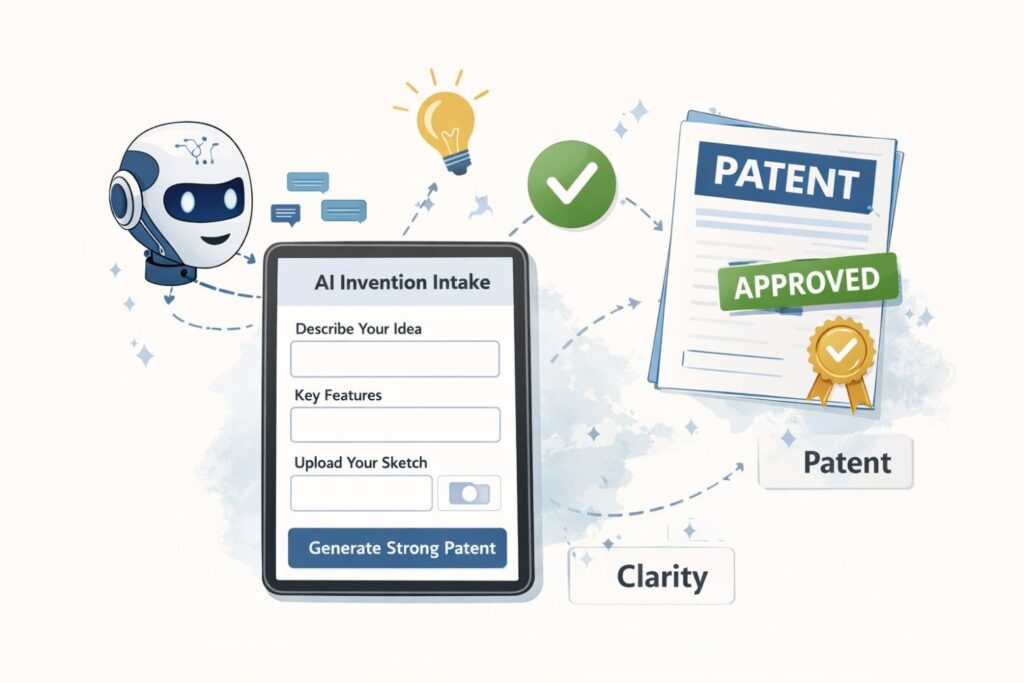
If you want to build protection that grows with your roadmap, you can learn more about how modern intake supports that here: https://powerpatent.com/how-it-works
Consistency Builds a Strong Portfolio
One strong patent is good. A consistent portfolio is powerful.
Better inputs create repeatable quality. When every invention goes through a structured, guided intake process, your patents share a clear tone, depth, and strategic focus.
This consistency helps in many ways. It makes due diligence smoother during fundraising. It shows discipline in IP strategy. It reduces surprises during acquisition talks.
Inconsistent inputs, on the other hand, create uneven protection. Some patents may be strong. Others may be shallow. This weakens the overall story of your technology moat.
AI-powered intake systems bring structure across teams. Whether the invention comes from a senior engineer or a new hire, the same guided process applies.
Real attorneys then refine each draft to ensure legal strength.
This blend of smart software and human oversight creates reliability.
Better Inputs Save Time and Money
There is also a direct financial impact.
When initial inputs are weak, attorneys must spend hours extracting missing details. This increases billable time and stretches timelines. When inputs are strong, drafting becomes more efficient.
For startups watching burn rate closely, this efficiency matters.
Better inputs reduce revision cycles. They reduce confusion. They reduce the need for repeated clarification calls. Over time, these savings add up.
But the greater value is not just cost control. It is momentum. When patent filing feels streamlined instead of draining, founders are more likely to protect innovations consistently.
That habit compounds. Each protected breakthrough adds another layer to your competitive wall.
Confidence Changes How You Build
There is one more effect that often goes unnoticed.
When you know your invention has been captured properly, you build with more confidence. You are less worried about sharing high-level details with partners.
You are more prepared in investor meetings. You feel secure discussing your roadmap.
Strong patents do not slow you down. They free you to move faster.
And that freedom begins with better inputs.
AI-powered invention intake ensures your ideas are captured clearly, deeply, and strategically from day one. With real attorney oversight layered on top, you get both speed and strength.
If you are serious about turning your technical edge into defensible protection, this is the moment to act. You can see how the full system works here: https://powerpatent.com/how-it-works
Turning Your Code and Concepts Into Real Protection—Fast
You are not building slide decks. You are building systems.
You write code. You train models. You design hardware. You test and ship. Your edge lives inside repositories, architecture diagrams, data flows, and technical decisions that most people never see.
The problem is simple. Patent systems were not designed for GitHub commits. They were designed for paper sketches and static diagrams.
So how do you turn fast-moving code and evolving concepts into real protection without slowing your team down?
You need a process that moves at the same speed as your product.
Protection Should Move at Startup Speed
Startups do not operate in quarters. They operate in sprints.
Features change weekly. Infrastructure evolves monthly. Models improve with every new dataset. If your patent process takes six months just to draft and file, it is already behind your roadmap.
Fast protection does not mean careless protection. It means capturing innovation at the moment it happens.
AI-powered intake allows you to document breakthroughs while they are still fresh in your mind.
Instead of waiting for a long legal kickoff call, you can begin the capture process immediately after a major release or technical milestone.
This changes behavior inside your company.
Protection becomes part of the build cycle. When a core system improvement is shipped, it is reviewed for patent potential right away. This reduces memory gaps. It prevents lost detail. It ensures that important variations are recorded before they fade.

If your IP strategy cannot keep up with your engineering velocity, it will always lag behind. You can see how a faster, founder-friendly approach works here: https://powerpatent.com/how-it-works
Code Is Not a Patent, But It Is the Blueprint
Many founders assume that because their code exists, their innovation is safe.
It is not.
Code proves you built something. A patent protects the idea behind how it works.
The key is translating your implementation into structured protection that covers the underlying logic, not just the exact syntax you wrote.
AI-powered intake helps bridge that gap.
You can describe how your algorithm processes inputs. You can explain how your service handles edge cases. You can outline how different modules communicate.
The system helps convert that explanation into a format that supports broad, enforceable claims.
Strategically, you should focus on the mechanisms that create advantage.
Ask yourself what part of the code reflects true invention. Is it the data transformation method? The model selection logic? The orchestration between components? The training feedback loop?
Describe those mechanics clearly during intake. Do not just attach files. Walk through how the system behaves and why it behaves that way.
When this input is captured properly and reviewed by real patent attorneys, it becomes more than documentation. It becomes protection that competitors cannot easily bypass.
Concepts Deserve Protection Before They Are Perfect
Many technical founders hesitate to file because their system is still evolving.
They want to wait until version two. Or until the architecture feels final. Or until the model is fully optimized.
This delay is risky.
Patents do not require a polished product. They require a clear explanation of how the invention works.
If your core concept is defined, you can protect it. Improvements can often be captured in follow-up filings.
AI-powered intake makes it easier to document ideas even while they are in motion. You can describe the current implementation and note expected extensions. You can explain planned variations that are already technically feasible.
From a business perspective, this locks in priority earlier. It gives you a timestamp on your innovation. In competitive markets, that timing can matter a lot.
The key is not perfection. The key is clarity.
Fast Does Not Mean Weak
There is a common fear that speed reduces quality.
That is true when speed comes from cutting corners. It is not true when speed comes from better systems.
AI-powered intake reduces wasted time, not strategic thinking. It removes repetitive back-and-forth. It organizes information instantly. It flags missing detail early.
Then real patent attorneys review and strengthen the draft before filing.
This combination matters.
Software handles structure and consistency. Attorneys handle claim strategy and legal nuance. Founders provide the technical truth.

Together, this creates speed without sacrificing depth.
For startups that need to move quickly but cannot afford fragile IP, this balance is critical. You can learn how this hybrid model works here: https://powerpatent.com/how-it-works
Protection Should Align With Your Roadmap
A strong patent strategy is not random. It aligns with where your company is going.
When turning code into protection, think beyond what exists today. Consider what parts of your system will become core infrastructure over the next two years. Consider what features will define your differentiation in the market.
During intake, describe not only the present configuration but the direction of travel. If you know your system will support additional data types or integrate new modules, explain that.
This allows your patent coverage to grow with your product vision.
AI-powered tools help structure these forward-looking details without turning them into vague speculation. They guide you to ground each extension in technical feasibility.
For founders raising capital, this alignment is powerful. Investors see not just past innovation but protected future direction.
Real Protection Creates Strategic Leverage
When your code and concepts are protected properly, you gain leverage.
Leverage in fundraising conversations. Leverage in partnership negotiations. Leverage in acquisition talks.
A well-structured patent signals that your technology is not easy to replicate. It shows discipline. It shows foresight.
But that leverage only exists if the patent captures the real innovation.
That is why intake quality and speed matter so much. The faster you can convert technical breakthroughs into structured, attorney-reviewed filings, the faster you build a defensive moat around your company.
This is not about filing for the sake of filing. It is about building assets that strengthen your position in every major business conversation.
Make Protection a Habit, Not an Event
The final shift is cultural.
Do not treat patent filing as a rare event triggered by outside pressure. Make it a normal part of your innovation process.
When engineers know there is a fast, guided, low-friction way to capture inventions, they are more likely to surface ideas. When founders see that filing does not derail product momentum, they act sooner.
AI-powered invention intake turns protection into a repeatable workflow. Real attorney oversight ensures that each filing is built to withstand scrutiny.
This is how you turn code into assets. This is how you turn concepts into leverage. And this is how you protect what you are building without slowing down.

If you are ready to move from idea to protection with speed and confidence, you can see exactly how the system works here: https://powerpatent.com/how-it-works
Wrapping It Up
You are building something that did not exist before. That alone is rare. But building is only half the job. Protecting what you build is what turns innovation into lasting advantage. The old way of handling patents was never designed for fast-moving startups. Long forms. Slow email chains. Weeks of delay. By the time paperwork caught up, your product had already evolved.
Leave a Reply