
If your engineers don’t know how to write a strong invention disclosure, you are leaving money on the table.That is the truth. Most engineers are brilliant at building things. They can design systems, write complex code, and solve hard problems. But when you hand them an invention disclosure form, everything slows down. They either rush it, skip key details, or write something so technical that no one else can understand it. And that creates risk.
Why Engineers Struggle With Invention Disclosure Forms (And What It’s Really Costing You)
Most companies assume engineers avoid invention disclosure forms because they are busy. That is only part of the story. The deeper issue is that engineers are trained to build, not to document strategic value.
When you hand them a form without context, you are asking them to switch modes without guidance. That friction creates weak submissions, delays, and lost protection.
If you want better patents, you cannot just ask for better forms. You need to understand the real reasons behind the struggle.
Once you see what is happening under the surface, you can fix it in a way that strengthens your entire IP strategy.
Engineers Think in Systems, Not in Legal Stories
Engineers focus on how something works. Patent systems focus on how something is claimed. These are not the same thing.
An engineer may describe an architecture diagram with deep technical detail. They will explain dependencies, performance tradeoffs, and edge cases.
But they often miss the simple question that matters most for patents: what is new here, and why does it matter?
The gap is not intelligence. It is framing.
To fix this, you must train engineers to pause and zoom out before they start filling in a form. Instead of asking them to describe the invention right away, teach them to answer three simple framing questions in plain language.
What problem did this solve? Why was the old way not good enough? What changed because of your solution?
Have them write these answers in short, simple sentences. No jargon. No diagrams at first. This forces clarity. It also makes it much easier for attorneys to see the core idea.
When you build this framing step into your training, disclosure quality improves fast. The engineer stays in control of the technical depth, but the business value becomes clear from the start.

If you want a system that guides engineers through this kind of structured thinking automatically, you can see how PowerPatent does this here: https://powerpatent.com/how-it-works
They Do Not See the Business Impact
Many engineers view invention disclosure forms as paperwork. They do not see how it connects to funding, valuation, or defense against competitors.
That is a leadership failure, not an engineering failure.
When engineers understand that a strong patent can protect months or years of work, they treat the process differently. When they see that investors often look at IP depth before writing checks, they take it seriously.
So the training must start with context.
Instead of opening with “Here is how to fill out the form,” start with a real business story from your company.
Show how a protected feature helped close a deal. Explain how a competitor copied something that was not patented. Share how strong IP can raise the company’s value in an acquisition.
Tie invention disclosures to outcomes engineers care about. Stability. Growth. Recognition. Pride in their work.
Then make it personal. Explain that when they write a strong disclosure, their name goes on the patent. That record follows them for life. It becomes proof of their innovation.
Once engineers see that this is not paperwork but ownership, the quality of their submissions improves.
They Over-Assume What Others Know
Engineers work close to the product. They live in the code. They talk to teammates who already understand the system. Because of that, they skip steps when explaining things.
They assume the reader knows the baseline. They assume the problem is obvious. They assume the difference between the old method and the new method is clear.
It rarely is.
A weak disclosure often lacks contrast. It explains the solution but not what came before. Without that contrast, it is hard to show novelty.
You can solve this with a simple internal rule. Every disclosure must include a clear description of how the problem was handled before this invention. That includes both internal methods and common industry methods.
During training, run exercises where engineers compare two short writeups. One that only describes the solution. Another that clearly explains the before and after. Let them see how much stronger the second version feels.
This kind of side-by-side learning sticks. It shifts their mindset from “describe what I built” to “show why this is different.”
They Fear Being Wrong
There is another issue that is rarely discussed. Engineers often hesitate to submit disclosures because they worry the idea is not big enough or new enough.
They fear wasting time. They fear looking uninformed. They fear being told this has already been done.
So they hold back.
That hesitation is expensive.
The solution is not to demand more submissions. The solution is to create psychological safety around early disclosure.
In training, make it clear that engineers are not responsible for deciding patentability. That is the job of patent professionals. Their role is to surface ideas early and clearly.
Encourage a rule of over-sharing. If there is doubt, submit it. Make the process lightweight and fast so it does not feel like a huge commitment.
This is where smart tools matter. When engineers can quickly document ideas without heavy legal formatting, they are more likely to act.

PowerPatent, for example, is built to make this part simple while still backed by real attorneys who review and guide the process. You can explore that model here: https://powerpatent.com/how-it-works
They Write for Engineers, Not for Business
Another core issue is audience mismatch.
Engineers often write disclosures as if they are explaining the system to another engineer on their team. That leads to dense language, heavy acronyms, and missing strategic context.
Patent professionals and business leaders need something different. They need clarity. They need scope. They need to understand how broad the protection could be.
To shift this, train engineers to imagine they are explaining the invention to a smart but non-technical investor. Someone who understands logic but not your codebase.
Have them practice rewriting a complex explanation into simpler words. Not dumbing it down. Just making it clear.
Clarity is power in patents. The clearer the core idea, the easier it is to protect it broadly.
It Feels Like It Slows Down Building
In fast-moving startups, speed is everything. Engineers are measured by shipped features, uptime, and performance improvements. Filling out a form feels like a delay.
If you want better disclosures, you must redesign the timing.
Do not ask engineers to fill out forms at the end of a long sprint when they are exhausted. Instead, build short IP checkpoints into your development cycle.
For example, after major architectural decisions or new feature launches, hold a short review meeting focused only on innovation. Ask what was built that did not exist before. Capture that energy while it is fresh.
Then immediately route those insights into a structured disclosure flow.
When documentation becomes part of the rhythm, it no longer feels like an interruption. It feels like closing the loop on innovation.
The Real Cost of Getting This Wrong
Poorly trained engineers do not just produce weak forms. They create long-term exposure.
You may miss filing windows. You may lose rights in key markets. You may give competitors room to copy your core features.
Worse, you may build a false sense of security. You think you have protected your innovation because a form was submitted. But if the underlying disclosure was shallow, the resulting patent may be narrow and easy to work around.
This is why training matters.
Strong invention disclosures lead to strong patent applications. Strong applications create real defensive walls. Real walls protect revenue, attract investors, and increase company value.
If you care about building something lasting, you cannot treat disclosure training as an afterthought.

And if you want a modern system that guides engineers step by step, reduces friction, and ensures real attorney oversight without slowing your team down, take a close look at how PowerPatent works: https://powerpatent.com/how-it-works
How to Build a Simple, Repeatable Training System That Engineers Actually Follow
If your training only lives in a slide deck, it will fail.
Engineers do not change behavior because of a one-time workshop. They change behavior when the system around them makes the right action the easiest action.
If you want better invention disclosures, you need more than instructions. You need a repeatable structure that fits into how engineers already work.
This section will walk through how to design that system so it feels natural, fast, and worth their time.
Start With Leadership Alignment
Before you train engineers, align leadership.
If founders and technical leaders treat invention disclosures as optional, the team will do the same. If leadership asks about features but never asks about protectable ideas, the message is clear. Shipping matters. Protecting does not.
So begin by setting a clear expectation at the top. Make it known that capturing innovation is part of building the company. Not a side task. Not paperwork. A core responsibility.
During sprint reviews or roadmap discussions, include one simple question: what did we build this cycle that no one else has?
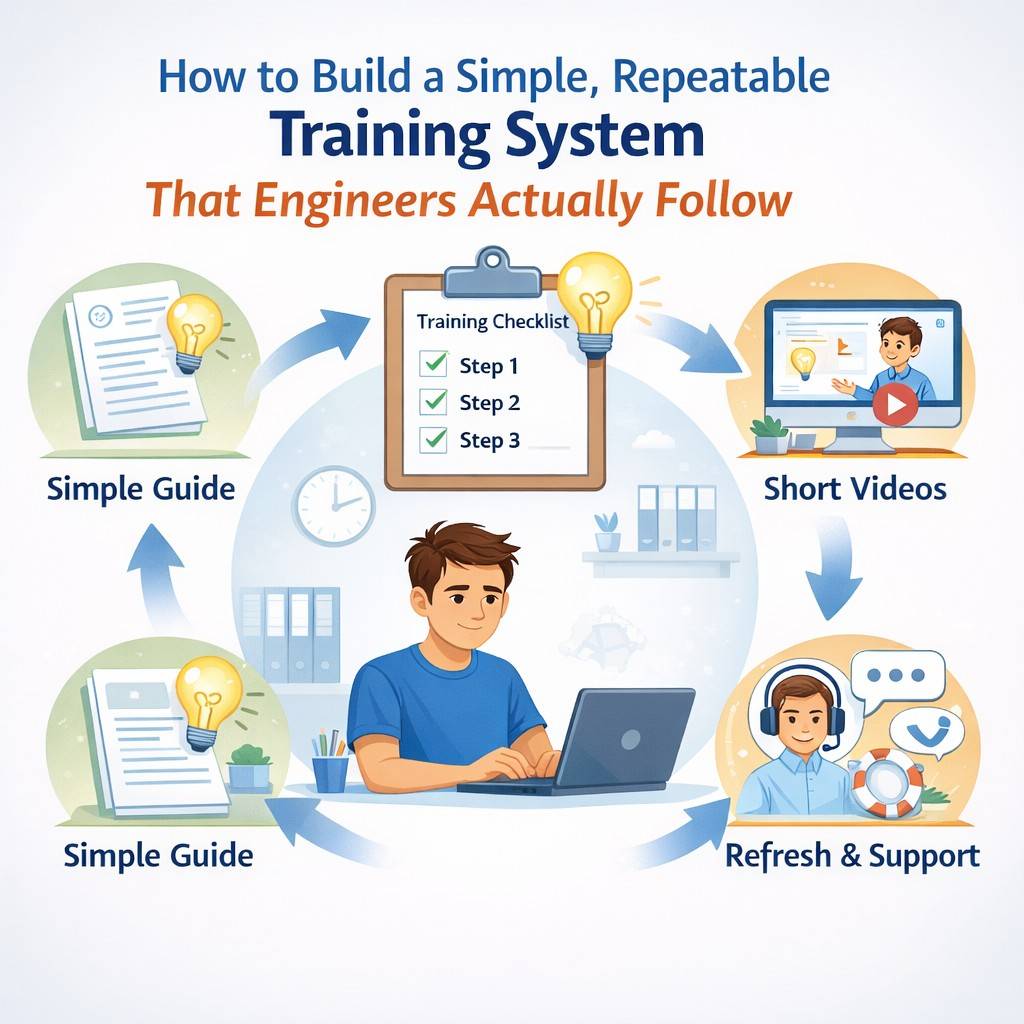
When leadership asks this regularly, engineers start thinking differently. They begin to spot innovation in real time instead of months later.
This small cultural shift is the foundation of a repeatable system.
Define What “Good” Looks Like
Engineers need examples.
If you tell them to write better disclosures but never show what strong looks like, they will guess. And most guesses will miss key pieces.
Create a few sample invention disclosures based on real past projects. These should not be legal documents. They should be clear, well-structured explanations that show depth without confusion.
Walk through one in a live session. Explain why it works. Show how it clearly states the problem, the old way, and the new approach. Point out how it explains edge cases and variations.
When engineers see a concrete example, the task becomes less abstract. They understand the level of detail expected.
If you use a platform that guides them through structured prompts and examples as they write, the quality improves even more. PowerPatent is built with this idea in mind.
It gives engineers smart guidance while real patent attorneys oversee the output. You can see how that works here: https://powerpatent.com/how-it-works
Build Training Around Real Projects, Not Theory
Avoid generic patent education.
Engineers do not need a history lesson on intellectual property law. They need to understand how to document what they are building right now.
Instead of teaching abstract concepts, use active company projects as training material. Pick a recently shipped feature. Ask the engineer who worked on it to explain how it works.
Then, together, turn that explanation into a strong disclosure.
Make it interactive. Ask questions that force clarity. What part of this was hard? Why was the old method not good enough? What tradeoffs did you solve?
This live conversion from technical explanation to structured disclosure is powerful. It shows the process in action. It also removes fear because the team sees that the task is manageable.
Once engineers experience this once or twice, the next time feels natural.
Make It Part of Onboarding
Training cannot be optional or delayed.
Every new engineer should learn how your company handles invention disclosures within their first few weeks. This sets the norm early. It signals that protection is part of the engineering culture.
During onboarding, explain how innovation flows from idea to patent. Show them the tools they will use. Walk through a short mock disclosure.
Keep it simple. The goal is not mastery. The goal is familiarity.

When this knowledge is baked into onboarding, you avoid the common problem of retraining later.
Create a Clear Trigger for When to Submit
One reason engineers skip disclosures is uncertainty about timing.
They are not sure if the idea is complete enough. They wonder if they should wait for more data. They hesitate.
To remove this friction, define clear trigger points.
For example, when a new architecture pattern is introduced, when a novel algorithm is deployed, or when a feature solves a problem in a way that feels new. These moments should automatically prompt a quick disclosure review.
You do not need rigid rules. But you do need shared understanding.
Reinforce this in team meetings. When someone presents a solution, ask calmly, does this deserve a disclosure? Over time, this question becomes second nature.
Reduce the Time Burden
If filling out a disclosure takes hours, it will not happen consistently.
So audit your current process. How long does it take an engineer to complete the form? Where do they get stuck? Are there sections that cause confusion?
Streamline wherever possible. Remove redundant questions. Replace vague prompts with clear ones. Provide guidance next to each field.
Better yet, use software that structures the thinking process in a logical flow instead of a blank document. When engineers are guided step by step, completion time drops dramatically.
PowerPatent was built for exactly this problem. It turns complex patent drafting into a structured, engineer-friendly workflow while still being reviewed by real attorneys.
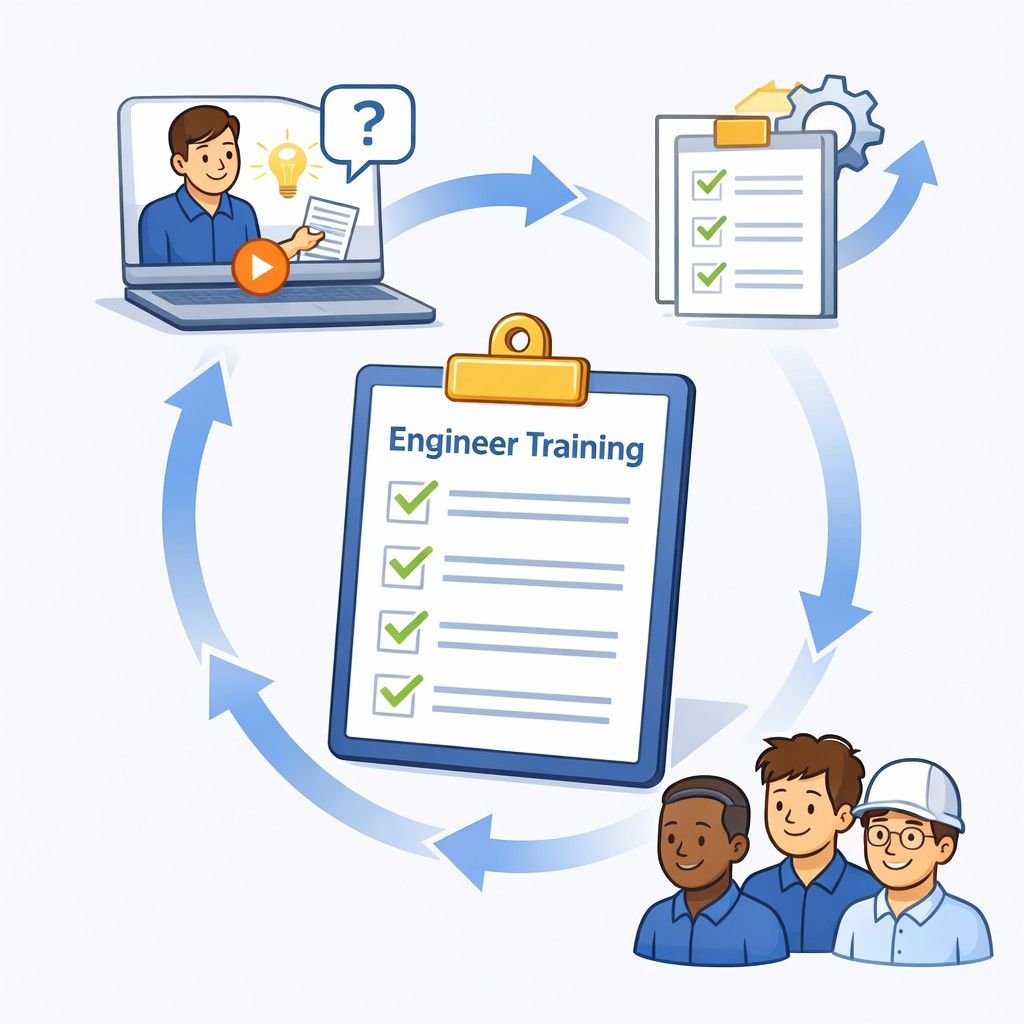
That balance of speed and oversight is what makes a system repeatable. You can explore it here: https://powerpatent.com/how-it-works
Assign Ownership Without Creating Bottlenecks
Someone must own the process.
In many startups, disclosures fall into a gap between engineering and legal. No one clearly drives it. As a result, forms sit unfinished.
Assign a technical lead or innovation champion to oversee the flow. This person does not need to be a lawyer. They simply ensure disclosures are submitted, reviewed, and followed up.
However, avoid centralizing all writing in one person. Engineers should still draft their own ideas. Ownership increases accuracy and engagement.
The innovation lead acts as a guide, not a gatekeeper.
Provide Feedback Quickly
Nothing kills momentum like silence.
If an engineer submits a disclosure and hears nothing for weeks, they will not prioritize the next one.
Build a system where feedback happens fast. Even a short acknowledgment that the idea is being reviewed makes a difference.
When possible, share how the disclosure moved forward. Did it become a patent filing? Did attorneys suggest expanding the scope? Did it reveal related ideas?
Closing the loop reinforces the value of the effort.
Reward the Behavior You Want
Recognition works.
When a patent is filed or granted, highlight the engineers involved. Mention it in company updates. Celebrate the milestone.
This does not need to be loud or flashy. It just needs to be visible.
Engineers take pride in building things. When you connect that pride to protected innovation, motivation grows.
Over time, submitting strong disclosures becomes part of professional identity within your company.
Keep the System Simple as You Scale
As your startup grows, complexity increases. More teams. More projects. More ideas.
Resist the urge to overcomplicate the disclosure process.
Simplicity scales. A clear workflow, guided prompts, and real attorney oversight are more powerful than layers of policy documents.
If you find yourself explaining the process differently to each team, your system is too complex.
A strong training system should feel the same whether you have five engineers or fifty.

And if you want a platform that keeps the process simple, fast, and structured while ensuring real legal strength behind the scenes, take a closer look at PowerPatent: https://powerpatent.com/how-it-works
The right system does not just improve forms. It builds a culture where innovation is captured consistently and protected with confidence.
Turning Technical Ideas Into Strong Patents Without Slowing Down Product Development
Most founders fear one thing when they think about patents.
Slowdown.
They imagine long meetings, heavy documents, endless back and forth with lawyers, and product timelines getting pushed. In a fast startup, that feels dangerous.
But here is the truth.
Patents do not slow down product development. Bad systems slow down product development.
When you build the right process, protecting innovation becomes part of how you ship. It does not sit outside of it. It moves alongside it.
This section is about how to make that real inside your company.
Stop Treating Patents as a Separate Track
Many startups run product and IP on two different tracks.
Engineers build. Later, someone says, “We should probably patent that.” By then, details are fuzzy. Decisions are forgotten. The team has moved on.
This creates stress and rework.
Instead, you need one integrated track.
When a major technical decision is made, capture it in real time. When a new architecture unlocks performance gains, flag it. When a feature solves a hard constraint in a new way, pause and document it.
This does not require long meetings. It requires awareness.
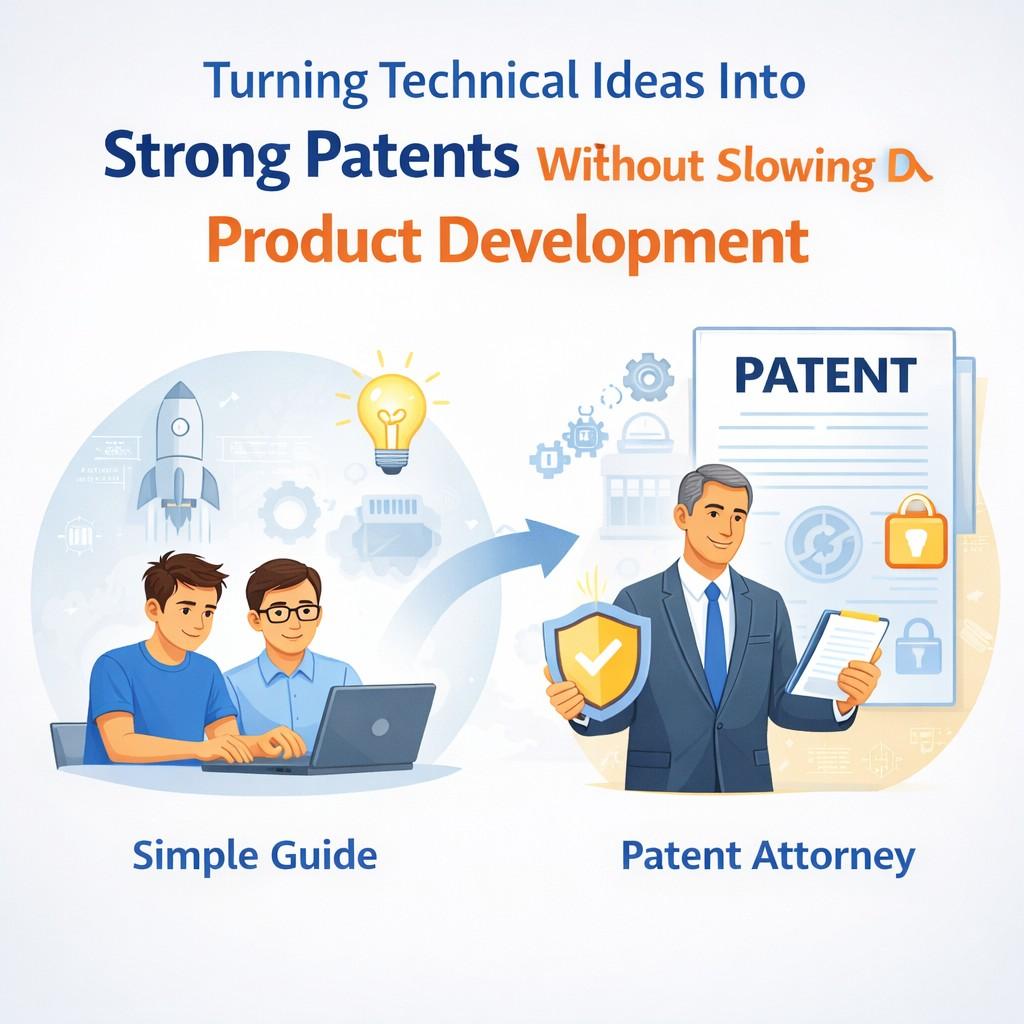
In sprint reviews, add a short innovation checkpoint. Ask what was technically new this cycle. Not what shipped. What was new.
That five-minute habit keeps protection aligned with progress.
Capture Thinking While It Is Fresh
Strong patents are built on reasoning.
Why did you choose this approach? What alternatives did you reject? What tradeoffs did you solve?
If you wait three months to ask those questions, the answers get thin.
Encourage engineers to record short explanations right after major builds. This can be as simple as a guided form that asks for the problem, the prior approach, and the new solution.
The key is timing.
Documentation done close to the work is faster and richer. It feels natural because the details are still in working memory.
This is where having the right tool matters. A structured platform that engineers can use immediately after building something reduces friction. PowerPatent was designed to fit into that workflow.
Engineers can input technical detail in a guided way, and real patent attorneys refine it into strong applications. You can see how it works here: https://powerpatent.com/how-it-works
Protect the Core, Not Every Line of Code
Another fear founders have is over-documenting.
They worry that every feature will trigger a patent discussion and overwhelm the team.
That is not the goal.
You are not trying to patent everything. You are trying to protect what creates leverage.
Train your team to think in terms of core technical advantages. What makes your system hard to copy? What creates performance gains others would struggle to match? What architectural decisions unlock future capabilities?
Those are the areas worth protecting.
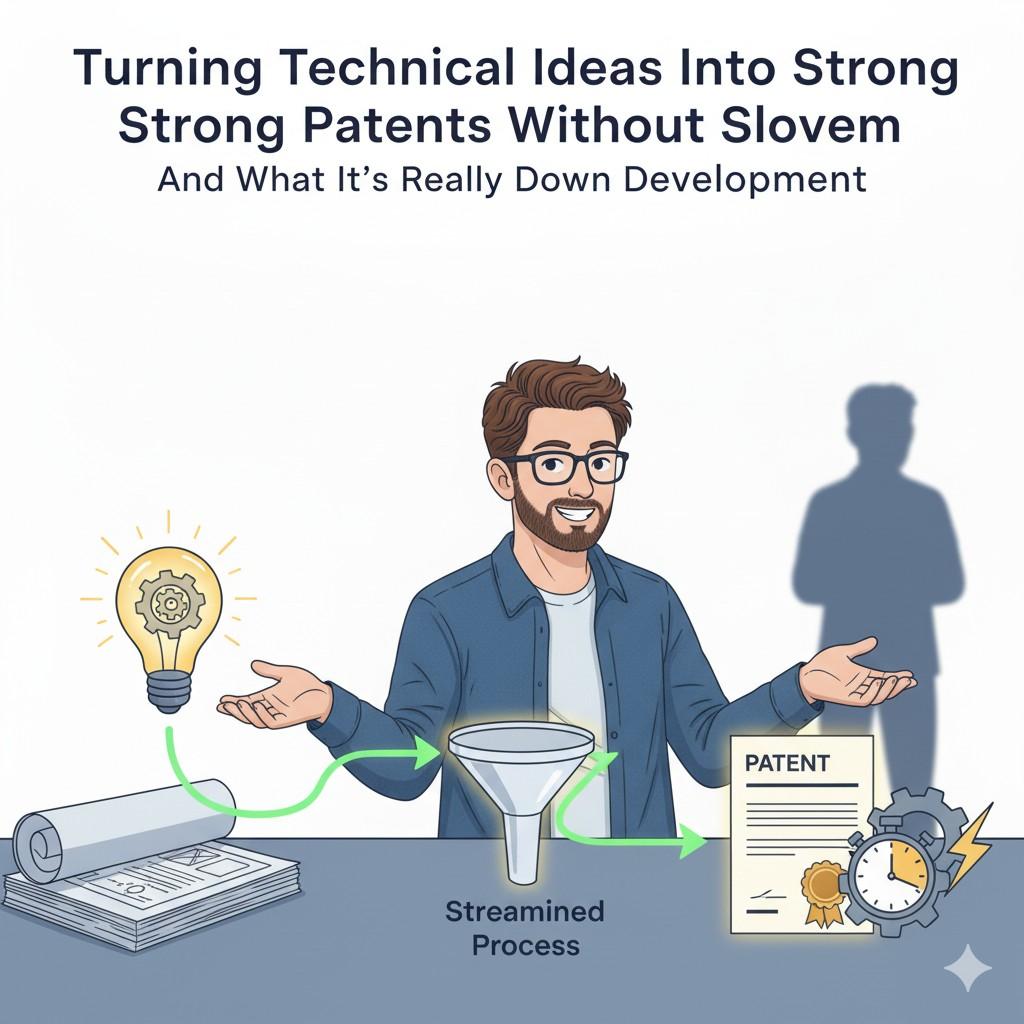
When engineers understand that the focus is on strategic advantage, not routine tasks, the process feels focused and purposeful.
Build a Fast Internal Review Loop
Speed matters.
If an engineer submits a disclosure and it sits untouched, the process loses credibility. Product keeps moving. IP falls behind.
Set a tight internal review window. This can be a small group that reviews submissions weekly. The goal is not deep legal analysis at this stage. The goal is triage.
Is this core? Is it new? Should we escalate it?
Quick decisions maintain momentum.
If you work with a modern platform that combines software with attorney oversight, you can compress this cycle even further. Instead of long email chains, you get structured review and clear next steps.
That keeps product teams focused while ensuring ideas do not slip through the cracks. Learn more about that model here: https://powerpatent.com/how-it-works
Avoid Pulling Engineers Into Legal Complexity
Engineers should not be forced to think like lawyers.
Their job is to explain the technology clearly and fully. The legal framing should be handled by professionals who understand patent law deeply.
When engineers are dragged into heavy legal discussions, they disengage. It feels outside their zone.
The right model is collaboration.
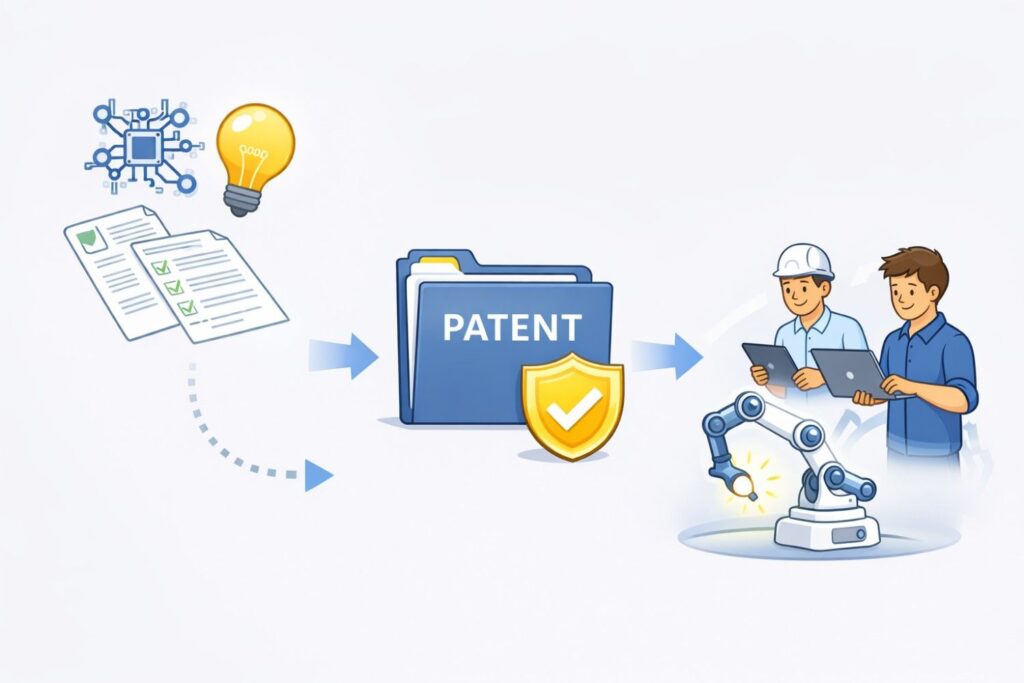
Engineers provide technical depth. Patent attorneys shape claims and scope. Smart software bridges the two by structuring information in a way that serves both.
This division of roles keeps everyone efficient.
Use Real Deadlines to Drive Focus
Product teams respect deadlines.
Tie patent activity to real business milestones. For example, before a major launch, review whether any core technology needs protection. Before public demos, ensure key innovations are documented.
Deadlines create clarity.
Without them, patent work drifts because it does not feel urgent.
When protection is tied to visible company events, it becomes part of the rhythm of growth.
Turn Patent Strategy Into Product Strategy
The strongest companies do not treat patents as defensive paperwork.
They use them to shape product direction.
When engineers know that certain technical paths create stronger protection, they may design with that in mind. When founders see which areas are well protected, they may double down there.
This alignment turns IP into a strategic asset, not just a legal shield.
To make this work, share patent insights with product leadership. Discuss which technical areas are protected and where gaps exist. Let this inform roadmap conversations.
Now patents are not slowing development. They are guiding it.
Reduce Back-and-Forth With Better Initial Inputs
One of the biggest time drains in patent work is revision cycles.
An attorney asks for clarification. The engineer responds days later. More questions follow.
This happens when the initial disclosure is thin or unclear.
Train engineers to include implementation detail, variations, and edge cases upfront. Encourage them to explain how the system could be modified while still achieving the same result.
The richer the initial input, the fewer the revisions.
Structured prompts help here. When software guides engineers to think about alternative embodiments and system variations, the first draft becomes much stronger. That saves time for everyone.
PowerPatent’s approach focuses on capturing deep technical detail from the start, then layering attorney review on top. That combination dramatically reduces wasted cycles.
You can explore it here: https://powerpatent.com/how-it-works
Keep the Focus on Long-Term Leverage
In the rush to ship, it is easy to think only about the next sprint.
But patents operate on a longer timeline. They protect value years into the future.
Remind your team that today’s architecture choices could define your competitive position later. A few hours spent documenting a breakthrough can protect millions in enterprise value down the road.
When engineers understand that their disclosures can shape the company’s long-term strength, the effort feels meaningful.
And when the process is simple, structured, and supported by real experts, it does not slow them down. It strengthens the path they are already on.
That is the key.
You do not need to choose between speed and protection. With the right system, you get both.
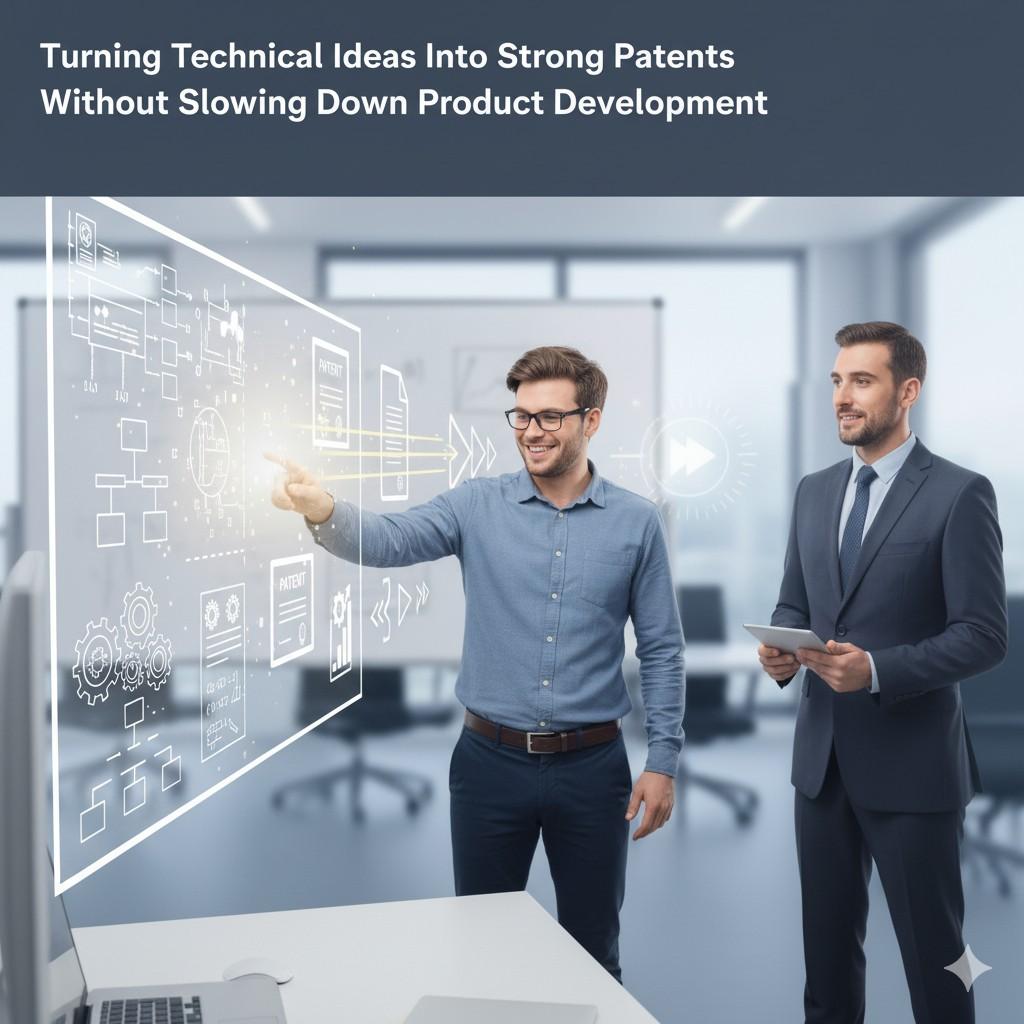
If you want to see how startups are filing stronger patents without derailing product momentum, take a look at PowerPatent here: https://powerpatent.com/how-it-works
Wrapping It Up
Training engineers to fill invention disclosure forms properly is not about teaching them legal theory. It is about building a system that respects how engineers think, how startups move, and how real innovation happens. If you take one idea from this entire guide, let it be this: behavior follows structure.
Leave a Reply