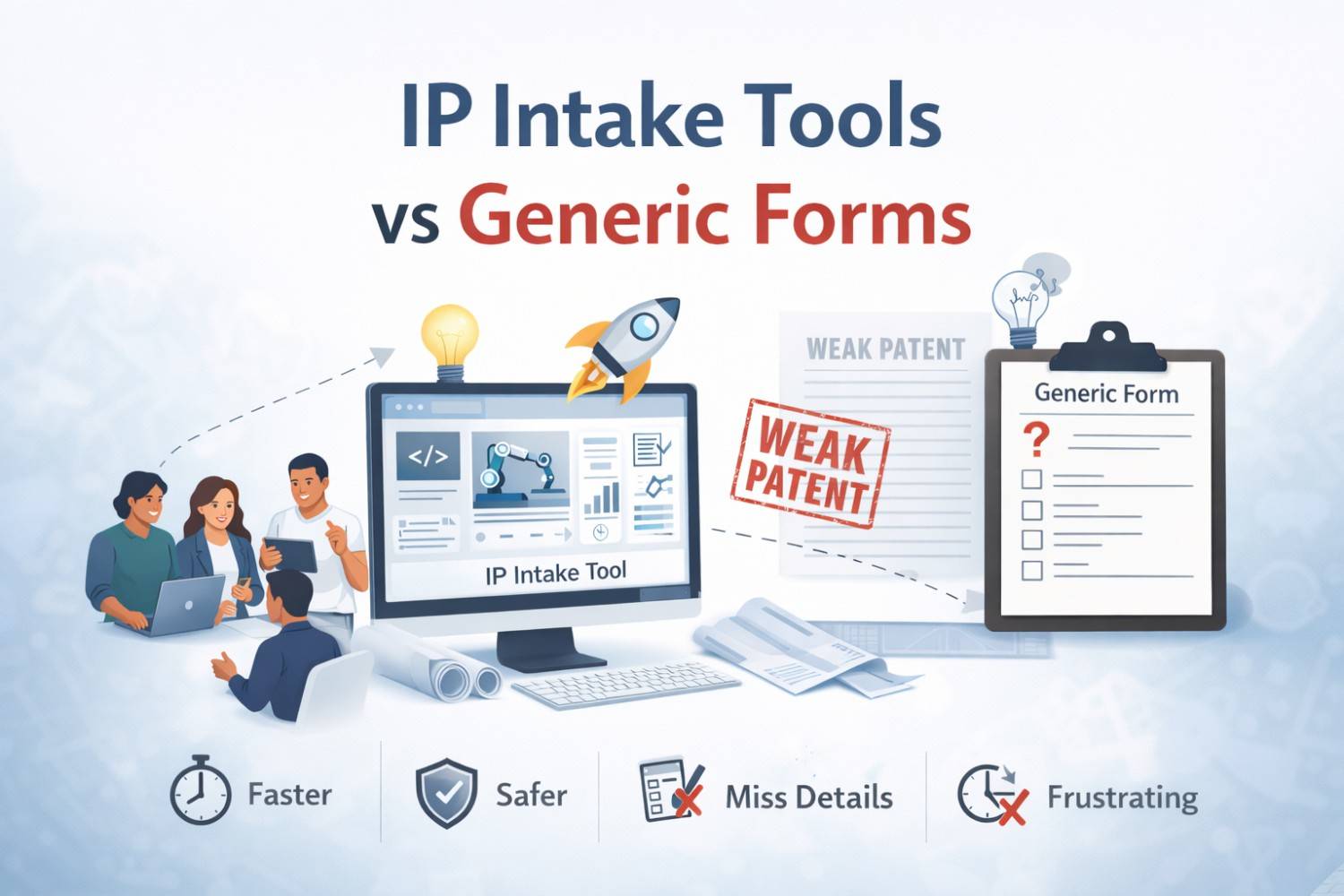
Most teams do not lose their ideas because they are not smart. They lose them because their process is messy. When it comes to patents, the very first step—how you collect invention details—can decide whether your IP becomes a real asset or a weak document that never helps you. Many startups still use generic forms, shared docs, or random questionnaires to gather invention details. It feels easy. It feels fast. But it creates gaps, confusion, and costly mistakes later. On the other hand, modern IP intake tools are built for how founders and engineers actually work today.
Why Generic Forms Quietly Kill Strong Patents
Most teams do not realize the damage until it is too late. A generic form looks harmless. It feels organized.
It gives the sense that something official is happening. But beneath that surface, it creates weak spots that can shrink the value of your patent before it is even filed.
This is not about paperwork style. It is about how ideas are captured, shaped, and translated into protection. The intake step decides how wide your protection can be. If that step is shallow, the final patent will be shallow too.
Let’s break down where generic forms quietly fail and what your team can do about it.
Generic Forms Ask Surface-Level Questions
Most generic forms were not built for your product. They were built to be reused over and over. That means they ask the same broad questions no matter what you are building.
They might ask for a summary. They might ask what problem you solve. They might ask how your invention works. On the surface, that sounds fine. But these questions rarely push engineers to think deeper.
They Do Not Pull Out Edge Cases
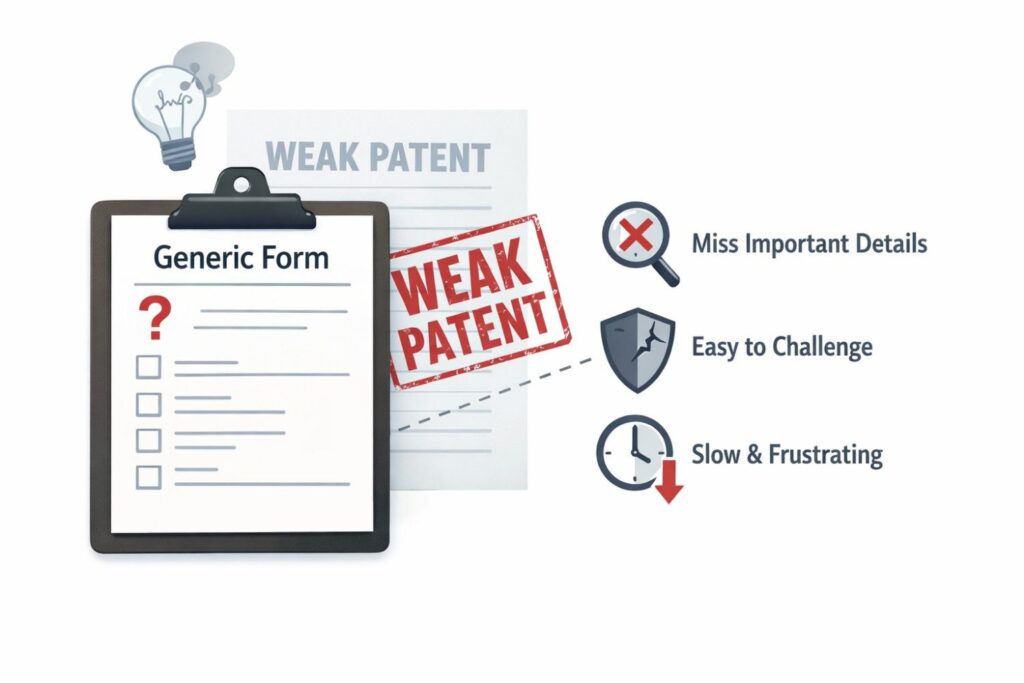
Strong patents often live in the details. The edge cases. The weird scenarios. The alternate flows. Generic forms rarely push inventors to explain what happens when things break, change, or scale.
If your intake form does not ask, “What happens when this fails?” or “What variations could exist?” then those answers often never get written down.
Action you can take right now: sit with your last invention disclosure and ask whether it explains only the happy path. If it does, you likely left protection on the table.
Start training your team to document alternate flows, workarounds, and technical trade-offs early.
They Do Not Capture Technical Depth
Engineers think in systems, not in short paragraphs. A simple text box cannot capture architecture decisions, data flow, model training logic, or scaling behavior in a structured way.
When depth is not guided, inventors rush through it. They assume someone else will “fill in the rest.” But patent attorneys can only work with what they are given.
If you want stronger patents, your intake process must guide engineers to explain why something works, not just what it does.
You can see how a guided system built for modern tech teams solves this problem at https://powerpatent.com/how-it-works. It walks inventors through technical detail in a way that generic documents simply cannot.
Generic Forms Create Blind Spots Between Teams
Patents are rarely built by one person. They often involve product leads, engineers, founders, and sometimes researchers. A static form does not create alignment between them.
It becomes a one-way dump of information instead of a structured capture of shared knowledge.
Founders Think Big, Engineers Think Specific
Founders often focus on vision and market impact. Engineers focus on how the system runs. If your intake process does not bridge that gap, you get an incomplete story.
The founder may describe the value. The engineer may describe the code. But no one connects those dots into a strong claim strategy.
A smart intake process forces that connection. It asks how the technical feature ties to business impact. It connects system behavior to real-world use.
If your current form does not help your team think this way, you are missing leverage.
Important Contributors Get Left Out
Generic forms are often sent to “the main inventor.” That person fills it out alone. Other contributors are not asked for input. Subtle innovations from junior engineers or researchers never get captured.
This is risky. Those hidden details may be the most defensible parts of your invention.
A better approach is to treat intake as a guided collaboration. Give each contributor a structured way to add their piece. Make it easy. Make it fast. But make it deliberate.
Generic Forms Encourage Minimal Effort
When a form looks simple, people treat it simply. They fill it out quickly and move on. They do not see it as a strategic step.
That mindset alone weakens protection.
The “Checkbox Mentality” Problem
If your intake looks like internal paperwork, your team will treat it like compliance. They will write just enough to check the box.
But patents are not compliance tasks. They are long-term assets.
You need an intake process that signals importance. One that makes inventors slow down and think through scenarios, future versions, and technical advantages.
The tool itself shapes behavior. A generic form invites speed and shortcuts. A guided intake tool invites clarity and depth.
No Feedback Loop
Generic forms are static. They do not respond to answers. They do not adapt. They do not ask follow-up questions.
If an engineer writes something vague, the form does not ask for more detail. It just accepts it.
A smarter intake system can prompt deeper thinking based on responses. It can highlight missing pieces before the information goes to an attorney.
That reduces back-and-forth later. It saves time. It increases quality.
If you care about speed and quality at the same time, this matters more than you think.
Generic Forms Fail to Scale With Your Company
What works for a two-person team breaks at twenty. What works at seed stage breaks at Series B.
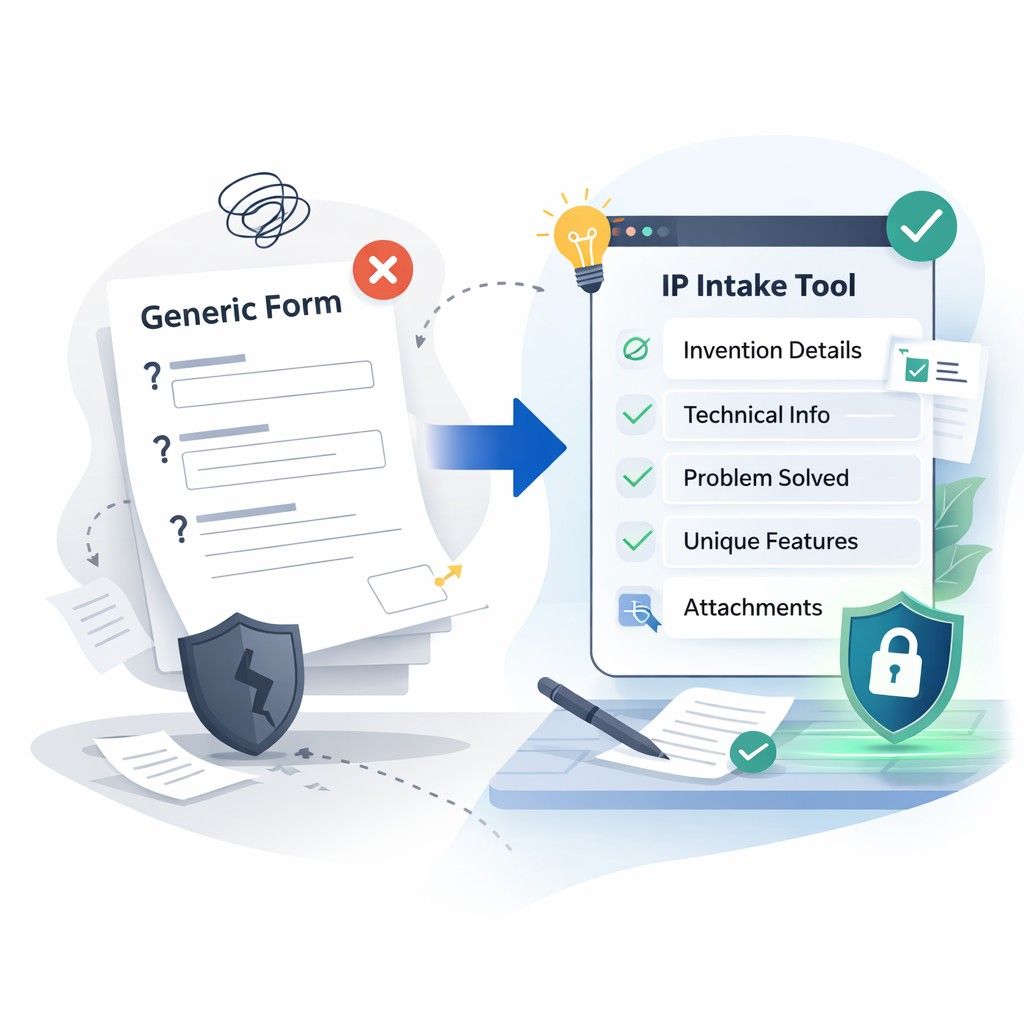
Generic forms rarely evolve with your product or company structure.
No Structured IP Memory
As your startup grows, you will file more patents. If each invention starts with a random form or shared document, you create chaos over time.
You lose visibility into what you have disclosed. You forget which features were already covered. You risk filing narrow patents that overlap instead of building a layered strategy.
A strong intake system builds structured memory. It tracks themes, categories, and prior disclosures. It helps you see the big picture.
Without that structure, you are flying blind.
Hard to Audit and Improve
If your intake process is a loose collection of documents, you cannot improve it. You cannot measure which disclosures lead to strong patents and which do not.
You cannot see patterns in weak filings.
With a purpose-built IP intake tool, you can analyze quality over time. You can adjust questions. You can tighten your process.
That is how mature companies treat IP. Not as paperwork. As strategy.
Generic Forms Increase Attorney Time and Cost
Many teams think generic forms save money because they are simple. The truth is often the opposite.
When attorneys receive shallow or unstructured disclosures, they spend more time asking follow-up questions. They schedule more calls. They rewrite large sections. That time costs money.
Worse, it delays filing.
Rework Is Expensive
Every time your attorney has to clarify missing information, you lose momentum. In fast-moving markets, delay can be dangerous.
A guided intake tool reduces rework by collecting the right information the first time. It structures it in a way attorneys can use quickly.
PowerPatent was built around this exact idea. Smart software collects deep technical detail up front, and real patent attorneys review and strengthen it.
That combination saves time and avoids the weak first draft problem that generic forms create. You can explore how that works in practice at https://powerpatent.com/how-it-works.
Weak First Drafts Limit Claim Scope
If the original disclosure is thin, the final patent may be narrow. Attorneys cannot invent technical details that were never documented.
This is one of the most hidden dangers of generic forms. You do not feel the damage immediately. You feel it years later when a competitor builds around your claims with ease.
If you want wide, flexible protection, your intake process must encourage wide, flexible thinking from the start.
How to Audit Your Current Intake Process
Before you switch systems, pause and examine what you have.
Pull your last three invention disclosures. Read them as if you were a competitor looking for gaps.
Do they explain variations? Do they describe system architecture clearly? Do they tie technical details to business impact? Do they document alternative implementations?
If the answer is no, your form is limiting you.
Next, talk to your inventors. Ask them how they feel about the intake process. Do they rush through it? Do they find it confusing? Do they know what level of detail is expected?
Their answers will tell you more than you expect.
What High-Performing Teams Do Instead
Strong teams treat IP intake as a product workflow, not a legal task. They design it for clarity, speed, and depth.
They guide inventors through structured thinking. They connect technical details to strategy. They use tools that adapt and evolve.
Most importantly, they combine smart software with real attorney oversight. Software alone is not enough.
Generic forms alone are not enough. The power comes from using the right tool and having experienced attorneys refine and strengthen the output.
If your startup is building real technology, your intake process should reflect that seriousness.
A simple form may feel easy today. But strong patents are not built on easy processes. They are built on thoughtful, structured capture of what makes your invention truly different.
If you want to see what a modern IP intake process looks like for fast-moving startups, take a few minutes to explore https://powerpatent.com/how-it-works.
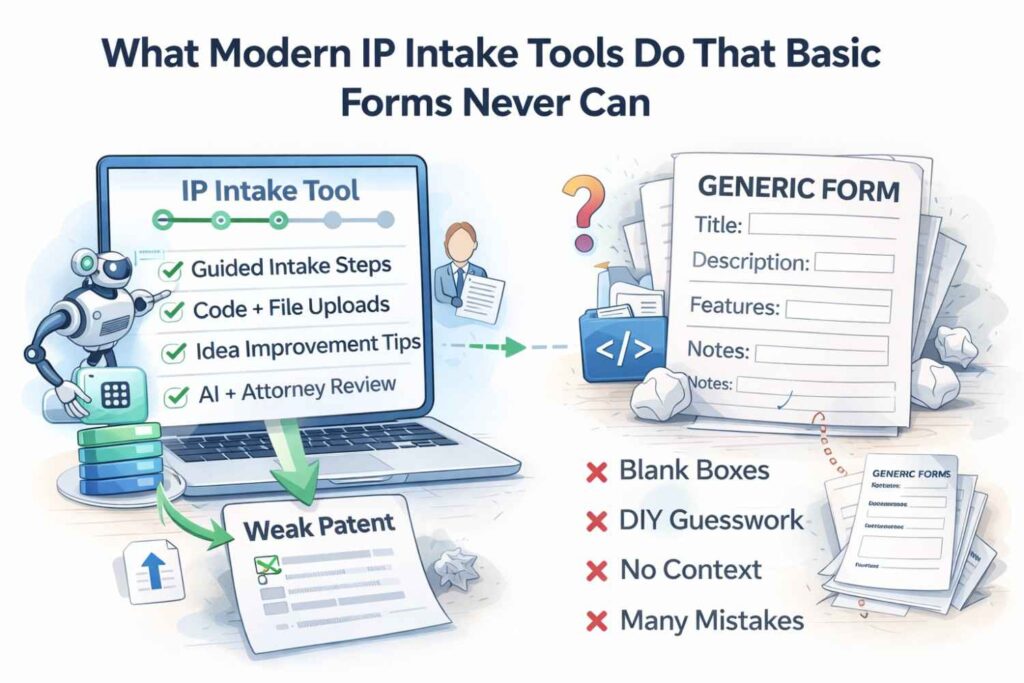
What Modern IP Intake Tools Do That Basic Forms Never Can
If generic forms quietly weaken patents, modern IP intake tools quietly strengthen them.
The difference is not cosmetic. It is not about better design or cleaner formatting. It is about structure, guidance, and intelligence built into the process.
A modern intake tool does not just collect words. It shapes thinking. It pulls out insight. It turns raw technical work into protection that actually holds up.
For startups building serious technology, this shift changes everything.
They Guide Engineers to Think Like Patent Strategists
Most engineers are not trained in patent strategy. They are trained to build, ship, and fix. When you hand them a blank form, they describe what they built.
They do not describe what competitors might try. They do not explain variations they did not implement. They rarely think about how broad protection could be framed.
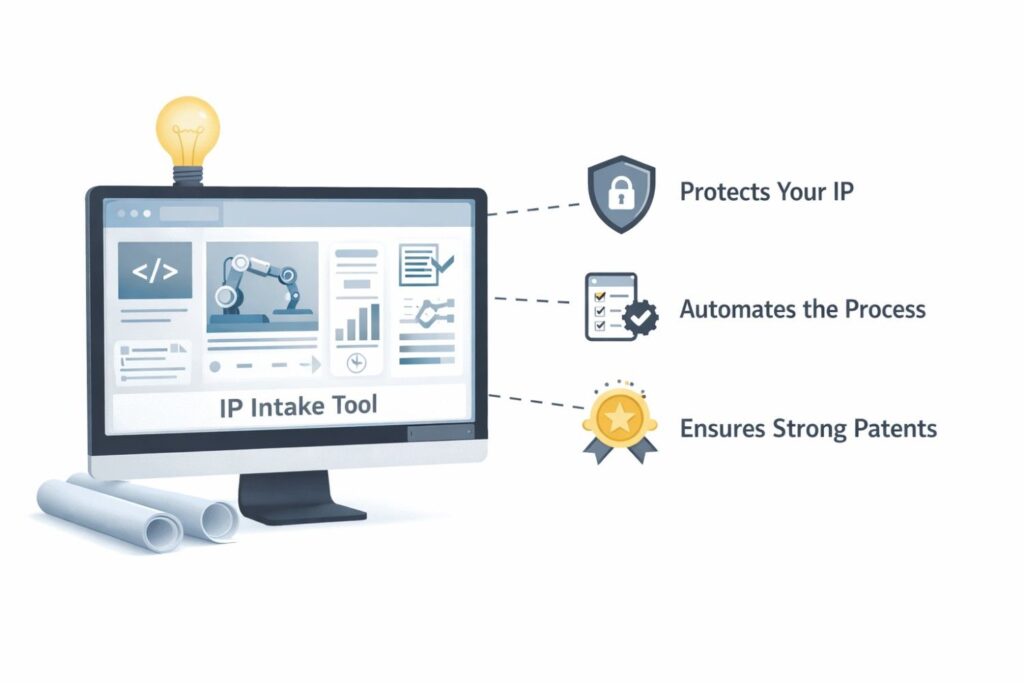
A modern IP intake tool changes that behavior.
It Prompts for Variations and Alternatives
Instead of asking, “How does it work?” a smart intake system asks deeper questions.
It pushes inventors to explain different ways the system could be built. It asks what could be swapped out. It asks what pieces are optional. It asks what could be automated or scaled differently.
These prompts matter because strong patents are built on flexibility. If your claims only cover the exact version you built, competitors can design around it.
When intake software guides inventors to document alternate implementations, it expands the foundation for stronger claims later.
If your current system does not push this kind of thinking, you are leaving room for others to copy you safely.
It Connects Technical Details to Business Impact
Patents are not just about how something works. They are about why it matters.
A modern intake tool helps founders and engineers explain how a technical feature creates advantage. It ties architecture decisions to performance gains. It links model behavior to measurable outcomes.
That connection gives attorneys stronger material to draft meaningful claims. It also ensures that your patents align with your actual business strategy.
This is one of the reasons PowerPatent built its system around startup workflows. The software helps founders capture both the technical depth and the business angle, and then real patent attorneys refine it.
That blend is what turns documentation into real leverage. You can see how that works here: https://powerpatent.com/how-it-works.
They Adapt Based on What You Build
Generic forms are static. Modern intake tools are dynamic.
They respond to what the inventor writes. If someone mentions machine learning, the tool can ask about training data, model updates, and deployment logic.
If someone describes a hardware system, the tool can guide questions about physical configuration and integration.
This adaptive behavior pulls out richer information without forcing every team to answer irrelevant questions.
They Reduce Missing Details Before Attorneys Review
One of the biggest hidden costs in patent work is back-and-forth. An attorney reviews a disclosure, sees gaps, and schedules calls to clarify. Weeks pass. Momentum slows.
A smart intake tool reduces this by flagging missing elements early. It can identify when a section lacks enough depth. It can prompt inventors to expand before submission.
This leads to stronger first drafts and faster filing.
For fast-moving startups, speed is not a luxury. It is protection. Filing earlier can mean stronger priority dates and less risk from competitors.
Modern tools are built with that urgency in mind.
They Create Structured IP Memory
As your startup grows, you will build more features, more systems, and more improvements. Over time, your IP portfolio should reflect that growth in a clear, layered way.
Generic forms do not create structure across filings. They produce isolated documents.
Modern intake systems organize inventions by themes, technology areas, and product lines. They allow you to see what has already been disclosed. They make it easier to build continuation filings and related patents.
They Help Avoid Overlap and Gaps
Without structure, teams often file patents that overlap too much or leave key features unprotected.
An advanced intake tool gives visibility into past disclosures. It allows founders and legal teams to see how new inventions relate to prior ones.
This makes strategy possible. You can decide when to broaden protection and when to go deeper on a specific feature. You can identify gaps in your portfolio before competitors do.
This is how larger companies treat IP. Modern startups can now operate the same way without building an internal legal department.
They Fit Into Product Workflows
Engineers do not want to leave their workflow to deal with legal tasks. If your intake process feels disconnected from how your team works, it will always be treated as a burden.
Modern IP intake tools are built to integrate into existing systems and habits. They feel closer to product documentation than to legal paperwork.
They Encourage Ongoing Capture, Not One-Time Events
With generic forms, invention disclosure often happens in bursts. A founder remembers something months later and tries to reconstruct it from memory.
Modern tools encourage capturing ideas as they evolve. They make it easy to start a draft early and refine it over time. This leads to more accurate and detailed documentation.
Capturing innovations while they are fresh reduces the risk of forgetting key insights.
For startups moving fast, this continuous capture model is critical. Innovation does not wait for quarterly paperwork cycles.
They Combine Automation With Real Attorney Oversight
Technology alone is not enough. Pure automation can create generic output just as easily as static forms.
The real power comes from combining structured software with experienced patent attorneys who review, refine, and strengthen the work.
Modern systems like PowerPatent are designed around this hybrid model. The software collects and organizes the technical depth. Then real attorneys step in to shape claims, adjust scope, and ensure the filing is defensible.
This approach avoids two extremes. It avoids the chaos of DIY forms. It also avoids the slow, opaque process of traditional firms that rely on scattered emails and long calls.
Instead, it creates clarity, speed, and accountability.
If you are building deep technology and want protection that matches that depth, this model is worth exploring at https://powerpatent.com/how-it-works.
They Give Founders More Control
Many founders feel disconnected from their patent process. They send documents to a firm and wait. Weeks pass with little visibility.
Modern intake tools create transparency. Founders can see the status of disclosures. They can track progress. They can review drafts in a structured environment.
This visibility reduces stress and increases confidence.
When you understand what is being filed and why, you make better decisions about your roadmap and funding strategy.
Investors also notice. A structured, thoughtful IP process signals maturity. It shows that your startup is not just building quickly, but protecting wisely.
The Strategic Shift
Choosing between generic forms and a modern intake tool is not a small operational choice. It is a strategic decision.
One path treats patents as paperwork. The other treats them as assets.
If your startup plans to raise capital, compete in crowded markets, or license technology in the future, your intake process matters more than you think.
Modern IP intake tools do what basic forms never can. They guide thinking. They reduce errors. They build structure. They support speed without sacrificing quality.
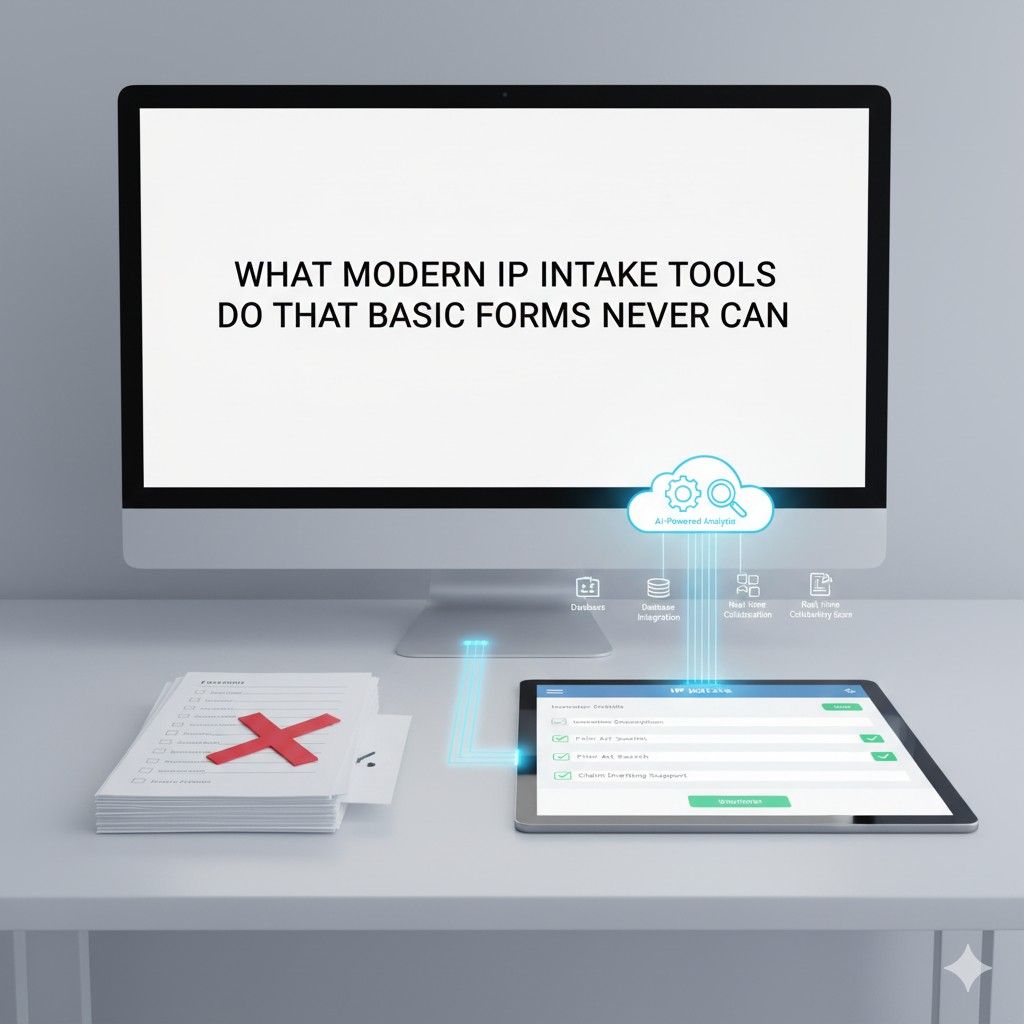
Most importantly, they help transform raw innovation into defensible protection.
That transformation begins at intake.
How the Right Intake System Helps Teams Move Faster and File Smarter
Speed matters in startups. You ship fast. You test fast. You raise fast. Your patent process should move at the same pace.
But here is the truth most founders learn too late. Filing quickly does not mean filing well. And filing well does not have to mean moving slowly.
The right intake system is what allows both. It removes friction without removing depth. It gives structure without creating red tape. It turns patent filing from a heavy legal task into a clear, repeatable product workflow.
When that happens, teams move faster and file smarter at the same time.
Speed Comes From Clarity, Not Rushing
Many teams think speed means cutting corners. They rush through a form. They write short answers. They assume the attorney will “figure it out.”
That approach creates delay later.
When the original disclosure is thin, attorneys must ask more questions. Calls get scheduled. Drafts get revised multiple times. Weeks pass.
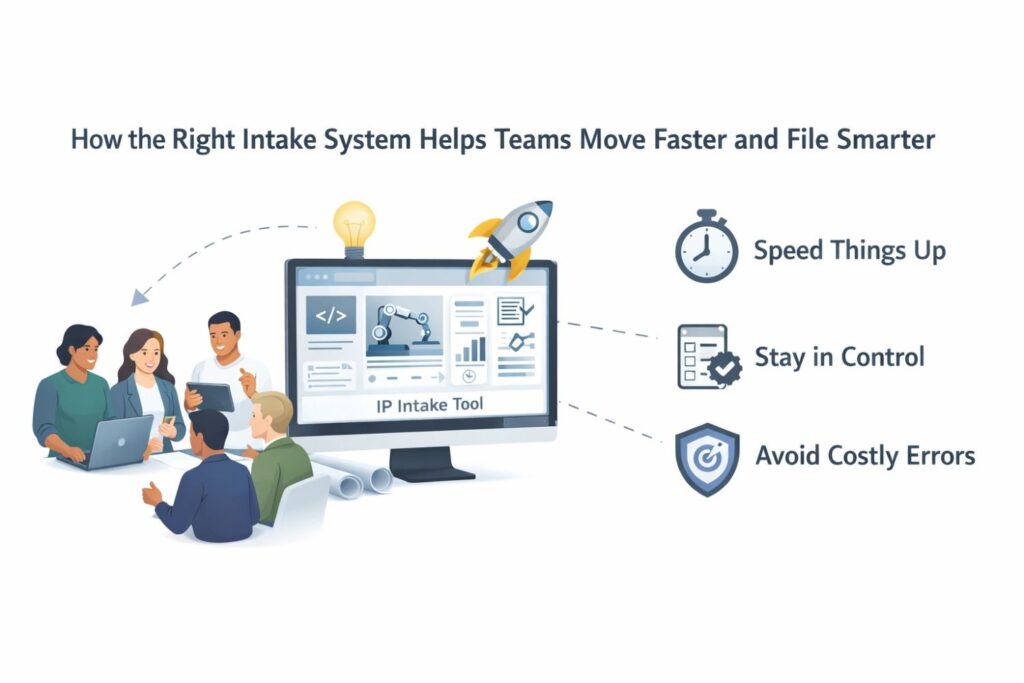
A strong intake system speeds things up by making the first version better.
Clear Questions Create Clear Answers
When inventors are guided through structured prompts, they provide stronger input from the start. They explain system behavior in detail. They describe variations. They outline real use cases.
This clarity reduces guesswork.
Attorneys can draft faster because they are not reconstructing the invention from scattered notes. They are working from a well-organized foundation.
The result is fewer revisions and quicker filings.
If your current process feels slow, the root problem is often unclear intake, not attorney effort.
Faster Filing Protects Your Priority
In competitive markets, timing matters. If another company files before you, even by a short window, that can change everything.
A streamlined intake system helps you capture ideas quickly and move toward filing without chaos.
Capture While Ideas Are Fresh
Engineers often solve hard problems in bursts. They build new architecture. They refine models. They optimize systems.
If documentation happens months later, details fade. Trade-offs are forgotten. The subtle insights that make your invention unique get lost.
Modern intake tools allow teams to start capturing ideas early. They make it easy to draft disclosures while development is still active.
That habit alone strengthens patents. It also protects priority dates.
When your intake system supports ongoing capture instead of one-time events, speed becomes natural.
You can see how a structured and guided workflow supports this approach at https://powerpatent.com/how-it-works.
Filing Smarter Means Thinking Beyond Version One
Startups evolve quickly. Version one becomes version three in a matter of months. If your patent only covers the first version, you may miss the bigger opportunity.

The right intake system encourages teams to think ahead.
It Surfaces Future Roadmap Ideas
During structured intake, inventors are prompted to describe not only what exists today but what could exist tomorrow.
What features are planned? What improvements are likely? What performance gains are expected?
Capturing this forward-looking detail allows attorneys to draft claims that cover more than the current build.
That is what filing smarter looks like. It means protecting where you are going, not just where you stand.
It Identifies Core Concepts
A rushed form often focuses on surface features. A strong intake process helps identify the core inventive concept underneath.
Is the real innovation in data processing logic? In system coordination? In a training method? In hardware configuration?
When that core is clear, patents can be drafted around fundamental ideas instead of narrow implementations.
That gives you leverage later.
Less Friction Means More Participation
In many startups, only a few people engage in patent filing. Others avoid it because it feels complicated.
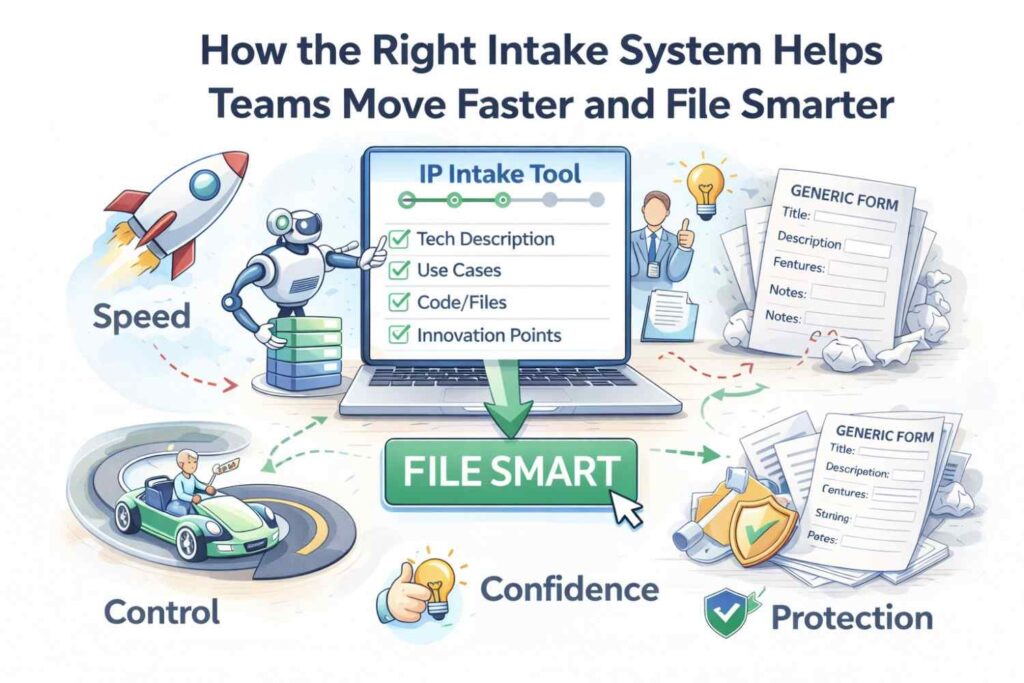
A modern intake system lowers that barrier.
Engineers Do Not Feel Like They Are Writing Legal Documents
When the interface feels intuitive and aligned with how technical teams think, participation increases.
Engineers are more willing to contribute detail when they are not staring at a rigid legal template.
That means more inventions get documented. More ideas get reviewed. More opportunities for protection are identified.
Over time, this builds a stronger portfolio.
The right system turns patent intake into a natural extension of product development.
Transparency Builds Confidence
Speed is not just about motion. It is about confidence.
When founders do not know what is happening with their patents, they hesitate. They delay decisions. They feel uncertain during investor conversations.
A structured intake and filing system creates visibility.
You Know What Is Filed and Why
When inventions are captured in an organized way, it becomes easier to see how each filing supports your strategy.
You can explain to investors what is protected. You can show how your IP aligns with your roadmap.
That confidence has real value.
It also helps with internal alignment. Product and leadership teams can see how technical breakthroughs translate into long-term assets.
Smart Intake Reduces Cost Without Reducing Quality
Cost control matters for startups. But cutting corners on IP can be expensive later.
The right intake system reduces unnecessary attorney time without lowering standards.
Strong First Drafts Lower Rework
When attorneys receive structured, thoughtful disclosures, they spend less time chasing missing details.
That efficiency lowers billable hours while improving output quality.
This is the balance most startups want but rarely achieve with generic forms.
Platforms like PowerPatent are built around this model. Smart software gathers deep, structured technical input. Real patent attorneys review and refine it to ensure strength and compliance.
The result is faster turnaround, fewer surprises, and protection that holds up. If you want to understand how that process works step by step, visit https://powerpatent.com/how-it-works.
Strategic IP Becomes Part of Company DNA
When intake is clear and repeatable, patent thinking becomes part of your culture.
Engineers begin spotting inventive steps during design. Founders think about defensibility during planning. Teams discuss protectable ideas in roadmap meetings.
This shift only happens when the process feels manageable and valuable.
A messy form discourages engagement. A guided system encourages strategic thinking.
Over time, that mindset compounds. Your portfolio grows in a layered, intentional way. Each filing builds on the last.
Moving Fast and Being Smart Are Not Opposites
The biggest myth in startup IP is that you must choose between speed and strength.
With the wrong system, that feels true. You either rush and risk weakness, or slow down and frustrate your team.
With the right intake system, you do not have to choose.
You capture ideas early. You document them deeply. You reduce back-and-forth. You file with clarity.
That is how modern startups protect serious technology without slowing momentum.
If you are building something that matters, your intake process should match that ambition.
Take a close look at how your team captures inventions today. Ask whether it truly supports speed, depth, and strategy.
If not, it may be time to move beyond generic forms and adopt a system designed for fast-moving, technical companies.
Wrapping It Up
Your patent is only as strong as the information captured on day one. That is the real takeaway. Generic forms feel simple. They feel cheap. They feel fast. But they create blind spots. They miss depth. They encourage rushed thinking. Over time, those small gaps turn into narrow claims, higher legal bills, slower filings, and weaker protection.
Leave a Reply