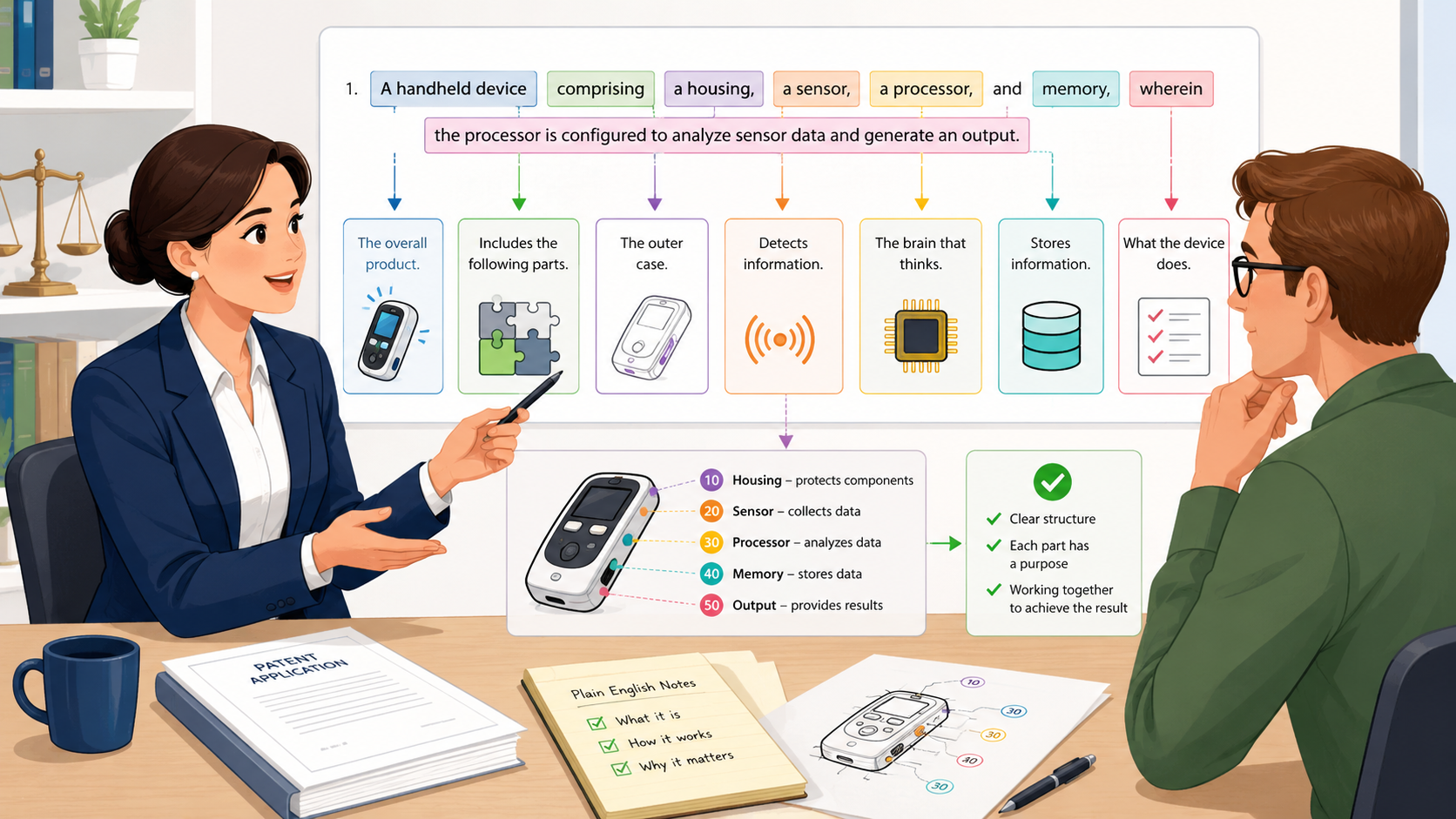
Patent claims are the most important part of a patent, but they are often the hardest part for inventors to understand. At PowerPatent, we help founders turn complex inventions into strong patent filings with smart software and real attorney oversight. See how it works here: https://powerpatent.com/how-it-works
Patent Claims Are the Part of the Patent That Draws the Line
Patent claims are not just a “section” inside a patent. They are the part that matters most when someone asks, “What does this patent actually protect?”
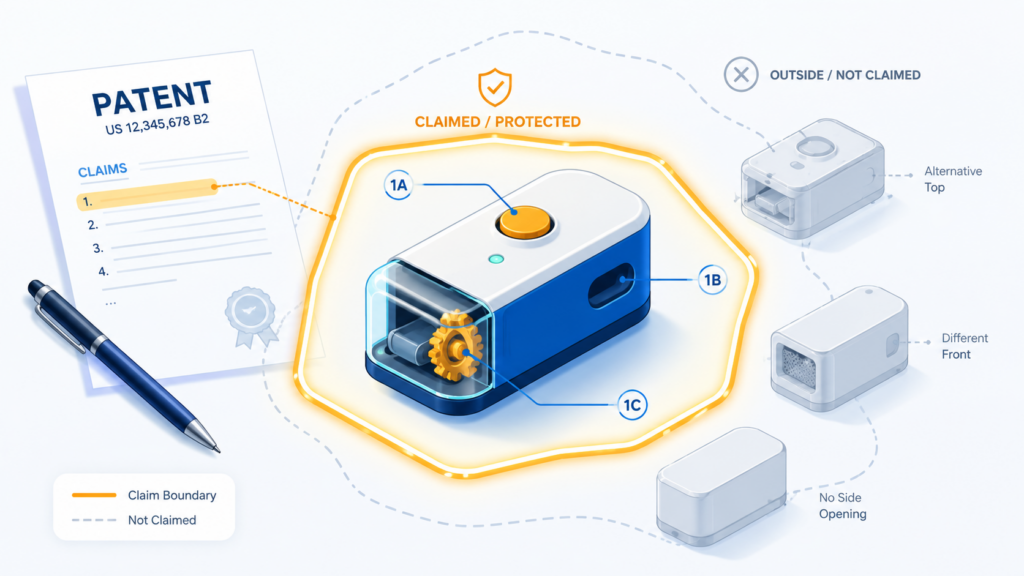
A patent can have a long story, drawings, examples, and technical details. But the claims are where the protection is drawn. They are the legal border around the invention.
A Simple Way to Say It to an Inventor
A good way to explain claims is to say this: “The claims are the part of the patent that says what others are not allowed to copy.”
That one sentence can make the whole topic feel less strange. Most inventors do not need a law school answer at first. They need a mental picture they can hold onto.
Think of the invention like land. The patent claim is the fence. If the fence is too small, other people can build very close to the invention without crossing it.
If the fence is too wide, the patent office may reject it because it tries to cover too much. If the fence is unclear, no one knows where the border is.
That is why claim writing is such careful work. You are not just describing what the inventor built.
You are trying to protect the smart part of the invention in a way that is broad enough to matter, clear enough to defend, and real enough to get allowed.
The Fence Example Works Because It Feels Real
Inventors understand products. They understand systems. They understand what they built.
But claims can feel cold because the words are formal and exact. The fence example makes the claim feel real. It also helps the inventor see why every word matters.
For example, if a claim says the invention needs a camera, then the fence may not cover a version that uses a sensor instead of a camera.
If the claim says the system needs three steps, then someone who uses only two steps may be outside the fence.
If the claim says a device has a “wireless module,” then you need to know whether that word is strong, too narrow, or unclear for the invention.
This does not mean every claim should be as broad as possible. That is a common mistake. A claim that is too broad may sound exciting, but it can be weak.
The patent office may reject it, or a competitor may later attack it. A strong claim is not just big. A strong claim is smart.
Why Inventors Often Misread Claims
Many inventors think a patent protects the whole idea they had in their head. But patents usually protect a specific way of doing something.
That is a big difference. An idea like “make hiring faster with AI” is not the same as a claim that protects a specific system, flow, model behavior, data process, or user action.
This is where the attorney, patent team, or patent software must slow things down and make the claim easy to understand.
The inventor needs to see the gap between the broad idea and the claim language. That gap is where many costly mistakes happen.
The Claim Is Not the Product Brochure
A product page sells the product. A patent claim protects the invention. Those are different jobs. A product page may say, “Our tool helps teams find bugs faster.”
A patent claim may say something more exact, like a system that receives code data, detects a pattern, ranks likely error points, and triggers a suggested fix based on a certain rule.
That may not sound as exciting as the product story, but it may be much more useful. The claim is not trying to impress a buyer. It is trying to protect the part of the invention that gives the company an edge.
This is why PowerPatent is built for founders and technical teams who need clarity early. The goal is not to bury inventors in hard words.
The goal is to help them see what is being protected, where the claim may be too narrow, and what needs to be captured before the filing goes in.
You can see how PowerPatent helps teams move from invention details to attorney-reviewed patent filings here: https://powerpatent.com/how-it-works
Start by Asking the Inventor What They Want to Stop Others From Copying
The fastest way to explain claims is to start with the real business question. Do not begin with claim grammar.
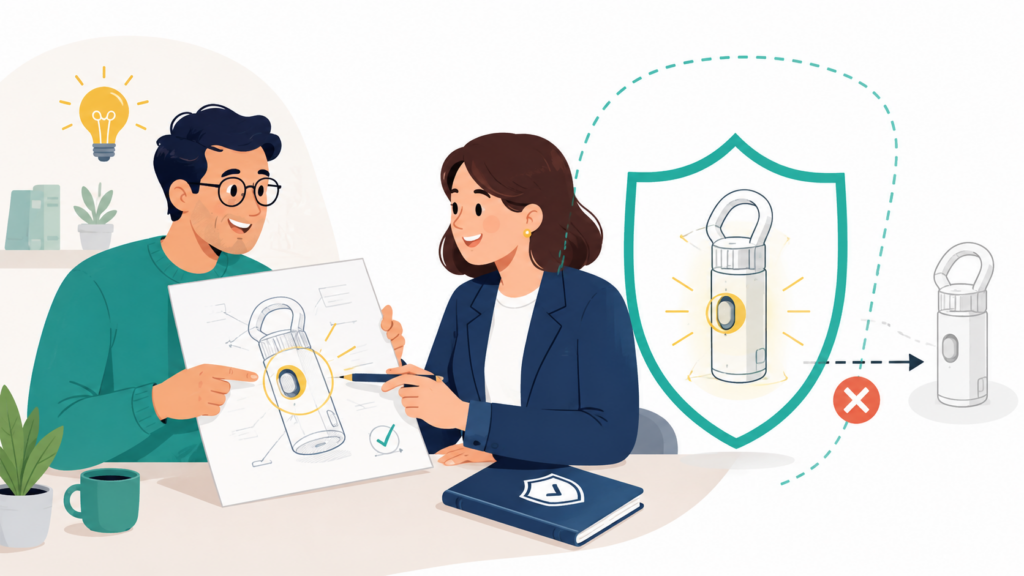
Do not start with “wherein” or “comprising.” Start with this: “What would bother you most if a competitor copied it?” That question brings the inventor out of abstract patent talk and into the real value of the invention.
Claims Should Protect the Business Edge, Not Just the Build
Many inventors explain their invention by walking through what they built. That is natural. They talk about the app screen, the hardware part, the model, the workflow, the data source, or the feature.
But a patent claim should not always follow the product exactly. A product may change. The business edge may stay the same.
For example, a startup may build an AI tool that checks medical images. The product may include a dashboard, user login, image upload, and report screen.
But the real invention may be the way the system cleans the image, compares it to prior cases, flags a risk, and explains why the risk matters. If the claim focuses too much on the dashboard, it may miss the real value.
That is why the first conversation with an inventor should pull out the “copy pain.” Ask what a rival would copy to hurt them.
Ask what part took the most thought. Ask what would make the product hard to beat. Ask what makes the invention different from a normal tool in the market.
The Best Claim Conversations Feel Like Strategy Talks
A strong claim discussion should feel less like paperwork and more like a strategy session. You are helping the inventor name the value.
You are helping them separate the shiny parts from the protectable parts. You are helping them see that the claim is not just about what exists today, but also about what future versions may look like.
A founder may say, “The invention is our mobile app.” But the better answer may be, “The invention is the way the app uses live user behavior to change the order of steps without breaking the workflow.”
That second answer is much closer to claim value. It points to a mechanism. It shows how the thing works. It gives the claim drafter something useful to protect.
This is also where plain English matters most. If you ask the inventor vague questions, you get vague answers.
If you use legal language too early, the inventor may shut down or agree without really understanding. But if you ask simple, direct questions, you get better raw material.
The Plain English Test for a Claim
A useful test is this: after reading the claim, can the inventor explain what someone else would have to do to infringe it in normal words?
If they cannot, the claim may still be fine from a legal point of view, but the inventor does not yet understand it. That is a problem because inventors often know where the claim is missing something.
They may spot that the claim depends on a feature that is not really needed. They may notice that the claim leaves out the step that makes the system powerful.
They may explain that a competitor could avoid the claim by changing one simple thing. Those comments are gold.
The Inventor Should Help Find the Weak Spots
Inventors should not be passive in the claim process. They should not just receive a draft and nod. They should help test the claim against real-world workarounds.
A good question is, “How would a competitor build something similar without using this exact wording?” That question can reveal whether the claim is too easy to design around.
For instance, if a claim requires a cloud server, the inventor may say, “This could also run on the device.” That matters.
If a claim requires a neural network, the inventor may say, “A rules engine could do part of this too.” That also matters. These comments can lead to better claim coverage.
This is one reason PowerPatent combines smart software with real attorney oversight. Software can help gather invention details fast and spot patterns. Attorneys can help shape the claims so they match the invention and the business goal.
For founders who want speed without losing control, that mix can make the patent process feel much less painful. Learn more here: https://powerpatent.com/how-it-works
Explain That a Claim Is Not Trying to Describe Every Detail
One of the first things inventors need to hear is this: a claim is not supposed to describe every small part of the product. This can feel strange because inventors often care deeply about details.
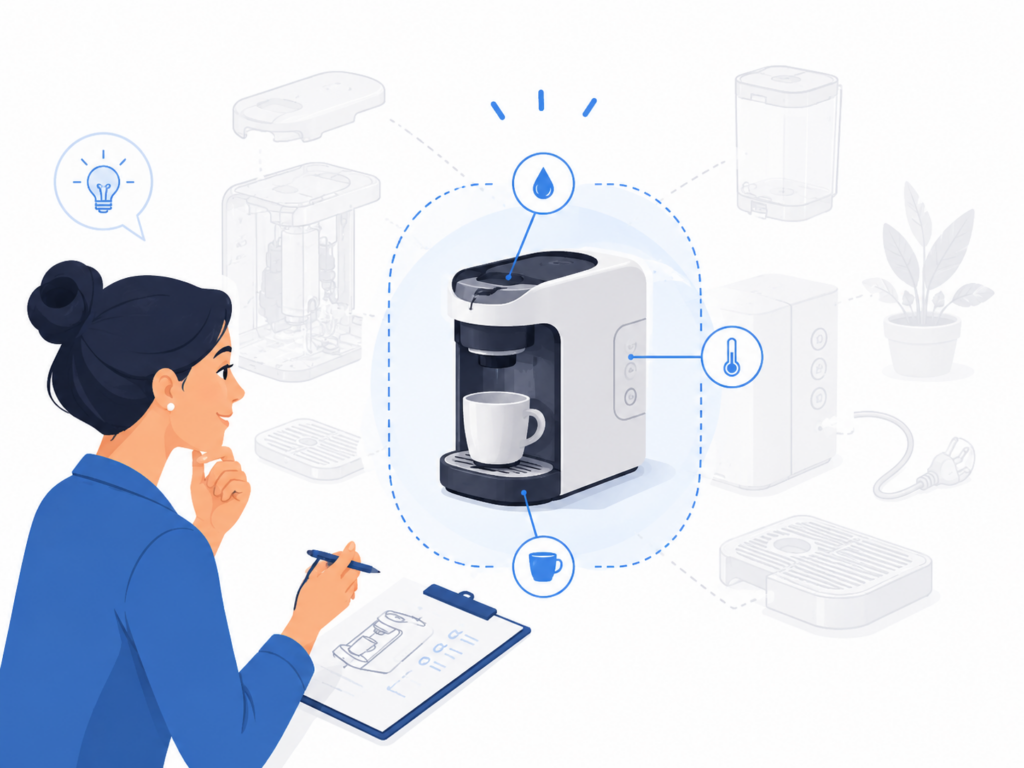
They remember every hard choice, every design change, every test, and every bug they had to fix. So when they read a claim and see that many details are missing, they may think the claim is weak or incomplete.
That is not always true. In many cases, a claim leaves out details on purpose.
The Claim Should Focus on What Must Be There
A claim should usually name the parts that are needed to define the invention. It should not always name every part that happens to be in the current product. That difference is very important.
A product may have colors, buttons, screens, sensors, settings, servers, databases, and user roles. But the invention may not depend on all of those things.
If the claim includes too many product details, the patent can become easy to avoid. A competitor may copy the real invention but change one small detail that the claim requires.
For example, imagine an inventor built a smart fitness mat. The mat has a blue surface, a mobile app, pressure sensors, a speaker, and a coaching system. The real invention may be the way the mat uses pressure data to detect posture errors and adjust a workout in real time.
If the claim says the mat must be blue, must use a speaker, and must connect to a phone, then a competitor may avoid the claim with a black mat, no speaker, and a tablet connection.
That is why the claim should focus on what matters. The claim should protect the engine, not every decoration on the car.
Too Many Details Can Make the Fence Too Small
When you explain this to an inventor, use a simple phrase: “Every extra detail in a claim can become another door for a competitor to walk through.”
This helps the inventor understand why the claim writer may remove words that feel important but are not required.
This does not mean details are bad. Some details are needed. Some details make the invention new. Some details help the claim survive review. But details should earn their place.
A claim should not include a feature just because it exists in the product. It should include a feature because it helps define the invention in a strong and useful way.
This is where many inventors get stuck. They want the claim to sound like their product. But a claim is not a product description.
It is a protection line. The product may be one version of the invention. The claim should often be written to cover the core idea behind that version, along with other forms that use the same smart concept.
The Specification Can Hold the Details
A patent has more than claims. The longer written part, often called the specification, can explain many examples, versions, options, and technical details.
That part can describe the product in depth. It can show different ways the invention can work. It can give support for claim language.
So when an inventor says, “Why is this detail not in the claim?” the answer may be, “It may belong in the written description, but not in the main claim.” That is a helpful way to keep the inventor calm.
They can see that the detail is not being ignored. It is being placed where it helps most.
The Main Claim Should Carry the Big Idea
A strong first claim often tries to carry the broad version of the invention. Other claims may add more details later.
This gives the patent a layered structure. The broad claim protects the bigger concept. Narrower claims protect specific versions.
For example, the broad claim may describe a system that receives sensor data, detects a change, and changes a machine action based on that change.
A narrower claim may add that the sensor is a pressure sensor. Another may add that the machine action is a braking action. Another may add that the system uses a certain type of model.
This layered style gives the patent more flexibility. It helps avoid putting every detail into one crowded claim. It also helps the inventor see the purpose of different claims.
At PowerPatent, this is one of the places where founders gain real clarity. The platform helps capture invention details, while attorney oversight helps decide which details belong in the claims and which details belong in the broader patent story.
That balance can save time, reduce back-and-forth, and help founders file with more confidence. See how it works here: https://powerpatent.com/how-it-works
Show the Inventor the Difference Between Broad Claims and Narrow Claims
Inventors often hear that broad claims are better. That is only partly true. Broad claims can be powerful, but they can also be harder to get allowed and harder to defend.
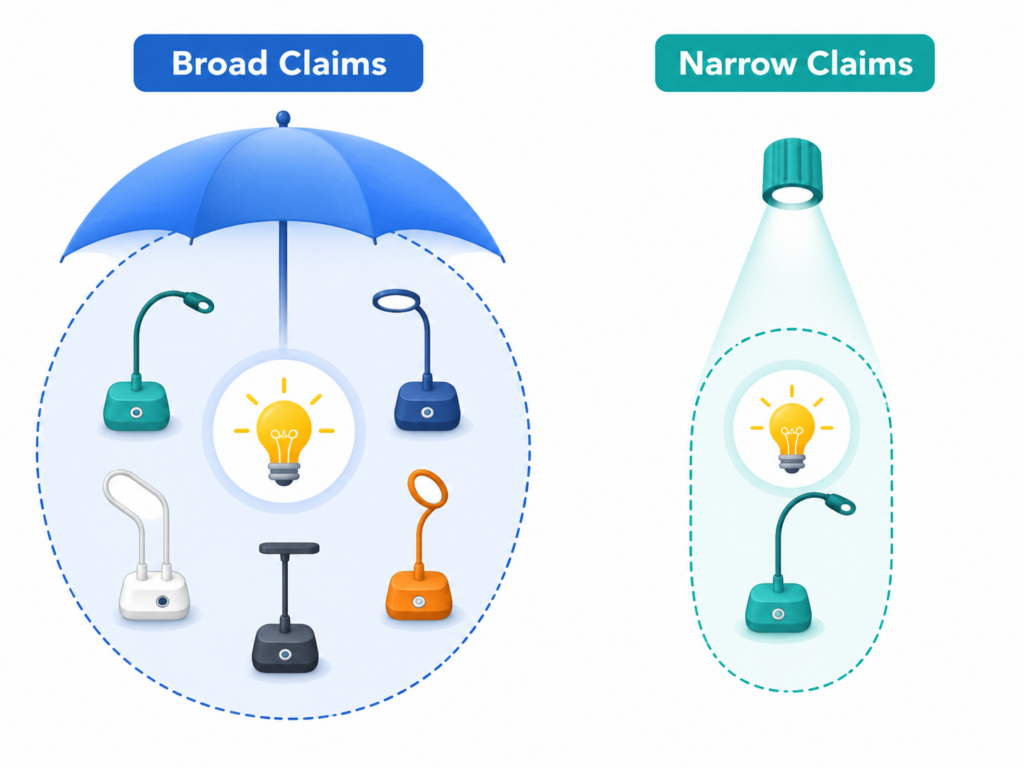
Narrow claims can be easier to allow, but they may protect less. The real goal is not to be broad for the sake of being broad. The goal is to claim the invention in a way that is useful, honest, and hard for competitors to avoid.
Broad Means the Claim Covers More Versions
A broad claim uses fewer limits. It tries to cover many forms of the invention. It may use words like “a sensor” instead of “a temperature sensor.”
It may say “a computing device” instead of “a smartphone.” It may describe the function of a part instead of naming one exact product part.
This can be very valuable. If the claim says “a sensor,” then it may cover a pressure sensor, motion sensor, temperature sensor, or other sensor, depending on the full claim and the written description.
If the claim says “a smartphone,” then it may only cover systems that use a smartphone. That may be too small if the invention can also work on a tablet, watch, headset, or embedded controller.
When explaining this, tell the inventor that broad words can keep the patent useful as the product changes. Startups change fast.
Hardware changes. Code changes. User flows change. Vendors change. A claim that is tied too closely to the first version of the product may grow old quickly.
Broad Claims Still Need a Clear Anchor
Broad does not mean vague. A broad claim still needs to say what the invention is. It still needs structure. It still needs to be supported by the patent text. It still needs to be different from what came before.
This is where simple examples help. Saying “an AI system that helps doctors” is too vague. Saying “a system that receives patient image data, identifies a region of interest, compares the region to a trained reference model, and generates a ranked risk output” is more grounded. It still may be broad, but it has a clear shape.
The key is to help the inventor see that a broad claim should protect the useful pattern, not float above the invention like a slogan.
Narrow Means the Claim Has More Limits
A narrow claim includes more details. It may name a specific part, order of steps, type of data, type of model, type of material, or special rule. Narrow claims are not bad.
They can be very helpful. They may protect the strongest version of the invention. They may also help when the broad claim faces pushback.
A narrow claim may say the system uses a pressure sensor placed under a heel region of a shoe. That is more specific than just saying “a sensor.”
If that placement is what makes the invention work, the detail may be valuable. If it is only one option, then it may be better to keep that detail in a later claim.
A Patent Can Use Both Broad and Narrow Claims
The best way to explain this is to say, “A good claim set often has layers.” The top layer tries to protect the big idea. The lower layers add more details. This gives the patent more than one chance to be useful.
An inventor may compare this to backups. The broad claim is the big protection goal. The narrower claims are fallback positions.
If the broad claim is too wide, a narrower claim may still survive. If a competitor avoids the broad claim in one way, a narrower claim may still cover a key version.
This layered approach also helps the inventor understand why a patent may have many claims that look similar.
They are not repeats. They are different lines drawn around the invention. Some lines are wide. Some are tight. Each one has a job.
For founders, this is not just a legal point. It is a business point. A startup may need claims that protect the core platform, the key feature, the data flow, the hardware setup, and the way customers use the system.
That takes strategy. PowerPatent helps teams organize invention details and work with real patent attorneys so the claim plan lines up with what the company is actually building. Learn more here: https://powerpatent.com/how-it-works
Teach Inventors to Read Claims by Breaking Them Into Plain Parts
Patent claims often look scary because they are written as long sentences. Some claims can run for many lines.
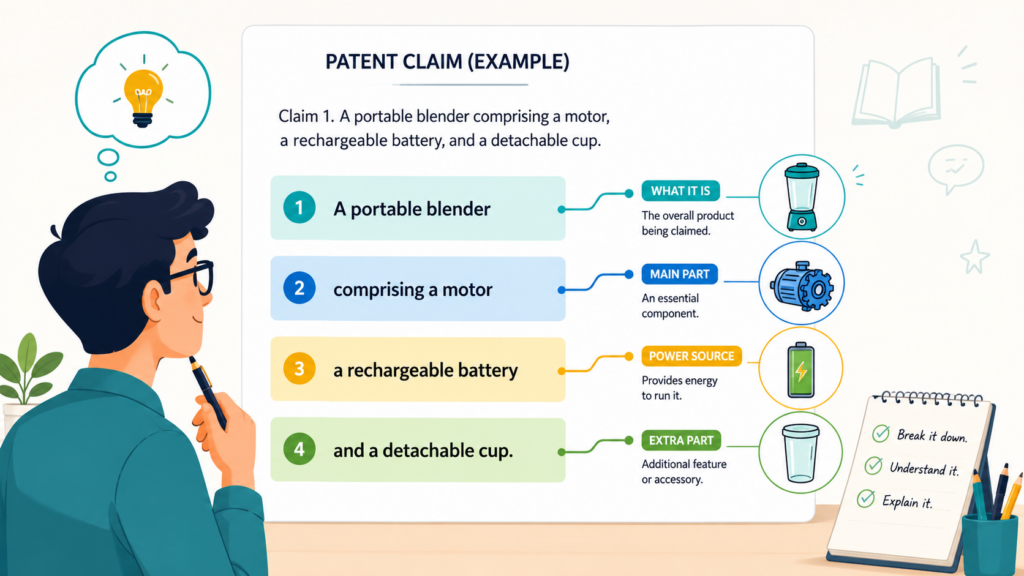
They may have commas, semicolons, and formal words that do not feel natural. Inventors may read the whole thing at once and feel lost.
The fix is simple. Do not read a claim like a normal sentence. Read it like a recipe.
Start With the Type of Claim
The first part of a claim usually tells you what kind of thing is being protected. It may be a system, a method, a device, a computer-readable medium, or an apparatus. This opening matters because it tells the inventor what the claim is aimed at.
A system claim may protect a set of parts working together. A method claim may protect a series of steps. A device claim may protect a physical thing.
A computer-readable medium claim may protect stored instructions that cause a computer to do certain actions.
You do not need to bury the inventor in technical terms. Just say, “This first part tells us what bucket the claim is in.” That simple idea helps them start reading with less fear.
The Opening Is the Front Door
If a claim starts with “A system,” then ask what the system includes. If it starts with “A method,” then ask what steps must happen.
If it starts with “A device,” then ask what parts the device must have. The opening is the front door into the claim.
Once the inventor sees the front door, the rest feels easier. They can stop trying to decode everything at once. They can ask one simple question at a time.
For example, a method claim may say, in formal language, that a computer receives data, processes the data, determines a result, and sends an output.
In plain English, you can explain it as: “This claim protects the steps the system performs.” That is much easier to understand.
Then Find the Required Pieces
After the opening, the claim lists the required pieces or steps. This is where you slow down.
You can mark each required part and ask, “Does the invention need this?” and “Could a competitor avoid this?” These two questions make the review much more useful.
Inventors are often very good at this once they know what to look for. They can tell you whether a word is too narrow.
They can point out missing steps. They can explain that a feature is optional, not required. They can also catch errors that a non-technical reader may miss.
Each Required Piece Is a Gate
A helpful phrase is: “Each claim piece is a gate a competitor must pass through.”
If the claim has five required pieces, the competitor may need to use all five to fall inside the claim. If they skip one required piece, they may be outside the claim.
This is why claims should be reviewed with care. A single word can change the whole scope. If a claim requires “encrypting the data before transmission,” then a system that encrypts after transmission may be different.
If the claim requires “ranking items based on user location,” then a system that ranks based on user behavior but not location may avoid the claim.
This does not mean the claim is wrong. It means each requirement matters.
End by Restating the Claim in Normal Words
After breaking the claim into parts, restate it in plain English. Do not make it too broad. Do not turn it into a sales pitch. Just say what it covers in a clear way.
For example, you might say, “This claim covers a system that gathers sensor data, uses that data to detect a risky condition, and changes a machine setting based on that risk.” That plain version gives the inventor a useful handle.
The Plain Version Should Match the Claim
The plain English version should not add things that are not in the claim. It should not leave out required parts. It should be a faithful translation. This is where discipline matters.
Inventors may love the plain version because it finally sounds like their invention. But you still need to keep it tied to the actual words.
The goal is not to replace the claim. The goal is to help the inventor understand it well enough to give useful feedback.
PowerPatent is built around this kind of clarity. Founders should not feel like the most important part of their patent is hidden from them.
They should be able to review their invention, understand the filing path, and work with attorney oversight without losing weeks to confusion. See how PowerPatent makes that easier here: https://powerpatent.com/how-it-works
Help Inventors Spot Words That Can Make a Claim Too Easy to Avoid
A claim can look strong and still be easy to design around. This often happens when the claim uses words that are too specific without a good reason. Inventors should learn to spot those words.
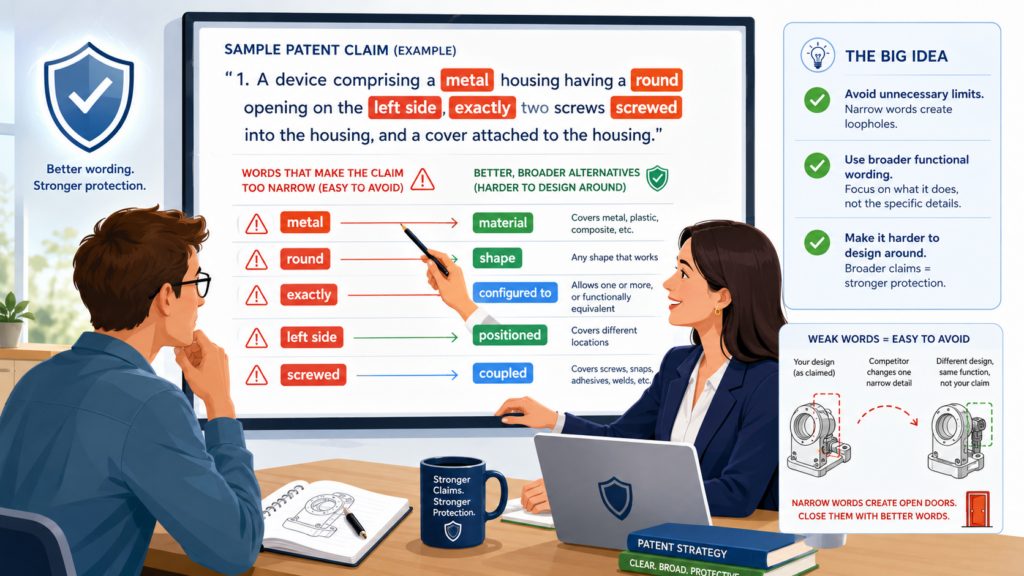
They do not need to become claim drafters, but they should know when a word may shrink the fence.
Specific Words Should Be Used With Care
Words like “mobile phone,” “Bluetooth,” “camera,” “database,” “cloud server,” “neural network,” “GPS,” and “touchscreen” may be fine in the right claim.
But they can also create limits. If the invention does not truly require that exact thing, the word may be too narrow.
For example, if a claim says the system uses GPS data, a competitor may use Wi-Fi location, cell tower location, or user-entered location.
If the claim says the output appears on a touchscreen, a competitor may send the output to a voice assistant, headset, or desktop screen.
If the claim says the system uses a neural network, a competitor may use a rules engine, decision tree, or other model.
This does not mean those words should never be used. It means they should be checked. The question is always, “Is this exact thing needed for the invention to work, or is it just one way to build it?”
Optional Features Can Become Dangerous Limits
One of the biggest mistakes is putting optional features into the main claim. A feature may be useful, but not required.
A feature may be in the first product, but not in future versions. A feature may improve the experience, but not create the core inventive value.
When optional features enter the broad claim, they can narrow protection. This can make it easier for others to copy the main idea while avoiding the optional piece.
A simple way to explain this is: “Do not put the paint color into the fence unless the paint color is the invention.” That line often lands well with inventors. It shows that not every product detail belongs in the claim.
Inventors Should Think Like a Competitor
The best claim review often starts with a slightly uncomfortable question: “How would someone copy this without copying the exact words?” That question pushes the inventor to think like a competitor. It can reveal weak spots fast.
A competitor may change the input type. They may move a step from the device to the server. They may replace a sensor.
They may change the order of steps. They may use a different model. They may remove a dashboard. They may turn a physical product into a software feature.
Design-Around Thinking Makes Claims Stronger
Design-around thinking is not negative. It is protective. It helps the team find better words before filing. It helps the claim drafter avoid traps.
It helps the inventor see why broad terms, layered claims, and multiple versions matter.
For example, instead of claiming “a smartphone app that receives a photo,” it may be better to claim “a computing device that receives image data,” if that matches the invention and is properly supported.
That wording may cover more forms. A phone can be one example, but not the only one.
This is also why invention capture matters. If the patent text only describes one version, the claims may have less room.
If the invention record describes different devices, inputs, outputs, and workflows, the attorney may have more options.
PowerPatent helps founders capture those variations early, when the details are fresh. That is a major advantage.
Waiting too long can cause teams to forget the alternate paths, failed tests, and design choices that may help support stronger claims. See how PowerPatent helps turn technical work into patent-ready material here: https://powerpatent.com/how-it-works
Use Real Product Scenarios to Make Claims Feel Less Abstract
Claims become easier to understand when they are tied to real product scenarios. Inventors do not want a lecture on claim theory.
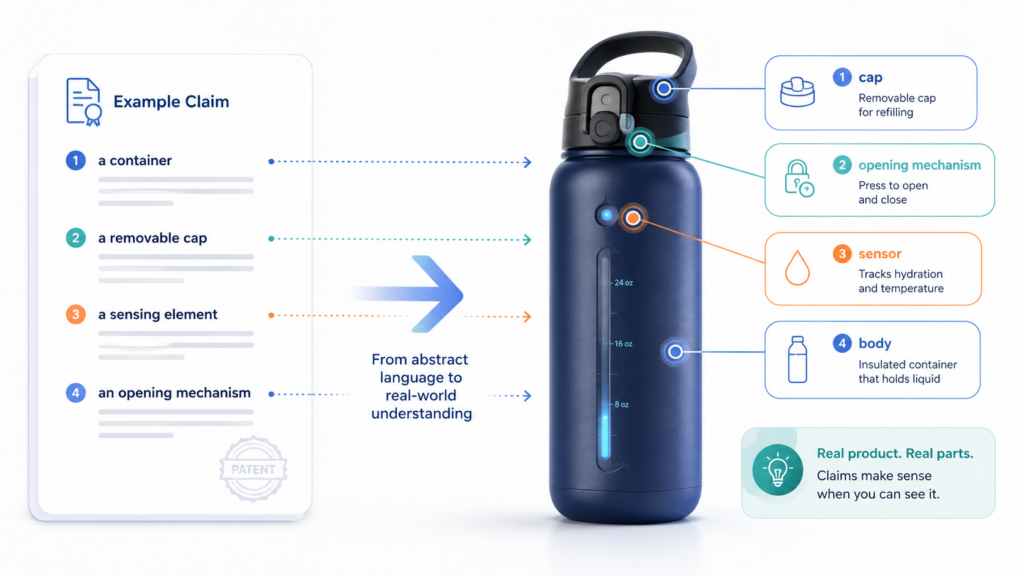
They want to know what the claim means for the thing they are building. The more you connect the claim to real use cases, the faster the inventor will understand it.
Start With the Product the Inventor Knows Best
Ask the inventor to describe the current product in normal language. Then map the claim to that product. This does not mean the claim should copy the product exactly. It means the product can be used as a teaching tool.
For example, suppose the inventor built a warehouse robot that moves items from shelves to packing stations.
The claim may describe a system that detects item location, plans a route, avoids obstacles, and updates the route based on live traffic data. The inventor can understand that much faster when you point to the robot’s real actions.
You might say, “When the robot sees that aisle three is blocked and changes its path, that is the part this claim is trying to protect.” That kind of sentence makes the claim concrete.
The Product Is the Example, Not the Whole Fence
After using the product as an example, remind the inventor that the claim may cover more than the current product. This is important.
The current product is one version. The claim may also cover future versions, partner versions, server-based versions, or versions with different hardware.
A founder may say, “But our robot uses LiDAR.” The claim may say “a sensor.” That can be good if the invention does not depend only on LiDAR. A later claim may name LiDAR, but the broader claim may stay open to other sensors.
This is one of the best ways to teach scope. You show the inventor the product. Then you show the wider idea behind the product.
Then you show how the claim tries to protect that wider idea without becoming too vague.
Compare the Claim Against Competitor Versions
Once the inventor understands the claim in the context of their own product, bring in competitor scenarios. Ask what a rival might build. Then compare those versions to the claim.
For example, if the claim requires a robot to update a route based on live traffic data, would it cover a robot that updates based on battery level?
Would it cover a robot that updates based on worker location? Would it cover a robot that updates only at fixed time intervals? These questions help everyone see the edges of the claim.
Claim Edges Are Where Strategy Lives
The edge of a claim is often more important than the center. The center is the easy case. The inventor’s exact product likely fits.
The hard part is knowing how far the claim reaches. Does it cover close copies? Does it cover likely workarounds? Does it protect the business plan?
This is where claim conversations become strategic. You are not only asking, “Is this accurate?” You are asking, “Is this useful?”
A claim can be accurate and still too small. It can be broad and still miss the business edge. It can sound technical and still fail to protect what matters.
That is why founders should not treat claims as a final paperwork step. Claims should be tied to product strategy, market risk, and future roadmap. The best time to think about this is before filing, not after a competitor appears.
PowerPatent helps technical teams move faster at this stage by organizing invention details, product context, and attorney review in one smarter workflow.
For founders who want to protect what they are building without slowing the company down, that can make a real difference. Learn more here: https://powerpatent.com/how-it-works
Explain Independent Claims as the Main Fence Around the Invention
Independent claims are the big claims that stand on their own. They do not need another claim to make sense.

When you explain this to an inventor, keep it simple. Say, “An independent claim is the main fence. It tries to protect the invention at a higher level.”
Inventors often notice that independent claims are longer and more complete than other claims.
That is because they must include the core parts needed to define the invention. They usually describe the system, method, device, or software process in a way that can stand alone.
The Independent Claim Should Carry the Core Idea
An independent claim should not be a random list of features. It should carry the main inventive idea. That means each required part should help explain what makes the invention different and useful.
For example, if a startup built a tool that helps engineers find code bugs faster, the independent claim should not focus only on the login page, the color of the dashboard, or the way the menu opens.
It should focus on the part that creates the value. Maybe the system watches code changes, detects risky patterns, compares them with past errors, and suggests a fix before the code is merged.
That is the kind of core idea an independent claim may try to protect.
A Good Independent Claim Should Feel Like the Spine
A helpful way to explain this is to say, “The independent claim is the spine of the patent.” It holds the main structure.
The rest of the claim set can add more parts, but the independent claim should still stand without them.
This helps inventors understand why independent claims can feel broad. They are not meant to include every detail. They are meant to define the main shape of the invention.
If they include too much, the spine can become stiff and narrow. If they include too little, the claim can become vague or easier to reject.
That balance is the hard part. It is also the part where attorney judgment matters. A claim should be broad enough to matter, but clear enough to support. It should match the invention, not just the product demo.
Independent Claims Often Come in Different Types
A patent application may include more than one independent claim. One may protect a system. Another may protect a method.
Another may protect stored software instructions. These are different ways of looking at the same invention.
For a software invention, the system claim may describe computers and processors. The method claim may describe steps performed by the system.
The stored-instructions claim may describe code that causes a computer to perform those steps.
The inventor does not need to memorize these forms. They just need to understand why the patent may claim the invention from more than one angle.
Different Claim Types Can Protect Different Business Risks
This matters because competitors may copy in different ways. One competitor may build a full platform.
Another may sell software that causes customer devices to perform the steps. Another may offer the method as a service.
Different claim types can help address those different paths. This does not mean every patent needs every type of claim. It means the claim plan should match the way the invention may be used, sold, or copied.
This is where PowerPatent can help founders think clearly. The platform helps capture the invention and the real product context, while attorney oversight helps shape the filing in a way that supports the company’s goals.
Founders can move faster without treating claims like a black box. See how it works here: https://powerpatent.com/how-it-works
Explain Dependent Claims as Backup Fences, Not Extra Fluff
Dependent claims are claims that refer back to another claim. Many inventors see them and think they are just smaller repeats.
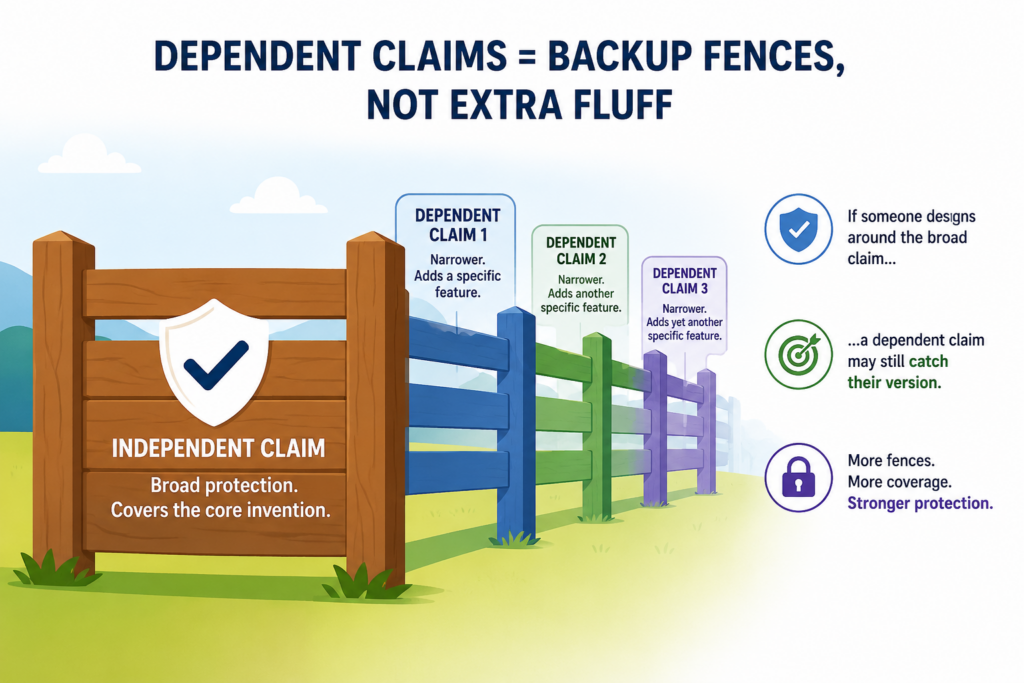
They may wonder why the patent needs so many claims that look close to each other. The answer is simple: dependent claims are backup fences.
They add extra details to a broader claim. Those extra details may protect important versions of the invention.
They may also give the patent more chances to survive if the broad claim is challenged or rejected.
A Dependent Claim Adds One More Layer
A dependent claim takes an earlier claim and adds something more. That “something more” may be a special feature, a narrower version, a certain input, a particular output, a unique step, or a preferred way the system works.
For example, an independent claim may cover a system that detects a risky machine condition and changes a machine setting.
A dependent claim may add that the risky condition is detected using vibration data. Another may add that the machine setting is speed. Another may add that the system sends an alert to an operator before making the change.
Each dependent claim gives a more specific version.
Dependent Claims Help Protect the Best Versions
Some inventors ask, “If broad claims are better, why include narrow claims?” The answer is that narrow claims can be very useful.
They may protect the version that matters most. They may capture the exact commercial feature that customers love. They may give the patent office a clearer path to allowance if the broad claim is too wide.
A dependent claim is not a sign of weakness. It is often a sign of careful strategy.
Think of it like locking more than one door. The broad claim is the large outside gate. The dependent claims are inner gates around important rooms. If one gate is questioned, another may still matter.
Dependent Claims Can Help Inventors See What Matters
Dependent claims are also great teaching tools. They show which details the patent team thinks may be important.
When an inventor reviews them, they should not rush. They should ask whether the right details have been added.
If a dependent claim adds a feature that is not truly important, maybe that space could be used better. If a key feature is missing, the inventor should say so.
If the claim adds a version that the team no longer plans to build, the inventor can explain whether it is still worth protecting.
The Best Dependent Claims Come From Real Technical Insight
Strong dependent claims often come from the details only the inventor knows. They may come from hard design choices.
They may come from test results. They may come from edge cases. They may come from customer use patterns. They may come from failed versions that showed why the final version works.
For example, a founder may explain that the system only became accurate after the model used two signals together instead of one.
That detail may belong in a dependent claim. An engineer may explain that a certain timing window prevents false alerts. That may also be valuable.
This is why invention capture should not be shallow. The claim set is only as strong as the information behind it.
PowerPatent helps teams collect those details early and work with real attorneys to turn them into a stronger filing. Learn how founders use PowerPatent here: https://powerpatent.com/how-it-works
Help Inventors Understand That Claim Words Are Chosen for Power, Not Beauty
Patent claims do not read like normal writing. They are not meant to be pretty. They are meant to be precise.
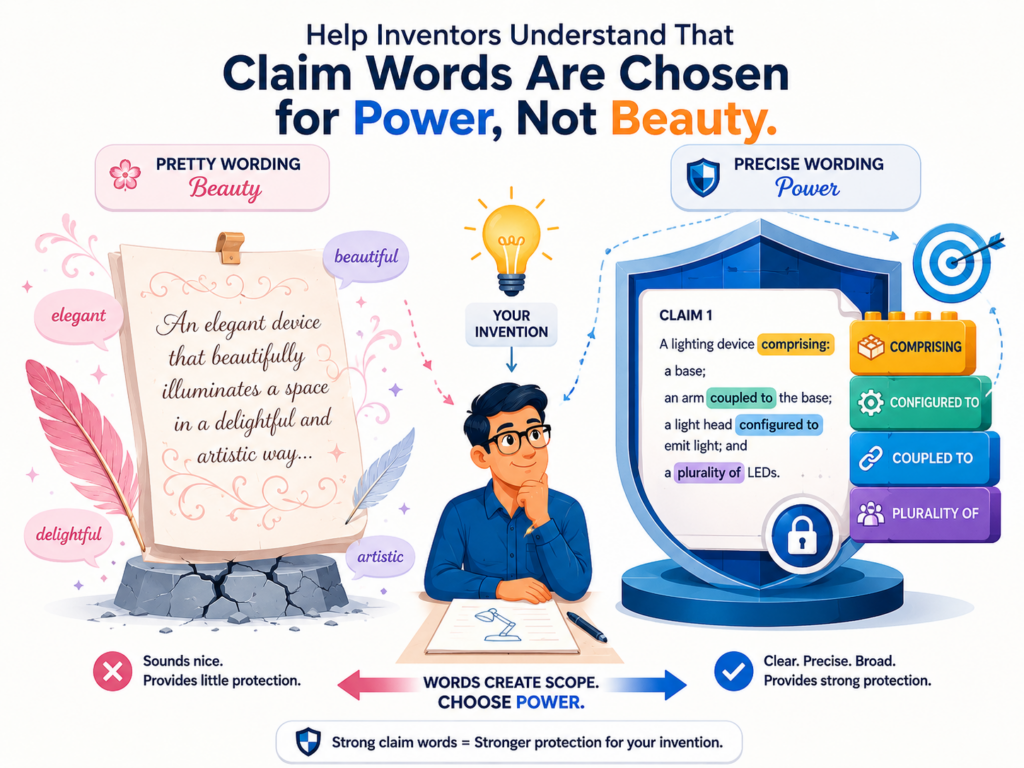
This is one of the most important things to explain to inventors, especially founders who are used to pitch decks, product pages, and sales copy.
A claim may sound stiff because it is doing a different job. It is not trying to persuade a customer. It is trying to define a protected space.
Plain English Helps Understanding, but the Claim Still Needs Careful Words
When you explain claims in plain English, you are translating the claim. You are not replacing it. The final claim may still use formal words because those words have a purpose.
For example, a claim may say “receiving data,” “generating an output,” or “determining a condition.” These phrases may sound flat.
But they can be useful because they describe actions without tying the invention to a specific brand name, screen, or product feature.
Inventors should know that simple does not always mean casual. A good claim can be simple in structure and still formal in wording.
The goal is not to make the claim sound like a blog post. The goal is to make sure the inventor understands what the claim covers and why each word is there.
Do Not Let Inventors Rewrite Claims Like Marketing Copy
A common mistake is when inventors try to make claims sound more exciting. They may want to add words like “fast,” “seamless,” “smart,” “advanced,” or “user-friendly.”
Those words may be useful in a sales deck, but they often do little in a claim unless they are tied to something measurable or technical.
A claim usually needs action, structure, and clear limits. “Smart matching” may sound good, but “matching a first data record to a second data record based on a shared risk score” may be more useful. The second version explains what is happening.
This is not about making the invention sound boring. It is about making the protection work.
Every Word Should Have a Job
One of the best ways to review a claim with an inventor is to ask, “What job does this word do?” If no one can answer, the word may need a closer look.
Some words broaden the claim. Some narrow it. Some connect steps. Some define timing. Some explain what data is used. Some point to the result. Some make the claim clearer. Some may create risk.
Small Words Can Have Big Effects
Inventors are often surprised that small words can matter. Words like “before,” “after,” “based on,” “in response to,” “only,” “each,” and “all” can change the claim. They can affect whether a competitor falls inside or outside the fence.
For example, “based on sensor data” may be broader than “based only on sensor data.” The word “only” can close doors.
“After receiving user input” may be different from “in response to receiving user input.” These are not just style choices. They affect meaning.
This is why founders should not rush claim review. They do not need to become patent lawyers, but they should understand enough to ask smart questions.
PowerPatent gives teams a clearer workflow so they can move fast while still getting attorney oversight on the words that matter. See the process here: https://powerpatent.com/how-it-works
Teach Inventors to Separate the Invention From the Implementation
Inventors often explain what they built as if that is the same as the invention. Sometimes it is. Often, it is not. The build is one version.
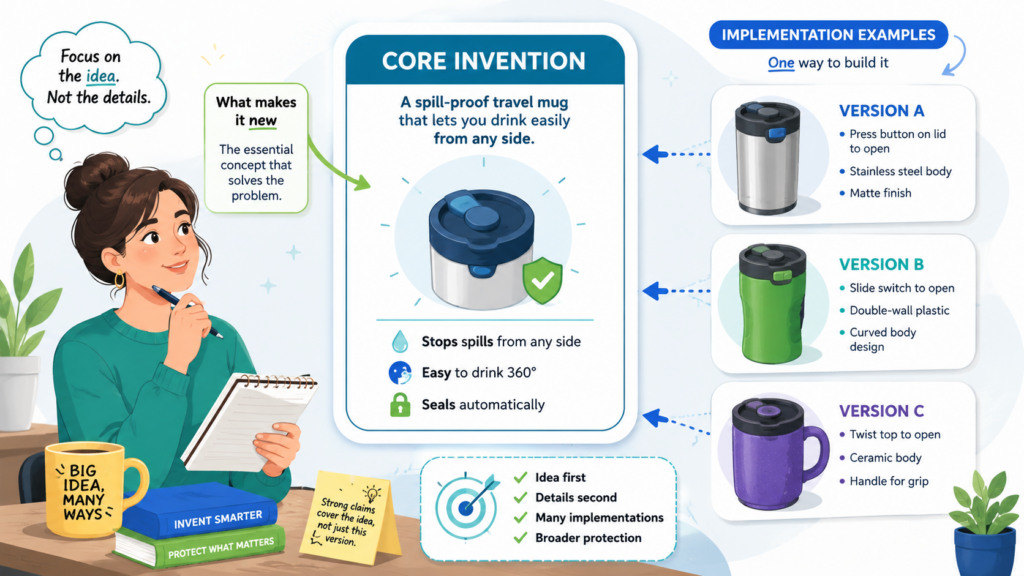
The invention is the useful idea behind that version.
This difference is central to explaining claims. If the inventor does not see it, they may push the claim toward the current product too much. That can shrink the patent before it even leaves the door.
The Implementation Is the Current Way It Works
The implementation is the specific way the team built the invention today. It may include the programming language, the cloud provider, the model type, the hardware board, the database, the screen layout, or the current customer workflow.
These details may matter for the product. They may matter for engineering. They may matter for sales. But they may or may not belong in the broad claim.
For example, a team may use Python, AWS, a PostgreSQL database, and a React dashboard. Those choices may be practical.
But the invention may be a way of detecting a bad manufacturing batch from sensor data before the batch is finished. The claim should likely focus on that detection process, not the stack used to build the first version.
The Claim Should Not Be Trapped Inside Version One
Startups move fast. Version one may be gone in six months. The product may move from web to mobile. The model may change.
The hardware may change. The customer may ask for an on-premise option. The company may rebuild the system after raising funding.
If the broad claim is tied too tightly to version one, the patent may not grow with the company. That is a serious problem.
A useful way to explain this is: “We want the claim to protect the invention, not just the first build.” This sentence helps inventors think beyond the current sprint.
The Invention Is the Repeatable Smart Move
The invention is often the repeatable concept that makes the product better. It is the method, structure, data flow, control logic, model use, signal processing, device layout, or workflow that creates the advantage.
Ask the inventor, “What part would still matter if we rebuilt the product in a different tech stack?” The answer often points closer to the invention.
If the product moved from AWS to Azure, what would still be new? If the app became an API, what would still be valuable?
If the sensor changed, what would still be clever? If the model changed, what would still make the system work better than older approaches?
This Question Helps Find Stronger Claim Language
When inventors answer these questions, claim language becomes sharper.
You can see which words should stay broad and which details need to be included. You can also identify alternate versions that should be described in the patent text.
For example, instead of only describing a “camera mounted above a conveyor belt,” the patent may also describe “an image sensor positioned to capture item movement data.” That may support more flexible claim language, depending on the invention.
This is not about being vague. It is about protecting the real thing. PowerPatent helps founders capture both the current build and the broader invention story, then route that work through attorney review.
That helps the patent filing match the business, not just the first prototype. See how it works here: https://powerpatent.com/how-it-works
Explain Claim Scope With the “Must Have” and “Nice to Have” Test
One of the most useful ways to explain claims is to divide features into “must have” and “nice to have.”
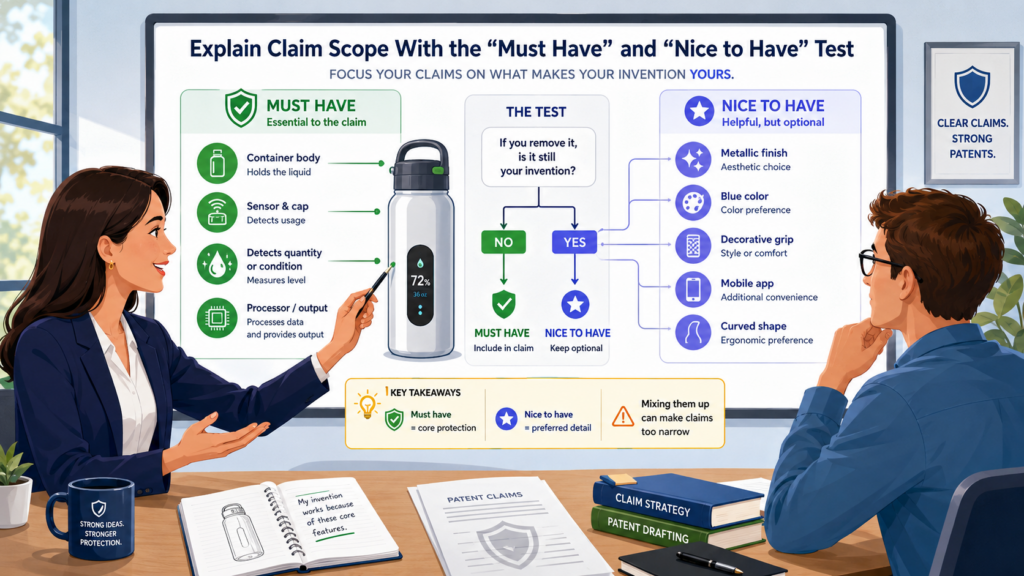
This simple test helps inventors understand which details may belong in a broad claim and which details may belong somewhere else.
A “must have” feature is something the invention needs to work as claimed. A “nice to have” feature may make the product better, but the core invention can still exist without it.
The Main Claim Should Focus on Must-Have Parts
When reviewing a claim, ask the inventor whether each part is truly required. If the answer is yes, the part may belong. If the answer is no, the part may need to move to a narrower claim or to the written description.
For example, suppose the invention is a system that detects unsafe driving behavior from vehicle motion data and changes insurance pricing in near real time.
A phone app may be part of the product, but it may not be a must-have part of the invention. The system could also receive data from the car itself. If the broad claim requires a phone app, it may be narrower than needed.
The must-have test makes this clear.
Nice-to-Have Features Can Still Be Protected
Inventors sometimes worry that if a feature is not in the main claim, it is not protected at all. That is not always true.
Nice-to-have features can appear in dependent claims. They can also be described in the patent text as examples or alternate versions.
This is why claim layers matter. The main claim can protect the core. Later claims can protect valuable add-ons. The written description can support different ways to build and use the invention.
A feature does not have to be in the first claim to matter.
The Test Also Helps Avoid Weak Claims
The must-have test is not only about breadth. It is also about strength. If the claim leaves out a part that is truly needed, the claim may become too broad or unclear. If it includes too many optional parts, the claim may become too narrow.
The sweet spot is in the middle. The claim should include enough to define the invention, but not so much that it becomes a copy of the product.
Inventors Can Use This Test Before Attorney Review
Founders and engineers can use this test before the claim is even drafted. When they describe the invention, they can separate core steps from optional features. That makes the whole patent process faster and cleaner.
For example, a team can explain that the core invention requires collecting machine data, detecting a pattern, and changing a setting.
They can also explain that the current version uses vibration data, a cloud model, and a mobile alert. That tells the patent team what is central and what may be optional.
This saves time. It also reduces the chance of filing a patent that misses the real edge. PowerPatent is designed to make that kind of invention capture easier for busy founders and engineers.
The platform helps turn technical input into a cleaner attorney-reviewed filing path. Explore it here: https://powerpatent.com/how-it-works
Conclusion
Explaining patent claims to inventors is really about making the protection clear. Claims should not feel like secret legal code. They should show what the invention covers, what others may not copy, and where the real business value sits. When inventors understand claims, they can give better feedback, spot weak wording, and help protect the parts that matter most.
The best claim talks are simple, direct, and tied to the product, market, and future roadmap. PowerPatent helps founders turn complex ideas into clear, attorney-reviewed patent filings faster and with more confidence. See how it works here: https://powerpatent.com/how-it-works
Leave a Reply