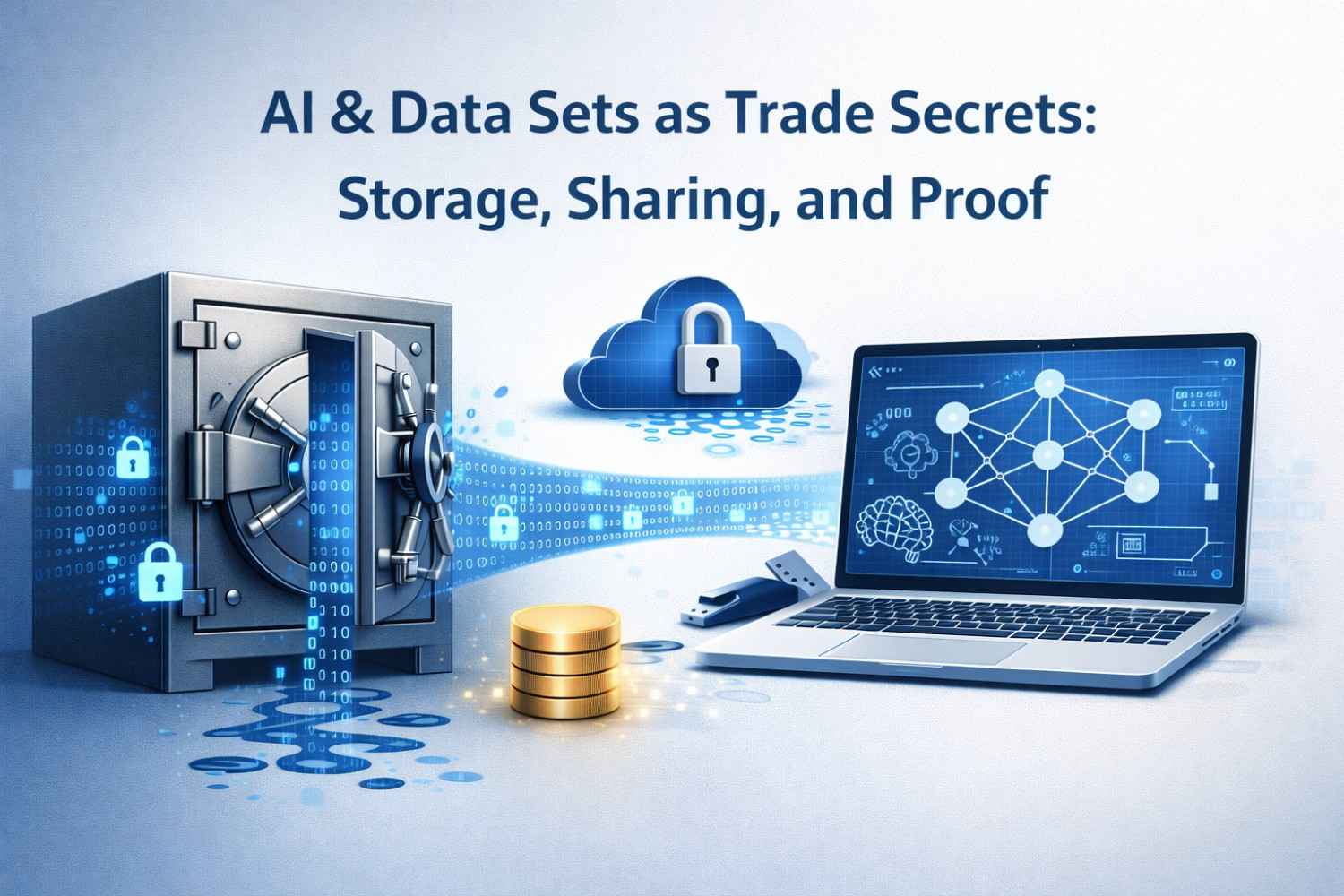
Most startups think about patents too late and trade secrets too loosely. That is risky. If you are building AI, your real edge is not just the model. It is the data, the way it is cleaned, the way it is fed into the system, and the way the system learns over time. That edge can disappear fast if you do not protect it on purpose.
This article is about how AI models and data sets can live as trade secrets, how to store them safely, how to share them without losing control, and how to prove they were yours if something goes wrong. No legal talk. No theory. Just clear thinking you can act on right away.
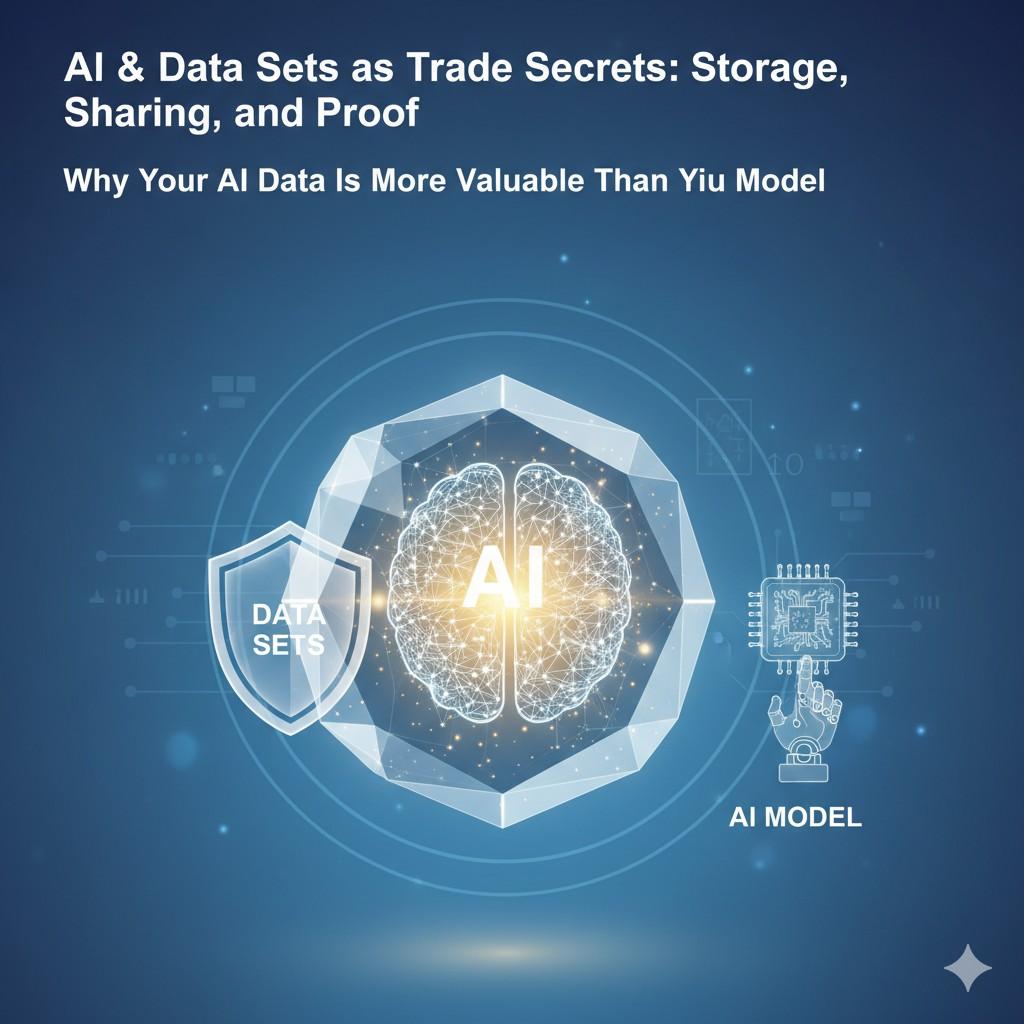
Why Your AI Data Is More Valuable Than Your Model
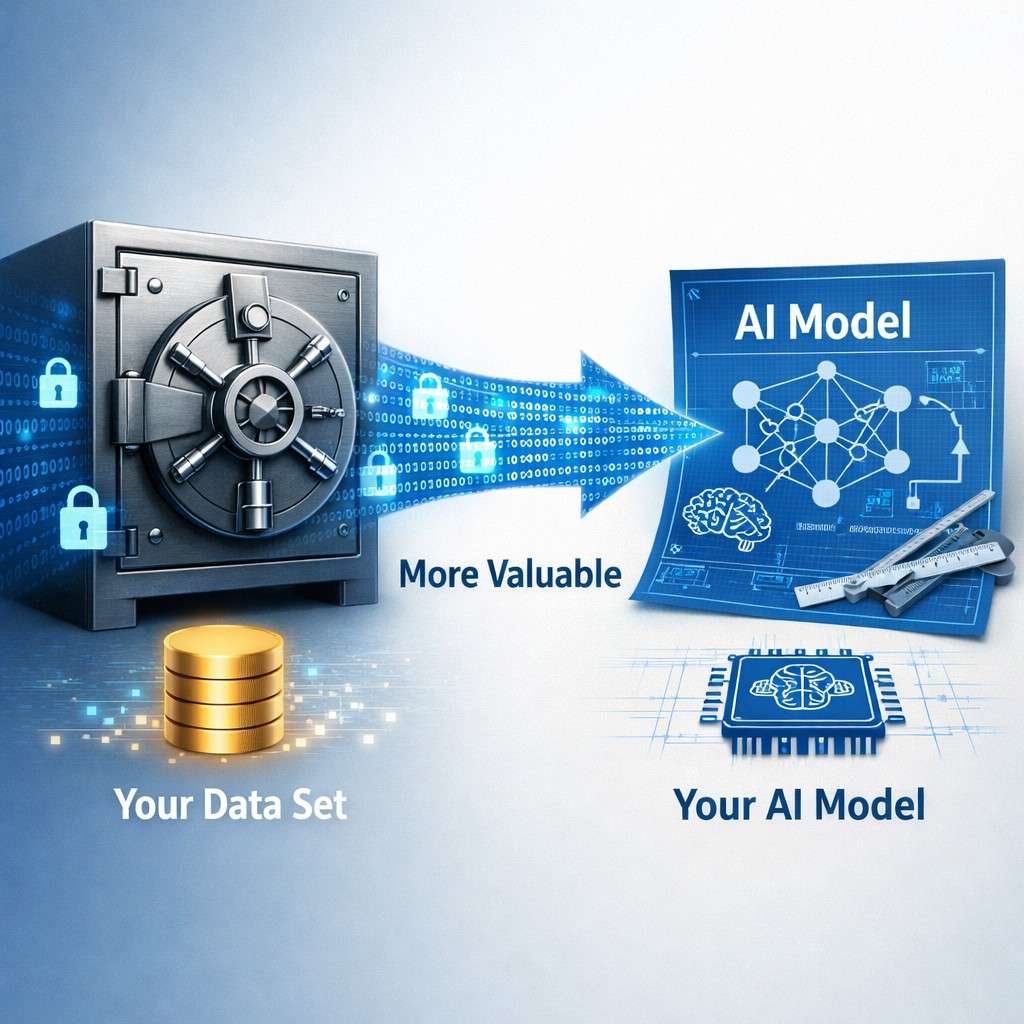
Your AI model can be impressive. It can feel like the heart of everything you have built. But in most real businesses, the model is not the hardest thing to replace. The data is.
This section explains why your data is the real asset, why it deserves more protection than your code, and how smart teams treat data as something strategic, not technical.
If you understand this clearly, you will make better choices about storage, access, and long-term defense.
Models Are Easier to Copy Than You Think
Most founders assume their model is special because it took time to build. In reality, models age fast. New papers come out. New open tools appear. Better architectures spread quickly.
A competitor can often rebuild a similar model in weeks if they know what problem you are solving. Even if they do not copy your code, they can arrive at the same outcome using public methods.
What they cannot easily copy is the exact data that shaped your system.
Your model is like a car engine design. Your data is the fuel mixture that makes it run better than anything else. Without that fuel, the engine does not perform the same.
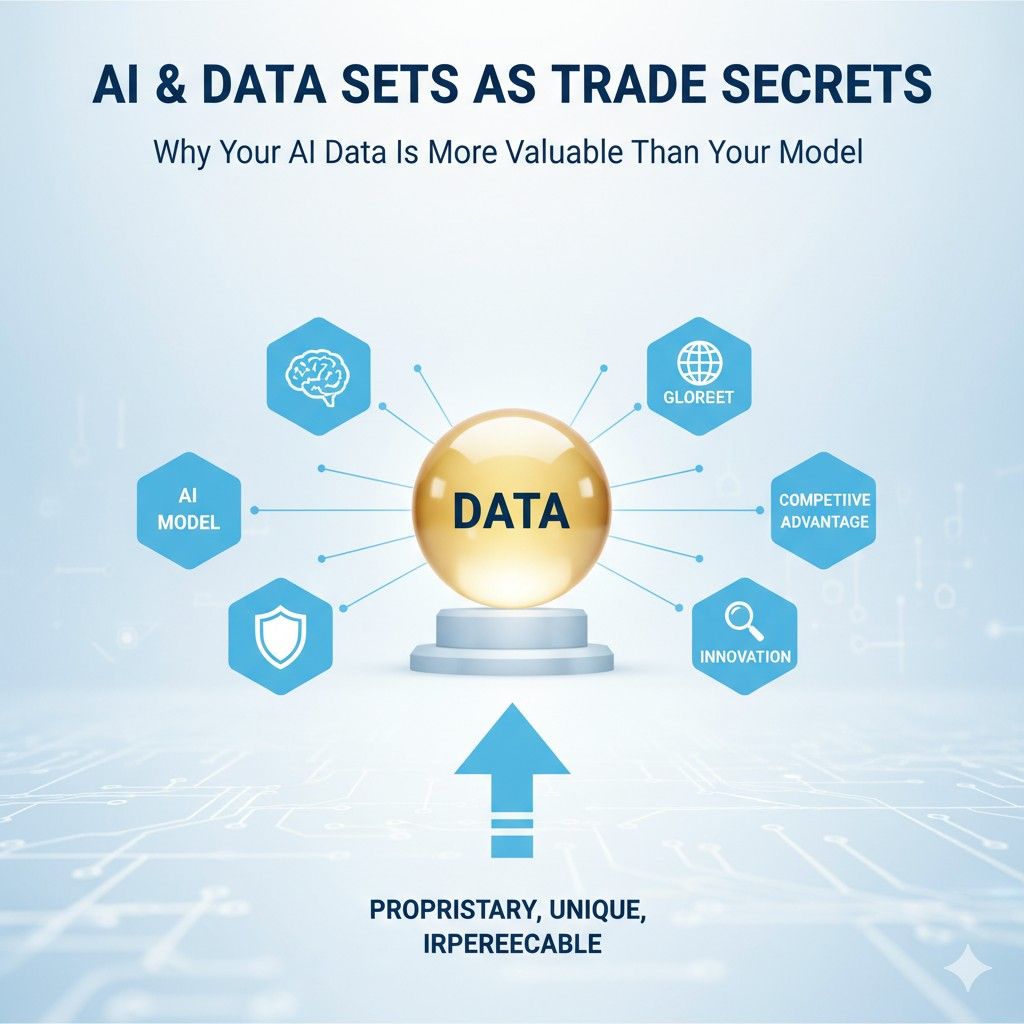
This is why protecting the data matters more than guarding every line of model code.
Data Carries Your Business Context
Data is not just numbers. It is decisions frozen in time.
Every label reflects a judgment. Every filter reflects a choice. Every exclusion reflects an understanding of what matters and what does not.
When your team cleaned raw data, removed noise, fixed edge cases, and added structure, they injected business knowledge into that data. That knowledge does not live anywhere else.
Someone can copy your model and still fail because they do not understand the subtle rules baked into your data. That is where your advantage hides.
Treating data as a trade secret means recognizing that it captures how your company thinks, not just what it predicts.
Data Improves While Models Plateau
Models often reach a point where gains slow down. You tune. You tweak. Improvements become small.
Data is different. Data compounds.
Each new user interaction, each correction, each feedback loop improves future performance. Over time, your system becomes harder to catch because it is learning from real use, not demos.
This is why mature AI companies obsess over data flows more than model tweaks. They know that steady data improvement creates a widening gap.
From a protection standpoint, this means your data deserves long-term planning. If it leaks once, you do not just lose today’s value. You lose tomorrow’s advantage too.
The Real Cost of Losing Data Control
Losing control of data is not always loud. It rarely looks like a dramatic breach.
More often, it looks like a former contractor using familiar patterns at a new job. Or a partner slowly building a competing feature. Or an internal tool being reused in ways you did not expect.
Once data escapes, it is almost impossible to pull back. You cannot unteach a system what it has learned. You cannot prove later what was shared casually unless you planned for proof upfront.
Businesses that treat data casually often discover the damage only when it is too late to fix.
Treat Data Like an Asset, Not a File
One common mistake is treating data as a technical resource instead of a business asset.
Files get copied. Buckets get shared. Access grows over time. Nobody remembers who really needs what.
Strategic teams think differently. They ask who truly needs access, for how long, and for what reason. They design systems where sensitive data is segmented, logged, and monitored, not just stored.
This is not about distrust. It is about clarity.
When data is treated like an asset, decisions about sharing become deliberate instead of accidental.
The Difference Between Useful and Defensible Data
Not all data deserves the same protection. Some data is useful but replaceable. Other data is deeply tied to your edge.
The key question is not how large the dataset is, but how specific it is to your problem and how hard it would be to recreate.
If rebuilding it would take years, relationships, or unique access, it is defensible. That is the data you guard most carefully.
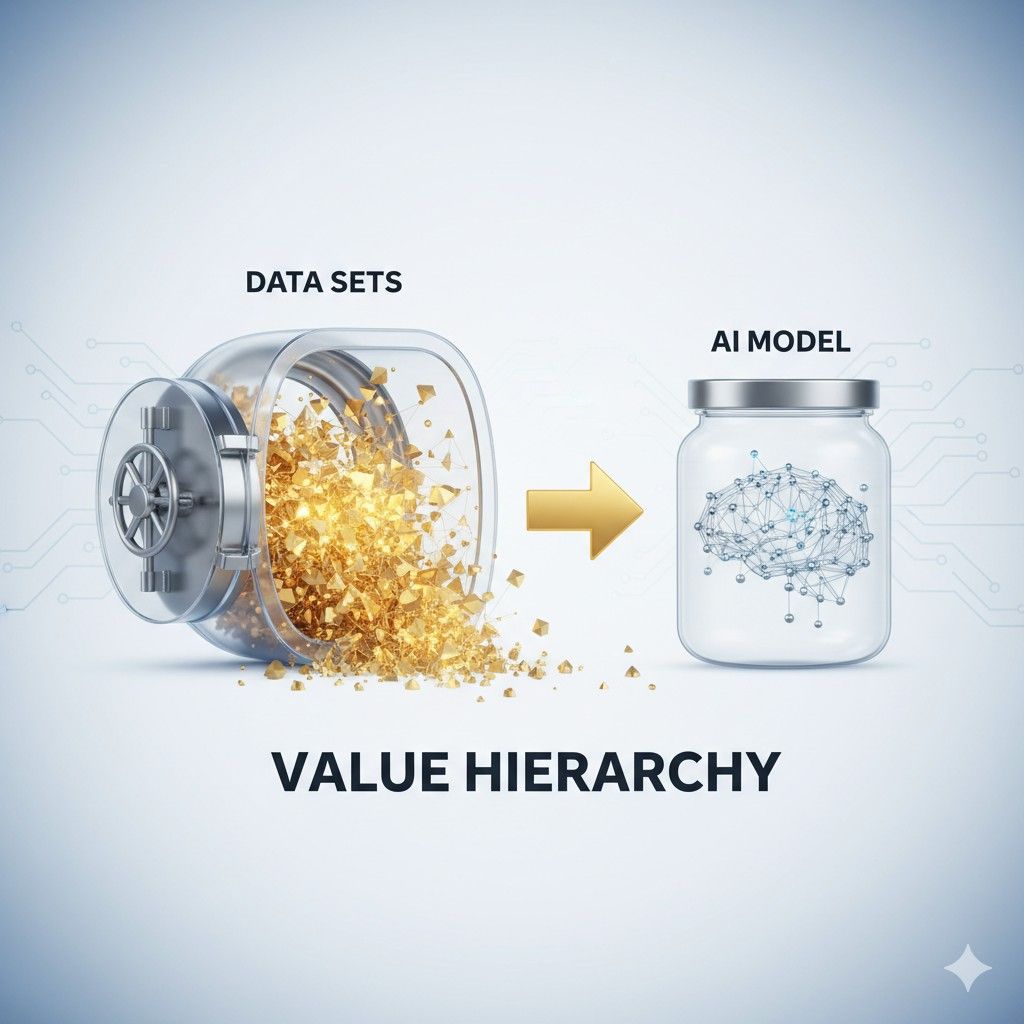
Understanding this difference helps you focus your energy. You do not need to lock everything down equally. You need to protect what actually moves the needle.
How Smart Teams Document Data Value Early
One of the most overlooked steps is documenting why your data matters while it is being built.
Teams often wait until fundraising, partnerships, or disputes to explain what makes their data special. By then, memories fade and context is lost.
Smart teams write simple internal notes as they go. Why certain sources were chosen. Why labels were defined a certain way. Why some data was excluded.
This documentation is not busy work. It becomes evidence later. It supports trade secret claims. It strengthens your position if questions arise.
Tools like PowerPatent help teams capture this thinking early and connect it to real legal protection without slowing down. You can see how that works here: https://powerpatent.com/how-it-works
Data Is the Bridge Between Trade Secrets and Patents
Data often sits at the center of a bigger protection strategy.
Some parts of your system may stay secret forever. Other parts may be patented to block competitors. Data connects those two worlds.
Understanding what data feeds which features helps you decide what to disclose and what to keep internal. It also helps you avoid accidentally giving away the crown jewels when filing or sharing.
This balance is hard to manage alone. It is much easier when you design it intentionally from the start.
Thinking Long Term Instead of Just Shipping
Early teams focus on speed. That is normal. But speed without structure creates risk.
When you slow down just enough to decide how data should be stored, accessed, and described, you buy yourself long-term control. That control shows up later as leverage, confidence, and optionality.
Your future self will thank you for treating data as more than a byproduct of building a model.
If you want help setting this up the right way, with software that fits how engineers work and attorneys who understand AI, PowerPatent exists for exactly this reason. You can explore it here: https://powerpatent.com/how-it-works
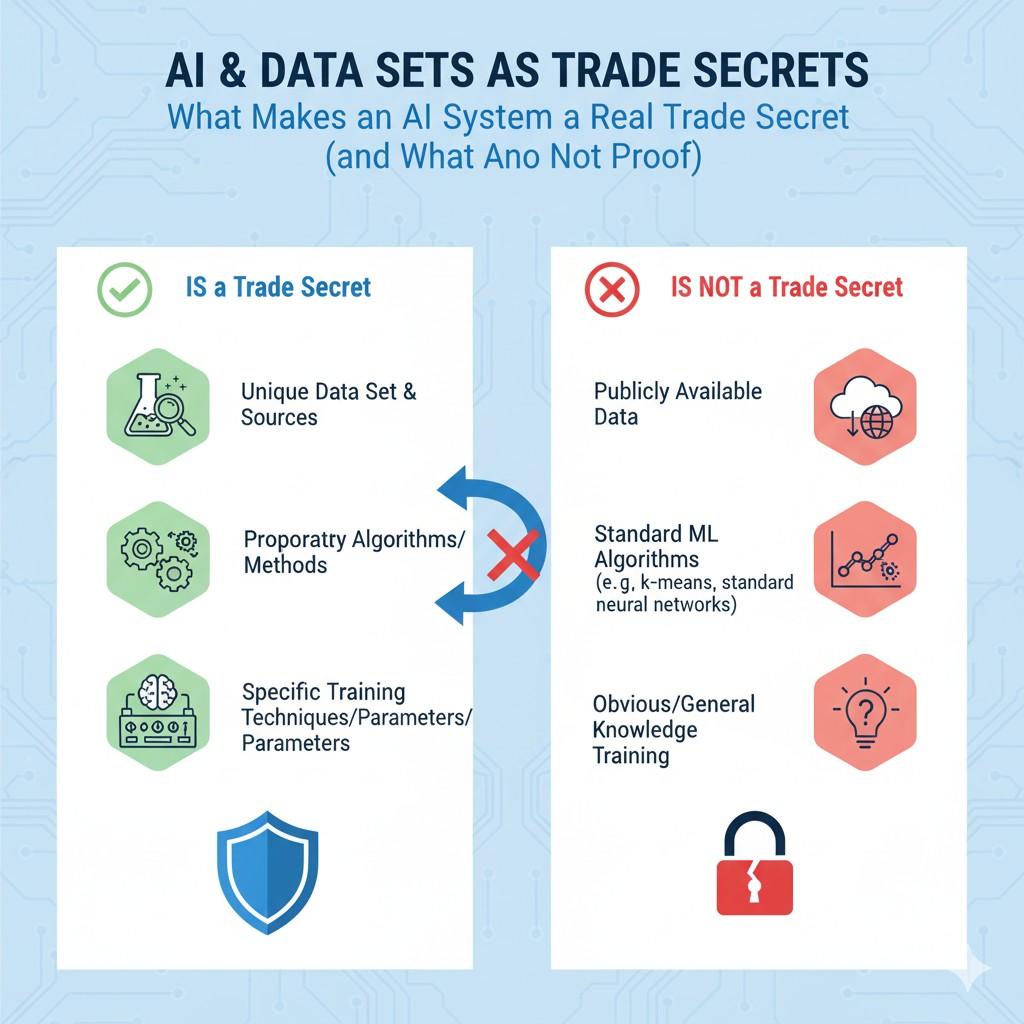
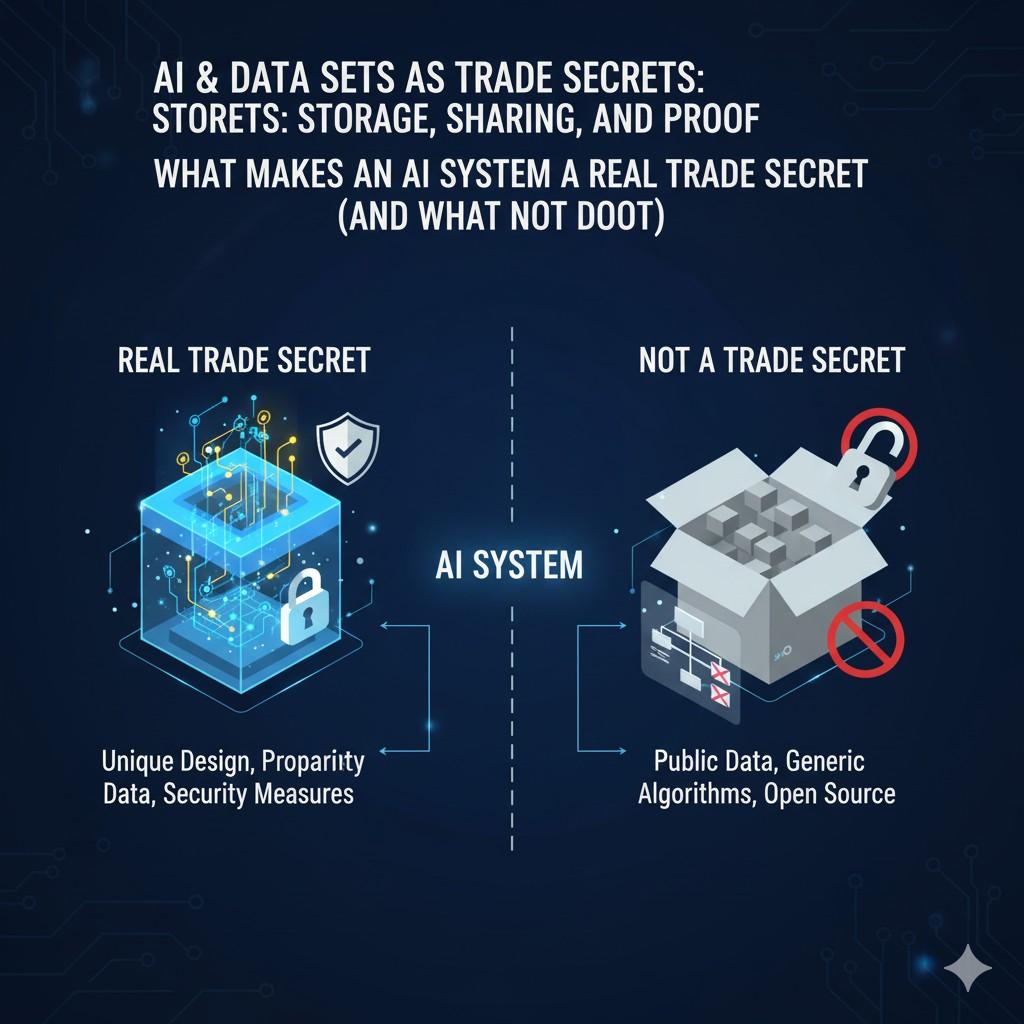
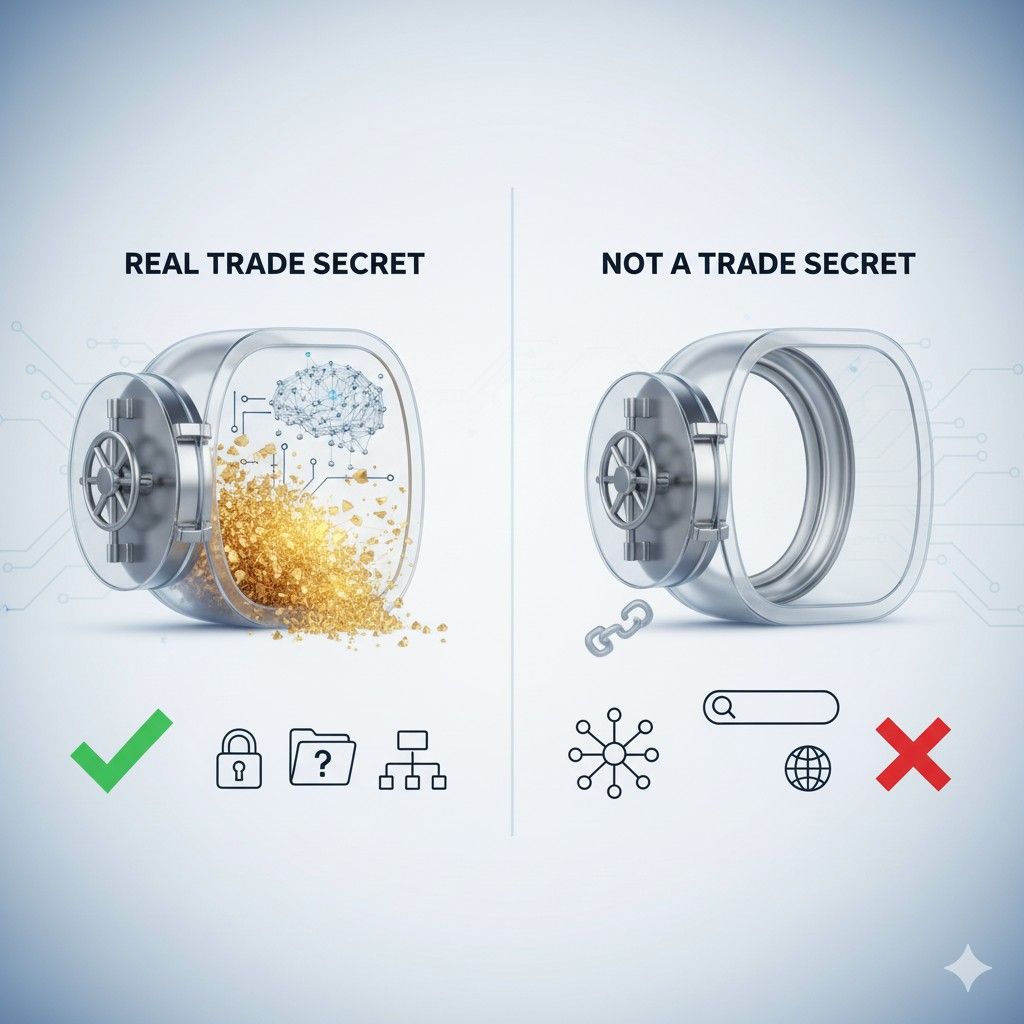
What Makes an AI System a Real Trade Secret (and What Does Not)
Many teams believe their AI system is automatically a trade secret just because it is private. That belief creates false comfort. In reality, trade secrets only exist if very specific conditions are met and maintained over time.
This section explains what actually qualifies as a real trade secret in AI, what fails silently, and how businesses can shape their systems so protection holds up when it matters most.
Secrecy Is a Behavior, Not a Label
Calling something a trade secret does not make it one.
Trade secrets are defined by how they are treated day to day. If your system is shared loosely, documented poorly, or accessed widely without controls, it slowly stops being secret, even if nobody meant to expose it.
For AI teams, secrecy is not about hiding everything. It is about consistent behavior. Who can see what. Why they can see it. How that access is tracked.
If you cannot explain how your system stays secret in simple terms, it likely is not.
Economic Value Comes From Being Unknown
For something to qualify as a trade secret, it must have value because others do not know it.
In AI, this often includes specific data sources, custom labeling logic, unique training workflows, internal evaluation methods, or feedback loops tied to real users.
What does not count is anything obvious, public, or easily guessed. If someone skilled in your space could recreate it quickly without inside access, it is probably not defensible as a trade secret.
The real test is this: would a competitor gain real advantage if they obtained this information? If the answer is yes, you are looking at potential trade secret material.
The Myth of “It’s Too Complex to Copy”
Many founders assume complexity alone protects them. They believe their system is safe because it would be hard for others to understand.
Complexity does not equal secrecy.
If complexity lives in code that many people touch, documents that circulate freely, or systems that are shared casually, it is fragile. Someone will eventually simplify it, reuse it, or carry it elsewhere.
True trade secrets stay protected because access is intentional, not because the system is confusing.
Access Control Is the Quiet Backbone of Protection
One of the strongest signals of a real trade secret is controlled access.
This does not require heavy tools or bureaucracy. It requires clear decisions. Not everyone needs access to raw training data. Not everyone needs to see labeling rules. Not every engineer needs full pipeline visibility.
When access is limited based on role and logged over time, you create a record. That record becomes powerful proof later.
Without access control, even the most valuable system becomes hard to defend.
Internal Sharing Can Kill Trade Secrets Fast
Most leaks do not come from outsiders. They come from inside.
As teams grow, sharing increases. New hires onboard quickly. Contractors help temporarily. Partners collaborate closely.
Each of these moments introduces risk if trade secrets are not clearly defined and contained.
A real trade secret survives internal sharing because it is segmented. People see what they need, not everything. Context is shared carefully. Sensitive pieces are isolated.
This structure allows teams to move fast without giving away the full picture.
Documentation Can Help or Hurt
Documentation is often misunderstood in trade secret strategy.
Some teams avoid documentation entirely, fearing it creates risk. Others document everything without thinking about exposure.
The goal is not more or less documentation. The goal is the right documentation in the right place.
Internal documents that explain why something matters, how it evolved, and who controls it strengthen trade secret claims. Public docs, broad wikis, or untracked notes weaken them.
When documentation is intentional, it becomes an asset instead of a liability.
Public Use Can Quietly Destroy Secrecy
Using your AI system publicly does not automatically destroy trade secrets. But it can if you are not careful.
If outputs reveal too much about how the system works, competitors can reverse engineer patterns over time. If APIs expose internal logic, secrecy erodes gradually.
Smart teams design interfaces that deliver value without revealing internals. They separate what users see from what makes the system special.
This separation is subtle but critical for long-term protection.
Employee Movement Is the Real Stress Test
The true test of a trade secret often happens when someone leaves.
If a former employee can recreate your system elsewhere using memory alone, your protection was weak. If they only remember fragments without full context, your structure worked.
This is why clarity around ownership, access, and confidentiality matters early. Not as legal theater, but as operational discipline.
Trade secrets that survive team changes are the ones designed intentionally from the start.
Trade Secrets and Speed Are Not Opposites
Some founders fear that protecting trade secrets will slow them down. In practice, the opposite is often true.
Clear boundaries reduce confusion. Clear access rules reduce mistakes. Clear ownership reduces hesitation.
Teams that know what is sensitive move faster because decisions are simpler. They do not second-guess sharing. They follow established paths.
This balance between speed and protection is hard to design alone. Platforms like PowerPatent help teams think through these boundaries while staying focused on building.
You can see how it works here: https://powerpatent.com/how-it-works
Knowing What Does Not Qualify Matters Too
Equally important is knowing what is not a trade secret.
General ideas, high-level concepts, public techniques, and obvious implementations do not qualify. Treating them as secrets wastes energy and creates false confidence.
When teams focus protection on what truly matters, they build stronger defenses with less friction.
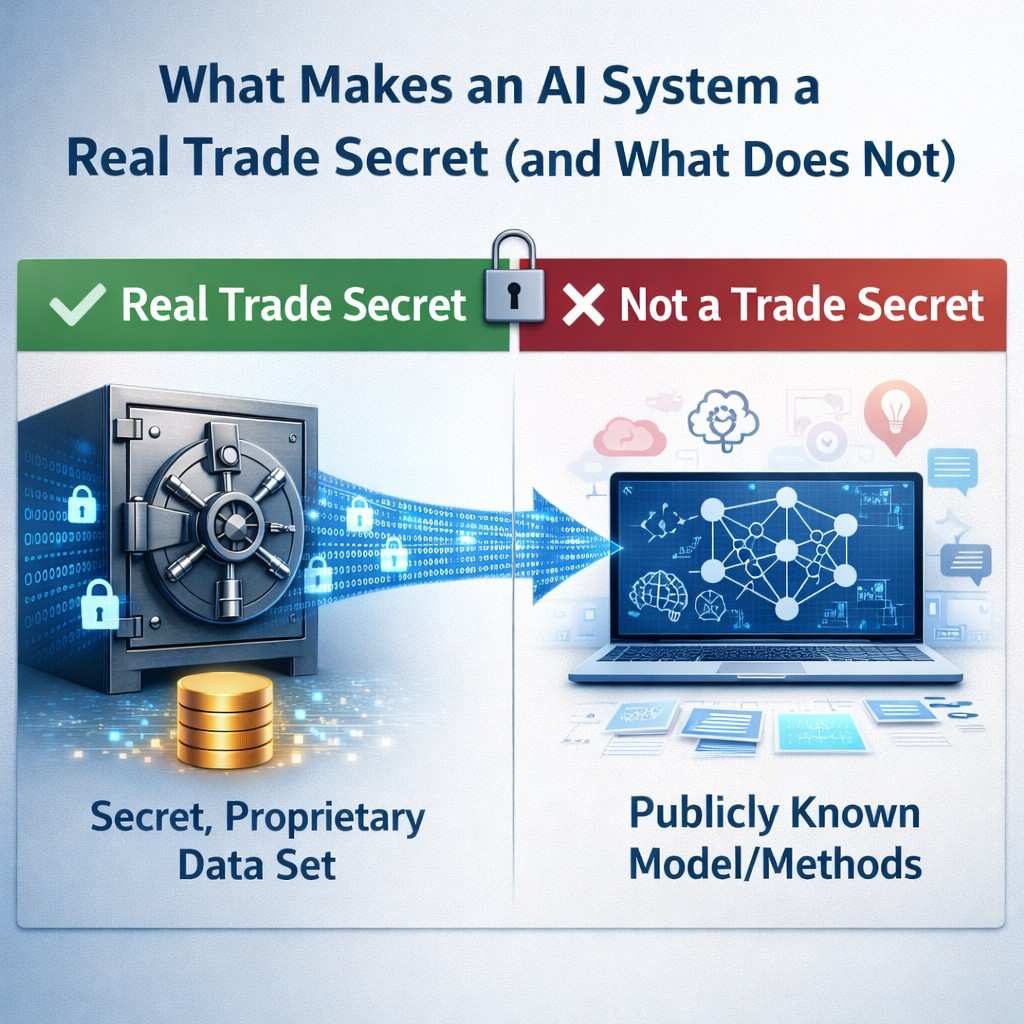
Understanding this distinction is a strategic advantage.
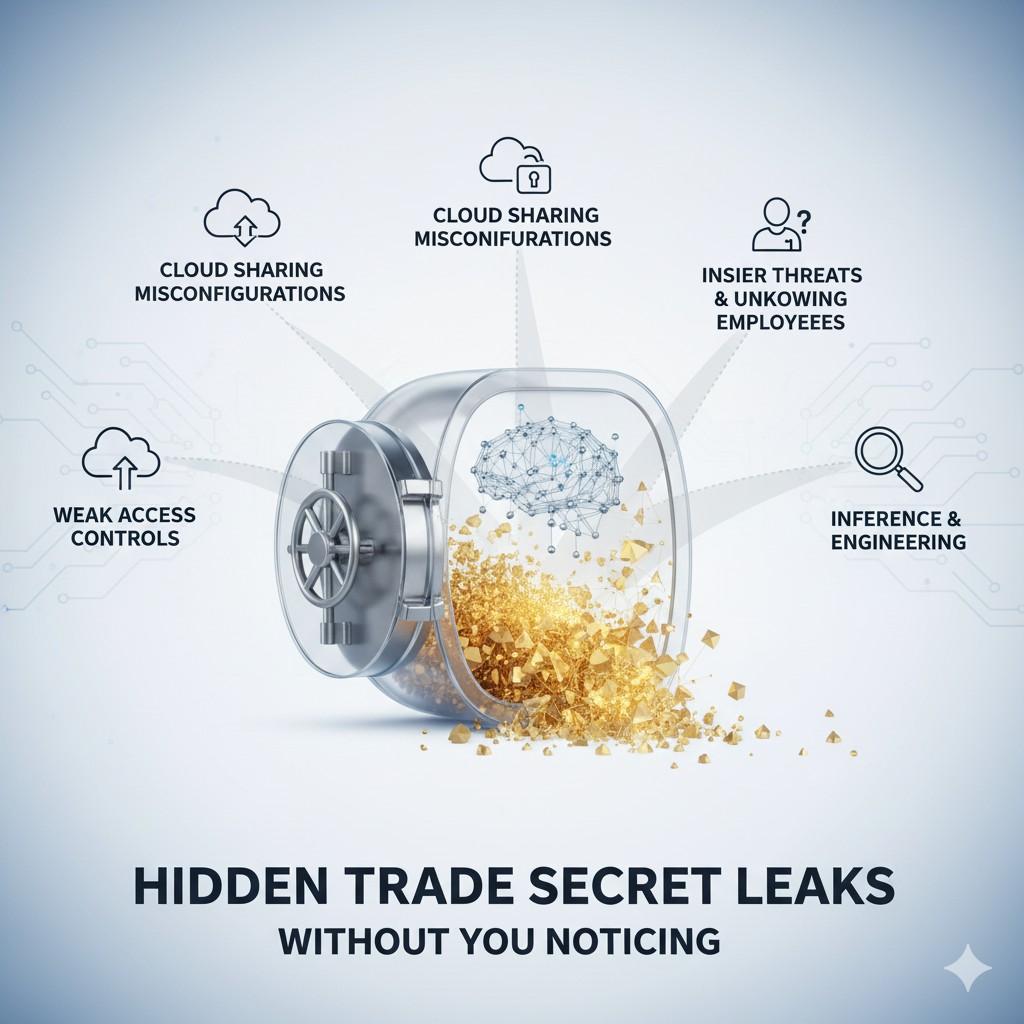
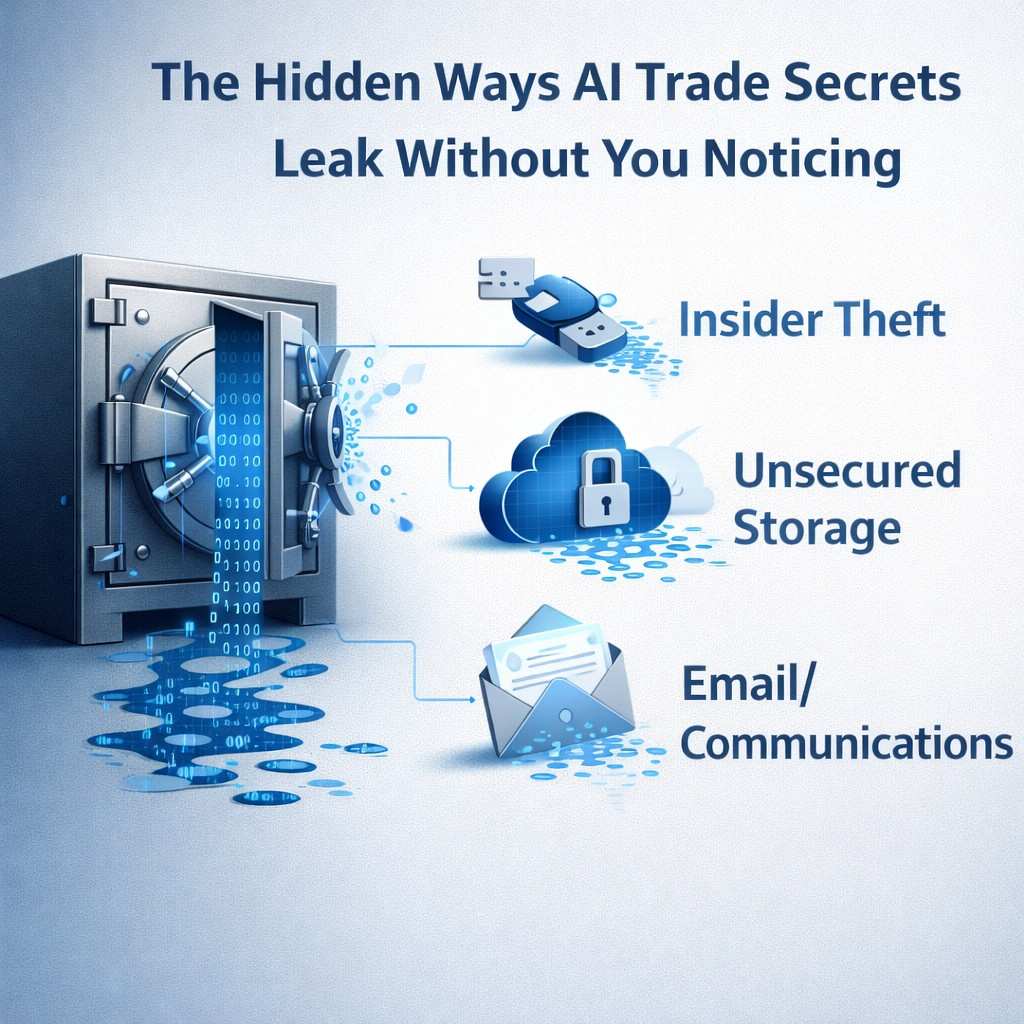
The Hidden Ways AI Trade Secrets Leak Without You Noticing
Most AI trade secrets are not stolen. They slowly slip away.
There is rarely a single moment where everything breaks. Instead, small choices stack up. Convenience wins. Speed wins. And before anyone notices, something that once felt private becomes easy to recreate elsewhere.
This section focuses on where leaks really happen, why teams miss them, and how to close the gaps without slowing down work.
Leaks Start With Convenience, Not Bad Intent
Very few leaks come from people trying to cause harm. Most come from people trying to do their job faster.
A dataset is shared in full instead of sliced. A pipeline is copied to save time. Credentials are reused because access setup feels annoying.
Each decision feels harmless. Together, they create exposure.
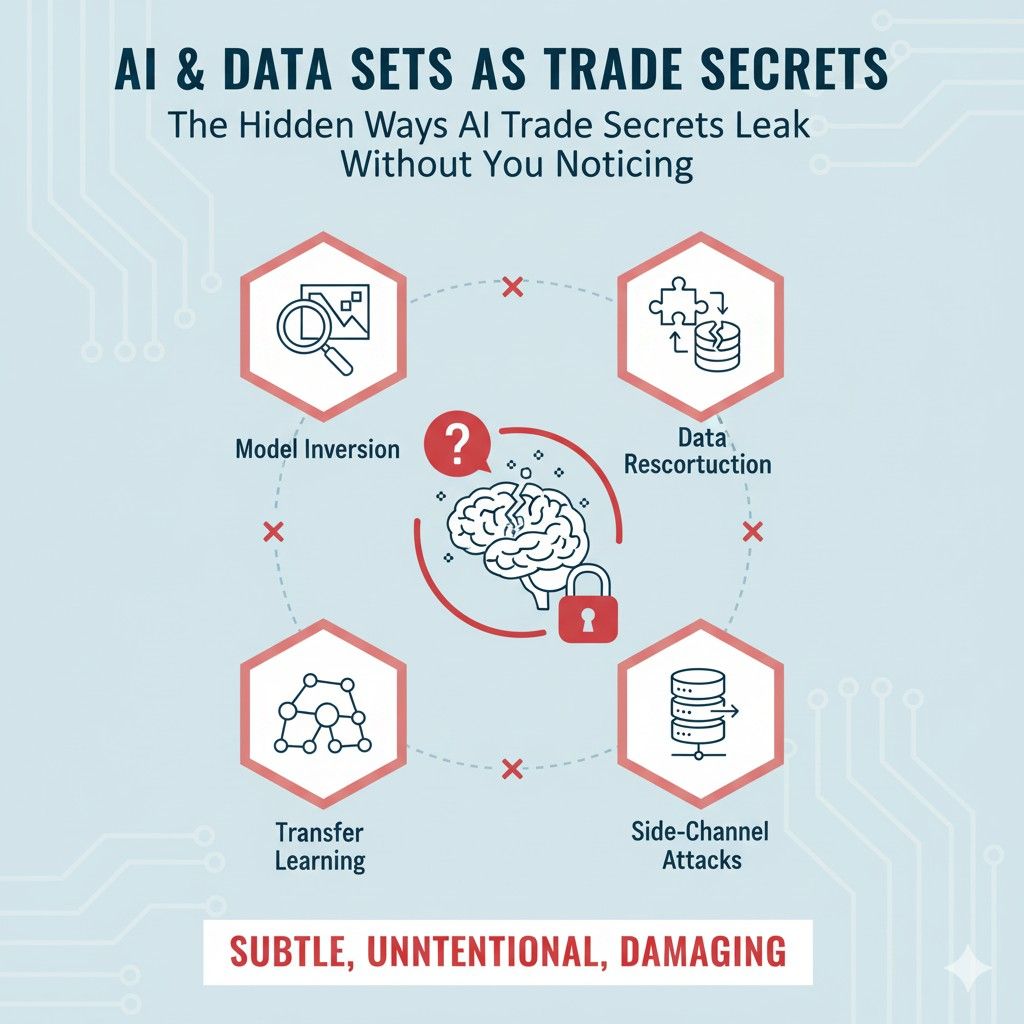
The most dangerous leaks are the ones that feel reasonable in the moment.
Shared Storage Becomes Shared Risk
Central storage systems are useful. They are also dangerous if left unchecked.
When raw data, cleaned data, and derived data live in the same place with broad access, boundaries disappear. People forget what is sensitive and what is not.
Over time, access spreads because removing it feels harder than adding it.
Strong teams separate storage based on sensitivity and purpose. Not in theory, but in practice. Even simple separation can dramatically reduce risk.
Logs That No One Reviews Are Not Protection
Many teams log access and changes but never look at the logs.
Logging without review creates the illusion of control. It does not prevent leaks, and it does not help much after the fact.
The value of logs comes from patterns. Who accesses what regularly. What is accessed only once. What spikes unexpectedly.
You do not need full-time monitoring. You need periodic attention. Even light review creates accountability and awareness.
Temporary Access Has a Way of Becoming Permanent
Temporary access is one of the most common sources of long-term exposure.
A contractor needs data for a week. A partner needs a snapshot. An internal project needs a shortcut.
Weeks pass. Access stays.
Months later, nobody remembers why it exists or who still uses it.
Strong teams treat temporary access as something that expires by default. If it is still needed, it is renewed intentionally. This simple habit closes a massive leak vector.
Copies Multiply Faster Than You Expect
Once data is copied, control becomes fuzzy.
A local copy becomes a backup. A backup becomes a reference. A reference becomes training data for a side experiment.
Soon, the same sensitive dataset exists in many places, owned by no one and protected by no one.
Limiting copies is not about control. It is about traceability. If you do not know where your data lives, you cannot protect it.
Internal Tools Can Leak More Than External Ones
Teams often focus on external exposure and ignore internal tools.
Dashboards, notebooks, shared scripts, and internal APIs often expose more than intended. They are built quickly, used widely, and rarely audited.
Over time, they become a map of how your system works.
Reviewing internal tools through the lens of trade secrets often reveals surprising risks. Small changes in what they show can make a big difference.
Conversations Matter More Than Code
Leaks do not only happen through systems. They happen through words.
Design reviews, onboarding sessions, demos, and casual explanations can reveal more than you think. Patterns, shortcuts, and assumptions get shared verbally and remembered.
This does not mean you should stop talking. It means you should be aware of what details truly matter.
Clear internal guidance on what is sensitive helps people communicate confidently without oversharing.
Departures Create Silent Exposure
When someone leaves, knowledge leaves with them.
Even with agreements in place, memories persist. If someone had broad access, they likely carry a mental model of your system.
This is why access control during employment matters. You cannot remove what was never restricted.
Teams that plan for turnover early are far less exposed later.
Trade Secret Loss Is Often Discovered Too Late
Many companies only realize they lost a trade secret when a competitor launches something uncomfortably similar.
At that point, proving what happened is hard. Timelines are fuzzy. Evidence is thin. Intent is unclear.
Prevention is far easier than repair.
Designing systems with proof in mind from day one changes the outcome dramatically.
Awareness Is the First Line of Defense
The biggest improvement most teams can make is awareness.
When people understand what truly matters and why, they make better decisions naturally. They pause before sharing. They ask before copying. They flag concerns early.
This culture does not require fear. It requires clarity.
Tools and platforms like PowerPatent help teams define, document, and protect what matters while staying focused on building.
If you want to see how that works in practice, you can explore it here: https://powerpatent.com/how-it-works
Wrapping It Up
AI companies win by staying ahead, not just by building faster, but by holding onto what makes them hard to copy. Models will change. Tools will improve. Techniques will spread. Data, context, and the way your system learns over time are what last. Trade secrets are not about hiding in the dark. They are about control. Control over who sees what. Control over how things are shared. Control over how value is preserved as the company grows. When AI and data sets are treated casually, risk builds quietly. When they are treated as strategic assets, they become a source of strength. Teams move with more confidence. Partnerships become safer. Decisions become clearer.
Leave a Reply